Having a little blog break for a few weeks or so, thus here are some quick catch-up reviews of films I saw recently at the cinema, with the usual marks out of eleven.
ANT-MAN AND WASP (2018) – ODEON CINEMA
Paul Rudd, Evangeline Lilly and Michael Douglas return in this simultaneously microscopic and gigantic work of Marvel entertainment. The story follows after the events of Civil War (2016) with Scott Lang under FBI house arrest due to breaking the Sokovia Accords. Thus, he must, alongside new crime-fighting partner, The Wasp, battle criminals, freaky super-villains and the FBI without leaving his home. While the original Ant-Man (2015) was anchored within the heist genre, this energetic sequel follows an action meets romantic-comedy plot and on the whole really works thanks to great chemistry between Rudd and Lilly. Throw in some mind-bending shenanigans involving the quantum realm and a memorable car chase set-piece, you get another fun-packed and witty Marvel film.
(Mark: 8.5 out of 11)
THE MEG (2018) – ODEON CINEMA
Just when you thought it was safe to go back in the cinema a gigantic budgeted shark movie comes at you. Derivative and overly serious The Meg is nonetheless, at times, a spectacularly decent guilty pleasure with some wonderful shark action. The ensemble cast led by the compact but powerful Jason Statham try their best with a functional script while director, John Turteltaub, hacks his way through a seen-it-done-better narrative. The best bits belong to Statham and the sharks but it should’ve been funnier and bloodier! I mean look at the size of the Megaladon and its bite radius. There should have been more gore and bloody death in this entertaining, if over-inflated monster movie.
(Mark: 6.5 out of 11)
SEARCHING (2018) – ODEON CINEMA
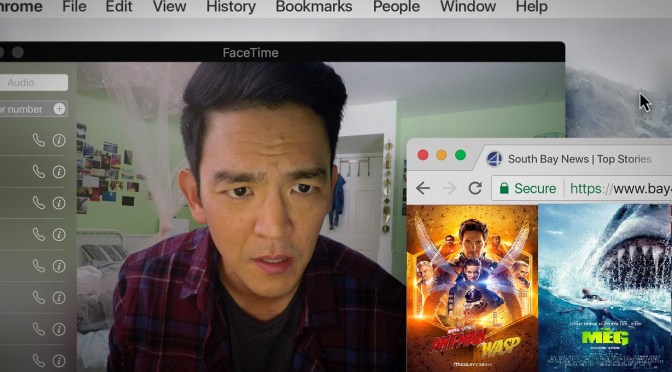
You wait ages for a smartly scripted genre film and two come along at the same time with Upgrade (2018), and now, Searching (2018). I’m not usually a fan of “found/live footage” films but this format absolutely worked for this film. The thriller plot finds John Cho’s computer programmer hunting down his missing daughter. As the images and sound derive from news footage, social media sources, YouTube, Facetime, and Live online chat sites it could get boring but it never does. This is because the script is so well written with a twisty plot which creates superb drama and tension throughout. John Cho is excellent too in a very entertaining genre movie that raises the pulse and tugs at the heartstrings too.
Produced by: Jason Blum, Kylie Du Fresne, Brian Kavanaugh-Jones
Written by: Leigh Whannell
Starring: Logan Marshall-Green, Betty Gabriel, Harrison Gilbertson
Music by: Jed Palmer
Cinematography: Stefan Duscio
Edited by: Andy Canny
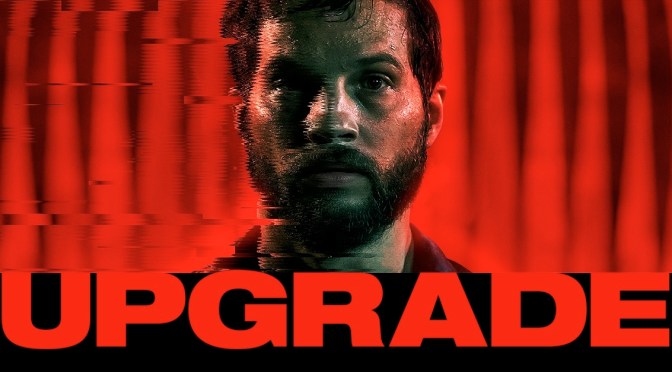
For me Australian filmmaker Leigh Whannell is one of the best screenwriters out there. He has been involved in the writing of TWO fantastic horror originals: Saw (2004) and Insidious (2010). Furthermore, he has written and directed a brilliant sci-fi-horror-B-Movie in Upgrade. He is a great writer because he brings conceptual invention with strong style and tight economy. What he shows is that you don’t need billions of dollars to make an entertaining film but rather a decent script with focussed ideas and great twists at the end.
I watched his latest film Upgrade (2018) at a Fright Fest 2018 preview and its blend of science fiction, body horror and bloody gore was lapped up by the packed crowd. The director, Leigh Whannell, did a Q & A afterwards and spoke of his desire evoke the spirit of the 1980s low budget films like The Terminator (1984) and he certainly achieved that in my view. His budget of $5 million dollars was stretched by incentives from the Australian government and what it lacks in scale, the movie more than makes up in a look and style which echoes that of those 1980s sci-fi classics.
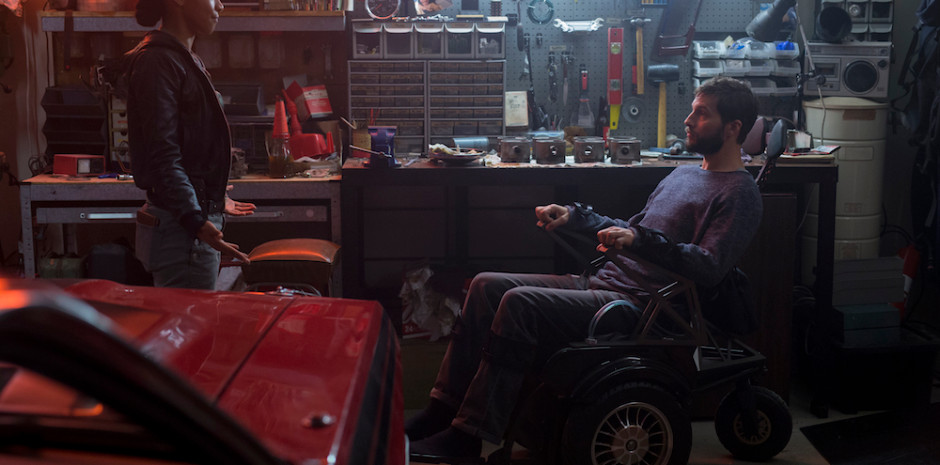
Upgrade’s story is very simple and similar in some ways to Death Wish (1974) and also the recent assassin shoot-em-up-actioner John Wick (2014). But the joy is not so much in the plot but in the exceptionally well devised character arc our hero, Grey Trace (Logan Marshall Green), goes through. Left a depressed, suicidal and a quadriplegic by a vicious robbery he is given the opportunity to revitalise his body by a computer genius, Eron Keen (Harrison Gilbertson). Hell-bent on finding the killers of his wife he agrees to surgery which will implant an artificially intelligent programme into his body and enable him to walk again. After which the story moves at some pace as he first comes to terms with the new technology, before his descent into the criminal underworld really gathers speed.
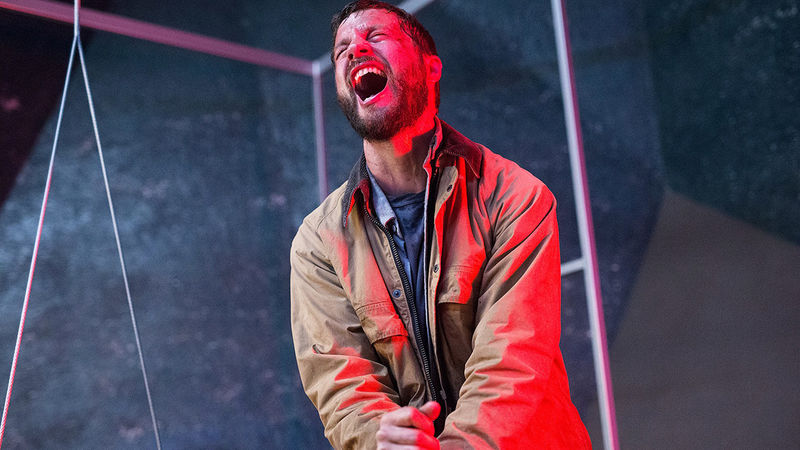
STEM itself is a fine supporting character too. There is much humour in Logan Marshall-Green’s performance and his interaction with the “HAL9000-like” computer in his head. Marshall-Green also excels physically during the brutal and fantastically choreographed fight scenes. Indeed, the bloody violence is a joy and I actually wanted more gore as less definitely WAS NOT more. But, overall, this is a fantastically enjoyable B-movie mash-up with an incredible look for such a low budget film. Shadow, fluorescent light, darkness, blood, metal and strobes all co-mingle to startling effect. The score by Jed Palmer is a brooding classic and some of the technological concepts relating to bionic and Nano-technology were very inventive. Above all else, it’s Whannell’s lean and mean machine of a script that wins the day; he certainly deserves to work on a bigger scale no doubt!
Produced by: Jason Blum, Spike Lee, Raymond Mansfield, Sean McKittrick, Jordan Peele, Shaun Redick, Jordan Peele
Written by: Charlie Wachtel, David Rabinowitz, Kevin Willmott, Spike Lee
Based on: Black Klansman by Ron Stallworth
Starring: John David Washington, Adam Driver, Laura Harrier, Topher Grace
Music by: Terence Blanchard
Cinematography: Chayse Irvin
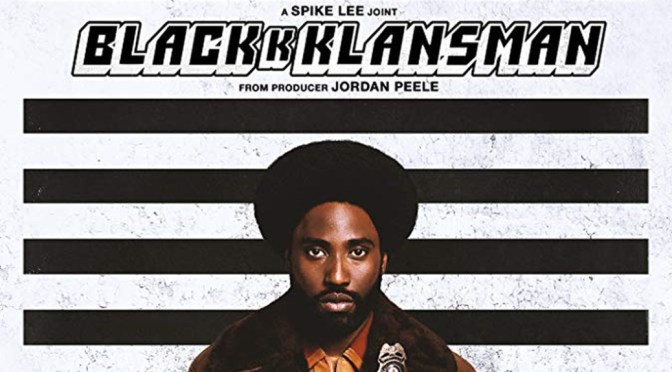
Let’s just say right off the bat that films like Black Klansman (2018) are the reason I still go to the cinema. Even from the trailer I’m like wow: a black police officer goes undercover and infiltrates the Ku Klux Klan!! That is a story I need to know about! How the hell did he do that? What follows then is the how, who, why and what-the-fuck-happened story of Ron Stallworth and how he managed to get between the “sheets”, as it were, of one of the nastiest clubs every to deface the fabric of society.
Racism or prejudice of any fashion is deplorable. There is no place for any oppression within a civilised society. Rising up out of the poisonous embers of defeated Confederate army members, in or around the 1860s, the Ku Klux Klan has sought to manifest hatred and bile since then. Murder, violence, vandalism, hangings and burning crosses became its’ nefarious stock and trade as it sought to make toxic the societal waters. In more recent decades, from the 1950s on, the Klan found a politicised voice seeking power through government. It is here that the story of the Black Klansman (2018) joins. It is 1979 and the civil rights movement continues seeking justice and equality for all. The Ku Klux Klan does not agree. They want purification. They are hatred.
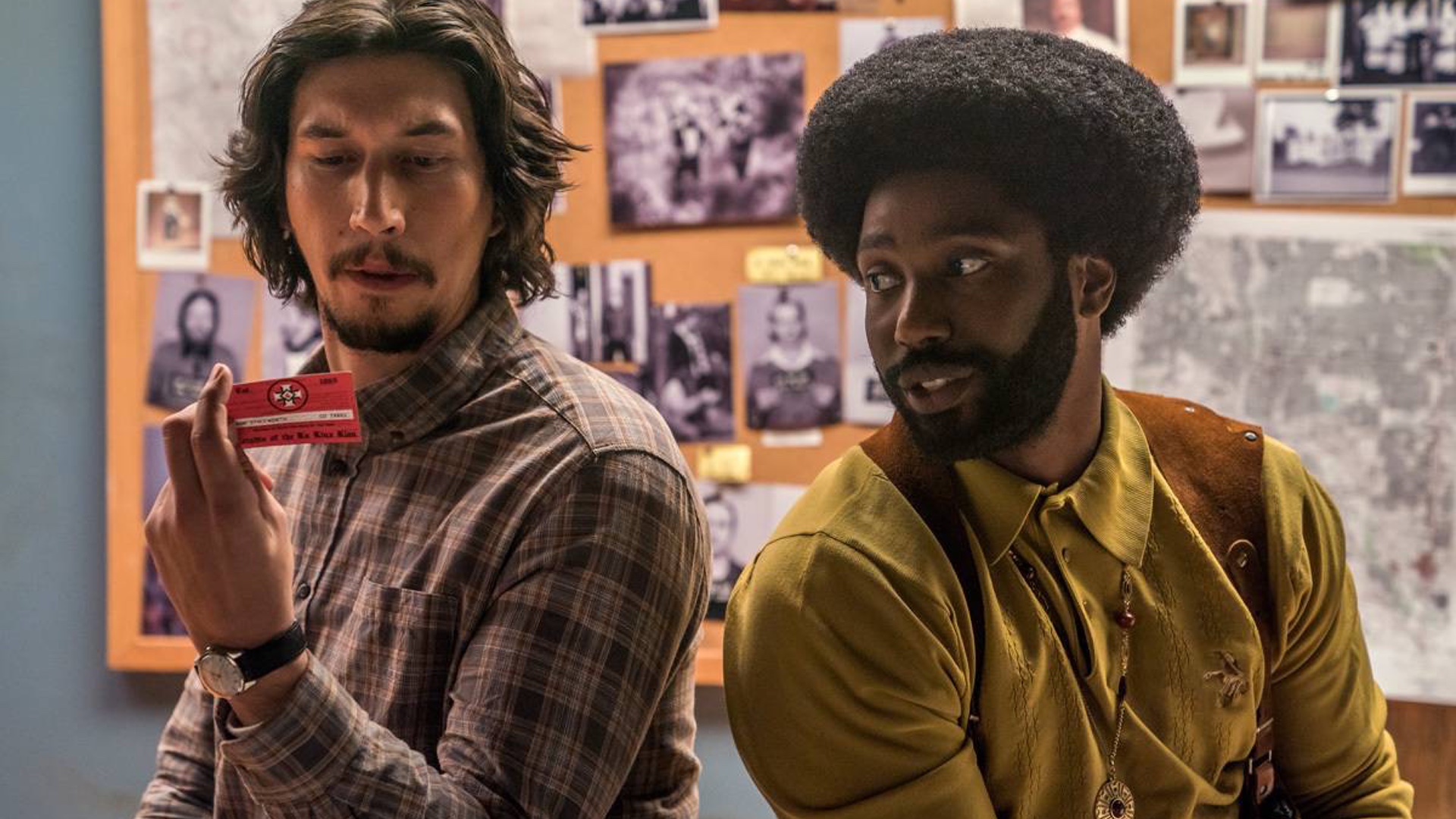
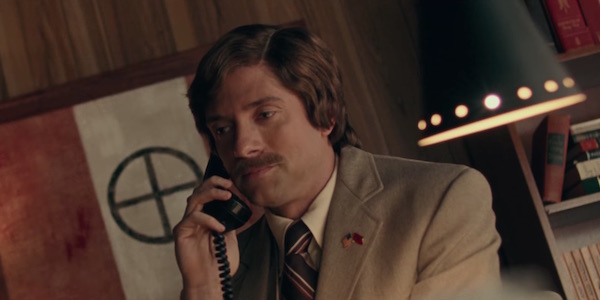
Already a trailblazer as the first black detective in Colorado Springs, Ron Stallworth proves he is an intelligent and reliable undercover officer. Then having seen an advert in the local newspaper for the KKK’s desire to recruit new members, he, rather incredibly, calls to make an appointment. From then on his unbelievable scheme gathers pace and a team is assigned to infiltrate the Klan. These include Flip Zimmerman, a Jewish cop, portrayed with his usual laidback brilliance by Adam Driver; and it is Zimmerman who provides the physical version of Ron Stallworth to the Klan members. Indeed, Driver and John David Washington, as the real Stallworth, form a great double-act during the operation. While Zimmerman takes his life in his hands spying on the fascistic group, Stallworth himself builds relationships on the phone with the head of the Klan Charter, David Duke. Duke is the political arm and portrayed with efficient zeal by Topher Grace.
Black Klansman (2018) is a complex film which expertly mixes many genres and tones. The humour of Stallworth’s phone calls to the KKK members are hilariously delivered by the charismatic Washington; while the horrific language of the Klan and danger Zimmerman finds himself in levies this humour, creating a flux of emotions. Moreover, Spike Lee, a tremendously confident director, infuses musical, thriller, Blaxploitation and documentary genre styles within the film, making it a joy to experience. One could argue the romantic subplot doesn’t quite flourish amidst the main plots but Laura Harrier gives a fine performance nonetheless within a great ensemble cast. Plus, I must not forget the killer soundtrack which bleeds soul and verve into every shot.
Spike Lee has never been afraid of experimenting with cinematic style and with this film his alchemy perfectly combines form and content. Overall, this is one of the best films I have seen in 2018, both entertaining and thought-provoking; as the final reels of news footage demonstrate that fascism is still among us and as dangerous as ever. Yet, this film is never preachy for the sake of it and uses humour most often as a weapon to undermine the senseless ideologies of the KKK. Indeed, in ridicule there is hope they may eventually be side-lined to the shadows of history.
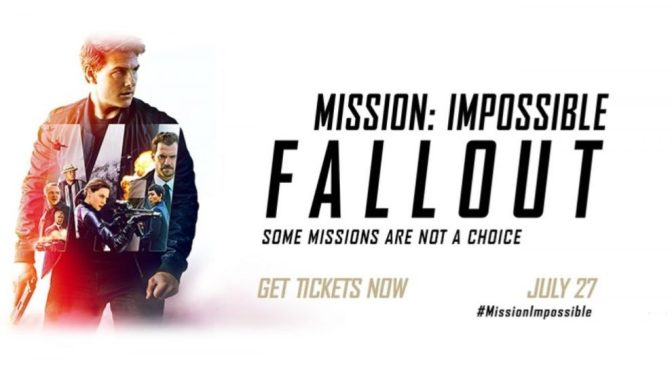
MISSION IMPOSSIBLE BINGO incorporating: FALLOUT (2018) MOVIE REVIEW
I have found it’s difficult to find an original angle when reviewing certain films i.e. franchise movies or sequels. Indeed, unless they are absolutely brilliant I tend not to review them. Therefore, I had no major intention of writing about the new Tom Cruise produced Mission Impossible release, as these films, despite their technical movie-making brilliance, follow a very strict and safe formula. I mean what can I really add critically other than say I enjoyed it or I didn’t. However, it really is such a fantastic blockbuster movie I accepted an impossible mission, of sorts, to create something interesting while reviewing it.
So, here we go: Mission Impossible BINGO! It’s both recognition of the formula but also praise for the latest instalment which had me on the edge of my seat, heart in my mouth and biting my nails throughout. In the context of story it’s very generic but in terms of action, thrills and stunts it gets a Mark of 9 out of 11!
McQUARRIE directs Fallout which is essentially a direct sequel to Rogue Nation. We know his track record as a writer but he’s now proving himself a fantastic director too. I enjoyed Rogue Nation but Fallout raises the stakes with a witty, double-crossing, high octane and explosive movie, which actually improves the clichés of the formula in wonderful fashion.
INGENIOUS double-crossing is at the heart of the original Mission: Impossible television series and the film franchise. This is done through identification theft, impersonation, lies, deceit, scene-shifting, fake walls, and the famous face and voice changing technology.
STUNNING locations feature throughout the franchise. Changing the scenery is a means of tricking us into thinking we haven’t somehow seen this car-chase, foot chase or air chase before. Yet, what Mission: Impossible does brilliantly is take us into existing locations like the CIA Langley Headquarters, The Vatican City and even the Kremlin.
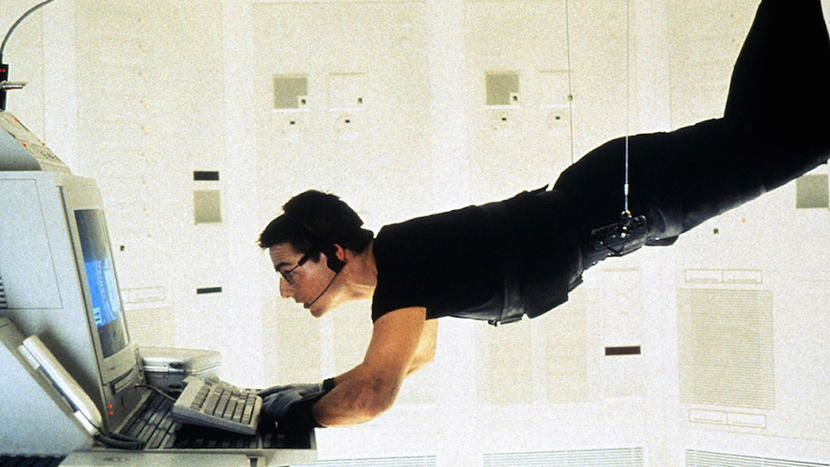
STUNTS and extravagant set-pieces dominate the whole of this franchise. From the original 1996 film’s wire-from-the-ceiling-hanging set-piece downloading a CIA encrypted agent list to the current Fall Out nuke-ticking-time-bomb denouement, Tom Cruise’ has committed some of the most breath-taking and technically brilliant action stunts ever.
ICONIC soundtrack composed by Lalo Schifrin has been often imitated but never a bettered. Those simple but effective notes fire up and immediately you know the action is about to start.
OPPOSING government agents are rife in the original show and film series, as inspired by the devious nature of the East v West “Cold War” from the 1950s onwards. In M: I you’ve got good agents, rogue agents, double agents, triple agents and ghost agents pretending to be good, bad and all of the above.
NEFARIOUS villains, like the Bond films, are necessary to precipitate some evil doings and kick off the plot. My personal favourite was Philip Seymour Hoffman in M:I 3 – as he really was evil. Solomon Lane as played by Sean Harris is cool too and is given some great speeches. His plan to blow up the world isn’t the most original but he has a blast trying it.
IMPOSSIBLE missions are at the heart of the film franchise. I mean the characters are mainly paper thin and the narratives are mainly empty so the gadgets and all manner of ticking time bombs, impenetrable garrisons, bad guys shooting and blowing stuff up; plus the covert interrogations and switcheroos provide the substance to the cinema experience.
MACGUFFIN-LED plots are not the strength of the franchise and on occasions the narratives a threadbare with Ethan chasing something called a “rabbit foot” or stolen nuke heads being the target. But who cares as long as we get to see things blow up.
PLAYFUL humour and one-liners dominate the scripts as a means to punctuate the action. The first three arguably had less gags but with Simon Pegg joining the cast in M:I 4 the joke quota increased and it settled into the a more humour-led vein. Personally, I prefer the serious espionage stuff, but the gags punch up the entertainment value nonetheless.
OUTSTANDING casting always brings a raft of class to these movies. Indeed, despite the style-over-substance nature of the narratives casting heavyweight actors such as: Jon Voight, Vanessa Redgrave, Phillip Seymour Hoffman, Alec Baldwin, Sean Harris, Jean Reno, Ving Rhames, Billy Crudup, Jeremy Renner, Rebecca Ferguson and many more raise the quality of the productions no doubt.
SUBTERFUGE and double-crosses are a major part of the plots. Often we never quite know whose side certain characters are on at any one time. In Rogue Nation and Fallout the troubled spy Ilsa Faust is simultaneously batting for three teams in order to keep herself alive. Such devilish plotting keeps the stories bouncing along, which is why they are never dull.
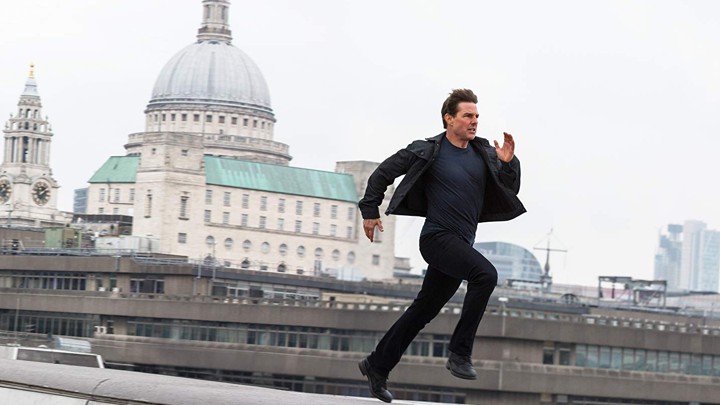
SPECIAL effects are a major part of M:I, however, what is incredible to that Tom Cruise will strive to make the stunts as real as possible by actually doing them himself. The opening of Rogue Nation and the end of Fallout are absolutely stupendous feats of daring which I would never contemplate. Similarly, bungee jumps, rock-climbing, free-jumping and many other effects-free actions give a very realistic feeling to proceedings.
INCREDIBLY talented directors who have worked on the franchise include: Brian DePalma, Brad Bird, John Woo, Christopher McQuarrie and JJ Abrams bringing their own inimitable styles to the various films and while Woo’s is pretty weak the franchise abides as each film has its own identity, look and feel.
BIG budgets are required to drive the Mission: Impossible film behemoth and while they continue to make the studio billions of revenue long will they continue. The first film cost a whopping $80 million dollars while the Fallout cost a mere $178 million. Although, given Fallout absolutely rocks it’s already made that back and much more besides.
LEAPING, running, driving, diving, swimming, crashing, disguising, fighting, flying, biking, parachuting, moving – you name it the IMF do it at incredible speeds and heights!
ETHAN HUNT as presented by Tom Cruise is a righteous dude fighting the good fight against the evil wrongdoers in the world. His commitment to the cause is unwavering and in defending the innocent against the corrupt goverments, villains and agents of evil. We all root for him as an aspirational action man of the people.
I watch a lot of stuff. It keeps me out of the pub and my liver safe from further harm. In between a July dominated by the World Cup in Russia, over the last few months I’ve been mainly re-watching Star Trek (OST) and catching up with the first two seasons of Mad Men in my downtime. But, in the last month, I decided to have a break from those fine shows and catch up with some movies via Netflix and Sky. I also include some quick reviews of a few films I saw at the cinema too. All reviews are, as usual marked out of eleven.
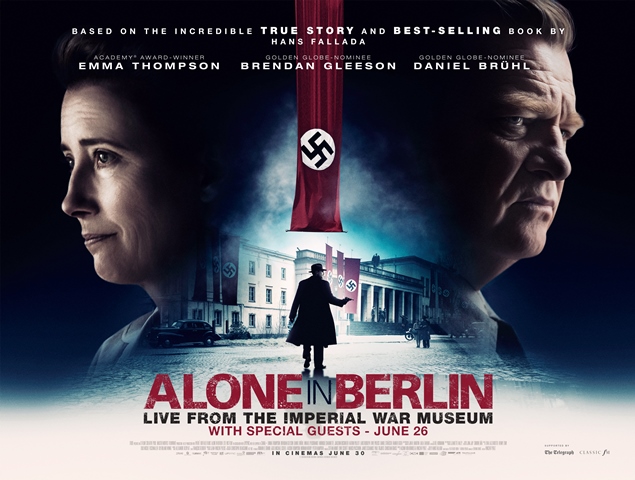
ALONE IN BERLIN (2016) – NETFLIX
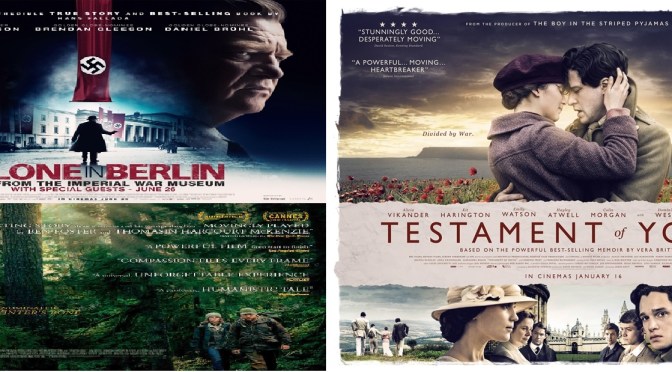
Emma Thompson and Brendan Gleeson give subtle and compelling performances in this excellent WW2 drama. They portray a German couple who have lost their son in the fighting and retaliate by waging a ‘quiet’ war distributing anti-Hitler leaflets.
(Mark: 8 out of 11)
ANON (2018) – SKY CINEMA
Clive Owen stands out in this under-cooked sci-fi drama inspired by Philip K. Dick and Black Mirror. He’s a future cop where crime is contained by point-of-view surveillance techniques. The idea is stronger than execution as it falls apart in the final act. (
Mark: 6 out of 11)
CALL ME BY YOUR NAME (2017) – SKY CINEMA
Luca Guadagnino’s direction is exquisite, while Armie Hammer and Timothee Chalamet are exceptional in their portrayal of romance in 1980s Italy. A fantastic soundtrack and beautiful scenery cannot save the characters who I found narcissistic and tedious.
(Mark: 6 out of 11)
CARGO (2018) – NETFLIX
Martin Freeman leads the cast in this Australian horror film which finds his kind father at the mercy of outback zombies. It’s a slow moving film which offers characterization over gore, effective moments of tension and the always dependable Freeman.
(Mark: 7 out of 11)
DEEP WATER HORIZON (2016) – NETFLIX
This is an intelligent disaster movie about one of the biggest oil spills ever. BP’s drilling practices are criticized as the slow-build direction gives way to explosive action at the end. Overall, the excellent cast and script make this a very compelling drama.
(Mark: 7.5 out of 11)
GIFTED (2017) – SKY CINEMA
Chris Evans takes a break from both battling Hydra with an altogether more everyday fight. He plays guardian and uncle to a gifted child (brilliant Mackenna Grace) who finds himself in a bitter custody battle for the child, in a very touching human drama.
(Mark: 7 out of 11)
GODS OF EGYPT (2017) – NETFLIX
This is a really bad attempt at creating a Star Wars like franchise in mythical Egypt. Gerard Butler shouts throughout as though he’d swallowed the Brian Blessed guide to acting! Terrible waste of $150 million and my precious time.
(Mark: 4 out of 11)
HAPPY DEATH DAY (2017) – SKY CINEMA
Groundhog Day (1993) meets slasher film as College super-brat portrayed by Jessica Rothe finds herself dying again and again in various horrific ways. Turning detective she must solve her own murder in this derivative but well executed horror movie.
(Mark: 7 out of 11)
HITMAN’S BODYGUARD (2017) – NETFLIX
Ryan Reynolds’ cynical performance and Samuel L. Jackson’s sparky turn make this assassin-action-film very watchable. Reynolds has to get Jackson to The Hague to testify against a nasty dictator; cue bullets, car chases and one-liners galore!
In Fallen Kingdom Bryce Dallas Howard and Chris Pratt, once again pits their wits against mighty prehistoric creatures. J. A. Bayona brings a gothic style to the final act but ultimately, despite the incredible effects on show, the narrative feels tired.
(Mark: 6.5 out of 11)
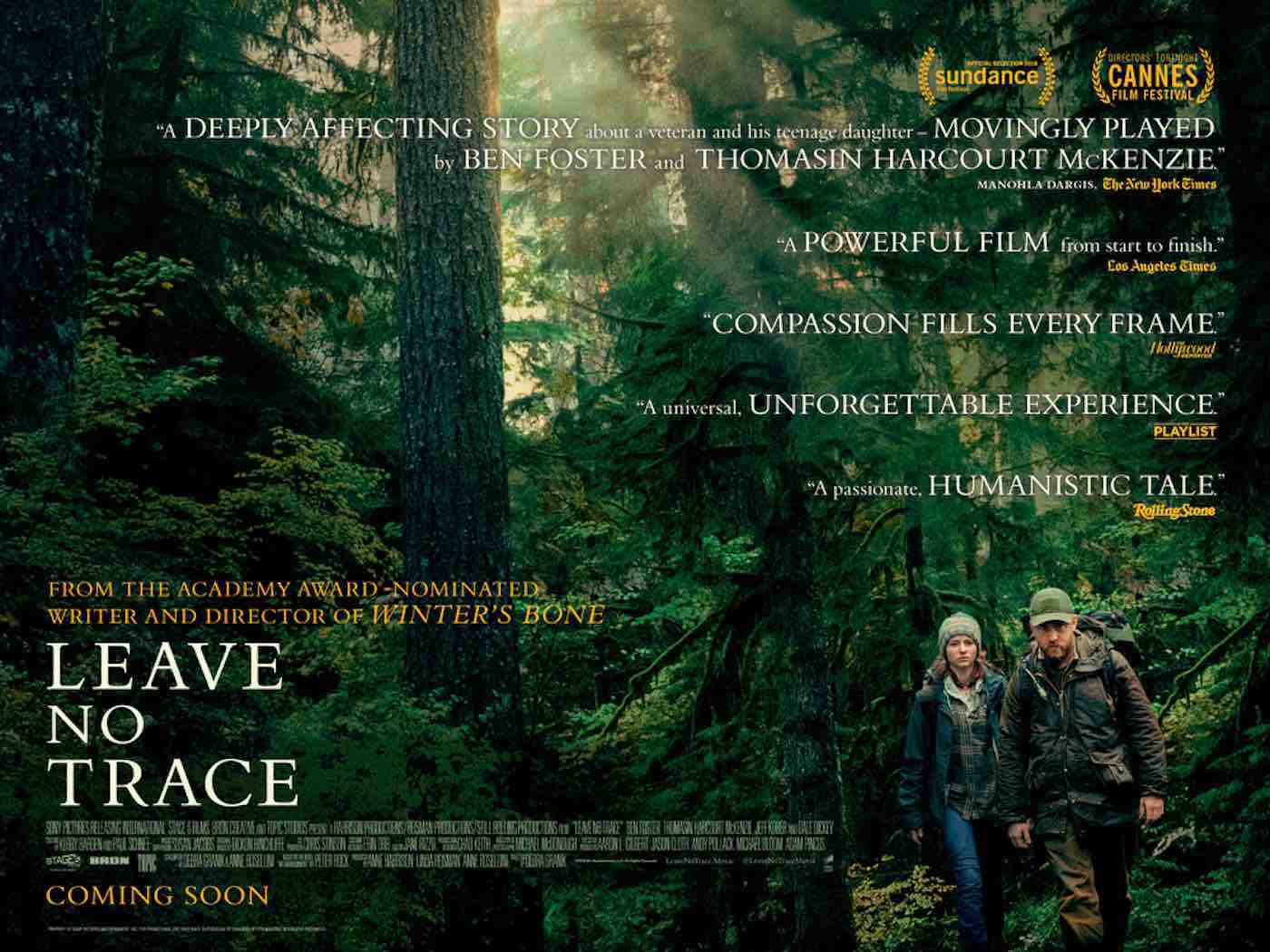
LEAVE NO TRACE (2018) – CLAPHAM PICTUREHOUSE
The intense Ben Foster and brilliant newcomer Thomasin Mackenzie act their hearts out in this subtle family road movie. Opting out of society they play father and daughter attempting to stay ahead of the authorities in a very touching and heartfelt drama.
(Mark: 8.5 out of 11)
THE LIMEHOUSE GOLEM (2017) – NETFLIX
Bill Nighy, Olivia Cooke and Douglas Booth are acting stand-outs in this watchable murder mystery set in Victorian London. The cinematography is impressively moody, however, the narrative runs out of steam by the time the twist kicks in.
(Mark: 7 out of 11)
OCEANS 8 (2018) – ODEON CINEMA
An excellent ensemble cast including: Sandra Bullock, Anne Hathaway, Sarah Paulson, Helena Bonham-Carter etc. cannot save this by-the-numbers heist film. It looks gorgeous but was low on jeopardy and ultimately, I didn’t care about the characters.
(Mark: 6.5 out of 11)
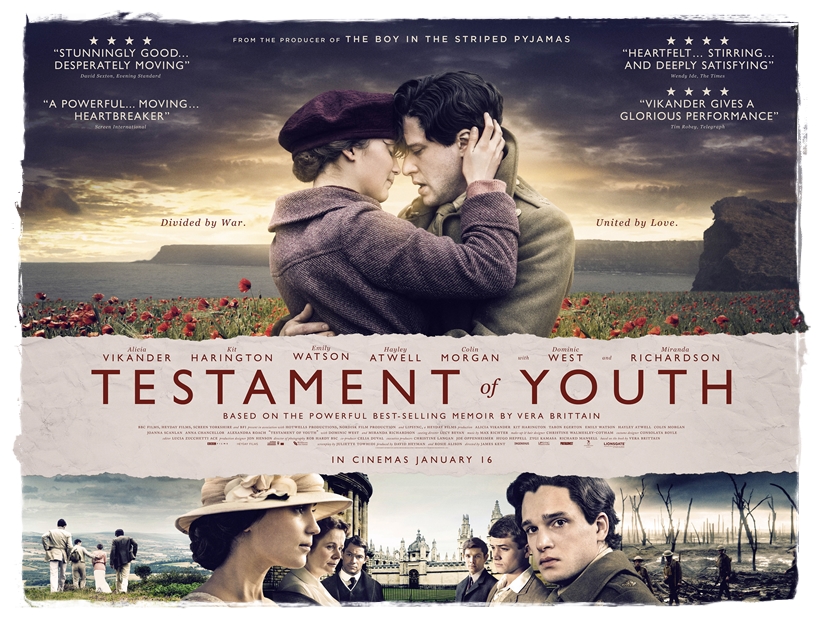
TESTAMENT OF YOUTH (2014) – NETFLIX
Alice Vikander is outstanding in this heart-breaking story of the impact of World War One on Vera Brittain and those she loves. Based on a seminal work of literature, it features themes relating to: war, death, pacifism, violence and the struggle of women combatting everyday prejudice. It’s very touching story, stellar cast and deeply empathetic characters which make it a highly recommended period drama.
(Mark: 9 out of 11)
WHAT HAPPENED TO MONDAY (2018) – NETFLIX
Always interesting Noomi Rapace stars as septuplets in hiding during a dystopic future that allows one child per family. The intriguing premise starts well but gives way to O.T.T violence which detracts a tad from an otherwise entertaining sci-fi film.
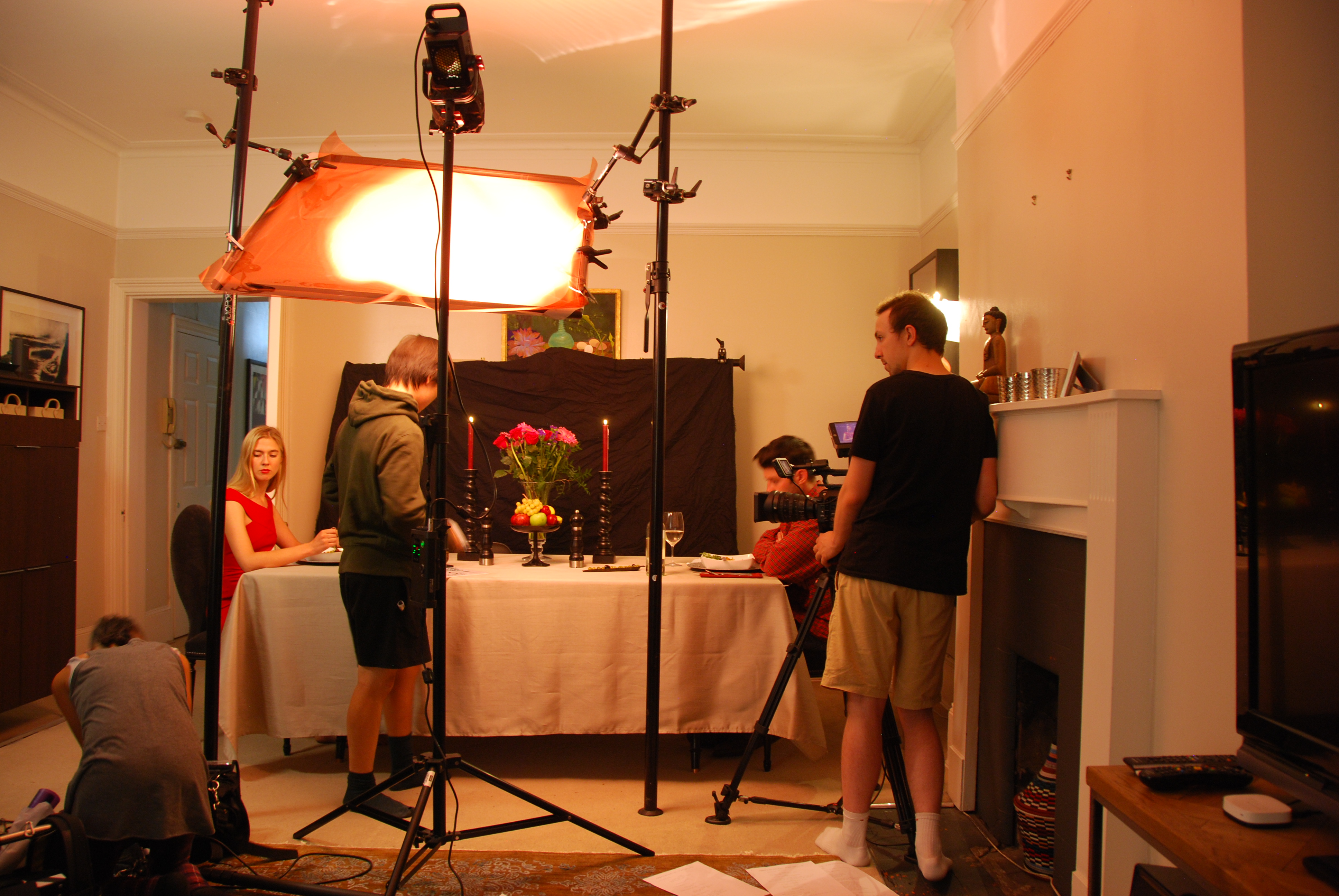
My third directorial short film effort went into production this year and the weekend shoot took place in the last week of July 2018. Thus, a small crew and two cast members put all of our preparations and rehearsals into action, in order to produce a compelling work of fiction. I am now at the editing/score stage but in the meantime here are some cast and crew details, on-set photos and story pitch.
THE STORY
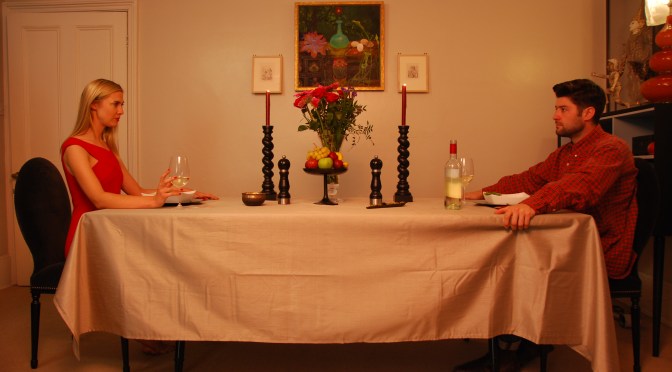
Sadie Cort is out for revenge. Her ex-boyfriend Stephen is coming to dinner and she has prepared a beautifully set candlelit table. The wine is uncorked and chilled before Sadie pours poison into it. As it drifts slowly to the bottom of the bottle, the doorbell chimes. Stephen is here but will he drink the wine? And why does Sadie want him dead? All will be revealed in the short horror and darkly comedic film Tolerance (2018), inspired by Roald Dahl, Inside No. 9 and Tales of the Unexpected.
CAST AND CREW
Written, produced, catered and directed by: Paul Laight
The low budget short horror film I completed in February 2018 is now ready for an online release. Please check it out here and feel free to share.
PITCH
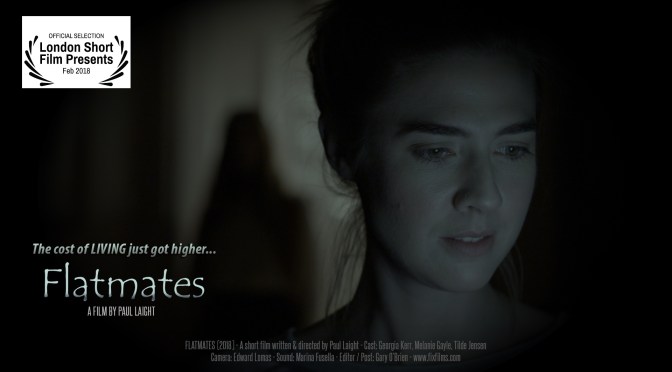
SARAH TENNANT moves into the ‘perfect’ rental property; only to find she’s sharing with an unwanted flatmate.
INFORMATION
Flatmates (2018) is the latest short film from Fix Films. It’s a contemporary ghost story which warns of the perils of flat-sharing, unscrupulous Estate Agents and haunting loneliness.
Fix Films are a filmmaking collective consisting of dynamic duo Paul Laight and Gary O’Brien. Since 2005 they have been involved in the creation of many short films and promos. They self-produce, write, direct, edit and score their own films to a very high standard despite the low budgets. They are true independent filmmakers. Flatmates is Paul’s first directorial effort.
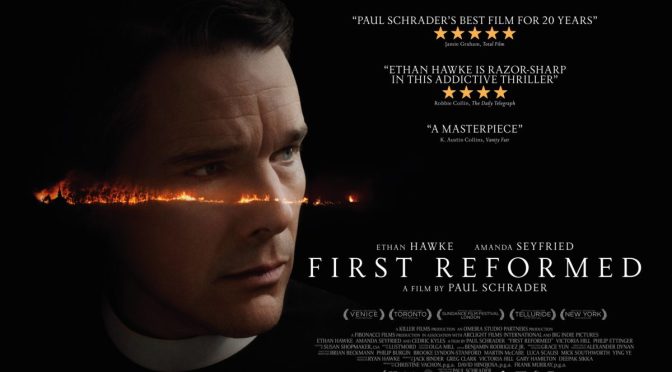
Produced by: Jack Binder, Greg Clark, Victoria Hill, Gary Hamilton, Deepak Sikka, Christine Vachon, David Hinojosa, Frank Murray
Starring: Ethan Hawke, Amanda Seyfried, Cedric Kyles, Philip Ettinger
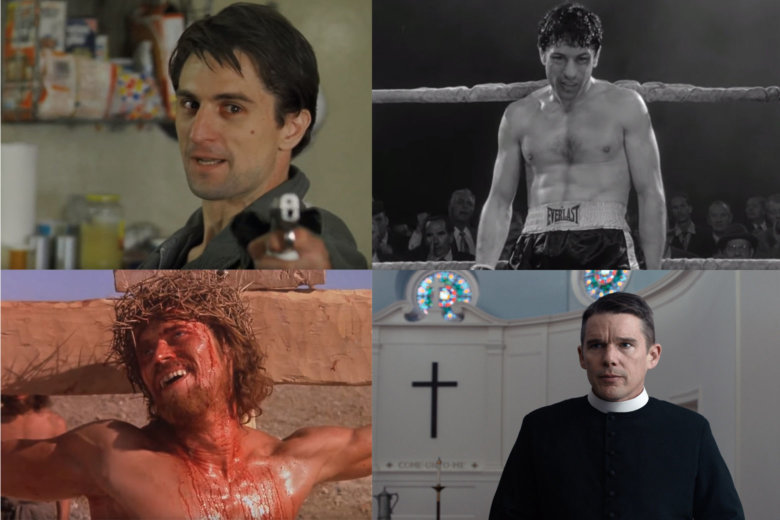
Paul Schrader is one of the greatest writers that has ever committed a career to cinema. He has been involved in the writing of exceptional films including: Taxi Driver (1976), Raging Bull (1980), Last Temptation of Christ (1988), and Bringing Out the Dead (1999), Blue Collar (1978), American Gigolo (1980), Mishima: A Life in Four Chapters (1985), Light Sleeper (1992), Affliction (1997) etc. Of late he’d had some misfires, however, First Reformed, is a devastating return to form for Schrader.
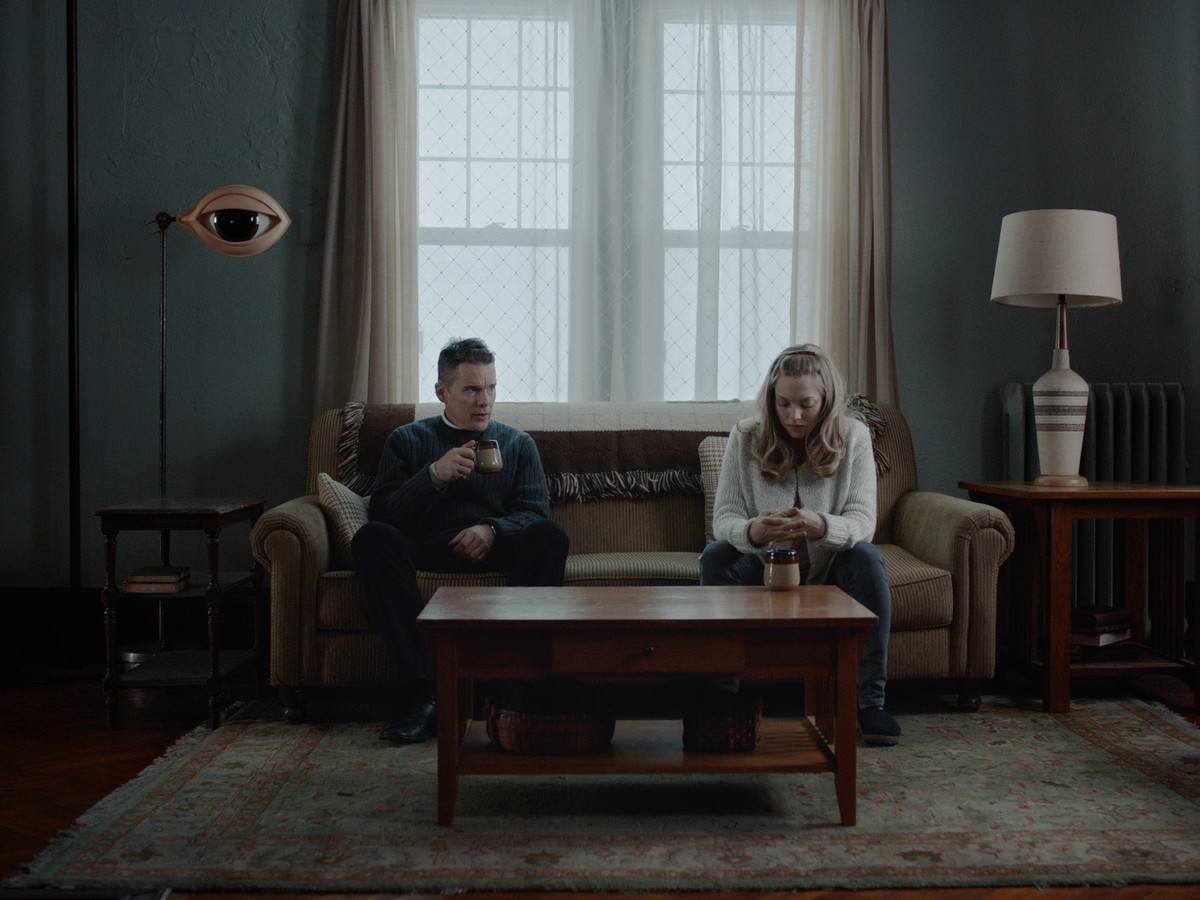
Tapping into the structure and themes of arguably his greatest work, Taxi Driver (1976), we find Ethan Hawke portraying New York chaplain, Reverend Ernst Toller. He is a complex, haunted and sad man, yet instilled with a strong sense of duty and commitment to his dwindling congregation. He keeps a journal to record his thoughts and these are delivered via a devastating voice-over. Hawke’s voice staggers across the images delivering a combination of existential pleas for understanding and an intelligent questioning of the world around him. Toller’s depression or malaise is not helped by his alcoholism and illness spreading through his body. Thus, Schrader and Hawke create a very empathetic character, out of sync and in grief but very likable to his peers and flock.
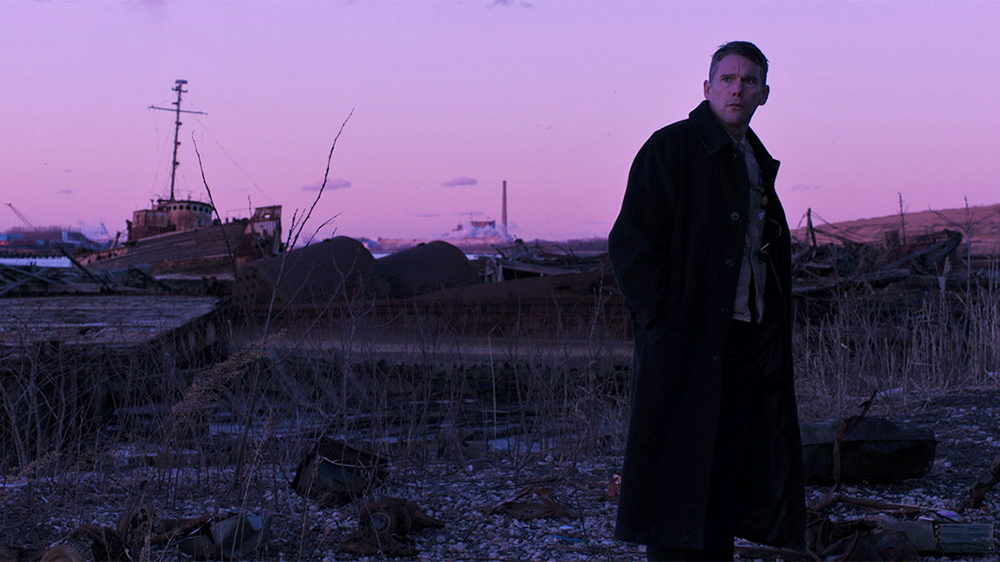
When Amanda Seyfried’s local mum-to-be Mary comes to see him about her troubled husband, Michael, Toller agrees to speak with him about his concerns for the world and the damage humans are inflicting on the environment. When the drama arrives you just feel every agonising moment through Hawke’s beautifully realised character. Just watching Ethan Hawke in a room is enough for me as he is such a nuanced and clever actor. Schrader frames Toller in doorways, rooms, shadows, mirrors and pulpits, pushing him into spaces and trapping him. The sparse nature of the sets also acts as a symbol of Toller’s emptiness and feeling of despair at the world. Yet, at no time does he question his faith per se. The film certainly has an air of that but the big indictment is the horror we have perpetuated upon God’s Earth; challenging whether we deserve this beautiful planet.
Ultimately, this is quintessential Paul Schrader. Taking a broken individual in the midst of a life crisis and attempting to find salvation or redemption. Whereas Taxi Driver (1976) was, in part, about Travis Bickle cleaning up the streets of New York, Ernst Toller finds a desire to clean up the corporate and capitalist industrial processes which are destroying the Earth. While First Reformed’sending is not as explosive or cathartic as Taxi Driver it paradoxically creates hope for a fascinating character nonetheless. While he may not be able to save the Earth, Reverend Toller, may somehow be able to save himself.
SIX OF THE BEST #12 – UNRELIABLE NARRATORS IN CINEMA
**CONTAINS MASSIVE SPOILERS**
I find the nature of storytelling and narrative construction a fascinating craft. As someone who reads and watches a lot of stories via: books, cinema, theatre, comedy, radio and television, I am always drawn to devices which differ from the conventional norm. When I was younger I used to pour scorn on stories told straight and in chronological order. I like difficult or unconventional works as it appealed to my younger rebellious side. Of late though, I have come to realise that unconventional or non-linear storytelling can be used as a stylistic device for the sake of it and adds nothing to the story. Screenwriting navel-gazing devices such as fragmented timelines can detract from the emotional impact of the characters’ journey. Thus, to get a complex layered and non-linear storyline right is difficult. Many writers and filmmakers experiment with variant structures to escape standard narrative conventions. Indeed, with hard work and positive creative decisions it is possible to capture magic in a script and transport it to the screen.
Conversely, the device of the unreliable narrator is another means which a screenwriter can differentiate a narrative from conventional classic storytelling. Usually, in say a Hollywood blockbuster our hero or heroes will be those we root for from beginning to end. To switch our main protagonist or narrative focus from positive to negative or good to bad is brave writing. To even begin with an anti-heroic or even unlikable lead protagonist is obviously a risk and can alienate the audience. Furthermore, to make the lead character or characters unreliable is very difficult. However, the tricky craft of leading us one way with a protagonist before revealing them to be untrustworthy or twisted is a device which can provide much narrative satisfaction.
In 1981, William Riggan, created a study of various unreliable types, including: The Picaro, The Madman, The Clown, The Naif and The Liar. The Picaro will typically be a bragger, similar to the Liar but not as heinous. The Madman or Mad Woman, however, will be more sinister but The Clown and The Naif will either be playing for laughs or in the latter’s case, telling their story from a naïve position. Moreover, an unreliable narrator will potentially be hiding their own crimes or actions out of guilt. Or they will have amnesia, selective or deliberate to mislead the audience. They may just take great joy in telling lies or simply be unhinged to believe their fractured personality is presenting their version of the truth. It could be they are also attention seekers; OR actually a combination of all of the above.
Examples of unreliable narrators are legion throughout theatrical and literary presentations. Indeed, Agatha Christie and Jim Thompson often utilised them in their crime stories; as did novelists such as: Emily Bronte, F. Scott Fitzgerald, Bret Easton Ellis, Gillian Flynn, Vladimir Nabokov and many more. In this piece I would like to consider six of the best films featuring unreliable narrators. It was tough to get just six as I could have easily doubled it but here we are!
***CONTAINS MASSIVE SPOILERS***
ATONEMENT (2007)
Joe Wright’s majestic directorial adaptation of Ian McEwan’s tragic war story is a poignant study of petty revenge and romantic conflict. While the story focusses on the doomed love affair between James McEvoy and Keira Knightley’s class-crossed lovers, the narrator is novelist Briony Tallis (Vanessa Redgrave). Due to a spiteful action by her thirteen year-old self the events of the drama are revealed at the end to be manipulated out of sheer guilt. While she attempts to give the romance story a more positive ending the horrors of war are to the fore and Briony’s remorse will never be humbled.
THE CABINET OF DR CALIGARI (1920)
This silent movie classic is seen as the epitome of German Expressionist cinema. Set within the confines of a mental health asylum it was directed by Robert Wiene and written by Hans Janowitz and Carl Mayer. The story concerns a man named Francis (Friedrich Feher) as he tells of a strange tale involving the mysterious somnambulist Cesare and nefarious Dr Caligari. Both stylistically and structurally formidable the film features: twisted and painterly sets, shadowy key lighting and ghostly make-up. Also, the story-within-the-story is both terrifying and all a lie in the mind of a madman. The ending would now be seen as potential cliché but on release it was astounding and clearly influenced another story with a troubled and unreliable narrator in Shutter Island (2010).
FIGHT CLUB (1999)
Chuck Palahniuk’s seminal novel and David Fincher’s incendiary cinematic adaptation is way too complex a piece to sum up in this little list. However, it still stands the test of time in terms of style and structure as Fincher directs the hell out of Edward Norton’s everyman and his charismatic alter-ego, Tyler Durden. A brutal, violent and coruscating vision of masculinity in crisis within a crumbling, corporate and schizophrenic society, Norton’s unreliable narrator spits and spirals and finally splits literally in half. Funny, dark, and a genuine film classic, no one’s meant to talk about Fight Club but it certainly deserves all the praise heaped upon it.
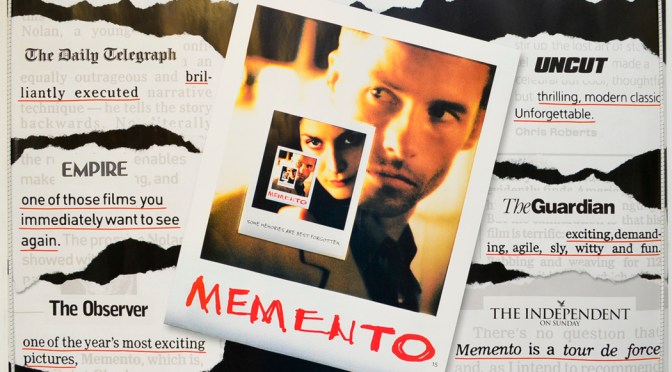
MEMENTO (2000)
Christopher Nolan’s early noir classic Memento (2000) is famously told in reverse chronological fashion, thus subverting the very nature of linear storytelling. His anti-hero, Leonard Shelby, has no means of making new memories thus via tattoos and Polaroid photos he constructs a present day movie of his own life in visual form. As the story unfolds we flash back and forth to a film within a film about a character called Sammy Jankis. Yet, incredibly and sadly, it turns out that Sammy is an imagined character used to suppress a terrible event in Leonard’s life and the film within a film is in fact the imagined vision of an unreliable narrator.
RASHOMON (1950)
Akiro Kurosawa’s superbly directed crime classic has not just one but numerous unreliable narrators. Structured around the investigation into a rape and murder in Japan the story splinters around the investigation of said crimes. Various versions of the same story are told from different perspectives as the subjectivity of truth is tested to the full. Are the characters’ stories from the perspective of: the bandit, the wife, the samurai and woodcutter lies or “true” reflections of the events in their respective minds? We all tell stories and is it possible we have got it wrong by mistake or manipulating the truth to our own benefit. Rashomon posits such questions and more in a beautifully rendered cinema classic.
THE USUAL SUSPECTS (1995)
Christopher McQuarrie’s screenplay remains one of the best I have ever read and the film is not too bad either. Shot on a low budget but cast perfectly the whole story is set around Chazz Palminteri’s cop grilling Kevin Spacey’s Verbal Kint about a major crime at the docks. What follows is a fractured structure which twists and turns on the basis of the narratives Kint is providing. We flash into event within event which is initially perceived to be truth but ultimately is a fiction. The final reveal where we find Kint has, in fact, been hiding a devilish truth all along astounds the cop and audience beyond belief. The story was so complex that Gabriel Byrne and other cast members actually thought they were Keyser Soze; only finding out they weren’t when they’d seen the incredible twist ending.
As well watching loads of films and television programmes I also write scripts and produce low-budget short films. This year and last was quite productive. My horror short Flatmates (2018) was shot and completed and having got a couple of festival screenings it still awaits an online release. In the meantime I shot a 90 second micro-budget science-fiction thriller called Don’t Trust Me (2018) which can be seen on my YouTube channel HERE.
Furthermore, my short film C’est Fini (2018) was produced by the Northern Film School and our Star Trek Fan film The Holy Core (2018) found a backer and is currently in pre-production. Finally, myself and actress Melanie Gayle decided to work together again to produce a script for another 90 second short film competition Depict! This competition screens micro-shorts at the Encounters Film Festival and so we shot MISDIRECTION (2018), with that in mind.
MISDIRECTION (2018) was shot in June in a day with a small crew; not that they are short but there was only four of us! The crew were great and so was my leading actress Melanie Gayle. My wife also provided wonderful voice work as the SAT-NAV. The 90 second version was edited and then submitted to Depict. Yet, I also had a slightly longer version cut and I think, despite the low-budget, it works well as a little twist-in-the-tale story that’s both funny and sinister too. There are obvious homages to the works of Philip K. Dick, 2001: A Space Odyssey (1968), Black Mirror and Tales of the Unexpected. Here it is – hope you enjoy:
PITCH
A short, low-budget science-fiction comedy film with a twist.
SYNOPSIS
Valentine Ford is meeting her boyfriend, Dave, for dinner. However, her SAT-NAV has other ideas.