[Book review:] The Hollywood Standard (3rd Edition) – by Christopher Riley

[Book review:] The Hollywood Standard: The Complete and Authoritative Guide to Script Format and Style (3rd Edition) – by Christopher Riley


INT. BASEMENT OFFICE – RAINDANCE FILM SCHOOL – NIGHT

The WRITER (early 50s), balding, could be in better shape but he’s a slave to his work and not the gym. Hunched over his laptop the Writer stares at a blank screen. Thinking. Suddenly a flurry of TYPING.

INSERT COMPUTER SCREEN:

INT. BASEMENT OFFICE – RAINDANCE FILM SCHOOL – NIGHT

BACK TO: the Writer YAWNING.

THE WRITER (V.O.)
Nothing like a looming deadline
to help get things done. Everything
except hitting that looming deadline.
Cleaning. I tend to clean a lot
when I have a deadline. My flat and
office have never been so clean
The kitchen too. It wasn’t even
my kitchen.

The Writer checks his watch. It’s 8.15pm. Rubs his eyes.


THE WRITER (V.O.)
I’d been tasked with writing a review
of Christopher Riley’s formidable
guide script format and style called
The Hollywood Standard.
I was struggling. How could I write this
review in an interesting way?
What could I say that hasn’t already been
said by way more talented people than me?
What I can say is this book is the bible
and a must buy for screenwriters of all
levels. Not only does Riley write with
authority about the basics of script
formatting, but he also gives us a vital
chapter on ‘Deadly Mistakes to Avoid’ while
writing one’s screenplay.
I mean, you may have the greatest story
known to humanity, but if you don’t
write with clarity, accuracy and follow
the basic rules, then those hard-to-impress
studio script readers will throw your
hard work and dreams to the proverbial pyre!

The Writer’s mobile phone BUZZES with a text.

Looks at his phone. Eyes roll. Pushes the phone away.

THE WRITER (V.O.)
Moreover, Riley brilliantly
backs up pages of fine advice, with
examples of classic scriptwriting by
the likes of Vince Gilligan, Guillermo
Del Toro, Jordan Peele, and the Coen
Brothers.


The Writer’s mobile phone VIBRATES from a call.


THE WRITER
(to the PHONE)
Not now!
(won’t go away, so answers)
Yes. . . sorry. I’m tired. 
Got stuck here writing this
book review.
(listens)
Soon. . . I know I work too hard.
(listens)
Okay, my dear. . . The book?
It’s brilliant. I’m close to
concluding. Just about to
write how important a clear writing
style is when conveying your
cinematic vision on the page.
(listens)
Funny you should ask, Riley
covers dialogue, action, dream,
montage, flashback sequences,
CAPITALIZATION, sounds,
texts, [parentheticals], transitions,
and more. . . Yeah, The Hollywood
Standard
is invaluable. . .
I’d better go. Need to get home.
(listens)
Yes, I know this conversation’s
in my head. I’m just typing this for
a meta-conclusion. To be clever.
The review is finished. Got to
start writing that feature film I’m
getting paid for. You’re right!
Right! THAT fridge won’t clean itself.

Buy the book from HERE:

Publication from https://mwp.com/product/hollywood-standard-third-edition-complete-authoritative-guide-script-format-style/


Michael Wiese Productions (MWP) was launched in San Francisco in 1976 primarily to produce films. Today, the company is known worldwide having published some 200 books. Some of the bestsellers have been translated into 28 languages, are used in over 1000 film courses, in the Hollywood studios and by emerging filmmakers.


(Note from THE WRITER: I know the script above should be in Courier New font, but WordPress won’t let me change it or I don’t know how.)
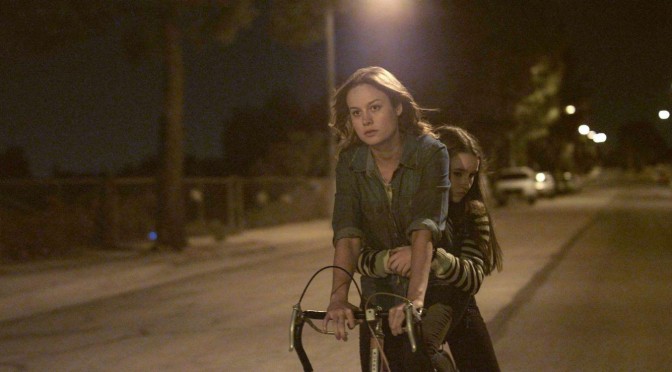

FILMS THAT GOT AWAY #15: SHORT TERM 12 (2013)

FILMS THAT GOT AWAY #15: SHORT TERM 12 (2013)

Written and Directed by: Destin Daniel Cretton

Produced by: Maren Olson, Asher Goldstein, Joshua Astrachan, Ron Najor

Cast: Brie Larson, John Gallagher, Jr., Kaitlyn Dever, Rami Malek, Lakeith Stanfield, Kevin Hernandez, Melora Walters, Stephanie Beatriz, etc.

Cinematography: Brett Pawlak


Bloody Marvel!

I refer to both this film, Short Term 12 (2013), and the Disney-owned behemoth studio which, while releasing some incredible film works over the years, currently pumps out generic product of variant quality. I say “Bloody Marvel” because the studio continue to poach some amazingly talented filmmakers with indie roots to front their entertaining cookie-cutter templates. I, of course, include Short Term 12 (2013), writer-director, Destin Daniel Cretton who, having adapted his own short film for a reported $400,000, has subsequently been directing stupidly expensive super-hero films for the studio giant.

Short Term 12 (2013) is one of those films I missed seeing on release. I then, for some unknown series of reasons, did not see it on video until earlier this month. It is a brilliant drama, full of fascinating characters, amazing dialogue, poignant moments of humanity and some really funny scenes also. Moreover, it has almost the perfect low-budget film screenplay, so it is no surprise to find out Destin Daniel Cretton’s script won a Nicholls Fellowship Screenwriting Award. The casting director also deserves a mention too. I am not sure what kind of crystal ball they had because the ensemble is a who’s-who of “before they were famous” castings including: Brie Larson, Lakeith Stanfield, Rami Malek, John Gallagher, Kaitlyn Dever and Stephanie Beatriz.

Set in a group care home, Short Term 12 (2013), centres around the staff and teenage children and their daily ups and downs. At the heart of the story is Grace (Brie Larson) and her work/romance partner, Mason (John Gallagher). As well as working to resolve the often harrowing issues of teenagers such as Marcus (Lakeith Stanfield) and Jayden (Kaitlyn Dever), Grace strives to overcome the post-traumatic scars her childhood has caused her. Aside from a slight tragedy overload in the final act, Short Term 12 (2013), is one of the best films I have seen in a long time. The emotional gravity I felt for many of these characters was so powerful. It is very rare that a film can make me laugh and cry in equal measures. And it was all shot, acted and directed in just twenty days. Destin Daniel Cretton’s sophomore feature film is a true indie marvel!

Mark: 10 out of 11


NETFLIX SPRING FILM REVIEWS – PART TWO! Including Pinocchio (2022), The Wonder (2022), White Noise (2022) and more. . .

So, here’s PART TWO of my Netflix spring film reviews. PART ONE is HERE if you are interested.

Happy Holidays everyone!


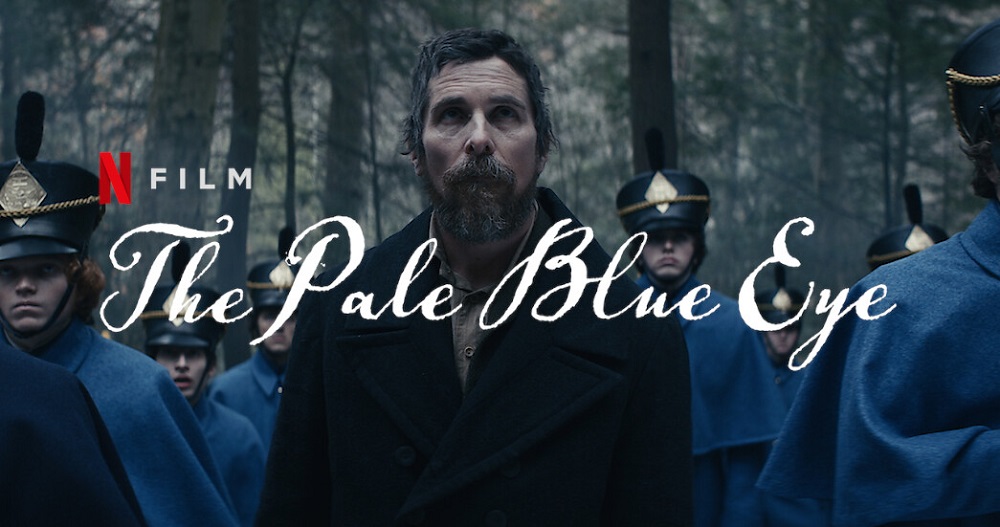
THE PALE BLUE EYE (2022)

Scott Cooper and Christian Bale combined to brutal and intense impact with the dark Western, Hostiles (2017). Their follow-up is an equally bleak, but not so riveting character study, based on the detective novel by Louis Bayard. Bale portrays a world-weary detective, during the 1830s, tasked with solving the suspicious deaths of cadets at military school, West Point. Moody, murky, and dour in performance, production design and plotting, The Pale Blue Eye (2022), is a draining experience. Further, Bale’s Augustus Landor is not the most charismatic of protagonists and only Harry Melling’s eccentric rendition of a young Edgar Allen Poe, occasionally raises the gloom. There’s some terrific cinematography in this cold thriller and a great story in there. I especially enjoyed the Edgar Allen Poe elements too. But, the film is suffocated by the slow pacing and lack of empathy for the victims or lead characters.

Mark: 7 out of 11


PINOCCHIO (2022)

I have to be honest, but I have never really had a big emotional connection with the story of Pinocchio. It’s great to have goals in life, but the desire to ascend to a higher plain of humanity and be “real”, whether you are made of wood or machine (see Artificial Intelligence (2001)) is a desire I cannot align too. Maybe I am too dumb or privileged? However, I think that is probably the point of the writer Carlo Colludi’s classic tale. Because it is all about finding peace within yourself whatever you are made of. Indeed, it is a fantastic rites-of-passage, journey of discovery narrative and deserving of classic status. Let’s not forget that Disney, Kubrick, Spielberg, Garrone, Zemeckis, and now Guillermo Del Toro have produced versions of Pinocchio (2022). But how many more do we need? Del Toro, Mark Gustafson and their genius production team’s stop-motion version is a stunning rendition though. Setting it during World War II darkens the flavour and colour, with Del Toro breathing fresh life into this overfamiliar fairy story.

Mark: 8.5 out of 11


THE TRIP (2021)

Norwegian genre movie director, Tommy Wirkola, unofficially remakes Haneke’s Funny Games (1997), with this bloody hilarious live-action cartoon comedy. Noomi Rapace and Aksel Hannie are Lars and Lisa, a couple whose marriage is crumbling. Both decide that divorce is not the best way to end their relationship. A trip away is not an attempt for the couple to reconcile, but to destroy each other. Before you can say War of the Roses (1989), the film takes a violent twist as their unromantic getaway descends further into destruction with the introduction of a surprising criminal element. I won’t give it away, but I was thoroughly entertained by the gory and bone-shredding silliness of it all. Noomi Rapace is always brilliant too!

Mark: 8 out of 11


WHITE NOISE (2022)

Kubrick is quoted as saying, “If it can be written, or thought, it can be filmed.” But does that necessarily mean it should be filmed? So, when you read a literary classic is apparently unfilmable, and then discover that it is being filmed, you wonder how they have filmed it. Well, in the case of Noah Baumbach’s adaptation of postmodern classic, Dom DeLillo’s White Noise (2022), I genuinely wonder why they bothered. Perhaps, the apparent $100 million spent will allow Noel Baumbach and Greta Gerwig to develop more interesting projects in the future, but this really is an over-expensive 1980s set cinematic folly. Having said that Gerwig and Adam Driver light up the screen and Baumbach’s witty script had some genuinely delightful dialogue exchanges between the energetic and intellectual ensemble. However, overall the film was too self-consciously eccentric and over-long. I’m glad the filmmaking team got a grand payday, but arguably the book should have remained unfilmed and on the page. Sticking it out to the bitter end is well worth it though. It has a fantastic final credits sequence.

Mark: 7 out of 11

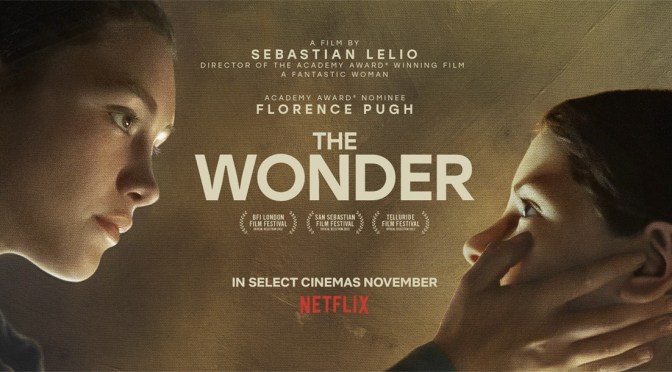
THE WONDER (2022)

Is there a better actor around than Florence Pugh? I am not so sure. She is formidably brilliant in every role I have seen her in. I think that Pugh is so clever, emotional and magnetic in her screen performances, none more so than in this intense period drama directed by Sebastian Lelio. The Wonder (2022), an adaptation of a novel by Emma Donoghue, is set during 1862 in rural Ireland shortly after the Great Famine. Pugh’s English nurse, Elizabeth Wright, is summoned to attend a young girl who apparently has not eaten for months. Is it a religious miracle or are there supernatural forces at play? Such themes are intelligently explored in this atmospheric and brooding drama which had me gripped throughout. The subtext of religious control, Catholic guilt and the English stranglehold over Ireland also exist between the dramatic lines in an intimate epic, anchored by Pugh’s dominant force-of-human-nature performance.

Mark: 9 out of 11


NETFLIX SPRING FILM REVIEWS – PART ONE! Including: All Quiet on the Western Front (2022), Glass Onion (2022), Passing (2021) and more . . .

Having not been too impressed by Netflix’s summer 2022 blockbuster releases – see my reviews here – I questioned the amount of money spent on big budget productions which had very average scripts and indifferent storytelling. Well, Netflix have certainly redeemed themselves of late, because the majority of the films I have seen on the platform recently have been excellent.

Indeed, I have watched so many Netflix films since the turn of 2023, I have decided to split the reviews into two parts. I have been so busy at work that I just don’t have time to review them all separately. Many of these films are so impressive they do deserve longer critical pieces, but there you go. I have even passed over reviewing John Wick 4 (2023) and Scream 6 (2023). While they are decent genre films, they offer nothing new to The Cinema Fix reviewing realm.

Ultimately, I hope you enjoyed these films as much as did. All power to Netflix – keep up the amazing work!


ALL QUIET ON THE WESTERN FRONT (2022)

The German war film adaptation of the classic novel by Erich Maria Remarque has been made twice before. This big budget version is directed by Edward Berger and certainly has a powerful and spectacular visual style, allied to some formidable filmmaking expertise. I fear the television screen was not the right medium to witness the muddy majesty on show as it can barely contain the crunching metallic and bloody horrors of the first World War. The film has unsurprisingly been nominated for and won many awards, and benefits from a brilliant debutant screen performance from Felix Kammerer. Personally, I still feel that the original 1930 film adaptation has more human emotion to it, as the characters in this version aren’t as well set-up from the start in comparison. A phenomenal achievement in sound and vision though nonetheless. The cinematography and soundtrack are as good as gets.

Mark: 8.5 out 11


ATHENA (2022)

Imagine taking the anger and social commentary within La Haine (1996), and adding vivid colour, pyrotechnics, kinetic cameras, long takes, and turning it all the way up to eleven? If so, then you have an idea of what Roman Gavras’ socio-political-action-thriller, Athena (2022) delivers. The death of a youth at the hands of police brutality kicks off rioting from the underclasses on a French council estate. What follows is a stunning group of frantic and explosive action set-pieces as fraternal loyalties are tested between the main protagonists with police, youth and gangsters at each other’s throats. Arguably though, the fast pace and fireworks dampen the sociological message in an otherwise breath-taking directorial and cinematographic achievement.

Mark: 8.5 out of 11


GLASS ONION: A KNIVES OUT MYSTERY (2022)

I really enjoyed the first Knives Out (2019) reviewed here. It was one of my films of the year. I also absolutely love Agatha Christie’s model of ensemble characters being investigated by a brilliant detective, with complex plotting and surprise twists and dark secrets being uncovered as a “whodunnit” is solved. Rian Johnson’s brilliant screenwriting abilities also breathed fresh air into a well-worn subgenre. He attempts to capture lightning in a bottle again with Glass Onion (2022), and while the famous cast, notably Dave Bautista, Janelle Monae, and Kathryn Hahn stand out among the over-actors, the devilish plot concerning rich people trying to out-do each other just did not connect and make me care. Also, am I the only one who still thinks Daniel Craig is miscast in this role? Even though I really enjoyed the cleverness of the script, his appalling “Foghorn Leghorn” accent still grates me.

Mark: 7.5 out of 11


THE HOUSE (2022)

From the leading voices in independent stop motion animation – Emma de Swaef & Marc Roels, Niki Lindroth von Bahr and Paloma Baeza – The House (2022) is a triumph of eccentric imagination, artistic talent and surreal vision. But the three bizarre tales contained within this anthology, while kind of enjoyable, were just TOO weird for me to thoroughly enjoy in a conventional sense. File under impressive avant-garde and experimental genius, rather than safe popcorn entertainment, and that is probably what the filmmakers were aiming for.

Mark: 7 out of 11


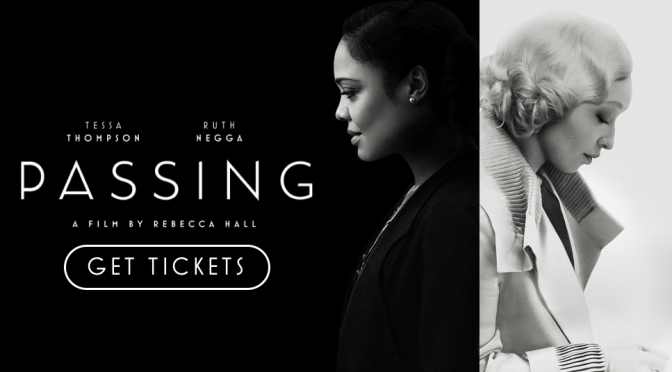
PASSING (2021)

I wish I’d seen this amazingly powerful film on release as it would certainly have been in my top ten films of the year. It’s a low budget, intimate and yet emotionally resonant adaptation of Nella Larson’s novel. Set in 1920s New York, the heartfelt drama juxtaposes the lives of two black women, portrayed by Tessa Thompson and Ruth Negga, with the latter passing herself as white within the racially charged era of the time. As their friendship develops their respective life choices are explored with subtlety and intensity by the impressive cast and director, Rebecca Hall. The choice to employ black-and-white cinematography, while often an over-used artistic indie-film trope, is absolutely the right choice. Lastly, Tessa Thompson is wonderful, but Ruth Negga is quite sublime in a complex, pathos-laden and unforgettable tragic screen personification.

Mark: 9.5 out of 11


CINEMA REVIEW: COCAINE BEAR (2023)

CINEMA REVIEW: COCAINE BEAR (2023)

Directed by Elizabeth Banks

Written by Jimmy Warden

Produced by: Phil Lord, Christopher Miller, Aditya Sood, Elizabeth Banks, Max Handelman and Brian Duffield

Main Cast: Keri Russell, O’Shea Jackson Jr., Christian Convery, Alden Ehrenreich, Brooklynn Prince, Isiah Whitlock Jr., Margo Martindale and Ray Liotta

*** CONTAINS SPOILERS ***


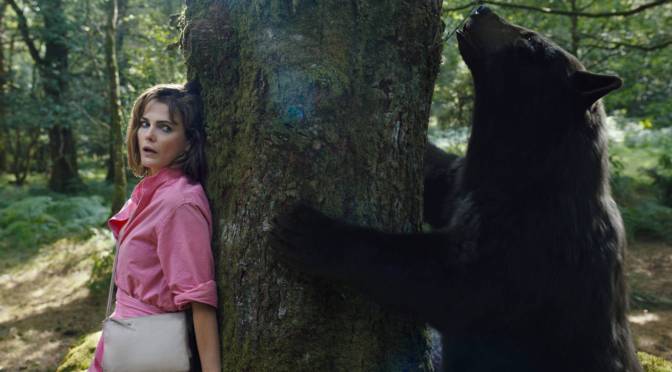
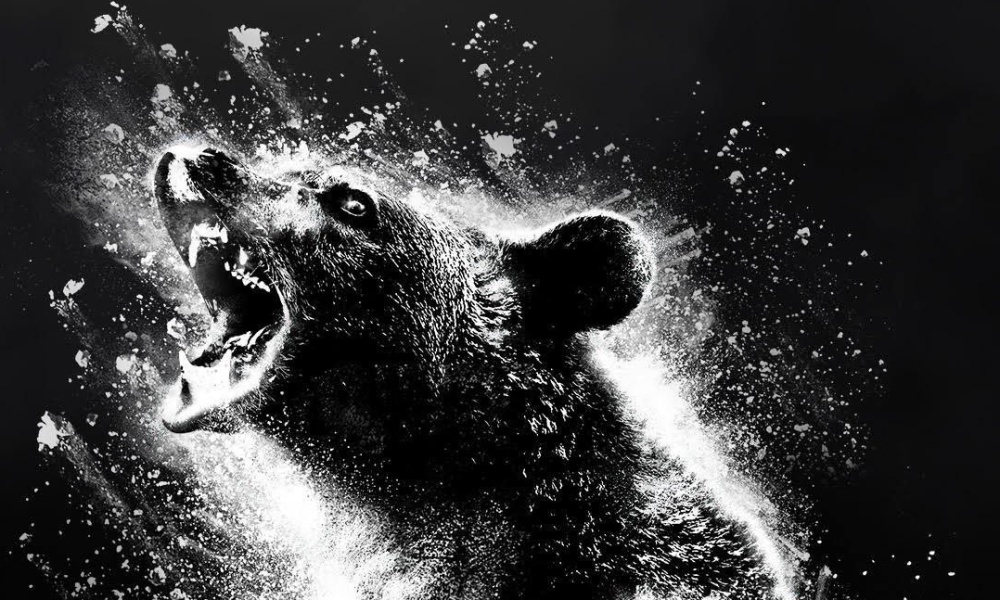
Every now and then a film title hooks you in immediately. Snakes on a Plane (2006) anyone? Now, another beast driven movie comes along and says, “Hold. . . My. . . Bear!” Enter based-on-a-crazy-true-story Cocaine Bear (2023)! Yes, incredibly, the B-movie comedy-horror film is based on the real-life events in 1985, when a drug smuggler chucked themselves, and over forty bags of cocaine, out of a mechanically flailing aeroplane. When his parachute failed to open the smuggler plummeted to his death. The raining coke fell into Georgia forest terrain, only to be found by a black bear who, thinking it was food perhaps, tucked into the white powder.

Cocaine Bear (2023) imagines what happened next to this bizarre but somehow tragic series of unfortunate events. Let’s just say that P.E.T.A would certainly not approve of what happens to the bear in this film. Although they may enjoy the many grisly and bone-crunching deaths that occur to the mostly two-dimensional human characters on show. But while the cast, notably Alden Ehrenreich and Keri Russell, do their best with the material, the film lacks the wit and ensemble acting strength of a far superior movie involving an apex predator gone rogue, Lake Placid (1999).

Safe to say that Cocaine Bear (2023) is a pretty terrible movie. It is, however, very entertaining in a stupid way. It is deliberately intended to be that way by the writer, Jimmy Warden and director Elizabeth Banks. The flimsy characterisation, over-acting and half-witted plotting place the film on the verge of parody, without reaching the richly, gag-heavy scripts of say the Naked Gun series. There are some fantastically funny scenes involving the kids finding the cocaine and the realistic CGI bear causing carnage killing dumb teenage gang members and bickering gangsters. So, go into Cocaine Bear (2023) with low expectations and you will be rewarded with a funny and bloody B-movie monster flick. Ultimately, it has a great trailer and clickbait title, and contains enough crowd-pleasing carnage and dumb fun to make it worth a trip to the cinema.

Mark: 6.5 out of 11


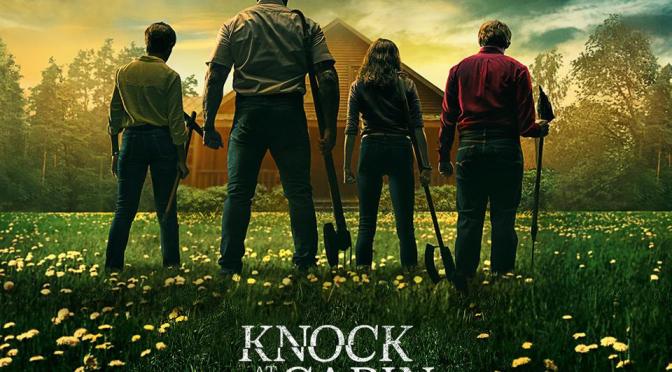
CINEMA REVIEW: KNOCK AT THE CABIN (2023)

CINEMA REVIEW: KNOCK AT THE CABIN (2023)

Directed by: M. Night Shyamalan

Screenplay by: M. Night Shyamalan, Steve Desmond and Michael Sherman


Based on The Cabin at the End of the World by Paul G. Tremblay

Produced by: M. Night Shyamalan, Marc Bienstock, Ashwin Rajan

Main cast: Dave Bautista, Jonathan Groff, Ben Aldridge, Nikki Amuka-Bird, Kristen Cui, Abby Quinn, Rupert Grint etc.

Cinematography: Jarin Blaschke, Lowell A. Meyer

*** MAY CONTAIN SPOILERS ***


M. Night Shyamalan is arguably one of the most critically divisive directors working today. Not because his films are particularly controversial, but mainly because he is a risk-taker that tests the boundaries of genre expectations. He has so many different ideas and concepts that quite often his movies have back-fired spectacularly, however, when he gets it right his genre films are highly entertaining and compelling. Superior genre films such as: The Sixth Sense (1999), Unbreakable (2000), Signs (2002), and The Village (2004), were full of invention, suspense and wicked twists. Many people felt The Village stretched the limits of suspending disbelief, but it was a masterpiece compared to his filmic failures like: The Lady in the Water (2006), The Happening (2008) and The Last Airbender (2010).

I missed seeing the apparent disaster that was After Earth (2013), yet it was opined that Shyamalan returned to some essence of form with the horror film The Visit (2015). However, I still felt there were some dodgy creative decisions in that, such as the story-filler-white-middle-class-rapping kid in amidst a creepy thriller. Yet, with Split (2016), Shyamalan was back to his best, weaving an exploitational B-movie kidnap-plot with a searing psycho-performance from James McAvoy. The ending, which found Anya Taylor-Joy’s ultra resilient Casey fighting back against McAvoy’s twenty-plus split-personality maniac, then brilliantly linked the film to Shyamalan’s Unbreakable (2000). Glass (2019), was a solid finale to the unlikely trilogy and his adaptation of the novel, Sandcastle, titled Old (2021), received mixed reviews. However, despite the over-cooked ending, I thought it was a brilliant Twilight Zone infused ensemble suspense twister.


Shyamalan’s latest cinema offering, Knock at the Cabin (2023) is another literary adaptation and contains a simple yet compelling premise. As same-sex couple, Eric and Andrew, plus their adopted daughter, Wen, are enjoying a relaxing getaway in a peaceful and bucolic wood, four strangers carrying home made medieval-type weapons arrive and give them a horrific choice. If they do not sacrifice and kill one of their family, the end of the world will begin. This apocalyptic game of “would you rather” immediately raises the drama and stakes to a critical point, after which events become darker and tense. I was immediately drawn in as I really enjoy narratives where the characters have unenviable choices to make. What would I do in that situation?

As the family are tied up and threatened, the four strangers introduce themselves and how they came to the cabin. The tension increases as the world events seem to back up what the seemingly crazy people are saying. Interspersed with the scenes in the cabin are some moving flashbacks which establish the humanity and relationships of the victims. This creates empathy and texture to the middle-class every-couple family unit. They are not action stars or superheroes, but are us, the audience, facing a hard-to-stomach decision. Of course, a certain amount of suspension of disbelief is asked by Knock at the Cabin (2023). However, I was certainly gripped by the narrative throughout.

M. Night Shyamalan’s films often contain social commentary or reference to larger external forces impacting the characters. Here my interpretation was that, the book it is adapted from and the script, are dealing with themes relating to environmental allegory. If we, as a species, are all prepared to make a sacrifice we can ultimately save the world from disaster. Yet, Shyamalan succeeds here where The Happening (2008) failed because the message is more subtle, without bludgeoning us over the head with a massive weapon. Talking of which Dave Bautista gives a revelatory performance as the gentle giant, Leonard, a man cursed to carry out the portentous visions which haunt him and his group of deadly seers. His performance, some fascinating frame and shot choices, and Shyamalan’s ability to create psychological tension without resorting to shock tactics are all great reasons to answer the door to this apocalyptic thriller.

Mark: 8 out of 11


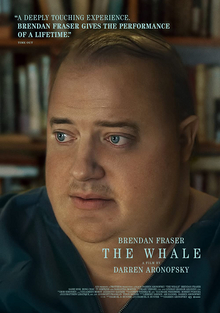
CINEMA REVIEW: THE WHALE (2022)

CINEMA REVIEW: THE WHALE (2022)

Directed by Darren Aronofsky

Screenplay by Samuel D. Hunter (based on his play of the same name.)

Produced by: Jeremy Dawson, Ari Handel, Darren Aronofsky

Main cast: Brendan Fraser, Sadie Sink, Hong Chau, Ty Simpkins and Samantha Morton

Cinematography Matthew Libatique

*** MAY CONTAIN SPOILERS ***


Darren Aronofsky is a risk-taking, boundary-pushing genius of a genre filmmaker. He is one of those film experimenters who threatens and breaks the chains of narrative convention, form and style. Films such as Pi (1998), Requiem for a Dream (2000), The Wrestler (2008) and Black Swan (2010) are intelligent, moving and often controversial cinematic visions. The least said about the indulgent, pretentious and nihilistic void of a film, Mother (2017), the better. Many went crazy for that allegorical nervous breakdown on the screen, but not me.

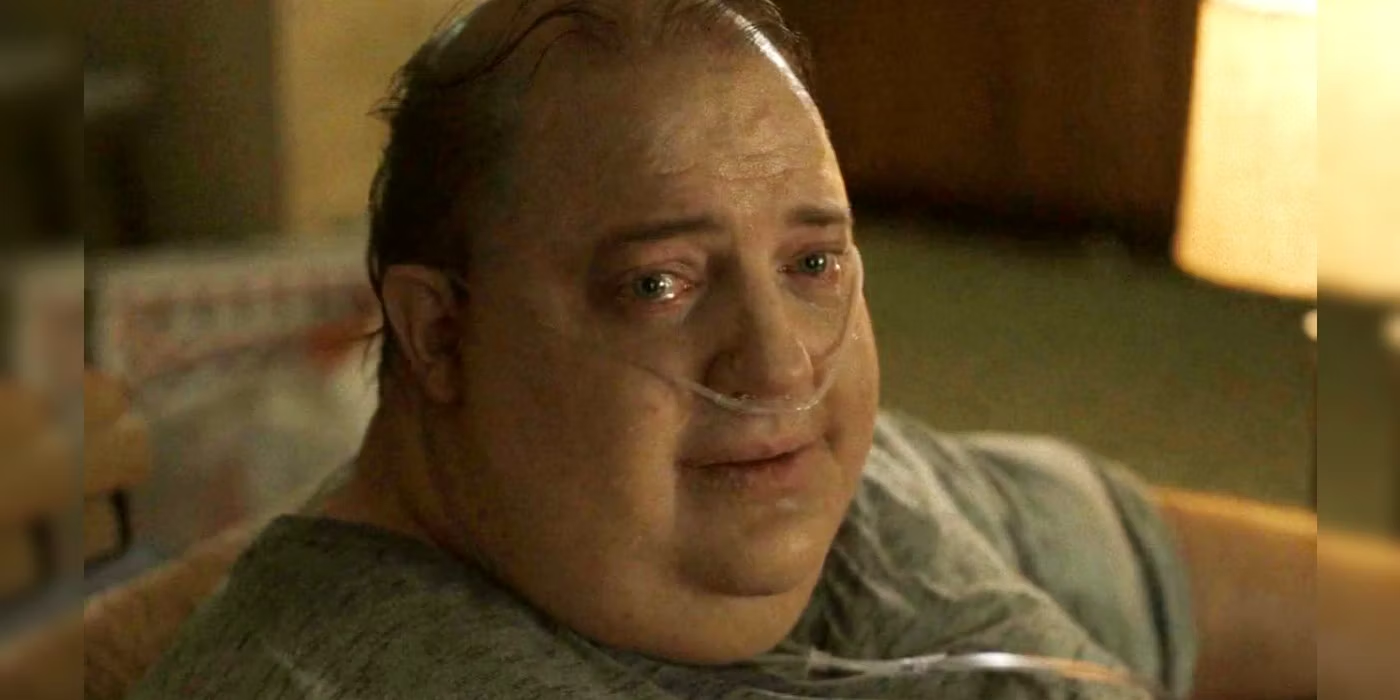
Aronofsky’s latest film, The Whale (2022) finds his excesses stripped back in terms of setting, colour, camera movement, lighting and editing design. The story of an obese man, Charlie (Brendan Fraser), finds him trapped by his own weight, addiction to food, grief and ill-health within an apartment. The colour scheme is stained and grey, while the dialogue-heavy script, naturally lit set, mostly static camera and claustrophobic drama betray The Whale’s origin as a play. Online English teacher Charlie’s journey is slow-burning and tragic, as he attempts to reconcile himself with his bitter, teenage daughter, Ellie, (Sadie Sink) and deal with his ever-worsening health. This familial thematic echoes The Wrestler (2008) as a lead protagonist strives to redeem his life decisions and find value to his existence. Ellie, however, is far less sympathetic and angry when compared to The Wrestler‘s, Evan Rachel Wood’s, Stephanie.


As with Requiem for a Dream (2000), The Whale (2022) contains the theme of addiction. Aronofsky’s earlier film found the characters hooked on heroin. Here, Charlie is wholly dependent on food. His dealer is also his carer, Liz (Hong Chau), and their relationship, as well as Ellie’s verbal outbursts, power much of the guilt and conflict within the play. Because Charlie is lost in hurt, he distracts himself with fizzy soda, pizza and massive torpedo rolls. He hides indoors in the shadows and behind an avatar on his computer screen. Charlie’s students never see him, only hearing his slowly breaking voice, stymied by an inability to breathe due to his expanding heart and squeezed lungs.

I feel it’s an almost integral part of the human condition to satisfy a compulsive need to feed on a substance that destroys one’s body and soul. I believe everyone is an addict, but some have more will power than others and can handle their compulsions. However, if you lose someone or suffer from depression, feeding one’s addiction is a way of blocking out the pain. Thus, I really connected with Charlie’s character in The Whale (2022), because he is in a painful tailspin with no apparent way out. Brendan Fraser delivers a stunningly moving character study. It truly is an admirable physical and mental achievement. Hong Chau is also impressive as the both caring and controlling carer who proves to be both Charlie’s best friend and worst enemy.

To conclude, The Whale (2022) is a compelling chamber piece with some finely written dialogue, empathetic heart, controlled direction, incredible make-up and prosthetics, and a singularly mighty performance from Fraser. Ultimately, the film holds a mirror up to the human condition, finding that the reflection, however upsetting and disturbing it may be, still deserves our compassion and understanding.

Mark: 8.5 out of 11


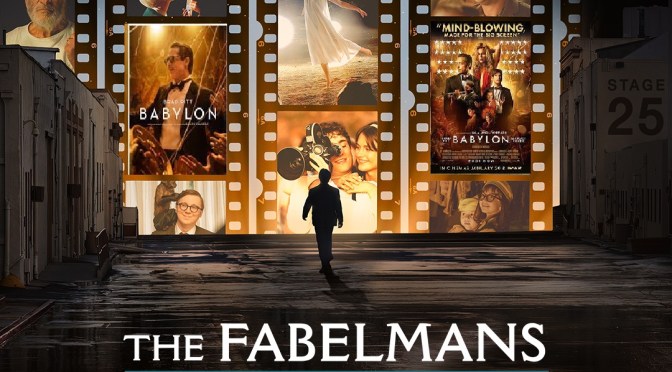
CINEMA REVIEWS: BABYLON (2022) and THE FABELMANS (2022)

CINEMA REVIEWS: BABYLON (2022) and THE FABELMANS (2022)

I have been extremely busy with the day-job, itself working with the filmmakers of the future at Raindance Film School, so I have a number of reviews backed-up in “pre-production.” Meaning I am thematically linking the latest films from Damian Chazelle and Steven Spielberg in one double-bill review show. Both Babylon (2022) and The Fabelmans (2022) celebrate the seismic and life-changing power cinema has had on the culture and society, from a historical, professional and very personal perspective.

While I love watching, writing and making films, cinema offerings about filmmaking and the love of cinema can be construed as somewhat of an indulgence on the part of the filmmaker. Quentin Tarantino recently achieved high level juxtaposition between homage and impressive narrative style with Once Upon a Time in Hollywood (2019). Moreover, there have been some brilliant films about filmmaking as this Six of the Best Films about Filmmaking article illustrates. But when two of the finest directors around produce extremely different visions of the filmmaking process, then one immediately takes notice.


BABYLON (2022)

Directed and written by Damien Chazelle

Main cast: Brad Pitt, Margot Robbie, Diego Calva, Jean Smart, Jovan Adepo, Li Jun Li
etc.

Damian Chazelle has proved himself one of the most exciting cinematic voices of recent years. Whiplash (2014), La La Land (2016) and First Man (2018) are all masterpieces of filmic storytelling. The absolute control displayed within First Man (2018) when contrasted with the aggression of his debut film and romantic vibrancy of his Oscar winning musical is a wonder to behold. Thus, I came to gonzo-period-drama-jazz-and-coke-fuelled-black-comedy-mash-up, Babylon (2022) with high expectations.

The opening scene of an elephant shitting on the camera / audience from a great height sets the tone of Chazelle’s unofficial adaptation of Kenneth Anger’s scurrilous book, Hollywood Babylon. And so at breakneck speed we hurtle, from 1926 onwards and a orgiastic party through the on and off-set lives, loves, highs and lows of Margot Robbie’s wild “child” actress, Brad Pitt’s silent movie heartthrob, Diego Calva’s ever-optimistic, Manny Torres, and the squeezed-out-of-the-story, jazz musician, portrayed by the under-used Jovan Adepo. It’s brash, bold and challenging cinema that left me with, I have to admit, motion picture sickness.

Babylon (2022) is not so much a love letter to Hollywood as a ratcheted-up-to-eleven tribute to the tragic heroes of the past who were chewed up and spat out by the relentless Hollywood machine. Despite Chazelle and his production team’s incredible dedication and attention to detail in creating a slew of astounding filmmaking set-pieces, I rarely cared about any of these mostly obnoxious characters and could not wait for this Hollywood rollercoaster to stop. Sadly, it goes on for far too long, with too many endings. Don’t get me wrong there are moments of genius, hilarity and grotesque pleasure to be had during Babylon (2022), however, this type of dysfunctional character-driven drama was done with way more heart by Paul Thomas Anderson’s far superior, Boogie Nights (1997).

Mark: 7 out of 11


THE FABELMANS (2022)

Directed by Steven Spielberg

Written by: Steven Spielberg and Tony Kushner

Main cast: Michelle Williams, Paul Dano, Seth Rogen, Gabriel LaBelle
Judd Hirsch, Jeannie Berlin etc.

“Movies are dreams!“, says a glowing, Mitzi (Michelle Williams), to her young son, Sammy, as she presents him with a camera. So it proved for Steven Spielberg with his career in filmmaking working like a dream, both behind the camera and up on the cinema screen. Indeed, there is no doubting Spielberg is one of the greatest directors of all time, having delivered a succession of incredibly popular film blockbusters and some seriously impressive genre films of spellbinding quality. Jaws (1975) is regularly screened on Sky Cinema and there isn’t a wasted scene or action or performance or line of dialogue in one of my favourite films of all time. The rest of Spielberg’s cinematic curriculum vitae isn’t too bad either.

So, what about The Fabelmans (2022)? Well, it’s a more loose and episodic when compared with Spielberg’s tightly plotted genre films. But if anyone has earned that right it’s one of the finest film storytellers. It’s such a personal project Spielberg even thanked the audience for coming to the cinema to watch it in a recorded clip. At the heart of the action is the aforementioned Sammy, who after his initial visit to the cinema is smitten at first sight. So much so he strives to create the spectacle on his Dad’s 8mm camera. As Sammy’s love affair with film grows into his teenage years he finds himself in the midst of a tug-of-war between his mother’s artistic and highly emotional personality and his father’s (Paul Dano) scientific, more logical mind.

Beautifully filmed, designed and edited, The Fabelmans (2022), is a majestic experience from an emotional and visual perspective. Spielberg’s love for cinema and his family is palpable, as he and Tony Kushner’s screenplay cleverly juxtaposes the filmmaking process with key emotional scenes from the director’s life. One specific moment where teenage Sammy (Gabriel LaBelle) edits a home movie only to reveal something very painful is certainly one of the most memorable scenes of the year. Performances are intriguingly varied with LaBelle and Dano both impressing. The usually superlative Michelle Williams was great, but her character felt like she was from an otherworldly realm. I imagine that was Spielberg’s intention. In conclusion, The Fabelmans (2022), is a stunning and big-budgeted home movie. If you are captured by Spielberg’s personal journey and enjoy watching characters on a cinema screen as they stare in wonder at the cinema screen, then you will love this.

Mark: 8 out of 11


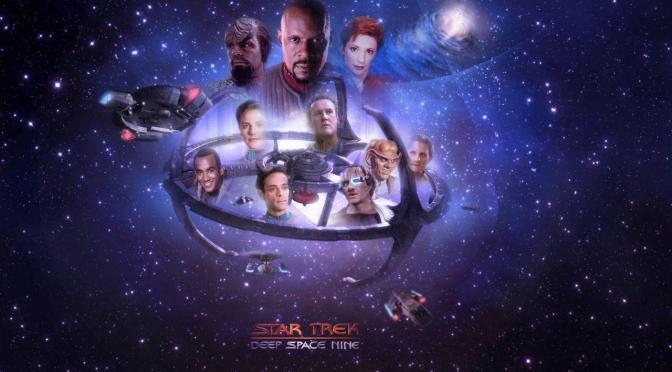
TO BOLDLY REVIEW #14 – STAR TREK: DEEP SPACE NINE (1993 -1999) – SEASONS 1 – 7

TO BOLDLY REVIEW #14 – DEEP SPACE NINE (1993 -1999)

Created by: Rick Berman, Michael Piller

Based on Star Trek: by Gene Roddenberry

Showrunners: Michael Piller (1993–1995) and Ira Steven Behr (1995–1999)

Main Cast: Avery Brooks, René Auberjonois, Terry Farrell, Cirroc Lofton, Colm Meaney, Armin Shimerman, Alexander Siddig, Nana Visitor, Michael Dorn, Nicole de Boer, etc.

Theme music composer: Dennis McCarthy

*** MAY CONTAIN SPOILERS ***


It’s been over a year since I reviewed the Star Trek feature films here. Thus, much of 2022 was spent watching the seven series of Star Trek: Deep Space Nine. The fact that I got through all seven seasons of the show illustrates two things:

  1. I am determined to finish this viewing project of watching every Star Trek produced film and television show released from the original series to now!
  2. Star Trek: Deep Space Nine was a really excellent show that made me want to watch it the end.

While containing lots of genre and narrative similarities to the previous Trek television productions, Star Trek: Deep Space Nine (DS9), expanded further the characters, worlds and vision established brilliantly by The Next Generation. Crossing over and surpassing the TNG timeline, DS9‘s narratives centralized around the space station positioned close to the planet of Bajor.

The Bajorans occupy the Alpha Quadrant and had one of the oldest and richest cultures in Star Trek lore. Driven by a spirituality similar to Buddhism, they are a proud people who suffered greatly during the invasion by the Cardassians, who built Deep Space 9 to control the Bajorans and the Alpha Quadrant. After the defeat of the Cardassians, Starfleet were assigned to manage DS9 and the series starts with Captain Benjamin Sisko (Avery Brooks) taking his place as commander of the station. To his surprise, Sisko becomes “Emissary” to the Bajoran prophets. A holy position which drives many storylines throughout the series and conflicts with the logical aspects of his role as Captain.


Deep Space Nine has many fine standalone episodes, however, what makes it differ greatly from the previous franchise series is the complex narrative and character arcs which dominated the latter seasons. These were directly linked by the brutal war which developed between Starfleet, their allies and the Dominion and the Cardassians. Personally, I could have done without many of the romantic “pairings-off” we got between the characters, however, they did raise the emotional stakes for them and brought greater narrative resonance. Lastly, the expansion of the Star Trek universe through use of the wormhole, allowed many other alien species to be introduced to the ever-growing Star Trek universe.

While sci-fi shows can live and die on their scientific concepts and themes, great characters are always at the heart of Star Trek. Sisko is a commanding presence throughout, yet Odo (René Auberjonois), a shapeshifter, was arguably the most complex of all characters, especially when a massive narrative reveal is dropped during Season 3. The familiar face of Worf (Michael Dorn) joined in Season 4 and he provided seriousness when compared to the more energetic characters of Jadzia Dax (Terry Farrell) and the scheming, but humorous Ferengi, Quark (Armin Shimerman). The Bajorans on the station were represented by Nana Visitor’s formidable, Kira Nerys, while Doctor Julian Bashir (Alexander Siddig) and Miles O’Brien (Colm Meaney) had a fine bromance. Finally, Deep Space Nine also had some fantastic guest actors, notably Louise Fletcher, Frank Langella, Iggy Pop, Tony Todd, James Darren and Andrew Robinson as Garak. The latter two actors became virtual regulars and Garak, the mysterious and exiled Cardassian, was probably my favourite character in the whole show.

To end this short review I’d like to pick seven of my favourite episodes – one from each season. They represent some of the best examples of, Deep Space Nine, an often brilliantly written, powerfully acted, funny and moving science fiction series.


DEEP SPACE NINE – SEVEN GREAT EPISODES

1. EMISSARY – EPISODE 1

A fine introduction to the characters, setting and themes which will dominate the next seven seasons.


2. THE JEM HADAR – EPISODE 26

A brilliant episode which introduced the fearsome Dominion soldiers, The Jem Hadar.


3. IMPROBABLE CAUSE / THE DIE IS CAST – EPISODES 20 & 21

Odo investigates a murder attempt on Garak on the space station. Their complex relationship thickens within a superbly scripted espionage thriller, full of twists and revelations.


4. THE VISITOR – EPISODE 3

An amazingly involving narrative which finds Sisko lost in a temporal void, with his son, Jake, prepared to make the ultimate sacrifice to save his father.


5. TRIALS AND TRIBBLE-ATIONS – EPISODE 6

An incredible episode full of amazing production values as it merges both present and past characters from Star Trek. The DS9 crew are sent back in time where they encounter their Enterprise predecessors and those damned pesky Tribbles.


6. FAR BEYOND THE STARS – EPISODE 13

Developed like a BBC Play for Today drama, this episode is thematically meta-rich, exploring science-fiction writing and racism in 1950’s America. How Avery Brook’s dual identities of Benny Russell and Captain Sisko connect across the universe is enigmatic, poetic and utterly compelling.


7. WHAT YOU LEAVE BEHIND (Parts 1 and 2) – EPISODEs 25/26

Despite replacing Jadzia with an inferior (Ezri) Dax, and containing a few unnecessary filler episodes with that character, the final season ultimately brought the war with the Dominion to an astounding dramatic conclusion. Sisko’s journey as the Emissary also reached a spiritually emotional and intelligent denouement. One of the best final television seasons of all time, perhaps?


[BOOK REVIEW] A Sense of Dread: Getting Under the Skin of Horror Screenwriting by Neil Marshall Stevens

A Sense of Dread: Getting Under the Skin of Horror Screenwriting by Neil Marshall Stevens


As a filmgoer many people are willing to be frightened and induce anxiety and be sickeningly entertained through horror cinema. But why go out of your way to scare yourself?  On the other side, many others in society consider horror films to be depraved and lead to copycat crimes. I am not one of those individuals. I love horror. I love gore. I love watching and telling horror stories. I love being scared in the dark by sounds and images from the silver screen.

Other than being entertained on a primal level, horror cinema distracts me from my own mortality too. This artificial dread paradoxically relieves me from the fear of the end. It’s a way for me to face my fears head on, but safely hidden behind my popcorn.

Further, the horror genre provides one of the most shared experiences for audiences at the cinema. Collectively, this group experience scares us and provides ultimate relief by the time one leaves the cinema. Indeed, horror films are often a staple for teens or young adults looking for thrills on a Friday or Saturday night. They can also make great date movies that allow you to get closer to someone as you both share the fear in front of you.  

Don’t ever forget that horror cinema is big business. Often on a very low budget. The Blair Witch Project (1999), Eraserhead (1977), Paranormal Activity (2007) and the seminal, Night of the Living Dead (1968) are all great examples of low-budget horror films which did incredible numbers at the box office. Which is why if you’re a horror screenwriter or looking to get into creating fear on screen,  A Sense of Dread: Getting Under the Skin of Horror Screenwriting by Neil Marshall Stevens is an invaluable guide to get you started.


Neil Marshall Stevens is a screenwriter and film lecturer with many credits to his name. His book explores the nature of fear and developing the concept of fear within the horror genre. The opening chapters look at the science and biology of what scares us as a species. Are we born with such fears, or do we learn them? After which the writer digs downs into the specifics of what scares people and animals. We are animals after all. This takes in a plethora of phobias, creepy crawlies, urban legends, and things that go bump in the night. Stevens also superbly analyses the many fears prevalent within the real world and our nightmares. The final chapter exercises further cement the theories and concepts with valuable practical advice.

The second half of the book introduces the brilliant idea of the ‘Toolbox of Dread.’  Here Stevens takes some famous horror films and horror conventions and illustrates how filmmakers unnerve and frighten audiences. The ratcheting of suspense, fake tension and the classic jump scare are all explored in depth. These chapters certainly gave me great confidence when I write my next horror screenplay.

Stevens also further develops these ideas in analysing a treatment and scenes from his unproduced screenplay Horrorvision. Not only does this provide an excellent insight into the writing process, but it drills down into how to create tension and dread on the page. Ultimately, Stevens developed Horrorvision in 2000, but it never went into production due to the budget size and being too similar to another project.

I really connected with this book. It gave me a whole new set of approaches and ideas to bring to my next horror projects. It is written in an intelligent and digestible style and gave me a renewed appreciation of the horror film genre. Yes, of course many horror films can be exploitative and often produces some truly terrible movies. However, when directed by the horror experts such as: George A. Romero, James Wan, Ari Aster, John Carpenter, David Cronenberg, Wes Craven, Sam Raimi, and Julie Ducournau, to name a few, horror becomes a powerful and primal expression of the cinematic form.


Buy the book from here.

Publication from MWP.

Michael Wiese Productions (MWP) was launched in San Francisco in 1976 primarily to produce films. Today, the company is known worldwide having published some 200 books. Some of the bestsellers have been translated into 28 languages, are used in over 1000 film courses, in the Hollywood studios and by emerging filmmakers.


Thoughts on Cinema and Filmmaking