Written by Skip Bronkie, Zack Akers & Justin Tipping
Produced by Jordan Peele, Win Rosenfeld, Ian Cooper & Jamal Watson
Main cast: Marlon Wayans, Tyriq Withers, Julia Fox, Tim Heidecker, Jim Jeffries, Maurice Greene etc.
Cinematography by Kira Kelly
** MAY CONTAIN SPOILERS **
“In modern slang, “Him” is used to signify a person who is considered a standout or a “star” in their field, often in sports or entertainment.” — Google search result.
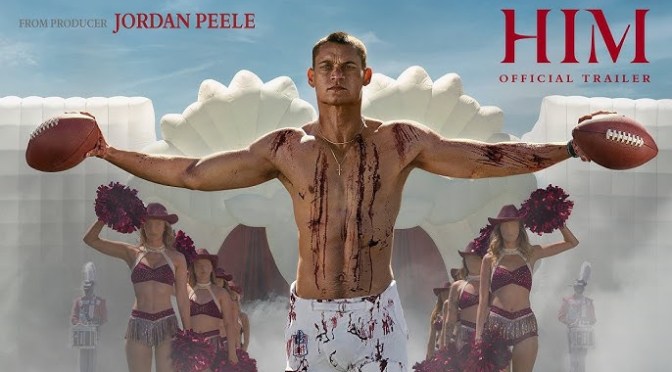
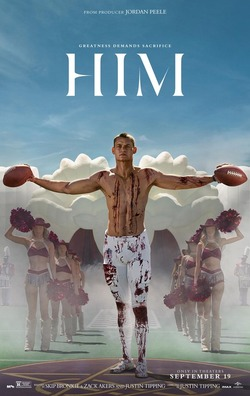
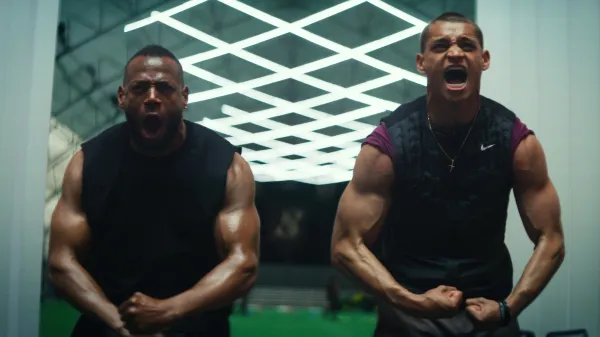
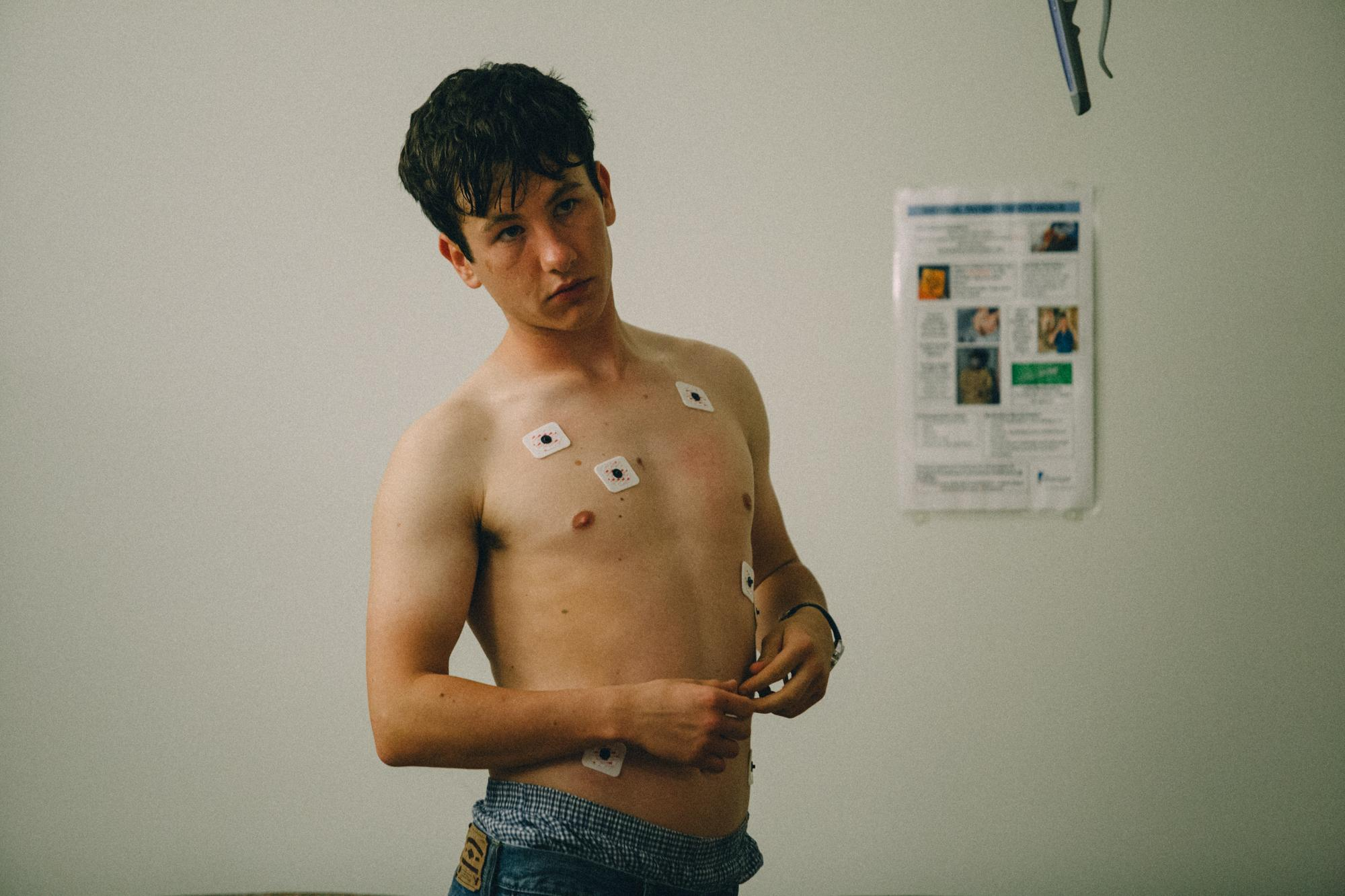
Him (2025) is a visually arresting and thematically potent descent into the underbelly of American athletic obsession — a pitch-black thriller that trades stadium lights for the strobe of psychological torment. Centered on Cameron “Cam” Cade, a young quarterback hungry to dethrone San Antonio Saviors’ reigning legend Isaiah White (a commanding Marlon Wayans), the film begins as a standard sports drama and swiftly morphs into something far darker. Director Justin Tipping captures the suffocating intensity of modern competition with a painter’s eye — sweat, blood, and neon collide in every frame, turning locker rooms and training fields into cathedrals of self-destruction.
As Cam endures Isaiah’s brutal “boot camp,” the film exposes the rot beneath the rhetoric of greatness. Fear, humiliation, and violence dominate the regimen, transforming mentorship into a form of ritualized hazing. Themes of steroid abuse, distorted masculinity, and father-son guilt weave through the story like poison veins. The omnipresence of social media — the constant surveillance, the demand for curated perfection — amplifies the claustrophobia. In its best moments, Him (2025) feels like a nightmarish hallucination of ambition, where performance and identity blur until nothing human remains.
Yet for all its kinetic power and aesthetic daring, Him (2025) stumbles when it comes to coherence. The screenplay rushes through emotional beats, failing to give its characters space to breathe or evolve. Key relationships and motivations are truncated by editing that favours rapid cuts over logic — the film’s pulse races, but its heart falters. The result is an experience that dazzles visually but feels narratively hollow, more like a hypnotic music video than a fully realized character study. Indeed, the ending drops the ball most of all. The nightmarish satire culminates in a bloodbath which, while visually powerful, feels like something more twisted and subtle would have served Cam’s character arc better.
Overall, there’s no denying Him (2025) and its impact as a cinematic spectacle, with Wayans and Withers delivering standout performances. Its imagery lingers — bodies breaking under fluorescent light, cheers warping into screams — as does its commentary on the performative nature of modern masculinity, crazy fan worship, monetization of athletes and sporting sacrifice. If only the script matched its visuals, Him (2025), might have stood shoulder to shoulder with the psychological thrillers it so clearly reveres.
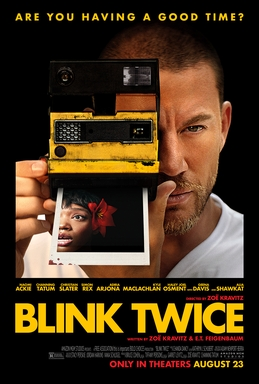
Produced by Bruce Cohen, Tiffany Persons, Garret Levitz, Zoë Kravitz and Channing Tatum
Cast: Naomi Ackie, Channing Tatum, Christian Slater, Simon Rex, Adria Arjona, Kyle MacLachlan, Haley Joel Osment, Geena Davis and Alia Shawkat etc.
Cinematography by Adam Newport-Berra
*** MAY CONTAIN SPOILERS ***
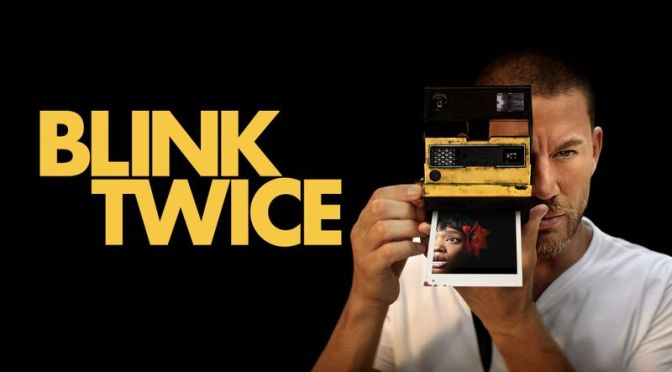
The theme of toxic masculinity is almost becoming a sub-genre of itself in the wake of the #MeToo movement. Films such as The Royal Hotel (2023), How to Have Sex (2023) and Men (2022) are powerful genre films which take the manipulative, malevolent and violent aspect of men, utilizing it as both nemesis and a destructive force the main protagonists must contend with. WhileShe Said (2022) dealt specifically with the Harvey Weinstein legal case, Zoe Kravitz’ energetic blend of genres in Blink Twice (2024), takes a more fictional and heightened route while exposing the horrors surrounding the potential happenings at the notorious Epstein Island.
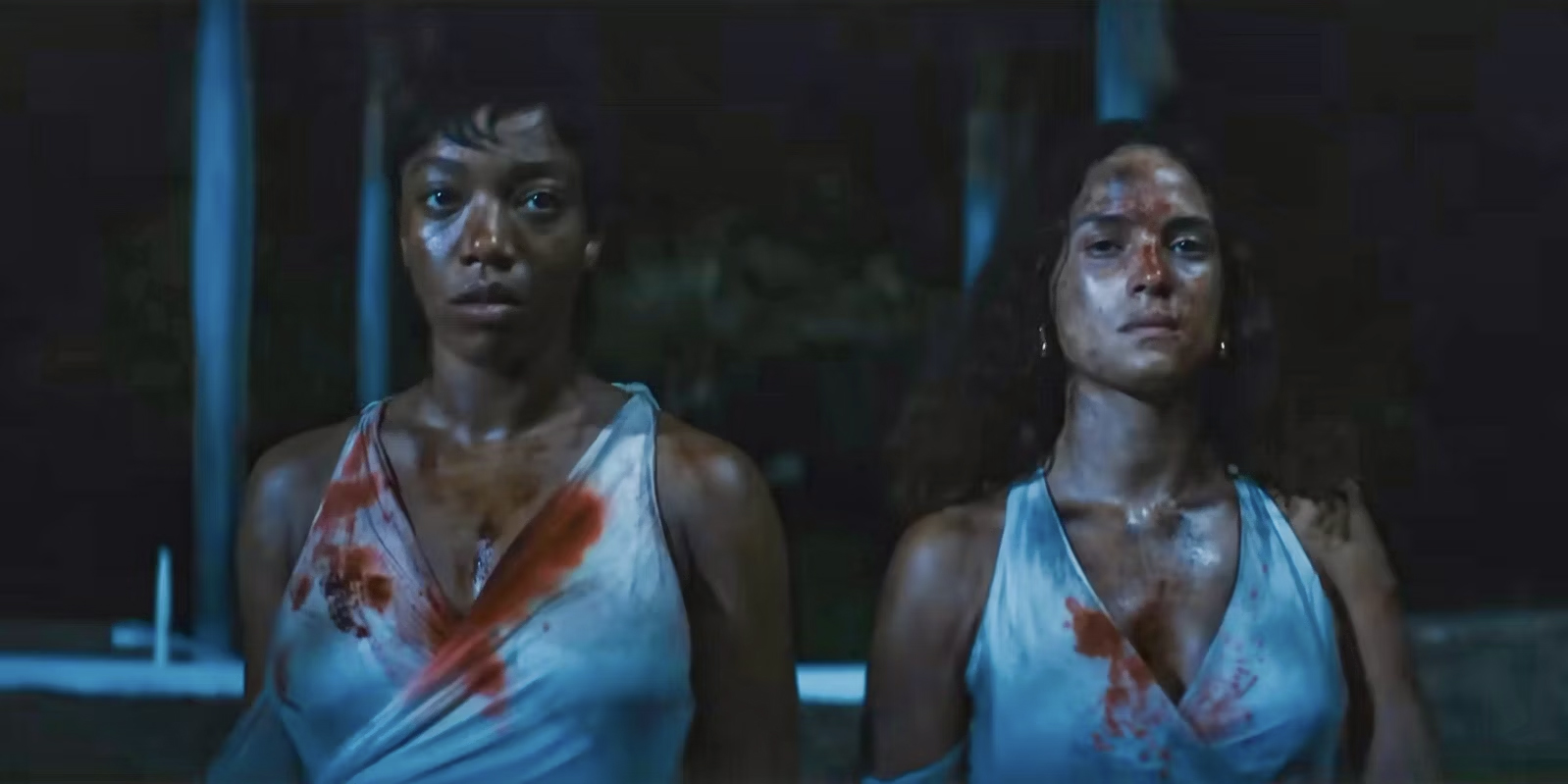
Frida (Naomie Ackie) and her friend Jess (Alia Shawkat) work at an exclusive event where Frida meets Slater King (Channing Tatum), a billionaire tech mogul who recently resigned as CEO after a public scandal. Despite the scandal Frida and Jess gladly accept an invitation to his private island, where his assistant Stacy (Geena Davis) confiscates their phones. The island hosts Slater’s friends and business partners along with three glamorous guests including Sarah (Adria Arjona). The men and women are treated to lavish rooms, gift bags, gourmet meals, cocktails, and party like hedonistic rock stars drinking champagne and taking hallucinogens.
If you’ve seen the similar island-based, The Menu (2022), which I loved, plus the less than riveting 1950’s perfect suburb-set, Don’t Worry Darling (2022), one soon realises that not all is well in paradise. Amidst the sun, sea and partying the narrative slowly builds the tension until Frida and Jess begin to suspect all may not be as it seems. Kravitz carefully ratchets up the tension, with several strange discoveries heightening the paranoia and anxiety. Latterly the suspense gives way to all-out gory horror and black comedy in the thrilling final act. Naomi Ackie and Adria Arjona are impressive “final girls”, however, the script arguably throws in too many twisty reveals at the end, testing narrative credibility.
Zoe Kravitz is clearly a talented filmmaker and Blink Twice (2024), while unsubtle, is highly entertaining. But does the diversion to the horror genre dilute the power of the themes of toxic masculinity? Kravitz aims to critique the evils of men by showcasing male characters who embody arrogance, dominance, and emotional suppression. But while Kravitz may intend to address toxic masculinity, the reliance on traditional horror tropes potentially undermines this message by exaggerating characters, victimizing women, and prioritizing sensationalism over substance. Still, as a revenge fantasy, Blink Twice (2024), is both stylishly and dynamically rendered.
Based on Poor Things: Episodes from the Early Life of Archibald McCandless M.D., Scottish Public Health Officer by Alasdair Gray
Produced by Ed Guiney, Andrew Lowe, Yorgos Lanthimos and Emma Stone
Main cast: Emma Stone, Mark Ruffalo, Willem Dafoe, Ramy Youssef, Christopher Abbott, Kathryn Hunter and Jerrod Carmichael.
Cinematography by Robbie Ryan
*** MAY CONTAIN SPOILERS ***
I have now seen all of Greek filmmaker Yorgos Lanthimos’ most recent directorial works, namely: Dogtooth (2009), Alps (2011), The Lobster (2015), The Killing of a Sacred Deer (2017), and The Favourite (2018). Collectively they defy conventional film styles and tropes to deliver absurd, surreal, funny, disturbing, thought-provoking, erotic and imaginative visions of human behaviour. Also, let’s not forget the writers too; so kudos to his writing partner Efthymis Filippou, and latterly Tony McNamara, who have combined with Lanthimos to create such memorable cinematic offerings.
The director’s early lower-budget dysfunctional comedy-dramas such as Dogtooth (2009), andAlps (2011) are unforgettably strange films to experience. They feature uncomfortable depictions of family, sex, death and relationships. While offbeat, you sense they are from the mind of a filmmaker seeking to provoke thought rather than exploit. While equally dark and strange The Lobster (2015) is clearly more comedic, even though it probes strange love, fascism and violence within romantic relationships. Further, in The Killing of a Sacred Deer (2017), Lanthimos and Filippou, in Godardian fashion, constantly called attention to cinema form; especially with a strangely effective form of anti-acting within the arguably more conventional revenge narrative. Whereas in The Favourite (2018), Lanthimos’ delivered a unique period satire, with the language and behaviour of the characters often crude and shocking. His visual choices are always fascinating, with his use of the fish-eye lens creating a distorted effect that made the characters seem trapped by their surroundings and circumstances.
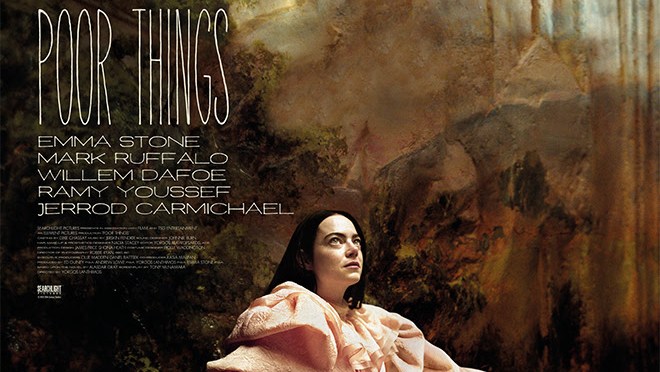
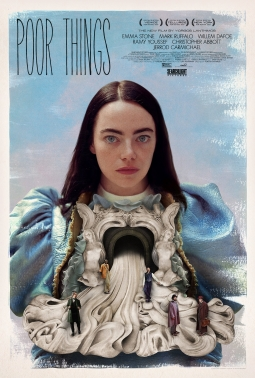
With the success of The Favourite (2018), both critically and commercially, Lanthimos has of late been given an increased budget, reported as $35 million. His bold choice, along with screenwriter Tony McNamara is to adapt award-winning novel, Poor Things: Episodes from the Early Life of Archibald McCandless M.D., Scottish Public Health Officer by Alasdair Gray has produced by far the most originally conceived and fantastic genre-bending comedy, drama, horror, rites of passage and salacious film of many a year. If there is a more bizarre, enthralling and enjoyable film of 2024, than Poor Things (2023) then this will be a most excellent year for cinema releases.
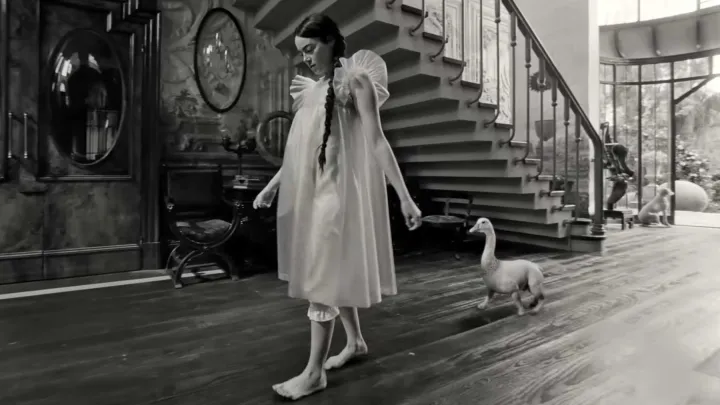
Set in Victorian London, we are introduced to the rather eccentric household of Dr Godwin “God” Baxter, an expert but secretive surgeon whose home hides bizarre animal experiments, and the beautiful but frankly odd human specimen, Bella Baxter (Emma Stone). Entering this weird abode of pig-hens and goose-dogs, comes innocent medical student, Max McCandless (Remy Youseef). “God” asks Max to assist with the childlike Bella’s development, charting her daily physical, speech and mental growth. Now, if you think the chimeric beast experiments are disturbing then brace yourself for the events of Bella’s ‘Frankensteinesque’ happenstance. I am not going to spoil it here, but it truly is a fantastic concept as invented by the author, Alasdair Gray, to contemplate. I was teetering on the fence with the film until this stunning reveal was given, but then I was committed to this medical oddity.
The first act finds Bella developing her speech, emotions and intelligence, as if a young child growing within this woman’s body. Bella also locates her libido and begins experimenting with her lust to great pleasure. Here Lanthimos continues exploring the themes of previous films with sex not only a natural expression of humans, but also an act used to control and drive people mad. Enter Mark Ruffalo’s caddish lawyer, Duncan Wedderburn who spirits a willing and rebellious Bella on a European trip. One where she truly discovers and satisfies her continual carnal desire or “furious jumping” as she hilariously calls it. Bella’s rites of passage, frankness and rapid growth threatens Duncan’s masculine insecurities and he finds it difficult to control her. Here the hilarious screenplay shows Bella and Duncan becoming more and more fraught until she craves further independence from his cloying envy. The central theme of Bella overcoming the chains of controlling masculinity dominates right up until the extremely dark final act.
While there is a lot of sex and nudity in this film, I felt that Lanthimos balances the exploitative nature of such material by contextualising it within Bella’s fascinating character arc. Emma Stone also provides a complex performance, funny and moving, as the woman-child discovering her mind, body, soul and the world. Ruffalo is particularly over-the-top as the sneaky but pathetic reprobate, Wedderburn. While Remy Youssef’s young medical student adds some compassionate balance within the ensemble, Willem Dafoe gives his customary brilliant turn as the tragic man of science. He himself had his childhood tainted by a father determined to use Godwin Baxter as a human guinea pig.
With a spectacular production design that employs a rich palette of colours, sets, lighting and immaculately furnished rooms, Lanthimos, stamps his authorial style along with genius cinematographer Robbie and his array of lens. Such creative choices evolve a spectacularly hyper-real vision of Victoriana. Indeed, the form and style coalesce with the content and themes in Poor Things (2023) to create what could already be the favourite film of my year. The screenplay dares to provoke the audience with gender political, sociological, historical and hysterical analysis as Yorgos Lanthimos again proves himself to be one of the most original filmmakers of his generation. Owing much to the imagination of Alasdair Gray’s source book, this is a shocking and explicit Frankenstein’s monster of a film. Lastly, it had me consistently thinking and laughing throughout, testifying to the power of family, however dysfunctional that Victorian household may be.
IT’S ALWAYS SUNNY IN PHILADELPHIA – SEASON 14 REVIEW
Created by: Rob McElhenney
Developed by: Rob McElhenney and Glenn Howerton
Writers:Charlie Day, David Hornsby, Megan Ganz, John Howell Harris, Rob McElhenney, Glenn Howerton, Dannah Phirman, Danielle Schneider, Conor Galvin, etc.
Directors: Glenn Howerton, Heath Cullens, Pete Chatmon, Tim Roche, Kimberly McCullough
CAST
Charlie Day as Charlie Kelly Glenn Howerton as Dennis Reynolds Rob McElhenny as Mac Kaitlin Olson as Dee Reynolds Danny DeVito as Frank Reynolds Mary Elizabeth Ellis as The Waitress David Hornsby as Cricket Dolph Lundgren as Thundergun
*****MAY CONTAIN SPOILERS, BITCHES!*****
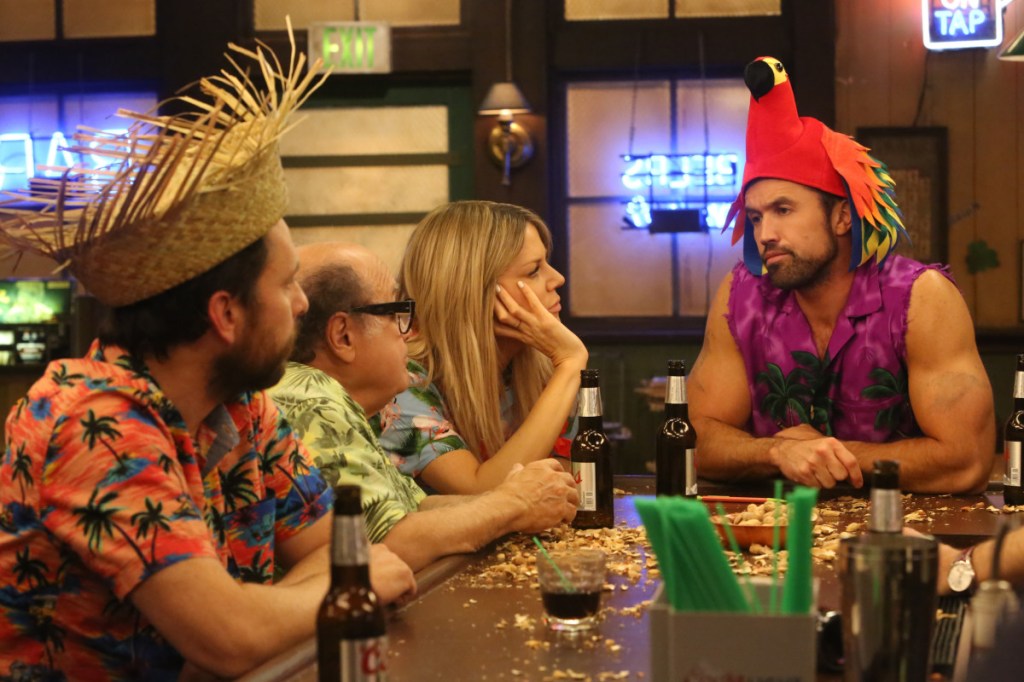
I’ve written about the scurrilous comedy show It’s Always Sunny in Philadelphia at length here and here and reviewed Season 13 here. It is genuinely one of my favourite TV shows of all time. Moreover, it is always one of the cultural highlights of my year when a new season is released by FX/Netflix. This is the fourteenth season of the show, which now means it is one of the longest running live action comedy sitcoms in the U.S. It’s basically one of the main reasons I carry on living.
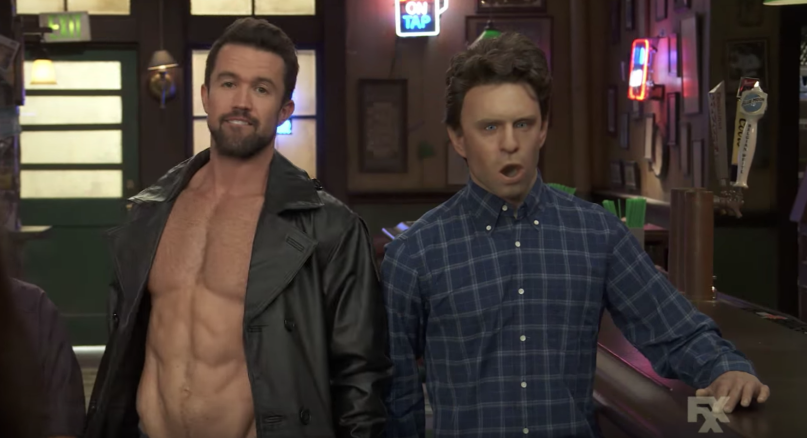
If you haven’t seen It’s Always Sunny in Philadelphia – THEN WHAT IS WRONG WITH YOU! No, seriously, it is one of the darkest, funniest and absurd shows I ever seen. It is the Anti-Christ of sitcoms and a twisted anathema to the Friends template. It concerns five narcissistic individuals who run a bar in Philadelphia called Paddy’s, and each episode tracks their weird and wonderful antics. It may not sound like it, but it is comedy gold.
Further, it’s also pretty smart in satirising zeitgeist issues relating to race, gender, politics, friendships, sport, addiction, crime, feminism and sexuality. It is quite often shocking but not just for shock’s sake, because there is a streak of intelligence running throughout the show. Season 13 felt mildly broken because Glenn Howerton seemed to have left, it still had some classic episodes like The Gang Beats Boggs: Ladies Reboot, The Gang Escapes, Mac Finds His Pride and The Gang gets New Wheels. Having said that the Dennis-shaped hole was mostly filled with Glenn Howerton appearing as Dennis in many episodes during last season. This year Howerton is back with in every episode; and he even directed a couple too.
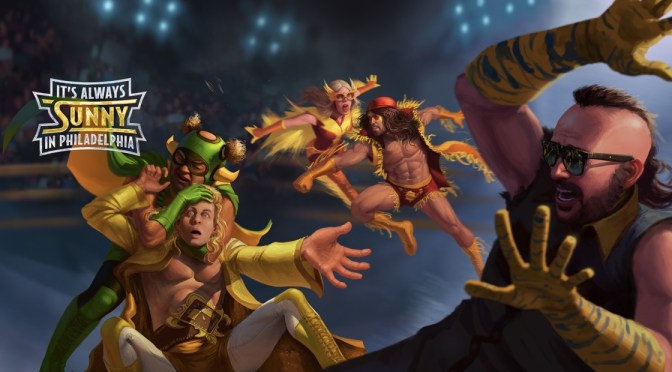
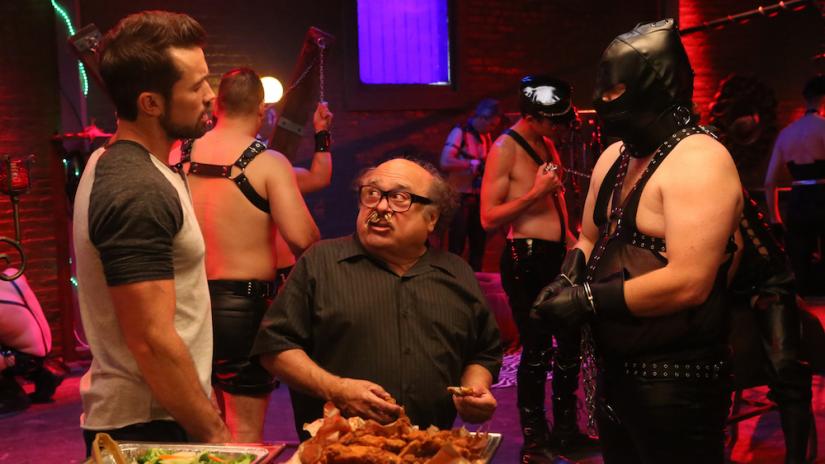
The season opens strongly with the episode The Gang gets Romantic, which essentially involves Dennis and Mac using the Air BNB model to trap an unsuspecting woman in their flat. Frank and Charlie do the same but in a way less sophisticated fashion. Safe to say their creepy plots go badly in very unromantic and different ways. Frank and Charlie at least find some bromance with some European male counterparts, having kicked out some junkie Euro skanks. Episode 2, Thundergun 4: Maximum Cool, then found the Gang in a focus group situation. Here they tore into what they perceived to be political correctness gone mad, diverse Hollywood reboots, a lack of male nudity and the expensiveness of the cinema experience. It’s always chaotic and hilarious when they come into contact with outside agencies; and so it proves to be!
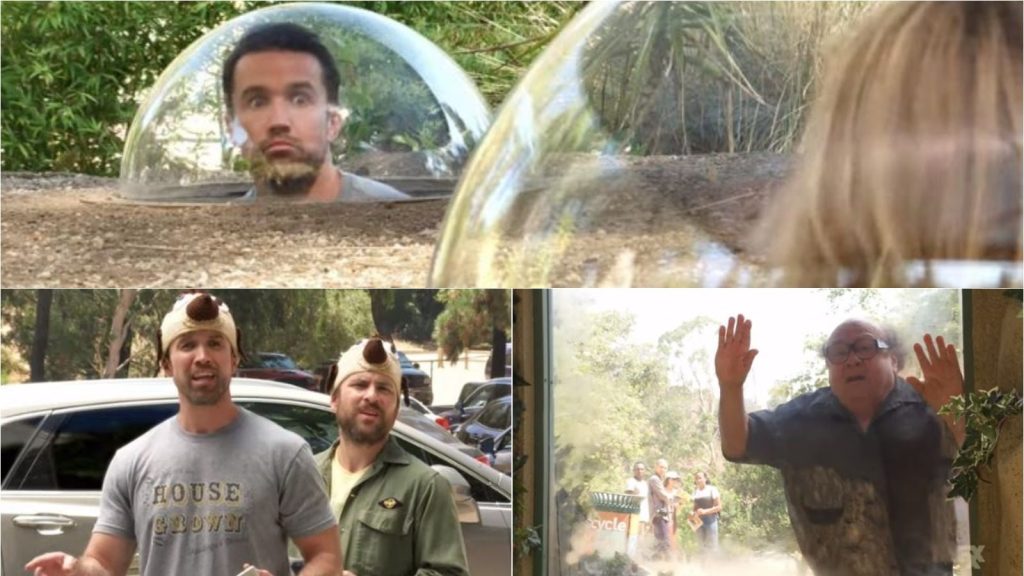
The 3rd and 4th episodes, Dee Dayand The Gang Chokes were full of crazy situations. In both episodes Kaitlin Olsen is on particularly great form, as is Danny DeVito in The Gang Chokes. It’s hilarious when he chokes at the dinner table and no one jumps in to help him, forcing him to shun the group and pay back the person who saved his life. The next episode The Gang Texts is one of the highlights of the season. The Gang visit the zoo, but get a text group started to stay in touch. Mac and Dee struggle to retain control amidst the communication problems. While Dennis wants to see a lion feast on flesh, Frank tries to rile the Gorillas by teasing them with bananas. Ultimately, this episode contains the message that it’s best to live in the moment and not on your phone. That and Mac gets pissed on a lot by the others.
The Janitor Always Mops Twice was a hilarious pastiche of film noir genre films. Here Charlie is the private dick investigating a devious cherry racket. Once again Kaitlin Olsen is hilarious as Dee and Mary Elizabeth Ellis appears as a seductive femme fatale who suspiciously looks like the Waitress. The script zings along and there are many classic moments, notably when Charlie mixes cat food in his whisky. In The Gang Solves Global Warming, Paddy Has a Jumper and A Woman’s Right to Chop the series satirises some serious issues with the usual anarchic results. Climate change, suicide, streaming algorithms and abortion are important matters affecting society, but the Gang doesn’t get bogged down too much with the messages. Instead they explore and irreverently barb humanity. The Gang Solves Global Warming was particularly funny as the bar became a microcosm for Earth. A massive party ensues and as the heat rises no one wants to stop the partying even for a second.
The final episode called Waiting for Big Mo is set in a Laser Quest establishment as writer, David Hornsby, cleverly turns it into a curiously florescent parody of Beckett’s seminal play, Waiting for Godot. The Gang are essentially controlled by Dennis who is obsessively sticking to his plan of winning the game. Mac, Charlie, Dee and Frank just want to have fun and play like children. The show examines existential philosophies amidst some hilarious exchanges between the characters, including Charlie not knowing the difference between riddles and jokes. Ultimately, it was a fun, daft, and at times, intelligent end to a very satisfying season of one of the greatest comedy shows of all time.
Executive Producers: David E. Kelley, Jean-Marc Vallee, Reese Wetherspoon, Bruna Papandrea, Nicole Kidman, Liane Moriarty etc.
Based on: Big Little Lies by Lianne Moriarty
Teleplays written by: David E. Kelley
Directed by Andrea Arnold
Main Cast: Reese Witherspoon, Zoe Kravitz, Nicole Kidman, Shailene Woodley, Laura Dern, Meryl Streep, Alexander Skarsgård, Adam Scott, James Tupper, Jeffrey Nordling, Kathryn Newton etc.
Cinematography: Yves Belanger, Jim Frohna
Original Network: HBO
**CONTAINS SPOILERS FOR SEASON ONE**
I hate Social Media and Twitter especially, sometimes. I also hate myself for getting dragged into the bullshit it sometimes brings. I’m referring specifically to the distorted prejudice the mind can take on when reading a few negative posts about a programme, film or personality. Such reports can obviously be accurate. However, they can mislead and stain your expectations of a show or film or actor or artist. In this case the second season production of HBO’s, Big Little Lies, came under fire from a few people on my Twitter feed. They said it was an awful and an ultimately disappointing series. Were they right? I mean, how bad could it be?
Then there was the Indiewirearticle which highlighted an issue during production. They asserted in a well written piece of click-bait that director Andrea Arnold was unceremoniously disregarded in the editing process and first season director, Jean-Marc Vallee, brought in to oversee re-shoots and final cut. If you believe the Indiewire article, this was the act of a heinous media corporation cutting down a beloved artist and robbing her of her vision. Arnold’s auteur status remains untainted for me. She is a fine director who carried out her contract and did not have final cut anyway. This belonged to HBO and they had say on who they hired during the production.
Thus, in a short period of time, a couple of tweets and one article had seriously affected my expectations of the second season of Big Little Lies. I was expecting a mess of a show. One which did not make sense and was robbed of all artistic and dramatic impetus by the HBO hierarchy. However, I can safely say I was wrong and, while not as good as the brilliant first season, it was still a really intriguing eight episodes worth of entertainment.
After the exceptional first season which found a stellar cast including: Reese Witherspoon, Nicole Kidman, Laura Dern, Adam Scott, Zoe Kravitz, Alexander Skarsgård and Shailene Woodley on top acting form, the second season follows on with the aftermath of prior events. The first season expertly inter-weaved stories concerning an unknown “murder” victim; school bullying; warring parents; extra-marital affairs; and abusive relationships, expertly played out over seven compelling episodes. With the “murder” victim revealed in the final episode, we now get an exploration of suspicion, guilt, conspiracy and a test of loyalty and friendship.
Without wishing to give too much away the newest and strongest addition to the series is Meryl Streep. She plays the mother ***SPOILER ALERT*** of the dead guy from the first season, Perry Wright (Alexander Skarsgård). His death occurred when he was pushed “accidentally” down some stairs at a party. But, the friend’s, including his wife, Celeste (Nicole Kidman), collude to say he fell instead. With the police still suspicious the main investigator is actually Streep as the dogged Mary Louise. She is passive-aggressive and subtle in her enquiries as to how her son died. It’s a delight watching her deviously pull apart each of the lead suspects. It is also an absolute masterclass in acting as Streep’s crafty characterisation makes this series a must-watch. Her scenes with Nicole Kidman’s crumbling personality are especially compelling.
Allied to the investigation into Perry’s death, the show gives some interesting narrative strands to Laura Dern’s energetic power-mum, Renata. Her world is about to disintegrate around her in the face of her husband’s financial wrong-doings. Equally powerful is Bonnie’s (Zoe Kravitz) attempt to heal the rift between herself and her mother. Bonnie suffers the most guilt as ***SPOILER ALERT*** she was the one who pushed Perry down the stairs. As she battles with the emotional repercussions of her actions, she experiences a painful re-emergence of historical parental abuse. Perhaps, not as intriguing are Madeline (Reese Wetherspoon) and Jane’s (Shailene Woodley) narrative strands. Nonetheless, they do support the series’ themes of family, trust and love that add depth and subtext.
To finish, I learnt once again that social media and Twitter surfing can have a negative impact on one’s critical expectation of a programme or film. You have to basically make your own mind up and not be swayed by the pitchforks and torch-bearers baying for blood online. Big Little Lies (2019), Season 2, therefore, while not reaching the dramatic heights of the first season is an excellent follow-up. It explores the privileged lives of the rich Monterey set instilling a sense of humanity and frailty to their lives. The more improvisational direction of Andrea Arnold works well with the fragmented impressionism of the editing style to bring this out. Mainly though, it’s the impressive cast and script which glued me to the screen while experiencing this very watchable drama.
Cast: Stephen Graham, Niamh Algar, Helen Behan, Frank Laverty, Mark O’Halloran etc.
Composer: PJ Harvey
Original Network: Channel 4
**MAY CONTAIN SPOILERS**
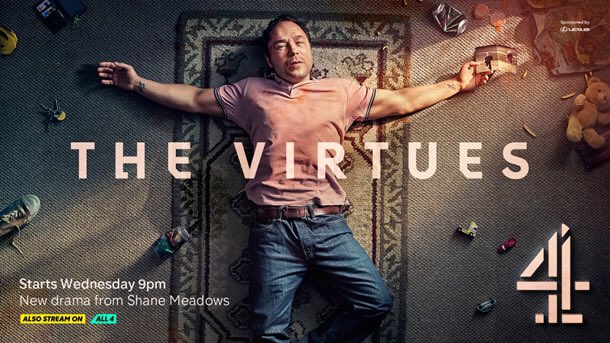
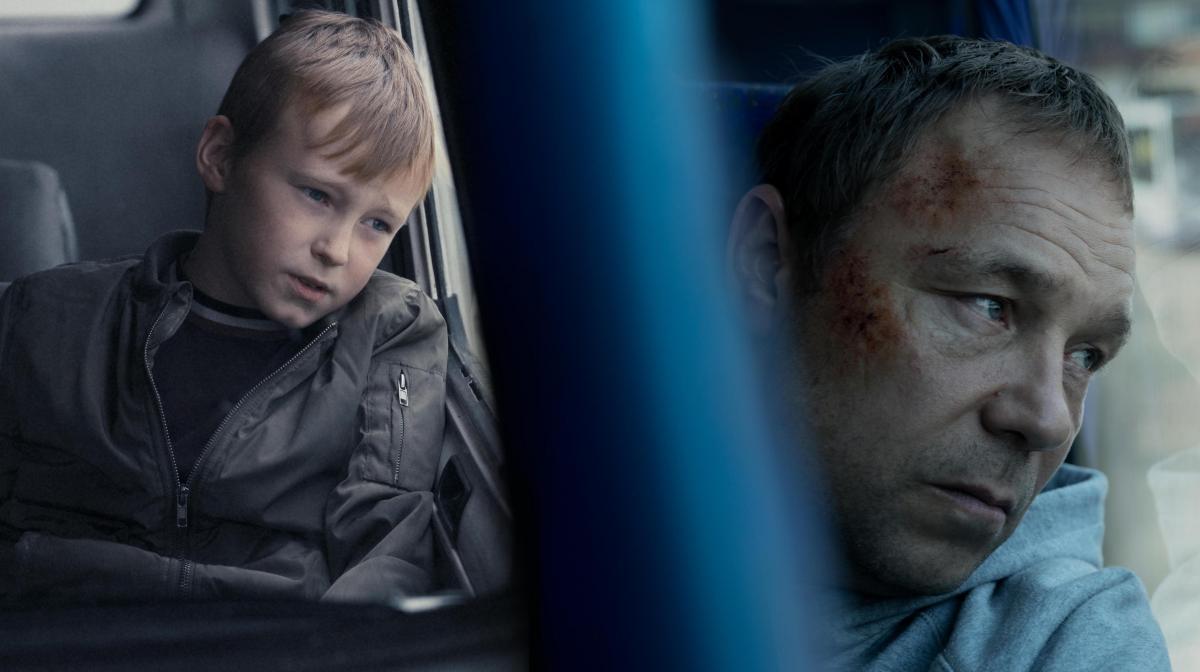
The Virtues (2019) is the latest drama from British filmmaker Shane Meadows and was released on Channel 4/All 4 recently. Over the four episodes we experience the traumas of Joseph (Stephen Graham), as he attempts to overcome events in the present and those which haunt him from the past.
The story begins in Sheffield and introduces forty-something, Joseph as he’s about to say goodbye to his nine-year old son and former partner who are emigrating to Australia. While he’s putting a brave face on this emotional upheaval, internally the separation slowly tears him apart. It also precipitates memories of events which occurred to Joseph when he was young and living in Ireland.
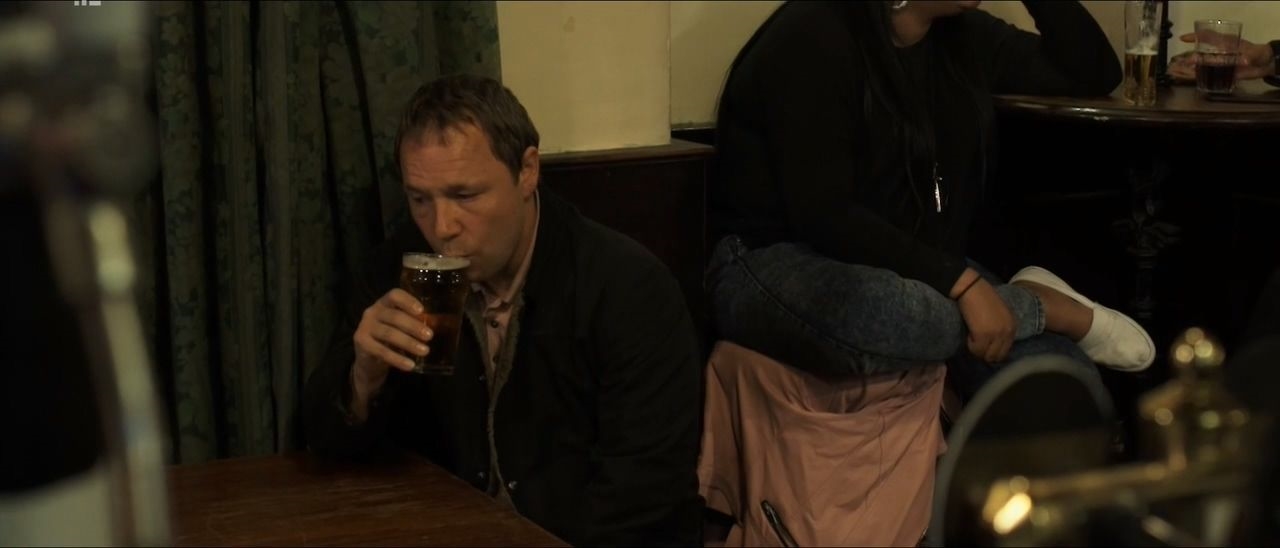
It was at the age of nine when his parents died. While his sister is adopted, Joseph is placed into a care home. It is here that he suffers an unspeakably horrendous trauma. On returning to Ireland as an adult, painful memories he had blocked out until now suddenly resurface. As an adult Joseph tries to come to terms with what occurred, make peace with his sister and at the same time battle his ongoing alcoholism. It is altogether gruelling and compelling drama.
Shane Meadows and Stephen Graham had worked together on the This Is England film and TV series. While that was very much an ensemble piece, this is a more individual focused, personal and painful character study. Stephen Graham is absolutely amazing as the character of Joseph. He has been broken by life, let down by the system and traumatized as a child. Graham lives this pain in virtually every scene he inhabits. His eyes darting nervously, he mumbles, looking down and around, trying to hide; only coming alive when he has alcohol in him. His problem with alcohol is he cannot stop, and this invariably leads to Joseph hurting himself physically and emotionally.
Alcohol as self-medication is just one of the issues addressed in this startling and raw drama. Meadows and co-writer, Jack Thorne also address families, adoption, child abuse, religion and the care system. While the series doesn’t venture into outright socio-political criticism, it explores the damage that can occur to individuals in care. Through Joseph’s sister, Anna (Helen Behan) though, we also get a more positive view of adoption. Her character is strong and determined and a fine mother. But she did not suffer the events Joseph did, so their journeys travelled different paths.
Shane Meadows directs with his usual naturalistic brilliance. Scenes with all the actors feel honest and believable. Meadows is not afraid to shoot simply and allow the performances provide the emotion. Having said that there are some highly stylistic choices. The flashback editing and montage is a case in point. Moreover, when Joseph goes on a bender, we get the camera-harness point-of-view shot I remember first seeing in Scorsese’s Mean Streets (1973). This allows us to step into Joseph’s drunken psyche as the soundtrack pounds and a voice-over sermon pipes out on screen. Lastly, the flashbacks to Joseph’s younger years are shot on, what seems like, DV-Cam or an old-style video-camera. This creates an additionally sinister feeling to the events.
Overall, this is another powerful drama from Shane Meadows. He gets amazing performances from all the actors, notably Stephen Graham, star-in-the-making Dinah Algar; and an Irish actor I hadn’t seen in a while, Mark O’Halloran. My feeling is Meadows could arguably of told the story in a two hour film. This is because the four episodes slightly stretched out the story in places. Be warned though, The Virtues is not for the faint-hearted. It is very painful to watch. Such is the emotional power of the story, by the end, your heart will feel like you’ve gone ten rounds with a heavyweight boxer. But as a drama about fighting back against the punches life throws at you it will certainly remain with you for some considerable time.
2016 – LONDON FILM FESTIVAL – THE BIRTH OF A NATION (2016)
SPOILER FREE REVIEW
TITLE: THE BIRTH OF A NATION (2016)
DIRECTOR/PRODUCER/WRITER: Nate Parker
CAST: Nate Parker, Armie Hammer, Penelope Ann Miller, Colman Domingo, Aja Noomi King
STORY: At the turn of the 1800s a charismatic preacher must decide between a life of slavery or to stand up and fight against his brutal captors.
REVIEW:
This drama, written, produced, directed and starring by Nate Parker has, since its release at the Sundance Festival, created a whole host of controversies. There is a historical rape prosecution of which Nate Parker was found innocent of in 1999; there are accusations of historical inaccuracies in the story; plus the passivity of female characters within the narrative has been criticized too. Not surprising though because any film about slavery, rape, abuse and murder is bound to set the cultural world, internet, film industry, social media, historians etc. alight with debate.
Personally, when I watch a film I prefer to judge it purely on whether it has entertained, informed, provoked thought and created emotion. The filmmakers’ personal history or whether a film meets certain quotas on political correctness or even whether the history has been altered to suit a narrative are important factors but not my main viewing considerations. Of course, if it is an exploitative piece of crap then I would call it; but mainly I ask myself: did the film entertain me and is it a good story done well?
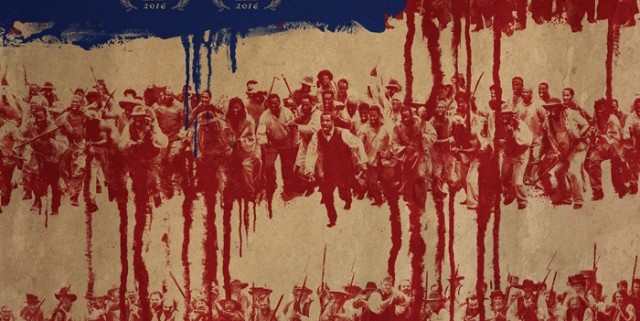
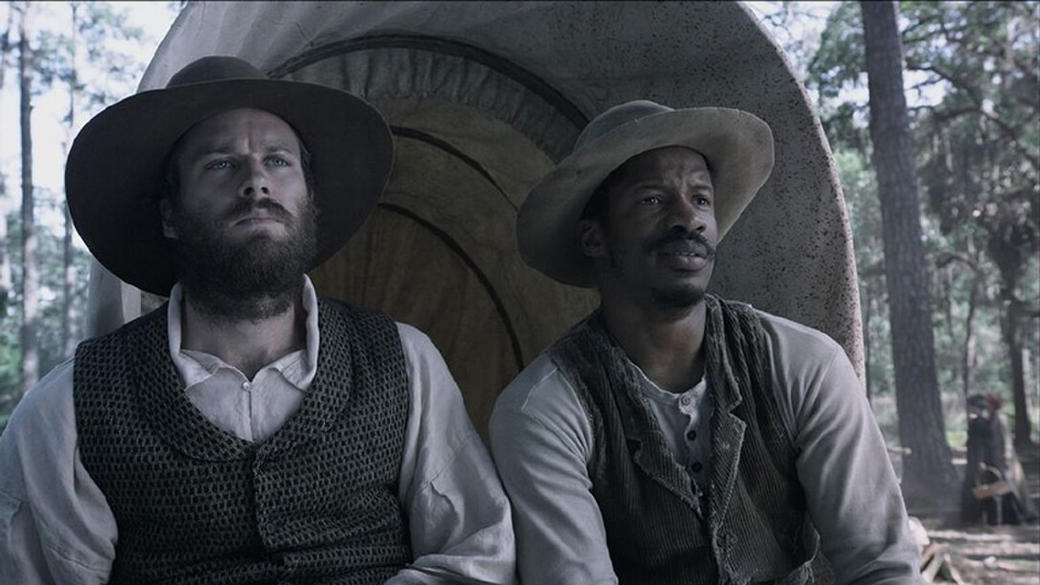
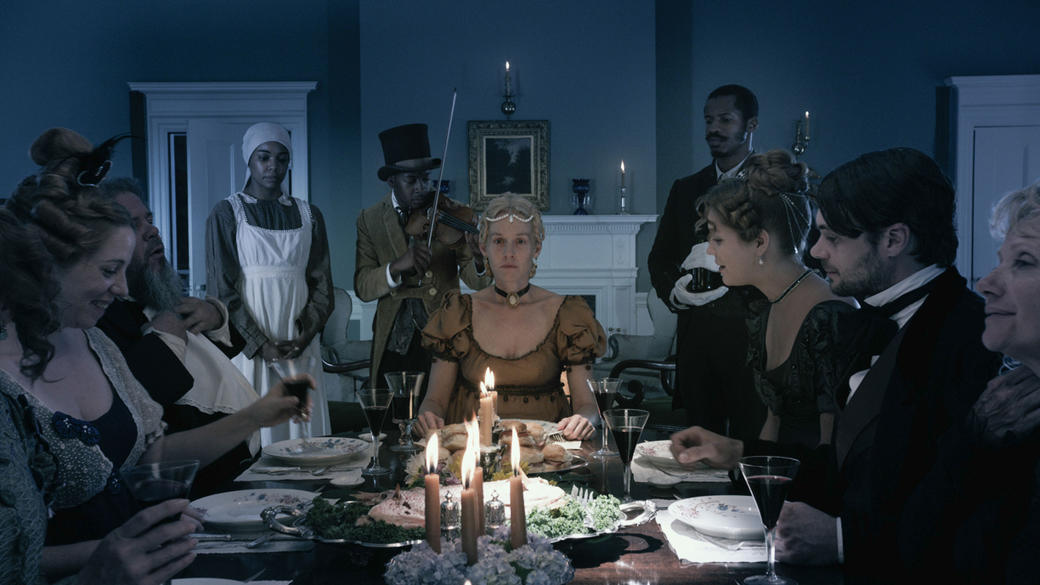
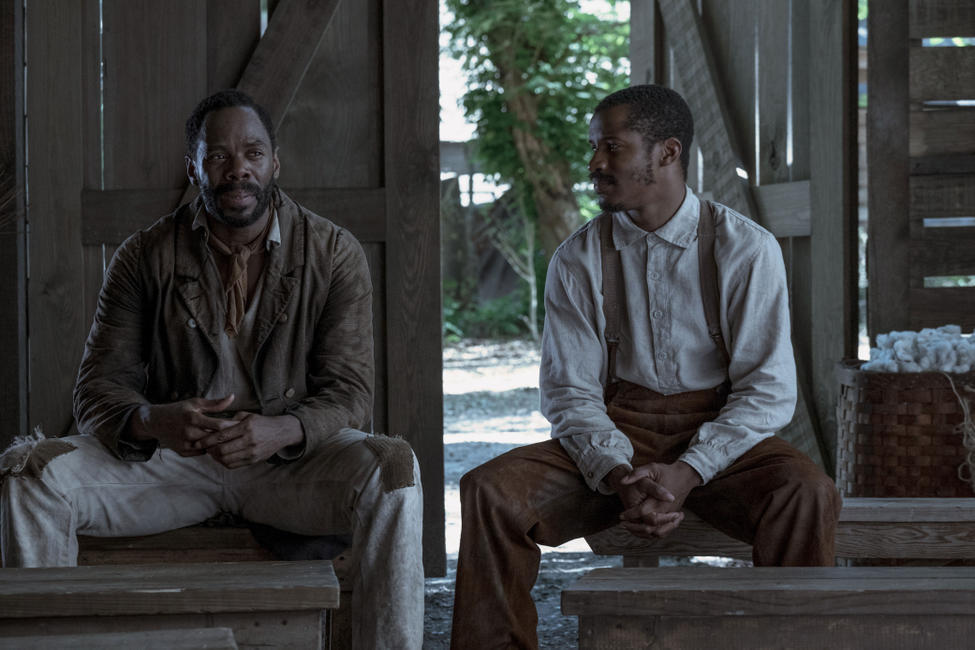
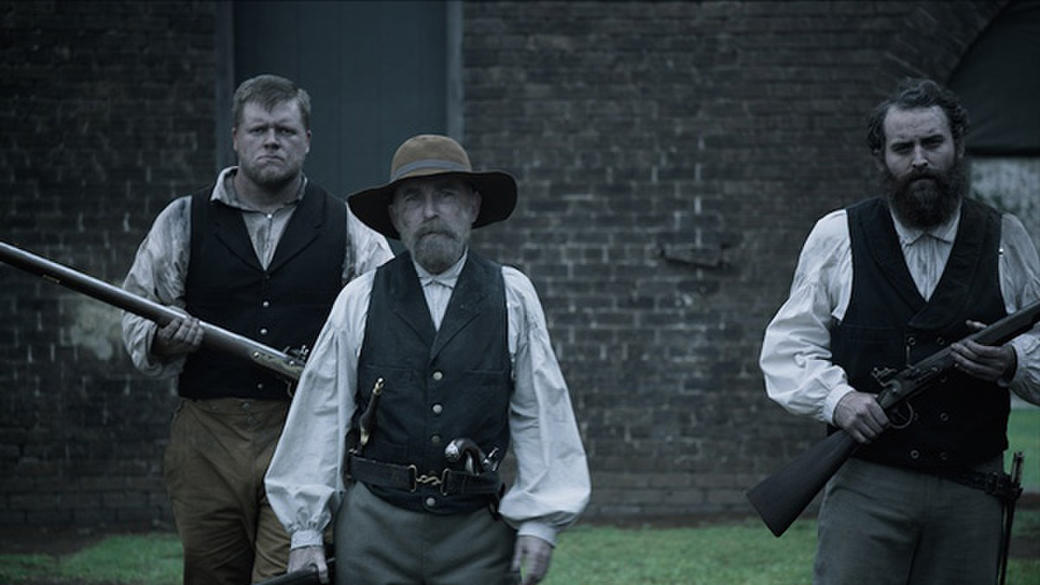
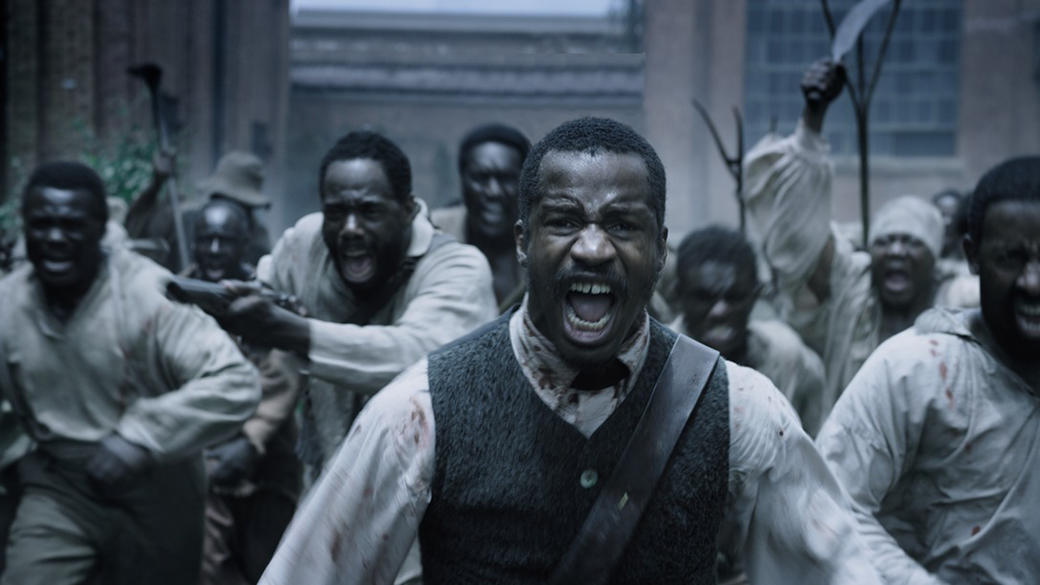
Well, inaccuracies and controversies aside I was thoroughly moved and taken with emotion by The Birth of a Nation. It is ambitious, independent filmmaking which takes a figure from history that stood up against oppressors and fought back against the injustices that befell him and his people. In little over two hours we get a microcosmic view of the character of Nat Turner and the horrific period he lived in and get a short, sharp and shocking drama. Turner is shown to be an intelligent, proud and spiritual force who inspires those around him to fight against the brutality all around.
You cannot underestimate Parker’s vision and determination to bring Nat Turner’s ‘story’ to the screen. On such a relatively low budget (reported to be £10 million) it is an admirable and risky project to pursue and deliver. Not as startlingly stylistic as the big-budget-spaghetti-slave-Western Django Unchained (2012), The Birth of a Nation is a heart-breaking narrative which posits the power of the scriptures and damns the beast of humanity which allowed free people to be stolen from their country and made to serve others.
Overall, the film works as a lower-budget epic in the vein of Braveheart (1995) and Spartacus (1960), while covering similar ground thematically as Oscar winner 12 Years A Slave (2013). It may not have the artistry of Steve McQueen’s directed epic, but it is still an important film about a fascinating historical figure. Whether it is accurate or not the film still made compelling viewing and Parker deserves all the praise he gets for such an assured debut.



 The Cinema Fix presents