Tag Archives: addiction

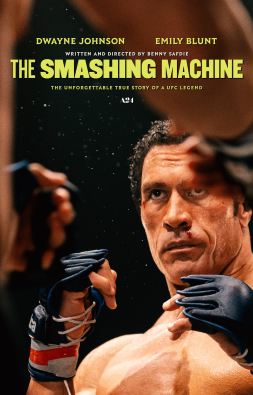
Cinema Review: The Smashing Machine (2025) – an authentic portrait of a MMA fighter that hits big!

Cinema Review: The Smashing Machine (2025)

Directed by Benny Safdie

Written by Benny Safdie

Based on documentary The Smashing Machine: The Life and Times of Extreme Fighter – Mark Kerr by John Hyams

Produced by Benny Safdie, Dwayne Johnson, Eli Bush, Hiram Garcia, Dany Garcia & David Koplan

Main cast: Dwayne Johnson, Emily Blunt, Ryan Bader, Bas Rutten, Oleksandr Usyk etc.

*** MAY CONTAIN SPOILERS ***


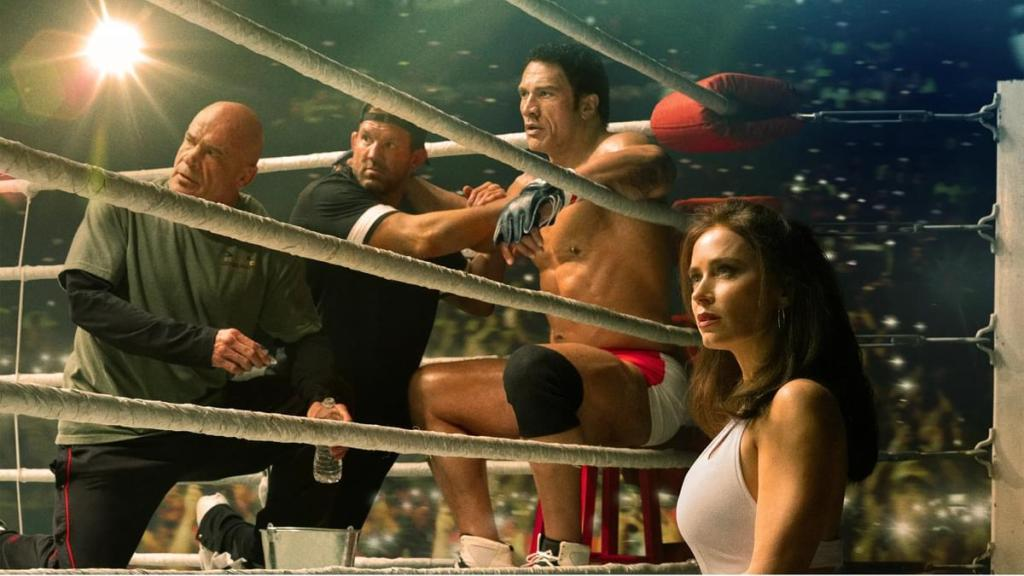
Benny Safdie’s The Smashing Machine (2025) is a bruising, compassionate, and unvarnished portrait of a man torn between physical dominance and emotional fragility. Centered on a three-year stretch (early 2000s) in the dramatic life of MMA pioneer Mark Kerr, the film captures both the bone-rattling intensity of the ring and the private turmoil of a fighter whose greatest battles unfold far from the crowd’s roar.

Dwayne Johnson delivers a revelatory performance as Kerr, casting aside his blockbuster charisma to reveal deep vulnerability and conflict. His portrayal is raw, unguarded, and humane—showing a man both addicted to the high of combat and trapped by the pain that follows. The film traces Kerr’s tumultuous relationship with Dawn Staples (played with nuance and sensitivity by Emily Blunt.) Together they find emotional truth in every scene, exploring the strain that MMA fighting, addiction, mental health, fear-of-losing, obsession and self-doubt place on intimacy.


The fight sequences are stunningly authentic, shot with kinetic immediacy and documentary realism. Safdie immerses the audience in the grit and chaos of early MMA, where glory was fleeting and paydays were meager compared to the sport’s modern era. Supporting performances from real fighters Ryan Bader and Oleksandr Usyk lend further credibility, grounding the film in the texture of lived experience.

Safdie’s direction is as intense and uncompromising as his subject. He resists the traditional rise-and-fall sports narrative, opting instead for a slice-of-life, near-documentary approach that prizes authenticity over heart-pounding drama. If the conflict surrounding Kerr’s addiction, rehab, and Dawn’s own mental health struggles feels under-explored, that restraint is also what makes the film feel so painfully real.

Inspired by the documentary, The Life and Times of Extreme Fighter – Mark Kerr by John Hyams, The Smashing Machine (2025) isn’t a conventional sports movie—it’s a portrait of survival, identity, addiction and the brutal intersection of ambition and vulnerability. Unflinching and deeply human, it cements Johnson’s performance as the best of his career, and confirms Safdie’s gift for finding poetry in the MMA fight scene. Ultimately, the film works best as a tribute to the trailblazing strength and passion of the fighter, Mark Kerr. The fight game is a crazy, tough business and it’s heartening to see, especially in the final scenes, that Kerr survived such battles and lived to breathe another day.

Mark: 8 out of 11


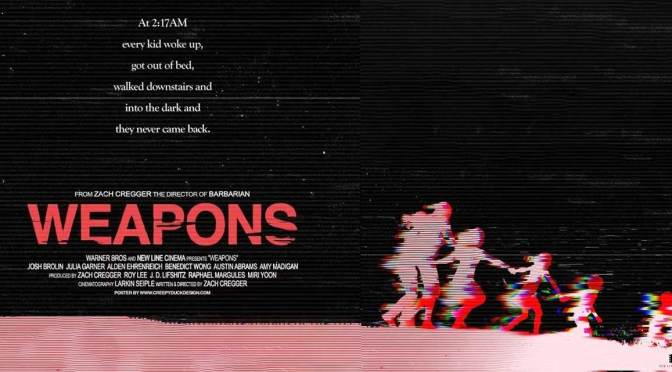
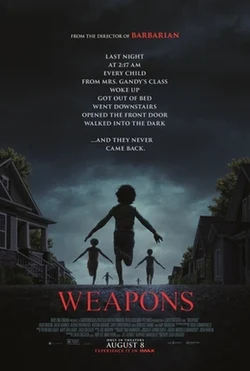
Cinema Review: Weapons (2025) – a finely constructed horror mystery!

Cinema Review: Weapons (2025)

Directed by Zach Cregger

Written by Zach Cregger

Produced by Zach Cregger, Roy Lee, Miri Yoon, J. D. Lifshitz, Raphael Margules, etc.

Main Cast: Josh Brolin, Julia Garner, Alden Ehrenreich, Austin Abrams, Cary Christopher, Benedict Wong and Amy Madigan.

Cinematography by Larkin Seiple

*** MAY CONTAIN SPOILERS ***


Zach Cregger’s Barbarian (2022) was an intriguing feature debut that captivated viewers with a suspenseful, tension-filled first half, expertly building a sense of dread and mystery. The film begins with a seemingly simple premise — a woman arrives at an Airbnb, only to find it double-booked — but what starts as a quiet psychological thriller quickly takes an unexpected turn. As the plot unfolds, the sense of unease grows, drawing viewers deeper into its web of secrets.

However, the second half of the film ventures into increasingly bizarre and chaotic territory, unravelling into a frankly insane series of twists and reveals. While it might initially seem like a more grounded thriller, Barbarian (2022) pushed the boundaries of genre, diving head first into over-the-top absurdity. It’s a thrilling ride that keeps you on the edge of your seat, even if the madness of the final act leaves you both bewildered and entertained. In some ways Cregger’s follow-up Weapons (2025) shares such structural and thematic similarities with his first film, however, it is a much more controlled and impactful mystery. Until the end.

Weapons (2025) immediately hooks viewers with the mystery of the seventeen children going missing in the town of Maybrook. This instantly draws us into a world brimming with tension and unanswered questions. The authorities investigation into their disappearance soon stalls and how the townsfolk react becomes the central thread, gradually unraveling a complex, carefully structured narrative. Thus, Cregger’s postmodern fairy-tale unfolds through the eyes of various interconnected characters, each of whom brings a unique perspective and layer to the plot.


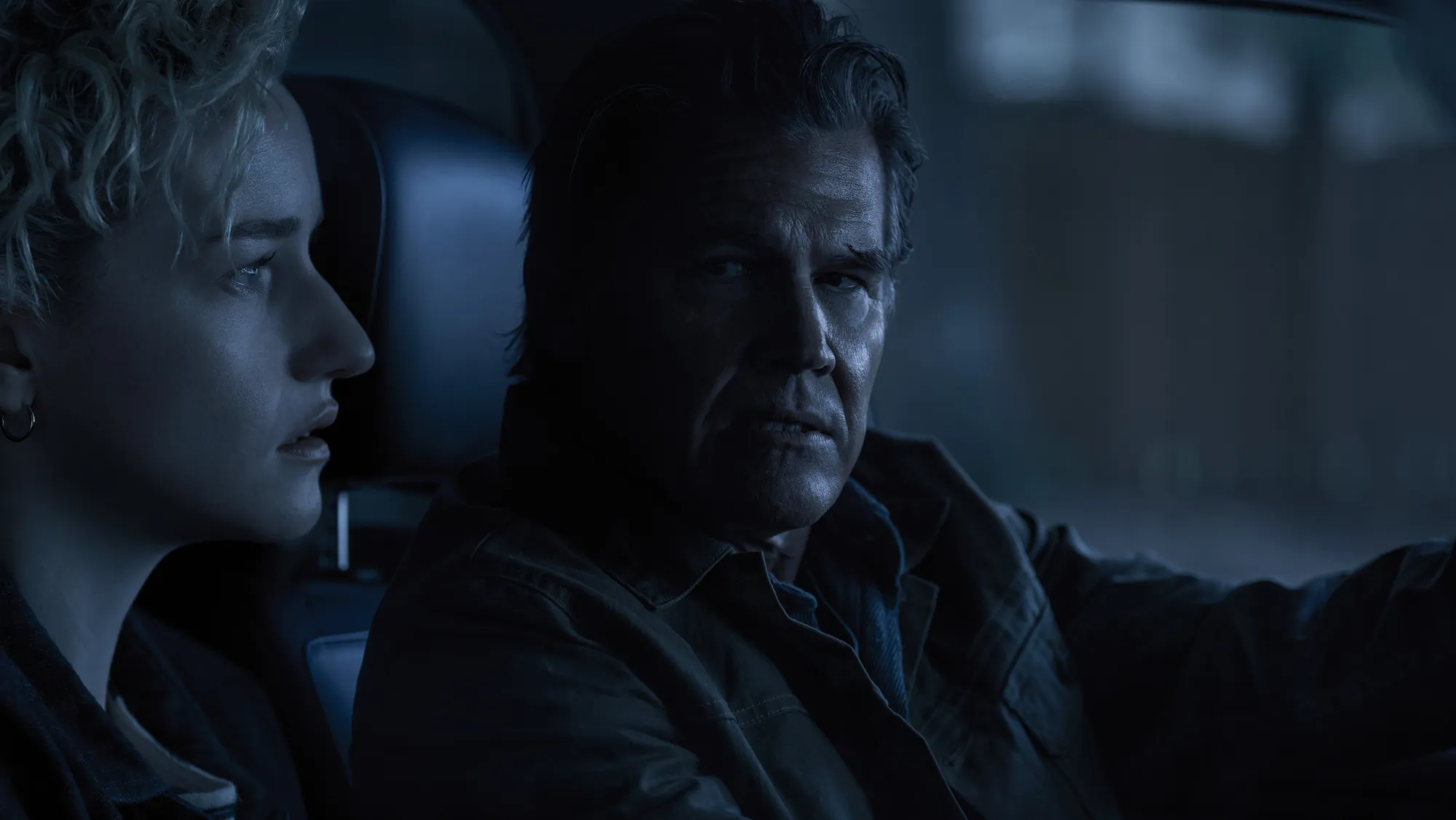
Josh Brolin plays Archer Graff, a father grieving the disappearance of his son Matthew, one of the missing children. His portrayal is poignant, balancing grief with a desperate need for answers, and his journey pushes the narrative forward with a personal stake in the outcome. Next, Julia Garner’s Justine Gandy, a dedicated teacher, adds another emotional dimension. She’s devastated when she discovers that nearly all of her students have vanished without a trace, with the exception of Alex Lilly (played by Cary Christopher), the only child from her class who remains. Justine’s struggle to find out what happened to her students, coupled with her own crumbling personal life and alcoholism, make her a compelling protagonist.

Other characters include Alden Ehrenreich’s Paul Morgan, a troubled police officer with his own set of demons, is a reluctant ally to Justine. Their past relationship adds a layer of tension as they navigate the growing sense of danger and urgency surrounding the missing children. Then, Austin Abrams brings a sense of raw, chaotic energy to James, a homeless drug addict and burglar whose past intersects with the mystery in unexpected ways. Lastly, Benedict Wong plays Marcus Miller, the school principal, who serves as an important figure in Justine’s quest for answers. Though sympathetic to her, Marcus is often caught between his professional responsibilities and the mounting pressure of the situation.

Weapons (2025) masterfully weaves its non-linear narrative with a striking array of tense, spine-chilling moments that keep audiences on edge throughout. As the plot unfolds through intersecting character arcs, the film expertly intersperses surprising scares, thrilling foot chases, and creepy locations, all while pulling you deeper into its twisting mystery. The jumps in time and the interconnected storylines create a sense of disorientation that builds forces viewers to constantly question what’s real and what isn’t.

Each character’s journey is filled with psychological unease and physical danger, leading to some genuinely heart-pounding sequences. Meanwhile, the eerie, claustrophobic settings—ranging from decaying homes to ominous, unfamiliar spaces—serve as perfect backdrops for the increasing horror. These moments contribute to the growing sense that something monstrous is lurking just beneath the surface, waiting to break free. Further, the film also plays with ambiguity, surreal dreams and unreliable narrators, allowing characters’ perspectives to fracture.

However, similar to Barbarian (2022), Weapons (2025) takes a tonal right-turn in the final moments, descending into all-out mania and Savini-style gore. The reveal of the matriarchal menace, who emerges as a central ‘Pied Piper’ type villain, feels somewhat unearned, undermining the narrative choices before. The ending also didn’t quite fully connect with the deeper themes or subtext of the film that were promised in the set-up. Yet, despite such inconsistencies Cregger’s Weapons (2025) has been marketed incredibly well and as has deservedly done great box-office business. Lastly, Creggers is a very talented filmmaker and his second film remains a smartly written and gripping ride filled with tension, scares, and that insane final act.

Mark 8.5 out of 11


CINEMA REVIEW: THE IRON CLAW (2023)

CINEMA REVIEW: THE IRON CLAW (2023)

Directed by Sean Durkin

Written by Sean Durkin

Produced by: Tessa Ross, Juliette Howell, Sean Durkin, Angus Lamont, Derrin Schlesinger

Cast: Zac Efron, Jeremy Allen White, Harris Dickinson, Maura Tierney, Stanley Simons, Holt McCallany and Lily James.

Cinematography: Mátyás Erdély

*** CONTAINS SPOILERS ***


According to research on the internet the biggest killer of men in the UK under fifty-years of age is suicide. Nationally and locally seventy-five percent of those that die by suicide are men, with the highest numbers being forty-five to fifty-four years of age. In the USA, reports show suicide is the second leading cause of death among Americans ages ten to thirty-four, and the fourth leading cause of death in the thirty-five to fifty-four age group. I personally have known two close male friends who have taken their own lives in the last decade.

In addition, mortality rates for professional wrestlers are reportedly up to 2.9 times greater than the rate for men in the wider United States population. Statistics also show that the early deaths of professional wrestlers were significantly higher than that of athletes in other sports. Potentially due to the consistent mental and physical detriment as well as a proclivity toward higher rates of cardiovascular disease, depression and drug addiction. Thus, with this in mind, Sean Durkin’s film, The Iron Claw (2023), a profile of the Von Erich family, while full of exciting wrestling action, is NOT one of those generic feelgood underdog sports dramas. It is however a complex exploration of masculinity, familial pressure, sports politics, suicide, grief, religion, addiction, love, and the resilience of the human spirit.


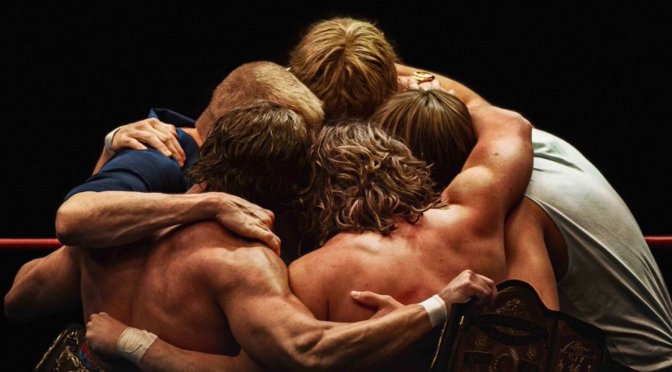
A prologue establishes Jack “Fritz” Von Erich (Holt McCallany) as an uncompromising professional wrestler in the 1960s with a signature move called the ‘Iron Claw.’ A number of years later Von Erich Snr. is a wrestling promoter who runs successful WCCW events in Texas. His unique selling point for the shows is that he has four sons, Kevin (Zac Efron), Kerry (Jeremy Allen White), David (Harris Dickinson) and Mike (Stanley Simons), who throughout the narrative, all test themselves to the limit in the wrestling ring.

While it is certainly a strong ensemble cast, the main focus of Durkin’s compelling screenplay is Zac Efron’s, Kevin. A strong, fast and muscular athlete in the ring, Kevin, however, is not a confident personality out of it. He, and his brothers, live in the shadow of his domineering father, who controls and dictates to those around him. Jack’s resentment at not winning the NWA Worlds Heavyweight Championship during his career, and dissatisfaction at the politics of the higher-ups in wrestling, has made him a bitter, angry man. Thus, the theme of toxic masculinity bleeds throughout the story as Jack keeps his sons, and wife (Maura Tierney), under control. Therefore The Iron Claw (2023) is not just a signature wrestling move, but also the means with which the Von Erich family are treated by Jack.

There are moments of glory in the ring for the brothers, notably Kevin, Kerry and David in The Iron Claw (2023). Indeed the wrestling action is often pulsating and Durkin does include several genre-pleasing action montages. But, tragedy is never far away from the Von Erich family. Kevin even tells his wife-to-be, Pam (Lily James) that he believes the family are cursed. She dismisses this, but given what occurs during the film and the heartbreak which befalls the brothers, you begin to think he may be right. As Kevin, Zac Efron gives an incredibly moving performance as the brother seeking love, success and family community. Lastly, I truly disliked Sean Durkin’s last film The Nest (2020), as it said very little about people I did not care about. The Iron Claw (2023), on the other hand, says so much about people I was emotionally rooting for, with Kevin Von Erich in particularly admirable as he showed ultimate fighting spirit by surviving such unforgiving loss.

Mark: 9 out of 11


CINEMA REVIEW: THE WHALE (2022)

CINEMA REVIEW: THE WHALE (2022)

Directed by Darren Aronofsky

Screenplay by Samuel D. Hunter (based on his play of the same name.)

Produced by: Jeremy Dawson, Ari Handel, Darren Aronofsky

Main cast: Brendan Fraser, Sadie Sink, Hong Chau, Ty Simpkins and Samantha Morton

Cinematography Matthew Libatique

*** MAY CONTAIN SPOILERS ***


Darren Aronofsky is a risk-taking, boundary-pushing genius of a genre filmmaker. He is one of those film experimenters who threatens and breaks the chains of narrative convention, form and style. Films such as Pi (1998), Requiem for a Dream (2000), The Wrestler (2008) and Black Swan (2010) are intelligent, moving and often controversial cinematic visions. The least said about the indulgent, pretentious and nihilistic void of a film, Mother (2017), the better. Many went crazy for that allegorical nervous breakdown on the screen, but not me.

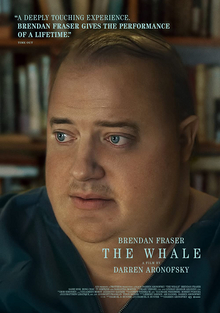
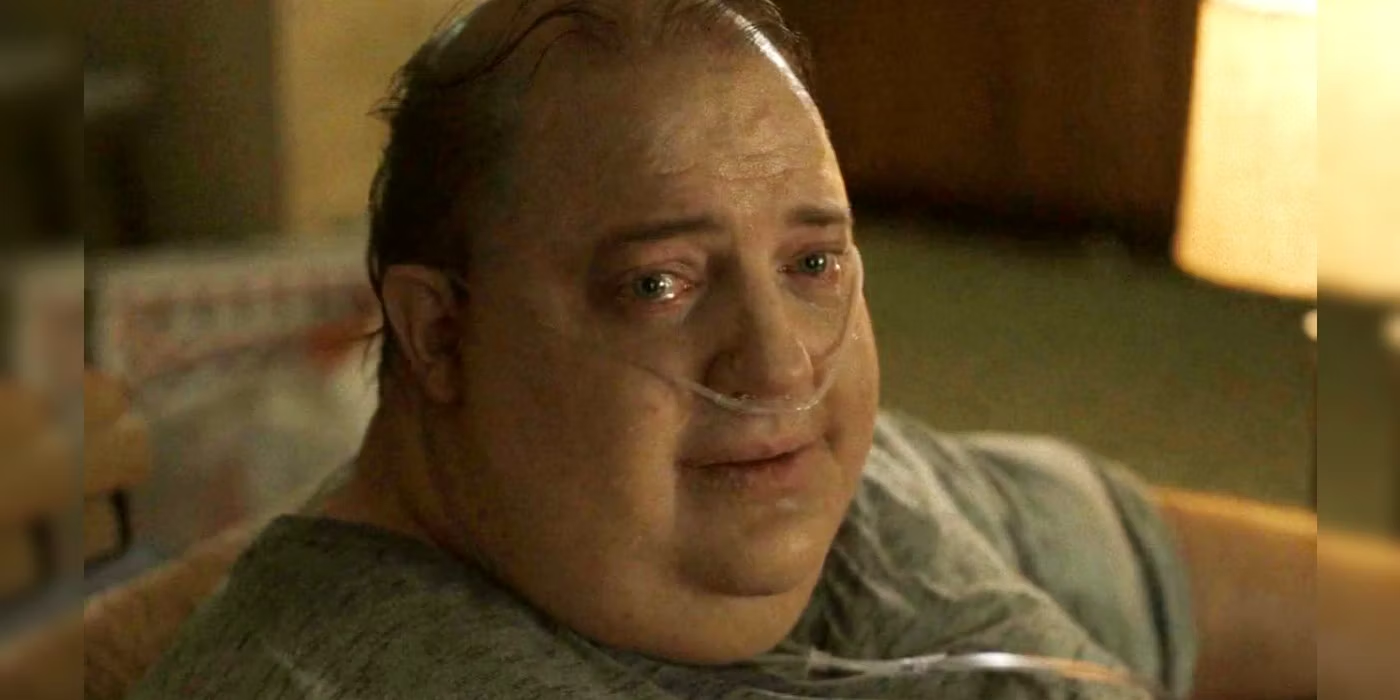
Aronofsky’s latest film, The Whale (2022) finds his excesses stripped back in terms of setting, colour, camera movement, lighting and editing design. The story of an obese man, Charlie (Brendan Fraser), finds him trapped by his own weight, addiction to food, grief and ill-health within an apartment. The colour scheme is stained and grey, while the dialogue-heavy script, naturally lit set, mostly static camera and claustrophobic drama betray The Whale’s origin as a play. Online English teacher Charlie’s journey is slow-burning and tragic, as he attempts to reconcile himself with his bitter, teenage daughter, Ellie, (Sadie Sink) and deal with his ever-worsening health. This familial thematic echoes The Wrestler (2008) as a lead protagonist strives to redeem his life decisions and find value to his existence. Ellie, however, is far less sympathetic and angry when compared to The Wrestler‘s, Evan Rachel Wood’s, Stephanie.


As with Requiem for a Dream (2000), The Whale (2022) contains the theme of addiction. Aronofsky’s earlier film found the characters hooked on heroin. Here, Charlie is wholly dependent on food. His dealer is also his carer, Liz (Hong Chau), and their relationship, as well as Ellie’s verbal outbursts, power much of the guilt and conflict within the play. Because Charlie is lost in hurt, he distracts himself with fizzy soda, pizza and massive torpedo rolls. He hides indoors in the shadows and behind an avatar on his computer screen. Charlie’s students never see him, only hearing his slowly breaking voice, stymied by an inability to breathe due to his expanding heart and squeezed lungs.

I feel it’s an almost integral part of the human condition to satisfy a compulsive need to feed on a substance that destroys one’s body and soul. I believe everyone is an addict, but some have more will power than others and can handle their compulsions. However, if you lose someone or suffer from depression, feeding one’s addiction is a way of blocking out the pain. Thus, I really connected with Charlie’s character in The Whale (2022), because he is in a painful tailspin with no apparent way out. Brendan Fraser delivers a stunningly moving character study. It truly is an admirable physical and mental achievement. Hong Chau is also impressive as the both caring and controlling carer who proves to be both Charlie’s best friend and worst enemy.

To conclude, The Whale (2022) is a compelling chamber piece with some finely written dialogue, empathetic heart, controlled direction, incredible make-up and prosthetics, and a singularly mighty performance from Fraser. Ultimately, the film holds a mirror up to the human condition, finding that the reflection, however upsetting and disturbing it may be, still deserves our compassion and understanding.

Mark: 8.5 out of 11


MY CINEMATIC ROMANCE #23 – CHRISTIAN BALE

MY CINEMATIC ROMANCE #23 – CHRISTIAN BALE

“Essentially, I’m untrained, so I just go with my imagination and try to put myself as solidly as I can into the shoes of whatever person I’m going to be playing.” Christian Bale


It’s easy to forget that Christian Charles Philip Bale was only thirteen years old when he was chosen out of thousands of young actors for a starring role in Steven Spielberg’s war drama, Empire of the Sun (1987). From there on in he has become one of the most formidable actors of a generation. Unlike many young actors he has not fallen by the wayside, but rather delivered a series of tour-de-force and award-winning performances in both independent and big budget Hollywood blockbusters.

So, for my occasional look at the major talents of cinema I have turned to one of the greatest actors of the last twenty-something years, and chosen five of his best roles to illustrate that. An intense and natural talent he has been in many outstanding films and some not so good. However, whatever role Christian Bale chooses he is usually never less than powerfully magnetic. I must say, I have not selected any of his portrayals of Bruce Wayne and that very fine Batman performance, notably from a physical perspective. Even though in, Batman Begins (2005), he created a stirring existential vision of a wealthy child growing out of grief into the dark saviour of Gotham City. I just think he has given five better acting transformations on screen. Here they are.

***CONTAINS FILM SPOILERS***


AMERICAN PSYCHO (2000)

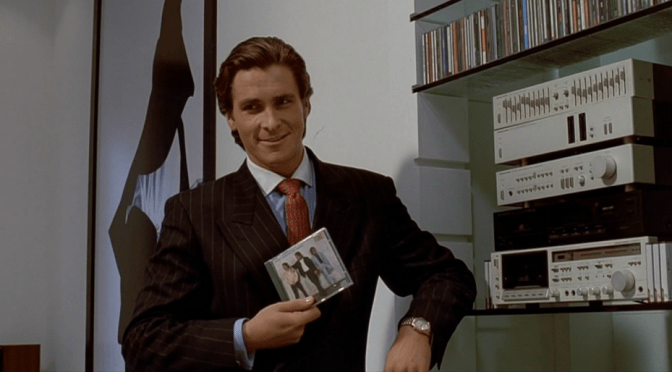
Having tread water in a career-sense attempting to traverse the difficult bridge from child actor to the leading man we have come to know, Christian Bale got a break in Mary Harron’s adaptation of Bret Easton Ellis’s notorious novel, American Psycho. And boy – did he make the most of it! I watched the film again recently and I have to say, other than perhaps Leonardo DiCaprio (who was originally cast in the role), no other actor could have delivered such an unhinged, evil and funny (yes he’s hilarious) portrayal of the Wall Street banker-turned-serial killer, Patrick Bateman. It’s a dangerous and sick character who Bale somehow manages to make you despise, yet simultaneously humanise.


THE MACHINIST (2004)

Possibly the greatest Christian Bale performance that hardly anyone has seen. Oh you have seen it? Wow, what an intense performance Bale gives as lonely blue collar worker, Trevor Reznik. Reznik is a haunted man who cannot sleep. He is also anorexic as Bale reduced his weight to 62kg for the role, demonstrating, not for the last time, a dangerous method of obsessive physical transformation. It works too as the skeletal Reznik struggles to overcome a slow descent into madness, with Bale, once again, showing incredible commitment to his craft in this under-rated and haunting noir nightmare of a film.


THE FIGHTER (2010)

While Mark Wahlberg was excellent as the lead actor in David O. Russell’s profile of tough Massachusetts fighter, Micky Ward, Bale absolutely steals the thunder with an incredible acting performance as Ward’s half-brother, Dicky Eklund. As a study of the nefarious curse of addiction, Bale makes the charismatic, but unreliable, Ekland both a loathsome and somehow empathetic character. Because while his crack cocaine addiction drives him to make bad choices for both him and his brother, there is at his heart a loving person battling to win over his illness and make his brother a champion. A story about family and human beings overcoming the odds, Bale punches out another memorably flawed individual in The Fighter (2010), deservedly winning an Oscar in the process.


HOSTILES (2017)

This revisionist Western did not get nearly enough attention on release. Yet buried in here is another quietly intense acting performance from Christian Bale. His other Western, 3:10 to Yuma (2007) is the more entertaining film, but in Hostiles (2017), he gives a much more complex characterisation as Captain Joseph Blocker. The weight of guilt and pain and death hang heavy on Blocker following years of brutal conflict. Scott Cooper’s film conveys the depressing murderous times borne out of the greedy need for progress. Hatred and white man’s guilt drives his character as Bale’s soldier initially refuses to take Chief Yellow Hawk back to his homeland. Is it more because of the deaths of his own men on the battlefield or because he does not want to face up to his own crimes against the Native Americans? The film explores this question superbly with Bale at the heart of the conflict from savage beginning to bloody end.


VICE (2018)

While I agree with critics of Vice (2018), that it is cartoonish and simplistic, it is also a brilliant and scabrous work of satire. Yes, sure it’s preaching to the liberal and left-winged Hollywood choir, but it definitely presents a fascinating snapshot of Dick Cheney’s rise from alcoholic wastrel to powerful political figure. I mean let’s face it, Cheney, based on his reign in U.S. politics, is arguably one of the most dangerous men who ever existed. In Adam Mckay’s black political comedy Cheney is shown to be a manipulative puppet-master to Bush’s marionette President. McKay’s film, while certainly one-tracked, powers along picking apart one of the most shadowy political figures of recent years. But what about, Bale? Why take a role where he had to live on doughnuts for year to gain the weight required for the film? Well, because he likes to challenge himself and Bale should have won the Best acting Oscar! Rami Malek was decent as Freddie Mercury, but Christian Bale is astonishing. Fair enough, he takes a real person and delivers an emulation performance, but he also brings to Cheney to life with such intelligent style. Of course, the physical transformation takes the headlines, but in terms of emotion and mentality he really raises the bar. Cheney may be an enigmatic character but Bale brings menace, whispers and evil to the role. There is also a sly humour there too which makes Bale’s Cheney another unforgettable monster he’s brought to the screen.


NETFLIX FILM REVIEW: MALCOLM AND MARIE (2021)

NETFLIX FILM REVIEW: MALCOLM AND MARIE (2021)

Directed by: Sam Levinson

Produced by:  Kevin Turen, Ashley Levinson, Sam Levinson, Zendaya, John David Washington

Written by: Sam Levinson

Cast: Zendaya, John David Washington

Music by: Labrinth

Cinematography: Marcell Rév

*** MAY CONTAIN SPOILERS ***


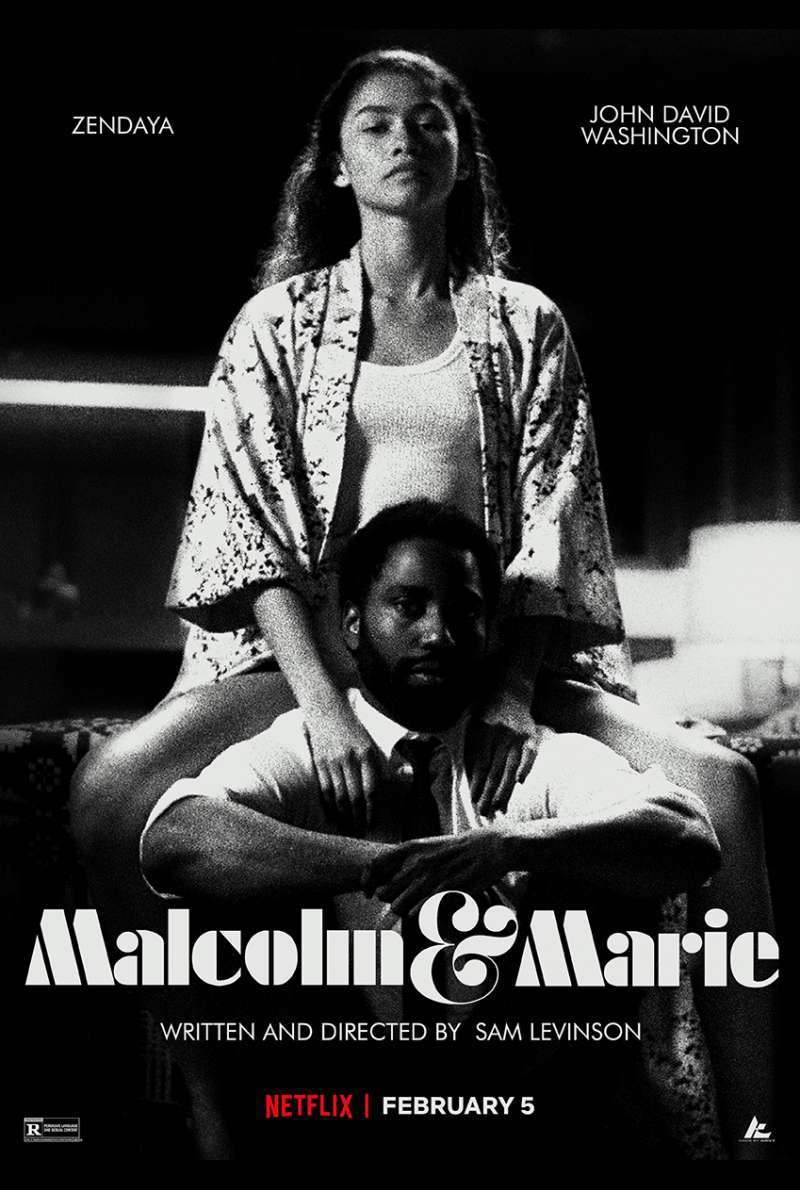
The Oscar nominations came out this week and due to the ongoing pandemic situation and consequent lockdowns, there are a number of films on the esteemed list which have yet to reach these shores, either at the cinema or via streaming platforms. Having said that, and I am aware space for nominees are limited and it has been a pretty strange year for cinema, but I was extremely surprised that Delroy Lindo did not receive an acting nomination in lead or supporting category. Similarly, I was also bewildered that Sam Levinson’s striking romantic drama, Malcolm and Marie (2021), had not received nominations in either screenplay or acting categories. Further, I was utterly shocked that critic’s reviews for the intense two-hander had been pretty mixed. Hey, it’s just opinions but I was really gripped by this highly theatrical and gorgeously cinematic two-hour argument in black-and-white. Personally, I think most of the deriders are wrong. But that’s just my view.

Maybe the film wasn’t liked because John David Washington’s, Malcolm, an up-and-coming filmmaker celebrating a successful premiere that evening, launches into a wonderfully eloquent rant about a review which he feels pigeonholes and patronises his film in purely political terms. I mean it’s actually a positive review, but who doesn’t enjoy ire toward professional critics. I mean, everyone has an opinion, or a view and the Internet has caused a mass proliferation and gaping spew of words and views and brain-thoughts in extremis. But Levinson’s script and Washington’s grandstanding acting spits that if you earn a living as a critic then you are essentially Satan! Perhaps some reviewers took umbrage with this? I loved the whole scene’s energy and Malcolm’s savage attack had me applauding throughout.


But Malcolm and Marie (2021) is more than Levinson getting back at those individuals who gave him bad reviews. It’s a sharp, funny, sexy and poignant exploration of a relationship close to breaking point. Malcolm and Marie may be different fighting weights, but they both punch hard and often. He is on a high after his film premiere success, but Marie is upset because he did not thank her during his speech. From there the conflict rises from light sparring to harsh emotional knockout blows. Both Malcolm and Marie tear at each other’s skin and flesh and figurative organs in an attempt to resolve the ever-increasing divide between them. Malcolm and Marie (2021), may not be for everyone, but any person who has been in a heated war of words with a partner or spouse, will identify with the inescapable tension on display. Levinson’s expert screenplay rides a rollercoaster journey of emotions as one moment you side with Marie and the next you’re with Malcolm. Yet, before you know it, you’re disliking both these complex, narcissistic, egotistical and infuriating humans.

Both Zendaya and John David Washington deserve so much praise for their performances in, Malcolm and Marie (2021). Washington has already demonstrated his massive talent in BlacKkKlansman (2018), while Zendaya excelled in recent HBO drama, Euphoria (2019). Levinson too directs with a deft skill. I was especially impressed by the way he balances the comedy and drama of these flailing humans, poking and picking at the scabs of each other’s past behaviour. Indeed, as well as containing some brilliant dialogue, the erudite script really sang to me. At times the coruscating repartee reminded me of Edward Albee’s acclaimed play, Who’s Afraid of Virginia Wolf. Nonetheless, for a dialogue and performance driven film, the precise framing and sumptuous black-and-white photography by Marcell Rév render the visuals wholly cinematic.

Sure, by the end of Malcolm and Marie (2021) is anything really resolved? And who is ultimately interested in this couple’s first world problems? Well, I’ve witnessed my parents fighting and also experienced such exhausting relationship arguments before. So, I must say that overall, I thoroughly enjoyed witnessing Malcolm and Marie’s nocturnal battle. Especially because I watched it all from the safety, warmth and comfort of my own home.

Mark: 8.5 out of 11


NETFLIX TV REVIEW – DIRTY JOHN (2018)

NETFLIX TV REVIEW – DIRTY JOHN (2018)

Created by: Alexandra Cunningham

Based on articles and podcast: Dirty John by Christopher Goffard

Directed by: Jeffrey Reiner

Writers: Alexandra Cunningham, Christopher Goffard, Sinead Daly, Lex Edness, Kevin J. Hynes, Evan Wright, Diana Son, etc.

Producer(s): Melinda Whitaker, Christopher Goffard, Nan Bernstein Freed, Jonathan Talbert, etc.

Cast: Connie Britton, Eric Bana, Juno Temple, Julia Garner, Jean Smart, Shea Whigham, Alan Ruck, Kevin Zegers, etc.

Composer: Mark Mothersbaugh

Original networks: Bravo (USA) and Netflix (UK)


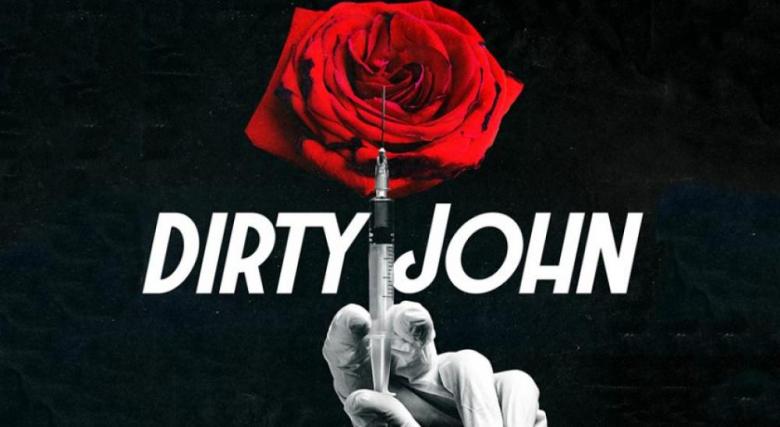
Such is the veracious appetite journalists, writers, filmmakers, TV producers, podcasters and the audience have for true crime stories, it’s no surprise that the life of con-man, John Meehan, and his victims, was turned into a thrilling eight-part drama shown on Bravo and Netflix respectively. After decades of cons, fakery, impersonations, drug addiction, robberies, lawsuits, insurance scams, harassment, spying, stalking and consistent lying, Meehan’s criminal activities came to an end as recently as 2016. Meehan had been trained in the “art” of the con by his father from a young age. Alas, his nature could not, unlike his sister, overcome such spurious nurture and Meehan was destined for a life of crime. They say truth is stranger than fiction and that is very much the case here with some of his venomous antics quite unbelievable. However, Meehan must have had so much charm and confidence to trick the many women he deceived, his character sadly stands as a heinous example of toxic masculinity.

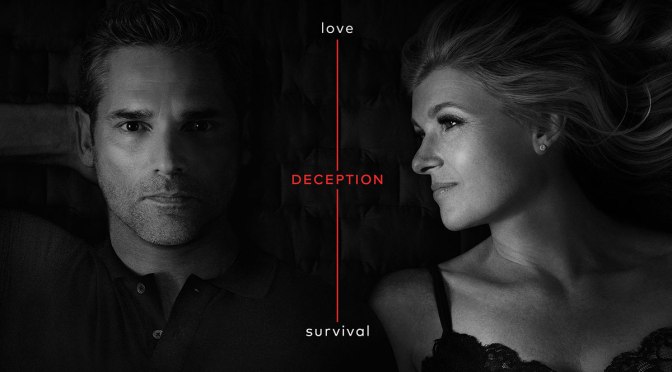
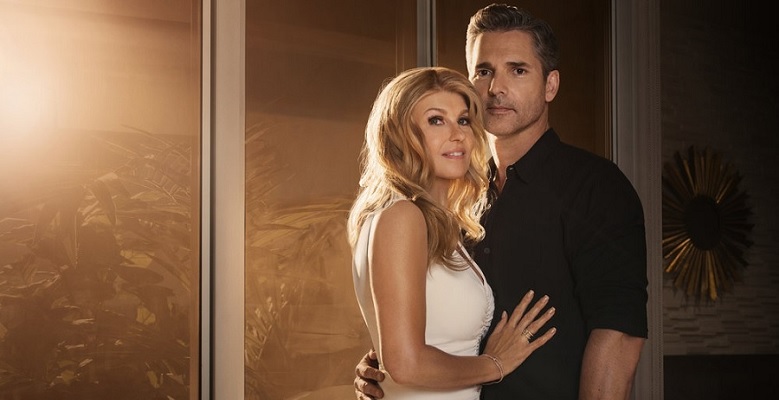
Eric Bana portrays John Meehan in Dirty John (2018). Bana is an excellent actor and arguably, based on his breakthrough performance in the film, Chopper (2000), one who I thought would achieve possibly more critical acclaim. His career is full of sterling work though and his handsome looks and rugged charisma are perfectly utilised as John Meehan. Indeed, when we first encounter him he is meeting Debra Newell (Connie Britton) for a date. After a sticky start the romance develops very quickly. Debra is a wealthy interior designer with her own business, and her character is exceptionally kind, but somewhat gullible. Even when her kids, Veronica (Juno Temple) and Terra (Julia Garner), warn her that something is rotten about John, her desire for John overcome any doubts she may harbour. As Debra, Connie Britton gives a brilliant representation of a woman who is desperate for love and companionship. Having said that, Juno Temple steals every scene as the mouthy daughter, Ronnie, someone who is certainly way more suspicious of John than her good-natured mother.


Structured around John and Debra’s developing romance are flashbacks to John’s prior relationships and crimes. While he is shown to be a really bad man, context is given during scenes from his youth. His father, portrayed by the excellent character actor, Shea Whigham, has young John eating a Taco with glass placed in it, so he can scam the restaurant. Such twisted examples of dire parenting give reason to John’s later behaviour, however, they should not excuse his actions in adulthood. They also explain John’s dependency on narcotics. This addiction to opiates, as well as a sociopathic desire to lie and cheat, drive the character and narrative powerfully. In the scenes where Debra, having incredibly given John another chance, helps him go cold turkey, Bana’s acting levels are most impressive.

As the drama proceeds and Debra and her daughters begin to discover the crimes of John’s past they themselves become targets of his malevolence. John is a beast Debra has alas invited into her life and one feels so much empathy for her and his other victims. Moreover, even when cornered and accused John Meehan is at his most dangerous. He often savagely attacked his accusers and their family members with severe vengeance. But, the scariest part for me was that he was “qualified” to be a Certified Registered Nurse Anaesthetist; a profession he exploited to rob and feed his drug addiction. Ultimately, I can recommend Dirty John (2018), to those who enjoy absorbing crime dramas. Some shows, with such “real life” narratives, can be exploitational in tone. However, this is a high quality production with excellent acting, writing and directing throughout. It really was edge-of-your-seat viewing, with Eric Bana’s multi-dimensional acting delivering a true monster for the millennium.

Mark: 8.5 out of 11


BBC TV REVIEW – DRACULA (2020)

BBC TV REVIEW – DRACULA (2020)

Created and Written by: Mark Gatiss, Steven Moffat

Based on: Dracula by Bram Stoker

Producer: Sue Vertue

Directors: Jonny Campbell, Paul McGuigan, Damon Thomas

Cast: Claes Bang, Dolly Wells, John Heffernan, Morfydd Clark, Joanna Scanlan, Lujza Richter, Jonathan Aris, Sacha Dhawan, Nathan Stewart-Jarrett, Clive Russell, Mark Gatiss, Catherine Schell etc.

**MAY CONTAIN SPOILERS**


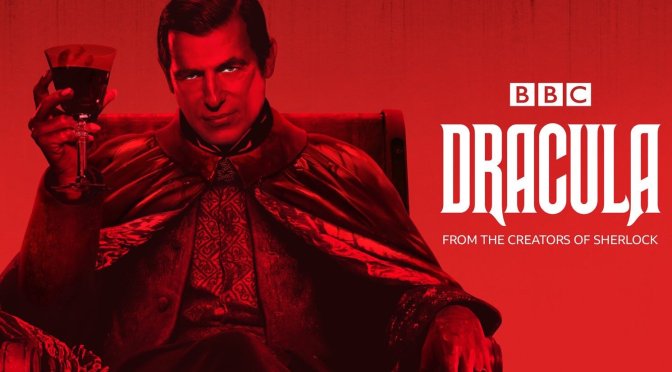
Mark Gatiss and Steven Moffat are uber-television scriptwriters of vast experience and expertise. Solo and together they have been involved with fine TV programmes including: Sherlock, Doctor Who, Coupling, The League of Gentlemen, Press Gang, Jekyll and many other films, comedies and dramas. Their latest BBC project found them combining forces again and breathing new life into Bram Stoker’s classic vampire novel. Screened over three dark nights on BBC1 from January 1st, 2020 onwards, this horror adaptation mixed Stoker’s traditional vampiric tropes with fresh and bloody ingredients infused by Moffat and Gatiss’ typically iconoclastic approach to genre.

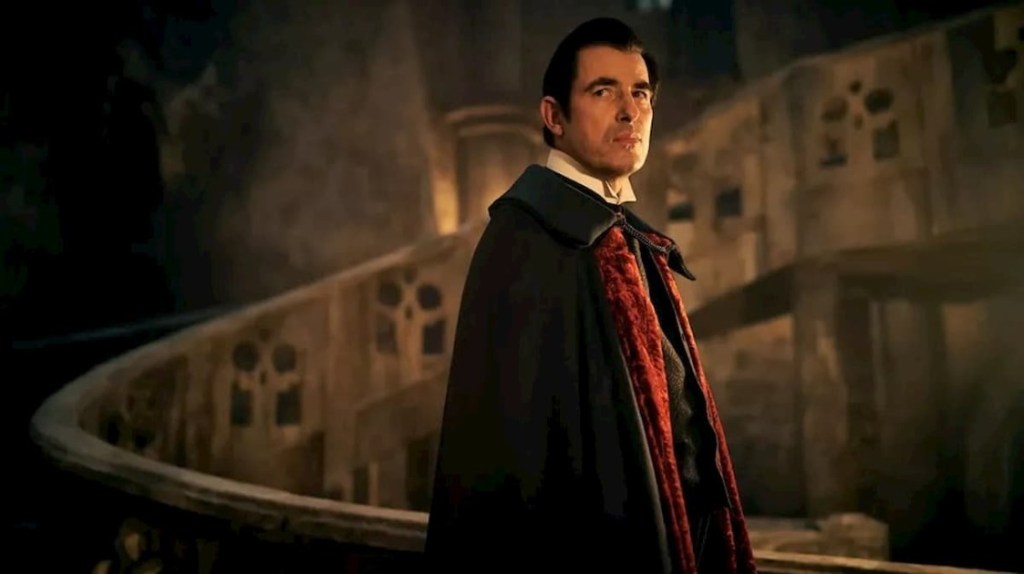
The structure of the first episode, Rules of the Beast, finds a gravely ill Jonathan Harker (John Heffernan), recounting his misadventures having travelled to Count Dracula’s (Claes Bang) castle in Transylvania. A haunted shell of a man, his stories of doomed employment, entrapment and the “children of the night” are delivered to Sister Agatha (Dolly Wells). Somewhat incisive, intelligent and irreverent for a nun, Sister Agatha becomes both our hero and main foe to Dracula’s nefarious uber-villain. Having said that, the fantastically witty script and Claes Bang’s charismatic representation of Dracula almost succeed in making him the hero. Indeed, other than being a life-sucking, murderous, blood-addicted, shape-shifting, immortal and homicidal maniac he’s actually quite charming and likeable.


Image result for dracula and sister agatha

The first episode, apart from certain structural alterations and differences in characterisation, stays kind of faithful to the spirit of Stoker’s gothic vision. The second episode especially is one of the best examples of horror television I have seen in a long time. Cleverly called Blood Vessel, the action merges suspense and terror with an Agatha Christie style of plot. Here the crew and passengers of the ship Demeter find they are at the mercy of a vicious killer. It doesn’t take a genius to work out who is picking them off one-by-one. The episode also contains an ingenious reference to the BBC anthology series Inside No. 9. Thus, overall, this was my favourite episode of the series.

By the third episode though, Gatiss and Moffatt couldn’t stop themselves taking a bold leap away from the original text. The Dark Compass contains some fantastic twists and ideas, but arguably the writers strive too much for reinvention and originality. So much so, it lost some of the narrative impetus of the first two in the mini-series. Nonetheless, I would love to see more of Claes Bang’s Dracula in the future. His performance and chemistry with Dolly Well’s Sister Agatha were a bloody joy. Likewise, the script was brilliant; full of fangtastic one-liners, poetic turns of phrase and fascinating plot developments. Lastly, I was grateful they did not spare us the horror too. There were many memorably gory deaths throughout, as Dracula and his wolves wreaked devilish havoc across land, time and the television screen.

Mark: 8.5 out of 11


UNCUT GEMS (2019) – CINEMA REVIEW

UNCUT GEMS (2019) – CINEMA REVIEW

Directors: Benny Safdie & Josh Safdie

Produced by: Scott Rudin, Eli Bush, Sebastian Bear-McClard

Written by: Ronald Bronstein, Josh Safdie, Benny Safdie

Cast: Adam Sandler, Lakeith Stanfield, Julia Fox, Kevin Garnett, Idina Menzel, Eric Bogosian, Judd Hirsh etc.

Cinematography: Darius Khondji

**MAY CONTAIN SPOILERS**


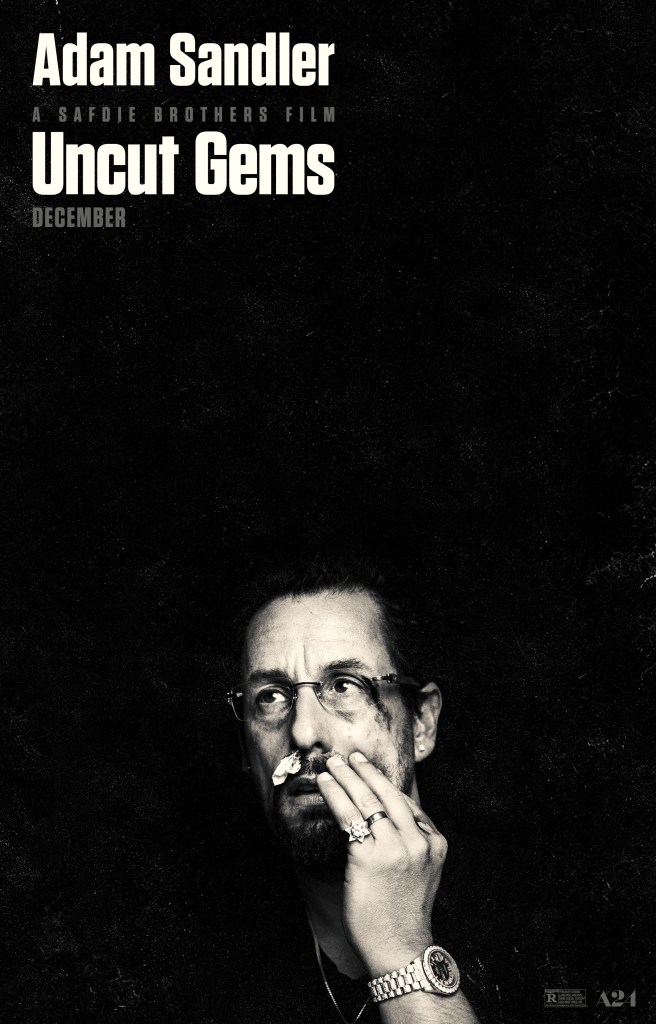
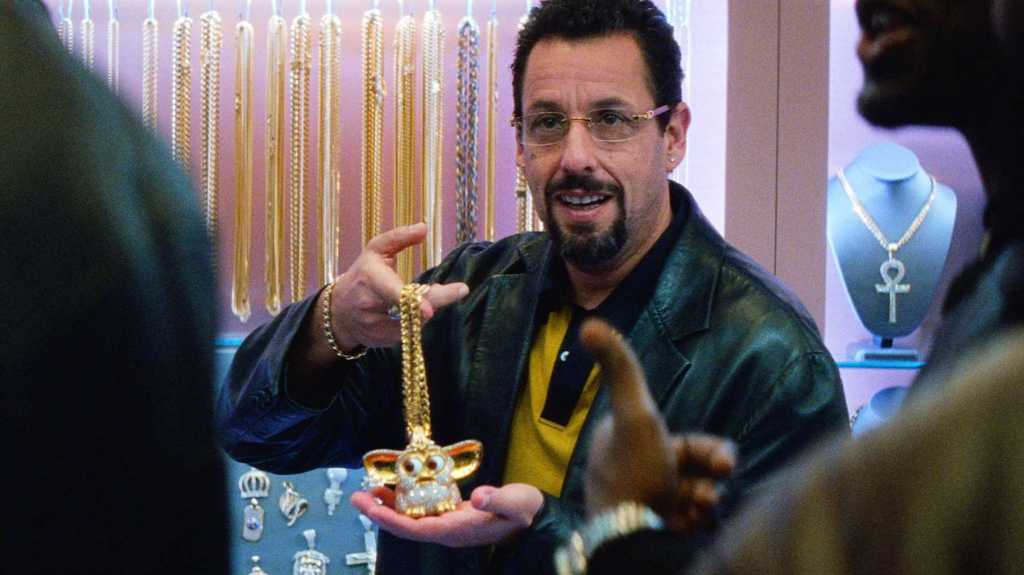
This is a film about an arsehole. Aptly enough we are introduced to the main protagonist, Howard Ratner (Adam Sandler), as he has a rectal examination of his colon and other extremities. From here on we descend into the mired cesspool that is Howard’s dysfunctional business, family, love and extra-curricular activities. He is, on the surface, a successful businessman selling jewellery, watches and gems within New York’s Diamond district. Alas, he is also a degenerate gambler who is being chased by all manner of shark-like money lenders. Most hungry of all is Eric Bogosian’s Arno, who also happens to be Howard’s brother-in-law.

So, we find ourselves in the company of a thoroughly unedifying character such as Howard. Yet, in Adam Sandler’s brilliant performance and searing direction by the Safdie Brothers, you get caught up in his latest cynical money-making plan to sell an uncut opal rock from Ethiopia at auction. The rock itself becomes — reminiscent of Guy Ritchie’s Snatch (2000) — a metaphorically blood-stained McGuffin that drags us into the underbelly of New York’s sports, pawnbroker, bookmaker, entertainment and loan shark territories. Aside from Howard’s wife and children everyone is looking for luck and a buck. Everyone’s a hustler. Everyone talks and shouts and swears over each other, creating a sense of panic throughout many scenes of deal-making and deal-breaking.


Opening with two visually very different internal examinations that involve “mining”, the Safdie brothers film Uncut Gems (2019), is a stylish and rampant anxiety inducing character study and thriller. The plot, which in itself, is quite straightforward, is wrapped in a series of heart-sweating gambles, twists and double-crosses. Supporting Sandler’s fine central performance, the Safdie Brothers find acting gold with Lakeith Stanfield’s memorable supporting turn, plus basketball legend, Kevin Garnett brilliantly playing himself! Allied to this, you also get a rogue’s gallery of personalities straight out of the local New York jewellery area itself. These characters add a further dirty authenticity to the already chaotic urban environment.

Like the Safdie Brothers previous film, the ironically titled, Good Time (2017), we are once again introduced to a set of morally repugnant characters who, rather than root for, you are dragged down into their disturbing lifestyle choices and increasingly poor decisions. Howard himself is an unrelenting addict, his own worst enemy and a whirlwind of broken promises. But, I must admit I was gripped throughout due to overwhelmingly brilliant style, cinematography, editing, direction, darkly funny script and acting performances. My only criticism is that for all the black humour, bone-breaking violence and heart-sweating suspense, the film could have easily been 15 minutes shorter. I like a lot of plot and action, but at times the narrative was over-loaded with characters and scenes that could have been chopped. Lastly, it’s great to witness Adam Sandler taking another risky role, even if Howard Ratner is fundamentally an arsehole from the probing start to the very bitter end.

Mark: 8.5 out of 11


“TOO MUCH TEGRIDY”: SOUTH PARK – SEASON 23 – TV REVIEW

SOUTH PARK – SEASON 23 – TV REVIEW

Directed by: Trey Parker

Produced by: South Park Studios

Written by: Trey Parker

No. of episodes: 10

Release Date: September 25th 2019 – December 11th 2019

UK Release: Comedy Central


Another year passes and another year of South Park! It has now incredibly reached its twenty-third season and the energy, humour, satire and desire to surprise and shock is still very much there in the latest ten episodes. However, I think that in Trey Parker’s desire to reinvent and reinvigorate the format, he seems to have taken a few missteps along the way. Because, while containing some sublime moments of comedy and wonderfully grotesque episodes, the latest season does not consistently reach the heights of previous ones. One could argue this is the weakest season in a long time.

Don’t get me wrong, I am just a humble worker drone and totally respect Trey Parker’s satirical genius. Yet, having worked on South Park for over thirty years Parker has arguably moved the furniture around too much in Season 23. I can understand why he has re-jigged the format, but for me, concentrating mostly on Randy Marsh’s Tegridy Farm enterprise in the first six episodes, many characters we love like Butters, Kyle, Kenny, Mr Garrison, Wendy, and even Cartman are sidelined to mere supporting roles. Of course, they do feature, but not as much as I would have preferred. I guess Parker just wanted a change and in recent seasons this has garnered many fantastic episodes. In Season 23 though, the over reliance and prolonged attempts at stoner and weed humour just did not make me laugh. Plus, Towelie as a comedy character has never worked and I wish he had over-dosed permanently, never to return.

There are some fine comedic moments throughout, and the themes are as strong as ever. Parker takes many satirical swipes at all manner of sociological, political, gender, health, economical and media targets. Through some excellent writing he successfully lampoons: media censorship, China, the anti-vaccine movement, plant-based food, transgenderism in sport, the PC or ‘woke/snowflake’ generation, drug abuse, streaming services, Christmas greed, addiction, drunk drivers, immigration detention centres, and, very briefly, the Trump administration. Ultimately, the season features several very good episodes, but arguably only Band in China and Turd Burglars hit the heights of classic South Park episodes of past seasons. Nonetheless, Trey Parker on autopilot is still one of the greatest writers and comedic voices around. If only he had a little less ‘Tegridy’, this season could have been another classic.

Mark: 8 out of 11