Tag Archives: AMY ADAMS

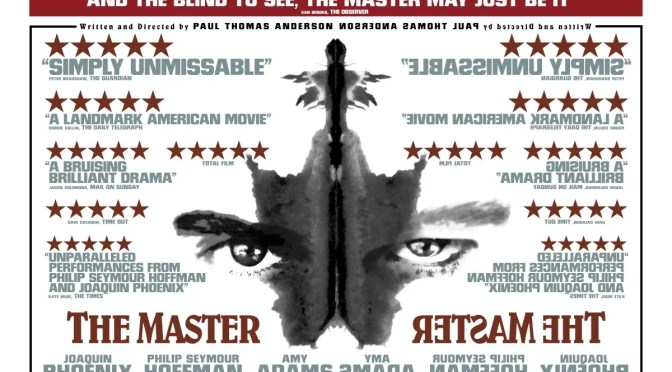
Classic Film Review: The Master (2012)

Classic Film Review: The Master (2012)

Directed by Paul Thomas Anderson

Written by Paul Thomas Anderson

Produced by: JoAnne Sellar, Daniel Lupi, Paul Thomas Anderson, Megan Ellison etc.

Main cast: Joaquin Phoenix, Philip Seymour Hoffman, Amy Adams, Laura Dern, Jesse Plemons, Ambyr Childers, Rami Malek, etc.

Cinematography by Mihai Mălaimare Jr.

*** MAY CONTAIN SPOILERS ***


Of late, I have been watching, as research to develop a feature film concerned with religion, faith and complex human behaviour, many religious themed films. Indeed, I especially love films and documentaries about cults. Especially where religion is used to control human beings and make them do crazy things. What possesses another person to want to control others? Power, lust, greed or all of the above?

Cult leaders are often extremely charismatic and talented people too. Further, they can be dangerous people who use their influence to make money, commit crime, manipulate and abuse others. Thus from a human and dramatic perspective, cults and religious characters are always fascinating to write about.

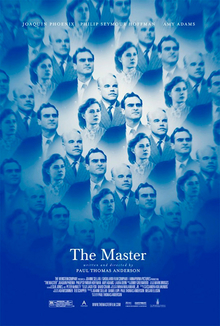
In Paul Thomas Anderson’s The Master (2012), he explores the relationship between a lost soul drawn to a movement that may or may not be a reflection of Scientology. Freddie Quell (Joaquin Phoenix), a World War II veteran is pulled toward Lancaster Dodd (Philip Seymour Hoffman), a commanding leader of a cult known as “The Cause”. But, arguably, not much happens other than Quell having a series of breakdowns amidst post-traumatic stress and alcoholism, before taking his chaos and violence into Dodd’s church and family. Anderson is one of the great humanist and existential filmmakers working today, but The Master (2012), having watched it at least twice, I found it too impenetrable and alienating for me.

Yet, in my filmic research I have watched The Master (2012) a third time and have now identified a number of reasons why I have not connected with the film. They are both structural and thematic. My expectations were that this film would be a deep historical dive into the establishing of L. Ron Hubbard’s creation of Scientology. Albeit, it would be a veiled one to avoid the ire of the Scientologist organisation, who are known to attack people or companies that critique their ways. So, I am complicit there because ultimately one should not judge a work before watching it. Anderson’s choices and approach are way more personal than a traditional biopic and I should not be so arrogant to expect him to make a film just for me.

So, with my expectations on an in-depth analysis of the cult of Scientology quelled, structurally The Master (2012) further jars with me on a story level. Such narrative cracks appear all through the overall character arc of character Freddie Quell. If the film, as the first act establishes well, effectively delivered a character study of a sex-addicted, alcoholic, PTSD suffering, angry World War 2 veteran struggling to cope with existence, I could certainly have been compelled by that. Ultimately, The Master (2012) is a dramatic two-hander facing Quell’s out-of-control, human car-crash versus Lancaster’s intelligent and controlling patriarch. Anderson also once again, as he did in Hard Eight (1996), Boogie Nights (1997), and There Will Be Blood (2007), explores the father-son power dynamic between these two characters.
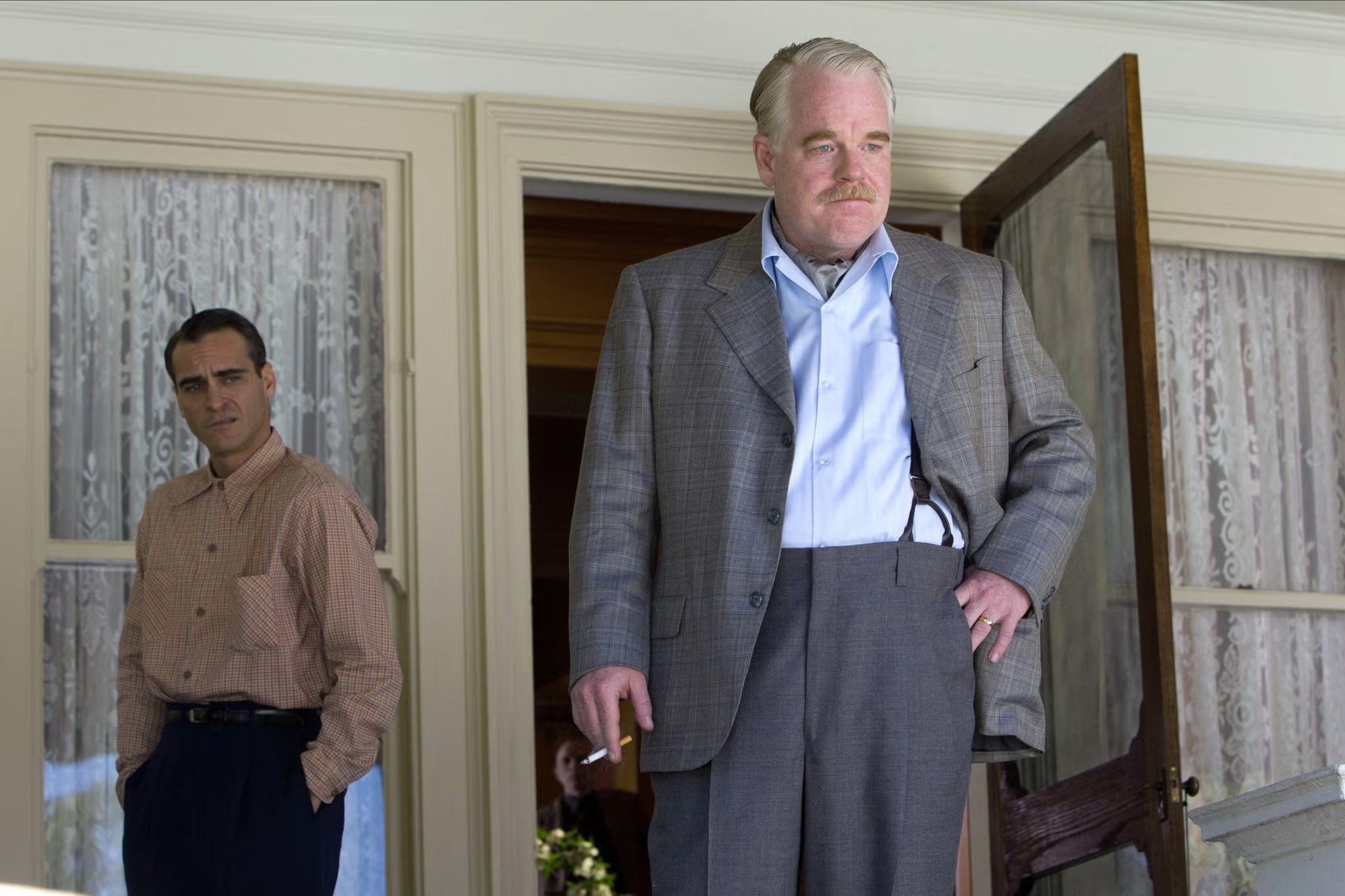


Yet, introducing Lancaster and “The Cause” to Quell’s character development has little or no effect on him. I understand Anderson may be saying Quell is a lost soul, but what emotional impact or feeling can the audience to take from this? Quell finishes the film relatively unchanged by Lancaster’s auditing, “spiritual” advice and fatherly tutelage. Yes, in real life, people often don’t change and behave the same throughout their lives committed to the same self-destructive behaviour. However, I felt that if Quell could not change for the better perhaps he could have gone even deeper into despair within his religious experience.

To conclude: Paul Thomas Anderson’s The Master (2012) is, on a purely cinematic level, close to technically perfect. It contains some of the finest acting ever committed to screen, particularly from Philip Seymour Hoffman as Lancaster Dodd. Hoffman manages to make Dodd charismatic, ridiculous, paternal, threatening and strangely vulnerable, often within the same scene. His performance is matched by Joaquin Phoenix’s extraordinary physical transformation as Freddie Quell, but it is Hoffman who fascinates me most: the booming confidence of the public performer repeatedly giving way to flashes of insecurity, anger and desperation whenever his authority is challenged.

Technically, the film is equally remarkable. Mihai Mălaimare Jr.’s 65mm cinematography gives the images an extraordinary richness and clarity, while the colours, period detail, compositions and use of light make virtually every frame feel meticulously constructed. There are moments when The Master (2012) is simply one of the most beautiful American films of the twenty-first century. And yet, for all that mastery, I have never enjoyed the film as much as its critical reputation suggests I should.

Its central problem for me is the almost broken-backed, water-and-oil combination of Freddie Quell’s under-nourished emotional journey and the film’s tantalising but ultimately limited exploration of Dodd’s movement, “The Cause”. The parallels with Scientology are obvious and fascinating, yet Anderson seems reluctant to investigate the psychology, mechanics and seductive power of cults with the depth the material promises. Instead, the film repeatedly retreats towards the relationship between Freddie and Dodd — a relationship performed magnificently but one in which Freddie’s emotional development can feel frustratingly elusive.
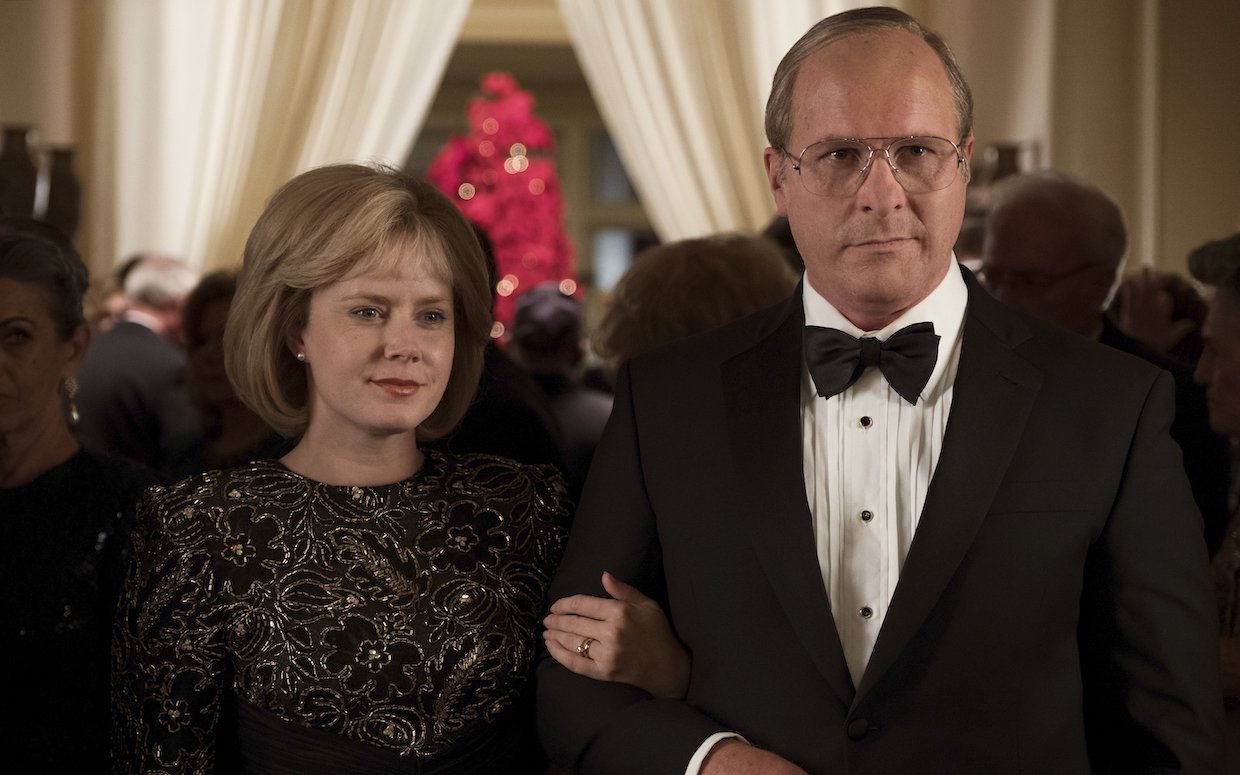
VICE (2018) – CINEMA REVIEW & OSCAR BINGO #3

VICE (2018) – CINEMA REVIEW

Directed by: Adam McKay

Produced by: Brad Pitt, Dede Gardner, Jeremy Kleiner, Kevin J. Messick, Will Ferrell, Adam Mckay

Written by: Adam McKay

Starring: Christian Bale, Amy Adams, Steve Carell, Sam Rockwell, Tyler Perry, Alison Pill, Lily Rabe, Jesse Plemons

**CONTAINS HISTORICAL SPOILERS**

Unlike the previous Oscar Bingo attempts for A Star Is Born (2018) and First Man (2018), this review has full knowledge of the nomonations. So, rather than be guess work this review of Vice (2018) is intended to be based on more constructive critiques of the Oscar nominated films I have seen.

BEST FILM CHANCES – 8/10

For starters, Vice is certainly worthy of its award nominations. I have seen some criticisms that it is cartoonish and simplistic and while I actually agree with this, it is also a brilliant and scabrous work of satire. Yes, it’s preaching to the liberal and left-winged Hollywood choir, but it definitely presents a fascinating snapshot of Dick Cheney’s rise from alcoholic wastrel to powerful political figure.

While I believe Roma (2018) will win the Best Film, I enjoyed Vice more from a stylistic, educational and emotional perspective. I was drawn into the murky world of American politics by McKay and his fantastic ensemble cast, and was compelled by the machinations of Cheney’s manipulative puppet-master to Bush’s marionette President. McKay’s film, while certainly one-tracked, powers along picking apart and satirising one of the most shadowy political figures of recent years.

BEST DIRECTOR CHANCES – 8/10

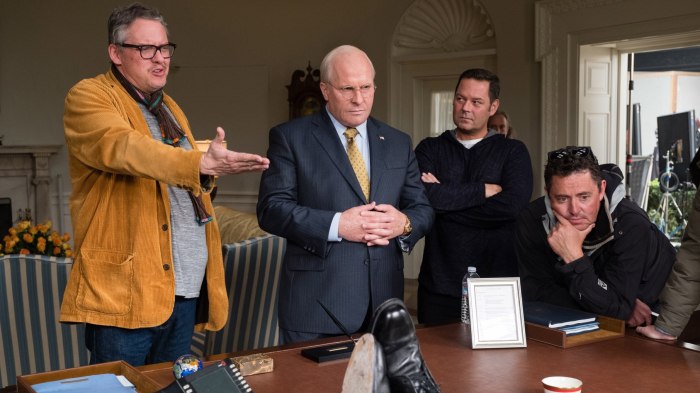
In terms of tone and narrative, McKay’s The Big Short (2015) was arguably a more cohesive film. Indeed, Vice is presented more as a non-linear monatge and sketch style recreation of key events in Cheney’s life. But I loved the style and McKay should be praised for his editing choices. He throws the veritable formalistic kitchen sink at the film using: direct address, Shakepearean monologue, cross-cutting montage, fake credits, voiceover, freeze frames, fake footage, stock footage, flashbacks, flash forwards, inter-titles, third-party narrator and many more stylised tropes. In my view his directorial bag of tricks are utilised without losing emotional impact too. While Alfonso Cuaron will probably win McKay certainly deserves kudos for enlivening his subject matter with such storytelling choices.

ACTOR IN A LEADING ROLE CHANCES – 10/10

Christian Bale should win. I have not seen Rami Malek, Viggo Mortensen or Willem Dafoe’s acting in their respective roles but Christian Bale is astonishing. Fair enough, he has taken a real person and delivered an emulation performance, but he also brings to Cheney to life with formidable cinematic style. Of course, the physical transformation could take the headlines but in terms of emotion and mentality he really raises the perfomance bar. Cheney may be an enigmatic character but Bale brings quiet menace, whispers and manipulation to the role. There is also a sly humour there too which makes Bale’s Cheney another memorable acting monster he’s created.

ACTRESS IN A SUPPORTING ROLE CHANCES – 8/10

Amy Adams is one of my favourite actors. Not quite a Lady Macbeth character, her Lynn Cheney pushes Dick forward mercilessly to make a better man of himself. She is the foundation and rock of their relationship and glues his life together when he faces health issues and political setbacks. Adams nails the role, and while Rachel Weisz will probably win for The Favourite (2018), Adams may finally get the Oscar she deserves.

ACTOR IN A SUPPORTING ROLE CHANCES – 5/10

Sam Rockwell is excellent in emulating George W. Bush but he only has a few scenes. While Rockwell dumbs down with the best of them I would have nominated Steve Carell instead. His Donald Rumsfeld, was a creeping, neurotic and conniving joy and definitely deserved the nomination in this category.

ORIGINAL SCREENPLAY CHANCES – 7/10

The film benefits from a sparky screenplay which keeps a potentially dull subject spinning along in an entertaining fashion. It takes a complex set of characters and scenarios, and despite simplifying to fit a leftist agenda, still constructs intelligent analyses of Cheney and Washington at large. Ultimately, Cheney is shown to be an opportunist and dangerous person who manipulated information and policy to finagle the USA and allies into a war for profit. Even worse he did so from the position of Vice President – boo Cheney! Boo! While McKay deserves praise for his brave creative choices, I would go for Paul Schrader’s exceptional First Reformed (2018) in the original screenplay category; Schrader deserves it more.

CONCLUSION

I am a big fan of satirical works such as: Private Eye, Yes Minister, Spitting Image, The Thick Of It, Veep and South Park. They seek to undermine and take critical shots at our leaders, illustrating the danger, absurdity and stupidity of those in power. They also, in an entertaining way, carry a message that those serving their country are often serving themselves more. Conversely, a film like Vice, however cartoonish or broad, still has the power to highlight the corruption and horror of a man like Cheney. While the script and direction are tonally scatter-gun, Bale’s incredible rendition, and the marvellous supporting cast, anchor the film and ensure this satirical ship rarely hits the rocks.

Mark: 9.5 out of 11

SHARP OBJECTS – HBO TV REVIEW – absorbing self-hating misanthropic, Southern Gothic tale!

SHARP OBJECTS – HBO TV REVIEW

Created by: Marti Noxon

Based on: Sharp Objects by Gillian Flynn

Directed by: Jean-Marc Vallée

Writers: Marti Noxon, Gillian Flynn, Alex Metcalf, Vince Calandra etc.

Editors: David Berman, Maxime Lahaie, Émile Vallée, Jai M. Vee

Starring: Amy Adams, Patricia Clarkson, Chris Messina, Eliza Scanlen, Matt Craven, Henry Czerny, Taylor John Smith, Sophia Lillis, Elizabeth Perkins

**MAY CONTAIN SPOILERS**

amy-adams

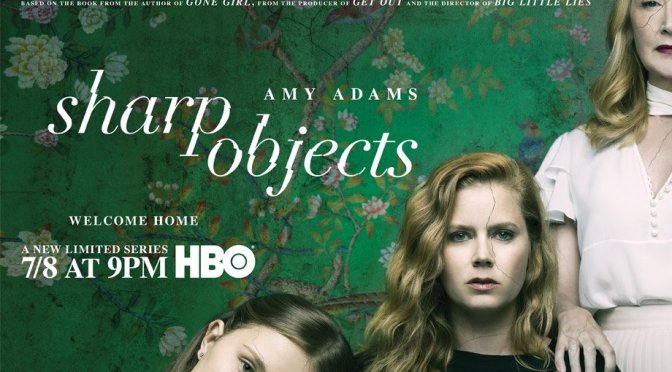
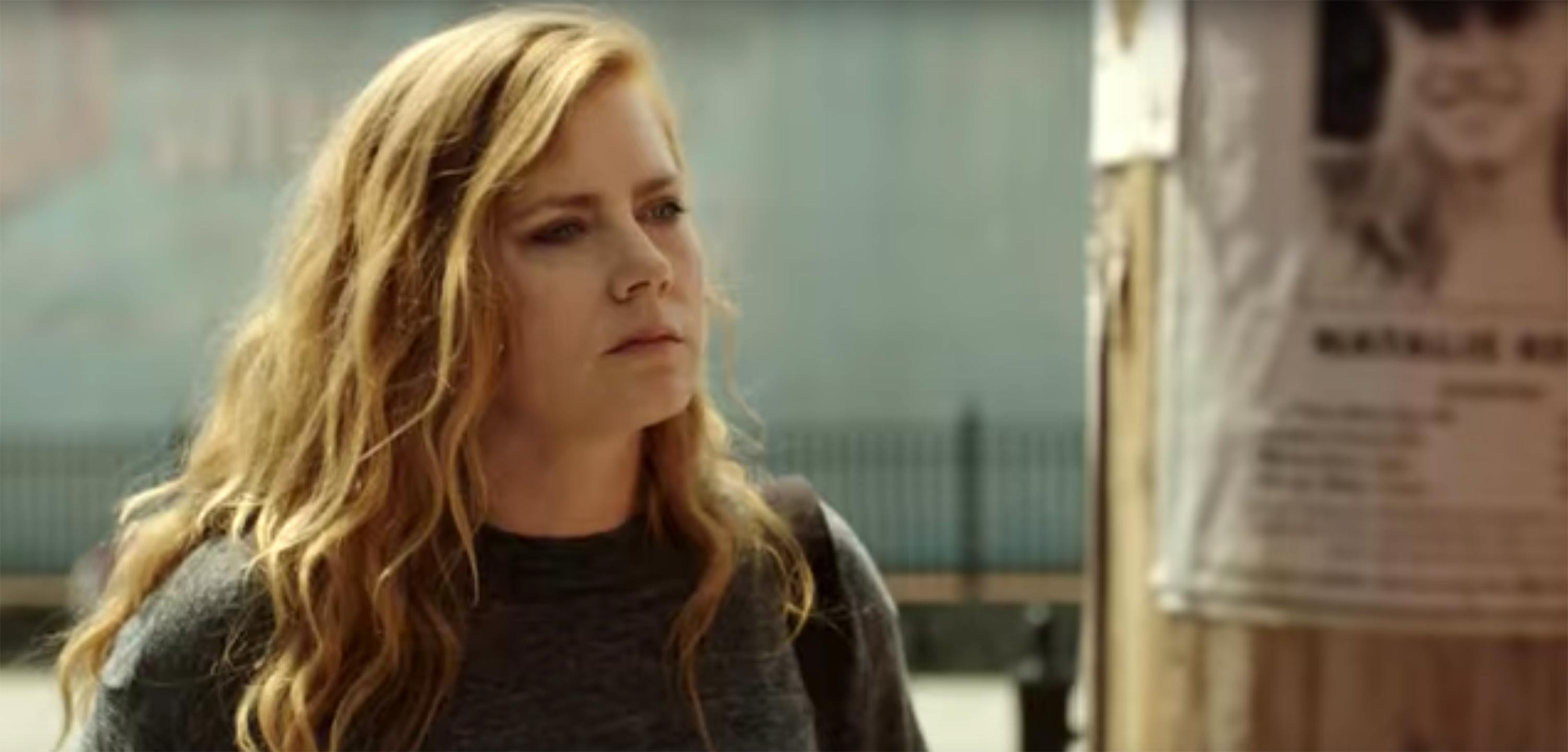
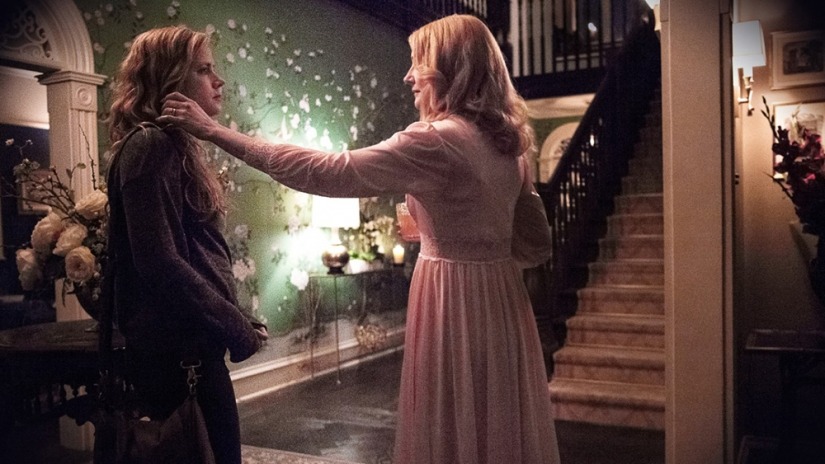
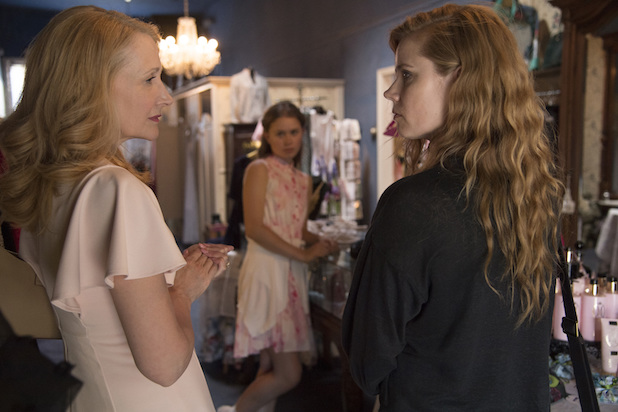
As is often the case when a writer has a big hit producers and studios look at their back catalogue to see if there are any apples in the shade ripe for plucking. Thus, following the cinematic success of her book adaptation Gone Girl (2014), Gillian Flynn’s debut novel from 2006 is given a stylish, small-screen HBO treatment. The story concerns crime reporter Camille Preaker – Amy Adams on stunning form – who returns to her hometown of Wind Gap, Missouri, to investigate the murders of two girls. There she confronts a personal ordeal from the past, clashes with her mother, Adora (Patricia Clarkson) and attempts to bond with her precocious, teenage sister, Amma (Eliza Scanlen).

Firstly, I must say Amy Adams is one of my favourite actors. Her performances in films such as: The Fighter (2010), American Hustle (2013), Arrival (2016), Nocturnal Animals (2016) to name but a few, have demonstrated what a striking screen presence she has. Furthermore, she is able to illuminate a character’s emotion through sheer being; it’s almost effortless. But while she excels in serious roles, displaying both inner strength and vulnerability, she also has a sense of mischief and humour. Indeed, who better to evoke the pathos required to portray a character like Camille Preaker? Adams nails the alcoholic, self-harming, ex-psychiatric hospital patient role, refusing to suffer fools and using mordant wit to hide her pain.

hbo-sharp-objects

Camille’s assignment takes her back to a place she never wanted to go back to; drinking even more to further block out her inner turmoil. But, she has a vested family interest to find the killer of two missing girls, as her sister, Amma, knows the victims. Her inquisitive nature finds her locking horns with local cop played by Matt Craven; and forming a dysfunctional liaison with out-of-town investigator, Chris Messina. Being a small Southern town everyone has secrets to hide and out-of-towner Camille is not actually welcomed with open arms; not so much the Prodigal’s daughter but the outsider’s insider come to poke her nose where it doesn’t belong. Conflict further derives from external and internal grief that drives a feeling of gothic dread throughout. This is a story about abuse and neglect and the need to dominate through an overpowering sickness and poison. Dysfunctional humans harm others and themselves in order to get through the day.

Having watched a number of films and programmes dealing with the death or taking of children, this harrowing subject is becoming a real go-to for filmmakers and writers. Over eight episodes such crimes are melded with themes relating to: family secrets, mental illness, grooming, mutilation, addiction, suicide and sexual assault. As with Gillian Flynn’s aforementioned Gone Girl, the setting is not a happy place. Human beings do not come off that well either and are presented as very damaged personalities; or controlled and bullied by even more fucked up parents. However, as a brooding psychological thriller Sharp Objects is utterly absorbing and well worth a watch.

sharp

I would argue that it moves too slow for eight episodes and is on occasions slightly repetitive, but Jean-Marc Vallee once again proves he is one of the best directors around gaining brilliant performances from Adams, Patricia Clarkson and Eliza Scanlen especially. The editing also is very poetic, shifting beautifully from past to present and in between, charting a series of chilling, violent events. So, while it does have filler moments in the middle it is worth sticking with. Indeed, the end contains a great twist, which in my opinion, was delivered with way to much subtlety. Ultimately, if you like your dramas dark, elegant AND brutal then stick with it; because Sharp Objects cuts deep, way after the end credits have rolled.

(Mark: 8.5 out of 11)

SCREENWASH SPECIAL- ARRIVAL, DR STRANGE & NOCTURNAL ANIMALS REVIEWED

SCREENWASH – NOVEMBER CINEMA SPECIAL – by PAUL LAIGHT

I often have all my reviews for the month in one place but occasionally I split them, as is the case here. I haven’t seen that many films at the cinema this month but the three I did see were all excellent in their own way. Here are my reviews with marks out of eleven.

**CONTAINS MILD SPOILERS**

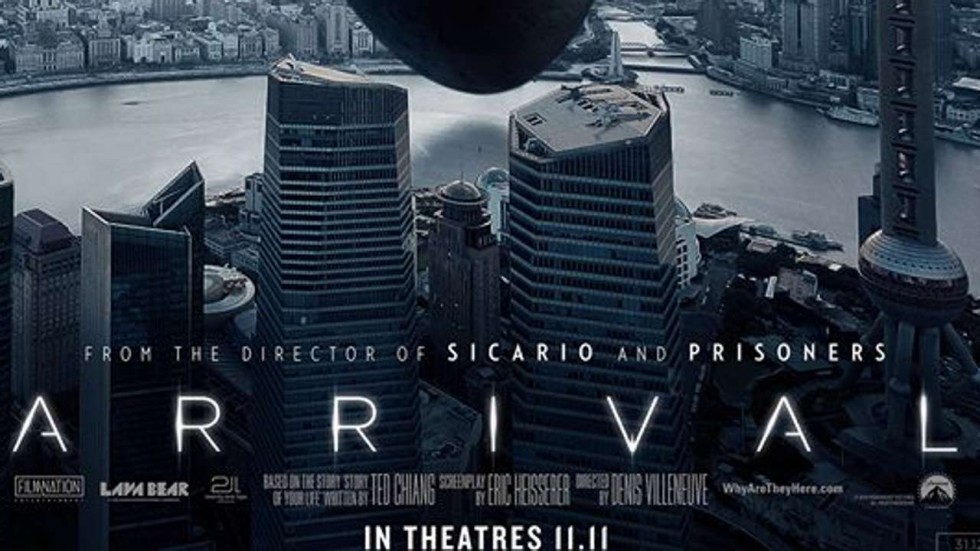
arrival-long-poster

ARRIVAL (2016)

The wonderfully serene Amy Adams portrays, Louise Banks, an academic linguist whose standing is such that when Earth is visited by twelve spaceships, she is called in by the military to attempt communication. Governments all over the world try various methods in which to discover whether the aliens are intending to attack. What are their primary intentions or targets? Are they friends or foe?

As it is directed by the supremely talented Denis Villeneuve the film moves at a careful but considered pace. When Adam’s accompanies Jeremy Renner’s physicist, Ian Donnelly we at first see the inside of the alien craft and it’s not long before we are faced with the strange-looking cephalopod-type creatures. The narrative meat becomes a series of attempts by Banks and Donnelly to try and crack the visual alien code. Meanwhile, the Chinese and Russians are becoming impatient and, like the Americans, considering attacking the spaceships in a pre-emptive military measure.

I won’t say any more because it would risk ruining the story but what unfolds is a clever and mind-bending turn of events which upsides genre expectations. The intriguing premise, brilliant script, ambient score, stylish effects, subtle cinematography and purposeful direction make this one of the best films I have seen all year. It is an intelligent and emotional science-fiction drama with a beautifully constructed narrative which constantly surprised and moved me.  It also asks big questions on the nature of time, existence and love; informing us that not all extra-terrestrial life in movies has to be monstrous and deadly.  (Mark 10 out of 11)

doctor-strange-preview

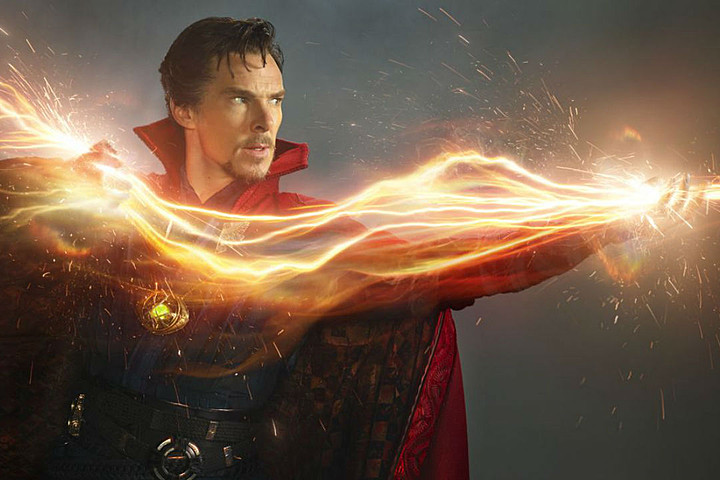
DR STRANGE (2016)

Marvel, like they did with Ant-Man (2015) take a lesser known character in Dr Stephen Strange and turn it into one of the most entertaining and spellbinding blockbusters of the year.  To be honest none of this should work, however, it is a testament to the work of a committed director in Scott Derrickson and formidable heavyweight acting cast including: Benedict Cumberbatch, Chiwetel Ejiofor, Rachel McAdams, Mads Mikkelsen and imperious Tilda Swinton, that this mystical soufflé works so well.

Cumberbatch, filtering his Sherlock persona wonderfully, is a gifted, yet arrogant neurosurgeon who following a bone-crunching automobile accident finds his gifted hands are no good to man nor beast. His attempts at physical rehabilitation prove unsuccessful so he goes on a spiritual journey to Nepal in an attempt to fix his damaged body and soul. There he meets Mordo (Ejiofor) and subsequently The Ancient One (Swinton) and that’s where the real fun starts.

I thoroughly enjoyed every minute of this. Its pacey plot zips along rapidly with some fine comedic one-liners. Cumberbatch and Swinton stand out amongst a fine cast with both of them imbuing their characters with a depth beyond your usual super-hero film. While the origins story is standard genre stuff the magical gifts and capes Dr Strange uses are wonderful fun, as are the hallucinogenic visuals, eye-popping Inceptionesque fight scenes plus mystical marvels straight out of the end of 2001: A Space Odyssey. Lastly, Derrickson deserves praise for several cracking set-pieces notably the out-of-body fight in the hospital and complex temporal-twisting combat with inter-dimensional beast Dormammu. Strange days are indeed upon as Marvel spellbinds us with yet another big comic-book hit. (Mark 9 out of 11)

screen-shot-2016-09-15-at-8-49-48-am

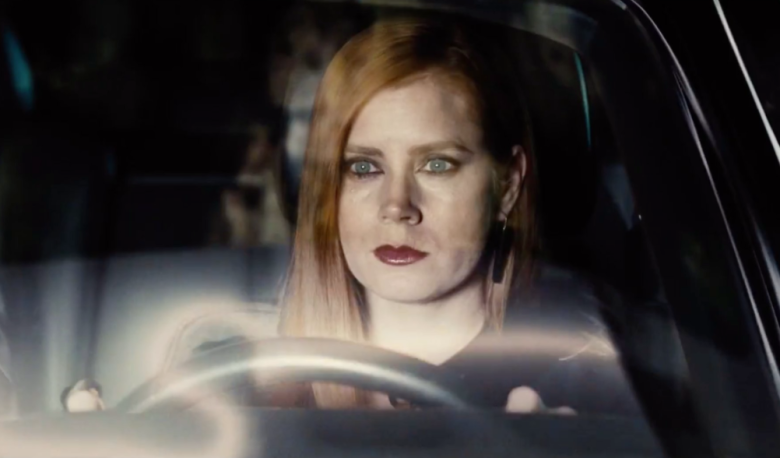
NOCTURNAL ANIMALS (2016)

Filmmaker Tom Ford’s debut film A Single Man (2009) was an eloquent character study of grief, loneliness and existential romance; beautifully photographed, styled and constructed with Colin Firth’s heartfelt performance providing the thudding beats of pathos and pain. It was a film I only saw recently but knew that the director was definitely one to follow, and thus, his second film Nocturnal Animals promised much.

Nocturnal Animals is an altogether colder beast centring on separation of love rather than the meditation on loss like A Single Man. The once again brilliant Amy Adams is a privileged art gallery owner married to Armie Hammer’s rich, yet absent, businessman. She is a hollow woman musing about her failed previous marriage to writer Jake Gyllenhaal and the apparent emptiness of her life, career and the people around her. It is a testament to Ford and Adams that they extricate empathy for such a seemingly spoilt character, but they ably demonstrate that wealth does not defeat loneliness or the guilt of past actions.

Adams’ Susan Morrow is similar to Firth’s George Falconer in that she is lost and flailing in her first world but very human problems. Thrown into the mix is the about-to-be-published book her former husband has written and sent her. So, we end up with two stories for the price of one as the events in the manuscript come to life in Susan’s mind. As she reads it, Jake Gyllenhaal’s (yes, he plays two characters) family are terrorized on a backwater freeway by Aaron Johnson’s violent gang. Michael Shannon also pops up as a busted lung of a cop sick of the scum and his turn is a delight.The sun-bleached, desert and neo-Western style in these episodes provide a fascinating and stylistic juxtaposition to shadowy, cool darkness that is Susan Morrow’s life in Los Angeles.

The two stories collide, compare and contrast each other to fascinating effect as Ford weaves literary and cinematic tropes, brilliantly adapting the original novel on which is it based – Tony and Susan – written by Austin Wright. This, overall, is about storytelling being used as a means not only to haunt and create guilt, but also wreak revenge. It’s a complex watch but beautiful, cold creature to look at. Yet, despite the privilege of Amy Adam’s character I was thoroughly absorbed by her crumbling psyche, while the book within the film is totally gripping too. (Mark 9.5 out of 11)