Tag Archives: bullying

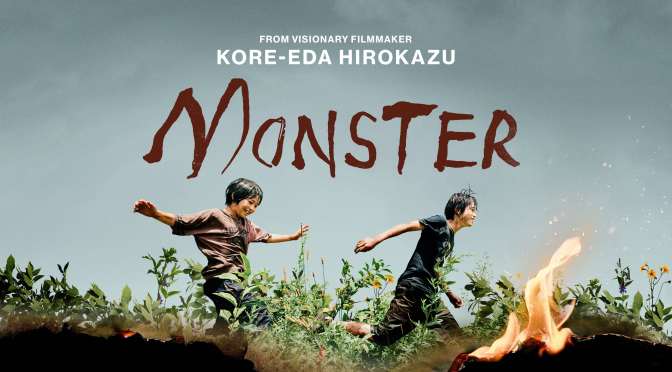
Mubi Film Review: Hirokazu Kore-eda’s exquisite tale of love, loss and rebirth – Monster (2023)

MUBI FILM REVIEW: MONSTER (2023)

Directed and edited by Hirokazu Kore-eda

Written by Yuji Sakamoto

Produced by: Hirokazu Kore-eda, Minami Ichikawa, Kenji Yamada, Megumi Banse, Taichi Itō and Hijiri Taguchi

Main cast: Sakura Andō, Eita Nagayama, Sōya Kurokawa, Hinata Hiiragi and Yūko Tanaka

Cinematography by Ryuto Kondo

Music by Ryuichi Sakamoto

*** MAY CONTAIN SPOILERS ***
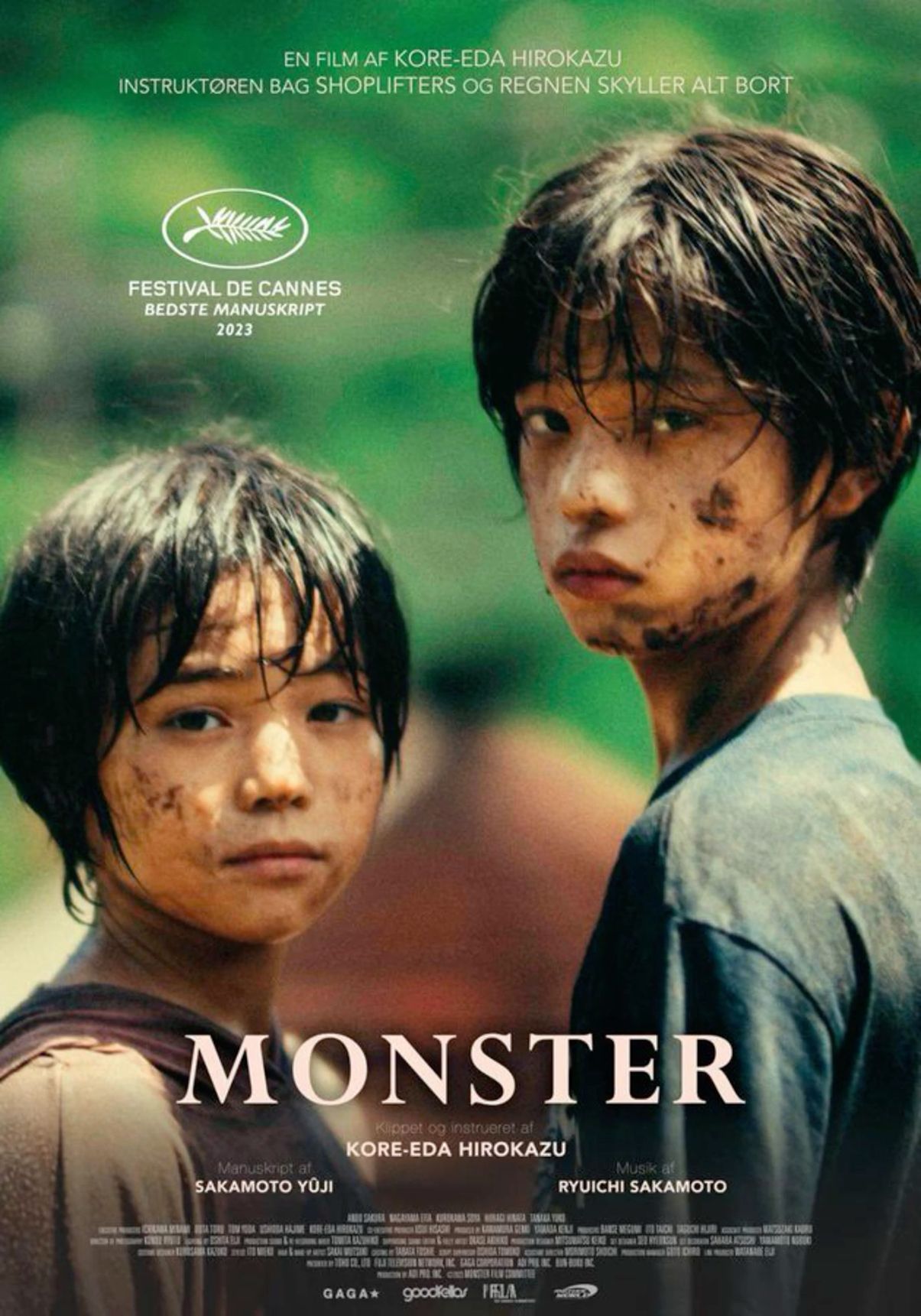


Hirokazu Kore-eda’s Monster (2023) exemplifies his continued mastery of humanist storytelling, a hallmark of his career. As with prior works such as the classic Afterlife (1998), critically acclaimed Shoplifters (2018), and the recent, arguably more commercial comedy-drama, Broker (2022), Kore-eda demonstrates a keen ability to explore the quiet complexities of human relationships, here through themes of bullying, young love, and the tender, taboo nature of queer affection. Monster (2023) delves deeply into the fragility of human connections, revealing the pain and misunderstandings that arise when societal expectations collide with individual identities.

The story focuses on shifting narrative perspectives of two young boys, Minato (Sōya Kurokawa) and Yori (Hinata Hiragi), Mugino’s mother, Saori (Sakura Andō) and the boy’s teacher, Michitoshi Hori (Eita Nagayama). Initially, Minato begins displaying slightly disturbing behavious such as cutting his own hair and throwing tantrums in class. His mother then believes the teacher is bullying him and begins to campaign for Mr Hori’s punishment. What then unfolds is something altogether more complex and powerfully ambiguous.

With Monster (2023), crafted via a Rashomon-style structure by screenwriter Yuji Sakamoto, the narrative approach provides a formidable layer to the film’s emotional resonance. It allow the audience to revisit pivotal events from multiple perspectives. By shifting viewpoints the script highlights how perception shapes reality, illustrating the subjectivity of truth in deeply personal and often painful ways. The multifaceted storytelling reveals how moments of cruelty, compassion, and misunderstanding ripple across different lives, underscoring Kore-eda’s central humanist message: no person is simply a villain or a hero, but a complex amalgam of motives and vulnerabilities.
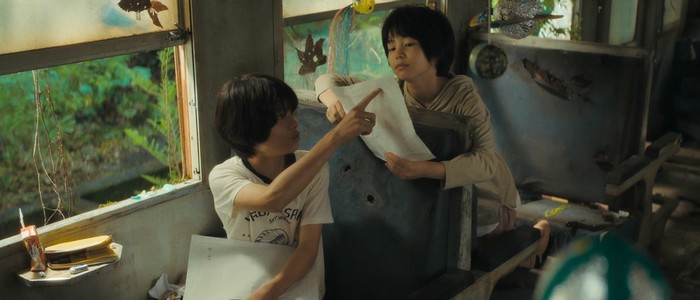


The script’s structural ingenuity enhances the film’s exploration of societal issues, such as the alienation of queer youth and the lasting scars of bullying. Each retelling reframes the characters’ actions, fostering empathy for even the most seemingly antagonistic figures. This interplay of perspectives elevates Monster (2023) beyond a straightforward tale of adolescent struggle, transforming it into a profound meditation on the intersection of memory, identity, and the pursuit of love and acceptance.

By marrying Kore-eda’s subtle directorial touch with Sakamoto’s intricate script, Monster (2023) achieves a rare cinematic feat: a story that is as intellectually engaging as it is emotionally devastating. Moreover, it reaffirms Kore-eda’s place as a preeminent chronicler of the human condition. Safe to say that it is beautifully filmed, cast and acted. To elicit such incredible performances from these boys is wondrous direction. It also features a fragmented but beautifully poetic final film score of the recently departed Ryuichi Sakamoto. Overall, it’s cinema that breathes pathos and humanity into each and every character, and provides no easy solutions. Monster (2023) is a film that burns, like the fiery tower block featured throughout, long in the heart and memory.
Mark: 9.5 out of 11


CULT FILM REVIEW: SLEEPAWAY CAMP (1983) – (*DON’T GOOGLE THIS FILM*)

CULT FILM REVIEW: SLEEPAWAY CAMP (1983)

Directed by: Robert Hiltzik

Produced by: Jerry Silva, Michele Tatosian

Written by: Robert Hiltzik

Cast: Felissa Rose, Katherine Kamhi, Paul DeAngelo, Mike Kellin, Karen Fields, Desiree Gould, etc.

Music by: Edward Bilous

Cinematography: Benjamin Davis, David M. Walsh

***MAY CONTAIN SPOILERS***


Whatever you do please do not read anything about this cult classic horror film from 1983. It has one of the most shocking twists at the end and even on second watch my jaw dropped when I witnessed the final scene. You’ll be tempted to find out but just watch the whole film. It is on YouTube here!

So, if you’re NOT a fan of B-movies horror exploitation films then Sleepaway Camp (1983) will not be for you! A lot of the acting is by first-timers and the director, Robert Hiltzik, is also making his debut here. In fact, he didn’t make another film after this until many years later because he became a lawyer. But the film gained a cult following among horror fans and certainly deserves cult status. It may be badly acted in many scenes and verging on the hysterical, yet it is well filmed and edited on a meagre budget of $300,000. There’s also some fantastically imaginative murder set-pieces, with excellent make-up and prosthetics work employed.


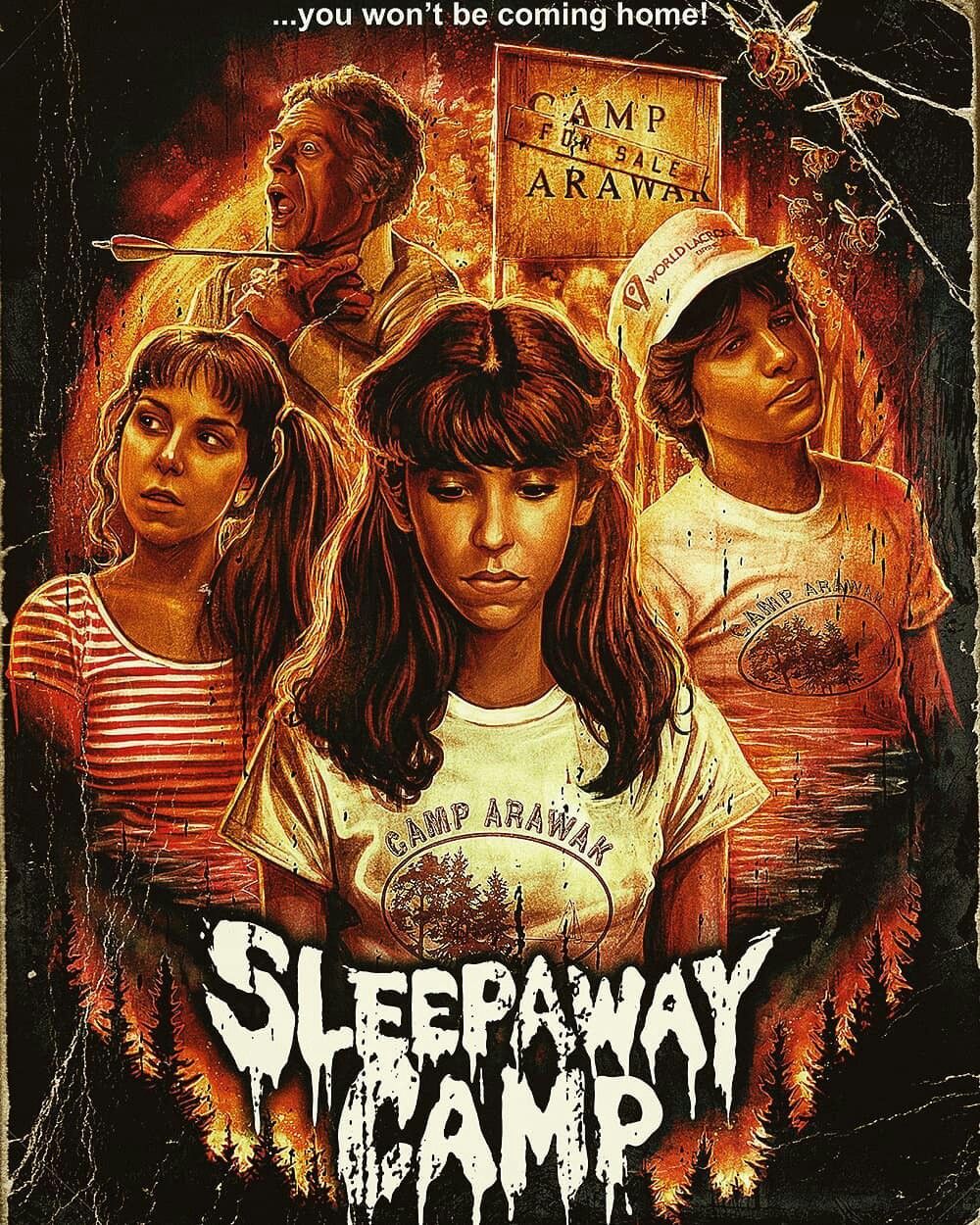
The story centres on the vulnerable teenager, Angela (Felissa Rose), who, having lost her father in an accident when younger, now lives with her Aunt Martha (Desiree Gould) and cousin, Ricky (Jonathan Tiersten). Her Aunt sends Angela and Ricky to Camp Arawak for the summer and due to her quiet demeanour she soon becomes a target for bullies. Ricky attempts to protect her, however, other than a budding romance with another teenager, Paul, Angela finds it very difficult to fit in. When dead bodies begin to turn up due to a number of grisly “accidents”, the kids and counsellors soon find themselves all in danger.

Amidst all the over-the-top acting, Felissa Rose gives a brilliant wide-eyed and subtle performance as Angela. For a film that could be classed as a Friday the 13th (1980) rip-off, her character arc throughout is both fascinating and quite unsettling. Indeed the film veers between being a strange hybrid of summer camp slice-of-life, rites-of-passage and slasher genre films. Yet despite all the uneven tone there is a decent story here with much emotional impact. Amidst all the death the film finds time to address bullying, sexual abuse and adult neglect to minors. Ultimately though, Sleepaway Camp (1983), has some fantastic gore and THAT quite astounding ending!


SHUDDER TV HORROR REVIEW: CREEPSHOW (2019)

SHUDDER TV HORROR REVIEW: CREEPSHOW (2019)

Directors (various): Rob Schrab, Greg Nicotero, Tom Savini, Roxanne Benjamin, John Harrison, David Bruckner, etc.

Writers (various): Stephen King, Rob Schrab, Joe Hill,  Paul Dini, Stephen Langford, David J. Schow, John Skipp, Dori Miller, John Esposito, Bruce Jones, Christopher Buehlman, Matt Venne, etc.

Cast (various): Adrienne Barbeau, Jesse C. Boyd, Giancarlo Esposito, Christopher Nathan, Tobin Bell, Cailie Fleming, Rachel Hendrix, David Shea, Guy Messenger, Diane D. Carter, David A. MacDonald, Jeffrey Combs, Nelson Bonilla, Callan Wilson, Kid Cudi, DJ Qualls, Antwan Mills, Jake Garber, Gino Crognale, David Arquette, Karen Strassman, Tommy Kane, Kermit Rolison, Bruce Davison, Hannah Barefoot, Tricia Helfer, Dylan Smitty, Afemo Omilami, Logan Allan, Addison Hershey, Will Kidrachuck, Big Boi, Nasim Bowlus, Carey Jones, Madison Bailey, Ian Gregg, Ravi Naidu, Connor Christie, Madison Thompson, Jason Jabbar Wardlaw Jr., Andrew Eakle, Julia Denton, Scott Johnson, Tom Olson, Erica Frene, Danielle Lyn, Michael Scialabba, Jordan Patrick, Dennis Bouldin, David Wise, etc.         

Streaming platform: Shudder / Amazon Prime

***MAY CONTAIN SPOILERS***


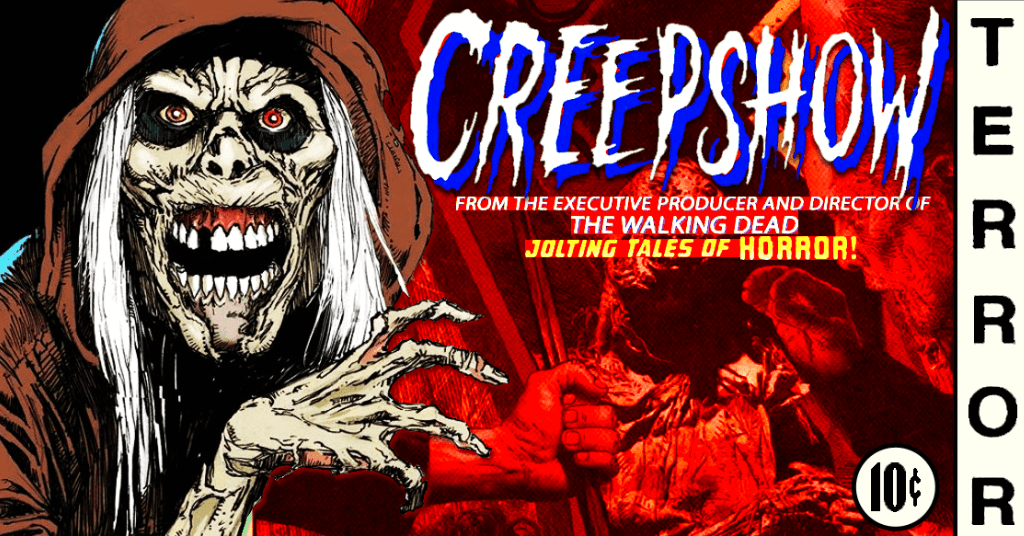
The anthology or portmanteau film has thrown up some fine cinematic entertainment over the years. Generally, an anthology film can be described as a collection of works with a linked theme, genre, style and author etc. The horror genre is an ideal subject matter for anthology and the feature film, Creepshow (1982), found two giants of horror — Stephen King and George A. Romero — marrying their mischievous minds to monstrous impact.

Creepshow (1982) consisted of five short stories. Two of these stories were adapted from King’s literary narratives, while the rest were from originals he wrote for the film. The film is bookended by prologue and epilogue scenes involving a young boy who is scolded for reading horror comics. Conversely, Creepshow is a homage to the EC horror comics of the 1950s, such as Tales from the Crypt and The Vault of Horror. Romero even hired long-time effects specialist Tom Savini to replicate comic-like effects during the film. The movie was a minor hit and a sequel would follow. As would an actual comic book series based on the film.


Unsurprisingly, in this era of endless remakes and reboots and universes, Creepshow has received the TV adaptation treatment. Released as Shudder original production, the series consisted of six episodes and twelve terrifying tales. Experienced horror writers and directors were employed and there are also some very familiar faces in the cast too. Was it any good? Well, as someone who watches a lot of short horror films on YouTube, I have to say that there’s always hits and misses in the genre. However, the production values of Shudder’s Creepshow are of an excellent quality. Moreover, the stories keep to the traditions of the original films, which usually involved some kind of morality tale, revenger’s story or character-driven plot. They aren’t simply just exercises in style or terror over substance.

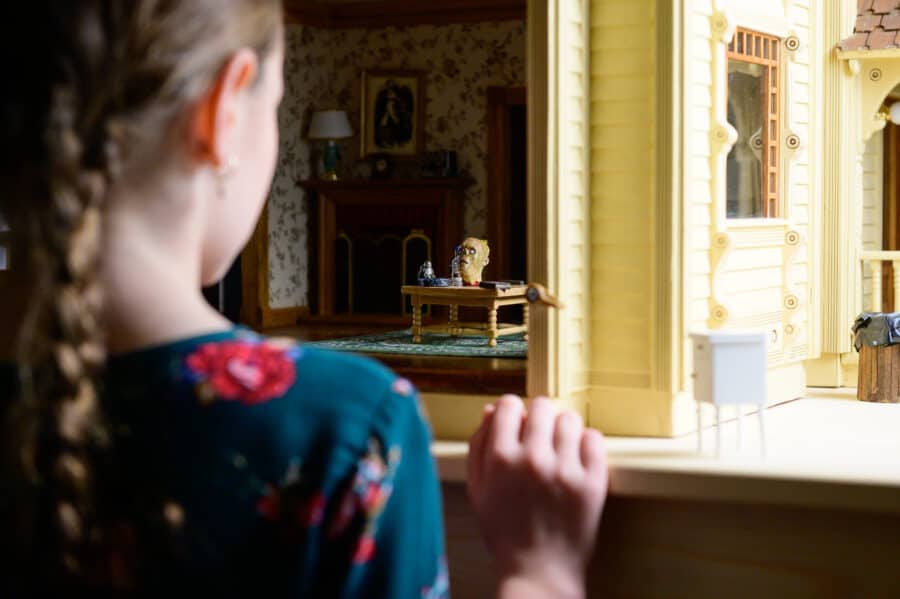
My favourites of the twelve were The House of the Head and Night of the Paw. In the former, a young girl discovers a terrifying toy head in her newly acquired dollhouse. This creepy concept really made me jump throughout and was devilishly clever too. In the Night of the Paw, we got another telling of the classic Monkey’s Paw story. Here a local mortician possesses a monkey’s paw that grants wishes which backfire horrifically. Of the other stories that I liked, Gray Matter was an atmospheric and nasty monster short. While Bad Wolf Down taps into the well-worn military versus werewolves’ theme, with stylish and bloody results.

Children and horror obviously feature a lot in Stephen King’s work. This is echoed in the stories called All Hallows Eve and The Companion. Both stories focussed on bullying and retribution in an imaginative fashion. Of the other stories, The Finger benefited from an unhinged performance by DJ Qualls. His character finds a finger which turns into something unspeakably evil. Meanwhile, Skincrawlers trod another often-used horror theme; that of the dangers of plastic surgery and (un)natural body enhancement. The remaining stories were also decent, although having said that the zombie tale, Times is Tough in Musky Holler, was arguably the weakest of the lot. Ultimately, Shudder’s Creepshow reboot was an entertaining horror anthology show, well written, directed and acted. My only reservation was it was all a bit slick and glossy. In fact, it could have done with a lower budget and the grittier touch of George Romero at times.

Mark: 8 out of 11