Tag Archives: Carter Burwell

Cinema Review: Wild Horse Nine (2026) | John Malkovich and Sam Rockwell shine in Martin McDonagh’s hilarious but uneven existential political thriller.

Cinema Review: Wild Horse Nine (2026)

Directed by Martin McDonagh

Written by Martin McDonagh

Produced by: Graham Broadbent, Pete Czernin, Martin McDonagh & Anita Overland

Main Cast: John Malkovich, Sam Rockwell, Steve Buscemi, Tom Waits & Parker Posey

Cinematography by Ben Davis

Music by Carter Burwell

*** MAY CONTAIN SPOILERS ***
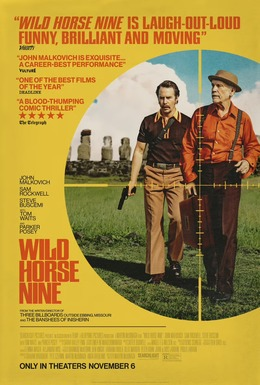


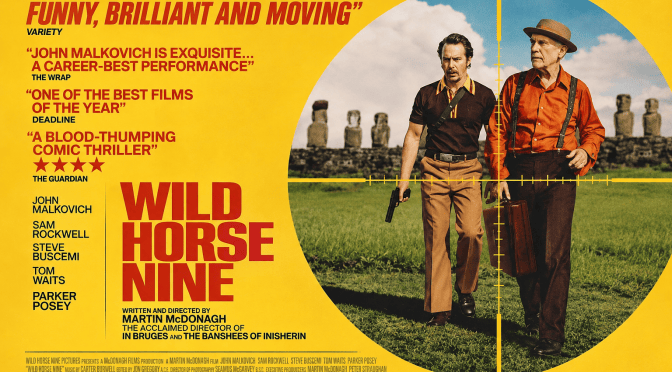
Martin McDonagh returns with Wild Horse Nine (2026), an ambitious, frequently hilarious but ultimately uneven concoction of conspiracy thriller, existential drama, political satire and pitch-black comedy. Set in 1973, against the backdrop of political upheaval in Chile, the film follows two CIA operatives, portrayed by John Malkovich and Sam Rockwell, who are dispatched to the remote Easter Island on a mysterious assignment, where their troubled pasts, professional loyalties and increasingly fragile grip on reality begin to unravel.

John Malkovich and Sam Rockwell are quite wonderful as the two bickering agents, delivering McDonagh’s acerbic dialogue with impeccable comic timing while revealing the regret, guilt and emotional damage lurking beneath their cynical exteriors. Their verbal sparring is frequently the film’s greatest pleasure, with both actors effortlessly navigating the absurdity and melancholy that have become hallmarks of McDonagh’s work. Malkovich, in particular, is a delight, while Rockwell once again demonstrates why he is such a natural interpreter of the filmmaker’s distinctive dialogue.

The other undeniable star is Easter Island itself. Its extraordinary landscapes, dramatic coastline and fascinating wildlife provide a magnificent setting, offering a striking contrast between the natural world’s timeless beauty and the petty, destructive machinations of government bureaucracy. There is something wonderfully absurd about watching two morally compromised representatives of American imperialism squabble over their assignments against a landscape that makes their entire existence seem utterly insignificant.

And therein lies Wild Horse Nine‘s most interesting thematic territory. McDonagh explores existentialism, regret, addiction, conspiracy theories and the absurdity of human existence, asking whether men who have spent their lives carrying out morally questionable orders can ever escape the consequences of their actions. The contrast between nature’s indifference and mankind’s obsession with power and control is particularly compelling. Unfortunately, these fascinating ingredients never quite combine into a satisfying whole. The film continually shifts between conspiracy thriller, political commentary, existential meditation and knockabout comedy without finding a convincing balance. Individual scenes are frequently brilliant, the dialogue often hilarious and unexpectedly poignant, but the overall narrative feels less assured than McDonagh’s finest work.
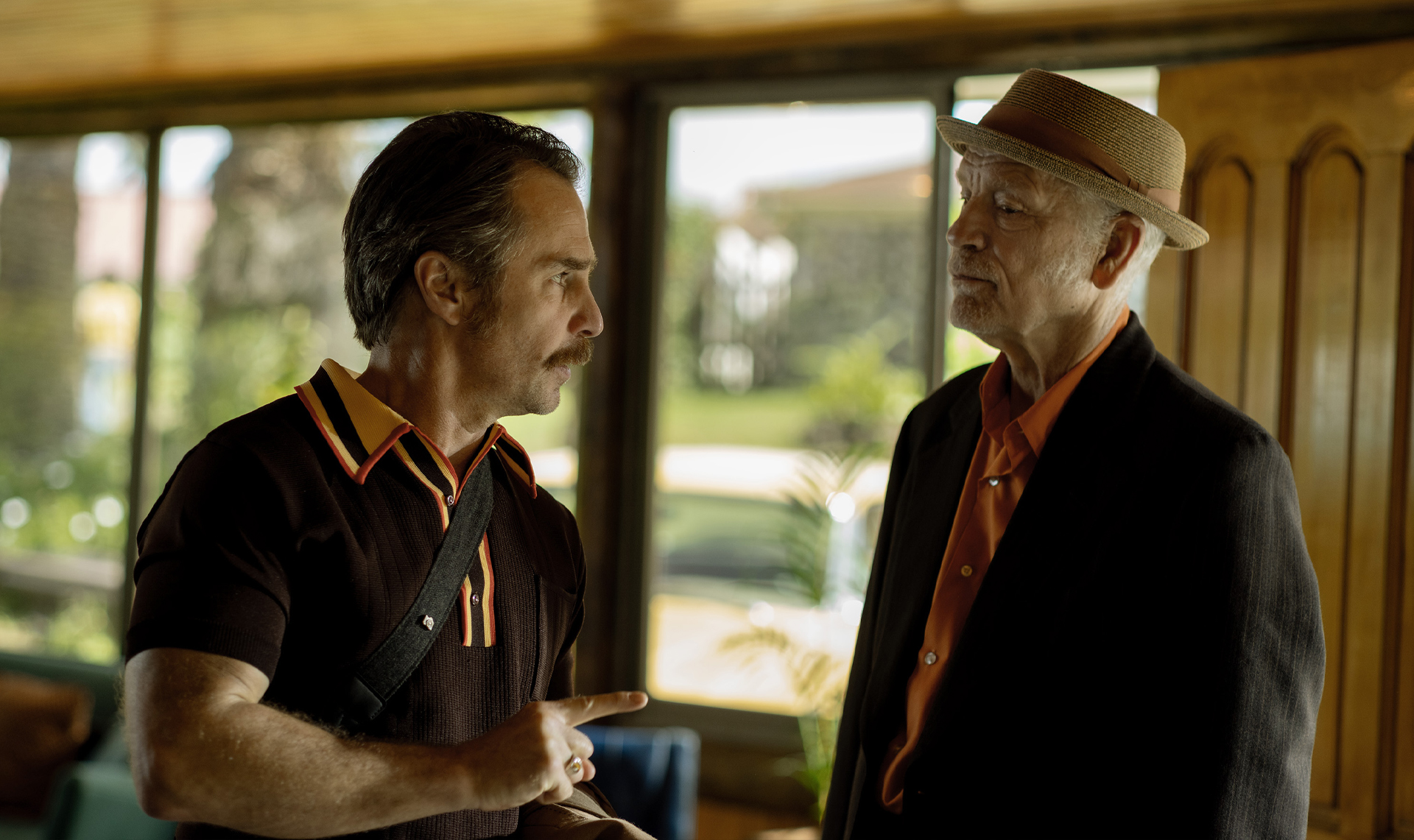


The political backdrop is particularly disappointing. The 1973 Chilean coup, with all its historical significance and American involvement, should provide considerable dramatic and moral weight. Instead, despite some occasional acerbic commentary, it often feels like window dressing. Moreover, Parker Posey’s character also feels frustratingly underdeveloped, particularly given the actress’s considerable talents. There is also the rather fundamental question of why we should care about these two men? However entertaining Malkovich and Rockwell may be, their characters are ultimately assassins serving a corrupt American government.

McDonagh has always demonstrated an extraordinary ability to find humanity in deeply flawed individuals, but here the emotional connection is considerably weaker. These anti-heroes are simply not as empathetic, tragic or compelling as the characters inhabiting In Bruges (2008) or The Banshees of Inisherin (2022). Both those films, with their almost Pinteresque exchanges and echoes of The Dumb Waiter, transformed seemingly inconsequential conversations into profound explorations of guilt, friendship, mortality and the human condition. I consider The Banshees of Inisherin (2022) a masterpiece, a beautifully constructed tragicomedy in which every absurd exchange seemed to carry emotional and philosophical significance. Wild Horse Nine (2026), by comparison, feels closer to Seven Psychopaths (2012), although thankfully more grounded in a recognisable reality than that film’s self-conscious exercise in meta-screenwriting.

There are also several plot holes, some awkward tonal transitions and a frustrating reliance on the murky interior cinematography that seems increasingly fashionable in contemporary filmmaking. The breath-taking day-time exterior photography makes the occasionally impenetrable darkness of the interior scenes all the more irritating. Yet, for all these reservations, there is still an enormous amount to enjoy as McDonagh remains one of cinema’s most distinctive voices.

Ultimately, Wild Horse Nine (2026) is a film of wonderful moments rather than a completely satisfying whole. Its philosophical ambitions, political intrigue and absurdist humour occasionally collide rather than complement one another, but even when McDonagh misses the target, the results remain more interesting than most filmmakers’ direct hits. A lesser Martin McDonagh film, perhaps, but still better than many other filmmakers’ finest achievements.
Mark: 8 out 11


CINEMA REVIEW: THE BANSHEES OF INISHERIN (2022)

CINEMA REVIEW: THE BANSHEES OF INISHERIN (2022)

Written and Directed by Martin McDonagh

Produced by: Graham Broadbent, Peter Czernin & Martin McDonagh

Main Cast: Colin Farrell, Brendan Gleeson, Kerry Condon, Barry Keoghan, etc.

Cinematography: Ben Davis

Edited by: Mikkel E. G. Nielsen

Music by: Carter Burwell

*** MAY CONTAIN SPOILERS ***


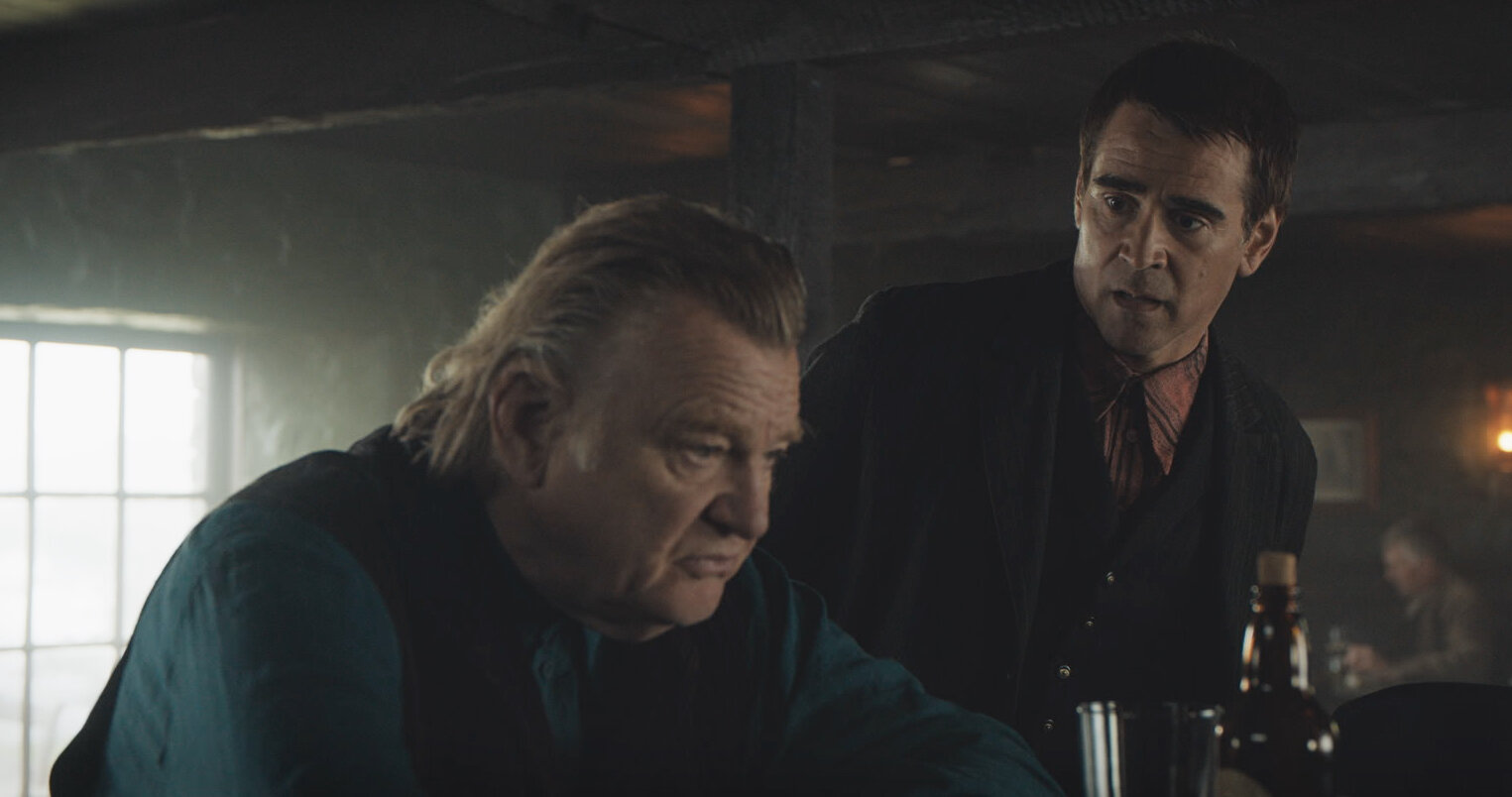
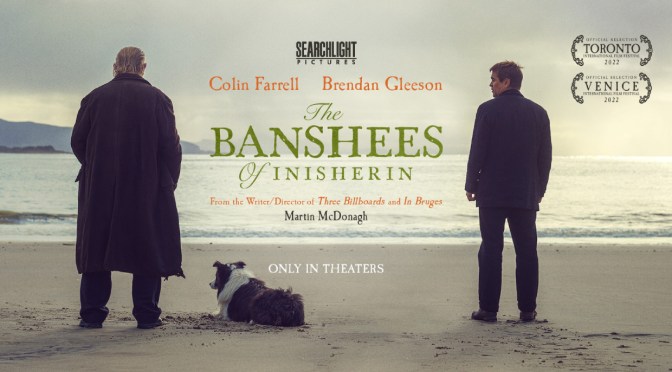
The Banshees of Inisherin (2022) is Martin McDonagh’s latest cinematic masterpiece. Not only is it one of the best films of the year he has, as with Three Billboards Outside Ebbing, Missouri (2017), constructed one of the most formidable screenplays of many a year. As a playwright McDonagh has won many awards for his works. His debut film, In Bruges (2008), was a deceptively simple story of two hitmen on the run which, with rich thematic power, became a darkly hilarious existential cult classic. His follow-up Seven Psychopaths (2012), a heady mix of criminals versus writers in a meta-fictional Hollywood-based narrative was brilliantly written and acted, if slightly lacking thematic clarity. Like Three Billboards Outside Ebbing, Missouri (2017), The Banshees of Inisherin (2022) is a highly emotional human drama which contains intelligent allegory, incredible characterization, and cracking dialogue.

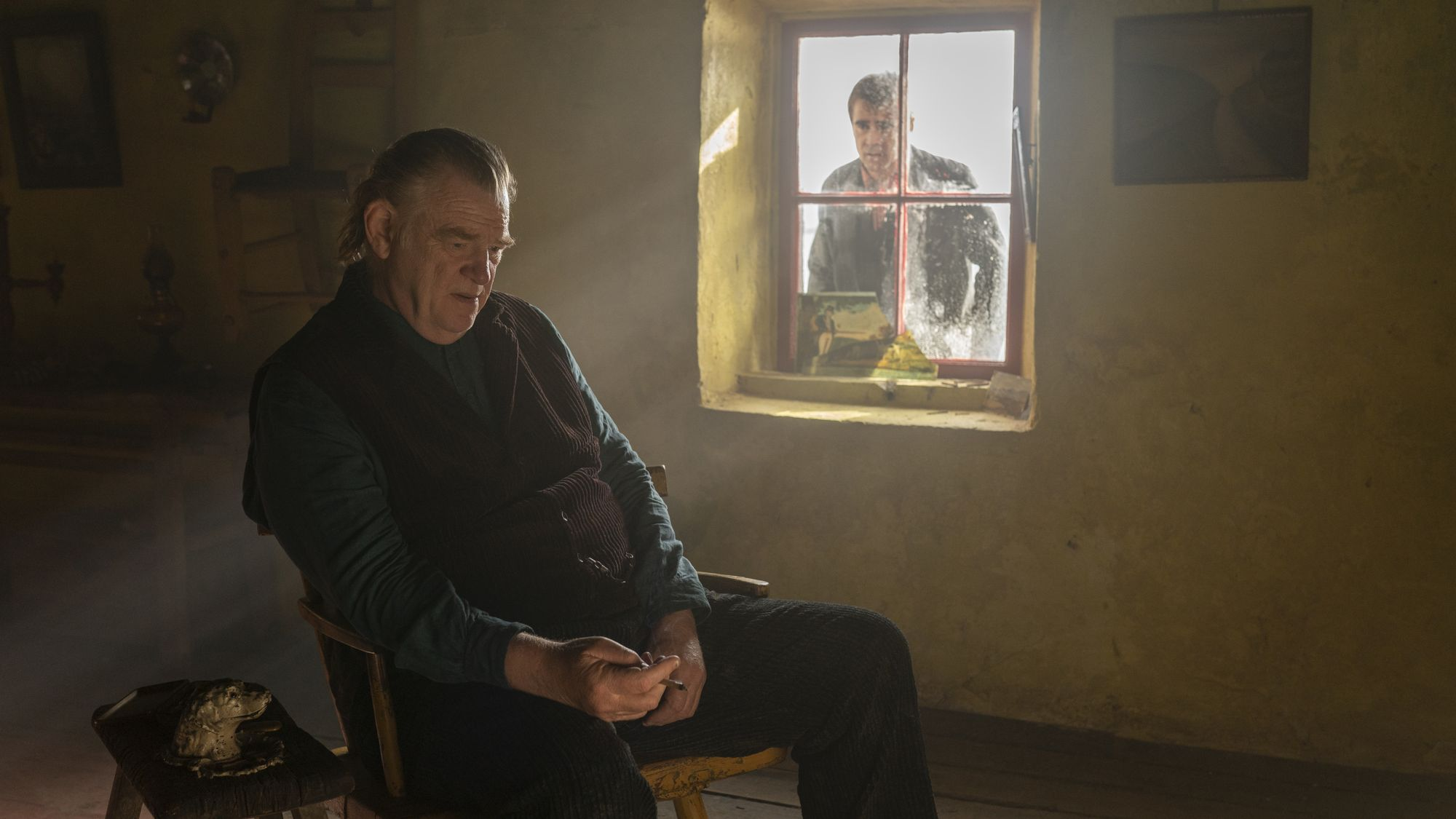
Set in 1923 on an island off of Southern Ireland called aptly Inisherin, the film opens by focussing on genial everyman farmer, Pádraic Súilleabháin (Colin Farrell) and his daily routine. After tending to his animals, he usually calls for his friend, Colm Doherty (Brendan Gleeson) to go to the island pub, the J.J. Devine or Jonjo’s. In England there is an idiom called, “sending someone to Coventry.” This means to ignore or ostracize an individual or individuals. So, basically Colm chooses to do this to his long-standing friend, Pádraic. This shunning completely bemuses Pádraic and despite Colm’s pleading for Pádraic to respect his wishes, he continually seeks an answer to his former friend’s decision.


After this intriguing premise is established, what follows is a tremendously original, darkly funny and emotionally penetrating succession of scenes. The exchanges between the two characters begins as bickering but then descends into some seriously disturbing acts of recrimination. Attempting to make them see sense are various eccentric characters on the island who provide many witty and absurd exchanges that McDonagh specialises in. Further, Pádraic’s sister Siobhán (Kerry Condon) is almost the one voice of reason as the feud escalates. As she tries to diffuse the conflict, even Barry Keoghan’s young idiot, Dominic Kearney, the initial comic relief in the film, attempts to make these two men see sense.

Visually, The Banshees of Inisherin (2022), is incredibly rich. The territory displays gorgeously photographed shots of the rocks, the sea, the stone roads and the lush green countryside. But while there is a sense of expanse and freedom initially, the feeling of isolation pervades. As the story continues the characters feel more and more segregated by the sea and their own or other’s decisions. None more so than Farrell’s Pádraic. A simple man who just wants to do his work and get drunk with his friend, he finds he is sequestered by Colm’s desire to self-isolate and concentrate on his music. Here, Farrell and Gleeson give tremendous character work. Farrell especially has rarely been better as Pádraic’s attitude turns initially from shock to bitterness over the journey of the narrative.


A film director’s job is for me about making key creative choices. Martin McDonagh makes brilliant choices while working from his own exceptional script. I loved everything about The Banshees of Inisherin (2022). The look, the performances, the pacing, the locations and Carter Burwell’s phenomenal score are absolutely first class. I haven’t even mentioned Barry Keoghan’s memorable supporting turn. He surely is one of the most naturally gifted actors of his generation. Not to forget other striking characters in the ensemble such as the creepy, Mrs McCormick (Sheila Flitton), an old harridan who acts as a portent for death on the island.

Martin McDonagh expertly combines a superb ear for dialogue, a psychologically absorbing analysis of the human condition with elements from Waiting For Godot and Channel Four situation comedy, Father Ted. Above all else, The Banshees of Inisherin (2022) is a darkly, spectacular cinematic experience which works on many levels. On one level it is about the isolation of island life and its inhabitants. On another it’s about the death of a friendship. While on yet another level it is about the analogous absurdity of civil war and how conflict can start for the merest of reasons. While the best cinema is certainly about showing and not telling, McDonagh proves again that dialogue-driven films can produce cinematic theatre, comedy and tragedy of the highest order.

Mark: 10 out of 11


MY CINEMATIC ROMANCE #10 – CARTER BURWELL

MY CINEMATIC ROMANCE #10 – CARTER BURWELL

To continue the My Cinematic Romance series of filmmakers, genres, actors who I absolutely love, I give you my praise to composer Carter Burwell.  His soundtracks are usually SO good I can watch a film that I don’t even like if it has Burwell’s music. He has a knack of not only capturing the emotion of the characters and story but also being intelligent; using the genre and style of the film to infuse the soundtrack.

Burwell has provided the score to many films including: Conspiracy Theory (1997), Hamlet (2000), The Spanish Prisoner (1997), Before the Devil Knows You’re Dead (2007), The Blind Side (2009), Rob Roy (1995), The Chamber (1996), Being John Malkovich (1999) Gods and Monsters (1998), This Boy’s Life (1993), Wayne’s World 2 (1993), Airheads (1994), Before Night Falls (2000), A Knight’s Tale (2001), Intolerable Cruelty (2003), The Alamo (2004), Legend (2015), The Kids Are Alright (2010), Mr Holmes (2015), Hail Caesar (2016), No Country For Old Men (2007) etc.

I don’t know much about music, other than playing the guitar to a very average level; however, I know what I like. And I love Carter Burwell. Moreover, having worked consistently in all kinds of genres from big Hollywood productions to auteurs’ and arty films, Burwell is held in the highest regard within the industry. Esteemed filmmakers like: Spike Jonze, Charlie Kaufmann, Todd Haynes, David O. Russell and the Coen Brothers have all employed his fine musical abilities. Thus, here are seven breathtaking compositions which really stand out. Indeed, his work with the Coen Brothers is legendary so I have limited those choices to just two films; just to make the piece more of a challenge.

carter-burwell-1-1024x616

CAROL (2015) – TODD HAYNES

Burwell finally won a well-deserved Oscar for this beautifully constructed score.  It captures perfectly the emotion and period and the light and dark of this “forbidden” fifties romance story.

FARGO (1996) – THE COENS

As the music rises to crescendo the hairs on the back of my neck stand on end. The mood and atmosphere are literally chilling. When I see this I think of snow, cold, blood and murder.

THE GENERAL’S DAUGHTER (1999)

While this army-police procedural drama is not a classic the music is haunting and beautiful adding a fragile counterpoint to the violent nature of the content.

IN BRUGES (2006)

Burwell does death exceedingly well. This score is less orchestral with a pared down piano and cello to the fore, prior to launching into an alt-rock guitar sound. The notes skip and rip about giving us a dark insight and backing to the off-centre characters and setting.

MILLERS CROSSING (1990)

This lyrical Irish-tinged score is another beautiful score. While the Coens’ superb gangster drama had its fair share of blood, the music pushes against the grain somewhat providing light and uplift amidst the plotting, double-crosses and chaos.


THE FINEST HOURS (2016)

This Disney disaster movie set in the 1950s is a very watchable human drama sensitively directed by Craig Gillespie. It flopped at the box office, yet as soon as I heard the score I knew it was Burwell. This is epic music of the highest order for a film which deserved a bigger audience.

TWILIGHT (2008)

I haven’t seen any of these films although I know the Twilight saga is a cultural phenomenon. Yet, I found this piece called Bella’s Lullaby on YouTube and it is just exquisite; it even makes me want to watch the films!