Tag Archives: David Livingston

To Boldly Review #16 – Star Trek: Enterprise (2001 – 2005) – Seasons 1-4

To Boldly Review #16 – Star Trek: Enterprise (2001 – 2005) – Seasons 1-4

Created by Rick Berman & Brannon Braga

Based on Star Trek by Gene Roddenberry

Showrunners: Brannon Braga (2001-2004) & Manny Coto (2004-2005)

Production companies: Paramount Network Television, Braga Productions & Rick Berman Productions

Selected writers: Brannon Braga, Rick Berman, Manny Coto, Mike Sussman, Phyllis Strong, Judith Reeves-Stevens, Garfield Reeves-Stevens, André Bormanis, Chris Black, David A. Goodman, Fred Dekker, and more.

Selected directors: Roxann Dawson, LeVar Burton, Robert Duncan McNeill, Allan Kroeker, David Livingston, Winrich Kolbe, James L. Conway, Mike Vejar, Michael Grossman, Marita Grabiak, Brennan Spencer, Michael S. Watkins, Vincenzo Natali, and more.

Main cast: Scott Bakula, John Billingsley, Jolene Blalock, Dominic Keating, Anthony Montgomery, Linda Park, Connor Trinneer etc.

Notable guest actors: Jeffrey Combs, Vaughn Armstrong , Gary Graham, Matt Winston, Randy Oglesby, James Cromwell, Brent Spiner, Daniel Dae Kim, Fionnula Flanagan, Robert Picardo, Tony Todd, Bruce Davison, Seth MacFarlane, Steven Culp, Noa Tishby, Rene Auberjonois, Peter Weller, Dean Stockwell etc.

Composer(s): Dennis McCarthy, Jay Chattaway, Brian Tyler, John Frizzell, Mark McKenzie, David Bell, Velton Ray Bunch, Kevin Kiner &
Paul Baillargeon

*** MAY CONTAIN SPOILERS ***


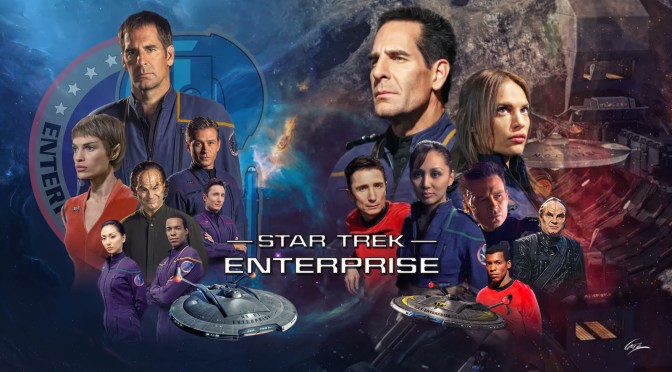
It’s been a while since I reviewed Star Trek on the site. But I have now finally completed the task I set myself to watch and review all the legacy Star Trek series. I am currently on the fence regarding the more recent Star Trek offerings. Anyway, having reviewed Voyager (see below) last year, I can now provide a detailed report back on Enterprise.


Star Trek: Enterprise occupies a fascinating corner of the franchise’s sprawling canon. Set a century before Kirk and more than a century after humanity’s first steps into spaceflight, the series charts the formative years of Starfleet—before there even was a “Starfleet” in the sense fans recognize. Its premise alone is rich: a pre-Federation frontier where humanity is inexperienced, unsteady, and often outmatched, yet eager to join a much larger galactic community. In this sense, Enterprise is both a prologue and a missing link, retrofitting the swaggering optimism of The Original Series with a more grounded, early-21st-century sensibility.

The show’s commitment to exploring those transitional years is what secures its place in canon. Enterprise seeds the diplomacy, technology, and interspecies tensions that future shows build upon—from the first warp-5 engine, to early encounters with Vulcans, Andorians, and the ever-shadowy Temporal Cold War. Watching Captain Jonathan Archer and his crew stumble toward the ideals later embodied by the Federation gives the series a distinctive historical weight. It doesn’t merely fit into Star Trek continuity; it actively sculpts the bedrock beneath it.

Central to the show’s appeal is Scott Bakula, whose performance as Captain Archer blends warmth, stubbornness, and a palpable sense of moral growing pains. Bakula gives Archer a grounded humanity that stands apart from the polished command styles of Picard or the passionate Sisko, yet his sincerity and resolve make him every bit their equal. When the writing rises to meet his talent—as in standout episodes like “Cogenitor,” “The Andorian Incident,” “Carbon Creek,” or the Xindi arc’s best moments—the show can reach the emotional and thematic heights of The Original Series and The Next Generation.
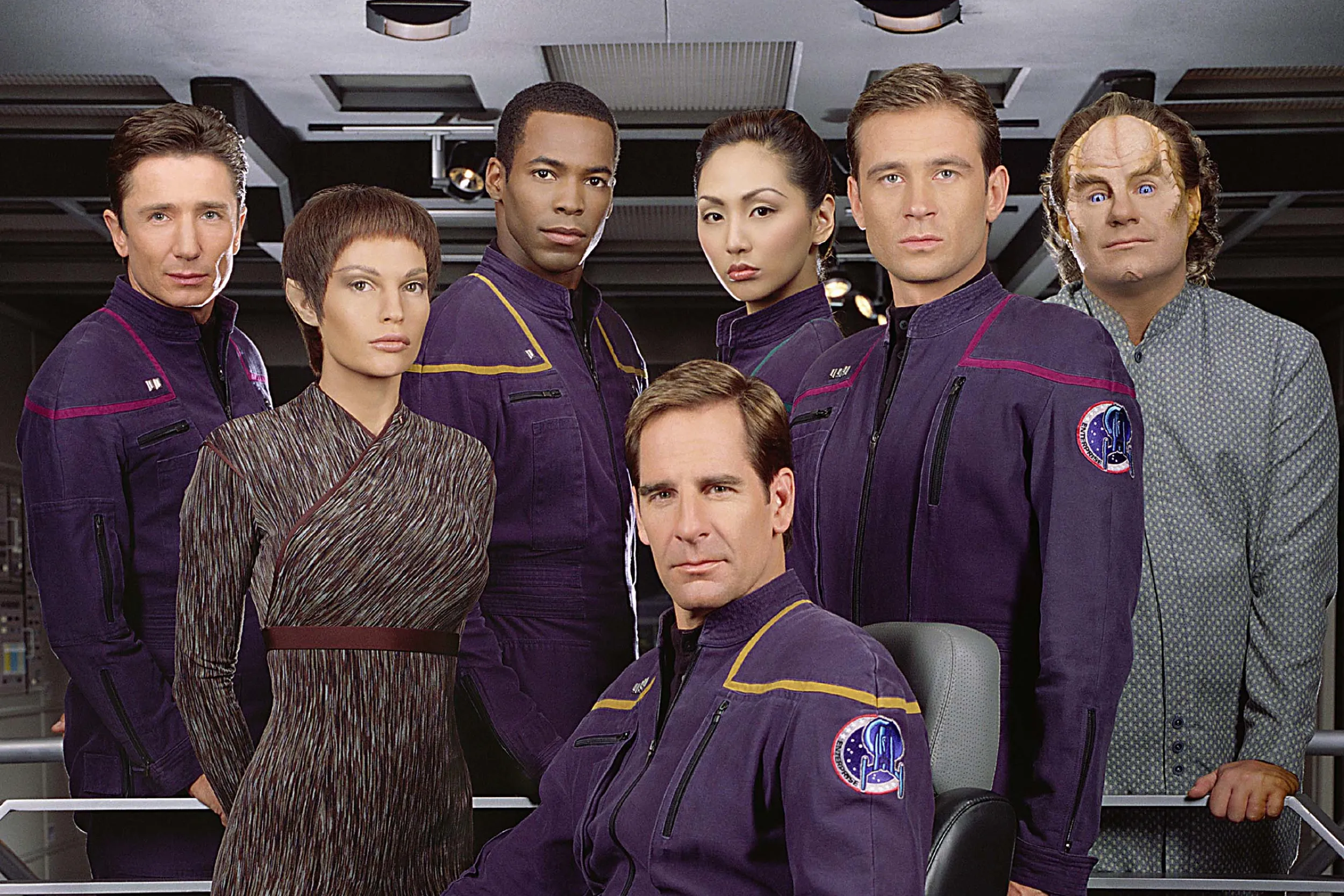


But Enterprise is also a series defined by uneven execution. For every episode that lands with classic-Trek resonance, there are others hampered by muddled plotting, bland direction, or creative decisions that feel more reactive than visionary. The show often struggled to decide whether it wanted to be a rough-edged prequel, a 2000s-era action drama, or a traditional episodic Trek—frequently trying to be all three at once. While it contains genuinely excellent science-fiction storytelling, its overall writing and directorial cohesion never consistently matched the clarity, ambition, or confidence of its most celebrated predecessors.

Yet despite its flaws, Star Trek: Enterprise remains an essential and often underrated part of the canon—a show whose best moments remind us exactly why Trek endures, and whose imperfections make its aspirations feel all the more human. Here are eight of the best episodes I watched – two per series.


Series 1 – The Andorian Incident (Episode 7)

This episode is the first truly great hour of Enterprise—the point where the show proves it can handle nuanced political storytelling within the Trek universe. The introduction of Jeffrey Combs as Shran is a masterstroke; he immediately brings depth, wit, and volatility to the Andorians. The plot, centered on Archer and his crew discovering that a supposedly pacifist Vulcan monastery is hiding darker secrets, reshapes our understanding of Vulcan–Andorian tensions. Strong direction, tight pacing, and a morally thorny reveal make this the first episode that feels essential to larger Star Trek canon.


Series 1 – Dear Doctor (Episode 13)

A thoughtful, character-driven story told through Dr. Phlox’s personal logs, “Dear Doctor” represents Enterprise at its most philosophically ambitious. It confronts the ethics of medical intervention, cultural evolution, and the limits of humanitarian aid—classic Trek territory handled with sensitivity and restraint. John Billingsley delivers one of the best performances of the season, infusing Phlox with curiosity, compassion, and unsettling pragmatism. The episode’s controversial ending also resonates, sparking debate among fans and critics alike. It’s a quietly powerful hour that demonstrates the series’ potential for moral complexity.


Series 2 – Carbon Creek (Episode 2)

Widely regarded as the highlight of Season 2—and for many, the best Enterprise episode of its first two years—“Carbon Creek” is a charming, unexpectedly heartfelt detour into Trek history. Told by T’Pol as a possibly-true, possibly-mythic story, it follows a stranded Vulcan survey team living incognito in 1950s Pennsylvania. The fish-out-of-water premise is handled with warmth, humour, and subtle social commentary, while Jolene Blalock shines in a dual role that lets her explore a softer, more playful Vulcan persona. It’s imaginative, character-rich, and quietly profound—the kind of tonal experiment that pays off beautifully.


Series 2 – Regeneration – (Episode 23)

A tense, surprisingly effective prequel to The Next Generation’s Borg storyline, “Regeneration” threads a tricky needle: introducing Borg elements without breaking canon. The episode smartly uses the wreckage from Star Trek: First Contact as its entry point, turning the narrative into a chilling, atmospheric thriller. The direction is sharp, the pacing taut, and the danger feels unusually real for this era of Trek. The crew’s desperation—fighting an enemy they can’t possibly understand—creates some of the season’s most gripping moments. It’s both fan-pleasing and genuinely suspenseful.


Series 3 – Twilight – (Episode 8)

Often cited as the masterpiece of Season 3, “Twilight” is a time-bending character drama that blends emotional storytelling with classic Trek sci-fi ingenuity. When Archer becomes afflicted with a neurological condition that erases his short-term memory, the episode jumps forward into an alternate future where humanity has been nearly wiped out by the Xindi. What follows is a surprisingly intimate exploration of Archer and T’Pol’s relationship, played with sincerity and restraint by Scott Bakula and Jolene Blalock. The script balances tragedy, hope, and big ideas without feeling gimmicky. It’s moving, tightly written, and stands alongside the franchise’s finest “what-if” stories.


Series 3 – Azati Prime – (Episode 18)

“Azati Prime” is the moment Season 3’s slow-burn storytelling snaps into urgent, high-stakes clarity. The episode follows Archer’s attempted suicide mission to destroy the Xindi superweapon, giving Scott Bakula one of his strongest performances in the entire series. The moral weight is heavy, the action tense, and the pacing relentless. Crucially, this is where the Xindi cease being abstract antagonists and become three-dimensional political factions torn between fear and diplomacy. The episode’s final act—Enterprise under brutal assault—is among the most cinematic sequences the series ever produced, setting up the endgame of the season with real emotional gravity.


Series 4 – United – (Episode 13)

“United” is Enterprise finally fulfilling its prequel potential—showing the messy, reluctant, and hard-fought beginnings of what will eventually become the United Federation of Planets. The political maneuvering is smart and grounded, the Andorian–Tellarite tension is played with grit and humor, and Jeffrey Combs delivers another magnetic performance as Shran. The episode’s centerpiece—the Andorian duel where Archer must fight to prevent a larger war—is tense, dramatic, and deeply character-driven. It’s classic Trek diplomacy mixed with riveting conflict, all while pushing the franchise’s history forward in meaningful ways.


Series 4 – In a Mirror, Darkly – (Episodes 18–19)

One of the most stylish and purely fun stories Enterprise ever told, this two-parter fully embraces the decadent brutality of the Mirror Universe. The production team goes all-in: redesigned sets, re-imagined uniforms, a pulpy remixed title sequence, and a stunning recreation of the USS Defiant from The Original Series. The cast seems to relish the opportunity to play villainous, unhinged versions of their characters—especially Jolene Blalock and Connor Trinneer. Visually bold, lore-rich, and brimming with dark humour, “In a Mirror, Darkly” is a love letter to both TOS and long-time Trek fans.
TO BOLDLY REVIEW #10 – STAR TREK: NEXT GENERATION (1991 – 1992) – SEASON 5

TO BOLDLY REVIEW #10 – STAR TREK: NEXT GENERATION (1991 – 1992) – SEASON 5

Based on Star Trek & Created by: Gene Roddenberry

Season 5 writers (selected): Michael Piller, Michael Wagner, Rick Berman, Jeri Taylor, Lee Sheldon, Melinda Snodgrass, Richard Manning, Ronald D. Moore, David Bischoff, Joe Menosky, Drew Deighan, Brannon Braga, J. Larry Carroll, Hilary J. Bader, Harold Apter, Stuart Charno, Sara Charno, Maurice Hurley, Susan Sackett, Sara Charno, Stuart Charno, Randee Russell, Peter Allan Fields, Rene Echevarria etc.

Season 5 directors (selected): Jonathan Frakes, Winrich Kolbe, Corey Allen, Robert Weimer, Les Landau, Robert Scheerer, Cliff Bole, Paul Lynch, Chip Chalmers, Timothy Bond, David Carson, Gabrielle Beaumont, Patrick Stewart, David Livingston, Marvin V. Rush, Chip Chalmers, Peter Lauritson, Robert Lederman, Paul Lynch, etc.

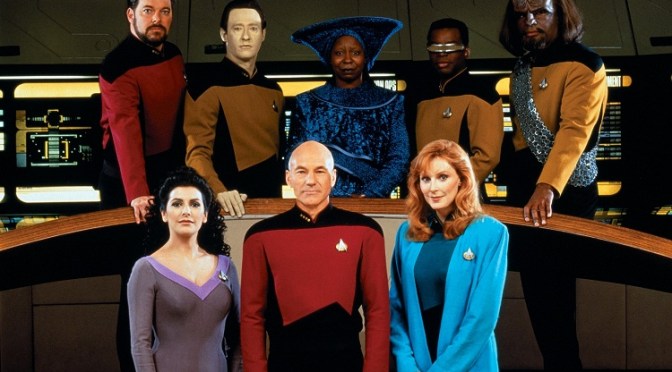
Main Cast: Patrick Stewart, Jonathan Frakes, LeVar Burton, Whoopi Goldberg, Colm Meaney, Michael Dorn, Marina Sirtis, Brent Spiner, Wil Wheaton, Gates McFadden, Michelle Forbes, Majel Barrett, Rosalind Chao, plus guests: Matt Frewer, Ashley Judd, Kelsey Grammer and Famke Janssen etc.

Music/Composers: Alexander Courage, Jerry Goldsmith, Dennis McCarthy, Ron Jones, Jay Chattaway

Production Company(s): Paramount Television, CBS Television

**** CONTAINS SPOILERS ****


I have just finished boldly watching Season 5 of STAR TREK: THE NEXT GENERATION and it was an extremely excellent raft of science fiction television episodes. I have to say though that TWENTY-SIX episodes was a hell of a lot of TV to produce. I know they had big budgets and an army of staff working on the show, but to produce such high quality viewing, albeit within the established formula, is overall incredibly impressive.

Season 5 was up there in consistency of quality writing, acting and directing with the superlative Seasons 3 and 4. Once again the creatives and storyline team explored issues of the day (i.e. 1990s) and married them to the STAR TREK values and philosophies. Of course, we get the usual alien enemies, such as the Romulans and Ferengi, paying a visit to the Enterprise. Yet, we also found new foes, obstacles and allies encountering the Enterprise. Lastly, the formidable Michelle Forbes as the Bajoran, Ensign Roe, was a welcome addition to the crew.

Sadly, Gene Roddenberry passed away during this particular season’s making. This would cause create sadness in the STAR TREK universe, but the production was, by now in very safe hands, as they paid fine tribute to their creator during Season 5. Here are SIX of the best episodes well worth visiting or revisiting. Live long and prosper.


REDEMPTION – PART II – EPISODE 1

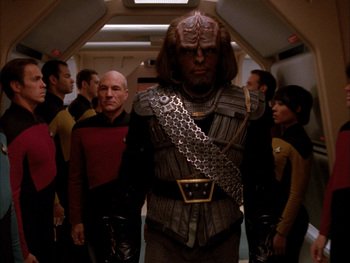
The concluding part to the prior season’s cliffhanger found Lt. Worf (Michael Dorn) continuing to fight for honour alongside his brother, Kurn (Tony Todd), against the Duras hordes. There are many moments of high tension throughout the episode with Dorn impressing again as the divided, but ultimately united and redeemed Klingon. Overall, the episode is full of memorable plot turns and fantastic Romulan and Klingon villains, notably Lursa and B’Etor.

See the source image


UNIFICATION – PARTS I & II – EPISODES 7 & 8

Chosen more for nostalgia as opposed to stellar storytelling, UNIFICATION is a two-parter which sees the return of a famous Trek character, namely Spock (Leonard Nimoy). We also get Mark Lenard’s final appearance as Spock’s father, Sarek, as he and Picard (Patrick Stewart) share a thoroughly moving final scene together. The story finds Spock attempting to repair years of conflict between Vulcans and Romulans, however, Starfleet believe he has defected. Thus, Picard and crew attempt another search for Spock. The narrative pace is steady, nonetheless it is great to see Nimoy don the ears and ultra-logic for a further outing as Spock.


See the source image

CONUNDRUM – EPISODE 14

While STAR TREK: THE NEXT GENERATION had more than its fair share of emotionally powerful episodes, sometimes a fast-paced and twisting plot with a bit of space espionage was more than welcomed. In CONUNDRUM, the Enterprise crew have their memory wiped by an unknown force dedicated to destroying an alien race. The audience finds suspense and dramatic irony in knowing the crew’s minds have been tampered with as they race against time to prevent war. Riker (Jonathan Frakes) and Ensign Ro’s (Michelle Forbes) simmering sexual tension adds romance and humour to a packed storyline.


See the source image

CAUSE AND EFFECT – EPISODE 18

Easily one of my favourite TNG episodes of this and many a season. This is because it features a fantastic temporal-causality loop plot and extremely high stakes where the Enterprise is concerned. Here the crew are trapped in a perpetual time cycle where the end of it results in the destruction of the Enterprise. Essentially GROUNDHOG DAY (1993) in space (even though this episode came before that classic film), it truly fizzes along with a brilliant script and powerful drama. Kelsey Grammer also guests, adding to the overall quality on display.


See the source image

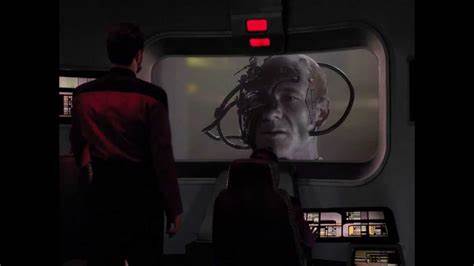
I, BORG – EPISODE 23

Could an evil machine ever be humanized? That is just one of the fascinating questions posed in this thoughtful and provocative episode? While they owe much to the Cybermen, the Borg remain a powerful weapon in the STAR TREK storytelling arsenal. The only problem is they are virtually invincible, so tough to write stories for. Rather cleverly in I, BORG, the episodes isolates a single unit and Picard, Guinan (Whoopi Goldberg) and La Forge (LeVar Burton) especially, confront their hatred and desire for revenge. As the Borg unit, or Hugh (an excellent Jonathan Del Arco) as he becomes known, spends time on the Enterprise he positively changes. This provides much to consider for the crew with their emotions shifting toward Hugh/the Borg.


I Borg Star Trek TNG HD.jpg

THE INNER LIGHT – EPISODE 25

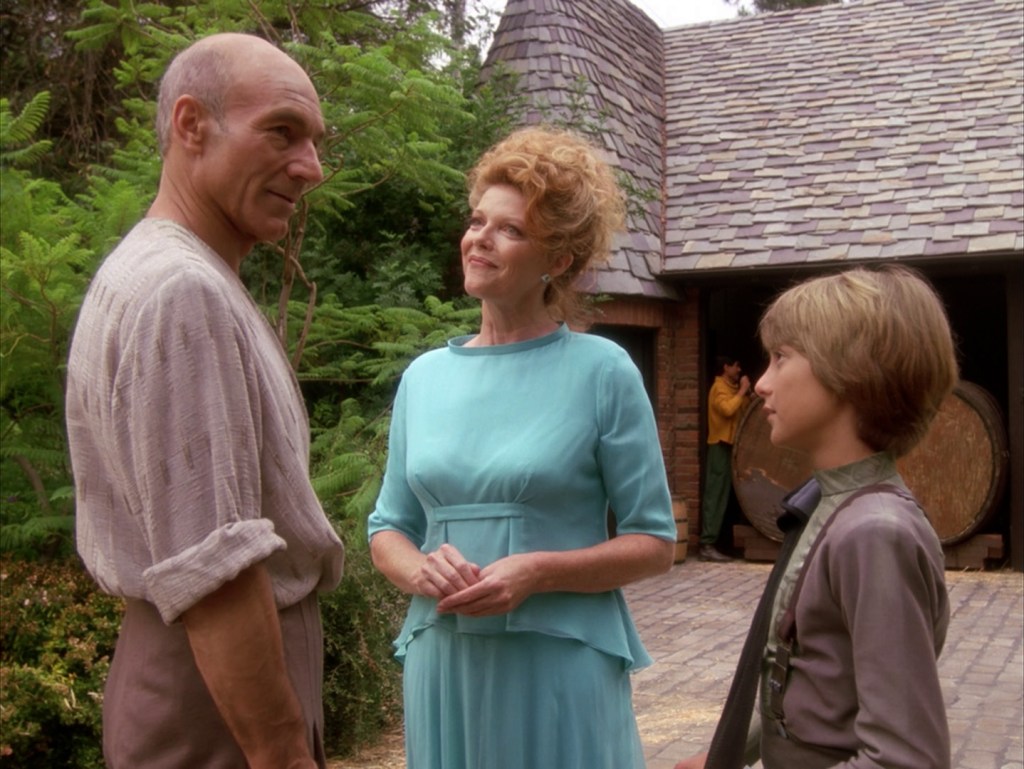
Not only is this one of the best episodes of STAR TREK: THE NEXT GENERATION, but it is also one of the best episodes of STAR TREK ever. The story is precipitated by an unknown probe which scans the Enterprise and directs an energy beam at Picard, who wakes up to find himself on Kataan, a non-Federation planet. Here Picard attempts to escape his existence as Kamin, but over time he grows into this strange new life. What begins as a simple body swap plot, unfurls into something all the more emotionally grander. We know Patrick Stewart is a fine actor, but he imbues Picard/Kamin with a gravitas of enormous propensity. I also loved how Picard, the Captain, is humbled by a more domestic life full with life and love. Lastly, Jay Chattaway’s score is absolutely beautiful.


TO BOLDLY REVIEW #9 – STAR TREK: NEXT GENERATION (1990 – 1991)– SEASON 4

TO BOLDLY REVIEW #9 – STAR TREK: NEXT GENERATION (1990 – 1991)– SEASON 4

Based on Star Trek & Created by: Gene Roddenberry

Season 4 writers (selected): Michael Piller, Michael Wagner, Rick Berman, Jeri Taylor, Lee Sheldon, Melinda Snodgrass, Richard Manning, Ronald D. Moore, David Bischoff, , Joe Menosky, Drew Deighan, Brannon Braga, J. Larry Carroll, Hilary J. Bader, Harold Apter, Stuart Charno, Sara Charno, Maurice Hurley, Shari Goodhartz, Timothy DeHaas, Randee Russell, Ira Steven Behr, Rene Echevarria etc.

Season 4 directors (selected): Jonathan Frakes, Winrich Kolbe, Rob Bowman, Robert Weimer, Les Landau, Robert Scheerer, Cliff Bole, Robert Legato, Tom Benko, Chip Chalmers, Timothy Bond, David Carson, Gabrielle Beaumont, Patrick Stewart, David Livingston, Marvin V. Rush, Chip Chalmers etc.

Main Cast: Patrick Stewart, Jonathan Frakes, LeVar Burton, Whoopi Goldberg, Colm Meaney, Michael Dorn, Marina Sirtis, Brent Spiner, Wil Wheaton, Gates McFadden, John De Lancie, Dwight Schultz, Majel Barrett, Rosalind Chao etc.

Music/Composers: Alexander Courage, Jerry Goldsmith, Dennis McCarthy, Ron Jones, Jay Chattaway

Production Company(s): Paramount Television, CBS Television

**** CONTAINS SPOILERS ****


My simultaneous retrospective and futuristic journey into space and time continues, and I have finally finished watching Season 4 of Star Trek: The Next Generation. It’s commonly admitted to being one of the most consistently excellent seasons of TNG. I very much enjoyed the mixture of sci-fi concepts, drama, humour and tragedy within the well established formula of the Starship Enterprise boldly exploring various galaxies.

Major themes of the season related to family, honour, love, espionage, war and divided loyalties. While the Wesley Crusher character left for the Starfleet Academy (Wil Wheaton left the show), the majority of our favourite characters remained. Indeed, Miles O’Brien (Colm Meaney) was given more airtime and a marriage subplot. More dramatically the Klingons and Romulans featured heavily as pillars of conflict, with many of the best episodes featuring Romulan deceptions and Klingon brutalism.

Star Trek: The Next Generation continues to be a compelling show to watch and look back on with respect and nostalgia. While I continually enjoyed pretty much all the episodes, here are six of the best ones featuring Picard and his devoted crew.


THE BEST OF BOTH WORLDS – PART II – EPISODE 1

A continuation of Season 3’s cliff-hanger episode found Picard in the grips of the Borg. Even more thrilling was Riker, Data, La Forge and the rest of the crew have to stop the evil machines from launching a deadly assault on Earth. With dual battles of the mind and in space occurring simultaneously, this episode is memorable in so many ways. Patrick Stewart as Picard gives a fantastically intense performance as he battles the evil within.


FAMILY – EPISODE 2

Gentler in approach than the opening episode, Family, has a brilliantly written script with three very emotionally charged storylines. Wesley Crusher must decide whether to watch a video recorded by his deceased father. Worf is met by his adoptive human parents who seek to console him following his Klingon discommendation. Lastly, a still shaken Picard returns to Earth and reconnects with his brother. The trio of narratives combine to forge a highly satisfying and emotionally charged episode.


REUNION – EPISODE 7

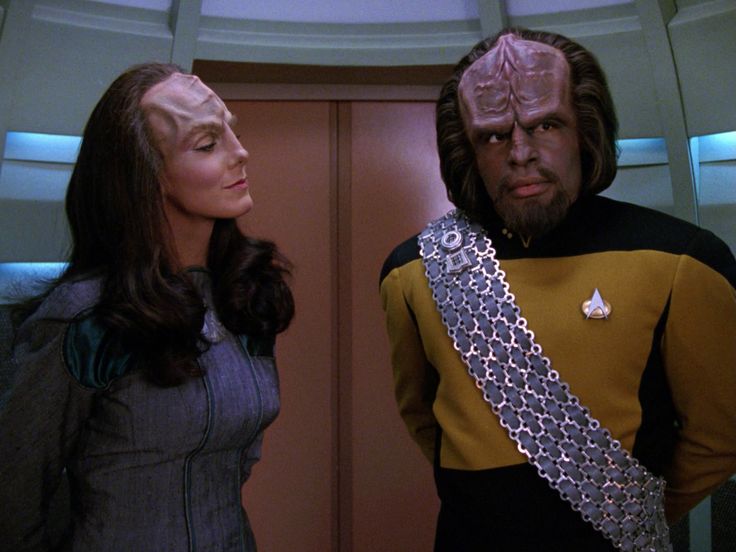
While Patrick Stewart as Captain Picard often garners the acting acclaim with his fine performances, I think Michael Dorn as Lt. Worf always gives great portrayals too. Worf’s conflicted cultural identity – between Klingon and Starfleet – always provides constant moments of explosive and introspective drama. In this episode his former love, K’Ehleyr (Suzie Plakson) returns to oversee, with Picard, the fight for the Klingon leadership. It is revealed that Worf also has a son by K’Ehleyr as the episode delivers excitement, intrigue and tragedy.


THE DRUMHEAD – EPISODE 21

This brilliant episode is unlike many others as the Enterprise crew are not faced with a divisive alien enemy. Instead, Picard and his crew come under Starfleet suspicion from the formidable Admiral Satie. Jean Simmons as Satie gives a memorable acting masterclass, as her over-zealous paranoia causes a witch-hunt culture to poison the court proceedings. I’m a big fan of the courtroom drama and this expertly paced and written episode reminded me of a reverse-engineered version of, The Caine Mutiny (1954).


THE MIND’S EYE – EPISODE 24

Chief Engineer Geordi La Forge is a very under-rated character within the TNG crew. He’s a brilliant engineer with a likable personality, so when he is “brainwashed” by the Romulans to commit an assassination it was intriguing to see his character go over to the dark side as it were. I especially liked the suspense and plot twists of this episode which paid homage to films such as: A Clockwork Orange (1971) and The Manchurian Candidate (1962).


REDEMPTION – PART I – EPISODE 26

This brilliant season culminated with a superlative episode which brought together all of the plots and subplots involving the battles with the Romulans and Klingons. Lt. Worf has a particularly difficult choice between his Starfleet commission and family honour. Ultimately, he chooses to fight for honour and in a wonderful conclusion to the episode joins the Klingon fleet to fight alongside his brother, Kurn (Tony Todd), against the Duras hordes. Despite the out-of-the-box temporally strained twist involving, Sela (Denise Crosby), a Tasha Yar Romulan lookalike, the episode was full of dramatic moments and provided a compelling cliff-hanger for the next season.