Tag Archives: Film

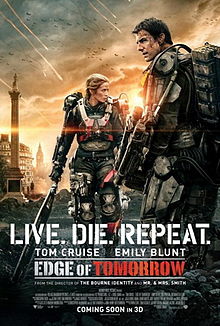
EDGE OF TOMORROW (2014) FILM REVIEW

Edge_of_Tomorrow_Poster

EDGE OF TOMORROW (2014) – FILM REVIEW

**CONTAINS MASSIVE SPOILERS**

The pitch:  Groundhog Day with guns!    The review:  it’s bloody brilliant.

While it may have lifted it’s premise from Harold Ramis’ classic Sisyphian comedy, Edge of Tomorrow, is a sterling example of high-concept futuristic action which twists and turns and repeats and explodes in a breathlessly paced Alien v Human death-match.  Also, Doug Liman is a fine genre director and handles the action, twisting plot and characterisation with an assured vision and touch. While perennial scene-stealer Emily Blunt shifts gear again from supporting-kooky-girlfriend-roles-to-hard-assed-action-hero with lusty aplomb; more than proving herself next to action veteran Tom Cruise.

EDGEOFTOMORROW

Based on a Japanese novel All You Need is Kill, this is black-belt genre filmmaking and I more than got my money’s worth with Tom Cruise — after the kind-of-okay-but-ultimately-confusing-Oblivion (2013) — on excellent form. In fact, he plays against type at the start of the film as non-combative and cowardly PR expert William Cage who is thrown into battle against the monstrous Mimics from outer space.
He is killed very quickly during first combat and then finds himself back where he started living the same day over and over again.

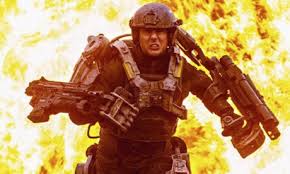
edge-of-tomorrow-movie-trailer

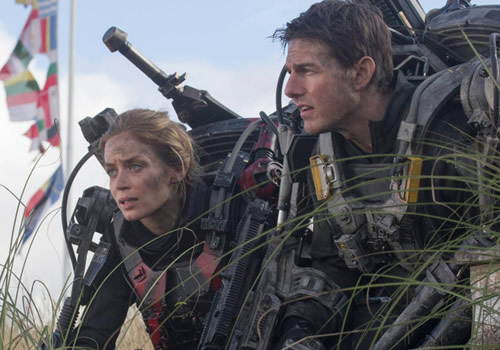
The story evolves as Blunt’ Rita Vrataski and Cage join forces to destroy the Aliens.  Usually Cruise movies have Tom as a hard bastard from the start brilliant at everything including fighting, jumping, killing, driving etc. The joy with this film is watching Cruise begin as an army novice and gain these skills throughout the film.  Blunt in fact is in the Cruise role here being the kind of confident all-out action hero who we have come to expect Hollywood’s Dorian Gray to play in his sleep. But Blunt excels in a physically crunching Alien-killing role emanating a toughness allied with insouciant sexuality and sarcasm.  Her partnership with Cruise is also a treat as the two physically and verbally spar and flirt with an always inventive and witty screenplay.

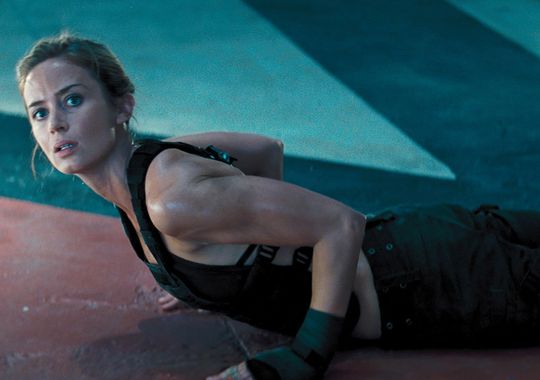
Edge-of-Tomorrow-Emily-Wallpaper

Every person involved in the creation of Edge of Tomorrow from the original writer, the scriptwriters, costume designers, special effects team, cast, composer, post-production team and so on and so forth deserve the plaudits for creating a blockbuster that has heart, humour and a brain.  Okay, Groundhog Day did it first but if you’re going to rip off a classic then do it with class and Edge of Tomorrow certainly does that.

BRICK MANSIONS (2014) – FILM REVIEW

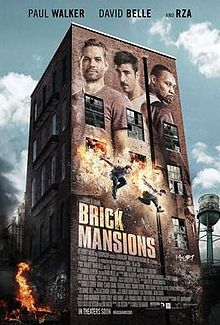
Brick_Mansions_Poster


Now, I probably should explain that my rule for this blog is to review EVERY film I see at the CINEMA!   So, why did I go to see this ridiculous excuse for a film at the picture house? Well, mainly because I am an addict and I was getting cold turkey because I hadn’t been to the cinema in a while (10 days) and needed a fix.  But rather than getting the good gear I ended up with a pale shadow of a hit from D-movie BRICK MANSIONS.

It’s my own fault I was tired and chose something that wouldn’t test my intelligence too much. And while it’s a well-edited, pacy film with some okay plot twists throughout there is no way I could recommend this to anyone with one-tenth of a brain and still retain the incredible respect my fans have for me.

It’s a remake of an earlier Luc Besson written/produced movie called District 13 (2004); the kind of unpretentious, slickly crafted and brainless film  Besson’s production arm has been churning out with regular abandon for years.  Arguably the best of these are The Transporter and Taken series which rely on the ample talents of Jason Statham and Liam Neeson to propel the action and narratives.  Paul Walker, alas, is no Statham as he doesn’t have the former diver’s brutish personality or scrapping skills and neither does he have Neeson’s actorial stature, style or  power for smashing up generic bad guys.

Ultimately Paul Walker is such a generic an actor the best way to describe him would be like that of a poor man’s Paul Walker. My favourite film of his was a fun Tarantino knock-off called Running Scared (2006). I urge you to see Running Scared as it is a brilliant twisty-turny, explosive GTA-esque little thriller also starring under-rated Vera Farmiga.  Of course, Walker’s star shines well in the American  movie version of Top Gear; the cash-making-franchise-behemoth-Fast-and-Furious series.

Having said that Walker is/was very likeable, good looking and while lacking in personality his bright blue-eyes carry Brick Mansions along at but overall fail to mask the execrable direction, embarrassing dialogue over-dubs and dreadful acting of his co-stars, notably the RZA who is so wooden his next role should be <insert wooden furniture based pun/analogy here>.  The film does have a plot which is pretty much lifted from Escape From New York (1981).   But it’s nowhere nearly as good as the Carpenter classic although it does feature some fine parkouring skills from master of the physical art David Belle;here playing a nippy career criminal at odds with the RZA’s ridiculous mob boss. These various characters fight, jump over, run, get handcuffed and strap bombs to each other in the deprived, urine-soaked hell-hole called Brick Mansions; a segregated part of Detroit which homes just criminals and lower-runged members of American society.   There’s a piss-poor attempt at social commentary and critique of corrupt officials and politicians but basically it’s laughable.

Walker plays another in a long line of maverick cops but what lets this film down is he has no code or specific set of skills (like Statham/Neeson) or even characterisation and it’s left to the parkour-man Belle to give the action some oomph. I mean it’s entertaining enough, has some crunching violence and fun fight scenes but I was laughing unintentionally at times especially when the RZA was trying to play the tough guy.   The film’s biggest crime is it has no suspense or defined look and the whole thing had all the visual flair of a daytime soap opera.  It would have benefited (like Escape From New York) from some stylish noir night scenes but alas there are little or none

As epitaphs go to the sadly departed Paul Walker, Brick Mansions, is a desperately poor excuse for a movie. Thankfully the James Wan-helmed Fast and Furious 7 will somehow repair Walker’s mixed-bag of a CV.  Which probably tells you how bad Brick Mansions is.

TEN THINGS I HATE ABOUT YOU #1 – ZACK SNYDER’S MAN OF STEEL

“I made “Watchmen” for myself. It’s probably my favorite movie that I’ve made. And I love the graphic novel and I really love everything about the movie. I love the style. I just love the movie and it was a labor of love. And I made it because I knew that the studio would have made the movie anyway and they would have made it crazy. So, finally I made it to save it from the Terry Gilliams’ of this world.”  ZACK SNYDER


TEN THINGS I HATE ABOUT YOU #1 –
MAN OF STEEL (2013)

This new strand for my blog is a chance for me to vent spleen and displace and transfer dissatisfaction with my own life onto a movie or moviemaker who has pissed me off.  Welcome ultra-all-technique-no-substance-human-photocopier-film-hack Zack Snyder!

Now, I’m just a lowly Office drone working in South London but when Snyder attacked my cinematic mate Terry Gilliam I felt the need to step in and have a go back.   Gilliam’s recent output has been sparse but overall he’s also been involved in some of the most intelligent, original and imaginative films of my lifetime:  Monty Python and the Holy Grail (1975), Jabberwocky (1977), Time Bandits (1981), Brazil (1985), The Fisher King (1991), 12 Monkeys (1995),  Fear and Loathing in Las Vegas (1998).

Snyder on the other hand has directed three enjoyable facsimile-films (Dawn of the Dead (2004), 300 (2007), Watchmen (2009) all derived from other more talented artists ideas. But after that he has directed some right turkeys notably Sucker Punch (2011) which I can safely say is one of the worst films I have ever seen.  It’s so bad it’s not even so bad it’s good.  AND HE STILL GOT THE MAN OF STEEL GIG!!  Here’s 10 reasons why I hate Man of Steel.  There could’ve been more.


#1 – MAKING GOOD ACTORS LOOK BAD

Firstly, Henry Cavill was a great choice as Superman and the supporting cast comprising of Russell Crowe, Michael Shannon, Amy Adams, Kevin Costner, Diane Lane etc. were well chosen but the performances aside from Cavill just seemed off to me in both timing and tone.  Shannon especially just came across as totally misdirected. Watch him in Revolutionary Road (2008)  and Boardwalk Empire to see how good he can be.


#2 – POOR CONSTRUCTION

The ghost of Batman Begins (2005) hangs heavy over the David S. Goyer’s screenplay structure. But where the back-and-forth cutting between past and present seemed to work with Nolan’s film I don’t think it worked at all well in MoS.    It’s an amazing looking jigsaw but with the pieces put in the wrong order.  To me the most interesting part of the film from a character point-of-view was the early stuff with young Kal-El growing up and these scenes were brilliant but thrown away so Snyder could crow bar in more explosions and soulless CGI set-pieces.

#3 – LOIS LANE

Lois is a strong character in the original comics and previous Superman films. But she was so poorly introduced that the she never ever recovered in MoS. Not so much a character but more a pawn in the plot, dramatic damsel-in-distress (why did Zod take her on the ship), or vessel to reveal background information about Kal-El; present in scenes physically but without emotional resonance.  A waste of one of my favourite actresses Amy Adams.


#4 – BAS-EL EXPOSITION AND OTHER AWFUL DIALOGUE

This film has some of the worst dialogue I have heard in a movie ever!  You might say that Snyder didn’t write it but as he’s helming the ship he has final say.  And in this instance the filmic boat sank.  Characters speak in either unrealistic “movie-speak” notably Costner’s surrogate father and I don’t mind that because I know this is a comic-book world and can handle statements like:

“He sent you here for a reason, Clark. And even if it takes you the rest of your life you owe it to yourself to find out what that reason is.” 

But what I cannot stand is characters telling us out aloud their jobs or back-stories or events already seen.  Crowe’s character pops up throughout to reveal history and updates the audience on important plot points even though we have already seen his planet explode at the start.  Further, we’re told Lois Lane has won the Pulitzer Prize IN THE DIALOGUE!  Show us a plaque or her getting an award!  WHATEVER HAPPENED TO SHOW NOT TELL!!  SHOW NOT TELL!!

#5 – OVERALL STYLE & PACE

Snyder has the timing of a teenage pregnancy.  I tried to watch MoS on Blu-Ray again recently but had to turn it off before the end as it is unwatchable.  Snyder went TOO Avatar from the start in my view – Crowe riding some stupid flying beast.  He also copied many of the mistakes he made with Sucker Punch such as over-blown action set-piece on top of over-the-top CGI firework fest without characters we care one bit about.   Any elements of subtlety and nuance are raped by computer images smashing and crashing through in a destructive fit-inducing-ADHD-driven nightmare.

#6 – WHY SO SERIOUS?

Aside from a couple of moments such as the bar-room truck driver’s ride being dismantled there is very little humour in MoS.   It tries so hard to emulate the tone of the Dark Knight but fails miserably and the decision to try and make Kal-El some kind of Christ-like figure was woeful. This is a comic book movie and should be fun!   Marvel’s movies are full of humour. I understand that it doesn’t have to be zingers and punchlines throughout but there’s more humour at a funeral than in MoS.

#7NOT SO MUCH PLOT HOLES AS PLOT CAVES!

My theory on the disappearance of the Malaysian plane is that it flew into and vanished into the abyss of Man of Steel’s screenplay which has more black holes than the whole of space.  It’s a joke really as we get the scenes where Zod’s army of rebels suddenly turn up to wreak havoc on Earth with some ridiculous unbelievable flashback telling us how they got there. Plus, how does Clark get on the Arctic expedition having only just worked at a bar?  Plus, how convenient that two soldiers would talk about a top secret find within ear-shot of our hero. Plus, would Kal-el really let his father die?  Plus, given our media-driven society could Kal-El/Superman really have lasted that long without coming under some kind of scrutiny or investigation beforehand.  Need I go on?


#8 – TOO MUCH STORY

Man of Steel is like a series of long, long, long sentences without proper punctuation. It basically crammed the stories of Christopher Reeve’s Superman 1 and 2 into Man of Steel and the whole film suffers in my view.   As aforementioned the boy’s childhood is skimmed over with a few really good scenes stuck into flashbacks and Lois Lane’s and Kal-El’s relationship is rushed in favour of launching us into an over-extended final act of ridiculous action.  By the end of the film I was exhausted.   I like big block-busting-roller-coasting-comic book films when they are done right. Iron Man (2008) and Avengers Assemble (2012) showed what a blast comic book films could be but they had humour, wit, pacing, action, charismatic actors all well directed and many more assets that Snyder’s piss-poor effort lacked.

#9 – UNBELIEVABLE UNBELIEVABILITY

Aside from the scenes when he was a kid I just didn’t believe any of it.   Emotionless, insipid and draining it felt like one long extended video-game with someone else holding the controls.  And while it looked great the action had no tension or suspense either. The phrase “less is more” is definitely NOT applicable here.  Plus, the overly science-fiction feeling of the film did not work for me.  In J. Michael Straczynski’s screenwriting book he talked about writing fantasy and sci-fi and said that as a writer you must strive to make believable unbelievability.  Whedon got this right with Avengers Assemble (2012) as did Lucas with Star Wars (1977) as did Terry Gilliam is the majority of his work.  In some ways I think the computer-generated movie era has lost that magic I witnessed when growing up.  Perhaps I’m to blame having seen too many movies. Who knows?  I just didn’t believe Man of Steel.

#10 – WE COULD HAVE GOT ARONOFSKY!

Here’s how:

“Over at Warner Bros., studio chief Jeff Robinov‘s fierce loyalty to director Zack Snyder is being tested June 14 with the $225 million Man of Steel. The relationship dates to the 2007 hit 300, even though Snyder’s three subsequent Warners films – Watchmen, Legend of the Guardians: The Owls of Ga’Hoole and Sucker Punch – disappointed. However, while giving him Man of Steel (over the other finalist, Darren Aronofsky), Robinov took out insurance with producer Christopher Nolan, the studio’s most important filmmaker (Batman, Inception). “Chris had the confidence in Zack, and based on the movie I’ve seen, Chris was spot-on,” says Warners president of domestic distribution Dan Fellman.”

So we could have got Darren Aronofsky for Man of Steel but instead got Zack Snyder.  Who is going to save us from the Snyder’s of the world?!?    Lord help us!

MY CINEMATIC ROMANCE – #1 RYAN GOSLING by PAUL LAIGHT

MY CINEMATIC ROMANCE – #1 RYAN GOSLING 

**THIS CONTAINS MASSIVE SPOILERS, CLIPS and REFERENCE TO ADULT LOVE DOLLS**

To compliment my post last week which featured films with dark or extreme love, today I am hailing the romantic impact of movie heartthrob Ryan Gosling.

#1  – DRIVE (2011)

This is a very romantic film with great chemistry between Gosling and Mulligan. It is also uber-cool with Gosling doing his post-modern Steve McQueen thing really well while Mulligan does sweetness personified.  It’s very pure cinema with minimal dialogue and just a longing, passionate look here or there to drive the love story.  Winding Refn is known for his brutal and violent films and this one erupts at the end but The Driver’s motivation is not revenge but rather protection of loved ones; namely Mulligan’s single mum and son.  Is there anything more romantic on screen than killing to protect the one’s you love?

#2 – LARS & THE REAL GIRL (2007)

This is such an original, quirky and goddamn touching movie.  Gosling’s character – sporting a Pupkin style moustache – has had some kind of personality breakdown and in an attempt to comfort himself he purchases a ‘human’ doll online. So far so weird.  He then treats her as he would a real girlfriend.  What is amazing is that the townsfolk where he lives also join in the “make-believe” and slowly but surely Bianca (playing herself) becomes part of the community.  The writer/filmmakers could have gone down a road of smut and low-brow humour but instead deliver a really humble and slyly humorous portrayal of grief, mental breakdown and loneliness. Gosling is understated brilliance throughout but it’s the Doll which steals the acting honours.


#3 – BLUE VALENTINE (2010)

This is one of the most realistic portrayals of a relationship ever committed to the screen.  It features the beginning, middle and end of Gosling and Michelle Williams’ love for each other; although not necessarily in that order.  The chemistry between the two is electric and it is so painful to see a couple break apart as they do by the end, having witnessed such a beautiful coming together previously.  What I loved about the film was the humanity of the relationship showing both men and women as both negatives and positives in the story.  Both romantic and heart-breaking in equal measure this is definitely not a film to watch on your own on Valentine’s Day having just broken up with someone.


#4 – CRAZY, STUPID, LOVE (2011)

I really enjoyed this ensemble comedy from the writers of Bad Santa. A  sexy looking cast full of fine young and mature Hollywood talent was very much a surprising like for me.  There was pleasant chemistry between Carell’s downtrodden husband and his wife played by the ever-lovely Julianne Moore and fine cameos from Kevin Bacon and Marisa Tomei.   Gosling nicely satirises his Hollywood heartthrob good looks playing a gigolo who is able to conquer women with the merest flutter of his get-your-kit-off eyes. The scenes where he trains Carell’s romantic loser up as a womaniser are funny and a nice reversal of the usual Hollywood cliches which show an older man training up a young rookie.  Emma Stone is pretty hot too and can act as she showed in the films Easy A (2009), Zombieland (2010)  and The Help (2011). Her scenes with Gosling are very funny and I liked her feisty character as she actually steals his heart by initially refusing to give in to his ample charms.  


#5 – THE NOTEBOOK (2004)

I am a massive cynic and it takes a lot to melt my iceberg heart but this film attacks you with not one, but TWO heartfelt, tear-jerking stories interweaved simultaneously.   Based on super-schmaltzy literary work of Nicholas Sparks I’d kind of avoided watching it but am glad I succumbed as it is a lovely film. It’s the kind of movie you enjoy watching with the heating cranked up while the rain smashes down outside.  In the present an elderly couple attempt to reconnect despite her Alzheimer’s, while in the past a young chap from the wrong sides of the tracks tries to woo a Southern Belle despite her families protestations.  It’s a sensory overload of sloppy sentimentality and black-belt romance clichés but the film fully embraces these conventions, telling us in the process that love for another human is the main reason for living.  The cast are breath-taking including Gosling, Rachel McAdams, James Garner and Gena Rowlands and they really raise the material above the standard Mills and Boon plot. It’s easy to dismiss Nicholas Sparks’ writing but it is phenomenally successful so you have to admire his and the filmmakers’ ability to make such cheesy romance so highly entertaining.  This film embodies the definition of a guilty pleasure in my (note)book.

FAVOURITE MOVIE MOMENTS OF 2013!

FAVOURITE MOVIE MOMENTS OF 2013!

To accompany the list of my most entertaining films I saw last year I’ve also compiled a few nominations for best this and that!

**** CONTAINS MASSIVE SPOILERS  ****


BEST PHOTOGRAPHY
ONLY GOD FORGIVES (2013)

What it lacks in plot it makes up with one incredibly designed scene after another.  And the violence is something else!


MOST HEART-WRENCHING SCENE – FLIGHT (2012)


The film opens with a tremendously staged plane crash. However, the scene where Denzil battles a miniature bottle of booze has almost more riding on it dramatically.  Tension, suspense and the agony of human frailty are all in this scene.  The moment we’ve all been through where we are battling our demons and trying to do the right thing is centre to the scene. Will Denzil pick up the bottle?  Will the angels or demons win out?


BEST CINEMATIC EXPERIENCE – GRAVITY (2013)


All I can say is wow!  This film was just wow! Some have criticized a lack of plot and characterisation but this is a movie which just takes your breath away. As I said, wow!


MOST BEAUTIFUL SCENE – RUST & BONE (2012)


Marion Cotillard’s Killer Whale trainer reconnects with nature in this serene moment from a compelling drama. It’s a beautiful moment for the audience visually and also the character.


BEST ENDING/BEST CAST – CAPTAIN PHILLIPS (2013)


Whether the film is truth or fiction Tom Hanks’ acting throughout is superb. He’s none better than in the final scene when he reaches the medical bay. The way he releases the tension it so memorable. His co-star Barkhad Abdi has to get an Oscar nod too for Best Supporting Actor.


BEST MOVIE PLOT + TWIST – SIDE EFFECTS (2013)


This film genuinely pulls the rug from underneath your feet!  Fantastic storytelling!  It starts seemingly as a critique of the pharmaceutical industry but then becomes a nasty, lurid Hitchcockian thriller with great performances from Jude Law and Rooney Mara.


BEST BRITISH FILM – BERBERIAN SOUND STUDIO (2012)


Both a tribute to Italian Horror and the Foley Artist this is a disturbing arthouse horror which generates its’ scares through the sound. You think you’ve seen something scary but haven’t. Incredibly constructed and recommended for cinephiles all over.


BEST GAG – ANCHORMAN 2


I couldn’t find a clip but Brian Fantana’s  gag was the funniest joke I heard at the cinema all year. The News Team’s attempt at 24 hour News has seemingly failed and in the scene Brian is asked what he will do next.  He replies:

“I’m going to cruise round with my friends O.J. Simpson, Robert Burke and Phil Spector.  We call ourselves the LadyKillers!”


BEST MOVIE SOUNDTRACK – WORLD’S END (2013)


Pegg and Wright’s highly entertaining apocalyptic comedy is touching, action-packed and amusing. It gets a bit silly by the end but there’s a great energy and some funny dialogue and physical humour throughout. The soundtrack is a cracker featuring the Stone Roses, Primal Scream, Sisters Of Mercy and the Soup Dragons to name just a few. It’s like the perfect Indie Disco in the cinema!


BIGGEST MOVIE LET-DOWN – MAN OF STEEL (2013)


A great cast and stupendous effects could not save the broken-backed Superman story crash and burn. Henry Cavill was a terrific Kal-El but the filmmakers ruined the whole piece by cramming too much into a few hours of screen time and not allowing the cast, characters or story to breathe.   It was sensory overload and bogged down with too much exposition.  The Batman v. Superman film under Zack Snyder’s direction could possibly signal the end of the comic book boom of recent time.  The bubble is going to burst at some point I tells ya!


FILM MOST F*CKED BY THE CRITICS  – LONE RANGER (2013)


This mega-budget update of the old radio/TV show from yesteryear was nowhere near as bad as the critics made out. It followed the ‘PIRATES OF THE CARIBBEAN’ template but perhaps the problem was Johnny Depp playing deadpan rather than drunken Pirate.  The critics didn’t go for it and nor did the audience as it kind of bombed as well.  However, Gore Verbinski directed with verve and energy and the final set-piece on the train is one of the best action sequences of the year.


BEST SCREEN CHEMISTRY – SILVER LININGS PLAYBOOK (2012)


I was tempted to say BREAKING BAD but Bradley Cooper and Jennifer Lawrence were electric in David O. Russell’s bipolar romantic drama/comedy.  The whole cast were great in fact including Robert DeNiro as the bookie father and Chris Tucker as a friend of Cooper’s character. But Cooper and Lawrence made the film their own with their portrayals of damaged but very human couple finding each other in a crazy world.


BEST MOVIE WITHOUT A SCRIPT – WORLD WAR Z – (2013)


Brad Pitt’s travelogue around the World avoiding a zombie plague was actually really entertaining in places with some great set-pieces but it had a lousy script with essentially no story or plot.  They genuinely feel like they’re making it up as they’re going along. Having said all that I really enjoyed it at the cinema even though Pitt was miscast and this really needed a decent action-hero like Schwarzenegger in his prime to really boost the movie.

BEST FEMALE ARCHER – THE HOBBIT 2 (2013)

I love an action women especially one with a bow and arrow and this award came down to a toss-up between Jennifer Lawrence in HUNGER GAMES 2 and Evangeline Lilly.  In the end I came down on the side of Tauriel the Elf in Peter Jackson’s behemoth production of THE DESOLATION OF SMAUG.  Jumping, spinning and diving about firing and killing Orcs for breakfast, lunch and dinner.  What a woman!


BEST DOUBLE ACT – RUSH (2013)
RUSH was indeed a big rush cinematically but the casting of Daniel Bruehl as cool Nikki Lauda and Chris Hemsworth as fiery James Hunt motored this movie along off the track too. The characterizations dealt solely in binary but provided much entertainment along the way. Of course Ron Howard and his creative team served up some wicked action as well.


BAD-ASSEST REVENGE – DJANGO UNCHAINED (2012)


Tarantino’s fantasy Western saw Jamie’s Foxx’s eponymous hero rise from that of a chained-in-pain slave to a kill-crazy-bounty-hunting-dancing-horse-riding-bad-ass-mutha-fuKKKa!   Everything about this film was a hoot and so entertaining!  It also has arguably the funniest scene I saw all year too with the racists on horseback including Jonah Hill arguing about the quality of their hoods.


BEST VILLAIN – DJANGO UNCHAINED (2012)


Calvin Candie was a horrific character and played with genuine charm by the masterful Leonardo DiCaprio. HE should have won the Oscar for Best Supporting Actor in my view as Christophe Waltz already had one!  Candie’s character was not only a vain, insane, murdering slave trader but there was a sense of an incestuous relationship with his sister. He got his just desserts in the end but alas DiCaprio didn’t from the Academy.


BEST FRANCHISE SEQUEL – IRON MAN 3 (2013)


2013 was big on Franchise equals, sequels and prequels including FAST & FURIOUS 6, THOR 2, HUNGER GAMES 2, STAR TREK INTO DARKNESS and THE HOBBIT 2.  They were all really really entertaining but my favourite was the ever dependable Robert Downey Jnr as Tony Stark.  It had some cracking one-liners and decent villains plus a lovely little twist which had all the fanboys up in arms because of Director Shane Black’s irreverent treatment of the Mandarin character.

← Back

Thank you for your response. ✨

GRAVITY (2013) – Film Review by Paul Laight

GRAVITY - FILM REVIEW

GRAVITY (2013) – Film Review by Paul Laight

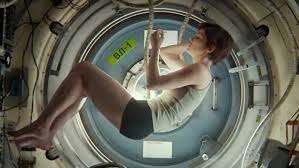
If there is a better film to see at the cinema than GRAVITY this year then I can’t wait to see it because Alfonso Cuaron’s space opera is a masterful cinematic vision which combines beautiful vistas with knuckle-biting tension.  Indeed, director Cuaron has carved out an impressive sci-fi story: economical, tense, thrilling, touching etc. which will deserve all the awards coming to it.

Sandra Bullock’s novice Space Doctor and George Clooney’s charming veteran Astronaut are on a mission to service the Hubble Telescope via the Space Shuttle Explorer but before they can complete the job catastrophe strikes. What then follows is a white-knuckle ride of tension and excitement with action unfolding with breathless pace. The writing is so lean and precise that there is little in the way of backstory before we’re propelled into the astounding action. I hate spoilers in reviews so won’t go divulge anymore but it is pure cinema at it’s finest and at times was so tense I felt like I was watching a space thriller as directed by Alfred Hitchcock.

The succession of events which befall the characters reminded me of Henri-Georges Clouzot’s The Wages of Fear (1953) as Bullock and Clooney are faced with all manner of life-threatening dangers.  Bullock herself gives a sterling physical performance thrown from one side of space to the other while Clooney’s dulcet tones provide the kind of assuring voice to settle the nerves when you’re up space creek without a shuttle. There’s existentialist gold in the story too with the themes of life after death,  birth and rebirth and above all else the struggle of the human spirit to overcome powerful adversity.

Yet it’s the muscular narrative, action and incredible cinematography which gave me the most enjoyment watching this. My advice is to watch it on the BIGGEST screen you can find.  Even the 3D — which aside from the odd animated feature I hate — enhances rather than detracts.  So, overall a big hit for me and while I wanted a more risk-taking ending from the filmmaker I cannot fault this film whatsoever.

← Back

Thank you for your response. ✨

ARRIVAL OF WANG (2011) Film Review

ARRIVAL OF WANG (2011) – Film Four screening

Directors/Writers: Antonio Manetti, Marco Manetti

Cast: Ennio Fantastichini, Francesca Cuttica, Juliet Esey Joseph

This is a nifty little low-budget sci-fi horror from Italy which makes very good use of limited locations and small cast to entertaining effect. A Translator is called to a job at an unknown location and is then faced with a particularly strange job. She must translate for a shady Government organisation who are holding an Alien referred to as ‘Wang’. Strangely the alien speaks Mandarin having learnt it because it is the most spoken language on Earth.

The premise is intriguing and draws you in and I was gripped throughout. The effects were alright given the low budget and the film shows that a decent concept can overcome financial limitations. As with many small budget films we are restricted to one main location; an interrogation room where the Government agent grills the Alien through the translator. The film takes on political subtext by questioning the torture of suspected Government threats or ‘terrorists’ as the alien Wang is seen as foe rather than friend.

While it gets a bit irritating with the back and forth translation and subtitles combined I enjoyed the movie very much; managing to create suspense throughout. Even though some people may find the Alien effects a bit silly and laughable it’s worth sticking with to the end.

ADAPTATIONS: THE ROAD FROM PAGE TO SCREEN by Paul Laight (from 2008)

Here’s an article I wrote in 2008 and it’s interesting to see that a few of these films have now been made.

ADAPTATIONS: THE ROAD FROM PAGE TO SCREEN

“The adaptation of someone else’s writing is, I think, the easiest, because someone else has done the brute work, made the people, invented the story.” William Goldman – Screenwriter

From the earliest days’ of cinema, filmmakers have raided the arks of literature, lifting writers’ slaved-over sentences; carefully constructed characters; and epic plots, before distilling them into bitesizeable two hour chunks we call the movies. Adaptation has always proved popular with filmmakers worldwide, and of course, the Hollywood machine leads the way when it comes to adapting the work of other writers, be it: novels, graphic novels, comic books, video-games, songs and even theme-park rides etc. Not a week passes without the film of the book of the video-game of the t-shirt being released to either: a baying mob of fanatics scrutinizing every frame ensuring a faithful screen conversion; or simple popcorn guzzlers yet to read the original source material.

Adaptations occupy over half of the top twenty spots in the all-time worldwide grossing films ever including: Jurassic Park (1993), The Lord of the Rings’ (2001-2003) trilogy and the Harry Potter franchise. Moreover, from the original summer blockbuster Jaws (1975), to the cash-cows that are Bond, Batman and Bourne, filmmakers continue to use novels and comic-books for inspiration; not simply because “it’s easier” as William Goldman purports, but because of the marketing possibilities ready-made fanbase offers. Furthermore, adaptations not only represent money-making exercises but have also produced cinema of breathtaking quality, including Best Picture Oscar winners such as: Gone with the Wind (1939), Bridge on the River Kwai (1957), The Godfather (1972), One Flew Over the Cuckoo’s Nest (1975), The English Patient (1996), Million Dollar Baby (2004) and most recently, Cormac McCarthy’s No Country for Old Men (2007).

But what of the cult classics, critically acclaimed or bestselling novels that have yet to make it to the silver screen? Despite the abundance of adaptations produced there remains many great literary works unfilmed; either jammed in ‘development hell’ or simply proving too complex to make. The following novels arguably deserve adaptation but have yet to successfully make the jump from page to celluloid space. Paul Laight considers the what, the how and the why?

THE DICE MAN – Luke Rhinehart

Published in 1971, The Dice Man, follows the darkly comic adventures of an antihero psychiatrist who, bored with his ‘perfect’ life, gives in to whim and chance; allowing his actions to be determined by the throw of a dice. From this fateful moment his life spawns a series of anarchic episodes involving: sex, rape, murder, psychological breakdown and a ‘dice’ cult. The ‘Dice Man’ gains notoriety and, eventually, is pursued by the law; yet he remains unrepentant and above all else tastes ‘freedom’ via the random choices the dice dictates. As in Fight Club (1999), The Dice Man stands as a savage satire on ‘selfhelp’ groups and literature. Indeed, the cover confidently proclaims: “Few novels can change your life. This one will.”

Subversive and pitch black in tone, it offers the nihilistic premise: only self-destruction allows one to live life to the full. Not surprisingly then with such dark materials at hand, Hollywood have irked at bringing the lunacy of The Dice Man to the screen. One would think a screen version is not too far away: but the screenplay has been entrenched in draft purgatory for years. Paramount are rumoured to still own the rights to the film but at the moment a successful adaptation remains in perpetual limbo.

CONFEDERACY OF DUNCES – John Kennedy O’Toole

Following the valve-splitting misadventures of lazy, self-proclaimed genius and social misfit, Ignatius P. Reilly, this Pulitzer Prize winning novel has a backstory worthy of adaptation itself. Author O’Toole committed suicide in 1969 having failed despairingly to get his magnum opus published. Only through the dogged persistence of his mother did the novel finally reach the bookstands in 1980; winning the Pulitzer the next year. A work of unfettered genius and hilarity, Confederacy of Dunces picks and scratches at the seams of New Orleans’ street-folk, revealing a rich tapestry of insane characters and episodes; all anchored within the everyday plottings of the bloated, mooching, hypochondriac Reilly.

While he may be objectionable verbally, physically and morally, the reader cannot help but revel in Reilly’s articulateness, rebellion and utter repudiation of authority figures and societal norms. Ignatius is a cross between the Simpsons comic-book guy and a fatter, sober, non-bowling version of Jeffery ‘The Dude’ Lebowski. As such, free spirited oddballs always stand alone as an anathema to the perfect heroes Hollywood usually dishes up. Like The Dice Man, the films rights for Confederacy of Dunces are owned by Paramount and the most recent attempt to greenlight the book reached casting stage in 2005; with Will Ferrell and Drew Barrymore touted for the leads. However, the Scott Kramer and Steven Soderburgh penned screenplay failed to gain studio support and momentum floundered.

LIFE OF PI – Yann Martel

The eponymous Pi spends the heart of this story trapped at sea, for 227 days, on a raft with various animals including: a ravenous hyena, orangutan named Orange Juice and a Bengal tiger called Richard Parker. While on surface the bizaare relationship between man and beast appears unfilmmable, the book packs a incredible denouement; so memorable to render it a strong contender for cinematic success. Like Castaway (2000), Life of Pi is a story of attrition and survival under the most severe circumstances. The young Pi battles hunger, loneliness and the elements; all the while grieving for the loss of his family. Within the text, however, is a powerful allegory borne out through Pi’s relationships with the animals he must contend with, notably his nemesis, Richard Parker.

Life of Pi, ultimately blurs ideological boundaries from the zoological and religious to the metaphysical and real; delivering an imaginative, suspenseful, life-affirming drama. Any potential movie version could be a hard sell to a Friday night popcorn mob baying for hack encounters of the teenage kind. However, for those crying out for more challenging movies Life of Pi, if done right, would be an amazing cinematic experience. Esteemed directors such as M. Night Shymalan, Alfonso Cuaron and Jean Pierre Jeunet – who dropped out due to budget issues – have all been in the frame to helm the movie, but it currently remains cast adrift within the choppy waters of the Hollywood system.

NEUROMANCER – William Gibson

Gibson’s classic debut novel starts when ‘computer cowboy’, Case – in searching for a cure to his drug addiction – is coerced by an anonymous agency to work on the ultimate hack. From thereon it spirals into a story that explores themes of virtual reality, artificial intelligence, genetic engineering, and global oligopolies overpowering the state via cyberspace. Sound familiar? A seminal literary work that not only presents a host of wonderfully monikered and totally loco characters including: Razorgirl, Molly, Chiba, The Finn, Lupus Yonderboy, The Dixie Flatline etc., but also introduces a generation of readers to now familiar terms such as: cyberspace, hacker and even ‘the matrix’. Indeed, without Neuromancer, arguably, the Wachowski brother’s box office behemoth may never have existed.

Neuromancer has proved an elusive novel to adapt and author Gibson is understood to have the rights back in his possession. The last known attempt to adapt was by music video director (see his infamous Aphex Twin’s “Come to Daddy”) Chris Cunningham. However, the screenplay saw only red-lights from the studios and alas Neuromancer remains one of the greatest science fiction works not to reach the cinema. Moreover, given the number of imitators it has spawned it may never get the adaptation it truly deserves.

ON THE ROAD – Jack Kerouac

Kerouac’s 1950’s paean to jazz and the open road is – a freewheeling, improvised stream of consciousness – rumoured to have been written in three weeks fuelled entirely on caffiene, ink and benzedrine. Heralded as the bible of the ‘beat generation’, On The Road, is a road movie (waiting to happen) without apparent direction; yet all the more powerful for it. It defined a sub-culture of poets, artists and musicians who disregarded structure for structure’s sake, improvising their loves and lives without concern for what tomorrow brang. Narrator, Sal Paradise tells of the moment his life changed when meeting free-spirit Dean Moriarty; thus precipitating his journey across the landscapes, towns and contours of America.

The road movie has proved a very successful genre for Hollywood with Rain Man (1986), Into the Wild (2007) and Thelma and Louise (1991) being excellent examples of the form. However, On The Road, compared to those stories mentioned, is virtually plotless without crystal clear character motivation and therefore seemingly unadaptable. Gus Van Sant owned the rights for many years, however, the film may yet see the light of as director Walter Salles (The Motorcycle Diaries (2006)) is moving the film into production; although no release date has been confirmed at writing.


CATCHER IN THE RYE – JD Salinger

Famous and infamous (John Lennon’s assassin Mark Chapman had a copy in his possession when he carried out the shooting) in equal measures Catcher in the Rye remains an incredible examination of teenage angst and depression; of a young nonconformist, Holden Caulfield, at odds with the ‘phonys’ of the world, authority and the 50’s society he exists in. Caulfield presents himself as ‘protector’ of the young from the venal inhabitants of New York and rails against those all around him. However, it is not simply a book about teenagers, but is a story for all outsiders who struggle to fit in.

The angry, vulnerable yet eloquent teenager Caulfield is a difficult character to transfer to the screen. Moreover, given the novel is presented as a internal monologue, adaptation has proved problematic not only in terms of the episodic structure, but also ‘marketability’ to a mass audience of such a unique character. Having said that the book is high on the biggest selling books of all time and Hollywood has tried on many occasions to bring it to the cinemas. Movie luminaries, down the years, such as: Jerry Lewis, Jack Nicholson, Marlon Brando and Leonardo Dicaprio have all tried, but failed, to walk in Holden Caulfield’s shoes. The inconvenient truth is that the reclusive author JD Salinger, himself, is refusing all attempts to adapt the work and this may continue even when he passes.


THE WASP FACTORY – Iain Banks

Banks’ incredible debut novel is so dark and filthy as to render the reader blind and unclean, reaching for torchlight and soap once reading is over. Introducing the eccentric (or, depending on your viewpoint, insane) Gauldhame family and told from the point of view of the youngest member, Frank; The Wasp Factory tells a twisted tale of life in an isolated town. Frank – who, himself, would have us believe is a murderer – spends his day’s physically rampaging across the Scottish landscape dismembering all manner of wildlife, notably wasps, while metaphorically searching for his own identity in a perverse, maladjusted and masculinized world.

A shocking and deeply disturbing read, The Wasp Factory, if adapted, would probably create a movie furore like nothing since Cronenbourg’s Crash (1996) was released. However, at it’s heart is a scathing attack on family, organized religion and the difficulties, like Catcher in the Rye, of a young protagonist desperately trying to find meaning in the world.  Frank is a tragic character and the amazing denouement is a twist right out up there with the horror of Hitchcock’s Psycho (1956) and M Night Shymalan’s The Sixth Sense (1999). While it would certainly not be a huge box office draw The Wasp Factory is potentially a ‘cult’ classic in the making.


THE DEMOLISHED MAN – Alfred Bester

Not to be confused with the Stallone versus Snipes cockfight that was Demolition Man (1992), Bester’s science-fiction classic was written in 1953 but contains a story that is timeless, such is the imagination and ingenuity presented. Columboesque in structure – beginning with a murder and developing via a subsequent police investigation – the plot is thickened up by pitting the wits detective Lincoln Polwell against a chief suspect, corporate oligarch Ben Reich. The twist is that there has been no murders in 70 years because, in this future, Detectives such as Polwell are psychics and therefore able to read the minds of any suspects; immediately knowing whether they are guilty or not. Murder is eradicated because criminals cannot hide their guilty thoughts.

Perhaps, The Demolished Man treads similar ground to Spielberg’s Minority Report (2001) and I, Robot (2003), both placing a standard cop story in a futuristic setting, however, the novel is resplendent with beautiful concepts and terms such as: ‘espers’, ‘peepers’ and ‘jumpers’. More importantly, the cat-and-mouse, battle of wits between Polwell and Reich makes it a compelling story. The book also stands the test of time; a Godfather to Gibson’s Neuromancer and other subsequent ‘cyberpunk’ literary offspring. The film rights are rumoured to be owned by Morgan Freeman but no studio has confessed an interest to construct a movie from the pages of The Demolished Man.


A MILLION LITTLE PIECES – James Frey

Described by The Observer as: “As a memoir, it is almost mythic. You can imagine it made epic by Martin Scorsese, the auteur of wayward American maleness in all its extremity”; Frey’s celebrated non-fiction memoir charts the author’s journey from substance addiction, physical and mental disintegration to moral and spiritual redemption through rehab and the love of his family. Protagonist Frey begins his story, aged 23, wrecked by crack and alcohol and wanted by the law in three US States. From rock-bottom the only way is up as he begins the long road to recovery via the Twelve Step program.

Discredited in some circles by various commentators as ‘not ringing true’ and ‘fabricated’, Frey was ultimately ‘convicted’ as a literary fraud when appearing on the Oprah Winfrey show. Nonetheless, whether it is fiction or nonfiction (when did that ever bother Hollywood?), A Million Little Pieces is a compelling literary work and screams out for adaptation. In fact such notoriety could be worked into the screenplay and would only fuel the marketing potential of the film. Unbelievably, your friend and mine, Jennifer Aniston owns the films rights to the book but since the Oprah furore the studio has allegedly got cold feet. Then again, this could be pure fiction too.


CONCLUSION

With the literary and movie worlds both needing and feeding itself, it isn’t surprising to learn that adaptations of acclaimed literary works such as Cormac McCarthy’s dark western The Road (2009) and Blood Meridien (2009), sci-fi classics Ender’s Game (2009), The Time Traveler’s Wife (2009), Howard Marks’ drug memoir Mr Nice (2009) – and even the once considered daddy of the unfilmmables, The Watchmen (2009) – will hit our screens next year. Ultimately, when adapted by the right talent great novels produce amazing cinema, however, not all authors are impressed by the efforts of Hollywood in translating their work. Of his own opus, the aforementioned, Watchmen (2009), Alan Moore says, “I find film. . . spood-feeds us, which has the effect of watering down our collective cultural imagination. It is as if we are freshly hatched birds looking up with our mouths open waiting for Hollywood to feed us more regurgitated worms. I for one am sick of worms”.