Tag Archives: Hamlet

Cinema Review: Nosferatu (2024) – At the Intersection of Horror and Eroticism!

Cinema Review: Nosferatu (2024)

Directed by Robert Eggers

Screenplay by Robert Eggers

Based on Nosferatu by Henrik Galeen and Dracula by Bram Stoker

Produced by Jeff Robinov, John Graham, Chris Columbus, Eleanor Columbus, Robert Eggers, etc.

Main Cast: Bill Skarsgård, Nicholas Hoult, Lily-Rose Depp, Aaron Taylor-Johnson, Emma Corrin, Willem Dafoe, Simon McBurney, etc.

Cinematography by Jarin Blaschke

Music by Robin Carolan

*** MAY CONTAIN SPOILERS ***
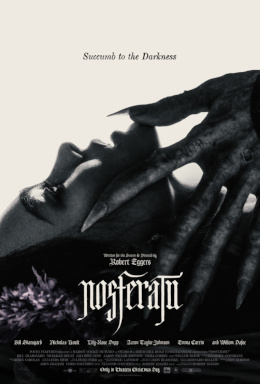


Firstly, Nosferatu: A Symphony of Horror, the 1922 silent German Expressionist vampire film directed by F. W. Murnau remains one of the greatest and most iconic horror films of all time. It is arguably the greatest adaptation of Bram Stoker’s, seminal gothic classic, Dracula, too. Of which there have been many. So, who would be brave enough to attempt to master another version of this often-told monstrous tale. Step forward the acclaimed and relatively young American auteur, Robert Eggers.

Robert Eggers has built a reputation for crafting films that blend mythical and fantastical elements with folk horror and psychological thriller sensibilities. His works often transport audiences to meticulously recreated period settings, which serve as the foundation for his exploration of human fears, desires, and the supernatural. His debut feature film. The Witch (2015) exemplified folk horror rooted in Puritanical fears of the supernatural. Set in 1630s New England, it drew heavily from folklore, historical accounts, and period-authentic dialogue. The film explored themes of isolation, religious paranoia, and the breakdown of a family due to their belief in the presence of witches.

Similarly, The Lighthouse (2019), a psychological thriller merged maritime folklore with hallucinatory horror. Set in the late 19th century, the film delved into isolation-induced madness as two lighthouse keepers grappled with mythological themes such as mermaids, sea gods, and Promethean punishment. Moreover, as with his short films Hansel and Gretel (2007) and The Tell-Tale Heart (2008) he is drawn towards established texts, with the bruising, battering ram of The Northman (2022) covering the original myth on which Hamlet was based. Eggers vision immersed the viewer in violence, Viking culture, shamanic ritual and mysticism. Unsurprising therefore, he has now delivered the German Expressionist classic, Nosferatu (2024) with his signature period aesthetic and focus on the macabre.
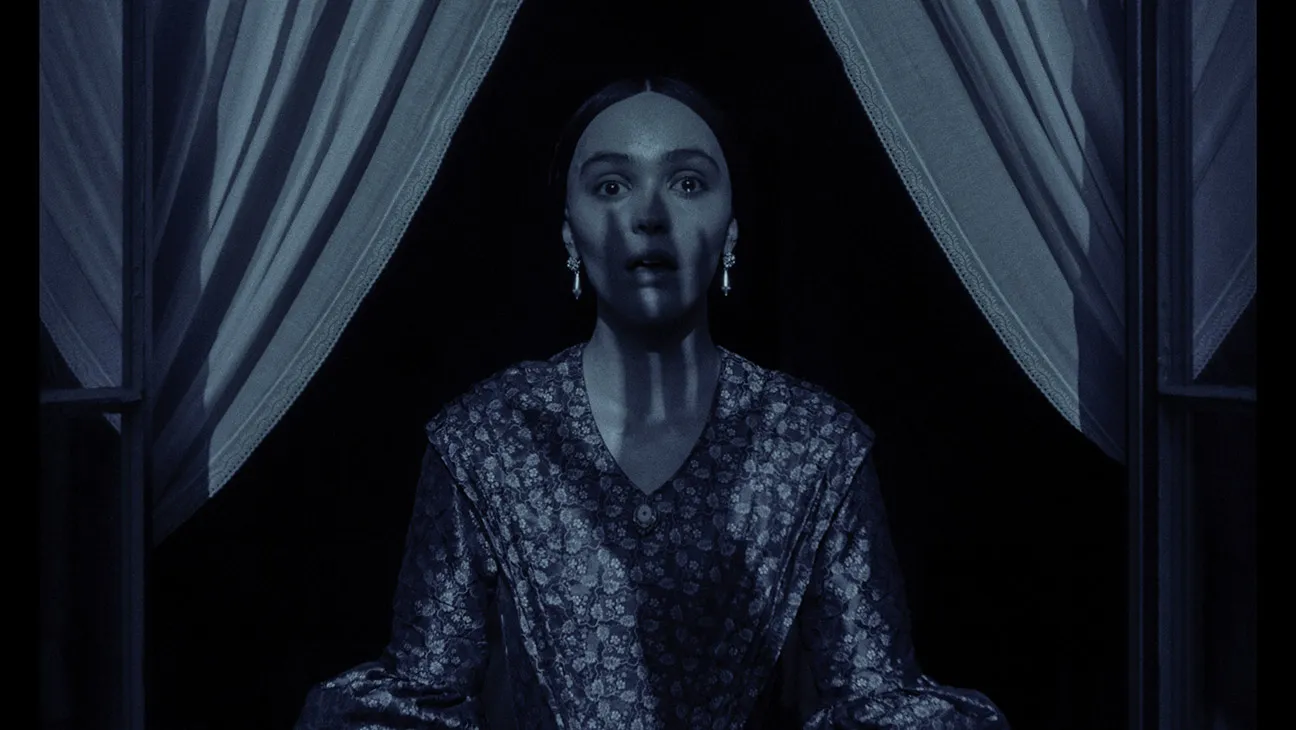


With a stellar cast, production design and incredibly stylish vision, Eggers has produced a praiseworthy example of fantastical cinema. As usual there appears to be meticulous historical research, including accurate costumes, set design, and period-specific dialogue. This attention to detail in Nosferatu (2024) grounds the supernatural elements in a believable world, enhancing their impact. Furthermore, Eggers creates a sense of dread through his use of sound design, stark cinematography, and claustrophobic settings. His restrained pacing allows for the gradual unraveling of characters’ psyches, making the supernatural elements more impactful.

Yet, while steeped in folklore, Nosferatu (2024) centres on human struggles—family disintegration, fate, guilt, madness, lust and sex. Indeed, Nicholas Hoult’s Thomas Hutter (née Harker) does not stand a chance. From the opening scene his sensual wife, Ellen, is inextricably linked via a lustful fever dream to a mysterious figure, who, if you couldn’t guess, is Count Orlok (an unrecognizable Bill Skarsgård). It is Ellen’s orgasmic connection across oceans of time which drives Orlok to lure Thomas away and commit blood-draining murder as he creeps cross-country and sails the seas from Transylvania to Germany. Ellen’s surreal and orgiastic desire unfortunately brings the plague and causes the death of extraneous supporting characters portrayed by the likes Aaron Taylor-Johnson and Emma Corrin. A note to say Willem Dafoe is as usual a joy as the ‘Van Helsing’ substitute.

Nosferatu (2024) is undeniably a sumptuous adaptation, brimming with signature attention to period detail, atmospheric dread, and a striking visual palette. However, for those seeking a viscerally terrifying Dracula film, the movie might fall short, leaning heavily into the realm of erotic horror and psychological tension rather than outright scares. While the stunning cinematography, the film’s shadow-drenched landscapes, intricate set design, and haunting score evoke the satanic allure of the original silent film this focus, however, shifts the film away from raw horror and toward a more introspective exploration of vulnerability and eroticism. Ultimately, the film’s reinterpretation of Count Orlok and its restrained approach to gore might alienate viewers expecting a more terrifying vampire film. This left me impressed but more disturbed by the overlong runtime than by the nightmarish allure of the bloodthirsty undead.
Mark: 8 out of 11


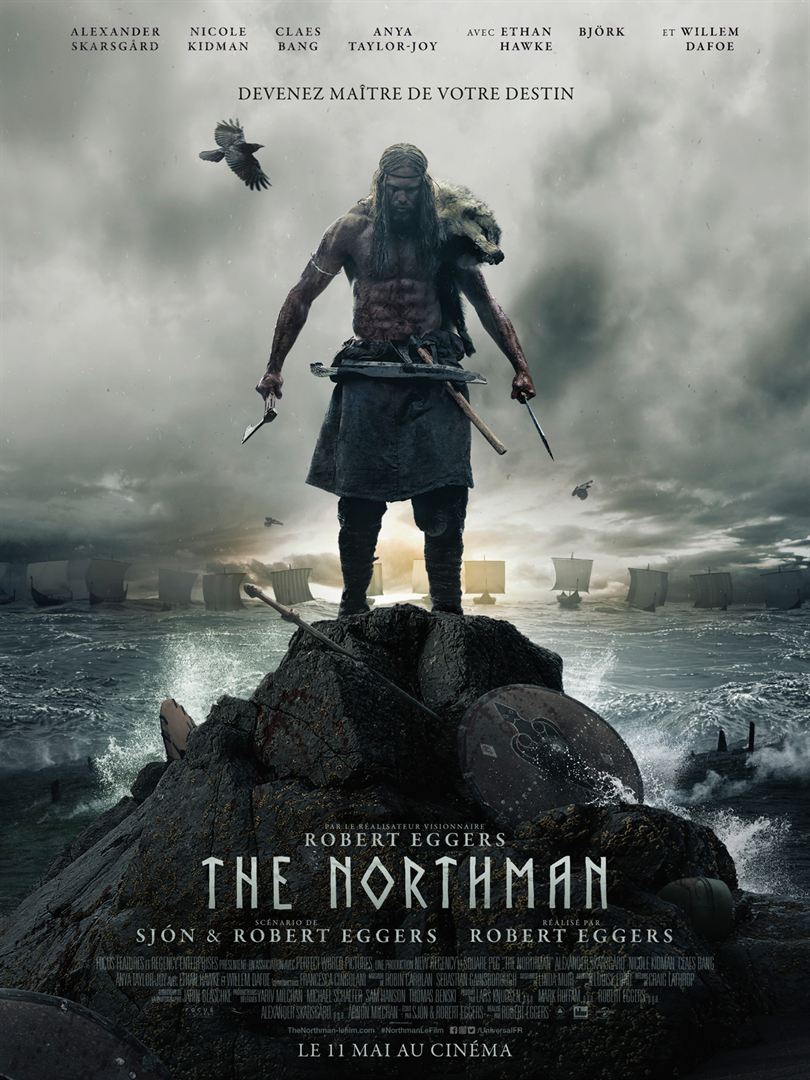
CINEMA REVIEW: THE NORTHMAN (2022)

CINEMA REVIEW: THE NORTHMAN (2022)

Directed by  Robert Eggers

Written by: Sjón Eggers & Robert Eggers

Based on: The Legend of Amleth by Saxo Grammaticus

Produced by: Mark Huffam, Lars Knudsen, Robert Eggers, Alexander Skarsgård, Arnon Milchan

Cast: Alexander Skarsgård, Nicole Kidman, Claes Bang, Anya Taylor-Joy, Ethan Hawke, Björk, Willem Dafoe, etc.

Cinematography    Jarin Blaschke

*** MAY CONTAIN SPOILERS ***


Robert Eggers is a formidable cinematic talent. His dark visions of folklore and historical fable are steeped in impressive research and a striking attention to detail within his work. Artistically and thematically speaking, Eggers is a major talent, however, one could argue his narratives deny clarity preferring hazy ambiguity. His debut film The Witch (2015) is an arthouse classic, but I just did not connect with the characters, despite the filthy realistic strangeness. His follow-up, The Lighthouse (2019), is a claustrophobic, black-hearted and dirty descent into a watery hell. Both are bravura low-budget films which created two distinct periods. In both films you can almost feel the plague and scurvy in your mouth, presented as they are with such earthy authenticity.

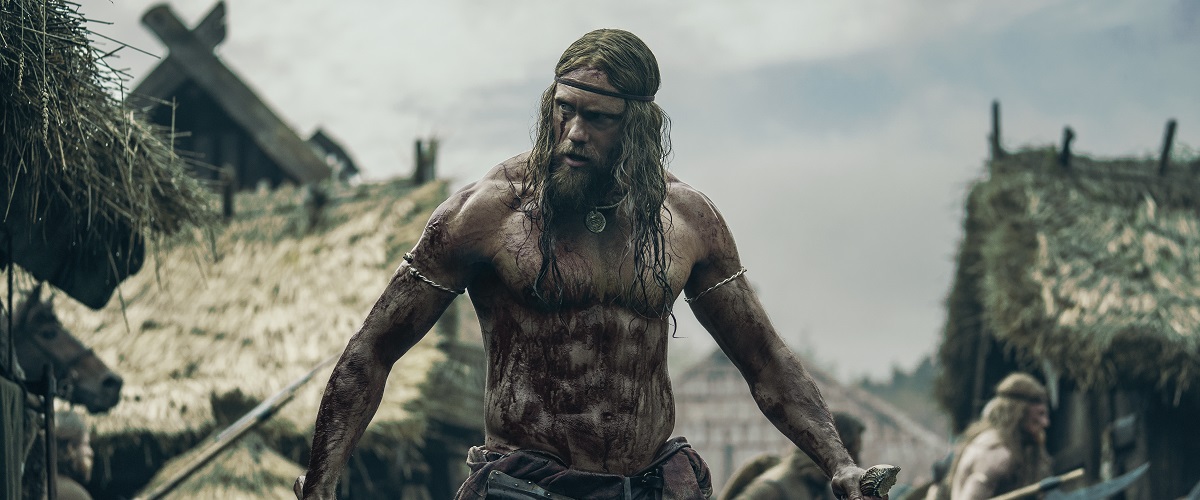
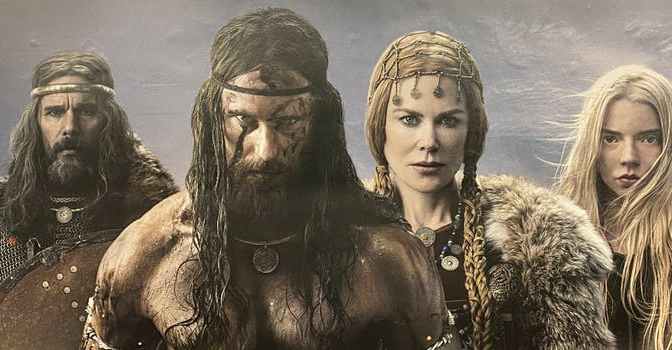
Thus, unsurprisingly, Robert Eggers latest film is NOT a romantic comedy. The Northman (2022) is another obsessively researched and realised historical drama. But because of the reported $70 million budget, his vision of Vikings and blood and revenge and muscle and familial treason and murder screams epic, more epic and even more EPIC! Eggers script and story is inspired by the historical myth, The Legend of Amleth, a narrative which in turn is said to have influenced none other than the quite well known play, Hamlet. Here Eggers has a solid structure for the thunderous battles and mystical manifestations on show. Our hero, Amleth (Alexander Skarsgård), finds his father, the King (Ethan Hawke) murdered by his uncle (Claes Bang), while he is a boy. Fleeing his village he grows into a scary, ripped and roaring Viking warrior who has never even seen a carbohydrate. A hunger for bread and a desire for revenge on his uncle propels the story powerfully. Intense Amleth must locate his kidnapped mother (Nicole Kidman) and smash the man who did his family wrong.


Eggers is a brilliant film director. In Alexander Skarsgård he also has a battering ram of a physical specimen leading the charge from deathly pillage to bloody battle to fiery hand-to-combat with impressive purpose and power. Amidst the vengeance-fuelled fight sequences and Amleth’s confrontations with the seers and magicians of the land, his journey also encompasses love and marriage to Olga of the Birch Forest, a Slavic sorceress (Anya Taylor-Joy). While Skarsgård’s character is more muscle than charisma, Taylor-Joy breathes ethereal and sensual life into the middle act. Their collaboration battling against enforced slavery gives us something to root for above the familiar revenge plot. Having said that, Amleth is not the easiest of characters to warm to. Despite Eggers genius and Skarsgård’s brutalism I wondered if I really cared about his quest.

I would argue that this story was done far more successfully from an emotional perspective by Ridley Scott’s awesome Roman epic, Gladiator (2000). Russell Crowe was just phenomenal as Maximus and his performance was one of magnetic emotion and charismatic depth. That film had amazing action married to integral character development. However, there is a violent momentum to The Northman (2022), with Amleth’s quest charging like a juggernaut toward the jugular of his foes. Eggers’ image and colour system of Viking costumes, iconography, weaponry, plus human, godly and ungodly beings provide the depth when the characterisation feels thin. And wow, does he know how to stage a battle. Bones crunch, teeth crack, blood bursts and weapons sever, scorch and devastate. As the fire burns in Amleth’s heart and across the landscape, The Northman (2022) rages from the cinema screen with dominant visual ascendancy.

Mark: 8 out of 11


UNDER-RATED CLASSICS #8 – THE NINTH CONFIGURATION (1980)

UNDER-RATED CLASSICS #8 – THE NINTH CONFIGURATION (1980)

Directed, written and produced by: William Peter Blatty

Based on The Ninth Configuration by William Peter Blatty

Starring: Stacy Keach, Scott Wilson, Jason Miller, Ed Flanders, Robert Loggia, Moses Gunn, Joe Spinell, Neville Brand etc.

Music by: Barry De Vorzon

Cinematography: Gerry Fisher

*** MAY CONTAIN SPOILERS ***


“I became insane, with long intervals of horrible sanity.”
― Edgar Allan Poe

Sparked by uber-film critic Mark Kermode waxing lyrical about The Ninth Configuration (1980) in one of his cinema books, I was extremely pleased when I found a remastered 2016 reissue streaming on Amazon Prime. I don’t always agree with Kermode’s effusive praise of certain films, however, his opinion should always be respected. Having watched the film I can concur that it is indeed an under-rated classic. Just to clarify, for me, an under-rated classic can be a film I love, plus satisfy the following criteria:

  1. Must not have won an Oscar.
  2. Must not have won a BAFTA.
  3. Must not appear in the AFI Top 100 list.
  4. Must not appear in the IMDB Top 250 list.
  5. Must not appear in the BFI 100 Great British films.
  6. Must not appear in the all-time highest grossing movies of list.

While the writer and director, William Peter Blatty, won a Golden Globe for best screenplay, I feel that The Ninth Configuration (1980) is somewhat of a lost masterpiece. It was released at the same time as Ordinary People (1980) , The Elephant Man (1980) and Raging Bull (1980) and rarely seems to be discussed or praised at all these days. Well, aside from Mark Kermode’s gratefully received validation. Thematically, it is very strong as it deals with mental breakdown and illness amidst soldiers post-Vietnam. Moreover, it also contains memorable iconography within a curiously foreboding setting.


Based on Blatty’s 1978 novel, which in itself was a reworking of an earlier story called, Twinkle, Twinkle “Killer” Kane, The Ninth Configuration centres the action in a grand chateau located, rather weirdly in America somewhere. The dark, shadowy castle (which was actually in Germany), is surrounded by deep forestation and is used by the U.S. government as an insane asylum for military personnel. Spring-boarding themes and ideas from movies such as: One Flew Over The Cuckoo’s Nest (1975), Mash (1970) and, in regards to its exploration of P.T.S.D., The Deer Hunter (1978), the narrative features a whole host of eccentric and over-the-edge characters. They include an Astronaut, Captain Billy Cutshaw (Scott Wilson), who went mad and sabotaged a space launch, Jason Miller as Lieutenant Frankie Reno, a soldier attempting to direct Hamlet with a cast of dogs; and the recently arrived, new psychiatrist, Colonel Vincent Kane (Stacey Keach). It is Kane’s and Cutshaw’s developing relationship which powers many of the philosophical and existential debates within the film’s incredible script.

For a film set in an asylum Blatty unsurpisingly uses dark humour, hysterical personalities and some incredibly funny lines of dialogue to propel an absurd first half. However, as Cutshaw and Kane’s connection grows deeper, the two men push each other into some very dark places. Exploring the slight gap between insanity and sanity is a tricky thing to get right in terms of tone, however, Blatty, is a brilliant writer and succeeds with a script that zig-zags the line between chaos and structure. He also benefits from an amazing ensemble cast of character actors who throw themselves heartily into the chaos on show. Scott Wilson and Stacey Keach are especially memorable in their intense and honest portrayals of soldiers pushed too far by their respective commands.

Overall, The Ninth Configuration (1980) is a forgotten masterpiece which deserves revisiting. I was blown away by the endlessly quotable dialogue and the risks Blatty took as a director. I mean, he opens with an incongruous Country and Western song-backed montage before the credits. This pop video beginning is jarring, but somehow makes sense in the end. Blatty then veers between farcical humour, crazed episodes involving the lunatics taking over the asylum, and philosophical and theological discourse within the therapy sessions. Finally, the film finishes with a violent and cathartic denouement, yet one which, given the dark existentialism that has unfolded, is amazingly full of hope, faith and optimism.

Mark: 9.5 out of 11


MEMORABLE FILM CHARACTERS #4 – WITHNAIL

MEMORABLE FILM CHARACTERS #4 – WITHNAIL

Written and directed by: Bruce Robinson

Produced by: Paul Heller

Cast: Richard E. Grant, Paul McGann, Ralph Brown, Richard Griffiths


***CONTAINS SPOILERS***


“We want the finest wines available to humanity. And we want them here, and we want them now!” Withnail


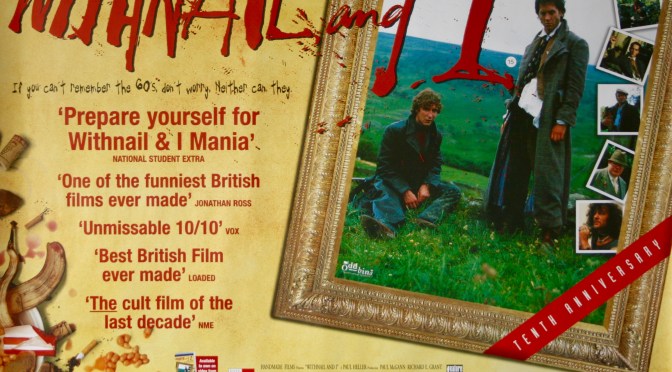
I am not one to believe in fate, but there has to be something magical about the random moment, at the age of seventeen, I was perusing my local video shop looking for a film to rent, and the cover of low-budget, British independent character drama, Withnail and I (1987), shone amidst the variety of Hollywood produced fodder. I picked up the box and for some reason the story of two unemployed actors mooching about at the fag end of the 1960s called to me. Perhaps it was the front cover featuring the debauched and worse-for-wear looking character of Withnail which drew me in? Or was it the casting of Paul McGann as the eponymous ‘I’, an actor I recognised from excellent TV drama, The Monocled Mutineer. Whatever the reasons, I rented the film and a special bond was formed forthwith. It lasts to this day.

Firmly in my top-ten-line-for-line-best-dialogue-ever-movies, Withnail and I (1987) simply bursts with memorable spats, insults, one-liners, and speeches. Another major strength of Bruce Robinson’s elegantly profane screenplay is the relationship between permanently inebriated and cowardly ‘thespian’, Withnail (Richard E. Grant) and his buddy, ‘I’ (McGann). It is a strange friendship full of mutual disrespect, petty bickering, and envy, but by the end of the film a kindly form of love is revealed. Withnail may seem an angry man, but ultimately, he’s using that ire to hide pain, sadness, and disappointment.


“I feel like a pig shat in my head.” Withnail


Richard E. Grant is incredible as the paralytic, pathetic and cowardly Withnail, who, along with ‘I’, laments a lack of career opportunities. Such bitterness, jealousy and ranting make him hugely obnoxious. However, Robinson’s exquisite writing and Grant’s subtly empathetic performance actually create an incredibly poignant character. Well, that and he’s absolutely hilarious, Indeed, it’s a hedonistic joy witnessing Withnail drinking every liquid known to humanity as he attempts to obliterate the now and tomorrow. Unbelievably, Richard E. Grant was teetotal, so director Bruce Robinson had to get him very, very drunk in preparation for a role he never bettered in his whole career.

Bruce Robinson, arguably, never reached the heights of Withnail and I (1987) again, although he does have other impressive writing credits. But this screenplay is one of the greatest ever written; conversely making it one of the funniest and tragic films of all time. Lastly, his often quoted but rarely bettered work is one of the greatest I have ever read, brimming with towering poetry, bilious insults, and drunken repartee. I mean there is little plot to the story of two actors getting drunk, going to the country, getting drunk and coming back. However, it remains one of my favourite films of all time, with one of the most memorable characters in Withnail.


SHAKESPEARE’S SISTER – A CULTURAL REVIEW

SHAKESPEARE’S SISTER – A CULTURAL REVIEW

Pretty bloody busy for me during October with all manner of cultural exploits. I cannot take full credit for the invites to three of these events though as my wonderful girlfriend Melissa obtained the tickets for the theatre, Gala cinema screening and French Jazz master’s performance. So, a big thanks to her for that. Anyway, here’s some stuff I’ve been up to which may be of interest or may not.

ARCELORMITTAL ORBIT – OLYMPIC PARK

Apropos of just fancying a look about the old East End of London I, Melissa and my son Rhys went to Queen Elizabeth Olympic Park in Stratford and went up and then went down the ArcelorMittal Orbit. It’s a big, metal monster-tower made out of scrap and designed by Anish Kapoor. It’s an incredible engineering feat and the view was breathtaking. Walking down the caged-in metal spiral was pretty good exercise too so a cultural and physically stimulating afternoon was had by all.

OLYMPIC_PARK_3

HAMLET – BARBICAN THEATRE

Sherlock Holmes does Hamlet!  How cool is that!  And yes he does solve the murders!  I really enjoyed this atmospheric production of Shakespeare’s classic existentialist tale of the young Prince seeking revenge for the death of his father. Obviously, the marquee signing of Benedict Cumberbatch raises expectations and he delivers a manic and thoughtful and polished performance. There’s some fine sarcastic bite in his delivery as his Prince veers from confident young clown to depressed and self-destructive lunatic.  At times the pace was breath-taking as the dialogue was spun out a furious velocity while on occasions – not enough for me – the cast slowed to allow the drama to breathe. The set and lighting design was incredible and Cumberbatch is supported by a terrific cast including Ciaran Hinds, Jim Norton, Sian Brooke and Anastasia Hille. I don’t know much about theatre really but this was really rather good I reckon.

JOHNNY MARR AT THE LONDON FORUM

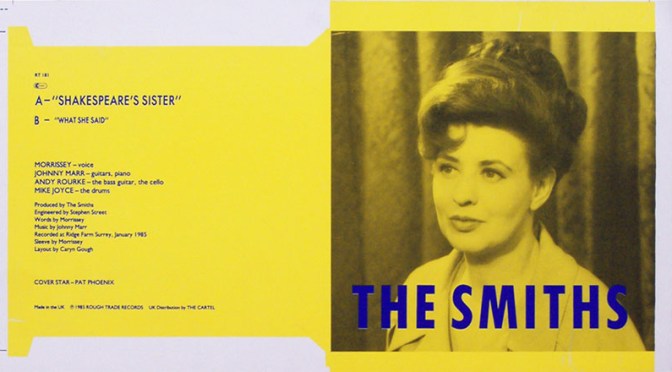
What a great gig at the Forum by Johnny Marr. The former Smiths’ maestro is one of the best guitarists I have ever seen live. Not the strongest of voices but suitable for the style of indie-Dad-rock he performs. There are moments of transcendent genius in his guitar playing which careered across the venue. His solo stuff is musically formidable but of course The Smiths renditions tore the roof off notably: How Soon Is Now and There is a Light That Never Goes Out. He even did a burst cover of Crash by The Primitives. Life is a fleeting affair so one must grasp and grip the rail when greatness comes along. I felt privileged tonight as it was a fine time spent in the presence of a musical genius.

MICHEL LE GRAND – RONNIE SCOTT’S

It was my first time at Ronnie Scott’s jazz club and I was very pleased to hear legendary French composer and lyricist Michel Legrand live before he shuffles off to the great orchestra in the sky. Le Grand composed music from The Umbrellas of Cherbourg (1964) and Yentl (1983); while perhaps his most famous composition was The Windmills of Your Mind. I’ve never liked Jazz yet after Michel Legrand’s incredible musical performance I fully appreciate the tour de force expertise of his creativity and musical brilliance. I still don’t like Jazz but appreciate I was in the presence of a master of that particular art! Even at the age of 83 he was magnifique.

SUFFRAGETTE WORLD PREMIERE GALA – THE LONDON FILM FESTIVAL

Melissa won us the “red carpet” treatment for this Gala screening of Suffragette (2015) and it was a starry affair with the likes of Carey Mulligan, Helena Bonham-Carter and Meryl Streep onstage to present their powerful film to the world.  I didn’t feel that comfortable walking in amongst the West End throng into the cinema as I’m not someone who likes a fuss and I always feel these affairs are pretentious, ostentatious and very much against my hypocritical “socialist” roots. Am I a working class traitor – who knows?  I still enjoyed the free Green and Black’s chocolate which was in the arm of the Odeon Leicester Square chair where I sat.

The film itself is a cracking drama which has fine direction by Sarah Gavron with a simple, yet effective screenplay by Abi Morgan.  It is a worthy cause celebre to film and stands a fine testament to the brave women who fought for the right to vote.  Ironically, there was a protest there from Sisters Uncut about the important issues of this bastard Government’s austerity cuts and here’s to them for making their protest. I would have joined them but was too busy eating chocolate and watching the movie.