Tag Archives: iconic

Cinema Review: 28 Years Later (2025) – an epic horror sequel; one for the (r)ages!

Cinema Review: 28 Years Later (2025)

Directed by Danny Boyle

Written by Alex Garland

Produced by Danny Boyle, Alex Garland, Andrew Macdonald, Peter Rice & Bernie Bellew

Main Cast: Jodie Comer, Aaron Taylor-Johnson, Jack O’Connell, Alfie Williams, Edvin Ryding and Ralph Fiennes

Cinematography by Anthony Dod Mantle

Edited by Jon Harris

** MAY CONTAIN SPOILERS **


We’re foot—slog—slog—slog—sloggin’ over Africa
Foot—foot—foot—foot—sloggin’ over Africa —
(Boots—boots—boots—boots—movin’ up and down again!)
There’s no discharge in the war! —
Rudyard Kipling

The opening sequences of 28 Days Later (2002), directed by Danny Boyle and written by Alex Garland, are some of the most haunting and iconic introductions in cinema—transcending the horror genre to deliver something mythic, mournful, and terrifyingly real. They are masterclasses in mood-building, world-setting, and emotional manipulation, and redefined what the modern apocalypse could feel like on screen. From the terrifying raging simian attacks to the stunning silence of hollow streets and buildings of London as Jim (Cillian Murphy) awakes to an incredibly changed and empty planet. Here Boyle used guerrilla filmmaking as an artistic weapon with digital video blending with silence and dread, beauty and decay, loneliness and rage creating a grimy realism that no big budget blockbuster could replicate.

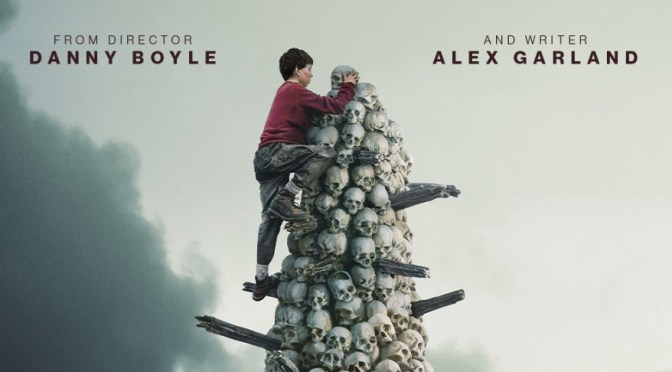
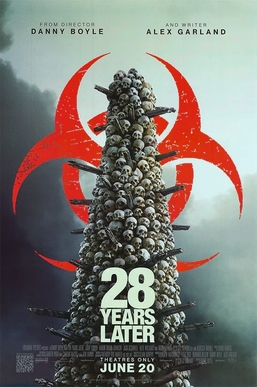
The opening sequence of the sequel, 28 Weeks Later (2007), was damned good as well, although what followed was not as formidable as the original. If we’re honest it was more of a high-quality straight-to-video effort, especially when compared to the incredible first film. But what of 28 Years Later (2025), which finds Boyle and Garland re-teaming with a stellar cast including: Jodie Comer, Aaron Taylor-Johnson, Ralph Fiennes and newcomer, Alfie Williams. It opens with yet another impressive opening sequence in 2002, as a family of kids are attacked in their Scottish home. Escaping on frantic foot is young Jimmy who finds his father, the local minister, in his church proclaiming the ‘end of days!’ Move forward twenty-eight years to 2031 and the film joins, interestingly enough, not Jimmy, but a survivor community living in Lindisfarne, a tidal island connected by a fortified causeway.

Focusing on the family unit of twelve-year-old son, Spike (Alfie Williams), and parents, Isla (Jodie Comer) plus father, Jamie (Aaron Taylor-Johnson), 28 Years Later (2025) marks a ferocious and exhilarating return to the infected-ravaged world. It is not simply a continuation, but a full-fledged reimagining that deepens, widens, and accelerates the mythology, style, and thematic power of the series. It is not just a sequel—it’s an evolution, one that pulses with the blood of Romero’s bleak social horror and the serialized depth of The Walking Dead, while forging its own cinematic identity: brutal, urgent, and conceptually masterful.
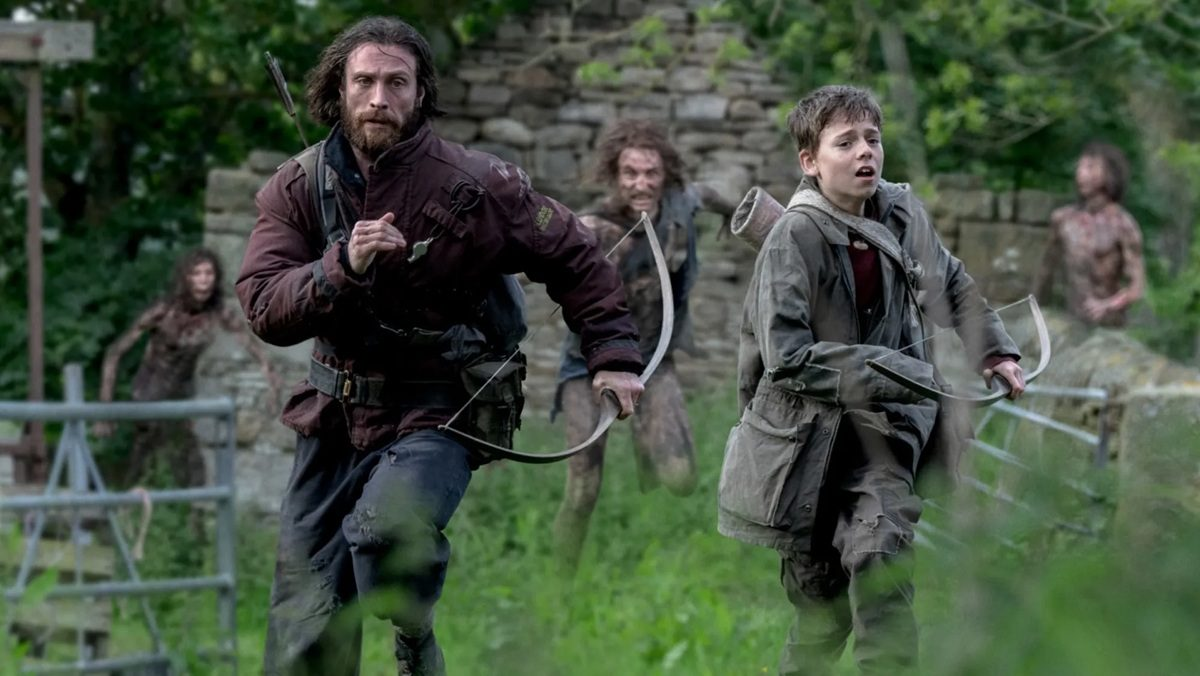


From its opening moments, 28 Years Later plunges viewers into a world far beyond what we’ve seen before. Civilization hasn’t recovered—it has, like the zombies, mutated. The virus is no longer an outbreak or an aftermath; it is an ecosystem. What began as a confined crisis in 28 Days Later, and widened into militarized guilt and familial betrayal in 28 Weeks Later, now becomes a reckoning. Thematically, the film touches on generational trauma, hybrid immunity, rites of passage, euthanasia and the evolution of the rage undead. Jamie trains his son in the art zombie-hunting, before the middle act finds Spike attempting to save his unwell mum. At this time he both matures and overcomes several battles with mutated inhumans.

The visual grammar of 28 Years Later stays true to the DNA of the series: raw, immediate, and grimy. But it’s also evolved. The digital grunge of 28 Days Later is elevated with modern tools, while still embracing a handheld, documentary-style urgency. Towns and buildings aren’t just abandoned—they’re fossilized in trauma. New scenes are suffused with ash, dust, decay, blood, plasma and rusted iconography, painting a world that’s both rotting and fighting to be reborn. This is a horror film that smells like blood and diesel. It feels dirty. Every camera move, whip pan and smash cut drags you to hell and makes you feel like your life is in danger.

28 Years Later doesn’t just revive a franchise—it transforms it into a towering trilogy of infection, collapse, and spiritual trauma. It draws from Romero’s cynicism, The Walking Dead‘s moral complexity, and its own raw, kinetic legacy to deliver something uniquely powerful: a horror film that is both visceral and cerebral, intimate and operatic. While there are some script and pacing issues toward the end of the second act, Boyle directs superbly. Plus, the film benefits from some memorable performances, notably Comer, Fiennes and young Alfie Williams. Lastly, it has one of the most startling endings to a film I have seen in a long time. It is frankly nuts. Yet, it ensures 28 Years Later (2025) is a modern horror classic, pulsing with urgency, style, and an almost unbearable truth: that the most terrifying viruses don’t infect the body—they infect the soul. Bring on the sequel!
Mark: 9.5 out of 11


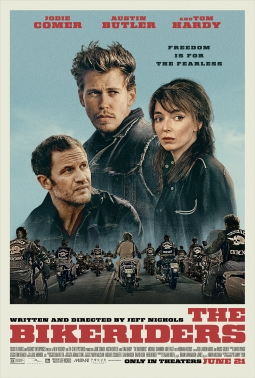
CINEMA REVIEW: THE BIKERIDERS (2023)

CINEMA REVIEW: THE BIKERIDERS (2023)

Directed by Jeff Nichols

Screenplay by Jeff Nichols (Based on The Bikeriders by Danny Lyon)

Produced by Sarah Green, Brian Kavanaugh-Jones and Arnon Milchan

Main Cast: Jodie Comer, Austin Butler, Tom Hardy, Michael Shannon, Mike Faist, Norman Reedus, Boydf Holbrook etc.

Cinematography by Adam Stone

*** MAY CONTAIN SPOILERS ***


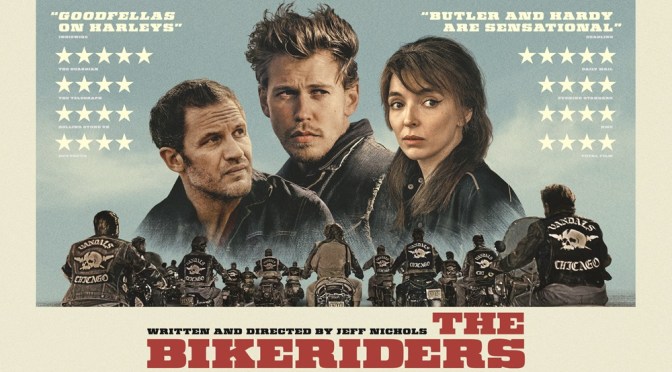
Set in the mid-sixties, the biopic The Bikeriders (2023), centres on a bike club (or what we could be considered a ‘Hell’s Angel’ gang of the era) called ‘The Vandals.’ Started by Tom Hardy’s, leader Johnny, as a motorbike racing club, it develops into a social place for men to meet and play and look cool and party and fight. More significantly, ‘The Vandals’ club allows the men to gain a sense of authority and identity within the shifting state of America during the 1960’s. The terrific ensemble cast includes Austin Butler as moody Benny, plus his sparky narrator wife, Jodie Comer, as Kathy. All are very good, yet there is something lacking thematically and in terms of plot.

Story-wise The Bikeriders (2023), is more like a verbal and pictorial diary with Comer’s affected Chicago accent gluing the various events together without reaching a height of dramatic satisfaction. Butler and Hardy are really cool and moody, echoing visitations of James Dean and Marlon Brando, respectively. But there needed to be more differentiation in their characters as TWO strong and silent types created a dramatic vacuum for me. Classic scene stealers such as Michael Shannon, Boyd Holbrook and Norman Reedus do add colour and charisma. I kind of wanted more of those guys because they had strong personalities, and actually spoke! Meanwhile, the props, costumes, production design and cinematography are all brilliantly rendered, clothing the film in an authentic and gritty sense of style.

Ultimately, the nostalgic, “anti-hero” driven period drama, so well delivered by Martin Scorsese over the years gets another solid run-out in The Bikeriders (2023) from the talented filmmaker, Jeff Nichols. Whereas Scorsese brings incendiary cinematic fireworks and complex tales of morality to your face, mind and heart, Nichols is a more under-stated director. He presents his stories and characters without too much push, with the audience having to lean in to catch the whispers of drama. That isn’t to say The Bikeriders (2023) doesn’t have action, racing, fighting, crashes, and blood, but the characters are lacking a powerful narrative engine to drive the strong performances forward. Plus, the themes of loss, war, and masculinity in crisis needed more gas. The film motors along just fine, but without ever getting into fifth, let alone sixth gear.

Mark: 7 out of 11

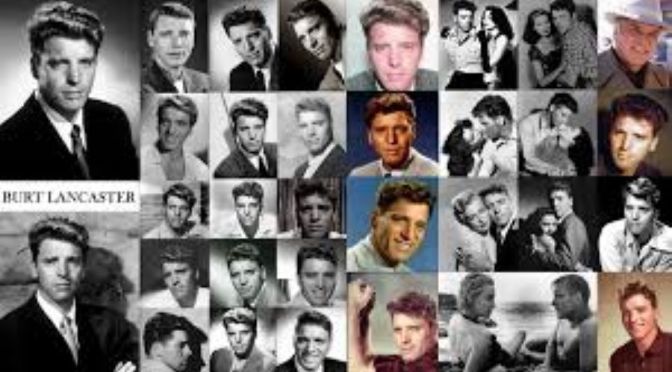
MY CINEMATIC ROMANCE #25: BURT LANCASTER

MY CINEMATIC ROMANCE #25: BURT LANCASTER

Without planning it I watched a number of Burt Lancaster films over the last few months. It gave me a chance to reflect and re-evaluate this giant of the screen. I say “giant” because not only was Burt Stephen Lancaster physically a big guy, he also had a giant of an acting career. One which spanned fifty years in the business.

From his memorable first screen appearance in noir-classic The Killers (1946) to final performance in Field of Dreams (1989) he appeared in seventy films, as well as many television roles. Lancaster was a formidable actor, film star, producer and political activist. His fierce personality, intelligence and passion often explodes on the screen in so many classic films. But he was also capable of quiet and subtle power too. In keeping with the rules of the ‘My Cinematic Romance’ remit, here are just five of those said memorable acting performances.

** CONTAINS FILM SPOILERS **


SWEET SMELL OF SUCCESS (1957)

While this is not based around actual gangsters or career criminals you won’t find a bleaker or more cynical film noir. Morals are in short supply as Tony Curtis’ pushy press agent attempts to work his way up the greasy media pole in New York. His and many a character’s nemesis is Lancaster’s media kingpin, J.J. Hunsecker, who can make or break a career with the click of a finger. Hunsecker’s unhealthy obsession with his sister drives the downfall of all the characters where no one gets what they want. Lancaster is never afraid to play a flawed and complex personality. Razor-sharp dialogue and James Wong Howe’s stark photography, allied with Lancaster’s dominant presence, the Sweet Smell of Success (1957) is a striking morality tale warning of the perils of greed, fame and ambition.


ELMER GANTRY (1960)

Wow! I’d never seen this incendiary film adaptation of the Sinclair Lewis’s 1927 novel. Starring Lancaster, Jean Simmons, Arthur Kennedy, Shirley Jones and Patti Page, Lancaster is electric as the eponymous anti-hero. Gantry is a travelling salesmen-turned evangelist, who is down-on-his knees when he sees a golden opportunity to sell God instead of vacuum cleaners. Jean Simmons has never been better, but Lancaster delivers a devilishly complex characterisation of a man seeking wealth, sex, and adulation but without true belief. His firebrand sermons are powerful but without substance, and Gantry soon realises he cannot escape the emptiness of his soul. He preaches God without soul in a scathing damnation of organised religion set during the depression. Lancaster unsurprisingly won an Academy award for best actor in a risky role and intelligent film that rarely gets made these days.


BIRDMAN OF ALCATRAZ (1962)

I recall watching Birdman of Alcatraz (1962) when a teenager with my dad and being entranced by Burt Lancaster’s thoughtful, yet powerful performance of dangerous prisoner, turned ornithologist, Robert Stroud. Off-screen Lancaster rallied against the death penalty and argued for rehabilitation over eye-for-an-eye punishment. Thus, this story of a complex, rebellious personality who attempted personal absolution via education certainly would have had creative and thematic merit in Lancaster’s mind. From research the actual Robert Stroud was reported to be a brutal psychopath and beyond redemption. Yet, it’s a noteworthy film and stirring performance from Lancaster about a human paradox. Indeed, when did Hollywood ever let the truth get in the way of a great story. What is the truth anyway?


THE SWIMMER (1968)

Well, this was something of a surprise. I had never watched this adaptation of John Cheever’s short story, The Swimmer (1968) until I recorded it on Talking Pictures TV last month. At fifty-five, Lancaster is in incredible shape as middle-class American alpha-male, and seemingly popular, Ned Merrill. He decides one day he can “swim” across a series of Connecticut pools and back home to his wife and children. It’s certainly an original premise and peculiar take on the road movie subgenre. Merrill’s journey is peppered with both friendly and unenthusiastic meetings with his neighbours, friends and former lovers. Although it soon becomes apparent that something, despite his carefree confidence, isn’t quite right with Merrill. A progenitor to John Hamm’s Don Draper, Merrill is such a nuanced iceberg of a soul; charismatic yet with dubious ‘of-the-era’ morals. I think this could be Lancaster’s finest performance in a truly memorable masculinity-in-crisis cult character study. It’s an odd film, but worth staying with until the incredible ending.


ATLANTIC CITY (1980)

As he aged, Lancaster’s continued working with abandon. He wasn’t averse to taking a paycheck in B-movies such as The Cassandra Crossing (1977) and The Island of Dr Moreau (1979), but he also struck critical gold in Louis Malle’s romantic crime drama, Atlantic City (1980). Both Lancaster and Susan Sarandon are impressive. They have an intense chemistry in this ‘May to December’ love story, as two characters thrown together amidst the malfeasant underbelly of the gambler and gangster strewn ocean city. It’s a morally ambiguous, powerful and complex story of two characters fighting their way out of a dangerous place. Again, Lancaster proved he wasn’t fearful of taking risky roles, even in the latter stages of his career. Atlantic City (1980) would deservedly receive several Oscar nominations, including Lancaster for Best Actor.


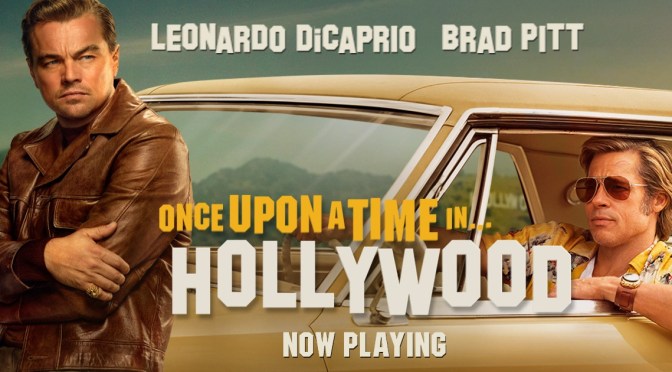
ONCE UPON A TIME IN HOLLYWOOD (2019) – FILM REVIEW – A $90 MILLION “ARTHOUSE” & FETISHISTIC CLASSIC!

ONCE UPON A TIME IN HOLLYWOOD (2019) – FILM REVIEW

Directed and Written by: Quentin Tarantino

Produced by: David Heyman, Shannon McIntosh, Quentin Tarantino

Cast: Leonardo DiCaprio, Brad Pitt, Margot Robbie, Emile Hirsch, Timothy Olyphant, Margaret Qualley, Austin Butler, Al Pacino, Mike Moh, Bruce Dern, Dakota Fanning, Damien Lewis, Kurt Russell and many, many more.

Cinematography: Robert Richardson

**MAY CONTAIN SPOILERS**

From watching the trailers for Quentin Tarantino’s ninth film, Once Upon A Time in Hollywood (2019), I remember thinking: this looks so cool and I’m glad they haven’t given away much of the story here. Because, I hate those darned trailers which give away the story!

So, you watch Quentin Tarantino’s ninth film and then you realise, after the excessive running time, THERE ISN’T REALLY ANY STORY as such! Okay, DiCaprio’s character suffers an existential career crisis but that’s kind of it. Instead, you get mostly a nigh-on three-hour historical and cultural nostalgia trip down memory lane filtered through the artistic and fetishistic vision of one of cinemas great filmmaking iconoclasts.

Once Upon A Time in Hollywood (2019), is essentially an arthouse character study where you get to hang out with two-and-a-half lead protagonists, plus a whole army of fictional and ‘real’ life supporting characters from the 1969 Hollywood era. Our two main “heroes” are neurotic, alcoholic B-movie actor, Rick Dalton (Leonardo DiCaprio), and tough, handsome and laconic, Cliff Booth (Brad Pitt). The two characters contrast and complement each other perfectly. Moreover, the star quality, chemistry and fine performances of the lead actors bind the movie together amazingly.

Brad Pitt is especially brilliant. His character is not, until the violent ending, given much to do story wise; however, he does it with such charm. He imbues a character who has accepted his place in the world with such easy-going humour and control, it is an absolute joy to watch. It’s an iceberg performance which seems shallow on the surface, but has hidden and unsaid depth. I really wanted to know more about his character, especially what appeared to be a very colourful backstory.

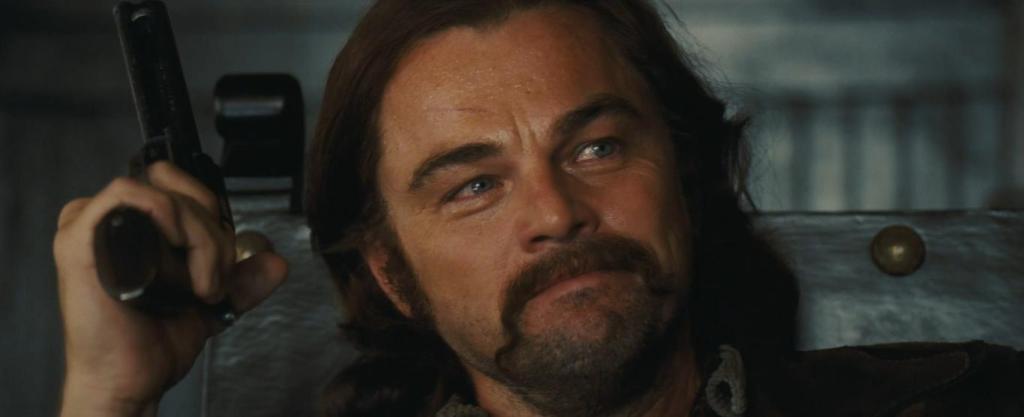
DiCaprio, on the other hand, has the showier performance. Edgy, hungover and insecure due to his characters’ fading Hollywood career, DiCaprio gives another fantastic movie performance. He commits to the Dalton character and features in some wonderful sketches which pay homage and parody B-movies, TV variety shows and old TV Westerns. What I loved was his ability to demonstrate different levels of acting skills. DiCaprio can fuck up Dalton’s acting on set one moment, but then deliver acting on a Shakespearean level the next.

Margot Robbie, who we know is a brilliant actor in her own right, alas, is not afforded the same level of care in regard to the characterisation of Sharon Tate. More of an ornamental character in the film, she looks great going to the cinema, packing a suitcase, driving and generally just being effervescent. Yet, it’s truly is one of the film’s major flaws that it doesn’t make more of Robbie’s acting talent. Even the fantastic ending, which Tarantino, takes incredible liberties with in regard to actual events, finds Tate’s character development unfortunately left bereft of emotion.

Similarly, the Hollywood cameos echoing throughout the films are pure style over substance. For example Steve McQueen, Roman Polanski and Bruce Lee feature but these are mostly inconsequential encounters. The Bruce Lee representation and scene is actually really funny as Cliff Booth and the martial arts star face off in a hilarious flashback. Typically, Tarantino has caused controversy with his Bruce Lee (Mike Moh) rendition. Personally, I respect that people may be offended, however, it’s more comedic and iconoclastic rather than overt racism. After all, this is a fairy-tale vision of Hollywood and not a documentary. Plus, Tarantino knows he’s going to piss people off so it’s obvious he’s playing with people here.

While Bruce Lee’s persona is playfully satirized or racist depending on your point-of-view, Tarantino’s representation of the Manson family is more damning. It’s clear he absolutely hates hippies, especially acid-looped killer hippies. Dalton and Booth represent the old-school, honest Hollywood working class, so are the antithesis of the drop-out youths. The culture clashes between this era and the new flower-power cults is something Tarantino explores. Charles Manson, who barely features, is a ghost-like figure though. Instead, it is the character of Tex (Austin Butler) and the females of the commune who are most prominent.

Margaret Qualley as Pussycat is especially hypnotic in her role. Exuding both sexuality and acid-drenched nihilism, Pussycat is a siren hitcher, luring drivers to symbolically crash against the cliffs. For me, Tarantino should have made way more of the old and new California culture clash themes, as they resonated powerfully when on screen. Plus, the scenes on the commune were actually quite creepy, so more should have been made of this threat from a dramatic perspective. Lastly, the irreverent and violent final act carnage exploits the clashing of these two different cultures, but more could have done throughout to enhance this dynamic.

Overall, Once Upon A Time In Hollywood (2019) is a near three-hour arthouse classic. If you like films about film and TV making, driving, feet, ensemble casts, films within films, cinema-going, Los Angeles, more feet; and hanging with the marvellous DiCaprio and Pitt in a 1969 setting, then you will love this beautifully rendered and lovingly crafted film about Hollywood. Otherwise, you will probably find it a boring, indulgent and style-over-substance folly. Either way you have to admire Tarantino’s exquisitely controlled writing and direction. He certainly does!!

Safe to say though Tarantino will not care either way, because most of his filmic output has made a lot of money at the box office. This has now allowed him the luxury, like that of true cinema artists such as Kubrick, Altman and Antonioni, to make whatever films a studio is prepared to give him the money for. He’s basically making films for himself and doesn’t care if the audience likes it or not.

I personally found myself magnetically drawn to Tarantino’s vision and from a purely filmmaking and artistic perspective I was totally immersed throughout. Having said that, if the incessant driving and shots of dirty feet were cut and Dalton and Booth had been given a proper plot, rather than the thin stranded narrative within the impressive gallery of cameos and set-pieces, I would definitely expect to be writing about one of the best films ever made.

Mark: 9.5 out of 11