Tag Archives: kidnapping

Cinema Review: Bugonia (2025) – Lanthimos has a blast with this dark conspiracy-class-war-kidnap-comedy!

Cinema Review: Bugonia (2025)

Directed by Yorgos Lanthimos

Screenplay by Will Tracy – Based on Save the Green Planet! (2003) by Jang Joon-hwan

Produced by Ed Guiney, Andrew Lowe, Yorgos Lanthimos, Emma Stone, Ari Aster, Lars Knudsen, Miky Lee, Jerry Kyoungboum Ko


Main Cast: Emma Stone, Jesse Plemons, Aidan Delbis, Stavros Halkias, Alicia Silverstone, etc.

Cinematography by Robbie Ryan

*** MAY CONTAIN SPOILERS ***
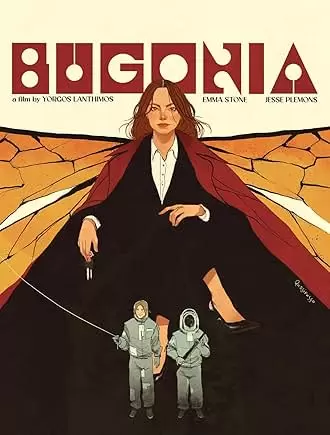

Yorgos Lanthimos has once again sneaked out of his uncanny terrarium and unleashed another piece of beautifully deranged cinema. Bugonia (2025)—a remake of Jang Joon-hwan’s cult classic Save the Green Planet!—is part sci-fi fever dream, part hostage farce, and part spiritual meltdown. It’s like Ruthless People (1986) got trapped in a socio-political, beekeeping suit and force-fed ayahuasca.

Will Tracy’s script hums with the manic energy of someone who’s read too many conspiracy subreddits and decided to turn it into Oscar bait. The film pairs Jesse Plemons (whose face seems genetically engineered for moral unease) with Alden Delbis (playing his twitchy, Kool-Aid-eyed partner in cosmic delusion) as two eco-anarchist truthers who kidnap a pharma/tech CEO, played with imperial chill by Emma Stone. Their reasoning? Well, just wait and see. It is incredibly crazy with some severe plot turns. Yet, somehow Lanthimos and his terrific cast maintain verisimilitude within the setting and just about hang onto emotional connection for the characters.
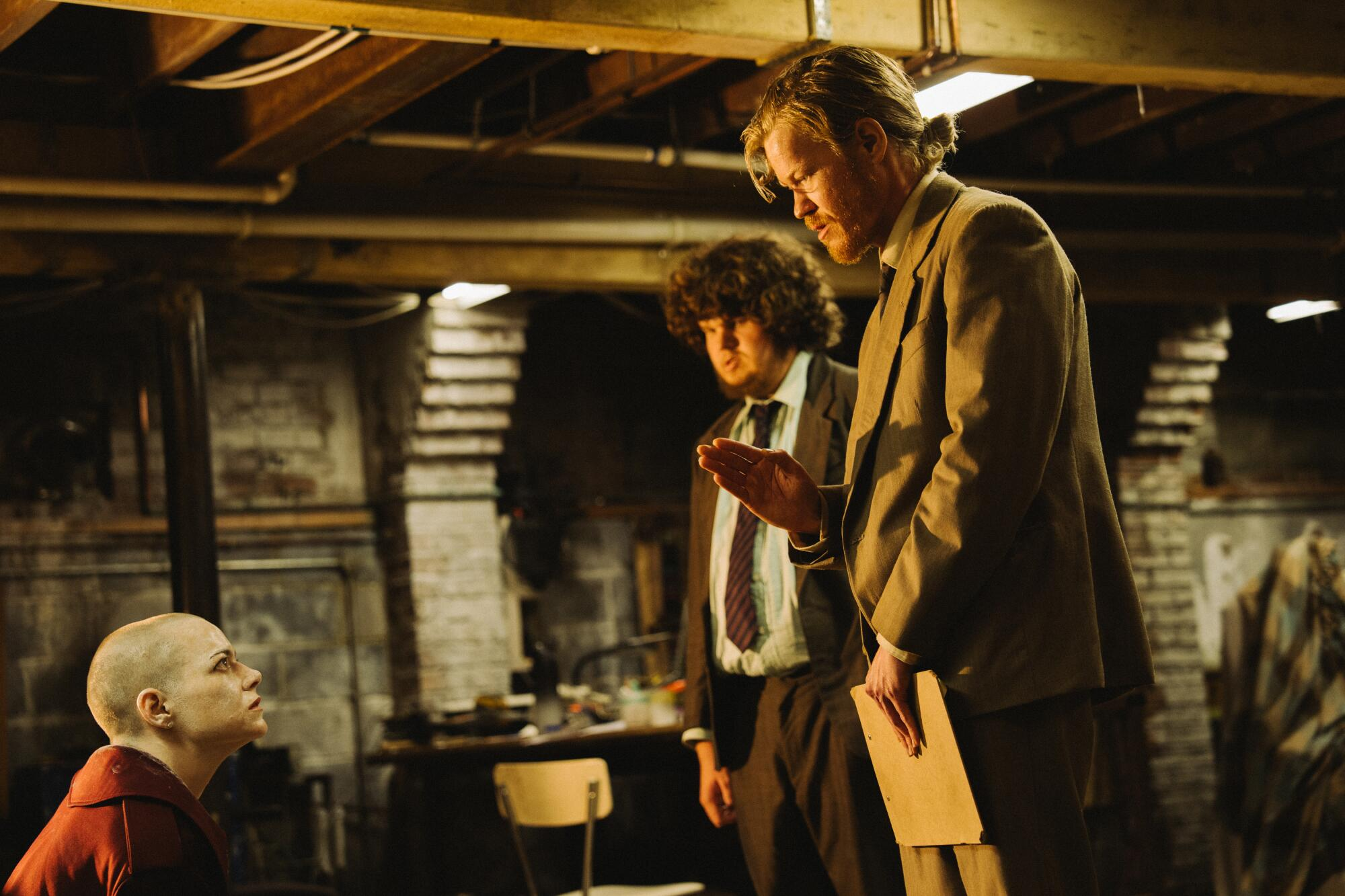


What follows is a deranged pas de trois of torture, empathy, and total philosophical collapse. Plemons and Delbis interrogate Stone with the intensity of people who’ve seen too many YouTube conspiracy documentaries, while Lanthimos and cinematographer, Robbie Ryan shoot it with the intensity of a nature documentary directed by Lucifer. There are bees. There is honey. There are monologues about pollution, pharmaceutical company threat and environmental collapse. Further, Stone, who has now fully ascended into Lanthimos’ personal pantheon of holy weirdness, plays her role like a woman being both worshipped and flayed at the same time. She’s terrifyingly serene—like she’s founded a doomsday cult and smiled through the apocalypse.

It’s all utterly ridiculous, but Bugonia (2025) thrives in that space between laughter and dread. Lanthimos once again proves that absurdism isn’t about nonsense—it’s that nonsense is the only sane response to the modern world. I enjoyed this film way more than the obtuse Kinds of Kindness (2024). It has more akin, although not as devastatingly memorable, as his earlier Greek-language classics or The Killing of a Sacred Deer (2017). Moreover, if The Favourite (2018) was about power, and Poor Things (2024) was about rebirth, Bugonia (2025) is bleak, fatalistic morality tale about environmental apocalypse.

By the time the film’s final shots roll I was equal parts horrified, moved, and deeply amused. It’s an eco-horror-comedy that gorily plays like Saw (2004) meets famous beekeeping philosopher, Aristotle. Overall, Bugonia (2025) proves once again that Yorgos Lanthimos is cinema’s reigning apiarist of absurdity—and his audience are all his buzzing little drones.
Mark 8.5 out of 11


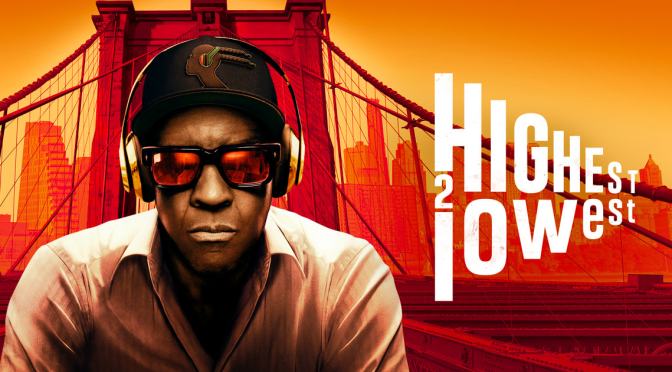
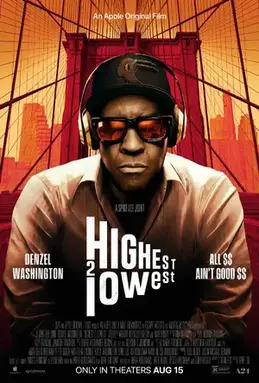
Apple TV+ Film Review: Highest 2 Lowest (2025) – a vibrant, musical and pacy, if unnecessary, remake.

Apple TV+ Film Review: Highest 2 Lowest (2025)

Directed by Spike Lee

Screenplay by Alan Fox

Based on High and Low (1963 film) by Akira Kurosawa, Hideo Oguni,
Ryūzō Kikushima, Eijirō Hisaita, and King’s Ransom (1959 novel) by Ed McBain.


Produced by Todd Black and Jason Michael Berman

Main cast: Denzel Washington, Jeffrey Wright, Ilfenesh Hadera, ASAP Rocky, John Douglas Thompson , Dean Winters, LaChanze, Aubrey Joseph, etc.

Cinematography by Matthew Libatique


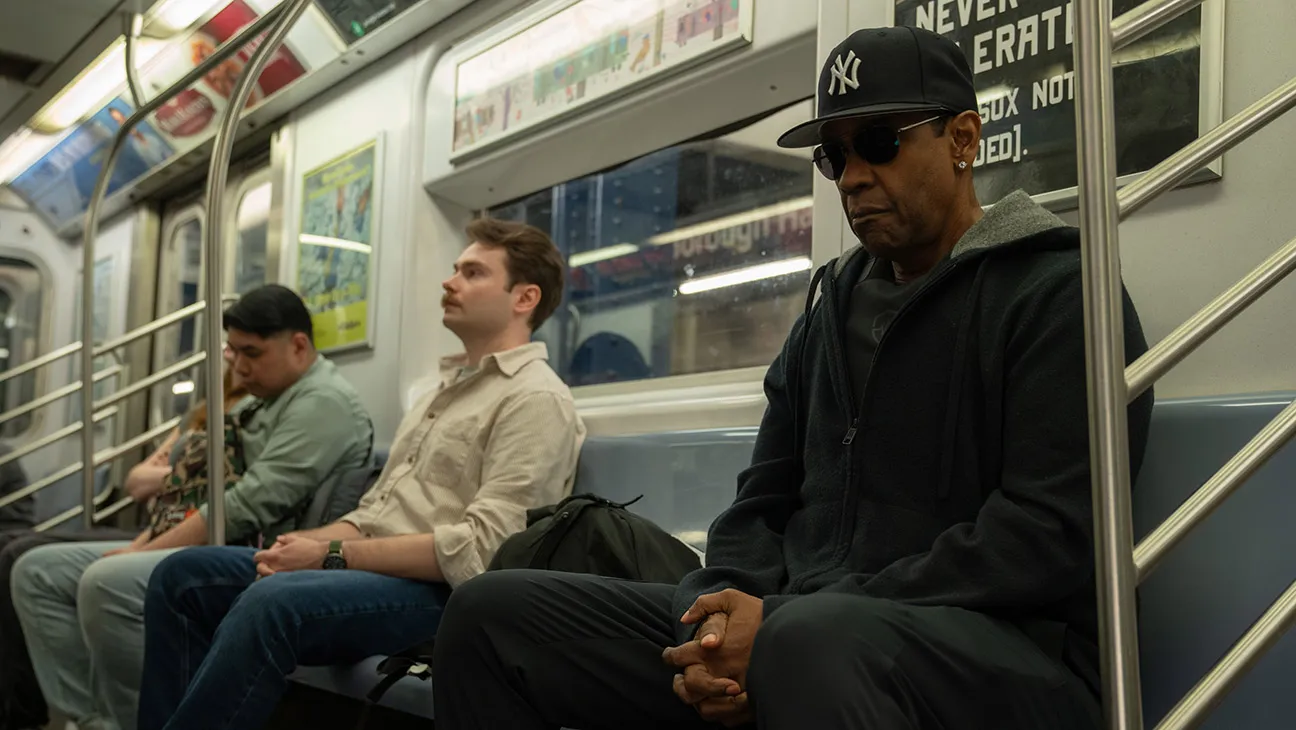
Spike Lee’s Highest 2 Lowest (2025) is a kinetic, vividly modern reimagining of Akira Kurosawa’s High and Low (1963), transplanting the Japanese master’s class-conscious thriller into the bustling, chaotic pulse of contemporary New York City. As expected from Lee, the film bursts with visual flair and political verve — the camera rarely rests, and the city itself becomes a character, glowing with heat, colour, and tension. The streets hum with energy, from glassy penthouses to subway platforms, creating a dynamic canvas on which the moral dilemmas unfold.

Denzel Washington, as usual, delivers a commanding performance as David King, a renowned independent producer and record label owner, torn between his conscience and his ambition when the kidnapping of his son occurs. Washington captures both the quiet torment and moral exhaustion of a man staring down the gulf between his privilege and his humanity. Jeffrey Wright, offers great support as his friend and chauffeur. The narrative navigates class and corporate tensions, bringing a soulful intelligence to every scene, grounding the film’s intensity with empathy and authority.


The film moves at a thrilling pace, carried by a propulsive soundtrack that fuses hip-hop, jazz, and gospel with Lee’s trademark flair for musical storytelling. Nowhere is this energy more palpable than in the ransom handover sequence — a masterclass in direction and editing — cutting feverishly across New York’s boroughs and metro trains, while the Puerto Rican Day Parade swells in a euphoric, near-operatic crescendo. It’s a breathtaking montage that exemplifies Lee’s command of rhythm, geography, and social texture. It proves to be Highest 2 Lowest (2025)’s biggest high.

Where Highest 2 Lowest (2025) falters is in the handling of its central moral crisis, which in turns undermines the all-to-rapid ending too. Indeed, it seemed to be missing a betrayal twist for me. The decision David King must make — the film’s spiritual core — arrives and resolves too swiftly around the midpoint, leaving the second half conflict, after the exhilarating Puerto Rican Day Parade, more focused on wrapping up loose ends quickly than psychological reckoning. It’s a missed opportunity for the deeper character study that Kurosawa’s original sustained so brilliantly.

Still, as an adaptation, Lee’s film is an entertaining piece of work — bold, stylish, and alive with the contradictions of the modern city. While Kurosawa’s High and Low (1963) remains the more compelling exploration of social class and moral responsibility, Highest 2 Lowest (2025) finds its own voice: vibrant, urgent, and unmistakably Spike Lee.

Mark: 7 out of 11


FILMS THAT GOT AWAY #11 – HOUNDS OF LOVE (2016)

FILMS THAT GOT AWAY #11 – HOUNDS OF LOVE (2016)

Written and Directed by: Ben Young

Produced by: Melissa Kelly

Cast: Emma Booth, Ashleigh Cummings, Stephen Curry, Harris Gilbertson, Susie Porter, Damian De Montemas, etc.

Music by: Dan Luscombe

Cinematography: Michael McDermott

Edited by: Merlin Eden

*** MAY CONTAIN SPOILERS ***


Where narratives relating to rape, abduction, and serial killers are concerned, a filmmaker can tread a fine line between lurid exploitation and absorbing suspense and drama. Low budget B-movies are replete with stories of death, sexual assault and crazed murderers. Some overstep the mark becoming notorious beacons of bad taste. Many horror fans love the exploitational nature of “video nasties”, seeking out films like: Cannibal Holocaust (1980), A Serbian Film (2010), I Spit on Your Grave (1978), Driller Killer (1979), Texas Chainsaw Massacre (1974) and The Last House on the Left (1972), to name but a few. The latter two films directed by horror maestros Tobe Hooper and Wes Craven are arguably exceptional visions of terror which transcend their horror genre subject matter. Similarly, Ben Young’s The Hounds of Love (2016), in my view, represents the evil of human beings without exploiting the actors or audience.

While it may not be as gory on-screen as the films mentioned above, The Hounds of Love (2016), does offer a shattering and sickening set of images and sounds within these savage set of events. Set in Perth, Australia during 1987, this is a disturbing and all too realistic horror story. It opens with a majestic set of slow-motion shots from the point-of-view of suburban couple, Evelyn White (Emma Booth) and John White (Stephen Curry). They sit in their vehicle as the sun hazes and watch teenage girls playing netball in the school yard. They are stalking their next victim; patiently waiting to lure another unsuspecting soul into their nefariously sadistic crimes. Stylistically impressive, but at the same time incredibly unnerving, Ben Young skilfully establishes the canvas on which he will paint further horrors.


Having fed their violent and sexual lust with the opening victim, we are then introduced to their next. Vicki Moloney (Ashleigh Cummings) is a rebellious teenager who is smarting from her parents recent split. Acting with both charisma and defiance, Vicki is slightly annoying, yet empathetic. Obviously, she does not deserve the ordeal she is about to experience at the hands of the Whites. The sequence which finds them cajoling her into their clutches is so tense and had me screaming at the screen, “No!!!! Get out!!!” What follows then, as Vicki becomes a prisoner, is a series of heart-pounding and distressing scenes which raise the stakes to unbearable tension. Ashleigh Cummings performance is absolutely compelling as “final girl”, Vicki. She takes a potentially one-dimensional casualty and imbues her with fight, guile, pain, distress, intelligence and determination. No surprise therefore that she won a Best acting debut award at the Venice Film Festival.

Cummings performance is not the only one which impacts the story greatly. Emma Booth’s complex portrayal of Evelyn is quite startling. This is a character who is permanently on-the-edge and desperate to please her evil partner, John. Systematically controlled and bullied, there is no excuse for Evelyn’s part in the kidnappings and torture of these young girls. But, it is clear to see that toxic masculinity has, over the years contributed to her mental and emotional collapse. Booth’s persistently fraught acting is all bag-of-bones and shredded nerves. It is via Evelyn’s imploding emotional state that Vicki is able to attempt to turn her against John’s venal influence.

Ultimately, one could say this is an exploitation film in terms of theme and story. However, it feels different than the many B-movie serial killer films I have seen. I felt like I was in the hands of a filmmaker who was determined to explore the nature of sadistic relationships in a risky, but intelligent manner. The acting, cinematography, direction and haunting soundtrack all contribute to make this a highly effective psychological thriller. Of course, there are many which may feel differently and that the film has its cake and eats it in term of violence and sexual perversion. Yet, we never actually see much of the cake. Unlike many of the films I mention in the opening paragraph, the audience only see the build-up and aftermath of the crimes. Indeed, what we don’t see on screen is more frightening than what we do. That, overall, is what sets The Hounds of Love (2016) apart from many other films dealing with these unpalatable themes and subjects.

Mark: 9 out of 11


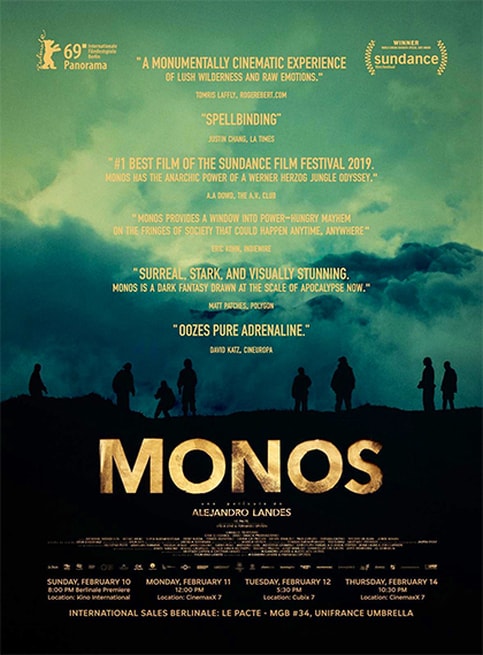
MONOS (2019) – CINEMA REVIEW

MONOS (2019) – CINEMA REVIEW

Directed by: Alejandro Landes

Produced by: Alejandro Landes, Fernando Epstein, Santiago Zapata, Cristina Landes

Written by: Alejandro Landes, Alexis Dos Santos

Cast: Julianne Nicholson, Moises Arias, Sofia Buenaventura, Julian Giraldo, Karen Quintero, Laura Castrillon, Deiby Rueda, Wilson Salazar, Esneider Castro, Paul Cubedes etc.

Music: Mira Levi

**MAY CONTAIN SPOILERS **


Those American teenagers, as represented in recent film and television offerings such as Stranger Things and IT, have some serious problems to deal with, such as inter-dimensional aliens and extra-terrestrial demons masquerading as killer clowns. Such foes, however scary, are of course fantasy. The horrors that the kids in feature film MONOS (2019) have to deal with, feel very real, raw and altogether horrifically more deadly.

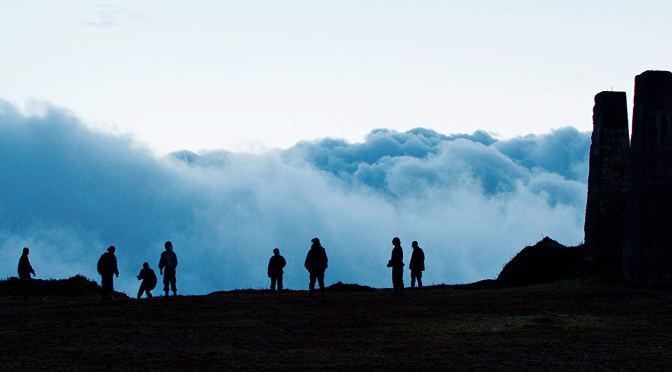
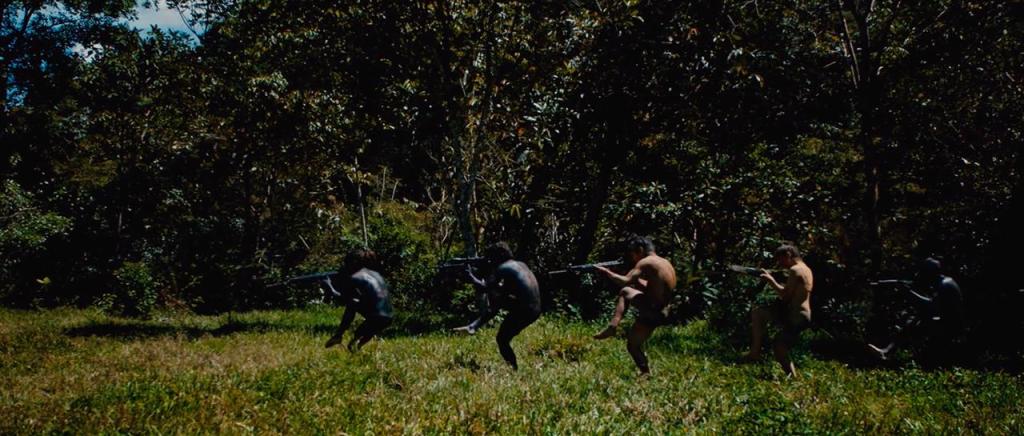
The film opens on South American mountaintop in Columbia. We are thrown straight into the everyday lives of young rebel soldiers known only by their war names including: Rambo, Smurf, Lady, Dog, and Wolf among others. The fact we never learn their real names establishes the dehumanized and exploited nature of these characters. They are denied a childhood and used as young soldiers within a guerrilla cell. The adults controlling them are represented by a man known only as The Messenger, who visits, drills and orders them about. While they act out, have sex, drink and “play” with the illusion of freedom, if they do not follow orders then there is hell to pay.


“Hell-to-pay” is an apt phrase for both the characters and the audience watching. For me this is not an enjoyable film in terms of entertainment. It is not intended to be. It is a very angry film and a shocking war of attrition to sit through. There is a documentary feel and in-your-face realism throughout, with little or no sympathetic characters to root for. Don’t get me wrong, I empathised with the plight of the children and what had happened to them. Yet, it’s difficult to sympathise with them, because when we join them they all seem so irreparably damaged by war and their existence. It’s a dog eat dog world and these dogs have guns, knives and semi-automatics.

Overall, I found the characterisations and elliptical narrative jarring throughout. For me, it created alienation in terms of emotional impact. However, the cinematic storytelling is of the highest quality. The visuals, sound, score and acting are all exceptional. Indeed, Alejandro Landes is a fearlessly talented filmmaker and definitely one to watch for the future. The mountain vistas and jungle scenery were majestic and beautiful to behold, despite the hellish events unfolding. Lastly, the film carries a deeply important message about these lost children of South America. Their lives are no fantasy. They are violent, animalistic, dirty, carnal and, based on what I saw in Monos (2019), completely devoid of hope.

Mark: 8.5 out of 11


EVERYBODY KNOWS (2018) – CINEMA REVIEW

EVERYBODY KNOWS (2018) – CINEMA REVIEW

Directed by: Asghar Farhadi

Produced by: Alexandre Mallet-Guy, Alvaro Longoria

Written by: Asghar Farhadi

Starring: Javier Bardem, Penelope Cruz, Ricardo Darin, Barbara Lennie etc.

Cinematography: Jose Luis Alcaine

**MAY CONTAIN SPOILERS**

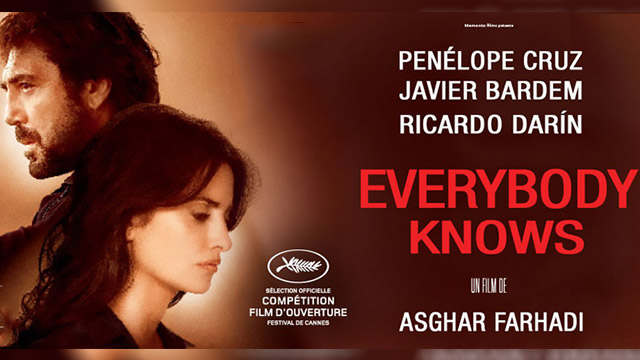
Asghar Farhadi is one of those filmmakers whose work is always of the highest quality. For some reason I actually missed seeing his prior film The Salesman (2016), so definitely need to catch up with that. However, The Past (2013) and A Separation (2011) were both compelling human dramas. A Separation, in fact, was one of the best films I have seen in the last decade. It took everyday scenarios involving as divorce and class conflict and spun a heartfelt, intense and intelligent narrative which was emotionally very powerful. While Farhadi was born in Iran and his early works are based there, his oeuvre transcends geography; projecting visions of humanity which stay with you way after the film has ended.

Farhadi’s eighth feature as a director is arguably his most accessible and while not reaching the dramatic heights of his previous films, remains a very solid personal drama. Everybody Knows concerns a large family unit converging for a wedding celebration in Spain. The setting is a small town set amidst beautiful countryside just outside Madrid. It’s the kind of place where everybody knows each others’ business and the community, while seemingly convivial on the outside, carries class, family and business conflicts under the surface.

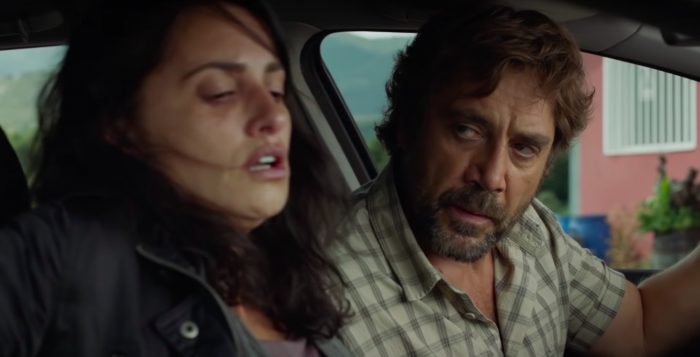
The film begins with Laura driving her children, notably teenage Irene, back to the town where she was born. The wedding celebrations ensue until terror strikes and Irene is stolen in the night by unknown assailants. Forbidden from contacting the police by the kidnappers, Laura, her family and former childhood boyfriend, Paco (Javier Bardem), desperately seek to find Irene before tragedy occurs. It isn’t long before history converges on the drama and past events involving stolen land and romantic affairs threaten to destabilise the whole town.

With Penelope Cruz and Javier Bardem cast as your leading protagonists, and the brilliant Ricardo Darin in support, you’re always guaranteed an enthralling screen experience. Nonetheless, what is so impressive in the performances and direction is they feel like real people with proper emotions, not simply starry versions of themselves emulating reality. Moreover, Farhadi concentrates on the human aspects of the story rather than the crime, as the characters, relationships and town itself begin to unravel. Further, while the film may lack his usual socio-political subtext, Farhadi really pulls you into the drama, as secrets and revelations are unearthed throughout. Overall, this is a consistently watchable piece of cinema that keeps up Farhadi’s impressive hit-rate, while perhaps feeling more familiar and generic compared to the other films of his I have seen.

Mark: 8 out of 11