Tag Archives: Margaret Qualley

Cinema Review: The Substance (2024) – A Dark Exploration of Identity

THE SUBSTANCE (2024)

Directed by Coralie Fargeat

Written by Coralie Fargeat

Produced by: Coralie Fargeat, Tim Bevan and Eric Fellner

Main Cast: Demi Moore, Margaret Qualley and Dennis Quaid

Cinematography by Benjamin Kracun

*** MAY CONTAIN SPOILERS ***
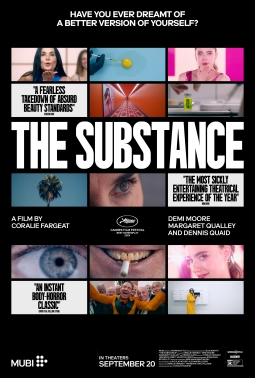


The Substance (2024), directed by Coralie Fargeat, is a visually striking and visceral film that pushes the boundaries of body horror and psychological terror. Fargeat, known for her raw and relentless style in Revenge (2017), once again delivers an unforgettable experience by weaving references to classic literature and horror cinema into a narrative that is at once familiar and entirely original.

Demi Moore portrays a former Hollywood star, Elizabeth Sparkle, now relegated to doing a mildy successful cable TV aerobics show. However, Dennis Quaid’s oily production executive is on the lookout for younger talent. Elizabeth soon finds herself on the media scrapheap. Desperate to regain her youth and career, Elizabeth is drawn to the hypnotic promise of a new product called ‘The Substance.’

Before you can say, “Dorian Gray”, Elizabeth is lured to a strange white room full of lockers and has committed to the process. Similar to Gremlins (1984), there are rules to follow. As she follows the steps and injects the potions, Elizabeth goes through a painful and incredibly impactful transformation process. She literally gives birth to a young and beautiful alter ego called, Sue (Margaret Qualley). Elizabeth and Sue then get seven days each to live their life before they have to swap back. What could go wrong?
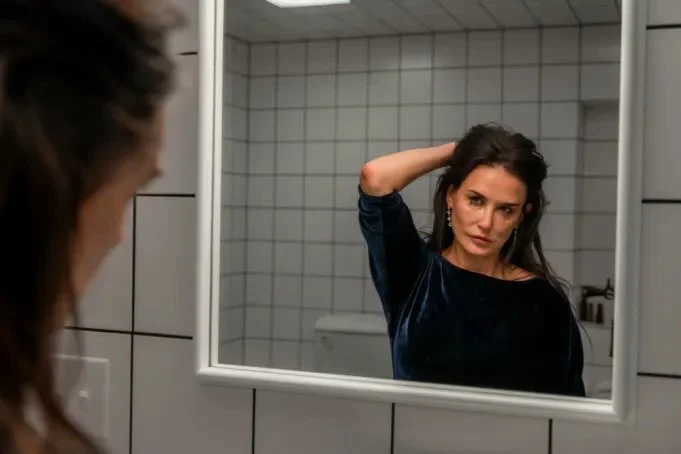


The film’s core themes draw heavily from Robert Louis Stevenson’s Dr. Jekyll and Mr. Hyde, exploring duality, identity, and the monstrous potential hidden within human nature. Like Stevenson’s tale of inner conflict, The Substance delves into the consequences of scientific ambition. It investigates moral transgression but with a modern, feminist twist. Fargeat’s use of body horror, particularly in the transformation sequences, echoes the grotesque, unsettling work of David Cronenberg. The nightmarish atmosphere and surreal visuals are reminiscent of David Lynch’s unsettling dream logic. This is notably seen in Eraserhead (1977) and Mulholland Drive (2001).

The film also pays homage to John Carpenter’s The Thing (1982), with its transmogrifying frights, sense of creeping paranoia and rising conflict. But rather than a group of men fighting each other Elizabeth and Sue turn on each other over ownership of their physical existence and Hollywood status. The final act descends into hellish and bloody satire echoing Peter Jackson’s Braindead (1992), with gore galore. Moreover, Stanley Kubrick’s influence is palpable in the film’s meticulous framing, production design and tension-building. The climactic body-morphing scenes, however, most clearly nod to Brian Yuzna’s Society (1989), with its grotesque depictions of class and conformity, fused with Fargeat’s unique vision of female empowerment, revenge and resistance.

The Substance (2024) feels like a bigger budget film in look and style, but you soon realise the minimal number of sets used and a lack of crowd scenes, finds the narrative effectively becoming a two-hander in the middle act by focusing on Sue and Elizabeth’s internal retaliatory vindictiveness. There are some amazing framing, colour design and cinematographic choices as showers become tombs to trap the protagonists. The book-ended Hollywood star montage and returning final shots are imaginative and unforgettable. Got to say that Demi Moore, as an actress taking on a role of an aging and neurotic former star is genius casting. While Qualley delivers a sexually charged and energetic performance, it is Moore who carries the weight of the complex themes as Elizabeth’s journey dives deeper into the stuff of nightmares.

Overall, The Substance (2024) is a postmodern classic and a film that honors its influences while forging its own path. Fargeat uses these references to enrich the narrative, creating a damned ugly and beautiful satire on those seeking narcissistic perfection through unnatural means, ultimately paying the price of those seeking eternal youth and fame.
Mark: 9 out of 11


FX TV REVIEW: FOSSE / VERDON (2019)

FX TV REVIEW: FOSSE / VERDON (2019)

Developed by Steven Levenson and Thomas Kailbased on Fosse by Sam Wasson

Executive Producers: Steven Levenson, Thomas Kail, Joel Fields, Lin-Manuel Miranda, George Stelzner, Sam Rockwell, Michelle Williams

Producers: Erica Kay, Kate Sullivan, Brad Carpenter

Directors: Thomas Kail, Adam Bernstein, Jessica Yu, Minkie Spiro etc.

Writers: Steven Levenson, Thomas Kail, Deborah Cahn, Tracey Scott Wilson, Charlotte Stouldt, Ike Holter, Joel Fields

Main Cast: Sam Rockwell, Michelle Williams, Norbert Leo Butz, Margaret Qualley, Nate Corddry, Paul Reiser, Jake Lacy, Susan Misner, Peter Scolari, Kelli Barrett, Evan Handler and many more.

Original Network: FX – UK Network: BBC

No. of Episodes: 8

**MAY CONTAIN SPOILERS**

I’m not a massive fan of musical shows or films as a genre. However, when the subject material or narrative connects with me, or the craft of song and dance transcends the form I will enjoy them. Thus, musicals I have seen and enjoyed on stage in the last few years include the brilliant Gypsy, Funny Girl, and Company. On the other hand, I could not stand Hamilton, despite the incredible talent involved in the production. Ironically, Hamilton director, Thomas Kail, is a major driving force behind this adaptation of Sam Wasson’s book about Bob Fosse and Gwen Verdon.

On the cinema screen the likes of: The Wizard of Oz (1939), Singing in the Rain (1952), Grease (1978), Moulin Rouge (2001), Chicago (2002), are just a few great examples of the genre I liked. But, the best and most exceptional musical I have seen in terms of form, style and subject matter is the Bob Fosse directed, Cabaret (1972). It’s not just a great musical, but it’s also a incredible piece of cinema. It oozes dark class in the musical set-pieces, ambiguous and fractured characterisation, sleazy sexuality and the thematic political subtext of pre-World War II Germany.

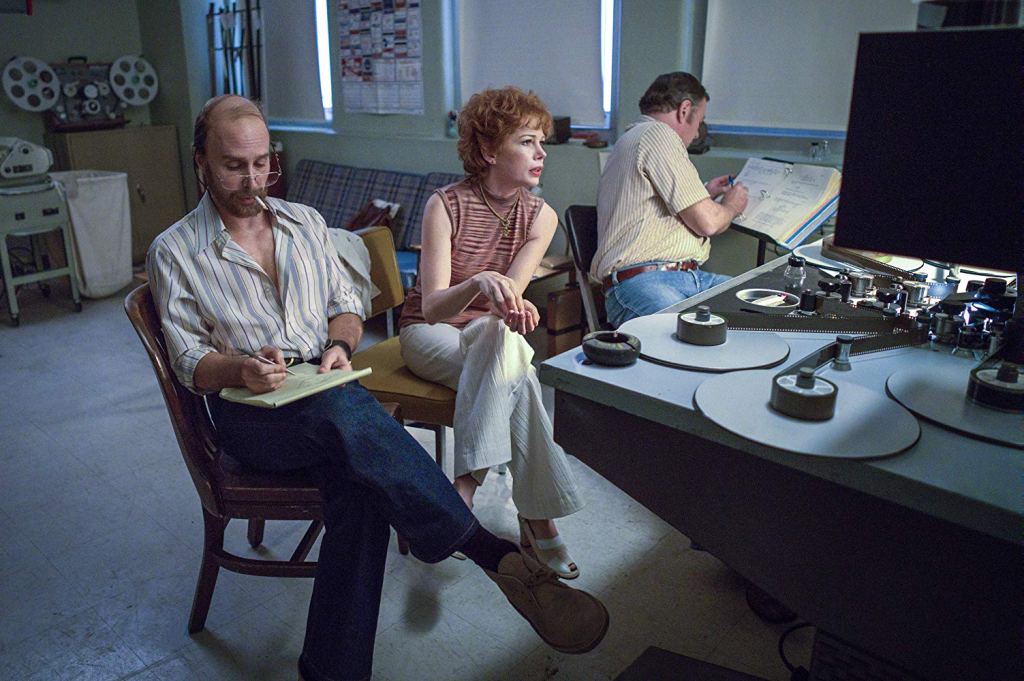
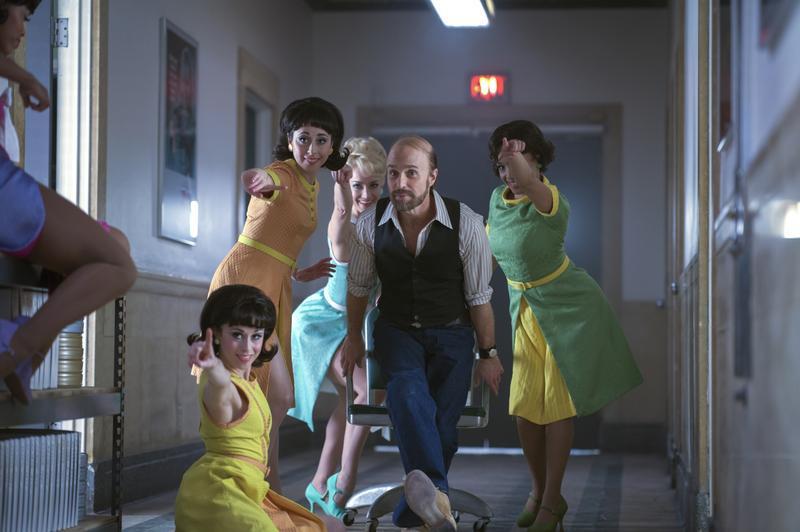
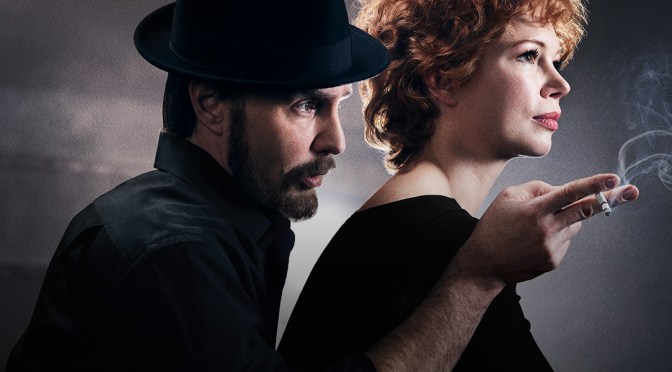
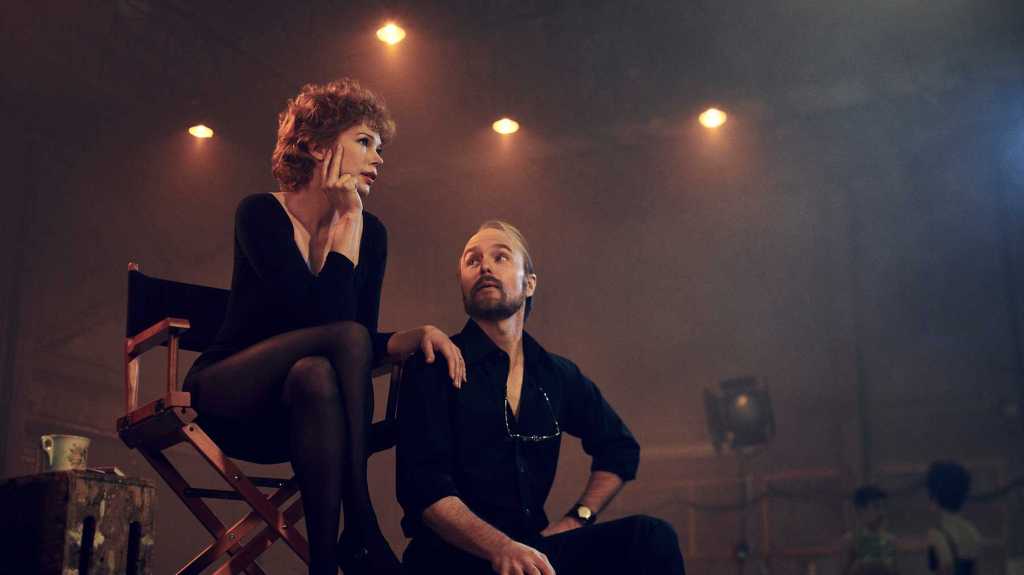
The making of Cabaret (1972) is one of the many creative events featured in Fosse/Verdon (2019). As the title suggests, it is an extensive biographical television drama about legendary director and choreographer Bob Fosse (Sam Rockwell) and the genius dancer, Gwen Verdon (Michelle Williams). Both their artistic and personal lives were entwined from the time they met on the Broadway musical Damn Yankees in 1955, to the moment of his death in 1987.

If you’re interested in musicals and the work of Fosse and Verdon then you will absolutely love this warts and all biopic. We get extensive rehearsal, on stage, on screen and edit room scenes showing Fosse and Verdon’s creative process. Songs and dance numbers from Cabaret, Sweet Charity, All That Jazz, Pippin, Chicago and many more, feature heavily in the play and fantastic soundtrack. Further, both Fosse and Verdon, were dancers from a very young age and we therefore get scenes from their formative years paying their dues in dives and flop-houses.

We also get the heavy drama of Fosse and Verdon’s marriage battles. The former being a pill-popping workaholic and womaniser was the biggest issue in their relationship. His constant affairs and narcissistic tantrums took their toll eventually. Indeed, Fosse, while an amazing creative force, is quite despicable in his lecherous use of the casting couch and exploitation of his position and power. Perhaps, even more could have been done to critique his negative acts, especially in light of the #MeToo gender issues relevant today. However, there is no aggressive damnation of his actions, but rather agnostic reflection and acceptance that this was prevalent masculine behaviour for the era.

Sam Rockwell as Fosse is outstanding. He conveys the sadness of a junkie, haunted by a dysfunctional and abusive childhood. Yet, where his work is concerned his energy and obsession is non-stop and formidable. This, in no small part, is down to his constant amphetamine abuse; something which would lead to mental and physical health issues. Similarly, Michelle Williams is incredible as Gwen Verdon. She inhabits this classy performer with an energy and drive, but also a fighting spirit when clashing with Fosse creatively and matrimonially. She is more his match than his muse though. Indeed, Verdon, is his equal and deserves to share many of his plaudits and awards. They ultimately would push each other to greater heights and achievements.

The supporting cast, including the magnetic Margaret Qualley as dancer, Anne Reiking, and Norbert Leo Butz portraying writer, Paddy Chayefsky are excellent. Also, the talent and look of the era is convincingly evoked on and off the stage. The cavalcade of dance numbers are superbly mounted and the editing perfectly reflects the fractured nature of the characters’ show business lives. Lastly, the jigsaw structure, which zigs and zags from the characters’ past to Fosse’s final days, charting triumph and adversity, complements the complexity of the characters.

Thus, overall, this works as an honest analysis of a flawed genius and his equally talented dance and life partner. It is highly recommended for those drawn to the darker side of creative artistry and personal relationships. But the question remains: should the work of Fosse be re-evaluated, especially in light of his extremely sexual and sexist behaviour? Is there a statute of limitation for genius and all that jazz? The Primetime Emmy awards panel do not seem concerned given Fosse/Verdon (2019) has received seven major nominations at time of writing. All of which it stands a great chance of winning!

Mark: 9 out of 11

ONCE UPON A TIME IN HOLLYWOOD (2019) – FILM REVIEW – A $90 MILLION “ARTHOUSE” & FETISHISTIC CLASSIC!

ONCE UPON A TIME IN HOLLYWOOD (2019) – FILM REVIEW

Directed and Written by: Quentin Tarantino

Produced by: David Heyman, Shannon McIntosh, Quentin Tarantino

Cast: Leonardo DiCaprio, Brad Pitt, Margot Robbie, Emile Hirsch, Timothy Olyphant, Margaret Qualley, Austin Butler, Al Pacino, Mike Moh, Bruce Dern, Dakota Fanning, Damien Lewis, Kurt Russell and many, many more.

Cinematography: Robert Richardson

**MAY CONTAIN SPOILERS**

From watching the trailers for Quentin Tarantino’s ninth film, Once Upon A Time in Hollywood (2019), I remember thinking: this looks so cool and I’m glad they haven’t given away much of the story here. Because, I hate those darned trailers which give away the story!

So, you watch Quentin Tarantino’s ninth film and then you realise, after the excessive running time, THERE ISN’T REALLY ANY STORY as such! Okay, DiCaprio’s character suffers an existential career crisis but that’s kind of it. Instead, you get mostly a nigh-on three-hour historical and cultural nostalgia trip down memory lane filtered through the artistic and fetishistic vision of one of cinemas great filmmaking iconoclasts.

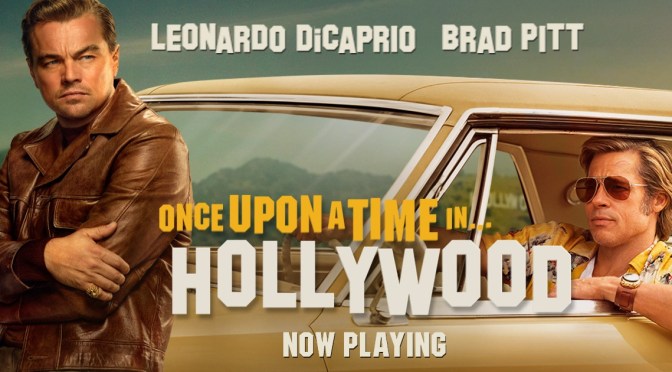
Once Upon A Time in Hollywood (2019), is essentially an arthouse character study where you get to hang out with two-and-a-half lead protagonists, plus a whole army of fictional and ‘real’ life supporting characters from the 1969 Hollywood era. Our two main “heroes” are neurotic, alcoholic B-movie actor, Rick Dalton (Leonardo DiCaprio), and tough, handsome and laconic, Cliff Booth (Brad Pitt). The two characters contrast and complement each other perfectly. Moreover, the star quality, chemistry and fine performances of the lead actors bind the movie together amazingly.

Brad Pitt is especially brilliant. His character is not, until the violent ending, given much to do story wise; however, he does it with such charm. He imbues a character who has accepted his place in the world with such easy-going humour and control, it is an absolute joy to watch. It’s an iceberg performance which seems shallow on the surface, but has hidden and unsaid depth. I really wanted to know more about his character, especially what appeared to be a very colourful backstory.

DiCaprio, on the other hand, has the showier performance. Edgy, hungover and insecure due to his characters’ fading Hollywood career, DiCaprio gives another fantastic movie performance. He commits to the Dalton character and features in some wonderful sketches which pay homage and parody B-movies, TV variety shows and old TV Westerns. What I loved was his ability to demonstrate different levels of acting skills. DiCaprio can fuck up Dalton’s acting on set one moment, but then deliver acting on a Shakespearean level the next.

Margot Robbie, who we know is a brilliant actor in her own right, alas, is not afforded the same level of care in regard to the characterisation of Sharon Tate. More of an ornamental character in the film, she looks great going to the cinema, packing a suitcase, driving and generally just being effervescent. Yet, it’s truly is one of the film’s major flaws that it doesn’t make more of Robbie’s acting talent. Even the fantastic ending, which Tarantino, takes incredible liberties with in regard to actual events, finds Tate’s character development unfortunately left bereft of emotion.

Similarly, the Hollywood cameos echoing throughout the films are pure style over substance. For example Steve McQueen, Roman Polanski and Bruce Lee feature but these are mostly inconsequential encounters. The Bruce Lee representation and scene is actually really funny as Cliff Booth and the martial arts star face off in a hilarious flashback. Typically, Tarantino has caused controversy with his Bruce Lee (Mike Moh) rendition. Personally, I respect that people may be offended, however, it’s more comedic and iconoclastic rather than overt racism. After all, this is a fairy-tale vision of Hollywood and not a documentary. Plus, Tarantino knows he’s going to piss people off so it’s obvious he’s playing with people here.

While Bruce Lee’s persona is playfully satirized or racist depending on your point-of-view, Tarantino’s representation of the Manson family is more damning. It’s clear he absolutely hates hippies, especially acid-looped killer hippies. Dalton and Booth represent the old-school, honest Hollywood working class, so are the antithesis of the drop-out youths. The culture clashes between this era and the new flower-power cults is something Tarantino explores. Charles Manson, who barely features, is a ghost-like figure though. Instead, it is the character of Tex (Austin Butler) and the females of the commune who are most prominent.

Margaret Qualley as Pussycat is especially hypnotic in her role. Exuding both sexuality and acid-drenched nihilism, Pussycat is a siren hitcher, luring drivers to symbolically crash against the cliffs. For me, Tarantino should have made way more of the old and new California culture clash themes, as they resonated powerfully when on screen. Plus, the scenes on the commune were actually quite creepy, so more should have been made of this threat from a dramatic perspective. Lastly, the irreverent and violent final act carnage exploits the clashing of these two different cultures, but more could have done throughout to enhance this dynamic.

Overall, Once Upon A Time In Hollywood (2019) is a near three-hour arthouse classic. If you like films about film and TV making, driving, feet, ensemble casts, films within films, cinema-going, Los Angeles, more feet; and hanging with the marvellous DiCaprio and Pitt in a 1969 setting, then you will love this beautifully rendered and lovingly crafted film about Hollywood. Otherwise, you will probably find it a boring, indulgent and style-over-substance folly. Either way you have to admire Tarantino’s exquisitely controlled writing and direction. He certainly does!!

Safe to say though Tarantino will not care either way, because most of his filmic output has made a lot of money at the box office. This has now allowed him the luxury, like that of true cinema artists such as Kubrick, Altman and Antonioni, to make whatever films a studio is prepared to give him the money for. He’s basically making films for himself and doesn’t care if the audience likes it or not.

I personally found myself magnetically drawn to Tarantino’s vision and from a purely filmmaking and artistic perspective I was totally immersed throughout. Having said that, if the incessant driving and shots of dirty feet were cut and Dalton and Booth had been given a proper plot, rather than the thin stranded narrative within the impressive gallery of cameos and set-pieces, I would definitely expect to be writing about one of the best films ever made.

Mark: 9.5 out of 11