Tag Archives: Matt Damon

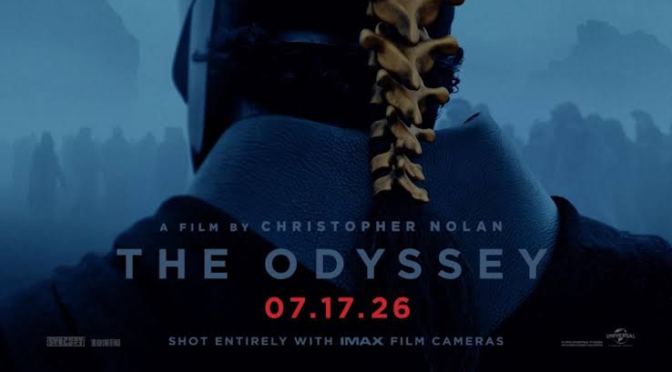
Cinema Review: The Odyssey (2026) – a loud, proud and phenomenal cinematic voyage!

Cinema Review: The Odyssey (2026)

Directed by Christopher Nolan

Screenplay by Christopher NolanBased on Homer’s Odyssey

Produced by Emma Thomas & Christopher Nolan


Main cast: Matt Damon, Tom Holland, Anne Hathaway, Robert Pattinson, Lupita Nyong’o, Samantha Morton, Zendaya, Charlize Theron, Himesh Patel, Jon Bernthal, John Leguizamo, Bill Irwin and many more!

Cinematography by Hoyte van Hoytema

Edited by Jennifer Lame

Music by Ludwig Göransson

*** REVIEW CONTAINS SPOILERS ***
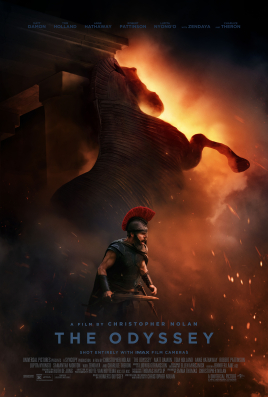


I’ve been weirdly reluctant to review Christopher Nolan’s rendition of Homer’s epic poem, The Odyssey (2026). Being honest, what I think of the film is pretty irrelevant. I mean, it’s an incredible feat of big budget filmmaking from, Sir Christopher Nolan, who remains one of the most brilliant filmmakers of the modern era. The film is likely to make more money at the box office than the debt of a small country as it sails the cinema seas. But I have to say amidst the incredible entertainment, stellar cast, jaw dropping sound and visuals and lengthy running time it does contain some dubious creative decisions, mainly where accents and casting are concerned.

I’m a big Nolan fan, but not all of his films land fully with me. My favourites remain: Memento (2000), The Prestige (2006), The Dark Knight (2008), Inception (2010) and Dunkirk (2017). Conversely, The Odyssey (2026) matches Oppenheimer (2023) for the array of Nolan’s ensemble of stars, confident and masterly direction, plus the sheer seismic scale of what his production team have committed to screen. Similarly though, while Cillian Murphy and Matt Damon give compelling performances as leaders in their field having to make tough choices to win wars, am I meant to care about these characters, who are effectively, “destroyers of worlds.”

Well, in J. Robert Oppenheimer’s case , dependent on your point of view, a huge debt of gratitude is owed to him and his team for producing a weapon to end all wars. If you ignore all the subsequent actual wars, proxy wars, invasions, conflicts and the blasted ‘Cold War’ which ensued after World War II ended, nuclear weapons have meant no other wars have occurred. So, The Odyssey (2026) is another Nolan film about war. But it’s also about duty, family, love, honour, comradeship, guilt and making the perilous journey home. Let’s be honest though, Odysseus is either a hero of Troy or a war criminal. Further, he’s a sneaky so and so – hiding in a gigantic hollow horse, and making the Trojans pull it into the city too! At least the Trojans got some cardiovascular exercise before they were all slaughtered.

Told in a non-linear fashion from shifting character perspectives, The Odyssey (2026) shows our hero and his crew facing a dangerous voyage back to Ithaca, questing the Gods, fighting nasty weather and meeting creatures like the Cyclops Polyphemus, gigantic metal knights, the Sirens, Charybdis and Scilla along the way. Furthermore, as well as focusing on Odysseus’ hazy, drugged memories, poisoned with lotus flowers by Calypso (a shrinking, Charlize Theron), we get woven historical flashes from Telemachus (Tom Holland) as he searches for his father, Penelope (Anne Hathaway) as she recounts their romantic commitments before the war, and Menelaus (Jon Bernthal), as he provides revelation on the post-war fate of his brother, King Agamemnon. I watched the stories-within-stories unfold totally enthralled and feeling like this was the Citizen Kane (1941) of epic mythical cinema.
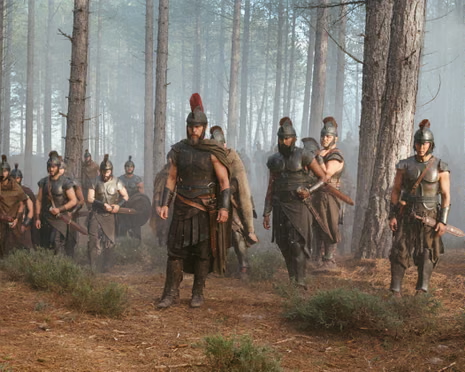


While the action and spectacle are undeniably compelling, it’s Nolan’s gift for weaving ancient myth into gripping cinema that impresses just as much. The casting, too, is full of intriguing choices. As expected, Nolan reunites with several familiar collaborators, and Matt Damon is superb as an ageing Odysseus – a battle-scarred general worn down by years of war but still determined to get his men home. Unfortunately, a string of catastrophically bad decisions ensures the gods have other ideas. In the world of The Odyssey (2026), poor judgement is practically a death sentence, and every time the crew think they’ve caught a break, another vengeful deity or monster appears to remind them who’s really in charge. None is more delightfully capricious than the witch Circe (Samantha Morton), who transforms the crew into pigs simply because… well, she can. Morton’s wonderfully imperious performance, thankfully delivered in her own British accent amidst an ocean of American ones, is a genuine scene-stealer.

Which does raise an interesting question. Why does Tom Holland, playing Telemachus, sound American? Is he following his on-screen father? Fair enough—but then what about the suitors, led by Antinous (Robert Pattinson), who’ve spent years occupying Ithaca while pestering Penelope and circling the throne like particularly persistent estate agents? Nolan famously pursued authenticity elsewhere, filming extensively in Greece, utilizing full-sized wooden ships, combining practical effects (Jet-Skis for the killer whirlpool) with discreet CGI, even building an enormous Cyclops model for Polyphemus. Yet somehow Jon Bernthal still sounds as though he’s just wandered in from a Brooklyn deli. (I know he’s not actually from Brooklyn… but, hey, what are ya gonna do?) The quest epics I grew up with often great British Shakespearean actors in them. While Laurence Olivier and Maggie Smith are not Greek either, they paradoxically somehow seem more authentic.

Still, The Odyssey (2026) is a glorious reminder of what cinemas were built for. It is loud, proud, unapologetically epic, and although it runs for three hours, the time flies even as it threatens to blow your eardrums out. This is filmmaking on the grandest possible scale—war, monsters, storms, impossible voyages and heroes—designed to overwhelm an audience in ways no living room ever could. Nolan understands that some stories demand the biggest IMAX screen imaginable. In an age when entertainment is increasingly consumed in fragments, The Odyssey (2026) insists on total immersion. It isn’t subtle, and it isn’t trying to be. It’s spectacular cinema in the truest sense of the word.

Perhaps that’s what cinema has always been for: gathering in the dark to watch wars, death and monsters on a screen, if only to distract ourselves from the wars, death and monsters waiting for us in reality. As the philosopher Guy Debord observed, “The spectacle is not a collection of images, but a social relationship between people that is mediated by images.” And as Heraclitus famously put it, “War is the father of all things.” The Odyssey (2026) reminds us that, three thousand years later, humans are still captivated and bombarded by both.
Mark: 9.5 out of 11


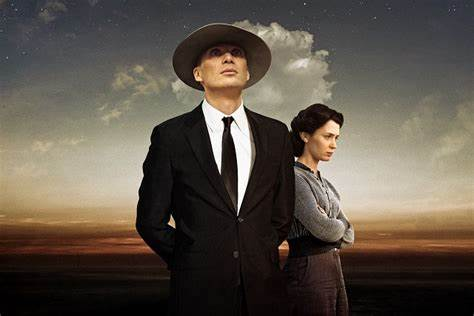
CINEMA REVIEW: OPPENHEIMER (2023)

CINEMA REVIEW: OPPENHEIMER (2023)

Directed by: Christopher Nolan

Screenplay by: Christopher Nolan

Based on: American Prometheus by Kai Bird and Martin J. Sherwin

Produced by: Emma Thomas, Charles Roven, Christopher Nolan

Cast: Cillian Murphy, Emily Blunt, Matt Damon, Robert Downey Jr., Florence Pugh, Josh Hartnett, Casey Affleck, Rami Malek, Kenneth Branagh, Tom Conti and many more.

Cinematography: Hoyte van Hoytema

*** MAY CONTAIN SPOILERS ***


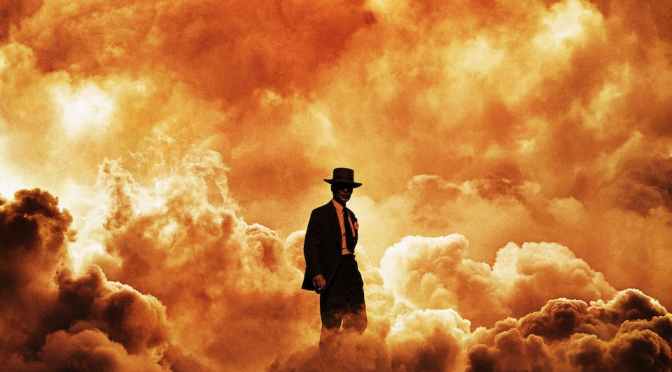
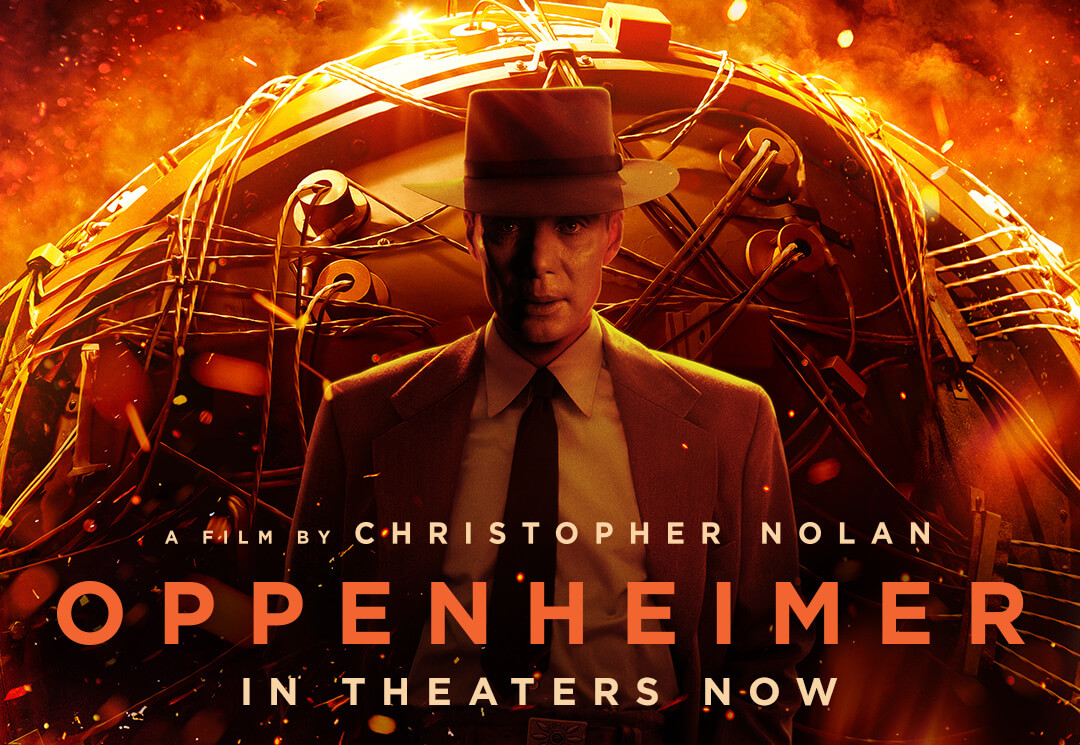
One wonders if Christopher Nolan sees himself reflected, on some subconscious level, in the character of J. Robert Oppenheimer. Both are geniuses within their chosen field, and both have had their critics who do not always agree with their choices. The intrinsic difference is that the work of Oppenheimer and his team of scientists created one of the most expensive and deadly weapons the world has even seen. His actions led to destruction and death on a mass scale. Christopher Nolan, on the other hand, merely creates expensive drama and destruction on a cinema screen for our entertainment.

J. Robert Oppenheimer is clearly a complex character to bring to life on the screen. Indeed, scientists are not always the most riveting of characters, nor particularly cinematic. Especially since they spend their days in laboratories, classrooms and have their heads buried in books. Thus, visually speaking it is a constant challenge for filmmakers to present such biopic narratives. Moreover, thematically, and philosophically there is much internal conflict to wrestle with. Especially someone as (in)famous as Oppenheimer. I mean, how does a man overcome the guilt of being responsible for the deaths of so many people?

Having said that, Oppenheimer, as the leader of the ‘Manhattan Project’ at Los Alamos, could also be interpreted as the saviour of lives. The invention of nuclear weapons is an act of aggression, but paradoxically also a shield of peace. Such is the fear generated by such a devastating tool we will never know how many lives the existence of nuclear bombs has saved. Unfortunately, human beings find other ways to kill each other. That sadly will never stop. Does Nolan explore these themes within the intense three hours of cinematic propulsion, Oppenheimer (2023)? It is certainly there in the subtext, but perhaps not as pronounced as I would have hoped.


Adapting American Prometheus by Kai Bird and Martin J. Sherwin, Christopher Nolan’s screenplay is highly intelligent and clearly professionally researched. It is also, when compared with the often-baffling Tenet (2020), simply structured. Events from Oppenheimer’s early life, post-war troubles with the United States government and the key stages of the ‘Manhattan Project’ are cut together in juxtaposing timelines throughout the lengthy running time. Nolan builds from the Senate and court hearings Oppenheimer faces after the war, where his security status is threatened with revocation due to his alleged association with the Communist party before the war.

That McCarthyistic-Red-Scare-paranoia was vilifying genuine heroes such as Oppenheimer is quite incredible, but unsurprising. I mean, here is a man, who served his country to personal cost and his own mental degradation. It is therefore a measure of his character, as presented via Cillian Murphy’s formidable portrayal, that he refuses to break in the face of constant questioning of his patriotism and commitment to America. I felt that the constant jolts from the Senate hearings, where Robert Downey Jnr’s, Lewis Strauss, is seeking election, to Oppenheimer’s security status “trial,” brought about an overly repetitive and talky series of scenes which bogged down the emotions for me.

Where the film truly blooms is when Oppenheimer makes his scientific breakthrough, builds his team of geniuses and the construction and testing of the nuclear weapons at Los Alamos. There is palpable suspense (even though we know what happens) in the race with the Germans to make the bomb first. Imagine if the Germans had won the race? It does not bear thinking about. The history of the world would have been irrevocably altered beyond comprehension. Nolan also does an effective job of keeping the scientific language at an understandable level, as he promotes personalities over jargon. Indeed, Nolan’s ultra-talented ensemble cast including Matt Damon, Rami Malek, Josh Hartnett, Dane DeHaan, Jason Clarke, Florence Pugh and the best of the lot, Robert Downey Jnr, are all superbly marshalled by the director.


As well as being rich in history and thematic power, Oppenheimer’s (2023) visuals, allied with Hoyte Van Hoytema’s pristine cinematography, are unsurprisingly impressive. Nolan makes the choice to switch between black-and-white and colour photography. This is initially jarring but works with the shifting character perspectives it is intended to denote. On the other hand, I would say the pulsating sound design and score felt overbearing at times. Similarly, one could argue the overload of cutting, aural battering and switching of film colour stock combine to overload the viewer and remove emotional and dramatic resonance.

Oppenheimer (2023) is another Nolan masterwork as he and Cillian Murphy will surely get Oscar nominations. Lastly, the film works best as a bullet-pointed history lesson, a fine tribute to a complex and flawed genius, and a powerful damnation of United States paranoid politics. However, the solipsist nature of Oppenheimer’s character study and crowd of talking heads often becomes dizzying, watering down the drama and emotion of this immaculate and nuclear work of cinema.

Mark: 9 out of 11


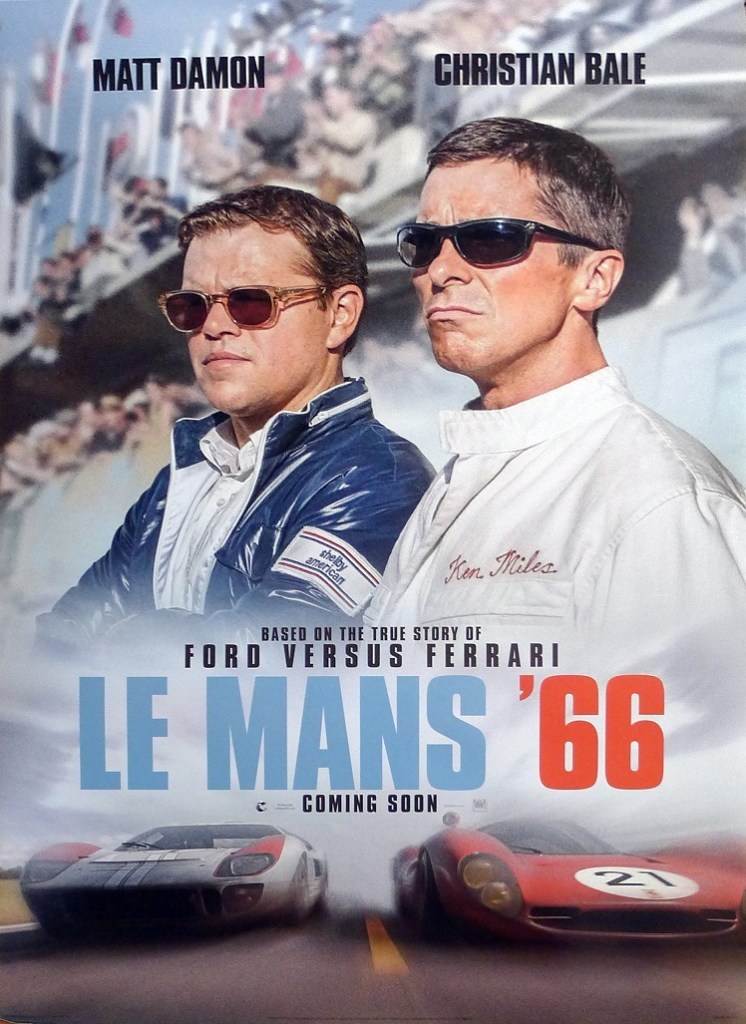
LE MANS ’66 (2019) – CINEMA REVIEW

LE MANS ’66 (2019) – CINEMA REVIEW

Directed by: James Mangold

Produced by: Peter Chermin, Jenno Topping, James Mangold

Written by: Jez Butterworth, John-Henry Butterworth, Jason Keller

Cast: Matt Damon, Christian Bale, John Bernthal, Catriona Balfe, Tracy Letts, Josh Lucas, Noah Jupe etc.

Cinematography: Phedon Papamichael

**MAY CONTAIN SPOILERS**


Le Mans ’66 (2019) — AKA Ford versus Ferrari (2019) — is a historical sports biopic centred on the desire by Ford Motors to take on and beat Ferrari during the legendary Le Mans 24-hour race. Now, I’m not a massive fan of motor racing itself. I mean I admire the sports men and women who compete, but it’s not one of my favourite sports. Having said that, due to the speed, visuals, action and rivalry involved, car racing lends itself to tremendous cinematic possibilities. Films such as Senna (2010), Rush (2013) and the hilarious comedy, Talladega Nights (2006), are testament to that.

Arguably the best sports films, e.g. Rocky (1976), Raging Bull (1980), The Wrestler (2008), A League of Their Own (1992), Remember the Titans (2000), Field of Dreams (1992), Moneyball (2011) to name a few, are not just about the sport, but the heroes, flawed characters or underdogs seeking to achieve victory or overcome adversity. Le Mans ’66 (2019) follows a similar pattern, but here the cars and racing scenes are very much to the fore. This is where the film really hits the mark with incredible direction, cinematography, visuals and editing style on the road and racetrack. Moreover, the costumes, locations, cars and rendition of the 1960’s era are all perfectly captured.


Off the track, the characters and emotional aspects are pretty strong too. They are led by the tremendous casting of Christian Bale as the driver, Ken Miles, and Matt Damon as salesman and car designer, Carroll Shelby. Bale is one of my favourite actors, and here he eschews masks and flashy prosthetics from previous roles, to present a volatile eccentric who is also an incredible mechanic and driver. Further, the ever-reliable ‘everyman’ actor, Matt Damon, produces another likeable and energetic performance as Shelby. The double act repartee between the obsessive Brummie, Miles, and smooth-talking Shelby, allows the narrative to cruise along splendidly.

One of the films’ weakness is that arguably the stakes aren’t particularly high. Of course, racing drivers are at risk of crashing, burning and losing their lives, so there is drama there. But, in essence, the filmmakers are asking for us to root for a billion-dollar company in Ford, against another big company in Ferrari. The excellent script however, by Jez and John-Henry Butterworth cleverly positions Miles and Shelby as outsiders attempting to overcome the obstacles put in their way by Ford’s corporate suits. These money-men are ably represented by Josh Lucas, Tracy Letts and the more sympathetic, John Bernthal. Ultimately, Miles and Shelby are car purists and technicians interested in the drive for perfection, rather than marketing, image and profits.

Overall, the film could have been trimmed for pace, ironically, in terms of running time. However, Le Mans ’66 (2019) works as a fine tribute to both Miles and Shelby’s talents and as a cinematic extravaganza. Indeed, James Mangold and his production team have produced some of the best driving scenes I have ever seen on the screen. What the film lacks in deep emotional impact is more than made up for by the kinetic velocity throughout, putting the film firmly in the leading pack of sports films.


Mark: 8.5 out of 11


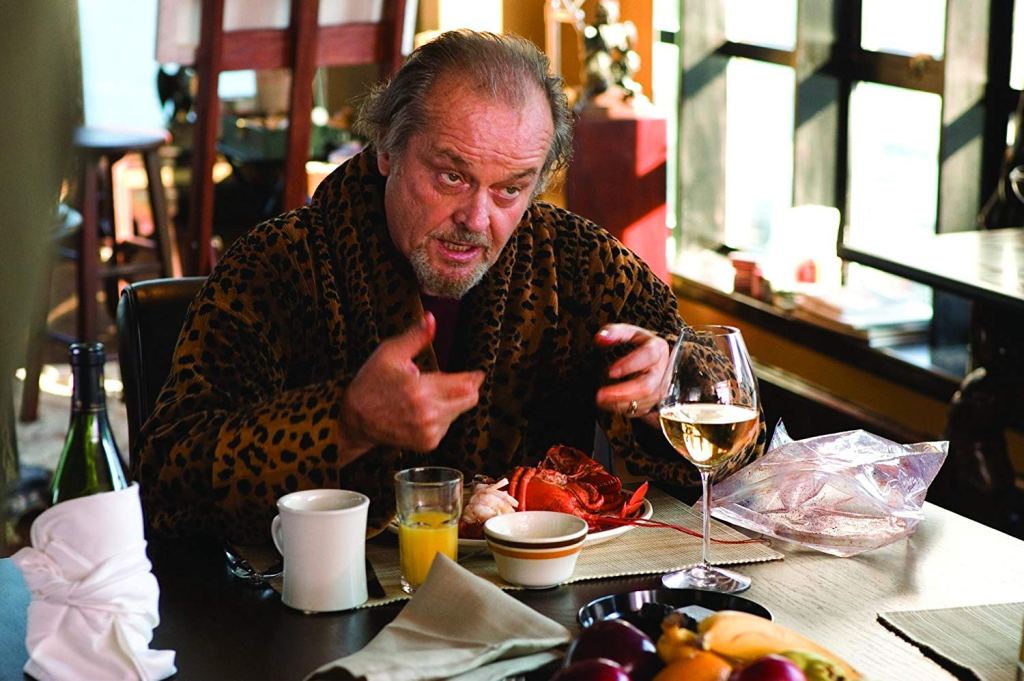
CLASSIC FILM REVIEW: THE DEPARTED (2006)

CLASSIC FILM REVIEW: THE DEPARTED (2006)

Directed by: Martin Scorsese

Produced by: Brad Pitt, Brad Grey, Graham King

Screenplay: William Monahan

Based on: Infernal Affairs (2002) by Alan Mak and Felix Chong

Cast: Leonardo DiCaprio, Matt Damon, Jack Nicholson, Mark Wahlberg, Martin Sheen, Vera Farmiga, Ray Winstone, Anthony Anderson, Alec Baldwin etc.

Cinematography: Michael Ballhaus

**CONTAINS MASSIVE SPOILERS**


“In my day you had two choices – be a criminal or a cop! When you’ve got a gun pointed at you – what’s the difference?” Frank Costello


Oscar-winning gangster film, The Departed (2006), is a vicious, double-crossing, paranoiac remake of the equally brilliant thriller, Infernal Affairs (2002). With a cast that reeks of testosterone and star quality, the incendiary William Monahan script is ferociously directed by filmmaking genius, Martin Scorsese. The legendary director and his production team, plus the terrific ensemble cast including Ray Winstone, Vera Farmiga, Matt Damon, Jack Nicholson, Martin Sheen and Leonardo DiCaprio, lift this story above the run-of-the-mill cops and robbers genre movie.

The Departed (2006) moves at a heady pace from the start, establishing Sullivan (Damon) and Costigan (DiCaprio) as”Staties” in the Massachusetts force. They both have deep secrets; both go deep undercover unknowingly trying to catch the other. Sullivan is a criminal masquerading as a brilliant cop in order to further gangland boss, Costello’s (Nicholson) power games. The edgy, streetwise Costigan, on the other hand, joins Costello’s gang in order to bring him down from the inside.


The film is shot and edited, as expected, with immaculate precision; crammed with unrelenting and bone-crushing thrills and violence. Thematically, it’s powerful too. Throughout, honesty and truth are obliterated by lies and death. Costigan and Sullivan are no more than pawns at the hands of a corrupt system that lets people down from a great height. This is literally the case where Martin Sheen’s Captain Queenan is concerned. His death is probably the most brutal demise of all. At times, I must admit, my head was spinning because of the twisting plot as Sullivan, in a Kafkaesque turn, ends up chasing himself as part of a serious crime investigation.

The screenplay by William Monahan is a ballsy joy, full of despicable protagonists and biting dialogue. While many of the characters are difficult to like, the plot. thrusting soundtrack, incredible performances and narrative suspense really get the heart racing. Nicholson and Wahlberg take special glee in spouting their offensive dialogue. DiCaprio too is brilliant as the paranoid cop, dragged into the mix through some screwy sense of righteousness. Lastly, Matt Damon’s portrayal of Sullivan is particularly astute, as he plays against that all-American good guy he is often cast as.


Amidst the cat-and-mouse shenanigans, merciless tragedy pervades throughout. Virtually everyone is a rat or cheating on someone as the film deconstructs the notion of loyalty. Consequently, most scenes blur the lines between good and bad, as characters attempt to out-wit and out-kill one other. By the end there is no good or bad in the traditional sense, just a bunch of wasted lives in an ultimately nihilistic pursuit of money and power. The characters exist in a rodent-infested Boston setting, distorting the distinction between truth and lies. Is there a difference? The Departed (2006), doesn’t discriminate; and there lies the truth.