Cinema review: Backrooms (2026)
Directed by Kane Parsons
Written by Will Soodik
Based on Backrooms by Kane Parsons
Produced by James Wan, Michael Clear, Roberto Patino, Shawn Levy, Dan Cohen, Dan Levine, Osgood Perkins, Chris Ferguson, Peter Chernin, Jenno Topping, Kori Adelson, etc.
Main cast: Chiwetel Ejiofor, Renate Reinsve, Mark Duplass, Finn Bennett, Lukita Maxwell, etc.
Cinematography by Jeremy Cox
*** MAY CONTAIN SPOILERS ***
Following hot-on-the-heels of Curry Barker’s recent low-budget horror film hit, Obsession (2025), comes another YouTube filmmaking sensation, the even younger, Kane Parsons. His found footage, YouTube series, Backrooms, films can be viewed here. It’s heavy on atmosphere, mystery, point-of-view terror suspense, themes relating to technology gone wrong, interdimensional space and time, mental breakdown, plus incredible eye-for-detail in terms of architecture and sound design. While there is a narrative thrust, each episode stands alone, drip feeding into the other as a scientific experiment gone awry, has somehow created a never-ending liminal space for bodies and minds to get lost in.
While I am not a fan of the found footage subgenre, Parsons is clearly an ultra-talented creative with an intriguing and imaginative vision. Using a mix of online 3D software, Blender, library sounds, live actor’s performance and voices, the Backrooms YouTube series is an enthralling visual, aural and psychological experience. I especially enjoyed piecing together the short episodes to create my own understanding of what is unfolding. I could also see influences from videogames such as Portal and Shane Carruth’s bamboozling time-travel cult film classic, Primer (2004). But what of A24’s big screen adaptation of Backrooms (2026)? Does it retain the power of the no-budget viral sensation essentially built by a teenager on his bedroom laptop?
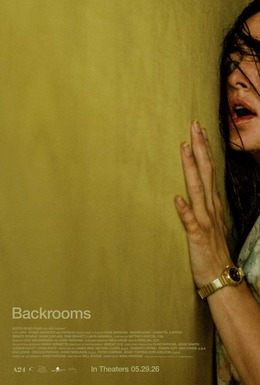
Directed by Kane Parsons himself, and supported by many more experienced filmmaker as producers, Backrooms (2026), stars Chiwetel Ejiofor, Renate Reinsve, and Lukita Maxwell. The film follows Clark (Ejiofor), a flailing furniture shop owner, recovering from a recent bitter divorce. After finding a spatial fissure in the shop he begins slipping between reality and a vast labyrinth of impossible rooms. After some time passes, Clark, has vanished to the rooms and his therapist, Mary (Reinsve) tries to find him in the ‘Backrooms.’ Here distorted memories, unresolved trauma, and an unknowable force lurk beyond every fluorescent-lit corridor. As the boundaries between the physical and psychological collapse, these characters must navigate an ever-shifting maze that seems determined to consume their identities.
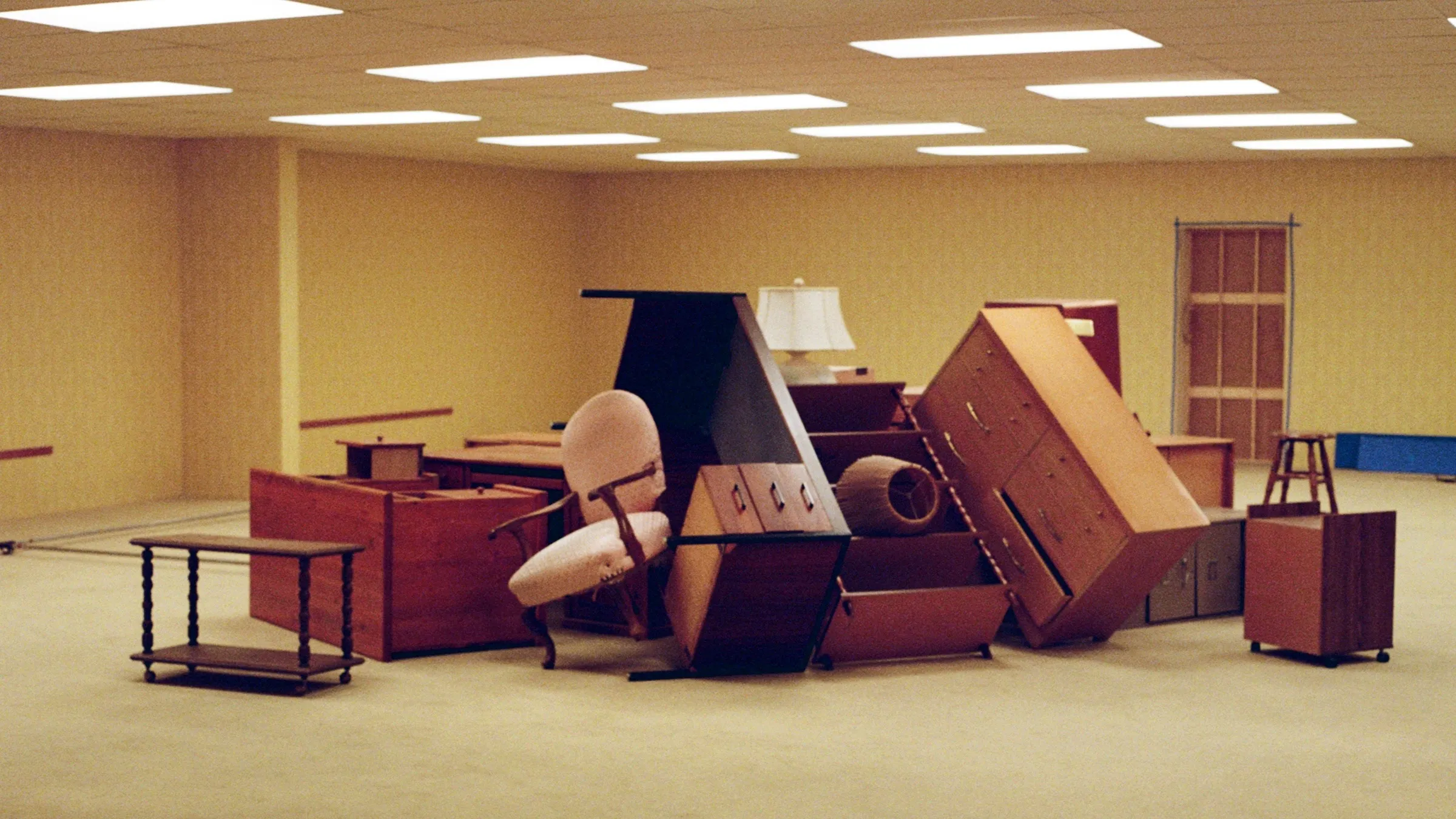
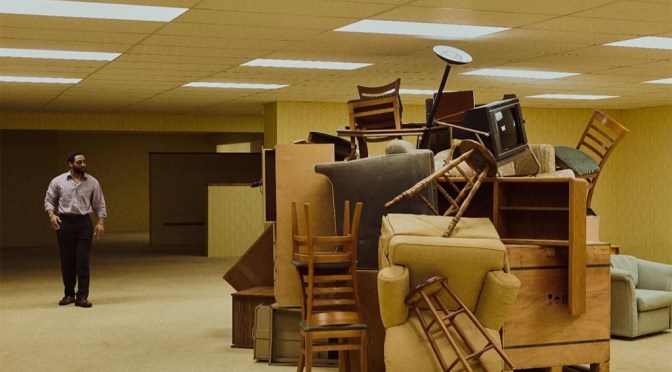
Parsons demonstrates remarkable visual ambition, translating his found-footage origins into a striking cinematic experience. The film’s warped architecture, unsettling spatial logic, eerie soundscape, and dreamlike production design create an atmosphere unlike anything else in contemporary studio horror. Oversized furniture, impossible room dimensions, and bizarre wall angles transform mundane office spaces into haunting liminal nightmares, showcasing a filmmaker with a singular visual imagination.
One of the film’s most interesting choices is its decision to graft a more traditional psychological-journey narrative onto the inherently abstract mythology. By focusing on character development and emotional trauma, the film adds a welcome layer of human depth that many adaptations of internet horror would lack. The performances, particularly from Renate Reinsve, ground the increasingly surreal proceedings with genuine emotional weight. Yet this approach comes with a paradoxical cost. The original Backrooms concept derives its terror from uncertainty, emptiness, and the sense that nothing can ever truly be understood. By providing emotional context and narrative explanations, the film inevitably diminishes some of that primal fear. What is gained in characterisation is, to some extent, lost in dread.
The issue becomes more apparent in the final act, where the film leans heavily into conventional monster horror. While technically accomplished, these sequences feel at odds with the uncanny atmosphere that makes the earlier sections so effective. The introduction of more explicit threats undercuts the terrifying ambiguity of the environment itself. Quite frankly, the creature-focused climax trips up what is otherwise an extraordinary visual achievement. Overall, the screenplay by Will Soodik has many strengths, yet Parsons’ vision remains the film’s greatest strength. Backrooms (2026) succeeds most when it trusts those images to do the frightening. It’s a fascinating, visually breath taking horror film that occasionally explains too much of what was once terrifying precisely because it could never be explained.
Mark: 8 out of 11 (Feature film) / 9 out of 11 (YouTube series)