Tag Archives: sea

Classic Film Review: Woman in the Dunes (1964)

Classic Film Review: Woman in the Dunes (1964)

Directed by Hiroshi Teshigahara

Screenplay by Kōbō Abe
Based on The Woman in the Dunes
by Kōbō Abe


Produced by Kiichi Ichikawa and Tadashi Ono

Main cast: Eiji Okada, Kyōko Kishida, Kōji Mitsui

Cinematography by Hiroshi Segawa

*** MAY CONTAIN SPOILERS ***
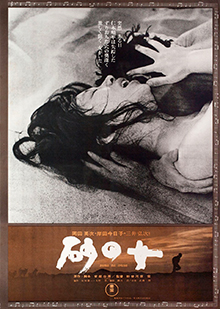


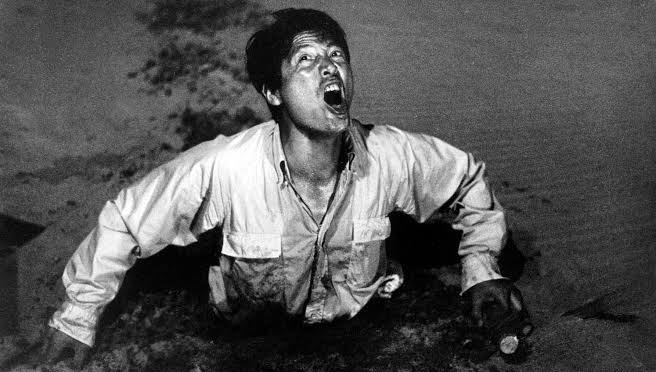
I’d never seen Woman in the Dunes (1964) before, but after watching the director’s cut on the BFI Player, it has now catapulted into one of the best films I have ever seen. This could be first-watch bias, however, thematically, emotionally, philosophically and stylistically speaking, it absolutely touched upon, connected and spoke to me greatly about my life’s experiences and the human condition.

Niki Junpei (Eiji Okada), a frustrated schoolteacher and amateur entomologist from Tokyo, travels to a remote coastal village in search of rare insects. After missing the last bus home, he accepts an invitation to stay overnight with a young widow (Kyōko Kishida) who lives alone in a hut at the bottom of a vast sand dune. He soon learns that her husband and daughter were killed in a sandstorm and that she spends every night shovelling away the endless sand that threatens to bury her home. Though Junpei initially sees himself as a temporary guest, strange comments from the villagers hint that something more sinister is unfolding.

The following morning, Junpei discovers that the rope ladder leading out of the sand pit has been removed. Trapped by the villagers, he realizes he has been chosen to become the widow’s permanent companion and labourer, helping her dig sand that the village secretly sells for profit. As he struggles to escape, Junpei learns that the widow is also a prisoner of the community, both of them controlled through dependence on the villagers for food and water. What begins as an accidental overnight stay becomes a nightmare of confinement, survival, and the gradual erosion of freedom beneath the relentless weight of the sand.
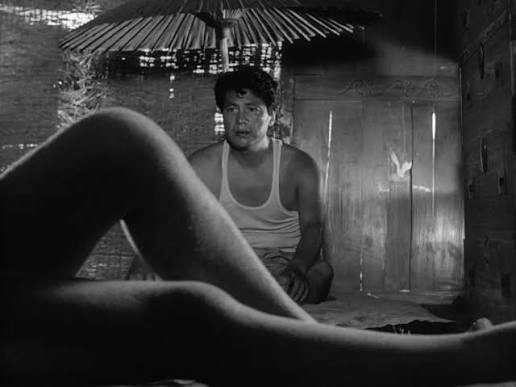


Hiroshi Teshigahara’s Woman in the Dunes (1964) is one of those rare films where image, character, theme and performance become inseparable. Shot in pristine black and white by cinematographer Hiroshi Segawa, it is visually astonishing: every grain of sand, bead of sweat and shadow across a human body is rendered with an almost microscopic intensity. The beauty of the photography is deliberately juxtaposed with the darkness of Niki Junpei’s predicament. What begins as an innocent expedition to collect insects becomes an existential prison, as he finds himself trapped by commerce, a surrogate marriage and, most powerfully, the natural wall of sand that pins both him and the unnamed widow to their strange subterranean existence.

The sand is both physical and metaphorical. It shifts, pours, consumes and rebuilds itself, turning Junpei’s captivity into a distinctly Sisyphean struggle. Every attempt at escape merely seems to return him to where he started, yet what makes Junpei such a compelling character is his absolute refusal to surrender. He builds ladders, devises increasingly ingenious escape plans, attempts to train crows to carry messages and continually tries to outwit the villagers who have ensnared him. Each failure intensifies rather than diminishes his determination. Like Sisyphus pushing the rock back up the hill, Junpei is condemned to confront an obstacle that endlessly renews itself.

Yet Woman in the Dunes (1964) is far more complicated than a straightforward story of imprisonment. Junpei is trapped by the villagers, but also by economic necessity, social expectation and an enforced domestic relationship that gradually begins to resemble a marriage. The villagers need the sand removed; the widow needs a man to help her survive; Junpei needs water, food and eventually human companionship. Teshigahara transforms this bizarre situation into a miniature society in which freedom itself becomes increasingly difficult to define. The more Junpei fights against his surroundings, the more deeply he becomes connected to them.

The relationship between Junpei and the widow, played with extraordinary physical and emotional commitment by Eiji Okada and Kyōko Kishida, gives the film its human core. Their intimacy moves between hostility, dependency, tenderness and desire without ever becoming conventional romance. Although sex is an important element of the film, Teshigahara rarely needs explicit imagery. Bodies appear as silhouettes, fragments and outlines; Kishida’s naked form is often suggested rather than displayed. A shoulder, a curve, a shadow or sand clinging to skin can communicate more than an explicit image ever could. One sees more from less throughout.



That principle extends to the entire film. Teshigahara makes the smallest details monumental. Sand resembles water, skin resembles landscape and the walls of the pit sometimes appear infinite. Extreme close-ups turn grains of sand into an entire universe, while wider compositions emphasise just how insignificant these two people are against the enormous shifting landscape surrounding them. The immaculate monochrome photography makes the film simultaneously beautiful and suffocating. The sand can look almost luminous in one shot and utterly threatening in the next.

There is also a wonderful irony at the heart of Junpei’s predicament. He arrives as an entomologist searching for insects, only to become a specimen himself: captured, observed and contained within a pit from which he cannot escape. The collector has become the collected. Teshigahara never labours the metaphor because he does not need to. It exists naturally within the imagery and situation, allowing the audience to discover its implications rather than having them explained.

Woman in the Dunes (1964) is virtually flawless in character, theme, cinematography, direction and performance. More than sixty years after its release, it remains startlingly modern and visually unlike almost anything else. Its central image — two human beings endlessly shovelling away a mountain of sand that will simply return tomorrow — is cinema distilled into an unforgettable metaphor for existence itself.

The only negative? Why didn’t I watch it sooner?
Mark: 10.5 out 11


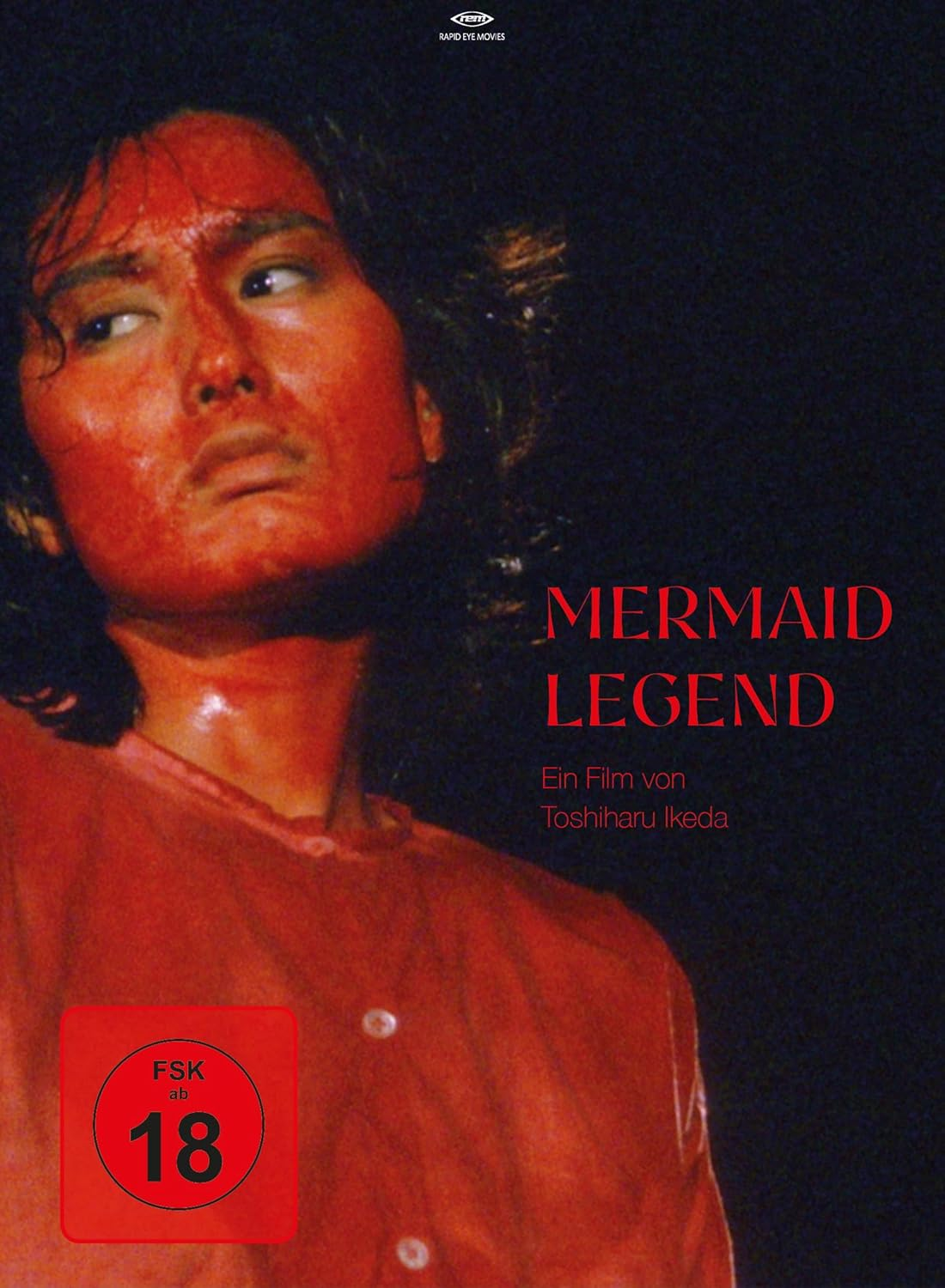
Cult Film Review: Mermaid Legend (1984) – a poetic but brutal hidden Japanese film gem!

Cult Film Review: Mermaid Legend (1984)

Directed by Toshiharu Ikeda

Screenplay by Takuya Nishioka

Main cast: Mari Shirato, Junko Miyashita, Kentarō Shimizu, Jun Etō, etc.

Cinematography by Yonezou Maeda

Music by Toshiyuki Honda

*** MAY CONTAIN SPOILERS ***


I took a gamble on an unknown Japanese film at the Nickel Cinema and walked out genuinely shaken. Mermaid Legend (1984) isn’t just a cult oddity—it’s a film that mutates before your eyes, seducing you with beauty before drowning you in blood. I was stunned by how something so lyrical could also be so brutally confrontational.

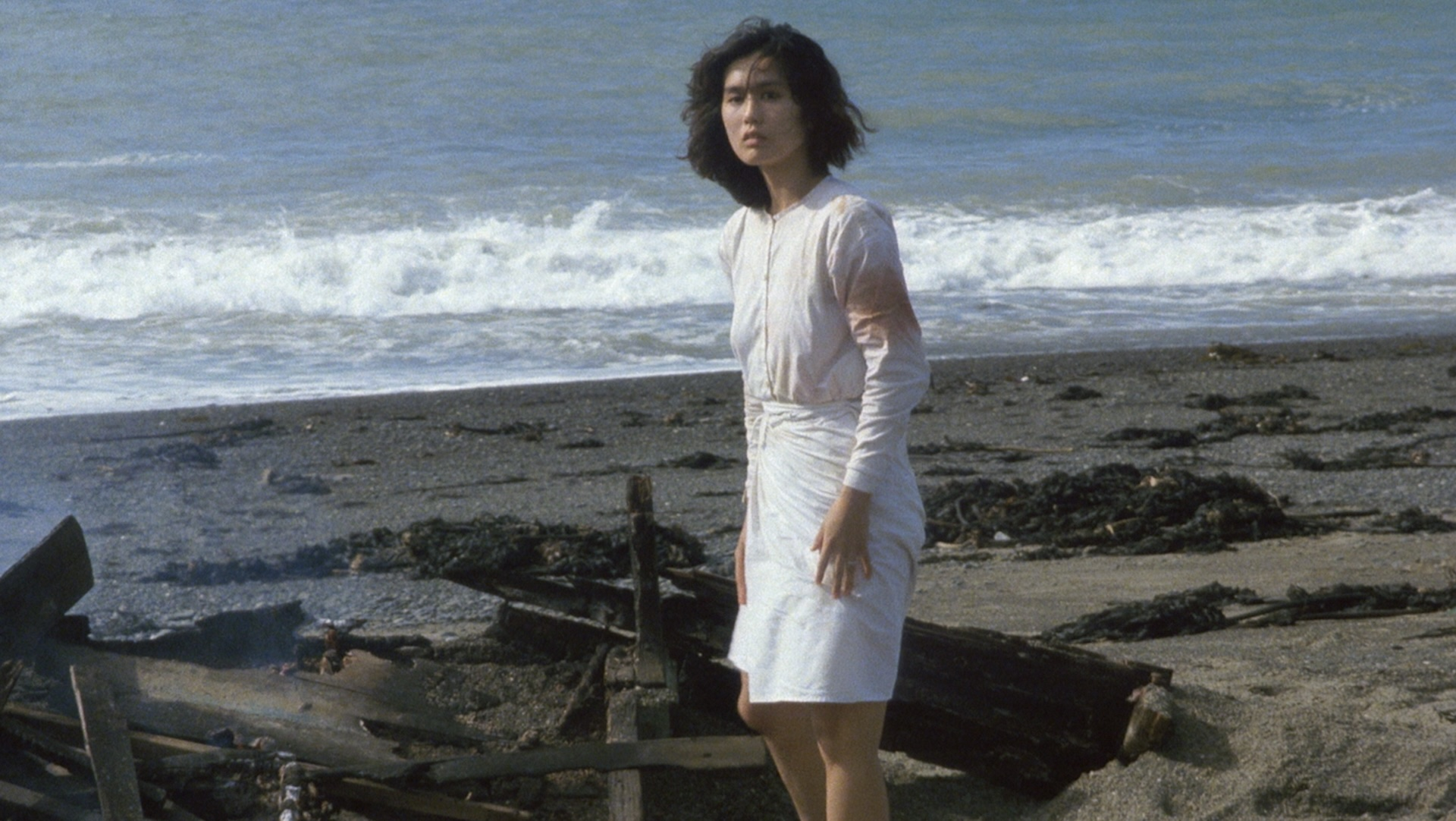
The story begins almost modestly, as a coastal drama about a fisherman and his wife, Migiwa. They bicker constantly, their marriage worn thin by poverty and exhaustion, yet there’s an undeniable bond beneath the arguments. That fragile domesticity is shattered when the fisherman stands in the way of an industrial development scheme. The business developers—faceless, polite, and utterly ruthless—have him murdered, disposing of his life as casually as industrial waste.

From there, Mermaid Legend (1984) transforms again. What starts as marital realism becomes a corporate espionage murder mystery, steeped in anger at nuclear energy, environmental destruction, and the cold machinery of corporate greed. Migiwa, a powerful-lunged pearl diver, initially hides, retreating into grief and the sea itself. But this is not a film about quiet mourning. When she decides to act, she does so with mythic force.


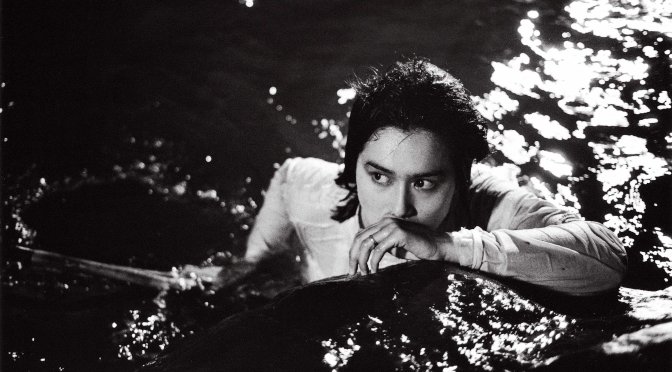
Played by the ethereal and astonishing Mari Shirato, Migiwa becomes something halfway between woman, avenging angel, and sea spirit. Shirato’s performance is magnetic—serene, sensual, and terrifying. As her vengeful pursuit begins, the film plunges headlong into extreme violence and explicit sexuality, reclassifying itself yet again as one of the most shocking exploitation epics I’ve seen from Japan in recent years. These scenes aren’t gratuitous in the lazy sense; they’re confrontational, weaponized, daring you to look away while refusing to let you feel comfortable for a second.

What makes Mermaid Legend (1984) so intoxicating is how its elements collide. Poetic underwater cinematography turns the ocean into a womb, a grave, and a cathedral. Religious, angelic, and environmental imagery blur together, as if Migiwa is both martyr and executioner. The music is heavenly—soaring, mournful, almost sacred—creating a surreal contrast with the carnage on screen. Beauty and brutality coexist in the same frame, each intensifying the other.

And then there’s the ending. The final, elongated pier stabbing rampage is completely off the chart—relentless, bloody, and hypnotic. It plays out like a ritual rather than an action sequence, stretching time until violence becomes abstraction, then meaning, then release. By the time the last body falls, Mermaid Legend (1984) has fully shed realism and entered the realm of legend, justifying its title in blood.

This is a film that shouldn’t work, yet does—furiously, defiantly. A genre-shifting fever dream that moves from domestic drama to political thriller to erotic exploitation to mythic revenge tragedy, Mermaid Legend (1984) is both beautiful and brutal, and I can’t stop thinking about it. Seeing it by chance at the Nickel Cinema felt like discovering a secret too powerful to stay hidden.

Mark: 9.5 out of 11


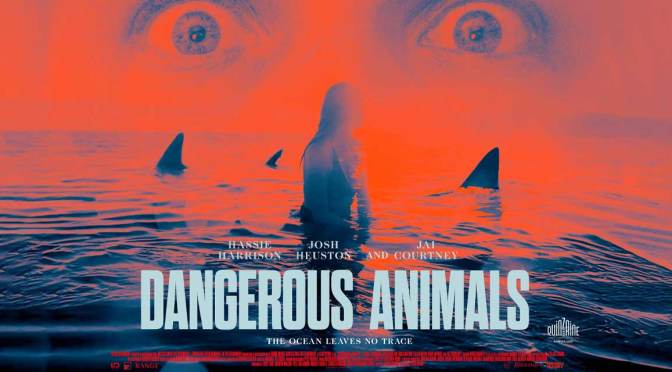
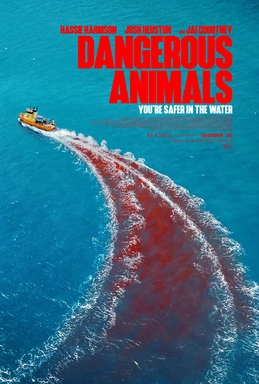
Cinema Review: Dangerous Animals (2025) sprays ‘Jaws’-dropping and bloody thrills!

Cinema Review: Dangerous Animals (2025)

Directed by Sean Byrne

Written by Nick Lepard

Produced by Troy Lum, Andrew Mason, Pete Shilaimon, Mickey Liddell, Chris Ferguson & Brian Kavanaugh-Jones

Main Cast: Hassie Harrison, Josh Heuston, Rob Carlton, Ella Newton, Liam Greinke, Jai Courtney etc.

Cinematography by Shelley Farthing-Dawe

*** MAY CONTAIN SPOILERS ***


Set amidst the golden beaches and deep blue sea of the Gold Coast, Australia, the film begins with boat captain, Tucker (Jai Courtney) springing a shocking and literal tourist trap. The film then moves onto establishing a fledgling romance between surf drifter, Zephr (Hassie Harrison) and local office clerk, Moses, (Josh Heuston). What then follows is a brutal and gory thriller which had me on the edge-of-my-popcorn throughout. It also once again proves that human beings are more of a threat than the actual big fish in the sea.

Dangerous Animals (2025) consistently delivers thrills thanks to Nick Lepard’s witty, nasty script and two standout performances. Hassie Harrison shines as a gutsy fighter who refuses to play the victim, while Jai Courtney both embodies and skewers the Aussie male stereotype in a scenery-chewing turn sharper than a shark’s jaws. His hulking frame, blunt verbals and piercing looks emulate a predatory fearfulness throughout creating one of the most memorable screen villains in recent years.

After watching the trippy Kafkaesque Nicolas Cage beach thriller not long ago, The Surfer (2024), I found Australian toxic masculinity once again raising its head with blood and bite in the Jaws-meets-Silence of the Lambs suspense thriller. Dangerous Animals (2025) isn’t without minor plot snags, but ultimately Lepard’s twisted script ensures we care about the leads, weaving a believable romance amid tense shark attacks and sea-sprayed suspense. Director, Sean Byrne, orchestrates the shark and human action brilliantly on a relatively low budget, ensuring the result is a lean, bloody, and entertaining ride that bites down hard and doesn’t let go.

Mark: 8 out of 11


PORTRAIT OF A LADY ON FIRE (2019) – CINEMA REVIEW

PORTRAIT OF A LADY ON FIRE (2019) – CINEMA REVIEW

Directed by: Celine Sciamma

Produced by: Veronique Cayla, Benedicte Couvreur

Written by: Celine Sciamma

Cast: Noemie Merlant, Adele Haenel, Luana Bajrami, Valeria Golino

Cinematography: Claire Mathon

**MAY CONTAIN SPOILERS**


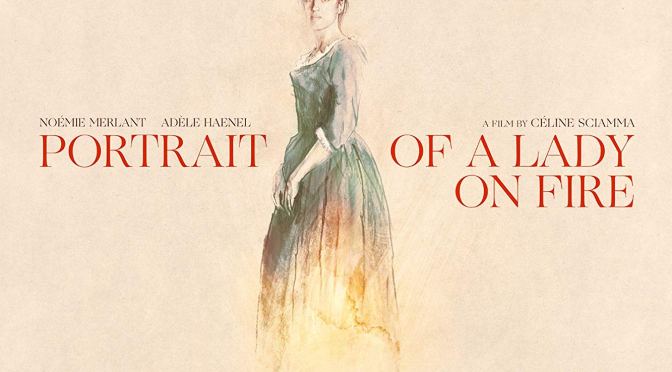
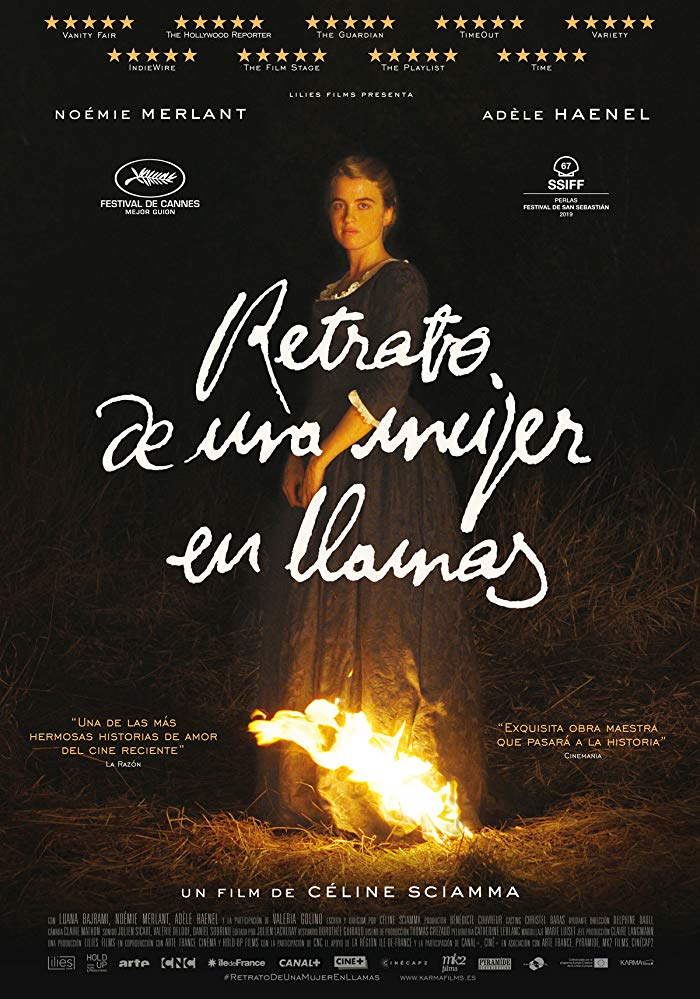
I haven’t seen any of Celine Sciamma’s previous films, but based on the romantic drama, Portrait of a Lady on Fire (2019), she is a filmmaker of formidable power and vision. I believe this is her fourth feature film directorial release and it is as sumptuous, moving, exquisitely shot and constructed a love story as you are going to witness. Moreover, it is proof that the art of screenwriting, compared to many by-the-numbers Hollywood film productions, is NOT dead.

The story is very simple. At the end of the 18th century, a young painter, Marianne, (Noemie Merlant) is commissioned to create a portrait of a young woman, Heloise (Adele Haenel). Heloise is, as is the tradition of the time, required by her mother (Valeria Golino), to marry a Milanese nobleman. He needs to see the portrait in advance in order to agree to the wedding. The only catch is, the insular Heloise, does not want to be painted for all manner of understandable reasons. What this establishes is two very intriguing characters, both with different emotions and desires.


Following the beautifully rendered story foundation, what follows is a magnetic series of scenes which subtly push these two empathetic characters together. Marianne is the artist who, at first keeps her distance, spying and analysing Heloise. Heloise is cool, sensitive and a prisoner on the Brittany island, trapped by the waves of the sea and her mother’s insistence on a society wedding. Over the space of a few days the walking companions become drawn to each other both artistically and emotionally. But, it’s no sordid desire for lust, rather a respectful and honest joining in romance. We, as the audience, literally see love grow before us thanks to some incredible acting from the leads.

Often the cinema critics will heap praise on a film and I will wonder what they have been watching. However, in regard to both Parasite (2019) and Portrait of a Lady on Fire (2019), the plaudits are so well deserved. Both are brilliantly written and shot works of cinema, that in the past may have been consigned to just the arthouse circuit. Further, given the film is about painting, it is unsurprisingly Portrait of a Lady on Fire (2019) is framed, lit and composed with an eye for the artistic. Yet, it isn’t just the look and colour of the film that impresses. Sciamma and her cinematographer, Claire Mathon, also create a series of haunting shots which will be indelibly scorched on my mind.

In terms of the themes, the film is very powerful too. As well the notion of art as a means of representing love, the narrative explores concepts of female equality and solidarity. There is an interesting subplot involving a member of the household staff, which adds to the thematic texture. Furthermore, the performances by all the actresses are superb too as Sciamma directs with such confidence. I also liked that the critique of patriarchal society was implicit rather than didactic. Also subtly realised are the tasteful love scenes, which never feel exploitational. My only minor criticism is that the opening hour could, arguably, have been trimmed slightly. However, what do you leave out of a film as beautifully composed, delicately written and emotionally compelling as Portrait of a Lady on Fire (2019)? I, a mere mortal, am not qualified to say in the face of such mesmerizing cinema.

Mark: 9.5 out of 11


LFF REVIEW – THE LIGHTHOUSE (2019) – SPOILER FREE

LFF REVIEW – THE LIGHTHOUSE (2019)

Directed by: Robert Eggers

Written by: Max Eggers, Robert Eggers

Produced by: Rodrigo Texeira, Jay Van Hoy, Lourenco Sant Anna, Robert Eggers, Youree Henley

Cast: Willem Dafoe, Robert Pattinson

Cinematography: Jarin Blaschke

******* SPOILER FREE ********


Robert Eggers debut feature, The Witch (2015), was a startling debut and deserved the critical acclaim it received. Alas, personally, it left me cold as a story, because I felt little empathy for the characters. By the end, I was totally disconnected from the madness that ensued. Yet, while it failed as a horror film, it did have great performances from the cast and an incredible eye for period detail and language.

Obviously, a talented filmmaker such as Eggers is not going to care what I think; and quite right he is too. Building on the folklore and legends of yesteryear established in The Witch (2015), he has once again delivered a highly ambitious cinematic work on a relatively low budget with The Lighthouse (2019). Indeed, with a superbly researched screenplay full of salty dialogue, authentic locations and insane visuals, I connected way more to this than his debut film.

Shot on black-and-white 35mm with a 1: 19 aspect ratio, Eggers has left us in no doubt his intention to aim for the cinema for the purists among you. Formally though, these creative choices also force the audience into the same claustrophobic, black-hearted watery hell our characters must endure. Moreover, Eggers takes joy in oppressing his characters and the audience. The Lighthouse (2019) is a brilliant but harsh to watch. I mean I felt like I’d been working on a bloody lighthouse myself, such was my mental exhaustion by the end.

The film benefits from two incredible acting performances by Willem Dafoe and Robert Pattinson. Dafoe represents the experienced sea-dog, with Pattinson as the younger and more secretive, Winslow, The two men drink, eat, work, spar, clash, fart, shout, drink some more and slowly but surely begin to unravel amidst the isolation of the unforgiving rocks, crashing waves and squawking gulls. Full of incredible imagery, devilish sounds and creeping dread, ultimately, The Lighthouse (2019) is a hard film to endure, but an even harder one to forget.

Mark: 8.5 out of 11