Tag Archives: Chris Ferguson

Cinema review: Backrooms (2026) – an eerily impressive adaptation of the YouTube viral sensation!

Cinema review: Backrooms (2026)

Directed by Kane Parsons

Written by Will Soodik

Based on Backrooms by Kane Parsons

Produced by James Wan, Michael Clear, Roberto Patino, Shawn Levy, Dan Cohen, Dan Levine, Osgood Perkins, Chris Ferguson, Peter Chernin, Jenno Topping, Kori Adelson, etc.


Main cast: Chiwetel Ejiofor, Renate Reinsve, Mark Duplass, Finn Bennett, Lukita Maxwell, etc.

Cinematography by Jeremy Cox

*** MAY CONTAIN SPOILERS ***
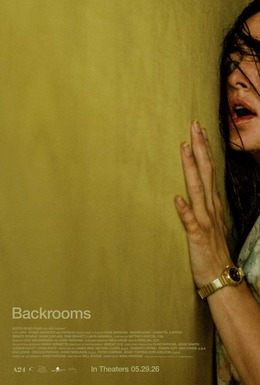


Following hot-on-the-heels of Curry Barker’s recent low-budget horror film hit, Obsession (2025), comes another YouTube filmmaking sensation, the even younger, Kane Parsons. His found footage, YouTube series, Backrooms, films can be viewed here. It’s heavy on atmosphere, mystery, point-of-view terror suspense, themes relating to technology gone wrong, interdimensional space and time, mental breakdown, plus incredible eye-for-detail in terms of architecture and sound design. While there is a narrative thrust, each episode stands alone, drip feeding into the other as a scientific experiment gone awry, has somehow created a never-ending liminal space for bodies and minds to get lost in.

While I am not a fan of the found footage subgenre, Parsons is clearly an ultra-talented creative with an intriguing and imaginative vision. Using a mix of online 3D software, Blender, library sounds, live actor’s performance and voices, the Backrooms YouTube series is an enthralling visual, aural and psychological experience. I especially enjoyed piecing together the short episodes to create my own understanding of what is unfolding. I could also see influences from videogames such as Portal and Shane Carruth’s bamboozling time-travel cult film classic, Primer (2004). But what of A24’s big screen adaptation of Backrooms (2026)? Does it retain the power of the no-budget viral sensation essentially built by a teenager on his bedroom laptop?

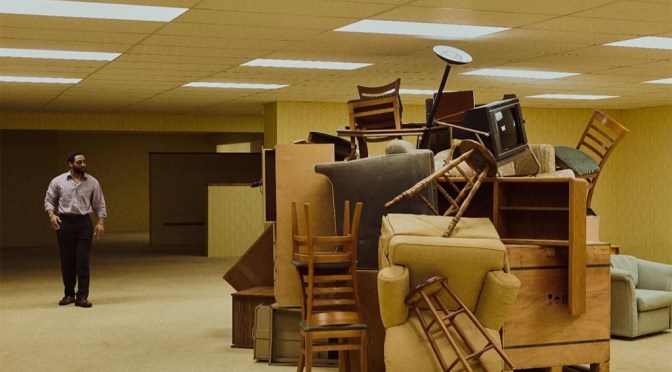
Directed by Kane Parsons himself, and supported by many more experienced filmmaker as producers, Backrooms (2026), stars Chiwetel Ejiofor, Renate Reinsve, and Lukita Maxwell. The film follows Clark (Ejiofor), a flailing furniture shop owner, recovering from a recent bitter divorce. After finding a spatial fissure in the shop he begins slipping between reality and a vast labyrinth of impossible rooms. After some time passes, Clark, has vanished to the rooms and his therapist, Mary (Reinsve) tries to find him in the ‘Backrooms.’ Here distorted memories, unresolved trauma, and an unknowable force lurk beyond every fluorescent-lit corridor. As the boundaries between the physical and psychological collapse, these characters must navigate an ever-shifting maze that seems determined to consume their identities.
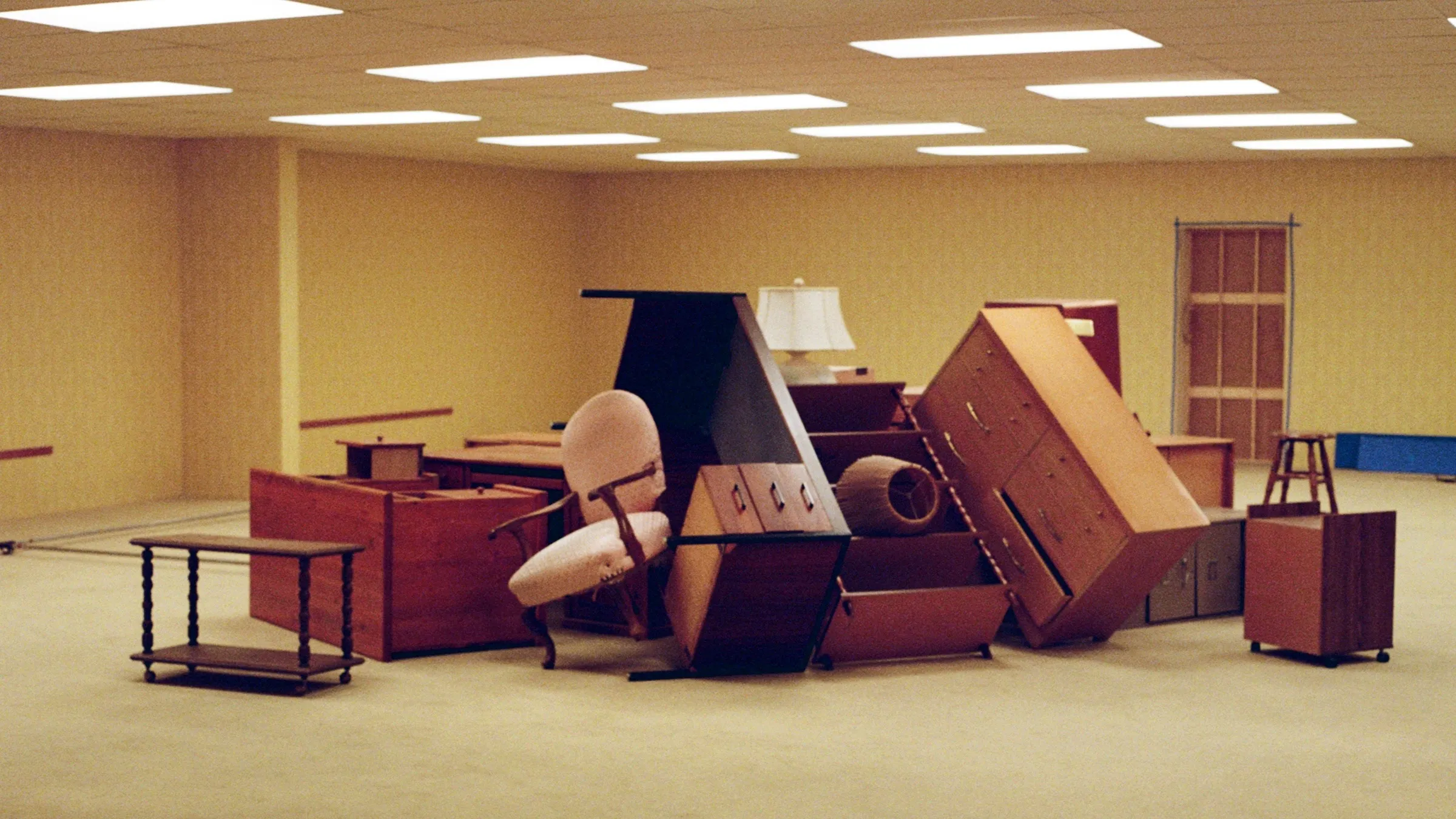


Parsons demonstrates remarkable visual ambition, translating his found-footage origins into a striking cinematic experience. The film’s warped architecture, unsettling spatial logic, eerie soundscape, and dreamlike production design create an atmosphere unlike anything else in contemporary studio horror. Oversized furniture, impossible room dimensions, and bizarre wall angles transform mundane office spaces into haunting liminal nightmares, showcasing a filmmaker with a singular visual imagination.

One of the film’s most interesting choices is its decision to graft a more traditional psychological-journey narrative onto the inherently abstract mythology. By focusing on character development and emotional trauma, the film adds a welcome layer of human depth that many adaptations of internet horror would lack. The performances, particularly from Renate Reinsve, ground the increasingly surreal proceedings with genuine emotional weight. Yet this approach comes with a paradoxical cost. The original Backrooms concept derives its terror from uncertainty, emptiness, and the sense that nothing can ever truly be understood. By providing emotional context and narrative explanations, the film inevitably diminishes some of that primal fear. What is gained in characterisation is, to some extent, lost in dread.

The issue becomes more apparent in the final act, where the film leans heavily into conventional monster horror. While technically accomplished, these sequences feel at odds with the uncanny atmosphere that makes the earlier sections so effective. The introduction of more explicit threats undercuts the terrifying ambiguity of the environment itself. Quite frankly, the creature-focused climax trips up what is otherwise an extraordinary visual achievement. Overall, the screenplay by Will Soodik has many strengths, yet Parsons’ vision remains the film’s greatest strength. Backrooms (2026) succeeds most when it trusts those images to do the frightening. It’s a fascinating, visually breath taking horror film that occasionally explains too much of what was once terrifying precisely because it could never be explained.

Mark: 8 out of 11 (Feature film) / 9 out of 11 (YouTube series)
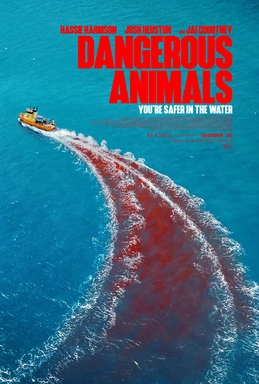
Cinema Review: Dangerous Animals (2025) sprays ‘Jaws’-dropping and bloody thrills!

Cinema Review: Dangerous Animals (2025)

Directed by Sean Byrne

Written by Nick Lepard

Produced by Troy Lum, Andrew Mason, Pete Shilaimon, Mickey Liddell, Chris Ferguson & Brian Kavanaugh-Jones

Main Cast: Hassie Harrison, Josh Heuston, Rob Carlton, Ella Newton, Liam Greinke, Jai Courtney etc.

Cinematography by Shelley Farthing-Dawe

*** MAY CONTAIN SPOILERS ***


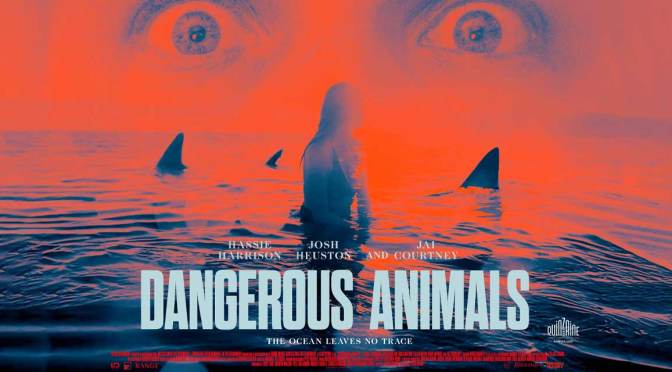
Set amidst the golden beaches and deep blue sea of the Gold Coast, Australia, the film begins with boat captain, Tucker (Jai Courtney) springing a shocking and literal tourist trap. The film then moves onto establishing a fledgling romance between surf drifter, Zephr (Hassie Harrison) and local office clerk, Moses, (Josh Heuston). What then follows is a brutal and gory thriller which had me on the edge-of-my-popcorn throughout. It also once again proves that human beings are more of a threat than the actual big fish in the sea.

Dangerous Animals (2025) consistently delivers thrills thanks to Nick Lepard’s witty, nasty script and two standout performances. Hassie Harrison shines as a gutsy fighter who refuses to play the victim, while Jai Courtney both embodies and skewers the Aussie male stereotype in a scenery-chewing turn sharper than a shark’s jaws. His hulking frame, blunt verbals and piercing looks emulate a predatory fearfulness throughout creating one of the most memorable screen villains in recent years.

After watching the trippy Kafkaesque Nicolas Cage beach thriller not long ago, The Surfer (2024), I found Australian toxic masculinity once again raising its head with blood and bite in the Jaws-meets-Silence of the Lambs suspense thriller. Dangerous Animals (2025) isn’t without minor plot snags, but ultimately Lepard’s twisted script ensures we care about the leads, weaving a believable romance amid tense shark attacks and sea-sprayed suspense. Director, Sean Byrne, orchestrates the shark and human action brilliantly on a relatively low budget, ensuring the result is a lean, bloody, and entertaining ride that bites down hard and doesn’t let go.

Mark: 8 out of 11


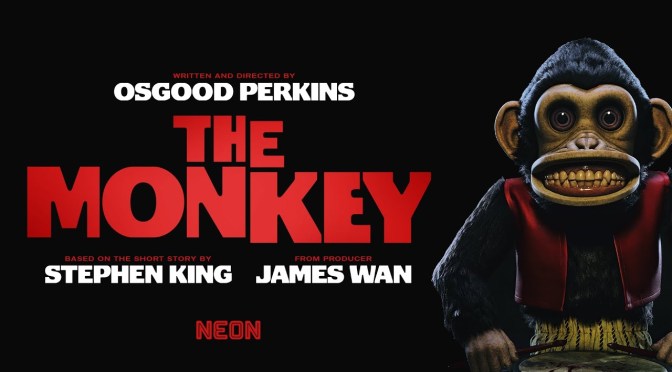
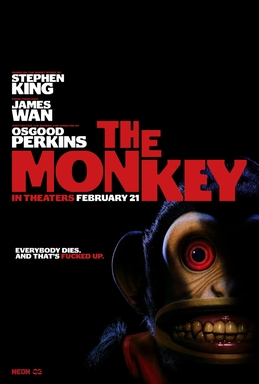
Cinema Review: The Monkey (2025) – a hilarious horror sketch-show with gore masking an inconsistent totemic tale!

Cinema Review: The Monkey (2025)

Directed by Osgood Perkins

Written by Osgood Perkins

Based on “The Monkey” by Stephen King

Produced by James Wan, Dave Caplan, Brian Kavanaugh-Jones, Chris Ferguson, etc.

Main Cast: Theo James, Tatiana Maslany, Christian Convery, Colin O’Brien, Rohan Campbell, Sarah Levy, Adam Scott and Elijah Wood.

Cinematography by Nico Aguilar


Following the financial success of his 2024 psychological thriller Longlegs (2024), Osgood Perkins has recently embarked on adapting Stephen King’s short story, The Monkey, into a feature film. While I didn’t quite connect with it Longlegs (2024) it had many impressed with its strange, atmospheric tension as well as Nic Cage’s crazy look and performance. The Monkey (2025), differs in tone though as it this adaptation with a blends horror and dark comedy, allowing Perkins to showcase his versatility as a filmmaker.

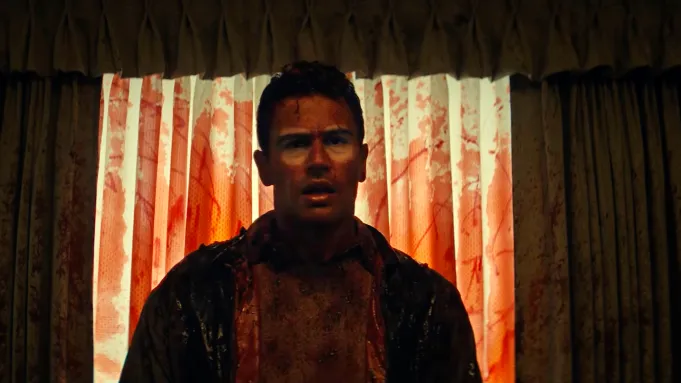
The narrative of The Monkey (2025) centres on twin brothers, portrayed by Theo James, who encounter a cursed toy monkey linked to a series of gruesome deaths. Perkins expands upon King’s original short story, infusing it with themes of family, fatherhood, reconciliation and a litany of grisly sudden deaths. Having found the simian death totem as teenagers, Hal and Bill Shelburn find their lives and those around them impacted in the most bloody explosive of ways. Indeed, there is much thought and planning given to these Saw and Final Destination franchise influenced on-screen set-pieces. In fact, the exquisite surprise and laugh-out-loud hilarity which occur throughout somewhat overpowers any emotional connection with the thinly-written protagonists.


The film’s gore and relentless pace are undeniably its strongest assets — the kills are extreme, inventive, and staged with a gleeful disregard for realism, echoing the chaotic energy of ’80s horror comedies. Each death sequence feels like a miniature horror short, packed with practical effects and over-the-top carnage. Perkins crafts these moments with a twisted sense of humour, making the film feel like a sketch-show carousel of nightmarish vignettes, each more outrageous than the last.

However, despite the visceral fun, The Monkey (2025) struggles to leave a lasting impression. Unlike the original Saw (2004) by James Wan and Leigh Whannell — a film that balanced its brutal horror with sharp social commentary and tightly woven mythology — Perkins’ adaptation lacks a deeper foundation. The cursed toy monkey serves as a simple harbinger of death, but the film never establishes consistent rules for how the curse operates or why it escalates the way it does. Without clear internal logic or meaningful subtext, the horror loses weight, and the emotional stakes fizzle.

While The Monkey (2025) succeeds as a frenetic, blood-soaked thrill ride, it ultimately feels ephemeral. The film’s surface-level scares and comedic flair make for an entertaining watch, but the absence of narrative substance or thematic resonance leaves it as little more than a fleeting novelty — a film you enjoy in the moment, but rarely think about after the credits roll.

Mark: 6.5 out of 11