Tag Archives: Spies

Cult Film Review: Possession (1981)

CULT FILM REVIEW: POSSESSION (1981)

Directed by Andrzej Żuławski

Screenplay by Andrzej Żuławski

Adaptation and dialogue by Andrzej Żuławski & Frederic Tute

Produced by Marie-Laure Reyre

Main cast: Isabelle Adjani, Sam Neill & Heinz Bennent

Cinematography by Bruno Nuytten

Edited by Marie-Sophi Dubus & Suzanne Lang-Willar

Music by Andrzej Korzyński

*** MAY CONTAIN SPOILERS ***
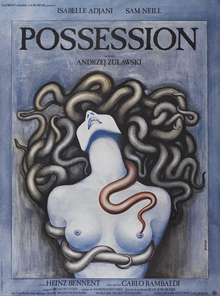


Andrzej Żuławski’s Possession (1981) is a film that doesn’t just defy genre—it annihilates the very idea of categorization. Part spy thriller, part domestic psychodrama, part Lovecraftian horror, and part apocalyptic hallucination, the film barrels forward with such manic intensity that it becomes less a movie and more an exorcism of the soul. It resists structural and emotional compartmentalizing at every turn, choosing instead to implode in a flurry of shrieks, flailing bodies, and gooey, pulsing monstrosities.

Set in a divided Berlin, the film ostensibly begins as a break-up story: Mark (Sam Neill), a shell-shocked spy, returns home to discover that his wife Anna (Isabelle Adjani, in a performance of pure, unrelenting hysteria) wants a divorce. But from there, the film spirals rapidly out of the realm of conventional melodrama and into something far more surreal and terrifying. Mark’s confusion curdles into obsession, Anna’s descent becomes biblical, and reality itself begins to warp and splinter.


Is it a Cold War spy film? Yes, but only in fragments, and those are quickly consumed by the escalating emotional chaos. Is it a break-up film? Certainly—but filtered through an expressionist nightmare where the grief and rage of separation erupt as literal body horror. Horror film? Undoubtedly, though the fear is less about monsters and more about the abyss that opens when love dies. And as the narrative crumbles into bloody symbolism and metaphysical dread, Possession (1981) begins to feel like an apocalyptic drama—one where the apocalypse is internal, intimate, and unstoppable.

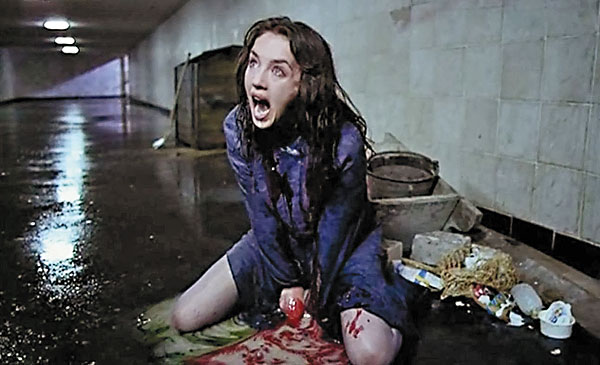
Żuławski directs like a man possessed, matching his characters’ unhinged energy with a restless camera and wild tonal shifts. The result is a fever dream of shrieking confrontations, doppelgängers, collapsing identities, and one of the most infamous subway scenes in cinema history. Possession (1981) is not an easy film—it’s messy, abrasive, and frequently overwhelming—but it’s precisely in its refusal to conform that its power lies. Indeed, much of the dialogue is obtuse non-sequitur in delivery as the actors deliver prose-like philosophical statements that have clearly influenced the writing of Yorgos Lanthimos and Efthymis Filippou.

To watch Possession (1981) is to witness cinema used as a weapon against coherence, comfort, and calm. I almost had a panic attack watching it. Neill, usually a calm on-screen presence looks as though he is lost in a nightmare he cannot escape. Heinz Bennent, as the lover, fully embraces Zulawski’s insane vision, while Adjani literally has a mental breakdown on screen. It is an unbelievably fearless embodiment of psychotic sexuality, arguably only matched in a commercial release by Eva Green’s Vanessa Ives from the majestic gothic TV series, Penny Dreadful (2014-2016). Ultimately, Possession (1981), is as much about the disintegration of self as it is about the end of a marriage, the failure of ideology, or the horror of being alive. One doesn’t simply watch Possession (1981)—one survives it.
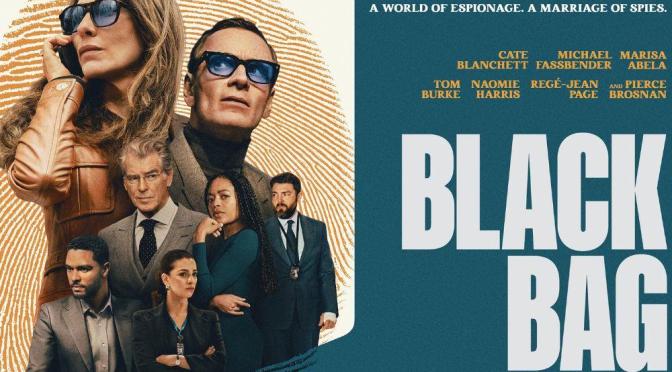
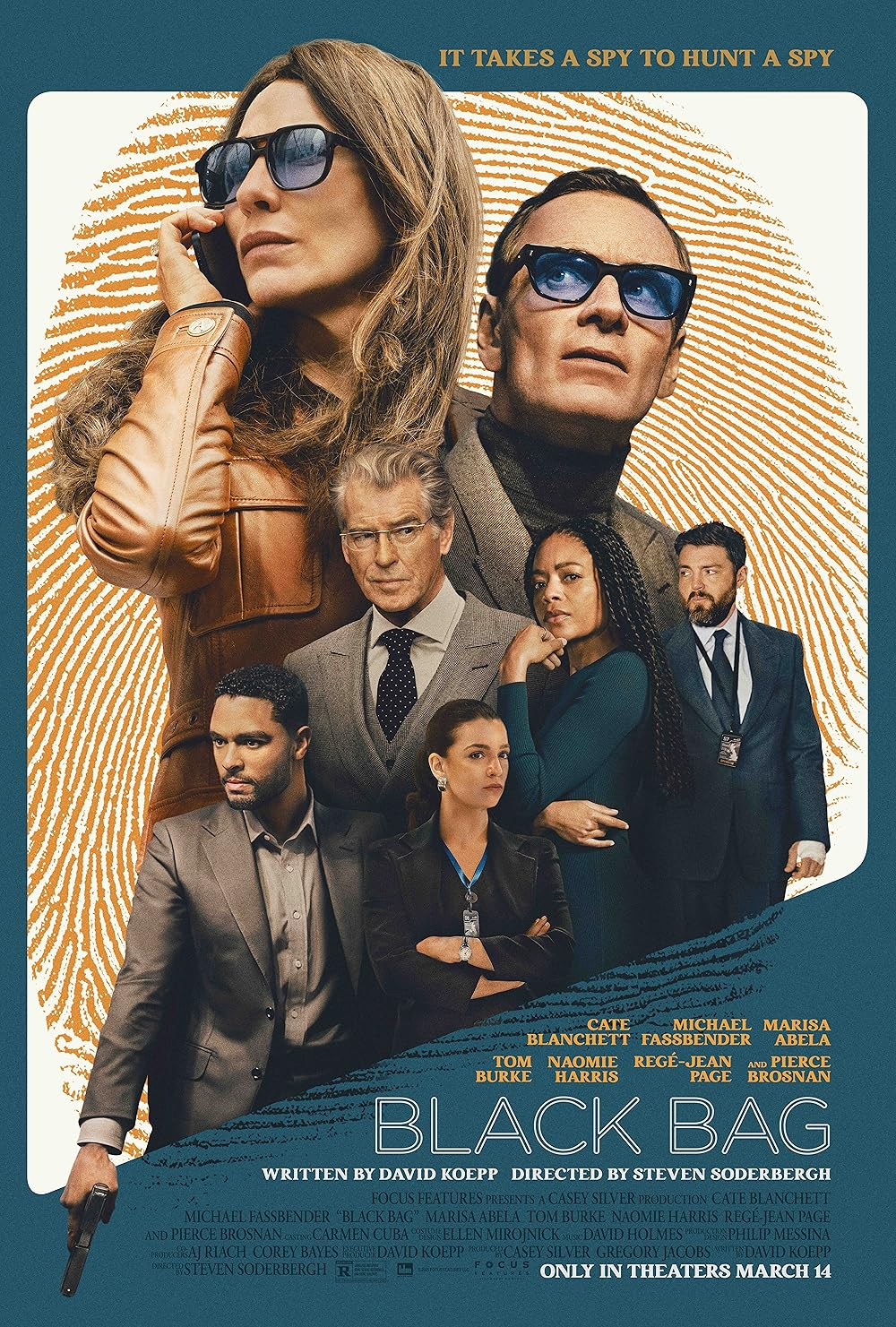
Cinema Review: Black Bag (2025) – Christie meets le Carré in this stylish, sexy and witty spy whodunnit!

CINEMA REVIEW: BLACK BAG (2025)

Directed by Steven Soderbergh

Written by David Koepp

Produced by: Casey Silver, Gregory Jacobs

Main cast: Cate Blanchett, Michael Fassbender, Marisa Abela, Tom Burke, Naomie Harris, Regé-Jean Page, Pierce Brosnan, etc.


Cinematography by Peter Andrews

*** MAY CONTAIN SPOILERS ***


Steven Soderbergh’s career has been nothing short of a cinematic roller-coaster, blending big-budget spectacle, indie sensibilities, and a keen embrace of genre films in ways that defy easy categorisation. What makes his career so distinctive is his ability to seamlessly navigate between these different filmmaking realms, constantly evolving while retaining a unique voice and artistic freedom. His latest film Black Bag (2025) is a striking, starry, and decent-budgeted genre effort.

Soderbergh first rose to prominence with Sex, Lies, and Videotape (1989), a low-budget indie that catapulted him into the spotlight. The film’s success established him as one of the defining voices of American independent cinema during the 1990s. His subsequent works, such as Kafka (1991) and The Underneath (1995), reflected his interest in experimenting with narrative structures and visual styles, blending genre conventions with deep, sometimes surreal exploration of characters. These works were still firmly rooted in indie filmmaking, but they hinted at a growing ambition and versatility in his cinematic process.

Then, in the late ’90s and early 2000s, Soderbergh took a bold leap into big-budget territory. His Ocean’s Eleven (2001) series stands as a perfect example of his ability to handle mainstream, star-studded films with finesse. It combined slick, fast-paced storytelling with elements of the heist genre, demonstrating that Soderbergh could not only handle massive budgets but could also bring style, wit, and substance to a genre film. However, Soderbergh was never one to be pigeonholed, and in the same decade, he also directed both Erin Brockovich (2000) and Traffic (2000), both socially conscious, multi-layered dramas, with the latter about the war on drugs. Traffic earned him an Academy Award for Best Director, proving that Soderbergh but could also tackle politically charged narratives with profound depth.

Having moved back to indie filmmaking with The Bubble (2005) and The Girlfriend Experience (2009), Soderbergh made another unexpected turn with Magic Mike (2012), which, despite its premise (a male stripper drama), was a sharp social commentary on gender, exploitation, and masculinity. This film not only tapped into a niche market but was also a critical success, further cementing his ability to bring depth to various genres, whether mainstream or niche. Even when he announced his “retirement” from directing in 2013, he still found ways to work in other mediums, such as producing and experimenting with quality television (The Knick), and in 2017, he returned to directing with Logan Lucky (2017), a heist comedy that balanced mainstream appeal with Soderbergh’s signature offbeat style.


Soderbergh’s ability to jump between blockbuster entertainment and intimate, experimental narratives has been the hallmark of his career. Yet for me his serious genre dramas like the aforementioned Traffic (2000), plus Contagion (2011), Side Effects (2013), and his most recent project, Black Bag (2025) represent the pinnacle of his narrative precision and impact, solidifying his reputation as one of the best directors in genre cinema. One could argue that Black Bag (2025) leans heavily on spy film tropes, yet it has a certain emotional and conspiratorial depth beneath the familiar beats and sheen.

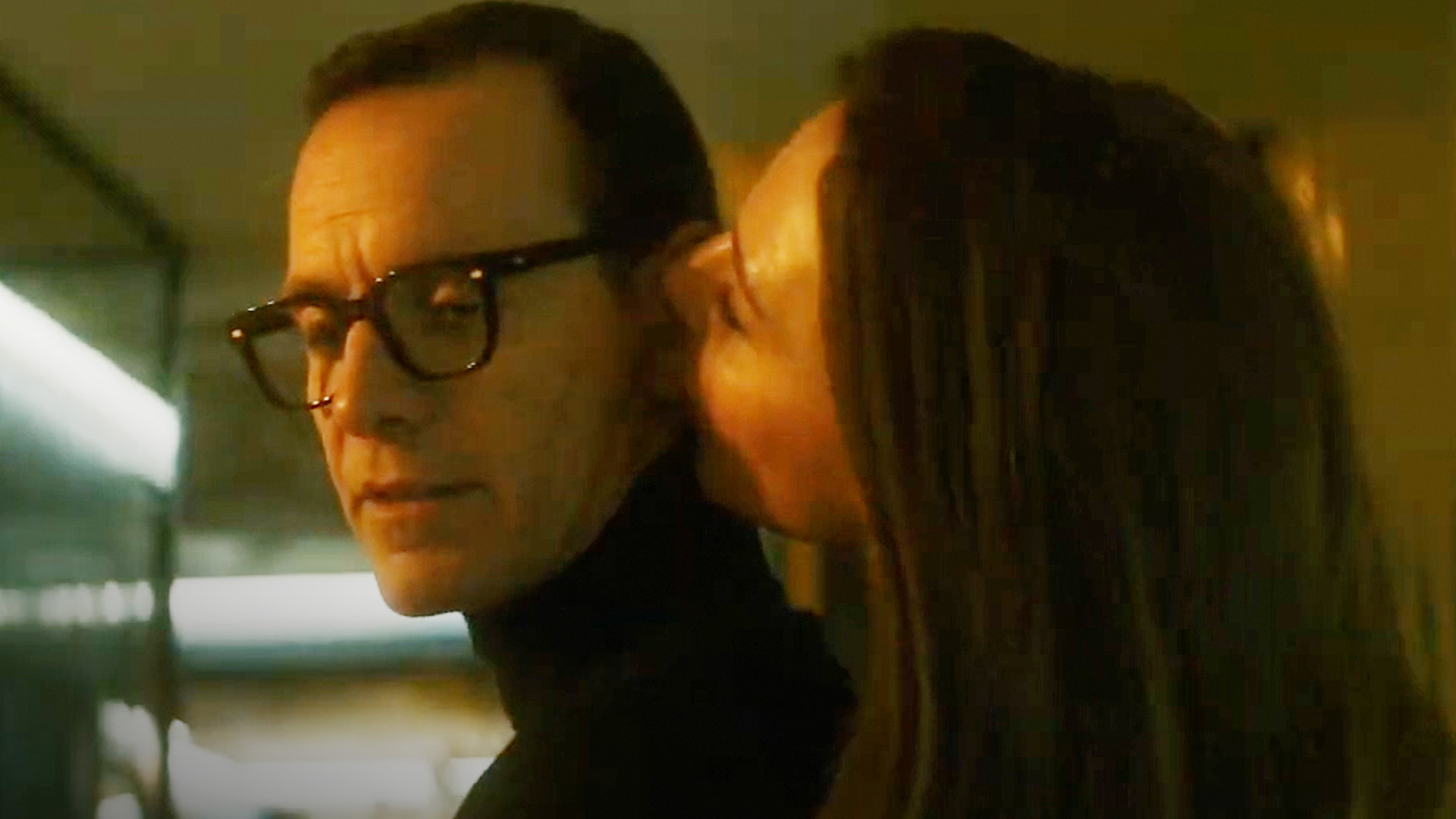
What sets these films apart from the rest of Soderbergh’s career is the seamless way in which he blends his usual intellectual ambition with a masterful, almost surgical delivery of genre tropes. Whether tackling the global panic of a viral outbreak in Contagion (2011), the psychological twists of a modern Hitchcockian thriller in Side Effects (2013), or the high-stakes political intrigue in Black Bag (2025), where a deadly uber-weapon McGuffin falls into the wrong hands. Here master-agent George Woodhouse (Michael Fassbender) must track down a mole, who may-or-may-not be one of his colleagues or indeed his wife, Kathryn (Cate Blanchett).

Black Bag (2025), expertly combines spy-game thrills within a series of “who’s-cheating-on-who” twists. It certainly helps that Soderbergh is working with an exceptionally crafted script from David Koepp and a cast to die for. Fassbender, Blanchett and Tom Burke especially stand-out, with Fassbender delivering yet another masterclass in filmic understatement. Overall, it’s a viciously funny and sexy genre piece that combines Agatha Christie, classic espionage thrillers and Soderbergh’s trademark framing, lens and lighting tricks. It’s the kind of genre filmmaking where every scene, every act, every word, every frame and every moment serves a narrative purpose. It’s a handsome bit of cinema and my word is my Bond!

Mark: 8.5 out of 11


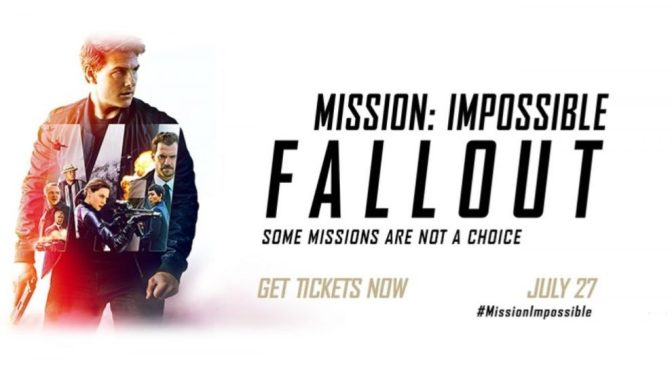
MISSION IMPOSSIBLE BINGO incorporating: FALLOUT (2018) MOVIE REVIEW

MISSION IMPOSSIBLE BINGO incorporating: FALLOUT (2018) MOVIE REVIEW

I have found  it’s difficult to find an original angle when reviewing certain films i.e. franchise movies or sequels. Indeed, unless they are absolutely brilliant I tend not to review them. Therefore, I had no major intention of writing about the new Tom Cruise produced Mission Impossible release, as these films, despite their technical movie-making brilliance, follow a very strict and safe formula. I mean what can I really add critically other than say I enjoyed it or I didn’t. However, it really is such a fantastic blockbuster movie I accepted an impossible mission, of sorts, to create something interesting while reviewing it.

So, here we go: Mission Impossible BINGO! It’s both recognition of the formula but also praise for the latest instalment which had me on the edge of my seat, heart in my mouth and biting my nails throughout. In the context of story it’s very generic but in terms of action, thrills and stunts it gets a Mark of 9 out of 11!

tom-cruise-mission-impossible

McQUARRIE directs Fallout which is essentially a direct sequel to Rogue Nation. We know his track record as a writer but he’s now proving himself a fantastic director too. I enjoyed Rogue Nation but Fallout raises the stakes with a witty, double-crossing, high octane and explosive movie, which actually improves the clichés of the formula in wonderful fashion.

INGENIOUS double-crossing is at the heart of the original Mission: Impossible television series and the film franchise. This is done through identification theft, impersonation, lies, deceit, scene-shifting, fake walls, and the famous face and voice changing technology.

STUNNING locations feature throughout the franchise. Changing the scenery is a means of tricking us into thinking we haven’t somehow seen this car-chase, foot chase or air chase before. Yet, what Mission: Impossible does brilliantly is take us into existing locations like the CIA Langley Headquarters, The Vatican City and even the Kremlin.

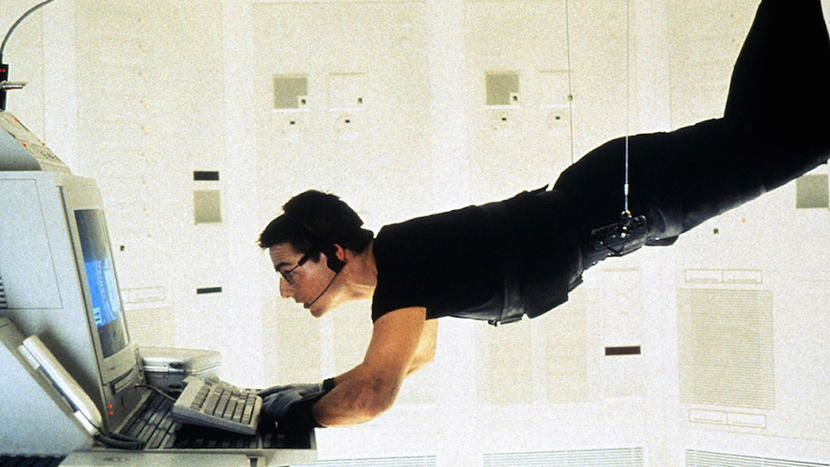
STUNTS and extravagant set-pieces dominate the whole of this franchise. From the original 1996 film’s wire-from-the-ceiling-hanging set-piece downloading a CIA encrypted agent list to the current Fall Out nuke-ticking-time-bomb denouement, Tom Cruise’ has committed some of the most breath-taking and technically brilliant action stunts ever.

ICONIC soundtrack composed by Lalo Schifrin has been often imitated but never a bettered. Those simple but effective notes fire up and immediately you know the action is about to start.

OPPOSING government agents are rife in the original show and film series, as inspired by the devious nature of the East v West “Cold War” from the 1950s onwards. In M: I you’ve got good agents, rogue agents, double agents, triple agents and ghost agents pretending to be good, bad and all of the above.

NEFARIOUS villains, like the Bond films, are necessary to precipitate some evil doings and kick off the plot.  My personal favourite was Philip Seymour Hoffman in M:I 3 – as he really was evil. Solomon Lane as played by Sean Harris is cool too and is given some great speeches. His plan to blow up the world isn’t the most original but he has a blast trying it.

lead_720_405

IMPOSSIBLE missions are at the heart of the film franchise. I mean the characters are mainly paper thin and the narratives are mainly empty so the gadgets and all manner of ticking time bombs, impenetrable garrisons, bad guys shooting and blowing stuff up; plus the covert interrogations and switcheroos provide the substance to the cinema experience.

MACGUFFIN-LED plots are not the strength of the franchise and on occasions the narratives a threadbare with Ethan chasing something called a “rabbit foot” or stolen nuke heads being the target. But who cares as long as we get to see things blow up.

PLAYFUL humour and one-liners dominate the scripts as a means to punctuate the action. The first three arguably had less gags but with Simon Pegg joining the cast in M:I 4 the joke quota increased and it settled into the a more humour-led vein. Personally, I prefer the serious espionage stuff, but the gags punch up the entertainment value nonetheless.

OUTSTANDING casting always brings a raft of class to these movies. Indeed, despite the style-over-substance nature of the narratives casting heavyweight actors such as:  Jon Voight, Vanessa Redgrave, Phillip Seymour Hoffman, Alec Baldwin, Sean Harris, Jean Reno, Ving Rhames, Billy Crudup, Jeremy Renner, Rebecca Ferguson and many more raise the quality of the productions no doubt.

SUBTERFUGE and double-crosses are a major part of the plots. Often we never quite know whose side certain characters are on at any one time. In Rogue Nation and Fallout the troubled spy Ilsa Faust is simultaneously batting for three teams in order to keep herself alive. Such devilish plotting keeps the stories bouncing along, which is why they are never dull.

SPECIAL effects are a major part of M:I, however, what is incredible to that Tom Cruise will strive to make the stunts as real as possible by actually doing them himself. The opening of Rogue Nation and the end of Fallout are absolutely stupendous feats of daring which I would never contemplate. Similarly, bungee jumps, rock-climbing, free-jumping and many other effects-free actions give a very realistic feeling to proceedings.

INCREDIBLY talented directors who have worked on the franchise include: Brian DePalma, Brad Bird, John Woo, Christopher McQuarrie and JJ Abrams bringing their own inimitable styles to the various films and while Woo’s is pretty weak the franchise abides as each film has its own identity, look and feel.

BIG budgets are required to drive the Mission: Impossible film behemoth and while they continue to make the studio billions of revenue long will they continue. The first film cost a whopping $80 million dollars while the Fallout cost a mere $178 million. Although, given Fallout absolutely rocks it’s already made that back and much more besides.

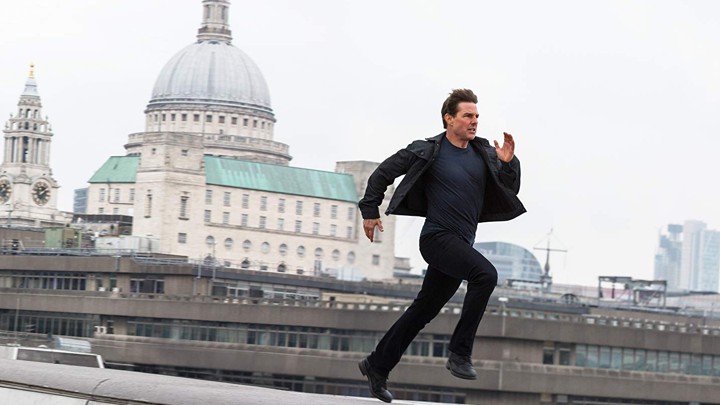
LEAPING, running, driving, diving, swimming, crashing, disguising, fighting, flying, biking, parachuting, moving – you name it the IMF do it at incredible speeds and heights!

ETHAN HUNT as presented by Tom Cruise is a righteous dude fighting the good fight against the evil wrongdoers in the world. His commitment to the cause is unwavering and in defending the innocent against the corrupt goverments, villains and agents of evil. We all root for him as an aspirational action man of the people.

MAGNIFICENT 007 – MY FAVOURITE BOND FILMS

MAGNIFICENT 007 – MY FAVOURITE BOND FILMS

SPECTRE (2015) is out in UK cinemas soon and I’m anything but original so I’ve listed my 7even favourite Bond films.  Selections are in alpha-male order!

spectre-james-bond-daniel-craig

CASINO ROYALE (2006)

I can watch this film over and over again. Daniel Craig’s debut is a lean-mean fighting machine in a movie which begins with a quick stylish black and white opening and then moves onto his pursuit of cold-blooded banker Le Chiffre (Mads Mikkelsen). Mikkelsen steals the acting plaudits from Craig as the reptilian poker player while Eva Green is a great foil too. In fact, Vesper Lynd is my favourite female Bond lead. Her character is no pushover and more than matches Bond verbally during their first meeting. Later in the story she saves his life and breaks his heart adding an emotional depth to their relationship. The gambling, double-crosses, parkouring, humour, hand-to-hand combat and explosive action all combine to make this a 007 classic.

FROM RUSSIA WITH LOVE (1963)

Dr No (1962) established all the classic Bond tropes including: memorable opening guitar riff; iconic gun barrel scene; glamorous women and locations; spy plots; action and stunts; megalomaniac villains and henchmen and women. Indeed, From Russia With Love had TWO great baddies in Red Grant (Robert Shaw) and Rosa Klebb (Lotte Lenya).  Klebb was a nasty piece of work while peroxide-blonde Robert Shaw was a muscular adversary for Bond and their claustrophobic fight on the train was brutal and full of suspense. Sean Connery really nailed the role of Bond as he did in the debut film.  He sails through a complex plot dispatching enemy agents with unruffled hair, an insouciant glare and meaty hooks, as evil crime syndicate SPECTRE are foiled by Bond with formidable style and power.

GOLDENEYE (1995)

Pierce Brosnan is a very good Bond. He’s very much like IKEA; reliable, spacious, sort-of-attractive and open on Sundays. His debut effort is his best and has him going up against a dastardly double-agent and series of Russians hell-bent on starting World War III.  The spectacular bungee-stunt opening is awesome and Famke Janssen is brilliant as thigh-crushing nemesis Xenia Onatopp, while Alan Cumming provides some laughs as a cowardly computer nerd. Of course, however, it’s the action that rules including self-destructing trains, stealth helicopters and Bond smashing a tank through KGB military headquarters in St Petersburg.  What’s NOT to love about that?!

GOLDFINGER (1964)

Everything about Goldfinger is first rate. The cat-and-mouse plot twists between Bond and Goldfinger (Gert Frobe) who do battle over cards, golf and then during the devilish Fort Knox heist. It also features a cracking villain in Odd-Job who uses a murderous, metal hat to vanquish foes and a great Bond girl in the cheekily-named Pussy Galore (Honor Blackman). Last but not least we have one of the most iconic deaths of any character with Jill Masterson (Shirley Eaton) being suffocated by pure gold for her treachery.

Moreover, while there was an element of gadgetry in prior Bond movies such as flick-knife shoes, in Goldfinger the ingeniously designed Aston Martin was a school-boy’s wet dream. The car was pimped up with: ejector seat; bladed wheels; revolving number plates and missiles and became an iconic toy to own.  Such awesome technology and the deathly gas and the lasers which almost kill Bond would become the kind of staple devices used throughout the franchise. Indeed, ‘Q’ played by Dennis Llewellyn would feature in nearly all the Bond films right through to the Brosnan era. Finally, this definitely has the GREATEST Bond theme song EVER!  Probably!

LIVE AND LET DIE (1973)

It was a toss-up between this and The Spy Who Loved Me (1977) for my favourite Moore instalment.  While his final films were a stain on the franchise where he was out-acted by his wig Moore provided a twinkle and humour to the role as well as those saintly looks.  In Live and Let Die he comes up against the ridiculously named Mr Big and the film invokes the Blaxploitation archetypes and clichés of the day. Interestingly, Clint Eastwood was approached as a possible Bond before Moore got the role and Eastwood’s persona would certainly have matched the Harlem and New Orleans settings.  I found Jane Seymour very intriguing as the “white witch” Solitaire and the voodoo and tarot themes lent themselves well to the drama.  Live and Let Die has a cracking theme tune from Wings and is a fast-paced delight; with a move away from spy-games to more of a 70s-cop-show-crime-thriller-with-jokes-vibe.

THE LIVING DAYLIGHTS (1987)

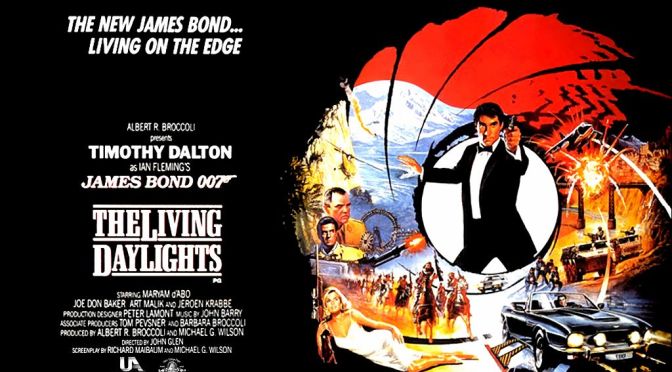
Dalton was an under-rated Bond; a tough, serious man more akin to the Fleming vision. He only did two films but this is still one of my favourite stories as it feels like a proper thriller rather than a series of set-pieces and chases which, by-the-way, I don’t mind too. A globe-trotting Bond, as usual, smashes round the world to places such as Bratislava, Vienna and Afghanistan tracking blonde cellists, assassins, Soviet defectors, KGB villains and the general air of cold war espionage stuff make this a formidable story. It also has a great pop theme song from A-Ha and the poster is a genuine classic.  Many of the recent Bond posters have been subdued and monochromatic but this one just bursts with fireworks and colour; much like the movie itself.

ON HER MAJESTY’S SECRET SERVICE (1969)

George Lazenby was the David Moyes of the Bond series inasmuch as he had an impossible job following an icon. He’s as wooden as a park bench but his physicality proves formidable in the hand-to-hand combat scenes and O.H.M.S.S is a cracking film with some great drama and a tragic romance. The opening sequence is full of smashing action and ended with a knowing one liner: “This never happened to the other guy!” Telly Savalas is a decent enough Blofeld but Peter Hunt and his directorial units steal the show with some wonderful chases especially in the snowy landscapes of Switzerland. It memorably has TWO theme tunes plus THAT ending where Bond suffers heartache; an especially brave scene to include in a populist franchise.