Tag Archives: weird

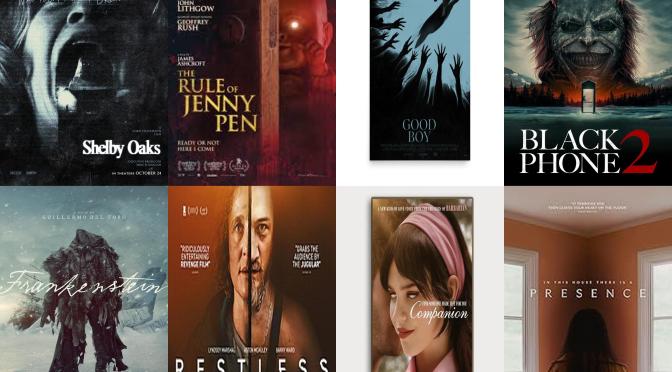
Horror film review round-up including: Black Phone 2 (2025), Companion (2025), Good Boy (2024), Presence (2025), Together (2025) and others. . .

Autumn Horror Film Reviews

In the languid drift of autumn, when Halloween’s shadow lengthens and winter begins its slow, expectant inhale, the world seems to slip into a more suggestive register—one where every rustling leaf feels like a whispered omen. It is, of course, the most appropriate season to surrender to the year’s latest horror releases, as though communing with these cinematic phantoms might prepare us—spiritually, aesthetically—for the deeper darkness to come.

Which basically means I have been catching up with some 2025 horror film releases I missed at the cinema during autumn. A couple of these probably warrant more in depth solo reviews, but as I edge closer to old age and the reaper’s scythe, I am economizing somewhat.

*** MAY CONTAIN SPOILERS ***


Black Phone 2 (2025)

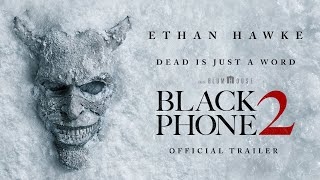
Scott Derrickson and co-writer C. Robert Cargill deliver a sequel to The Black Phone (2021) with Mason Thames, Madeleine McGraw, Jeremy Davies, and Ethan Hawke reprising their roles from the first chiller. I actually enjoyed this one more than the original, which despite the clunky set-up, finds the siblings and others trapped in a teen camp hit by a blizzard. They find themselves hunted and haunted by both The Grabber (Hawke) and other ghostly spirits haunting the area. Derrikson throws a lot of horror tropes and the characters (literally in certain scenes) at the walls, and much of it sticks. Having said that, I still don’t think The Grabber is the scariest villain ever committed to screen, despite Hawke’s presence. (Mark: 7.5 out of 11)


Companion (2025)

Companion (2025) feels like Garland’s Ex Machina (2014) colliding elegantly with Fargeat’s feral Revenge (2017)—a sunny day-horror fable that hides its nastiest surprises in plain sight. Its twists are sharp, its aesthetic confident, and its ideas far more ambitious than its modest surface first suggests. I would have admired it even more were it not, on occasions, completely dumb. Plus, the occasional drift into a comedic register undercuts its more incisive moments. The beautiful Sophie Thatcher once again commands the screen with the same riveting presence she brought to Heretic (2024). Mark: 8 out of 11.


Graduation Day (1981)

Thanks to Bobby Carroll’s site for reminding me about slasher film, Graduation Day (1981), as I had completely forgotten about it. High quality kills and gore mask a screenplay which has more nudity than character development. Yet, I am a sucker for these 1980’s exploitation flicks and this is a watchable one. Mark: 6 out of 11


Good Boy (2025)

An low-budget horror film triumph with Ben Leonberg directing his own dog, Indy, a Nova Scotia Duck Tolling Retriever, as the only witness to nasty spirits threatening his owner. The film emerges as a formal tour-de-force, whose meticulous composition and deliberate pacing elevate its simple premise into something unexpectedly resonant. Its visual precision and rhythmic control shape an atmosphere of dread that feels more sculpted than sensational, grounding the film in an emotionally impactful narrative about loyalty, vulnerability, and the unsettling spaces between trust and fear. For all its craft, and impressive animal direction, the film doesn’t quite sustain a relentless menace throughout. But, it remains a memorable feature debut from Leonberg and Indy the dog. Mark: 8.5 out of 11.


Presence (2025)

In Presence (2024), David Koepp and Steven Soderbergh demonstrate just how potent a one-location horror film can be when discipline and imagination converge. The entire piece unfolds like a controlled exhale: a slow-build structure that trusts the audience to lean in, and a drifting, almost contemplative camera that adopts the ghost’s POV to quietly—sometimes imperceptibly—reveal fragments of the story. Instead of overplaying its hand, the film slow-drips its plot elements with an elegance that keeps tension suspended in the air, letting unease pool in the corners of an otherwise ordinary space. By the time it reaches its finale, Presence (2024) delivers not only a surge of emotional and thematic clarity but two genuinely surprising twists—earned, unsettling, and executed with the kind of precision that affirms both writer and directors’ mastery of the form. Mark: 8.5 out of 11.


Restless (2024)

Really good independent British thriller with Lyndsey Marshal as a nurse, Nicky, who finds herself terrorized by 24-hour partying thug neighbours. Writer-director Jed Hart creates great empathy and identification with the situation and it’s a shame decent British films like this get short shrift at the multiplexes. Nicky’s spiral into insomnia-driven madness is compelling as her desperate attempts to sleep give way to vengeance. But the film’s final act tonal turn denies us a full-on descent into suburban hell, for something amenable but unfortunately less twisted. Mark: 7.5 out of 11


The Rule of Jenny Pen (2025)

The Rule of Jenny Pen is an original, weird, and powerful shock of a film — a mash-up of psychological thriller and nursing-home horror that lands far more often than it stumbles. Its greatest strength is, without question, the towering performances at its centre. Geoffrey Rush and John Lithgow, two masters of calibrated gravitas, turn the film’s cat-and-mouse mind game into a gripping acting showcase. Together, they elevate the film’s themes of aging, vulnerability, and institutional neglect into something both unsettling and strangely beautiful. The plotting, however, does get a bit sticky toward the end. The final act jars slightly, causing me confusion in an otherwise tight psychological narrative. Still, even as the story wobbles a tad, the film’s originality, eerie tone, and powerhouse acting keep it compelling. Mark: 8 out of 11


The Woman in the Yard (2025)

The Woman in the Yard (2025) rises on the strength of Danielle Deadwyler’s commanding lead performance. As a mother trying to protect her two children from a funereal spirit lingering in their backyard, Deadwyler grounds the supernatural dread with raw emotional honesty. The child actors match her with a believable, lived-in family dynamic that makes the haunting feel all the more personal. Where the film falters is in its structure. The script leans heavily on crow-barred flashbacks that interrupt rather than enrich the unfolding tension. A more linear approach could have built a stronger emotional momentum, allowing the story’s grief, guilt, and mental illness to accumulate naturally instead of stuttering backward at key moments. (Mark: 6 out of 11)


Together (2025)

Together (2025) gets an immediate boost from the casting of real-life couple Alison Brie and Dave Franco, whose natural chemistry gives the film an authentic emotional core. As a pair trying to rebuild their relationship after moving from the city to a rural small town, they convincingly inhabit the tensions, resentments, and unspoken fears that surface long before the horror does. Their incompatible expectations feel lived-in — and once they tumble into a sinkhole and the strange bodily transformations begin, that emotional groundwork makes the nightmare hit harder.

I loved the trailer for this film, which promised a truly skin-crawling descent into body-horror chaos. The final product, while atmospheric and often engrossing, doesn’t fully deliver on that promise. It pulls back when it could push further, leaving some of the more disgusting, surreal possibilities off-screen. But the ending — bold, surprising and unexpectedly poignant — is a fantastic payoff. Even if the film doesn’t always reach the extremes it teases, Together still manages to leave a memorably twisted impression. Mark: 8.5 out of 11
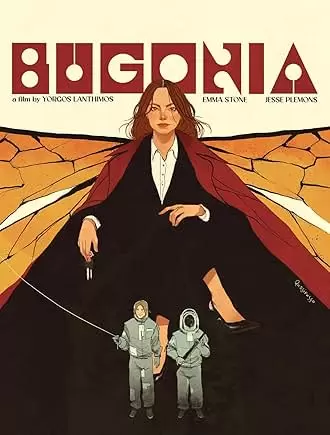
Cinema Review: Bugonia (2025) – Lanthimos has a blast with this dark conspiracy-class-war-kidnap-comedy!

Cinema Review: Bugonia (2025)

Directed by Yorgos Lanthimos

Screenplay by Will Tracy – Based on Save the Green Planet! (2003) by Jang Joon-hwan

Produced by Ed Guiney, Andrew Lowe, Yorgos Lanthimos, Emma Stone, Ari Aster, Lars Knudsen, Miky Lee, Jerry Kyoungboum Ko


Main Cast: Emma Stone, Jesse Plemons, Aidan Delbis, Stavros Halkias, Alicia Silverstone, etc.

Cinematography by Robbie Ryan

*** MAY CONTAIN SPOILERS ***


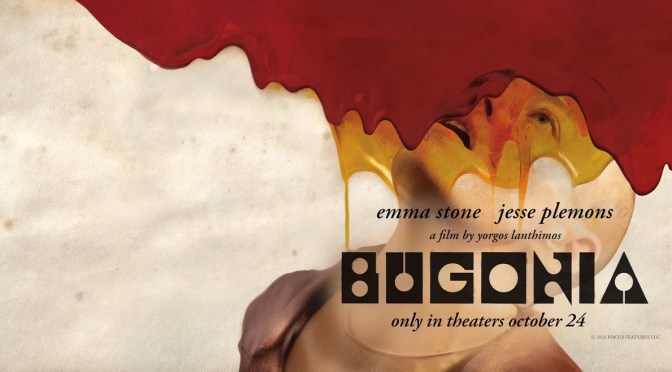
Yorgos Lanthimos has once again sneaked out of his uncanny terrarium and unleashed another piece of beautifully deranged cinema. Bugonia (2025)—a remake of Jang Joon-hwan’s cult classic Save the Green Planet!—is part sci-fi fever dream, part hostage farce, and part spiritual meltdown. It’s like Ruthless People (1986) got trapped in a socio-political, beekeeping suit and force-fed ayahuasca.

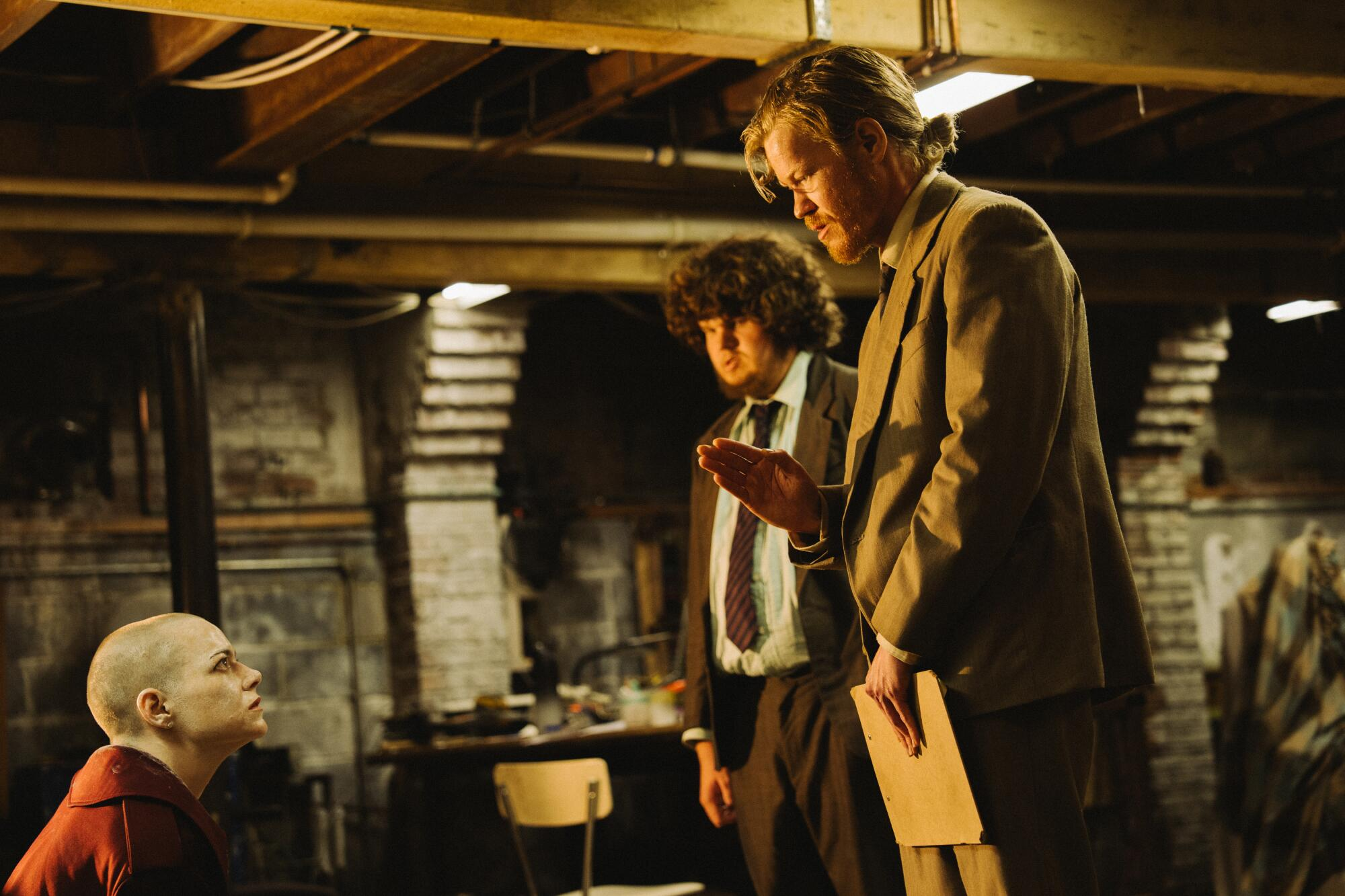
Will Tracy’s script hums with the manic energy of someone who’s read too many conspiracy subreddits and decided to turn it into Oscar bait. The film pairs Jesse Plemons (whose face seems genetically engineered for moral unease) with Alden Delbis (playing his twitchy, Kool-Aid-eyed partner in cosmic delusion) as two eco-anarchist truthers who kidnap a pharma/tech CEO, played with imperial chill by Emma Stone. Their reasoning? Well, just wait and see. It is incredibly crazy with some severe plot turns. Yet, somehow Lanthimos and his terrific cast maintain verisimilitude within the setting and just about hang onto emotional connection for the characters.


What follows is a deranged pas de trois of torture, empathy, and total philosophical collapse. Plemons and Delbis interrogate Stone with the intensity of people who’ve seen too many YouTube conspiracy documentaries, while Lanthimos and cinematographer, Robbie Ryan shoot it with the intensity of a nature documentary directed by Lucifer. There are bees. There is honey. There are monologues about pollution, pharmaceutical company threat and environmental collapse. Further, Stone, who has now fully ascended into Lanthimos’ personal pantheon of holy weirdness, plays her role like a woman being both worshipped and flayed at the same time. She’s terrifyingly serene—like she’s founded a doomsday cult and smiled through the apocalypse.

It’s all utterly ridiculous, but Bugonia (2025) thrives in that space between laughter and dread. Lanthimos once again proves that absurdism isn’t about nonsense—it’s that nonsense is the only sane response to the modern world. I enjoyed this film way more than the obtuse Kinds of Kindness (2024). It has more akin, although not as devastatingly memorable, as his earlier Greek-language classics or The Killing of a Sacred Deer (2017). Moreover, if The Favourite (2018) was about power, and Poor Things (2024) was about rebirth, Bugonia (2025) is bleak, fatalistic morality tale about environmental apocalypse.

By the time the film’s final shots roll I was equal parts horrified, moved, and deeply amused. It’s an eco-horror-comedy that gorily plays like Saw (2004) meets famous beekeeping philosopher, Aristotle. Overall, Bugonia (2025) proves once again that Yorgos Lanthimos is cinema’s reigning apiarist of absurdity—and his audience are all his buzzing little drones.

Mark 8.5 out of 11


CINEMA REVIEW: TITANE (2021)

CINEMA REVIEW: TITANE (2021)

Directed by Julia Ducournau

Written by Julia Ducournau

Produced by Jean-Christophe Reymond

Cast: Agathe Rousselle, Vincent Lindon, Garance Marillier, Laïs Salameh, etc.

Cinematography: Ruben Impens

*** THE WHOLE FILM IS A SPOILER ***


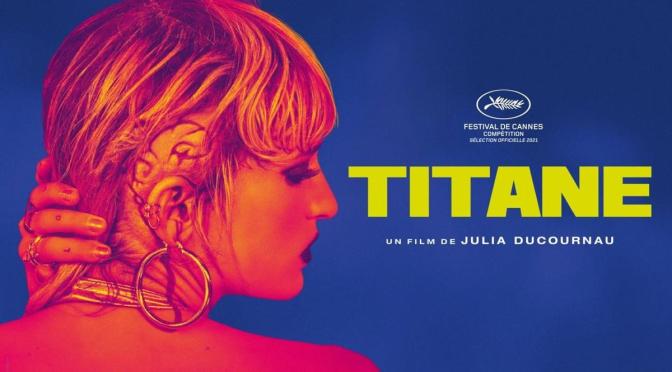
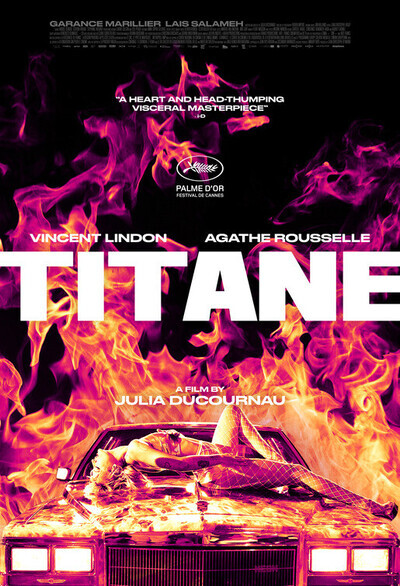
The difficult second album syndrome applies with Julie Decournau’s incredibly horrific, illogical and over-rated, Titane (2021). How the film won the Palm D’or at the Cannes Festival is beyond me. Maybe the jury were on the same acid as the ultra-talented writer-director when she created the script. Or, maybe the jury were belatedly rewarding her for the amazing contemporary horror film, Raw (2016).

Raw (2016) works on so many distinct levels with themes covered including: veganism, peer pressure, initiation, fitting in, animal cruelty, sexuality. lesbianism, same-sex attraction, animalism, sisterhood, hedonism, nature versus nurture, cannibalism, family, etc.  It crosses genres effortlessly and has one of the greatest and disgusting scenes I have had the pleasure to see for some time. Raw (2016) is a shocking, intelligent and astounding modern-day masterpiece. Titane (2021) unfortunately is not.


Before I say why I did not enjoy Titane (2021), I must say that I constantly seek out challenging cinema that pushes boundaries. I love horror and want to be shocked, but also emotionally involved with the characters at the same time. Moreover, I am well prepared to commit to dream logic and surreal narratives, however, the filmmaker must also try not to over-indulge their artistic excesses, and respect the audience too. Of course, this is just my opinion, but I don’t feel Julie Decournau had a clear story path and rather went hell bent into delivering a variety of different ideas, none of which created a fulfilling emotional journey for the main protagonist, Alexia (Agatha Rouselle).

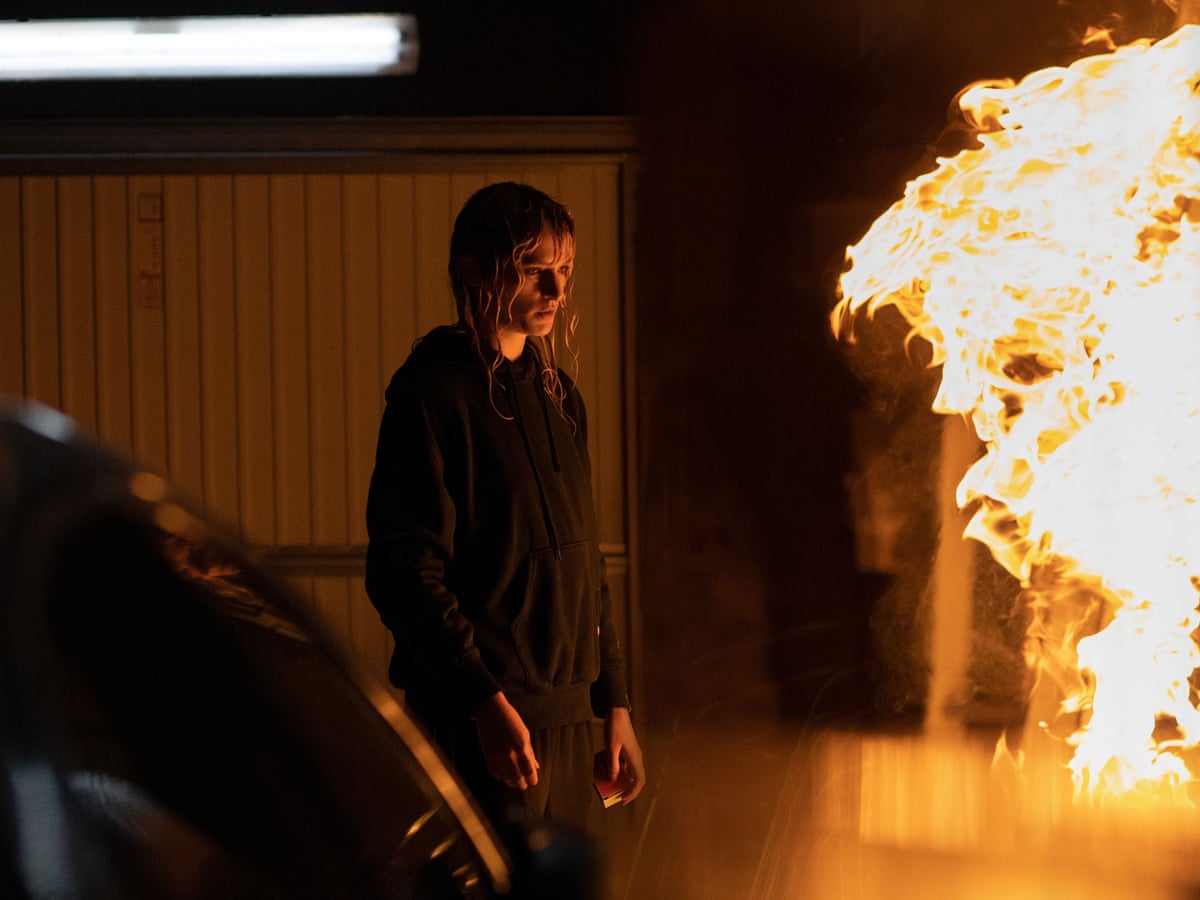
Rouselle, as the malevolent and tragic conduit of Ducournau’s twisted vision, does give a spectacularly brave performance. But her character is given so many complex set-ups at the beginning, I quickly gave up caring what happened to her. As a child she is badly injured in a car crash. This gives her a titanium plate in the skull. Alexia grows up and is an exotic dancer who either dreams of, or actually fucks cars. Oh, she is also a serial killer who violently kills for no apparent reason. Several gruesome set-pieces result in the goriest deaths ever seen in a Palm D’or winner. Indeed, by the time Alexia goes on the run and smashes her face into a sink to alter her features I was numbed by it all.

Titane (2021) at the midpoint then delivers one of the most dumb and insulting plot shifts I have seen in recent years. Yes-yes it’s an arthouse film and an expression of Julie Decournau’s vision of humanity, but I DID NOT CARE!! Not only did we get Alexia’s horrific behaviour, we are then introduced to another plot turn when she hides out with a bereaved and emotionally scarred firefighter, Vincent (Vincent Lindon). By this time I was actually laughing at certain scenes, finding it all tiresome and frankly embarrassing. I got the symbolism of human beings as machines and exploitation of females and that family represents death and blah-blah-blah! Yet, and I’m likely to be in the minority, Titane (2021) is one of the most narratively, emotionally and visually exhausting films I have seen in some time. Watch at your peril!

Mark: 5 out of 11

THE HORROR OF IDENTITY: DOUBLE BILL FILM REVIEWS – DEERSKIN (2019) & POSSESSOR (2020)

THE HORROR OF IDENTITY: DOUBLE BILL FILM REVIEWS – DEERSKIN (2019) & POSSESSOR (2020)

“Be yourself; everyone else is already taken.”-Oscar Wilde


We’ve all wanted to exist outside our own skin. Or perhaps inhabit someone else’s? Or, maybe even change our own identity, both literally and psychologically. Or is that just me? At the least we have all thought about it. Even losing weight and going down the gym or giving up alcohol or changing our hairstyle is a means of basic transformation. We may make a more defiant change and leave that job we hate or break out from a negative relationship. Arguably though, personality, attitude and mental changes in one’s life are the most difficult. After all, it is incredibly difficult to change the very fabric of one’s personality or character.

We can find an alternative source of transformation in a vicarious sense through storytelling mediums such as literature, television and cinema. The horror genre especially is replete with monstrous visions of identity switches, psychotic breakdowns and physical transmogrification. I personally take great pleasure in seeing altered identities occur on the screen and am especially drawn to characters who experience mental and corporeal metamorphosis. That simply isn’t because I cannot change who I am or what I do on a daily basis, but it’s quite scary to attempt to reshape one’s existence and identity. It’s bloody hard work without much guarantee of success. Horror films, while also frightening when done well, are far more satisfying and give a more immediate hit than the grind of reality.

Two films I have seen recently both relate to mid-life crises and exhibit themes that illustrate two characters changing their appearance to bring about a shift in identity, behaviour and personality. They also show characters spiralling out of control in incredibly violent, bizarre and entertaining ways. Those films are Deerskin (2019) and Possessor (2020) and here are my reviews.

*** MAY CONTAIN SPOILERS ***


DEERSKIN (2019)

Directed and written by Quentin Dupieux

Main Cast: Jean Dujardin, Adele Haenel

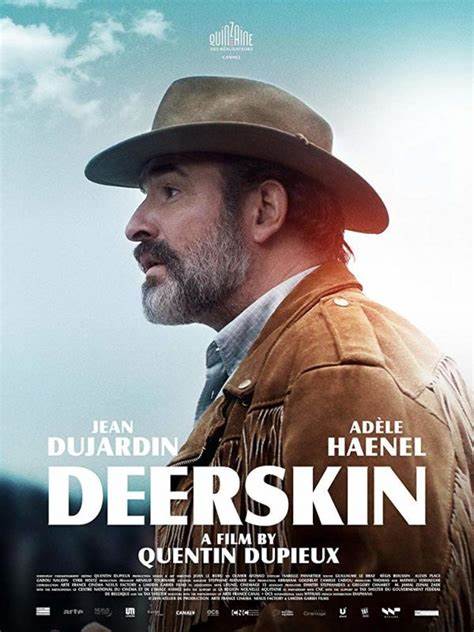
Have you ever seen the film Rubber (2010)? It is a gonzo horror-comedy about a murderous-tyre called Robert killing birds and people with telekinetic powers. Beneath the insanity of the pitch there is in fact a subtextual satire on the nature of Hollywood filmmaking and an audience starved of originality; I think! It came from the mind of Quentin Dupieux, so I was intrigued that he had nabbed for a subsequent production the grand talents of Jean Dujardin and Adele Haenel for the obsidian killer comedy, Deerskin (2019).

Dujardin is Georges, a middle-aged loner, recently dumped by his wife whose only aim now it appears is to purchase a deerskin jacket. Buoyed by the confidence the jacket has given him, and armed with a video camera thrown in with the deal, George plots up at a rural hotel and befriends Adele Haenel’s bar server and enthusiastic film editor. Their budding friendship threatens to turn this into a relatively conventional love story, however, a series of twisted turns tip the story into a hilarious series of murderous set-pieces, with Georges determined to get money to make a movie, but most importantly buy deerskin trousers, hat and gloves.

The story of a middle-aged man altering his outer look in order to transform his life and fortune is a staple of Hollywood comedies and romance films. Deerskin (2019) is that kind of film on the surface. Yet when filtered through Dupieux’s iconoclastic imagination the premise is an altogether different kind of demented animal. Ultimately, it is a low-budget gem of a black comedy with some fantastic ideas and fascinating character study of a man attempting to shift skin, but falling deeper and deeper into psychopathy. It’s a wacky journey with committed performances, yet, it felt like the ending was just too sudden, as if the filmmaker either ran our of money or just wanted to screw with audience expectations right up until the final sudden frame.

MARK: 7.5 out of 11


POSSESSOR (2020)

Directed and written by Brandon Cronenberg

Main Cast: Andrea Riseborough, Christopher Abbott, Sean Bean, Tuppence Middleton etc.

Whereas Deerskin (2019) finds a literal and figurative metamorphosis when a character buys a jacket, Brandon Cronenberg’s vicious horror film, Possessor (2020), is an altogether more cerebral, violent and psychologically stunning journey. Andrea Riseborough is as intense as ever portraying an assassin named, Tasya Vox, who through some incredible technology is able to inhabit the mind and body of another individual and use them as a human puppet to commit murder. It’s a perfect set-up for the assassination agency led by Jennifer Jason Leigh’s handler, Girder. Yet such murder by scientific proxy comes at a cost to Vox’s family life and mental stability.

After a glorious opening scene featuring an astoundingly brutal stabbing, Vox attempts to reconnect with her partner and son, but finds herself becoming ever more disconnected. The pressure of taking over another individual’s identity is causing Vox to discombobulate as her mind begins to fracture. Despite this she takes the next job, a contract to kill John Parse (Sean Bean), using Christopher Abbott’s Colin Tate as a conduit. As Vox struggles with her splitting psyche, Tate himself is having personal issues also and this leads to some mind-bending and psychedelic montage scenes as the two battle within Tate’s brain. If this all sounds a bit weird, it is and it isn’t because the filmmaking is of such a high quality one believes the process. Further, the director never loses his grip on the narrative and Cronenberg gets a compelling performance from Abbott as his character confronts the invasion into his soul.

Overall, Possessor (2020) has a stunning concept at its heart but I just kept wondering how a genre filmmaker like Leigh Whannell may have handled the idea. He certainly would have made the characters more empathetic because it is so tough to warm to either Vox or Tate. Indeed, Tate’s character should have been developed more at the beginning in my view as he would have made an ideal “innocent/wrong man” type character so often used by Hitchcock. Nonetheless, Brandon Cronenberg has crafted one of the most visually impressive and shocking psychological horror films I have seen in a long time. Like Whannell’s Upgrade (2018), it contains some memorable gore and violence. It is also very intelligent as the fantastic ideas explore what it means to not only inhabit another person’s skin, but rip through their very soul.

Mark: 8.5 out of 11


CULT FILM REVIEW: ERASERHEAD (1977)

CULT FILM REVIEW: ERASERHEAD (1977)

Directed by: David Lynch

Produced by: David Lynch

Written by: David Lynch

Cast: Jack Nance, Charlotte Stewart, Allen Joseph, Jeanne Bates,  Judith Roberts etc.

Music by: David Lynch, Fats Waller, Peter Ivers

Cinematography: Frederick Elmes, Herbert Cardwell

***CONTAINS SPOILERS***


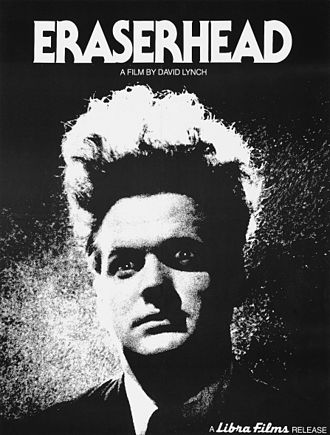
“In heaven everything is fine”, sings the ‘Lady in the Radiator’. Is it really, David, because during the course of your cinematic vision known as Eraserhead (1977), we witness all manner of things which demonstrate heaven is far from our reach. We see the scarred ‘Man in the Planet’, apparently controlling Henry Spencer’s (Jack Nance) fate with mechanical levers. There are also floating heads, blood-squirting chickens, weird alien-looking babies, an enigmatic femme-fatale, a shock-haired and shock-faced protagonist; all existing in an industrial abyss presented in bleak monochrome. If there is a heaven, no one’s getting there!

David Lynch’s debut feature film is a masterpiece of independent cinema. A surrealist, dystopian and anxiety-inducing collage of fantastic images and industrial sounds. Moreover, Eraserhead (1977) was a labour of love for the enigmatic filmmaker. Lynch took years to finish the production. So much so there is one scene where Nance’s character Henry, walks from a corridor through a door. While the edit is immediate, the filming dates were one year apart. Thankfully, Jack Nance didn’t get that famous quiff cut off. Moreover, money was tight. Lynch financed the film from doing part-time jobs, plus he received help from the American Film Institute, family members, and very good friends. There was no Kickstarter in those days.


While Eraserhead (1977) has many seemingly unconnected and bizarre images and freakish scenes, there are several powerful themes running through the film. Indeed, it is a Freudian classic with the nervous and anxious Henry, being lead from one challenging situation to another. The fear of responsibility and parenthood hangs heavy in Lynch’s psyche. Henry lacks confidence and sexual adequacy. Even when he attempts a relationship with Mary (Charlotte Stewart), his sanity is hanging on a thread. Mainly due to the fact their child is a sad, mutated monstrosity. But to Henry’s credit he attempts to love the child, even though such paternal care is doomed.

Lastly, given it had such a low-budget, took the best part of a decade to shoot and spent over a year in post-production, Lynch cinematic skills are meticulously represented in Eraserhead (1977). Kudos as well to the stark cinematography, Nance’s startling deadpan performance, plus Lynch’s incredible soundscape designed with Alan Splet. Ultimately, while it is a powerfully strange film, there is actually much method and heart in Lynch’s madness. The urban decay and freakish nature of Eraserhead (1977) taps into primal fears of bringing a child into a dark world. I, for one, can certainly identify with that.