Category Archives: New Releases

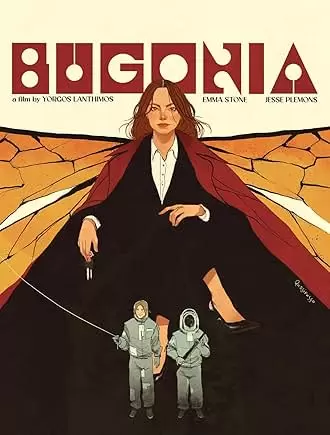
Cinema Review: Bugonia (2025) – Lanthimos has a blast with this dark conspiracy-class-war-kidnap-comedy!

Cinema Review: Bugonia (2025)

Directed by Yorgos Lanthimos

Screenplay by Will Tracy – Based on Save the Green Planet! (2003) by Jang Joon-hwan

Produced by Ed Guiney, Andrew Lowe, Yorgos Lanthimos, Emma Stone, Ari Aster, Lars Knudsen, Miky Lee, Jerry Kyoungboum Ko


Main Cast: Emma Stone, Jesse Plemons, Aidan Delbis, Stavros Halkias, Alicia Silverstone, etc.

Cinematography by Robbie Ryan

*** MAY CONTAIN SPOILERS ***


Yorgos Lanthimos has once again sneaked out of his uncanny terrarium and unleashed another piece of beautifully deranged cinema. Bugonia (2025)—a remake of Jang Joon-hwan’s cult classic Save the Green Planet!—is part sci-fi fever dream, part hostage farce, and part spiritual meltdown. It’s like Ruthless People (1986) got trapped in a socio-political, beekeeping suit and force-fed ayahuasca.

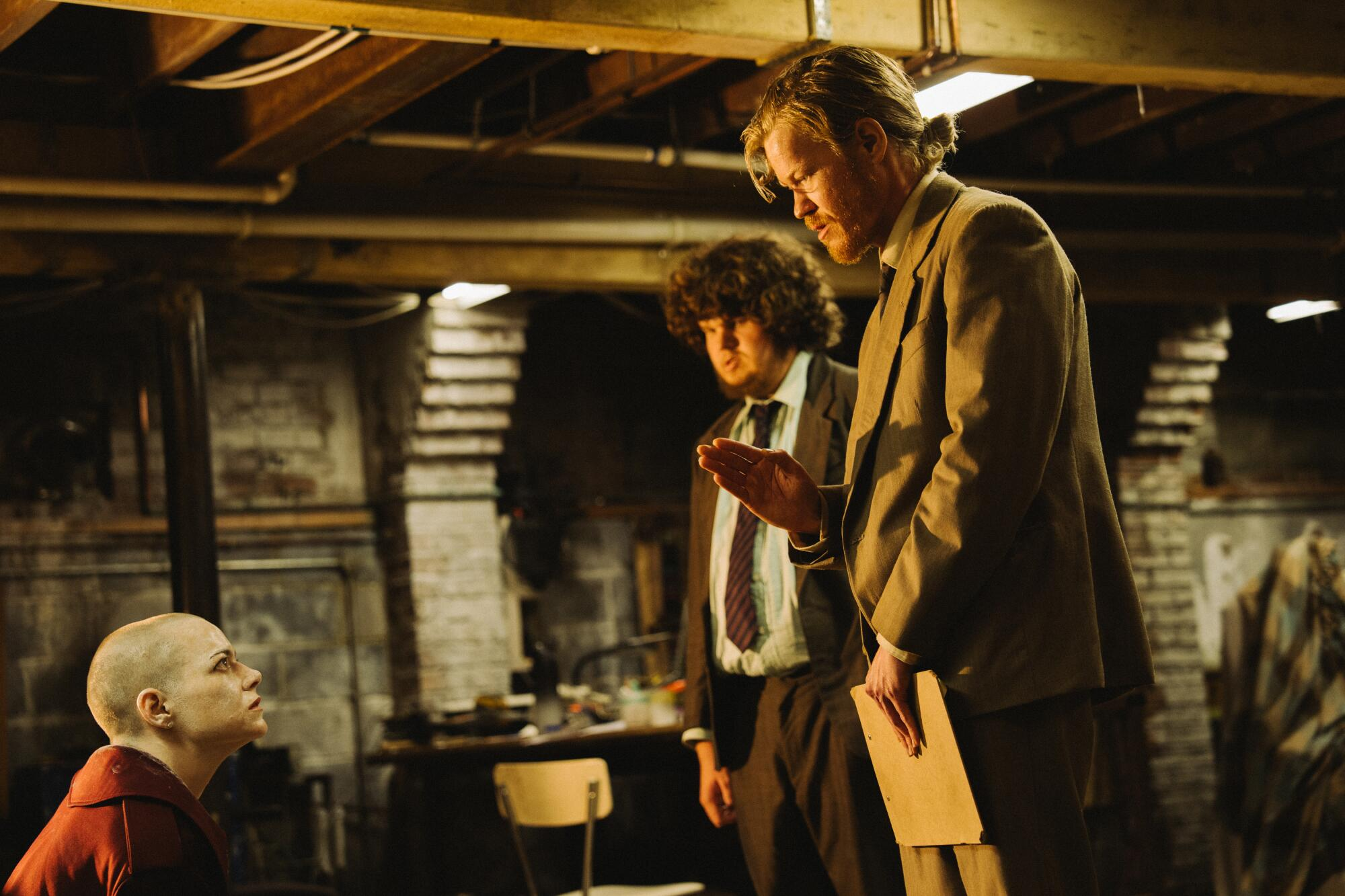
Will Tracy’s script hums with the manic energy of someone who’s read too many conspiracy subreddits and decided to turn it into Oscar bait. The film pairs Jesse Plemons (whose face seems genetically engineered for moral unease) with Alden Delbis (playing his twitchy, Kool-Aid-eyed partner in cosmic delusion) as two eco-anarchist truthers who kidnap a pharma/tech CEO, played with imperial chill by Emma Stone. Their reasoning? Well, just wait and see. It is incredibly crazy with some severe plot turns. Yet, somehow Lanthimos and his terrific cast maintain verisimilitude within the setting and just about hang onto emotional connection for the characters.


What follows is a deranged pas de trois of torture, empathy, and total philosophical collapse. Plemons and Delbis interrogate Stone with the intensity of people who’ve seen too many YouTube conspiracy documentaries, while Lanthimos and cinematographer, Robbie Ryan shoot it with the intensity of a nature documentary directed by Lucifer. There are bees. There is honey. There are monologues about pollution, pharmaceutical company threat and environmental collapse. Further, Stone, who has now fully ascended into Lanthimos’ personal pantheon of holy weirdness, plays her role like a woman being both worshipped and flayed at the same time. She’s terrifyingly serene—like she’s founded a doomsday cult and smiled through the apocalypse.

It’s all utterly ridiculous, but Bugonia (2025) thrives in that space between laughter and dread. Lanthimos once again proves that absurdism isn’t about nonsense—it’s that nonsense is the only sane response to the modern world. I enjoyed this film way more than the obtuse Kinds of Kindness (2024). It has more akin, although not as devastatingly memorable, as his earlier Greek-language classics or The Killing of a Sacred Deer (2017). Moreover, if The Favourite (2018) was about power, and Poor Things (2024) was about rebirth, Bugonia (2025) is bleak, fatalistic morality tale about environmental apocalypse.

By the time the film’s final shots roll I was equal parts horrified, moved, and deeply amused. It’s an eco-horror-comedy that gorily plays like Saw (2004) meets famous beekeeping philosopher, Aristotle. Overall, Bugonia (2025) proves once again that Yorgos Lanthimos is cinema’s reigning apiarist of absurdity—and his audience are all his buzzing little drones.

Mark 8.5 out of 11


Cinema Review: The Smashing Machine (2025) – an authentic portrait of a MMA fighter that hits big!

Cinema Review: The Smashing Machine (2025)

Directed by Benny Safdie

Written by Benny Safdie

Based on documentary The Smashing Machine: The Life and Times of Extreme Fighter – Mark Kerr by John Hyams

Produced by Benny Safdie, Dwayne Johnson, Eli Bush, Hiram Garcia, Dany Garcia & David Koplan

Main cast: Dwayne Johnson, Emily Blunt, Ryan Bader, Bas Rutten, Oleksandr Usyk etc.

*** MAY CONTAIN SPOILERS ***


Benny Safdie’s The Smashing Machine (2025) is a bruising, compassionate, and unvarnished portrait of a man torn between physical dominance and emotional fragility. Centered on a three-year stretch (early 2000s) in the dramatic life of MMA pioneer Mark Kerr, the film captures both the bone-rattling intensity of the ring and the private turmoil of a fighter whose greatest battles unfold far from the crowd’s roar.

Dwayne Johnson delivers a revelatory performance as Kerr, casting aside his blockbuster charisma to reveal deep vulnerability and conflict. His portrayal is raw, unguarded, and humane—showing a man both addicted to the high of combat and trapped by the pain that follows. The film traces Kerr’s tumultuous relationship with Dawn Staples (played with nuance and sensitivity by Emily Blunt.) Together they find emotional truth in every scene, exploring the strain that MMA fighting, addiction, mental health, fear-of-losing, obsession and self-doubt place on intimacy.


The fight sequences are stunningly authentic, shot with kinetic immediacy and documentary realism. Safdie immerses the audience in the grit and chaos of early MMA, where glory was fleeting and paydays were meager compared to the sport’s modern era. Supporting performances from real fighters Ryan Bader and Oleksandr Usyk lend further credibility, grounding the film in the texture of lived experience.

Safdie’s direction is as intense and uncompromising as his subject. He resists the traditional rise-and-fall sports narrative, opting instead for a slice-of-life, near-documentary approach that prizes authenticity over heart-pounding drama. If the conflict surrounding Kerr’s addiction, rehab, and Dawn’s own mental health struggles feels under-explored, that restraint is also what makes the film feel so painfully real.

Inspired by the documentary, The Life and Times of Extreme Fighter – Mark Kerr by John Hyams, The Smashing Machine (2025) isn’t a conventional sports movie—it’s a portrait of survival, identity, addiction and the brutal intersection of ambition and vulnerability. Unflinching and deeply human, it cements Johnson’s performance as the best of his career, and confirms Safdie’s gift for finding poetry in the MMA fight scene. Ultimately, the film works best as a tribute to the trailblazing strength and passion of the fighter, Mark Kerr. The fight game is a crazy, tough business and it’s heartening to see, especially in the final scenes, that Kerr survived such battles and lived to breathe another day.

Mark: 8 out of 11


Cinema Review: The Long Walk (2025) – a compelling adaptation of Stephen King’s anti-war allegory!

Cinema Review: The Long Walk (2025)

Directed by Francis Lawrence

Screenplay by JT Mollner

Based on The Long Walk by Stephen King

Produced by Roy Lee, Steven Schneider, Francis Lawrence, Cameron MacConomy

Main Cast: Cooper Hoffman, David Jonsson, Garrett Wareing, Tut Nyuot, Charlie Plummer, Ben Wang, Roman Griffin Davis, Joshua Odjick, Judy Greer, Mark Hamill etc.

Cinematography by Jo Willems

*** MAY CONTAIN SPOILERS ***


This compelling and moving anti-war film was adapted from the Stephen King novel, The Long Walk (1979), originally published under his pseudonym, Richard Bachman. The story is set in a dystopian alternative version of the United States ruled by a totalitarian regime; a new military-driven world order. The plot follows the fifty young male contestants of a gruelling annual walking contest, who must follow a set of rules or face the grim consequences. Ultimately, most of their fates are doomed as only the last boy standing gains the prize.

As an aside, I often wondered why King published under a pseudonym and after a quick net search I found that the author was limited to publishing one book per year, since publishing more would be “unacceptable” to the public. King therefore wanted to write under another name in order to increase his publication without saturating the market for the King “brand”. So, there you go. But what of The Long Walk (2025)? How does it compare to the plethora of other King film adaptations?


Grim, unrelenting, and devastatingly poignant, The Long Walk (2025) transforms a brutal endurance contest into an unmistakable anti-war allegory. Fifty young men, each plucked from a different state, march forward under the banner of national pride and promised glory — but what unfolds is the slow annihilation of their bodies and spirits. The premise, simple on the surface, becomes a searing critique of how nations sacrifice youth for power, money, and hollow ideals.

The film thrives on the camaraderie and conflict between the boys: fleeting alliances form, bitter rivalries crack open, and in moments of exhaustion or terror, we glimpse the fragile humanity beneath their forced bravado. Echoes of The Hunger Games franchise, also directed by Francis Lawrence, are impossible to miss. However, this story clearly influenced The Hunger Games and other examples of survivalist literature. Yet, The Long Walk (2025) is way more rawer, more intimate, and ultimately more scathing in its indictment of systemic cruelty.

Among the excellent ensemble cast, Cooper Hoffman as Ray and David Jonsson as Peter emerge with standout performances. Their characters, drawn together in unlikely connection, add emotional depth to the carnage, grounding the relentless attrition in genuine feeling. As their bond develops, the horror of the “Walk” feels sharper, the futility more unbearable. Overall, aside from slight repetition of action and an ending I’d have preferred to have gone a different way, The Long Walk (2025) carries hypnotic and bloody power. It is both a war story without a battlefield and a coming-of-age tale without the promise of adulthood — a haunting testament to how societies can destroy their own sons in pursuit of an impossible prize.

Mark: 8.5 out of 11


Cinema Review: Weapons (2025) – a finely constructed horror mystery!

Cinema Review: Weapons (2025)

Directed by Zach Cregger

Written by Zach Cregger

Produced by Zach Cregger, Roy Lee, Miri Yoon, J. D. Lifshitz, Raphael Margules, etc.

Main Cast: Josh Brolin, Julia Garner, Alden Ehrenreich, Austin Abrams, Cary Christopher, Benedict Wong and Amy Madigan.

Cinematography by Larkin Seiple

*** MAY CONTAIN SPOILERS ***


Zach Cregger’s Barbarian (2022) was an intriguing feature debut that captivated viewers with a suspenseful, tension-filled first half, expertly building a sense of dread and mystery. The film begins with a seemingly simple premise — a woman arrives at an Airbnb, only to find it double-booked — but what starts as a quiet psychological thriller quickly takes an unexpected turn. As the plot unfolds, the sense of unease grows, drawing viewers deeper into its web of secrets.

However, the second half of the film ventures into increasingly bizarre and chaotic territory, unravelling into a frankly insane series of twists and reveals. While it might initially seem like a more grounded thriller, Barbarian (2022) pushed the boundaries of genre, diving head first into over-the-top absurdity. It’s a thrilling ride that keeps you on the edge of your seat, even if the madness of the final act leaves you both bewildered and entertained. In some ways Cregger’s follow-up Weapons (2025) shares such structural and thematic similarities with his first film, however, it is a much more controlled and impactful mystery. Until the end.

Weapons (2025) immediately hooks viewers with the mystery of the seventeen children going missing in the town of Maybrook. This instantly draws us into a world brimming with tension and unanswered questions. The authorities investigation into their disappearance soon stalls and how the townsfolk react becomes the central thread, gradually unraveling a complex, carefully structured narrative. Thus, Cregger’s postmodern fairy-tale unfolds through the eyes of various interconnected characters, each of whom brings a unique perspective and layer to the plot.


Josh Brolin plays Archer Graff, a father grieving the disappearance of his son Matthew, one of the missing children. His portrayal is poignant, balancing grief with a desperate need for answers, and his journey pushes the narrative forward with a personal stake in the outcome. Next, Julia Garner’s Justine Gandy, a dedicated teacher, adds another emotional dimension. She’s devastated when she discovers that nearly all of her students have vanished without a trace, with the exception of Alex Lilly (played by Cary Christopher), the only child from her class who remains. Justine’s struggle to find out what happened to her students, coupled with her own crumbling personal life and alcoholism, make her a compelling protagonist.

Other characters include Alden Ehrenreich’s Paul Morgan, a troubled police officer with his own set of demons, is a reluctant ally to Justine. Their past relationship adds a layer of tension as they navigate the growing sense of danger and urgency surrounding the missing children. Then, Austin Abrams brings a sense of raw, chaotic energy to James, a homeless drug addict and burglar whose past intersects with the mystery in unexpected ways. Lastly, Benedict Wong plays Marcus Miller, the school principal, who serves as an important figure in Justine’s quest for answers. Though sympathetic to her, Marcus is often caught between his professional responsibilities and the mounting pressure of the situation.

Weapons (2025) masterfully weaves its non-linear narrative with a striking array of tense, spine-chilling moments that keep audiences on edge throughout. As the plot unfolds through intersecting character arcs, the film expertly intersperses surprising scares, thrilling foot chases, and creepy locations, all while pulling you deeper into its twisting mystery. The jumps in time and the interconnected storylines create a sense of disorientation that builds forces viewers to constantly question what’s real and what isn’t.

Each character’s journey is filled with psychological unease and physical danger, leading to some genuinely heart-pounding sequences. Meanwhile, the eerie, claustrophobic settings—ranging from decaying homes to ominous, unfamiliar spaces—serve as perfect backdrops for the increasing horror. These moments contribute to the growing sense that something monstrous is lurking just beneath the surface, waiting to break free. Further, the film also plays with ambiguity, surreal dreams and unreliable narrators, allowing characters’ perspectives to fracture.

However, similar to Barbarian (2022), Weapons (2025) takes a tonal right-turn in the final moments, descending into all-out mania and Savini-style gore. The reveal of the matriarchal menace, who emerges as a central ‘Pied Piper’ type villain, feels somewhat unearned, undermining the narrative choices before. The ending also didn’t quite fully connect with the deeper themes or subtext of the film that were promised in the set-up. Yet, despite such inconsistencies Cregger’s Weapons (2025) has been marketed incredibly well and as has deservedly done great box-office business. Lastly, Creggers is a very talented filmmaker and his second film remains a smartly written and gripping ride filled with tension, scares, and that insane final act.

Mark 8.5 out of 11


Cinema Review: 28 Years Later (2025) – an epic horror sequel; one for the (r)ages!

Cinema Review: 28 Years Later (2025)

Directed by Danny Boyle

Written by Alex Garland

Produced by Danny Boyle, Alex Garland, Andrew Macdonald, Peter Rice & Bernie Bellew

Main Cast: Jodie Comer, Aaron Taylor-Johnson, Jack O’Connell, Alfie Williams, Edvin Ryding and Ralph Fiennes

Cinematography by Anthony Dod Mantle

Edited by Jon Harris

** MAY CONTAIN SPOILERS **


We’re foot—slog—slog—slog—sloggin’ over Africa
Foot—foot—foot—foot—sloggin’ over Africa —
(Boots—boots—boots—boots—movin’ up and down again!)
There’s no discharge in the war! —
Rudyard Kipling

The opening sequences of 28 Days Later (2002), directed by Danny Boyle and written by Alex Garland, are some of the most haunting and iconic introductions in cinema—transcending the horror genre to deliver something mythic, mournful, and terrifyingly real. They are masterclasses in mood-building, world-setting, and emotional manipulation, and redefined what the modern apocalypse could feel like on screen. From the terrifying raging simian attacks to the stunning silence of hollow streets and buildings of London as Jim (Cillian Murphy) awakes to an incredibly changed and empty planet. Here Boyle used guerrilla filmmaking as an artistic weapon with digital video blending with silence and dread, beauty and decay, loneliness and rage creating a grimy realism that no big budget blockbuster could replicate.

The opening sequence of the sequel, 28 Weeks Later (2007), was damned good as well, although what followed was not as formidable as the original. If we’re honest it was more of a high-quality straight-to-video effort, especially when compared to the incredible first film. But what of 28 Years Later (2025), which finds Boyle and Garland re-teaming with a stellar cast including: Jodie Comer, Aaron Taylor-Johnson, Ralph Fiennes and newcomer, Alfie Williams. It opens with yet another impressive opening sequence in 2002, as a family of kids are attacked in their Scottish home. Escaping on frantic foot is young Jimmy who finds his father, the local minister, in his church proclaiming the ‘end of days!’ Move forward twenty-eight years to 2031 and the film joins, interestingly enough, not Jimmy, but a survivor community living in Lindisfarne, a tidal island connected by a fortified causeway.

Focusing on the family unit of twelve-year-old son, Spike (Alfie Williams), and parents, Isla (Jodie Comer) plus father, Jamie (Aaron Taylor-Johnson), 28 Years Later (2025) marks a ferocious and exhilarating return to the infected-ravaged world. It is not simply a continuation, but a full-fledged reimagining that deepens, widens, and accelerates the mythology, style, and thematic power of the series. It is not just a sequel—it’s an evolution, one that pulses with the blood of Romero’s bleak social horror and the serialized depth of The Walking Dead, while forging its own cinematic identity: brutal, urgent, and conceptually masterful.


From its opening moments, 28 Years Later plunges viewers into a world far beyond what we’ve seen before. Civilization hasn’t recovered—it has, like the zombies, mutated. The virus is no longer an outbreak or an aftermath; it is an ecosystem. What began as a confined crisis in 28 Days Later, and widened into militarized guilt and familial betrayal in 28 Weeks Later, now becomes a reckoning. Thematically, the film touches on generational trauma, hybrid immunity, rites of passage, euthanasia and the evolution of the rage undead. Jamie trains his son in the art zombie-hunting, before the middle act finds Spike attempting to save his unwell mum. At this time he both matures and overcomes several battles with mutated inhumans.

The visual grammar of 28 Years Later stays true to the DNA of the series: raw, immediate, and grimy. But it’s also evolved. The digital grunge of 28 Days Later is elevated with modern tools, while still embracing a handheld, documentary-style urgency. Towns and buildings aren’t just abandoned—they’re fossilized in trauma. New scenes are suffused with ash, dust, decay, blood, plasma and rusted iconography, painting a world that’s both rotting and fighting to be reborn. This is a horror film that smells like blood and diesel. It feels dirty. Every camera move, whip pan and smash cut drags you to hell and makes you feel like your life is in danger.

28 Years Later doesn’t just revive a franchise—it transforms it into a towering trilogy of infection, collapse, and spiritual trauma. It draws from Romero’s cynicism, The Walking Dead‘s moral complexity, and its own raw, kinetic legacy to deliver something uniquely powerful: a horror film that is both visceral and cerebral, intimate and operatic. While there are some script and pacing issues toward the end of the second act, Boyle directs superbly. Plus, the film benefits from some memorable performances, notably Comer, Fiennes and young Alfie Williams. Lastly, it has one of the most startling endings to a film I have seen in a long time. It is frankly nuts. Yet, it ensures 28 Years Later (2025) is a modern horror classic, pulsing with urgency, style, and an almost unbearable truth: that the most terrifying viruses don’t infect the body—they infect the soul. Bring on the sequel!

Mark: 9.5 out of 11


Cinema Review: I’m Still Here (2024) – A searing portrait of resistance in the face of military tyranny!

Cinema Review: I’m Still Here (2024)

Directed by Walter Salles

Screenplay by Murilo Hauser and Heitor Loreg

Based on I’m Still Here by Marcelo Rubens Paiva

Produced by Maria Carlota Bruno, Rodrigo Teixeira and Martine de Clermont-Tonnerre

Main cast: Fernanda Torres, Selton Mello, Fernanda Montenegro, Valentina Herszage, Luiza Kosovski, Barbara Luz, etc.

Cinematography by Adrian Teijido

*** MAY CONTAIN SPOILERS ***


On March 31, 1964, the Brazilian military, with support from the United States and segments of the civilian population, overthrew the government of President João Goulart in a coup d’état. Goulart, a left-wing president who had been in power since 1961, faced rising opposition due to his policies that included land reforms and more progressive labour laws. These policies alarmed conservative sectors of society, including the military, business elites, and parts of the middle class, who for many feared the spread of communism in the context of the Cold War. From reports I have read, the military’s move was framed as a necessity to prevent Brazil from descending into a left-wing revolution, but the coup marked the beginning of a brutal 21-year period of military dictatorship. Be careful what you wish for.

Under the military regime (1964–1985), Brazil saw widespread censorship, repression of political dissidents, the establishment of a climate of fear, and the use of torture against suspected leftist militants and activists. The military government justified its actions as necessary to combat communist insurgency, but its reign was characterised by systematic violations of human rights. The regime implemented institutional acts that curtailed democratic freedoms, silenced political opposition, and controlled the media, all while claiming to defend the country from Marxism. The dictatorship lasted until 1985, ending when the military handed power back to a civilian government, but the effects of this period are still deeply felt in Brazilian society, as many families continue to search for the truth about the victims of torture and forced disappearances during the dictatorship.


Yet, while the film may not explicitly focus on the 1964 coup or the military dictatorship. I’m Still Here (2024) addresses the aftermath and themes of identity, resistance, and survival in the face of oppressive systems. Director, Walter Salles, uses the personal as a lens through which broader social and political issues are explored. One could consider how the legacy of fear, control, and the impact of a regime still reverberates in contemporary Brazil.

In I’m Still Here (2024), the filmmakers take a distinctive approach to the thriller genre by moving away from the typical tropes associated with suspense-driven narratives. Instead of focusing primarily on action or a series of dramatic plot twists, the film shifts its attention toward a more intimate, personal, and familial story. There is suspense and tension, but it is more under-stated and subtle. This departure from overt political thriller conventions allows the film to delve into the emotional and psychological terrain of its characters, with a particular focus on the matriarch, Eunice Paiva, played by the powerhouse Fernanda Torres.

Rather than relying on external action or traditional thrills, I’m Still Here (2024), centres around Eunice’s emotional journey and the impact of her environment on her family when her husband, Rubens Paiva (Selton Mello) is taken away by what may-or-not-be the military. The film positions Eunice as the central figure whose personal evolution drives the narrative, illustrating the profound effects of her choices and relationships on her family. Salles skilfully weaves family celebrations, events, and home movie footage to create a swell of warmth amidst the fear and paranoia created when Rubens disappears.


Eunice Paiva’s character is given a powerful depth in I’m Still Here (2024), with Fernanda Torres delivering a standout performance. Rather than positioning Eunice as a victim or a purely heroic figure, the film complicates her character, showing her as a multifaceted individual. Eunice’s actions are driven not by external thrills or pressures, but by the emotional and psychological burdens she carries as a matriarch, dealing with familial responsibility and navigating the complexities of her relationships with her children, spouse, and extended family.

Torres’s portrayal emphasises Eunice’s inner conflict—her desire to protect her loved ones, while also grappling with personal loss, regret, and the external societal forces that shape her world. Constantly denied answers and closure by the authorities, Eunice refuses to give in and continues to fight for decades, even when the military rule is over. The emotional intensity of Eunice’s character arc is one of the most compelling aspects of the film, as Torres’s performance brings a deep authenticity to the role, grounding the story in real, human struggles rather than sensationalised action.

By moving away from traditional thriller tropes, I’m Still Here (2024) creates a more reflective and intimate cinematic experience. Rather than simply delivering suspense through external action, the film explores the internal tensions of its characters and their relationships, magnifying the quiet, profound impact that such personal struggles can have on a family. Having lived through such adversity the Paiva family would stand proud in the face of this evil regime, overcoming all that is thrown at it. I mean, there is so much evil in this world and throughout history, that Eunice Paiva and similar quiet heroes are to be cherished. In short: why can’t such admirable individuals run the often horrible world we live in.

Mark: 8.5 out of 11


Cinema Review: September 5th (2024) – an inside-out snapshot of tragedy at the 1972 Munich Olympics!

Directed by Tim Fehlbaum

Written by Moritz Binder, Tim Fehlbaum and Alex David

Produced by Philipp Trauer, Thomas Wöbke, Tim Fehlbaum, Sean Penn, John Ira Palmer and John Wildermuth

Main cast: Peter Sarsgaard, John Magaro, Ben Chaplin, Leonie Benesch, Jim Mckay (archival footage), Zinedine Soualem, etc.

Cinematography by Markus Förderer

Edited by Hansjörg Weißbrich

*** MAY CONTAIN SPOILERS ***


The events of September 5th, 1972, during the Munich Olympics are deeply connected to the tragic and harrowing story of the attack by the Palestinian group ‘Black September’, which targeted the Israeli Olympic team. This day is crucial in understanding the impact of the attack, as it marks the beginning of what became known as the ‘Munich Massacre’. The documentary One Day in September (2000) directed by Kevin Macdonald, offered a detailed account of the events providing chilling footage, interviews with survivors, and insights from those who witnessed the attack and as a moment that deeply altered the course of history, influencing global politics, the perception of terrorism, and the nature of security at international events.

Steven Spielberg’s fictionalised film Munich (2005) dramatized the aftermath of the ‘Munich Massacre’, focusing on Israel’s covert response to the attack. The film based on the book Vengeance by George Jonas, told the story of a team of Israeli agents tasked with assassinating those involved in the planning of the massacre. The plot of Munich (2005) unfolds as these agents track down and kill individuals connected to ‘Black September’. The film, criticized for a series of inaccuracies, portrayed the moral complexities and psychological toll of vengeance, showing the personal conflict faced by the agents as they carry out their mission. Now, covering the same event, we have September 5th (2024), a drama-documentary that snapshots the conflict from the perspective of the ABC Sports crew and their coverage of the events.


Director, Tim Fehlbaum, and his talented production team effectively utilize constraints in geography, time, space, and structure to craft a highly claustrophobic thriller, drawing viewers into the escalating crisis as it unfolds. From the moment the athletes are taken hostage the ABC media team headed by Peter Sarsgaard as Roone Arledge, the president of ABC Sports, John Magaro as Geoffrey Mason, the head of the control room in Munich and Ben Chaplin as Marvin Bader, the head of operation at ABC Sports are on red alert striving to capture the story and prevent it being taken from them by the ABC News team. Fehlbaum makes use of limited settings, “real-time” structure, and confined spaces expertly as the audience find out information of the hostages plight and subsequent runway killings at precisely the same time as the crew do.

The films’ use of psychological space, close-ups, shadows and screens, creates a claustrophobic atmosphere, starving the audience of air and making them feel the increasing emotional pressure on each character. Like the world’s population today witnessing the brutal events unfold between Israel and Palestine on the news, they ultimately have little power over the situation as news of tragedy bleeds through to them. Further, the cast are uniformly compelling with Peter Sarsgaard, John Magaro and Leonie Benesch, as a translator for the ABC crew, stand out amongst an impressive ensemble. Lastly, special mention for the editing team led by Hansjörg Weißbrich, who skilfully weaved in actual footage from the ABC archive, creating a seamless and powerful cinematic experience.

Mark: 8 out of 11


Cinema Review: A Complete Unknown (2024) – an electric but over-polished cover version!

CINEMA REVIEW: A COMPLETE UNKNOWN (2024)

Directed by James Mangold

Screenplay by James Mangold and Jay Cocks

Based on Dylan Goes Electric! by Elijah Wald

Produced by Peter Jaysen, James Mangold, Alex Heineman, Bob Bookman, Alan Gasmer, Jeff Rosen, Timothée Chalamet, Fred Berger etc.

Main cast: Timothée Chalamet, Edward Norton, Elle Fanning, Monica Barbaro, Boyd Holbrook, Scoot McNairy, Dan Fogler, etc.


James Mangold is rarely mentioned as one of the best directors around. Probably because he is not a flashy cigar-munching quote machine or a even a household name. Yet, he has consistently delivered a series of extremely entertaining genre films over the past few decades. These include: Copland (1997), Identity (2003), Girl, Interrupted (1999), Walk the Line (2005)3:10 to Yuma (2007), Logan (2017) and Ford v Ferrari (2019). His films always feature solid characterisation, compelling conflict and well-structured plots. They also have a pristine and attractive look and style. Further, they always attracts impressive A-list actors and striking ensemble casts. His cover version of the music biography, Dylan Goes Electric! by Elijah Wald is no different.

A Complete Unknown (2024) showcases events from the era of 1961 to 1965 where Dylan rose to major stardom delivering stunning and poetic lyrics with hypnotic melodies. This period culminates in his movement from acoustic guitar to full electric band, causing controversial and violent reactions from the audience and organisers of the Newport Folk Festival. This furore may seem mildly inconsequential in today’s social-media digital coliseum where intellectual debates are fought with emojis by individuals with nano-seconded attention spans. But for many, Bob Dylan’s perceived treachery of moving from the purity of folk over to the dark side of rock was a significant event of the epoch. Having said that, Dylan was always an enigmatic maverick and genius who marched to the time of his own drum. Thus, such audial rebellion was no surprise, especially when looking back at it now.


As a tribute to the incredible musical and writing brilliance of Dylan, A Complete Unknown (2024) is definitely worth a watch. Timothée Chalamet does a sterling job with the musicianship, mannerisms and vocal duties. He even brings a suggestion of character to someone who isn’t just a musician. Dylan’s a shape-shifter, a poet, a myth, a paradox wrapped in a harmonica riff. To play Dylan is not to “become” him but to capture the way he constantly eludes being known. Personally, I enjoyed Chalamet’s charismatic performance in Wonka (2023 more, but he is commanding as Dylan nonetheless. The supporting cast are terrific too, notably Edward Norton as the affable folk singer Pete Seeger and Boyd Holbrook as a muscular Johnny Cash. Mangold deserves much praise for getting so many consistently fine performances, even if the script could have been punched up with more drama throughout. Dylan being a bit of a self-driven “arsehole” and slight philanderer hardly raises the pulse.

Overall, Mangold directs with a sure hand and there are many fantastic musical set-pieces, gigs and recording sessions. But the film’s glossy sheen feels at odds with the grit of the 1960’s Greenwich Village folk scene. The world Dylan emerged from was smoky, messy, and filled with hungry artists scraping by in dimly lit coffeehouses, where folk music wasn’t just a style but a battle cry. A Complete Unknown (2024) captures the aesthetic—the period costumes, the dimly lit clubs, the jangling guitars—but everything feels just a touch too manicured, too cinematic. Dylan’s rise was not glamorous and the film makes the counterculture movement feel almost nostalgic rather than revolutionary. It’s an engaging snapshot, and Chalamet’s performance is undoubtedly compelling, but much like a pristine re-recording of an old folk song, the imperfections—the very thing that gave the music its soul—are missing.

Mark: 7.5 out of 11


Cinema Review: Wolf Man (2025) – short changes both fans of Leigh Whannell and the horror genre alike!

CINEMA REVIEW: WOLF MAN (2025)

Directed by Leigh Whannell

Written by Leigh Whannell and Corbett Tuck

Produced by Jason Blum

Main Cast: Christopher Abbott, Julia Garner, Matilda Firth and Sam Jaeger

Cinematography by Stefan Duscio


Leigh Whannell’s Wolf Man (2025) brings a fresh twist to the classic tale, grounding the werewolf transformation in a visceral metaphor for illness. The concept has undeniable merit, with the protagonist’s physical deterioration mirroring deeper themes of paternal guilt and the crushing weight of family responsibilities. Whannell’s knack for melding genre thrills with human drama is evident, as he did so effectively in Upgrade (2018) and The Invisible Man (2020). In fact, along with Predestination (2014), and the recently released, The Substance (2024), Upgrade (2018) is a low-budget masterpiece which SHOULD appear in many best-of-the-millennium-film lists, as opposed to over-rated, art-house garbage like Joanna Hogg’s, The Souvenir (2019).

Anyway, back to the Wolf Man (2025). The film’s decision to confine its narrative mostly, apart from a suspenseful flashback prologue sequence, to a single night, significantly undermines its potential. Once the parental unit portrayed by nervy and ticky, Christopher Abbott and woefully underwritten, Julia Garner is established, the rushed structure sacrifices emotional depth and character development, leaving its poignant ideas about illness, fatherhood and family obligations feeling under explored. The claustrophobic time frame allows for tense, kinetic set pieces and decent gore, but it stifles the broader emotional resonance that Whannell has demonstrated in his previous work.

For fans of Upgrade (2018) and The Invisible Man (2020), Wolf Man may feel like a missed opportunity. Those films balanced high-concept storytelling with sharp social commentary, whereas this latest effort feels more like a half-formed howl in the night. Indeed, there seemed to be a whole bite taken out of the second act with the film hurtling toward the underwhelming denouement with little tension and suspense. Further, if you have ever watched Ozark, then Julia Garner’s electric energy and acting power is truly under utilized. Plus, the film was SO dark. I know it’s a horror film, but it would be great to actually SEE what was going on as the characters go into the woods. Oh, and I did not like the monster design at all to be honest. Bring back Rick Baker I say. Overall, while there’s brilliance in the premise, the execution lacks the quality needed to fully transform it into something truly memorably metamorphic.

Mark: 6.5 out of 11


Cinema Review: Nosferatu (2024) – At the Intersection of Horror and Eroticism!

Cinema Review: Nosferatu (2024)

Directed by Robert Eggers

Screenplay by Robert Eggers

Based on Nosferatu by Henrik Galeen and Dracula by Bram Stoker

Produced by Jeff Robinov, John Graham, Chris Columbus, Eleanor Columbus, Robert Eggers, etc.

Main Cast: Bill Skarsgård, Nicholas Hoult, Lily-Rose Depp, Aaron Taylor-Johnson, Emma Corrin, Willem Dafoe, Simon McBurney, etc.

Cinematography by Jarin Blaschke

Music by Robin Carolan

*** MAY CONTAIN SPOILERS ***


Firstly, Nosferatu: A Symphony of Horror, the 1922 silent German Expressionist vampire film directed by F. W. Murnau remains one of the greatest and most iconic horror films of all time. It is arguably the greatest adaptation of Bram Stoker’s, seminal gothic classic, Dracula, too. Of which there have been many. So, who would be brave enough to attempt to master another version of this often-told monstrous tale. Step forward the acclaimed and relatively young American auteur, Robert Eggers.

Robert Eggers has built a reputation for crafting films that blend mythical and fantastical elements with folk horror and psychological thriller sensibilities. His works often transport audiences to meticulously recreated period settings, which serve as the foundation for his exploration of human fears, desires, and the supernatural. His debut feature film. The Witch (2015) exemplified folk horror rooted in Puritanical fears of the supernatural. Set in 1630s New England, it drew heavily from folklore, historical accounts, and period-authentic dialogue. The film explored themes of isolation, religious paranoia, and the breakdown of a family due to their belief in the presence of witches.

Similarly, The Lighthouse (2019), a psychological thriller merged maritime folklore with hallucinatory horror. Set in the late 19th century, the film delved into isolation-induced madness as two lighthouse keepers grappled with mythological themes such as mermaids, sea gods, and Promethean punishment. Moreover, as with his short films Hansel and Gretel (2007) and The Tell-Tale Heart (2008) he is drawn towards established texts, with the bruising, battering ram of The Northman (2022) covering the original myth on which Hamlet was based. Eggers vision immersed the viewer in violence, Viking culture, shamanic ritual and mysticism. Unsurprising therefore, he has now delivered the German Expressionist classic, Nosferatu (2024) with his signature period aesthetic and focus on the macabre.


With a stellar cast, production design and incredibly stylish vision, Eggers has produced a praiseworthy example of fantastical cinema. As usual there appears to be meticulous historical research, including accurate costumes, set design, and period-specific dialogue. This attention to detail in Nosferatu (2024) grounds the supernatural elements in a believable world, enhancing their impact. Furthermore, Eggers creates a sense of dread through his use of sound design, stark cinematography, and claustrophobic settings. His restrained pacing allows for the gradual unraveling of characters’ psyches, making the supernatural elements more impactful.

Yet, while steeped in folklore, Nosferatu (2024) centres on human struggles—family disintegration, fate, guilt, madness, lust and sex. Indeed, Nicholas Hoult’s Thomas Hutter (née Harker) does not stand a chance. From the opening scene his sensual wife, Ellen, is inextricably linked via a lustful fever dream to a mysterious figure, who, if you couldn’t guess, is Count Orlok (an unrecognizable Bill Skarsgård). It is Ellen’s orgasmic connection across oceans of time which drives Orlok to lure Thomas away and commit blood-draining murder as he creeps cross-country and sails the seas from Transylvania to Germany. Ellen’s surreal and orgiastic desire unfortunately brings the plague and causes the death of extraneous supporting characters portrayed by the likes Aaron Taylor-Johnson and Emma Corrin. A note to say Willem Dafoe is as usual a joy as the ‘Van Helsing’ substitute.

Nosferatu (2024) is undeniably a sumptuous adaptation, brimming with signature attention to period detail, atmospheric dread, and a striking visual palette. However, for those seeking a viscerally terrifying Dracula film, the movie might fall short, leaning heavily into the realm of erotic horror and psychological tension rather than outright scares. While the stunning cinematography, the film’s shadow-drenched landscapes, intricate set design, and haunting score evoke the satanic allure of the original silent film this focus, however, shifts the film away from raw horror and toward a more introspective exploration of vulnerability and eroticism. Ultimately, the film’s reinterpretation of Count Orlok and its restrained approach to gore might alienate viewers expecting a more terrifying vampire film. This left me impressed but more disturbed by the overlong runtime than by the nightmarish allure of the bloodthirsty undead.

Mark: 8 out of 11