Category Archives: New Releases

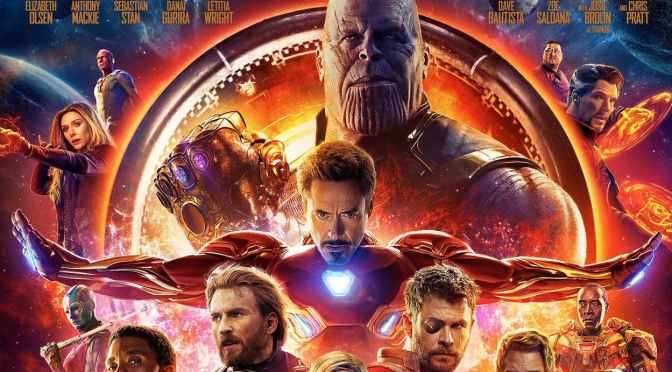
AVENGERS: INFINITY WAR (2018) – MOVIE REVIEW

AVENGERS: INFINITY WAR (2018) – MOVIE REVIEW

Directed by: Anthony Russo, Joe Russo

Produced by: Kevin Feige

Screenplay by: Christopher Markus, Stephen McFeely

Based on: The Avengers by Stan Lee, Jack Kirby

Starring:  Robert Downey Jr., Chris Hemsworth, Mark Ruffalo, Chris Evans, Scarlett Johansson, Benedict Cumberbatch, Don Cheadle, Tom Holland, Chadwick Boseman, Paul Bettany, Elizabeth Olsen, Anthony Mackie, Sebastian Stan, Danai Gurira, Letitia Wright, Dave Bautista,  Zoe Saldana. Josh Brolin, Chris Pratt etc.

**SPOILER FREE**

marvel_studios_avengers_infinity_war_official_trailer_7

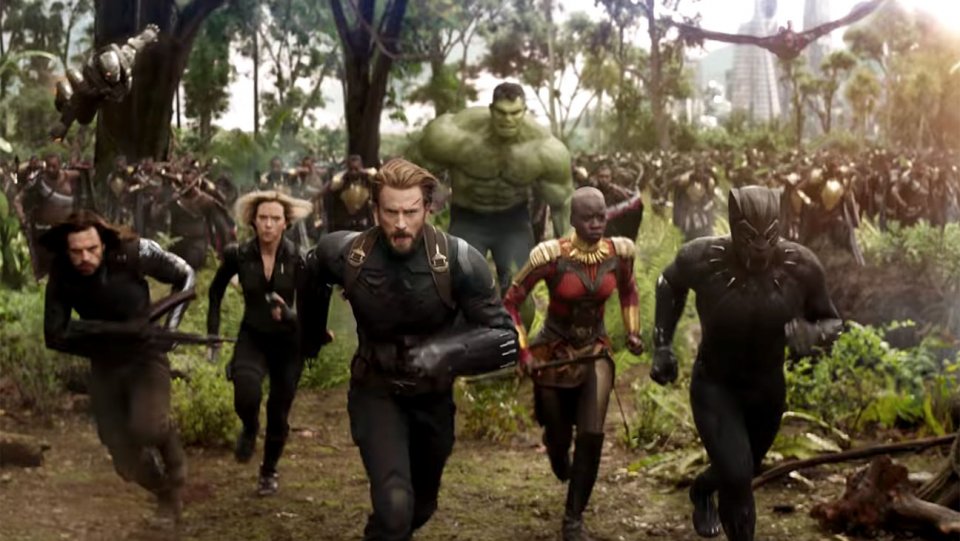
The reward for Marvel fans and cinemagoers committed to watching every single film – from Iron Man (2008) to Black Panther (2018) – is a gigantic, breath-taking, explosive, colourful, dark, epic, fantastical end-game blockbuster. Unless you have been stuck on a desert island or on a digital detox, Infinity War (2018) is the culmination of decades of comic-book and cinema storytelling coming to a head in one incredible feat of spectacle and super-hero conflict.

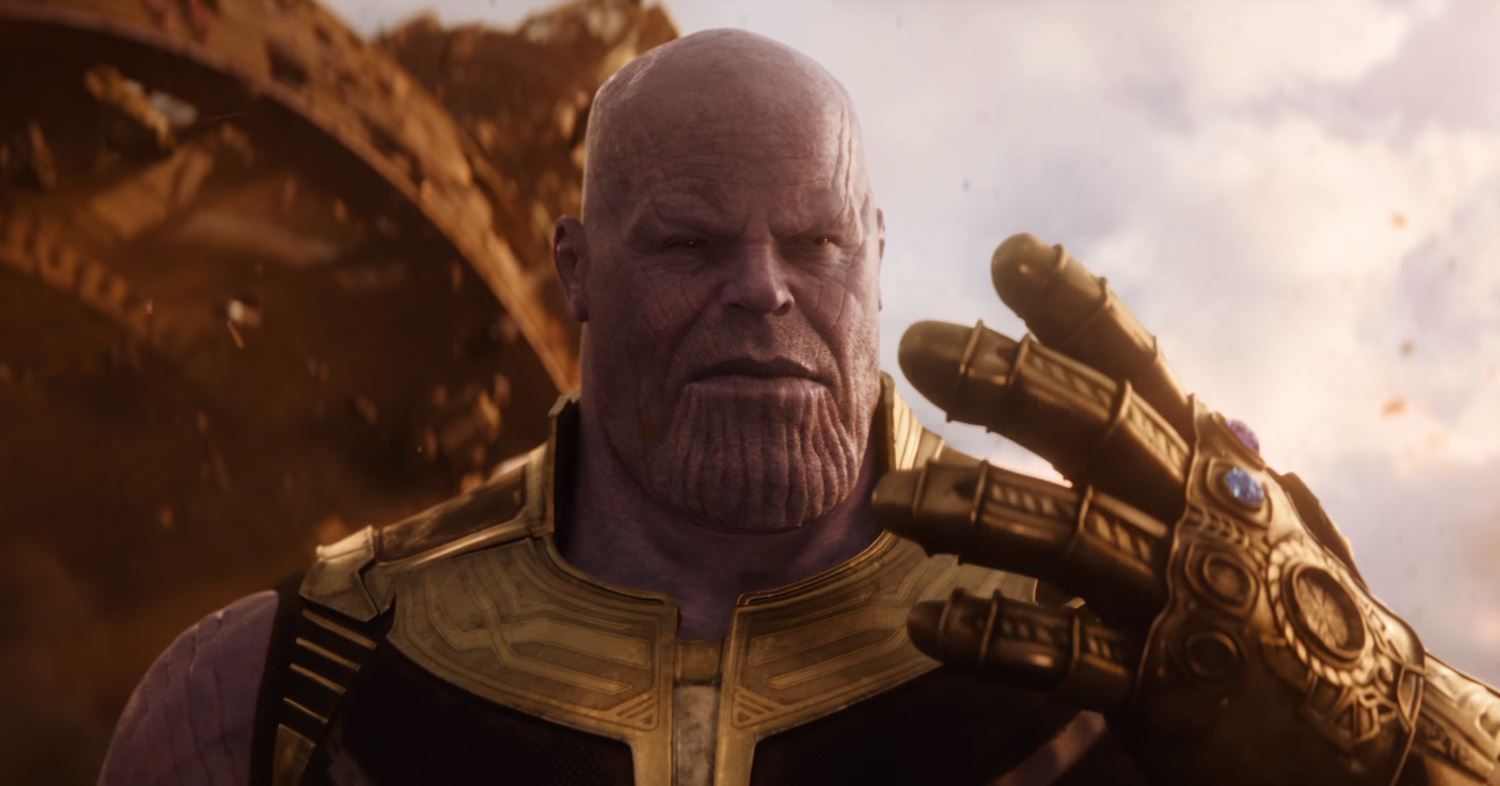
The film opens pretty much immediately after the end of Thor: Ragnarok (2017). The Titan Thanos (Josh Brolin) has hunted down Thor, Loki and the Hulk in order to obtain the Tesseract and the Infinity Stone within it. In fact, he is after all six Infinity Stones in order to gain twisted, yet in his mind, logical control over the Universe by killing half its inhabitants. Thanos’ characterization as a villain is given the most narrative power throughout and via him we get some nuance and subtext.

avengers-infinity-war-01

While brilliantly rendered, in look, by the army of special effects, and performance by Brolin, I kind of felt we were missing an element of mania and a committed statement of intent. I knew why Thanos was doing what he was doing but aside from an opening speech about destiny his mission lacked the political or social context compared to say that of Hydra from The Winter Soldier (2014) or Erik Killmonger from Black Panther (2018).  Nonetheless, lack of political context is a mild gripe because spectacle in terms of power and storytelling is what Infinity War is all about.

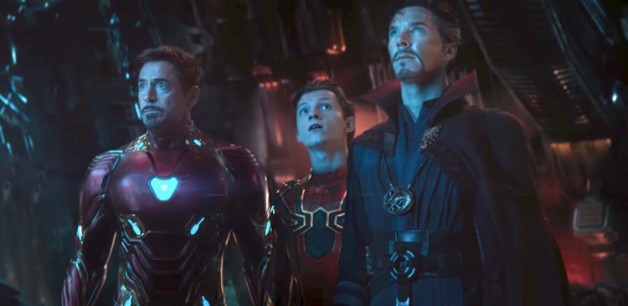
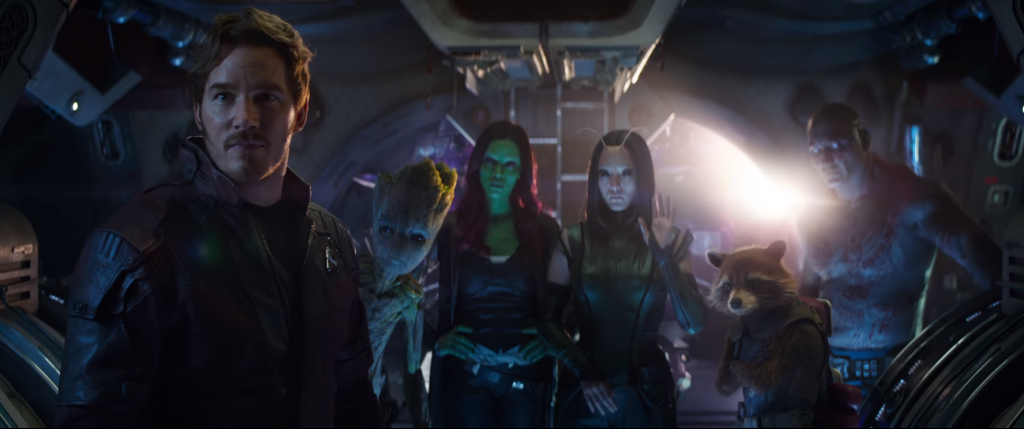
Thanos’ quest for domination was still a pretty decent structure to hang the story beats on and the writers should be applauded for trying to create a rounded super-villain. Because, allied with the incredible set-pieces and locations across the various galaxies, a major strength of Infinity War’s screenplay was the pace, power and interplay between the multiverse of characters and plot strands which were fantastically juggled by the directorial and editorial teams. This was epic storytelling, not just in length, but in scope. As we cut between Dr Strange, Iron Man and Spiderman on their particularly deadly mission; we also cut between Thor, The Guardians of the Galaxy, Vision, Wanda the Scarlet Witch, Captain America and their respective advnetures. There are so many different elements at play there is little breathing space, yet with a whip-smart script full of one-liners any plot deficiencies are masked expertly with perpetual motion and punchlines.

Spider-Man-Iron-Man-Doctor-Strange-Avengers-Infinity-War

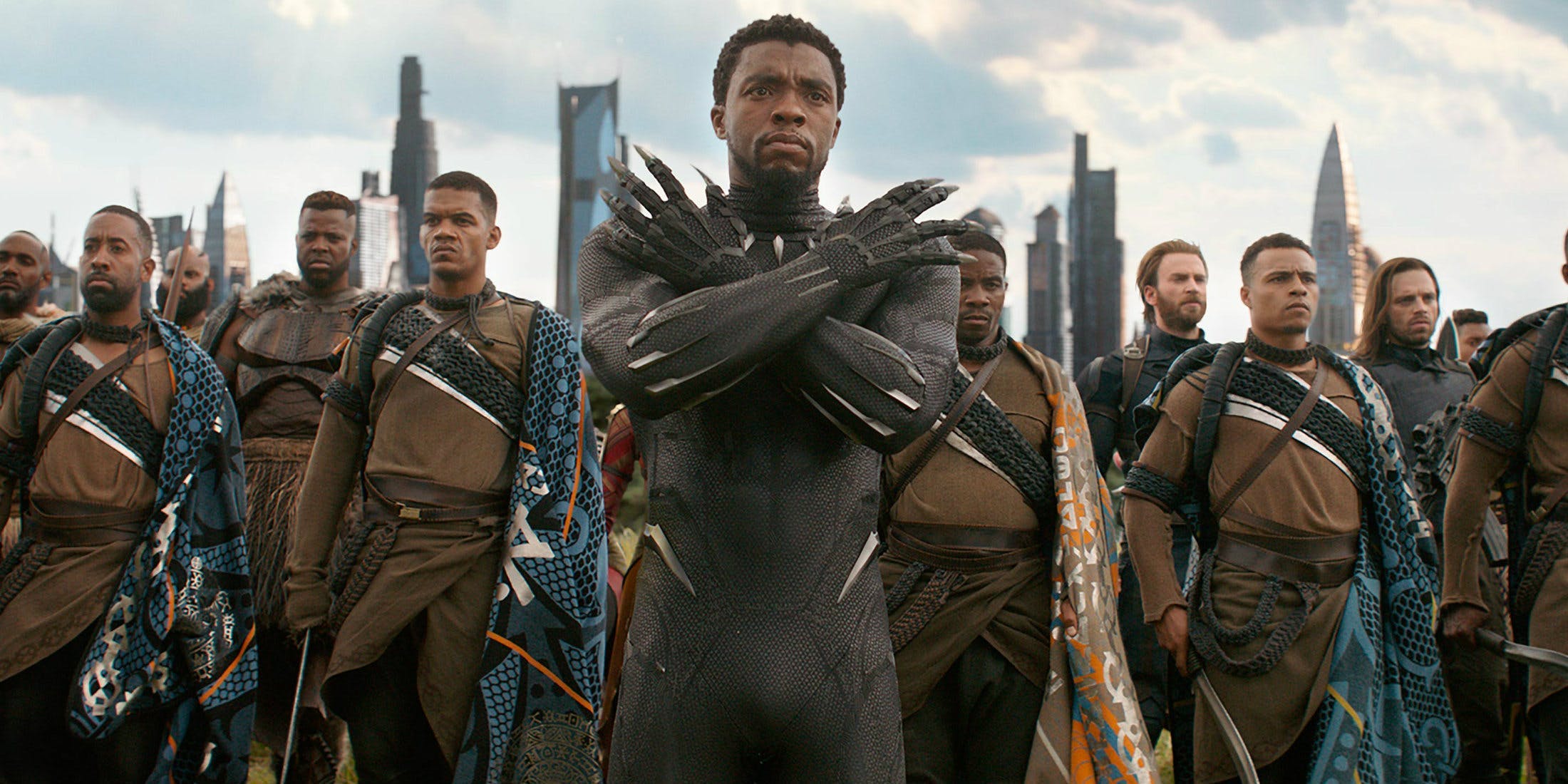
Visually, the film is also extremely strong with bright funky new suits for the Hulk, Tony Stark and Peter Parker. Moreover, the locations in space and on Earth from the dark lands of Vormir to the verdant pastures of Wakanda are rendered beautifully on the screen. All manner of magical weapons, space-ships and military hardware explode and destroy and whizz-bang throughout. There is SO much crammed into the film that it’s a major coup that it worked so well. At one point I felt like I was watching three films in one echoing the great ensemble films I grew up with such as The Great Escape (1963). While the now obligatory end-game battle sequence echoed the likes of: Spartacus (1960), Braveheart (1995), The Return of the Jedi (1985) and more recently HBO’s epic Game of Thrones (2011 – )

Capture-5-1024x429.png

In terms of performance it’s difficult to pick out any one stand-out as the ensemble cast were uniformly impressive. My particular favourites were Benedict Cumberbatch as Dr Strange, Chris Pratt as Peter Quill and Zoe Saldana as Gamora, all giving memorable performances. Saldana’s Gamora arguably had the most powerful moments of stillness and pathos especially in her tragic backstory. Drax (Dave Bautista) and Tom Holland’s Peter Parker nailed their comedic patter too; the former’s deadpan literalism raising many laughs throughout. I also thought the details in look and voice given to Thanos’ Black Order stood out; notably the wonderfully named Proxima Midnight (Carrie Coon) and Corvus Glaive (Michael John Shaw).

Black-Panther-and-Wakanda-army-in-Avengers-Infinity-War-1

In conclusion, Avengers: Infinity War (2018) overall was spectacular blockbuster filmmaking which entertained me thoroughly for over two-and-a-half-hours. It could be argued that the army of special effects technicians, plethora of Disney and Marvel executives, array of Hollywood acting and filmmaking talent and the obscene amount of money spent has churned out YET another soulless super-hero film but wow didn’t they do it in style!!

(Mark: 9.5 out of 11)

BEAST (2017) – CINEMA REVIEW

BEAST (2017) – CINEMA REVIEW

Directed by: Michael Pearce

Produced by: Kristian Brodie, Lauren Dark, Ivana MacKinnon

Written by: Michael Pearce

Starring: Jessie Buckley, Johnny Flynn, Geraldine James

Cinematography: Benjamin Kracun

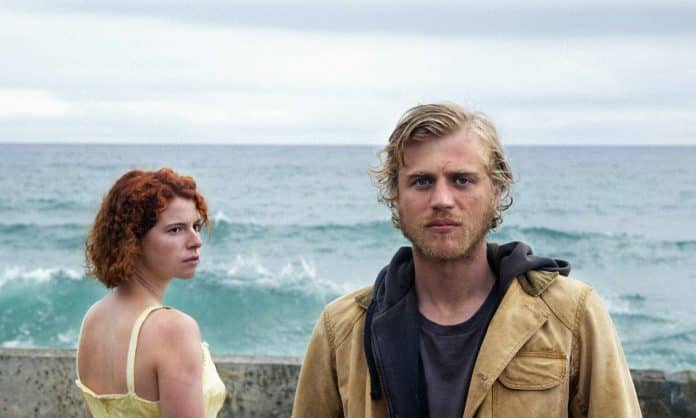
A3_Jessie-Buckley-Moll-and-Johnny-Flynn-Pascal-in-Beast.-Photgrapher_Kerry-Brown_low-res-696x418

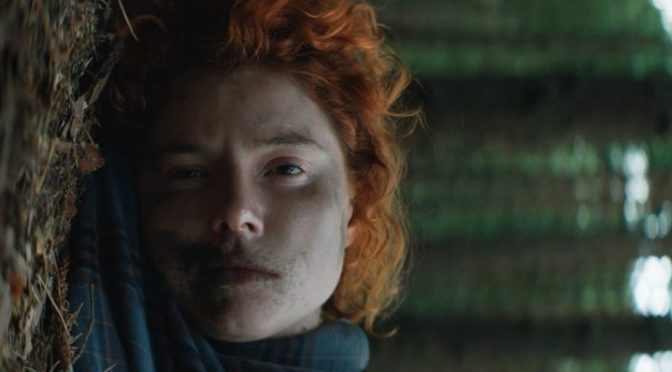
With Marvel’s juggernaut Infinity War (2018) smashing through the Cineplexes this week it takes a brave distributor to release a low budget British thriller at the same time. Nonetheless, Beast (2017) is here secreting paranoia, sexual tension and animal magnetism amidst the super-hero saturation. Beast is the debut directorial feature of Michael Pearce and he certainly demonstrates a lot of talent in the writing and filmmaking stakes. He also gives us arguably one, if not two, film acting breakthrough roles in the casting of the incredible Jessie Buckley and equally alluring Johnny Flynn.

Beast is a slow-burner of a film. It moves at its own pace and quite often this works to heighten the suspense and on other occasions it perhaps slows the story too much. The central character is Buckley’s Moll Huntington, a coach tour guide living on the island of Jersey.  Her middle-class life seems safe and comfortable but beneath the surface her controlling Mother (Geraldine James) and religious background make her feel trapped and isolated. Beneath Moll’s quiet surface is an anger and sexual energy waiting to break out. When she meets Johnny Flynn’s handsome “bit of rough” Pascal Renouf, Moll’s rebellious nature is released as she fights against her mother and her middle-class upbringing.

beast-2017-005-jessie-buckley-on-floor-under-michael-flynn

Simultaneously, Jersey is under threat from a serial killer who is brutally murdering teenage girls. Thus, the film presents two main plots: a coming-of-age romantic drama, plus a police thriller full of suspense. Writer-director Michael Pearce weaves these strands, on the main, very successfully as the police become more and more certain Pascal is the murderer. Moll’s love and loyalty to Pascal then becomes twisted and her turmoil drives the story into very dark places. I would say, however, the police investigation side was not as successful as Moll’s character study. In fact, there were a couple of plot-holes which let the story down, as did a tad long running time. Yet, these are minor gripes in a beautifully shot and rendered cinema release that makes the most of the Jersey shore, dirt and forestation.

Overall, Beast deserves a lot of praise for the intense acting of Buckley and Flynn. Their relationship crackles with sexuality on the screen and Buckley excels in many scenes when the rage inside her just explodes. Flynn, who was unrecognizable from his role as young Albert Einstein in the show Genius (2017), has an off-centre charm which captures the outsider perfectly. Geraldine James, as Moll’s mother is also on formidable form too. Yet, Jesse Buckley’s owns this film as the complex protagonist; while filmmaker Pearce must be commended for creating a slow-burning and intelligent psychological thriller which stays with you once the credits have rolled.

(Mark: 8 out of 11)

SCREENWASH HORROR REVIEWS: A QUIET PLACE (2018) & UNSANE (2018)

SCREENWASH HORROR REVIEWS: UNSANE (2018) & A QUIET PLACE (2018)

Many of us like to be scared and thrilled and made tense, especially if it is in the darkened recesses of the cinema. Because as the adrenaline and stress levels rise we know, at the back of our minds, we’re safe. Nothing can actually harm us because it’s happening on a screen. Yet witnessing characters in danger of harm or death can be an exhilarating and cathartic experience for many. Indeed, watching films of the horror or thriller genres is subconsciously akin to a near-death experience; as facing the reaper from a position of relative safety is part of the excitement of going to the movies.

I do love a good horror or thriller – I really do! So was really pleased when two decent ones came out at the cinema last week. Thus, here are two reviews for the price of one of Unsane (2018) and A Quiet Place (2018); both with the usual mark out of eleven.

A QUIET PLACE (2018)

Directed By: John Krasinski

Produced by: Michael Bay, Andrew Form, Brad Fuller

Screenplay by: Bryan Woods/Scott Beck & John Krasinski

Starring: Emily Blunt, John Krasinski

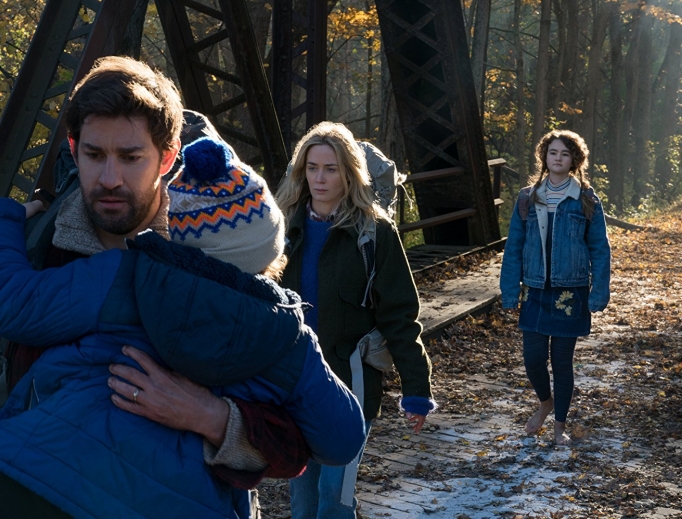
AQP-1

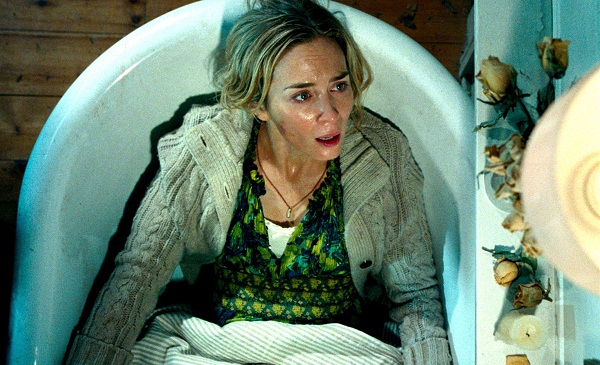
Without hardly any fanfare or major marketing campaign this superior monster film has crept up and, in a similar fashion to Get Out (2017), really got audiences flexing their “word-of-mouth” muscles. In fact, while it doesn’t have the socio-political dimension of Jordan Peele’s Oscar winner, I actually think it’s an even better horror film. Throughout A Quiet Place my heart was literally living in my mouth as my fingers and knuckles clenched and whitened during the whole tense escapade.

The story is quickly and economically established via a brilliant opening scene full of dread and silence. Emily Blunt and John Krasinski’s “every-couple” and their three children are surviving in a post-invasion period where monstrous creatures have wreaked havoc on Earth. Using sound to hunt humans must remain absolutely silent or: NO MORE HUMANS!!  This simple but ingenious premise drives the story and action as the lean and powerful script delivers some incredible moments of horror and suspense. The real-life husband and wife acting team bring a believable humanity to the characters and Blunt especially is phenomenal in her reaction and character work.

Mark: 9.5 out of 11

UNSANE (2018)

Directed by: Steven Soderbergh

Produced by: Joseph Malloch

Written by: Jonathan Bernstein/James Greer

Starring: Claire Foy, Joshua Leonard, Jay Pharoah, Juno Temple

unsane-photos-claire-foy-6

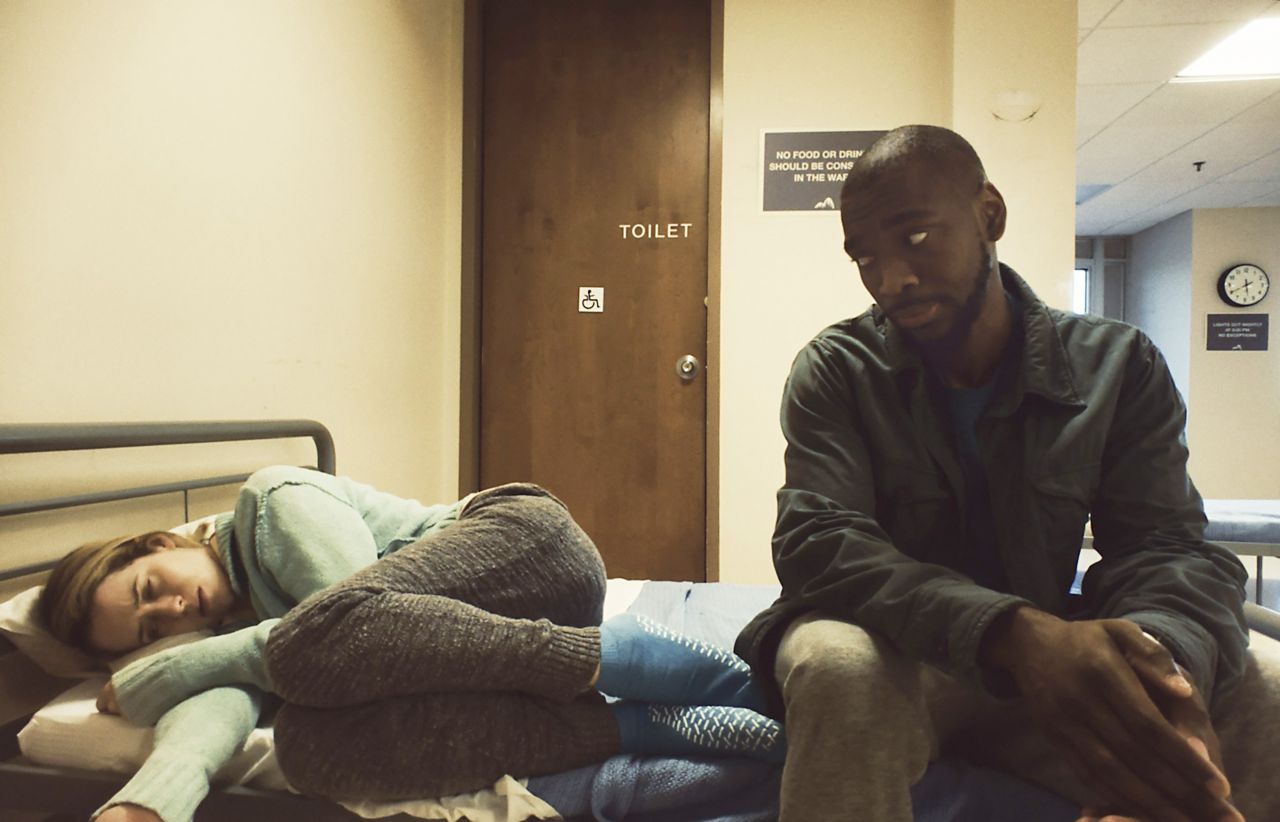
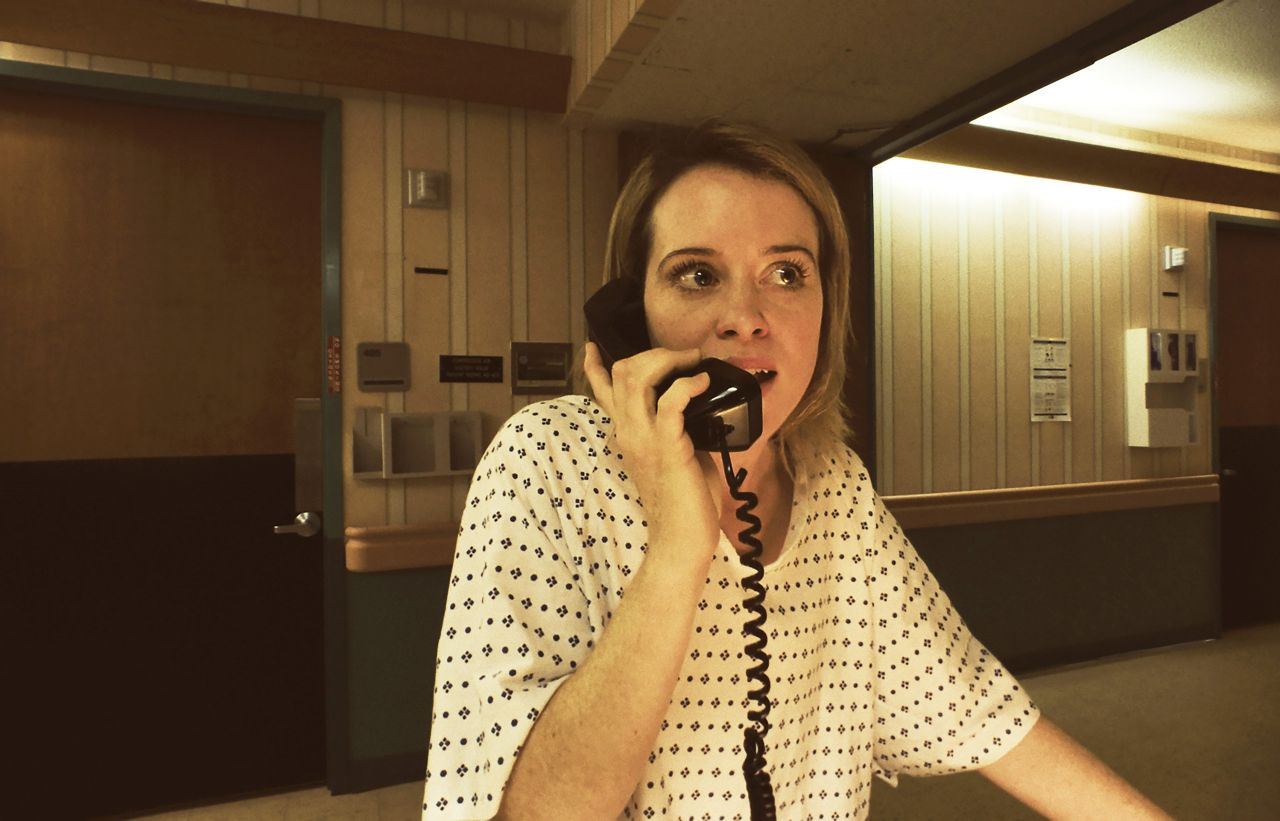
Unlike A Quiet Place this Steven Soderbergh directed thriller focusses on a different kind of monster; that which lives silently in the recesses of the mind. Claire Foy portrays, the unlikely named Sawyer Valentini, a financial analyst who after visiting a psychotherapist finds herself plunged into a horrific ordeal on a psychiatric ward which threatens her sanity.

This is a gripping story which, despite a few plot-holes, raises the tension and drama by making us unsure as to whether Foy’s character is a reliable or unreliable narrator. Soderbergh, who apparently shot much of the film on an IPhone 7, is an expert filmmaker as we feel trapped and claustrophobic during the lead protagonist’s hellish nightmare.

Like his previous film, the brilliant Side Effects (2013), the film also has important points to make about the Healthcare system in the United States, and overall I was drawn in by Foy’s excellent performance. I also liked the fact that she was kind of unlikeable too as the uncertainly whether to believe her paranoiac delusions propelled this fascinating low-budget-B-movie narrative.

Mark: 8 out of 11

JOURNEYMAN (2017) – CINEMA REVIEW – including PADDY CONSIDINE Q & A

JOURNEYMAN (2017) – CINEMA REVIEW

Directed by: Paddy Considine

Written by: Paddy Considine

Starring: Paddy Considine, Jodie Whittaker, Paul Popplewell, Anthony Welsh

UK Release Date: 30-03-18 

**SPOILER FREE REVIEW**

Journeyman-teaser-poster

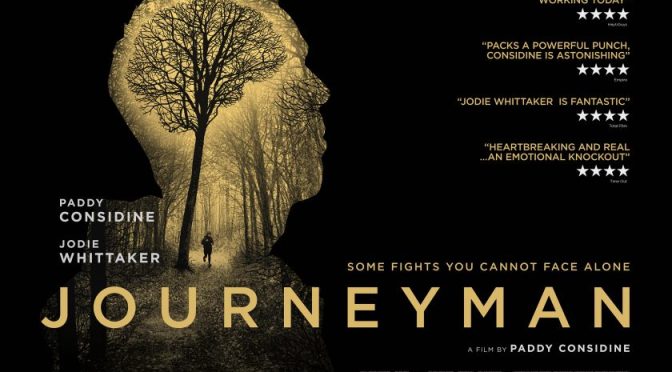
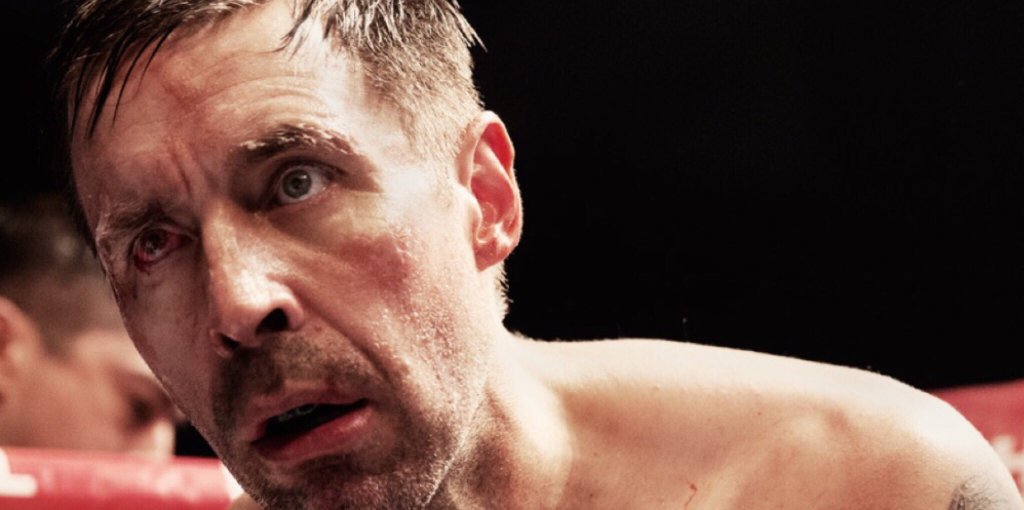
“There wasn’t a dry face in the house,” opined a member of the audience following the screening of Paddy Considine’s low-budget, big-hearted boxing narrative. We laughed at the minor malapropism because for ninety-two minutes our emotions and heart-strings had been poked, pulled and ultimately yanked apart in what was one of the empathetic and compassionate human stories I have seen in some time. I mean, I’m no hard man but it still takes a lot for me to be moved to tears, yet, Paddy Considine’s film had me welling up throughout.

The story begins with World Champion Matty Burton (Considine) and the build-up to his fight with brash, unbeaten and mouthy prospect Andre Bryte (Anthony Welsh). Burton is an experienced fighter branded a fraud by the belittling Bryte but he takes it all in his stride preparing to allow his fists do the work. Supporting Burton is his wife, Emma (amazing Jodie Whittaker), and the two have a young child together. The opening montage establishes Burton’s life showing he has everything to fight for including: family, friends, pride, career and community.

journeyman-2018-jodie-whitaker-paddy-considine

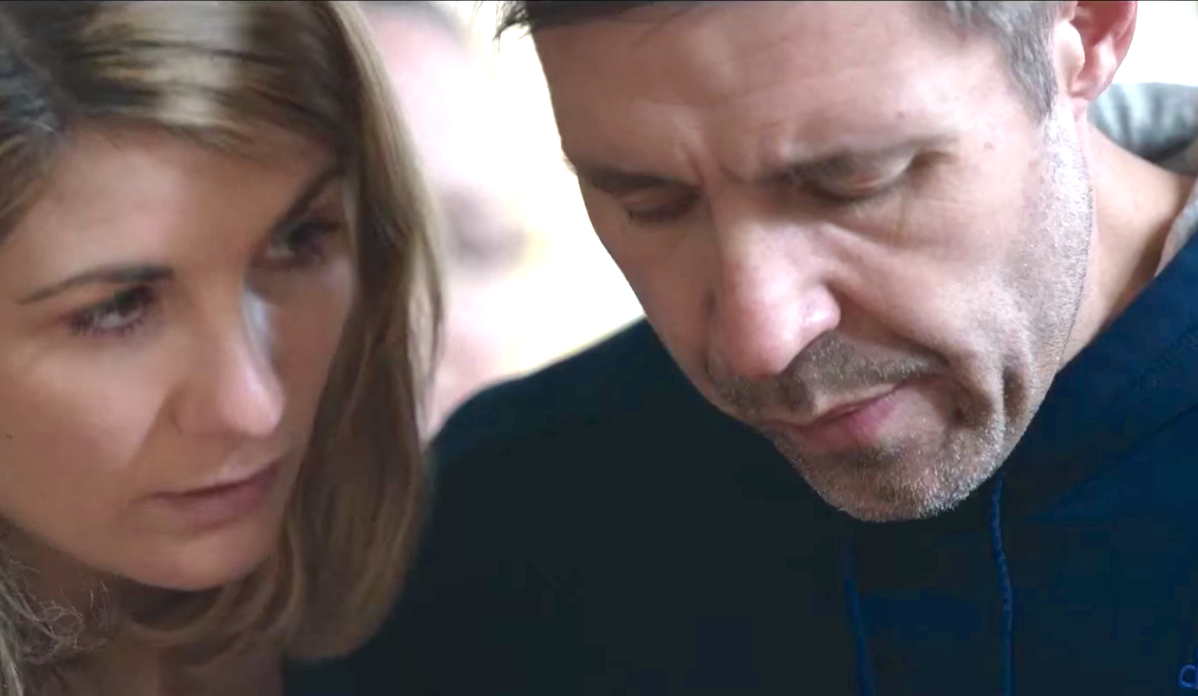
What begins with the makings of a standard sporting genre movie is transformed following Burton’s fight with Bryte. After which Considine and Whittaker take centre stage in a deeply moving portrait of a family coming apart due to tragic circumstances. Their performances as two characters battling to stay in love, together and just fighting to keep going is remarkable. There are so many startling scenes and moments which punch and wind you; in particular, the long-take that holds on Considine while on the phone to his wife moved me beyond words.

journeyman-movie-1

Following the screening Paddy Considine took questions from the editor of Total Film and the audience. It proved to be one of the best Q and A’s I’d experienced. Considine is a passionate writer, director and actor with a clear vision of the projects he loves to work on. His love of boxing as a craft was clear as he both acknowledged that while creating champions, fame and wealth, it’s also a brutal sport which can damage lives. Ultimately, Journeyman is honest and raw and reflects such battles in and out of the ring. This is not a traditional boxing film but rather a sensitive and compelling love story; and while it may be a small independent British feature it’s more epic than most big-budgeted movie releases of recent years.

 (Mark: 9.5 out of 11)

YOU WERE NEVER REALLY HERE (2018) – CINEMA REVIEW

YOU WERE NEVER REALLY HERE (2018) – CINEMA REVIEW

Directed by: Lynne Ramsay

Produced by: Rosa Attab, Pascal Caucheteux, James Wilson, Lynne Ramsay Writer: Lynne Ramsay (Based on: You Were Never Really Here by Jonathan Ames)

Starring: Joaquin Phoenix, Ekaterina Samsonov, John Doman, Judith Roberts

Music by: Jonny Greenwood

Editor: Joe Bini

**CONTAINS MILD SPOILERS**

You-Were-Never-Really-Here-1-e1516304691921

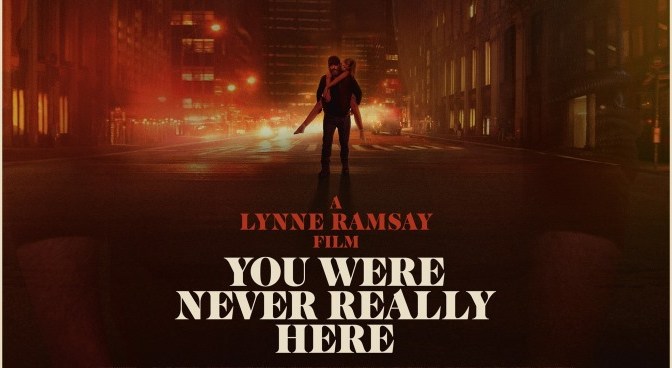
Lynne Ramsay’s latest film will not be for everyone; be warned it has some very disturbing sequences relating to abuse and violence. The pitch is simple and accessible: a hired gun hunts down a kidnapped girl.  But the delivery is twisted, violent, fragmented, mesmerising and thoroughly hellish. The story beats along the same drum as the action thriller Taken (2009), but unlike Liam Neeson, Joaquin Phoenix’s Joe has a slightly different set of skills to work with. They are both ex-military but Joe’s past actions haunt him to the point of near-suicide and his preferred weapon is a trusty hammer from the local home improvement store.

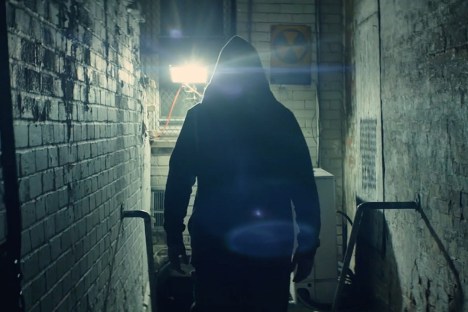
It was fascinating seeing Lynne Ramsay taking on a narrative so full of such familiar genre tropes. This story covers aspects such as: kidnapped children; nefarious US government corruption; paedophile rings run by the rich; post-traumatic stress disorder; and the lone wolf ‘soldier’ seeking redemption. Indeed, the film crossed over into territory covered by the likes of: Man on Fire (2004), Hardcore (1979), and the aforementioned Taken trilogy. However, through Ramsay’s skewed and compelling direction I Was Never Really Here is an altogether different beast; spiritually evoking the seminal Schrader scribed story of Taxi Driver (1976). Similarly,  I Was Never Really There is an existential anti-thriller which asphyxiates the audience with: close-ups; canted frames; blurred and obscured shots; oblique angles; claustrophobic urban locations; jolting violence; blinding light; eerie shadows; and jumpy cutting which shreds the nerves throughout.

JOAQUIN

The fragmented narrative delivery adds further to the viewer’s creeping tension and developing sense of dread. The character of Joe is essentially in a psychological nightmare, haunted by several events from his past; during his childhood and while in the military and FBI service. Ramsay and her editor Joe Bini cut and chop us into the past before slamming us back to the present abruptly. The effect is to place us in Joe’s disturbed mind-set, creating a psychologically unhinged trip into the heart of darkness. It takes a special filmmaker to manufacture such feelings via the editing dialectic; and I hadn’t felt such nervousness in the cinema since experiencing Dunkirk (2017).

youwereneverreallyhere2

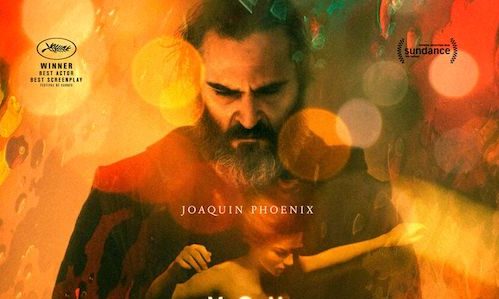
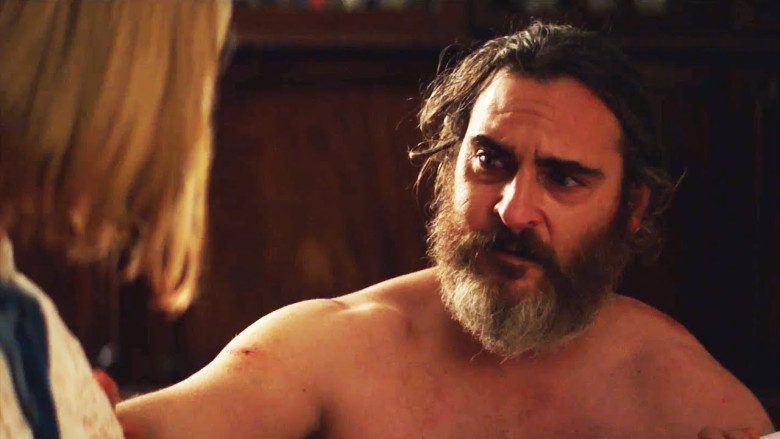
Ramsay is ably supported in her vision by an incredibly eerie soundtrack from the genius that is Jonny Greenwood. His score scratches under one’s skin like a junkie curse while somehow managing to cling to melody too. Of course, the film would not be so compelling if it was not for Joaquin Phoenix’ battered, bearded bear of a performance. He invokes the naked pain and desperation of the character in his huge frame and determined shark eyes. When faced with an enemy he is a brutal killer but altogether gentler and, dare I say it, fun, while looking after his beloved mother. Overall, this is a nihilistic, gory, scary, unsettling and stunning work of cinema; and while it treads a familiar narrative road it’s presented with such dark energy and meticulous care one cannot fail to be moved.

(Mark: 9 out of 11)  

SCREENWASH: FILM REVIEW ROUND-UP including: CHRISTINE (2016), I, TONYA (2017), LADYBIRD (2017) etc.

FILM REVIEW ROUND-UP – MARCH 2018

Rather coincidentally I have watched a number of films recently with female lead protagonists and hopefully this harks a more progressive move toward equality in leading roles. As a humanist myself I applaud any movement which proclaims and pursues empowerment and equality to every human being. For far too long people have been oppressed, including women, and we must rid the world of prejudice and negativity based on gender, race, sexuality, health, shoe size, hair colour and looks in general.

Thus, in mild tribute to yesterday’s International Women’s Day I am reviewing some very different films where female characters are to the fore. In these reviews I will consider the characters and their strengths and place in their given setting and world; as well as my own subjective appreciation of the films. As usual the marks are out of eleven.

AMERICAN HONEY (2016) – SKY CINEMA

Andrea Arnold is an incredibly talented filmmaker and her films Red Road (2006) and Fishtank (2009) were bleak, honest and brilliant representations of working class British life. In American Honey she tackles the on-the-road-under-belly-working-class representations of American life with mixed results. Sasha Lane portrays Star, a young, transient and energetic character attempting to find hope, love and money on the oily, grimy roads of the USA. She joins a rag-tag troupe of magazine sellers led by Shia LaBeouf and Riley Keough, who drink, smoke pot and fuck while crossing various States! Star’s character is naïve and feisty, and as she falls for LeBeouf’s charismatic Jake, she finds her life choices coming into question. Overall, this is a beautifully shot and directed film and Arnold gets some very interesting performances from an amateur supporting cast, but the film is TOO LONG and many of the characters are just too unlikeable and stoned to care about. With editing Star’s journey could have been even more fascinating but despite some enthralling scenes I struggled to connect. (Mark: 6 out of 11)

american-honey1

CHRISTINE (2016) – SKY CINEMA

Christine Chubbuck was a Sarasota TV news journalist who became infamous for an incredibly sad act she carried out live on TV. I won’t reveal what is was for fear of spoilers BUT safe to say it was not pretty. Rebecca Hall portrays this complex character with an artistic and haunted beauty; with Christine’s character totally infected by stark depression. She just does not fit in as she seeks artistic more human stories at work and clashes with her ratings-seeking boss, portrayed sympathetically by Tracy Letts. Michael C. Hall as the handsome news ‘anchor’ also tries to connect with Christine but her mood swings, paranoia and punishing work schedule pushes her away from those around her. Family, friends, and colleagues all rally round but ultimately Christine’s depression defeats her. Rebecca Hall is brilliant as Christine and this is a very absorbing, character study which sticks in the heart and mind. (Mark: 8.5 out of 11)

CHRISTINE

GHOST IN THE SHELL (2017) – SKY CINEMA

The ubiquitous Scarlett Johansson once again takes on an impressive kick-ass futuristic female role which finds her “ghost” inserted in to a computer-powered “shell”. Despite incredible visuals and fight scenes and Scarlett again proving a dominant screen presence the film is a let-down from a narrative and script perspective. There is a decent story in there as Johansson’s Major uncovers a nefarious murder plot being carried by evil corporations (is there any other kind?); but while looking pretty and carrying some impressive special effects this is an underwhelming adaptation of the original Japanese anime cult classic. (Mark: 5.5 out of 11)

I, TONYA (2017) – CLAPHAM PICTUREHOUSE CINEMA

Tonya Harding was an incredibly talented and driven ice skater who went on to represent the USA at the Worlds and Olympics.  She was also the first American female skater to perform two triple axel jumps in the same set. However, she also surrounded herself with and married fucking idiot men who ruined, along with her poor decisions, her career. As portrayed by Margot Robbie, Tonya is a potty-mouthed, bitter, energetic, unlikeable person yet effervescent and funny. Off the ice she continually chooses to go back to her abusive husband Jeff Gilhooly (impressive Sebastian Stan); while on the ice she skates with passion, determination, and brilliance. Steven Rogers script and Craig Gillespie’s direction present the story in mockumentary form with some comedy sketch-style cutaways which on occasion take away from the emotional core. Alison Janney is formidable as Harding’s hard-faced, pushy mother. However, it is her aggression and abuse which, while creating an incredible sportsperson in Tonya, also crushes all the love from the mother-daughter relationship. (Mark: 8.5 out of 11)

i-tonya2

LADY BIRD (2017) – CLAPHAM PICTUREHOUSE CINEMA

Greta Gerwig’s very personal rites of passage character study is a breezy, touching, emotional and funny hop through the life of Christine “Lady Bird” McPherson, as she navigates from High School to College. Lady Bird is a complex representation of young womanhood as her character is irrational, bitchy, kind, irritating, neurotic and somehow kind of loveable. Saoirse Ronan, Tracy Letts, and Laurie Metcalfe excel in a great ensemble cast and Gerwig’s script begins like a train with a flurry of very quick and funny scenes involving Lady Bird, her family, school friends and objects of desire. Later, notably with Lady Bird’s strained relationship with her mother, the film tugs at the heart strings to enthralling effect. Lady Bird has received a lot of critical acclaim and deserves much praise as Gerwig shows she is going to be a directorial talent to watch out for.

(Mark: 8 out of 11)

ladybird2.jpg

PERSONAL SHOPPER (2016) – NETFLIX

Another ambiguous, cerebral arthouse film from filmmaker Olivier Assayas containing both thriller and ghostly elements. The haunted Kristen Stewart plays a grief-stricken individual who is both a psychic and personal shopper. Stewart’s character Maureen is a lost soul working a job she hates searching for closure.  While attempting to connect psychically with her deceased brother she is also stalked by an unknown person or “force”. As a character study the film works very well but I would have preferred the ghostly element of the story to play out emotionally as the other story did not successfully merge for me. I guess it’s open to interpretation but it felt like the filmmaker was telling two stories which did not hold together successfully. Stewart though imbues Margaret with a cold, distanced but powerful empathy and her fear and paranoia drives the story, notably in a couple of very creepy scenes. (Mark: 7 out of 11)
A vibrant addition to the Marvel Formula – BLACK PANTHER (2018) – MOVIE REVIEW

BLACK PANTHER (2018) – MOVIE REVIEW

**CONTAINS MINIMAL SPOILERS**

blackpantherpostercollage

The Marvel Franchise bus shows no sign of slowing down. Indeed, I’m wondering which driver (i.e. director) will be the first to get a puncture and crash their respective bus, because even though we are well past saturation point the successful formula is still sweetly cruising along without the threat of breaking down. Even slightly lesser known heroes such as Dr Strange (2016), Guardians of the Galaxy (2014) and Ant-Man (2015) have all made loads of money, and corny vehicular metaphors aside, surely it is only a matter of time before Marvel’s monopoly on Superhero movie success flails. However, Black Panther (2018) is most certainly NOT the film that causes the decline.

The crafty Marvel producers have kept their products fresh by often changing directors, handing the reins to arguably more quirky, indie-flavoured filmmakers such as: Joss Whedon, James Gunn, Taika Waititi and now Ryan Coogler. Thus, along with the standard heroes-versus-villains-end-of-the-world storylines, massive battle set-pieces and fantastical worlds and characters on show, such directors add an element of humour, characterization and diversity to proceedings.

black-panther-chadwick-boseman-letitia-wright-lupita-nyongo.jpg

The Black Panther story spine follows the Marvel formula very closely establishing our hero, T’Challa, in grief following the death of his father (events and characters from Captain America: Civil War (2016) are linked cleverly) returns home to take over as Chief of Wakanda. Despite his heart hanging heavy with sorrow he must face those that challenge his throne in ritual combat. Chadwick Boseman is excellent as T’Challa providing the character a regal poise as well devastating strength in the fantastically orchestrated fight scenes. In some ways though, compared to the other characters, T’Challa is more of the pivot with which the other livelier characters to bounce off. These include: the effervescent Letitia Wright, who portrays the tech genius, Shuri, sister of T’Challa; the fierce warrior Okoye, powerfully brought to life by Walking Dead star Danai Gurira; plus the subtle strength of Lupita Nyong’o as the intelligent and proud Nakia. Other supporting roles are brilliantly realised by: Forest Whitaker, Martin Freeman, Angela Bassett, Andy Serkis and rising star Daniel Kaluuya.

mld-24055_r_wide-1429668783d6a53bd74009c63fa5eb9693d76dea-s900-c85

What is a hero without a villain though? Despite the false flagging of Serkis’ heinous Ulysses Klaue as the primary bad-guy, the true meat of the story is provided in Michael B. Jordan’s angry and vengeful Erik ‘Killmonger’ Stevens. He not only presents a vicious threat to Wakanda and T’Challa, the writers and Jordan’s performance actually evoke much empathy for his deadly crusade with a multi-faceted characterization and back story. In fact, it’s one of my slight criticisms of the film that Stevens’ story was so strong he should have been introduced much earlier in the first act. However, when he does enter the play the film takes off in a very dramatic direction full of conflict and power.

MLD-24087_R.JPG

Ryan Coogler directed the brilliant indie film Fruitvale Station (2013) and followed it up with the impressive genre film Creed (2015) which successfully blew a hurricane of power, pathos and pizazz into the Rocky franchise. Similarly, Coogler and his writing partner Joe Robert Cole have infused the Marvel franchise with an intelligent storyline which covers themes relating to: colonialism, politics, revenge, military might and technological progress versus tribal tradition. It is a rich and vibrant film which successfully marries the futuristic with the historical and rural with industrial. I especially loved the references to the British museum and the infamous colonial “thefts” of ancient relics from Africa and the world over. Overall, Black Panther, while working within a well-trodden formula also pays homage to James Bond films too. Nonetheless, it still represents a fresh voice within the Marvel Universe with a finger on the pulse of African politics and diasporic history too. Finally, above all else it remains an impressive work of entertainment with pulsating set-pieces, cracking car chases, stunning score and bone-crunching bulletproof battles.

(Mark: 8.5 out of 11)
Del Toro drowns us in a sea of love and visual splendour! THE SHAPE OF WATER (2017): CINEMA REVIEW

THE SHAPE OF WATER (2017) CINEMA REVIEW

Directed by: Guillermo del Toro

Produced by: Guillermo del Toro, J. Miles Dale

Screenplay by: Guillermo del Toro, Vanessa Taylor

Starring: Sally Hawkins, Michael Shannon, Richard Jenkins, Doug Jones, Michael Stuhlbarg, Octavia Spencer

Music by: Alexandre Desplat

shape5

**CONTAINS MILD SPOILERS**

Amidst the incredible visual magic, themes of the outsider, forbidden love and the onerous scope of the patriarchy are replete within the works of fantasist Guillermo Del Toro. They are often more than not presented within allegories too where the fantastic elements are employed to both create spellbinding awe while secretly delivering an important socio-political message. For me, Del Toro in attempting to marry grandiose concepts with important messages must be praised for his risk-taking. Above all else there is no doubt, as his latest film The Shape of Water confirms, he is a filmmaker of some brilliance.

shape

Del Toro’s body of work demonstrates: outsiders, freaks, the silent minority and the shunned are never far away from his vision. In The Devil’s Backbone (2001) and Pans Labyrinth (2006), children find themselves the victims of horrific civil war. While, similarly, in Hellboy (2004) war with the Nazis is central to the core as our anti-hero, a sarcastic red ‘demon’, fights against all manner of monstrous foes. Prejudice against Hellboy is also represented within his “forbidden” love for Liz Sherman (Selma Blair), while an altogether more sinister romance is shown in gothic thriller Crimson Peak (2015). Even muscular vampire-hunter played by Wesley Snipes in Blade II (2002) is a freakish hybrid who does not fit into the societal and patriarchal order.

In The Shape of Water, Del Toro has successfully taken all of these elements and themes and delivered a magical, poetic, at times disturbing, but overall incredible cinematic experience. Set during the Cold War in 1950s Washington, Sally Hawkins plays mute cleaner Elisa Esposito, who along with her friend, Zelda (a wonderful Octavia Spencer), works at a top secret U.S. army base. Silent from birth, what she lacks in voice, Elisa more than makes up for in courage, compassion and confidence. She shares her living space with retired copywriter, Giles — portrayed with incredible warmth and wit by Richard Jenkins — and his army of cats. But when a mysterious “Asset” is delivered to Elisa’s place of work she suddenly becomes entwined in an incredible story of sacrifice and love.

shape 2

The “Asset” is considered a monster by the United States Army and the security team is led by a dominant bully and alpha male called Strickland. Here, once again, Michael Shannon proves himself a formidable actor. He doesn’t just do cartoon bad guys but, thanks to some great writing and acting, Strickland is shown to be the biggest monster of the film; full of nasty quirks and a sadistic desire for control. Doug Jones as the Amphibian Man also deserves a special mention as the scenes between him and Sally Hawkins are very special. Here two silent characters are able to say more with a look, hand signal and touch than a thousand words could achieve. Del Toro supports the acting with some terrific visuals, many of them water-based, as raindrops, bath water and aquatic underwater images submerge us in a rich palette of blues and greens. The music is cleverly used too; from Alexander Desplat’s melodious score to the old classic songs of yesteryear humming from the cinema below Elsa’s apartment building.

shape-of-water-4-1024x554-1024x554

In any other year Sally Hawkins, and she may well still do, walk away with all the Best Actress honours;  yet she is up against the incredible Frances McDormand. Nonetheless, Hawkins gives us such a nuanced and heartrending performance you forget that she cannot speak. But that is what Del Toro does so well because throughout his oeuvre he gives voices to the outsiders, orphans, children, supposed monsters and victims of oppression. This is mainly a love story but I also enjoyed the brilliant writing from Vanessa Taylor and Del Toro as the script leaps from romance to horror, suspense, action, cold-war thriller and black comedy. Overall, within this magical experience Del Toro invites us into a dark world where prejudice is ultimately defeated by tenderness; and brutality will never stop the path of true love.

Mark: 10 out of 11

Another filmmaking Masterclass from Paul Thomas Anderson! PHANTOM THREAD (2018) – CINEMA REVIEW!

PHANTOM THREAD (2018) – CINEMA REVIEW!

Directed and written by: Paul Thomas Anderson

Produced by: Paul Thomas Anderson, Megan Ellison, JoAnne Sellar, Daniel Lupi

Starring: Daniel Day-Lewis, Lesley Manville, Vicky Krieps, Julia Davis etc.

Music by: Jonny Greenwood

new-teaser-trailer-poster-and-photos-for-daniel-day-lewis-phantom-thread-social

One of the great cultural pleasures in life is finding a new filmmaker and building a relationship with them over time. When I found myself watching the quirky low-budget film Hard Eight (1996) in the late 1990s, little did I know that that film would be the beginning of a cinematic friendship with Paul Thomas Anderson. It was only when the sublime 1970s-set-ensemble-drama Boogie Nights (1997) was released that I knew I was watching a filmmaker of incredible talent; and so with subsequent releases that came to pass.

Anderson, can certainly be described, to use old-fashioned film theory parlance, as an auteur. His films formally, technically and thematically all contain recurring tropes and stylistic devices. Although one could argue he leant on his cinematic influences within his earlier works before stamping his own inimitable style in later films. Indeed, films such as: Boogie Nights and Magnolia (1999) – with their talented ensemble casts, whipping camera-moves, over-lapping music montages and a whole host of disintegrating familial and romantic relationships – echoed the films of Robert Altman and Martin Scorsese. Moreover, at the core of his films are father and son relationships, where literal and quasi-parentage is explored. Similarly in Hard Eight, Boogie Nights, Magnolia, There Will Be Blood (2007) and The Master (2012) obsession, duplicity and dysfunctional family units are examined within their respective settings.

1280x720-posterframephantomthread

Anderson has worked a lot in the past. He has covered the 1900s with There Will Be Blood; 1950s with The Master; 1970s with Boogie Nights and strange stoner comedy Inherent Vice (2014). In his latest release, the exquisite Phantom Thread (2018) we are in 1950s London, following the elegant yet idiosyncratic life of fashion designer Reynolds Woodcock; portrayed with formidable zeal by Daniel Day Lewis. Anderson and Day Lewis are, like they were with the fierce Daniel Plainview, in complete control of this fascinating character. He is brilliant at his job but also very specific in how his work, staff and routine must go. When he meets a waitress, Alma, the impressive Luxembourg actor Vicky Krieps, the two become entwined within a less than straightforward employer-employee-lover-master-servant romance. Their complex relationship is driven by attraction, rivalry, pettiness, admiration and envy; propelling the drama as the two enter into an understated and curious battle of wills throughout the narrative.

04-phantom-thread-4.w710.h473.2x

Once again Paul Thomas Anderson, along with his incredible filmmaking team, has delivered a masterclass in cinematic storytelling with exceptional camera work, costume design, acting, lighting, plus a score to die for from Jonny Greenwood. I have to admit I was slightly alienated by Anderson’s last two films Inherent Vice and The Master due to the ambiguity of the lead characters. But I can certainly say that emotionally Phantom Thread works way better as an elegant mix of romance, thriller, character study and fashionista drama respectively. Throughout the magnificent 70mm cinema presentation I was mesmerized by the elaborate patterns my old “friend” Anderson has woven within.

Mark: 10 out of 11

Charlie Brooker shines darkly again! BLACK MIRROR (Season 4) – Netflix Review

BLACK MIRROR – SEASON 4 – TV / NETFLIX REVIEW

Created by: Charlie Brooker

Producer(s): Barney Reisz, Charlie Brooker, Annabel Jones

Distributors: Endemol UK – Netflix

Season 4: 6 Episodes

Writer(s): Charlie Brooker plus William Bridges (USS Callister)

Directors: Toby Haynes, Jodie Foster, John Hillcoat, Tim Van Patten, David Slade, Colm McCarthy

Cast: Jesse Plemons, Cristin Milioti, Jimmi Simpson, Michaela Coel, Billy Magnussen, Rosemarie DeWitt, Brenna Harding, Andrea Riseborough, Kiran Sonia Sawar, Andrew Gower, Georgina Campbell, Joe Cole, Maxine Peake, Douglas Hodge, Letitia Wright etc.

landscape-1513012385-black-mirror-4

Technology: the final frontier; allowing humans to boldly go where no human has gone before.  Indeed, one of the most incredible elements of our world is the technological breakthroughs we have made over the past century or so. We have: electricity, nuclear power, robots, driverless vehicles, television screens, computers, mobile phones, satellites, GPS tracking, drones, 3D printing, smart home air-conditioning, Hadron Colliders, huge space-ships which travel beyond the stars, WI-FI, the world-wide-web connecting everyone with anyone, holograms, the social media phenomenon, virtual reality head-sets, software algorithms, x-rays, gamma knifes, DNA, cloning, MRI scans, Hyperloop tube trains, Sat-Nav, Google, immersive video-games; plus many more medical, military and industrial inventions which make our lives so easy today.

But with such wonderful and fantastic discoveries there is always a dark side. While we may create a medical breakthrough which cures on the one hand we’ll ultimately invent some new weapon or means with which to kill ourselves. So while technology is mainstay of our existence it also can feed our obsessions and thus become an extension of our poor choices, violence and insanity. The scariest thing is we think technology is absolutely necessary and we cannot live without it. I mean, all we really need to survive is water, air, food, shelter and perhaps, as The Beatles sang, love. For all its’ positives, technology is an addiction and can be used to do wrong and cause harm.

callister

Charlie Brooker’s sublime anthology series Black Mirror is now in its 4th Season (2nd on Netflix). It taps into the fear factor technology brings and presents nightmare scenarios that more often than not possess a prescient twist. Who can forget the very first episode of BM which had Rory Kinnear’s Prime Minister having to fuck a pig as a means to pay a hostage ransom?  The subsequent tabloid news that our then former Prime Minister David Cameron had, allegedly, stuck his member in a pig’s mouth suddenly made BM incredibly prophetic. This season is another televisual triumph with an incredible array of acting, directing and production talent with each episode offering the feel and scope of a cinema release. I’ll be honest being a massive Charlie Brooker fan I would probably enjoy a video of him dancing in a tutu whilst juggling tomatoes; however, I can confirm these six episodes were beyond brilliant too.

black_mirror_hang_the_dj

Within the fabric of each episode Brooker holds a mirror up to the future and invariably it will come back black. However, the touching love story of San Junipero (from Season 3) offered some light in the BM universe and similarly Hang the DJ (officially 3rd in the Season 4 list) contained a wonderful love story at its’ heart with Georgina Campbell and Joe Cole giving humorous and touching performances. It also contains a Truman Show (1998) style ending and a twist that I thought was absolutely fantastic. Indeed, what appears to reflect the dystopic controlling techno-world of romance apps becomes something entirely real and beautiful by the end.

While Hang the DJ offers hope, the remainder of the episodes are bittersweet, brutal and unforgiving in their rendering. Actually, I suppose the Star Trek pastiche USS Callister has a kind of optimistic ending and is bloody funny in its affectionate satire of Trek archetypes and monsters. However, Jesse Plemons downtrodden Silicon Valley programmer holds a dark secret during his immersive Virtual Reality gaming experiences. Full of Star Trek references and themes, the clever script merges ideas relating to gaming and DNA technology with fantastic sci-fi meta-textual moments.

black-mirror-arkangel.jpg

Arkangel also has an element of brain implanted software which enables a neurotic mother (Rosemarie DeWitt) to track and view her daughter’s every move on a computer screen. Despite the revolutionary software used this story is based wholly in familial reality as the relationship between mother and daughter becomes strained as she enters her rebellious teenage years. The danger of “helicopter” or overbearing parenting becomes too apparent in satisfying soap operatic story.

Brooker relates many of his scripts in genre territory so the more outlandish or fantastic ideas are grounded with an identifiable cultural identity. The horrific murder plot of Crocodile unfolds in true Hitchockian fashion as an insurance adjuster tracks down the details relating to a vehicle accident but tragically stumbles on something altogether more deadly. The ending of this story is particularly far-fetched, as Andrea Riseborough’s architect gets deeper and deeper in the mire, however, Brooker must be praised for taking risks with his twists.

black-mirror-metalhead

Rather simpler is the pursuit thriller Metalhead, presented in crisp black and white, as a woman (the brilliant Maxine Peake) attempts to survive in a dangerous land full of robotic guard-dogs. It’s mainly a tense one-hander and the future never looked so drained of hope and colour. The final episode Black Museum was even more grisly as Douglas Hodge shows Letitia Wright’s tourist around his grim parade of exhibits. Brooker’s writing is as strong as ever and the horrors of the entwining anthology stories are shocking and powerful. It’s a dark, dark episode which contains the fantastic idea of uploading one’s digital soul into a loved one’s to share their consciousness. This plays out with both horror and humour in a compelling end to the season.

black_mirror_black_museum

Being a total Charlie Brooker and Black Mirror fan; a big lover anthology stories; plus a fanatic of horror and tales with a twist it’s obvious to say I loved this seasons offerings. They are clever, dark, funny, sickening, silly, romantic, scary, twisted stories full of satire and warnings about the dangers of technological progress. Ultimately, though it is not science or computers or mechanics which are the danger; but rather humans use and abuse of said technology. Because, for all our ingenuity and invention we more often than not use machines negatively and Black Mirror reflects that (im)perfectly.

Mark: 10 out of 11