Tag Archives: World Cinema

Classic Film Review: Woman in the Dunes (1964)

Classic Film Review: Woman in the Dunes (1964)

Directed by Hiroshi Teshigahara

Screenplay by Kōbō Abe
Based on The Woman in the Dunes
by Kōbō Abe


Produced by Kiichi Ichikawa and Tadashi Ono

Main cast: Eiji Okada, Kyōko Kishida, Kōji Mitsui

Cinematography by Hiroshi Segawa

*** MAY CONTAIN SPOILERS ***
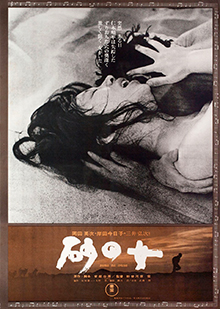


I’d never seen Woman in the Dunes (1964) before, but after watching the director’s cut on the BFI Player, it has now catapulted into one of the best films I have ever seen. This could be first-watch bias, however, thematically, emotionally, philosophically and stylistically speaking, it absolutely touched upon, connected and spoke to me greatly about my life’s experiences and the human condition.

Niki Junpei (Eiji Okada), a frustrated schoolteacher and amateur entomologist from Tokyo, travels to a remote coastal village in search of rare insects. After missing the last bus home, he accepts an invitation to stay overnight with a young widow (Kyōko Kishida) who lives alone in a hut at the bottom of a vast sand dune. He soon learns that her husband and daughter were killed in a sandstorm and that she spends every night shovelling away the endless sand that threatens to bury her home. Though Junpei initially sees himself as a temporary guest, strange comments from the villagers hint that something more sinister is unfolding.

The following morning, Junpei discovers that the rope ladder leading out of the sand pit has been removed. Trapped by the villagers, he realizes he has been chosen to become the widow’s permanent companion and labourer, helping her dig sand that the village secretly sells for profit. As he struggles to escape, Junpei learns that the widow is also a prisoner of the community, both of them controlled through dependence on the villagers for food and water. What begins as an accidental overnight stay becomes a nightmare of confinement, survival, and the gradual erosion of freedom beneath the relentless weight of the sand.
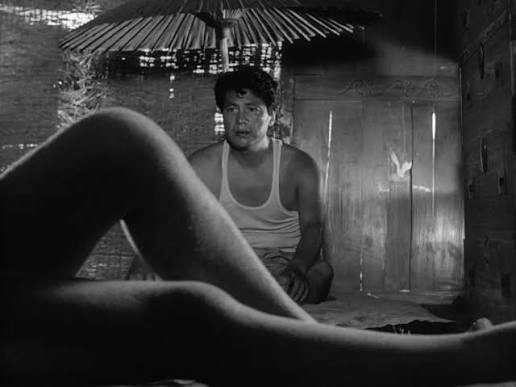


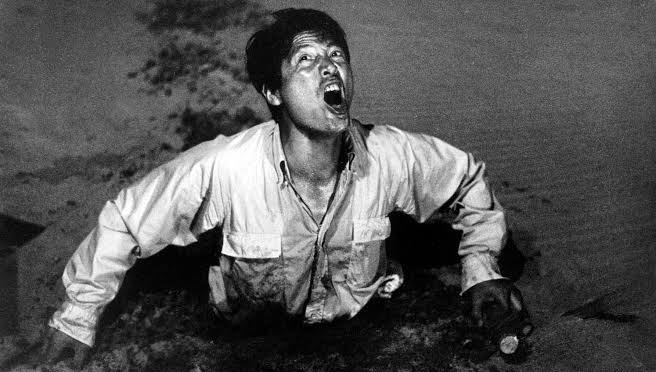
Hiroshi Teshigahara’s Woman in the Dunes (1964) is one of those rare films where image, character, theme and performance become inseparable. Shot in pristine black and white by cinematographer Hiroshi Segawa, it is visually astonishing: every grain of sand, bead of sweat and shadow across a human body is rendered with an almost microscopic intensity. The beauty of the photography is deliberately juxtaposed with the darkness of Niki Junpei’s predicament. What begins as an innocent expedition to collect insects becomes an existential prison, as he finds himself trapped by commerce, a surrogate marriage and, most powerfully, the natural wall of sand that pins both him and the unnamed widow to their strange subterranean existence.

The sand is both physical and metaphorical. It shifts, pours, consumes and rebuilds itself, turning Junpei’s captivity into a distinctly Sisyphean struggle. Every attempt at escape merely seems to return him to where he started, yet what makes Junpei such a compelling character is his absolute refusal to surrender. He builds ladders, devises increasingly ingenious escape plans, attempts to train crows to carry messages and continually tries to outwit the villagers who have ensnared him. Each failure intensifies rather than diminishes his determination. Like Sisyphus pushing the rock back up the hill, Junpei is condemned to confront an obstacle that endlessly renews itself.

Yet Woman in the Dunes (1964) is far more complicated than a straightforward story of imprisonment. Junpei is trapped by the villagers, but also by economic necessity, social expectation and an enforced domestic relationship that gradually begins to resemble a marriage. The villagers need the sand removed; the widow needs a man to help her survive; Junpei needs water, food and eventually human companionship. Teshigahara transforms this bizarre situation into a miniature society in which freedom itself becomes increasingly difficult to define. The more Junpei fights against his surroundings, the more deeply he becomes connected to them.

The relationship between Junpei and the widow, played with extraordinary physical and emotional commitment by Eiji Okada and Kyōko Kishida, gives the film its human core. Their intimacy moves between hostility, dependency, tenderness and desire without ever becoming conventional romance. Although sex is an important element of the film, Teshigahara rarely needs explicit imagery. Bodies appear as silhouettes, fragments and outlines; Kishida’s naked form is often suggested rather than displayed. A shoulder, a curve, a shadow or sand clinging to skin can communicate more than an explicit image ever could. One sees more from less throughout.



That principle extends to the entire film. Teshigahara makes the smallest details monumental. Sand resembles water, skin resembles landscape and the walls of the pit sometimes appear infinite. Extreme close-ups turn grains of sand into an entire universe, while wider compositions emphasise just how insignificant these two people are against the enormous shifting landscape surrounding them. The immaculate monochrome photography makes the film simultaneously beautiful and suffocating. The sand can look almost luminous in one shot and utterly threatening in the next.

There is also a wonderful irony at the heart of Junpei’s predicament. He arrives as an entomologist searching for insects, only to become a specimen himself: captured, observed and contained within a pit from which he cannot escape. The collector has become the collected. Teshigahara never labours the metaphor because he does not need to. It exists naturally within the imagery and situation, allowing the audience to discover its implications rather than having them explained.

Woman in the Dunes (1964) is virtually flawless in character, theme, cinematography, direction and performance. More than sixty years after its release, it remains startlingly modern and visually unlike almost anything else. Its central image — two human beings endlessly shovelling away a mountain of sand that will simply return tomorrow — is cinema distilled into an unforgettable metaphor for existence itself.

The only negative? Why didn’t I watch it sooner?

Mark: 10.5 out 11


SCREENWASH – WORLD CINEMA SPECIAL including reviews of: THE SQUARE (2017), ISLE OF DOGS (2018), JULIETA (2016) etc.

SCREENWASH – WORLD CINEMA REVIEW SPECIAL!

Technically speaking all films made can be labelled World Cinema because all films made were made on this Earth or World. As yet we know of no movies from other planets, so World Cinema has come to refer to films made in a foreign language or language other than English. I mean what do people from other countries call films made in English?  And does it matter. All this fluffing is really a means to introduce a selection of films from various countries other than the United Kingdom (another debatable term these days), that I have watched at the cinema, on DVD or streamed off the box. As usual I accompany my reviews with marks out of eleven.

**A SUGGESTION OF SPOILERS**

THE INNOCENTS (2016) – FRANCE / POLAND

Brace yourself for a truly heart-breaking and tragic WW2 narrative. This film inspired by true events finds a young French doctor assisting a nunnery and the various occupants who became victim to vicious rapist Soviet soldiers. This is a grim story that is shot and directed with great pathos and compassion. It brought a heavy heart and a tear to the eye as the heroic women battle against the dogs of war, while bringing new life into this retched world.

(Mark: 8.5 out of 11)

ISLE OF DOGS (2018) – JAPAN / USA

Put aside ridiculous millennial online accusations of cultural appropriation and submerge yourself within Wes Anderson’s rich narrative and stop-motion tapestry. I’m not always a fan of his story subjects but he is a master of style and form. Isle of Dogs is no different and was a wonderful cinematic experience. Set, obviously, in Japan we concentrate on, hence the title, a bunch of stray dogs dumped on a wasteland left to die. This is much darker than prior Anderson films but full of the imagination, wit, colour and brilliant technique, containing funny gags and twisting drama throughout.

(Mark: 8.5 out of 11)

JULIETA (2016) – SPAIN

I only really got into Pedro Almodovar’s cinema in the last few years and Julieta, while not as complex in terms of structure as other films, is just as emotionally effective.  It concerns our eponymous protagonist who on chancing an encounter with her estranged daughter’s former school mate finds her past colliding disastrously with her future. Emma Suarez and Adriana Ugarte portray the older and younger versions of Julieta as she reflects on the events which tore her life apart. Containing some beautiful filmmaking and one incredible cut halfway through, this is mournful, meditative and mature storytelling of the highest order.

(Mark: 8.5 out of 11)

L’AVVENTURA (1960) – ITALY

Michelangelo Antonioni is rightly lauded as one of the great Italian auteurs. He has directed some incredible films including: Blow Up (1966), The Passenger (1975) and the film L’Notte (1961). I watched L’Avventura on a Sunday morning and perhaps I wasn’t in the mood but it did not connect with me. I found it slow and pretentious and while the mystery of a missing socialite had some element of suspense the rich, narcissistic characters bored me. The acting from Monica Vitti was especially impactful and the scenery was beautiful, however, Antonioni’s existential narrative was a let-down. It was especially surprising to find that historically the film had been voted one of the best films ever made.

Mark: 7 out of 11)

THE ONE-ARMED SWORDSMAN (1967) – HONG KONG

I recorded this one on Film Four on a whim having been drawn in by the fact it was directed by the Shaw Brothers Studio. Their films were of course a massive influence on Tarantino’s Kill Bill (2003/4) duo of kung-Fu revenge films. The One-Armed Swordsman I found to be slightly cheesy due to the dubbing but overall an excellent wuxia epic with loads of great sword fights and a very effective narrative. Ultimately this is Great Expectations with weapons as a young servant child is adopted by a rich family only to grow up disrespected by his adopted siblings. Gang warfare rages in the rural territories and the young man grows up to be a fighter of some repute; even with only one arm. Both a tremendous action film and effective socialist critique of the ruling classes I found this an entertaining, funny and emotional wuxia classic.

(Mark: 8.5 out of 11)

THE SQUARE (2017) – SWEDEN / FRANCE / GERMANY

The 2017 Cannes Palm D’Or winner is half brilliantly funny arthouse satire and half sub-Haneke allegorical mid-life crisis thriller. Written and directed by Ruben Ostlund this is bravura cinema of the highest order as we find Claes Bang’s museum curator bumbling through various work, romance and private disasters.  Throughout there are some wonderful digs at the nature of modern art and how essentially people will believe any old crap to be art if it is put in a gallery. There are a number of hilarious satirical set-pieces including the “Tourette’s” scene and the “performance ape-ist” scene. While a tad overlong and bogged down slightly in the lead protagonist’s personal life this is a wonderfully, funny film with some great commentary on modern art, mocking of the bourgeoisie and a warning re: the rise of social media.

(Mark: 9 out of 11)

SHIN GODZILLA (2016) – JAPAN

Having seen Hollywood appropriate their Gojira creation for two films in 1998 and 2014, the Japanese released their own resurgent version in 2016. Part-disaster-part-monster-part-social-commentary this creature feature is actually pretty good. It is driven structurally at first by a flurry of government meetings where hundreds of officials spend their time in meetings rather than actually solve anything. Clearly, this is a critique of Japanese government bureaucracy and the movie works well on that level. The characters who later come to the fore are left behind somewhat and the romantic subplot is poorly done.  Yet, when the Godzilla monster brings Tokyo to the edge of destruction the effects, while a bit wonky in places, are a riotous mix of laser CGI and man-in-suit-green-screen shots.

(Mark: 7.5 out of 11)

‘THRILL OF THE CHASE’ (SHORTS SCREENING) – LONDON FILM FESTIVAL 2017 – REVIEW

‘THRILL OF THE CHASE’ – SHORT FILM REVIEWS

As I’ve written before I’m an avid short film viewer and maker. To tell an impactful story in a lesser period of time to a feature film can be a very difficult but ultimately rewarding experience. Plus, as a member of the audience and filmmaker myself I love seeing the different ways other creatives tell their stories in this medium.

till-one-cries-2-lff17-793

‘Thrill of the Chase’ was curated by the London Film Festival and featured five shorts from Europe and I must say they were of the highest quality. I mean some of the budgets on these must have been very good because they were shot, acted and edited to an exceptionally brilliant standard.The first short, 1745, was a period pursuit drama. Two slaves, wearing big, colourful, tartan, traditional and unwieldy dresses of the Jacobean era, have escaped from a nearby castle and are chased by a steely Scottish Laird, hell bent on recovering his “property”. It’s incredibly well shot as the colour of the costumes countered the misty, green and vast mountainous landscapes up close and from a spectacular god’s-eye view. Overall, it’s a commendable story of two women escaping patriarchal oppression and abuse, set amidst an exquisite looking but harsh Scottish Highlands.

Next up was Oksijan. Set in the harsh contemporary now it also involved a set of characters escaping an oppressive regime. This time is was a group of Asylum seekers, adults and children, encased in the potential moving tomb of an articulated lorry transporting them from a refugee camp. Their deadly journey from Calais to the United Kingdom was made perilous by the air running out. A thrilling and suspenseful short it both raised the pulse and important issues in regard to the plight of human beings fleeing war torn countries.

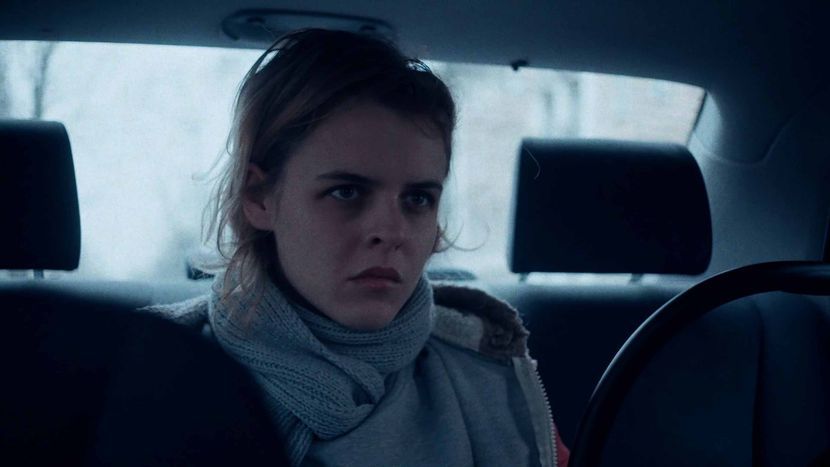
After Scottish and English film productions we next had Hot and Cold from Poland. This was a very harsh film, thirty-five minutes long, and all shot in one take. Technically, it was incredible as the camera follows a young junkie mother throughout her day and her encounter with woman looking to get revenge on her husband. It’s a towering study of motherhood, grief and addiction which creates a claustrophobic nightmarish drama with the colour-bled bleakness of Polish council estates. I wasn’t sure the one-take was actually necessary as the narrative could’ve been pruned but it was very powerful nonetheless.

hot-and-cold-taxi-lff17-668

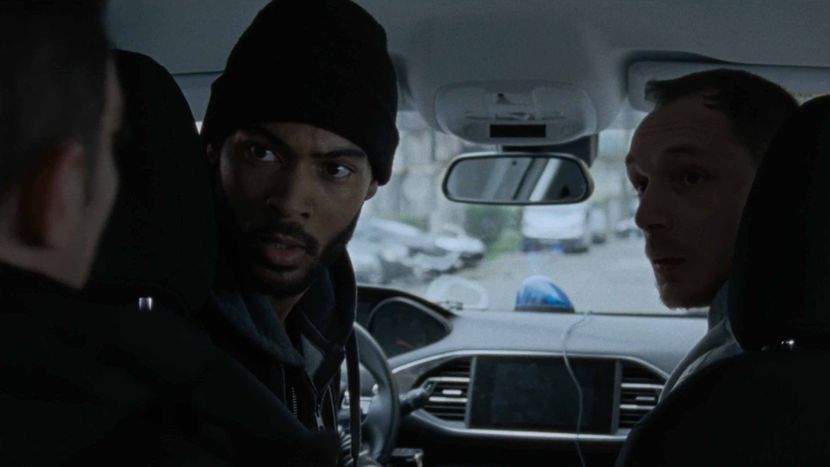
The final two films came from France and Germany respectively. Both reminded me of mini-versions of excellent feature films. The French film Les Miserables (not the Victor Hugo version) concerned cops on a dangerous estate and their heavy-handed dealings with gang-members. It’s well filmed and acted, containing the bruising feel of the classic French movie La Haine (1995).

Similarly, the final short was another drama but this time of the romantic kind. Till One Cries concerned two drug-addled millennials sharing a crazy night within an urban German milieu. It reminded me somewhat, without the shot-all-in-one-take business, of the brilliant crime-romance Victoria (2015) and showed the hedonistic highs and lows of two free-wheeling characters.

les-miserables-cars-lff17-688

Overall, the programme was full of gripping drama and thought-provoking subject matter. I’d say the ‘Thrill of the Chase’ title was slightly misleading in my mind, as the films tended toward, not your classic genre thrillers, but rather more social realism and cinema verité than movie artifice. Indeed, it may have benefited throwing in a shorter, punchier thriller with an element of comedy to break up the incredibly heavy themes of the films presented. Nevertheless, this was a set of Premier League short films, in terms of production, performance and storytelling quality.  

CINEMA REVIEW: THE HANDMAIDEN (2016)

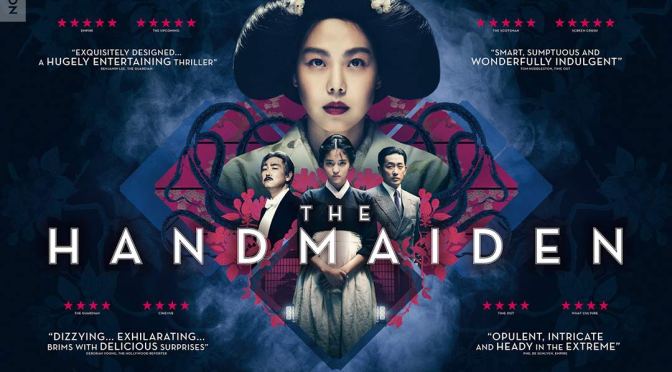
THE HANDMAIDEN (2016)

DIRECTOR:  Park Chan-Wook

WRITERS: Park Chan-Wook, Chung Seo-kyung (from the novel Fingersmith by Sarah Waters)

CAST:  Kim Min-hee, Kim Tae-ri, Ha Jung-woo, Cho Jin-woong

**MAY CONTAIN SPOILERS**

The_Handmaiden-691415065-large

You may be too young to know or too old to remember but Channel 4 in the 1980s used to have an eclectic choice of arty independent and World Cinema films.  Now you get a few on Film Four but Channel 4 was a main outlet for interesting cinema not shown on the BBC or ITV channels. Channel 4 also used to, for a short period between 1986 and 1987 have a ‘Red Triangle’ on certain films to advise of sexual scenes and material that may be considered controversial. Not surprisingly the films with a ‘Red Triangle’ guaranteed nudity and erotic scenes causing audience figures to actually rise. After some moaning from the likes of Mary Whitehouse – a right-wing puritanical harpy who was a self-appointed anti-everything woman – the ‘Red Triangle’ was vanquished by Channel 4, but not before gaining notoriety and publicity.


handmaiden3

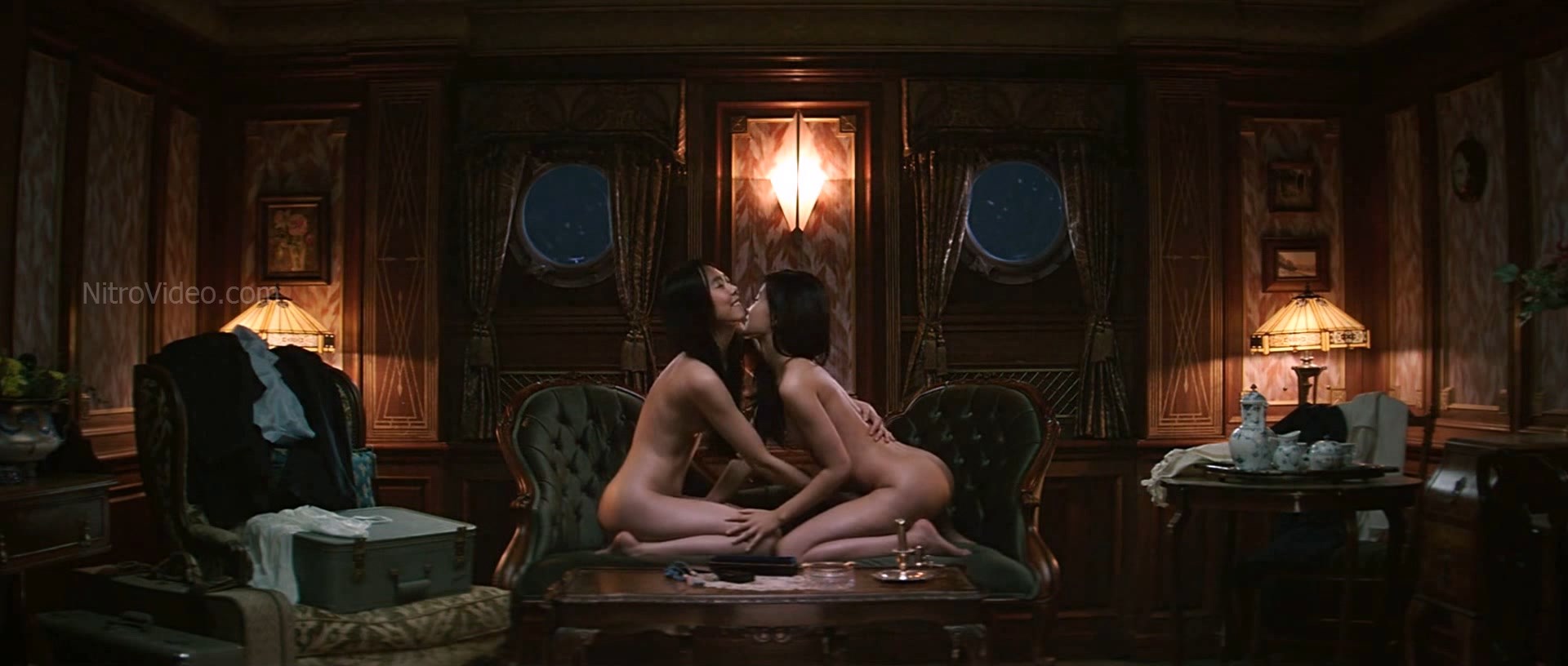
As a teenager I used to look forward to the more risqué content on Channel 4 as the Internet was at the virgin stage and yet to be invented; so titillation was often confined to late night films on a Friday night. Flash forward thirty years and because I’m more mature and it’s very easy to access pornography online I’m not a big fan of overtly sexual material in mainstream or independent features. Not sure why but I prefer subtlety and suggestion over all-out copulation. In Park Chan-Wook’s majestic erotic con-artist thriller there are some wonderfully subtle erotic scenes which raise the blood pressure and enhance the characterisation. There is also some serious scissoring between the two female leads going on too which in my view pushes the boundaries between eroticism, controversy and exploitation. However, this is the line Chan-Wook has always skipped along in classic films such as: Old Boy (2003), Sympathy for Mr Vengeance (2002), and Thirst (2009).


the-handmaiden05

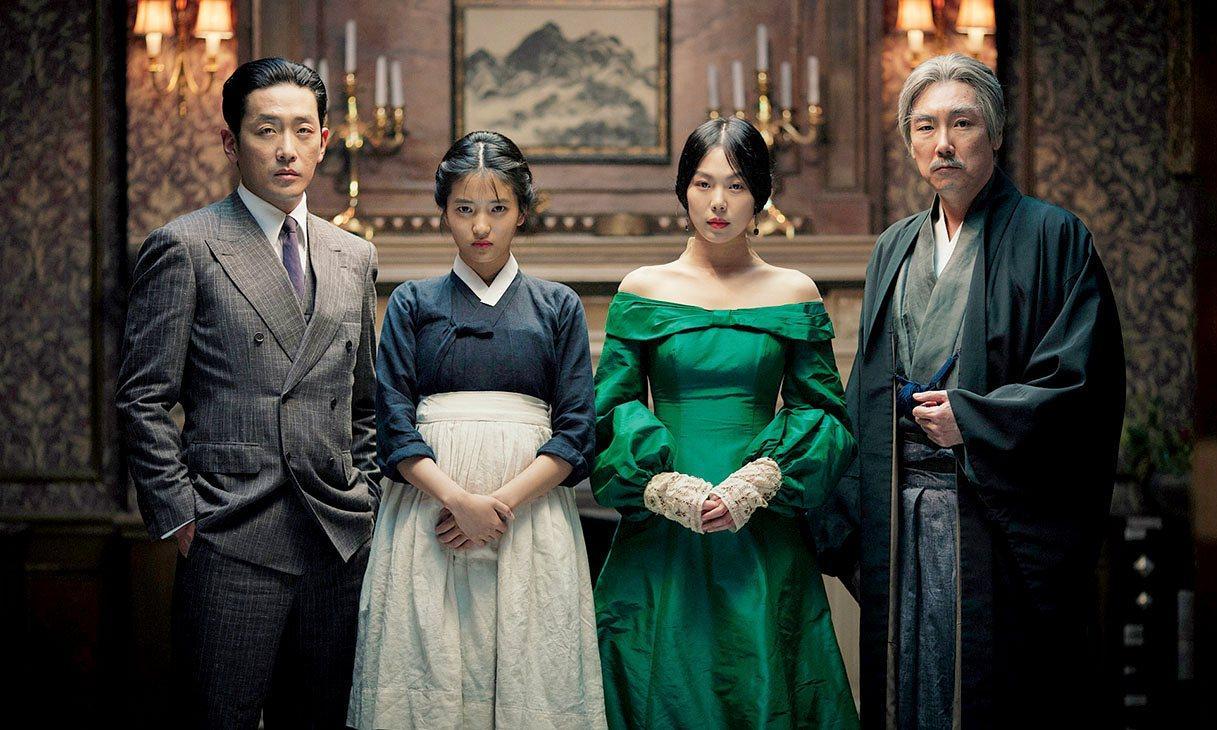
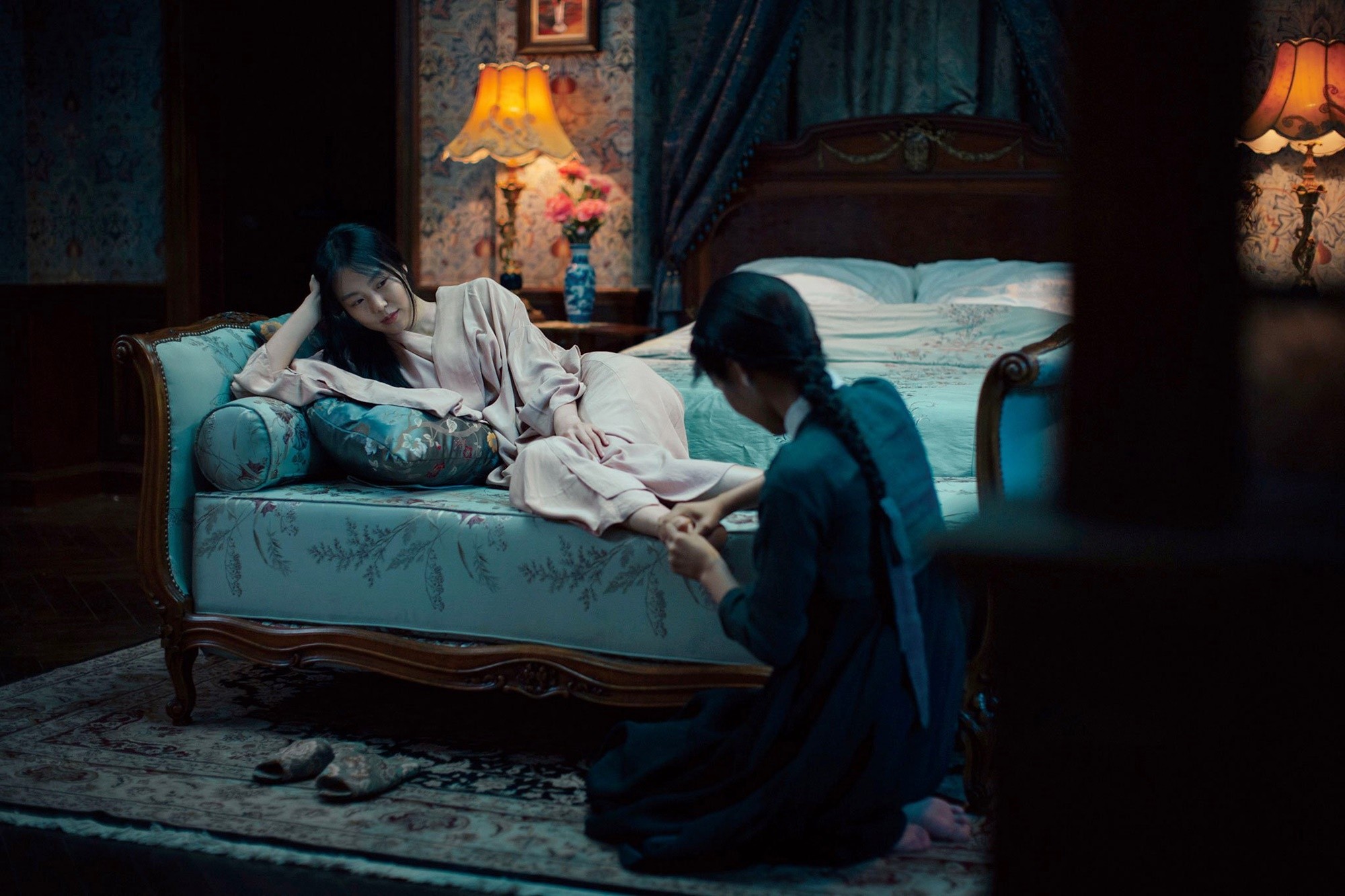
The Handmaiden is set in 1930’s Korea amidst the backdrop of the Japanese occupation and the cultural differences between the two nations are expertly drawn and examined in the story. Class differences are also highlighted in a rich text which finds Sook-hee seconded to look after the neurotic Lady Izumi Hideko, who is a ward and being groomed for marriage by her controlling Uncle Kouzuki. I will not give any further of the plot away but safe to say it is an incredibly complex narrative structured into three parts which overlap different perspectives within flashbacks and contrasting character voiceovers and angles.  Did I enjoy it? Absolutely, this is a beautifully shot period masterpiece which I took great pleasure in viewing. In my view the running time was arguably over-long and a couple of the more overt sex scenes could have been trimmed. Nonetheless, the film had me gripped throughout.


The_Handmaiden_2016_Kim_Min-Hee_Kim_Tae-Ri_-_Video_Clip_04.avi

Park Chan-Wook directed a gem of a noir thriller called Stoker (2013) for his first Hollywood film, but here is a bigger-budgeted and thematically richer cinema affair. It takes a complex con-artist-twisting-plot and imbues it with an erotically charged and explicit feminist love story which finds sharp-witted female characters overcoming the dominant and deviant patriarchal beast. Moreover, Chan Wook’s screenplay is a masterful adaptation of the original novel, the wonderfully titled Fingersmith, by Sarah Waters. Like the Coen Brothers, Quentin Tarantino, Martin Scorcese, Christopher Nolan, Jacques Audiard, Michael Haneke to name a few, Chan-Wook’s work is always a must-see-at-the-cinema-event and you don’t need a ‘Red Triangle’ to ensure you watch it.

 (Mark: 9 out of 11)