Tag Archives: adaptation

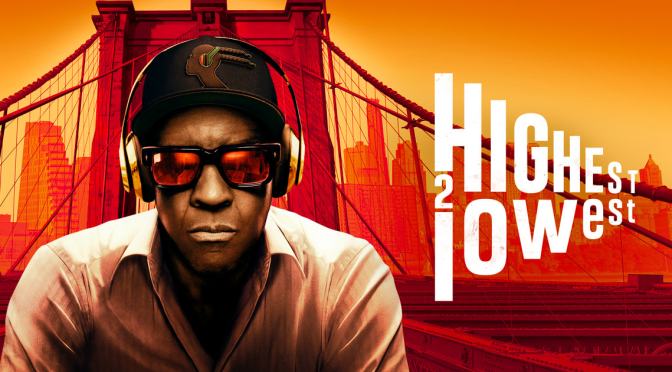
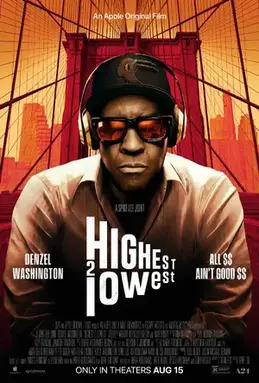
Apple TV+ Film Review: Highest 2 Lowest (2025) – a vibrant, musical and pacy, if unnecessary, remake.

Apple TV+ Film Review: Highest 2 Lowest (2025)

Directed by Spike Lee

Screenplay by Alan Fox

Based on High and Low (1963 film) by Akira Kurosawa, Hideo Oguni,
Ryūzō Kikushima, Eijirō Hisaita, and King’s Ransom (1959 novel) by Ed McBain.


Produced by Todd Black and Jason Michael Berman

Main cast: Denzel Washington, Jeffrey Wright, Ilfenesh Hadera, ASAP Rocky, John Douglas Thompson , Dean Winters, LaChanze, Aubrey Joseph, etc.

Cinematography by Matthew Libatique


Spike Lee’s Highest 2 Lowest (2025) is a kinetic, vividly modern reimagining of Akira Kurosawa’s High and Low (1963), transplanting the Japanese master’s class-conscious thriller into the bustling, chaotic pulse of contemporary New York City. As expected from Lee, the film bursts with visual flair and political verve — the camera rarely rests, and the city itself becomes a character, glowing with heat, colour, and tension. The streets hum with energy, from glassy penthouses to subway platforms, creating a dynamic canvas on which the moral dilemmas unfold.

Denzel Washington, as usual, delivers a commanding performance as David King, a renowned independent producer and record label owner, torn between his conscience and his ambition when the kidnapping of his son occurs. Washington captures both the quiet torment and moral exhaustion of a man staring down the gulf between his privilege and his humanity. Jeffrey Wright, offers great support as his friend and chauffeur. The narrative navigates class and corporate tensions, bringing a soulful intelligence to every scene, grounding the film’s intensity with empathy and authority.


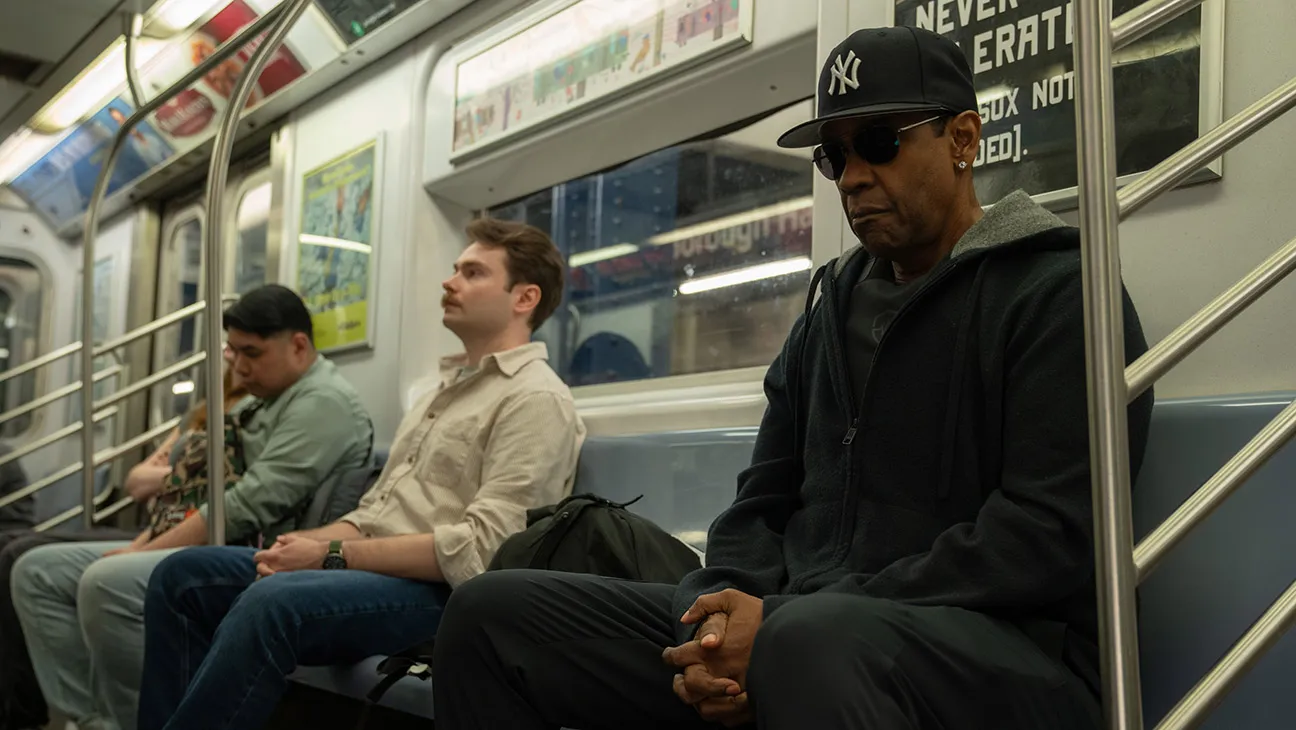
The film moves at a thrilling pace, carried by a propulsive soundtrack that fuses hip-hop, jazz, and gospel with Lee’s trademark flair for musical storytelling. Nowhere is this energy more palpable than in the ransom handover sequence — a masterclass in direction and editing — cutting feverishly across New York’s boroughs and metro trains, while the Puerto Rican Day Parade swells in a euphoric, near-operatic crescendo. It’s a breathtaking montage that exemplifies Lee’s command of rhythm, geography, and social texture. It proves to be Highest 2 Lowest (2025)’s biggest high.

Where Highest 2 Lowest (2025) falters is in the handling of its central moral crisis, which in turns undermines the all-to-rapid ending too. Indeed, it seemed to be missing a betrayal twist for me. The decision David King must make — the film’s spiritual core — arrives and resolves too swiftly around the midpoint, leaving the second half conflict, after the exhilarating Puerto Rican Day Parade, more focused on wrapping up loose ends quickly than psychological reckoning. It’s a missed opportunity for the deeper character study that Kurosawa’s original sustained so brilliantly.

Still, as an adaptation, Lee’s film is an entertaining piece of work — bold, stylish, and alive with the contradictions of the modern city. While Kurosawa’s High and Low (1963) remains the more compelling exploration of social class and moral responsibility, Highest 2 Lowest (2025) finds its own voice: vibrant, urgent, and unmistakably Spike Lee.

Mark: 7 out of 11


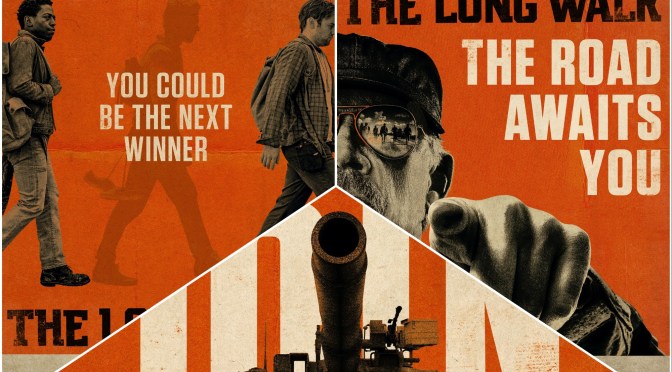
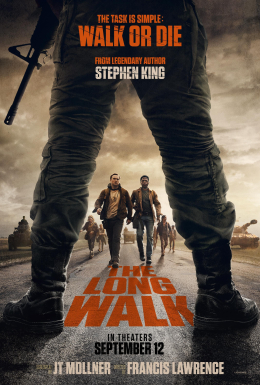
Cinema Review: The Long Walk (2025) – a compelling adaptation of Stephen King’s anti-war allegory!

Cinema Review: The Long Walk (2025)

Directed by Francis Lawrence

Screenplay by JT Mollner

Based on The Long Walk by Stephen King

Produced by Roy Lee, Steven Schneider, Francis Lawrence, Cameron MacConomy

Main Cast: Cooper Hoffman, David Jonsson, Garrett Wareing, Tut Nyuot, Charlie Plummer, Ben Wang, Roman Griffin Davis, Joshua Odjick, Judy Greer, Mark Hamill etc.

Cinematography by Jo Willems

*** MAY CONTAIN SPOILERS ***


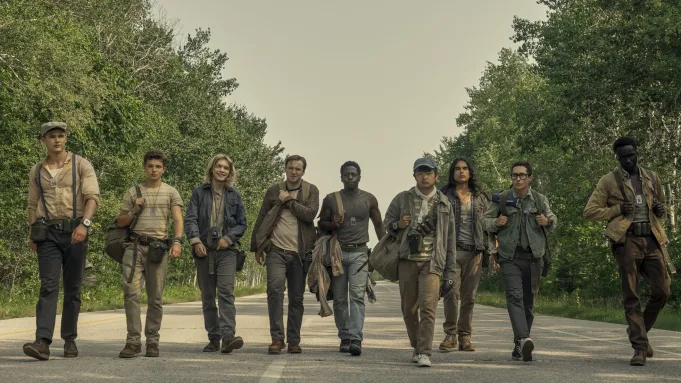
This compelling and moving anti-war film was adapted from the Stephen King novel, The Long Walk (1979), originally published under his pseudonym, Richard Bachman. The story is set in a dystopian alternative version of the United States ruled by a totalitarian regime; a new military-driven world order. The plot follows the fifty young male contestants of a gruelling annual walking contest, who must follow a set of rules or face the grim consequences. Ultimately, most of their fates are doomed as only the last boy standing gains the prize.

As an aside, I often wondered why King published under a pseudonym and after a quick net search I found that the author was limited to publishing one book per year, since publishing more would be “unacceptable” to the public. King therefore wanted to write under another name in order to increase his publication without saturating the market for the King “brand”. So, there you go. But what of The Long Walk (2025)? How does it compare to the plethora of other King film adaptations?


Grim, unrelenting, and devastatingly poignant, The Long Walk (2025) transforms a brutal endurance contest into an unmistakable anti-war allegory. Fifty young men, each plucked from a different state, march forward under the banner of national pride and promised glory — but what unfolds is the slow annihilation of their bodies and spirits. The premise, simple on the surface, becomes a searing critique of how nations sacrifice youth for power, money, and hollow ideals.

The film thrives on the camaraderie and conflict between the boys: fleeting alliances form, bitter rivalries crack open, and in moments of exhaustion or terror, we glimpse the fragile humanity beneath their forced bravado. Echoes of The Hunger Games franchise, also directed by Francis Lawrence, are impossible to miss. However, this story clearly influenced The Hunger Games and other examples of survivalist literature. Yet, The Long Walk (2025) is way more rawer, more intimate, and ultimately more scathing in its indictment of systemic cruelty.

Among the excellent ensemble cast, Cooper Hoffman as Ray and David Jonsson as Peter emerge with standout performances. Their characters, drawn together in unlikely connection, add emotional depth to the carnage, grounding the relentless attrition in genuine feeling. As their bond develops, the horror of the “Walk” feels sharper, the futility more unbearable. Overall, aside from slight repetition of action and an ending I’d have preferred to have gone a different way, The Long Walk (2025) carries hypnotic and bloody power. It is both a war story without a battlefield and a coming-of-age tale without the promise of adulthood — a haunting testament to how societies can destroy their own sons in pursuit of an impossible prize.

Mark: 8.5 out of 11


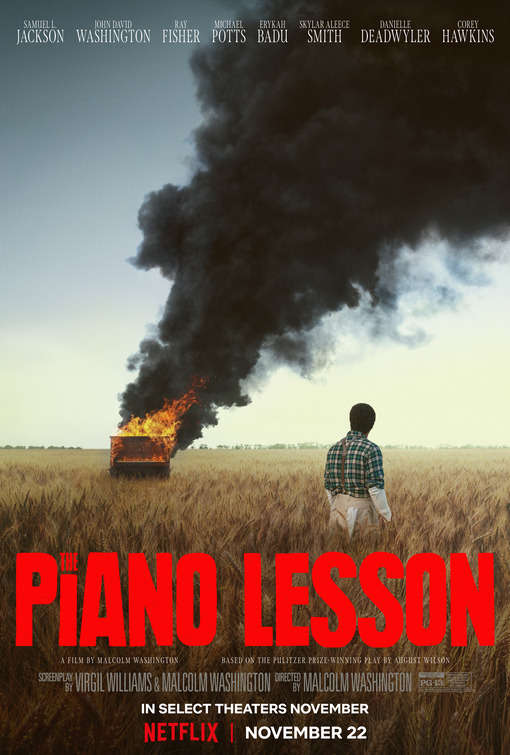
Netflix Film Review: The Piano Lesson (2024) – ghosts of the past and present haunt the screen with resounding power!

Netflix Film Review: The Piano Lesson (2024)

Directed by Malcolm Washington

Screenplay by Virgil Williams & Malcolm Washington

Based on The Piano Lesson by August Wilson

Produced by Denzel Washington & Todd Black

Main cast: John David Washington, Danielle Deadwyler, Samuel L. Jackson, Ray Fisher, Michael Potts, Erykah Badu, Skylar Aleece Smith,
Corey Hawkins, and more.


Cinematography by Mike Gioulakis


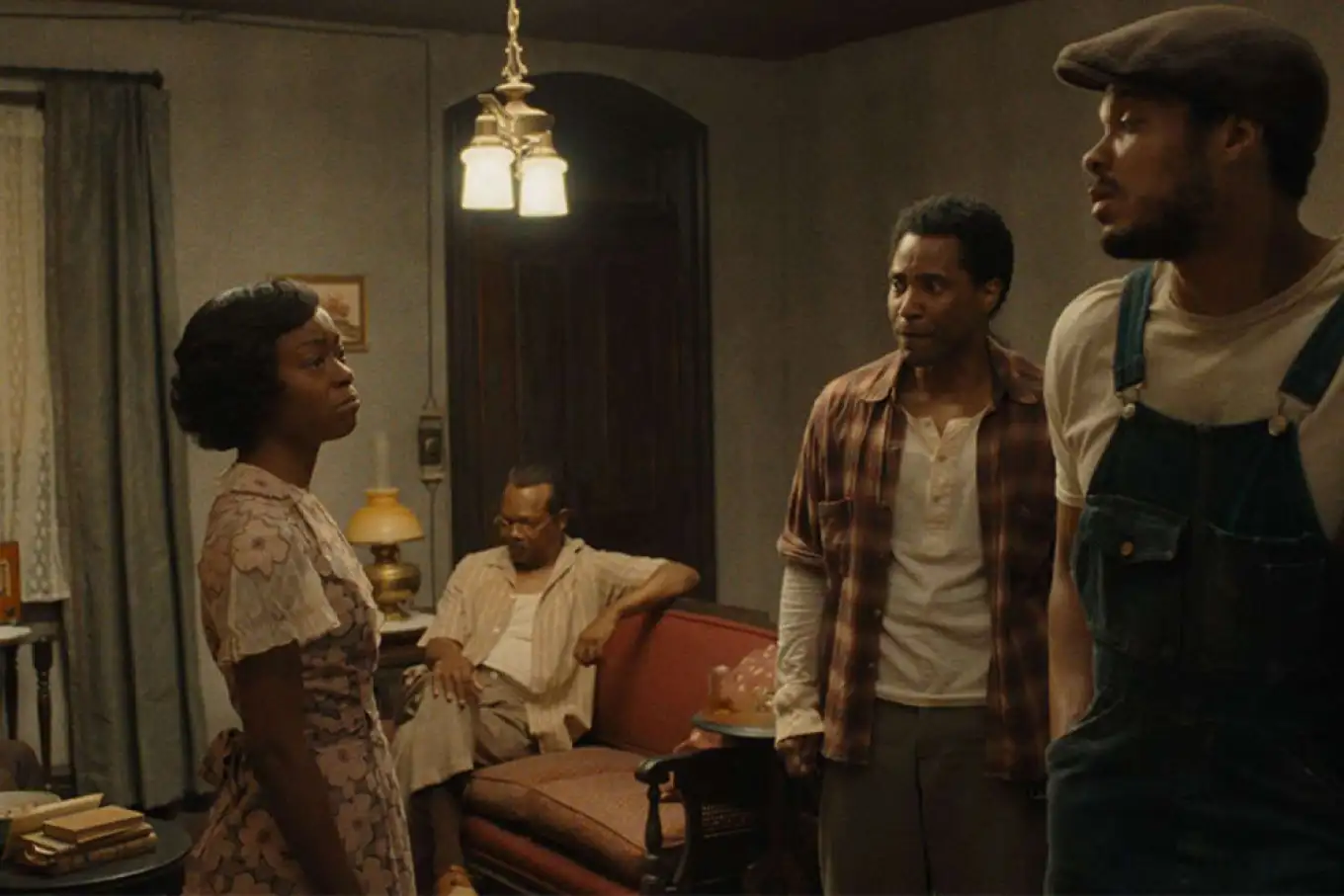
Malcolm Washington’s directorial debut, The Piano Lesson (2024), is a poignant and evocative adaptation of August Wilson’s 1987 play, set in 1936 Pittsburgh. Through a compelling narrative and an exceptional cast, Washington explores themes of heritage, familial conflict, and the enduring impact of racial oppression.

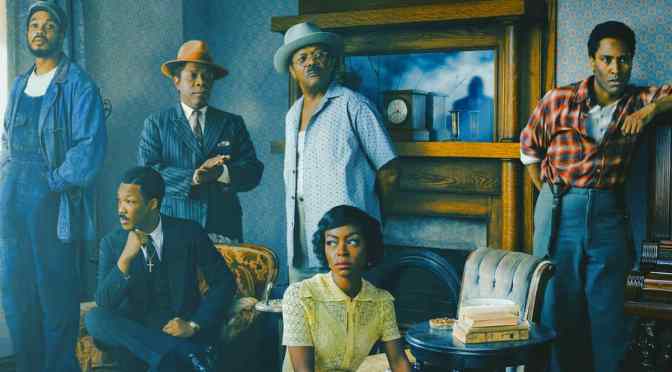
Washington, alongside co-writer Virgil Williams, expands the original stage play’s confines by incorporating flashbacks and supernatural elements, enriching the narrative’s depth and scope. The film centers on the Charles family, particularly siblings Boy Willie (John David Washington) and Berniece (Danielle Deadwyler), who are at odds over the fate of a family heirloom piano. Boy Willie wishes to sell the piano to purchase land that once belonged to their ancestors, while Berniece views the instrument as a sacred connection to their past.

The piano, intricately carved with images of the Charles family’s ancestors, serves as a powerful symbol of their history and resilience. For Boy Willie, it represents a means to break free from the shackles of the past and build a future of self-sufficiency. Conversely, Berniece sees it as a testament to their survival and a link to the sacrifices made by their forebears. This dichotomy underscores the central conflict: the tension between honoring tradition and pursuing progress


The film delves into the complexities of familial bonds and the differing perceptions of heritage. Boy Willie’s desire to sell the piano reflects a yearning to move beyond the constraints of history, while Berniece’s attachment signifies a commitment to preserving their lineage. At the same time she mourns the loss of her husband and combats romantic offers from local suitors. Her struggles truly power the piece and the familial clashes further embody the broader struggle within African American communities: reconciling the weight of history with the aspirations for advancement. The supernatural elements, particularly the haunting presence of the plantation owner, Sutter’s ghost, are delivered effectively. They also amplify the narrative’s exploration of unresolved trauma and the need for reconciliation.

The ensemble cast delivers standout performances, with John David Washington portraying Boy Willie’s fiery ambition and Danielle Deadwyler capturing Berniece’s steadfast resolve. How Deadwyler did not even get an Oscar nomination for Best Actress in a Supporting Role is beyond me. Moreover, Samuel L. Jackson offers a subtle, unselfish and grounded portrayal of Doaker, the family patriarch. Washington’s direction ensures a respectful adaptation, balancing the play’s rich and passionate dialogue with cinematic elements that enhance its emotional resonance.

Overall, Malcolm Washington’s The Piano Lesson is a resounding adaptation that honours August Wilson’s legacy while providing a fresh perspective on timeless themes. Through its rich symbolism, compelling performances, and thoughtful direction, the film invites audiences to reflect on the complexities of heritage, the burdens of history, and the paths toward healing and progress.

Mark: 8.5 out of 11


Cinema Review: Mickey 17 (2025) – a multi-faceted sci-fi adaptation that leaves one drunk, but somehow still thirsty!

Directed by Bong Joon Ho

Screenplay by Bong Joon Ho – Based on Mickey 7 by Edward Ashton


Produced by Dede Gardner, Jeremy Kleiner, Bong Joon Ho and Dooho Choi

Main Cast: Robert Pattinson, Naomi Ackie, Steven Yeun, Toni Collette, Mark Ruffalo, Patsy Ferran, Cameron Britton, Daniel Henshall, Anamaria Vartolomei, etc.

Cinematography by Darius Khondji


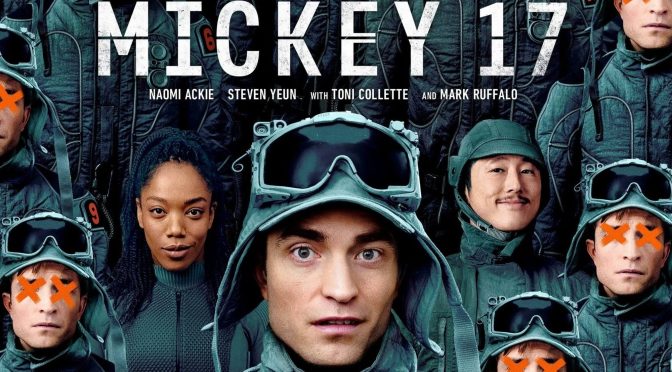
Bong Joon Ho’s adaptation of Mickey 7, the 2022 sci-fi novel by Edward Ashton, showcases a compelling convergence of the director’s distinctive thematic interests with the novel’s narrative. Known for his ability to blend genre elements with incisive social commentary, Bong’s version of Mickey 7, now titled Mickey 17 (2025) is a comedic, at-times-crazy and imaginative sci-fi film exploring human resilience, class struggles, scientific malpractice, environmental abuse, genocidal terra-forming, plus the existential impact of technology within the workplace.

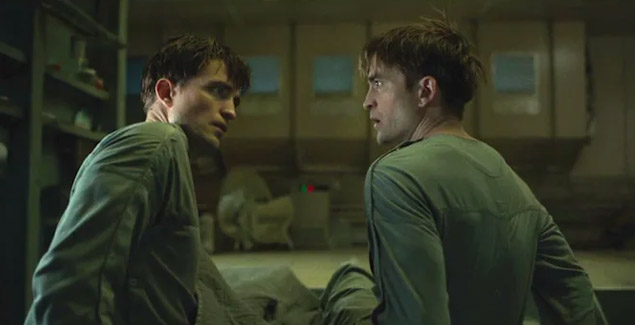
Robert Pattinson is the eponymous Mickey, a “disposable” worker sent on perilous missions to terra-form a distant planet, with his life repeatedly put in danger only for him to be replaced if he dies. This directly ties into Bong’s recurring exploration of human resilience in the face of dehumanizing systems, something seen in his earlier films, such as Snowpiercer (2013) and Okja (2017). Bong’s protagonists are often ordinary people facing systems designed to strip away their individuality, and Mickey’s repeated resurrections emphasize the fragility of life within these systems.

Another prominent theme in Bong’s films is the exploration of class and social inequality. In Parasite (2019), he delved into the gap between the wealthy Park family and the impoverished Kim family, using the home as a microcosm of societal hierarchies. In Mickey 17 (2025), the corporate-driven space mission echoes the exploitation seen in these films. Mickey’s status as an expendable worker mirrors the broader economic systems that exploit individuals for labour without regard for their well-being. The fact that Mickey is repeatedly discarded without consequence is an unsettling reflection of how capitalist structures often devalue human life for the sake of profit.

Bong has always critiqued the alienation of labour, especially how working-class individuals are treated as replaceable cogs in the machine. In Mickey 17 (2025), this theme is amplified as Mickey’s life is literally expendable, offering a stark commentary on the commodification of labour within the context of futuristic colonization. The struggle for survival and dignity, against an uncaring corporate entity, will likely resonate with themes Bong has previously explored. Likewise, in Memories of Murder (2003), the search for truth is tied to the characters’ understanding of themselves and their roles in society. Such societal and existential crises fit perfectly with Bong’s broader thematic preoccupation with the fragility of the human experience in the face of overwhelming, often oppressive, external forces. The question remains: is Mickey 17 (2025) any good?


Robert Pattinson, who plays various versions of the titular character Mickey, brings his signature range of brooding intensity and offbeat charisma to the role. His performance is a key part of what makes the film such an intriguing watch. Pattinson excels in portraying Mickey’s emotional journey—a man repeatedly resurrected after dying in increasingly perilous circumstances, struggling with his own identity, and questioning the morality of the system that disposes of him so easily. However, Pattinson’s performance also contributes to the film’s unevenness. While his portrayal is captivating, the character’s arc and motivations can occasionally feel too vague or inconsistent, leading to moments where it’s unclear whether Mickey is supposed to be a tragic figure, a comic relief, or something in between.

The visual effects in Mickey 17 (2025) are nothing short of stunning. Bong Joon Ho, along with his team, creates a visually immersive universe, blending futuristic technology, the planet landscapes of Niflheim, quirky alien creatures and mind-bending visuals to evoke a sense of awe. The digital photo-copying resurrection process that Mickey undergoes is a feat of visual storytelling, with the film using cutting-edge effects to show Mickey’s multiple deaths and resurrections in creative and striking ways. The film’s alien planet, with its strange, luminous terrain and exotic creatures, also adds a surreal and fantastical quality to the narrative. Indeed, the theme of environmental and indigenous protection is vital, but does eventually clash with that of the existential worker.

Where Mickey 17 (2025) truly shines—and stumbles—is in its wacky, unpredictable storytelling. Bong Joon Ho has always been a director unafraid to blend genres and tones, and here he creates a narrative that swings wildly between dark comedy, sci-fi absurdity, and existential dread. One moment, you’re laughing at Mickey’s off-kilter interactions with his fellow colonists, and the next, the film veers into dark, serious territory as Mickey grapples with his own mortality and the ethical dilemmas of his existence. Moreover, the film’s narrative structure itself is erratic. There are moments where the plot careers off course, lost in the chaos of its high-concept premise.

As Robert Pattinson’s charismatic, multi-faceted performance anchors the film, the performances of Mark Ruffalo and Toni Collette—as the grotesque antagonists—topple the tone too far into bad theatre. Finally, Bong Joon Ho’s trademark brilliance is evident throughout, but Mickey 17 (2025) ultimately suffers from the very risk-taking that makes it unique. It’s a thrilling, uneven ride that fascinates, frustrates, makes one laugh and leaves you with a lot to think about—once the space dust has settled. Perhaps I should have had what Bong Joon Ho and his production team were drinking before I watched it. If so, I should certainly of made it a double!

Mark 7.5 out of 11


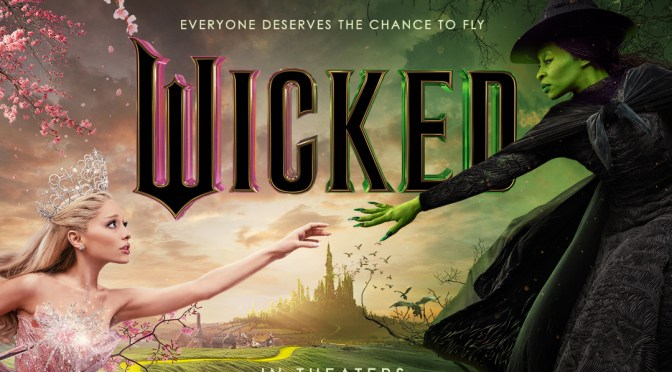
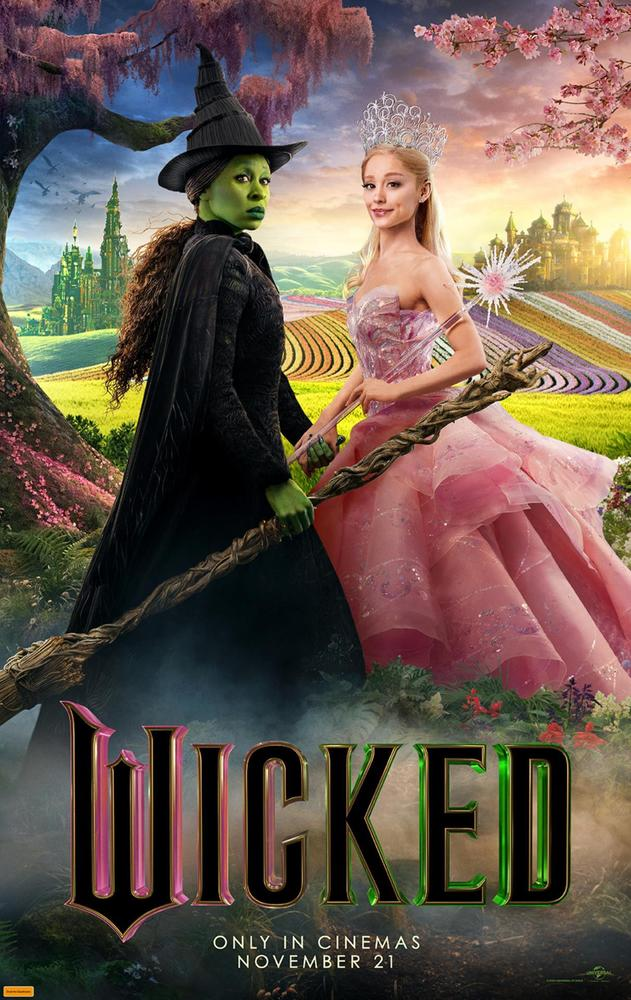
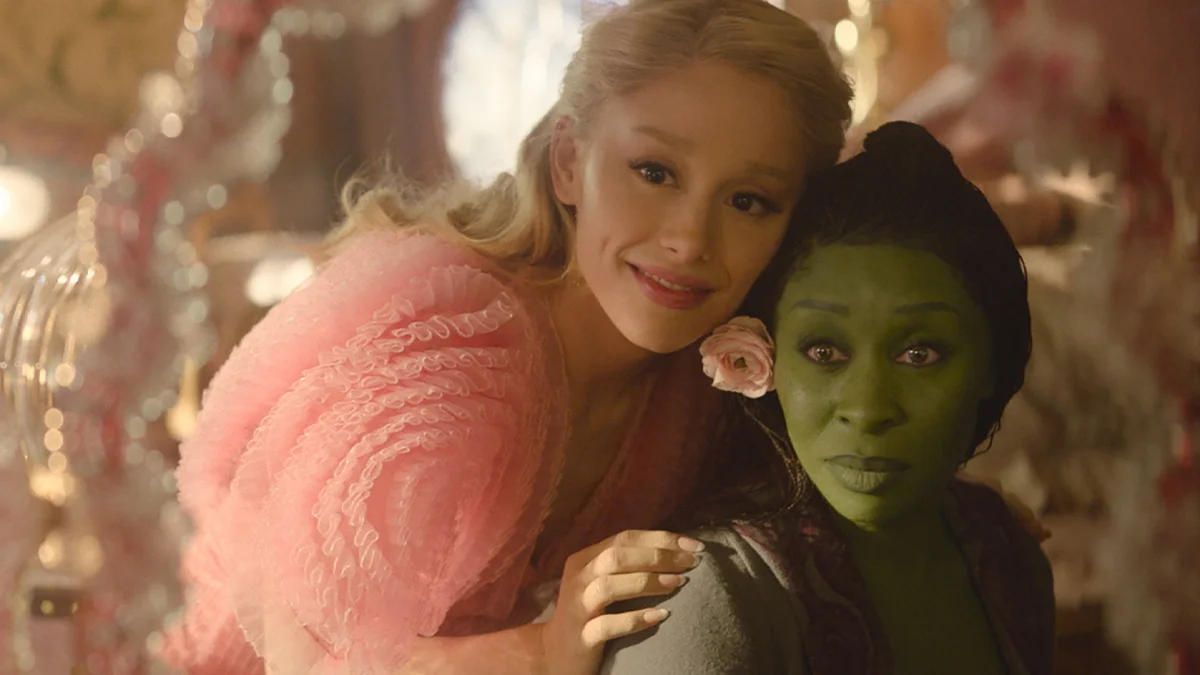
Cinema Review: Wicked (2024) – delivers a Magical Yet Overstuffed Musical Experience

Cinema Review: Wicked (2024)

Directed by Jon M. Chu

Screenplay by Winnie Holzman and Dana Fox

Based on the musical, Wicked by Stephen Schwartz & Winnie Holzman
and novel by Gregory Maguire
.

Produced by Marc Platt and David Stone

Main Cast: Cynthia Erivo, Ariana Grande-Buter, Jonathan Bailey, Ethan Slater, Bowen Yang, Marissa Bode, Peter Dinklage, Michelle Yeoh and Jeff Goldblum etc.

Cinematography by Alice Brooks

Edited by Myron Kerstein

Music by John Powell (score) and Stephen Schwartz (score and songs)

*** MAY CONTAIN SPOILERS ***


I truly believe my love of cinema began when I was aged five. Or was it six? Picture the scene. Christmas Day circa 1976 and the living room of a Battersea tower block. A television emits a classic musical fantasy called The Wizard of Oz (1939). Shades of grey with a flickering light and shadow, drew me into its spell. I sat wide-eyed, cradled by the screen’s soft glow, unaware that something wondrous lay just beyond the monochrome.

And then it happened—like a magician’s flourish, the black and white world I had known melted away. Dorothy opened that door, and the screen burst into life, a kaleidoscope of impossible hues. Emerald greens, ruby reds, a yellow road that glowed with the promise of adventure. My eyes widened. Hang on! It was black and white and NOW the images are in colour! This was magic. This was film. This was Oz!

Forty-eight years later and back to the present. In 2024, I am sat in the cinema intrigued to watch the musical prequel, Wicked (2024). Based on a successful novel, then a spectacularly successful stage musical and now a big-budget Christmas cinema extravaganza indulgently split into a two-parter, does Wicked (2024) capture the cinematic sorcery I experienced in my youth? Of course it possibly cannot live up to my warm and fuzzy childhood memories, but it is a well-crafted, superbly choreographed and energetically performed Hollywood product with Cynthia Erivo and Ariana Grande on majestic form.


The film, based on Wicked: The Life and Times of the Wicked Witch of the West by Gregory Maguire, is a brilliant twist on the “what if” storytelling lens—a speculative reimagining that turns a villain into a deeply human, complex protagonist. The novel takes the flat archetype of the Wicked Witch and asks: What if we misunderstood her? What if the “wickedness” she’s condemned for is not inherent, but the result of a life shaped by prejudice, politics, and pain? Indeed, the journey of Elphaba Thropp (Cynthia Erivo) powerfully drives the story, and in some fashion Wicked (2024) works brilliantly as a Breaking Bad-meets-Mean Girls-type-rites-of-passage musical.

Unfortunately, such strong narrative bones with weighty themes of identity, morality, and the price of power are adorned in a dazzling, over-the-top spectacle. While its core narrative explores profound questions about destiny and the nature of “wickedness,” these ideas often get buried under an excessive parade of well-designed production numbers that stretch the running time and tested one’s patience. The powerful emotional arcs of Elphaba and Glinda, rich with potential, are interrupted by TOO MANY songs that (Dancing Through Life is one such culprit), while entertaining in isolation, often feel like detours from the story’s heart.

By the final curtain, the spectacular musical embellishments, though undeniably crowd-pleasing, can leave the story feeling bloated. I am probably the wrong demographic for the production, given the cinema was full of children and parents. So, while there is much to enjoy in comparison with the original film’s genius, notably the invention of the flying monkeys, Wicked (2024), for all its glitter and showmanship, finds the greedy desire for a two-parter ultimately draining Oz of pace and magic.

Mark: 7 out of 11


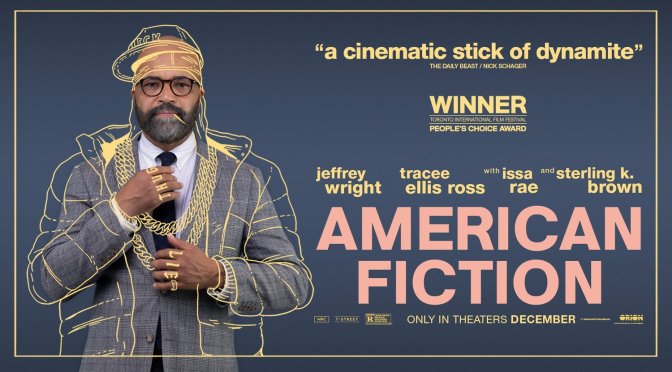
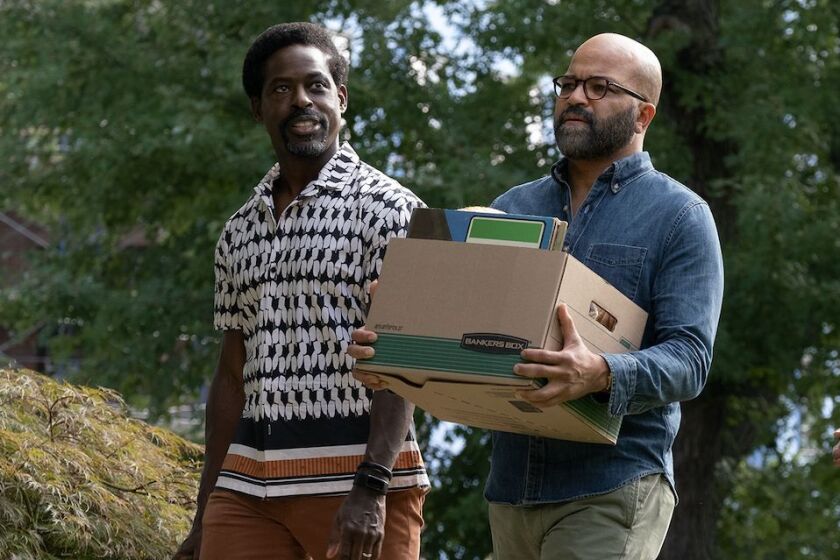
CINEMA REVIEW: AMERICAN FICTION (2023)

CINEMA REVIEW: AMERICAN FICTION (2023)

Directed by Cord Jefferson

Screenplay by Cord Jefferson

Based on Erasure by Percival Everett

Produced by Ben LeClair, Nikos Karamigios, Cord Jefferson, Jermaine Johnson, etc.

Main Cast: Jeffrey Wright, Tracee Ellis Ross, John Ortiz, Erika Alexander, Leslie Uggams, Adam Brody, Issa Rae, Sterling K. Brown, etc.

Cinematography by Cristina Dunlap

** MAY CONTAIN SPOILERS **


Cord Jefferson is a writer and director who, at first consideration, was unknown to me. However, a couple of clicks on the mouse and I soon realised he had worked on a couple of TV shows I’d really appreciated. One is the inventive and hilarious comedy The Good Place (2017-2019) and the other the riotous HBO graphic novel adaptation, Watchmen (2019). Jefferson was part of the writing team on both shows which delivered plots and events that consistently twisted and delivered fresh laughs and surreal situations which made you think.

Watchmen (2019) was especially an uber-stylish smorgasbord, splashed with crazy characters, witty hard-boiled dialogue, wild science fiction twists, lashings of violence, pockets of substance, cinematic visuals, high class production values and a cast to die for. For his debut feature, Jefferson has adapted the novel Erasure by Percival Everett into American Fiction (2023). It’s stylistically less chaotic feature film when compared to Watchmen (2019), however, it is intelligent and biting satire combining family drama, meta-literary analysis and social commentary.

The lead character, Thelonious “Monk” Ellison, is portrayed with imperious class by Jeffrey Wright. Now, I believe Cillian Murphy may get many awards (he already has the BAFTA for best actor in a leading role) for his work in Oppenheimer (2023), but Wright’s performance and character work here is beyond brilliant. It is such a nuanced and funny rendition that Wright deserves all the plaudits he could be denied. His Monk Ellison is an intellectual and academic writer whose books unfortunately do not sell very well. His agent, Arthur (John Ortiz) says publishers believe his work is “not black enough.” It’s a shocking statement delivered in understated fashion, to which Monk responds that he does not “recognise race.”


Monk is a writer who is trying to bring thoughtful, however niche, product into a culture which seems to prefer stereotyped visions of black characters, who are either addicts, or criminals or downtrodden, beaten by the police and prejudiced within society. No one is denying that people of colour are certainly prejudiced against and this needs to cease, but American Fiction (2023) seems to highlight that the books it is satirizing are cashing in and monetizing suffering and perpetuating discrimination, exacerbating the situation as opposed to resolving it.

Facing financial issues due to a lack of sales and his mother (Leslie Uggams) needing nursing care due to creeping dementia, Monk writes a parody of urban fiction called, ‘My Pafology’. Initially done as a joke he is horrified when his agent tells him it has become a literary sensation with publishers fighting for the write to release it. Here Wright’s reaction acting is a joy as Monk is caught between needing the money but at the same risking his artistic reputation from creating a “fake” book and authorial alter ego named, Stagg R. Leigh.

Jefferson and Wright combine to delicious effect in satirising intellectual and middle-class people’s reaction to what they consider to be authentic “street” culture. As Monk strives to escape the monster he has created he finds the hole getting bigger and bigger as his novel begins to get interest from Hollywood and esteemed literary awards. Yet, this is not a simple comedy as Jefferson also profiles Monk’s personal, family and romantic struggles making him a true three dimensional character to root and identify with. Wright, as I say is phenomenal but the supporting cast including Issa Rae and Sterling K. Brown stand out too. Brown almost steals a few scenes from Wright. American Fiction (2023) arguably ends with a series of meta-jokes too far, which draw away from Monk’s highly emotional journey, but overall, Jefferson demonstrates he is an original cinematic voice to watch out for in the future.

Mark: 8.5 out of 11


CINEMA REVIEW: THE ZONE OF INTEREST (2023)

CINEMA REVIEW: THE ZONE OF INTEREST (2023)

Directed by Jonathan Glazer

Written by Jonathan Glazer – based on The Zone of Interest by Martin Amis

Produced by James Wilson, Ewa Puszczyńska

Main cast: Christian Friedel, Sandra Hüller, Imogen Kogge, etc.

Cinematography by Łukasz Żal

Sound Designer: Johnnie Burns

Music by Mica Levi


Jonathan Glazer is not the most prolific of directors, so when he releases a film it provides powerful cinematic coffee to wake up the cultural senses. His last film, the mesmeric Under The Skin (2013), is one of the most original of the century for me and once again with, The Zone of Interest (2023), Glazer has determined to take a provocative approach to cinematic form, style and themes.

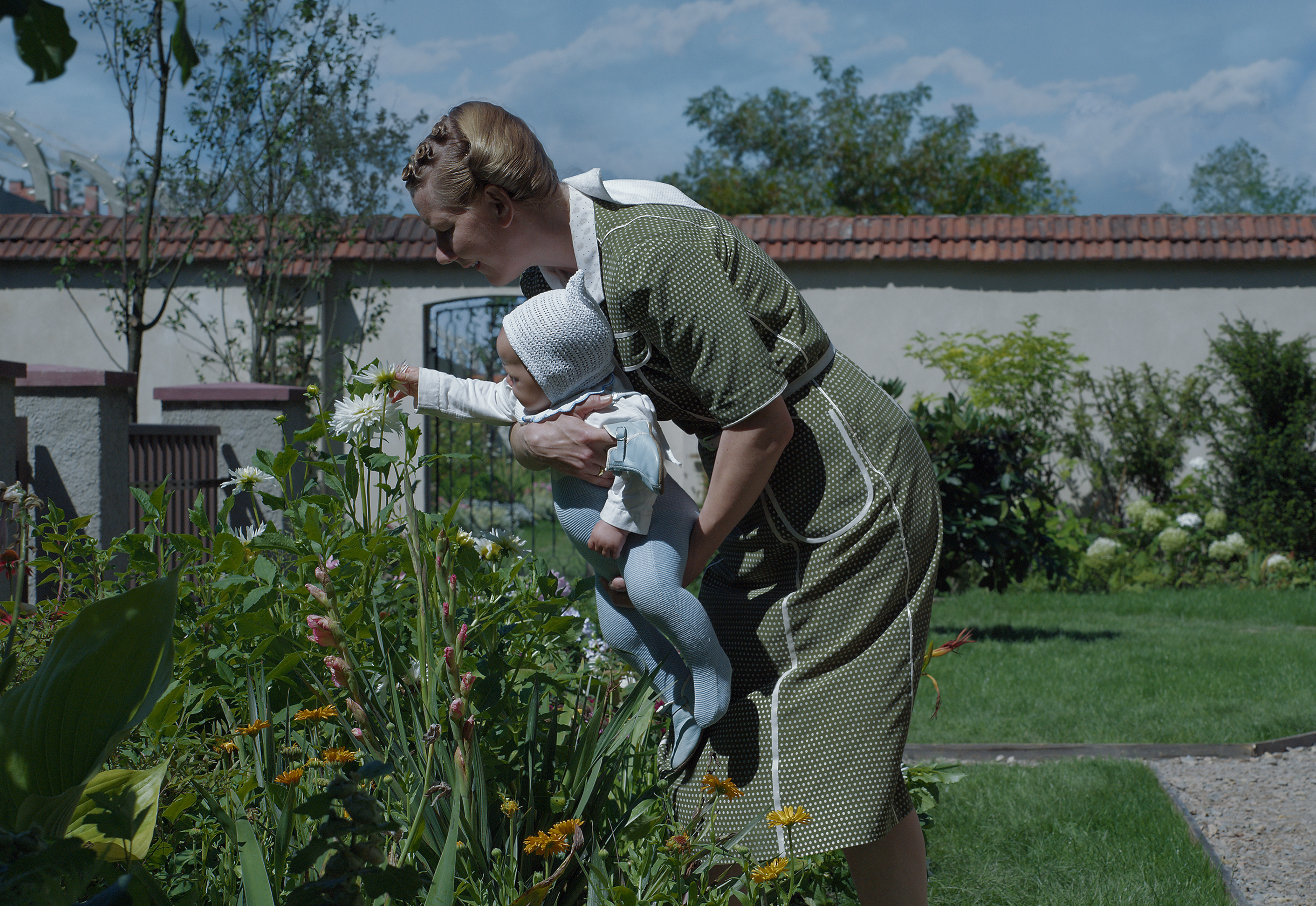
I usually advise near the top of my reviews that the piece may contain spoilers. However, there is so little plot in The Zone of Interest (2023), that is difficult to give anything away. The depth of the story comes from the intellectual approach to cinematic form and the wartime setting, with a narrative based on Martin Amis’ novel about the Holocaust and specifically, the concentration camp, Auschwitz. But Glazer only hints at such Nazi barbarism as the point of view of the film is presented solely from the commandant Rudolf Hoss’ (Christian Friedel) and his family’s perspective. Glazer and his outstanding production team deny us sight of the death and torture from within the Hoss house and garden.


Glazer and his sound designer, Johnnie Burns, employ powerful aural style to incredible effect as screams, tools smashing, gun shots and shouting pierce the screen throughout. Mica Levi’s minimalist score also punches through to startle too. Further, as the Hoss family, notably his spoilt children and privileged wife (Sandra Huller) go about their everyday business puffs of smoke billow over their garden as they remain unimpacted by what is occurring outside. Glazer also uses negative film processing, gliding tracking shots and metronomic editing from multi-camera set-ups to stylistic devices to break the fourth wall and to reinforce the everyday routine where all is not what it seems.

One may argue Glazer’s film is experimental and anti-narrative. I rarely cared about the Hoss family and not enough of the Auschwitz inmates is seen to raise one’s emotions. Thus, The Zone of Interest (2023) is a cold and intellectual film to absorb. Yet, I would argue that it is not experimental because Glazer is so in control of the filmmaking process. His creative choices and results are delivered in an extremely confident way. Certainly I felt that the film was more anti-drama than anti-narrative or experimental. For those looking for a more conventional addition to the war film genre could be disappointed.

Ultimately, The Zone of Interest (2023) is a horror film with the barbarism hidden. As the murder and genocide are occurring, the Hoss family unit remain unmoved by such atrocities. From a safe distance the audience watch them attend parties, tend their vegetables, feed their children, eat their dinner, play games and sunbathe. Is Glazer asking if we as humanity are complicit in our privileged comfortable homes while horrors go on around us in the world? Is this Nazi version of the Garden of Eden a metaphor for the world as a whole now? Does a lack of action or inaction to known crimes make one complicit? There are no easy answers, but it gets you thinking. Just like this highly intellectual and expertly constructed work of cinema.

Mark: 9 out of 11


CINEMA REVIEW: ALL OF US STRANGERS (2023)

CINEMA REVIEW: ALL OF US STRANGERS (2023)

Directed by Andrew Haigh

Written by Andrew Haigh

Based on Strangers by Taichi Yamada

Produced by: Graham Broadbent, Peter Czernin and Sarah Harvey

Main cast: Andrew Scott, Paul Mescal, Jamie Bell, Claire Foy etc.

Cinematography by Jamie D. Ramsay


Andrew Haigh is a director who has slowly built an impressive body of work over the last decade or so. I haven’t seen his first two low-budget features but have watched films 45 Years (2015), Lean on Pete (2017) and the recent brutal TV drama, The North Water (2021). Together they show Haigh to be a director capable of delivering drama of devastating power. His latest independent film, All of Us Strangers (2023) is arguably his best film to date deserving of all the awards coming its way.

Andrew Scott portrays Adam, a lonely screenwriter, who lives in a London newbuild block of flats where he seems to be the only occupant. Struggling with writer’s block he spends his days and nights remembering his parents, Mum (Claire Foy) and Dad (Jamie Bell.) Seeking inspiration for his work he revisits his childhood home in Sanderstead, Croydon during a fascinating trip down memory lane. Surprised one night by drunken neighbour, Harry (Paul Mescal), knocking at his door, Adam rebuffs Harry at first. However, the two latterly begin a love affair, with this relationship intertwined with Adam’s visits to his former home.


I won’t say anymore as I believe this is a film which benefits from knowing as little as possible, but it is safe to say that All of Us Strangers (2023) is one of the most emotionally cathartic films I have seen for some time. Even my frozen heart began to melt as I experienced Adam’s journey into the past and his attempts to find love and peace. Andrew Scott, under Haigh’s expert direction, gives an astonishing performance. Like his co-star Mescal was in Aftersun (2022), Scott just has that innate ability to convey sheer meaning from a look or the slightest of gestures. Obviously, the script and characterization provide an appreciable weight of feeling in Adam’s story, one that Haigh exerts real control over. Further, Mescal himself is excellent too, once again cementing his status as one of the best actors around.

On a low budget with just a handful of brilliant actors, Andrew Haigh demonstrates that less is indeed more. But while the locations and cast are minimal the emotional landscapes are painted on an expansive cinematic canvas. Grief, love, death, relationships and family are universal themes that are explored with fresh method by Haigh, as he delivers a film of mature power. With impactful performances, direction, cinematography, city locations and soundtrack, All of Us Strangers (2023) is a brilliant love story about loss. But, paradoxically, I didn’t feel empty or downbeat by the end, I actually felt full and lifted. 

Mark: 9.5 out of 11


CINEMA REVIEW: BARBIE (2023)

Directed by: Greta Gerwig

Written by: Greta Gerwig and Noah Baumbach

Based on Barbie by Mattel

Produced by: David Heyman, Margot Robbie, Tom Ackerley and Robbie Brenner

Cast: Margot Robbie, Ryan Gosling, America Ferrera, Kate McKinnon, Michael Cera, Simu Liu, Helen Mirren, Issa Rae, Rhea Perlman, Will Ferrell, etc.

Cinematography: Rodrigo Prieto

*** MAY CONTAIN SPOILERS ***


I saw Barbie (2023) a few weeks ago but work has been really busy so I am only just getting round to reviewing this cinematic adaptation of a lump of plastic that was moulded into a best selling toy. So, after the critical acclaim received for the excellent rites of passage film, Ladybird (2017), and recently starring in the existential comedic folly that is, White Noise (2022), Greta Gerwig takes the helm for this funny, intelligent, sarcastic and brightly coloured filmic vomit.

Gerwig shares writing duties with Noah Baumbach. These two major talents seem an unlikely duo to adapt a story of about an arguably sexist and outdated doll, that profiled unrealistic body images to the millions of people who owned it. I mean, I have never had a Barbie doll and didn’t really like dolls at all as a kid. I might have had an Action Man, but must admit I did enjoy owning my Star Wars figures. They somehow had more character and worth, despite also being made of synthetic polymer. My point is that Barbie (2023), aside from making money, I do not see any reason for a Barbie film to exist. However, it is to Gerwig and Baumbach’s credit they have crafted a wonderful and funny screenplay to ultimately sell more plastic dolls.


The story finds Margot Robbie’s ridiculously attractive blonde living in a utopian land entirely run by different versions of empowered Barbies. Many of which are played by an energetic who’s-who of an ensemble. Suddenly Barbie is struck by existential dread and a fear of death. Determined to discover why Barbie’s perfect life sucks, she goes on a journey to find the reasons why an anthropomorphic lump of processed oil isn’t going to live forever. Joining her on the trip to the real world is the dopey Ken (Ryan Gosling), who love-stalks Barbie like a pining puppy. Cue Barbie and Ken’s “fish-out-of-water” quest to find whatever in the real world. Yet, after a terrifically imaginative opening series of scenes and sequences, this is where the film starts to unravel.

The opening 2001: A Space Odyssey (1968) homage is easily the best thing about Barbie (2023) for me, along with some cracking one-liner gags throughout. Ryan Gosling also steals the show as the dim-witted Ken, whose character arc is ironically way stronger than Barbie’s. Robbie is sparkling as usual but I found the frenzied colours and manic ensemble a little overwhelming for my taste. The film is also way too long with too many unsatisfactory sub-plots, such as America Ferrara’s underwritten real-women-in-crisis narrative. Overall though, Gerwig and Baumbach have great fun satirising the patriarchy and corporate capitalism while at the same time upholding patriarchal values and making $hitload$ of cash in the process.

Mark: 7 out of 11


CINEMA REVIEW: BONES AND ALL (2022)

CINEMA REVIEW: BONES AND ALL (2022)

Directed by Luca Guadagnino

Screenplay by David Kajganich

Based on Bones & All by Camille DeAngelis

Produced by: Luca Guadagnino, Theresa Park, Marco Morabito, David Kajganich, Francesco Melzi d’Eril, Lorenzo Mieli, Gabriele Moratti, Peter Spears, Timothée Chalamet

Cast: Taylor Russell, Timothée Chalamet, Michael Stuhlbarg, André Holland, Chloë Sevigny, David Gordon Green, Jessica Harper, Jake Horowitz, Mark Rylance, etc.

Cinematography: Arseni Khachaturan

*** CONTAINS STORY SPOILERS ***


After reviewing The Menu (2022) last time out, here’s another film where food and eating and death are at the very marrow of the narrative. I must confess though it’s very difficult to discuss the excellent hybrid genre film, Bones and All (2022) without giving away the main ingredient within this film. So, I give prior warning that I’m going to have to reveal it in the review. I will state therefore if this film had been called, Fine Young Cannibals, I would not have been surprised in the least. Because the theme of people eating human meat is at the heart of the story.

Bones and All (2022) is not a B-movie zombie film with bloody images of flesh-eating monsters devouring people. Yes, there are some gory scenes to satisfy horror fans, however, this arthouse adaptation of Camille DeAngelis’ 2016 novel, is more subtle and sympathetic to the young protagonists with a yearning for mortal flesh. Here murder and cannibalism occur, but it is represented as a curse for both Maren (Taylor Russell) and Lee (Timothee Chalamet), who struggle with their consumptive urges. Moreover, the feeding on flesh is highly symbolic, representing a sensual and almost religious experience for the couple. As they travel across various States, they grow as characters and people. They also explore their own love and share other people’s bodies, romance bleeding through in the process.


Bones and All (2022) is set in the 1980s. It begins with teenager Maren living with her father (Andre Holland) in Virginia. After hitting eighteen years of age, and causing a particularly nasty event at a friend’s sleepover, she is abandoned by him. Left with a cassette tape explaining her family history, Maren sets out to find her mother, meeting Lee along the way. The two are immediately drawn to each other and while driving set about sating their desire for fresh meat. This causes conflict between the couple as it is clear they are not comfortable with the nasty business of killing. Unlike the pursuing serial-killer-trophy-collecting antagonist, Sully (Mark Rylance). He is a venal force of nature, taking animalistic glee during the sacrifice of his victims.

Bones and All (2022) is directed with glacial majesty by Luca Guadagnino. He expertly blends and cooks the genres of horror, period drama, rites-of-passage, romance and road movie with a well balanced approach to tone. Extracting attractive performances from Chalamet and Russell, their onscreen chemistry is potent and touching. Acting legend Mark Rylance steals the show though as the slithery Sully. Overall, I felt the film could have been cut for pace slightly and the Romeo and Juliet-with-a-twist ending was too tragic for me. I think, despite their cannibalistic needs, Maren and Lee deserved a future together. But ultimately it’s all a matter of taste.

Mark: 8 out of 11