SCREENWASH CINEMA ROUND-UP – AUGUST 2017 – REVIEWS
A Ghost Story (2017) – review here – was the most impactful and original film I saw in August from a cinematic perspective, however, the other films I saw were very well rendered too. All three were “based on a true story” and had many elements that made them highly watchable. So, here’s my cinema round-up of reviews for August.
**CONTAINS MILD SPOILERS**
AMERICAN MADE (2017) – DIRECTOR: DOUG LIMAN
Tom Cruise leaves the formulaic action blockbusters aside for a while to portray a well-defined anti-hero called Barry Seal. Seal, according to this insane narrative, was a former TWA pilot who, bored with his steady job, grabs the opportunity to fly reconnaissance operations over South America for the C.I.A. That’s when the irreverent fun really gets into gear and before you can say “triple-agent-drug-running-for-the-Colombian-Cartel” you have a very watchable fast-paced, political and at times, farcical thriller.
Doug Liman is an excellent genre director and here pitches the film somewhere between a Martin Scorsese gangster biopic and screwball comedy. I would have preferred a bit more dramatic meat to be honest as seen in the Bryan Cranston Cartel-cop-thriller The Infiltrator (2016), or the subtle terror of Sicario (2015). However, Tom Cruise once again proves he can act and this entertaining movie does make some relevant political barbs against the allegedly corrupt Reagan and Bush administrations during their futile wars against drugs and communism.
(Mark: 8 out of 11)
THE BIG SICK (2017) – DIRECTOR: MICHAEL SHOWALTER
Uber-driving-stand-up-comedian Kumail Nanjiani portrays himself in movie form for the duration of this likable character and culture driven romantic comedy. Eager to forge his own path where love is concern Kumail battles the constant “threat” of his overbearing mother’s attempts to pair him up with an acceptable Pakistani bride. Having met Zoe Kazan’s sparkling Emily he falls for her despite their initial reticence in committing fully to each other.
Of course the path of love is never straight, in fact it’s downright wonky as Emily succumbs to a rare illness and is hospitalized. Kumail, estranged from his own and rejected by Emily’s family, finds his world falling apart as his work and comedy suffers. Overall, this is a very enjoyable and gentle comedy and Kumail and Emily are characters you really root for. The supporting cast including the brilliant Ray Romano, Adeel Akhtar, Bo Burnham and Holly Hunter are very funny indeed. I enjoyed the sub-plots involving the Chicago comedy scene and my only criticism would be that like other Judd Apatow-produced films it was probably ten minutes too long. Having said that it’s a finely observed, well-acted and richly funny character film.
(Mark: 8 out of 11)
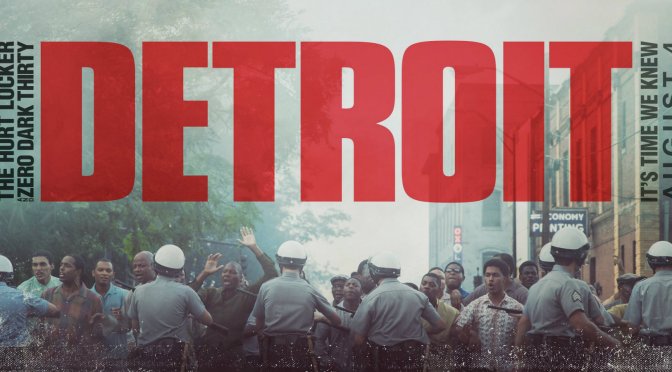
DETROIT (2017) – DIRECTOR: KATHRYN BIGELOW
This is a very complex film and probably requires a second view to really get to the heart of the whole situation. Set in 1967, amidst the desperate and violent racial tensions of the age (has there actually been anything else in the United States?) Detroit focuses on a single night and horrific incident involving monstrous cops and their behaviour toward the guests in the Algiers Hotel. Kathryn Bigelow again proves herself an expert director of spine-tingling tension and heart-racing drama as a violent assault is carried out on mostly innocent characters.
Detroit is microcosmic of the issues of race throughout American history and is an impossible pill to swallow as represented by these events. It’s not meant to be easy but a layered, narrative which reflects the different perspectives of those involved without actually getting to the actual truth. John Boyega, Will Poulter and Algee Smith’s performances are the stand-out as a nightmarish event in American history unfolds in almost real time. The only light comes by way of the Motown and Gospel music featured which shines brief hope and light on otherwise grim proceedings. The final act and court case compound the injustice of the crimes committed and only in song and prayer can Smith’s character escape the horrific tragedy of these grim events.
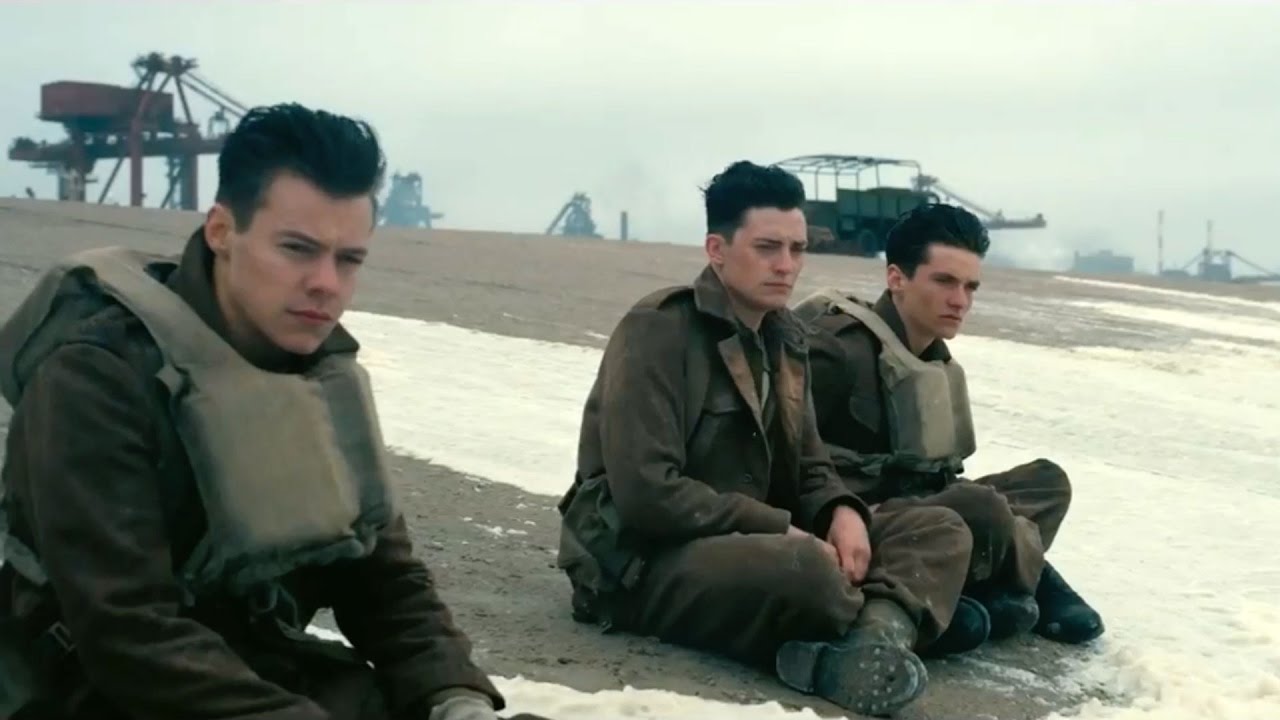
Firstly, the evacuation of Dunkirk, France, during World War II was simply put one of the most incredible acts of survival and escape achieved. From the historical articles and documentaries I have read and seen the Allies were on the ropes and pinned back by the German army causing 400,000 beaten, starving and bedraggled human beings to be trapped on the beach waiting desperately for rescue. It’s no spoiler to state that many brave people enabled that rescue creating that well-known phrase “Dunkirk spirit” to enter our vocabulary.
Put yourself in that position for even just a minute and the fear drains one cold and feeling so lucky that I will never have to feel that threatened. These are people, young soldiers fighting against a fascistic foe who are backed into a corner and whose lives are about to be extinguished. So, think about that when you wake up in the morning because Christopher Nolan’s epic film, as do many other films, books and television shows about the war, give your life meaning about how lucky we are to not have to live through that. Count your blessings you’re not in a war and the life we live has relative freedom.
These and many more emotions flashed through my being while experiencing the incredible epic that master director Nolan and team have delivered via Dunkirk. Throwing us immediately into the action we are shown the hell of war from three perspectives: land, sea and air. Nolan works from a simpler focus and premise compared to his other works and this makes it all the more powerful an experience. Where films such as Inception (2010), Interstellar (2014) and Memento (2000) had complex, shifting narratives relying on heavy exposition, grand concepts and plot twists, Dunkirk deals with one simple sterling idea: survival!
I found the whole experience immersive and pulsating from a cinematic perspective. Christopher Nolan, and his production team, have in the: editing, cinematography, composition, colour, acting, framing, sound, score and movement created pure and poetic cinema. From the safety of my comfy seat I felt real danger, peril and claustrophobia. The narratives’ drive comes from fragmented moments of fear and blasts of explosive danger. The impressionistic style was full of scenes containing quiet doom as well as noisy, confusing and fiery terror. Even the smallest situation such as the locking of a cabin door takes on great significance, sending a chill down the spine. As the enemy closes in from above and below and water fills the screen and lungs of our heroes, then death moves in for the kill.
Nolan eschews the solid build-up of traditional characterisation to create emotion through the visual form with a chopping style which serves to heighten the panic. There are so many haunting images as men and boys are stuck behind doors and ships and in boats and underwater and in the air and on moles and piers, compressed, suffocating and unable to breath as bullets, torpedoes and bombs pepper their souls. The coruscating soundscape, montage and hypnotic score from Hans Zimmer only add to the dread within the non-stop action. The dialogue is spare and at times muffled as character development is also sacrificed due to the compressed timeline. Yet, for me, empathy was garnered through verisimilitude, form and style rather than a conventional storytelling and a simplistic three-act transformational arc.
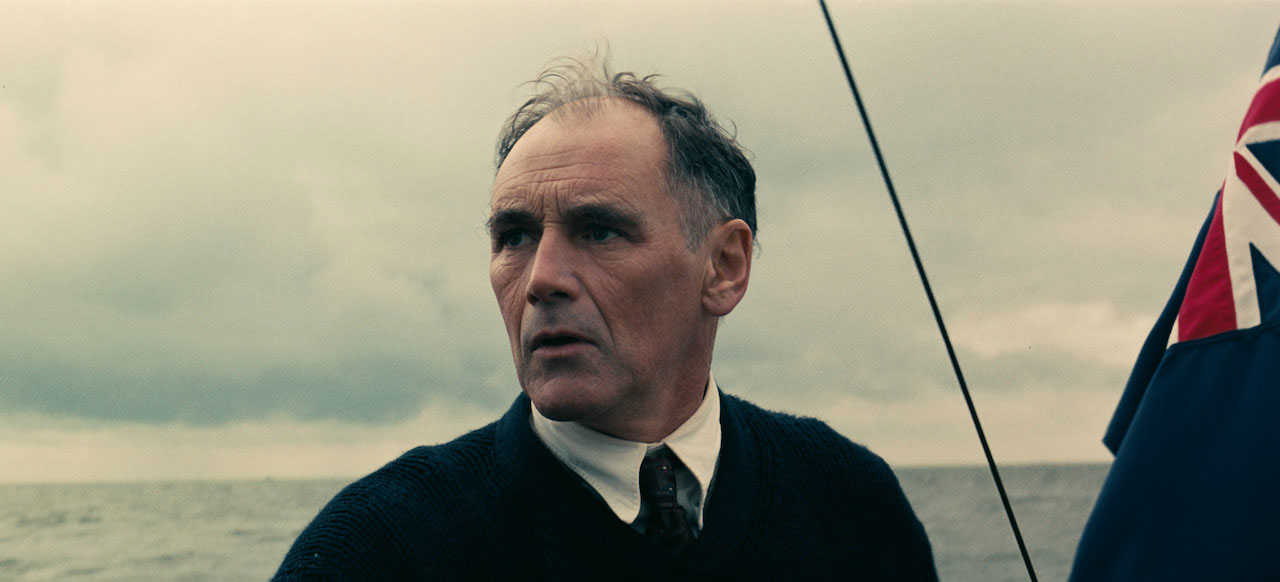
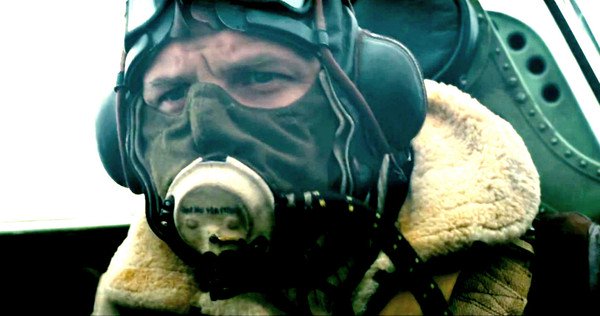
The characters are archetypes but serve the story very well. Kenneth Branagh’s noble sea Commander brings gravitas while Mark Rylance brings a naturalistic humility to the stalwart and duty bound Mr Dawson. Aneurin Barnard’s silent soldier allows his haunting eyes to dominate, while the pathos emitting from Barry Keoghan’s young George is incredibly powerful. Fionn Whitehead and Harry Styles, while inexperienced actors, represent the palpable fear any young man would exhibit when faced with certain death. Tom Hardy adds star quality in his role of RAF pilot, Farrier, and the image at the end of his plane burning in the sunset is indelibly etched in my mind.
But, overall the film belongs to the masterful direction of Christopher Nolan who, in delivering 106 minutes of pure dramatic exhilaration demonstrates he is more than just a genre filmmaker but a cinematic artist echoing the works of Sergei Eisenstein, Martin Scorsese and Stanley Kubrick within this war and disaster film masterpiece. Dunkirk was a savage defeat for the Allies but it rallied the nation against the enemy and Nolan has produced a film that stands as a worthy tribute to those who lost their lives and those brave people who survived.
It’s been a busy July for decent cinema releases and my Odeon Limitless card has been earning its dough somewhat! So I decided to compress the reviews into one manageable article and here they are in order of film preference with the usual marks out of 11!
**CONTAINS MINIMAL SPOILERS**
WAR FOR THE PLANET OF THE APES (2017)
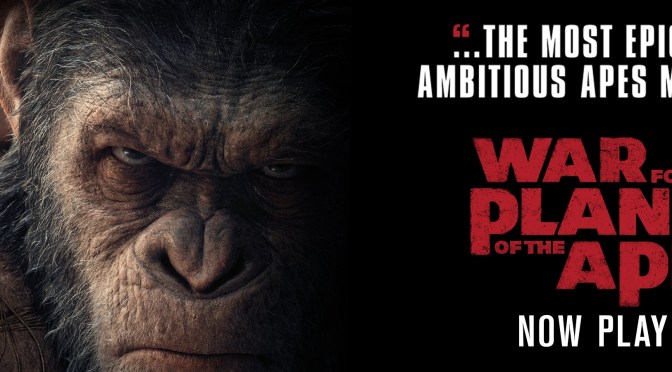
The final part in the prequel trilogy to the movie classic Planet of the Apes (1968) is an apocalyptic epic which had me gripped from start to finish. The story continues a few years after Koba’s rebellion caused further catastrophic events between humans and apes. We find Caesar and his guerrilla army attempting to protect their families from Woody Harrelson’s obsessive Kurtz-like figure The Colonel. When The Colonel causes irreparable damage to Caesar’s clan he sets out on an epic journey to free the apes from their fascistic human captors.
Aside from some convenient plotting for pace, director Matt Reeves and co-writer Mark Bomback have constructed a superb and compelling story which echoes the epic glory of cinema classics such as: The Searchers (1956), Dr Zhivago (1965), The Great Escape (1963), Spartacus (1960), Apocalypse Now (1979); and even the Biblical story of Moses. Andy Serkis is incredible once again as the noble Caesar and his determined, proud and intelligent character is someone we really root for. Special mention to Steve Zahn too who plays the likeable fool, Bad Ape, adding welcome comic relief to the heavy drama and pulsating action.
The cinematography from Michael Seresin’s lense is exquisite as snowy, beach and woodland landscapes provide a beautiful counterpoint to the chaos of war. Moreover, the action set-pieces are breath-taking with expertly staged composition and crisp editing while the motion-capture effects brilliantly support the story. In between the emotional moments hit home too as Matt Reeves and his team have fashioned a big film with an even bigger heart. Overall, this is one of the best cinematic experiences I have had all year as story, style, technology and emotion all work together to bring a fitting end to one of the best film trilogies committed to celluloid.
(Mark: 9.5 out of 11)
SPIDERMAN: HOMECOMING (2017)
Oh no!! Not another Spiderman film!! But don’t panic as this one is presented from within the Marvel Universe! Following quickly after the events of Captain America: Civil War (2016), Tom Holland’s eager arachnid-kid literally bounces off the walls waiting for an assignment from his mentor Tony Stark (Downey Jnr in a cameo-plus-style appearance). However, he’s palmed off with overgrown babysitter Happy (Jon Favreau) and here’s when Peter Parker gets in a pickle by ignoring the adults and going out to play on his own.
With some tremendous set-pieces on the Staten Island Ferry and at the Washington Monument the action really fizzes along and raises the pulse throughout. Having said that the final explosive action set at night was poorly lit in my view rendering the action almost incomprehensible. In between, the high school scenes are very funny, notably Jacob Balaton’s Spidey sidekick, and Peter’s impatient and chaotic teen characterisation was very well drawn. Yet, it is Michael Keaton as the scavenging Vulture who absolutely steals the show. His performance as gritty, working-class and angry antagonist, Adrian Toomes adds shades of dramatic grey to an otherwise shiny and colourful narrative.
While not quite shaking the feeling of creative ennui and Spidey overkill, Homecoming still manages to hit many of the heights reached by Marvel’s sparkling stable of comic-book stars. Newish filmmaker Jon Watt, who directed the brilliant, low-budget film Cop Car (2015), handles it all with some verve and humour while delivering a humdinger of an end of second act dramatic twist. Having seen him recently in Wolf Hall (2015) and The Lost City of Z (2016), Tom Holland confirms himself a bona fide star, and is fantastic as everyone’s favourite neighbourhood spider.
(Mark: 8 out of 11)
IT COMES AT NIGHT (2017)
This haunting post-viral apocalyptic nightmare of a film drips with dread, suspense and bloody heartache throughout. It concerns Joel Edgerton’s everyman who, along with his wife and son, are attempting to survive in their battered and isolated woodland home. Paranoia is a key fuel for the characters’ lives as they follow strict rules of wearing gloves, washing hands, burning bodies and not leaving the house at night. When their space is invaded by Will (Christopher Abbott), his wife and child, the families all form an uneasy pact; yet it is not too long before peace gives way to disharmony and recrimination.
Trey Edward Schults directs the hell out of this low-budget gem with the skill of a way more experienced filmmaker. He creates an eerie, dark and hallucinatory vision which, while lacking in expositional clarity, more than makes up for in atmospheric visuals and human drama. The film glides along at a creepy pace and builds to what feels should be a cathartic and dramatic peak. However, the ending left me slightly disappointed as it was too poetic. I was okay with the mysterious narrative elements such as not knowing the cause of the virus, but I felt that a more traditional horror conclusion would have made it a much better film. Still, Schults is a director to watch out for but being a horror whore myself I wanted a bit more blood and guts at journey’s end.
(Mark: 7.5 out of 11)
THE BEGUILED (2017)
Colin Farrell portrays a Union Army deserter who hides out in an all-women boarding school featuring an excellent cast including: Nicole Kidman, Elle Fanning, Kirsten Dunst, Oona Laurence, and Angourie Rice. It’s based on a novel by Thomas Cullinan and previously adapted into a 1971 film starring Clint Eastwood. Sofia Coppola’s subtle direction is impressive and this gothic drama has amazing cinematography, costume design and decent performances. However, I felt, by the end, the film was completely lacking in drama, eroticism and suspense.
The build-up over the first hour was fantastic but alas there were no major pay-offs to events relating to repressed sexuality and male-female divide. Moreover, thematically I found Coppola had nothing to say on the Civil War, sexual temptation or the damaging impact of patriarchy in a matriarchal world. She also fails to develop Farrell’s character as Faustian sexual threat and aside from some incredibly beautiful lighting and composition from Phillipe Le Sourd the story just peters out unsatisfactorily in my view.
Here’s a re-blog of an article I wrote for the excellent http://www.sothetheorygoes.com website. It’s arguably a better researched article than I usually turn out and the original can be found here.
OVERCOMING THE MONSTER
As an avid cinemagoer and fan I watch a hell of a lot of movies. I am aware that Hollywood film releases rarely contain original screenplays due to the massive flux of literary, journalistic, radio, televisual and comic-book adaptations. Moreover, there are reboots, remakes and re-imaginings of older and, in the case of the recent Spiderman releases, not-so-older films too. I have even noticed another trend where on top of the usual remakes there are a number of films which are unofficial remakes of other films. Does this mean originality is finally dead in Hollywood and is now cannibalizing itself to produce product. Or, has it always been that way?
I want to explore the nature of storytelling, mythmaking and modes of classic Hollywood film production to consider whether there is a trend toward unofficial remakes in the current filmmaking era. I will examine cultural theory and film history to decide whether filmmakers are knowingly copying other works but hiding their intentions; or subconsciously replicating past cinema works while emulating both the historical traditions of storytelling and the classical Hollywood mode of film production. I will look at some recent film releases to further reflect on such theories.
THE QUEST
The blockbuster or big budget spectacular has been a major business tool of Hollywood production since movies. In his book Blockbuster, Tom Shone points to the 1970s as the beginning of the blockbuster summer movie era with films such as Jaws (1975) and Star Wars (1977), making huge money and beginning a business convention which continues today. However, there has always been huge behemoth product coming out of Hollywood with the likes of D.W Griffiths’ Birth of a Nation (1915), Gone With The Wind (1939), Cleopatra (1963) being examples of big-budget spectacular produced down the years. As such the blockbuster is as much a genre in its own right as opined by Shone and also Peter Biskind in his book: Easy Riders, Raging Bulls: How the Sex-Drugs-And Rock ‘N Roll Generation Saved Hollywood.
The summer blockbuster film release is clearly a huge money-making enterprise on behalf of Hollywood studios. Indeed, according to a recent Indiewire article films such as The Force Awakens (2015), Avatar (2009), Avengers: Assemble (2012) have together made over $2.5 billion dollars in at the box office. With the Marvel and Star Wars universe or franchises ever increasing their reach across galaxies far, far away it is important to note that the new Hollywood is still following the classical Hollywood system in regard to mode of production.
In their book The Classical Hollywood Cinema: Film Style and Mode of Production to 1960, Staiger, Thompson and Bordwell, a Hollywood film derives its’ competitiveness from a standardized norm and differentiated delivery. Film genres take place between the dialectic of standardization and differentiation which allows films to be produced along a conveyor built quickly and more profitably while some innovation generates differentiated elements to enable successful marketing of the product. For example, Ford produced and continued to produce a lot of the same model motor vehicles but change the colours and extras to differentiate the product. Likewise, Hollywood produces a hell of a lot of action, superhero and blockbuster films but in using different actors, directors, composers and source materials they are able to blind the audience to the storytelling structures and plots being used.
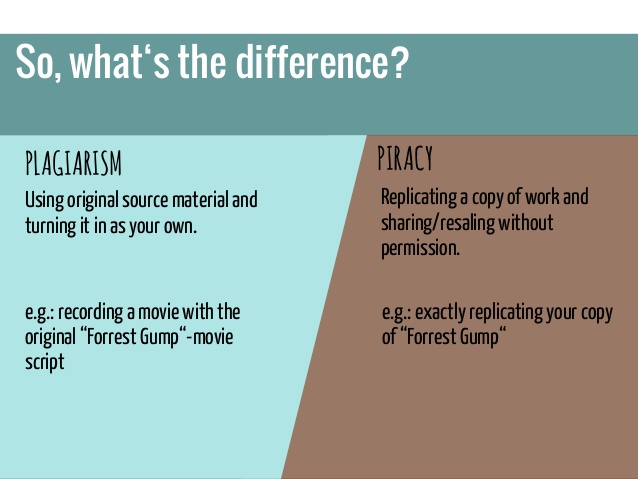
But is this a mode of production considered lazy, unoriginal, uninspired or even plagiaristic? Possibly, yet it seems to make sense that Hollywood studios, while risking a hell of a lot of money on their blockbusters, standardize their product and use what has worked before to protect their investment. While some of us would like to see David Lynch given $200 million to direct a Marvel Universe movie, his idiosyncratic vision of the world would be such a leap of differentiation it would possibly – like his adaptation of Dune (1984) – create a potential box office bomb. Even a brilliant director like Edgar Wright was considered not “house style” enough for the Marvel film Ant Man (2015) and left the production due to the oft-quoted “creative differences”.
Is it fair to accuse Hollywood studios of unoriginality or even plagiarism? Are writer and filmmakers merely following the rules of the world? I mean according to Christopher Booker’s text The Seven Basic Plots: Why We Tell Stories, there are in essence only a limited number of narratives including the: ‘Overcoming the Monster’, ‘Rags to Riches’, ‘The Quest’, ‘Comedy, ‘Rebirth’, ‘Tragedy’ and ‘Voyage and Return’. Booker echoes too the studies of mythologist Joseph Campbell who argues that the ‘Hero’s Journey’ or monomyth is the common template of most stories. Christopher Vogler followed on from Campbell’s extensive work in his book, The Writer’s Journey: Mythic Structure for Writer arguing that most popular stories can be narrowed down to a series of basic structures and archetypes.
Thus, we could argue that originality is in fact impossible and Hollywood blockbusters, as well as following the classical Hollywood model of standardization and differentiation; are simply passing on the traditional and mythical structures which hark back to the cave drawings of our ancestors, Greek myths and those wonderful stories in the Bible. Let’s have a look at some examples of recent blockbuster films which echo the theories of mythic storytelling, concentrating specifically on those that could be considered unofficial remakes of previous films.
VOYAGE AND RETURN
The biggest box office hit of recent years is the JJ Abrams directed The Force Awakens (2015). After Disney paid an absolute fortune to Lucasfilms for the rights to own the Star Wars franchise it’s safe to say that there was no way the studio would be taking any risks on their product. Thus, in my opinion, JJ Abrams and his writing team took a safety first approach to the storyline by unofficially remaking the original Star Wars: A New Hope (1977). They standardized their product by using most of the same characters, settings, design, costumes, music and themes. Moreover, on the whole it follows the same “Hero’s Journey” and “Overcoming the Monster” models within its structure as at its core a plucky young “orphan” must rise up and defeat the dark side of the Empire. Conversely, the original Star Wars could be argued to have heavily borrowed its structure and archetypes from Akiro Kurosawa’s Hidden Fortress (1958). However, George Lucas’ epic space opera was so original in presentation and design one cannot reconcile notions of plagiarism.
A Force Awakens was only marginally differentiated with more diverse casting as the female leading character Rey (Daisy Ridley) took the Luke Skywalker role. The only main difference is her character was arguably more passive in the narrative compared with the dynamic enthusiasm of Mark Hamill’s Luke Skywalker. In remaking A New Hope, complete with a total-replica-ending culminating in the rebels destroying the Death Star, the filmmakers tick all the fan boxes yet with just enough difference in the details so as not to be accused of self-plagiarism. For me, however, A Force Awakens is not as credible a story as Rogue One (2016), which, while invoking World War II “suicide-mission” genre structures such as: The Dirty Dozen (1967) and Guns of Navarone (1966), had more original characters and differentiation and thus felt a fresher product.
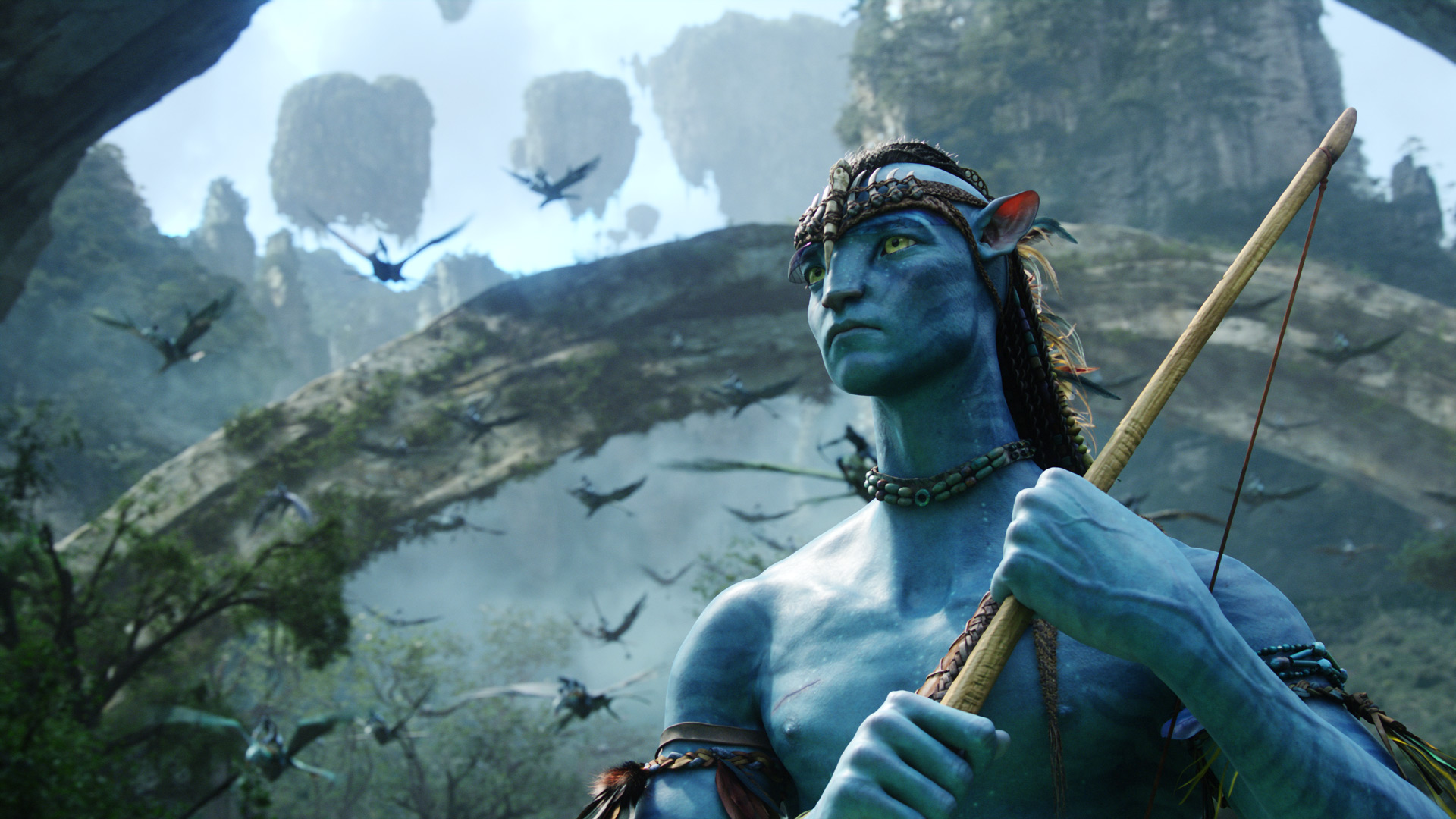
Unofficial remakes or the echoing of known texts are rife in the blockbuster era. James Cameron’s environmentalist Sci-Fi fantasy Avatar (2009) has exactly the same “Voyage and Return” structure as Kevin Costner’s revisionist Western Dances with Wolves (1990). In both films our hero, a soldier, finds himself at first a prisoner and then falling in love with an indigenous tribe’s more natural lifestyle; ultimately defying the patriarchal and oppressive capitalist society from where he came. Both culminate in a thrilling battle at the end where our gone-native hero overcomes the monstrous enemy. Avatar, of course, differentiates markedly in presentation to Costner’s epic due to the incredible special effects on show but the structure and storylines are exactly the same.
Screenwriters have not just plundered cinema’s back catalogue for narratives. The original storyline of Marvel comic books The Hulk is an unofficial adaptation of Robert Louis Stevenson’s Dr Jekyll and Mr Hyde; with a scientist splitting his personality between man and monster following an experiment gone wrong. Marvel indeed are experts at absorbing literary texts into their works as Age of Ultron (2015) echoes the story of Frankenstein as Stark’s experiment wreaks monstrous havoc on the Avengers. Moreover one of the best Marvel films Captain America: Winter Soldier (2014) uses the plot of spy thriller Three Days of the Condor (1975) as a springboard.
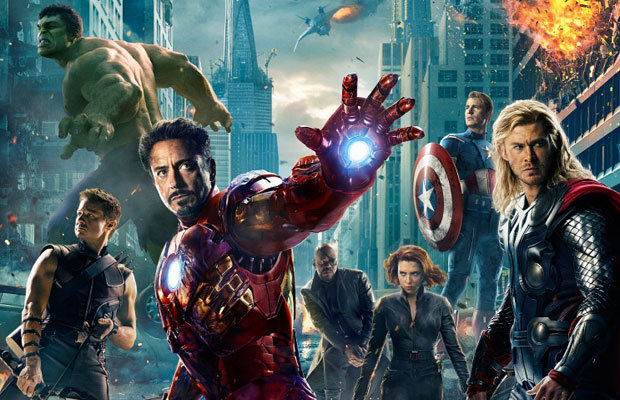
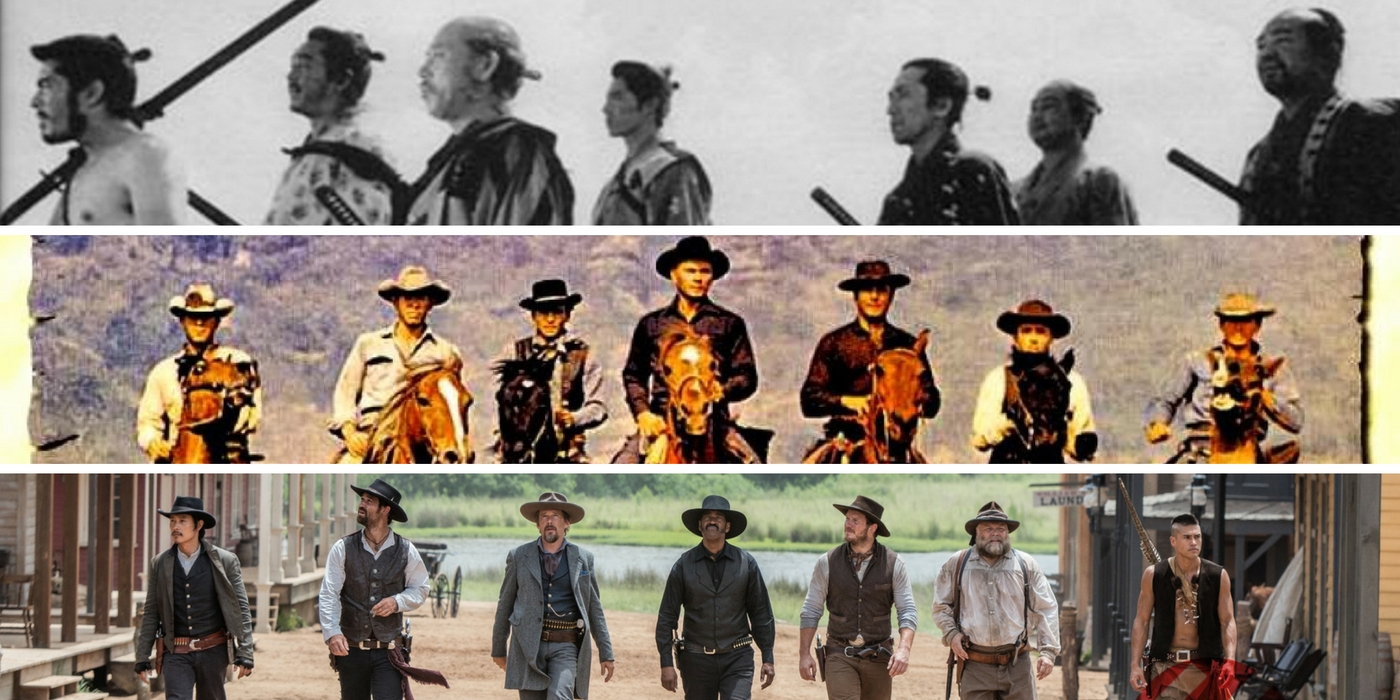
Of course, these are very loose interpretations, however, with Avengers: Assemble (2012) the filmmakers have, in my mind, essentially remade Kurosawa’s Seven Samourai (1954). Of course Seven Samourai has been remade many times as The Magnificent Seven in both 1960 and 2016, respectively. Indeed, in Avengers Assemble the plot of the villagers-in-peril being protected against a vicious foe by a rag-tag bag of gunslingers is mirrored by the Earth being guarded by the Avengers against Loki and the Chitauri. Even the beats of the story are similar with Nick Fury (Samuel L. Jackson) building his team in the way Chris (Yul Brynner) did in the Western version and Kambei (Takashi Shimura) did in the original. Overall, The Avengers is a terrific film, with a very solid narrative founded on the powerful structure of works released before it.
REBIRTH
In summary, the unofficial remake is probably not a recent trend as I am sure further investigation will reveal more examples of this occurrence in Hollywood film production. The question remains though: is there evidence of plagiarism within the modern Hollywood blockbuster and cinema examples used? I would say there probably isn’t. Filmmakers today are generally following the age-old tradition of passing on stories and myths, combined with the conscious structural safety of following genre conventions and the standardization and differentiation models Classical Hollywood cinema established decades ago. Either that or they are following Quentin Tarantino’s lead when he says,
“I steal from every single movie ever made. If people don’t like that, then tough tills, don’t go and see it, all right? I steal from everything. Great artists steal, they don’t do homages.”
CAST: Ansel Elgort, Jamie Foxx, Eiza Gonzales, John Hamm, Lily James, Kevin Spacey, John Bernthal.
**CONTAINS MINIMAL SPOILERS**
If there is a better and more precisely directed genre film in the last few years than Baby Driver (2017) then I have not seen it. Edgar Wright should take several bows for turning a familiar B-movie-heist-plot with nods to The Getaway (1972), Drive (2011), The Driver (1978), True Romance (1994) and many, many more into an exhilarating, high-octane, funny and dizzying heist thriller.
The story concerns Baby (Ansel Elgort) who is in deep trouble with crime boss Doc (Kevin Spacey) and being the superlative driver that he is works off his debt by assisting with meticulously planned bank jobs. Baby is out of place amidst the rogue gallery of career criminals which feature great character actors such as: John Hamm, Jamie Foxx, Eiza Gonzales and the bruising masculinity of John Bernthal. Baby is a laconic and sensitive soul who lives in his own world, cares for his elderly foster father, has a dry sense of humour; and just loves listening to music!
Not only is Baby Driver a passionate paean to the heist movie but it also serves as a personal playlist for all of Edgar Wright’s musical delights. We get some incredible rock tracks supporting the action notably those by: The Damned, John Spencer Blues Explosion, T-Rex, Queen and many more. In fact, way back in 2003, Wright produced a prototype of Baby Driver for a promo video for the band Mint Royale featuring the comedians and actors: Michael Smiley, Julian Barratt, Nick Frost and Noel Fielding. You can watch it here:
Ansel Elgort was brilliant in the lead and his performance was so fresh and naïve and likeable that you could not help but root for his character despite Baby’s criminal activity. His driving is awesome though and the stunts and manoeuvres that Wright has designed had my heart in my mouth throughout. At times the camera moves and quick cutting become so breath-taking the dips in action are a welcome relief. Conversely, the character work from Lily James as Baby’s romantic interest Debora is very cute; while Hamm, and Foxx especially, bring an impressive unhinged alpha-male brutality to proceedings.
In the non-robbery-less-musical-quieter family, heist-planning and romantic moments Edgar Wright’s script is so full of punchlines, witty retorts and character detail that you cannot fail to enjoy them too. As such I had a lot of fun with this film and Wright proves once again that while thinking and planning every shot and cut and move and punchline he is able to energise the most simplest of B-movie crime narratives. One could argue that the characterisations of supporting characters, such as Gonzales and Spacey could have been filled in a tad but the fuel-injected pace covers such cracks brilliantly.
My only real criticism is minor. It is that there’s mild repetition in the car action and there’s an antagonist switch and slight plot-hole during the finale which jarred momentarily. However, Edgar Wright certainly deserves a very big gig soon because he directs the hell out of the movie. His arsenal of: long takes, quick cuts, swooping camera moves, canted frames, Steadicam, camera holds, frame switches, pans, scans, tilts, low-angles, metronomic editing, point-of-view and god’s eye view shots are all a joy to behold.
Overall, it’s a story we’ve seen done many times before but as with Spaced (1999), Shaun of the Dead (2004), Hot Fuzz (2007) and World’s End (2013), Wright brings such a balletic rhythm, musical verve and kinetic drive to the movie it becomes simply irrepressible. I hope he gets a James Bond film or something similar to showcase his enormous filmmaking skills because while I really enjoyed Ant-Man (2015) you have to wonder how good his version of that material would have been.
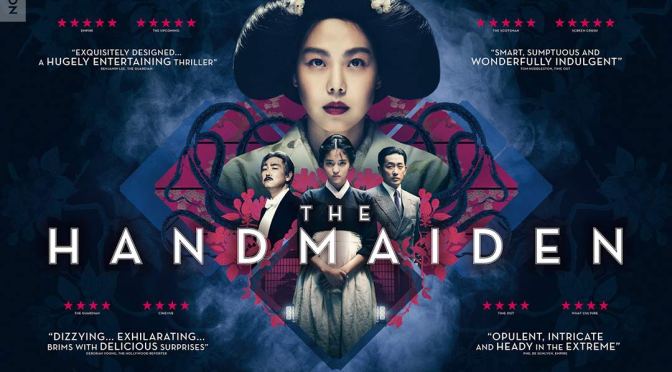
WRITERS: Park Chan-Wook, Chung Seo-kyung (from the novel Fingersmith by Sarah Waters)
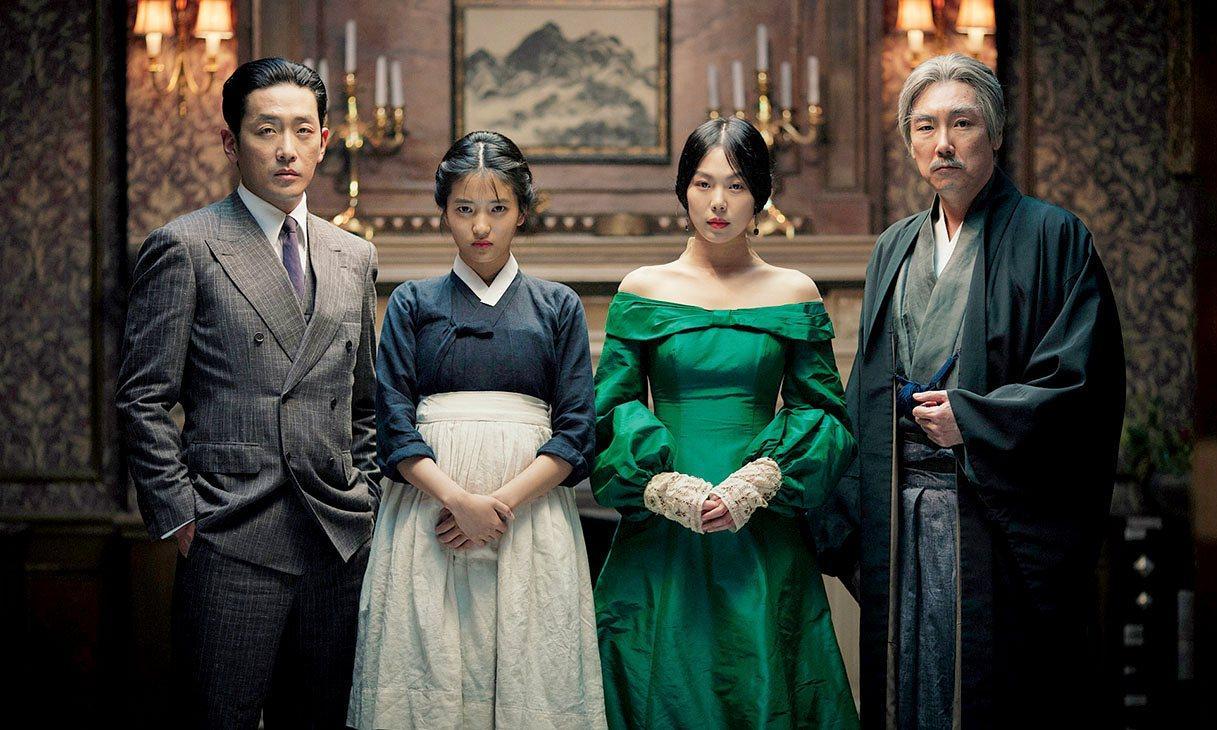
CAST: Kim Min-hee, Kim Tae-ri, Ha Jung-woo, Cho Jin-woong
**MAY CONTAIN SPOILERS**
You may be too young to know or too old to remember but Channel 4 in the 1980s used to have an eclectic choice of arty independent and World Cinema films. Now you get a few on Film Four but Channel 4 was a main outlet for interesting cinema not shown on the BBC or ITV channels. Channel 4 also used to, for a short period between 1986 and 1987 have a ‘Red Triangle’ on certain films to advise of sexual scenes and material that may be considered controversial. Not surprisingly the films with a ‘Red Triangle’ guaranteed nudity and erotic scenes causing audience figures to actually rise. After some moaning from the likes of Mary Whitehouse – a right-wing puritanical harpy who was a self-appointed anti-everything woman – the ‘Red Triangle’ was vanquished by Channel 4, but not before gaining notoriety and publicity.
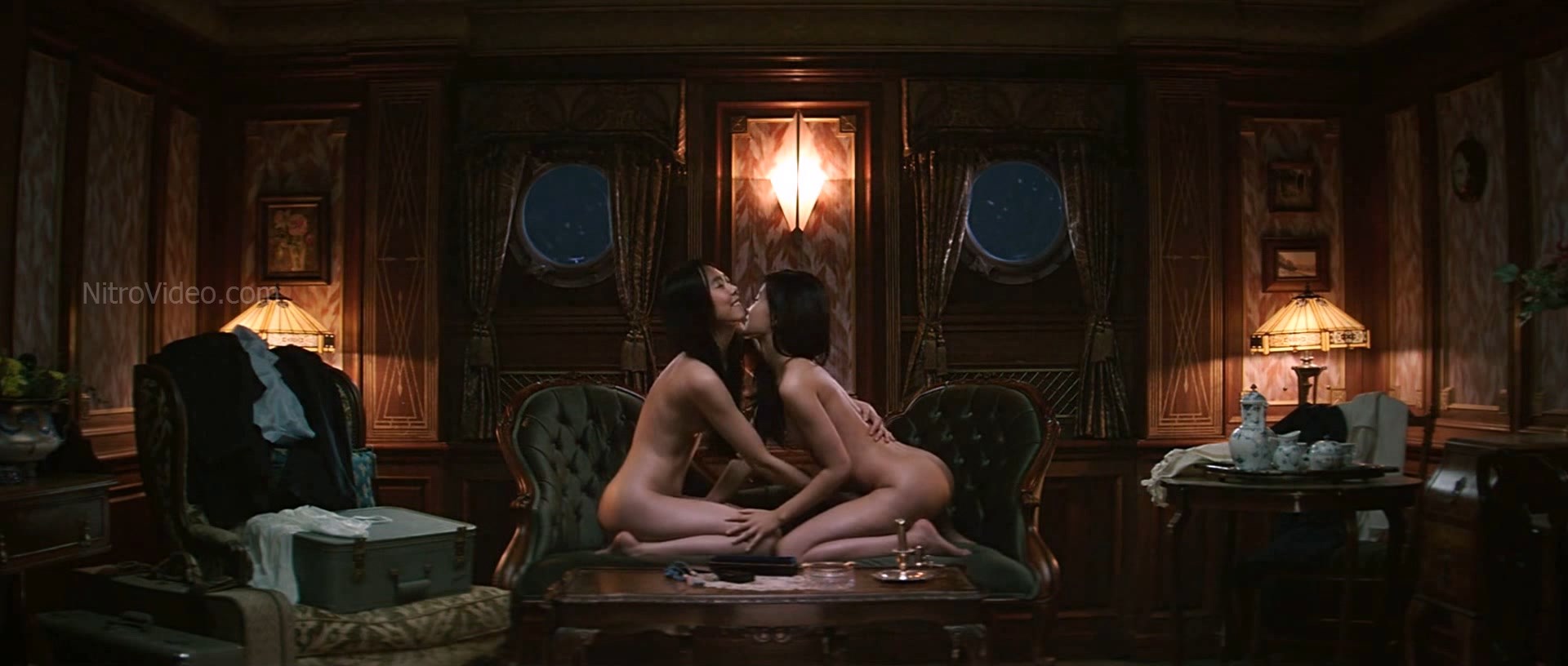
As a teenager I used to look forward to the more risqué content on Channel 4 as the Internet was at the virgin stage and yet to be invented; so titillation was often confined to late night films on a Friday night. Flash forward thirty years and because I’m more mature and it’s very easy to access pornography online I’m not a big fan of overtly sexual material in mainstream or independent features. Not sure why but I prefer subtlety and suggestion over all-out copulation. In Park Chan-Wook’s majestic erotic con-artist thriller there are some wonderfully subtle erotic scenes which raise the blood pressure and enhance the characterisation. There is also some serious scissoring between the two female leads going on too which in my view pushes the boundaries between eroticism, controversy and exploitation. However, this is the line Chan-Wook has always skipped along in classic films such as: Old Boy (2003), Sympathy for Mr Vengeance (2002), and Thirst (2009).
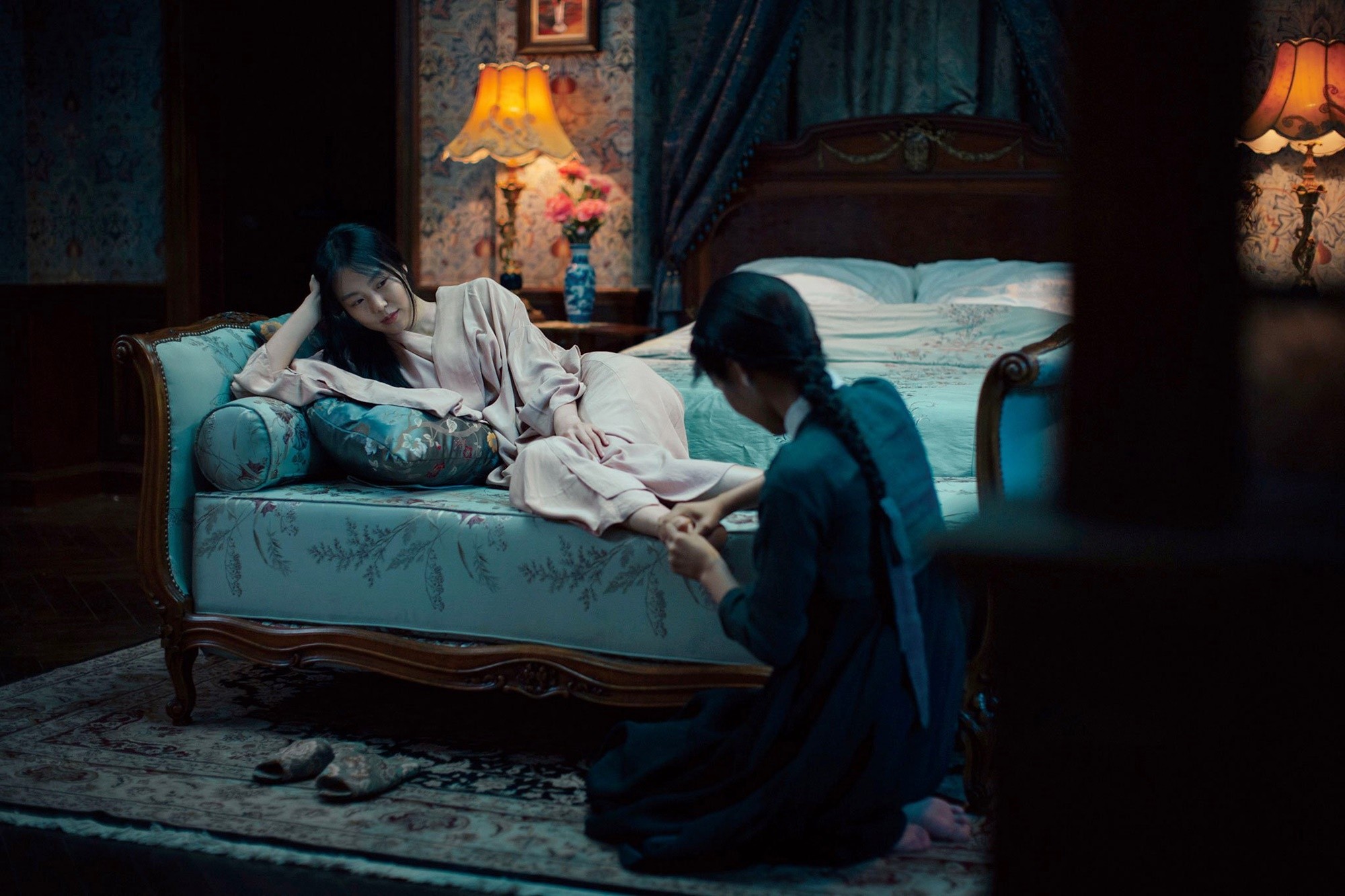
The Handmaiden is set in 1930’s Korea amidst the backdrop of the Japanese occupation and the cultural differences between the two nations are expertly drawn and examined in the story. Class differences are also highlighted in a rich text which finds Sook-hee seconded to look after the neurotic Lady Izumi Hideko, who is a ward and being groomed for marriage by her controlling Uncle Kouzuki. I will not give any further of the plot away but safe to say it is an incredibly complex narrative structured into three parts which overlap different perspectives within flashbacks and contrasting character voiceovers and angles. Did I enjoy it? Absolutely, this is a beautifully shot period masterpiece which I took great pleasure in viewing. In my view the running time was arguably over-long and a couple of the more overt sex scenes could have been trimmed. Nonetheless, the film had me gripped throughout.
Park Chan-Wook directed a gem of a noir thriller called Stoker (2013) for his first Hollywood film, but here is a bigger-budgeted and thematically richer cinema affair. It takes a complex con-artist-twisting-plot and imbues it with an erotically charged and explicit feminist love story which finds sharp-witted female characters overcoming the dominant and deviant patriarchal beast. Moreover, Chan Wook’s screenplay is a masterful adaptation of the original novel, the wonderfully titled Fingersmith, by Sarah Waters. Like the Coen Brothers, Quentin Tarantino, Martin Scorcese, Christopher Nolan, Jacques Audiard, Michael Haneke to name a few, Chan-Wook’s work is always a must-see-at-the-cinema-event and you don’t need a ‘Red Triangle’ to ensure you watch it.
I wasn’t a massive fan of the Brian Singer directed original X-Men series which began in the at the birth of the Millennium. However, as big budget popcorn fodder the early cinema offerings were highly entertaining and the idea of good and bad Mutants with special powers battling each other was very exciting. Of course, the biggest villains were the humans – politicians, scientists or military – attempting to control the mutant population as their kind were seen as dangerous outsiders; like multi-coloured and multi-skilled vermin who must be destroyed.
So, thematically, the X-Men comics and films are very strong as they represent the worst side of humanity which attempts to vanquish that which is different and does not fit into the hegemonic, natural and conventional norm. Indeed, human beings have (including Deadpool (2016) throughout ten films both attempted to weaponize or destroy the mutants, but it hasn’t worked! There are many more films to come.
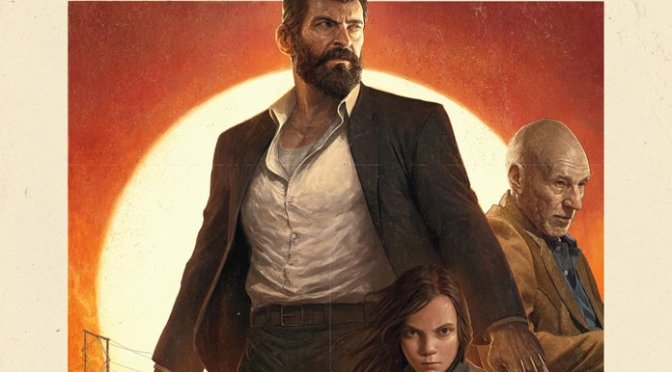
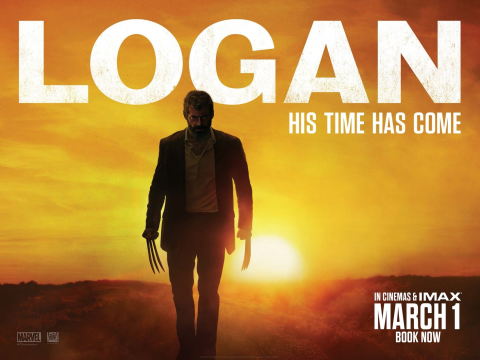
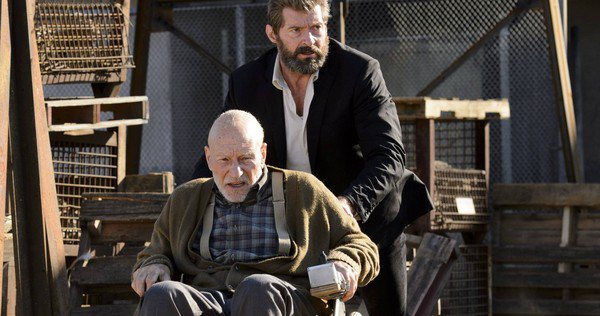
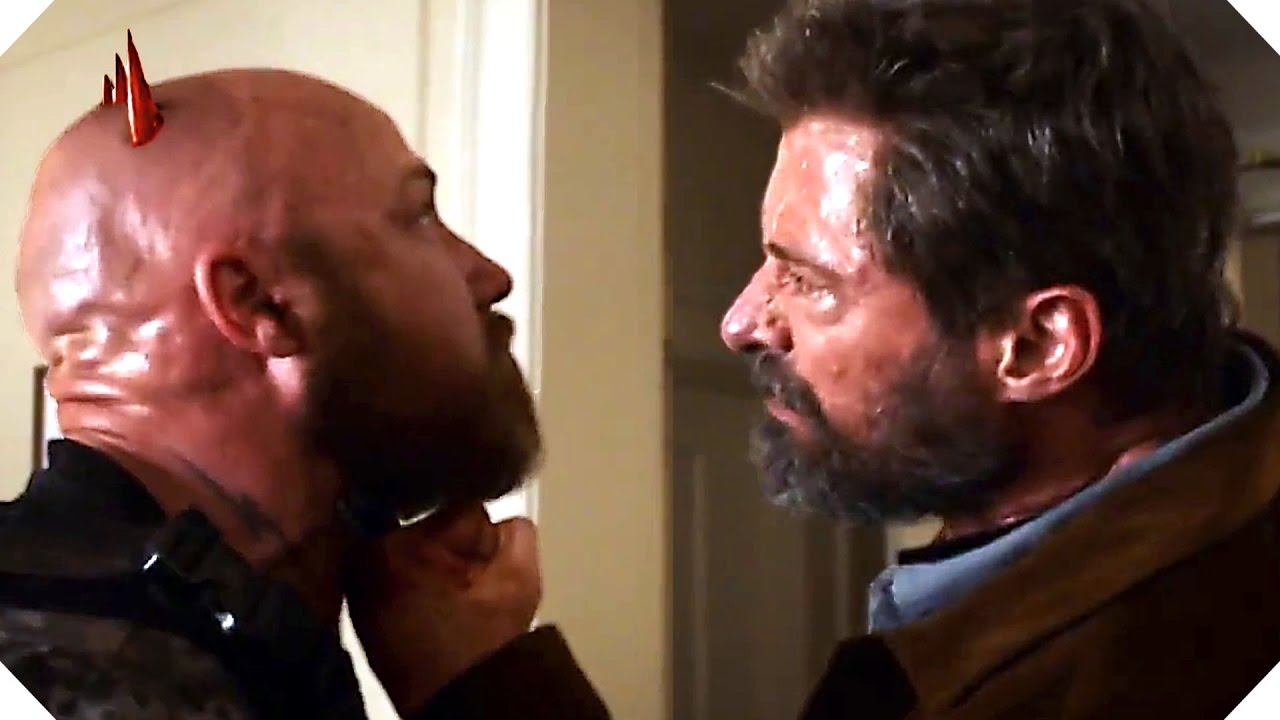
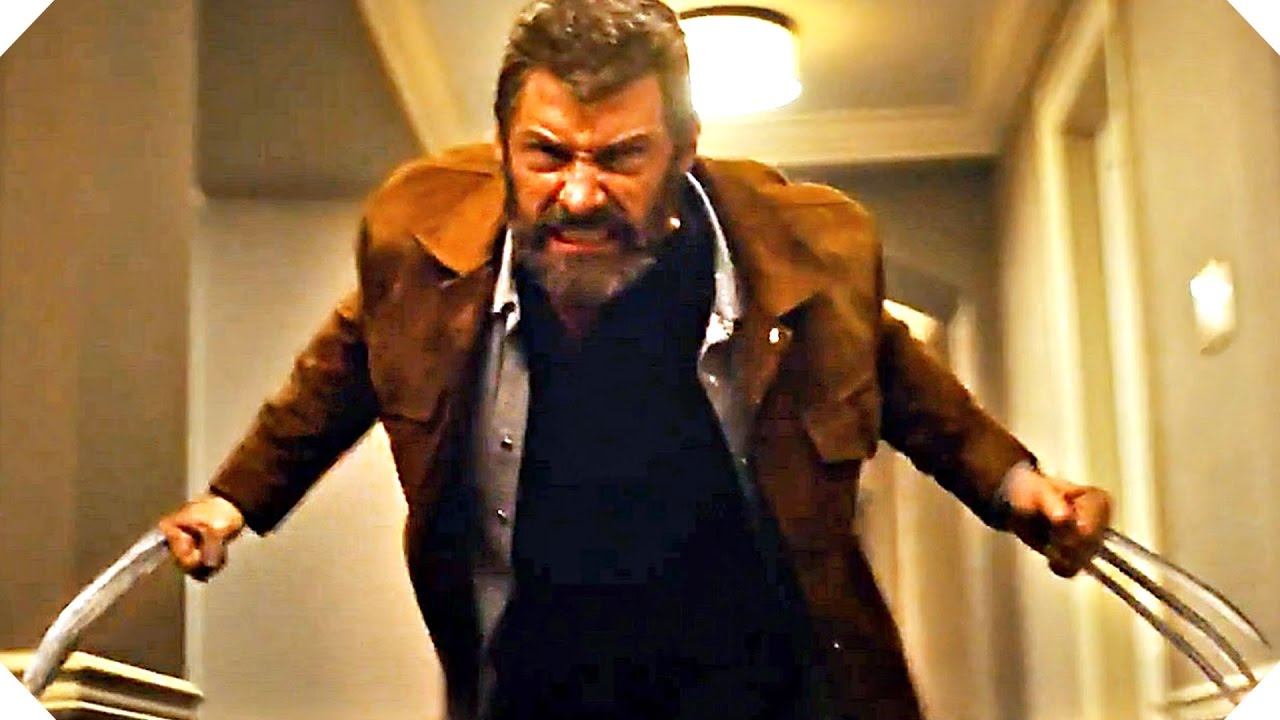
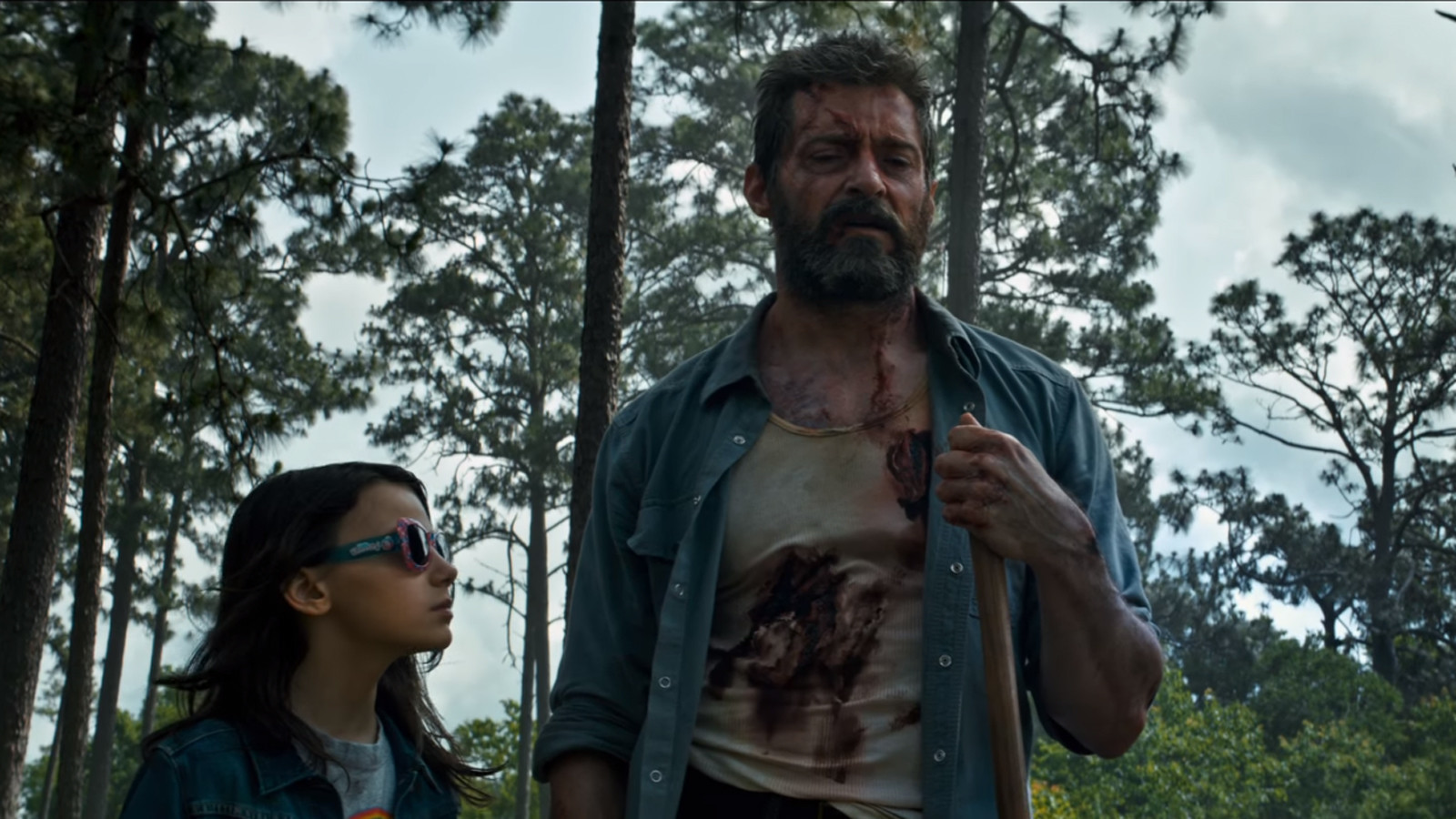
Having said that this, I have read, is Hugh Jackman’s final adventure as Jimmy Howlett AKA the Wolverine. Jackman’s presence alone is worth the admission fee on Logan and his physical prowess and acting ability, allied with his jaded wreck of a persona make this outing an entertaining, if slightly over-long popcorn muncher. I had somewhat higher expectations based on other reviews and fan responses on social media I had read. Because here was a different Wolverine film apparently, full of depth and sadness and real emotions. Well, it has that but essentially it’s another chase movie with the requisite explosions, spiking deaths and mighty roars!
So while James Mangold and his army of writers package the usual generic and nefarious mercenaries (led by Boyd Holbrook) and a mad Scientist (Richard E. Grant) in pursuit of Wolverine, aged Professor X (brilliant Patrick Stewart) and a young girl (impressive newcomer Dafna Keen), we do get some swearing and fantastically brutal violence that really added to the enjoyment of the movie. The action scenes are also expertly handled and the surprising mutant baddie who appears is a frightening joy.
The opening scenes of the film were my favourite as Wolverine, Charles Xavier and their albino assistance Caliban – portrayed with pale compassion by an unrecognisable Stephen Merchant – are holed up on a desert-based industrial complex just trying to survive day-to-day. With Professor X’s health failing his mind is a ticking time-bomb as what seems to be Alzheimer’s takes a grip. I thought if most of the film had been like this it would have been a risky yet rewarding character drama. Indeed, the quieter moments are the best such as Logan putting his ‘father’ Xavier to bed and when they momentarily play “happy families” at the dinner table. Yet, it’s not long before the soldiers arrive again to spoil the peace and all hell breaks loose.
Overall, Logan (2017) is not as good as X-Men: First Class (2011) or Days of Future Past (2014) in terms of sheer cinematic joie de vivre in my opinion. However, the power of Jackman’s, Stewart’s and Merchant’s performances ground the film in a pathos and believable humanity many comic book adaptations lack. While I’m more of an Avengers fan it will be sad not to see Jackman and Stewart back in their iconic roles. While this is a very good X-Men genre film the opening scenes offered something far deeper than the chase movie we got. So, while it has some sad stuff it’s probably not as deep as everyone says it is. But it is an enjoyable film and a fitting finale for Jackman’s muscular-cigar-chomping-head-splitting-cynical-mutant-with-a-giant-adamantium-heart called the Wolverine. (Mark: 8 out of 11).
In a new strand I have decided to have a look at some future film releases and reasons why they may be worth catching at the cinema.
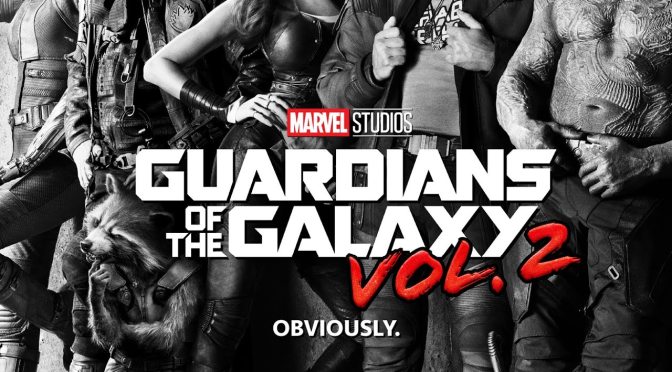
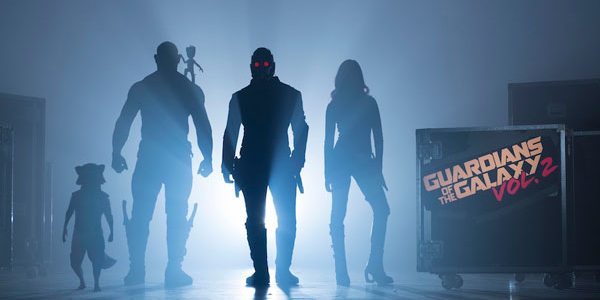
TITLE: GUARDIANS OF THE GALAXY – VOL. 2
DIRECTOR/WRITER: JAMES GUNN
RELEASE DATE (UK): 28-04-2017
GENRE: Comic-book; action; comedy; mixtape!
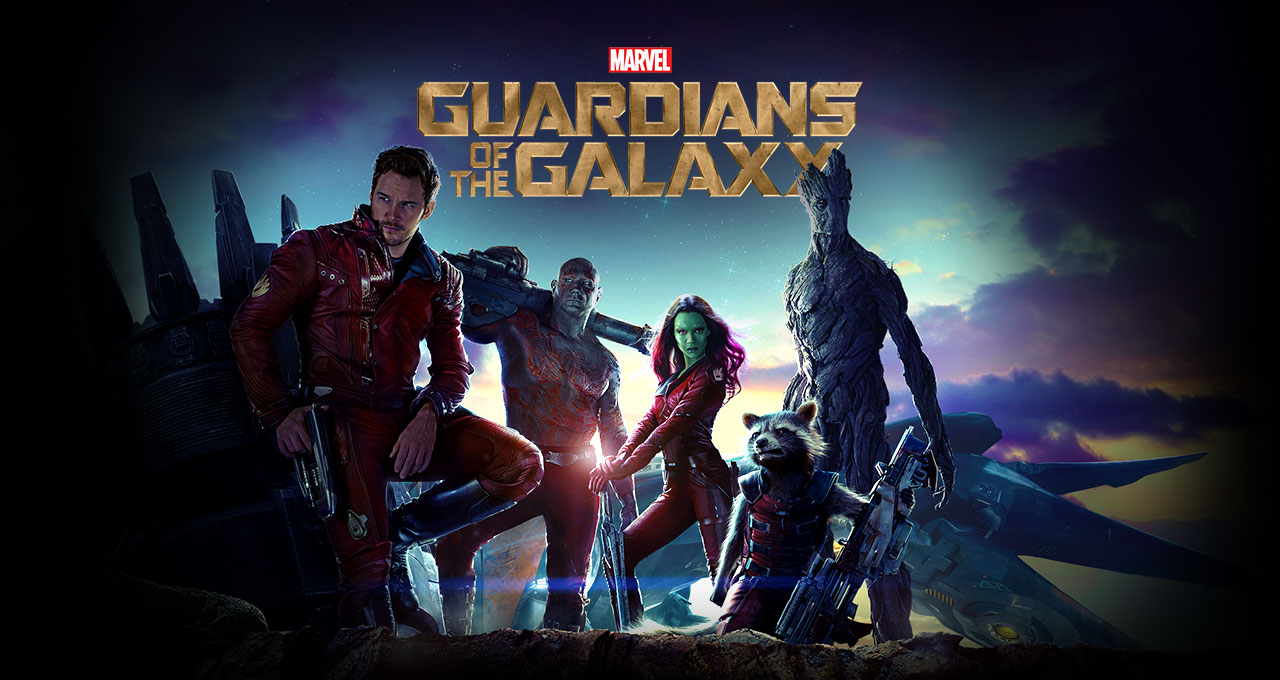
PITCH: Marvel’s rag-tag mixtape of human, aliens, raccoon and plant combine once again to shake up the Universe in a sequel to the brilliant original. This time the fabulous five battle the usual motley bunch of villainous space monsters while tracking down Peter Quill’s father.
FIVE REASONS THIS COULD BE GREAT!
1. The first Guardians was brilliant as it contained a wonderful mix of action, humour, space fights, explosions, alien villains, guns, and zinging one-liners. So, this one has to be amazing too right.
2. It’s a Marvel comic-book film! Up until now their cash-cow franchises have established a formula, yet they somehow always manage to invest something fresh into their films.
3. The usual suspects are back! There’s Chris Pratt as Peter Quill and humbly monickered Star-Lord; Zoe Saldana as smart but dangerous Gamora; Dave Bautista provides muscle as Drax; Bradley Cooper is the tech-wizard and grumpy Rocket the Raccoon; plus Groot is back but this time smaller and cuter.
4. The music in the first film rocked! And the soundtrack in this one will no doubt infect us with more nostalgia-driven hits from the past.
5. Writer/director of the first film James Gunn is on board again! Having made low-budget gems such as Super (2010) and Slither (2006) he brought an indie perspective and quirky humanity to the big-budget fireworks and CGI fest!
Denzel Washington’s honest, down-to-earth and heart-cracking drama is a formidable character piece and acting tour-de-force. Adapted from August Wilson’s prize-winning play, the narrative bristles with authentic working class lives of 1950s Pittsburgh, and is littered with some wonderful stories and dialogue. At the heart of the drama are Denzel Washington’s complex character Troy Maxson and his long-suffering wife, Rose; portrayed with significant humility and pathos by Viola Davis. Great support comes also from Mykelti Williamson as Troy’s mentally impaired brother, Gabriel.
Troy’s character is very charismatic and he delivers some hearty yarns from his past, but he’s also bitter and a drinker and, while he has had a hard life, he bullies everyone around him. His sons and more importantly his wife Rose put up with it but eventually he grinds everyone down, pushing them away with his boorish “I-know-best” arrogance and aggression. With her quiet power Viola Davis more than matches Denzel Washington’s grandstanding and Rose’s heartfelt speech toward the end of the film is a stunning retort to her husband’s continual tirades and emotional neglect.
I’ve seen some criticisms of the film stating it is too “stagey”. Well, as it is based on a play that is understandable, yet, August Wilson’s words are a thing of beauty and therefore deserve focus. I think, while directing, Denzel Washington could quite easily have opened up the settings and had conversations on the street, but the decision was made to “fence” in the characters to create a sense of claustrophobia and intensity. By keeping the players mainly in the yard and the house we feel as trapped as they are by society, social status and their life decisions. It’s an intimate film about proper characters and real lives and overall the performances alone make the film feel cinematic. (Mark: 9 out of 11)
MOONLIGHT (2016)
Barry Jenkins low-budget contemporary drama is another brilliantly acted character memoir; although when compared to Fences it benefits from a more complex structure and cinematic style. Split into a trio of linear timelines from the same characters’ lives we get three different actors representing the life and changes which occur in Chiron’s existence; with chapters named, Little, Chiron and Black.
Each section draws us into the characters’ world as Chiron searches for meaning, identity and direction as to who he really is as a person. With his father absent Little Chiron (Alex Hibbert) cannot find satisfaction via his mother, an angry and lost woman portrayed brilliantly by Naomi Harris. Small for his age he is also at the mercy of school bullies and while a random meeting with a local drug dealer, Juan (Mahershala Ali) provides Little with a mentor to connect with it doesn’t sustain. Ali as Juan, like most of the performances, delivers a subtle realisation of a character trapped by his life choices and perhaps sees some redemption in ‘Little’. Alas, due to his lifestyle and ‘job’ he is clearly not the role model ‘Little’ needs.
In the second and third sections Chiron’s relationship with his best friend Kevin comes to the fore both in terms of some powerful drama and intimate sexual connections. Barry Jenkins framing, colour design, use of music and editing choices all commit to create a poetic and fragmented style, further drawing me into Chiron/Black’s story. Chiron’s continual search for identity and meaning in the world reflects the most essential of human needs: the search for identity and love. Overall, this is a film of harsh and beautiful moments and each segment was layered with so many emotions and so skilfully told that I wanted to see more of the characters. (Mark: 9 out of 11)
SPLIT (2016)
Split (2016) is an altogether different film about the search for identity. In fact the lead character portrayed devilishly well by James McAvoy has TWENTY-THREE different people battling around his mind and something is about to give. Let me say that a film like Split won’t be challenging the Oscars because in essence it is a terrifying B-movie thriller, however, McAvoy gives a performance of such quality it reminded me of Anthony Hopkins as Hannibal Lecter in his cannibal pomp. McAvoy’s twisted ability to switch between the many personalities was a real guilty pleasure as he earned his acting fee over and over and over again.
The story concerns three girls, Casey, Marcia and Claire (including an excellent Anya Taylor-Joy) who are kidnapped and imprisoned by the various personalities in Kevin Crumb’s head. Some – including OCD driven Dennis – are more dominant than others and attempt to wrestle total control, which is where McAvoy’s sly switches are a real joy to watch. As a cat-and-mouse plot bleeds out we also get some intriguing back-story flashbacks into Casey traumatic past. These events really add colour to the main narrative and ramp up the tension and suspense. The scenes between Kevin, his personalities and sympathetic Doctor Fletcher (Betty Buckley) also add some dark humour to the story. By the end though all humour is gone and we get a stunning and believable supernatural turn as Kevin’s mind unleashes an altogether different personality.
Writer/Director M. Night Shyamalan’s dalliance with big-budget-franchise-Hollywood-pictures – including: After Earth (2013) and The Last Airbender (2010) – did not do his career any favours. But with Split he is back on terrific form as he takes a simple abduction plot and renders it full of horror, twists and fantastical ideas. While I did not enjoy his previous film The Visit (2015) – mainly due to the stupid kid rapping throughout a decent horror story – this one is highly recommended for psycho horror fans and for McAvoy’s performance alone. (Mark: 8.5 out of 11)
– Is it the joining together of two people forever committed to a relationship built on respect and trust?
– Is it the emotion you feel for a family member or person you have bonded with over time?
– Is it nature’s way of tricking us into the act of pro-creation?
– Is it an abstract and emotional concept created by a higher power to ensure we act positively?
– Is it a form of madness which ensures we make crazy and stupid life decisions?
– Is it a dark force which enlivens obsession and stalking and violence?
– Or is it a marketing delusion forced upon us by greedy advertisers, florists and chocolate vendors?
Put simply it is: ALL OF THE ABOVE at some point in all our lives; although perhaps not the stalking!?!?
What I definitely know is that love is a big part of everybody’s lives whether it’s the positive or negative type? Moreover, love or the lack of love has provided the springboard for millions of stories, films, plays, songs, poems, slogans, TV show and adverts! So for my latest article I will review some of the films and programmes I have watched recently which had love or some version of it echoing through its’ narrative heart.
**MAY CONTAIN SPOILERS**
45 YEARS (2015) – NETFLIX
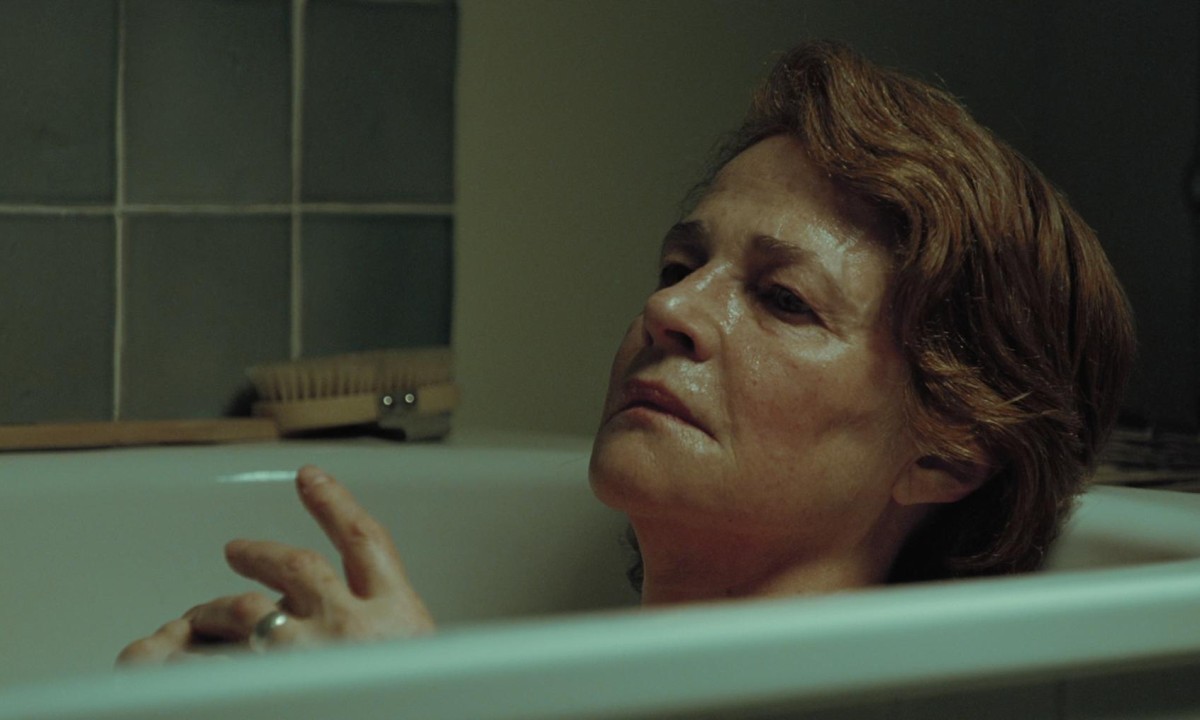
Charlotte Rampling just owns this wonderful bitter sweet drama as a woman “celebrating” forty-five years of marriage to curmudgeon Tom Courtenay. The story moves slowly but confidently as Rampling’s Kate Mercer is shook up by revelations from her husband’s past. Andrew Haigh directs with a haunting charm as love is rendered in wintry hues, while marriage is illustrated as a culmination of what-ifs-buts-and-what-could-have-beens. (Mark: 9 out of 11)
BLACK MIRROR (S3) – SAN JUNIPERO – NETFLIX
Charlie Brooker’s savage satire series cuts off your eyelids and forces one’s eyes to the see the nefarious side of technology. However, the episode San Junipero is an altogether more touching and heart-rending beast. Starring Gugu Mbatha-Raw and Mackenzie Davis as a couple of young girls who fall in love in the 80s drenched coastal town of San Junipero it builds slowly to a majestic reveal in the final act and the themes of love, euthanasia and life after death inform the romance with tearful power. (Mark: 9 out of 11)
BLUE JAY (2016) – NETFLIX
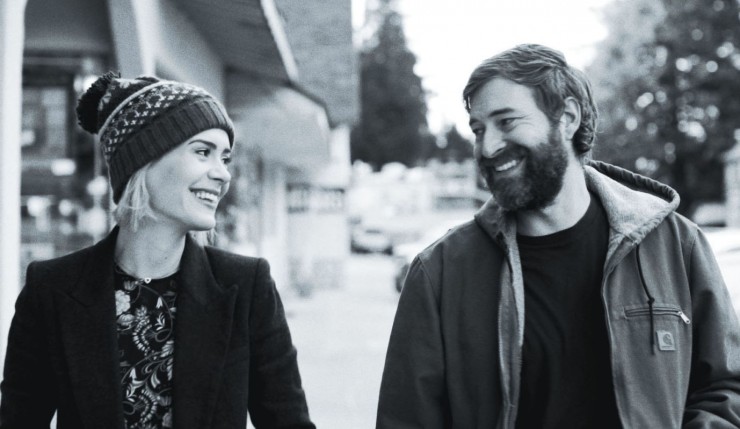
Mark Duplass is an interesting actor-writer-director-improviser who produces small, naturalistic and improvisatory films that are often quietly impressive. Blue Jay is a sporadically brilliant two-hander starring Duplass and the effervescent Sarah Paulson as a former couple who reconnect after years apart and spend a day together revelling in the past, present and future love. Paulson is stunning and Duplass is just Duplass as we spend time with very human characters just trying to get by in love and life. (Mark: 8 out of 11)
BLUE IS THE WARMEST COLOUR (2013) – FILM FOUR
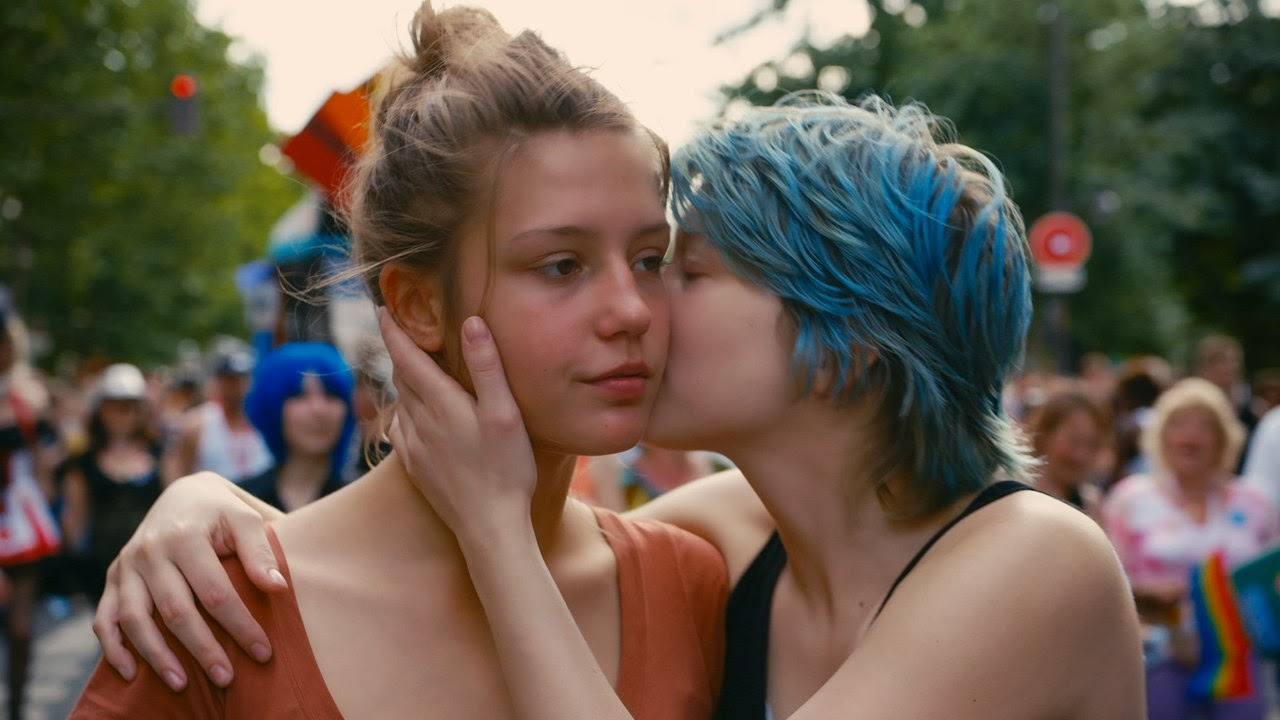
You know the story: girl-meets-girl-falls-in-love-has-lengthy-lesbian-sex-sessions-moves-in-with-girl-then-cheats-on-girl-but-not-before-there-are-more-lengthy-scissor-sister-sessions. Well, something like that. Jokes aside, this is a very honest and believable slice-of-life drama with incredible performances from Léa Seydoux and Adèle Exarchopoulos as the two lovers. The film was laden with awards at time of release and benefits from Abdellatif Kechiche’s frank and intriguing direction. Personally speaking I felt the soul-searching drama and love story were very powerful but the sex scenes were over-long and pornographic and lent nothing to the story overall. (Mark: 8 out of 11)
BROOKLYN (2015) – NETFLIX
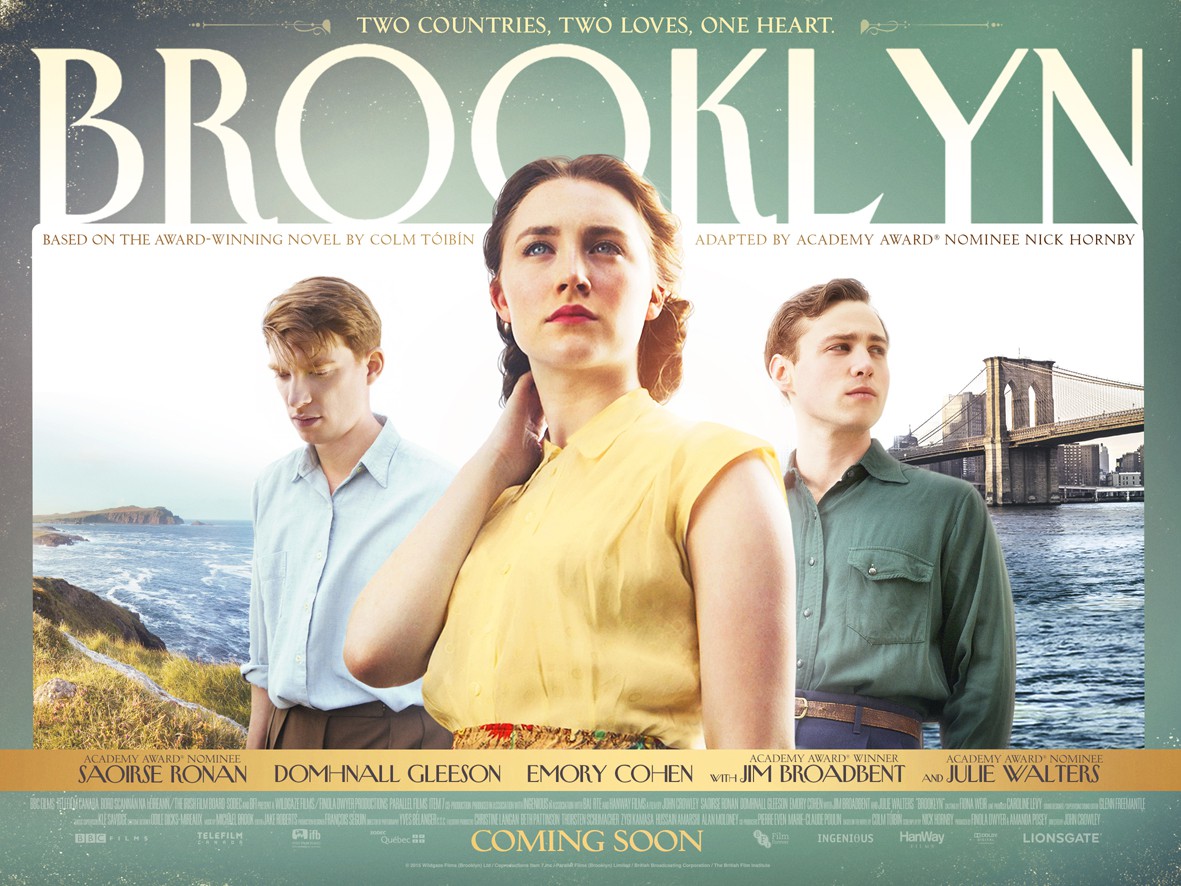
This soapy-honey-sweet 1950s set love story contains a tremendous central performance from Saoirse Ronan, as an innocent Irish girl who goes to New York in search of a job and finds love with an Italian plumber. The film delivers a pot pourri of bright colours, national and migrant archetypes and resolves much of the drama very easily; in fact, the film was so nice I expected the cast to break out into song by the end. John Crowley directs the undemanding story deftly and while, I imagine, the plight of an immigrant in those days was much harder than demonstrated this is fine Sunday matinee fare and difficult to dislike. (Mark: 7.5 out of 11)
JACKIE (2016) – CINEMA
Does this fit into the love story genre? I think as a story about a woman who lost the husband she loved, his head blown completely off by a sniper’s bullet, it qualifies as a film about the departure of love. It’s a powerful portrait of Jackie Kennedy with Natalie Portman impressing as the wife of the President left devastated by his sudden murder. Portman as Jackie carries the weight of loss and sorrow on her petite shoulders, drawing on all her strength to carry on living for the sake of a nation and more importantly her children. Her life has been condemned as a void and Portman’s haunting visage betrays an unforgettable lament throughout. Pablo Larrain directs using documentary and dramatic stylings to powerful effect and the score by Mica Levi is to die for. (Mark: 8 out of 11)
LA LA LAND (2016) – CINEMA
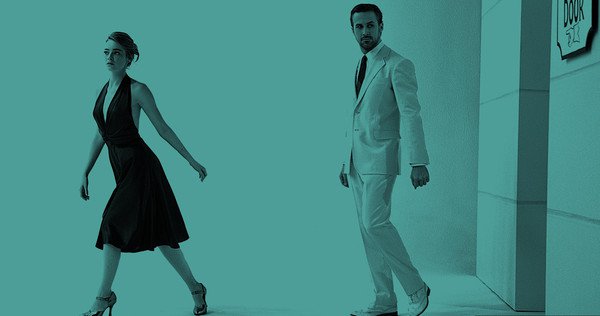
As it sweeps the boards at the awards ceremonies La La Land can certainly be praised as a funny, energetic, imaginative spectacle with fantastic direction by Damian Chazelle. Ryan Gosling and Emma Stone are also on great form, delivering some wonderful songs throughout. As a love story it works but only on the surface as the boy-meets-girl-struggling-artists’ narrative lacks depth overall. Still, it’s a great musical in the classical Hollywood model – just not a Best Film Oscar winner. (Mark: 9 out of 11)
In an oppressive near-futuristic society individuals must yield to socio-political mores and be married with children or you get turned into an animal of your choice! Well, this certainly isn’t the pitch of a love story that Hollywood would make in a hurry. However, the misadventures of Colin Farrell’s hopeless love-life are explored to dark and comical effect in Yorgos Lanthimos’ startling comedy-drama. This is one of the best films I have seen a long time which is equally bizarre yet believable in its absurd honesty. We run around attempting to find love or force romance when we should just let nature take its course. Farrell has never been better and his weird romance with Rachel Weisz is so damned original in thought and delivery it left my heart stained with pathos and delirium. (Mark: 10 out of 11)
LOVE ACTUALLY (2003) – DVD
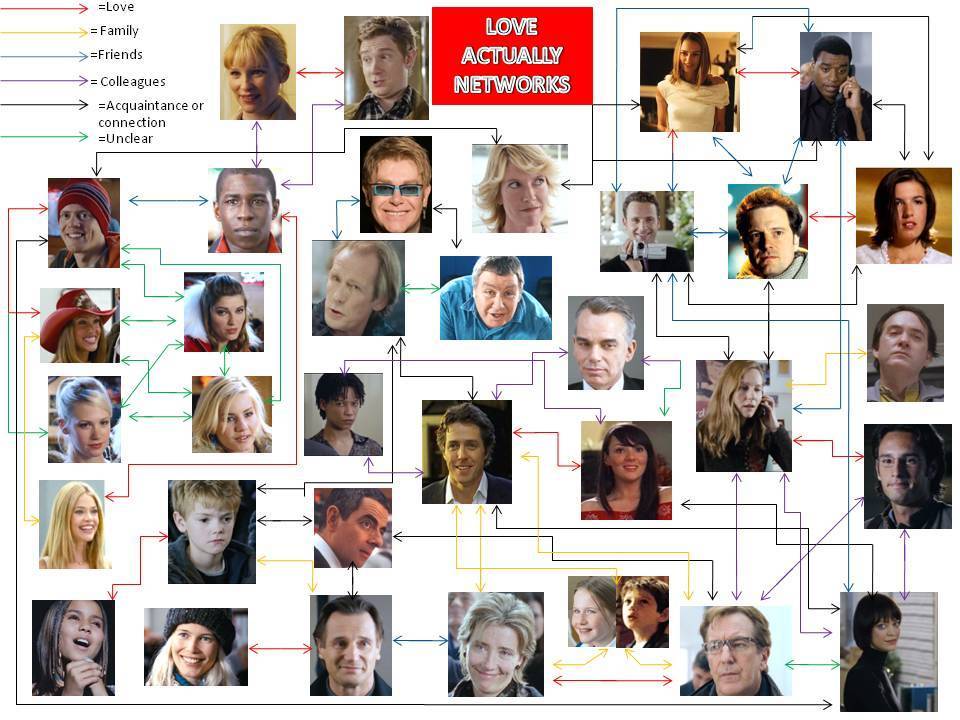
My wife “made” me watch this one at Christmas and as soon as it finished I was diagnosed with diabetes! It is such a sickly, sweet and sappy rom-dram-com that, while I think Richard Curtis deserves praise for some excellent writing, it is just too clichéd for me. I love ensemble portmanteau films and many of the overlapping stories here would make excellent short films; moreover, the cast including: Emma Thompson, Alan Rickman, Andrew Lincoln, Laura Linney, Liam Neeson, Colin Firth and many more are very watchable. But the whole love pudding is over-sweetened, over-egged and over-cooked for my taste. (Mark: 6 out of 11)
PASSENGERS (2016) – CINEMA
You and your other passengers are in stasis on a many centuries long journey to another galaxy and you’re woken up early. You are alone. In space. Until you die. If you could wake up the other passengers, but would you? Given the fellow passenger is Jennifer Lawrence you have a bloody tough choice. And what if she finds out too: you’re a murderer in effect. That’s the moral dilemma which faces Chris Pratts’ character in this frothy space-rom-drama. I enjoyed the stylish science-fiction genre flick as it looks fantastic in design and cast. It doesn’t have much depth but I found it to be lots of fun especially as Pratt is charming and funny as ever and Lawrence is easy on the eye too. (Mark: 7 out of 11)







 The Cinema Fix presents