Tag Archives: erotic

Cult Film Review: Thriller – A Cruel Picture (1974) – a shocking blend of X-rated exploitation and arthouse filmmaking!

Cult Film Review: Thriller – A Cruel Picture (1974)

Directed by Alex Fridolinski

Screenplay by Alex Fridolinski

Produced by Bo Arne Vibenius

Main cast: Christina Lindberg, Heinz Hopf, Despina Tomazani, etc.

Cinematography by Andreas Bellis

Edited by Brian Wikström

**Viewer discretion is advised – this film contains scenes that many will find disturbing**
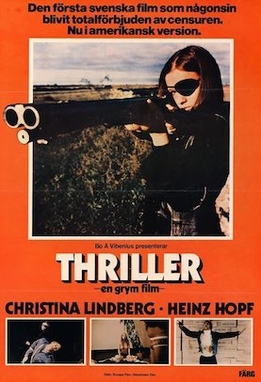


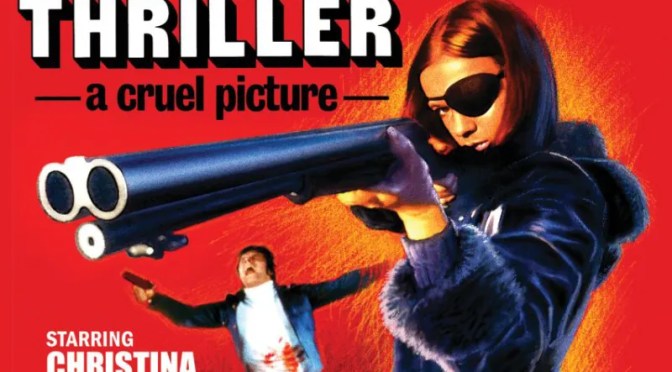
Thriller – A Cruel Picture (1973) (Swedish: Thriller – en grym film) is a 1973 Swedish exploitation film from writer-director Bo Arne Vibenius, working under the pseudonym Alex Fridolinski, starring Christina Lindberg and Heinz Hopf. Infamous for its unflinching depictions of sexual violence, drug abuse, and degradation, the film charts the ordeal of a mute young woman who is coerced into heroin addiction and forced into prostitution before embarking on a brutal campaign of revenge against her tormentors.

Released in the United States in a heavily cut version by American International Pictures—under lurid alternate titles such as They Call Her One Eye, Hooker’s Revenge, and The Swedish Vice-Girl—the film has earned a reputation as a deeply disturbing and confrontational work. Its graphic content and relentless tone make it a challenging and potentially distressing viewing experience, best avoided by those sensitive to extreme subject matter.

Unsurprisingly, due to the violent scenes, on-screen drug use, nudity and also inclusion of hardcore pornography, Thriller – A Cruel Picture (1973) was either banned outright or heavily censored on release. I had heard so much about this film on various YouTube videos expounding the shocking nature of the themes and scenes. Allied to this, Quentin Tarantino has also “championed” the movie and it’s star, Christina Lindberg. With this in mind the film I got tempted and purchased the recent Blu Ray version released in the UK. This version DOES NOT, thankfully, include the pornographic scenes which were filmed by the director with a Swedish couple who did live sex shows.

So, is Thriller – A Cruel Picture (1973) actually any good? Well, it is safe to say that it is a relentlessly harsh watch. That said, it would be unfair to dismiss the film outright as mere grindhouse provocation. Vibenius employs striking stylistic flourishes that elevate certain sequences into something oddly hypnotic. Most famously, the extended slow-motion shotgun reprisals—henchmen blasted backwards in balletic, almost operatic fashion—are staged with a visual patience that borders on the surreal. These, as well as the lengthy final act car pursuit sequence, are technically memorable, even as their brutality remains confronting.
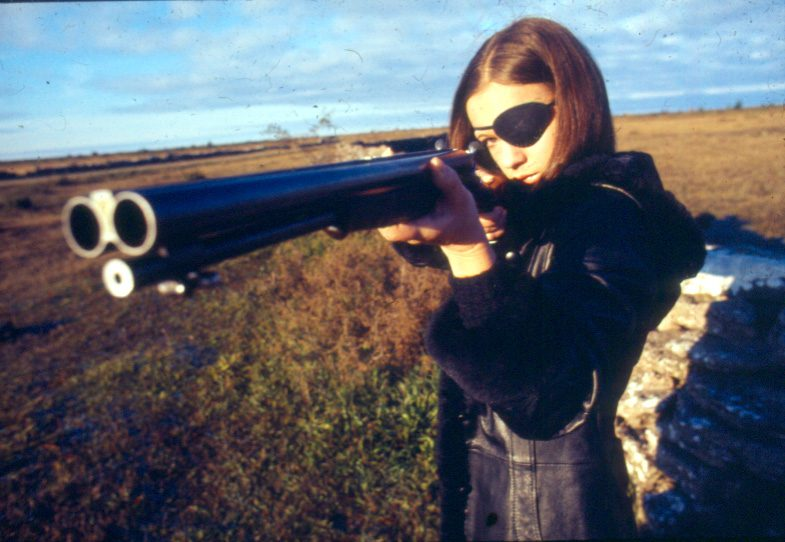


Where the film becomes almost nightmarish is in its internal logic. Once Madeline (Christina Lindberg) is captured and brutalized by the sadistic drug dealer Tony (Heinz Hopf), the narrative takes on a dreamlike, disjointed quality. Despite being forcibly addicted to heroin, she somehow manages to train herself in hand-to-hand combat, driving, and sharpshooting—preparing an elaborate revenge while still under the grip of addiction. The plotting feels less realistic than hallucinatory, as though the film operates on the logic of trauma and fantasy rather than grounded cause and effect.

A great deal of the film’s lasting impact rests on the striking screen presence of Christina Lindberg, as well as her character’s grim journey. Already known internationally in the late 1960s and early 1970s for her work as an erotic actress and glamour model, Lindberg brings an arresting, almost statuesque quality to the role. Her icy stare—especially once framed by the now-iconic eyepatch—gives the character a mythic, comic-book intensity. At the same time, the creative decision to render her character mute inevitably shapes how that performance is perceived. Silence becomes a stylistic device, amplifying the film’s cold and detached tone. The director’s choice to sidestep the demands of more dialogue-heavy dramatic scenes actually works in the film’s favour.

Overall, Thriller – A Cruel Picture (1973) is a film that oscillates between exploitation rawness and stark, almost avant-garde stylization. For hardened genre enthusiasts, it may be a grim curiosity with undeniable visual audacity. For many others, however, its graphic content and relentless tone will make it a deeply uncomfortable, even distressing experience. Proceed carefully.
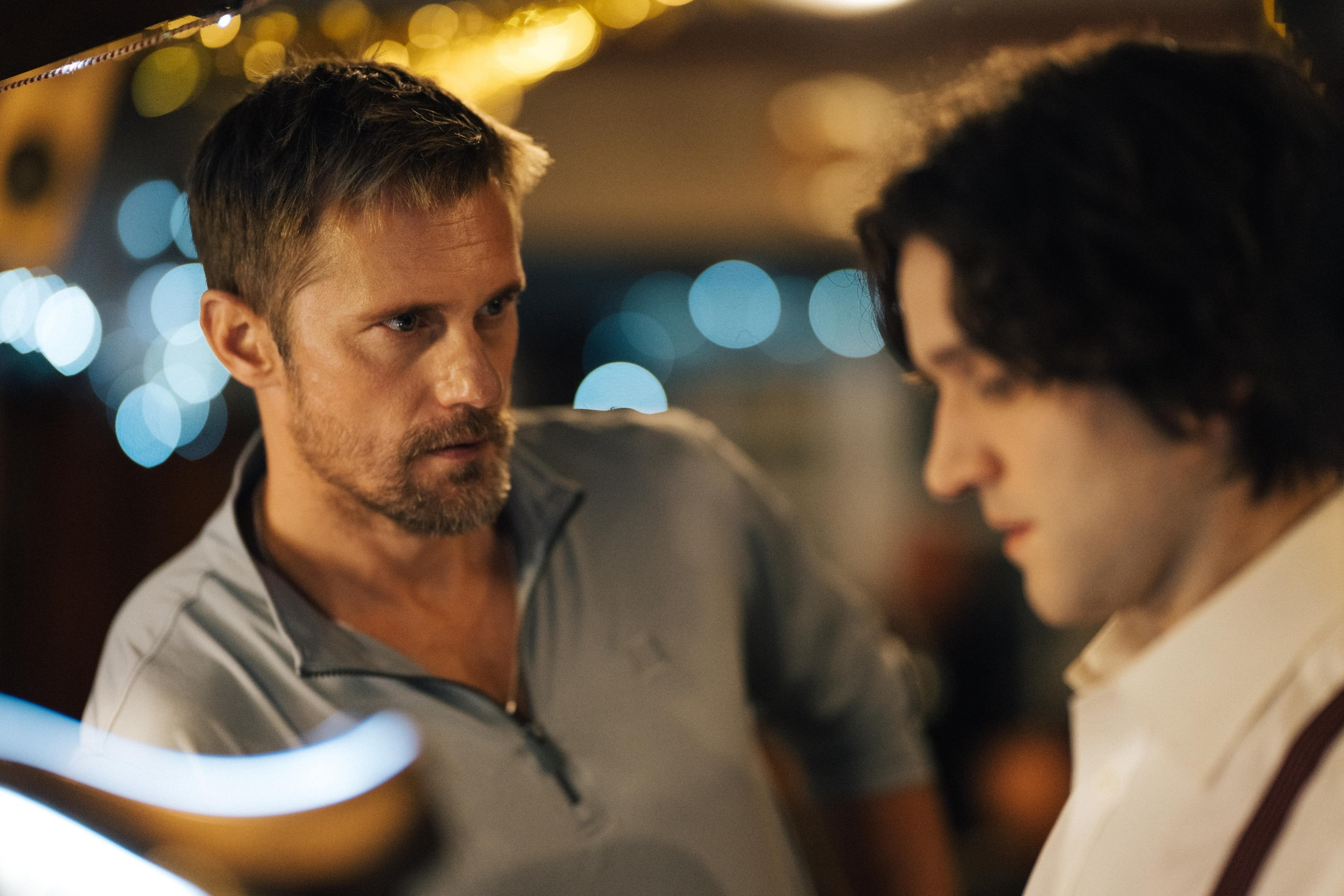
Cinema Review: Pillion (2025) – a fantastically acted and directed erotic rom-dom-com!

Cinema Review: Pillion (2025)

Directed by Harry Lighton

Written by Harry Lighton – Based on Box Hill by Adam Mars-Jones


Produced by Emma Norton, Lee Groombridge, Ed Guiney &
Andrew Lowe

Main cast: Harry Melling, Alexander Skarsgård, Douglas Hodge, Lesley Sharp, Jake Shears, etc.

Cinematography by Nick Morris

Edited by Gareth C. Scales


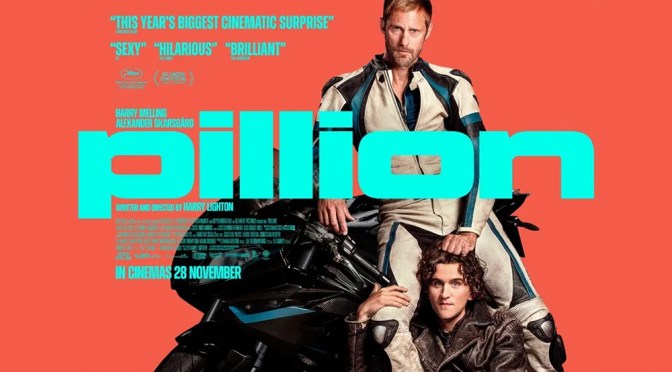
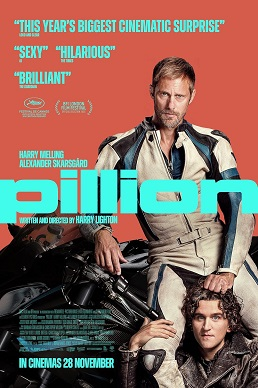
There’s a tender audacity to Pillion (2025), an erotic rom-dom-com that sneaks up on you with the gentleness of a confession. What begins as an off-kilter meet-cute blooms into something far more vulnerable: a rites-of-passage story about sexual awakening, self-recognition, and the courage it takes to accept pleasure without apology.

At its heart is Colin, played with exquisite restraint by Harry Melling. Melling has always been an actor of intelligence, but here he finds a new register—soft-spoken, watchful, quietly aching. His performance never reaches for easy beats; instead, it accumulates detail. A look held a fraction too long. A smile that arrives late. Colin’s desire isn’t announced; it’s discovered, moment by moment, and the effect is deeply empathetic.

Opposite him, Alexander Skarsgård’s Ray is all smoulder and swagger on first impression—an insouciant masculinity that seems effortless, almost cocky. But Skarsgård is doing something more interesting beneath the surface. The sexuality is undeniable, yes, but it’s armoured. Pain leaks through the cracks, giving Ray a bruised romanticism that complicates the dominant energy he projects. The push and pull between the two men becomes the film’s most potent charge.


Director Harry Lighton deserves enormous credit for navigating this tonal tightrope. His direction is fantastically nuanced, allowing intimacy and humour to coexist without deflating either. The film understands that eroticism can be funny, awkward, even faintly ridiculous—especially when it’s new—while still honouring its emotional stakes. The explicit moments are handled with confidence rather than coyness, lacing the heartfelt beats with risqué shocks that provoke gasps, laughter, and the occasional wince. The physical opposites of Harry’s mild-mannered traffic warden versus Ray’s macho biker also add characterful humour to the mix.

The contemporary setting, rooted in the London suburb of Bromley, is another inspired choice. This is not a glossy, aspirational London; it’s resolutely unglamorous, familiar, and quietly stifling. That ordinariness makes Colin’s awakening feel all the more radical, a private revolution unfolding in plain sight. Furthermore, strong support comes from Lesley Sharp and Douglas Hodge as Colin’s parents, whose love is real but imperfect, shaped by generational discomfort and unspoken fears. Their scenes add texture rather than judgment, grounding the film in a recognisable family dynamic.

Be warned: Pillion (2025) doesn’t shy away from explicit sex scenes or moments of leather-adorned domination (including BDSM), and those elements may provoke strong reactions. But they’re not there for provocation alone. Lighton uses them as part of the emotional grammar of the film, insisting that tenderness and risk, humour and heat, can occupy the same frame. Ultimately, Pillion (2025) reveals itself as something quietly radical—a deeply touching romantic comedy that treats sexual self-discovery with empathy, intelligence, and a disarming lack of shame. It lingers not because of what it shows, but because of how carefully it listens to its characters while they learn who they are.

Mark: 8.5 out of 11


BBC TV REVIEW – NORMAL PEOPLE (2020)

BBC TV REVIEW – NORMAL PEOPLE (2020)

Directed by: Lenny Abrahamson, Hettie Macdonald

Written by: Sally Rooney, Alice Birch, Mark O’Rowe

Based on: Normal People by Sally Rooney

Executive producer(s): Ed Guiney, Andrew Lowe, Emma Norton, Anna Ferguson, Sally Rooney, Lenny Abrahamson

Producer: Catherine Magee

Cast: Daisy Edgar-Jones, Paul Mescal, Sarah Greene, Aislin McGuckin, India Mullen, Fionn O’Shea, Eanna Hardwicke, Leah McNamara, Frank Blake, Niamh Lynch, Kwaku Fortune, Desmond Eastwood, etc.

Cinematography: Suzie Lavelle, Kate McCullough

Original Network: BBC Studios, Hulu

***MAY CONTAIN SPOILERS***


“The course of true love never did run smooth. . .” –
William Shakespeare

Love is a multi-faceted concept open to a myriad of philosophical, medical, emotional and intellectual interpretations. Conversely, an eternal question in our society still remains: what is love? Is it the joining together of two people forever committed to a relationship built on respect and trust?  Or is it the emotion you feel for a family member or person you have bonded with over time?  Is it nature’s way of tricking us into the act of pro-creation?  Perhaps it’s an abstract and emotional concept created by a higher power to ensure we act positively? For some it could be a dark force which enlivens obsession and stalking and violence or maybe it’s a marketing delusion forced upon us by greedy advertisers, florists and chocolate vendors?  Is it all of the above?

Studies by Helen Fisher of Rutgers University propose that we fall in love in three stages involving a different set of chemicals. They are: lust, attraction and attachment. Indeed, the events occurring in our mind when we fall in love are akin to mental illness. Chemicals such as: testosterone, oestrogen, dopamine, serotonin all conflict and combine to change our emotions when we’re attracted to someone. Further studies show that when choosing a partner we are at the mercy of our subconscious and inner sexual desires as proffered in psychoanalytical studies.

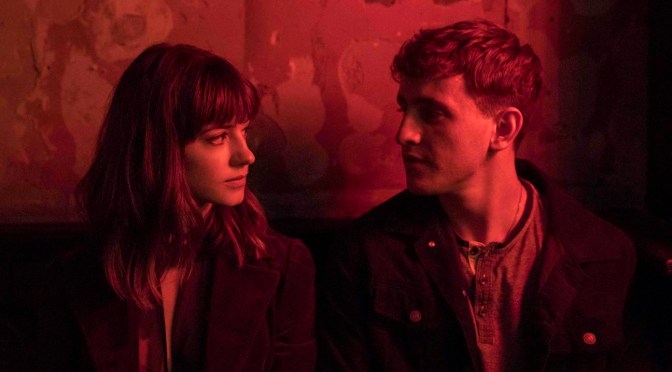
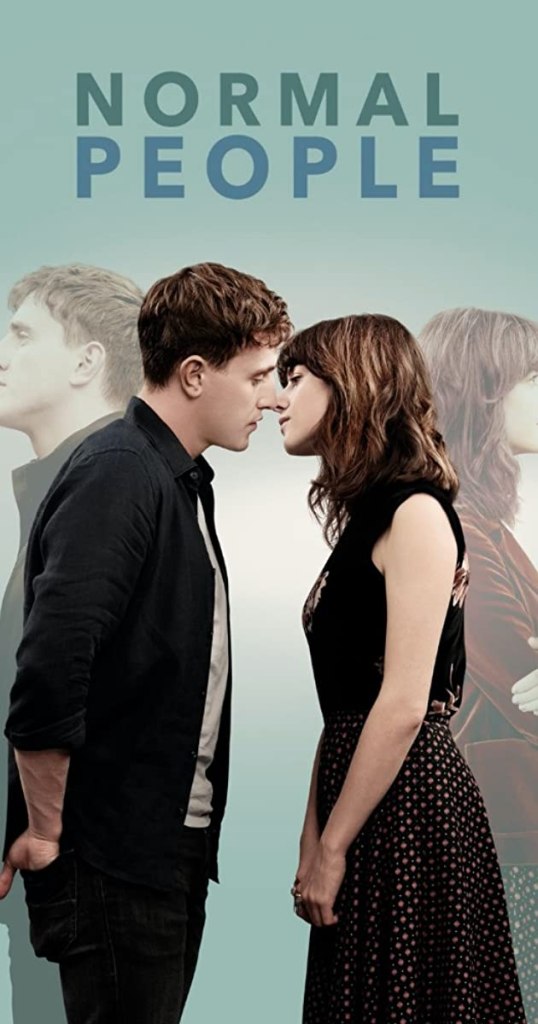
Love, lust and sexual desire are a big part of everybody’s lives whether they are positive or negative; indeed, the continuance of the species is very much reliant on them. Moreover, love or the lack of love has provided the springboard for millions of stories, films, plays, songs, poems, slogans, TV shows, comedies and adverts! The latest excellent love story I watched was the BBC/Hulu production called Normal People (2020). Over twelve episodes we were introduced and lured into the sweet and dark hearts of two Irish teenagers called Connell (Paul Mescal) and Marianne (Daisy Edgar-Jones). They meet, fall in lust, have loads of sex, fall in love, generally fall out with each, fight further, go to University, go abroad, grow up, fall down and then fall back in love with each with other, and so on.


Based on Sally Rooney’s extremely successful novel of the same name, the story events begin at a Sligo Secondary school. Connell is quietly spoken and from a single parent upbringing. But he is very popular with his peers, close to the top of his class and exhibits much sporting prowess. Marianne’s family is wealthier than Connell’s. In fact, the latter’s mum, Lorraine (Sarah Greene) cleans house for Marianne’s mother. The Sheridan household is not a happy one though due to a tragedy which occurred to the father. This causes Marianne to be very angry, self-loathing and outspoken. Because of this she is somewhat of an outsider at home and school. For some unknown reason Marianne’s brother and mother are very cold toward her. Yet, despite the turmoil and class difference, Connell and Marianne share a mutual attraction, which soon becomes a sexual relationship.

As aforementioned, the path of love is not smooth as the first obstacle to the relationship comes from Connell’s paralysing fear of what his school friends think. He is a complex soul and does not have the bravery to share his true feelings to the world. Marianne becomes a secret, and this angers her, causing a major rift between the two young lovers. I won’t give any further plot details away, but it is safe to say that this is not your average romantic comedy or drama. The story beats of the romance genre are present, yet delivered in a sombre, delicate and under-the-surface style. This is not surprising given the first six episodes are subtly directed by Lenny Abrahamson, a filmmaker who has a number of wonderful character-driven films to his credit.

With confident direction, acting and a serene soundtrack, Normal People (2020) is a consistently absorbing and emotional rollercoaster. What I would say it though it often feels as if you’re watching events unfold in extreme slow motion. This isn’t a criticism though, because in the stillness of the performances, the dwelling of the camera on the character’s faces and length of shots, we’re allowed the time to breathe in the joy and pain of this complicated romance. The two lead actors Phil Mescal and Daisy Edgar-Jones are both incredibly well cast. They have exquisite chemistry together in both their passionate sex scenes and when they just simply exist and talk and look and love and hurt together. One may gripe that the drama could have been achieved with a tad more pace and just a few less episodes. However, if you are looking for a truthful representation of young love, with all its angst, kinks, self-loathing, insecurities and exasperating undulations, then Normal People (2020) is definitely a worthwhile experience.

Mark: 9 out of 11


CINEMA REVIEW: THE HANDMAIDEN (2016)

THE HANDMAIDEN (2016)

DIRECTOR:  Park Chan-Wook

WRITERS: Park Chan-Wook, Chung Seo-kyung (from the novel Fingersmith by Sarah Waters)

CAST:  Kim Min-hee, Kim Tae-ri, Ha Jung-woo, Cho Jin-woong

**MAY CONTAIN SPOILERS**

The_Handmaiden-691415065-large

You may be too young to know or too old to remember but Channel 4 in the 1980s used to have an eclectic choice of arty independent and World Cinema films.  Now you get a few on Film Four but Channel 4 was a main outlet for interesting cinema not shown on the BBC or ITV channels. Channel 4 also used to, for a short period between 1986 and 1987 have a ‘Red Triangle’ on certain films to advise of sexual scenes and material that may be considered controversial. Not surprisingly the films with a ‘Red Triangle’ guaranteed nudity and erotic scenes causing audience figures to actually rise. After some moaning from the likes of Mary Whitehouse – a right-wing puritanical harpy who was a self-appointed anti-everything woman – the ‘Red Triangle’ was vanquished by Channel 4, but not before gaining notoriety and publicity.


handmaiden3

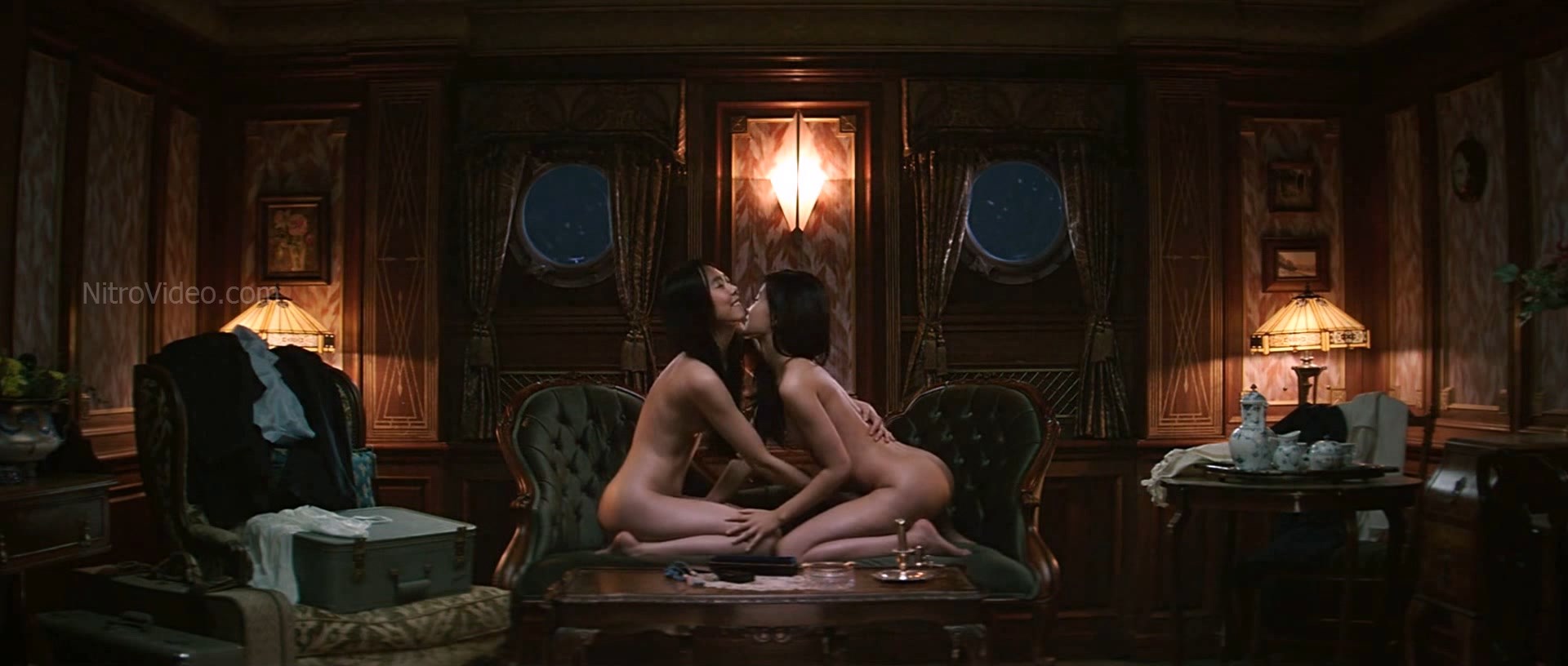
As a teenager I used to look forward to the more risqué content on Channel 4 as the Internet was at the virgin stage and yet to be invented; so titillation was often confined to late night films on a Friday night. Flash forward thirty years and because I’m more mature and it’s very easy to access pornography online I’m not a big fan of overtly sexual material in mainstream or independent features. Not sure why but I prefer subtlety and suggestion over all-out copulation. In Park Chan-Wook’s majestic erotic con-artist thriller there are some wonderfully subtle erotic scenes which raise the blood pressure and enhance the characterisation. There is also some serious scissoring between the two female leads going on too which in my view pushes the boundaries between eroticism, controversy and exploitation. However, this is the line Chan-Wook has always skipped along in classic films such as: Old Boy (2003), Sympathy for Mr Vengeance (2002), and Thirst (2009).


the-handmaiden05

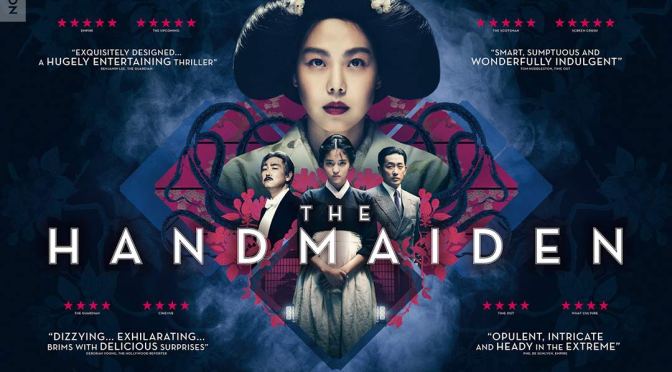
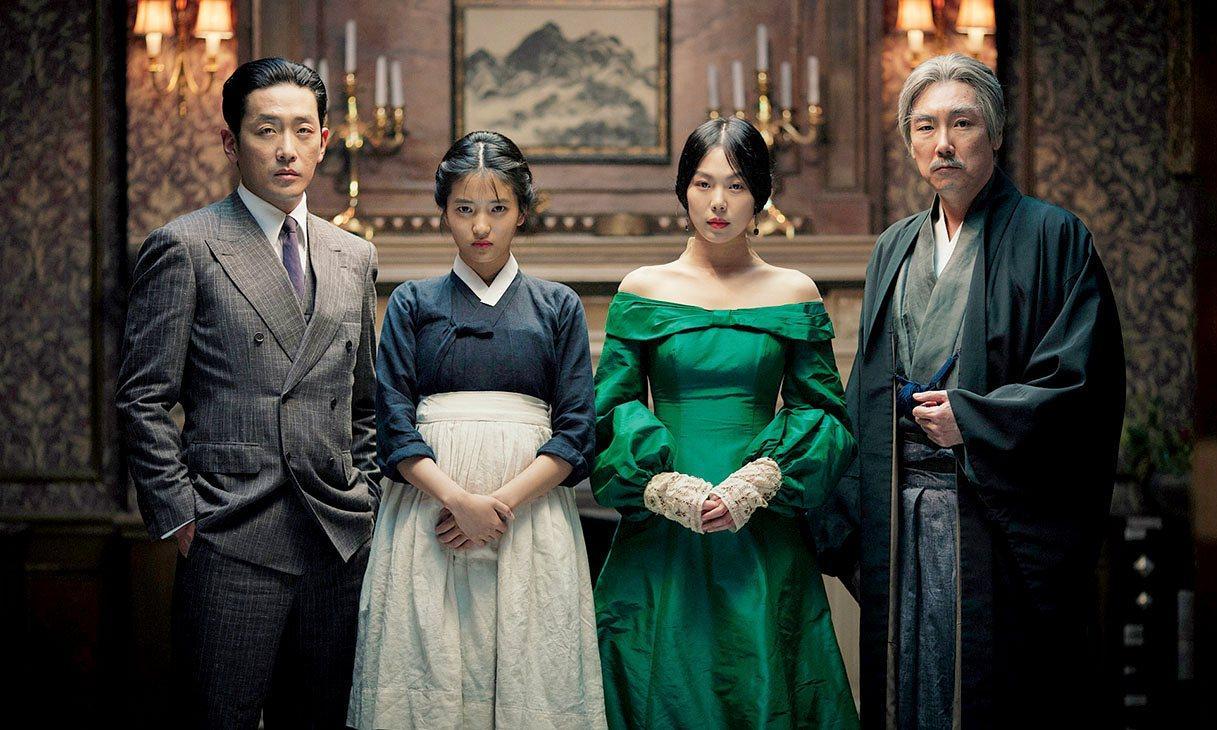
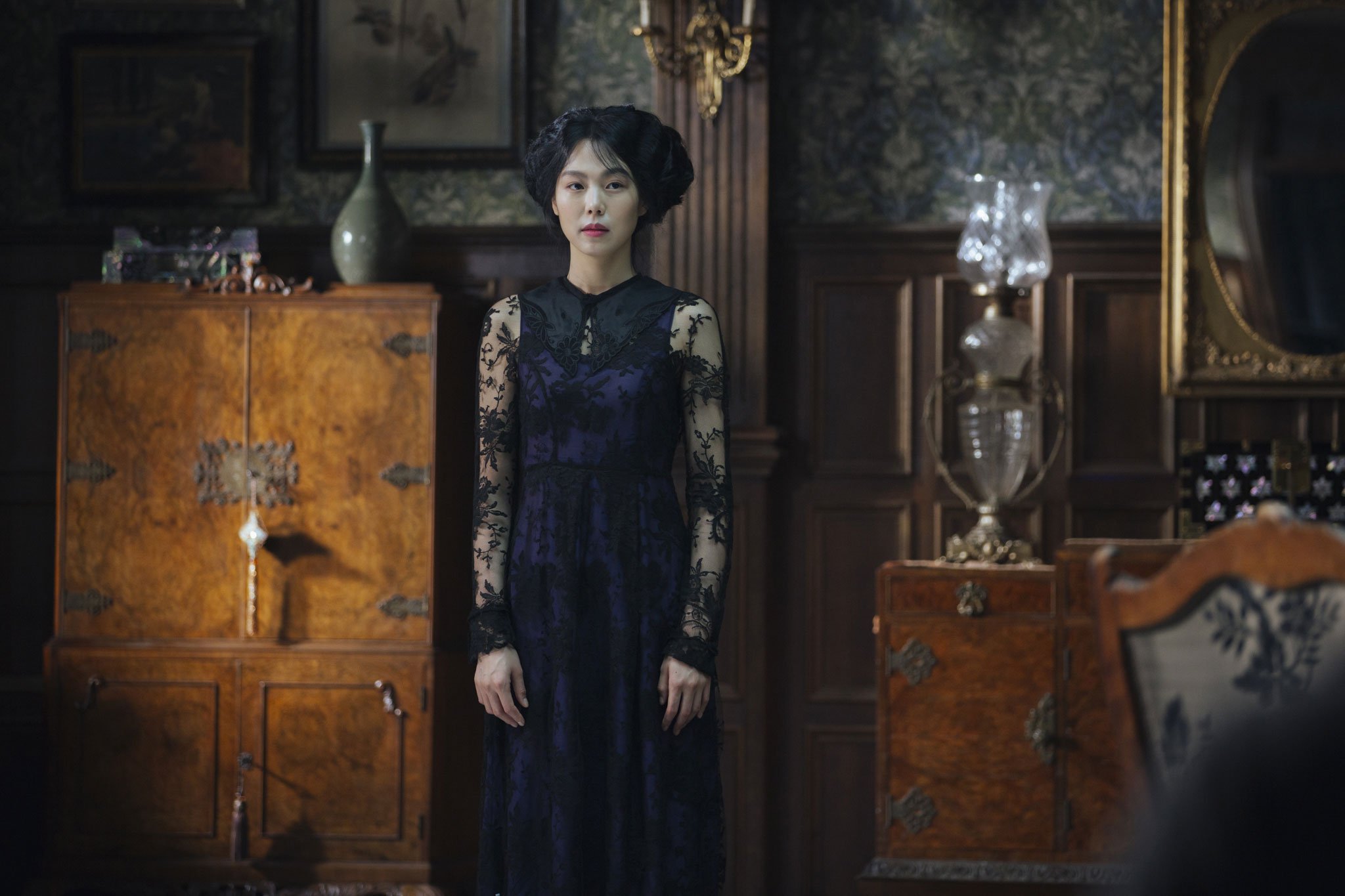
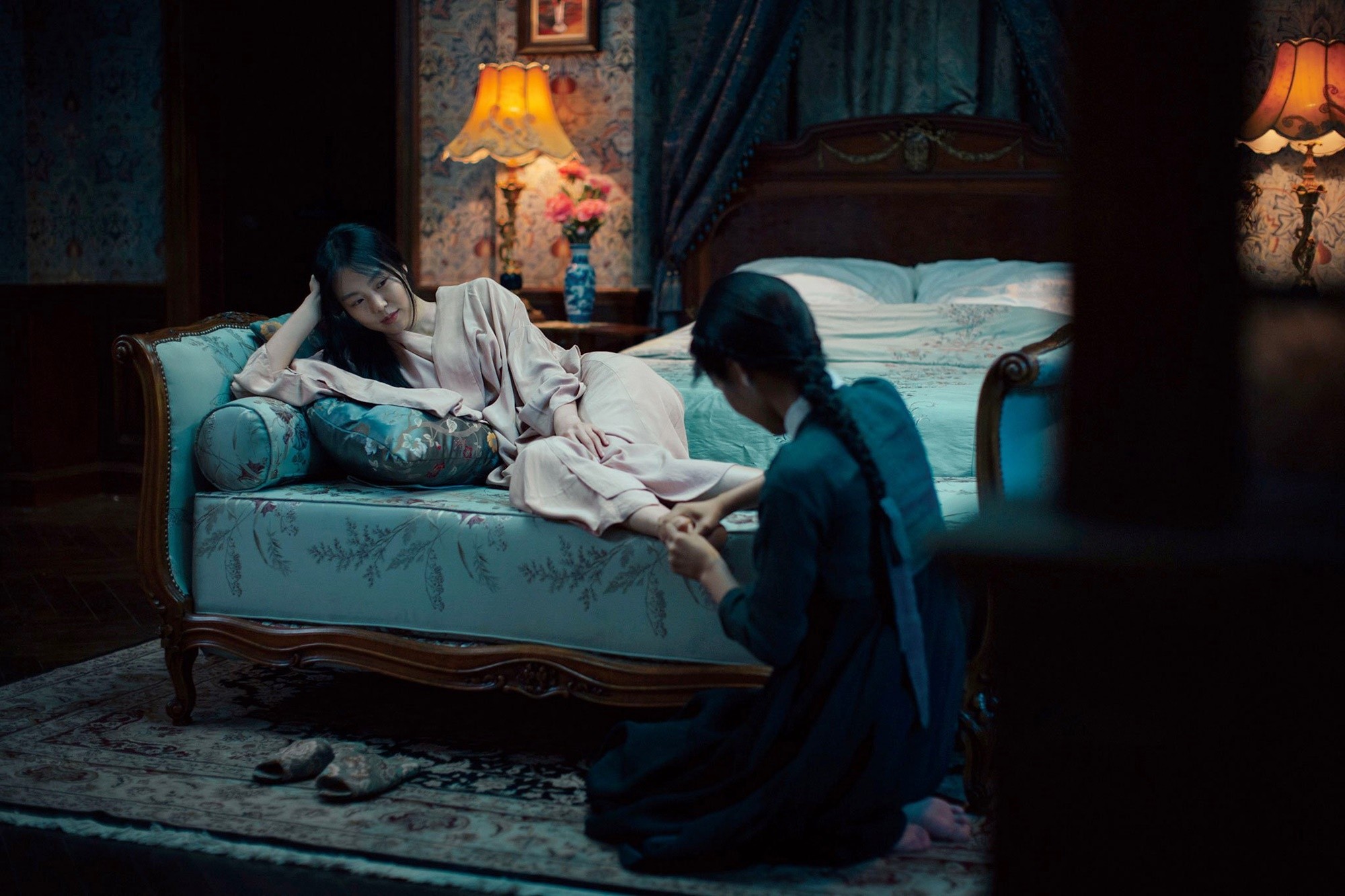
The Handmaiden is set in 1930’s Korea amidst the backdrop of the Japanese occupation and the cultural differences between the two nations are expertly drawn and examined in the story. Class differences are also highlighted in a rich text which finds Sook-hee seconded to look after the neurotic Lady Izumi Hideko, who is a ward and being groomed for marriage by her controlling Uncle Kouzuki. I will not give any further of the plot away but safe to say it is an incredibly complex narrative structured into three parts which overlap different perspectives within flashbacks and contrasting character voiceovers and angles.  Did I enjoy it? Absolutely, this is a beautifully shot period masterpiece which I took great pleasure in viewing. In my view the running time was arguably over-long and a couple of the more overt sex scenes could have been trimmed. Nonetheless, the film had me gripped throughout.


The_Handmaiden_2016_Kim_Min-Hee_Kim_Tae-Ri_-_Video_Clip_04.avi

Park Chan-Wook directed a gem of a noir thriller called Stoker (2013) for his first Hollywood film, but here is a bigger-budgeted and thematically richer cinema affair. It takes a complex con-artist-twisting-plot and imbues it with an erotically charged and explicit feminist love story which finds sharp-witted female characters overcoming the dominant and deviant patriarchal beast. Moreover, Chan Wook’s screenplay is a masterful adaptation of the original novel, the wonderfully titled Fingersmith, by Sarah Waters. Like the Coen Brothers, Quentin Tarantino, Martin Scorcese, Christopher Nolan, Jacques Audiard, Michael Haneke to name a few, Chan-Wook’s work is always a must-see-at-the-cinema-event and you don’t need a ‘Red Triangle’ to ensure you watch it.

 (Mark: 9 out of 11)