Tag Archives: family

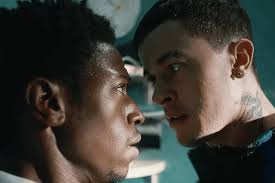
Cinema Review: Him (2025) – find blood, sweat, and meltdowns galore in this visceral NFL thriller!

Cinema Review: Him (2025)

Directed by Justin Tipping

Written by Skip Bronkie, Zack Akers & Justin Tipping

Produced by Jordan Peele, Win Rosenfeld, Ian Cooper & Jamal Watson

Main cast: Marlon Wayans, Tyriq Withers, Julia Fox, Tim Heidecker, Jim Jeffries, Maurice Greene etc.

Cinematography by Kira Kelly

** MAY CONTAIN SPOILERS **


“In modern slang, “Him” is used to signify a person who is considered a standout or a “star” in their field, often in sports or entertainment.” — Google search result.


Him (2025) is a visually arresting and thematically potent descent into the underbelly of American athletic obsession — a pitch-black thriller that trades stadium lights for the strobe of psychological torment. Centered on Cameron “Cam” Cade, a young quarterback hungry to dethrone San Antonio Saviors’ reigning legend Isaiah White (a commanding Marlon Wayans), the film begins as a standard sports drama and swiftly morphs into something far darker. Director Justin Tipping captures the suffocating intensity of modern competition with a painter’s eye — sweat, blood, and neon collide in every frame, turning locker rooms and training fields into cathedrals of self-destruction.

As Cam endures Isaiah’s brutal “boot camp,” the film exposes the rot beneath the rhetoric of greatness. Fear, humiliation, and violence dominate the regimen, transforming mentorship into a form of ritualized hazing. Themes of steroid abuse, distorted masculinity, and father-son guilt weave through the story like poison veins. The omnipresence of social media — the constant surveillance, the demand for curated perfection — amplifies the claustrophobia. In its best moments, Him (2025) feels like a nightmarish hallucination of ambition, where performance and identity blur until nothing human remains.


Yet for all its kinetic power and aesthetic daring, Him (2025) stumbles when it comes to coherence. The screenplay rushes through emotional beats, failing to give its characters space to breathe or evolve. Key relationships and motivations are truncated by editing that favours rapid cuts over logic — the film’s pulse races, but its heart falters. The result is an experience that dazzles visually but feels narratively hollow, more like a hypnotic music video than a fully realized character study. Indeed, the ending drops the ball most of all. The nightmarish satire culminates in a bloodbath which, while visually powerful, feels like something more twisted and subtle would have served Cam’s character arc better.

Overall, there’s no denying Him (2025) and its impact as a cinematic spectacle, with Wayans and Withers delivering standout performances. Its imagery lingers — bodies breaking under fluorescent light, cheers warping into screams — as does its commentary on the performative nature of modern masculinity, crazy fan worship, monetization of athletes and sporting sacrifice. If only the script matched its visuals, Him (2025), might have stood shoulder to shoulder with the psychological thrillers it so clearly reveres.

Mark: 6.5 out of 11


Cinema review: The Phoenician Scheme (2025) – plus Wes Anderson’s Top 11 films ranked in order of favourite!

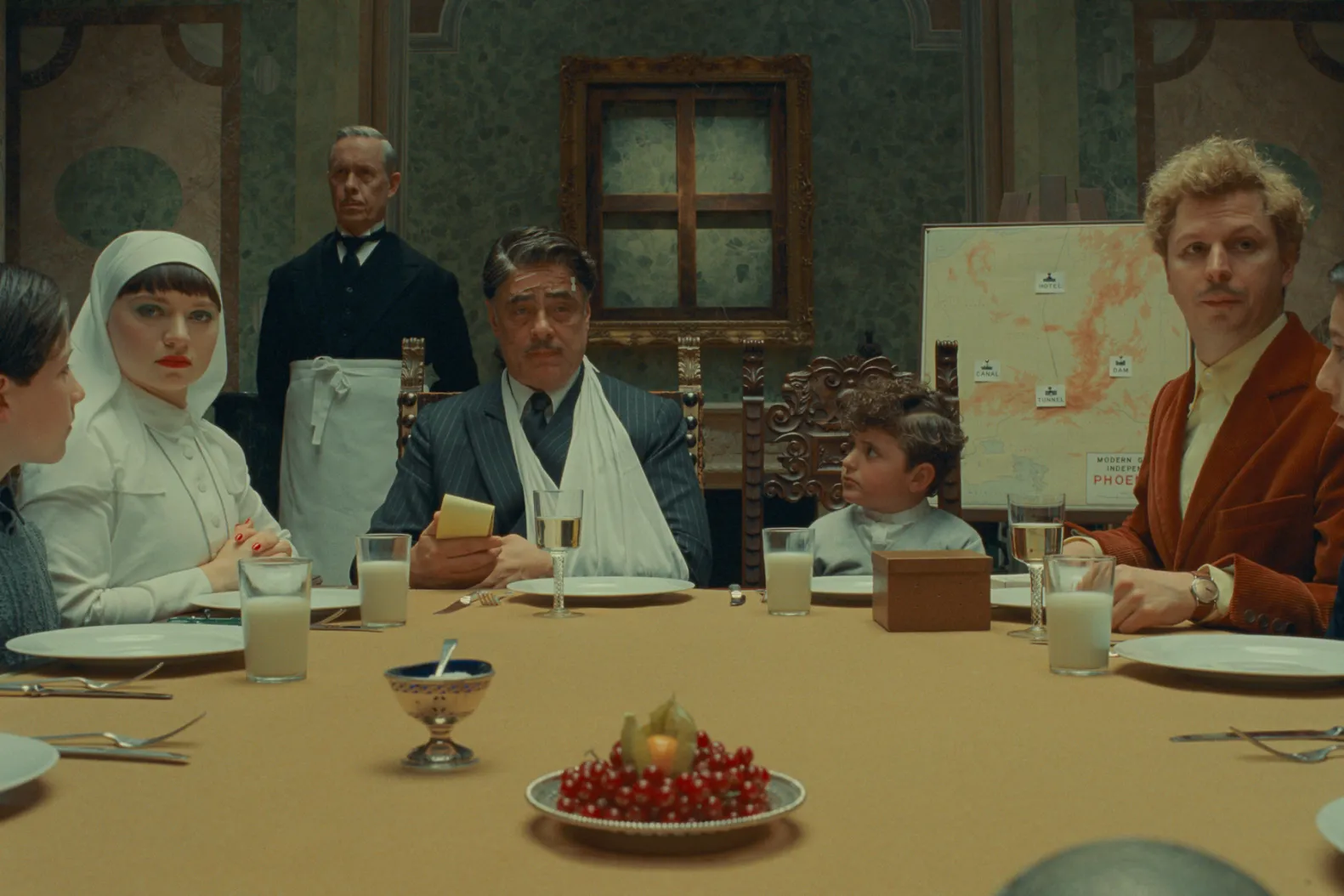
Cinema review: The Phoenician Scheme (2025)

Directed by Wes Anderson

Screenplay by Wes Anderson

Story by Wes Anderson and Roman Coppola

Produced by Wes Anderson, Steven Rales, Jeremy Dawson, John Peet

Cinematography by Bruno Delbonnel

Main cast: Benicio del Toro, Mia Threapleton, Michael Cera, Riz Ahmed, Tom Hanks, Bryan Cranston, Mathieu Amalric, Richard Ayoade, Jeffrey Wright, Scarlett Johansson, Benedict Cumberbatch, Rupert Friend, Hope Davis, etc.


Reviewing films for me is a form of study—a way to sharpen one’s eye, expand one’s perspective, and gain insight into the craft of filmmaking. It’s a dialogue between the film and the viewer, where curiosity, analysis, and empathy fuel a deeper appreciation for the storytelling process. Yet, Wes Anderson’s films often feel unreviewable in the traditional sense because they exist entirely within their own meticulously crafted universe—one governed by its own visual grammar, emotional tone, and narrative rhythm. His work defies conventional cinematic benchmarks not because it fails to meet them, but because it invents new ones.

His films are stylized to the point of abstraction: symmetrical compositions, pastel palettes, theatrical performances, deadpan dialogue, and storybook framing devices. These are not aesthetic flourishes added to conventional storytelling—they are the storytelling. Every element is calibrated to serve a singular artistic vision that prioritizes mood, irony, and emotional restraint in a way that often bypasses mainstream emotional cues. As a result, trying to evaluate Anderson’s films on the basis of relatability or realism can feel like trying to critique a painting for not being a photograph. You either enter his world and accept its rules, or you don’t.


The Phoenician Scheme (2025) is a whimsically convoluted tale of betrayal, bureaucracy, and buried emotion, anchored by a surprisingly tender pairing: Benicio Del Toro and Mia Threapleton as an estranged father and daughter navigating a pastel-hued world of espionage, assassination attempts and eccentricity. Del Toro brings his signature quiet intensity—filtered through Anderson’s signature deadpan—as Anatole “Zsa-Zsa” Korda, a controversial businessman seeking backing from an array of peculiar business types. Threapleton, in a breakout performance, plays Sister Liesl, a guarded young nun.

As always, Anderson’s aesthetic is immaculately controlled—every frame a still life, every line delivered with just-so detachment. But where the plot sometimes meanders through its own labyrinth of quirk, the film’s emotional core remains grounded in Del Toro and Threapleton’s quiet push-and-pull: a relationship built on misread intentions, half-kept promises, and a strange kind of inherited stoicism. Michael Cera is on splendid form too as Bjørn Lund, a Norwegian entomologist, tutor, and Korda’s administrative assistant.

Overall, The Phoenician Scheme (2025) is best enjoyed as a moving art installation and while thematically strong in terms of the father-daughter-reconciliation theme, doesn’t reach the narrative heights of Anderson’s best work. It’s a visually charming and emotionally sincere entry—proof that even in a world of plane crashes, quirky business deals, weird relatives, religious fervour, eccentric guerrillas, the arc of connection between a father and daughter can still feel radical.

Mark: 7.5 out of 11


Wes Anderson’s Top 11 films ranked in order of MY favourites!

1. Rushmore (1998)

2. The Grand Budapest Hotel (2014)

3. The Royal Tenenbaums (2001)

4. Bottle Rocket (1996)

5. Asteroid City (2023)

6. Isle of Dogs (2018)

7. Moonrise Kingdom (2012)

8. The Darjeeling Limited (2007)

9. The Phoenician Scheme (2025)

10. The Life Aquatic with Steve Zissou (2004)

11. The French Dispatch (2021)


Netflix Film Review: The Piano Lesson (2024) – ghosts of the past and present haunt the screen with resounding power!

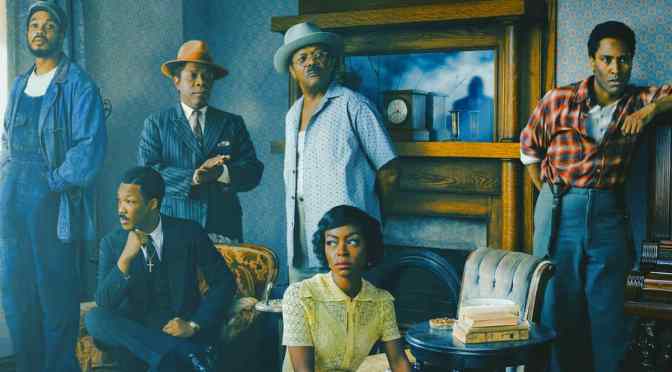
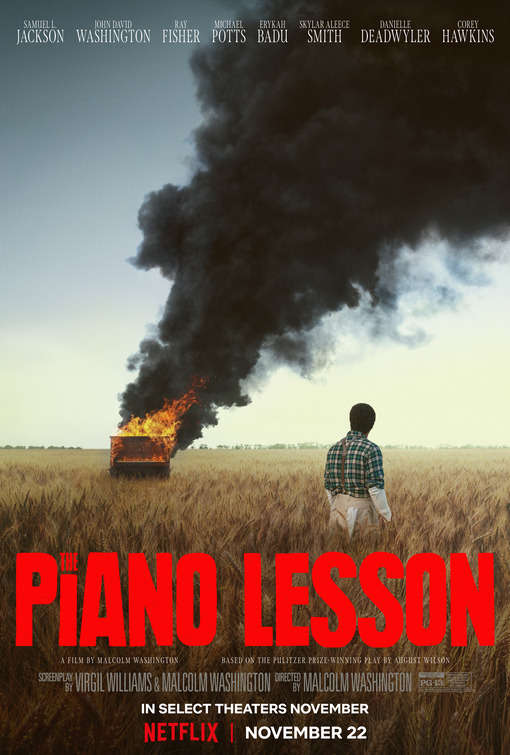
Netflix Film Review: The Piano Lesson (2024)

Directed by Malcolm Washington

Screenplay by Virgil Williams & Malcolm Washington

Based on The Piano Lesson by August Wilson

Produced by Denzel Washington & Todd Black

Main cast: John David Washington, Danielle Deadwyler, Samuel L. Jackson, Ray Fisher, Michael Potts, Erykah Badu, Skylar Aleece Smith,
Corey Hawkins, and more.


Cinematography by Mike Gioulakis


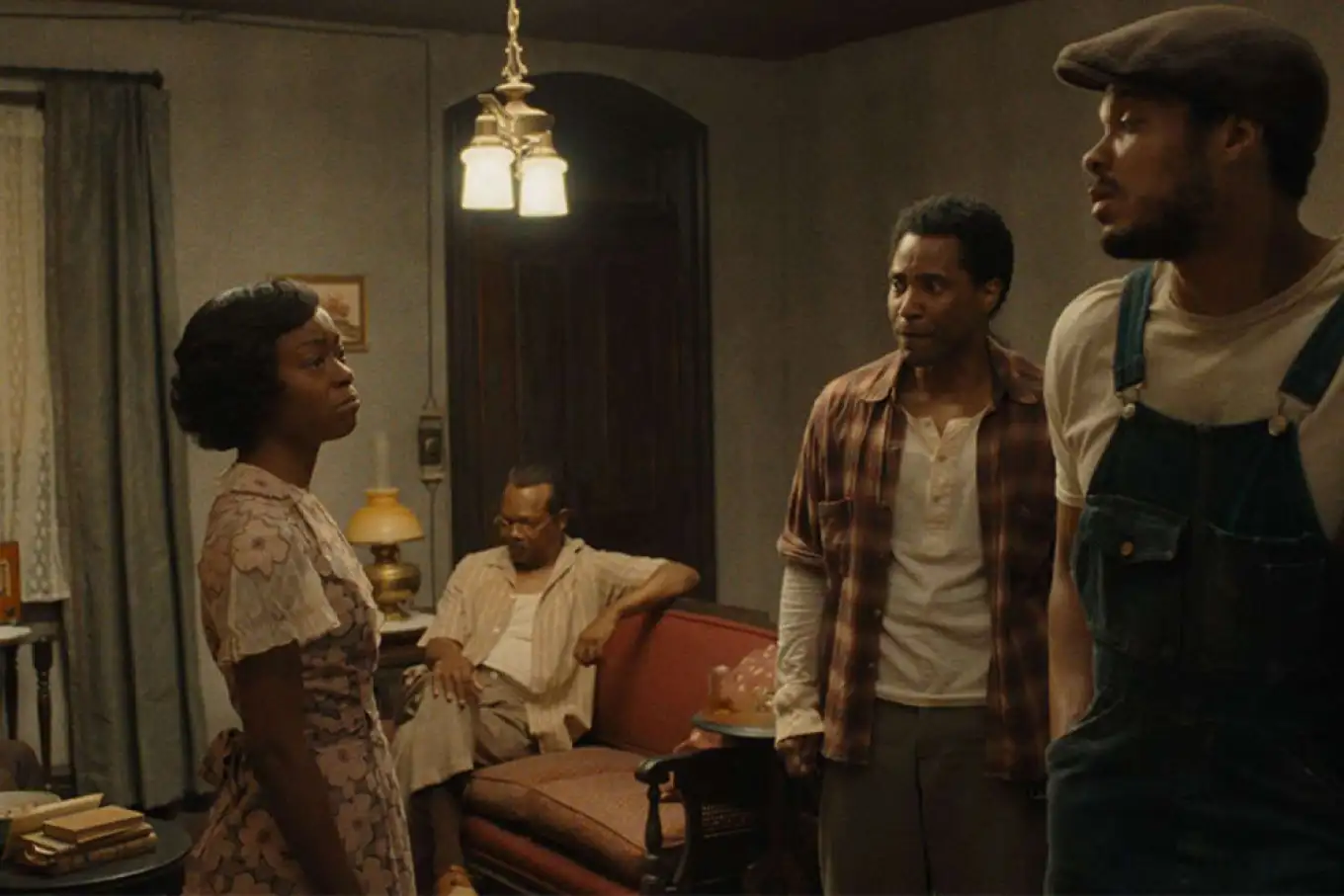
Malcolm Washington’s directorial debut, The Piano Lesson (2024), is a poignant and evocative adaptation of August Wilson’s 1987 play, set in 1936 Pittsburgh. Through a compelling narrative and an exceptional cast, Washington explores themes of heritage, familial conflict, and the enduring impact of racial oppression.

Washington, alongside co-writer Virgil Williams, expands the original stage play’s confines by incorporating flashbacks and supernatural elements, enriching the narrative’s depth and scope. The film centers on the Charles family, particularly siblings Boy Willie (John David Washington) and Berniece (Danielle Deadwyler), who are at odds over the fate of a family heirloom piano. Boy Willie wishes to sell the piano to purchase land that once belonged to their ancestors, while Berniece views the instrument as a sacred connection to their past.

The piano, intricately carved with images of the Charles family’s ancestors, serves as a powerful symbol of their history and resilience. For Boy Willie, it represents a means to break free from the shackles of the past and build a future of self-sufficiency. Conversely, Berniece sees it as a testament to their survival and a link to the sacrifices made by their forebears. This dichotomy underscores the central conflict: the tension between honoring tradition and pursuing progress


The film delves into the complexities of familial bonds and the differing perceptions of heritage. Boy Willie’s desire to sell the piano reflects a yearning to move beyond the constraints of history, while Berniece’s attachment signifies a commitment to preserving their lineage. At the same time she mourns the loss of her husband and combats romantic offers from local suitors. Her struggles truly power the piece and the familial clashes further embody the broader struggle within African American communities: reconciling the weight of history with the aspirations for advancement. The supernatural elements, particularly the haunting presence of the plantation owner, Sutter’s ghost, are delivered effectively. They also amplify the narrative’s exploration of unresolved trauma and the need for reconciliation.

The ensemble cast delivers standout performances, with John David Washington portraying Boy Willie’s fiery ambition and Danielle Deadwyler capturing Berniece’s steadfast resolve. How Deadwyler did not even get an Oscar nomination for Best Actress in a Supporting Role is beyond me. Moreover, Samuel L. Jackson offers a subtle, unselfish and grounded portrayal of Doaker, the family patriarch. Washington’s direction ensures a respectful adaptation, balancing the play’s rich and passionate dialogue with cinematic elements that enhance its emotional resonance.

Overall, Malcolm Washington’s The Piano Lesson is a resounding adaptation that honours August Wilson’s legacy while providing a fresh perspective on timeless themes. Through its rich symbolism, compelling performances, and thoughtful direction, the film invites audiences to reflect on the complexities of heritage, the burdens of history, and the paths toward healing and progress.

Mark: 8.5 out of 11


Cinema Review: I’m Still Here (2024) – A searing portrait of resistance in the face of military tyranny!

Cinema Review: I’m Still Here (2024)

Directed by Walter Salles

Screenplay by Murilo Hauser and Heitor Loreg

Based on I’m Still Here by Marcelo Rubens Paiva

Produced by Maria Carlota Bruno, Rodrigo Teixeira and Martine de Clermont-Tonnerre

Main cast: Fernanda Torres, Selton Mello, Fernanda Montenegro, Valentina Herszage, Luiza Kosovski, Barbara Luz, etc.

Cinematography by Adrian Teijido

*** MAY CONTAIN SPOILERS ***


On March 31, 1964, the Brazilian military, with support from the United States and segments of the civilian population, overthrew the government of President João Goulart in a coup d’état. Goulart, a left-wing president who had been in power since 1961, faced rising opposition due to his policies that included land reforms and more progressive labour laws. These policies alarmed conservative sectors of society, including the military, business elites, and parts of the middle class, who for many feared the spread of communism in the context of the Cold War. From reports I have read, the military’s move was framed as a necessity to prevent Brazil from descending into a left-wing revolution, but the coup marked the beginning of a brutal 21-year period of military dictatorship. Be careful what you wish for.

Under the military regime (1964–1985), Brazil saw widespread censorship, repression of political dissidents, the establishment of a climate of fear, and the use of torture against suspected leftist militants and activists. The military government justified its actions as necessary to combat communist insurgency, but its reign was characterised by systematic violations of human rights. The regime implemented institutional acts that curtailed democratic freedoms, silenced political opposition, and controlled the media, all while claiming to defend the country from Marxism. The dictatorship lasted until 1985, ending when the military handed power back to a civilian government, but the effects of this period are still deeply felt in Brazilian society, as many families continue to search for the truth about the victims of torture and forced disappearances during the dictatorship.


Yet, while the film may not explicitly focus on the 1964 coup or the military dictatorship. I’m Still Here (2024) addresses the aftermath and themes of identity, resistance, and survival in the face of oppressive systems. Director, Walter Salles, uses the personal as a lens through which broader social and political issues are explored. One could consider how the legacy of fear, control, and the impact of a regime still reverberates in contemporary Brazil.

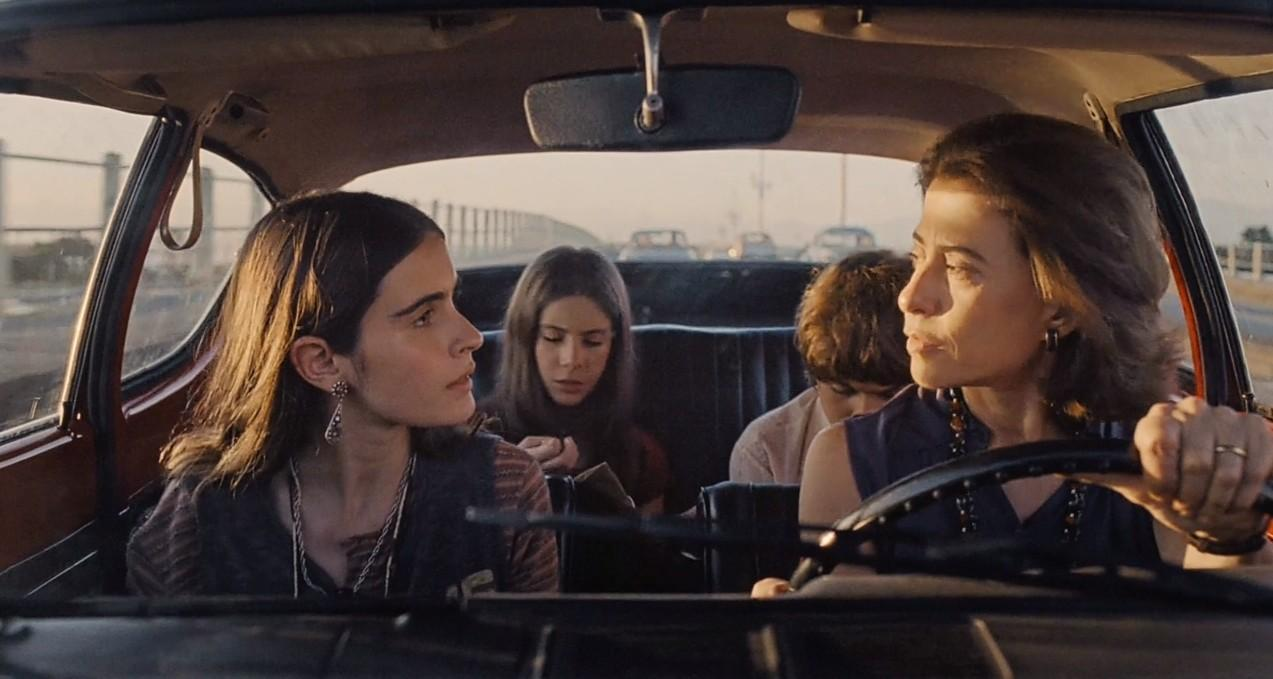
In I’m Still Here (2024), the filmmakers take a distinctive approach to the thriller genre by moving away from the typical tropes associated with suspense-driven narratives. Instead of focusing primarily on action or a series of dramatic plot twists, the film shifts its attention toward a more intimate, personal, and familial story. There is suspense and tension, but it is more under-stated and subtle. This departure from overt political thriller conventions allows the film to delve into the emotional and psychological terrain of its characters, with a particular focus on the matriarch, Eunice Paiva, played by the powerhouse Fernanda Torres.

Rather than relying on external action or traditional thrills, I’m Still Here (2024), centres around Eunice’s emotional journey and the impact of her environment on her family when her husband, Rubens Paiva (Selton Mello) is taken away by what may-or-not-be the military. The film positions Eunice as the central figure whose personal evolution drives the narrative, illustrating the profound effects of her choices and relationships on her family. Salles skilfully weaves family celebrations, events, and home movie footage to create a swell of warmth amidst the fear and paranoia created when Rubens disappears.


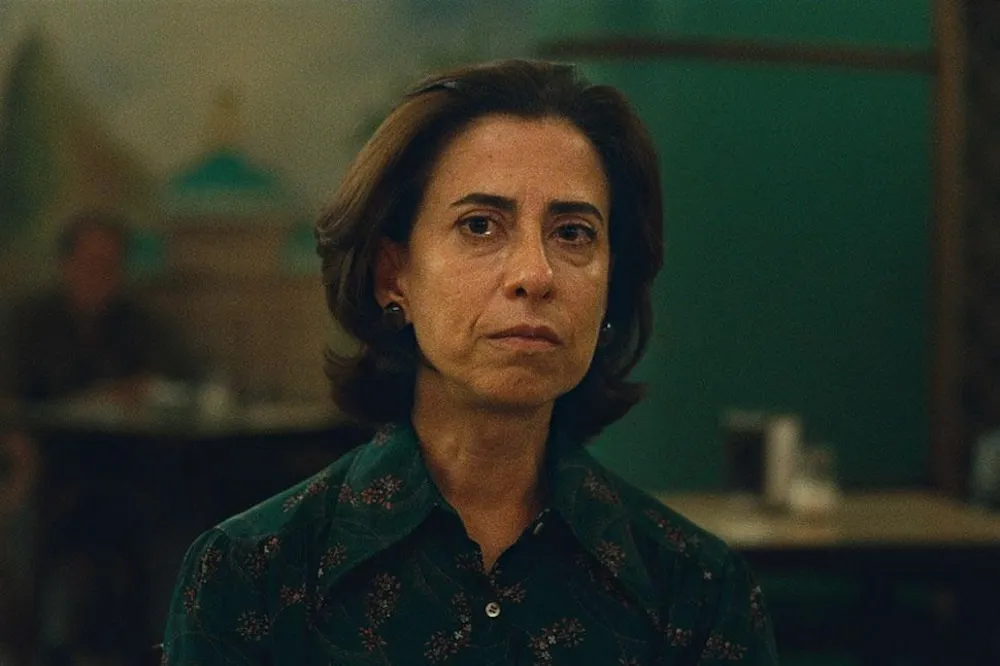
Eunice Paiva’s character is given a powerful depth in I’m Still Here (2024), with Fernanda Torres delivering a standout performance. Rather than positioning Eunice as a victim or a purely heroic figure, the film complicates her character, showing her as a multifaceted individual. Eunice’s actions are driven not by external thrills or pressures, but by the emotional and psychological burdens she carries as a matriarch, dealing with familial responsibility and navigating the complexities of her relationships with her children, spouse, and extended family.

Torres’s portrayal emphasises Eunice’s inner conflict—her desire to protect her loved ones, while also grappling with personal loss, regret, and the external societal forces that shape her world. Constantly denied answers and closure by the authorities, Eunice refuses to give in and continues to fight for decades, even when the military rule is over. The emotional intensity of Eunice’s character arc is one of the most compelling aspects of the film, as Torres’s performance brings a deep authenticity to the role, grounding the story in real, human struggles rather than sensationalised action.

By moving away from traditional thriller tropes, I’m Still Here (2024) creates a more reflective and intimate cinematic experience. Rather than simply delivering suspense through external action, the film explores the internal tensions of its characters and their relationships, magnifying the quiet, profound impact that such personal struggles can have on a family. Having lived through such adversity the Paiva family would stand proud in the face of this evil regime, overcoming all that is thrown at it. I mean, there is so much evil in this world and throughout history, that Eunice Paiva and similar quiet heroes are to be cherished. In short: why can’t such admirable individuals run the often horrible world we live in.

Mark: 8.5 out of 11


Netflix Film Review: Emilia Perez (2024) – A Trans-formative song of Risk and Redemption!

NETFLIX FILM REVIEW: EMILIA PEREZ (2024)

Directed by Jacques Audiard

Screenplay by Jacques Audiard

Based on Écoute by Boris Razon

Produced by Jacques Audiard, Pascal Caucheteux, Valérie Schermann, Anthony Vaccarello

Main Cast: Zoe Saldaña, Karla Sofía Gascón, Selena Gomez, Adriana Paz, Mark Ivanir, Édgar Ramírez etc.

Cinematography by Paul Guilhaume

*** MAY CONTAIN SPOILERS ***


There’s such a thing as having too much going on.” Howard Moon from The Mighty Boosh.

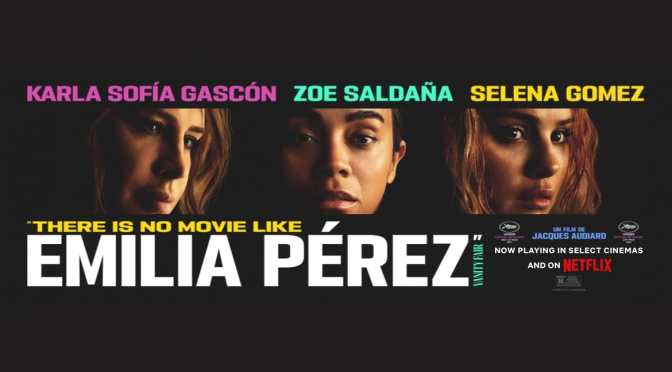
I am a big champion of the films of Jacques Audiard. When his eccentric Western, The Sisters Brothers (2018), was released I wrote a positive review and tribute to several other fine films he has directed here. Audiard likes to take risks representing human beings on the edge of society and perhaps struggling with life; people who often make left-field decisions to improve or escape their existential plight. With his latest film Emilia Perez (2024) the filmmaking master challenges the audience again with a multi-blended genre film that also contains powerful themes of transformation, redemption, violence, crime and family values. Oh and there are songs too.

The narrative begins strongly as Rita Mora Castro (Zoe Saldana), a fiercely talented yet overlooked lawyer in Mexico City, finds herself thrust into the spotlight when she defends the wife of a prominent media mogul in a controversial murder trial. Despite her misgivings, Rita crafts a chillingly persuasive argument that frames the death as a suicide, securing an unexpected victory in the case—one that leaves her both celebrated and haunted.

As the dust settles, Rita’s restless dissatisfaction with her life grows louder. Then comes an anonymous phone call: an enigmatic voice offers her a chance at something extraordinary—and extraordinarily dangerous. Intrigued and desperate for change, she agrees to a clandestine meeting. The mysterious client turns out to be none other than Juan “Manitas” Del Monte (Karla Sofía Gascón), a ruthless and feared cartel kingpin. But the request they make isn’t what Rita expects from a crime-lord. Manitas dreams of living authentically by undergoing gender-affirming surgery and becoming a woman. Rita must decide: will she help Manitas rewrite their story, or will she risk becoming the next chapter in a tale of betrayal and bloodshed?


This fascinating set-up draws you in and I believe if Audiard’s narrative had concentrated mostly on the relationship between Rita, the transitioned, Emilia, then the film would have retained much emotional and thematic power. Yet, after Emilia’s operation the screenplay introduces several other story strands and characters to take in, including Selena Gomez’ feisty Jessi Del Monte, Manitas’ ex-wife who thinks “he’s” dead. This development works initially but then Audiard hurls so many more ideas and genres at the audience wall, not all of them sticking.

Admittedly, the film’s audacious blend of melodrama, crime, thriller, musical, and comedy creates an unpredictable and frenetic narrative that keeps viewers on their toes. However, this constant genre-shifting can undermine the weight of its core themes—gender and identity—by overshadowing them with spectacle and tonal inconsistency. The story’s rapid turns and refusal to settle into a single emotional or narrative groove risk, arguably trivializing the profound struggles and triumphs of its trans-protagonist. Moments that could serve as deeply reflective or cathartic explorations of gender identity are sometimes undercut by abrupt pivots into slapstick humor or hyper-stylized action. While these shifts might aim to reflect the disarray and fluidity of identity in a chaotic world, they can also dilute the thematic resonance.

At the same time, it’s clear Audiard is deliberately embracing this chaos and analysis of human flaws. The fractured tone might symbolize a world where stability and clarity are illusions, mirroring the internal and external conflicts of someone navigating personal transformation in an unyielding environment. This approach, while conceptually intriguing, can feel alienating. Nonetheless, the cast’s stellar performances anchor the film, ensuring that the characters remain compelling even when the story spirals into excess. Lastly, Emilia Perez‘ (2024) relentless energy often leaves little room for introspection, and whether this genre-chaos enriches or undermines the narrative depends largely on the viewer’s tolerance for Audiard’s embrace of choral disorder in a world seemingly allergic to calm and pattern.

Mark: 7.5 out of 11


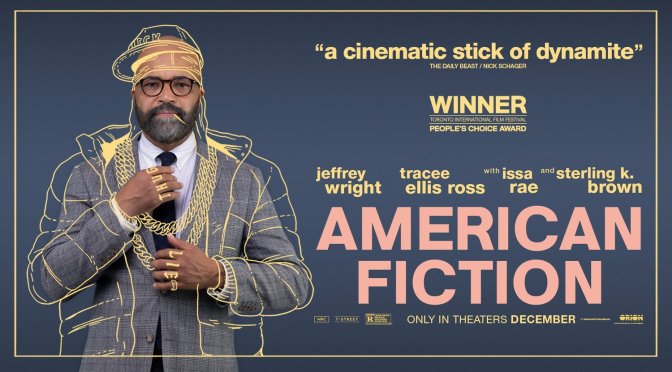
CINEMA REVIEW: AMERICAN FICTION (2023)

CINEMA REVIEW: AMERICAN FICTION (2023)

Directed by Cord Jefferson

Screenplay by Cord Jefferson

Based on Erasure by Percival Everett

Produced by Ben LeClair, Nikos Karamigios, Cord Jefferson, Jermaine Johnson, etc.

Main Cast: Jeffrey Wright, Tracee Ellis Ross, John Ortiz, Erika Alexander, Leslie Uggams, Adam Brody, Issa Rae, Sterling K. Brown, etc.

Cinematography by Cristina Dunlap

** MAY CONTAIN SPOILERS **


Cord Jefferson is a writer and director who, at first consideration, was unknown to me. However, a couple of clicks on the mouse and I soon realised he had worked on a couple of TV shows I’d really appreciated. One is the inventive and hilarious comedy The Good Place (2017-2019) and the other the riotous HBO graphic novel adaptation, Watchmen (2019). Jefferson was part of the writing team on both shows which delivered plots and events that consistently twisted and delivered fresh laughs and surreal situations which made you think.

Watchmen (2019) was especially an uber-stylish smorgasbord, splashed with crazy characters, witty hard-boiled dialogue, wild science fiction twists, lashings of violence, pockets of substance, cinematic visuals, high class production values and a cast to die for. For his debut feature, Jefferson has adapted the novel Erasure by Percival Everett into American Fiction (2023). It’s stylistically less chaotic feature film when compared to Watchmen (2019), however, it is intelligent and biting satire combining family drama, meta-literary analysis and social commentary.

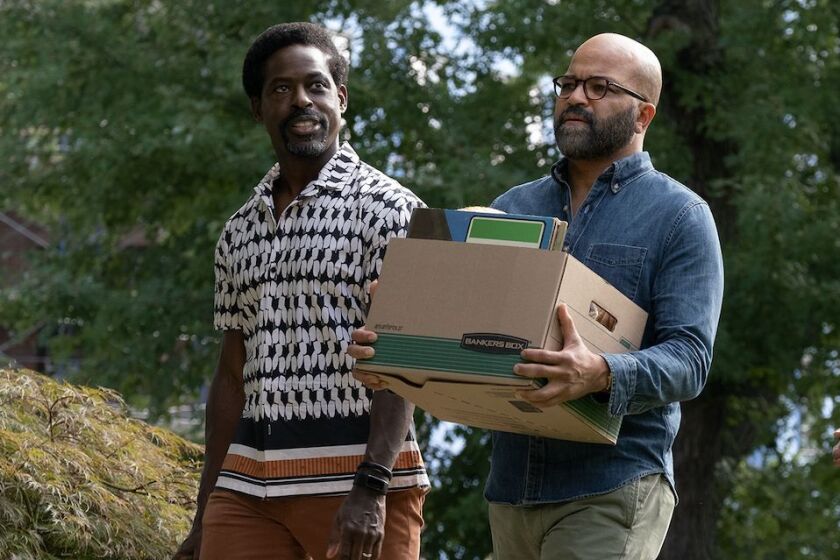
The lead character, Thelonious “Monk” Ellison, is portrayed with imperious class by Jeffrey Wright. Now, I believe Cillian Murphy may get many awards (he already has the BAFTA for best actor in a leading role) for his work in Oppenheimer (2023), but Wright’s performance and character work here is beyond brilliant. It is such a nuanced and funny rendition that Wright deserves all the plaudits he could be denied. His Monk Ellison is an intellectual and academic writer whose books unfortunately do not sell very well. His agent, Arthur (John Ortiz) says publishers believe his work is “not black enough.” It’s a shocking statement delivered in understated fashion, to which Monk responds that he does not “recognise race.”


Monk is a writer who is trying to bring thoughtful, however niche, product into a culture which seems to prefer stereotyped visions of black characters, who are either addicts, or criminals or downtrodden, beaten by the police and prejudiced within society. No one is denying that people of colour are certainly prejudiced against and this needs to cease, but American Fiction (2023) seems to highlight that the books it is satirizing are cashing in and monetizing suffering and perpetuating discrimination, exacerbating the situation as opposed to resolving it.

Facing financial issues due to a lack of sales and his mother (Leslie Uggams) needing nursing care due to creeping dementia, Monk writes a parody of urban fiction called, ‘My Pafology’. Initially done as a joke he is horrified when his agent tells him it has become a literary sensation with publishers fighting for the write to release it. Here Wright’s reaction acting is a joy as Monk is caught between needing the money but at the same risking his artistic reputation from creating a “fake” book and authorial alter ego named, Stagg R. Leigh.

Jefferson and Wright combine to delicious effect in satirising intellectual and middle-class people’s reaction to what they consider to be authentic “street” culture. As Monk strives to escape the monster he has created he finds the hole getting bigger and bigger as his novel begins to get interest from Hollywood and esteemed literary awards. Yet, this is not a simple comedy as Jefferson also profiles Monk’s personal, family and romantic struggles making him a true three dimensional character to root and identify with. Wright, as I say is phenomenal but the supporting cast including Issa Rae and Sterling K. Brown stand out too. Brown almost steals a few scenes from Wright. American Fiction (2023) arguably ends with a series of meta-jokes too far, which draw away from Monk’s highly emotional journey, but overall, Jefferson demonstrates he is an original cinematic voice to watch out for in the future.

Mark: 8.5 out of 11


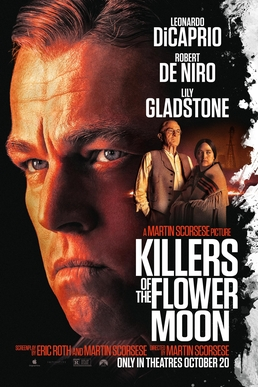
CINEMA REVIEW: KILLERS OF THE FLOWER MOON (2023)

CINEMA REVIEW: KILLERS OF THE FLOWER MOON (2023)

Directed by: Martin Scorsese

Screenplay by: Eric Roth and Martin Scorsese

Based on: Killers of the Flower Moon by David Grann

Produced by: Dan Friedkin, Bradley Thomas, Martin Scorsese and Daniel Lupi

Main cast: Leonardo DiCaprio, Robert De Niro, Lily Gladstone, Jesse Plemons, John Lithgow, Tantoo Cardinal, Scott Shephard, etc.

Cinematography: Rodrigo Prieto

Edited by: Thelma Schoonmaker

*** MAY CONTAIN SPOILERS ***


Who can tell how the world and society as we know it would’ve evolved if Christopher Columbus, the explorer credited with finding the Americas in 1492, had not landed and begun the first steps toward colonising this uncharted part of Earth. Of course, there were existing natives in the Americas and over time they would experience first contact with Spanish, Portuguese, British and other European, predominantly white, settlers. It may be that the natives would have had equally difficult experiences, and colonists brought with them many positive things. But one has to surmise they would not have had their land and lives gradually taken from them over the centuries without the European invasion.

The violent theft of land and wealth from Native Americans forms the bedrock of the narrative of Martin Scorsese’s latest epic drama, Killers of the Flower Moon (2023). Adapted from David Grann’s critically acclaimed nonfiction book, the film centres on the series of murders of wealthy Osage people that occurred in Oklahoma in the early 1920s. The motive for the heinous culling was the greed of white men. Such individuals lusted after the richness present after big oil deposits were discovered beneath the Osage people’s land. Whereas Grann’s book is a monumental study of the murders, perpetrators, the Osage culture, politics of the era, and how the newly formed FBI delved into the crimes, Scorsese’s incredibly slow and long adaptation does all that, while also exploring the romance and murderous treachery between Osage native, Mollie (Lily Gladstone) and war veteran, Ernest Burkhart (Leonardo DiCaprio).


Opening by establishing how the oil erupted and blackened the green land, the film then firmly sets up how the American businessmen used the legality of the headright system to manipulate the flow of sudden wealth that came to the Osage people. One such man is William King Hale (Robert DeNiro) who presents himself as a benefactor to the Osage, but truly speaks with a forked tongue. Having left the infantry unit after World War One, Hale’s nephew Ernest joins him to work and ultimately do his bidding. Hale cajoles Ernest to romance wealthy Mollie and get further feet under the table and closer to that beloved black gold money. Yet, enough is never enough for the likes of Hale and driven by another formidable Scorsese directed performance, De Niro delivers a deviously evil characterisation.

DiCaprio here takes the less charismatic role as the doltish Ernest. As Hale urges him to do further misdeeds the banality of everyday evil is palpable in Ernest’s actions. Along with a litany of professional and thuggish cowboy types Ernest and Hale’s other minions wreak havoc on the Osage people, committing arson, murder, poisonings, robbery, and shootings. All just for more money. The tragedy is that Ernest clearly has feelings for Mollie, serenely portrayed by a revelatory Lily Gladstone, but he just cannot stand up for himself against his wicked uncle. So much so that I just wondered why the hefty runtime was concentrating on Ernest’s character. I mean, Scorsese and DiCaprio give us little in the way of anti-heroism to bounce off, or even some cathartic sense of redemption. Ernest starts out as a loser and finished the story the same. Over three hours spent with a gurning idiot left me frustrated.

Directed, as one would expect with a masterful hand, mind and eye by Scorsese, who once again surrounds himself with an incredibly talented cast and production crew. Not to forget the unbelievable $200 million budget. But Scorsese’s movement of late to ultra-long and methodical cinema is an artistic choice that requires much patience. While Killers of the Flower Moon (2023 is thematically very powerful, beautifully filmed, and contains a number of exceptionally impressive sequences, there was genuinely not enough story to justify such a long running time. Whereas The Irishman (2019) was slow, it was methodically thrilling and absorbing throughout. Killers of the Flower Moon (2023) on the other hand becomes repetitive in its reveals of greedy Cowboys breaking bad and raising hell to the cost of the Osage. The introduction of the FBI and their subsequent investigation comes way too late to save the over-bloated length and pace. However, there is no doubt, the film remains vital in highlighting the historial horror perpetrated upon the Osage land and people. Perhaps Apple TV should have just given the money to the Osage descendants as reparation?

Mark: 8 out of 11


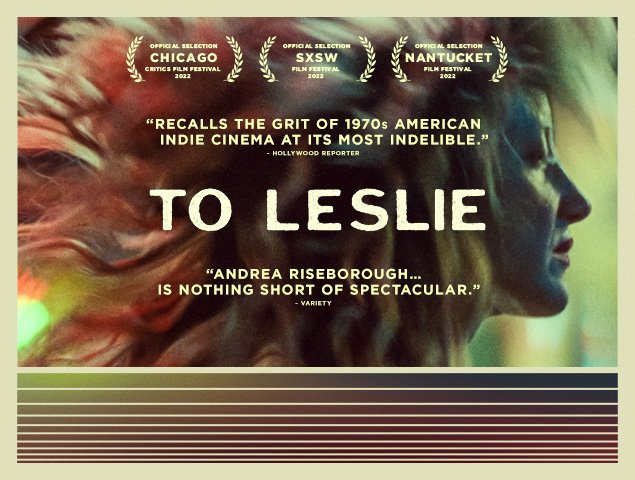
Film Review: TO LESLIE (2022)

Film Review: TO LESLIE (2022)

Directed by: Michael Morris

Written by: Ryan Binaco

Produced by: Claude Dal Farra, Brian Keady, Kelsey Law, Philip Waley, Jason Shuman, Eduardo Cisneros, etc.

Cast: Andrea Riseborough, Andre Royo, Owen Teague, Stephen Root, James Landry Hebert, Marc Maron, Allison Janney, etc.

Cinematography: Larkin Seiple


*** MAY CONTAIN SPOILERS ***


Cinema and booze have always been my two favourite things to distract me before I stagger off to the great pub in the sky! And there have been some great drunken characters and performances over the years on the box and at the cinema. The drunk is an often-used archetype employed for tragic, humorous and, on occasions, heroically redemptive narrative purposes.

Getting drunk actually is certainly easier than acting drunk on screen. Al Pacino in Scarface (1983) was a monstrous example of venal intoxication, Richard E. Grant in Withnail and I (1987) gave us one of the most hilarious drunkards, while Dean Martin’s, Dude in Rio Bravo (1959) and Kilmer’s Doc Holliday in Tombstone (1994) were fine Western inebriates. Romantic dramas Leaving Las Vegas (1996) and Days of Wine and Roses (1962) fiercely show the power alcohol has as it systematically shakes you like a rabid dog until one’s soul is hollowed out.

Ray Milland won an Oscar in The Lost Weekend (1949) as the epitome of liquid self-destruction. While my favourite “drunk actor” of all time is the imperious soak, Willie Ross.  His lagging-pisshead renditions are the best I have ever seen on screen!  His character in Rita, Sue and Bob Too (1987) is a racist, sexist, unemployable, drunken bully who when stood up to would simply cower amidst his own weakness.  Club comedian, Willie Ross would repeat the feat in classic British TV drama Our Friends in The North (1996) as Daniel Craig’s vicious alcoholic father.


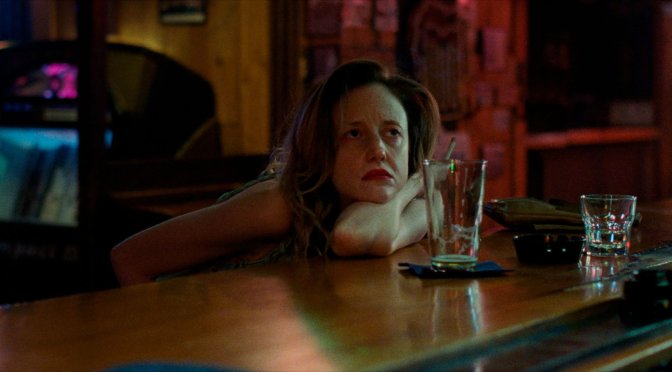
So, how does Andrea Riseborough compare as a screen drunk in, To Leslie (2022), to the luminaries mentioned above. Well, along with director Michael Morris and writer Ryan Binaco, Riseborough is at the top of her game in this painfully accurate indie character study. They bravely make no attempt to make Leslie sympathetic or charismatic. She is an absolute car crash of a human being. The film opens with a flashback via television news report announcing Leslie as a major lottery winner. Back in the present day she is hammered, broke and getting chucked out of her dingy motel room. Does she attempt to recover and change? No, she tracks down her estranged son, James (Owen Teague), and immediately begins to leech from him and his friends. Teague is really impressive as a naïve and kindly soul trying his best not to get dragged down by his mother’s self-destructive impulses.

As the narrative progresses, Leslie defiantly refuses to adhere to any structure of sobriety, but gets lucky when Marc Maron’s hotel owner takes pity, providing her with a cleaning job and free board. Maron is on fine form here too, playing softer than some of his previously more alpha-male roles. Even after his help the addictive power of booze threatens to destroy what little Leslie has. Addiction is an illness and fatal flaw, strangling Leslie’s body and soulful quintessence.

Riseborough’s Leslie is an infuriating character to watch and experience. I have to admit that at times I even hated her. But that’s the point. Her drunk is a lost soul scrabbling to find the will to survive. Redemption is a town Leslie cannot locate. Later in the film there comes hope for Leslie, but I felt that the filmmakers arguably spent too much time on the pathetic and paralytic Leslie, rather than the silver-lined one. Her road to recovery was somewhat skimmed over in the final act. Nonetheless, Riseborough is magnetic, certainly deserving the Oscar nomination she received. However, I would not want to spend any further time with Leslie Rowland again. Drunk or sober.

Mark: 8 out of 11


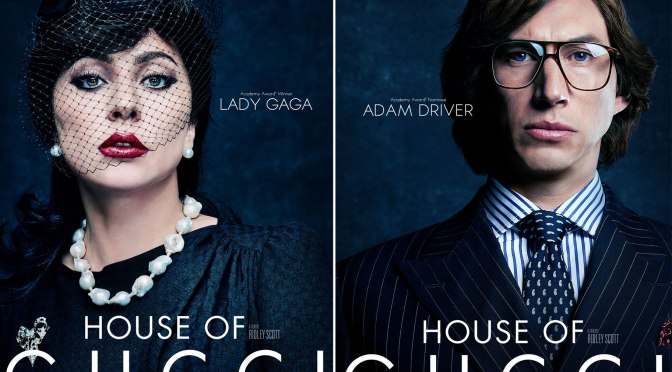
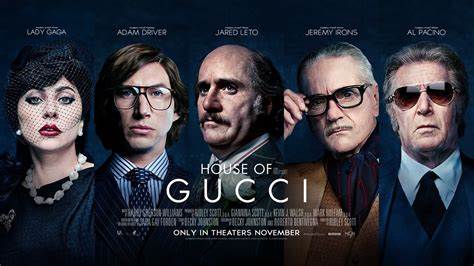
CINEMA REVIEW: HOUSE OF GUCCI (2021)

CINEMA REVIEW: HOUSE OF GUCCI (2021)

Directed by: Ridley Scott

Screenplay by: Becky Johnston, Roberto Bentivegna

Based on: The House of Gucci: A Sensational Story of Murder, Madness, Glamour, and Greed by Sara Gay Forden

Produced by: Ridley Scott, Giannina Scott, Kevin J. Walsh, Mark Huffam

Cast: Lady Gaga, Adam Driver, Jared Leto, Jeremy Irons, Salma Hayek, Al Pacino etc.

Cinematography: Dariusz Wolski

*** MAY CONTAIN SPOILERS***


I’m not a fan of fashion. I wear clothes obviously and like to be smart and clean. Yet, the idea of believing one’s garments, shoes and accessories mean you are important, superior or worthy of adulation sickens me to be honest. However, fashion is a multi-billionaire industry and I get that people of variant social standing love it as a cultural phenomena. People either own or aspire to own over-valued garments and objects to inflate their ego or sense of importance is beyond me. Then again, I passionately enjoy watching human beings kick a ball into a net, so everyone has irrational passions. C’est la vie!

I didn’t go to see House of Gucci (2021) to look at the clothes though. My interest in this star-studded, big budget crime drama directed by the legend, Ridley Scott, was more because I did not know anything about the lives and personalities within the Gucci empire. Who would have thought that a wealthy family unit could have turned out so poisoned by greed and envy?

Covering a period of twenty or so years from the late 1970s into the 1990s, the story is structured around the relationship between Patrizia Reggiani (Lady Gaga) and Maurizio Gucci (Adam Driver). They fall passionately is lust, much to the chagrin of his spiteful father (Jeremy Irons) and marry against his will. Patrizia genuinely loves the sensitive Maurizio, but also has green eyes for the Gucci empire and the power that can bring. As her desire for influence in the family business grows, then so does cracks in their marriage. Crumbling relationships, business chicanery and family treachery dominate the narrative, all coming to a head with tragic results.


As a morality tale about how greed corrupts and drives human beings toward unnecessary tragedy, The House of Gucci (2021) is certainly worth a watch. Is there a sense the Gucci family were cursed by there wealth. Perhaps? But the film and screenplay as a whole present this theme without really drawing them out to full dramatic effect. However, the cast are absolutely fantastic throughout with Al Pacino, Adam Driver, and Lady Gaga on particularly exceptional form. Jared Leto dominates many scenes with his bald head, extra weight and screechy voice. While entertaining, the director could have reigned Leto in slightly to extract more pathos from the sad clown that is represented in Paulo Gucci.

I had a few issues with The House of Gucci (2021) inasmuch as it felt incomplete. At times it was as though I was watching a test screening version. The transitions between years were often confusing. What year is it, Ridley? Adam Driver’s arc from likeable young academic to selfish adulterer was rushed and unearned. I got the evocation of a Fredo and Michael Corleone dynamic between Maurizio and Paulo, but this really could have been developed further. The cinematography was grey and dull with the natural lighting style working against the expected colour and vibrancy of the 1980s era. I also wondered if the film had been graded?

While watching The House of Gucci (2021) I just kept thinking of more superior crime and gangster films. It is also mildly disrespectful to a genius like Ridley Scott to say Martin Scorsese would have knocked this story out of the park. I truly felt, while Lady Gaga was excellent in her role, her character could have been written and given a voice-over up there with that of Henry Hill’s. Nonetheless, I still enjoyed the film but wonder if there is a director’s cut out there which doesn’t feel rush released. Or even the possibility HBO or Showtime may adapt it into a longer drama series in time. Yet, does one want to spend more time with such avaricious and vain characters? Depends who is telling the story I guess.

Mark: 7.5 out of 11


SKY CINEMA REVIEW: MINARI (2020)

SKY CINEMA REVIEW: MINARI (2020)

Directed by Lee Isaac Chung

Written by Lee Isaac Chung

Produced by: Dede Gardner, Jeremy Kleiner, Christina Oh

Cast: Steven Yeun, Han Ye-ri, Alan Kim, Noel Kate Cho, Youn Yuh-jung, Will Patton, etc.

Cinematography: Lachlan Milne

Music by: Emile Messeri

*** MAY CONTAIN SPOILERS ***


See the source image

I missed Minari (2020) at the cinema. Which is a shame because out of all the Oscar-nominated films from earlier in the year it is now my favourite. Further, it should certainly have won the best film award. (Note: I have yet to see The Father (2020).) It has the heart and warmth and realistic hope that eventual winner, Nomadland (2020) lacked. Chloe Zhao’s powerful character study was arguably too meditative and glacially paced, without any real diversion from the plodding repetition of monotonous existence. I love slice-of-life and character-driven work, but I want some drama too. While Minari (2020) has certain meditative qualities, writer-director Lee Isaac Chung has crafted a supeb cinematic memoir of tender power and emotion.

Set in 1983, Minari (2020), centres around the Yi family. They had been working in California, but have moved to Arkansas to farm the land. The father, Jacob (Steven Yuen) dreams of growing produce to sell to fellow Korean businesses. However, the farm and static caravan he has purchased is remote with no guarantee of water to ripen the fruits and vegetables. Jacob must either pay exorbitant prices from the water company or find a natural spring underground. Alas, rain rarely threatens the Arkansas plains.

Jacob’s wife, Monica (Han Ye-ri) hates the caravan and does not share his farming dream. This marital conflict drives the much of the narrative as the two argue constantly. Monica is especially angry that her young son, David (Alan Kim) is so far from a hospital. The boy has a heart condition and like any good mother she consistently worries. Their teenage daughter, Anne (Noel Kate Cho) is too young to be a full-time caregiver to David while Jacob and Monica support themselves working at a local chicken factory. To placate Monica, Jacob brings grandmother, Soon-ja (Youn Yuh-jung) to the farm for support. Here a beautiful and funny parallel plot begins as David and his grandmother’s relationship comes to the fore.


See the source image

I watched Minari (2020) on a Sunday morning at home, relaxed and cosy, filled with breakfast and coffee. I loved experiencing the film. The music wondrously supports the beautiful photography that illuminates the green and wheats that fill the lens’ gorgeous palette. Like the masterpiece, Parasite (2019), Minari (2020) represents a working-class family striving to stay together and survive in difficult times. The main difference though is the Yi family were doing it with honest hard graft rather that grifting, ducking and diving. The Yi’s connect with nature and the land rather than skimming the city and the rich. I really rooted for the Yi’s. Jacob’s desires and battles to find water reminded me of the equally moving French classic, Jean De Florette (1986).

Minari (2020) doesn’t take the obvious route of making the Arkansas locals racists who rail against the Yi’s. While there are some scenes involving cultural clashes, much of the drama and humour derives from the families interactions with each other. Indeed, the scenes where David antagonises his unconventional grandmother are hilarious. Youn Yuh-jung as the elderly matriarch is fantastic, deservedly winning a best supporting actress role at the Oscars. Moreover, Lee Isaac Chung gets a miraculous performance from child actor, Alan Kim. Special mention for a busy, but nuanced portrayal of a troubled but helpful worker, Paul, by Will Patton. His deeply pious character could have easily been made an antagonist, but Chung ensures he is another relatable human being in a film full of them.

Mark: 9.5 out of 11