Tag Archives: Historical

Apple TV+ Film Review: Blitz (2024) – A fine testament to the Human Spirit during Wartime!

Apple TV+ Review: Blitz (2024)

Directed by Steve McQueen

Written by Steve McQueen

Produced by Tim Bevan, Eric Fellner, Steve McQueen, Anita Overland, Adam Somner, Arnon Milchan, Yariv Milchan, Michael Schaefer

Main Cast: Saoirse Ronan, Elliott Heffernan, Harris Dickinson, Benjamin Clementine, Kathy Burke, Paul Weller, Stephen Graham etc.

Cinematography by Yorick Le Saux

*** MAY CONTAIN SPOILERS ***
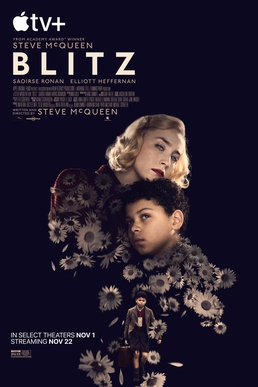


Officially classed as acclaimed filmmaker Steve McQueen’s first feature since the release of Widows (2018), Blitz (2024) is a WW2 drama of extremely high quality. But before I get into the review, lest we forget the series of films Steve McQueen delivered to the BBC a few years. The ‘Small Axe’ anthology should and shall be revisited as one of the most important documents of British history, such is its searing power, dramatic drive and the stunning rich tapestry of characterful moments. So, I urge you to watch, if you haven’t, what I consider to be Steve McQueen’s masterworks. I have reviewed the first one Mangrove (2020) here and the remaining of the collection here:


Blitz (2024) is a bigger budgeted production when compared to the ‘Small Axe’ anthology. But, similarly, it is a period piece, focusing on the working class and Black experience, this time set during the brutal bombing of London in 1940. McQueen shoots very much from the perspective of George (Elliot Heffernan), his mother, Rita (Saoirse Ronan) and grandfather, Gerald (Paul Weller). George, like many war children, is packed on a train to the relative safety of the countryside, while parents live in the hope of surviving the incessant German bombs.

After establishing the close family bond between the Hanways, and the wrenching emotion of sending her son away, Rita continues working in a munitions factory and sings beautifully on a national radio show. At the same time, George, finds trouble with a gang of child bullies on the train, before fighting back and jumping off. A tough and resourceful boy, George, makes the perilous choice to return to battered and burning London to reunite with his mother. The city, scarred by the relentless ‘Blitzkrieg’, is a treacherous labyrinth of collapsing buildings and choking smoke, but George’s determination burns brighter than the fires raging across the skyline.
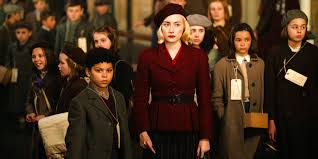


Like a modern Oliver Twist, Blitz (2024) George’s journey through the devastated capital is both a physical and moral odyssey, with each encounter shaping his understanding of loyalty, survival, and the fragile threads that bind people together in times of crisis. George becomes trapped by his own choices, the bombs, bricks, buildings and characters he meets on the way. Some are friendly, but others exploit George preventing his return home. McQueen’s script also finds time to flashback to show Rita meeting George’s father, providing significant context to his mixed race background. Indeed, through George, McQueen explores themes relating to race and his emotional journey to find his place in the world as a person of colour.

Blitz (2024) is a superbly shot and designed film, with Yorick Le Saux’s cinematography rendering war torn London with an almost mythical beauty. However, Hans Zimmer’s overblown soundtrack is too much for me. Further, Steve McQueen’s hagiographic and episodic approach does somewhat diminish the raw drama and bloody horror of war. Notably, the under-use of Kathy Burke and Stephen Graham’s gutter snipe thieves. Plus a thrilling action set-piece during a flooded tube station that cuts away from George’s almost-demise, denying us suspense and dramatic catharsis. Thus, at times, the film sacrifices potential complexity during George’s journey, making his survival seem almost predestined rather than hard-fought. Still, Steve McQueen remains one of the country’s most important cinematic artists and Blitz (2024) is yet another fine testament to the strength and resilience of the human spirit.
Mark: 8 out of 11


Cinema Review: Gladiator II – an Epic Sequel that Echoes the original in Eternity

CINEMA REVIEW: GLADIATOR II (2024)

Directed by Ridley Scott

Screenplay by David Scarpa

Story by Peter Craig, David Scarpa

Based on Characters by David Franzoni

Produced by Ridley Scott, Michael Pruss, Douglas Wick, Lucy Fisher, Walter F. Parkes, Laurie MacDonald and David Franzoni
.

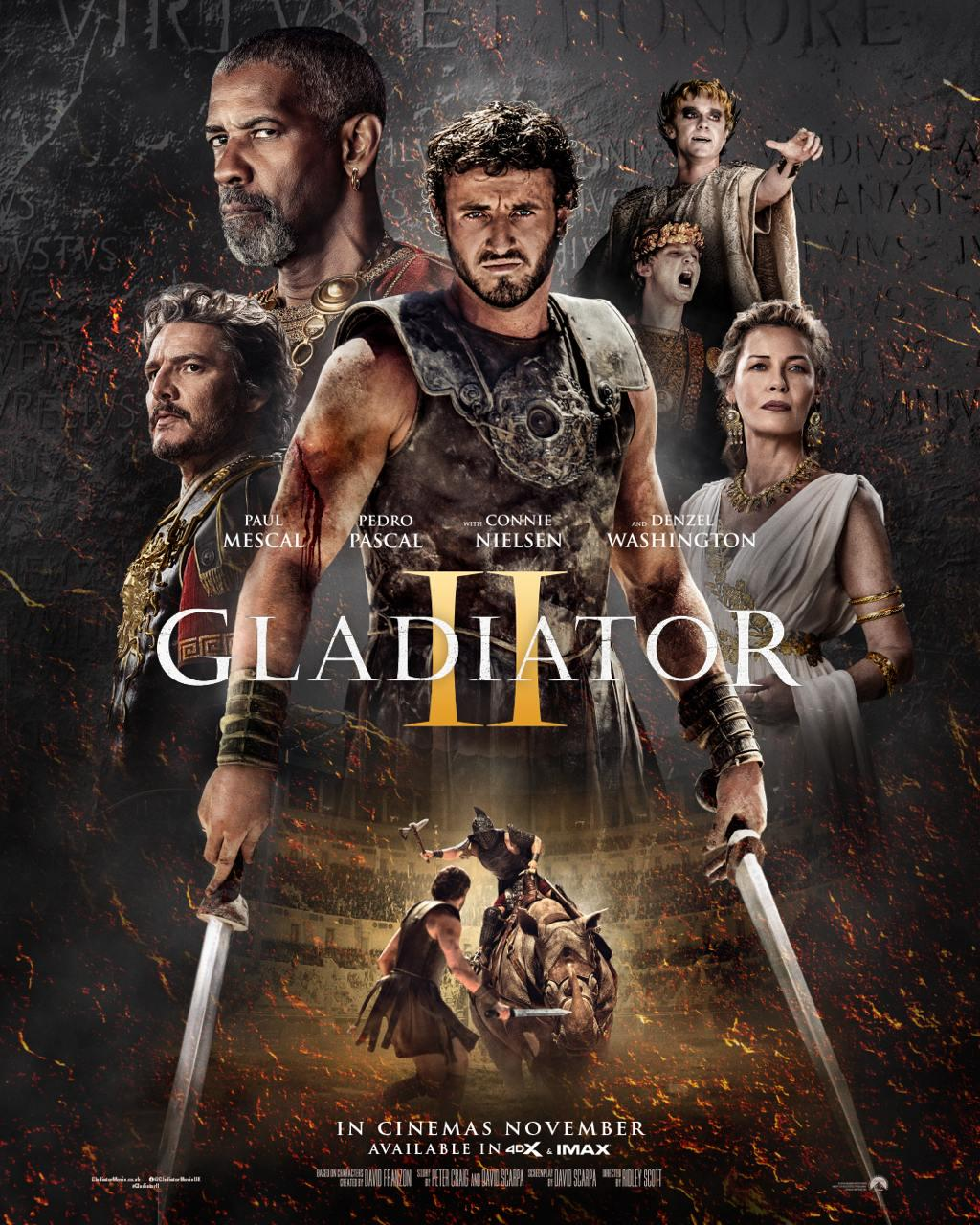
Main cast: Paul Mescal, Pedro Pascal, Joseph Quinn, Fred Hechinger, Lior Raz, Derek Jacobi, Connie Nielsen and Denzel Washington.

Cinematography by John Mathieson

*** MAY CONTAIN SPOILERS ***


Ridley Scott’s Gladiator (2000) stands as a modern genre classic, redefining the historical epic with its visceral storytelling, evocative visual style, and emotional depth. The film not only revitalized interest in the sword-and-sandal genre but also solidified Russell Crowe as a major star, earning him an Academy Award for Best Actor. Crowe’s portrayal of Maximus Decimus Meridius—a betrayed Roman general seeking justice—exudes both raw power and profound vulnerability, making him an enduring figure in cinematic history.

Gladiator’s superb screenplay intricately followed the structure of Joseph Campbell’s Hero’s Journey, charting Maximus’ transformation from a celebrated general to a fallen slave, and ultimately to a venerated martyr. Also invoking the archetype of one of Christopher Booker’s seven basic plots, ‘Overcoming the Monster’. Indeed, Maximus’ journey aligns with the ‘Overcoming the Monster’ archetype, where the hero confronts a seemingly insurmountable evil. Commodus and the Roman Empire embodies the “monster,” wielding unchecked power, moral corruption, and cruelty. Maximus battles not only physical opponents in the gladiatorial arena but also the corrupt system that Commodus represents. His ultimate triumph over Commodus is both personal vengeance and symbolic justice, restoring balance to a fractured world.

Finding Ridley Scott at arguably the height of his directorial power, Gladiator’s success rested on its ability to blend archetypal storytelling with deeply human emotions. It revitalized the historical epic for modern audiences by prioritizing character-driven drama over spectacle, though its battle sequences remain iconic. With its sweeping Hans Zimmer score and Russell Crowe’s unforgettable performance, the film transcended its genre, made a lot of money and become a modern myth that continues to resonate with audiences worldwide. So, the burning question is why did it take so to make a sequel?


I’d say the answer to this question is that because the original was so iconic and powerful it didn’t need a sequel. Still, when has that ever stopped the money-making behemoth of the Hollywood machine from not following up. The surprise is that it took twenty-four years to bring to the screen. Which is a similar length of time after the first one that Gladiator II (2024) is set, namely 211AD. Similarities do not cease there.

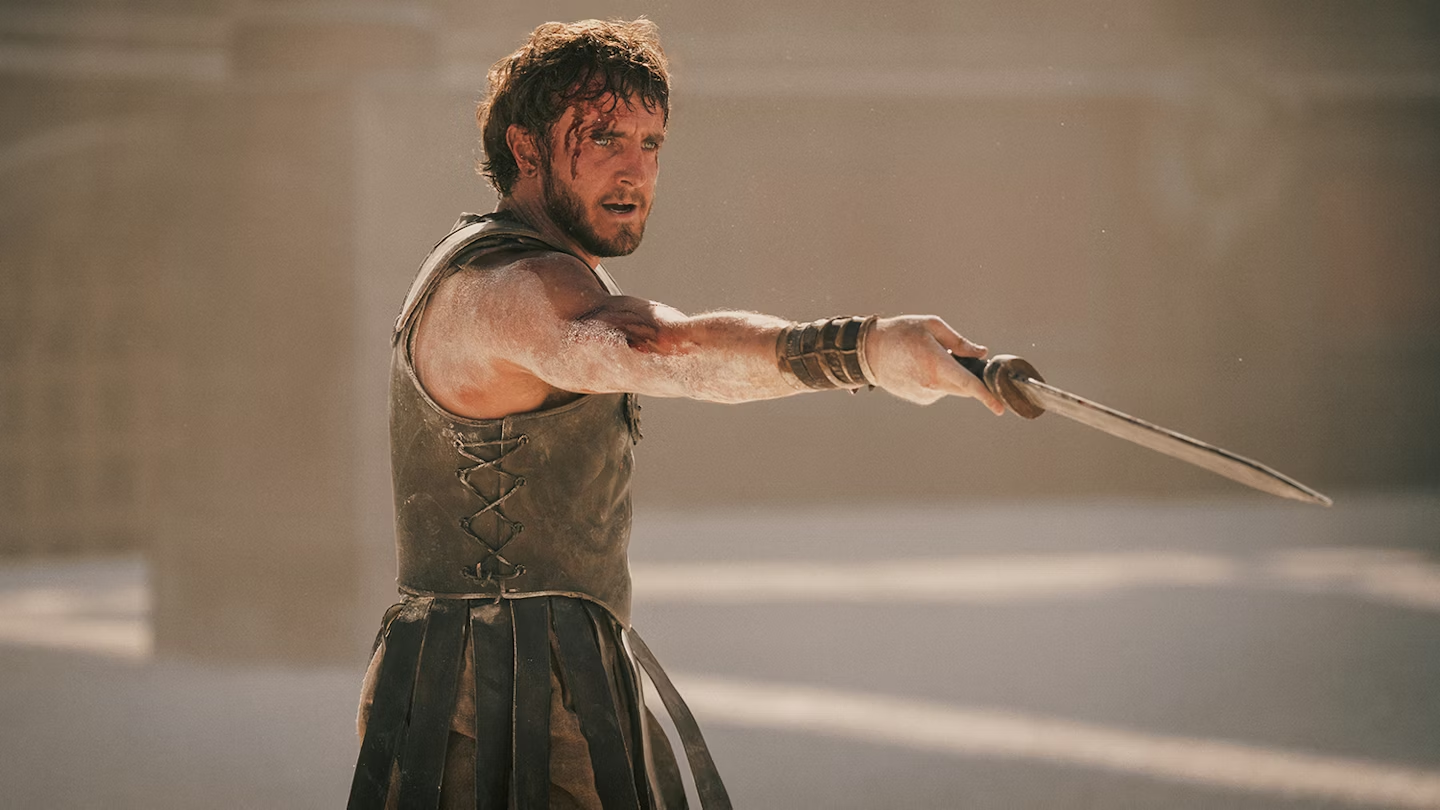
So, I will just say I had so much fun watching Gladiator II. It is an exhilarating return to the grandeur of the Roman Empire, delivering breathtaking visuals, high-stakes action, and a muscular lead performance from Paul Mescal as Hanno, a fighter with a mysterious history. However, despite its ambitious scale and technical brilliance, the sequel draws heavy parallels to the original, feeling more like a reimagining than a bold continuation. Hanno’s journey echoes Maximus’ so closely that it lacks the freshness that made the 2000 film a groundbreaking modern epic.

Indeed, Hanno’s arc is essentially a mirror image of Maximus’ but while Gladiator II adheres to the same Hero’s Journey structure that defined the first film, the beats feel overly familiar. Hanno’s transformation, while compelling, doesn’t quite reach the mythic resonance of Maximus’ odyssey. Where Maximus was a reluctant hero drawn into a larger-than-life struggle, Hanno’s motivations and journey feel more cloudy and contrived, lacking the gravitas of the original’s moral and emotional complexity. Script and character inconsistencies do not help, with Hanno too quickly switching emotions where Connie Nielsen’s Lucilla is concerned.


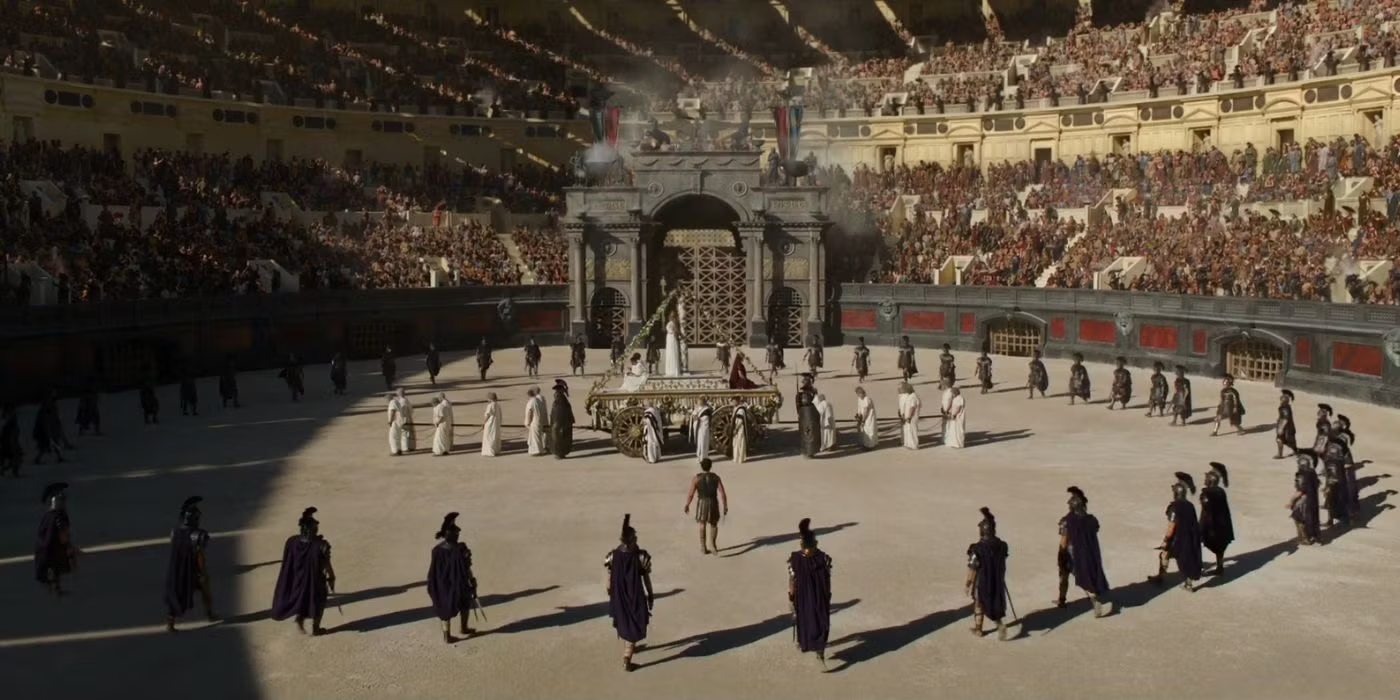
That said, the sequel contains many strengths. The world-building is as immersive as ever, with Ridley Scott’s regal direction ensuring that every frame pulsates with life and detail. The sheer energy and brutality of the Colosseum set-pieces are worth the admission alone. The flooding of the arena battle and introduction of a number of fantastic and vicious beasts are especially memorable. The action is bloody and gripping, the score soars, and the themes of resilience and justice remain timeless. Moreover, Mescal delivers a commanding performance, injecting moments of raw intensity and vulnerability into the role.

Having said that, it is Denzel Washington’s Macrinus who pulls narrative focus and power throughout. Washington brings his trademark gravitas and charisma to the role, crafting a character arc that is both morally complex and emotionally resonant. Macrinus’ journey of manipulation, becomes the film’s most compelling thread, overshadowing Hanno’s more conventional hero’s path. Washington imbues Macrinus with subtlety, allowing audiences to see flashes of vulnerability and moral conflict beneath his stoic exterior. He oscillates effortlessly between commanding authority and quiet introspection, making every line delivery impact. Washington’s natural charisma ensures that Macrinus commands attention in every scene. His dialogue crackles with intensity, and his moments of silence speak volumes, often eclipsing Hanno’s more straightforward emotional beats.

Gladiator II undeniably thrills as a cinematic experience, but its adherence to the original’s blueprint leaves it struggling to step out of Maximus’ shadow. While it showcases the enduring power of its core narrative themes, it ultimately feels more like a polished homage than a groundbreaking sequel, relying on echoes of past triumphs rather than forging an entirely new path. For fans of the original, this familiarity is a strength and weakness, yet nonetheless Scott’s epic facsimile remains a powerful and bone-crunching adrenaline rush.

Mark: 8 out of 11


CINEMA REVIEW: NAPOLEON (2023)

CINEMA REVIEW: NAPOLEON (2023)

Directed by Ridley Scott

Written by David Scarpa

Produced by: Ridley Scott, Kevin J. Walsh, Mark Huffam, and Joaquin Phoenix.

Main Cast: Joaquin Phoenix, Vanessa Kirby, Tahar Rahim, Rupert Everett, Ben Miles, Ludivine Sagnier, and more.

Cinematography by Dariusz Wolski


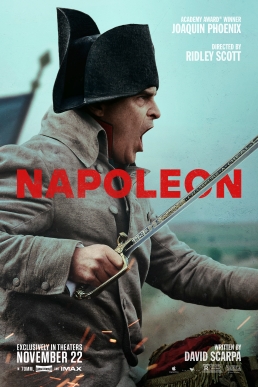
If you didn’t know, Napoleon I, was also called Napoleon Bonaparte. He was a French military general and statesman and played a key role in the French Revolution (1789–99), before serving as first consul of France (1799–1804). Napoleon was also the first emperor of France (1804–14/15) and given his many years of military campaigns in France and overseas, striving to build an empire for France, he is now widely considered one of the greatest generals in history. I don’t purport to be a history buff, but I was intrigued by the release of Ridley Scott’s latest directorial epic cinematic behemoth, Napoleon (2023). This almost-three-hour release comes to the screen courtesy of Sony and Apple TV with Joaquin Phoenix in the titular role.

Opening in 1793, a young, but up-and-coming army officer Napoleon witnesses Marie Antoinette get her head cut off at the guillotine, followed quickly by one of the many thrilling battle sequences in the film at the ‘Siege of Toulon.’ It was during this siege that young Napoleon first won fame when his strategy, forced the Anglo-Spanish fleet to withdraw. After which David Scarpa’s adaptation and Scott’s editing team rattle through the battles, romances, trials and decades of Napoleon’s life so breathlessly, as an audience member, I felt like this film was more of a “Now That’s What I Call Napoleon!” greatest hits package rather than a compellingly intense drama and study that really delves into the complex psychology of Napoleon’s character.


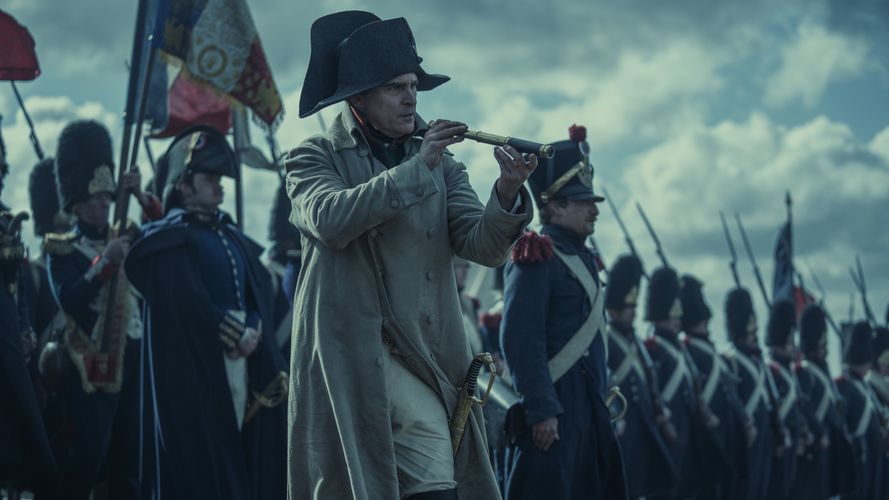
Ridley Scott, at 85 years old, brings his masterly cinematic experience to many explosive battle sequences in Egypt, Austria, France and throughout Europe. The stunning cinematography by Dariusz Wolski supports Scott’s vision and it is safe to say the production design and costumes are par excellence for this massively budgeted production. However expertly shot, edited and rendered on screen the battles are, they often feel rushed through at times, providing jarring punctuation to the central human focus of the film, the love story between Napoleon and Josephine (Vanessa Kirby). I feel like I would have preferred a deeper analysis of Napoleon’s military strategics and perhaps a more serious approach to his importance to France through his victories on the battlefield.

Vanessa Kirby, as Josephine, brought a class, elegance and intelligence to the role and gives a standout performance. Joaquin Phoenix, who is one of the finest actors around, however, gives us a misfiring characterization as Bonaparte. I just felt it was too knowing and flippant throughout. I am not averse to humour in serious dramas, but I just did not warm at all to his portrayal. Scott’s director of Phoenix plus Scarpa’s screenplay only touch the surface of Napoleon’s character. I mean here is a historical figure who has an incredible series of chapters in his life, but there is no major journey or arc in his story. At times I even felt there was ridicule for Napoleon, but if you wish to critique him, then why not make him more dangerous, a monster even. Especially given his predilection and desire for war and sending thousands of lives to their tragic end.

Like I say, Scott and his amazing creative team deliver a greatest “hits” of Napoleon’s life and some spectacular cinematic moments. But quite often I was bored and questioning why I should care about any of the characters on screen. Scott and his screenwriter have been stung by criticisms of historical inaccuracies. That doesn’t bother Scott at all and would not bother me if such changes enhanced the drama. Yet, the compression of certain scenarios seem to be more for pacing reasons. Lastly, there is apparently a four-hour directorial cut of the film so perhaps that contains more depth, emotion and psychological analysis of Napoleon, rather than the paper-thin filmic treatise delivered here.

Mark: 7 out of 11


2016 BFI – LFF – THE BIRTH OF A NATION  (2016) – REVIEW

2016 – LONDON FILM FESTIVAL – THE BIRTH OF A NATION  (2016)

SPOILER FREE REVIEW

TITLE:  THE BIRTH OF A NATION (2016)

DIRECTOR/PRODUCER/WRITER: Nate Parker

CAST:  Nate Parker, Armie Hammer, Penelope Ann Miller, Colman Domingo, Aja Noomi King

STORY:  At the turn of the 1800s a charismatic preacher must decide between a life of slavery or to stand up and fight against his brutal captors.

thebirthofanation-mv-3

REVIEW:

This drama, written, produced, directed and starring by Nate Parker has, since its release at the Sundance Festival, created a whole host of controversies. There is a historical rape prosecution of which Nate Parker was found innocent of in 1999; there are accusations of historical inaccuracies in the story; plus the passivity of female characters within the narrative has been criticized too.  Not surprising though because any film about slavery, rape, abuse and murder is bound to set the cultural world, internet, film industry, social media, historians etc. alight with debate.

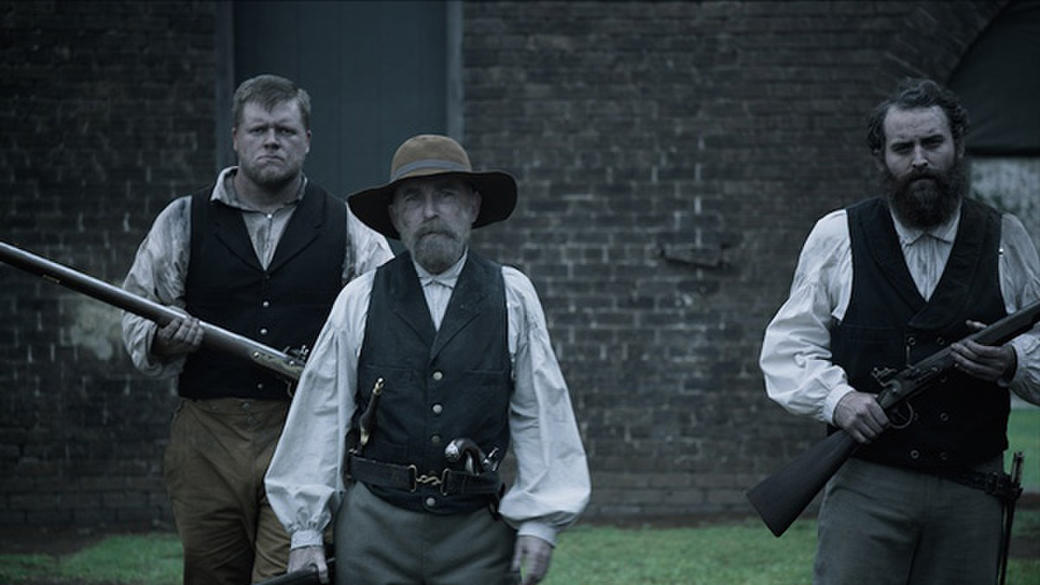
thebirthofanation-mv-14

Personally, when I watch a film I prefer to judge it purely on whether it has entertained, informed, provoked thought and created emotion. The filmmakers’ personal history or whether a film meets certain quotas on political correctness or even whether the history has been altered to suit a narrative are important factors but not my main viewing considerations. Of course, if it is an exploitative piece of crap then I would call it; but mainly I ask myself: did the film entertain me and is it a good story done well?

thebirthofanation-mv-8

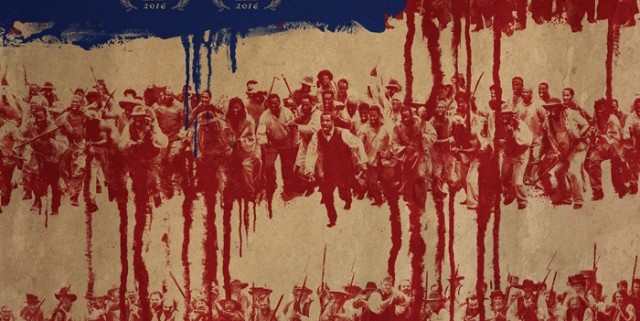
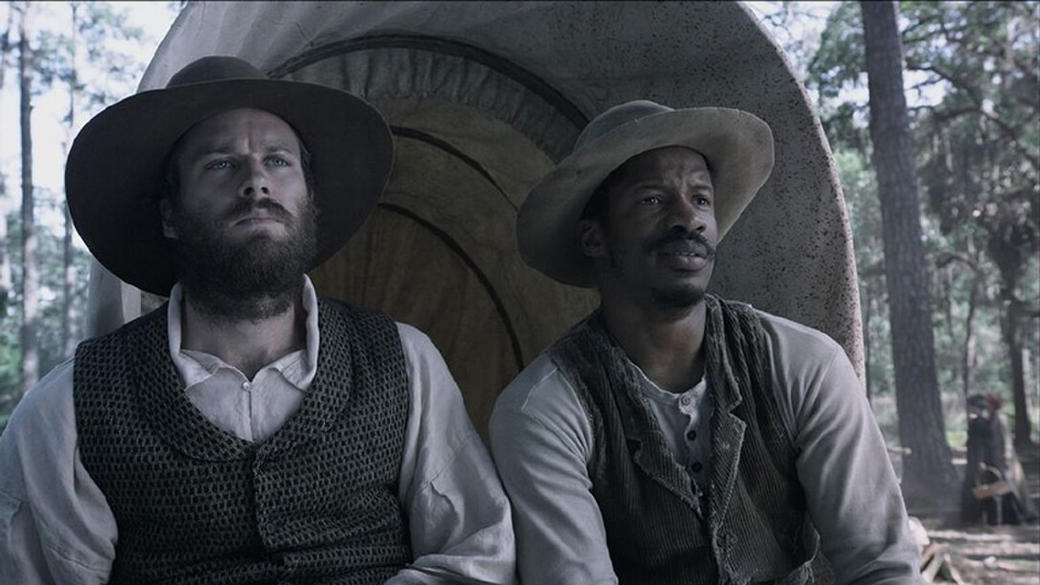
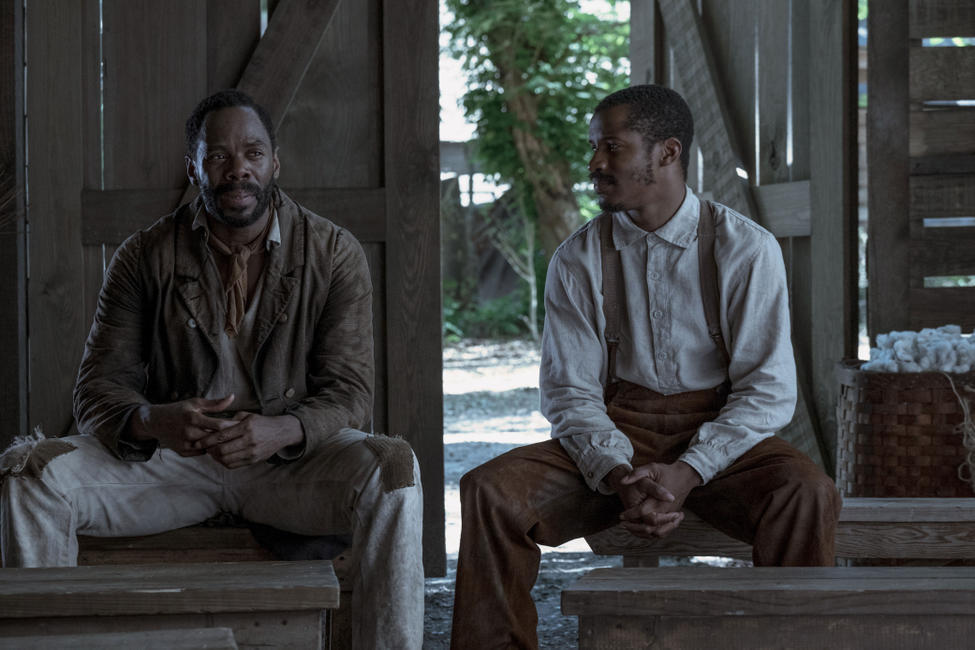
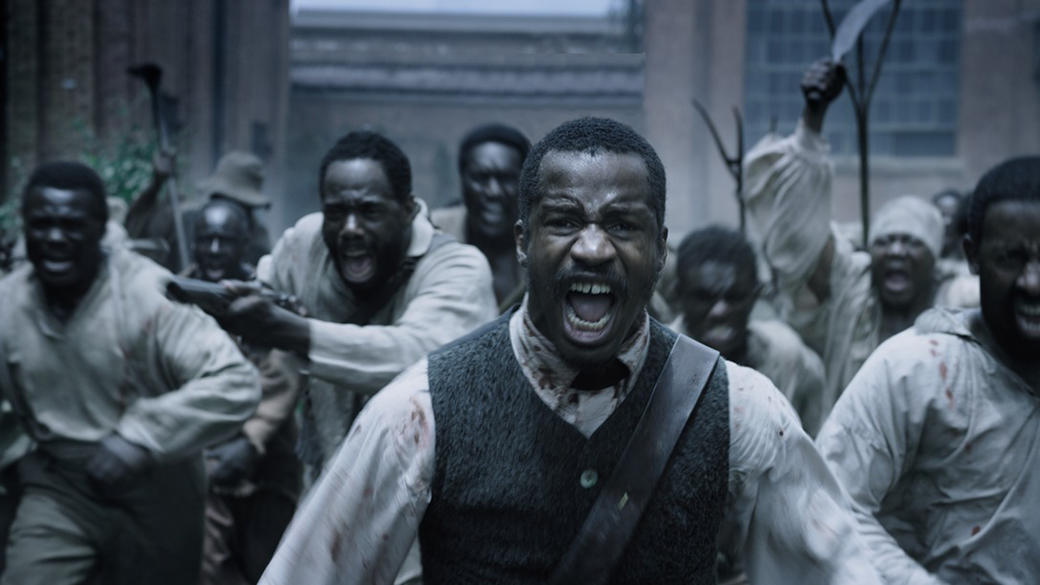
Well, inaccuracies and controversies aside I was thoroughly moved and taken with emotion by The Birth of a Nation. It is ambitious, independent filmmaking which takes a figure from history that stood up against oppressors and fought back against the injustices that befell him and his people. In little over two hours we get a microcosmic view of the character of Nat Turner and the horrific period he lived in and get a short, sharp and shocking drama. Turner is shown to be an intelligent, proud and spiritual force who inspires those around him to fight against the brutality all around.

thebirthofanation-mv-2

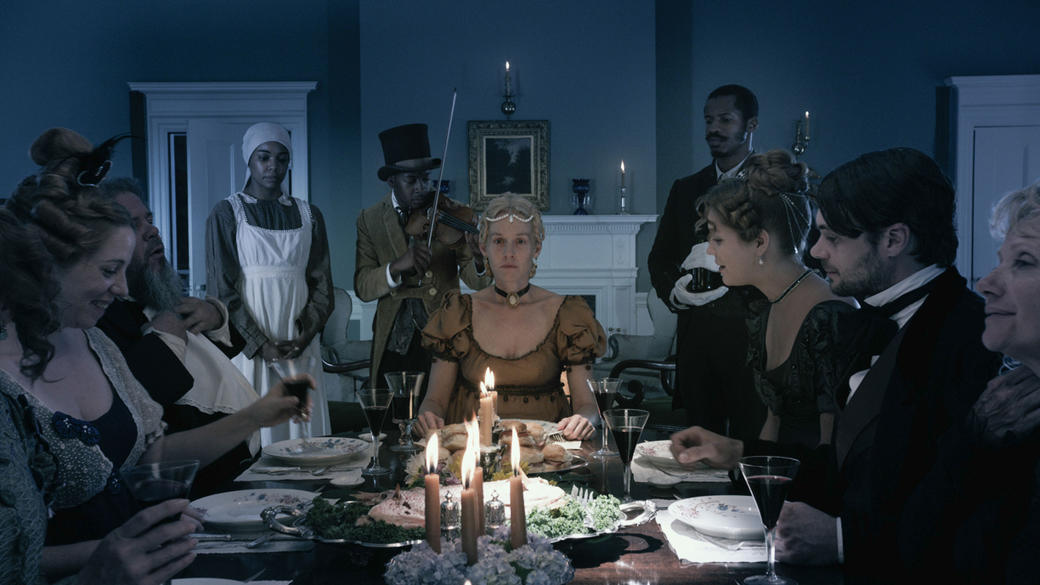
You cannot underestimate Parker’s vision and determination to bring Nat Turner’s ‘story’ to the screen. On such a relatively low budget (reported to be £10 million) it is an admirable and risky project to pursue and deliver. Not as startlingly stylistic as the big-budget-spaghetti-slave-Western Django Unchained (2012), The Birth of a Nation is a heart-breaking narrative which posits the power of the scriptures and damns the beast of humanity which allowed free people to be stolen from their country and made to serve others.

birthofanation-pic1

Overall, the film works as a lower-budget epic in the vein of Braveheart (1995) and Spartacus (1960), while covering similar ground thematically as Oscar winner 12 Years A Slave (2013). It may not have the artistry of Steve McQueen’s directed epic, but it is still an important film about a fascinating historical figure. Whether it is accurate or not the film still made compelling viewing and Parker deserves all the praise he gets for such an assured debut.