Tag Archives: horror

CINEMA REVIEW: SMILE (2022)

CINEMA REVIEW: SMILE (2022)

Directed and written by Parker Finn

Based on Laura Hasn’t Slept by Parker Finn

Produced by: Marty Bowen, Wyck Godfrey, Isaac Klausner, Robert Salerno, Gabby Olivera

Cast: Sosie Bacon, Jessie T. Usher, Kyle Gallner, Caitlin Stasey, Kal Penn, Rob Morgan, etc.

Cinematography: Charlie Sarroff


If you search YouTube by typing ‘short horror film’ you will find hundreds of really good and often scary, surprisingly enough, short horror films. A great majority of them will have a lengthy suspenseful set-up, before ending on a startling jump scare. The model itself is arguably overdone, however, it is an excellent set-up-punchline structure for new filmmakers to learn film techniques and scare the viewers. Many such short videos go viral and, in the case of Laura Hasn’t Slept by Parker Finn, get picked up for feature development. Hence, we have Parker Finn’s film debut, Smile (2022).

Smile (2022) opens with a suggestion of childhood trauma for lead protagonist, psychiatrist Doctor Rose Cotter when a child. The action then moves to the present day and brings us Rose’s confrontation with the disturbed patient, Laura. What follows is an expertly crafted and incredibly disturbing sequence, which plunges Rose into major threat from a nefarious force. Parker Finn then slowly builds Rose’s psychological breakdown as she experiences hallucinations, frights and memory loss as her partner, family and friends find her behaviour to be disturbing to say the least. A particularly grisly scene at a child’s birthday party was especially deadly and memorable.


As the film continues, I could not help but be reminded of both The Ring (1998/2002) and It Follows (2014) in terms of the story beats. Rose, while being pursued by some unknown demon, faces a race against time to avoid death. Both the aforementioned films are far superior as they have more plot and characterisation to propel the running time. Indeed, one of the major issues with Smile (2022) is that 115 minutes are too long for the character arc Rose Cotter is given. By the time her character revelation is complete it has taken an eternity to get there. Moreover, I was suffering jump-scare fatigue by the end, thus rendering the scarily horrific monster reveal to feel fearfully redundant.

Yet, Smile (2022) has an impactful thematic spine. While It Follows (2014) dealt with the threat of sexual disease within the subtext, Parker Finn’s debut powerfully delves into the impact of grief, guilt and mental health. Having said that, the narrative could have dug more into Rose’s past to really reveal the trauma she suffered as a child. Personally, I think a longer set-up of her character while growing up would have increased the drama. But Parker Finn gets an excellent performance from Sosie Bacon throughout, even if her perpetual appearance on screen as the harassed and troubled victim eventually promotes further fatigue. A scene-stealing exchange between Bacon and the electric Rob Morgan suggests his character should be lead in the inevitable horror sequel.

Mark: 7 out of 11


CINEMA REVIEW: DON’T WORRY DARLING (2022)

CINEMA REVIEW – DON’T WORRY DARLING (2022)

Directed by: Olivia Wilde

Screenplay by: Katie Silberman – Story by Carey Van Dyke, Shane Van Dyke and Katie Silberman

Produced by: Olivia Wilde, Katie Silberman, Miri Yoon, Roy Lee

Main Cast: Florence Pugh, Harry Styles, Olivia Wilde, Gemma Chan, KiKi Layne, Nick Kroll, Chris Pine etc.

Cinematography Matthew Libatique

*** MAY CONTAIN SPOILERS ***


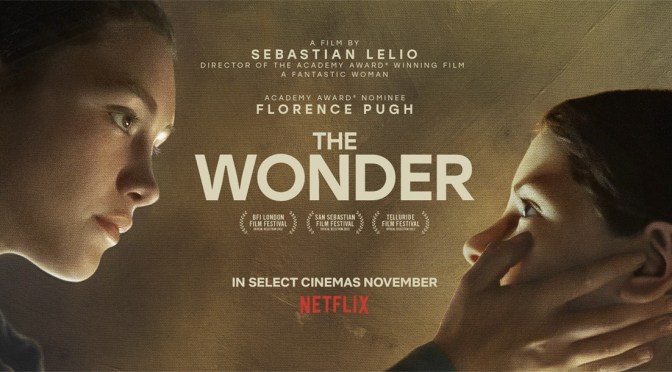
Part arthouse character study, part science fiction social satire and eventually a rushed concertinaed thriller, the Olivia Wilde directed, Don’t Worry Darling (2022) is a visual feast, anchored by Florence Pugh’s devastatingly brilliant performance. However, the ambition of the themes remains hamstrung by pacing and structure which fails to serve the story to its full potential.

Set within a utopian 1950’s sun blanched town called Victory, Wilde and her writers throw us straight into the hedonistic lives of a set of youthful and dynamic couples, drinking, partying and sexing. They work and play hard. Well, the husbands work as the dutiful women stay at home cleaning and churning out kids. So far-so-Stepford Wives! At the heart of Don’t Worry Darling (2022) is Pugh as the loyal but inquisitive, Alice. Her husband, Jack (Harry Styles) is ambitious, seeking the approval of big boss, the hubristic Frank (Chris Pine). When Alice begins to experience Kafkaesque dreams of feeling trapped by her daily life, she slowly realises all is not quite perfect in paradise.


No one does anguish and anxiety on screen like Florence Pugh. As Alice falls deeper down the rabbit hole of despair, Pugh produces true cinematic power once again. Olivia Wilde also brings a compelling image system to fully visualise Alice’s hellish descent. In comparison, the male characters are far less developed and the exchanges between Pugh and Styles, especially in the final act, are really lacking in dramatic punch. Styles himself I felt was miscast, but he does have an engaging screen presence. It’s just I didn’t feel enough threat from him.

Structurally, Don’t Worry Darling (2022) is also flawed. The major reveal comes way too late to assuage the pacing issues. While the narrative contains some striking visual set-pieces there are too many parties, barbecues and social events getting in the way of the potential thrills that could have occurred if Alice had discovered her plight much earlier. Overall, there is too much set-up and not enough punch. The longer you wait to reveal the twist, the bigger the revelation needs to be. The Outer Limits and The Twilight Zone have done this style of story with more emotional impact and better economy. Pugh and Wilde though prove once again they are major talents and thematically speaking it’s good that men get another kick in. Men are fast becoming the go-to villains of this century and long may it continue.

Mark: 6.5 out of 11


CINEMA REVIEW: NOPE (2022)

CINEMA REVIEW: NOPE (2022)

Directed by Jordan Peele

Written by Jordan Peele

Produced by: Jordan Peele and Ian Cooper


Cast: Daniel Kaluuya, Keke Palmer, Steven Yeun, Michael Wincott, Brandon Perea, Wrenn Schmidt, Barbie Ferreira, Keith David, etc.

Cinematography: Hoyte van Hoytema

*** MAY CONTAIN SPOILERS ***


Following on from the Oscar winning, Get Out (2017), and the should-have-won-an-Oscar-for-Best-Actress-in-Lupita-Nyong’o, Us (2019), Jordan Peele is back with the enigmatically titled, and equally ambiguous sci-fi-Western-horror film, NOPE (2022). Taking on writing and directing duties again, Peele has delivered a majestic looking cinematic feast, brimming with incredibly memorable images involving horses, chimpanzees, cinema, waving inflatables, surveillance cameras, carnival shows, and something very large that comes from beyond the clouds.

So, what’s Nope (2022) actually about? Well, put simply it’s all about cowboys and girls overcoming a monster. But it is much more than that. Because, narratively speaking it is difficult to sum up in a few sentences. Peele builds his most complex film to date by delivering a series of visually powerful set-pieces throughout. He also challenges the audience with an intelligent visual system which thematically links television, cinema, cameras, Hollywood, animals and a spectacular eye in the sky. Like Tarantino’s Once Upon a Time in Hollywood (2019), Joel Coen’s The Tragedy of Macbeth (2021) and Martin Scorsese’s religious epics, Nope (2022), is what I consider to be a big-budget, arthouse blockbuster.


The film, which is divided into chapters, establishes brother, OJ (Daniel Kaluuya) and sister, Emerald (Keke Palmer), trying valiantly to keep the family ranch from going under. Once thriving under their father’s management, the ranch would supply horses to the Hollywood conveyor belt of A-list and B-movie Westerns. With such work now in short supply, OJ is forced to sell horses to local theme park owner, Ricky “Jupe” Park (Steven Yeun), however, he vows to get them back when business improves. But a bigger threat is soon looming over the ranch.

Kaluuya’s performance as OJ is laconic, invoking pure Robert Mitchum. Did I like and root for OJ? Sort of. Keke Palmer as Emerald brought the energy to the screen, but I never felt the two characters really gelled with the themes successfully. Peele’s intellectual leaps, while thought-provoking, barriered an emotional connection within Nope (2022). Likewise, Yuen’s Jupe is given a tremendously imaginative and powerful backstory which brings us into his character, but ultimately fails to pay off dramatically. In fact, these scenes felt like they were from a different film altogether. Indeed, Peele uses the sci-fi monster genre to hang his view of the world on, not always to maximum impact.

While the characterisations and themes arguably fail to gel within the screenplay, it is visually where Nope (2022) really soars. Hoyte van Hoytema should sweep the board come awards time. Further, Peele creates an optical banquet by juxtaposing the majestic vistas of the Californian landscape with modern camera and surveillance equipment, plus those colourful inflatable dummies. Then there’s the thing that is “Not Of Planet Earth”. What is it and what does it represent? Who is watching and controlling and feeding on us? Peele’s challenging concepts are to be applauded within the genre blockbuster, but I just wanted to be scared and care a bit more. On additional viewings, Nope (2022), may be considered a masterpiece, but at the moment it could be one of those great films which I kind of didn’t like. As discussed previously here.

Mark: 8 out of 11


CINEMA REVIEW: THE BLACK PHONE (2021)

CINEMA REVIEW: THE BLACK PHONE (2021)

Directed by Scott Derrickson

Screenplay by: Scott Derrickson & C. Robert Cargill

Based on “The Black Phone” by Joe Hill

Produced by: Jason Blum, Scott Derrickson, C. Robert Cargill

Main cast: Mason Thames, Madeleine McGraw, Jeremy Davies, James Ransone, Ethan Hawke


Cinematography Brett Jutkiewicz

** MAY CONTAIN SPOILERS **


Halloween party-goers now have a new mask to wear on their faces in the guise of The Black Phone (2021) villain daubed, “The Grabber”. Although one must point out the mask is highly influenced by Japanese classic horror, Onibaba (1964). Anyway, the Grabber is a sick individual who prowls and abducts kids from the Denver suburbs in the 1970s, using black balloons and a creepy van as his signature. Portrayed by Ethan Hawke, he isn’t most subtle or interesting of killers, but his chilling behaviour drives this effective horror film from director Scott Derrickson.

The story is the essence of every parent’s living nightmare. Their child goes missing having been snatched off the street in broad daylight. The film takes the time to establish many of the children’s characterisations so we have time to bond with them and feel the horror of their plight. Central to the story are teen brother, Finney (Mason Thames), and younger sister, Gwen (Madeline McGraw). Even without the threat of the murderer, their mother has passed and they are brought up by abusive and alcoholic father (Jeremy Davies). To add further woe, Finney, finds himself bullied by older kids at school. Could things get any worse? Of course! Finney finds himself the next victim of the evil Grabber!


Plunged into a gloomy and sound-proofed basement, Finney, is trapped with no way out from the Grabber’s nefarious plans. Ah, but Finney suddenly gets assistance from, not one, but two supernatural sources. Firstly, the titular black phone which hangs on the wall of the basement and scares us half to death when it rings. Who is on the other end? Well, lets just say they are not of the living. The second magical helper for Finney is that Gwen has the second sight in her dreams. Over time she is able to conveniently assist the police at significant stages of the narrative. Much suspense is raised from Finney’s attempts to escape as time begins to run out for him. His conversations on the black phone are imaginatively delivered as he reaches some weird dimension beyond life and death.

The Black Phone (2021) is both a suspenseful and silly ride, efficiently directed by expert genre filmmaker, Scott Derrickson. The characters are nicely written and you really root for them as the kids deal with all manner of terror. Themes relating to sibling community, stranger-danger, and sticking up for yourself against bullying are intelligently explored also. However, I must say the film has, for all the emotional depth felt and evocative 1970s locations and costumes displayed, a number of serious plot-holes struck me as incredibly questionable. I also thought Ethan Hawke’s villain while visually striking, lacked intelligence and a proper characterisation. I get that he is masked symbol of evil, but a great actor like Hawke was wasted in such casting. Overall though, The Black Phone (2021) is definitely a cinematic call worth answering.

Mark: 7.5 out of 11


“CINEMA” REVIEWS: FRESH (2022) + WHERE THE CRAWDADS SING (2022)

“CINEMA” REVIEWS: FRESH (2022) + WHERE THE CRAWDADS SING (2022)

Two entirely different types of film on the surface, one a black comedy-horror and the other a romantic murder-mystery. Although both feature examples of the female outsider fighting against variant elements of toxic masculinity and the patriarchy. What they also have in common is impressive acting performances from rising star, Daisy Edgar-Jones. Thus, I thought it interesting to review said films side-by-side. With the usual marks out of eleven.

*** MAY CONTAIN SPOILERS ***


FRESH (2022)

Directed by Mimi Cave

Written by Lauryn Kahn

Main cast: Daisy Edgar-Jones, Sebastian Stan, Jonica T Gibbs, Charlotte Le Bon, Andrea Bang etc.

Essentially a beat-by-beat replica of Get Out (2017) as the main protagonist finds themself under threat from a nefarious force as their best friend desperately seeks to rescue them from grisly danger. Rather than raising important points about racism within the horror genre, Mimi Cave’s deliciously directed horror story with comedic elements, explores the precarious threat of singledom, toxic masculinity, gastronomy and relationships.

Daisy Edgar-Jones portrays cynical twenty-something, Noa, who is sick of the dating game and feels isolated where romance is concerned. I empathised with her decision to remain single, but then she has a meat cute with likeable charmer, Steve (Sebastian Stan), in the supermarket. They go on a date and more than hit-it-off. Before you can say “no-don’t-go-away-for-the-weekend-with-a-man-you-hardly-know!” Noa goes away with Steve and the plot ingredients really come to the boil.

Sebastian Stan and Daisy Edgar-Jones have fine chemistry throughout and are attractive protagonists. The first half of the film builds raw suspense, before the revelation arguably over-cooks the central relationship on the menu. Providing excellent support to the leads is Noa’s bestie, Mollie (Jonica T. Gibbs), who turns detective to locate Noa before the knives come out for her. Fresh (2022) runs out of steam toward the end as the plotting unravels with the characters making dumb horror movie decisions. However, I really want to see what writer, Lauren Kahn and director, Mimi Cave, deliver next as their debut feature Fresh (2022) is a very tasty starter.

Mark: 8 out of 11


WHERE THE CRAWDADS SING (2022)

Directed by Olivia Newman

Screenplay by Lucy Alibar (Based on Where the Crawdads Sing by Delia Owens)


Main cast: Daisy Edgar-Jones, Taylor John Smith, Harris Dickinson, Michael Hyatt, Sterling Macer, Jr., David Strathairn etc.

Adapted from the best-selling phenomenon written by Delia Owens, I went into Where the Crawdads Sing (2022) cold without any prior knowledge of the story. I hadn’t read the novel and even the trailer, thankfully, didn’t give swathes of plot away when I saw it. But what’s it all about? Well, it’s a sprawling cake mix of genres including murder-mystery, court drama, period piece, romance, and rites-of-passage with a movie-of-the-week cherry on top feel.

Daisy Edgar-Jones sensitively portrays Kya Clark, a young girl living in the North Carolina marsh, dealing with all manner of drama and trouble throughout her life. Considered an outcast and weirdo by the town locals of Barkley Cove, the film quickly places Kya as the main suspect in the murder of a privileged jock, Chase Andrews (Harris Dickinson). Via flashbacks we are then introduced to the misery of Kya’s abusive childhood, with her father frightening away Kya’s mother and brothers with his drunken battery. When Kya is ultimately abandoned by everyone, she finds some solace in her fledgling romance with Tate Walker (Taylor John Smith) and her interest in wildlife and art.

There are many elements of Where the Crawdads Sing (2022) that felt extremely familiar, notably the Nicholas Sparks-inspired love triangle. Kya having to choose between generic good boy/bad boy types. However, it is integral to the character-driven aspect of Kya growing from a shy caterpillar and blossoming into a radiant butterfly. While the arguably patronising characterisation of the black characters did not convince, Kya’s character arc is certainly compelling, thanks to Edgar-Jones intelligent performance. Moreover, I enjoyed the locations and some wonderful scenery too. Overall, while it is undemanding and generic, I found Where the Crawdads Sing (2022) a pleasing diversion with a couple of obvious, but decent twists in the tale. The kind of film my mum would love.

Mark: 6.5 out of 11

SIX OF THE BEST #36 – FILM UNDERDOGS!

Why the canine is considered to be the appropriate animal to represent a character who overcomes great loss and adversity is fascinating. On further digging one will find that etymological history of the term, Underdog, derives from the second half of the 19th century, where its first meaning was “the beaten dog in a fight”. Two dogs fight and the losing one is the underdog. Quite simple and obvious really. It makes sense then that the term has also been used in sporting and filmic language down the years. Here the underdog is a team or individual who faces an insurmountable opponent where defeat is most likely. To then gain victory against the odds makes the winning oh so much sweeter and glorious.

So, for my occasional Six of the Best series I’d like to explore and list some of the finest underdogs from cinema. I’d also like to consider certain conventions from within this subgenre. Clearly, I could just choose six films about sport, so I am going to work a bit harder and provide some less obvious choices too. Hope you agree.

** MAY CONTAIN SPOILERS **


ROCKY (1976) – The individual underdog!

The individual underdog is synonymous with sporting films. Cinderella Man (2005), Eddie the Eagle (2015), Rudy (1993) and The Karate Kid (1984) are just some of the fine narratives which have used the individual overcoming the odds to triumph. Obviously, though the greatest of all time is Stallone’s working-class journeyman, Rocky Balboa, rising up from the gutters of Philadelphia to seeing stars and finding love in the ring. Reflected in Rocky’s incredible journey is Stallone’s own underdog story of a struggling actor, who had to sell his dog, wrote a brilliant script, determined to play the lead, earned his break and became one of the biggest film stars of a generation.


REMEMBER THE TITANS (2000) – the team underdog!

Like the individual underdog sports film, cinema is brimming with crowd pleasers about a bunch of unlikely oddballs or losers joining forces to steal victory from the jaws of defeat. Usually, the team underdogs will overcome singular divisions, while learning about themselves to find formidable communal fighting spirit. The Bad News Bears (1976), The Mighty Ducks (1990), The Longest Yard (1974/2005), Miracle (2004) and the aptly named Dodgeball: A True Underdog Story (2004) are but a few of these excellent team films. However, Remember the Titans (2000) is one of the most powerful sporting team movies featuring Denzel Washington as T. C. Williams High School coach, Herman Boone, whose team not only overcomes sporting obstacles, but political ones including institutional racism and widespread bigotry outside and within the school system.


NIGHTCRAWLER (2014) – the villain as underdog!

Here’s a character which is incredibly difficult to write and even more problematic to define due to the paradoxical nature of their personality. If you’re doing bad things can you be considered an underdog? I mean is the underdog’s victory earned and can an audience root for the villain? I think one of the greatest underdogs and most unreliable of protagonists is Verbal Kint in The Usual Suspects (1995). But he was a trickster, genius and fake underdog. Jake Gyllenhaal’s Lou Bloom tops Verbal for me. At the start of the film, Nightcrawler (2014), he has absolutely nothing. But his conniving, planning and preparedness to go the extra mile and expand his media business via sabotage and eventually murder are an unforgettably dark underdog journey.


CAPTAIN AMERICA: THE FIRST AVENGER (2011) – the superhero underdog!

The superhero genre staple for both heroes and villains often finds a character acquiring by accident, fate or design abilities which transform them into beings of immense and fantastic power. The likes of Superman, Thor, and Wonder Woman are god-like superheroes, however, the likes of Steve Rogers, as Captain America, grew from humbler beginnings. Rogers is an admirable underdog because he doesn’t like bullies, his character never knew when he was beaten, he comes from working-class stock and he’s an anachronism as character tension comes from not fitting into the present. Rogers is not a god or scientist or billionaire, but the little guy with a big heart who becomes a hero.


ERIN BROCKOVICH (2000) – the legal underdog!

It’s a sad indictment of humanity and the capitalist system that there are so many films showing the evil wrongs corporations have perpetuated against people and the environment. Dark Waters (2019), Silkwood (1983), Class Action (1991) and Erin Brockovich (2000) are but a few of such stories where individuals fight against an unjust legal system which strives to protect the rich and powerful from accepting responsibility for the heinous damage they have wreaked. Erin Brockovich is an especially positive example of an individual who, despite her lack of education in the law, was instrumental in building a case against Pacific Gas & Electric Company (PG&E) involving underground contamination. Brockovich also overcame sexist attitudes in the workplace too which placed certain judgements on the way she behaved and dressed. Brilliantly portrayed by Julia Roberts in the film, Erin Brockovich is a true underdog hero of a generation.


SPARTACUS (1960) – the epic underdog!

Having recently read Kirk Douglas’ enlightening memoir, I Am Spartacus!: Making a Film, Breaking the Blacklist, I have to say it is one of the most excellent books about filmmaking and politics I have experienced. Douglas took up the cause of underdog screenwriter Dalton Trumbo, who having served prison time for refusing to name names to the Joseph McCarthy led House of Un-American Activities Committee, was blacklisted in Hollywood. Writing under a series of fake names, Trumbo scribed the screenplay to the epic Spartacus (1960), with Douglas as the eponymous hero who rises up from slave to Gladiator to leader, defeating the Romans in many battles before dying a martyr. One can see Trumbo’s underdog fight reflected in Spartacus’ epic journey and the fact that Douglas eventually placed Trumbo’s name in the credits of the film was testament to his powerful writing and unjust treatment by the nefarious American government.

MEN (2022) + THE NIGHT HOUSE (2021) – FILM REVIEWS

MEN (2022) + THE NIGHT HOUSE (2021) –

Two fascinating genre films I saw this month had virtually the same narrative set-up within the horror genre. Both have lead characters who lost their partner to violent suicide, prior to being propelled into a journey of psychological trauma, mystery and devastating enigmatic danger.

Also, both the arthouse horror of Men (2022) and psychological horror of The Night House (2021) are intelligent offerings within the genre, eschewing easy solutions while exploring themes relating to grief, domestic violence and toxic masculinity. Moreover, while both films are expertly made there are many frustrations to be had while watching them. Nonetheless, both deserve praise for challenging the audience and genre conventions while telling their twisted tales.

Here are my reviews with the usual marks out of eleven.

*** MAY CONTAIN SPOILERS ***


Jessie Buckley as Harper Marlowe in Men, directed by Alex Garland. Photo: Kevin Baker. Copyright: Men Film Rights LLC. All Rights Reserved.

MEN (2022)

Written and directed by Alex Garland

Main cast: Jessie Buckley, Rory Kinnear, Gayle Rankin, Paapa Essiedu

Would you “Adam and Eve it?” – after delving into ideas relating to men playing god with artificial intelligence in both the brilliant Ex Machina (2015) and genius of Devs (2020), Alex Garland returns with this surreal horror where men are very much cast as the devil in the garden of England. It’s a disturbing experience. So, be warned if you are faint of heart. Moreover, there are no simple answers as Garland births a succession of thought-provoking themes which occasionally baffled, and at times frustrated the hell out of me.

The always superb Jessie Buckley portrays Harper Marlowe who, after a tragic but visually shocking incident involving her husband, seeks solace in the countryside to process her trauma and grief. There she encounters a series of male figures, all portrayed by Rory Kinnear, who all exert negative thoughts, words, looks, and energy toward her. Is this all a dream or a fractured reality? Is Harper going mad? Do we care? Further, Garland drip feeds in flashbacks to Harper’s toxic relationship with her husband in several hard-hitting scenes. How this is connected with the many faces of Kinnear’s characters I could not quite work out. Well, other than the theme that all men are bastards, with little in the way of nuance to the contrary.

Alex Garland is an incredible writer and director and I have enjoyed most of his work. However, while Men (2022) has an incredible dénouement with body horror scenes Cronenberg would be proud of, I never really felt scared throughout. Moreover, despite Buckley’s absorbing performance I ultimately felt disconnected from her story as many ideas and moments, such as the scene in the tunnel lacked a real punchline. Similar to Ben Wheatley’s In the Earth (2021) – with the sparse cast and seemingly shot during lockdown, Men (2022) has some fantastic ideas and fascinating themes relating to grief and gender politics. Unfortunately, they didn’t all gel to create a satisfying whole. But maybe I am the one to blame. I am a man after all.

Mark: 6.5 out of 11


THE NIGHT HOUSE (2021)

Directed by David Bruckner

Written by: Ben Collins & Luke Piotrowski

Main cast: Rebecca Hall, Sarah Goldberg, Vondie Curtis Hall, Evan Jonigkeit

Like Jessie Buckley, Rebecca Hall is always never less than brilliant and here she gives a complex rendering of a character, Beth, reeling from her husband’s violent suicide and secrets from the past which literally come back to haunt her. Alas, Beth is a shell of a person who drinks constantly but pretends everything is okay. She has strange dreams or waking nightmares which propel her to investigate further why her beloved husband shot himself. While I empathised fully with Beth’s mourning, I found the edge and antagonism, Hall, under Bruckner’s direction is given undermined the fear factor for me. Some slight vulnerability may have raised the heart rate even higher during the expertly crafted plot.

Nonetheless, when Beth really digs into the past and begins to find mysterious and hidden places in the woods, plus evidence of her husband’s potential infidelities, the film really grips you. Is the figure that plagues her real or a psychosomatic vision of grief. But Beth is determined to find out what her husband was up to with a variety of women. When it is revealed it is a exquisitely delivered twist. It’s really tough to come up with something original in the horror genre, but the revelation was extremely horrifying and ingenious.

Bruckner gives the film a terrifically creepy atmosphere as the lakeside property is enveloped with shadows, fleeting figures, light and reflection colluding to trap Beth in the haunted space. Indeed, the finale in the woods, house and on the boat create palpable and clinging dread. But then it ends and deflation occurs as questions and loose ends remain unanswered. The script also suffers from back story overload. I mean major events which occur before the film starts have a strong bearing on the narrative as a whole and should have been shown in flashback. Overall though, The Night House (2021) is well worth a watch due to the clever plotting, creepy locations and powerful suspense throughout.

Mark: 7.5 out of 11


CINEMA REVIEW: DOCTOR STRANGE IN THE MULTIVERSE OF MADNESS (2022)

CINEMA REVIEW: DOCTOR STRANGE IN THE MULTIVERSE OF MADNESS (2022)

Directed by Sam Raimi

Written by Michael Waldron – Based on the Marvel Comics

Produced by Kevin Feige

Cast: Benedict Cumberbatch, Elizabeth Olsen, Chiwetel Ejiofor, Benedict Wong, Xochitl Gomez, Michael Stuhlbarg, Rachel McAdams, etc.

Cinematography John Mathieson

***MAY CONTAIN SPOILERS ***


I have to admit, and fully conceding my opinion counts for zero, that Disney’s Marvel and Star Wars bandwagons have reached a zenith of saturation. Too much of a good thing is definitely not a good thing. The Disney cinema and streaming products released over the last year or so, since the Avengers hit their endgame has been, just obscene. So much so I now have a powerful fatigue when it comes to watching said releases. They may be of excellent quality, but I’m not really sure I give a damn, darling.

While I am yet to see Shang-Chi and the Legend of the Ten Rings (2021) or Spider-Man: No Way Home (2021), I did have the misfortune to slog through the stodgy and nonsensical Eternals (2021) on Disney+. Having said that I did enjoy the meta-textual invention of Wandavision (2021). Aside from the conventional ending it tried to do something different with the character of Wanda Maximoff, dealing powerfully with the theme of grief in an imaginative and thoughtful way.

But it would take a hell of a hook to drag me to the cinema again to watch a Marvel film. I’m happy squeezing the value out of my Disney+ subscription thank you very much. But, what was this? Sam Raimi has directed Doctor Strange in the Multiverse of Madness (2022)? One of my favourite directors entered the Marvel creative team. A bona fide horror and fantasy auteur returned to the superhero genre he inhabited so tremendously in his millennial Spiderman trilogy. Okay Disney – you’ve pulled me back in. I’m tired of your high quality entertainment but here’s my cinema cash.


Elizabeth Olsen as Wanda Maximoff in Marvel Studios’ DOCTOR STRANGE IN THE MULTIVERSE OF MADNESS. Photo courtesy of Marvel Studios. ©Marvel Studios 2022. All Rights Reserved.

Doctor Strange in the Multiverse of Madness (2022) is a big, dumb, fast-paced, scary, fantastic, mystical, surprising and funny chunk of visually stunning fantasy cinema. After unluckily being denied the Oscar for his subtle, yet brilliant performance in The Power of the Dog (2021), Benedict Cumberbatch is on superb hand-waving, cape-throwing, shape-shifting, death-defying, hair-flicking, multiverse-jumping, father-figuring form as Dr Stephen Strange. His hypnotic character finds himself haunted by weird dreams. But are they dreams? Are they instead visions of other worlds? Other lives. Other deaths.

Enter Xochitl Gomez as America Chavez a dimension jumping teenager who, as a “human” plot device, drags Strange into devilish conflict with another powerful magician from the Avengers team. Namely, Wanda Maximoff (Elizabeth Olsen). Wanda is still struggling with her losses before and during the crazy events that occurred in the small town of Westview. Anyway, multiverse films are like buses it would seem. You wait ages and three or more come along at the same time. Indeed, with the time-travel narrative arguably becoming exhausted or rested, multiverse plots provide the writers the ability to introduce and reinvent characters and rules of the world within the Marvel canon.

So you’ve got to see the middle act of Doctor Strange in the Multiverse of Madness (2022), where America and Doctor crash into an alternative-Earth that contains some startlingly fun casting and unexpected character reveals. Add to that the dark arts delivered by Wanda’s continued obsession with getting America’s dimension-jumping powers light up and darken the screen. This allows Raimi to splatter the walls with a dazzling array of colour amidst the spellbinding set-pieces.

The end battle isn’t half bad either with Strange confronting Maximoff’s sorcery via a deathly conduit and ghoulish switching of identity. While I would have preferred Wanda not to have been cast as the nemesis, Olsen gives a fine performance of some depth amidst the mercurial madness. Overall though, this is Raimi’s film. He pulls out all the stops and magic tricks from his cinematic repertoire making Doctor Strange in the Multiverse of Madness (2022) more his film than just another generic release in whatever-phase-of-Disney’s plot to take over the universe this may be.

Mark: 8.5 out of 11


CINEMA REVIEW: THE NORTHMAN (2022)

CINEMA REVIEW: THE NORTHMAN (2022)

Directed by  Robert Eggers

Written by: Sjón Eggers & Robert Eggers

Based on: The Legend of Amleth by Saxo Grammaticus

Produced by: Mark Huffam, Lars Knudsen, Robert Eggers, Alexander Skarsgård, Arnon Milchan

Cast: Alexander Skarsgård, Nicole Kidman, Claes Bang, Anya Taylor-Joy, Ethan Hawke, Björk, Willem Dafoe, etc.

Cinematography    Jarin Blaschke

*** MAY CONTAIN SPOILERS ***


Robert Eggers is a formidable cinematic talent. His dark visions of folklore and historical fable are steeped in impressive research and a striking attention to detail within his work. Artistically and thematically speaking, Eggers is a major talent, however, one could argue his narratives deny clarity preferring hazy ambiguity. His debut film The Witch (2015) is an arthouse classic, but I just did not connect with the characters, despite the filthy realistic strangeness. His follow-up, The Lighthouse (2019), is a claustrophobic, black-hearted and dirty descent into a watery hell. Both are bravura low-budget films which created two distinct periods. In both films you can almost feel the plague and scurvy in your mouth, presented as they are with such earthy authenticity.

Thus, unsurprisingly, Robert Eggers latest film is NOT a romantic comedy. The Northman (2022) is another obsessively researched and realised historical drama. But because of the reported $70 million budget, his vision of Vikings and blood and revenge and muscle and familial treason and murder screams epic, more epic and even more EPIC! Eggers script and story is inspired by the historical myth, The Legend of Amleth, a narrative which in turn is said to have influenced none other than the quite well known play, Hamlet. Here Eggers has a solid structure for the thunderous battles and mystical manifestations on show. Our hero, Amleth (Alexander Skarsgård), finds his father, the King (Ethan Hawke) murdered by his uncle (Claes Bang), while he is a boy. Fleeing his village he grows into a scary, ripped and roaring Viking warrior who has never even seen a carbohydrate. A hunger for bread and a desire for revenge on his uncle propels the story powerfully. Intense Amleth must locate his kidnapped mother (Nicole Kidman) and smash the man who did his family wrong.


Eggers is a brilliant film director. In Alexander Skarsgård he also has a battering ram of a physical specimen leading the charge from deathly pillage to bloody battle to fiery hand-to-combat with impressive purpose and power. Amidst the vengeance-fuelled fight sequences and Amleth’s confrontations with the seers and magicians of the land, his journey also encompasses love and marriage to Olga of the Birch Forest, a Slavic sorceress (Anya Taylor-Joy). While Skarsgård’s character is more muscle than charisma, Taylor-Joy breathes ethereal and sensual life into the middle act. Their collaboration battling against enforced slavery gives us something to root for above the familiar revenge plot. Having said that, Amleth is not the easiest of characters to warm to. Despite Eggers genius and Skarsgård’s brutalism I wondered if I really cared about his quest.

I would argue that this story was done far more successfully from an emotional perspective by Ridley Scott’s awesome Roman epic, Gladiator (2000). Russell Crowe was just phenomenal as Maximus and his performance was one of magnetic emotion and charismatic depth. That film had amazing action married to integral character development. However, there is a violent momentum to The Northman (2022), with Amleth’s quest charging like a juggernaut toward the jugular of his foes. Eggers’ image and colour system of Viking costumes, iconography, weaponry, plus human, godly and ungodly beings provide the depth when the characterisation feels thin. And wow, does he know how to stage a battle. Bones crunch, teeth crack, blood bursts and weapons sever, scorch and devastate. As the fire burns in Amleth’s heart and across the landscape, The Northman (2022) rages from the cinema screen with dominant visual ascendancy.

Mark: 8 out of 11


HAIL BRITISH CINEMA! REVIEWS OF: AFTER LOVE (2020), BOILING POINT (2021), CALIBRE (2018), COUNTY LINES (2019) & ROSE PLAYS JULIE (2019)

HAIL BRITISH CINEMA!

Tired of watching big-budget homogeneous Hollywood product dominated by superheroes, sequels, remakes, prequels and remakes of prequels to sequels? I kind of am. Not that I don’t love a genre blockbuster when it’s done well. However, from time to time it’s good to diversify and watch films with more depth.

BFI Player has some terrific new and classic releases from all over the world. So, of late I have concentrated on watching some of the newer releases made by British filmmakers. My homeland has always been rich in talented people both in front and behind the camera. This has meant an incredible array of actors, filmmaking artists and technicians being poached by Hollywood. This is not just an artistic decision but an economic one. There just isn’t the money here to make big budget films, however, that doesn’t mean there isn’t some cinematic gold coming out of Britain.

While there have been some very successful film studios in the past, the British film industry has the air of an independently driven environment now. Film Four, the BFI, Aardman, BBC films, Heyday, Baby Cow, Salon Pictures, Marv Films and Number 9 films are all production companies which inhabit the industry. However, it is difficult competing with the gigantic corporate film companies, especially those that dominate distribution at the cinemas.

Yet, here are several brilliant British films I have watched on BFI Player, Netflix and Amazon lately. They are low-budget, mostly independently produced and highly recommended. Check them out as they certainly offer a divergent and absorbing change from the standard generic product at the multiplexes. With marks out of the usual eleven.

*** MAY CONTAIN SPOILERS ***


AFTER LOVE (2020) – BFI PLAYER

Written and directed by: Aleem Khan

Main cast: Joanna Scanlan, Natalie Richard, Talid Arliss etc.

Joanna Scanlan is mesmerising as a Western woman, Mary Hussain, who converted to Islam when she married her childhood sweetheart. In the present, her husband dies suddenly and she discovers he had a secret history. Dealing with both grief and shock at this news, this beautifully acted and directed character study is quietly devastating and moving. Covering themes relating to family, religion, love and fidelity After Love (2020), deservedly won best film at the British Independent film awards. Scanlan, more synonymous with comedic roles, is outstanding and Aleem Khan is a filmmaker who is definitely going places.

Mark: 9 out of 11


BOILING POINT (2021)

Written by: Philip Barandini, James Cummings

Directed by: Philip Barandini

Main cast: Stephen Graham, Vinette Robinson, Ray Panthaki etc.

I’m not a big fan of one-take films generally as it is kind of an unnecessary gimmick, yet this fantastic restaurant-set drama makes full dramatic use of the technique. Stephen Graham is the Head Chef at a Dalston eatery and has to navigate a stressful shift with environmental health, marital, staffing, customer, financial and culinary issues all mounting up around him. There’s even a food critic in the venue. It is brilliantly acted and directed and extremely tense throughout. Graham is always a cracking watch, but Vinette Robinson, as his over-worked deputy, really brings the soup to a boil, serving up a tasty performance amidst the fine ensemble.

Mark: 9 out of 11


CALIBRE (2019) – NETFLIX

Written and directed by: Matt Palmer

Main cast: Jack Lowden, Martin McCann, Tony Curran etc.

This nerve-wracking thriller takes two former boarding-school friends, Vaughn and Marcus, portrayed by Lowden and McCann, on a shooting trip to the Highlands of Scotland and throws them into the pits of despair when tragedy strikes. Taut is not the word when a fateful shooting incident occurs, as a series of bad decisions places their fractious relationship at the mercy of the angry locals. Further conflict derives as Vaughn’s attempts to mature are countered by the reckless Marcus’ aggressive behaviour. Meanwhile, the film also pointedly comments on the corporate invasion of Scottish nature. Overall, Calibre (2019), had me on the edge-of-my-seat, not wasting a moment to raise the pulse. Finally, Lowden is superb, giving a nuanced performance in an impressively directed feature film debut.

Mark: 8.5 out of 11


COUNTY LINES (2019) – BFI PLAYER

Written and directed by: Henry Blake

Main cast: Conrad Khan, Ashley Madekwe, Harris Dickinson etc.

If you didn’t know ‘County Lines’ is the practice of trafficking drugs into rural areas and small towns, away from bigger cities. Traffickers often recruit vulnerable children, including those who have been excluded from school, as drug dealers. Part-thriller and part-cautionary tale, Henry Blake’s gritty and impactful film draws on his own experiences working in a pupil referral unit. Lead character, teenager Tyler (Conrad Khan), is groomed and drawn into a murky world of drugs, only to learn some harsh life lessons. Ashley Madekwe gives a fighting performance as the mother who fears her son is lost to the mean streets of London and Harris Dickinson’s charismatic dealer.

Mark: 8 out of 11


ROSE PLAYS JULIE (2019) – BFI PLAYER

Written and directed by: Christine Molloy and Joe Lawlor

Main cast: Ann Skelly, Orla Brady, Aiden Gillen etc.

Similar in style and tone to Lynn Ramsay’s intense You Were Never Really Here (2018), this poetic thriller takes a generic revenge narrative and delivers an eerie experience through haunting performances, direction, editing and musical composition. While the story moves at a glacial pace it retains power and purpose, as Ann Skelly portrays adoptee, Rose/Julie, a veterinarian student searching for her biological parents. Her detective work unearths devastating secrets which then precipitate twisted turns into thematically dark territory. Skelly gives a subtle but intelligent performance, while Orla Brady and Aiden Gillen also give emotional depth to their respective roles. Ultimately, despite the film delivering certain plot points too enigmatically, one cannot fail to be moved by Rose’s shocking journey of discovery.

Mark: 8 out of 11


Lest we forget. . .

SAINT MAUD (2019) – AMAZON PRIME

Written and directed by: Rose Glass

Main cast: Morfydd Clark, Jennifer Ehle etc.

The film is more than just a calling card for the extremely talented director, Rose Glass. Her grasp of the material is superb and the cinematography and shot composition support her dark vision brilliantly. The film may disappoint those who prefer conventional supernatural films, as it is more arthouse than classic horror. Moreover, it has much in common with searing character studies by Paul Schrader, such as Taxi Driver (1976), and the more recent, First Reformed (2017). Indeed, Maud’s voiceover permeates like a prayer to an empty sky bleeding into the powerful imagery to compelling effect. The true horror of Saint Maud (2019) is not in jump scares or one-dimensional monsters, but rather the slow descent into hell by a character who strives to be a saviour. Tragically though, Maud is a self-appointed Angel, whose mental fragility disintegrates under the weight of holy desire and biblical fervour.

Mark: 9 out of 11