Tag Archives: Naomi Ackie

Cinema Review: Mickey 17 (2025) – a multi-faceted sci-fi adaptation that leaves one drunk, but somehow still thirsty!

Directed by Bong Joon Ho

Screenplay by Bong Joon Ho – Based on Mickey 7 by Edward Ashton


Produced by Dede Gardner, Jeremy Kleiner, Bong Joon Ho and Dooho Choi

Main Cast: Robert Pattinson, Naomi Ackie, Steven Yeun, Toni Collette, Mark Ruffalo, Patsy Ferran, Cameron Britton, Daniel Henshall, Anamaria Vartolomei, etc.

Cinematography by Darius Khondji


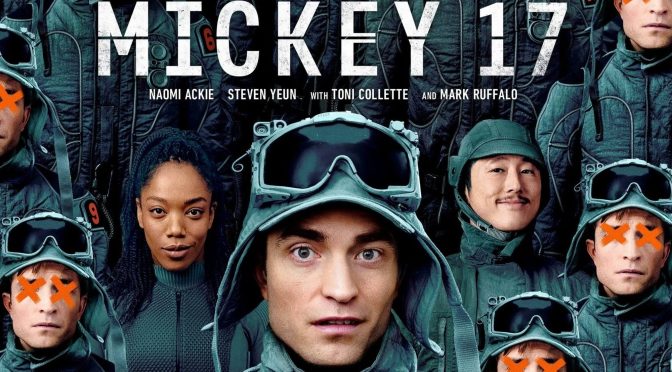
Bong Joon Ho’s adaptation of Mickey 7, the 2022 sci-fi novel by Edward Ashton, showcases a compelling convergence of the director’s distinctive thematic interests with the novel’s narrative. Known for his ability to blend genre elements with incisive social commentary, Bong’s version of Mickey 7, now titled Mickey 17 (2025) is a comedic, at-times-crazy and imaginative sci-fi film exploring human resilience, class struggles, scientific malpractice, environmental abuse, genocidal terra-forming, plus the existential impact of technology within the workplace.

Robert Pattinson is the eponymous Mickey, a “disposable” worker sent on perilous missions to terra-form a distant planet, with his life repeatedly put in danger only for him to be replaced if he dies. This directly ties into Bong’s recurring exploration of human resilience in the face of dehumanizing systems, something seen in his earlier films, such as Snowpiercer (2013) and Okja (2017). Bong’s protagonists are often ordinary people facing systems designed to strip away their individuality, and Mickey’s repeated resurrections emphasize the fragility of life within these systems.

Another prominent theme in Bong’s films is the exploration of class and social inequality. In Parasite (2019), he delved into the gap between the wealthy Park family and the impoverished Kim family, using the home as a microcosm of societal hierarchies. In Mickey 17 (2025), the corporate-driven space mission echoes the exploitation seen in these films. Mickey’s status as an expendable worker mirrors the broader economic systems that exploit individuals for labour without regard for their well-being. The fact that Mickey is repeatedly discarded without consequence is an unsettling reflection of how capitalist structures often devalue human life for the sake of profit.

Bong has always critiqued the alienation of labour, especially how working-class individuals are treated as replaceable cogs in the machine. In Mickey 17 (2025), this theme is amplified as Mickey’s life is literally expendable, offering a stark commentary on the commodification of labour within the context of futuristic colonization. The struggle for survival and dignity, against an uncaring corporate entity, will likely resonate with themes Bong has previously explored. Likewise, in Memories of Murder (2003), the search for truth is tied to the characters’ understanding of themselves and their roles in society. Such societal and existential crises fit perfectly with Bong’s broader thematic preoccupation with the fragility of the human experience in the face of overwhelming, often oppressive, external forces. The question remains: is Mickey 17 (2025) any good?
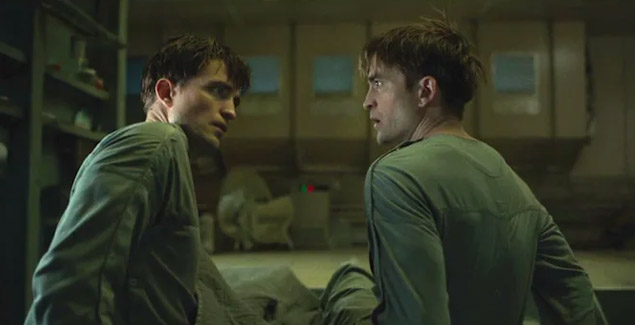


Robert Pattinson, who plays various versions of the titular character Mickey, brings his signature range of brooding intensity and offbeat charisma to the role. His performance is a key part of what makes the film such an intriguing watch. Pattinson excels in portraying Mickey’s emotional journey—a man repeatedly resurrected after dying in increasingly perilous circumstances, struggling with his own identity, and questioning the morality of the system that disposes of him so easily. However, Pattinson’s performance also contributes to the film’s unevenness. While his portrayal is captivating, the character’s arc and motivations can occasionally feel too vague or inconsistent, leading to moments where it’s unclear whether Mickey is supposed to be a tragic figure, a comic relief, or something in between.

The visual effects in Mickey 17 (2025) are nothing short of stunning. Bong Joon Ho, along with his team, creates a visually immersive universe, blending futuristic technology, the planet landscapes of Niflheim, quirky alien creatures and mind-bending visuals to evoke a sense of awe. The digital photo-copying resurrection process that Mickey undergoes is a feat of visual storytelling, with the film using cutting-edge effects to show Mickey’s multiple deaths and resurrections in creative and striking ways. The film’s alien planet, with its strange, luminous terrain and exotic creatures, also adds a surreal and fantastical quality to the narrative. Indeed, the theme of environmental and indigenous protection is vital, but does eventually clash with that of the existential worker.

Where Mickey 17 (2025) truly shines—and stumbles—is in its wacky, unpredictable storytelling. Bong Joon Ho has always been a director unafraid to blend genres and tones, and here he creates a narrative that swings wildly between dark comedy, sci-fi absurdity, and existential dread. One moment, you’re laughing at Mickey’s off-kilter interactions with his fellow colonists, and the next, the film veers into dark, serious territory as Mickey grapples with his own mortality and the ethical dilemmas of his existence. Moreover, the film’s narrative structure itself is erratic. There are moments where the plot careers off course, lost in the chaos of its high-concept premise.

As Robert Pattinson’s charismatic, multi-faceted performance anchors the film, the performances of Mark Ruffalo and Toni Collette—as the grotesque antagonists—topple the tone too far into bad theatre. Finally, Bong Joon Ho’s trademark brilliance is evident throughout, but Mickey 17 (2025) ultimately suffers from the very risk-taking that makes it unique. It’s a thrilling, uneven ride that fascinates, frustrates, makes one laugh and leaves you with a lot to think about—once the space dust has settled. Perhaps I should have had what Bong Joon Ho and his production team were drinking before I watched it. If so, I should certainly of made it a double!
Mark 7.5 out of 11


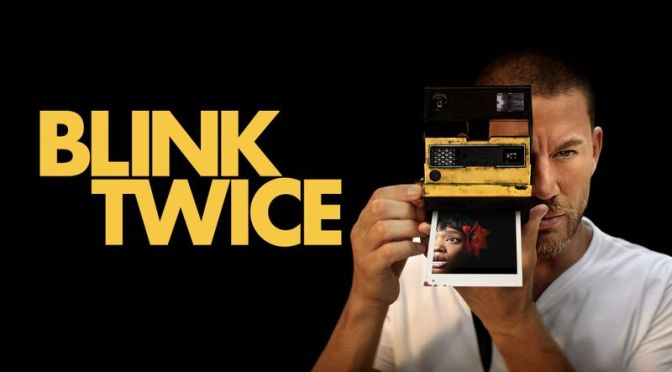
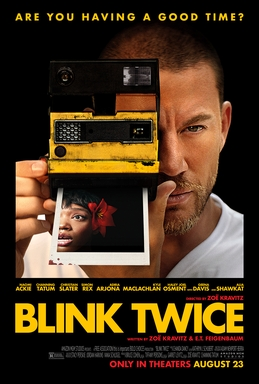
CINEMA REVIEW: BLINK TWICE (2024)

Directed by Zoë Kravitz

Written by Zoë Kravitz & E.T. Feigenbaum

Produced by Bruce Cohen, Tiffany Persons, Garret Levitz, Zoë Kravitz and Channing Tatum

Cast: Naomi Ackie, Channing Tatum, Christian Slater, Simon Rex, Adria Arjona, Kyle MacLachlan, Haley Joel Osment, Geena Davis and Alia Shawkat etc.

Cinematography by Adam Newport-Berra

*** MAY CONTAIN SPOILERS ***


The theme of toxic masculinity is almost becoming a sub-genre of itself in the wake of the #MeToo movement. Films such as The Royal Hotel (2023), How to Have Sex (2023) and Men (2022) are powerful genre films which take the manipulative, malevolent and violent aspect of men, utilizing it as both nemesis and a destructive force the main protagonists must contend with. While She Said (2022) dealt specifically with the Harvey Weinstein legal case, Zoe Kravitz’ energetic blend of genres in Blink Twice (2024), takes a more fictional and heightened route while exposing the horrors surrounding the potential happenings at the notorious Epstein Island.

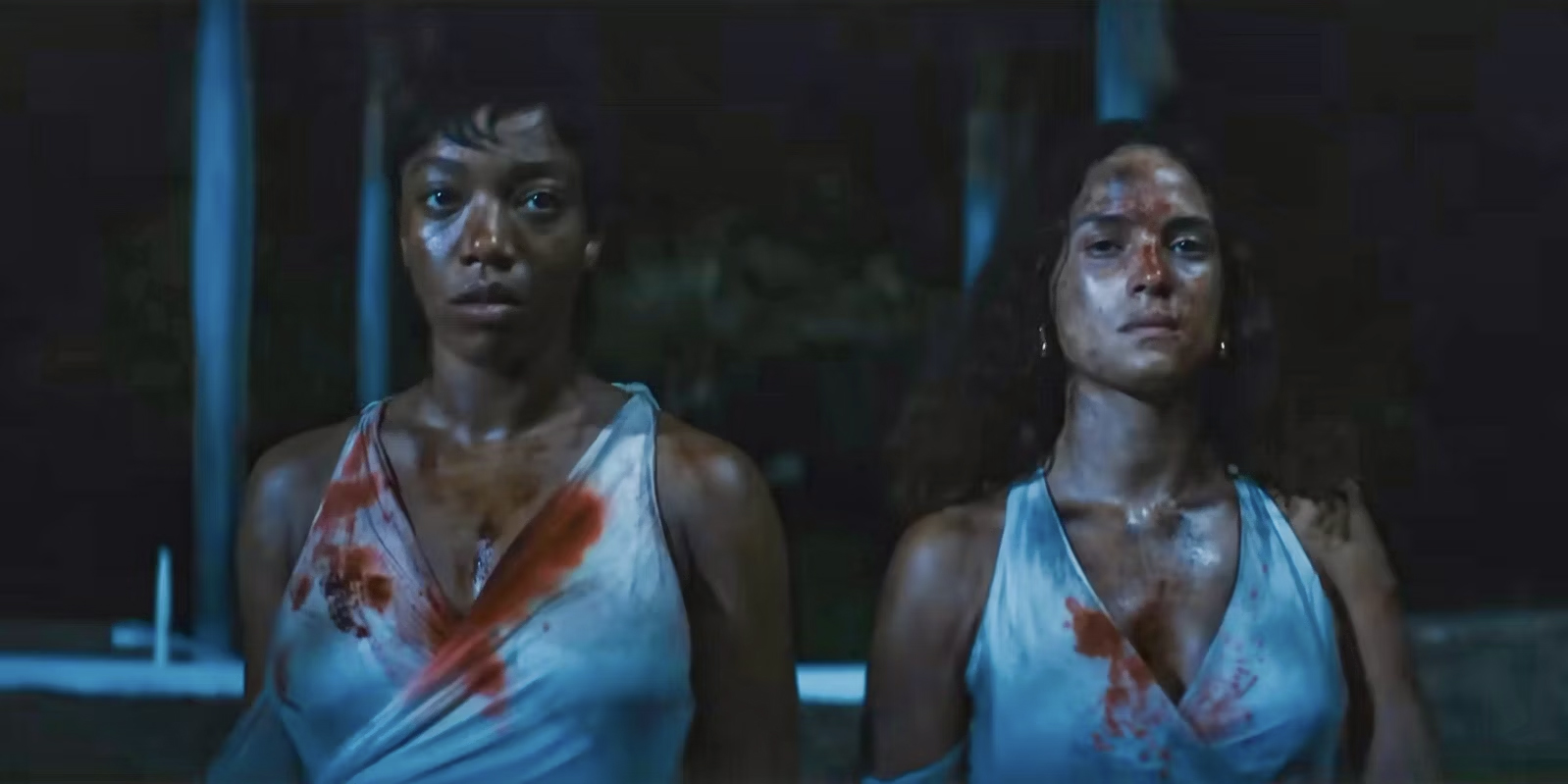
Frida (Naomie Ackie) and her friend Jess (Alia Shawkat) work at an exclusive event where Frida meets Slater King (Channing Tatum), a billionaire tech mogul who recently resigned as CEO after a public scandal. Despite the scandal Frida and Jess gladly accept an invitation to his private island, where his assistant Stacy (Geena Davis) confiscates their phones. The island hosts Slater’s friends and business partners along with three glamorous guests including Sarah (Adria Arjona). The men and women are treated to lavish rooms, gift bags, gourmet meals, cocktails, and party like hedonistic rock stars drinking champagne and taking hallucinogens.


If you’ve seen the similar island-based, The Menu (2022), which I loved, plus the less than riveting 1950’s perfect suburb-set, Don’t Worry Darling (2022), one soon realises that not all is well in paradise. Amidst the sun, sea and partying the narrative slowly builds the tension until Frida and Jess begin to suspect all may not be as it seems. Kravitz carefully ratchets up the tension, with several strange discoveries heightening the paranoia and anxiety. Latterly the suspense gives way to all-out gory horror and black comedy in the thrilling final act. Naomi Ackie and Adria Arjona are impressive “final girls”, however, the script arguably throws in too many twisty reveals at the end, testing narrative credibility.

Zoe Kravitz is clearly a talented filmmaker and Blink Twice (2024), while unsubtle, is highly entertaining. But does the diversion to the horror genre dilute the power of the themes of toxic masculinity? Kravitz aims to critique the evils of men by showcasing male characters who embody arrogance, dominance, and emotional suppression. But while Kravitz may intend to address toxic masculinity, the reliance on traditional horror tropes potentially undermines this message by exaggerating characters, victimizing women, and prioritizing sensationalism over substance. Still, as a revenge fantasy, Blink Twice (2024), is both stylishly and dynamically rendered.

Mark: 7.5 out of 11


UNDER-RATED CLASSIC #11 – THE SCORE (2021)

UNDER-RATED CLASSIC #11 – THE SCORE (2021)

Directed by Malachi Smyth

Written by Malachi Smyth

Produced by Matthew James Wilkinson & Ben Pullen

Cast: Johnny Flynn, Will Poulter, Naomi Ackie and Lydia Wilson

Cinematography by Darran Bragg

Music by Johnny Flynn

*** MAY CONTAIN SPOILERS ***


I’m not sure enough people have seen The Score (2021) to even rate it, let alone under-rate it. Because this crime-thriller-musical is a genuine curio and cult classic in my book. The reviews online are very mixed and many of them are correct in saying the film doesn’t work as either a crime film or musical or even a love story. But for some reason I have watched it twice now and really enjoyed it both times. So, for me, it is very much an under-rated classic.

For the record, for me, an under-rated classic can be a film I love, plus satisfy the following criteria:

  1. Must not have won an Oscar.
  2. Must not have won a BAFTA.
  3. Must not appear in the AFI Top 100 list.
  4. Must not appear in the IMDB Top 250 list.
  5. Must not appear in the BFI 100 Great British films.
  6. Must not appear in the all-time highest grossing movies of list.


So, being a massive fan of Johnny Flynn helps to enjoy this film. He wrote and sings, with Will Poulter and Naomi Ackie, the songs from the soundtrack. Plus, he is one of the main leads, portraying a low-level career criminal, not-as-clever-as-he-thinks, Mike. He is planning a “big job” in cahoots with, not-as-stupid-as-he-acts-sidekick, Troy (Poulter) that involves a big score. That is twenty-grand (£) from a previous job Troy’s imprisoned brother hid. Exponential growth is promised from a meet with some proper gangsters for what may or may not be a drug deal. Anyway, nothing is what it seems in this predominantly one-location thriller.

Two misfits waiting for someone who may never arrive, plus the swinging banter between Mike and Troy has vague elements of Waiting for Godot, however, there is an actual crime plot slowly burning here. As they wait impatiently at a remote cafe writer-director, Malachi Smyth, throws in some eccentric visitors plus a supporting romance plot, with Troy connecting awkwardly at first, then touchingly with cafe employee, Gloria (Naomi Ackie). Indeed, their attraction and subsequent connection virtually becomes the main narrative thrust of The Score (2021), before the final crime twist brings the action to a violent head.

Oh, do not forget the singing too. Dennis Potter had his characters lip-sync to old musical classics to reveal their emotions, and was proclaimed as genius for it. Here Malachi Smyth uses Flynn’s fantastic compositions to do a similar job. I admit it is a bit weird and jarring at first, but Flynn, Poulter and Ackie carry the tunes well for me and it adds another element to an unusual film experience. Ultimately if someone watched The Score (2021) and said it does not work at all, I couldn’t argue with them. However, I really loved it and constantly listen to the soundtrack I downloaded. I also have a soft spot for indie filmmakers, daring to fail while trying something different.


STAR WARS: THE RISE OF SKYWALKER (2019) – MOVIE REVIEW

STAR WARS: THE RISE OF SKYWALKER (2019) – MOVIE REVIEW

Directed by: J.J. Abrams

Produced by: Kathleen Kennedy, J.J. Abrams, Michelle Rejwan

Screenplay/Story by: J.J. Abrams, Chris Terrio, Derek Connolly, Colin Trevorrow – based on characters created by George Lucas

Cast: Carrie Fisher, Mark Hamill, Adam Driver, Daisy Ridley, John Boyega, Oscar Isaac, Naomi Ackie, Domhnall Gleeson, Anthony Daniels, Lupita Nyong’o, Keri Russell, Richard E. Grant etc.

Music by: John Williams

**SPOILER FREE REVIEW**


The J. J. Abrams directed Star Wars: The Force Awakens (2015) reboot broke not only the internet, but also box office records worldwide. It was a safe, entertaining and impressive spectacle which combined a mix of older characters we knew and loved, plus some bright young new things too. The action was breathtaking and brilliantly done, however, the story was a retread of A New Hope (1977) (with a female Luke), plus a series of glaring plot holes. Still, loads of action and great bad guys made this a fun blockbuster. 

Director Rian Johnson’s, sequel Star Wars: The Last Jedi (2017) was, of course, another massive hit across the galaxy too. However, having watched it again recently, I felt it was racked with inconsistencies in tone and suffered weak storytelling. Indeed, the whole trilogy ground to a virtual standstill with Rey’s central story standing still and Poe and Finn’s mission proving to be a redundant decoy and wild goose chase rolled into one. Furthermore, I was shocked that a meta-filmmaker like Rian Johnson was given the Star Wars gig. To me, his filmmaking choices are too genre subversive and so it proved. Because, while The Last Jedi (2019) had some memorable moments, (mostly Adam Driver) and Luke’s emotionally charged arc, yet overall it failed as a Star Wars story.


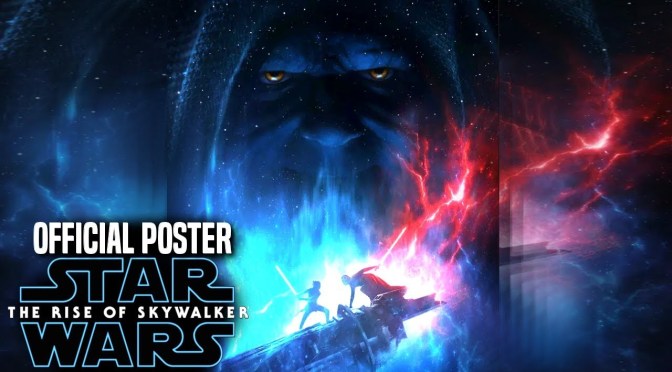
Thus, it was not surprising when genre specialist, J. J. Abrams, was brought back to save the trilogy with The Rise of Skywalker (2019). In returning to the safe, fast-paced, spectacular blockbuster style of The Force Awakens (2015), we may have lost idiosyncratic moments of character and humour, but at least this story has plot cohesion, punchy pay-offs and emotional impact. What The Rise of Skywalker (2019) also has is incredible visual set-pieces throughout. The J. J. Abrams led production army of special effects wizards have given us some memorable light-sabre and space battles. One in particular on the moon of Endor, that finds Kylo-Ren (Adam Driver) and Rey (Daisy Ridley) facing off, took my breath away.

Another major strength of this final episode is that Rey’s narrative arc is finally given the development it should have got in The Last Jedi (2017). Daisy Ridley’s performance too in this film is excellent. While she was a bit lightweight in the first two films, I felt she really came into her own here. This is helped by the revelation as to who her real parents were. Having said that, Abrams and his co-writers desperately scrabble around in the first hour of the film trying to set this up. At times the pace was too hectic. However, once it settled and all the flashbacks and back stories were in place, Rey’s character faces a very ominous choice. Conversely, her deadly psychic link with Kylo Ren continues to be a fascinating duel of mind, spirit and body. These developments are assisted by another compelling performance by Adam Driver. Kylo Ren’s internal struggle comes to the fore too, with a number of heart-pounding pay-offs at the end.


I’m also pleased to say that Poe (Oscar Isaac), Chewbacca, and Finn (John Boyega) are given a real meaty mission to get their teeth into. One that in fact links to the main story and themes of the whole film too. The standard plot McGuffin here is a Sith “wayfinder”, which the rebel team and Rey set out to recover. Let’s be honest, it’s no more than a “Treasure Hunt” plot structure, however, at least it allows for the more emotionally charged aspects of the story to develop and leads us perfectly to the incredible battle sequences in the final act. Moreover, plot predictability aside, there are other weaknesses in the film. I didn’t mind the CGI-driven rendition of Leia Organa (Carrie Fisher), however, by the ninth episode in the franchise I felt maybe they’d waited too late to introduce new aspects of the Jedi mind-trickery. But, hey it worked well in the story and was so cool that you just accept ‘the force’ as is.

Ultimately, The Rise of Skywalker (2019) is a return to genre form following the idiosyncratic subversion of The Last Jedi (2017). In fact, it was so entertaining it is the most enjoyable one (excluding the prequels) of the new trilogy. Despite a rapid start to the narrative, which tries to recoup the ground lost by the prior film, once it finds a rhythm there are some amazing action set-pieces, impressively cinematic visuals and thrilling emotional moments. While it may adhere to cookie-cutter, franchise genre expectations, overall, The Rise of Skywalker (2019) is delivered with incredible force and made for perfect holiday blockbuster entertainment.

Mark: 8.5 out of 11