Tag Archives: NYC

Cult Film Review: Ms. 45 / Angel of Vengeance (1981) – a beautiful looking yet grisly exploitation classic!

Cult Film Review: Ms. 45 / Angel of Vengeance (1981)

Directed by Abel Ferrara

Written by Nicholas St. John

Produced by: Richard Howorth, Mary Kane

Main cast: Zoë Tamerlis (Lund), Albert Sinkys, Steve Singer, Jack Thibeau, Peter Yellen, Darlene Stuto, Helen McGara etc.

Cinematography by James Momel
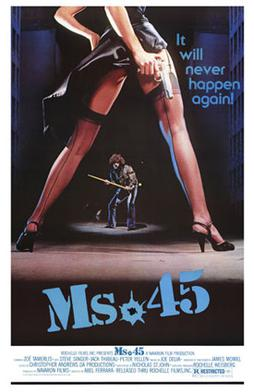


In its latest 4K restoration, Ms. 45—Abel Ferrara’s 1981 revenge thriller—has never looked more electrifying, or more disturbing. A stunning new rendering of Ferrara’s gritty vision, Ms. 45 showcases New York City in all its stark, seething chaos: a place of beautiful ugliness, where the streets pulse with danger, desperation, and decay. The film, originally shot on 16mm, feels both of its time and eerily timeless, especially now in ultra-high-definition, where every grainy detail of Ferrara’s oppressive, neon-lit streets shines in a raw, unapologetic manner.

At the heart of this urban nightmare is Thana (Zoë Lund, credited as Zoë Tamerlis), a mute seamstress whose world shatters after she is brutally assaulted by a man on her way home, then attacked again in her home. Her muteness is both a powerful thematic element and an artistic choice, amplifying her trauma, her rage, and her vengeance in a way that spoken words never could. Thana’s descent into violence is stark, visceral, and unrelenting, making her a strange kind of anti-hero in this world of moral decay. Ferrara’s direction is clinical, cold, and absolutely uncompromising—each frame holds a sharp, almost surgical precision, magnifying the madness of her mind and the city itself.

What truly elevates Ms. 45 beyond its genre limitations is the electric performance of Zoë Tamerlis/Lund. At just 17 years old when the film was made, Lund’s portrayal of Thana is nothing short of revelatory. She is the beating heart of this disturbing narrative, lighting up the screen with a fierce, magnetic presence that could have easily made her a Hollywood star—had the industry been ready for her. While many of the supporting cast either cannot act or over-act, Lund’s both vulnerable and terrifying, her expression often the only indication of her character’s state of mind. Her journey from victim to vengeful force is tragic, yet always compelling.
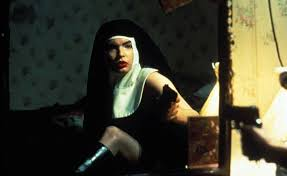

Had Lund chosen to pursue a more conventional career, she would likely have ascended to Hollywood’s A-list—her look was captivating, her screen presence undeniable—but the indie, underground scene was where she truly thrived. In Ms. 45, she is a tragic figure of youth lost to the violence of the world around her, and in the midst of it all, she shines, her performance capturing the raw, cathartic essence of a girl pushed too far. Further, Lund’s performance peaks in one of the most iconic sequences of the film—Thana’s nun fancy-dress shootout. Drenched in blood and surrounded by chaos, she dissects the partygoers in slow-motion with a terrifying calm, her eyes wide with cold sorrow. It’s a juxtaposition of innocence and savagery, like a child playing with fire and discovering its destructive power. Kudos to the deranged soundtrack here which really ramps up Ferrara’s nightmarish vision.

Ms. 45 is NOT a film for the faint of heart or the easily offended. It’s violent, raw, and unapologetically brutal, with moments that will leave you questioning your own reaction to Thana’s vengeful spree. There is something deeply primal about the film—the way it feeds off its viewers’ discomfort, forcing them to confront Thana’s rage. It’s a film that revels in its own madness, and yet somehow, Ferrara and Lund manage to make revenge feel like an art form. It’s as stylish as it is savage, as haunting as it is exhilarating.

In conclusion, Ms. 45 is a genre-defining thriller, a masterpiece of violent cinema that has lost none of its power with time. The 4K restoration is a perfect showcase for Ferrara’s vision, and Zoë Lund’s performance is a revelation—her beauty and intensity burn through the screen, making you wonder what might have been had she chosen a different path. But for those of us lucky enough to witness this film in all its gritty glory, it’s impossible not to see her as a true underground legend. Whether or not you’re ready for it, Ms. 45 is visceral, stylish, and uncompromising cinema—one that will stay with you long after the credits roll and that evil saxophone soundtrack beat fades out.
Mark: 9 out of 11


BFI FILM REVIEW: DAUGHTERS OF THE DUST (1991)

BFI FILM REVIEW: DAUGHTERS OF THE DUST (1991)

Directed by: Julie Dash

Produced by: Lindsay Law, Julie Dash, Arthur Jafa, Steven Jones

Written by: Julie Dash

Cast: Cora Lee Day, Barbara O, Alva Rogers, Trula Hoosier, Umar Abdurrahamn, Adisa Anderson, Kaycee Moore etc.

Music by: John Barnes

Cinematography: Arthur Jafa

***MAY CONTAIN SPOILERS***


“I didn’t want to tell a historical drama about African-American women in the same way that I had seen other dramas. I decided to work with a different type of narrative structure…[and] that the typical male-oriented western-narrative structure was not appropriate for this particular film. So I let the story unravel and reveal itself in a way in which an African Gullah would tell the story, because that’s part of our tradition. The story unfolds throughout this day-and-a-half in various vignettes. It unfolds and comes back. It’s a different way of telling a story. It’s totally different, new.” — Julie Dash

If you didn’t know the British Film Institute (or BFI) is the UK’s lead organisation for film, television and the moving image. It is a cultural charity that: presents world cinema for audiences in cinemas, at festivals and online; cares for the BFI National Archive, the most significant film and television archive in the world; is a registered charity that actively seeks out and supports the next generation of filmmakers; organises and runs the annual London Film Festival; and works with the government and industry to make the UK the most creatively exciting place to make film internationally. As my wife and I are members we get sent films on Blu-Ray/DVD as part of the membership. These can be re-released classics or remastered arthouse masterpieces such as Daughters of the Dust (1991).

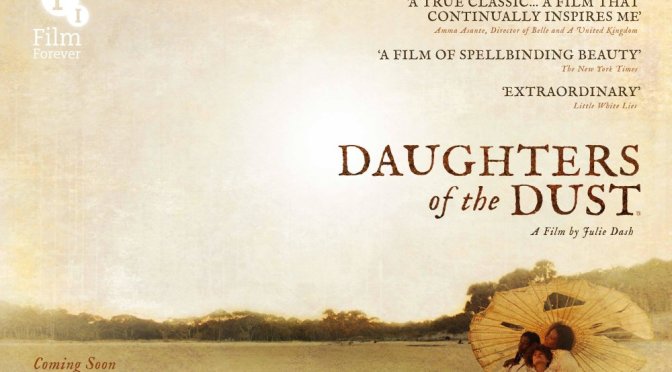
Daughters of the Dust (1991) was a labour of love for writer and director Julie Dash. Originally inspired, way back in 1975, by her father’s experiences, she strived to create a short, poetic and cinematic account of a Gullah family’s migration from idyllic island life to New York at the turn of the century. Eventually, and after many year’s of development and struggle, PBS’ American Playhouse would grant the low budget for a feature film. The film is set in 1902. It tells the story of three generations of Gullah women in the Peazant family and their varying viewpoints, thoughts and philosophies in regard to the move from Helena Island.


Daughters of the Dust review – the dreamlike film that inspired Beyoncé's  Lemonade | Film | The Guardian

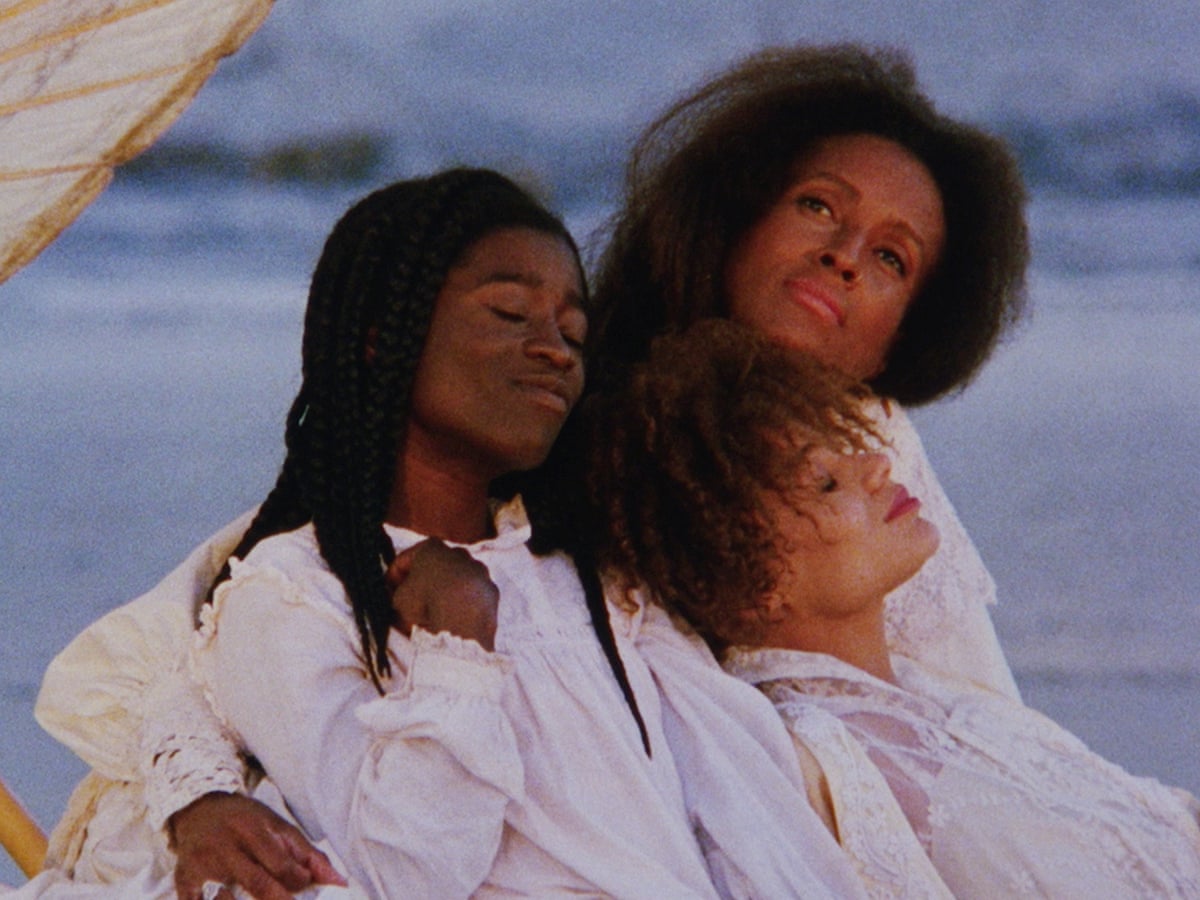
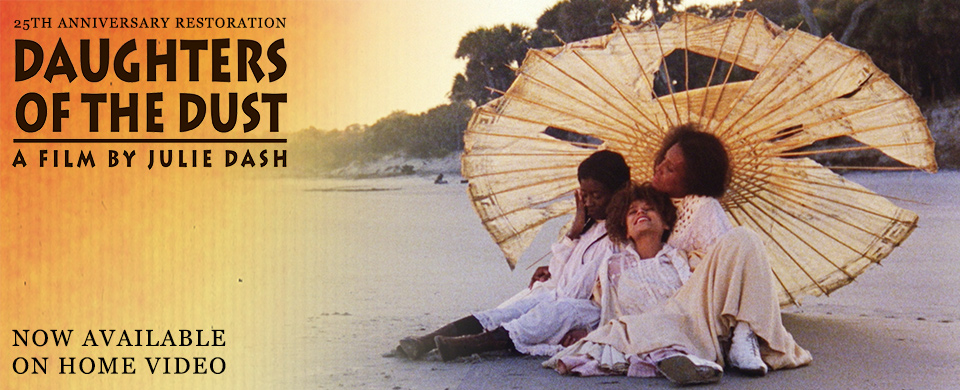
Daughters of the Dust (1991) was made for a reported $800,000, but it looks worth far more in terms of cinematography, costumes and settings. Arthur Jafa’s camera placement and use of the natural light, on the beach and swamp land especially, conjures up some magical imagery. The iconic images of the women on the beaches in their bright white dresses are stunningly memorable. While watching I felt like I was viewing a gallery of moving paintings, such was the exceptional nature of the composition. Again, despite a low budget and use of actors from independent cinema, Julie Dash, gets some incredibly natural and compelling performances from her cast. It’s all the more amazing as most of the cast had to learn the Gullah language employed from scratch.

Thematically the film is very powerful too. Conflict derives from dialectics such as the clashing of elder versus younger people, ancient beliefs versus Christian religion, African heritage versus Neo-American capitalism and nature versus technology. Julie Dash structures these themes and the character’s desires in a non-linear fashion over a period of a long weekend. There are poetic flashbacks and flashforwards too as the imagery is supported by a voiceover from a yet to be born child of parents, Eli and Eula. Ultimately, this film is a very immersive experience. There are no subtitles, so the language can be tricky to understand, but for me that enhanced the desire to feel the narrative. Indeed, the lyrical beauty of Daughters of the Dust (1991), combined with the humming percussion-driven music, stunning landscapes and inventive cinematic language mean you are swept out to sea by the powerful emotions of Julie Dash’s spectacular vision.

Mark: 9 out of 11