12 YEARS A SLAVE (2013) – Film Review by Paul Laight
**THIS REVIEW CONTAINS SPOILERS + CLIPS**
The artist/director Steve McQueen is a very important filmmaker and his films to date include the searing character study of Bobby Sands in Hunger (2008) and the pulverising sex-addict study of Shame (2011). His latest epic is another intense offering based on the 1853 memoir by Solomon Northup, a New York State-born free man who was kidnapped in Washington, D.C. in 1841 and sold into slavery. Indeed, in just 3 feature films McQueen has proven himself a genuine cinematic artist and a beacon of real quality and must-see drama.
Whereas Sands in Hunger was driven by political motives and Sullivan in Shame unable to control his animal instincts then Northup’s character is a family man, a proud and free individual living with his wife and child in Washington. It is there that the story cross-cuts with later events and Solomon’s unjust capture into slavery. He is a dedicated family man and his character is epitomised at the beginning when he turns down the sexual advances of a female captive; my understanding being he could not compromise his fidelity despite being imprisoned in this Louisiana hell.
From the start you’re really rooting for Northup as he is shown to be intelligent, musical and scholarly gentlemen both proud and faithful. His kidnapping is a press-ganging of the most heinous kind as he led away from Washington with the promise of lucrative work then tricked when seemingly at his most content. The subsequent journey through the plantations of New Orleans is a most despicable crime against humanity and McQueen shows this is many scenes of physical, verbal and mental abuse perpetrated against Northup and other characters. Here pain and suffering has never looked so beautiful with stunning cinematography by Sean Bobbitt. It’s a story of sunshine and pain with McQueen utilizing Northup’s life microcosmically in regard to the slave movement as a whole.
The cast are incredible from Chiwetel Ejiofor, in the leading role of Northup to evil slave-zealot Michael Fassbender, benign yet complicit Benedict Cumberbatch and many more including Paul Dano, Lupita Nyong’o, Sarah Paulson, standing out in supporting roles. It has received nine Academy Award nominations including Best Picture, Best Director for McQueen, and Best Actor for Ejiofor, and Best Supporting Actor for Fassbender, and Best Supporting Actress for Nyong’o and I would be shocked if it doesn’t win something.
McQueen treats the subject matter with the reverence and power it deserves and literally paints a brutal, inhumane and devastating set of images with which to tell the story. He often favours long takes notably the scene where Solomon hangs clinging by his toenails to life. This is a stand-out iconic scene and it is too much to bear because we have so much invested in Solomon’s character by this stage and really want his suffering to end. But that’s where Fassbender’s Epps enters the play and the intensity is ratcheted up and then some.
For well over an hour 12 Years a Slave is majestic filmmaking of the highest quality. Northup’s characterisation is incredible, however, this is to the detriment of the other characters who dip in and out of the narrative notably Benedict Cumberbatch’s Ford, who to me was the most interesting of the white slavers as he appeared to be a compassionate man trapped within a vicious societal circle of hate. Fassbender’s maniacal Epps I feel deserved a better introduction because even though the actor is once again breath-taking I felt the performance MORE than the actual character. The two wives of the slavers were one-dimensional and interchangeably evil, plus, I was disappointed Paul Dano’s character left the narrative too early. The major casting disappointment is the glory-hunting role Brad Pitt gave himself as the kind Canadian carpenter who assists Northup in his quest to escape. Pitt is a great movie star and I love his work but he’s too big in my opinion to appear so late in such a story as this. I was deeply involved only to suddenly be reminded I was watching a Hollywood movie.
Steve McQueen is a master craftsmen and has made a near-flawless work of cinema even though I must admit the ending left me very frustrated. There is power and emotion for all to see but I wanted more satisfaction for Northup’s character and some kind of retribution to be dealt to his captors. McQueen had cooked up such an intense soup of pain and suffering I wanted more of a release. Indeed, it seemed quite a passive denouement to me especially when compared to a film such as Glory (1989) and the Roman Slave action epic Spartacus (1960). However, this is a more personal epic and the filmmakers have clearly stayed true to the honour of the original book so my personal desire for cinematic revenge on the slavers will just have to be met by Tarantino’s dancing-horse-bad-ass-Blaxploitation-Western Django Unchained (2012) I suppose.
THE LEGO MOVIE (2014) – Movie Review by Paul Laight
**PLEASE NOTE THIS REVIEW CONTAINS SPOILERS – NOT THAT IT MATTERS AS THE PLOT IS LIFTED WHOLESALE FROM THE MATRIX ANYWAY**
Have you ever been urinated on from a great height with lemonade while simultaneously being crapped on by a chocolate log? No, nor have I. But in my mind that’s what watching the sweet sickly Diabetes: The Motion Picture AKA The Lego Movie (2014) felt like to me. Not for a while have I failed to enjoy a film so much yet admired the technical expertise and all-round skills of the makers involved.
Is it the film’s fault or mine? I am a jaded cynic but usually I can put that aside when reviewing family movies like this and analyse the story objectively but I can’t do it this time for some reason. I just couldn’t shrug off the feeling I was watching one long one-hundred-minute advert for Lego Co. Corp. PLC. I had the choice to either give in to the Matrix or resist it. I resisted and wish I hadn’t because after I felt like I’d been on a rollercoaster having just drank eighteen Oreo milkshakes. Thus, as an objective reviewer I have failed. I remember when product placement was subtle. Not anymore. This and the recent Google film The Internship (2013) have moved the goalposts; so much so there no one knows where the goal is anymore or the pitch.
The story involves Emmet Brickowski, an ordinary construction worker, who falls into a hole and finds the mystical Piece of Resistance. Various factions then pursue Emmet including the Master Builders led by Wizard Vitruvius (good) and — winging-it Will Ferrell — Lord Business (bad). The Piece of Resistance acts as the archetypal Macguffin as we are led through a cavalcade of Lego Worlds and Lego characters lifted wholesale from popular culture including: Batman, Gandalf, Wonder Woman etc. Emmet is given a reasonable character arc as he moves from someone who always follows instructions to someone who can use his imagination and become the ‘Chosen One’ blah, blah, blah! Throw in a romantic subplot and you basically have The Matrix (1999) but in Lego form.
The film opens really well with a satirical dig at a homogenised society not too dissimilar to ours while the colourful sets, fast-paced action and imaginative set-pieces really drive the movie forward. But unlike the genius of Pixar I did not care for one moment who did what and what was going on. In fact, there was TOO MUCH going on and it was happening too fast to take on board. The most interesting character for me was Liam Neeson’s Bad Cop as he had some element of duality plus there’s some fine gags in there especially at the expense of Nolan’s take on the Dark Knight. But by the end I felt ill as it lays on a glaucomic message within its mildly intelligent but very obvious final act reveal.
The Lego Movie (2014) is basically Ketamine-for-Kids storytelling; capitalism at its most insidious. Vacuum-packed product placement wrapped beautifully in state-of-the-art animation and an overly-knowing and satirical script. The filmmakers deserve much credit for their genius in making a presentable bit of entertainment out of a soulless toy brick. These extended moving billboards are the movies of the future, made by uber-smart college geniuses with no life experience; incubated in a shiny, postmodern void with no heart, soul, nor humanity.
I remember Lego being the best creative brick type toy you could play with when growing up. Then as I got older and had a kid myself I recall screaming in agony as I trod on it barefoot, quickly followed by a performance of a hate-filled Native American swear-dance. Only then for my son to get bored with Lego when he discovered Xbox and it was consigned to the attic to gather dust. Now Lego is back puking all over the cinema with colours and sounds and a horrifically and deliberately repetitive song. No! Everything is not awesome. And I know the film is striving for satire on our conformist and capitalist times but it does it while conforming to the most horrific section of capitalism: namely advertising. The Lego Movie(2014) is Nazi-efficient filmmaking of the highest quality. The kids will love it. But you have a choice: to take the red or blue pill. I took the red pill. I wish I had just given in but there’s still resistance in my jaded mind. Damn you brain – damn you to hell!
**THIS CONTAINS MASSIVE SPOILERS, CLIPS and REFERENCE TO ADULT LOVE DOLLS**
To compliment my post last week which featured films with dark or extreme love, today I am hailing the romantic impact of movie heartthrob Ryan Gosling.
#1 – DRIVE (2011)
This is a very romantic film with great chemistry between Gosling and Mulligan. It is also uber-cool with Gosling doing his post-modern Steve McQueen thing really well while Mulligan does sweetness personified. It’s very pure cinema with minimal dialogue and just a longing, passionate look here or there to drive the love story. Winding Refn is known for his brutal and violent films and this one erupts at the end but The Driver’s motivation is not revenge but rather protection of loved ones; namely Mulligan’s single mum and son. Is there anything more romantic on screen than killing to protect the one’s you love?
#2 – LARS & THE REAL GIRL (2007)
This is such an original, quirky and goddamn touching movie. Gosling’s character – sporting a Pupkin style moustache – has had some kind of personality breakdown and in an attempt to comfort himself he purchases a ‘human’ doll online. So far so weird. He then treats her as he would a real girlfriend. What is amazing is that the townsfolk where he lives also join in the “make-believe” and slowly but surely Bianca (playing herself) becomes part of the community. The writer/filmmakers could have gone down a road of smut and low-brow humour but instead deliver a really humble and slyly humorous portrayal of grief, mental breakdown and loneliness. Gosling is understated brilliance throughout but it’s the Doll which steals the acting honours.
#3 – BLUE VALENTINE (2010)
This is one of the most realistic portrayals of a relationship ever committed to the screen. It features the beginning, middle and end of Gosling and Michelle Williams’ love for each other; although not necessarily in that order. The chemistry between the two is electric and it is so painful to see a couple break apart as they do by the end, having witnessed such a beautiful coming together previously. What I loved about the film was the humanity of the relationship showing both men and women as both negatives and positives in the story. Both romantic and heart-breaking in equal measure this is definitely not a film to watch on your own on Valentine’s Day having just broken up with someone.
#4 – CRAZY, STUPID, LOVE (2011)
I really enjoyed this ensemble comedy from the writers of Bad Santa. A sexy looking cast full of fine young and mature Hollywood talent was very much a surprising like for me. There was pleasant chemistry between Carell’s downtrodden husband and his wife played by the ever-lovely Julianne Moore and fine cameos from Kevin Bacon and Marisa Tomei. Gosling nicely satirises his Hollywood heartthrob good looks playing a gigolo who is able to conquer women with the merest flutter of his get-your-kit-off eyes. The scenes where he trains Carell’s romantic loser up as a womaniser are funny and a nice reversal of the usual Hollywood cliches which show an older man training up a young rookie. Emma Stone is pretty hot too and can act as she showed in the films Easy A (2009),Zombieland (2010) and The Help (2011). Her scenes with Gosling are very funny and I liked her feisty character as she actually steals his heart by initially refusing to give in to his ample charms.
#5 – THE NOTEBOOK (2004)
I am a massive cynic and it takes a lot to melt my iceberg heart but this film attacks you with not one, but TWO heartfelt, tear-jerking stories interweaved simultaneously. Based on super-schmaltzy literary work of Nicholas Sparks I’d kind of avoided watching it but am glad I succumbed as it is a lovely film. It’s the kind of movie you enjoy watching with the heating cranked up while the rain smashes down outside. In the present an elderly couple attempt to reconnect despite her Alzheimer’s, while in the past a young chap from the wrong sides of the tracks tries to woo a Southern Belle despite her families protestations. It’s a sensory overload of sloppy sentimentality and black-belt romance clichés but the film fully embraces these conventions, telling us in the process that love for another human is the main reason for living. The cast are breath-taking including Gosling, Rachel McAdams, James Garner and Gena Rowlands and they really raise the material above the standard Mills and Boon plot. It’s easy to dismiss Nicholas Sparks’ writing but it is phenomenally successful so you have to admire his and the filmmakers’ ability to make such cheesy romance so highly entertaining. This film embodies the definition of a guilty pleasure in my (note)book.
**THIS THING CONTAINS CLIPS, SPOILERS AND VAGUELY SATIRICAL SEXIST LANGUAGE**
It’s Valentines soon and being an unoriginal hack I started thinking about my favourite romantic movies. 30 seconds later I got bored so decided to write a different kind of list. So, if you want an alternative to the usual Valentines-clichéd-cosy-rose-petal-drenched-chocolate-card-Love-Actually-rip-off-Day – here you go!
Basically, it’s an excuse to list some great movies with elements of extreme love. And violence. And horror. My kind of cinema.
SIGHTSEERS (2012)
The perfect date movie. I promise. There’s romance, soul-searching and bloody murder. This is one of the best British films released in a long while. I hate it when writers say a movie is “something meets something” but this is like Mike Leigh’s Nuts in May meets Kalifornia, kind of. I hate myself for saying that. Just watch it.
SECRET IN THEIR EYES (2009)
This is one of the best films you haven’t seen. Or maybe you have. It rightly won the Best Foreign Film Oscar in 2010. It has so many great elements: a vicious murder mystery, obsessive pursuit, revenge, political espionage and a painfully touching love story at its’ heart.
AUDITION (1999)
As date-movies go this is a real screamer. What starts as one man’s attempt to find a wife via his own creepy version of the casting couch is turned into a violent proto-feminist-carve-up-par-excellence! I’ve dated a couple of nutters before but not like this. You won’t look at a hessian sack the same way again. Or cheese wire. Or open your eyes ever again after seeing this.
TEETH (2007)
Mixing comedy with coming-of-age movies this is a brilliant little horror film. A girl with Jaws in her vagina starts cutting men’s cocks off! Who said romance was dead eh? She did – that’s who!
IRREVERSIBLE (2002)
Just one of the most brutal and beautiful love stories ever told on film.
MISERY (1990)
I still think that if Annie Wilkes hadn’t been such a violent mentalist her and Paul Sheldon may have had a chance of romance. But she was and love for Kathy Bates and James Caan’s characters was not to be. Shame. Despite the torture they were such a lovely couple.
HAROLD & MAUDE (1971)
A story for outsiders as young man, slightly off-kilter Harold, falls in love with free-spirited octogenarian, Maude. It’s a wonderfully dark comedy full of brilliant scenes especially Harold’s fake “suicide” attempts. But the chemistry between Bud Cort and Ruth Gordon is really touching. Ruth Gordon proved in this and Rosemary’s Baby what a great actor she was.
SNOWTOWN (2011)
Your boyfriend or girlfriend are giving you the hump and you want to pump and dump them. What do you do? Sit them down while you watch this movie while sharpening your carving knife collection. You won’t see them for dust! Jokes aside this Aussie serial-killer movie is one of the darkest films I have seen in a long while. Brutal, grim and worst of all based on a true story.
EVIL DEAD (1981)
You go to a cabin in the woods hoping to get a bit of sugar from your girlfriend and accidentally raise a Canderian demon using the Book Of The Dead. Don’t you just hate it when that happens! I know I do!
LES DIABOLIQUES (1955)
Watch this French film and Psycho in a double bill and you’ll never ever go into the bathroom again. This is an absolute classic and they genuinely do not make them like this anymore. Mainly because it’s in black and white, oh, and it has a story, suspense, plot-twists and doesn’t rely on green-screen-CGI-Superhero-blowing-shit-up!
THE SKIN I LIVE IN (2011)
As retribution goes Antonio Banderas’ vendetta in this takes some beating. It’s a slow burner but the pay off is incredible as Pedro Almodovar movie combines: science-fiction, horror, melodrama, psychological torture etc. to create a date movie you won’t forget. Banderas is a revelation in a role which turns his usual romantic leading man status on its head as he seeks transformative revenge.
**THIS REVIEW CONTAINS MASSIVE SPOILERS + MOVIE CLIPS PLUS REFERENCES TO SEX, DRUG USE, GREED & BRILLIANT FILMMAKING**
To say The Wolf of Wall Street has its coke and eats it is a massive understatement. It’s black-belt-bukakke movie-making of the highest order. A voracious sexy beast of a film which showers the audience with one incredible scene of excess after the other. To put it bluntly: it’s Goodfellas fucks Scarface and Wall Street then gives birth to a movie bastard of epic proportions.
Based on a memoir by disgraced human scum Jordan Belfort – a drug-addicted-sex-addicted-thieving-stockbroker-par-excellence – The Wolf of Wall Street follows the same rise-and-fall structure of mafia classic Goodfellas as DiCaprio’s Belfort schemes and sells his soul to power up through the snakes and ladders of Wall Street. As the superlative scene with Matthew McConaghey demonstrates the Stock Exchange is a “fugazi” – a fake. The main aim is to make more and more money while screwing the investors. The best traders are wolves in a vicious snakepit swimming with sharks ripping off a house of fools.
As Belfort’s firm Stratton Oakmont becomes out of control so does his wealth as he and his motley crue of traders manipulate and connive and deceive to create a monstrous company of wolves who regale in dwarf-throwing, blow-jobbing, lude-swallowing mania. The extreme is only halfway for these people. The superb cast including: DiCaprio, Margot Robbie, Jean Dujardin and Jonah Hill, play these venal cunts with such charm and humour you often find yourself complicit with their nefarious behaviour almost willing the characters to push further and further with their depravity.
But as the drug use, debauchery and money increased so did my hatred for these greedy capitalist pigs. On the one hand I was enjoying the rollercoaster ride of the story but on the other I was horrified at the fact such people and behaviour exist on this planet. That is the skill of the filmmakers though: making these Wall Street monsters likeable, funny, believable and human. Indeed, Belfort himself is ultimately a sorry figure shown to be a monstrous addict who is powerless to stop himself from indulging in every drug and hooker under the sun. But Scorcese and DiCaprio don’t give Belfort any kind of redemption. He’s still a massive prick at the end of the film; a free prick walking the earth but just not as rich as he once was.
Martin Scorcese is one of the greatest living filmmakers still working today and The Wolf of Wall Street feels like a greatest hits package combining all of the finer ingredients from his other films. You’ve got the classic swooning camera moves; the direct address to camera; cat-and-dog couples fighting as seen in Casino and Goodfellas; the boat-in-peril sequence as seen in Cape Fear; the multi-character voiceovers; the dumb criminals putting themselves in the shit; characters turning on each other and ratting each other out as seen most recently in The Departed; plus many many more. But whereas Scorcese used to deal with outsiders and oddballs like Travis Bickle or Rupert Pupkin he is now dealing with Insiders, Gods and members of the Master-Race. Aside from Kyle Chandler as the dedicated FBI Agent there are no honest characters in this film and at times the it feels like a depressing advert for the greed-is-good-Gordon-Gekko-philosophy.
Personally, I wanted a little more focus on the kind of crimes that were being committed plus more of comeuppance or death for Jordan Belfort. But in real life he essentially got away with everything having served a pretty short sentence for his “pump and dump” machinations; mainly because he became a dirty rat. I suppose the subtext of the film does ask the audience: does this monster deserve a second chance?
But this is NOT a heavy analysis of socio-economic morality and values but rather a bullet-paced black comedy filled with cracking scenes and razor-sharp one-liners delivered by a stellar cast. There are some great big performances and fine supporting players like: Joanna Lumley, Matthew McConaghey, John Bernthal, Rob Reiner and Spike Jonze to name a few. But this is Leonardo DiCaprio and Martin Scorcese’s film. As they demonstrated in The Aviator, The Departed, Shutter Island etc. they are a formidable team. DiCaprio deserves an Oscar for sheer consistency of performances but the Belfort character has already had enough success in his lifetime and threw it all away because of greed. Surely awarding an Oscar to such a heinous character would be TOO MUCH wouldn’t it? But as this film demonstrates TOO MUCH is never enough!
I was looking forward to seeing American Hustle for a number of reasons:
1) The brilliant ensemble cast featuring Christian Bale, Amy Adams, Bradley Cooper, Jeremy Renner, Jennifer Lawrence, Louis C.K. etc. excited me greatly.
2) I love David O. Russell’s film-works such as Flirting With Disaster (1996), The Fighter (2010), Three Kings (1999) and Silver Linings Playbook (2012). I even liked I Heart Huckabees (2004), I think.
3) I love ‘con’ movies; the twisty-turny-step-sister of the crime thriller genre. My favourites include: The Sting (1973), Matchstick Men (2003), House Of Games (1987), The Grifters (1990) and my all-time favoritest the Argentinian con-film Nine Queens (2000).
So in short I really really wanted to enjoy American Hustle and must say I did greatly.
The plot in a nutshell finds 1970s confidence-tricksters Irving Rosenfeld (Bale) and Sydney Prosser (Adams) ripping off small businessmen behaving like a High Street Bank for lowlifes. Their behaviour mirrors the sub-prime market of the Noughties; robbing the skint to fund an extravagant and hedonsitic lifestyle. In short they are scum; in Prosser/Adam’s case very sexy scum.
Eventually, like the greedy-bastard banks Rosenfeld and Prosser go bust when they are nicked by Bradley Cooper’s hyper-permed-FBI agent, Richie DiMaso. In order to avoid jail they agree to become ‘bait’ to help capture some bigger fish including Jeremy Renner’s family and community driven politician, Mayor Carmine Polito. That’s where the fun really begins as all manner of cons, sleight-of-hand, bribes, palm-offs, seductions, stake-raising twists and turns begin as each character tries to outwit the other with crazy scheme piled upon crazy scheme.
The film opens with a hilarious set-piece as Christian Bale’s Rosenfeld goes to work by applying his rather extravagant stunt-hair. In fact, the wig work in this film is a joy and while it’s cheap and easy pickings at the expense of stupid 70s hair and clothes I loved it. Bale is very theatrical in this movie and I would describe his performance as a masterclass in over-the-top restraint. The application of the wig and display of his paunch are his equivalent of Laurence Olivier’s hunchy Richard III: “An Oscar! Oscar! My dignity and six-pack for an Oscar!”
Indeed, like O. Russell’s other movies this is a real actor-fest. He just winds them up and lets them go in one entertaining scene after another. Amy Adams is a real vulnerable-hot-like-fire-cold-bitch while Jennifer Lawrence steals the show with her ditzy-loose-cannon-flick-hair-nut-job portrayal of Rosenfeld’s wife. Bradley Cooper follows up his great work in Silver Linings Playbook with a fine comic turn as the delusional and over-ambitious DiMaso. While the most naturalistic and believable character and in turn empathetic portrayal is Renner’s politician. There’s some great support too especially from Louis C.K and Jack Huston.
One would probably argue that this is more of a comedy than a drama as the film retains a sense of fun throughout with some great physical performances and a sparkling script littered with zinging one-liners. But there is some meaty drama and a serious subtext to the movie, and like O. Russell’s Three Kings which mixed humour with war, American Hustle has a message. Admittedly it is quite well hidden amongst the wigs and funny accents but that message is America is built on the con and that while everyone is trying to out-do each other perhaps they should just work together. The law, the gangsters, the politicians and the business folk of the United States are all on the take and the American dream is simply a pyramid scheme built on sand. That’s what I got from it anyway.
David O. Russell takes genre movies and applies a wonderful sense of chaos to the order allowing his actors free reign to express themselves. His films are like watching Barcelona play football inasmuch as you’re really enjoying the pretty patterns being made by the players and then bang – the ball’s in the net! This is indeed Champions League movie-making with O. Russell’s wonderful style of direction giving all the cast their moment in the sun to shine with wonderful over-the-top characterisations, wigs, costumes and performances.
American Hustle is an entertaining movie which had the audience I watched it with laughing throughout. It works best as a crime-comedy with a bit of suspense; as well as being a mildly damning indictment the American dream. Ultimately, this film shoots, hits the mark and scores!
Written by Paul Laight and directed by Jonathan Wolff.
Paul’s ‘lost’ film AFRAID OF THE LIGHT (2008) is now available to view online. It is a brilliant little crime thriller beautifully shot on 16mm film in black and white.
He wasn’t involved in the production or the marketing therefore the film has not been seen by many people unfortunately.
It’s a shame it didn’t get a run at short film festivals as it is very impressive. Check it out here.
MOVIN ON UP; Music to play at my Funeral by Paul Laight
When I shuffle off this coil thingy and my strange life has come to an end I would like these songs played at my funeral please. I’m not dying by the way but I just thought I’d write this down now while it’s on my mind.
1. Con te partirò (Time to say goodbye) – Andrea Bocelli and Sarah Brightman
I first heard this song in an episode of The Sopranos and it is truly incredible. It just has a very simple hook and is beautifully sung by Bocelli and Brightman. Perhaps it’s too grand for a basic bloke who grew up in Battersea but I like its simplicity and wonder.
2. There is a Light That Never Goes Out – The Smiths
The Smiths are probably my favourite band ever and I would like to pay tribute to them. I love this song as the lyrics are both poignant and morbidly funny to me. If buried I would also like the phrase “Here lies the late Paul Laight who Started Something He Couldn’t Finish!” Another nod to Morrissey and Marr and quite fitting I think.
3. Light My Fire by The Doors
I’m a massive fan of The Doors psychedelic 60s rock blues and I’d like this song played if I am cremated. I considered The Doors’ song The End but that’s a bit depressing so this song works better for humorous and uplifting purposes.
4. Intermezzo – Pietro Mascagni (opening theme from Raging Bull)
As a film geek I wanted some classical music to play as I am sent from and into the Earth. I thought about using something by Ennio Morricone or even The Terminator theme song and maybe I still will. I like the idea of The Terminator theme playing and Sarah Connor uttering those infamous words, “You’re terminated, f*cker!” as I’m laid to rest but thought that may upset people in the audience so Intermezzo offers a more suitable piece for peaceful contemplation.
5. Moving On Up – Primal Scream
I’d like to end on an upbeat track and this classic pop song has lyrics and a killer tune which are perfect to send the grieving away with a spring in their step. I don’t believe in God but if there is a heaven hopefully this will be the song playing when I go through the Pearly Gates or am plunged into the Fires of Hell. Either one is fine by me. Got to be the Scream’s original classic too!
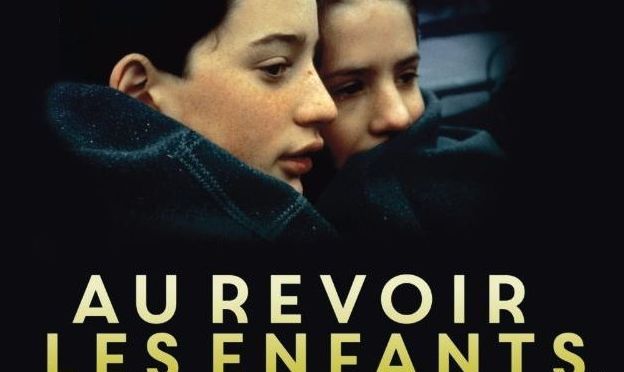
AU REVOIR LES ENFANTS (1987) – CLASSIC MOVIE REVIEW by Paul Laight
Louis Malle’s brilliant wartime drama set in a French Boarding school is a subtle, yet somehow brutal drama which perfectly captures the horrors of war during 1944 Occupied France.
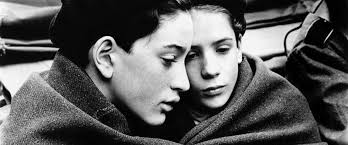
It centres on the relationship between the children who were sent from the cities of France out to the countryside to avoid the Allies bombing. More specifically it looks at the relationship between Julien Quentin and new boy at the school Jean Bonnet.
The adult characters throughout the film such as the parents, priests and teachers all do their utmost to protect the children from the fact that a war rages on. This is demonstrated by the fact the children are sent away from the city where the Allies are bombing non-stop as heard in one of Madame Quentin’s letters. Moreover, Julien’s mother is clearly a loving woman committed to protecting her sons showing this in the opening scene. On the platform Julian is quite vicious to her but she knows this is from fear and being upset at being sent away. The way she hugs him and reassures him tells us she cares very much.
Certainly, the Church and school grounds are both physically and figuratively seen as the main shelter for the children during the film. The location of the school in the countryside away from the main ally bombings also illustrates the desire to protect the children from the war. In addition, so does the blackout curtains and placing the children in the catacombs while an air raid takes place. The fact that Catholicism features heavily in the film offers religion and God as more symbolic protector of the boys.
But as the narrative progresses the world outside and events prick the temporary and flimsy protective bubble. Despite their efforts the adults cannot protect the children fully from the harshness of war with German soldiers, French Military Police and eventually the Gestapo converging on the school.
The colours throughout the film are washed out and somewhat drab with darker hues such as brown, navy blues, black and greys dominating the clothes, curtains and mise-en-scence generally. Married to these colours is a bleached, pared down cinematographical style which combine to create a cold, oppressive feeling during the film. There is a sense the characters are not only trapped by the ongoing war and in the boarding school but also by the weather. Indeed, it appears that a permanent winter hangs over the characters. Moreover, the lighting is served as naturalistic emanating from windows, candles and skylights.
Altogether, this tells the audience that the filmmakers are portraying events as realistic and this is confirmed by the knowledge the narrative comes from a real event in Louis Malles’ childhood. As such the colours, lighting and design combine to create a bleak and stifling environment for the characters; a feeling that war is a difficult climate to exist in with little in the way of bright colours or sunshine to provide escape.
As aforementioned, Jean and Julien’s relationship propels the narrative. Jean Bonnet is portrayed as a studious boy who excels at most subjects notably music and mathematics and is singled out for praise by the teachers. Initially, he attempts to keep himself to himself not forging close ties with any other children other than those he knows. The reaction from the other children is mixed. Some ignore him but others tease him about his name. Julien is indifferent until he is asked by Father Jean to keep an eye on him.
My feeling was there was a real tragedy surrounding Jean and this is testament to the director and the casting of the boy who portrayed him. While many of the children are pale in colour Jean was paler almost ghostlike. The kiss Father Jean places on his head at the beginning of the film seems innocent but becomes portentous by the films’ end. Being Jewish also lends his character a real sense of adversity and there is much suspense to be derived as to when he will be discovered.
Initially, their relationship is strained with Julien not reckoning Jean but over time they slowly begin to bond. Father Jean requests Julien becomes a ‘guardian’ to Jean and Julien takes on this responsibility. He is also naturally curious about the new boy and his background having discovered him praying in Hebrew at night.
Aside from their close proximity in the bedroom area events conspire to bring the children closer together. Julien’s bed-wetting not only causes him distress but also leads to the discovery of Jean’s religious background. Moreover, a mutual interest in playing of the piano provided common ground between the two characters as echoed in a lovely scene later in the film showing them playing together despite the air-raid going on. Indeed both music and film (Chaplin’s ‘The Immigrant’) are shown to be provide a form of escape from the horrors of the outside world.
Julien is a naturally inquisitive boy and when he sees Jean praying at night he becomes intrigued. His interest is piqued further when Father Jean asks him to look after him. This separates Jean Bonnet as different. Moreover, the way they are integrated into the school is different also. Many of the other boys arrive on the train from the city while the Jewish children arrive separately almost in secret from a mystery place.
Julien’s detective work is initially done clandestinely. He searches Jean’s locker at night and finds books with his actual name in them: Kippelstein. This gives him the impetus to begin asking his brother questions about the Jewish people and why they are disliked so. His brother reveals a lack of knowledge and thus Julien also asks his Mother too. As his ‘investigation’ continues and he gains Jean’s trust he then asks him directly about his parents and where he comes from. Over time he gains Jean’s trust and Julien finds out about him personally as well as his background. As such a bond is built via Jean’s secret.
The key event which brings them together is when they get lost in the woods. The scene separates the boys from the rest of the school and shows they support each other in their plight. Julien doesn’t dream of giving Jean up to the German soldiers in the woods and their friendship is confirmed from that moment onwards. However, there’s a sense that it is Julien who gives Jean away to the Gestapo at the end because of their bond but this is a harsh assessment.
Ultimately, it is the crippled Joseph who gives the Jewish children away. While the capture of Jean and the other boys is certainly a tragedy I find Joseph to be the saddest character in the whole film. This is a character who has been dealt a really bad hand in life. He appears to be an orphan, is disabled and is also of lower social standing compared to the richer kids who surround him. Furthermore, he is bullied mercilessly by the other children despite the fact he actually helps them get cigarettes and stamps through his racketeering on the black market.
The biggest tragedy is that he is the one who must pay for the whole ‘black market’ affair with the privileged children being castigated but essentially unpunished for their roles in breaking the rules. Even Father Jean admits as much that Joseph is the scapegoat in the event. My emotions empathised with Joseph at this point and felt maybe he could have been forgiven or at least asked to forgive his sins. But no, he is cast aside and this causes the downfall of Father Jean and the Jewish children.
There is no justification for Joseph’s actions but he’d been forced into a corner like a gutter rat and came out fighting. While his actions are reprehensible he had revenge and spite in his mind as he had lost everything. It was a decision based not only on retribution but also a desire to gain power. At the end as he smokes what he believes to be a victory cigarette the audience knows the Germans will eventually lose the war and poor Joseph has chosen the wrong side.
But does Julien betray Jean in the classic end scene where for one brief second he looks back at his new friend? No. My understanding of the meaning of betrayal is an individual going out of their way vindictively to divulge a secret or secrets for personal gain or self-preservation. And while it’s Julien’s turn and look around which gives Jean away to the Gestapo I don’t believe he has betrayed him. The look around is out of fear for his friend and is an instinct rather than a decisive move. There is no malice aforethought but rather a reaction due to the nervousness of the situation.
There’s also a question of motive. By the end Julien and Jean have become good friends so there is no real reason why he would betray Jean. Moreover, he could have given Jean up many times before that, notably when they get lost in the woods and taken back to school by the soldiers. Overall, I think it’s the Nazis who betray Jean. Their actions have ultimately led to the horror of war and moments such as these in the classroom. Thus, every innocent in this film is betrayed, not just the Jewish children and Father Jean.
Some critics have argued that Au Revoir Les Enfants is as much about childhood and a loss of innocence as it is about the Second World War. It too could be seen as a universal film about life in a boys’ boarding school. I agree with this to some extent it could be seen as a universal film about life in a boys’ boarding school. The film shows the sadness of children being separated from their parents and the closed off nature of the boarding school. It shows the rough and tumble of boys playing in the grounds and how they make fun of each other’s looks and names. Also, there is a real sense of sadness in the isolation of being away from their families and the joy provided when the parents come to visit the children. We indeed see the children cared for by the teachers and Priests so in effect there is a sense of them being orphaned but they are not deprived in any way and their childhood is nowhere near as bad as say an Oliver Twist character.
Thus, in my view, we must view the film as predominantly a film about Second World War. Without it we would have none of the major themes prevalent throughout notably the loss of innocence and childhood. WWII and its’ events give the story a real gravitas and dramatic walls to bounce off. It gives the whole film subtext and tragic events of the narrative making it difficult to view the film solely about life in a boarding school.
The film is microcosmic and analogous using the characters – in a similar way Casablanca (1942) – to represent certain groups present during WWII. One could argue Father Jean represents the Resistance; Julien represents the French nation awakening to the horrors of war; Joseph represents the colluding Vichy government; and more unambiguously Jean is the Jewish people and the Germans the Germans. Therefore, the film offers a positive portrayal of the French when Father Jean and Julien are shown both befriending and protecting Jean.
This film is what I would describe as a quiet tragedy. Big events occur almost incidentally with emotional scenes unfolding and ending before you’ve had a chance to take in the enormity of what has occurred. Louis Malle does this with a very unobtrusive and subtle filmmaking style. The camera positions are relatively neutral throughout shooting in a medium shot on the whole with hardly any close-ups or extreme long shots. The music is also very subtle and another filmmaker may have had a rousing score to deliver emotions but much of the music in the film is diegetic either from piano or violin playing during the Chaplin screening.
The filmmakers’ style allows the audience to make up their own mind about events and bring their own emotions to the scenes. This also occurs with the characters throughout the narrative. These are very human characters and aside from the Germans and the French collaborators who are seen as the enemy there are certainly many grey areas where the children are concerned. Having said that even the Germans are shown to be humans such as when the German soldier asks to provide a confession.
The beauty of this film is the subtle way it conveys its story and meaning. So, when discussing the potential legacy of guilt it is important to look at the characters and their place in the story. There are clearly defined antagonists in the Germans and positive protagonists in the children, Father Jean and his teaching staff. Moreover, in Julien and Joseph we have, in my view, the most complex characters of the film. Joseph is the anti-hero and where much of the legacy of guilt could be fed through. Additionally, there is the suggestion of guilt in Julien’s turn and look that gives Jean away. But guilt here is not necessarily overt and is conveyed between the lines in keeping with the masterful direction Malle provides throughout.
Similarly, the film does not show the French as anti-semitic throughout; quite the opposite in fact. While the children show ignorance of Judaism this is not through prejudice but rather a lack of knowledge and when given the chance to betray the Jewish children the French display grit and resistance against the Germans; something to feel proud rather than guilt about.
So, in conclusion, underneath the surface there is a sense of guilt that pervades the characters and film in general but it is subtle and underplayed and the film is all the more brilliant for it. It does not smash home any singular messages regarding a legacy of guilt but shows all facets of the French people at wartime. Both the positive and negative and the result is not a simple case of black and white but instead a powerful grey like the colour of the Nazi uniform itself.
In October 2013 I was given responsibility of looking after my son’s hamster Robert Smith. As a living tribute to Robert — affectionately nicknamed Fatty — I did some home movies and photos and crudely strung them together and stuck a bit of music on it.


 The Cinema Fix presents