Main cast: Mari Shirato, Junko Miyashita, Kentarō Shimizu, Jun Etō, etc.
Cinematography by Yonezou Maeda
Music by Toshiyuki Honda
*** MAY CONTAIN SPOILERS ***
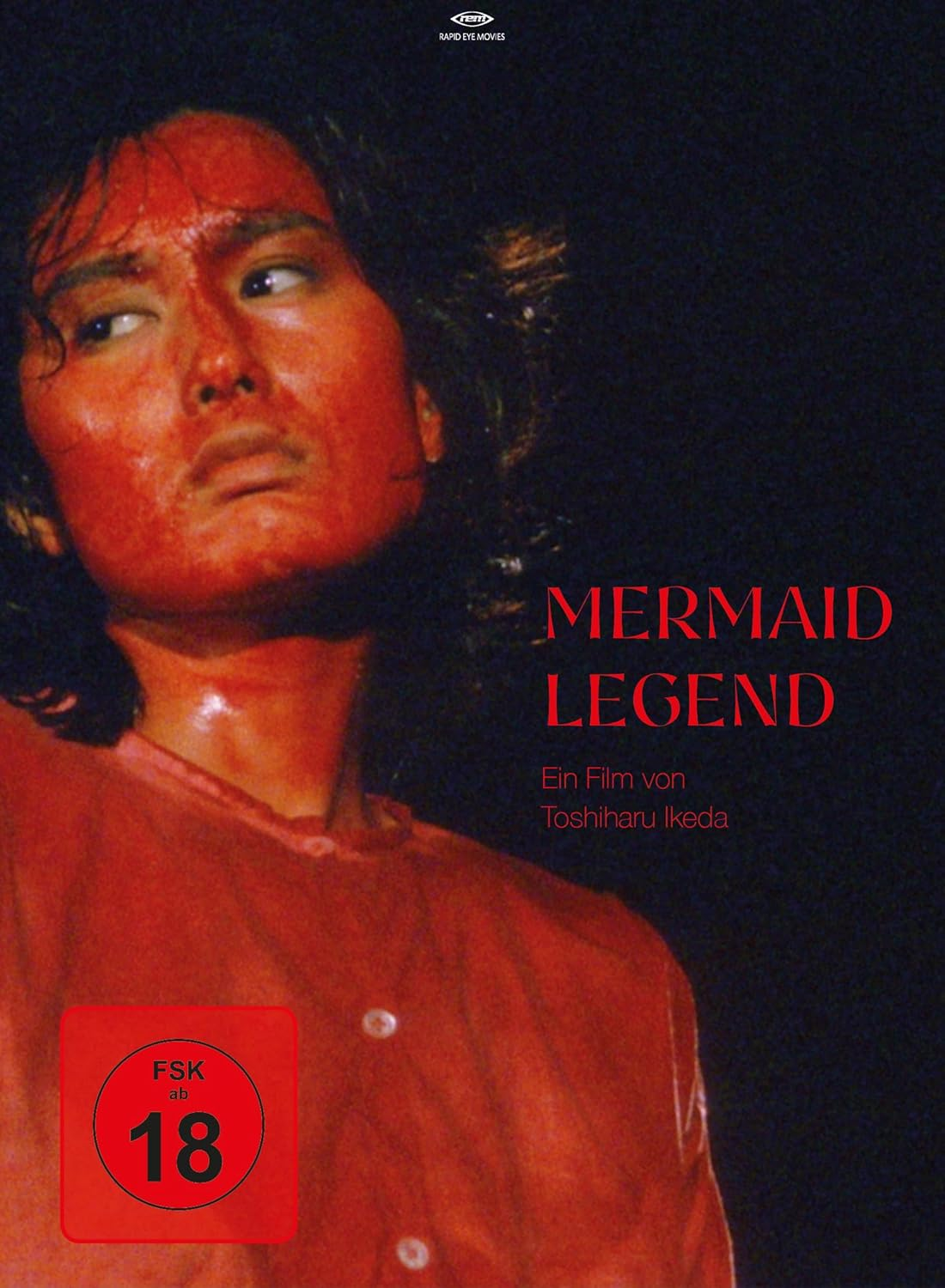
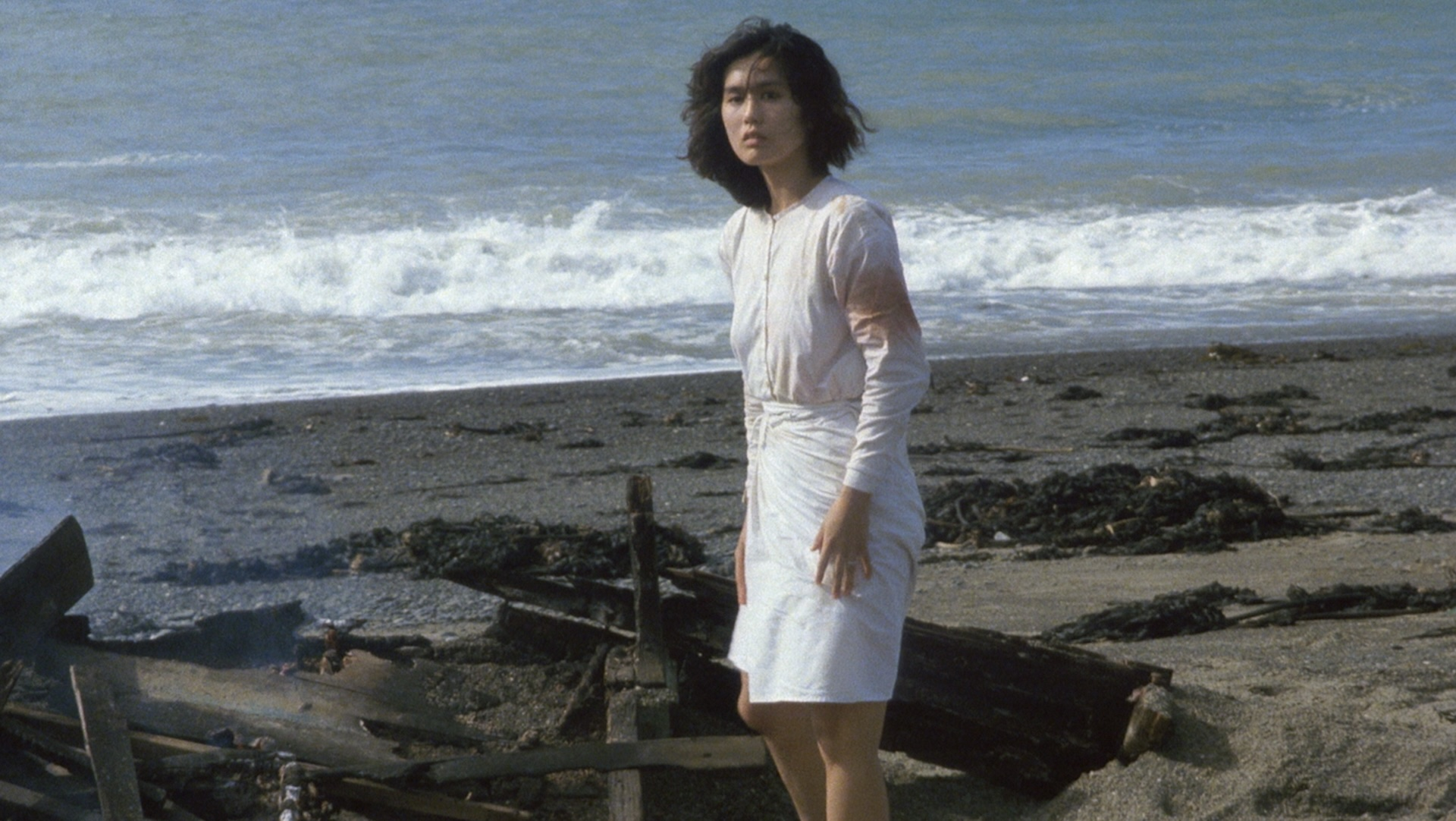
I took a gamble on an unknown Japanese film at the Nickel Cinema and walked out genuinely shaken. Mermaid Legend (1984) isn’t just a cult oddity—it’s a film that mutates before your eyes, seducing you with beauty before drowning you in blood. I was stunned by how something so lyrical could also be so brutally confrontational.
The story begins almost modestly, as a coastal drama about a fisherman and his wife, Migiwa. They bicker constantly, their marriage worn thin by poverty and exhaustion, yet there’s an undeniable bond beneath the arguments. That fragile domesticity is shattered when the fisherman stands in the way of an industrial development scheme. The business developers—faceless, polite, and utterly ruthless—have him murdered, disposing of his life as casually as industrial waste.
From there, Mermaid Legend (1984) transforms again. What starts as marital realism becomes a corporate espionage murder mystery, steeped in anger at nuclear energy, environmental destruction, and the cold machinery of corporate greed. Migiwa, a powerful-lunged pearl diver, initially hides, retreating into grief and the sea itself. But this is not a film about quiet mourning. When she decides to act, she does so with mythic force.
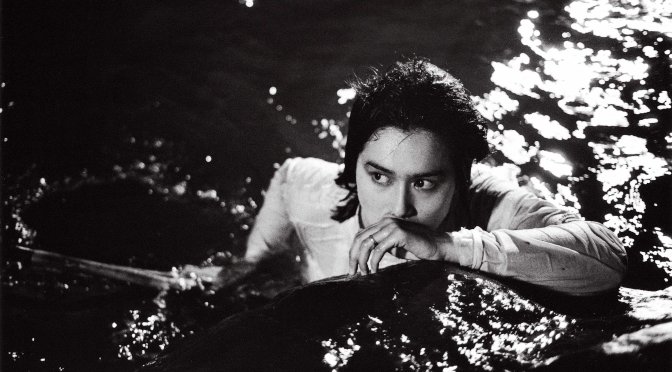
Played by the ethereal and astonishing Mari Shirato, Migiwa becomes something halfway between woman, avenging angel, and sea spirit. Shirato’s performance is magnetic—serene, sensual, and terrifying. As her vengeful pursuit begins, the film plunges headlong into extreme violence and explicit sexuality, reclassifying itself yet again as one of the most shocking exploitation epics I’ve seen from Japan in recent years. These scenes aren’t gratuitous in the lazy sense; they’re confrontational, weaponized, daring you to look away while refusing to let you feel comfortable for a second.
What makes Mermaid Legend (1984) so intoxicating is how its elements collide. Poetic underwater cinematography turns the ocean into a womb, a grave, and a cathedral. Religious, angelic, and environmental imagery blur together, as if Migiwa is both martyr and executioner. The music is heavenly—soaring, mournful, almost sacred—creating a surreal contrast with the carnage on screen. Beauty and brutality coexist in the same frame, each intensifying the other.
And then there’s the ending. The final, elongated pier stabbing rampage is completely off the chart—relentless, bloody, and hypnotic. It plays out like a ritual rather than an action sequence, stretching time until violence becomes abstraction, then meaning, then release. By the time the last body falls, Mermaid Legend (1984) has fully shed realism and entered the realm of legend, justifying its title in blood.
This is a film that shouldn’t work, yet does—furiously, defiantly. A genre-shifting fever dream that moves from domestic drama to political thriller to erotic exploitation to mythic revenge tragedy, Mermaid Legend (1984) is both beautiful and brutal, and I can’t stop thinking about it. Seeing it by chance at the Nickel Cinema felt like discovering a secret too powerful to stay hidden.
In the languid drift of autumn, when Halloween’s shadow lengthens and winter begins its slow, expectant inhale, the world seems to slip into a more suggestive register—one where every rustling leaf feels like a whispered omen. It is, of course, the most appropriate season to surrender to the year’s latest horror releases, as though communing with these cinematic phantoms might prepare us—spiritually, aesthetically—for the deeper darkness to come.
Which basically means I have been catching up with some 2025 horror film releases I missed at the cinema during autumn. A couple of these probably warrant more in depth solo reviews, but as I edge closer to old age and the reaper’s scythe, I am economizing somewhat.
*** MAY CONTAIN SPOILERS ***
Black Phone 2 (2025)
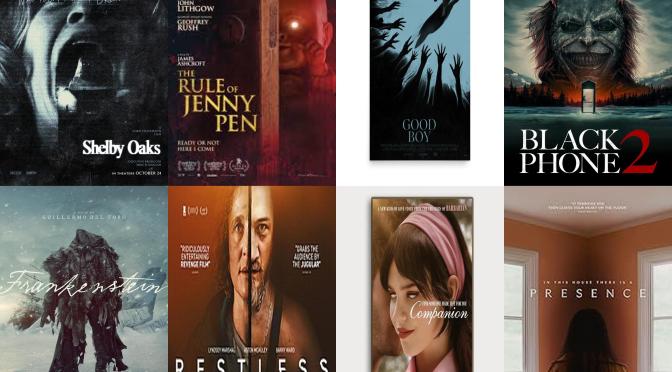
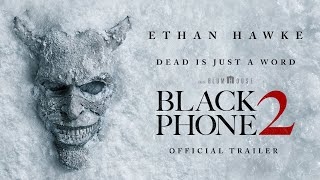
Scott Derrickson and co-writer C. Robert Cargill deliver a sequel to The Black Phone (2021) with Mason Thames, Madeleine McGraw, Jeremy Davies, and Ethan Hawke reprising their roles from the first chiller. I actually enjoyed this one more than the original, which despite the clunky set-up, finds the siblings and others trapped in a teen camp hit by a blizzard. They find themselves hunted and haunted by both The Grabber (Hawke) and other ghostly spirits haunting the area. Derrikson throws a lot of horror tropes and the characters (literally in certain scenes) at the walls, and much of it sticks. Having said that, I still don’t think The Grabber is the scariest villain ever committed to screen, despite Hawke’s presence. (Mark: 7.5 out of 11)
Companion (2025)
Companion (2025) feels like Garland’s Ex Machina (2014) colliding elegantly with Fargeat’s feral Revenge (2017)—a sunny day-horror fable that hides its nastiest surprises in plain sight. Its twists are sharp, its aesthetic confident, and its ideas far more ambitious than its modest surface first suggests. I would have admired it even more were it not, on occasions, completely dumb. Plus, the occasional drift into a comedic register undercuts its more incisive moments. The beautiful Sophie Thatcher once again commands the screen with the same riveting presence she brought to Heretic (2024). Mark: 8 out of 11.
Graduation Day (1981)
Thanks to Bobby Carroll’s site for reminding me about slasher film, Graduation Day (1981), as I had completely forgotten about it. High quality kills and gore mask a screenplay which has more nudity than character development. Yet, I am a sucker for these 1980’s exploitation flicks and this is a watchable one. Mark: 6 out of 11
Good Boy (2025)
An low-budget horror film triumph with Ben Leonberg directing his own dog, Indy, a Nova Scotia Duck Tolling Retriever, as the only witness to nasty spirits threatening his owner. The film emerges as a formal tour-de-force, whose meticulous composition and deliberate pacing elevate its simple premise into something unexpectedly resonant. Its visual precision and rhythmic control shape an atmosphere of dread that feels more sculpted than sensational, grounding the film in an emotionally impactful narrative about loyalty, vulnerability, and the unsettling spaces between trust and fear. For all its craft, and impressive animal direction, the film doesn’t quite sustain a relentless menace throughout. But, it remains a memorable feature debut from Leonberg and Indy the dog. Mark: 8.5 out of 11.
Presence (2025)
In Presence (2024), David Koepp and Steven Soderbergh demonstrate just how potent a one-location horror film can be when discipline and imagination converge. The entire piece unfolds like a controlled exhale: a slow-build structure that trusts the audience to lean in, and a drifting, almost contemplative camera that adopts the ghost’s POV to quietly—sometimes imperceptibly—reveal fragments of the story. Instead of overplaying its hand, the film slow-drips its plot elements with an elegance that keeps tension suspended in the air, letting unease pool in the corners of an otherwise ordinary space. By the time it reaches its finale, Presence (2024) delivers not only a surge of emotional and thematic clarity but two genuinely surprising twists—earned, unsettling, and executed with the kind of precision that affirms both writer and directors’ mastery of the form. Mark: 8.5 out of 11.
Restless (2024)
Really good independent British thriller with Lyndsey Marshal as a nurse, Nicky, who finds herself terrorized by 24-hour partying thug neighbours. Writer-director Jed Hart creates great empathy and identification with the situation and it’s a shame decent British films like this get short shrift at the multiplexes. Nicky’s spiral into insomnia-driven madness is compelling as her desperate attempts to sleep give way to vengeance. But the film’s final act tonal turn denies us a full-on descent into suburban hell, for something amenable but unfortunately less twisted. Mark: 7.5 out of 11
The Rule of Jenny Pen (2025)
The Rule of Jenny Pen is an original, weird, and powerful shock of a film — a mash-up of psychological thriller and nursing-home horror that lands far more often than it stumbles. Its greatest strength is, without question, the towering performances at its centre. Geoffrey Rush and John Lithgow, two masters of calibrated gravitas, turn the film’s cat-and-mouse mind game into a gripping acting showcase. Together, they elevate the film’s themes of aging, vulnerability, and institutional neglect into something both unsettling and strangely beautiful. The plotting, however, does get a bit sticky toward the end. The final act jars slightly, causing me confusion in an otherwise tight psychological narrative. Still, even as the story wobbles a tad, the film’s originality, eerie tone, and powerhouse acting keep it compelling. Mark: 8 out of 11
The Woman in the Yard (2025)
The Woman in the Yard (2025) rises on the strength of Danielle Deadwyler’s commanding lead performance. As a mother trying to protect her two children from a funereal spirit lingering in their backyard, Deadwyler grounds the supernatural dread with raw emotional honesty. The child actors match her with a believable, lived-in family dynamic that makes the haunting feel all the more personal. Where the film falters is in its structure. The script leans heavily on crow-barred flashbacks that interrupt rather than enrich the unfolding tension. A more linear approach could have built a stronger emotional momentum, allowing the story’s grief, guilt, and mental illness to accumulate naturally instead of stuttering backward at key moments. (Mark: 6 out of 11)
Together (2025)
Together (2025) gets an immediate boost from the casting of real-life couple Alison Brie and Dave Franco, whose natural chemistry gives the film an authentic emotional core. As a pair trying to rebuild their relationship after moving from the city to a rural small town, they convincingly inhabit the tensions, resentments, and unspoken fears that surface long before the horror does. Their incompatible expectations feel lived-in — and once they tumble into a sinkhole and the strange bodily transformations begin, that emotional groundwork makes the nightmare hit harder.
I loved the trailer for this film, which promised a truly skin-crawling descent into body-horror chaos. The final product, while atmospheric and often engrossing, doesn’t fully deliver on that promise. It pulls back when it could push further, leaving some of the more disgusting, surreal possibilities off-screen. But the ending — bold, surprising and unexpectedly poignant — is a fantastic payoff. Even if the film doesn’t always reach the extremes it teases, Together still manages to leave a memorably twisted impression. Mark: 8.5 out of 11
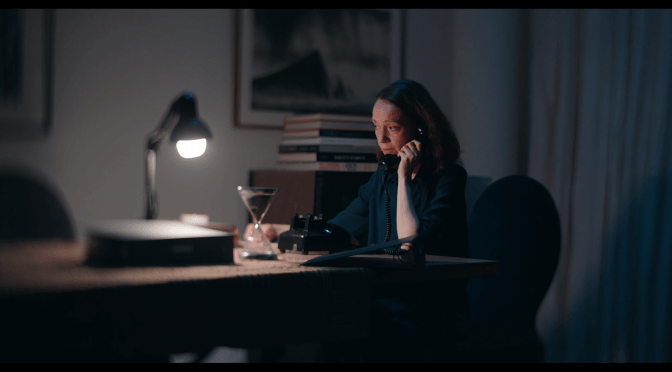
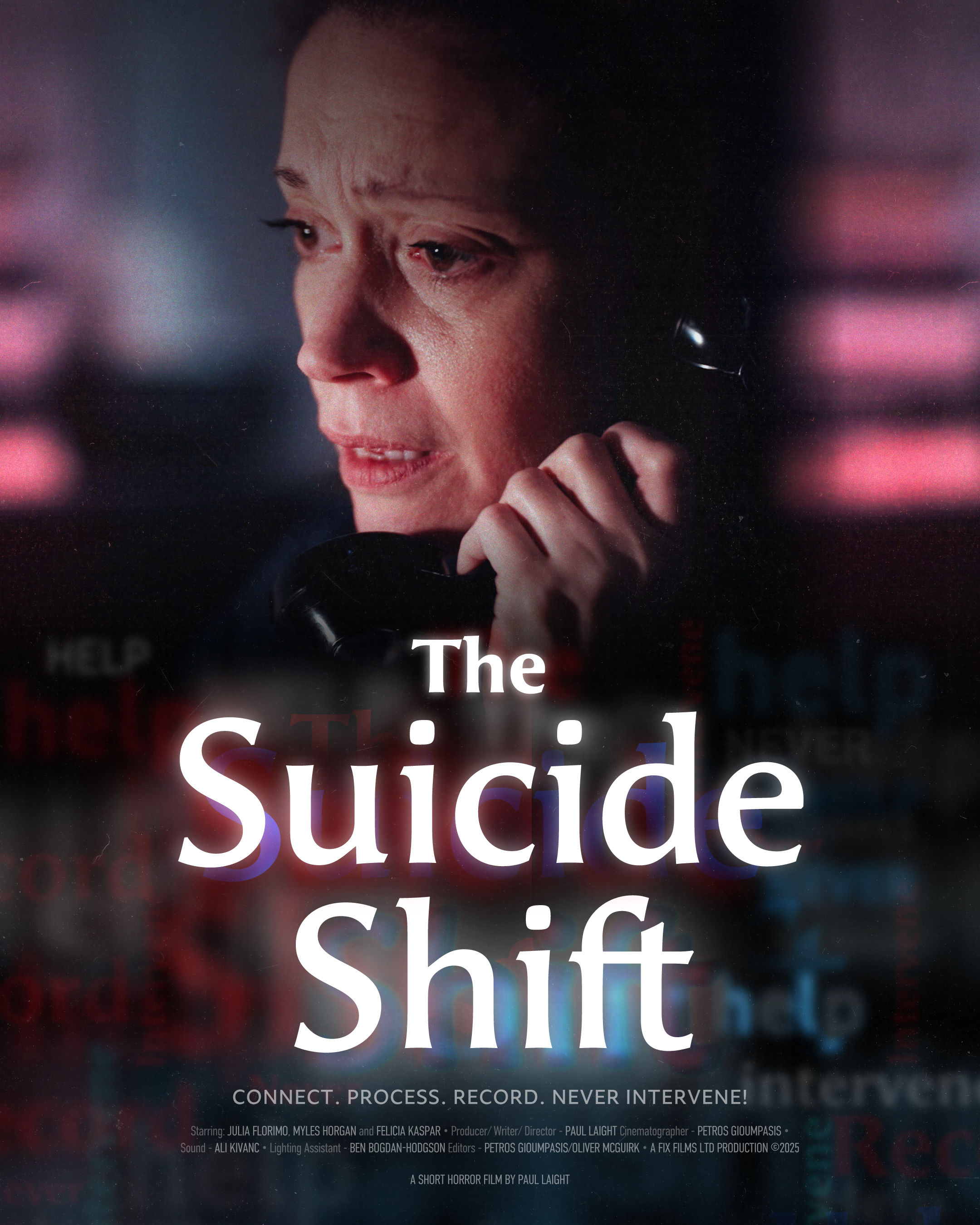
Following the recent post about my new short film The Suicide Shift (2026) – here I am so proud to now present the trailer for the film in the link.
THE SUICIDE SHIFT (2026)
Tagline
Connect. Process. Record. Never intervene.
Pitch
Banished to the “suicide shift” for breaking spirit call centre regulations, CARMILLA FERRY, now deals with the most tortured of souls moving from this world to the next. After being blasted by her line manager on the phone, Russell, Carmilla is feeling even more isolated and demoralised than usual. After a series of heart-crushing calls, culminating in a particularly stressful shift, Carmilla is then faced with the most heart-wrenching call of all.
Cast
Julia Florimo as Carmilla Ferry
Myles Horgan as Russell Schaeffer
Felicia Kaspar as Lucy Carpenter
Lost Souls (Voices) – Ashley Wong, Bai Ruiying, Bogdan Dima, Christina Leitner, Federica Ruggieri, Jyothi Gupta, Kay Abel, Maria Busz, Melissa Zajk, Paul Laight, Sanjay Batra, Szymon Bartoszek.
Crew
Director, Producer & Writer: Paul Laight
Cinematography: Petros Gioumpasis
Sound Recordist & Designer: Ali Kivanc
Camera Assistant: Ben Bogdan-Hodgson
Make-Up: Georgie Lang
Location Manager: Melissa Zajk
Editors: Oliver McGuirk & Petros Gioumpasis
Composer: Ben Randall
Poster designs: Jaffer Hashim & Gary O’Brien
Every 90 minutes in the UK, someone dies by suicide. But talking saves lives.