All posts by Paul. Writer and Filmmaker

Paul is a writer and filmmaker. He has been committed to a writing career from a very early age. In 1997, he graduated from Staffordshire University with a first class degree in Film, TV and Radio Studies. His 2nd year short film project THE ARTS FILE won a Stoke-on-Trent Young Filmmaker's award. Subsequently, he worked as a Production Assistant on a number of promos and successfully completed a work placement at Sky Movies. In 2002, he gained an MA in Feature Film Screenwriting from Royal Holloway College of London and since graduation has written several feature and many short film scripts. In 2005, he formed FIX FILMS and has written and produced many shorts to date. He has also had several short screenplays commissioned by the Mountview Film Academy and film director Jonathan Wolff. His work can be found here - https://www.youtube.com/c/FixFilmsLtd Most recently Paul wrote, produced and directed his own short horror film called FLATMATES (2018). He has subsequently written and directed the films: MISDIRECTION (2019), TOLERANCE (2019) and YOU HAVE A NEW FOLLOWER (2020). His short films have had screenings worldwide at many film festivals. His latest works are the horror, INFERIS (2024), a set of short film monologues called SIN (2024) and THE SUICIDE SHIFT (2026). PAUL is a versatile and prolific writer with ideas in abundance and a very strong feel for structure, characterisation and dialogue. He favours thought-provoking and entertaining narratives with memorable characters, images and scenes. While he values all styles of film he tends toward genre movies as opposed to overtly "arty" cinema. Moreover, being involved in the producing, casting and crewing of low budget shorts has given him great experience and insight into the filmmaking process; improving his writing no end. From 2008 until 2020, Paul had been on the exciting merry-go-round that is the stand-up comedy circuit. He has done over 1000+ gigs. Venues included: Downstairs at the King's Head, The Comedy Pit, The Comedy Cafe, Soho Comedy, London Comedy Store, Electric Mouse Comedy, Streatham Comedy Club, Mirth Control, Comedy Heat, Lion's Den Comedy etc. He also ran two comedy nights: West End Comedy @ The Comedy Pub and West End Comedy @ The Brazen Head. He used to be the resident MC at Electric Mouse's show at The Fox, Palmers Green and got regular paid bookings as a comic and MC in and out of town. In 2014 and 2016 he performed at the Brighton Fringe Festival and Camden Fringe Festival in 2014. He performed open spots for the Banana Cabaret, The Comedy Store and Up the Creek comedy clubs in London. He is also a keen film and television seer and has a love for all genres of movies from art-house to low-budget z-movies. He also loves television of all kinds notably great comedies and dramas. He is an essayist expressing passionate analysis for all elements of cinema. Links Blog: www.thecinemafix.com YouTube: www.youtube.com/c/FixFilmsLtd

ALL 4 REVIEW – THE VIRTUES (2019)

ALL 4 REVIEW – THE VIRTUES (2019)

Directed by: Shane Meadows

Produced by: Mark Herbert and Nickie Sault

Written by: Shane Meadows and Jack Thorne

Cast: Stephen Graham, Niamh Algar, Helen Behan, Frank Laverty, Mark O’Halloran etc.

Composer: PJ Harvey

Original Network: Channel 4

**MAY CONTAIN SPOILERS**

The Virtues (2019) is the latest drama from British filmmaker Shane Meadows and was released on Channel 4/All 4 recently. Over the four episodes we experience the traumas of Joseph (Stephen Graham), as he attempts to overcome events in the present and those which haunt him from the past.

The story begins in Sheffield and introduces forty-something, Joseph as he’s about to say goodbye to his nine-year old son and former partner who are emigrating to Australia. While he’s putting a brave face on this emotional upheaval, internally the separation slowly tears him apart. It also precipitates memories of events which occurred to Joseph when he was young and living in Ireland.

It was at the age of nine when his parents died. While his sister is adopted, Joseph is placed into a care home. It is here that he suffers an unspeakably horrendous trauma. On returning to Ireland as an adult, painful memories he had blocked out until now suddenly resurface. As an adult Joseph tries to come to terms with what occurred, make peace with his sister and at the same time battle his ongoing alcoholism. It is altogether gruelling and compelling drama.

Shane Meadows and Stephen Graham had worked together on the This Is England film and TV series. While that was very much an ensemble piece, this is a more individual focused, personal and painful character study. Stephen Graham is absolutely amazing as the character of Joseph. He has been broken by life, let down by the system and traumatized as a child. Graham lives this pain in virtually every scene he inhabits. His eyes darting nervously, he mumbles, looking down and around, trying to hide; only coming alive when he has alcohol in him. His problem with alcohol is he cannot stop, and this invariably leads to Joseph hurting himself physically and emotionally.

Alcohol as self-medication is just one of the issues addressed in this startling and raw drama. Meadows and co-writer, Jack Thorne also address families, adoption, child abuse, religion and the care system. While the series doesn’t venture into outright socio-political criticism, it explores the damage that can occur to individuals in care. Through Joseph’s sister, Anna (Helen Behan) though, we also get a more positive view of adoption. Her character is strong and determined and a fine mother. But she did not suffer the events Joseph did, so their journeys travelled different paths.

Shane Meadows directs with his usual naturalistic brilliance. Scenes with all the actors feel honest and believable. Meadows is not afraid to shoot simply and allow the performances provide the emotion. Having said that there are some highly stylistic choices. The flashback editing and montage is a case in point. Moreover, when Joseph goes on a bender, we get the camera-harness point-of-view shot I remember first seeing in Scorsese’s Mean Streets (1973). This allows us to step into Joseph’s drunken psyche as the soundtrack pounds and a voice-over sermon pipes out on screen. Lastly, the flashbacks to Joseph’s younger years are shot on, what seems like, DV-Cam or an old-style video-camera. This creates an additionally sinister feeling to the events.

Overall, this is another powerful drama from Shane Meadows. He gets amazing performances from all the actors, notably Stephen Graham, star-in-the-making Dinah Algar; and an Irish actor I hadn’t seen in a while, Mark O’Halloran. My feeling is Meadows could arguably of told the story in a two hour film. This is because the four episodes slightly stretched out the story in places. Be warned though, The Virtues is not for the faint-hearted. It is very painful to watch. Such is the emotional power of the story, by the end, your heart will feel like you’ve gone ten rounds with a heavyweight boxer. But as a drama about fighting back against the punches life throws at you it will certainly remain with you for some considerable time.

Mark: 9 out of 11
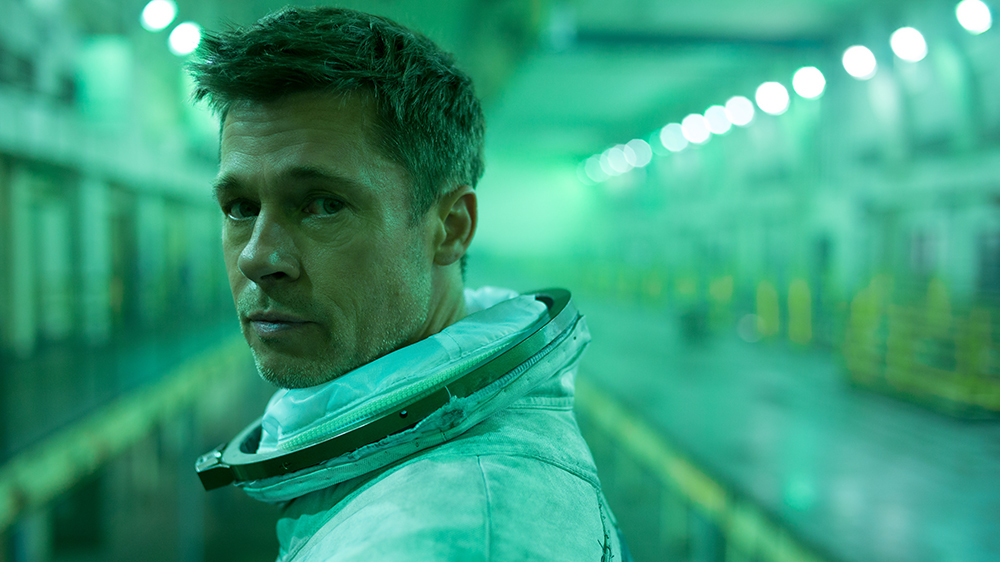
FILMS THAT GOT AWAY #1 – REVIEW – SUSPIRIA (2018)

SUSPIRIA (2018) – FILM REVIEW

Directed by: Luca Guadagnino

Produced by: Marco Morabito, Brad Fischer, Luca Guadagnino, Silvia Venturini, Francesco Melzi d’Eril, William Sherak, Gabriele Moratti

Screenplay by: David Kajganich – Based on Suspiria (1977) by Dario Argento and Dari Nicolodi

Cast: Dakota Johnson, Tilda Swinton, Mia Goth, Angela Winkler, Ingrid Caven, Elena Fokina, Chloe Grace Moretz, Malgosia Bela, Lutz Ebersdorf, Jessica Harper etc.

Music by: Thom Yorke

Cinematography: Sayombhu Mukdeeprom

**MAY CONTAIN SPOILERS**

There are so many films released that it is virtually impossible to see them all. Plus, even if you didn’t have to work to earn a damned wage or physically need sleep you still wouldn’t be able to watch everything at the cinema. More specifically though, we may choose NOT to go to see a film on the big screen for certain reasons. Collectively, I consider these movies to be “one’s that got away!”

Thus, in a new section called, unsurprisingly, FILMS THAT GOT AWAY, I will be reviewing films which I missed first time round at the cinema and have subsequently caught up with on Sky, Amazon, Netflix, Blu-Ray or even good old-fashioned terrestrial television. I will consider the film critically as entertainment and why I missed it first time round. As usual the film will be marked out of eleven.

When the UK release of Suspiria (2018) was announced there were many reasons I was immediately put off from wanting to see it. Firstly, despite having watched it three times, I genuinely could not stand the original Dario Argento film. I know people consider it a horror classic; however, I think story wise, it’s a bad film. It’s neither scary from an emotional point-of-view or actually makes any sense logically. I know it’s meant to be based on surreal and nightmarish imagery, montage and performance, but the story or characters did not connect with me. The colour design, gore and soundtrack are outstanding but, overall, I felt I was trapped watching the manic outpourings of an Italian psychopath.

The second reason I did not want to watch it is I haven’t always got on with Luca Guadagnino’s cinematic works. Don’t get me wrong, he is a brilliant filmmaker. However, I find him an indulgent artist whose tone, pace and direction seems haphazard. Of the films I have seen, I Am Love (2009) was a brilliant character study, anchored by a stunning Tilda Swinton performance. But A Bigger Splash (2011) and Call Me By Your Name (2017), were expertly constructed but indulgent and over-rated travelogues littered with narcissistic bores. Nonetheless, I really liked Suspiria (2018). It is almost, but for Guadagnino’s typical excesses, a horror masterpiece.

Set in 1977 (when the original was released), at the height of the Cold War in divided Germany, Suspiria, is a heady mix of rites of passage, cold war and horror genres. There are many narrative strands with which the screenplay, by David Kajganich, attempts to balance. Further, we also have personal, political, religious, artistic, gender and communal themes prevalent through the story. While it’s an ensemble cast the focus is Dakota Johnson’s Susie. She is a young aspiring dancer, from an Amish background, who joins the world-famous Markos dance company. In the process she is determined to impress Tilda Swinton’s commanding mentor. The parallel narrative involves psychiatrist Dr Josef Klemperer and his investigation into a missing patient (Chloe Grace Moretz); who also happens to be a dancer from the troupe.

As the story unfolds Susie proves herself an incredibly powerful dancer. At the same time, it is revealed that the elders and teachers of the dance group are hiding a sinister secret with darkness and ritual to the bloody fore. Memorable dance sequences full of beauty, energy and gore dominate, with Dakota Johnson giving an impressively physical acting portrayal. I also liked the nuanced control within her character as she grows stronger with each dance. Meanwhile, further dark events occur as Dr Klemperer’s investigations draw him closer to the troupe’s shadowy doors.

As I said, Suspiria is almost a horror masterpiece. The filmmaking, cinematography, art direction, choreography and score by Thom Yorke all collide to create an incredibly tense and terrifying experience. Moreover, while I was fully committed to the characters in the dance troupe and Susie’s movement up the ranks, the choice to juxtapose the socio-political events seemed to belong in another film. The religious context and notions of family and matriarchal dominance were incredibly powerful too and served the horror well. However, Guadagnino, in my humble view should have shaved some scenes from the running time. While I much prefer this film to the Argento original, a further edit for pace would have made this even better. Nonetheless, it had me riveted throughout through the sheer quality of filmmaking. I was incredibly impressed by the melding of dance and death. Indeed, the final orgiastic ritual with buckets of blood, decapitations and gnarled monsters was supernaturally unforgettable.

Mark: 9 out of 11

TOLERANCE (2019) – FIX FILMS SHORT FILM – ONLINE RELEASE

TOLERANCE (2019)

Last year I wrote, produced and directed my second short film called Tolerance. Post-production was carried out and completed including artwork and the music. It was finished earlier this year and I am now releasing the film online here.

SCREENINGS

TOLERANCE premiered at the Unrestricted View Film Festival, London in April 2019. Also, it was nominated for best art direction award at http://www.uvff.co.uk.

Also screened at:

Fix Films Ltd Film Night, London, March 2019
UK Monthly Online Film Festival, April 2019
Lift-Off Online Sessions, Pinewood Studios, April 2019
Direct Monthly Online Festival, April 2019

This image has an empty alt attribute; its file name is 2018_tolerance_still_georgia_patrick_3_enhanced.jpg

PITCH

Tolerance is a story of obsession, revenge and murder. It concerns a dinner “date” which takes a murderous turn. Inspired by narratives by Hitchcock Presents, Tales of the Unexpected and Inside No. 9, it suspensefully examines both personal and societal issues when a relationship breaks down.

On the surface it is essentially a suspensful thriller and dark comedy. However, within the subtext I attempt to examine the harm people inflict on each other with their relationship choices. Lastly, with the recent #MeToo furore that correctly highlighted the horrendous toxicity of human behaviour, I wanted to consider wider concerns of gender politics.

CAST AND CREDITS

Written and directed by: Paul Laight
Starring: Georgia Kerr and Patrick Tolan
Sound: Marina Fusella
Camera: Edward Lomas
Lighting: Kato Murphy
Make-Up: Camille Nava
Music: James Wedlock
Editor: Jodie Williams
Set Designer: Melissa Zajk

Running Time: 13 minutes – 52 seconds

Website: http://www.fixfilms.co.uk

A Fix Films Production © 2019

HBO TV REVIEW -SUCCESSION (2018) – SEASON 1 – BRILLIANT SATIRE ABOUT RICH AR$£HOL£$!

HBO TV REVIEW – SUCCESSION (2018)

Created by – Jesse Armstrong

Writers – Jesse Armstrong, Jon Brown, Jonathan Glatzer, Anna Jordan, Lucy Prebble, Georgia Pritchett, Tony Roche, Susan Soon He Stanton

Directors: Adam Arkin, Miguel Arteta, S.J. Clarkson, Adam McKay, Mark Mylod, Andrij Parekh

Executive Producers: Ilene S. Landress, Kevin Messick, Franch Rich, Will Ferrell, Adam McKay, Jesse Armstrong

Producers: Regina Heyman, Dara Schnapper

Cast: Hiam Abbass, Nicholas Braun, Brian Cox, Keiran Culkin, Peter Friedman, Natalie Gold, Matthew MacFadyen, Alan Ruck, Parker Sawyers, Sarah Snook, Jeremy Strong, Rob Yang etc.

Composer: Nicholas Britell

Original Network: HBO

**MAY CONTAIN SPOILERS**

“Money, money, Money! Must be funny! In a rich man’s world!” ABBA

Is it funny? In a rich man’s world? Or woman’s? Or anyone’s?

From my perspective I’ve never understood the desire for incredible wealth and power. Of course, it is great to be comfortable and have the money to feed, clothe and house yourself. But, that need and want to have extravagant things is beyond my comprehension. Obviously, if you’re born into money, it could be deemed unavoidable. Some may say it’s a curse. However, we all have choice as to how we behave whether we have money or not.

Personally speaking, I have everything I need to live. I have enough nice things. I have a car, television, mobile phone, computer, food, clothes, shoes, people I love and, at time of writing, my health. I have enough. For some enough is never enough. The extreme is only halfway. Ambition and power and wealth and greed drive them forward. Their desire for more has no limit.

Succession (2018), is another television show about the darker actions of the filthy, selfish and narcissistic rich. Similar, but far more poisonous than Showtime’s hit Billions, the narratives are driven by power games from the Machiavellian playbook. Set within a behemoth media conglomerate, Waystar Royco, led by octogenarian, Logan Roy (Brian Cox). the plots and subplots focus on the various family members and fucked-up personalities within this permanently dysfunctional family. The characters are not so much ‘Masters of the Universe’ but masters and mistresses of their own calamitous downfalls.

Is it funny though? In a rich man’s world? Well, based on Jesse Armstrong’s creation Succession (2018), it is! Unsurprisingly, from a writer who has worked on such comedy masterpieces as Peep Show, The Thick of It, Four Lions (2010) and Veep, these ten episodes contain some of the most biting and sarcastic dialogue and situations you could experience. It’s black though. It’s tumour humour. These are cancerous laughs which eat you from the inside. You’re entertained watching the programme but simultaneously aware of how accurate its’ dark vision of humanity, greed, power and family life is. No one gets out of here alive, including the audience.

The show bleeds quality from cast to production values to direction and not forgetting Nicholas Britell’s incredible score. You have to have a strong stomach to watch so many irredeemable and unlikeable characters all inhabiting the same space. But the writing is an absolute marvel with all manner of slicing one-liners which cut with scalpel like precision. The main narrative strands involve the children challenging their father’s running of the company. Watching Brian Cox viciously curse and do battle with them is drama of the weightiest kind; almost Shakespearean at times.

Lastly, I must say the acting is of the highest order. Sarah Snook, as political campaigner daughter, Siobhan, is destined for big things. British actor Matthew MacFadyen gives a nuanced comedic rendition as Siobhan’s fiancé; both sycophantic to the Roy family and a bully to company underlings. Kieran Culkin is sleazy and the most unlikeable of all, while Alan Ruck’s passive aggressive older son waltzes in and out of scenes with consummate skill.

As Logan Roy Brian Cox is well, just so Brian Cox; sweary, growling and menacing. His character locks horns most of all with second son, Kendall Roy. Portrayed exceptionally by Jeremy Strong, Kendall is a sad figure, attempting recovery from drug addiction, but cursed to desire to lead his fathers’ company. This leads to him making some incredibly dubious decisions. Because enough is never enough and that is the tragedy. In Succession, it is far from funny in a rich man’s world. It is sick, twisted and ultimately very black.

Mark: 9.5 out of 11

ALL 4 TV REVIEW – THIS IS ENGLAND ’90 (2015)

ALL 4 TV REVIEW – THIS IS ENGLAND ’90 (2015)

Created by: Shane Meadows

Director: Shane Meadows

Writers: Shane Meadows, Jack Thorne

Series Producers: Mark Herbert, Derrin Schlesinger, Rebekah Wray-Rogers

Cast: Thomas Turgoose, Vicky McClure, Joseph Gilgun, Stephen Graham, Andrew Shim, Stephen Graham, Andrew Ellis, Rosamund Hanson, Danielle James, Kriss Dosanjh, Chanel Cresswell, Johnny Harris, Michael Socha, George Newton, Jo Hartley, Katherine Dow Blyton, Stacey Sampson, Perry Fitzpatrick, Joe Dempsie etc.

Cinematography: Danny Cohen

Music by: Ludovico Einaudi

**CONTAINS SPOILERS FROM – THIS IS ENGLAND ’83, ’86 & ’88**

So, just to reiterate if you have NOT seen the previous film or TV series of This is England, I would advise you start with the film and watch them in order of release. Safe to say that this review also contains MASSIVE SPOILERS from the previous productions too.

As the title says we are now in the year 1990, some two years after the trauma of Lol’s (Vicky McClure) suicide attempt. Her and Woody are now thankfully back together and he, the gang and Milky have reconciled. Structured into a seasonal order of Spring, Summer, Autumn and Winter the show shifts focus to a more ensemble narrative presentation. Here more secondary characters such as Lol’s sister Kelly (Chanel Creswell) and Milky (Andrew Shim) are given meatier storylines over the four episodes.

As it’s the 1990’s we get some of my favourite music of all time presented. Indie, pop and rave tracks by the likes of The Stone Roses, Happy Mondays, The Pixies, The La’s, James, Beats International and many more dominate the soundtrack. Thus, the Spring and Summer months begin in an upbeat mood for the characters on the main. Gadget, Harvey, Trev, Shaun and Kelly are into the rave and Madchester scene, popping pills with heady abandon. This is where Kelly’s story veers into dark drama as her grief for the loss of her father spills into drug addiction and self-destructive behaviour.

This reaches a head in the Summer episode. Beginning as a humorous drive to a field in the England becomes, for Harvey, Gadget, Trev and Shaun a narcotic escape out of Midlands mundanity. However, for Kelly it leads to a dark, drug-induced and sexualised nightmare. For the first time in the series though I felt the drama was slightly gratuitous and felt uncomfortable with Kelly’s ordeal. However, Chanel Cresswell gave a haunting performance of a character lost in a fog of addiction and despair.

With Kelly’s character adrift in the Autumn and Winter months, the narrative also brings back Combo (Stephen Graham) into the mix. As the racist thug in the original film, his character had ventured into some twisted redemption when taking the blame for Lol and Kelly’s Dad’s death. With Combo about to be released from prison the series examines whether people can change and most importantly be forgiven for prior crimes. It is hard hitting stuff and Stephen Graham is a superb actor who lives and breathes the mistakes of his characters’ past. His Winter scenes with Milky are particularly painful and ultimately shocking.

Indeed, during the Autumn and Winter episodes we get some of the most painful and dramatic scenes in the whole series. The scene around the dinner table when Lol decides to confess to her mum, Kelly and Milky the actual events regarding her Dad’s death are so compelling. Meadows directs this scene with simple and devastating effect. He allows the amazing performances from the cast to create emotion via long and tense takes. News of Combo being released impacts them all and the aftermath leads to a vengeful decision by Milky which haunts both him and the audience.

Meadows, co-writer Jack Thorne, the cast and the production team of This Is England ’90 deliver another nostalgic, humorous and hard-hitting drama series. It ends with the characters moving toward the light but with darkness not too far behind. Lol and Woody finally get married in as close to a feel-good ending you get with Shane Meadows. Overall, as slices of life go, these films and TV programmes are genuine British classics and a must watch if you are drawn to gritty, realistic dramas which chuck everything at you — including the kitchen sink.

Mark: 9 out of 11

ALL 4 TV REVIEW: THIS IS ENGLAND ’88 (2011)

ALL 4 TV REVIEW – THIS IS ENGLAND ’88 (2011)

Created by: Shane Meadows

Directors: Shane Meadows

Writers: Shane Meadows, Jack Thorne

Series Producers: Mark Herbert, Derrin Schlesinger, Rebekah Wray-Rogers

Cast: Thomas Turgoose, Vicky McClure, Joseph Gilgun, Stephen Graham, Andrew Shim, Stephen Graham, Andrew Ellis, Rosamund Hanson, Danielle James, Kriss Dosanjh, Chanel Cresswell, Johnny Harris, Michael Socha, George Newton, Jo Hartley, Katherine Dow Blyton, Stacey Sampson etc.

Cinematography: Danny Cohen

Music by: Ludovico Einaudi

**CONTAINS SPOILERS**

Shane Meadows’ Midlands-based drama classic continued two-and-a-half years after the tragic events of its predecessor, This is England ’86 (2010). While obviously harking back to the late 1980’s and infused with nostalgia, it is arguably even darker and keenly focused than the previous series. Dealing mainly with the aftermath of Lol (Vicky McClure) and Woody’s (Joe Gilgun) relationship breakdown, it also explores Shaun’s (Thomas Turgoose) misadventures attending drama school.

While there is a lot of humorous situations in these three episodes, Meadows and co-writer Jack Thorne essentially structure around Lol’s heart of darkness descent into depression. They present a devastating character study as she struggles with single parenthood following her self-destructive affair with Milky (Andrew Shim) and subsequent split from Woody. Lol is crushed with guilt over this and her father’s death; an act she committed in self-defence and Combo (Stephen Graham) took the blame for.

Vicky McClure as Lol gives a devastating performance. She wears her grief as a second skin, with the weight of her world pushing her deeper and deeper into the mire. Moreover, as Lol confronts her difficult life choices head on, she is literally haunted by the ghost of her father. Meadows and McClure deserve such praise for presenting depression and the disintegration of a characters’ mind so convincingly and sensitively. Lol is a lost soul and her story felt so real to me when watching.

Woody, on the other hand, is living with a new girlfriend, Jennifer, at his parents. Things are going well for him on the surface but you feel he’s lost without Lol. Indeed, Lol and Woody are one of television’s iconic couples. It’s strange not seeing them together. Joe Gilgun’s performance as Woody is excellent too. It’s clear he’s putting on a brave face and using humour to direct his pain. However, heartache is never too far away from his crooked smile.

This image has an empty alt attribute; its file name is thisisengland_88_6.jpg

Meanwhile, Shaun’s excursion into six-form acting provides some light relief but also personal trauma. It’s very funny when the gang, high on speed, almost ruin his opening night with constant laughter. To be honest the play is pretty awful so I don’t blame them. Furthermore, Shaun’s hormones are bouncing round like a squash ball, as he finds himself attracted to one of girls in the class. The scene where he’s caught with his trousers down by girlfriend Smell is both funny and sad. Quirky actress Rosamund Hanson, in her role as Smell/Michelle, impresses with a mix of punk and hysterical rage here.

Yet, the main theme of the narrative is one of overcoming loss through community and togetherness. While Woody eventually confronts the gang and more specifically Milky over perceived treachery, Lol sinks deeper into a downward spiral. Here Shane Meadows is able to present isolation and loneliness very powerfully. Indeed, the series captures raw and human emotions in a very convincing way. Through these characters we experience trauma and tragedy but through love and unity we also find hope.

Mark: 9.5 out of 11

MY CINEMATIC ROMANCE #17 – SPIKE LEE

MY CINEMATIC ROMANCE #17 – SPIKE LEE

Shelton Jackson “Spike” Lee has been a prolific actor, director, producer and polemicist for some time now. An ultra talented and outspoken cinematic artist, he has directed thirty fiction and documentary films since his debut feature film She’s Gotta Have It (1986). Plus, all manner of promos, commercials, music videos, short films and television series.

To celebrate his work and the fact he finally got recognised for his amazing filmmaking skills by the Oscars this year, I would like to highlight, five of his finest films that are worth watching and rewatching. An energetic firebrand of a director he has made films in many genres and is a risk-taker in subject, theme and style. Whether you agree with what he has to say he is a filmmaker who is always creating situations and characters who must be heard. Here are some great examples of his cinematic work.

**MAY CONTAIN SPOILERS**

DO THE RIGHT THING (1986)

Spike Lee’s incendiary look at the day in the life of a Brooklyn neighbourhood finds a variety of characters coping with both rising temperatures and simmering racial tension. Lee’s brilliant script is fully of boldly written and brightly sketched characters presented via a succession of hilarious and dramatic vignettes. The formal excellence on show too from Lee is to be applauded as he uses devices from: music video and cinema to tell his rich stories. The day does not end well as the neighbourhood erupts into tragic violence with Lee proving himself adept at balancing humour, politics and tragedy in equal measure.

MALCOLM X (1992)

Arguably, Malcolm X (1992), is Spike Lee’s most significant and impressive film. It charts the life and death of a man born Malcolm Little who would grow to be anything but. After a troubled childhood he became a drug dealer and criminal in order to survive. Having converted to Islam he rejected his slave roots, going on to become one of the most outspoken voices against black oppression the world has ever seen. The project took decades to come to the screen and Lee and Washington both faced objections from many parties for their involvement. However, the finished film a masterful biography capturing the spirit of an intelligent, passionate and outspoken individual trying to right the wrongs within American society and history. Both Lee and Washington should have won Oscars for their work. The film stands ultimately as a fine cinematic tribute to a true spokesperson for a generation.

HE GOT GAME (1998)

From my basic research Spike Lee is revealed to be a New York Knicks fan. It’s no surprise then his love of basketball really shines through in this mix of sport, crime and personal drama. The story follows young hot-shot basketball prospect, Jesus Shuttlesworth, and the decision he has to make in regard to which college he goes to. On paper it’s Jesus’ choice but in reality he has all manner of people attempting to influence him. These include: his girlfriend, his coach, agents, local gangsters and most pressing of all, his jailed father portrayed by Denzel Washington. Ray Allen is excellent as Jesus and Lee invokes an empathetic character study with lashings of verve and style.

INSIDE MAN (2006)

Spike Lee directs in confident style, with Denzel Washington and Clive Owen both excellent as the lead cop and main criminal. Jodie Foster is brilliant too as a venal fixer brought in by Christopher Plummer’s bank owner. What makes Lee’s direction ping here is his deft handling of a complex structure within the heist genre. Moreover, Lee demonstrates he is able to convey a genre story with impeccable skill and deliver fine screen performances to boot. I especially loved the diversity of the supporting characters and the film oozes a pure New York atmosphere throughout.

BLACKKKLANSMAN (2018)

BlacKKKlansman (2018) is a complex film which expertly mixes many genres, infusing musical, thriller, Blaxploitation, comedy and documentary styles, making it a joy to experience. Spike Lee has never been afraid of experimenting and sometimes his films have not worked because of it. However, with this he succeeded in making one of the best films of 2018. It should have won Best Film Oscar in my view. It is thought-provoking but never preachy for the sake of it and uses humour most often as a weapon to undermine the senseless ideologies of the KKK. Indeed, in ridicule there is hope they may eventually be side-lined to the shadows of history.

HORROR DOUBLE BILL: THE DEAD DON’T DIE (2019) & ANNABELLE COMES HOME (2019) REVIEWS

HORROR DOUBLE BILL REVIEWS

THE DEAD DON’T DIE (2019)

Written and directed by: Jim Jarmusch

Cast: Adam Driver, Bill Murray, Chloe Sevigny, Tilda Swinton, Steve Buscemi, Caleb Landry-Jones, Danny Glover, Selena Gomez, Tom Waits and many more.

As a big fan of Jim Jarmusch films and a big fan of zombie films I was really looking forward to the Dead Don’t Die (2019). Interestingly though, it neither works as an arthouse horror film or dramatic zombie film. There’s a lot to enjoy, especially with the deadpan wit, but overall the film felt underwhelming to me.

Set in the fictional American town of Centerville, we find out fracking or some similar stupid human being industrial act has caused a global disaster. Suddenly we get a disparate set of townsfolk including hermits, Republican farmers, waitresses, cops, morticians, College kids, all fighting the living dead. The acting led by Adam Driver, Bill Murray and Tilda Swinton is the best thing about the film. Yet, while I was chuckling at many of the dry lines of dialogue, the film falls flat with a plodding and disappointing ending. Jarmusch, in his inimitable style essentially undermines the raft of intriguing archetypes he has established with a deconstructive and knowing final act.

I think the main problem is Jarmusch, while paying lip service to the likes of George A. Romero, did not commit fully to making a proper zombie film. This is a comedic parody and satire which lost me when Adam Driver’s character become overly self-reflexive. Jarmusch sets up some great characters to fight the dead but throws them away for clever-clever-Godardian-oh-we’re-in-a-movie references which undermine the comedy, drama and horror. I love Jarmusch’s style and he has made some cult cinema classics. This, alas, is not one of them.

Mark: 6.5 out of 11
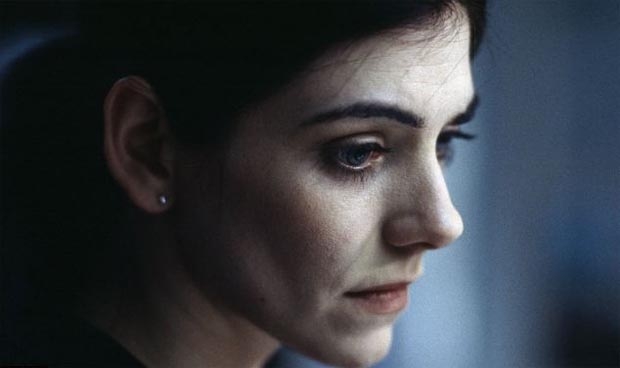
ANNABELLE COMES HOME (2019)

Directed and written by: Gary Dauberman

Cast: McKenna Grace, Madison Iseman, Katie Sarife, Patrick Wilson, Vera Farmiga etc.

Having watched the Dead Don’t Die (2019), I decided to make the most of my Odeon Limitless card and watch the next instalment in a franchise which shows absolutely no sign of dying. I really liked The Conjuring and Insidious franchises, which involved horror experts including James Wan and Leigh Whannell. However, the monstrous creations such as Annabelle and The Nun are pretty thin in terms of credible horror threat and cinematic quality. Having said that this latest film Annabelle 3 film already made $200 million at the box office, so what do I know!?

The story is pretty threadbare, but it concerns Ed and Lorraine Warren’s demonic spirit room which, for some bizarre reason they entrust a teenage babysitter, Mary Ellen (Madison Iseman) and their daughter, Judy (McKenna Grace), NOT to open while they’re away. Guess what happens? A friend of Mary Ellen, Daniela (Katie Sarife), opens the spirit room and all hell breaks loose due to Annabelle the evil doll causing all the devilish spirits to rise up and frighten the characters half to death.

I actually liked the cast of young actors here, most notably McKenna Grace, who is very talented. Daniela’s character also had some decent motivation for her ridiculous actions as she sought closure with her dead father. At times I was quite fearful due to some decent jump scares, deadly creatures and creepy use of lighting tricks. However, the whole thing seemed like a cash-in with new monsters being introduced to expand the franchise further. Even fine actors such as Patrick Wilson and Vera Farmiga seemed happy, laughing all the way to the bank with their book-ended cameos.

Mark: 5.5 out of 11

CLASSIC FILM REVIEW: DON’T LOOK NOW (1973)

CLASSIC FILM REVIEW: DON’T LOOK NOW (1973)

Directed by: Nicolas Roeg

Produced by: Peter Katz

Screenplay by: Allan Scott and Chris Bryant

Based on the story: Don’t Look Now by Daphne Du Maurier

Cast: Julie Christie, Donald Sutherland, Renato Scarpa, Massimo Serato, Hilary Mason, Clelia Matania, Sharon Williams etc.

Cinematography: Anthony B. Richmond

Music: Pino Donaggio

**MAY CONTAIN SPOILERS**

I watched this classic film again on the big screen at the British Film Institute in a 4K restoration recently. It has not lost any of its cinematic power. Don’t Look Now (1973), indeed, remains one of the greatest films in the horror and thriller genre of all time.

The story is a powerful study of grief and how a couple vainly attempt to overcome the tragic death of their young daughter, Christine. The opening scene is a masterclass in image system building, cinematography, performance and editing. It is an incredible example of pure cinema, establishing the dread and suspense representative throughout the film. It truly is an iconic sequence and a rarely bettered opening cinematic salvo.

A few months later, the bereaved parents, John and Laura Baxter, are in Venice for his architectural work on an ornate church. He seems to be handling Christine’s death by throwing himself into this project. Laura is more sensitive and wears her emotions close to her skin. An encounter with two mature women causes her grief to explode as one, a psychic, states she can see Christine on the “other side.” The girl is passed but happy and smiling in the spirit world. John is sceptical, but Laura is overjoyed there is a chance to make contact with Christine.

After this encounter Christine seems to appear within the Venice tunnels, her footsteps and laughs echoing in the darkness. With a murderer also on the loose in Venice, the creeping fear within the story heightens and the suspense intensifies. With Laura keen to contact Christine again, themes and symbols relating to religion, the afterlife and occult all combine to add to the terror. Moreover, religious iconography, water, the red mac, children, tunnels, mistaken identity, death, past, present and future also add to the rich tapestry of images.

Julie Christie and Donald Sutherland are so natural in their roles. They give beautiful and haunted acting performances as the bereaved couple. The memorable love scene contained within the second act was very controversial at the time. However, the editing, loving tenderness in performance and sumptuous score illuminate a brief moment of reprieve from the prior horror and terror to come.

The ending of the film contains two big reveals which will shake even the most experienced horror genre viewer. Interestingly, when released the film was double-billed with The Wicker Man (1973), so lord knows what audiences were feeling when they left the cinema. Lastly, Nicolas Roeg and Anthony B. Richmond shoot and direct the film with precise and spectacular style. Shadows threaten, water forebodes, and the masque of the red death hangs heavy over proceedings.

With young filmmakers such as Ari Aster causing a stir with contemporary horror films about grief, death and rituals, I would certainly advise you to catch Don’t Look Now (1973) on the biggest screen you can find. It was a masterpiece of cinema when released and remains so today.

Mark: 10.5 out of 11

BBC3 COMEDY REVIEW – THIS COUNTRY (2017 – 2019)

BBC3 COMEDY REVIEW – THIS COUNTRY (2017 – 2019)

Created by: Daisy May Cooper & Charlie Cooper

Written by: Daisy May Cooper & Charlie Cooper

Directed by: Tom George

Producer: Simon Mayhew-Archer

Cast: Daisy May Cooper, Charlie Cooper, Paul Cooper, Paul Chahidi

Original Network: BBC Three

**MAY CONTAIN SPOILERS**

“I am Jack’s bitter, failed arsehole!”

In Chuck Palahniuk’s contemporary literary classic Fight Club – and the movie version – the narrator often refers to a third person called, ‘Jack’, to describe inner rage. It’s a nifty narrative device and kind of a foot-in-the-door to explain my feelings when watching BBC3 mockumentary series This Country. Because having watched the two series and extended one-off special I have to say I didn’t get the joke and I’m thinking it must be me and not the show.

Perhaps it’s my ongoing sobriety? I mean, while the acting is sublime, I could not work out why this comedy series has received so much critical praise. Moreover, I could not work out how it has won several Royal Television Society and BAFTA awards. I will perhaps have to accept I am wrong and know nothing about comedy and the television industry. I am just a bitter, failed arsehole.

This Country is a rural sitcom in the mockumentary style. Thus, first and foremost, while it’s nearly impossible to achieve originality in TV and film, the show is derivative of Ricky Gervais and Stephen Merchant’s classic comedy, The Office. While Gervais was influenced by the Christopher Guest-led ensemble genius of, This is Spinal Tap (1984), one cannot escape the fact This Country is a weaker clone of The Office.

Episodes revolve around an accurate rendition of rural life; somewhere not too far from Swindon, Wiltshire. Comedy and drama derives from issues relating to: boredom, crime, unemployment, failed romances, general village idiot-types and very dysfunctional families. The main protagonists are Kerry and Lee ‘Kurtan’ Mucklowe; cousins in the show but portrayed incisively by siblings, Daisy and Charlie Cooper. In fact, the actors are way more likeable than the characters they portray. Kerry and Kurtan are so moronic and obnoxious at times it was difficult to empathise with them.

It is a testament to the precise conveyance of village life that the programme felt believable as an actual documentary. Unfortunately, for me, the pace was quite slow and, while I guess that was the point, there are only so many dry pauses-for-comedic-effect you can experience without getting bored. Similarly, with the “realistic” pace, punchlines often felt very spaced out, with a reliance on the accents to get the laughs.

There are a number of strong episodes including, Kurtan’s attempts to win a scarecrow contest and also when he worked on a building site. Yet, certain episodes never really went anywhere as character development also suffered inertia in the narrative. Having said that, there is some excellent writing. Daisy’s doomed relationship with her bastard of a father, Martin, does lend a depth and pathos to the narrative. But this is more dramatic than funny overall. Then again, I accept that this is just the opinion of a bitter, sober and over-analytical arsehole and some may find this the funniest show on television.

Mark: 7 out of 11