Paul is a writer and filmmaker. He has been committed to a writing career from a very early age. In 1997, he graduated from Staffordshire University with a first class degree in Film, TV and Radio Studies. His 2nd year short film project THE ARTS FILE won a Stoke-on-Trent Young Filmmaker's award. Subsequently, he worked as a Production Assistant on a number of promos and successfully completed a work placement at Sky Movies. In 2002, he gained an MA in Feature Film Screenwriting from Royal Holloway College of London and since graduation has written several feature and many short film scripts. In 2005, he formed FIX FILMS and has written and produced many shorts to date. He has also had several short screenplays commissioned by the Mountview Film Academy and film director Jonathan Wolff. His work can be found here - https://www.youtube.com/c/FixFilmsLtd Most recently Paul wrote, produced and directed his own short horror film called FLATMATES (2018). He has subsequently written and directed the films: MISDIRECTION (2019), TOLERANCE (2019) and YOU HAVE A NEW FOLLOWER (2020). His short films have had screenings worldwide at many film festivals. His latest works are the horror, INFERIS (2024), a set of short film monologues called SIN (2024) and THE SUICIDE SHIFT (2026). PAUL is a versatile and prolific writer with ideas in abundance and a very strong feel for structure, characterisation and dialogue. He favours thought-provoking and entertaining narratives with memorable characters, images and scenes. While he values all styles of film he tends toward genre movies as opposed to overtly "arty" cinema. Moreover, being involved in the producing, casting and crewing of low budget shorts has given him great experience and insight into the filmmaking process; improving his writing no end. From 2008 until 2020, Paul had been on the exciting merry-go-round that is the stand-up comedy circuit. He has done over 1000+ gigs. Venues included: Downstairs at the King's Head, The Comedy Pit, The Comedy Cafe, Soho Comedy, London Comedy Store, Electric Mouse Comedy, Streatham Comedy Club, Mirth Control, Comedy Heat, Lion's Den Comedy etc. He also ran two comedy nights: West End Comedy @ The Comedy Pub and West End Comedy @ The Brazen Head. He used to be the resident MC at Electric Mouse's show at The Fox, Palmers Green and got regular paid bookings as a comic and MC in and out of town. In 2014 and 2016 he performed at the Brighton Fringe Festival and Camden Fringe Festival in 2014. He performed open spots for the Banana Cabaret, The Comedy Store and Up the Creek comedy clubs in London. He is also a keen film and television seer and has a love for all genres of movies from art-house to low-budget z-movies. He also loves television of all kinds notably great comedies and dramas. He is an essayist expressing passionate analysis for all elements of cinema. Links Blog: www.thecinemafix.com YouTube: www.youtube.com/c/FixFilmsLtd
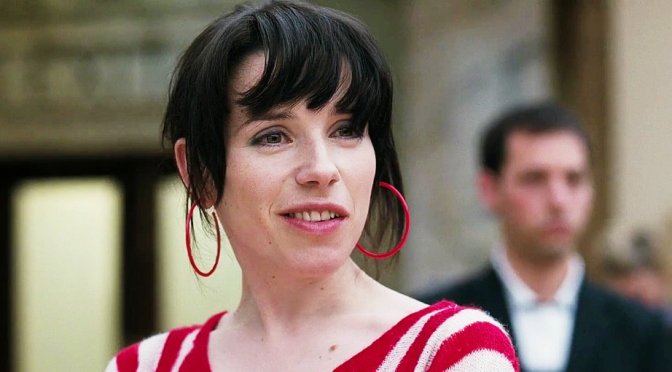
Sally Hawkins is such a formidable actor. She is likeable, bright, and funny; possessing an expert ability to bring pathos and emotion to every role. Having first really noticed her in Mike Leigh’s compelling period drama Vera Drake (2004), it’s mainly in the last decade she’s getting the leading roles her talent demands. Thus, here are five of Sally Hawkins most impressive performances that are well worth watching again and again.
**CONTAINS MILD SPOILERS**
FINGERSMITH (2005)
Yes, I know it says “cinematic romance” and Fingersmith was a two-part British TV programme, however, Sarah Waters’ novel was also made into a film by Park-Chan Wook called The Handmaiden (2016), so it kind of counts. Hawkins portrays Sue Trinder, raised to be a thief in Victorian England, who enters into a scam to rob an heiress. However, her relationship with the ‘mark’ becomes very complex indeed as the twisting complex plot becomes a veritable joy. Hawkins is a sympathetic criminal faced dealing with the sexist oppression of the day and she delivers thoughtful acting combining vulnerability and romance. One of Hawkins early starring performances shows what a great talent she is and will become.
HAPPY-GO-LUCKY (2008)
When I first saw this film I really did not enjoy it. Perhaps I was in a bad mood or just not up for any kind of positivity. I was also surprised Mike Leigh had delivered something, in comparison to Vera Drake (2004), a film so inconsequential. However, having re-watched it in the last year I must admit I was a total fool and wrong. Sally Hawkins character work and acting as Poppy Cross is a joy. Her character is very natural, optimistic and care-free. She enjoys her job as a primary school teacher and drifts through life happily. Hawkins imbues Poppy with a light comedic touch and her timing of a look, little giggle and innocence gags just make you feel better about life. If everyone was like Poppy the world would be a far better place.
BLUE JASMINE (2013)
While Woody Allen’s work has been re-evaluated in light of his very questionable personal choices, there’s no doubting his casting selections are absolute quality. It’s becoming more and more difficult to separate the creative from his apparent sins this in no way impacts on the sterling work of Cate Blanchett and Sally Hawkins in an excellent family comedy full of barbed wit and conflict. Hawkins performance as Ginger, an every person just trying to get by, sparks and conflicts with Blanchett’s neurotic socialite in effervescent comedic fashion. The two actors excel and Hawkins was nominated for an Academy award for ‘Best Supporting Actress’ as Blanchett took away the main prize.
MAUDIE (2016)
Perhaps overshadowed by the success of the big budget monster/love story The Shape of Water (2017), the low-budget Maudie features another stunning Hawkins turn. She is quietly powerful in the role of Nova Scotia painter Maud Dowling who came to prominence for her painting in the late 1960s and became somewhat of a cult treasure. Hawkins and Ethan Hawke steal the acting honours as the unlikely husband and wife, as Aisling Walsh directs a fine tribute to a small woman with a massive artistic talent. Hawkins is just brilliant though as the bullied and beaten women who refuses to break as the performance demonstrates a human being small of stature but big in spirit.
THE SHAPE OF WATER (2017)
Sally Hawkins plays mute cleaner Elisa Esposito, who works at a top secret U.S. army base. Silent from birth, what she lacks in voice, Elisa more than makes up for in courage, compassion and confidence. When a mysterious “Asset” is delivered to Elisa’s place of work she suddenly becomes entwined in an incredible story of sacrifice and love. Hawkins and Doug Jones performances are entrancing as two silent characters are able to say more with a look, hand signal and touch than a thousand words could achieve. In any other year Sally Hawkins would have walked away with all the Best Actress honours; yet she was up against the incredible Frances McDormand. Nonetheless, Hawkins gives us such a nuanced and heart-rending performance you forget that she cannot speak.
Produced by: Gail Egan, Andrea Calderwood, Ed Guiney
Written by: Lucinda Coxon
Based on the novel: The Little Stranger by Sarah Waters
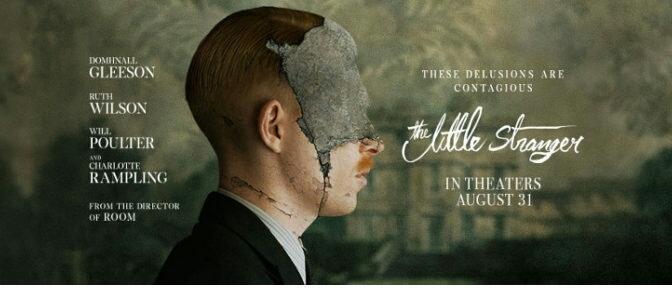
Starring: Domhnall Gleeson, Ruth Wilson, Will Poulter, Charlotte Rampling
Music by: Stephen Rennicks
Cinematography: Ole Bratt Birkeland
Lenny Abrahamson is one of my favourite directors. Every one of his films has featured memorable and very human characters in compelling situations. He is not a showy filmmaker with a bag of tricks like say Tarantino or Scorsese but rather the same emotional energy of the neo-realism and social realism genres. His authorial style and themes also evoke the work of: Vittorio DeSica, Alan Clarke, Karel Reisz, Mike Leigh and Ken Loach. He has a subtle documentary style as his work represents the human condition in all its glorious failures. Most of all the characters in all his films, whatever their situation, are tremendously empathetic and Abrahamson’s power as a storyteller is to make us feel the pain, despair and joy they feel. He’s been nominated for a Best Director Oscar for the incredible film Room (2015) and deserved to win it.
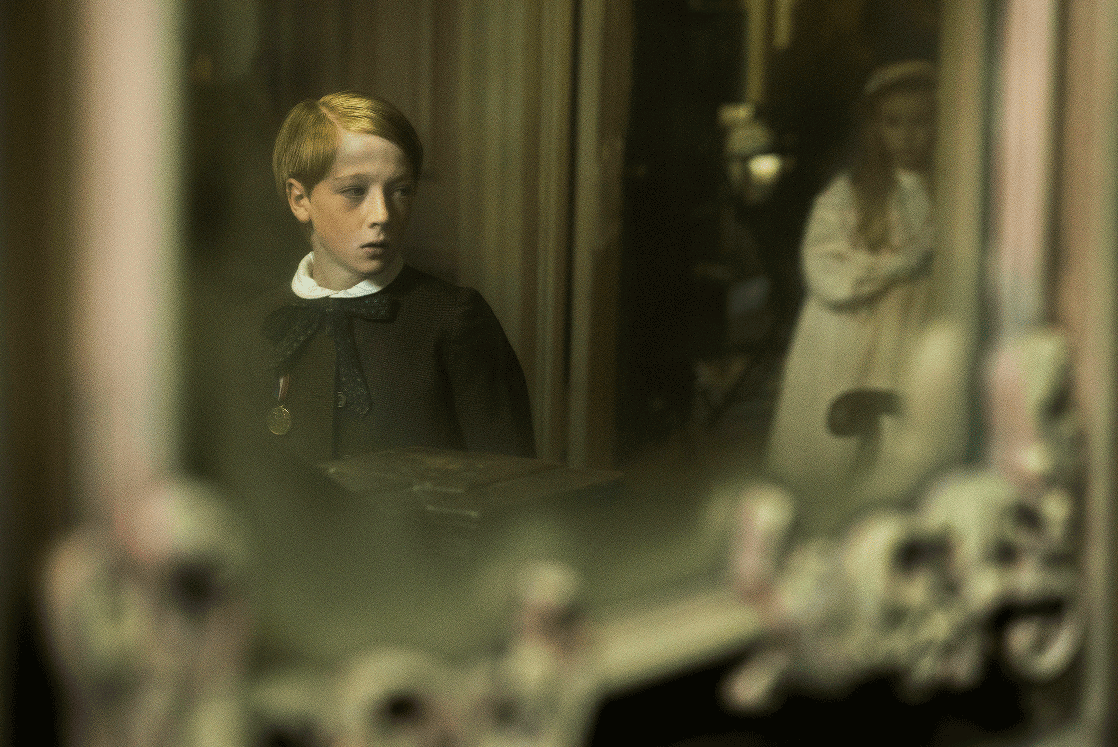
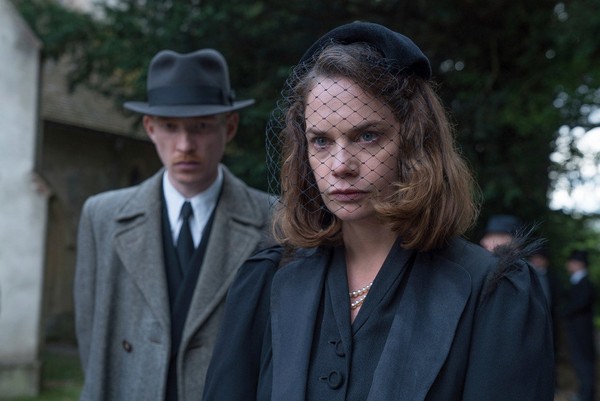
His latest film is a departure from the more steadfastly realistic dramas he has delivered to date. The Little Stranger is adapted from the critically acclaimed author Sarah Waters’ 2009 gothic novel. It’s a dense and subtle character drama with elements of the ghost story and crime story genres. However, the on the whole it’s a crime story without the police and a ghost story without a ghost, because all the dread, mystery and mischief happens very much between the lines of the screen and the viewer’s imagination. In many literary adaptations, what may work on the page doesn’t necessarily translate to the screen, but Abrahamson and screenwriter Lucinda Coxon have fashioned an intriguingly dark and chilling character drama which stays with you long after the credits have rolled.
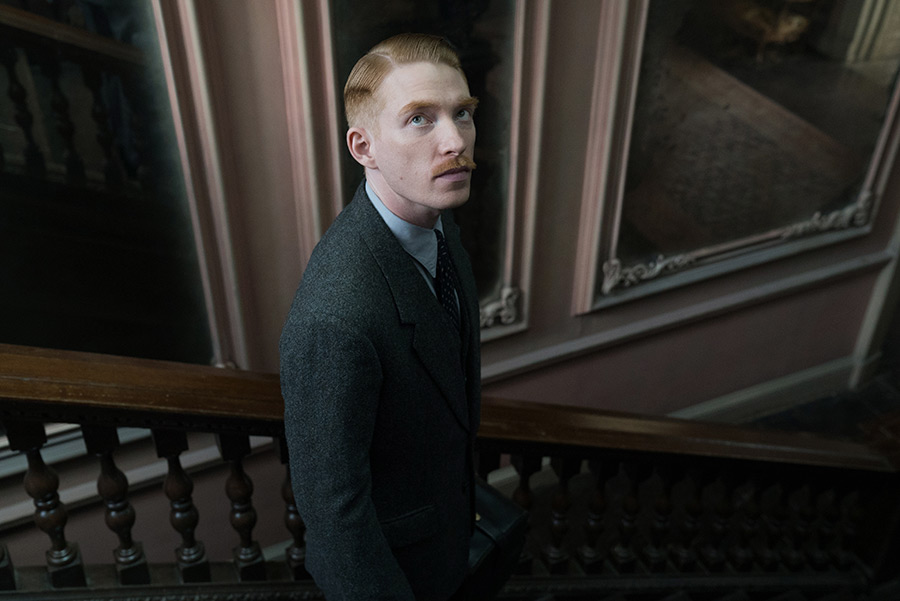
Leading the cast are the ever impressive Domhnall Gleeson as Dr Faraday, and the brilliant Ruth Wilson as Caroline Ayres. Gleeson is our sombre narrator who traverses his past as a poor, working class boy to his present, which is that of a reliable and stoic doctor. He reminisces about the desirous lure of Hundreds Hall, an 18th Century Estate owned by the Ayres family, who are now struggling to keep it going. Getting closer to the Ayres family he begins to fall in love with Caroline, however, their difference in class and a series of tragic events conspire to keep them apart. While the story moves slowly the narrative builds both character and drama subtly; and what it lacks in exposition it pulses with quiet power.
Overall, this is probably a film not many people will see. It’s difficult to recommend as it falls between the gap of a proper genre film and art-house cinema. Moreover, I was surprised Abrahamson took on such a curious project, given he would probably have had his pick after the success of Room (2015). Nonetheless, he proves once again his directorial brilliance, utilizing Sarah Waters’ formidable text as the basis for a paranoiac examination of the collapse of an upper class household, amidst the cloaked device of a hypnotic “ghost” mystery.
Produced by: Derrin Schlesinger, Katherine Butler, Dimitri Doganis, Mary Jane Skalski
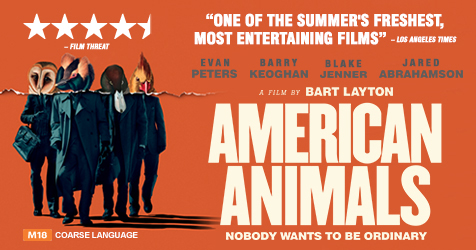
Starring: Evan Peters, Barry Keoghan, Blake Jenner, Jared Abrahamson, Ann Dowd, Warren Lipka, Spencer Reinhard, Chas Allen, Eric Borsuk and Betty Jean Gooch (all appear as themselves.)
Music by: Anne Nikitin
Cinematography: Ole Bratt Birkeland
**MAY CONTAIN SPOILERS**
Ever watch a film which is brilliantly written, performed and directed but the characters are so annoying it actually makes you dislike the movie? I’ll explain. To me to steal from people is a big negative. To use violence exacerbates the negativity too. Some crimes are committed out of economic and social necessity but these are still inexcusable to me. To be from a privileged background and still commit robbery makes you some kind of arsehole! In fact, the characters on show here are four of the biggest morons I have experienced in a cinema for some time.
Personally I do not usually enjoy the so-called “true crime” genre in televisual or film documentary form. Paradoxically, I love crime films, thrillers and heist movies but as works of fiction. True crime documentaries or docu-dramas make my blood run cold as I hate the idea of these people getting air time; even if they are caught and made to pay for their deeds. The main “true crime” stuff I will watch are usually the miscarriage of justice shows, for example, Netflix’s Making a Murderer (2015) was particularly riveting but even then the horror of how the justice system and law enforcement behaved was beyond ridiculous.
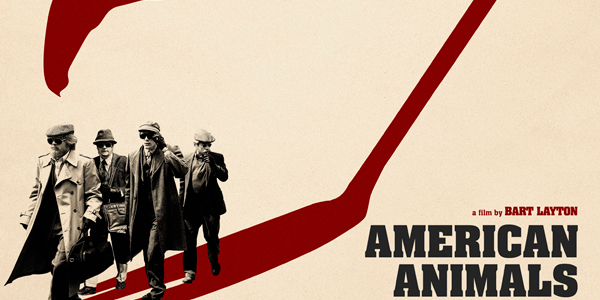
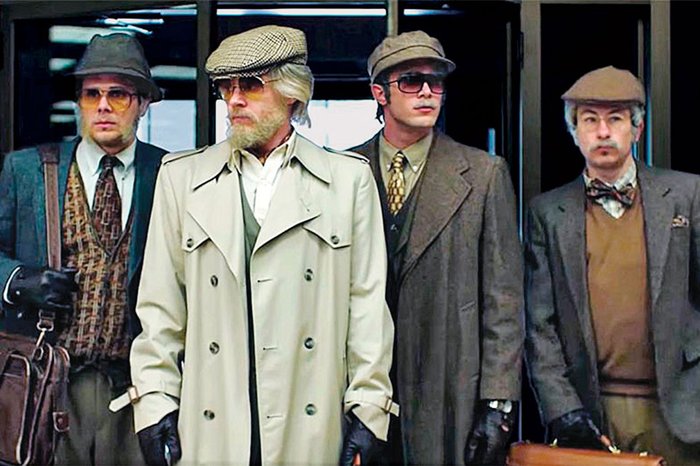
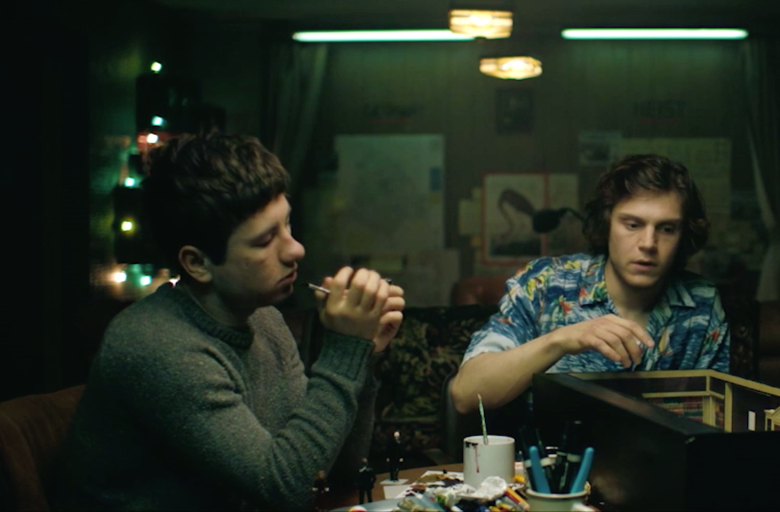
Set on the campus of Transylvania University in 2003, the story involves four college students who, aside from being bored and narcissistic, do not seemingly have much to complain about. They are: Evan Peters as Warren Lipka, Barry Keoghan as Spencer Reinhard, Blake Jenner as Chas Allen and Jared Abrahamson as Eric Borsuk. Collectively they plan a heist to steal – not money or jewels or gold – rare books from the college library. Wow, what tough guys they were!! Interspersed between the planning of the heist is dramatically ironic commentary from the real-life characters as they give their version of events. This device, overall, creates an interesting narrative dynamism where regret for their crimes is to the fore. The real Rheinhard, a talented artist, and fantasist Lipka are arguably the most interesting as the latter appears to be a very unreliable narrator.
So, while American Animals (2018) is a brilliantly constructed story with a very interesting mix of the actual people involved in the crime and fictional re-enactments, the sheer dumbness and moronic nature of said criminals really pissed me off! I guess I should disengage critically from the content enough and look at the cinematic work on show. Because, based on his work here Bart Layton is clearly a very talented filmmaker. Moreover, Evan Peters and Barry Keoghan absolutely nail their respective roles and mark themselves down as actors very much to look out for in the future. Ultimately, while the film works well as a morality tale, it completely fails as drama as I did not give a crap about the selfish protagonists and I could not wait to get away from their pathetic company.
TELLING STORIES WITH STYLE: THE TROPES OF TARANTINO
**CONTAINS MOVIE SPOILERS**
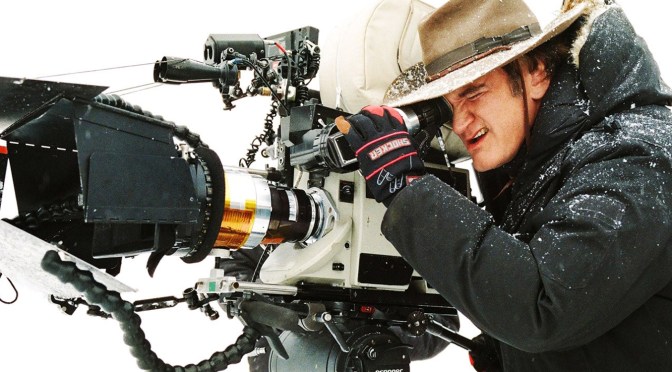
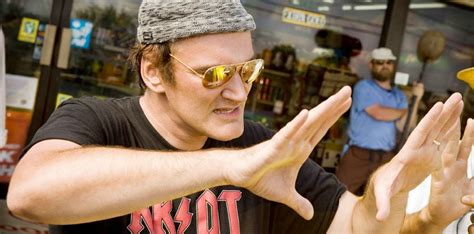
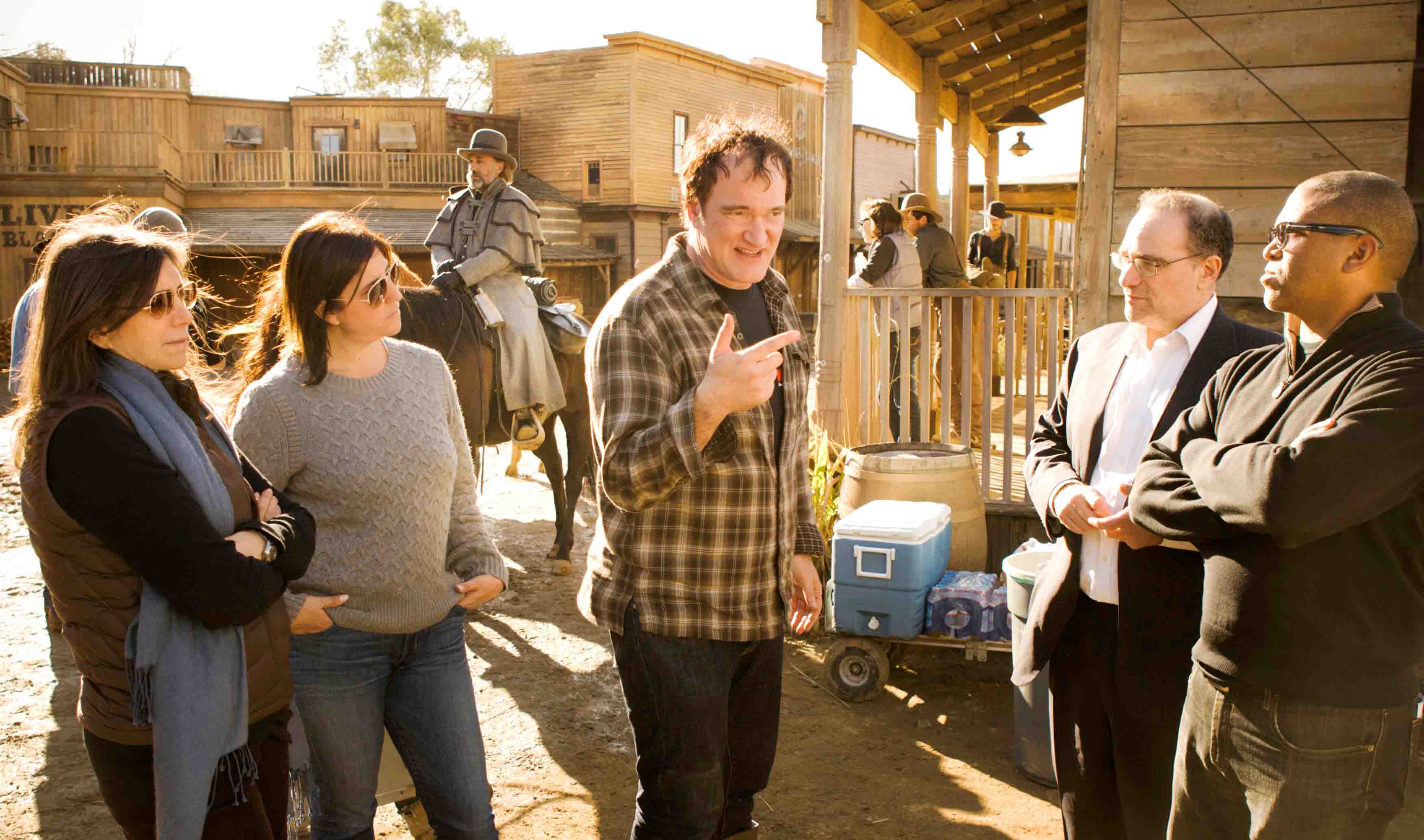
Quentin Tarantino is a powerhouse of cinema. He has proved consistently, since his debut film Reservoir Dogs (1992) right up to his most recent film The Hateful Eight (2015), a filmmaker of incredible invention. His works are well known for their references to pop culture, TV shows, music, fashion, and quoting in general from an array of cinematic influences. Indeed, his films are always firmly planted in genre, from: war films to Martial Arts to Western to crime and B-movie pictures. However, despite utilising other genres as a springboard for his writing, Tarantino instils his own style within his work. This creates a paradoxical form of originality, making him what I would call a postmodern auteur. The postmodern auteur not only quotes, borrows and steals from other influences but they are able to present them in a fashion so as to make them feel fresh and somehow original.
It would be easy to write an essay of Tarantino-style bingo pointing out which films and genres he has used and stolen or quoted from, thus, as an alternative, I would like examine the narrative tropes he employs to tell his screen stories. Tarantino isn’t simply a cultural magpie throwing in arbitrary pop references but he has a magic box of narrative tricks gained from cinema, stage, literature and music. In this essay I would like to explore some of these methods and how he diverts from the linear narrative style represented by the classical Hollywood norm. I will also examine his work in general and scenes from his films to show how he has created some fascinating means of telling stories.
Tarantino differentiates his films from the classical narrative style in a legion of ways. Such tropes include: “Chapter Headings”; non-linear timelines; unreliable narrators; and what I have termed “the long game” scene or sequence. Along with his perpetual references to various genres, specific films and the use of soundtracks from other movies, such devices work brilliantly to propel the narratives of his films. It may seem quite a simplistic device to use, but “Chapter Headings” are a very effective story device. It’s obvious to say Tarantino has borrowed from literature in order to structure his films this way, but the ‘Chapter’ introductions establish the nature of storytelling and literally inform the audience of a change in scene, time, place and character.
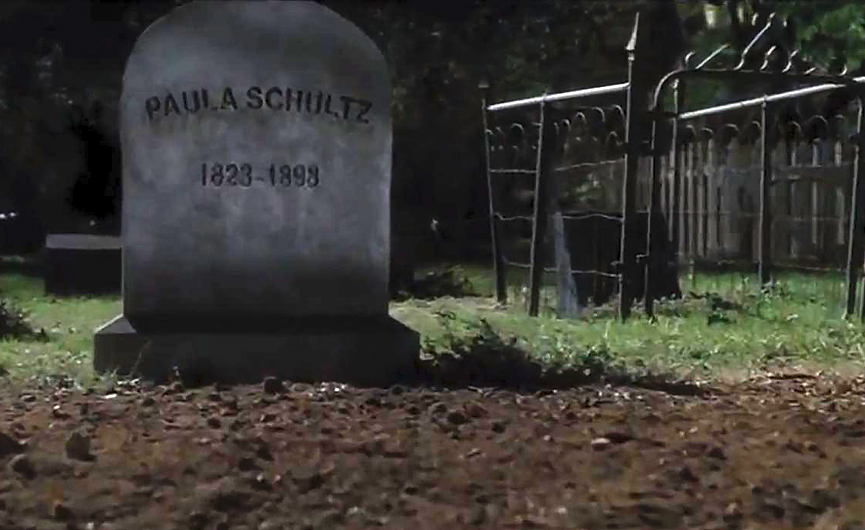
While classical Hollywood works to immerse us in the invisibility of filmmaking, Tarantino calls attention to the form with “Chapter Headings.” He does this not as a Brechtian distanciation device but rather as a means to include us in the story intellectually. The “Chapter Headings” also create humour, mystery and suspense. For example in Kill Bill: Volume 2, one chapter is called The Lonely Grave of Paula Schultz, which immediately conjures a mysterious and eerie story to come. It turns out to be just that as Beatrice ends up buried alive as the segment further reveals more of her fascinating back-story. In an ingenious aside in Tarantino’s “Universe”, Paula Schultz is in fact the wife of King Schultz from his own Western Django Unchained (2012).
“Chapter Headings” also seek to cement and bind another of Tarantino’s tropes: the non-linear or fractured timeline structure. Here, fractured events are portrayed out of chronological order and do not follow the direct causality pattern of the events in the standard narrative model. Non-causality is as old as the hills with Homer’s The Iliad in the 8th century BC being one of the first examples of such a narrative device. Indeed, it’s easier to pick out a Tarantino film that doesn’t follow a non-linear structure than not. However, even his most linear film Jackie Brown (1997), which follows the eponymous protagonist’s attempts to stay out of jail and alive, finds the narrative splintering into a triptych of varying perspectives during the final act.
Often non-linearity is used to show dreams, flashbacks, time-travel and explore splintered identities or point-of-view; nonetheless, the non-linear narratives of, for example, Reservoir Dogs (1992), Pulp Fiction (1994), Kill Bill (2003/2004) and Inglorious Basterds (2009) contain fractured timelines from mainly a creative and aesthetic choice. But they are not just style for style’s sake as they create a dazzling intellectual response and activate the viewer to piece the stories together like a jigsaw. Reservoir Dogs (1992) is especially ingenious in breaking the rules of genre as it’s one of the only films I’ve seen about a robbery which shows us everything aside from the actual crime. It is important, however, to say that while Tarantino knows the rules of linearity he chooses to break them, on the whole, to enhance the cinematic experience. Interestingly, in my opinion, his most satisfying films are those which are his most linear. Tony Scott proved this when he re-wrote and re-ordered Tarantino’s script of True Romance (1989), while Django Unchained (2012), aside from a few brief illusory dream sequences and momentary flashbacks, builds powerful emotions as Django hunts down his slave captors and wreaks revenge in order to be reunited with his wife.
A narrative off-shoot of fractured timelines is Tarantino’s use of stories within stories and unreliable narrators. The device of the unreliable narrator is another means in which Tarantino differentiates his narratives from classic storytelling. In 1981, William Riggan, created a study of various unreliable types, including: The Picaro, The Madman, The Clown, The Naif and The Liar. The Picaro will typically be a bragger, similar to the Liar but not as heinous. The Madman or Mad Woman, however, will be more sinister but The Clown and The Naif will either be playing for laughs or in the latter’s case, telling their story from a naïve position. Tarantino takes great joy with narrators, unreliable or otherwise, telling lies; something seen brilliantly in both Reservoir Dogs (1992) and his most recent film The Hateful Eight (2015).
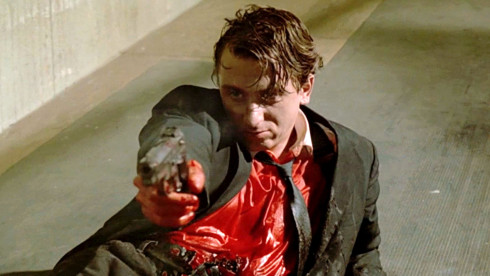
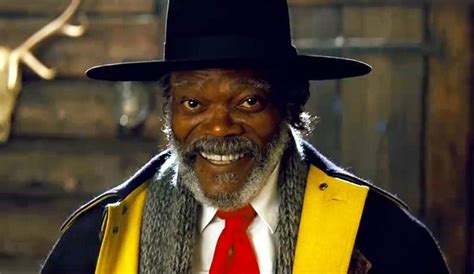
In Reservoir Dogs (1992), Tim Roth’s “Mr Orange” is revealed to be an undercover Police officer. “Orange’s” cop superior actively tells him to invent a story – because you “gotta have a story,” – to inveigle his way into the Joe Cabot’s gang. Thus, he invents a shaggy dog tale about the time he almost got bust by cops in a toilet. Tarantino presents a dishonest character delivering a story in a false reality providing both suspense and entertainment from a wholly unreliable basis. More ambiguous and vile is the story Samuel L. Jackson’s Major Marquis Warren tells to Bruce Dern’s irascible Confederate, General Sandy Smithers, in The Hateful Eight (2015). Sworn enemies while occupying opposing sides during the American Civil War, Warren, raises the dramatic stakes by regaling the story of how he strips, sexually humiliates and then kills Smithers’ own son. We flash-back to this incident and must consider if this is actually real or invented in order for Warren to provoke Smithers to grab a gun; thus allowing the Major to shoot him self-defence. These devices are tremendously effective narrative tools for creating shifting emotional responses to characters and again mark Tarantino’s work outside the classical norm.
The Hateful Eight (2015), given it is virtually set in one location, is very theatrical in feel. Marrying the influences of the Western genre in such television shows as Bonanza with Agatha Christie’s novel And Then There Were None (1939), the film also evokes principles of the “Shaggy Dog” story and Chekhov’s gun theory where every element of a narrative has cause effect irreplaceability. Consequently, the whole film feels like one long sequence of scenes and event with a massive and particularly violent payoff at the end. Indeed, this narrative conceit is a major styling of Tarantino. While most basic screenwriting books will tell you to get in and out of a scene as quickly as possible to move the narrative along, Tarantino disregards this rule throughout his oeuvre. This, I call the “Long Game” scene where lengthy dialogue gives way to a spectacular punchline at the end.
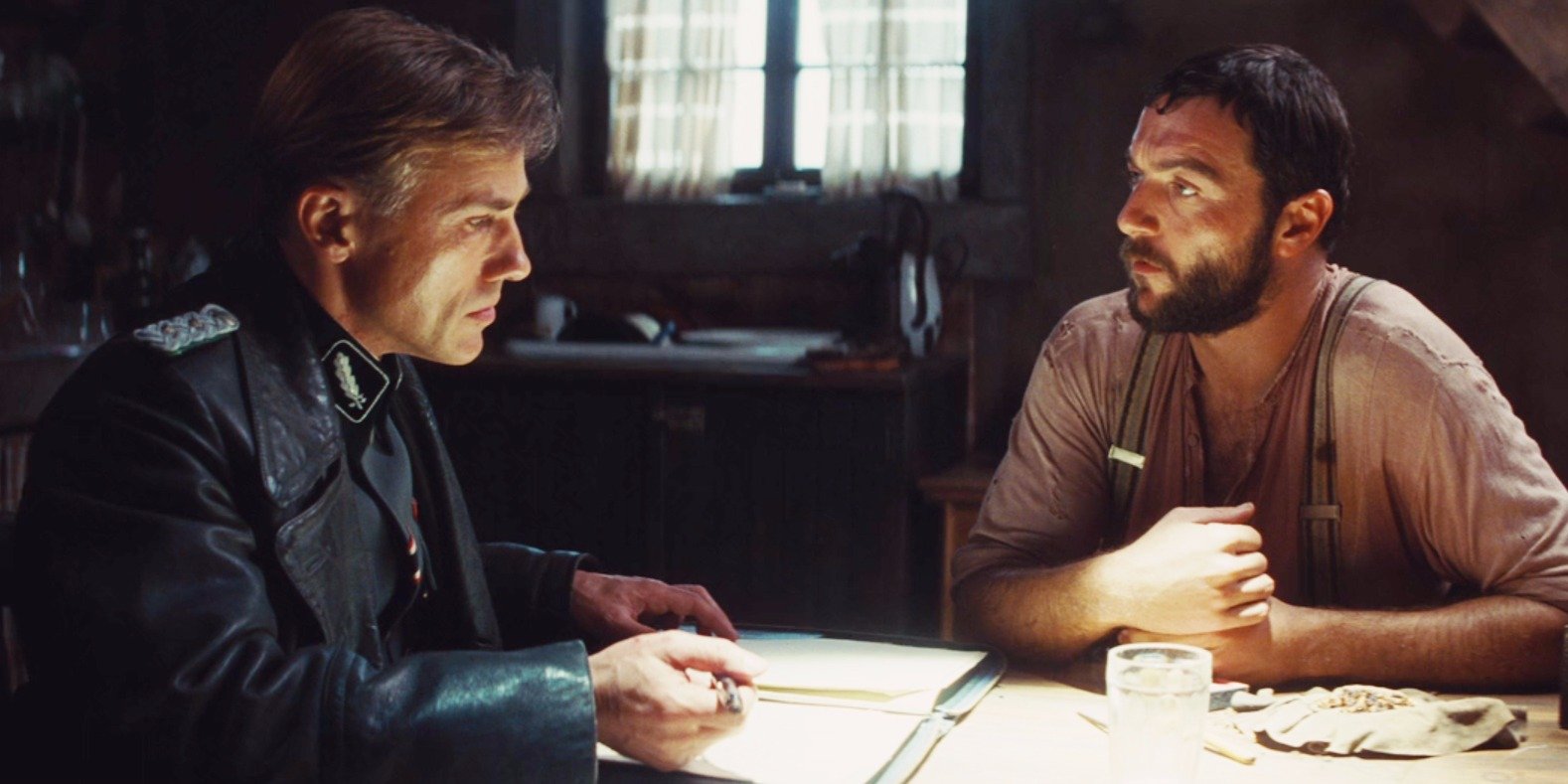
A perfect example of the “Long Game” scene is the beginning of wartime epic, Inglourious Basterds (2009). We open with the “Chapter Heading”: Once Upon a Time in Nazi Occupied France and are introduced to Christophe Waltz’ SS Office Hans Landa. At first Landa is amiable and charming in his inquisition of a French farmer. Indeed the scene moves slowly and not without humour as the German takes out his over-sized pipe and drinks the farmer’s delicious milk. But, as this is Tarantino we know suspense is building to a slow but startling crescendo. When the reveal of the hidden Jewish family below the timbers is shown, we realise that Landa is not the affable German he acts but a devious murderer and the nemesis within the narrative. With machine guns firing and splintering wood in slow motion, the soundtrack swells operatically as the scene ends with Shosanna (Melanie Laurent) sprinting away, her family butchered by the Nazis. Such “Long Game” scenes are one of Tarantino’s memorable tropes and he achieves this through his brilliant handling of conflict, dialogue and expert use of cinematic form and content.
Overall, Tarantino has had an exceptional film career by using established means of telling stories, both inside and outside the rules of standard narratives. He uses devices like those discussed to invigorate and entertain the audience. There is also much pleasure to be had from experiencing the tropes such as: “Chapter Headings”; unreliable narrators; non-linear structure and the “Long Game” scenes. Thus, using theatrical, literary, cinematic and musical narrative influences Tarantino proves himself a master of storytelling as demonstrated in his impressive body of work.
Having a little blog break for a few weeks or so, thus here are some quick catch-up reviews of films I saw recently at the cinema, with the usual marks out of eleven.
ANT-MAN AND WASP (2018) – ODEON CINEMA
Paul Rudd, Evangeline Lilly and Michael Douglas return in this simultaneously microscopic and gigantic work of Marvel entertainment. The story follows after the events of Civil War (2016) with Scott Lang under FBI house arrest due to breaking the Sokovia Accords. Thus, he must, alongside new crime-fighting partner, The Wasp, battle criminals, freaky super-villains and the FBI without leaving his home. While the original Ant-Man (2015) was anchored within the heist genre, this energetic sequel follows an action meets romantic-comedy plot and on the whole really works thanks to great chemistry between Rudd and Lilly. Throw in some mind-bending shenanigans involving the quantum realm and a memorable car chase set-piece, you get another fun-packed and witty Marvel film.
(Mark: 8.5 out of 11)
THE MEG (2018) – ODEON CINEMA
Just when you thought it was safe to go back in the cinema a gigantic budgeted shark movie comes at you. Derivative and overly serious The Meg is nonetheless, at times, a spectacularly decent guilty pleasure with some wonderful shark action. The ensemble cast led by the compact but powerful Jason Statham try their best with a functional script while director, John Turteltaub, hacks his way through a seen-it-done-better narrative. The best bits belong to Statham and the sharks but it should’ve been funnier and bloodier! I mean look at the size of the Megaladon and its bite radius. There should have been more gore and bloody death in this entertaining, if over-inflated monster movie.
(Mark: 6.5 out of 11)
SEARCHING (2018) – ODEON CINEMA
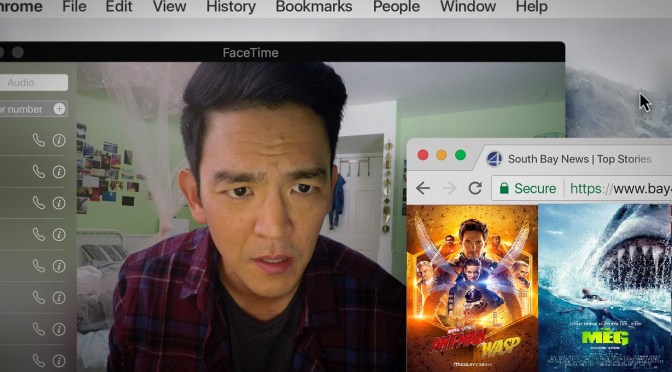
You wait ages for a smartly scripted genre film and two come along at the same time with Upgrade (2018), and now, Searching (2018). I’m not usually a fan of “found/live footage” films but this format absolutely worked for this film. The thriller plot finds John Cho’s computer programmer hunting down his missing daughter. As the images and sound derive from news footage, social media sources, YouTube, Facetime, and Live online chat sites it could get boring but it never does. This is because the script is so well written with a twisty plot which creates superb drama and tension throughout. John Cho is excellent too in a very entertaining genre movie that raises the pulse and tugs at the heartstrings too.
Writers: Marti Noxon, Gillian Flynn, Alex Metcalf, Vince Calandra etc.
Editors: David Berman, Maxime Lahaie, Émile Vallée, Jai M. Vee
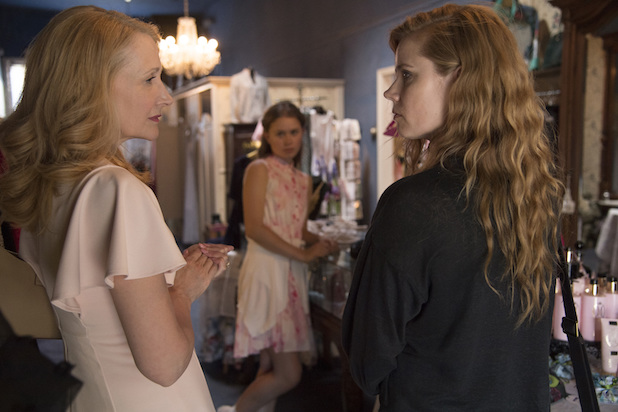
Starring: Amy Adams, Patricia Clarkson, Chris Messina, Eliza Scanlen, Matt Craven, Henry Czerny, Taylor John Smith, Sophia Lillis, Elizabeth Perkins
**MAY CONTAIN SPOILERS**
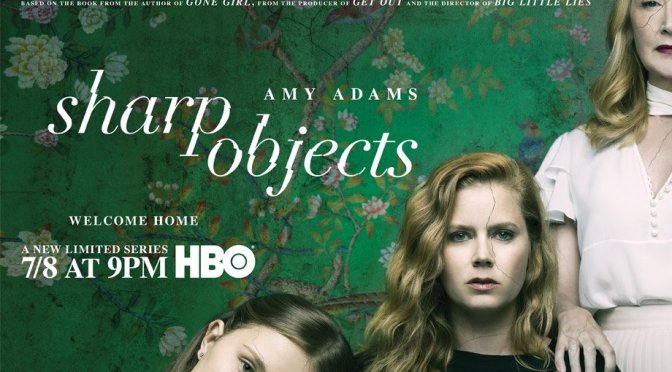
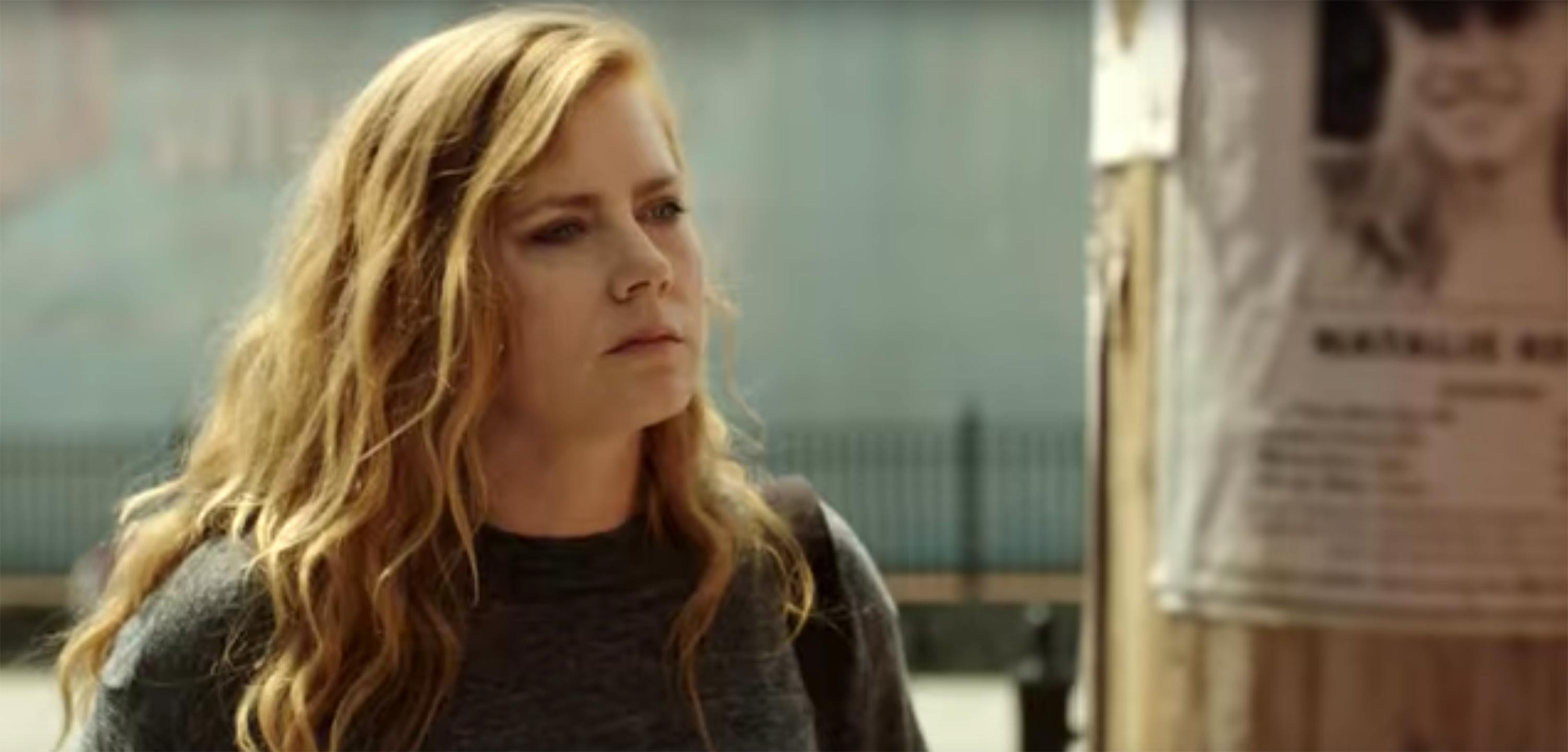
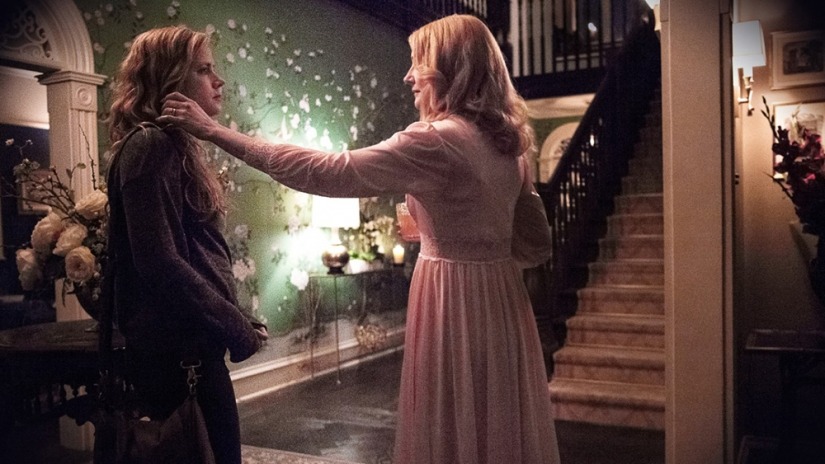
As is often the case when a writer has a big hit producers and studios look at their back catalogue to see if there are any apples in the shade ripe for plucking. Thus, following the cinematic success of her book adaptation Gone Girl (2014), Gillian Flynn’s debut novel from 2006 is given a stylish, small-screen HBO treatment. The story concerns crime reporter Camille Preaker – Amy Adams on stunning form – who returns to her hometown of Wind Gap, Missouri, to investigate the murders of two girls. There she confronts a personal ordeal from the past, clashes with her mother, Adora (Patricia Clarkson) and attempts to bond with her precocious, teenage sister, Amma (Eliza Scanlen).
Firstly, I must say Amy Adams is one of my favourite actors. Her performances in films such as: The Fighter (2010), American Hustle (2013), Arrival (2016), Nocturnal Animals (2016) to name but a few, have demonstrated what a striking screen presence she has. Furthermore, she is able to illuminate a character’s emotion through sheer being; it’s almost effortless. But while she excels in serious roles, displaying both inner strength and vulnerability, she also has a sense of mischief and humour. Indeed, who better to evoke the pathos required to portray a character like Camille Preaker? Adams nails the alcoholic, self-harming, ex-psychiatric hospital patient role, refusing to suffer fools and using mordant wit to hide her pain.
Camille’s assignment takes her back to a place she never wanted to go back to; drinking even more to further block out her inner turmoil. But, she has a vested family interest to find the killer of two missing girls, as her sister, Amma, knows the victims. Her inquisitive nature finds her locking horns with local cop played by Matt Craven; and forming a dysfunctional liaison with out-of-town investigator, Chris Messina. Being a small Southern town everyone has secrets to hide and out-of-towner Camille is not actually welcomed with open arms; not so much the Prodigal’s daughter but the outsider’s insider come to poke her nose where it doesn’t belong. Conflict further derives from external and internal grief that drives a feeling of gothic dread throughout. This is a story about abuse and neglect and the need to dominate through an overpowering sickness and poison. Dysfunctional humans harm others and themselves in order to get through the day.
Having watched a number of films and programmes dealing with the death or taking of children, this harrowing subject is becoming a real go-to for filmmakers and writers. Over eight episodes such crimes are melded with themes relating to: family secrets, mental illness, grooming, mutilation, addiction, suicide and sexual assault. As with Gillian Flynn’s aforementioned Gone Girl, the setting is not a happy place. Human beings do not come off that well either and are presented as very damaged personalities; or controlled and bullied by even more fucked up parents. However, as a brooding psychological thriller Sharp Objects is utterly absorbing and well worth a watch.
I would argue that it moves too slow for eight episodes and is on occasions slightly repetitive, but Jean-Marc Vallee once again proves he is one of the best directors around gaining brilliant performances from Adams, Patricia Clarkson and Eliza Scanlen especially. The editing also is very poetic, shifting beautifully from past to present and in between, charting a series of chilling, violent events. So, while it does have filler moments in the middle it is worth sticking with. Indeed, the end contains a great twist, which in my opinion, was delivered with way to much subtlety. Ultimately, if you like your dramas dark, elegant AND brutal then stick with it; because Sharp Objects cuts deep, way after the end credits have rolled.
Produced by: Jason Blum, Kylie Du Fresne, Brian Kavanaugh-Jones
Written by: Leigh Whannell
Starring: Logan Marshall-Green, Betty Gabriel, Harrison Gilbertson
Music by: Jed Palmer
Cinematography: Stefan Duscio
Edited by: Andy Canny
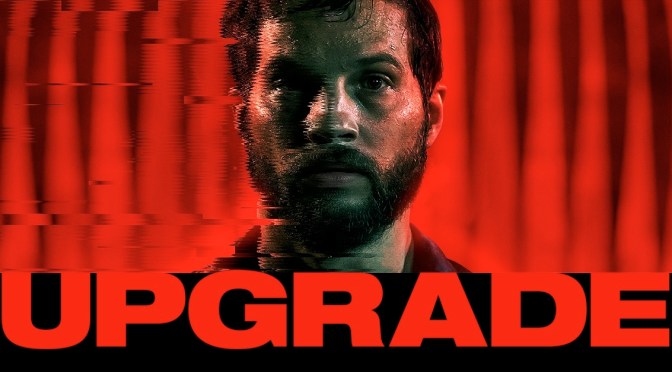
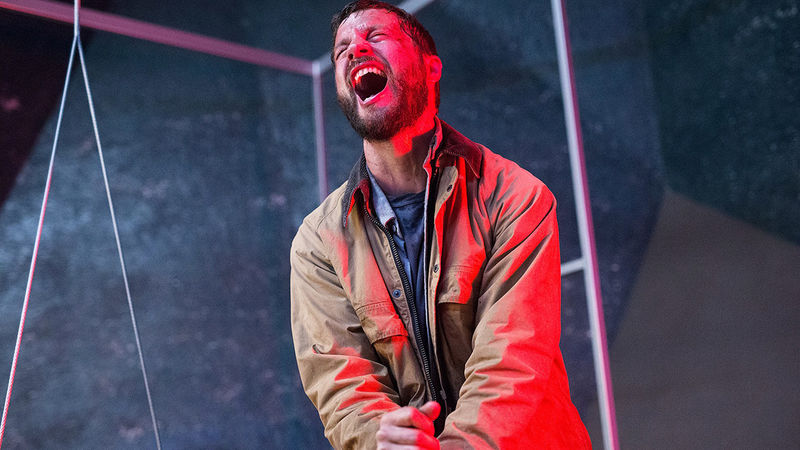
For me Australian filmmaker Leigh Whannell is one of the best screenwriters out there. He has been involved in the writing of TWO fantastic horror originals: Saw (2004) and Insidious (2010). Furthermore, he has written and directed a brilliant sci-fi-horror-B-Movie in Upgrade. He is a great writer because he brings conceptual invention with strong style and tight economy. What he shows is that you don’t need billions of dollars to make an entertaining film but rather a decent script with focussed ideas and great twists at the end.
I watched his latest film Upgrade (2018) at a Fright Fest 2018 preview and its blend of science fiction, body horror and bloody gore was lapped up by the packed crowd. The director, Leigh Whannell, did a Q & A afterwards and spoke of his desire evoke the spirit of the 1980s low budget films like The Terminator (1984) and he certainly achieved that in my view. His budget of $5 million dollars was stretched by incentives from the Australian government and what it lacks in scale, the movie more than makes up in a look and style which echoes that of those 1980s sci-fi classics.
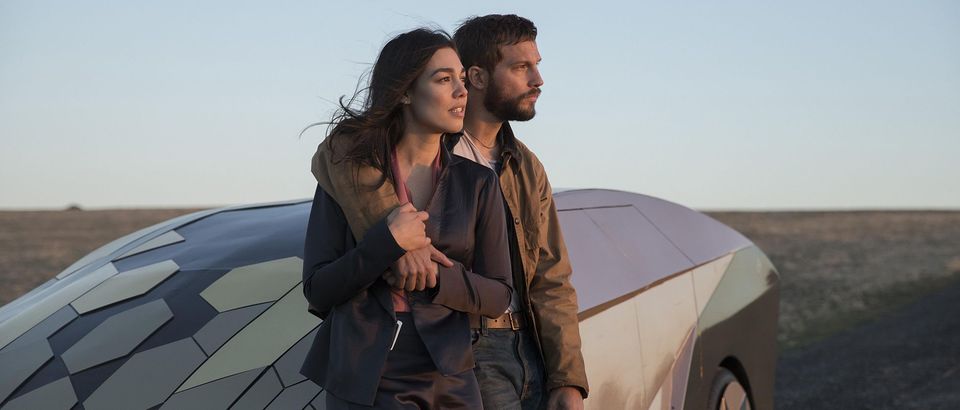
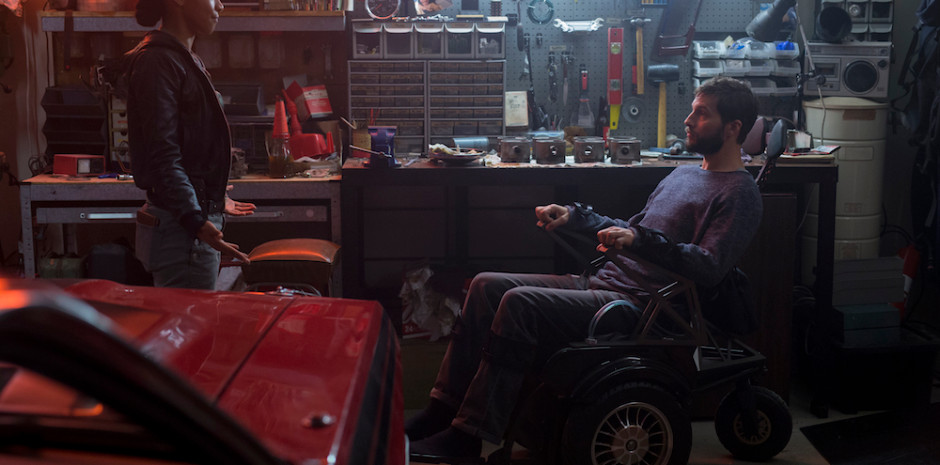
Upgrade’s story is very simple and similar in some ways to Death Wish (1974) and also the recent assassin shoot-em-up-actioner John Wick (2014). But the joy is not so much in the plot but in the exceptionally well devised character arc our hero, Grey Trace (Logan Marshall Green), goes through. Left a depressed, suicidal and a quadriplegic by a vicious robbery he is given the opportunity to revitalise his body by a computer genius, Eron Keen (Harrison Gilbertson). Hell-bent on finding the killers of his wife he agrees to surgery which will implant an artificially intelligent programme into his body and enable him to walk again. After which the story moves at some pace as he first comes to terms with the new technology, before his descent into the criminal underworld really gathers speed.
STEM itself is a fine supporting character too. There is much humour in Logan Marshall-Green’s performance and his interaction with the “HAL9000-like” computer in his head. Marshall-Green also excels physically during the brutal and fantastically choreographed fight scenes. Indeed, the bloody violence is a joy and I actually wanted more gore as less definitely WAS NOT more. But, overall, this is a fantastically enjoyable B-movie mash-up with an incredible look for such a low budget film. Shadow, fluorescent light, darkness, blood, metal and strobes all co-mingle to startling effect. The score by Jed Palmer is a brooding classic and some of the technological concepts relating to bionic and Nano-technology were very inventive. Above all else, it’s Whannell’s lean and mean machine of a script that wins the day; he certainly deserves to work on a bigger scale no doubt!
Produced by: Jason Blum, Spike Lee, Raymond Mansfield, Sean McKittrick, Jordan Peele, Shaun Redick, Jordan Peele
Written by: Charlie Wachtel, David Rabinowitz, Kevin Willmott, Spike Lee
Based on: Black Klansman by Ron Stallworth
Starring: John David Washington, Adam Driver, Laura Harrier, Topher Grace
Music by: Terence Blanchard
Cinematography: Chayse Irvin
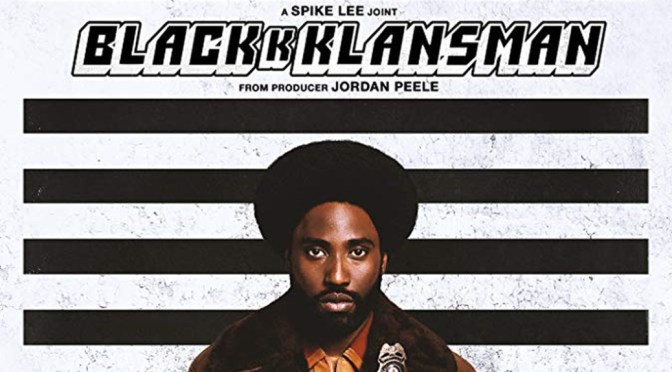
Let’s just say right off the bat that films like Black Klansman (2018) are the reason I still go to the cinema. Even from the trailer I’m like wow: a black police officer goes undercover and infiltrates the Ku Klux Klan!! That is a story I need to know about! How the hell did he do that? What follows then is the how, who, why and what-the-fuck-happened story of Ron Stallworth and how he managed to get between the “sheets”, as it were, of one of the nastiest clubs every to deface the fabric of society.
Racism or prejudice of any fashion is deplorable. There is no place for any oppression within a civilised society. Rising up out of the poisonous embers of defeated Confederate army members, in or around the 1860s, the Ku Klux Klan has sought to manifest hatred and bile since then. Murder, violence, vandalism, hangings and burning crosses became its’ nefarious stock and trade as it sought to make toxic the societal waters. In more recent decades, from the 1950s on, the Klan found a politicised voice seeking power through government. It is here that the story of the Black Klansman (2018) joins. It is 1979 and the civil rights movement continues seeking justice and equality for all. The Ku Klux Klan does not agree. They want purification. They are hatred.
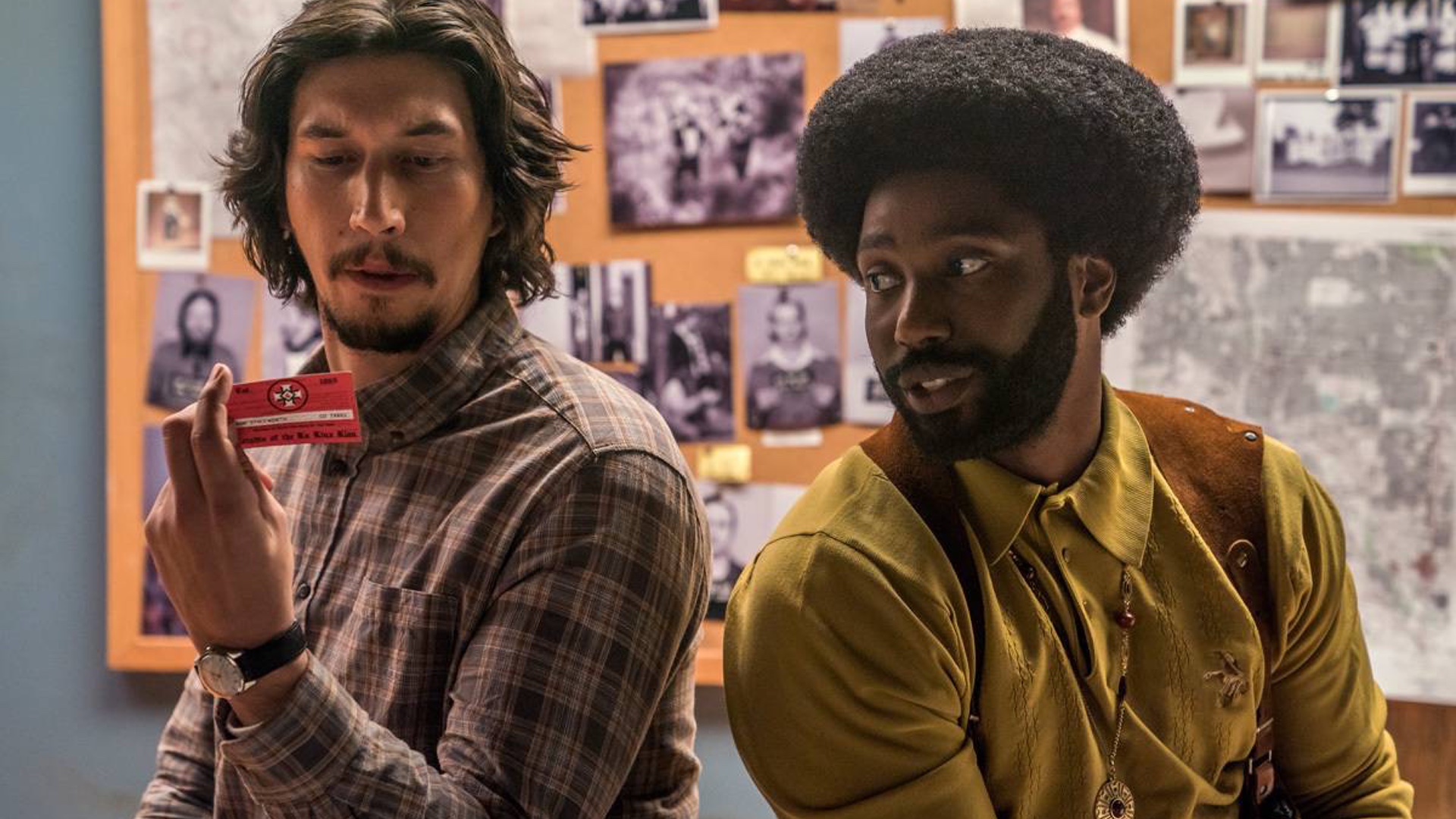
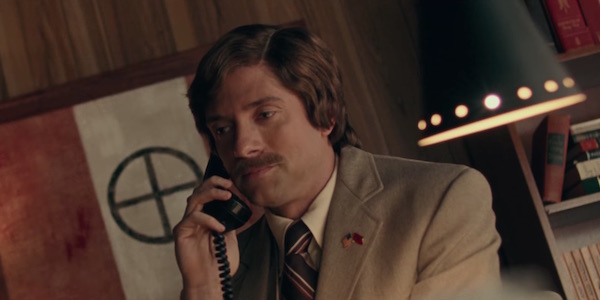
Already a trailblazer as the first black detective in Colorado Springs, Ron Stallworth proves he is an intelligent and reliable undercover officer. Then having seen an advert in the local newspaper for the KKK’s desire to recruit new members, he, rather incredibly, calls to make an appointment. From then on his unbelievable scheme gathers pace and a team is assigned to infiltrate the Klan. These include Flip Zimmerman, a Jewish cop, portrayed with his usual laidback brilliance by Adam Driver; and it is Zimmerman who provides the physical version of Ron Stallworth to the Klan members. Indeed, Driver and John David Washington, as the real Stallworth, form a great double-act during the operation. While Zimmerman takes his life in his hands spying on the fascistic group, Stallworth himself builds relationships on the phone with the head of the Klan Charter, David Duke. Duke is the political arm and portrayed with efficient zeal by Topher Grace.
Black Klansman (2018) is a complex film which expertly mixes many genres and tones. The humour of Stallworth’s phone calls to the KKK members are hilariously delivered by the charismatic Washington; while the horrific language of the Klan and danger Zimmerman finds himself in levies this humour, creating a flux of emotions. Moreover, Spike Lee, a tremendously confident director, infuses musical, thriller, Blaxploitation and documentary genre styles within the film, making it a joy to experience. One could argue the romantic subplot doesn’t quite flourish amidst the main plots but Laura Harrier gives a fine performance nonetheless within a great ensemble cast. Plus, I must not forget the killer soundtrack which bleeds soul and verve into every shot.
Spike Lee has never been afraid of experimenting with cinematic style and with this film his alchemy perfectly combines form and content. Overall, this is one of the best films I have seen in 2018, both entertaining and thought-provoking; as the final reels of news footage demonstrate that fascism is still among us and as dangerous as ever. Yet, this film is never preachy for the sake of it and uses humour most often as a weapon to undermine the senseless ideologies of the KKK. Indeed, in ridicule there is hope they may eventually be side-lined to the shadows of history.
Writer(s): Bruce Miller, Dorothy Fortenberry, Yahlin Chang, Kira Snyder, Eric Tuchmann
Director(s): Mike Barker, Kari Skogland, Jeremy Podeswa, Daina Reid etc.
Starring: Elisabeth Moss, Joseph Fiennes, Yvonne Strahovski, Alexis Bledel, Madeline Brewer, Ann Dowd, Max Minghella, Samira Wiley
Release: Hulu (USA), Channel 4 (UK)
** MAY CONTAIN SPOILERS **
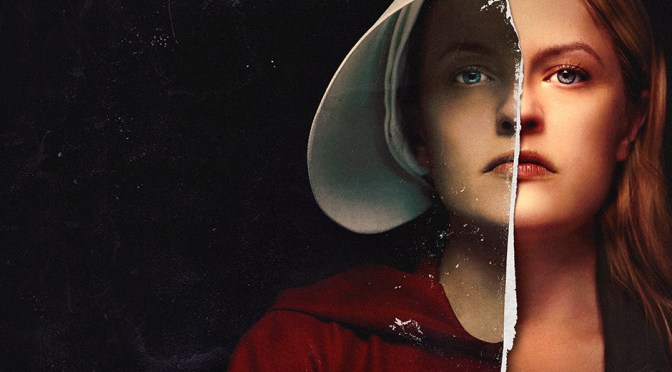
Misery, fascism and oppression have never been so stylish as in the Margaret Atwood televisual adaptation of her famous novel The Handmaid’s Tale. If you haven’t seen it then the story finds a major part of the U.S.A in the grip of a new, militarized and hierarchical regime following a brutal civil war. This new totalitarian state is called Gilead and is led by power-mad men who utilise religion, torture and weaponry to invoke their barbaric laws. Hang on, that sounds quite familiar!! Could the show be quite close to real life? From a certain perspective there is indeed more reality here than allegory.
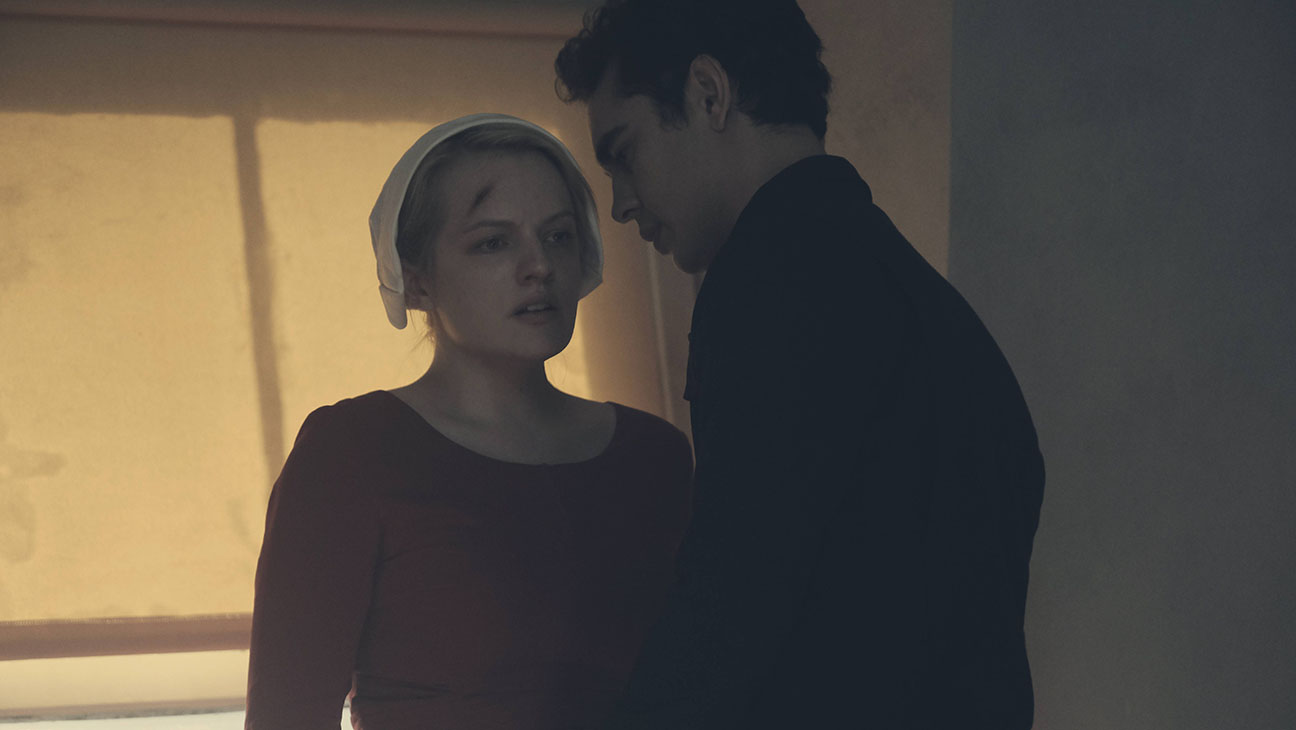
At the centre of the drama are the Handmaids. Due to falling fertility rates only certain women can give birth. Those that still can and considered to be dangerous to the Gilead hierarchy are imprisoned to the leaders’ houses and raped in a ritualistic monthly ordeal. The narrative focusses on the plight of June Osborne – now known as Offred / “Of Fred” – as she deals with having everything stripped away from her. She has no name, no identity, no freedom and above all else has been ripped away from her husband and child; only to be treated no better than a battery hen.
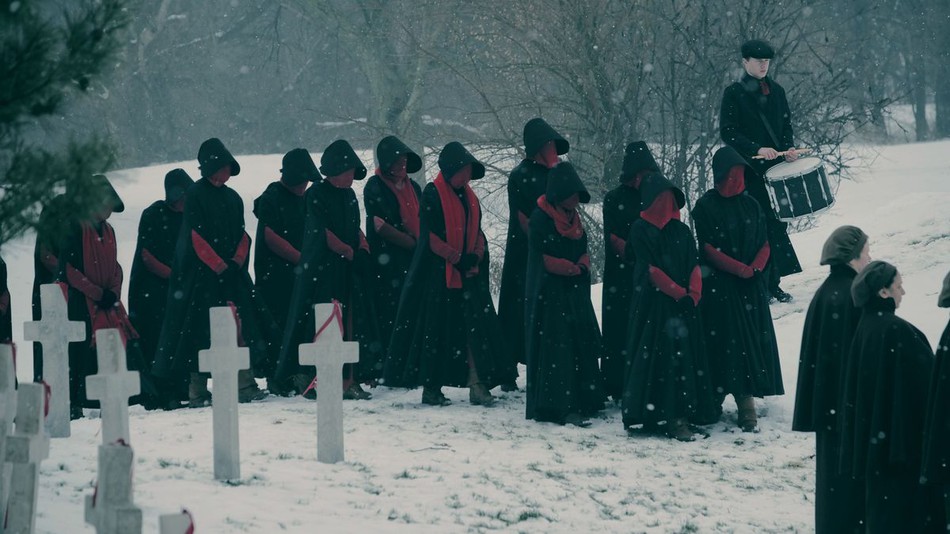
Elisabeth Moss gives an incredible performance as June / Offred. A versatile performer she imbues the complex pathos, strength and fragility required to convey the emotion of events within the story. The second season begins with a now pregnant June escaping from her captors. However, as the series progresses we know that she is not going to get away that easily. Because, this is a harsh drama. It doesn’t just smash home the viciousness of a society which oppresses women, it also illustrates the dangers of allowing fundamentalists to take total control. Executions by hanging and drowning are commonplace; and if you perpetually rebel an individual can be sent to The Colonies for a fate worse than death.
While the themes and events are sometimes difficult to stomach The Handmaid’s Tale is compelling viewing. Be warned though when one is close to a sliver of light at the end of the tunnel, that light is extinguished as darkness pervades. With a brilliant cast that includes Yvonne Strahovski, Joseph Fiennes and the always-excellent Ann Dowd, this is not just powerful storytelling, it’s incredibly interesting to look at too. The maroons, greens, greys, blacks and whites in the colour scheme create a poetic sense of beauty and doom. The direction, editing, lighting and soundtrack serve the narrative expertly as Margaret Atwood’s dystopic future is illustrated skilfully. Ultimately, in Elizabeth Moss’ portrayal of June Osborne we have a heroic and resilient character; one who, amidst all the suffering, is determined to survive and save those she loves. Praise be!
SIX OF THE BEST #11 – GAME OF THRONES (S: 1 – 7) – GREATEST BATTLES
Game of Thrones is one of the biggest literary and TV phenomena of recent years. It has entered Western cultures’ psyche offering a glut of: plotting, death, sex, class-divide, war, fantastical beasts and devilish sorcery! I think the main strength lies though in the wonderful writing that stems first from George R.R. Martin’s behemoth tomes and the incredible production values of the show. Plus, the casting, acting and directing is more often than not better than most cinema offerings.
For my latest article on the show I would like to look at six of the best battles. The spectacular fighting and warring is often amazing but what makes it work is the emotional impact you feel during the battles. The writers have always strove to build empathy, sympathy and antipathy with the characters so you feel strongly as to whether they live or die. Heroes, anti-heroes, friends and nemeses are often pitted against each other in the most violent fashion and epic quite frankly doesn’t cut it as a word to describe such rousing and emotional action.
**MAY CONTAIN SPOILERS**
BLACKWATER (S2 – EPISODE 9)
Arguably the first major battle epic of the whole show found Stannis Baratheon (Stephen Dillane) attacking King’s Landing in an attempt to smash through the Lannister’s stronghold and claim the Iron Throne. Shadowed boats float amidst the blaze of wildfire as men cut down other men on the shore. Tyrion (Peter Dinklage) gives a rousing speech as the Hound (Rory McCann) spites barbs and curses before finding fear in fire. Within the castle keep Cersei (Lena Headey) gets drunk and bullies Sansa (Sophie Turner) to tears. It’s a dirty, bloody and fiery battle tremendously edited and expertly directed by Neil Marshall.
THE MOUNTAIN AND THE VIPER (S4 – EPISODE 8)
While this fight between the Mountain (Hafþór Júlíus Björnsson) and Prince Oberyn Martell (Pedro Pascal) is nowhere near as big as the others on this list, it does not make it any less impactful or brutal. Their hand-to-hand trial by combat is a both a legal fight to determine Tyrion Lannister’s guilt for the crime of murder; and a personal revenge for Prince Oberyn for the death of a loved one. Pascal is absolutely superb in his performance throughout this season and the hatred he for the Lannister’s spits out of his whole being. He is a skilful fighter and linguist too but sometimes that just isn’t enough as hubris proves his downfall. This fight is as unforgettable as it is gruesome and the end is one I will never forget.
THE WATCHERS ON THE WALL (S4 – EPISODE 9)
With the White Walkers march painstakingly forward toward the realms of men and women, The Wildling tribes and their hordes of men, women, barbarians, cannibals, Worgs and giants descended upon The Wall in this brutal episode. Like the battle of Blackwater, Neil Marshall again directs the whole shebang as we get fifty or so minutes of spectacular cinematic action throughout. The brave soldiers of the Night’s Watch essentially re-enact the conflict of Rourke’s Drift – albeit with a massive wall in the way – as they fend off the Mance Ryder’s fierce Wildlings. The emotion is high to as Ygritte (Rose Leslie) once again comes face-to-face with her lover Jon Snow (Kit Harrington), as their savage romance ultimately proves to be a doomed one also. Its fire, it’s ice; it bones crunching and bloody to the end.
HARDHOME (S5 – EPISODE 8)
The walking, running and horse-riding dead finally reach some semblance of civilisation as they launch a vicious attack on the Wildling settlement of Hardhome. It’s a beautifully designed battle sequence which begins with unease between Jon Snow and his Wilding allies, before a deathly silence befalls the area. After which silence gives way to: the slow drumming of feet, the slippage of snow and then the racing army of skeletal men and women smashing toward the living. We knew the first major battle with the Night King and his acolytes would prove deadly and just the beginning of the cold war. As Jon Snow and the flame-haired Tormen take the fight to the zombie foes many Wildling lives are lay waste in the sodden black and red dirt of Hardhome; only for them to rise again.
BATTLE OF THE BASTARDS (S6 – EPISODE 9)
I recall seeing an advert for Sky TV and Game of Thrones at the cinema. They ran with the tagline “Believe in better!” over an image of Jon Snow, sword held in hands, while affront him is an army of Ramsey Bolton’s cavalry charging toward him. It is a moment of sheer breath-taking spectacle. Designing and filming war scenes must be some of the most difficult for filmmakers. The Game of Thrones directors are under added pressure to differentiate their images as well. In the Battle of the Bastards the director, Miguel Sapochnik, and his team of cameras, actors and stunt-people open with these incredible wide shots before taking us into the nitty gritty of the fight. It’s all shot from Jon’s perspective. He fights off foes on foot and horse; mud and blood splashes and soaks him until the Bolton army are pushing the Stark’s army back and back until all seems lost. There’s one further twist before the end of a quite amazing battle set-piece.
THE SPOILS OF WAR (S7 – EPISODE 4)
Season 7, while suffering from pacing issues due to a speeding up of the narrative, was arguably the most cinematic and spectacular season of all. There were so many great battles as in Stormborn, where Euron Greyjoy’s attacked his niece’s Yara’s ships in a burning row under moonlight. Moreover, in the episode Beyond the Wall, the magnificent seven (Hound, Jon Snow, Tormen, Gendry, Davos, Jorah etc.) of Game of Thrones went white-walker hunting and found themselves surrounded by the dead. But, arguably the most exhilarating battle was in The Spoils of War. Having been blindsided tactically by Jaime Lannister (Nikolaj Coster-Waldau), Daenerys (Emilia Clarke) went on a Dothraki and dragon offensive and set about destroying the Lannister army and allies. Like a medieval Saving Private Ryan (1998), we are thrown from the air to ground to right into the faces of the soldiers. The shot where we track Bronn (Jerome Flynn) as he attempts to load the Scorpion catapult is incredible. Emotions are high too as our favourite characters face off against each other as they all perilously come close to losing their lives. Kudos goes to the stunt-team, extras and crew for pulling off one of the most memorable battles ever committed to celluloid.
If you love the show like me, please check out my other articles on Game of Thrones listed below.