All posts by Paul. Writer and Filmmaker

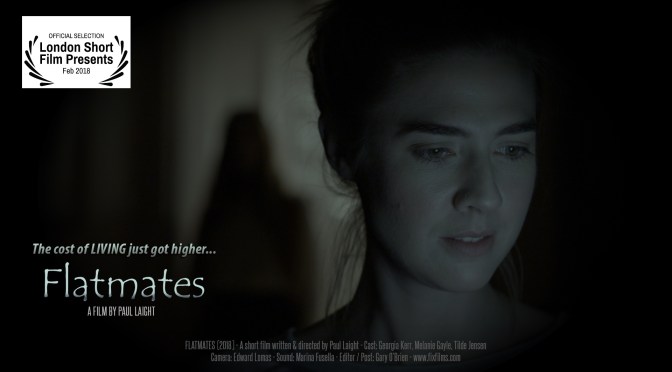
Paul is a writer and filmmaker. He has been committed to a writing career from a very early age. In 1997, he graduated from Staffordshire University with a first class degree in Film, TV and Radio Studies. His 2nd year short film project THE ARTS FILE won a Stoke-on-Trent Young Filmmaker's award. Subsequently, he worked as a Production Assistant on a number of promos and successfully completed a work placement at Sky Movies. In 2002, he gained an MA in Feature Film Screenwriting from Royal Holloway College of London and since graduation has written several feature and many short film scripts. In 2005, he formed FIX FILMS and has written and produced many shorts to date. He has also had several short screenplays commissioned by the Mountview Film Academy and film director Jonathan Wolff. His work can be found here - https://www.youtube.com/c/FixFilmsLtd Most recently Paul wrote, produced and directed his own short horror film called FLATMATES (2018). He has subsequently written and directed the films: MISDIRECTION (2019), TOLERANCE (2019) and YOU HAVE A NEW FOLLOWER (2020). His short films have had screenings worldwide at many film festivals. His latest works are the horror, INFERIS (2024), a set of short film monologues called SIN (2024) and THE SUICIDE SHIFT (2026). PAUL is a versatile and prolific writer with ideas in abundance and a very strong feel for structure, characterisation and dialogue. He favours thought-provoking and entertaining narratives with memorable characters, images and scenes. While he values all styles of film he tends toward genre movies as opposed to overtly "arty" cinema. Moreover, being involved in the producing, casting and crewing of low budget shorts has given him great experience and insight into the filmmaking process; improving his writing no end. From 2008 until 2020, Paul had been on the exciting merry-go-round that is the stand-up comedy circuit. He has done over 1000+ gigs. Venues included: Downstairs at the King's Head, The Comedy Pit, The Comedy Cafe, Soho Comedy, London Comedy Store, Electric Mouse Comedy, Streatham Comedy Club, Mirth Control, Comedy Heat, Lion's Den Comedy etc. He also ran two comedy nights: West End Comedy @ The Comedy Pub and West End Comedy @ The Brazen Head. He used to be the resident MC at Electric Mouse's show at The Fox, Palmers Green and got regular paid bookings as a comic and MC in and out of town. In 2014 and 2016 he performed at the Brighton Fringe Festival and Camden Fringe Festival in 2014. He performed open spots for the Banana Cabaret, The Comedy Store and Up the Creek comedy clubs in London. He is also a keen film and television seer and has a love for all genres of movies from art-house to low-budget z-movies. He also loves television of all kinds notably great comedies and dramas. He is an essayist expressing passionate analysis for all elements of cinema. Links Blog: www.thecinemafix.com YouTube: www.youtube.com/c/FixFilmsLtd

A BRIEF HISTORY OF META-TEXTUALITY WITHIN CINEMA

A BRIEF HISTORY OF META-TEXTUALITY WITHIN CINEMA 

**CONTAINS FILM & LITERARY SPOILERS**

With the multitude of means of telling stories from video-games, literature, television, plays, songs, poems and of course, cinema, we have collectively become very sophisticated and experienced in our ability to understand fictional representations. Indeed, storytellers have, for centuries, attempted to find more complex and interesting ways to structure a narrative. One such way is the “story within a story” framing device. This could be: a play within a play; play within a film; TV show within a TV show; book within a film; film within a film; and so on. Indeed, Christopher Nolan’s incredibly complex science-fiction heist thriller Inception (2010) blew the audience’s mind with a dream-within-a-dream-within-a-dream concept; creating an array of stunning framing devices.

Image result for INCEPTION

The history of storytelling as illustrated by the Routledge Encyclopaedia of Narrative Theory shows that as far back as the likes of: Chaucer’s Canterbury Tales, The Arabian Nights, Edgar Allan Poe’s Fall of the House of Usher and Tolkien’s Lord of the Rings and The Hobbit, narratives are framed from various narrator perspectives either through the devices of flashbacks and flash-forwards; stories within stories; or simply changing the narrator. In regard to stories within stories my first clear memory of such a framing device was in Shakespeare’s Hamlet. In the drama the Danish Prince attempts to shock a confession from his Mother and Uncle by getting the players to re-enact his father’s murder within their own play. Conversely, films within films have been a staple too of Hollywood and non-Hollywood film productions. Examples include: the classic musical Singing in the Rain (1952); Truffaut’s Day for Night (1973), Altman’s The Player (1992) to name but a few, are examples of filmmaking actually being the subject of the movie. As storytelling has further evolved, Harold Pinter’s adaptation of The French Lieutenant’s Woman (1981) shows both events of John Fowles original text, but at the same time, the author of the novel involved in a love affair thus reflecting events of the book. Lastly, postmodern films such as: The Purple Rose of Cairo (1984) and The Last Action Hero (1993) even have characters from the on-screen cinema world enter the “real” world and vice versa.

Image result for purple rose of cairo

Narrative, postmodern and semiotic theorists gather plays, stories and films which quote from other texts under the umbrella of meta-fiction. Indeed, many studies, including those by post-structuralists Julia Kristeva, Gerard Genette, and subsequently by academic Daniela Casellis, assert intertextuality or meta-textuality is a shaping of a text’s meaning by another text, as well as a production within texts. Meta-textuality often involves: allusion, quotation, pastiche, parody, homage and translation. It also enables the writer or director to differentiate their product and make it somehow fresh and contemporary. For example, Quentin Tarantino’s characters, while fictional, will make all kinds of references to: television shows, films, characters, hip-hop music and even fast food joints because that’s what real people talk about every-day. While his films themselves work on a meta-textual level within: War, Westerns, crime thrillers, Kung Fu and many other genres, his characters exist in the now with their strong knowledge of popular culture.

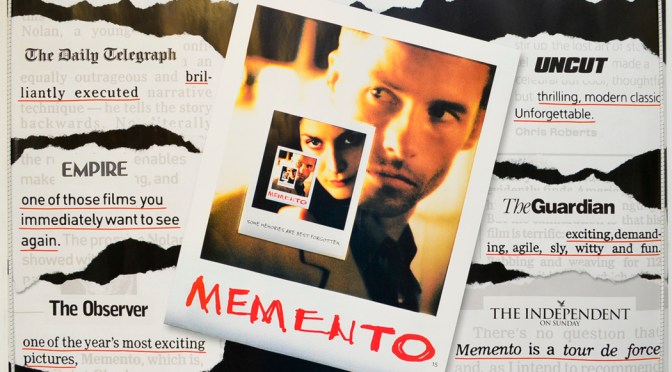
While meta-textuality is a complex cultural theory with many different strands, I have identified four interconnecting levels within texts such as films and television.  The first level of meta-textuality is structural. Incorporating flashbacks, dreams, imagination, narration and other textual framing devices, structural meta-textuality allows the filmmaker to play and bend linearity to create a fascinating means of telling a story. Moreover, it also asks the audience to question the very nature of storytelling itself. A simple example of structural meta-textuality is in The Princess Bride (1987) where the wonderful fairy-tale stories are based around a Grandfather telling his sick grandson tales of adventure and romance. More complex is Christopher Nolan’s structural representations. His early noir classic Memento (2000) is famously told in reverse chronological fashion, thus subverting the very nature of linear storytelling. His anti-hero, Leonard Shelby, has no means of making new memories thus via tattoos and Polaroid photos he constructs a present day movie of his own life in visual form. As the story unfolds we flash back and forth to a film within a film about a character called Sammy Jankis. Yet it turns out that Sammy is an imagined character used to suppress a terrible event in Leonard’s life and the film within a film is in fact the imagined vision of an unreliable narrator.

Image result for MEMENTO PHOTOS

This second level is diegetic meta-textuality. This, on a basic level, refers to texts within texts which while featured within the story do not really comment on the text. These could involve the characters visiting the cinema, reading a book or watching a television show. The third is thematic meta-textuality where the texts within the texts directly impact the narrative, characters and themes. For example, any number of films about filmmaking or film distribution process could be classed as thematically meta-textual. Cinema releases such as: the Scream (1996) franchise, Bowfinger (1999), Boogie Nights (1997), Ed Wood, Living In Oblivion (1995), State and Main (2000), Berberian Sound Studio (2012), The Disaster Artist (2017), to name but a few, are great examples of films about filmmaking which exhibit thematic meta-fictional tropes.

Image result for disaster artist

The Disaster Artist (2017) takes great delight in paying homage to Tommy Wiseau’s The Room (2003); a film which is often hailed as one of the worst ever made. The film shows how Tommy Wiseau came to make The Room (2003) and the disaster he encounters. Meta-textually, comedically and entertainment-wise this film is a highly satisfying cinematic experience. Even as the credits roll the sequence which shows scenes from The Room and re-enactments from The Disaster Artist are a joy to behold. Also thematically strong is Scream. It is especially clever because the characters are aware of the fact they are under threat and attempt to avoid death by making reference to various horror film tropes. Likewise, Tarantino’s uber-meta war film Inglourious Basterds (2009) features the fictional film Nations Pride, which both satirizes the German propaganda machine and the violent nature of war films in general. Tarantino is so obsessed by cinema that his wish fulfilment bloodlust even sees the Nazi hordes burned and shot down in an actual cinema.

Image result for inglourious basterds CINEMA

The final level is emotional meta-textuality. This idea is slightly more open to interpretation because one could argue that all aspects of storytelling are intended to illicit emotion in the audience. However, I am referring to films where the meta-fictional aspects have a deep emotional or dramatic impact on the characters. Such examples include the intriguing Will Ferrell dramedy called Stranger Than Fiction (2006). Ferrell portrays Harold Strick who suddenly finds his life is being narrated by an omniscient storyteller, who turns out to be Emma Thompson’s author. Here the narrator is presented as a God-like power dictating what she thinks is a fictional character in Strick. Ultimately, fiction and the “real” world collide in an emotionally satisfying meta-textual story of discovery and mid-life crises. Similar, but even darker in its representation of emotional meta-textuality is Tom Ford’s adaptation Nocturnal Animals (2016), from a novel by Austin Wright. Here Amy Adams character, an Art gallery owner is sent a novel by her former husband, Jake Gyllenhaal. As she reads the manuscript a film within a film opens up which shows events that symbolise the wrongs he feels she has done to him. In the final revelatory scenes the emotional impact is damning to her life decisions and she is left alone, in the dark, with her own guilty thoughts.

Image result for nocturnal animals

In keeping with historical and literary modes of storytelling many films will deliver their stories in a meta-textual fashion using structural, diegetic, extra-diegetic and emotional methods. Furthermore, some films will utilise these all at the same time. One such screenwriter and filmmaker is Charlie Kaufman. His works such as: Being John Malkovich (1999), Eternal Sunshine of the Spotless Mind (2004) and Adaptation (2002) offer mind-blowing meta-textuality. Adaptation, starring Nicolas Cage, for example, features a screenwriter called Charlie Kaufmann trying to adapt a book called The Orchid Thief but suffering writer’s block. Instead he begins to write a screenplay about a screenwriter struggling to write an adaptation of The Orchid Thief. Did he I also mention he has a twin brother called Donald who is also a screenwriter. Now, I could begin to analyse Adaptation but that would be a whole different story within and story within a story. . .

10-meta-movies-this-is-the-end

HEREDITARY (2018) – CINEMA REVIEW

HEREDITARY (2018) – CINEMA REVIEW

Directed by: Ari Aster

Produced by: Kevin Frakes, Ridley Scott, Buddy Patrick

Written by: Ari Aster

Starring: Toni Collette, Alex Wolff, Milly Shapiro, Ann Dowd, Gabriel Byrne

Music by: Colin Stetson

Cinematography: Pawel Pogorzelski

**MAY CONTAIN SPOILERS**

hereditary-trailer_0

I’m tempted to do two reviews of this movie. Because there’s a minority part of me that feels its bravura and beautifully crafted horror film; but the majority part just could not get over the illogical and surreal elements which unhinge the carefully plotted family tragedy it promised to be. Nonetheless, the writer and director Ari Aster is clearly an ultra-talented filmmaker who deserves much praise for creating a series of impressively creepy scenes throughout. Still, he does throw a lot of ideas at the wall hoping they stick so many critics will probably love Hereditary, unfortunately it lost me some way through due to a major plot and tonal turn which, while foreshadowed, did not really make any emotional sense.

Hereditary-trailer_1

The story begins with the Graham family mourning the death of Annie Graham’s (Toni Collette) mother. From beginning to the end Collette’s portrayal is absolutely incredible and she deserves any awards that are coming to her. Indeed, Collette anchors the film with moving and incredibly dramatic performance. Her character is very empathetic suffering tragedy after tragedy and attempting to come to terms with the devastation life brings.  She is ably supported by Gabriel Byrne as her husband; while Alex Wolff and Milly Shapiro offer excellent support as their troubled kids. Shapiro especially is well cast as the unstable teenage girl who may or may not have some darker force within her.

The film begins slowly and creeps along for forty minutes or so building dread and atmosphere. Collette has some fine speeches about grief and family relationships and this is where the writing is very strong. These scenes showcase Collette’s acting ability before the action takes a vicious twist with one grandstanding horror moment half-way through. This is where, in my view, the film suddenly started to become lop-sided and full of debateable plot-holes. Don’t get me wrong, if you read the film as a supernatural fantasy full of surreal and dream logic like the cinema of Luis Bunuel and David Lynch, you can swallow much of what happens in the final act.  Moreover, symbolically and thematically Hereditary is very strong with issues relating to grief and dysfunctional family relationship very well explored. However, due to a ridiculous final act where the film moves away from this my empathy for the family was lost in a number of wildly over-the-top scenes, which while scary, made little sense in my humble opinion.

Hereditary-Trailer

Hereditary (2018) is a “Mother” of a horror film!!  Indeed, it has much in common with last year’s divisive work of cinema directed by Darren Aronofsky called Mother (2017). Like Mother (2017) it is a brilliantly directed horror story with great acting throughout, that alas, falls apart at the end with narrative illogic, plot-holes and a laughable denouement. It’s a shame because the first half of Hereditary is beautifully set up. The visual style involving miniatures, shadows, weird dolls’ head and bird decapitations is creepy and very impressive. However, the filmmaker’s fantastic work is destabilised by a narrative desire to twist the film into something pretty crazy. Yet, Ari Aster deserves much praise for taking risks in the horror genre and his and Collette’s craft are of the highest order; at least until the ending.

(Mark 7.5 out of 11)

THE ASSASSINATION OF GIANNI VERSACE (2018) – TV SHOW REVIEW

THE ASSASSINATION OF GIANNI VERSACE (2018) – TV SHOW REVIEW

Executive Producer: Ryan Murphy

Writer: Tom Robb Smith

Based on: Vulgar Favours: Andrew Cunanan, Gianni Versace, and the Largest Failed Manhunt in U.S. History by Maureen Orth

Original Network: FX / FOX

Starring: Edgar Ramírez, Darren Criss, Ricky Martin, Penelope Cruz, Finn Wittrock

Screen-Shot-2018-02-28-at-15.37.11-b57d72d.png

I watch a lot of telly but don’t always review stuff because I don’t have time. The Assassination of Gianni Versace was one of those shows which I enjoyed when on the BBC but did not feel like reviewing. But then it kind of stuck with me; it nagged at my psyche as a chilling, violent and intense work of television drama. Hence I thought it was worth recommending it for those who are interested in excellent crime stories.

The Assassination of Gianni Versace: American Crime Story is the second season of the FX true crime anthology series American Crime Story. It explores, over nine compelling episodes, the murder of designer Gianni Versace by spree killer Andrew Cunanan. Those coming to the show looking for an in depth story about Gianni Versace – as a man or designer – may be slightly disappointed.  Save for three or four episodes the lion’s share of the drama is about his killer, Cunanan.  What we do see of Versace and his sister Donatella, as expertly portrayed by Edgar Ramirez and Penelope Cruz, is a man who grew up from humble beginnings to become one of the finest fashion designers of all time. Personally, fashion does not interest me so I was pleased that world did not dominate the focus of the story.

american-crime-story-trailer

The main focus, however, was the spree killer Andrew Cunanan. Writer Tom Robb Smith, adapting from Maureen Orth’s book takes many risks, notably telling Cunanan’s story in reverse chronological order. I’m not always a fan of non-linear storytelling for the sake of it, however, beginning with Versace’s murder and then flashing backwards revealing, episode by episode, the sad demise of each of his victims made for absorbing viewing. Darren Criss as Cunanan is absolutely brilliant. His performance of the fantasist murderer is equally scary, embarrassing and darkly funny at times.

Evoking the characterisation of Christian Bale’s Patrick Bateman, Criss nails the confidence and desperation of a very conflicted person. His Cunanan is not just a straightforward psycho but a rather complex loner with delusions of grandeur. The reveal in the later episodes that go some way to explain Cunanan’s psychosis are especially chilling. The show is also very honest about Cunanan’s sexuality. Via Cunanan’s, and other characters’ experience, the representation of gay men in America is illustrated in a fascinating way. Finn Wittrock, Mike Farrell, and Cody Fern, who portray three of Cunanan’s victims, are very empathetic as they battle the prejudices and expectations of gay men in society. It is a tragedy their lives, and others including Versace, were so violently ended at Cunanan’s hands.

landscape-1516271097-darren-criss-american-crime-story

Overall, I was extremely absorbed by The Assassination of Gianni Versace. While not as grandstanding as The People Versus O.J. Simpson (2016), this character drama both shocked and stunned in equal measure; thanks to an excellent script and Criss’ haunting acting performance. Also, kudos goes to show-runner Ryan Murphy. This uber-producer is best known for creating/co-creating/producing a number of successful television series, including the FX medical drama Nip/Tuck (2003–10), the Fox musical comedy-drama Glee (2009–15), the FX anthology series American Horror Story (2011–present); Feud (2017–present); and with this latest season of American Crime Story (2016–present) he has overseen another memorable televisual experience.

Mark: 8.5 out of 11

DETECTORISTS  (2014 –      ) –SEASONS 1 and 2 – BBC TV SHOW REVIEW

DETECTORISTS  (2014 –      ) – SEASONS 1 and 2 – TV COMEDY REVIEW

Written by: Mackenzie Crook

Directed by: Mackenzie Crook

Cast: Mackenzie Crook, Toby Jones, Rachael Stirling, Aimee-Ffion Edwards, Gerard Horan, Sophie Thompson, Pearce Quigley, Divian Ladwa

Opening theme: “Detectorists” by Johnny Flynn

detectorists_s3

Picture the scene: a bird’s eye view of two men pacing slowly across a lush, rural landscape. The green grass shines and ploughed dirt sits proud flanked by golden wheat fields. As an acoustic guitar chimes and lilting mellifluous vocals of Johnny Flynn drift across the countryside vista, we are serenely introduced to our “heroes”, Andy and Lance, the Detectorists. Serene is probably the perfect word to describe this character comedy. Gentle too. It moves at its own perfect pace and gives us something of a break from faster-paced, heightened, rude and farcical nature of other more urban-based comedies. There are obviously jokes but never at the expense of well developed character moments and empathy.

detectorists (1)

Set in the fictitious town of Danebury, in the county of Essex, this wonderfully dry comedic delight was created by Mackenzie Crook. Probably best known for playing David Brent’s bowl-haired “yes-man” Gareth, from seminal sitcom The Office, plus many other film and television roles, Crook has fashioned a brilliant show that exudes a quiet confidence in both writing and direction. He himself plays a budding archaeologist Andy, a non-careerist beta male who pays the rent via a series of agency jobs; while his school teacher partner, Becky, (Rachael Stirling) provides the ambition and drive in the relationship. His best mate, Lance, is portrayed with nuanced comedic timing by character actor, Toby Jones. Lance drives a forklift and hankers after his ex-wife who runs a local holistic shop. Plus, these two ordinary blokes happen to be part of the DMDC – ‘Danebury Metal Detecting Club.’

o-DETECTORISTS-570

One may think that the whole premise of a rural metal detecting club is slightly underwhelming and parochial; and to be honest you would be right. But herein lays the strength of the show because the peace and quiet between the narrative and comedy is very hypnotic. The plot in Season 1 finds the DMDC in direct competition with stupidly named “Antiqui-Searchers” over a big historical find; while Season 2 has them searching for crash-landed WW2 German bomber. Amidst these strands the loves and lives of our protagonists and club-members intertwine carefully; as a brilliant supporting cast breathe life into an array of oddball and eccentric characters.

Overall, I found Detectorists very funny throughout creating real inner warmth.  I mean, as Andy and Lance softly walk across the landscape, discussing last night’s University Challenge, scanning for that possible jackpot of medieval gold, nothing very much happens. But there’s The Detectorists’ main strength, nothing much happens with characters you really love spending time with.

(Mark: 9 out of 11)

The Detectorists — Seasons 1 – 3 are available on DVD/BLU RAY

Seasons 1 and 2 are available to stream on NETFLIX.           

THE ORVILLE (2017) – SEASON 1 – TV SHOW REVIEW

THE ORVILLE (2017) – SEASON 1 – TV SHOW REVIEW

Created by: Seth MacFarlane

Starring: Seth MacFarlane, Adrianne Palicki, Penny Johnson Jerald, Scott Grimes, Peter Macon, Halston Sage, J. Lee, Mark Jackson

Executive producer(s): Seth MacFarlane, Brannon Braga, David A. Goodman, Jason Clark, Jon Favreau (pilot), Liz Heldens, Lili Fuller

Production company(s): Fuzzy Door Productions; 20th Century Fox Television

**MAY CONTAIN SPOILERS**

Orville-Bridge

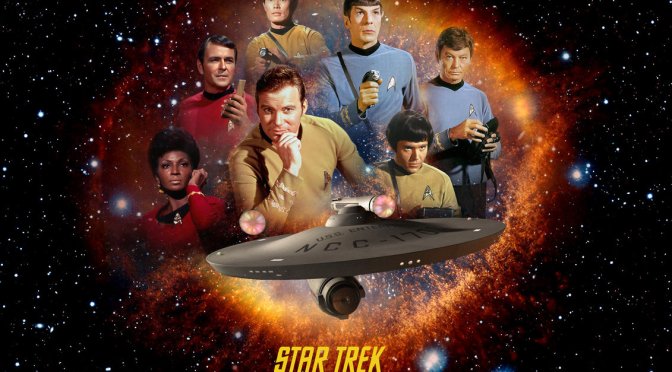
If you search YouTube for Star Trek fan films you will find hundreds of them. In fact, I myself have written and produced one myself called Chance Encounter (2016). However, you will not find a shiny and more expensive Star Trek homage and fan film – in all but name – than Fox’s big budget science fiction series, The Orville. It was written and created by uber-talented Seth MacFarlane and joins the stable of shows and films he has been involved in, including: Family Guy, American Dad, Ted (2012) and A Million Ways to Die in the West (2014).

The Orville is set on the titular U.S.S. Orville (ECV-197), a mid-level exploratory space vessel in the Planetary Union, a 25th-century interstellar alliance of Earth and many other planets. Seth McFarlane portrays Ed Mercer, a journeyman officer who is depressed due to his wife’s infidelity, and constantly turning up to work hungover and uninterested. A chance at redemption comes when he offered the captaincy of The Orville.  He is then joined by his first officer, Kelly Grayson (Adrianne Palicki), who so happens to be his ex-wife. This slightly clichéd dramatic turn does actually become a positive fulcrum for the twelve episode run, providing many jokes and bitter asides between the two. Their dedicated crew is a mix of aliens, humans and a genius robot called Isaac; who may as well be called Data to be honest.

the-orville-fox-tv-show.png

The Orville is an interesting show to review because I could understand someone watching it randomly because of say, liking Family Guy or Ted, and then not enjoying this at all. Because aside from the odd sight gag or wicked one-liner, this is not all out comedy. The Orville is instead a really solid science fiction show which mixes satire, action, comedy and drama. Indeed, while there is much to smile at, many episodes feature contemporary moral dilemmas involving: relationships, religion, social media, race, gender issues and sex. Most of all this is Seth Mcfarlane’s tribute to Star Trek. He even goes as far to enlist Trek producer Brannon Braga to executive produce and helm several episodes; while Jonathan Frakes also directs episode 6 – Pria.

Overall, I really enjoyed the show because of its similarity to Star Trek and because the characters drew me in tooSeth Macfarlane is not the greatest actor but he is a very likeable everyman. He is also ably assisted by a very committed supporting cast and the slick production. Many episodes whizz along at a decent pace and it doesn’t take itself too seriously either. There’s some excellent supporting characters along the way portrayed by Charlize Theron and Rob Lowe. There’s also some brilliant science fiction stuff which I loved including: space weapons; space ships; time travel; worm holes; ion storms; alien creatures; special powers; cannibal monsters; and hologram devices. Basically everything that Star Trek had The Orville has and that’s why I enjoyed it.

(Mark: 8.5 out of 11)

SKY CINEMA SPECIAL including film reviews of: ATOMIC BLONDE (2017), FATE OF THE FURIOUS (2017), MAUDIE (2017), SHOT CALLER and more.

SKY CINEMA SPECIAL REVIEWS

There are so many films released at the cinema each year that it’s impossible to catch them all. Unfortunately, for me, and billions across the world that damned thing called employment gets in the way. Nonetheless, there are many other avenues to catch up with movies and SKY CINEMA is one such route. So, here are some reviews of films I have caught up with recently on SKY, with the usual marks out of eleven.

**MAY CONTAIN SPOILERS**

AFTER THE STORM (2016)

This Japanese family drama is slow moving but quietly unfolds in a compelling fashion. Former prize-winning novelist, Ryota (Hiroshi Abe), is a gambling addict “researching” his next book and making ends meet with private detective work. He tries to become a better son and father but his hereditary flaws and addiction haunt him. That’s about it for Hirokazu Kore-eda’s character drama which features some excellent dialogue and a wonderful acting performance from Ryota’s mother, portrayed by Kirin Kiki. (Mark: 8.5 out of 11)

ATOMIC BLONDE (2017)

Charlize Theron portrays a sullen yet kick-ass spy in this style-over-substance-action-thriller. Directed by David Leitch, who also helmed John Wick 2 (2016), rather amusingly doesn’t even have the depth of Keanu Reeves’ B-movie-assassin-classics. Adapted from the comic book novel The Coldest City (2012) and set in late 1980s Berlin, it uses the unstable politics of the time loosely as a means to hang a slender narrative on. This essentially is all rocking soundtrack, kinetic action, and sexy fighting with NO story. Theron and co-star James McAvoy do their best with the spy McGuffins but it’s main redeeming feature is a barnstorming “one-take” fight scene in the middle of the film. Now THAT rocks!  (Mark: 7 out of 11)

THE FATE OF THE FURIOUS (2017)

Charlize Theron pops up again in eighth film of the franchise, this time as cyber-baddie hell-bent on doing something bad for some heinous reason. Anyway, her fiendish plot is just an excuse to blow up cars, planes, jails, roads, buildings, and submarines in the usual explosive fashion. Vin Diesel, Jason Statham, Michelle Rodriguez, Tyrese Gibson, Dwayne “The Rock” Johnson and the rest of the team (minus Paul Walker R.I.P) are all back trying to stop her. There’s something both obscene and incredibly satisfying witnessing stunts and action this over-the-top!  I mean the carnage present in the final-submarine-versus-vehicle-set-piece is absolutely breath-taking and its worth watching the film for that alone.  (Mark: 7.5 out of 11)

MAUDIE (2016)

Since her striking performance in Mike Leigh’s excellent character piece Happy Go Lucky (2008), Sally Hawkins has been carving out quite the number of brilliant acting roles. Perhaps overshadowed by the success of the big budget monster/love story The Shape of Water (2017), the low-budget Maudie features another stunning Hawkins turn. She is quietly powerful in the role of Nova Scotia painter Maud Dowling. Maud came to mild prominence for her painting in the late 1960s and became somewhat of a cult treasure. Hawkins and Ethan Hawke steal the acting honours as the unlikely husband and wife, as Aisling Walsh directs a fine tribute to a small woman with a massive artistic talent. (Mark: 8.5 out of 11)

SHOT CALLER (2017)

This is a hard-boiled and brutal crime thriller which moves very slowly but with highly confident direction. Ric Roman Waugh has marshalled a very decent B-movie with Game of Thrones Nikolaj Coster-Waldaj excelling in the muscular lead role. He portrays a banker sent down for manslaughter who suddenly finds himself at the mercy of white supremacist gangs. Rather than lay down and get screwed he jumps straight in and sets in motion a gruesome set of events. Jon Bernthal pops up as a hard-piped criminal while Lake Bell is excellent as the anti-hero’s long-suffering wife. You need some patience but ultimately the ending pays off in an enjoyable, if incredibly contrived, finale. (Mark: 7.5 out of 11)

ROUGH NIGHT (2017)

This ridiculous over-the-top mixture of sex, crime and comedy rips off Very Bad Things (1998) and The Hangover (2009), with a smattering of Weekend at Bernie’s (1989). Having said that I really enjoyed it despite the incredibly broad comedy and implausible nature of the plot which takes five buddies on a Bachelorette party and throws a dead hooker into the mix. Zoe Kravitz, Scarlet Johannsson, Kate McKinnon, Illana Glazer and Jillian Bell, while slumming it in this often-filthy material, commit to their roles with ludicrous abandon. While very derivative I couldn’t help but laugh on several occasions, most notably at Ty Burrell and Demi Moore as the lascivious “sex-people” neighbours.  (Mark: 7 out of 11)

ON CHESIL BEACH (2017) – CINEMA REVIEW

ON CHESIL BEACH (2017) – CINEMA REVIEW

Directed by: Dominic Cooke

Produced by: Elizabeth Karlsen, Stephen Woolley

Screenplay by: Ian McEwan (Based on: On Chesil Beach by Ian McEwan)

Starring: Saoirse Ronan, Billy Howle, Emily Watson, Anne-Marie Duff, Samuel West, Adrian Scarborough

Cinematography: Sean Bobbitt

**MAY CONTAIN SPOILERS**

on-chesil-beach-600x450

I watch a lot of films. I also write screenplays. Indeed, over the last twenty-five years I have studied and read many “how to” write screenplay courses, books, and articles. One of the major rules of screenwriting, as opposed to radio and television writing is to SHOW and not tell. Deliver your story via the images, performance and shot composition rather than obvious dialogue which spells everything out. As a writer of incredible talent Ian McEwan has, along with director Dominic Cooke and their editor, created an intriguing story of lost love and romance. It flashes forward and back between the past and present beautifully and certainly shows rather than tells the story in a less than obvious fashion. In fact, for me it was ultimately TOO subtle in delivery and the emotional ramifications of certain events are lost in the subtext.

saoirseyouhavemyheart

The story begins in the 1960s as newlyweds, Florence and Edward, nervously entwine on their wedding day. As portrayed by the imperious Saoirse Ronan and compelling Billy Howle we are immediately empathetic of their situation and time. Because traditionally, unlike the more sexualised mores of today, religion and social convention would dictate that the couple were more likely to be virgins. Therefore the nervous glances and small-talk slowly build a sexual tension creating an incredibly awkward and embarrassing mid-point moment between the characters. McEwan’s script also flashes back to the past establishing how the characters met. Edward is a lower-middle class boy from a rural background while Florence’s family are more upper-middle class capitalists. As presented in other McEwan works class tensions also propel the drama as Florence’s family look down on Edward somewhat.

There is a lot of depth within the characterisations notably from Ann-Marie McDuff as Edward’s unfortunate mother. Although, at times I wasn’t sure how her mental condition was linked to the themes of the piece, the performance of the actor alone was fascinating throughout. Ultimately, it’s a film about love, loss and terrible secrets; notably how past events can haunt the present. However, in choosing to bury the big reveal within a blink-and-you-miss-it flashback, the poetic editing, in my opinion, took away from the dramatic power and potential catharsis in denouement. On occasions telling us as well as showing us can empower an audience to feel even more for the characters.

lg_b549311376ba-on-chesil-beach-tiff-still-1200x520

Dominic Cooke marshals the film with an assured hand as befits an experienced theatre director. Ronan and Howle give brilliant performances. In fact, I don’t think there is a better and more consistent young actor than Saoirse Ronan. In films such as: Atonement (2007), Hanna (2011), Brooklyn (2015), Lady Bird (2017) and now On Chesil Beach (2017), she has proved herself capable of capturing depth and emotional power with her performances. Ronan and her romantic counterpart, Howle, make the film worthy of your attention even if I was left mildly bewildered, valiantly trying to work out why their characters’ relationship was doomed to fail.

(Mark: 8 out of 11)

SOLO: A STAR WARS STORY (2018) – MOVIE REVIEW

SOLO: A STAR WARS STORY (2018) – MOVIE REVIEW

Directed by: Ron Howard

Produced by: Kathleen Kennedy, Allison Shearmur. Simon Emanuel

Written by: Jonathan Kasdan, Lawrence Kasdan

Based on Characters: by George Lucas

Starring: Alden Ehrenreich, Woody Harrelson, Emilia Clarke, Donald Glover, Thandie Newton, Phoebe Waller-Bridge, Joonas Suotamo, Paul Bettany

**MAY CONTAIN SPOILERS**

SOLO-ew-han-tall

Anyone for another round of Star Wars bingo?

In a particularly biting satirical swipe at George Lucas and Steven Spielberg, the South Park episodes Free Hat (Season 6) and the latter episode The China Probrem (Season 12), criticized the filmmakers for digitally altering their beloved Indiana Jones films on re-re-re-re-release. The China Probrem took the barbs even further (too far one could argue) by showing a lascivious Lucas/Spielberg raping Indiana Jones. I mean, Indiana Jones and the Crystal Skulls (2008) wasn’t great but to suggest its sexual assault on one’s childhood memories and a beloved character did have me spewing out my metaphorical popcorn in shock.

Moreover, South Park further lambasted the avarice of corporate culture, specifically Disney, and their purchase of Lucasfilm in the excellent episode from Season 16 Obama Wins! All this proves is that controversial and offensive satire cannot and will not change the Panzer-like “progress” of the Mickey Mouse machine. They own many of the biggest film franchises and absolutely will not stop until they have our money. What can you do? Do you rebel against the Disney Death Star or do you join the dark side?  After all, it could be fun.

https___blueprint-api-production.s3.amazonaws.com_uploads_card_image_781516_8bbb702d-8411-43df-b628-7a2fdc7820d0

Indeed, after all the apparent production shenanigans reported on the set of Solo (2018) – notably the “sacking” of Phil Lord and Christopher Miller – I can advise that this latest Star Wars prequel is a lot of fun. That darned elephant in the room still haunts the film though and that is the nature of prequels. Whatever danger you put your protagonists in you know they are going to survive; thus, tension is very often lost within the action and drama. Having said that Star Wars fans will have a lot of joy ticking off HOW Han Solo’s early life began and how he originated into one of the best characters of the whole science-fantasy series.

Characterisation is in fact one of the strengths of the film in my view. Solo comes from sewers of a guttural world and chances and gambles his way through the story but with strong motivation. His devotion to Qi’ra (Emilia Clarke) is a powerful spine with which to hang the excellent action set-pieces on. Their romance and the chemistry between Clarke and Ehrenreich is palpable throughout and drives the story into interesting areas. Alden Ehrenreich, I think, is a bona fide movie star. He shone in Hail Caesar (2016) and does so as Han Solo. Whatever the difficulties were on-set I think his likeability and acting style brings handsome energy and humour to the role. I especially loved the gambling-fly-by-the-seat-of-his-pants nature of Solo’s character which owes much to Lucas’ original scripts.

Overall, Solo is a very entertaining join-the-dots prequel that ticks off all the by-the-numbers Star Wars scenes, tropes and characters including: the Millennium Falcon, Chewbacca, the Empire, Lando, the Kessel Run, plus many more to keep the fans happy. Lastly, Solo works very well as both an origins story and a fantastic fusion of heist and Western films. The supporting cast all deliver in a positive way, notably the charismatic Donald Glover and always reliable Woody Harrelson. While you can often see an element of chaos in certain scenes I think the steady directing hand of Ron Howard has delivered a franchise film which will safely keep Disney’s gravy train on track. In fact, both prequels have been, in my humble opinion, better than The Force Awakens (2015) and The Last Jedi (2017), because Solo (2018) and Rogue One (2016), actually have narratives which made some emotional sense.

(Mark: 8 out of 11)

THE HOLY CORE – A STAR TREK FAN FILM – PRODUCTION UPDATE

THE HOLY CORE – A STAR TREK FAN FILM – PRODUCTION UPDATE

2018_TheHolyCore_Teaser_Poster.png

Just a quick update to say that another short screenplay I have co-written has just been funded and has entered the pre-production phase. It’s a follow up to our Star Trek fan film Chance Encounter called The Holy Core.

Alas, the Kickstarter campaign did not reach its target but out of the blue a private donor gifted the full budget to enable Gary and Fix Films to make the production a reality.

So, we are very grateful to the donor and to everyone who contributed to the Kickstarter campaign and look forward to making The Holy Core.

It is an exciting script which we would describe as a thoughtful science fiction adventure story examining the values of faith and science set against a backdrop of religious fanaticism and romantic love.

Check out our website here:

Here’s Gary with the most recent Holy Core update. Live long and prosper!

CONTRASTING DREAMS: REVIEWING THE WORK OF AUTHOR – PHILIP K. DICK

CONTRASTING DREAMS ON PAGE AND SCREEN: REVIEWING THE WORK OF PHILIP K. DICK 

“Today we live in a society in which spurious realities are manufactured by the media, by governments, by big corporations, by religious groups, political groups… So I ask, in my writing, what is real? I do not distrust their motives; I distrust their power. They have a lot of it. And it is an astonishing power: that of creating whole universes, universes of the mind. I ought to know. I do the same thing.”

― Philip K. Dick

pkd_lead2

INTRODUCTION

For a writer who wrote extensively about artificial intelligence and technology, Philip K. Dick himself was in fact a certifiable writing machine, publishing over 44 novels, a further 120-odd short stories, plus a whole vision of manuscripts, essays and other literary paraphernalia. His death at the relatively young age of 53 took an incredible genius away from us; however, you’re never too far away from his work either on TV, computer or at the cinema.

The latest cinema release inspired by Dick’s vision was the beautifully directed space epic Blade Runner 2049 (2017). Here Denis Villeneuve picked up the baton from Ridley Scott’s Blade Runner (1982); an adaptation of K. Dick’s seminal novel Do Android’s Dream of Electric Sheep (1968). But of course his stories have also given us film adaptations including: Minority Report (2002), Total Recall (1990 & 2012), The Adjustment Bureau (2011), Next (2007), Paycheck (2003), A Scanner Darkly (2006) etc. Moreover, Amazon has recently adapted his classic 1962 alternate history novel The Man in the High Castle (2015) to positive acclaim.

With Charlie Brooker’s Black Mirror jumping ship to Netflix, Channel Four UK (Sony / Amazon in the U.S.A) and various other production companies) must have felt there was a “futuristic anthology show” hole in their schedule. Thus, they obtained the rights to Philip K. Dick’s back catalogue and produced a show called Electric Dreams – shown in two halves in 2017 and 2018. The production values were very high and some extremely talented actors, producers, writers and directors were brought in to bring ten Dickian short stories to the TV screen. Such creative luminaries included: Janelle Monae, Dee Rees, Ronald Moore, Juno Temple, Bryan Cranston, David Farr, Matthew Graham, Timothy Spall, Jack Thorne, Steve Buscemi, Anna Paquin, Terrence Howard, Travis Beacham, Richard Madden, Vera Farmiga and many more.

I have immersed myself in the novels, cinema and TV work inspired by Philip K. Dick recently. I was fascinated by the themes and narratives represented and comparisons between the literary and screen works.  How did they compare to Dick’s original vision and how do they differ?

screen-shot-2014-01-30-at-110239-am

NIGHTMARE THEMES IN ELECTRIC DREAMS

Of late I have read his novels Do Android’s Dream of Electric Sheep (1968), Ubik (1969) and the collection of short stories – collated in conjunction with the Channel 4 series – Electric Dreams. Moreover, I have seen most of his works adapted for cinema. His narratives are often hallucinatory and dream-like with simple yet devastating prose. They deal in reality, alternative reality and beyond reality. You’re often in a place where you are unsure as to what is occurring is in the real world or some imagined or manufactured nightmare. Technology, disease and war are more than often a threat.  The biggest threat though is humanity and its seeming endless proclivity for inventing weapons, machines and viruses with which to kill. Paranoia and doubt infect Dick’s work making you feel as trapped as his characters. Further, mutated strands of humanity are a staple trope where telepaths and empaths inhabit his oeuvre; along with classic science fiction aliens and monsters from outer space too.

The narratives, while possessing an otherworldly and futuristic feel, paradoxically feel realistic because his characters are everyday people. They are rarely action heroes or soldiers or scientists but rather administrators or office staff, factory or transport workers. They are family people trying to make their way through life and the horrors the world throws at them. Given Dick was writing during the 1950s onwards it’s not surprising that the threat of nuclear war hung heavy within his words. Furthermore, the rapid technological breakthroughs which, while offering hope for humanity, brought with it a movement to the loss of free will and a possible future governed by machines. Big corporations, banks, governments and computers all erode and destroy the very fabric of being in Dick’s world rendering human identity and existence obsolete. His universe is brimming with people under threat, humans desiring to escape and a questioning of what it means to be human.

blade-runner-2049-1024x768-ryan-gosling-officer-k-2017-hd-7401

CONTEXTUALISING THE NIGHTMARES

**CONTAINS FILM AND LITERARY SPOILERS**

Adapting Dick’s work can be complex because what works on the page as a concept can be difficult to transfer to a visual medium. Conversely, his work is often altered beyond recognition with fragments of the initial idea remaining while others stay true to the original. The original and subsequent sequel of Bladerunner (1982) are very faithful to the structure and futuristic vision of Dick’s original novel; retaining the ‘hunting of replicants’ plot and the existential question of whether an android can be considered human. In Electric Dreams the adaptation of the short story Human Is. . . . poses a similar question. In this story a wife faces the choice as to whether her husband, whose body has been invaded by an alien, is in fact more human because he is an improvement and displaying idealised human traits such as kindness and love. The flipside of this occurs in the film adaptation of Imposter (2002), and the short story adaptation The Father Thing, where nefarious aliens hell-bent on invasion take over the humans in order to divide and conquer. Human Is…  both the short story and television adaptation are particularly convincing as many people have all been trapped in dying relationships where we wish we could change our partner.  Dick’s story takes this idea and makes it real and emotionally very powerful.

Certain filmmakers, when adapting Dick’s work, will mould their style to his vision. For example, in the Steven Spielberg directed thriller Minority Report (2002), Dick’s pre-crime conspiracy model was presented as an action pursuit film with Tom Cruise going on the run for a crime he may or may not have committed.  Spielberg retains the initial idea and concepts relating to pre-cognitive telepathy and empathic mutation but renders it a more fast-paced and spectacular cinematic experience. Similarly, telepathy and mutants feature heavily in Matthew Graham’s pretty faithful adaptation of The Hoodmaker. Like Minority Report telepaths are exploited by the government and law to do their bidding, only for the system to be corrupted and used for death by those in power.

blade-runner-1982-019-deckard-city-street-00o-gck

Dick’s story We Can Remember it For You Wholesale, has been adapted on two occasions as Total Recall (1990 and 2012). Paul Verhoeven’s earlier version about warring government agents and colonies on Mars is an absolute blast. Dick’s concepts relating to alternative realities and implanted memories are fused with an explosive Arnold Schwarzenegger action film. Yet, what is retained amidst the shoot-outs and spectacular set-pieces is the main protagonists’ life dissatisfaction and desire to escape their everyday existence for something more exciting. This is a common theme in Dick’s work and can also be found in the Electric Dreams’ stories Impossible Planet and The Commuter. In the latter a Station clerk finds a hitherto lost “town” which offers a means of escape from his seemingly humdrum life but it comes at a cost. While Total Recall raises the pace and stakes within an interplanetary setting, The Commuter is more ordinary and emotional in its cerebral representation.

Political, social and technological corruption is present in many of Dick’s other works too. In Richard Linklater’s adaptation of A Scanner Darkly (2006), an undercover cop battles to conceal his identity while struggling with drug addiction. While in Electric Dreams, Dee Rees’ rendition of Dick’s short story The Hanging Man, takes an allegorical story about social unrest and fascistic hangings, turning it into a thought-provoking, paranoiac nightmare scenario. Rees calls her story Kill All Others, where we find Mel Rodriguez’s factory worker driven by fake news and political manipulation during an election. This eerily reflects much of the social and media saturation seen during Donald Trump’s U.S. election win. Likewise the adaptation of Foster, Your Dead became the very impactful Safe and Sound; and examined the deadly possibilities of technology firms manipulating youth within the context of the war on terror.

Arguably not as successful, however, was the Tony Grisoni adaptation called Crazy Diamond. This episode completely altered Dick’s story Sales Pitch, which told of a relentless Sales-Bot who won’t take no for an answer. In fact I had no idea what Crazy Diamond was trying to say and perhaps the writer should have stuck to Dick’s intriguing techo-nightmare premise.  Indeed, threat of technology and the inevitable doom progress represents is also presented in the excellent episode called Autofac. Dick wrote this story in 1955 and set it after an apocalyptic world war has devastated Earth’s civilizations. All that remains is a network of hardened robot “Autofacs” supplying goods to the human survivors. However, these drones and bots are in fact hindering survival and the idea is incredibly prescient. Indeed with the rise of Amazon and Google and Apple industries our society is becoming more dependent on such technology to the extent we could be classed as helpless without it.    

Philip K. Dick's Electric Dreams

CONCLUSION

Lastly, what Electric Dreams demonstrates, along with the many film adaptations of his work, is that Dick’s concepts are just as relevant, if not more so than at the time of writing. Moreover, what this thematic and genre contextualisation of Dick’s work illustrates is that universal themes such as: the desire to escape; what it means to be human; media manipulation; fear of technology and war; oppressive government regimes; and all round insidious paranoia about a very dark future are inescapable and will always be part of society and the human condition.

*Article originally appeared on http://www.sothetheorygoes.com*