Cinema Review: The End of Oak Street (2026) – a fun and exciting Twilight Zone meets Jurassic Park movie mash-up!

Cinema Review: The End of Oak Street (2026)

Directed by David Robert Mitchell

Written by David Robert Mitchell

Produced by: J. J. Abrams, Hannah Minghella, Jon Cohen, David Robert Mitchell, Matt Jackson, Tommy Harper, etc.

Main cast: Anne Hathaway, Ewan McGregor, Maisy Stella
Christian Convery, etc.


Cinematography by Michael Gioulakis

** CONTAINS SPOILERS **
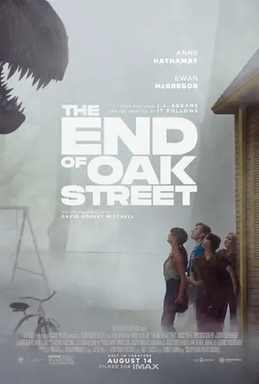


David Robert Mitchell announced himself as a filmmaker to watch with the amazing It Follows (2014), one of the most original and unnerving American horror films of the last decade. Its relentless, shape-shifting entity, dreamlike suburban landscapes and wonderfully simple central conceit turned teenage sexuality and anxiety into something genuinely nightmarish. Four years later came the altogether stranger Under the Silver Lake (2018), a bizarre, labyrinthine Hollywood conspiracy thriller that seemed determined to disappear down every rabbit hole it could find. Now, after an eight-year absence from directing, Mitchell lands somewhere between those two extremes with The End of Oak Street (2026)— a wacky movie mash-up, certainly, but one pitched on considerably safer and more commercial ground: dinosaurs destroying the neighbourhood.

The premise is gloriously fun. It is the early 1980s and the Platt family — Denise (Anne Hathaway), Greg (Ewan McGregor) and their children Audrey (Maisy Stella) and Brian (Christian Convery) — are already experiencing their own domestic extinction event when a mysterious cosmic phenomenon transports their suburban neighbourhood millions of years into the past. Suddenly the comfortable American cul-de-sac is surrounded by prehistoric vegetation and populated by creatures considerably less friendly than the people next door.

It is difficult not to think of Spielberg. Jurassic Park (1993) is the obvious reference, but there are also echoes of E.T. (1982), Poltergeist (1982) and the Amblin school of ordinary suburban families confronted by extraordinary events. Mitchell effectively reverses the Jurassic Park formula: instead of humans visiting the dinosaurs, the suburbs are dropped into their world. The result is part science fiction, part creature feature, part dysfunctional-family drama and part disaster movie — a cinematic pick-and-mix that rarely stops moving long enough for us to question how absurd the whole thing is.

And when the dinosaurs arrive, Mitchell has fun with them. These aren’t simply majestic CGI museum exhibits waiting for somebody to stare upwards in wonder. They are animals, predators and occasionally wrecking balls, turning driveways, kitchens, gardens and picket fences into prehistoric feeding grounds. There is something inherently amusing about seeing the reassuring iconography of American suburbia invaded by creatures that existed millions of years before the mortgage, the station wagon and the neighbourhood barbecue.
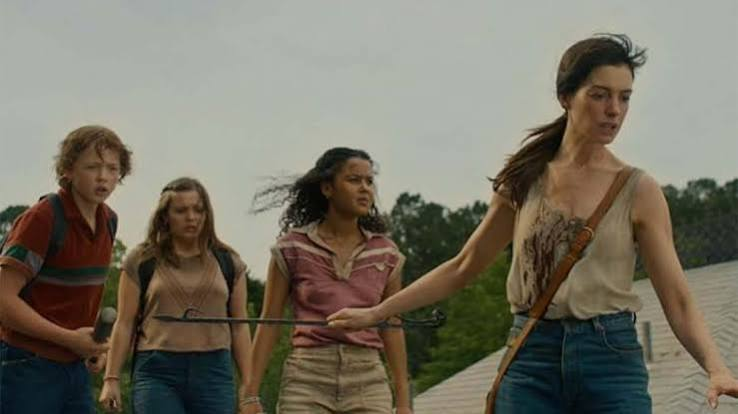


Michael Gioulakis’ cinematography gives Mitchell’s suburban apocalypse considerably more visual personality than the average effects-driven blockbuster, while Michael Giacchino’s score understands exactly when to embrace the grandeur and when to undercut it. Mitchell even deploys split-diopter compositions during comparatively mundane family conversations — an indication that, beneath the expensive dinosaur spectacle, the director of It Follows hasn’t entirely disappeared.

Hathaway and McGregor also prevent the human story from being completely trampled beneath giant reptilian feet. Denise and Greg’s marriage is already in trouble before prehistoric nature intervenes, giving the film a neat central joke: sometimes it takes being transported millions of years into the past and nearly eaten by dinosaurs to put your domestic problems into perspective. Hathaway is particularly good at giving Denise the necessary toughness without turning her into a generic action heroine, while McGregor brings warmth and vulnerability to Greg.

There are some surprisingly brutal moments too. Mitchell hasn’t forgotten his horror roots, and when the film wants its dinosaurs to be frightening rather than spectacular, they genuinely are. The neighbourhood becomes a hunting ground where screams, gunshots and sudden silences remind us that families in the surrounding houses are experiencing their own unseen horror stories. One major mid-film development is especially effective because Mitchell briefly allows us to believe that this apparently family-friendly adventure might be prepared to become something much nastier. Plus, I have to say that gigantic prehistoric snake is a seriously terrifying predator, especially when wrapped within the rooms and doorways of the house.

The later time-warp mechanics allow Mitchell to play with paradoxes, alternative outcomes and some intriguingly strange ideas, but they also provide the screenplay with convenient escape routes. The film constructs a wonderfully impossible situation and then becomes noticeably more generous toward its characters as it approaches the finishing line. That choice makes for an audience-friendly conclusion, but there is a tantalisingly darker version of this movie buried somewhere underneath — one in which Mitchell follows his premise to a more apocalyptic and cruel destination.

Still, the neat, wrapped up conclusion totally makes sense and Bad Robot’s J.J. Abrams crowd-pleasing, commercial sensibility has clearly reined in Mitchell’s more risky storytelling approach. Overall, The End of Oak Street (2026) knows exactly what kind of Saturday-night movie it wants to be. It has movie stars, monsters, scares, humour, family melodrama, science-fiction, time travel and enormous prehistoric creatures smashing their way through suburbia. Sometimes cinema doesn’t need to reinvent the dinosaur, even though some conspiracy theorists believe dinosaurs never existed. But, that’s another film altogether.
Mark: 8 out of 11


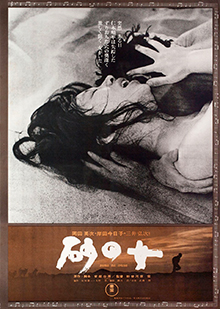
Classic Film Review: Woman in the Dunes (1964)

Classic Film Review: Woman in the Dunes (1964)

Directed by Hiroshi Teshigahara

Screenplay by Kōbō Abe
Based on The Woman in the Dunes
by Kōbō Abe


Produced by Kiichi Ichikawa and Tadashi Ono

Main cast: Eiji Okada, Kyōko Kishida, Kōji Mitsui

Cinematography by Hiroshi Segawa

*** MAY CONTAIN SPOILERS ***


I’d never seen Woman in the Dunes (1964) before, but after watching the director’s cut on the BFI Player, it has now catapulted into one of the best films I have ever seen. This could be first-watch bias, however, thematically, emotionally, philosophically and stylistically speaking, it absolutely touched upon, connected and spoke to me greatly about my life’s experiences and the human condition.

Niki Junpei (Eiji Okada), a frustrated schoolteacher and amateur entomologist from Tokyo, travels to a remote coastal village in search of rare insects. After missing the last bus home, he accepts an invitation to stay overnight with a young widow (Kyōko Kishida) who lives alone in a hut at the bottom of a vast sand dune. He soon learns that her husband and daughter were killed in a sandstorm and that she spends every night shovelling away the endless sand that threatens to bury her home. Though Junpei initially sees himself as a temporary guest, strange comments from the villagers hint that something more sinister is unfolding.

The following morning, Junpei discovers that the rope ladder leading out of the sand pit has been removed. Trapped by the villagers, he realizes he has been chosen to become the widow’s permanent companion and labourer, helping her dig sand that the village secretly sells for profit. As he struggles to escape, Junpei learns that the widow is also a prisoner of the community, both of them controlled through dependence on the villagers for food and water. What begins as an accidental overnight stay becomes a nightmare of confinement, survival, and the gradual erosion of freedom beneath the relentless weight of the sand.


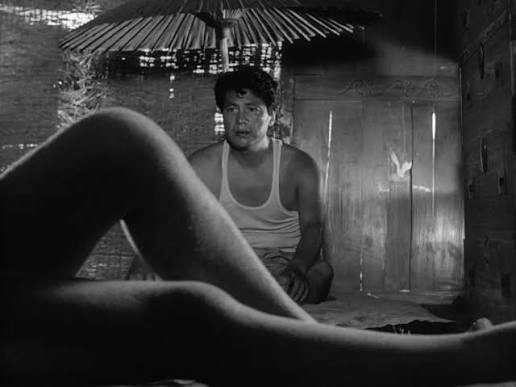
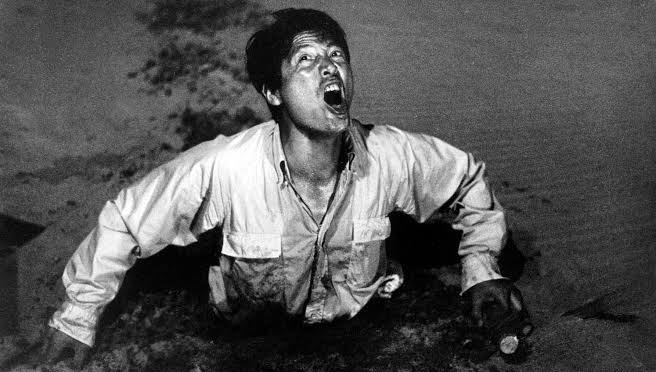
Hiroshi Teshigahara’s Woman in the Dunes (1964) is one of those rare films where image, character, theme and performance become inseparable. Shot in pristine black and white by cinematographer Hiroshi Segawa, it is visually astonishing: every grain of sand, bead of sweat and shadow across a human body is rendered with an almost microscopic intensity. The beauty of the photography is deliberately juxtaposed with the darkness of Niki Junpei’s predicament. What begins as an innocent expedition to collect insects becomes an existential prison, as he finds himself trapped by commerce, a surrogate marriage and, most powerfully, the natural wall of sand that pins both him and the unnamed widow to their strange subterranean existence.

The sand is both physical and metaphorical. It shifts, pours, consumes and rebuilds itself, turning Junpei’s captivity into a distinctly Sisyphean struggle. Every attempt at escape merely seems to return him to where he started, yet what makes Junpei such a compelling character is his absolute refusal to surrender. He builds ladders, devises increasingly ingenious escape plans, attempts to train crows to carry messages and continually tries to outwit the villagers who have ensnared him. Each failure intensifies rather than diminishes his determination. Like Sisyphus pushing the rock back up the hill, Junpei is condemned to confront an obstacle that endlessly renews itself.

Yet Woman in the Dunes (1964) is far more complicated than a straightforward story of imprisonment. Junpei is trapped by the villagers, but also by economic necessity, social expectation and an enforced domestic relationship that gradually begins to resemble a marriage. The villagers need the sand removed; the widow needs a man to help her survive; Junpei needs water, food and eventually human companionship. Teshigahara transforms this bizarre situation into a miniature society in which freedom itself becomes increasingly difficult to define. The more Junpei fights against his surroundings, the more deeply he becomes connected to them.

The relationship between Junpei and the widow, played with extraordinary physical and emotional commitment by Eiji Okada and Kyōko Kishida, gives the film its human core. Their intimacy moves between hostility, dependency, tenderness and desire without ever becoming conventional romance. Although sex is an important element of the film, Teshigahara rarely needs explicit imagery. Bodies appear as silhouettes, fragments and outlines; Kishida’s naked form is often suggested rather than displayed. A shoulder, a curve, a shadow or sand clinging to skin can communicate more than an explicit image ever could. One sees more from less throughout.


That principle extends to the entire film. Teshigahara makes the smallest details monumental. Sand resembles water, skin resembles landscape and the walls of the pit sometimes appear infinite. Extreme close-ups turn grains of sand into an entire universe, while wider compositions emphasise just how insignificant these two people are against the enormous shifting landscape surrounding them. The immaculate monochrome photography makes the film simultaneously beautiful and suffocating. The sand can look almost luminous in one shot and utterly threatening in the next.

There is also a wonderful irony at the heart of Junpei’s predicament. He arrives as an entomologist searching for insects, only to become a specimen himself: captured, observed and contained within a pit from which he cannot escape. The collector has become the collected. Teshigahara never labours the metaphor because he does not need to. It exists naturally within the imagery and situation, allowing the audience to discover its implications rather than having them explained.

Woman in the Dunes (1964) is virtually flawless in character, theme, cinematography, direction and performance. More than sixty years after its release, it remains startlingly modern and visually unlike almost anything else. Its central image — two human beings endlessly shovelling away a mountain of sand that will simply return tomorrow — is cinema distilled into an unforgettable metaphor for existence itself.

The only negative? Why didn’t I watch it sooner?

Mark: 10.5 out 11


My Cinematic Romance #26 – Robert Shaw

My Cinematic Romance #26 – Robert Shaw

I often plan my reviews and retrospective pieces around thematically linked film subjects and on other occasions it can become a random or serendipitous process. Of late, the cultural gods have nudged me towards watching and rewatching works by Harold Pinter, including the Joseph Losey directed films, The Servant (1963) and Accident (1967). I then recalled that several of Pinter’s plays had been adapted for film and were readily available on YouTube to watch for “free.”

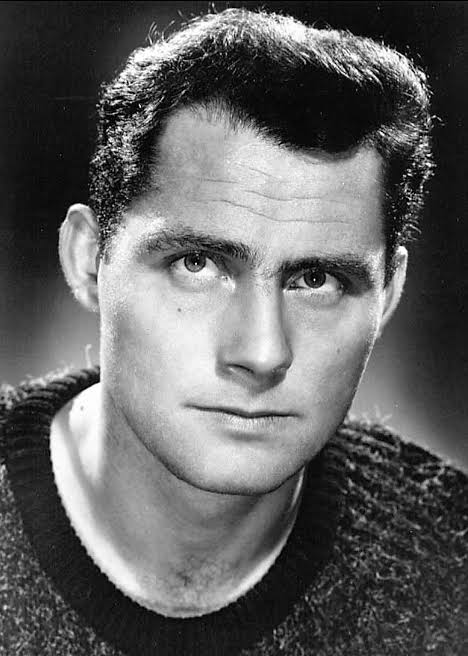
Moreover, as I have also been on a mild William Friedkin retrospective rewatch, I saw his adaptation of The Birthday Party (1968) which led me to an earlier Pinter adaptation called The Caretaker (1963) directed by Clive Donner. Both are oblique, ambiguous renditions of human nature with dark existential absurdity and an almost impenetrable subtext. Pinter’s works are highly acclaimed, attracting a litany of incredibly talented actors and directors. One such is Robert Shaw. His haunting and magnetic performances in Pinter’s work reminded of what an incredible talent he was.


Sadly passing away aged fifty-two of a heart attack, Shaw had a tremendously varied career on stage and screen. If you were not aware he was also a successful author and playwright. Indeed, his 1968 play, The Man in the Glass Booth ran in London and Broadway to critical acclaim, later being adapted for a film in 1975. It’s reported that Pinter assisted with the adaptation of Shaw’s novel for the stage, although Shaw retains the writing credit. Therefore their collaborative connection remained resolute.

This piece highlights five of Robert Shaw’s best performances. Shaw was famously known to favour the stage and his writing over the commercial grind of Hollywood. While big-budget films brought him money, international fame and financial security, he openly disliked celebrity culture and many of his co-stars. In interviews he is often stated he viewed genre movie paydays as a way to provide for his family and fund his true passion: writing novels and plays. So, apologies to Robert Shaw’s legacy for choosing some of those Hollywood roles he’s known for. Safe to say though he is a true artist who passed away way too soon.


The Birthday Party (1968)

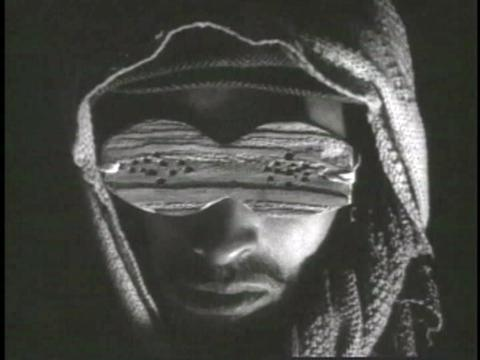
I was going to choose Shaw’s memorable tough guy gangster performance in The Sting (1973), but it’s too easy. Instead, I have selected his intensely complex role as Stanley in The Birthday Party. His character is one of the most tortured souls out there, full of sweat, guilt, regret and paranoia. We do not know what he may or may not of done, but I drew parallels with characters such as Josef K from The Trial and No. 6 from The Prisoner. Arguably, these works are more accessible than Pinter’s “comedy of menace,” but Shaw’s Stanley is painfully mesmerising. The two men who come for him possibly represent death. At the same time his bizarre exchanges with Dandy Nichols’ landlady, Meg, add sex to the mix, making the whole thing a painfully uncomfortable watch.


The Caretaker (1963)

A quietly strange and devastating film adaptation containing three fantastic performances from Alan Bates, Donald Pleasance and Robert Shaw. It’s mostly a character study of mental illness, loneliness, bullying and hiearchal-driven power dynamics. Pleasance is a vagrant, Mac, taken in by Shaw’s quiet soul, Aston, as an act of apparent kindness. However, Alan Bates mischievous and verbose brother, Mick, enters the fray and spies and torments. Mac. The quietly spoken, Aston, seems unaware of his brothers’ negative behaviour. Like much of Pinter’s work, a lot is left unexplained, yet the monologue Shaw delivers describing his treatment in a mental institution is one of the most subtle and powerful speeches I have witnessed on the screen.


From Russia with Love (1963)

While Shaw was known for his intelligent mind, his appearance as the nemesis, Red Grant in the second Bond film, requires him to demonstrate his considerable muscle too. From Russia with Love (1963) is one of my favourite Bond films as it retains that gritty Cold War spy style and Sean Connery is in prime form too. One could argue the villains are often more interesting than Bond, and Shaw’s steely assassin certainly matches Bond for physicality and charisma. Indeed, they are effectively mirrored characters on opposing teams. The fight-to-the-death on the train remains one of the most iconic battles in all of the Bond franchise.


Jaws (1975)

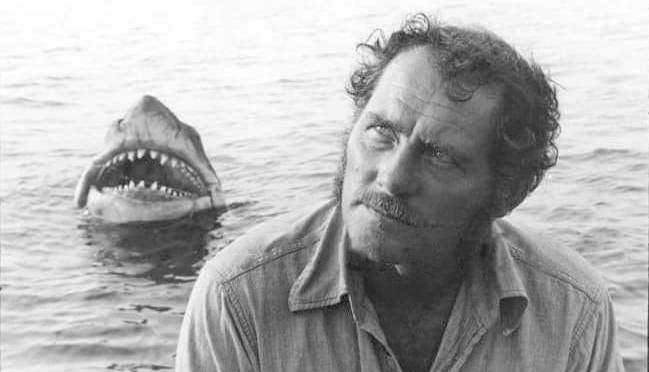
One of the greatest characters in one of the greatest films of all time. Not only that, Quint, has one of the greatest character introductions and greatest monologues in film ever too. How Shaw wasn’t nominated for best supporting actor at the Academy Awards I will never know. It’s a big performance and you could say, over-the-top, but to me it is so authentic in physical and verbal delivery, even Shaw’s sweat could have been given an award on its own.

The monologue itself comes as Quint and Hooper share “war stories” from their past experiences at sea. The men share a laugh before Brody asks Quint about a particularly nasty scar. Then the mood darkens and the old sea dog recounts a story about the U.S.S Indianapolis on which he was aboard when it sank in 1945. The chilling tale of a sinking ship and over one thousand men at the mercy of the sea, hunger, dehydration and shark attacks, is eerily recounted by Quint; loss and bitterness in his eyes. Shaw is incredible during this classic monologue as he not only establishes why Quint hates sharks, but also builds palpable suspense prior to the frenzied final shark attack on the doomed Orca.


The Taking of Pelham 123 (1974)

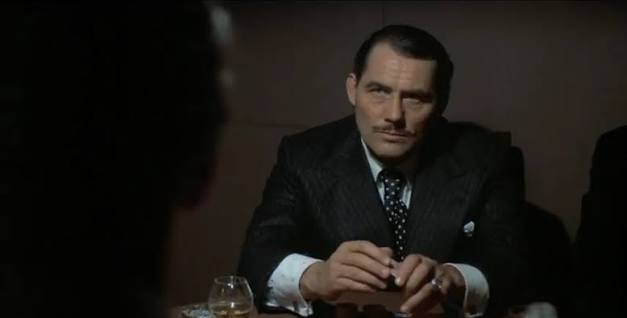
Another 1970s classic and again, Shaw, plays another memorable antagonist. His ‘Mr Blue’ is military, battle-hardened with a disciplined plan of action. His fierce precision and icy delivery finds a perfect counterpart in Walter Matthau’s more congenial and witty transit cop, Zachary Garber. Their exchanges are tense but laced with hard-boiled, sardonic humour, which add a hint of colour to the grim and grey New York underground sequences. While the well-constructed plot and rapid action raises the pulse, the film’s quality is critically raised by Matthau’s and Shaw’s committed performances.