This year I have set myself a creative challenge to learn the fundamentals of video editing software such as Adobe Premiere and DaVinci Resolve. In order to achieve this I have set myself a target of writing, filming, editing and releasing on social media platforms various short videos and films, documentary or narrative. This video essay was based on a recent blog post I wrote that can be found here. So, I basically adapted, narrated and edited a video version of six of the best revenge films down below. Check it out!
Film Credits
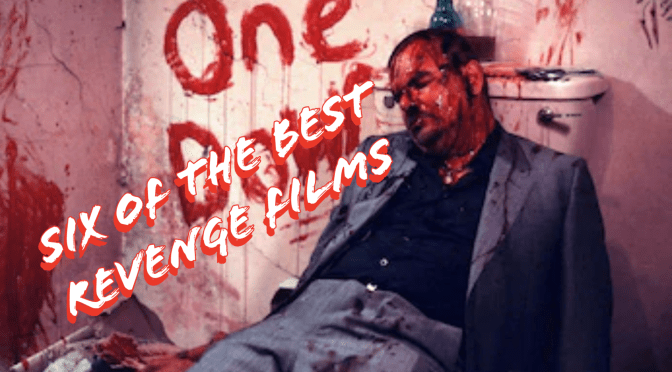
DEAD MAN’S SHOES (2004) GET CARTER (1971) KILL BILL: THE WHOLE BLOODY AFFAIR (2004) MERMAID LEGEND (1984) MS. 45 (1981) OLD BOY (2003) ONCE UPON A TIME IN THE WEST (1968) REVENGE (2017)
Credits
Written, narrated and edited by: Paul Laight Music: Suspense Piano composed and recorded by Oak Studios.
The copyright of the images and trailers are those of the film studios. I do not own any of the images or films. This video article is an educational piece highlighting my favourite revenge genre films.
Revenge is one of the oldest narrative engines in storytelling. Long before cinema, it powered myths and literature—from the blood-soaked cycles of Greek tragedy to the meticulous retribution of The Count of Monte Cristo. These stories hinge on a simple but potent question: what happens when justice fails, and an individual takes it upon themselves to restore balance? Cinema inherited this question and, over time, fractured it into multiple forms—some cathartic, others corrosive, and many deeply ambiguous.
A Brief History of Revenge on Screen
Early revenge narratives in cinema often mirrored their literary roots: structured, morally legible, and driven by transformation. A Woman Branded (1931) is sometimes cited as an early precursor of a woman seeking revenge. Films like Kind Hearts and Coronets (1949) or adaptations of The Count of Monte Cristo framed revenge as an almost intellectual exercise—precise, controlled, and, in the case of the Ealing classic, even darkly humorous.
While revenge is a foundational narrative theme dating back to early cinema, Ingmar Bergman’s The Virgin Spring (1960) is widely considered the earliest major film establishing the “rape-revenge” subgenre. It follows a father seeking brutal vengeance for his daughter’s murder, influenced by a 13th-century Swedish ballad and Japanese cinema.
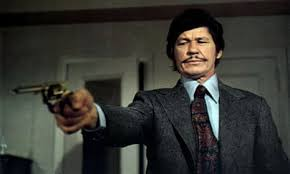
During the late 1960s and 1970s, something shifted. Disillusionment seeped into cinema, and revenge stories grew harsher, more grounded. Neo-noir works like Point Blank (1967), Get Carter (1971), and the classic Western, Once Upon a Time in the West (1968), reframed revenge as something mythic yet emotionally compelling. Sergio Leone’s film in particular bridges classical and modern revenge—turning personal vengeance into operatic inevitability while still rooted in grief and loss. Further, the 1960 / 1970s “Spaghetti” and Clint Eastwood westerns were also heavily driven by vengeful characters, as well as brutal bounty hunters and mercenaries. Overall, the 1970s marked a surge in mainstream vigilante revenge films, with Last House on the Left (1972) and Death Wish (1974), to name a couple, are widely seen as cementing the genre’s popularity.
At the same time, exploitation cinema erupted with raw, confrontational narratives—I Spit on Your Grave (1978), Coffy (1973), Ms. 45 (1981), and Thriller: A Cruel Picture (1973)—often centring female vengeance in ways that were both provocative and controversial. Japanese cinema contributed key films like Lady Snowblood (1973), which would later echo through global cinema. Asian cinema embraced the brutality of the subgenre with revenge films like Vengeance is Mine (1979), Park Chan Wook’s The Vengeance Trilogy and the visceral I Saw the Devil (2010) which interrogated obsession and extreme violence in equal measures.
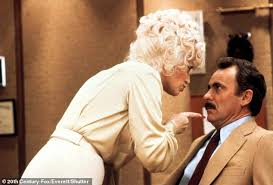
Thus, there are many faces to the revenge including: stage plays, classic literature, gangster, Western, arthouse, war, horror and even comedic ones such as 9 to 5 (1980). Each mode reflects a different cultural anxiety. Some seek catharsis; others deny it entirely. Some empower; others dismantle the very idea of empowerment. What remains is that revenge is a primal drive and offers clear motivation as to a characters’ wants. Above all else a good vengeance narrative offers high stakes satisfaction and entertainment when done right. Here are six filmic examples of this.
Six of the Best Revenge films
What unites the six chosen films is not just quality, but how distinctly each approaches revenge. The six films selected here demonstrate the breadth of what revenge can mean on screen: spectacle, despair, inevitability, and even self-annihilation.
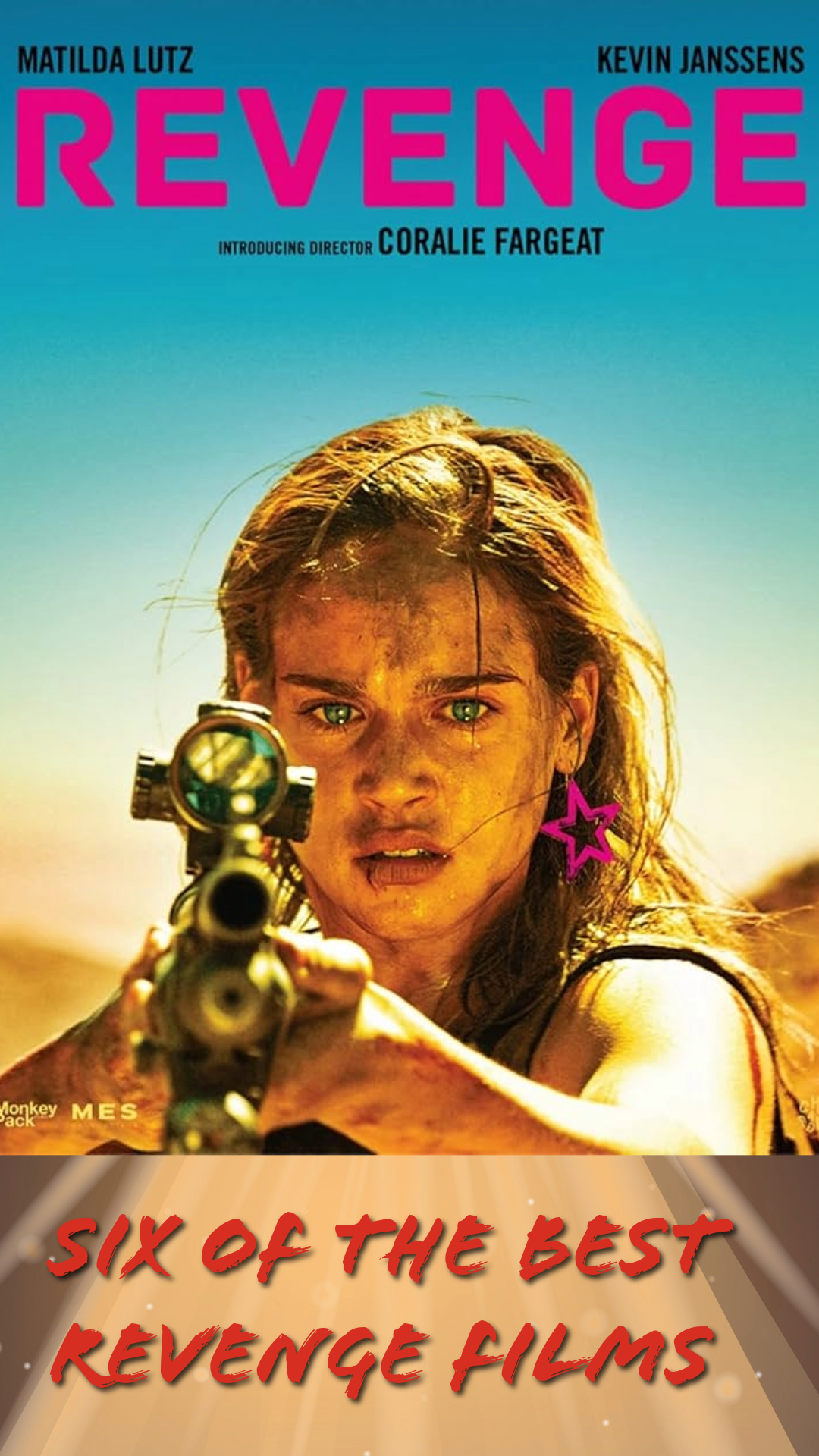
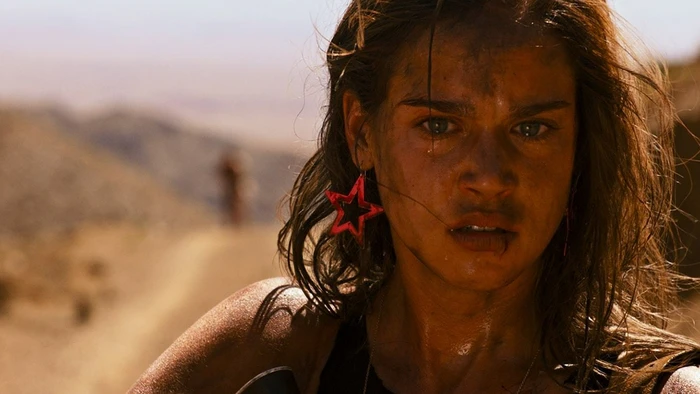
I really wanted to include Revenge (2017), a film which revisits the roots of exploitation film but reclaims them with precision. Coralie Fargeat transforms the genre’s historically exploitative gaze into something confrontational, self-aware and sexual. Violence is stylised and glamorous, but never empty—it becomes a language through which the protagonist reasserts control over her own narrative. Alas, it does not make the list.
*** MAY CONTAIN SPOILERS ***
Dead Man’s Shoes (2004)
I’ve written about Dead Man’s Shoes (2004) before but for me it is one of the best British films ever. Shane Meadows classic low-budget revenger evolves a brother’s vengeance into something more intimate and tragic. Meadows reframes revenge as grief and guilt, culminating in a devastating reversal that questions whether vengeance can ever truly be directed outward. It is revenge turned inward, a psychological reckoning masquerading as retribution. Paddy Considine delivers one of the rawest and most angry performances ever put on screen.
Get Carter (1971)
Get Carter (1971) is cold, methodical, and stripped of glamour, like a Northern neo-noir. Michael Caine’s Jack Carter moves through a decaying Newcastle like an agent of inevitability. There is no triumph here—only the suggestion that violence begets nothing but itself. Caine’s performance delivers the dialogue with razor-sharp timing and dark wit. A violent gangster but relentless detective hunting down the thugs who killed his brother. The clever screenplay (based on a novel) ensures those Carter is after are even worse than him as ultimately Northern decay meets moral collapse.
Kill Bill: The Whole Bloody Affair (2025)
As revenge epics and Asian cinema homages go,Kill Bill: The Whole Bloody Affair (2025) is a staggering piece of synthesis from Quentin Tarantino. Beatrice Kiddo’s (Uma Thurman) quest isn’t just a trail of vengeance—it’s ritualised, almost sacred, each confrontation unfolding like a chapter in a blood-soaked myth. Tarantino fuses global influences—from Anime, samurai cinema like Lady Snowblood (1973) to grindhouse exploitation—into something heightened and unmistakably his own: a world of colour, blood, incredible choreography, and cutting precision. Violence here isn’t merely destructive; it becomes a form of expression, even purification. In this universe, revenge is not corrosive or self-defeating but clarifying, elevating Beatrice’s journey from victim to legend.
Mermaid Legend (1984)
Mermaid Legend (1984) stands as a startlingly powerful vengeance film, elevated by Mari Shirato’s ethereal, magnetic performance as Migiwa—at once woman, avenging angel, and elemental force. Her transformation drives the film into increasingly confrontational territory, where extreme violence and explicit sexuality feel less gratuitous than weaponised, forcing the viewer into a state of unease. What makes the revenge so compelling is its inevitability: this is not a quest but a metamorphosis, as Migiwa becomes something beyond human, guided as much by the sea and spirit as by rage. The film’s brilliance lies in how it fuses beauty and brutality into a singular vision. Lyrical underwater imagery and sacred, mournful music elevate the violence into something ritualistic, culminating in a final pier rampage that feels less like action than ceremony—hypnotic, relentless, and mythic. By the end, revenge is no longer just an act but a form of transcendence, pushing the film beyond exploitation into legend.
Old Boy (2003)
Oldboy (2003) is a film I can watch over and over and it still shocks me. The narrative feels like a perverse inversion of The Count of Monte Cristo. But, where Dumas offers revenge as a calculated, almost righteous act, Park Chan-wook and the source material it is based on presents it as something recursive and inescapable. The brilliance of Oldboy (2003) lies in its dual revenge structure: what begins as Oh Dae-su’s pursuit of answers gradually reveals itself to be the final movement in someone else’s long-orchestrated vengeance. Both protagonist and antagonist are locked into mirrored roles, each defined—and ultimately destroyed—by the same impulse. The film’s infamous twists don’t just shock; they reframe the entire narrative as a closed system of suffering, where revenge ceases to be cathartic and instead becomes a mechanism of obscene chaos. The antagonist’s revenge is meticulous, psychological, and total, while Dae-su’s reactive violence only tightens the trap. Both men are ultimately consumed, their identities hollowed out by the nihilistic revenge that defines them.
Once Upon a Time in the West (1968)
Once Upon a Time in the West (1968) is a great revenge film and classic Western. It precisely because it strips vengeance down to something elemental, patient, and almost mythic. Charles Bronson’s ‘Harmonica’ is not a conventional protagonist but a force moving through the landscape with quiet, relentless purpose. He speaks little, explains nothing, and yet every gesture feels loaded with intent. His pursuit of Henry Fonda’s Frank—a brutal mercenary introduced through shocking, child-murdering violence—is not driven by impulse but by memory, by something buried so deep it can only be expressed through action. What elevates the film is its methodical pacing and Leone’s operatic control. Violence is withheld, stretched out across long silences, close-ups, and Ennio Morricone’s mournful score, turning each encounter into ritual. When ‘Harmonica’ finally unleashes havoc, it is not chaotic but precise—measured, almost ceremonial. The eventual revelation of his motive reframes everything: this is not just revenge, but the completion of a trauma that has defined his entire existence.
Conclusion
To distil revenge cinema into six films is, inevitably, an incomplete task. The genre is too vast, too varied spanning everything from canonical works to obscure, difficult films that remain unseen or underexplored. There are countless other entries, including many lesser-known or unseen works, that could reshape or challenge this selection.
And yet, that is precisely why revenge endures. It is a universal impulse, endlessly adaptable to tone, culture, and form. Whether stylised, brutal, philosophical, or deeply personal, revenge remains one of cinema’s most powerful motivations—for characters and filmmakers alike.
TELLING STORIES WITH STYLE: THE TROPES OF TARANTINO
**CONTAINS MOVIE SPOILERS**
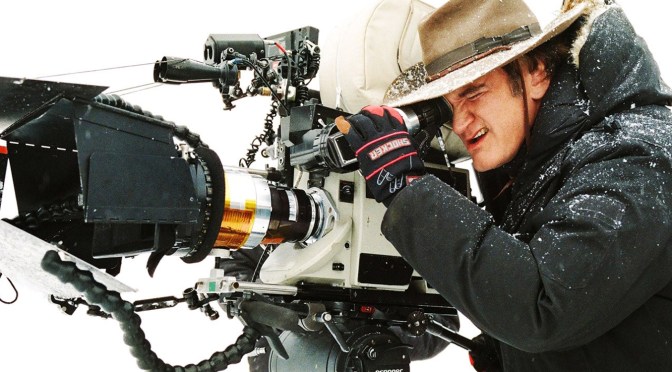
Quentin Tarantino is a powerhouse of cinema. He has proved consistently, since his debut film Reservoir Dogs (1992) right up to his most recent film The Hateful Eight (2015), a filmmaker of incredible invention. His works are well known for their references to pop culture, TV shows, music, fashion, and quoting in general from an array of cinematic influences. Indeed, his films are always firmly planted in genre, from: war films to Martial Arts to Western to crime and B-movie pictures. However, despite utilising other genres as a springboard for his writing, Tarantino instils his own style within his work. This creates a paradoxical form of originality, making him what I would call a postmodern auteur. The postmodern auteur not only quotes, borrows and steals from other influences but they are able to present them in a fashion so as to make them feel fresh and somehow original.
It would be easy to write an essay of Tarantino-style bingo pointing out which films and genres he has used and stolen or quoted from, thus, as an alternative, I would like examine the narrative tropes he employs to tell his screen stories. Tarantino isn’t simply a cultural magpie throwing in arbitrary pop references but he has a magic box of narrative tricks gained from cinema, stage, literature and music. In this essay I would like to explore some of these methods and how he diverts from the linear narrative style represented by the classical Hollywood norm. I will also examine his work in general and scenes from his films to show how he has created some fascinating means of telling stories.
Tarantino differentiates his films from the classical narrative style in a legion of ways. Such tropes include: “Chapter Headings”; non-linear timelines; unreliable narrators; and what I have termed “the long game” scene or sequence. Along with his perpetual references to various genres, specific films and the use of soundtracks from other movies, such devices work brilliantly to propel the narratives of his films. It may seem quite a simplistic device to use, but “Chapter Headings” are a very effective story device. It’s obvious to say Tarantino has borrowed from literature in order to structure his films this way, but the ‘Chapter’ introductions establish the nature of storytelling and literally inform the audience of a change in scene, time, place and character.
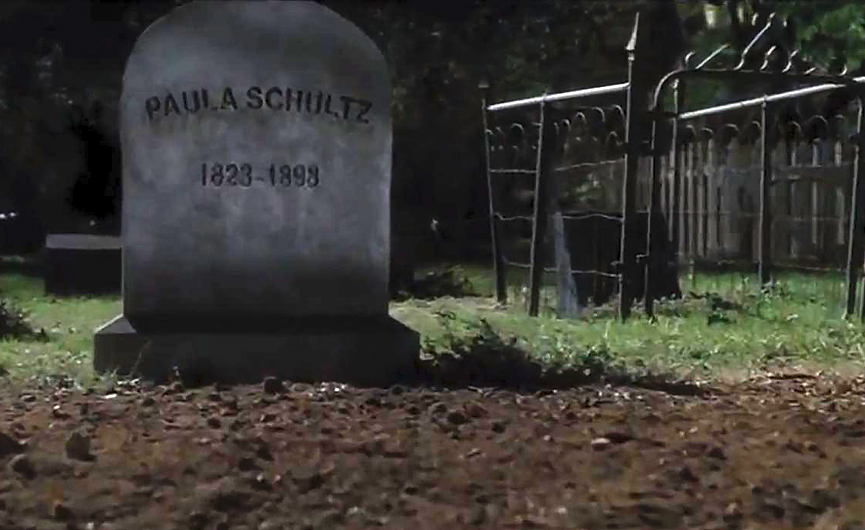
While classical Hollywood works to immerse us in the invisibility of filmmaking, Tarantino calls attention to the form with “Chapter Headings.” He does this not as a Brechtian distanciation device but rather as a means to include us in the story intellectually. The “Chapter Headings” also create humour, mystery and suspense. For example in Kill Bill: Volume 2, one chapter is called The Lonely Grave of Paula Schultz, which immediately conjures a mysterious and eerie story to come. It turns out to be just that as Beatrice ends up buried alive as the segment further reveals more of her fascinating back-story. In an ingenious aside in Tarantino’s “Universe”, Paula Schultz is in fact the wife of King Schultz from his own Western Django Unchained (2012).
“Chapter Headings” also seek to cement and bind another of Tarantino’s tropes: the non-linear or fractured timeline structure. Here, fractured events are portrayed out of chronological order and do not follow the direct causality pattern of the events in the standard narrative model. Non-causality is as old as the hills with Homer’s The Iliad in the 8th century BC being one of the first examples of such a narrative device. Indeed, it’s easier to pick out a Tarantino film that doesn’t follow a non-linear structure than not. However, even his most linear film Jackie Brown (1997), which follows the eponymous protagonist’s attempts to stay out of jail and alive, finds the narrative splintering into a triptych of varying perspectives during the final act.
Often non-linearity is used to show dreams, flashbacks, time-travel and explore splintered identities or point-of-view; nonetheless, the non-linear narratives of, for example, Reservoir Dogs (1992), Pulp Fiction (1994), Kill Bill (2003/2004) and Inglorious Basterds (2009) contain fractured timelines from mainly a creative and aesthetic choice. But they are not just style for style’s sake as they create a dazzling intellectual response and activate the viewer to piece the stories together like a jigsaw. Reservoir Dogs (1992) is especially ingenious in breaking the rules of genre as it’s one of the only films I’ve seen about a robbery which shows us everything aside from the actual crime. It is important, however, to say that while Tarantino knows the rules of linearity he chooses to break them, on the whole, to enhance the cinematic experience. Interestingly, in my opinion, his most satisfying films are those which are his most linear. Tony Scott proved this when he re-wrote and re-ordered Tarantino’s script of True Romance (1989), while Django Unchained (2012), aside from a few brief illusory dream sequences and momentary flashbacks, builds powerful emotions as Django hunts down his slave captors and wreaks revenge in order to be reunited with his wife.
A narrative off-shoot of fractured timelines is Tarantino’s use of stories within stories and unreliable narrators. The device of the unreliable narrator is another means in which Tarantino differentiates his narratives from classic storytelling. In 1981, William Riggan, created a study of various unreliable types, including: The Picaro, The Madman, The Clown, The Naif and The Liar. The Picaro will typically be a bragger, similar to the Liar but not as heinous. The Madman or Mad Woman, however, will be more sinister but The Clown and The Naif will either be playing for laughs or in the latter’s case, telling their story from a naïve position. Tarantino takes great joy with narrators, unreliable or otherwise, telling lies; something seen brilliantly in both Reservoir Dogs (1992) and his most recent film The Hateful Eight (2015).
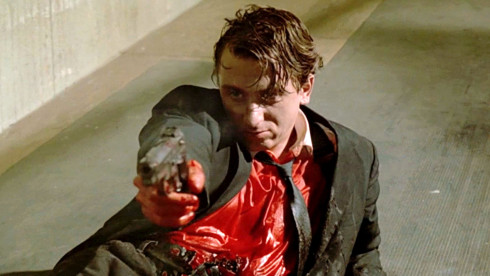
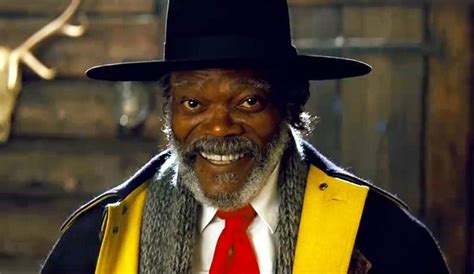
In Reservoir Dogs (1992), Tim Roth’s “Mr Orange” is revealed to be an undercover Police officer. “Orange’s” cop superior actively tells him to invent a story – because you “gotta have a story,” – to inveigle his way into the Joe Cabot’s gang. Thus, he invents a shaggy dog tale about the time he almost got bust by cops in a toilet. Tarantino presents a dishonest character delivering a story in a false reality providing both suspense and entertainment from a wholly unreliable basis. More ambiguous and vile is the story Samuel L. Jackson’s Major Marquis Warren tells to Bruce Dern’s irascible Confederate, General Sandy Smithers, in The Hateful Eight (2015). Sworn enemies while occupying opposing sides during the American Civil War, Warren, raises the dramatic stakes by regaling the story of how he strips, sexually humiliates and then kills Smithers’ own son. We flash-back to this incident and must consider if this is actually real or invented in order for Warren to provoke Smithers to grab a gun; thus allowing the Major to shoot him self-defence. These devices are tremendously effective narrative tools for creating shifting emotional responses to characters and again mark Tarantino’s work outside the classical norm.
The Hateful Eight (2015), given it is virtually set in one location, is very theatrical in feel. Marrying the influences of the Western genre in such television shows as Bonanza with Agatha Christie’s novel And Then There Were None (1939), the film also evokes principles of the “Shaggy Dog” story and Chekhov’s gun theory where every element of a narrative has cause effect irreplaceability. Consequently, the whole film feels like one long sequence of scenes and event with a massive and particularly violent payoff at the end. Indeed, this narrative conceit is a major styling of Tarantino. While most basic screenwriting books will tell you to get in and out of a scene as quickly as possible to move the narrative along, Tarantino disregards this rule throughout his oeuvre. This, I call the “Long Game” scene where lengthy dialogue gives way to a spectacular punchline at the end.
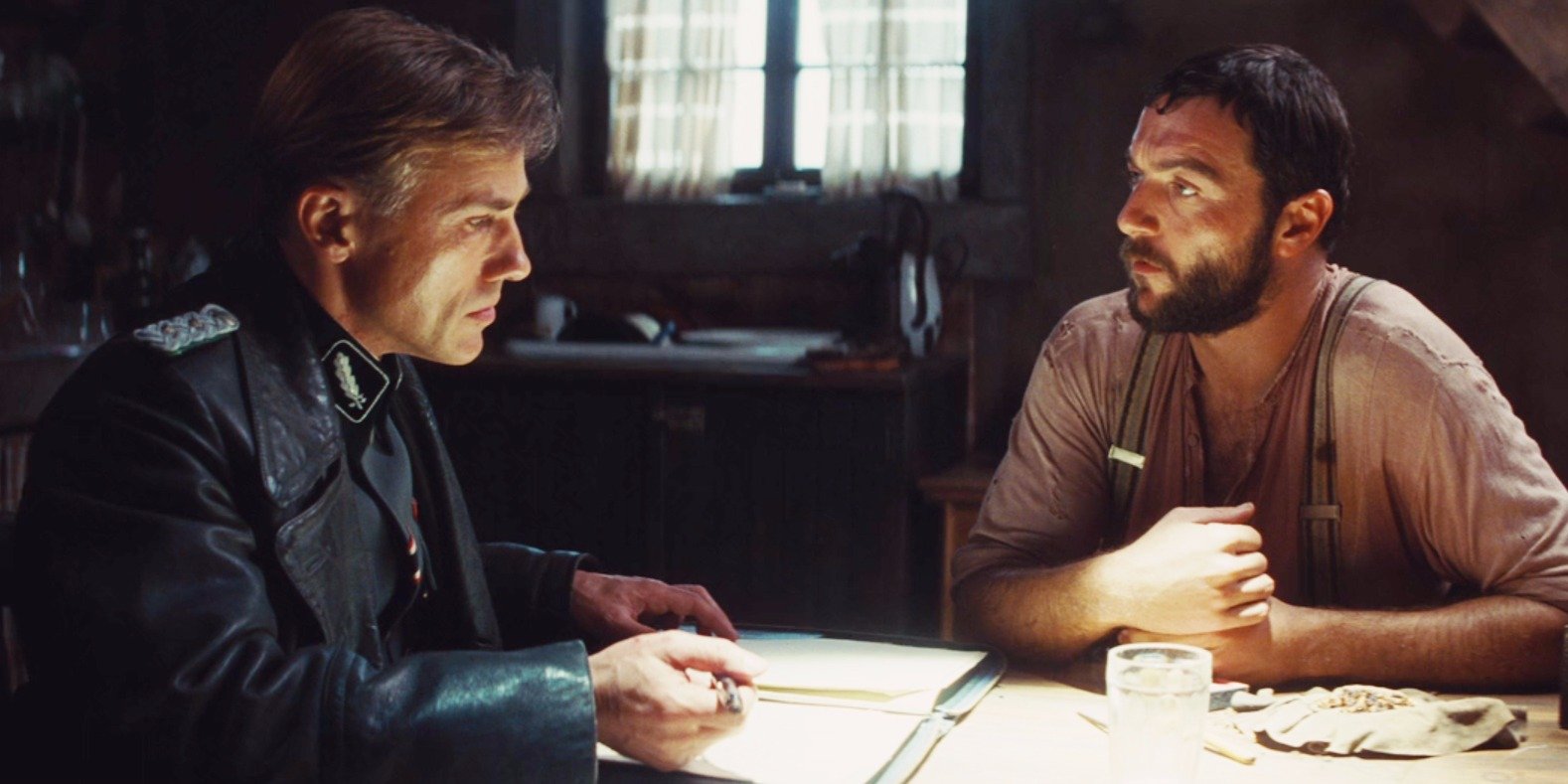
A perfect example of the “Long Game” scene is the beginning of wartime epic, Inglourious Basterds (2009). We open with the “Chapter Heading”: Once Upon a Time in Nazi Occupied France and are introduced to Christophe Waltz’ SS Office Hans Landa. At first Landa is amiable and charming in his inquisition of a French farmer. Indeed the scene moves slowly and not without humour as the German takes out his over-sized pipe and drinks the farmer’s delicious milk. But, as this is Tarantino we know suspense is building to a slow but startling crescendo. When the reveal of the hidden Jewish family below the timbers is shown, we realise that Landa is not the affable German he acts but a devious murderer and the nemesis within the narrative. With machine guns firing and splintering wood in slow motion, the soundtrack swells operatically as the scene ends with Shosanna (Melanie Laurent) sprinting away, her family butchered by the Nazis. Such “Long Game” scenes are one of Tarantino’s memorable tropes and he achieves this through his brilliant handling of conflict, dialogue and expert use of cinematic form and content.
Overall, Tarantino has had an exceptional film career by using established means of telling stories, both inside and outside the rules of standard narratives. He uses devices like those discussed to invigorate and entertain the audience. There is also much pleasure to be had from experiencing the tropes such as: “Chapter Headings”; unreliable narrators; non-linear structure and the “Long Game” scenes. Thus, using theatrical, literary, cinematic and musical narrative influences Tarantino proves himself a master of storytelling as demonstrated in his impressive body of work.
“I was looking for a job and then I found a job. Heaven knows I’m miserable now!” Stephen Patrick Morrissey
**CONTAINS MILD SPOILERS**
Cinema and television is often about reflection. What happens on screen reflects the dreams or loves or nightmares or hates of the audience. There is no greater scene in a movie I love more than a good sacking or resignation scene. Indeed, I’ve had many jobs I’ve hated. I’ve had many jobs which hated me. Plus, in my “career” as a wageslave I’ve been constructively dismissed, made redundant and resigned from various places of employment.
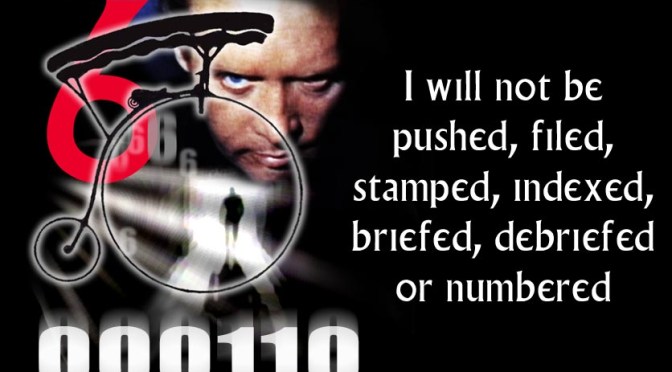
So, when I see it occur on screen I thrill at the idea of a character NOT being in work; of leaving employment; of being free and damning the consequences. Of course, this is all wish fulfilment and projection as I am a responsible person and continue to punch the clock. Nontheless, if you have a desire for a certain level of existence and especially if you have children you need to pay your way. But a sucker can dream and have the mirage of hope play out on a big screen. For your consideration I have pushed, filed, stamped, indexed, briefed, de-briefed, and ordered some cracking sacking or resignations scenes from television and film.
For your consideration I have pushed, filed, stamped, indexed, briefed, de-briefed, and ordered some cracking sacking or resignations scenes from television and film.
AMERICAN BEAUTY (1999)
This brilliant ensemble drama confirmed Kevin Spacey as an actor of some force and the scene where he turns the tables on his boss in just magnificent. I also love it when he’s interviews for the job at the fast food place because he wants a job with as little responsibility as possible. A mid-life crisis has never been so much fun!
BOYS FROM THE BLACKSTUFF (1982)
A tragic and darkly comic “poster-man” for Thatcher’s Britain, Yosser Hughes became synonymous with the catchphrase “Gissa job!” A pale, ghost of a man who would essentially get hired and fired on the spot due to his uncontrollable anger and violence. The whole series is classic British TV at its best and in Yosser’s Story I’m both laughing and crying inside at the same time.
BRIDESMAIDS (2011)
I’ve used this scene before on a previous blog item about great dialogue scenes and happy to use it here again. Kristen Wiig and the teenage nemesis exchange verbal blows ending in a cracking payoff right at the end. The scene has wonderful performances and cracking comic timing as they take the comedy staple of battling one-up-woman-ship right up to eleven.
“DO I NOT LIKE THAT!” ITV DOCUMENTARY (1994)
One of the greatest sporting documentaries ever! The tragi-comedy of Graham Taylor’s ill-fated attempt to get England to the 1994 World Cup is a brutally honest and painful to watch. Taylor is a fine football man but this whole documentary is one big sacking waiting to happen. David Brent doesn’t manage football teams; but if he did.
FIGHT CLUB (1999)
One of my favourite films of all time this is a wonderful, wonderful scene which captures the mood and violence of the thematics in a heartbeat. Smashing yourself up AND blaming your boss is just a magnificent way to leave a job. Awesome!
THE HUDSUCKER PROXY (1994)
While not one of the Coen Bros more celebrated films The Hudsucker Proxy has many wonderful visual tricks up its sleeve. The opening set-piece where the Chairman of the Board “resigns” is a wonderfully constructed sequence edited and shot with their usual flair, humour and precision.
KILL BILL: VOL. TWO (2004)
I really felt sorry for Michael Madsen’s Bud in this scene. Here’s a guy who is a part of infamous assassin team called The Viper Squad, in a deadbeat backwater town bouncing to make ends meet with a coked-up-douche-bag-boss to boot. For being late he is catigated in the most humiliating way and yet doesn’t react. Perhaps he’s above it all but I really wanted Bud to thump his scumbag boss but he just takes it and walks out.
NEED FOR SPEED (2014)
Great driving and car stunts do not save this video-game adaptation from being an also-ran as a narrative. However it does have a very memorable resignation scene which transplants some much needed humour in the over-serious petrol-headed plot. Here mechanic Fin quits his job in hilarious fashion.
NETWORK (1976)
“I’m mad as hell!” Stunning Paddy Chayefsky script holds a burning mirror up to the news media governed by a desire for ratings in Network. The film reflects flaming ire and wide-eyed fury via Peter Finch’s Howard Beale who not only is under threat of the sack but actually promises to “resign” permanently on live television. It’s a stunning film which in many ways is just, if not more, relevant today.
THE OFFICE (2001-2003)
Even though he probably deserved his sacking/redundancy for his somewhat eccentric management style I still felt sorry for David Brent. His self-delusion knows no bounds as he offers his resignation believing him to be irreplaceable only to find it accepted by the management. It’s made all the more amusing because he’s adorned in ridiculous fancy dress for Comic Relief. Priceless.
THE PRISONER (1967 -1968)
This TV show from the 1960s is an enigmatic masterpiece. Set in the mysterious Village we follow one-can-only-presume-a-former-spy called Number 6 (Patrick McGoohan) as he attempts to escape from his nefarious captors. Kafkaesque to the extreme it begins with one of the great resignation/credit sequences ever.



 The Cinema Fix presents