Produced by Amy Pascal, Ryan Gosling, Phil Lord, Christopher Miller, Aditya Sood, Rachel O’Connor, Andy Weir, etc.
Main Cast: Ryan Gosling, Sandra Hüller, James Ortiz, Lionel Boyce, Ken Leung, Malachi Kirby, etc.
Cinematography by Greig Fraser
*** MAY CONTAIN SPOILERS ***
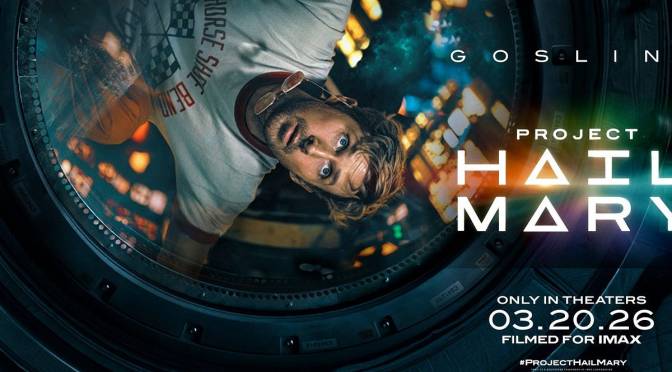
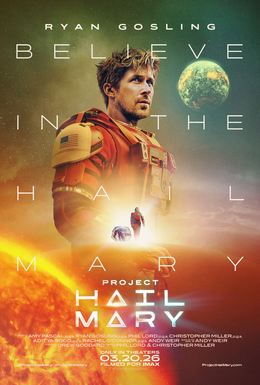
There’s a version of Project Hail Mary (2026) that could have been cold, clinical, and overly procedural—a hard sci-fi puzzle box drifting in the vacuum of its own cleverness. Instead, what Christopher Miller and Phil Lord deliver is something far more disarming: a big-hearted, funny, surprisingly emotional crowd-pleaser that turns the apocalypse into an oddly uplifting experience.
Adapted by Drew Goddard from Andy Weir’s novel, the film follows Ryland Grace (a perfectly cast Ryan Gosling), who awakens alone aboard a spacecraft with no memory of who he is or why he’s there. The early stretches lean into disorientation—Gosling playing confusion with a twitchy, almost comic anxiety—but as Grace pieces together his past, the film cleverly shifts into a dual-track narrative: one part interstellar survival story, one part Earthbound scientific scramble to stop a cosmic catastrophe.
Gosling is the film’s main weapon. He plays Grace not as a conventional hero, but as a reluctant participant—anxious, self-deprecating, and often hilariously out of his depth. His charm keeps the exposition buoyant, especially as the film dives into dense scientific concepts. Where the story could feel heavy, Gosling makes it breezy and Project Hail Mary (2026) is certainly more emotionally stimulating than the dreadful action thriller The Gray Man (2022) and the weak remake, The Fall Guy (2024).
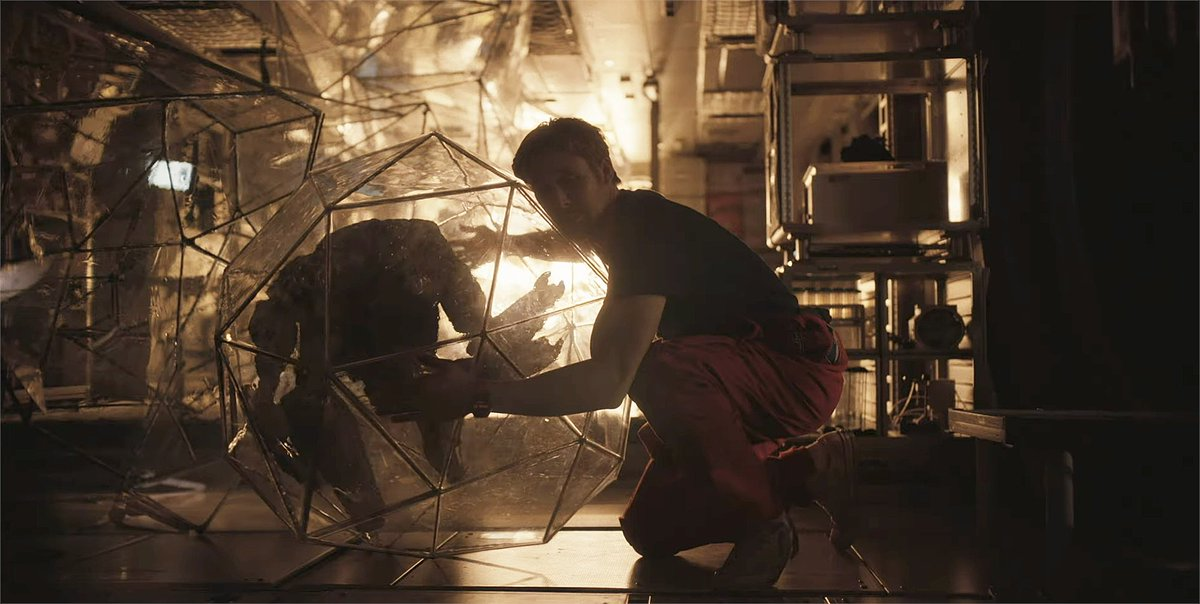
But the film’s most unexpected triumph is its central relationship: a deeply entertaining and genuinely moving “bromance” between Grace and an alien Xeonite – christened Rocky – he encounters in deep space. What begins as cautious interaction evolves into one of the most delightful interspecies friendships in recent sci-fi. Their communication—built from math, sound, and trial-and-error—becomes a source of both comedy and emotional resonance. It’s rare to see a blockbuster hinge so successfully on companionship rather than conflict, and the film is all the better for it.
Visually, Project Hail Mary (2026) is spectacular without being overwhelming. Lord and Miller balance scale with clarity; the vastness of space never drowns the intimacy of the story. The alien design is inventive, the astrophysical phenomena are rendered with awe-inspiring detail, and yet the film always remains grounded in character. It’s science-forward filmmaking that never forgets to entertain. Back on Earth, Sandra Hüller provides the film’s emotional anchor. Her performance carries a quiet intensity, grounding the global stakes in something human and immediate. Where the space sequences soar, her scenes remind us what’s at risk—and why it matters.
Goddard’s script is sharp, witty, and structurally satisfactory. It juggles timelines, scientific jargon, and character development with impressive ease, finding humour in the bleakest situations without undercutting the stakes. There’s a rhythmic confidence to the storytelling that keeps the film propulsive even as it pauses for introspection. What ultimately makes Project Hail Mary (2026) stand out, though, is its tone. This is, unmistakably, a feel-good end-of-the-world movie. It finds optimism not in denying catastrophe, but in confronting it with curiosity, cooperation, and friendship. By the time the credits roll, what lingers isn’t just the spectacle or the science—it’s the warmth. A book and film about extinction becomes, improbably, a story about connection.
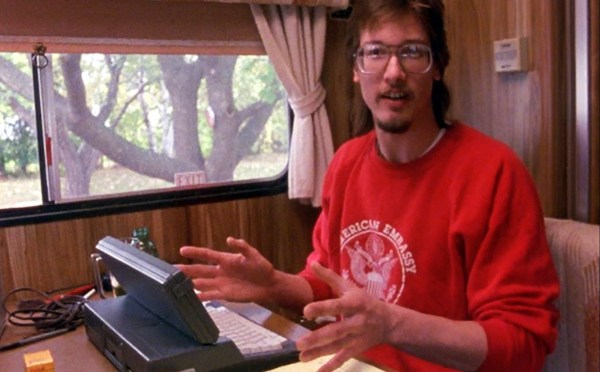
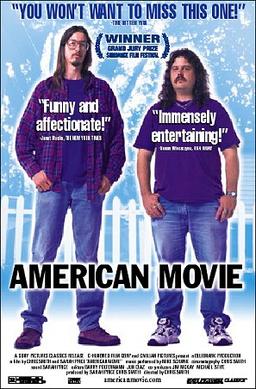
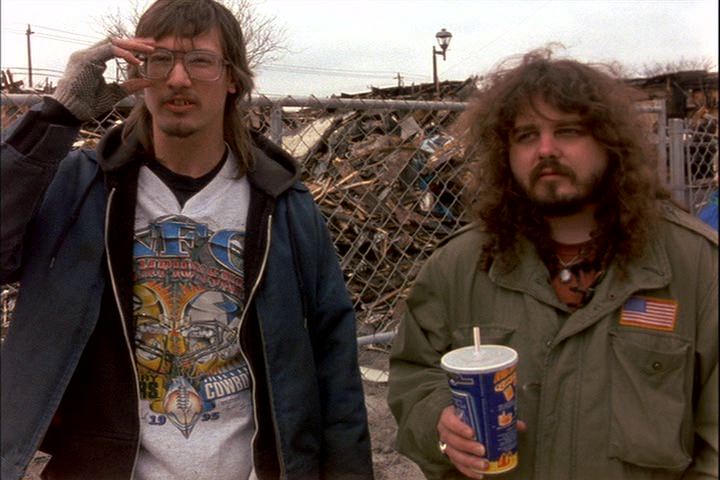
Given I am a low-budget filmmaker myself I am amazed I had never seen, American Movie (1999) before. Thankfully The Nickel Cinema in London screened it at the weekend and I really enjoyed it. Filmed between 1995 and 1997, this cult classic documentary American Movie (1999) chronicles Borchardt’s heroic, chaotic, and deeply Midwestern quest to finish his indie horror short Coven (pronounced ‘COH-ven’, and yes, he will correct you). The short is meant to raise money for his real passion project, a feature called Northwestern. But first? He has to survive reality. And reality is brutal.
Mark has not just zero money; zero organization; a rotating cast of confused friends and relatives as crew; functioning alcoholism; mounting debts, but also has the gift of the gab and a never ending passion for filmmaking. What unfolds is less “behind-the-scenes documentary” and more Shakespearean comedy AND tragedy staged in Milwaukee houses, static caravans, cars, junkyards and local woods.
Borchardt is equal parts Ed Wood and tortured auteur — passionately explaining his artistic vision one minute, begging his elderly uncle for production money and picking up his editing assistant from prison the next. His crew ranges from loyal-but-clueless to openly skeptical, yet somehow the production lurches forward. Barely.
The documentary crew shot over 90 hours of 16mm footage, capturing every awkward take, every blown line, and every moment of Mark’s delusional optimism. We watch as Coven repeatedly derails thanks to bad planning, worse luck, and the universal law that says: if something can go wrong on an indie film set, it absolutely will. But here’s the twist — it’s weirdly inspiring. Because underneath the chaos is something pure: a guy who just refuses to stop making movies. No money. No resources. No safety net. Just pure passion and obsession.
What’s most hilarious is the double act comedy exchanges between Mark and his best friend and Mike Schank. Mike, a very capable musician, has a permanent grin and the look of an acid-trip casualty, yet almost-perfect comedy timing. He clearly loves Mark’s passion and helps as best he can. I was sad to read Mike had passed away in 2022 from cancer.
If you stumbled into American Movie (1999)blind, you’d swear it was a proto-sitcom about delusional dreamers armed with a battered 16mm camera, a camcorder and misplaced confidence — a spiritual ancestor to Trailer Park Boys and It’s Always Sunny in Philadelphia. It plays like a painfully funny hangout comedy about a self-proclaimed auteur and his band of well-meaning screw-ups trying — and repeatedly failing — to make something “serious.” The arguments are petty, the ambition is sky-high, and the incompetence is operatic. You laugh, you cringe, and somewhere along the way you realize this isn’t scripted chaos — it’s just raw, unfiltered obsession captured on camera.
Cult Film Review: Thriller – A Cruel Picture (1974)
Directed by Alex Fridolinski
Screenplay by Alex Fridolinski
Produced by Bo Arne Vibenius
Main cast: Christina Lindberg, Heinz Hopf, Despina Tomazani, etc.
Cinematography by Andreas Bellis
Edited by Brian Wikström
**Viewer discretion is advised – this film contains scenes that many will find disturbing**
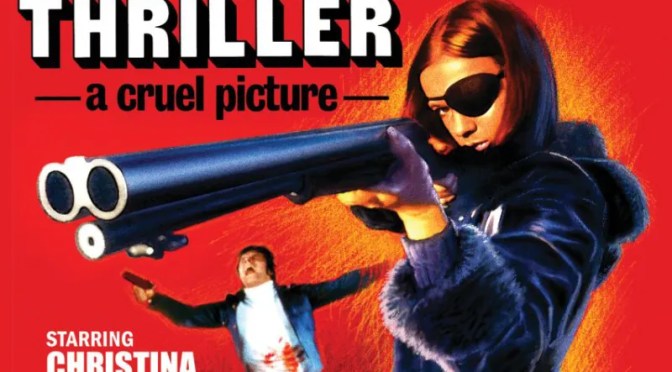
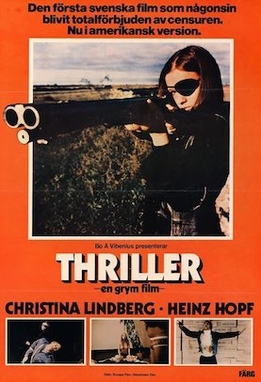
Thriller – A Cruel Picture (1973) (Swedish: Thriller – en grym film) is a 1973 Swedish exploitation film from writer-director Bo Arne Vibenius, working under the pseudonym Alex Fridolinski, starring Christina Lindberg and Heinz Hopf. Infamous for its unflinching depictions of sexual violence, drug abuse, and degradation, the film charts the ordeal of a mute young woman who is coerced into heroin addiction and forced into prostitution before embarking on a brutal campaign of revenge against her tormentors.
Released in the United States in a heavily cut version by American International Pictures—under lurid alternate titles such as They Call Her One Eye, Hooker’s Revenge, and The Swedish Vice-Girl—the film has earned a reputation as a deeply disturbing and confrontational work. Its graphic content and relentless tone make it a challenging and potentially distressing viewing experience, best avoided by those sensitive to extreme subject matter.
Unsurprisingly, due to the violent scenes, on-screen drug use, nudity and also inclusion of hardcore pornography, Thriller – A Cruel Picture (1973) was either banned outright or heavily censored on release. I had heard so much about this film on various YouTube videos expounding the shocking nature of the themes and scenes. Allied to this, Quentin Tarantino has also “championed” the movie and it’s star, Christina Lindberg. With this in mind the film I got tempted and purchased the recent Blu Ray version released in the UK. This version DOES NOT, thankfully, include the pornographic scenes which were filmed by the director with a Swedish couple who did live sex shows.
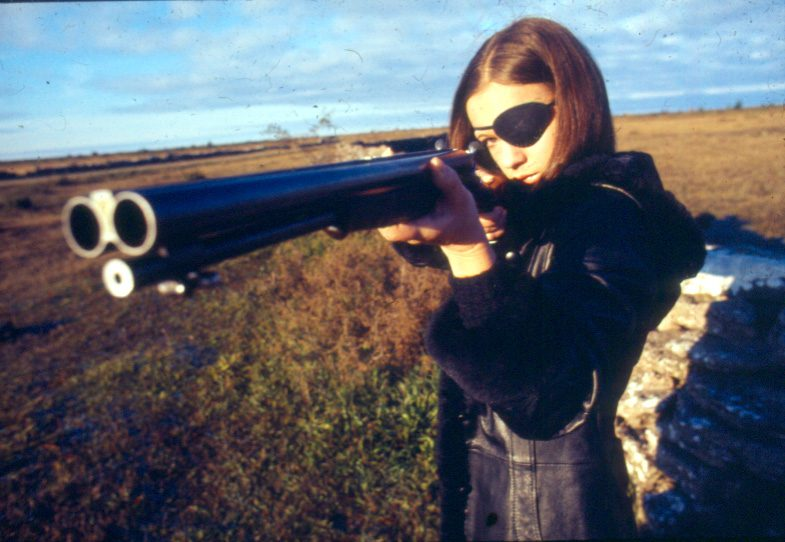
So, is Thriller – A Cruel Picture (1973) actually any good? Well, it is safe to say that it is a relentlessly harsh watch. That said, it would be unfair to dismiss the film outright as mere grindhouse provocation. Vibenius employs striking stylistic flourishes that elevate certain sequences into something oddly hypnotic. Most famously, the extended slow-motion shotgun reprisals—henchmen blasted backwards in balletic, almost operatic fashion—are staged with a visual patience that borders on the surreal. These, as well as the lengthy final act car pursuit sequence, are technically memorable, even as their brutality remains confronting.
Where the film becomes almost nightmarish is in its internal logic. Once Madeline (Christina Lindberg) is captured and brutalized by the sadistic drug dealer Tony (Heinz Hopf), the narrative takes on a dreamlike, disjointed quality. Despite being forcibly addicted to heroin, she somehow manages to train herself in hand-to-hand combat, driving, and sharpshooting—preparing an elaborate revenge while still under the grip of addiction. The plotting feels less realistic than hallucinatory, as though the film operates on the logic of trauma and fantasy rather than grounded cause and effect.
A great deal of the film’s lasting impact rests on the striking screen presence of Christina Lindberg, as well as her character’s grim journey.Already known internationally in the late 1960s and early 1970s for her work as an erotic actress and glamour model, Lindberg brings an arresting, almost statuesque quality to the role. Her icy stare—especially once framed by the now-iconic eyepatch—gives the character a mythic, comic-book intensity. At the same time, the creative decision to render her character mute inevitably shapes how that performance is perceived. Silence becomes a stylistic device, amplifying the film’s cold and detached tone. The director’s choice to sidestep the demands of more dialogue-heavy dramatic scenes actually works in the film’s favour.
Overall, Thriller – A Cruel Picture (1973) is a film that oscillates between exploitation rawness and stark, almost avant-garde stylization. For hardened genre enthusiasts, it may be a grim curiosity with undeniable visual audacity. For many others, however, its graphic content and relentless tone will make it a deeply uncomfortable, even distressing experience. Proceed carefully.
Directed by Harry Lighton Written by Harry Lighton – Based on Box Hill by Adam Mars-Jones
Produced by Emma Norton, Lee Groombridge, Ed Guiney & Andrew Lowe
Main cast: Harry Melling, Alexander Skarsgård, Douglas Hodge, Lesley Sharp, Jake Shears, etc.
Cinematography by Nick Morris
Edited by Gareth C. Scales
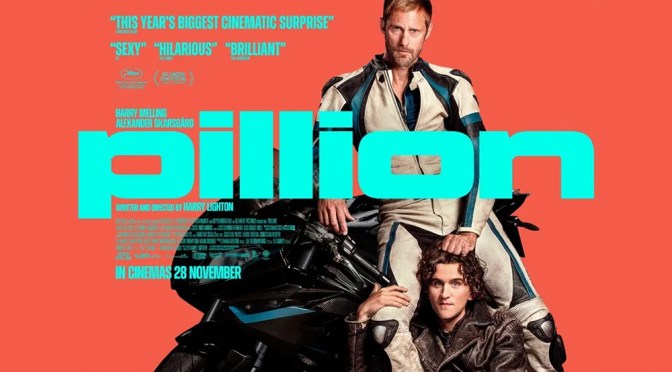
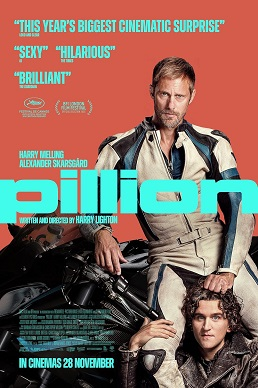
There’s a tender audacity to Pillion (2025), an erotic rom-dom-com that sneaks up on you with the gentleness of a confession. What begins as an off-kilter meet-cute blooms into something far more vulnerable: a rites-of-passage story about sexual awakening, self-recognition, and the courage it takes to accept pleasure without apology.
At its heart is Colin, played with exquisite restraint by Harry Melling. Melling has always been an actor of intelligence, but here he finds a new register—soft-spoken, watchful, quietly aching. His performance never reaches for easy beats; instead, it accumulates detail. A look held a fraction too long. A smile that arrives late. Colin’s desire isn’t announced; it’s discovered, moment by moment, and the effect is deeply empathetic.
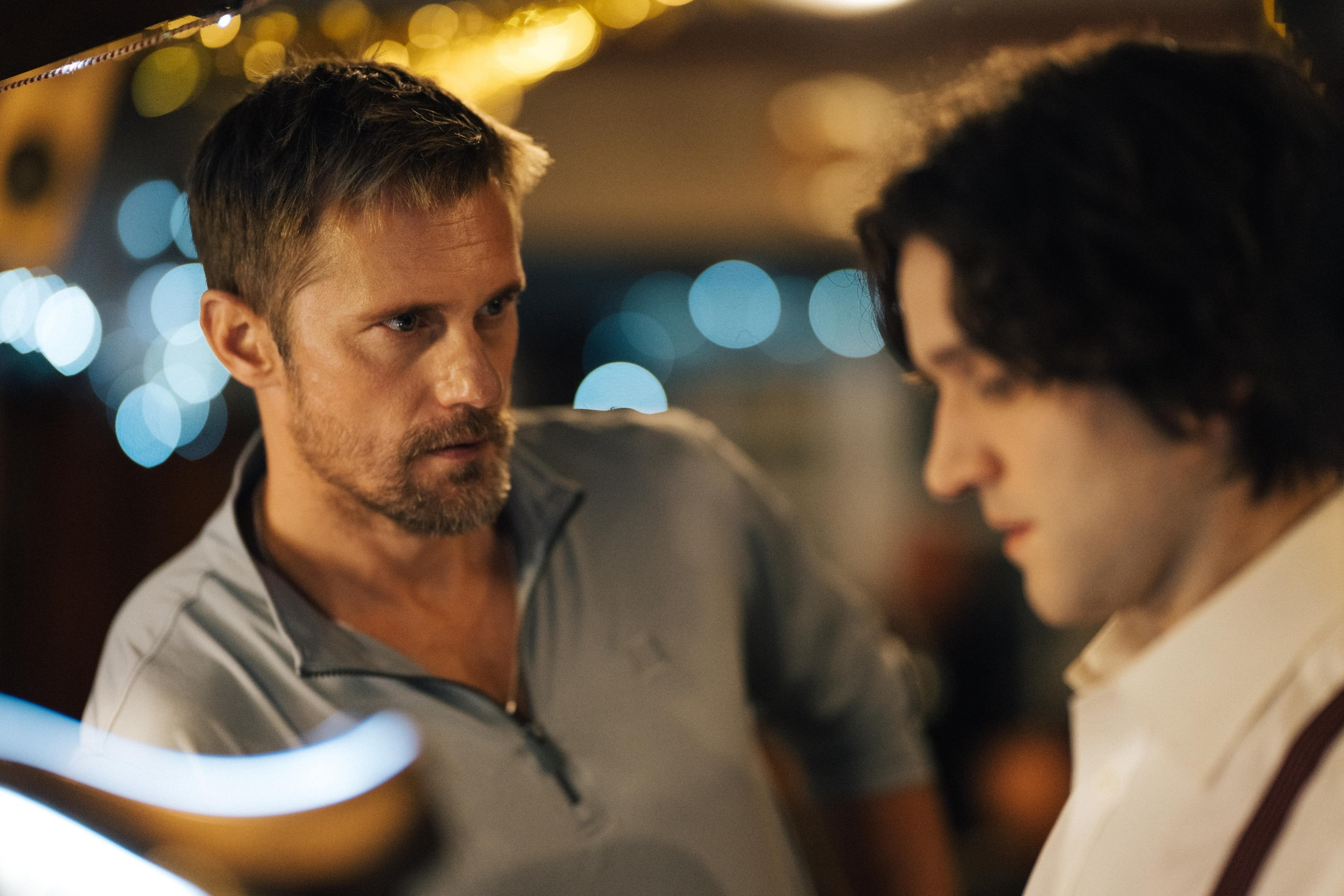
Opposite him, Alexander Skarsgård’s Ray is all smoulder and swagger on first impression—an insouciant masculinity that seems effortless, almost cocky. But Skarsgård is doing something more interesting beneath the surface. The sexuality is undeniable, yes, but it’s armoured. Pain leaks through the cracks, giving Ray a bruised romanticism that complicates the dominant energy he projects. The push and pull between the two men becomes the film’s most potent charge.
Director Harry Lighton deserves enormous credit for navigating this tonal tightrope. His direction is fantastically nuanced, allowing intimacy and humour to coexist without deflating either. The film understands that eroticism can be funny, awkward, even faintly ridiculous—especially when it’s new—while still honouring its emotional stakes. The explicit moments are handled with confidence rather than coyness, lacing the heartfelt beats with risqué shocks that provoke gasps, laughter, and the occasional wince. The physical opposites of Harry’s mild-mannered traffic warden versus Ray’s macho biker also add characterful humour to the mix.
The contemporary setting, rooted in the London suburb of Bromley, is another inspired choice. This is not a glossy, aspirational London; it’s resolutely unglamorous, familiar, and quietly stifling. That ordinariness makes Colin’s awakening feel all the more radical, a private revolution unfolding in plain sight. Furthermore, strong support comes from Lesley Sharp and Douglas Hodge as Colin’s parents, whose love is real but imperfect, shaped by generational discomfort and unspoken fears. Their scenes add texture rather than judgment, grounding the film in a recognisable family dynamic.
Be warned: Pillion (2025) doesn’t shy away from explicit sex scenes or moments of leather-adorned domination (including BDSM), and those elements may provoke strong reactions. But they’re not there for provocation alone. Lighton uses them as part of the emotional grammar of the film, insisting that tenderness and risk, humour and heat, can occupy the same frame. Ultimately, Pillion (2025) reveals itself as something quietly radical—a deeply touching romantic comedy that treats sexual self-discovery with empathy, intelligence, and a disarming lack of shame. It lingers not because of what it shows, but because of how carefully it listens to its characters while they learn who they are.
Films That Got Away #17: Hardcore (1979) / Cruising (1980)
There are certain names in American cinema that carry an immediate gravitational pull, and Paul Schrader and William Friedkin sit firmly among them. Between them, they’ve helped define the moral anxieties, obsessions, and contradictions of postwar America—Schrader with his austere spiritual torment and lonely men on the brink, Friedkin with his raw, confrontational plunges into chaos and corruption. Their filmographies are stacked with stone-cold classics that feel permanently etched into the cultural memory, the kind of movies that film students, critics, and cinephiles cite as foundational texts.
And yet, despite that towering reputational weight, there are blind spots. For reasons that are more circumstantial than intentional, I’d never seen Schrader’s Hardcore (1979) or Friedkin’sCruising (1980)—two of their most infamous, divisive, and provocative works. Both films sit at a fascinating crossroads in late-’70s American cinema, emerging from an era obsessed with moral panic, sexual liberation, and the fear of subcultures existing just beyond the edges of polite society.
What makes the pairing especially compelling is how eerily similar their narrative engines appear to be. Each follows a protagonist forced to descend into an alien world—sexually charged, dangerous, and coded with threat—in search of answers. These are men out of their depth, navigating unfamiliar terrain where desire, violence, and identity blur together, and where the rules they live by no longer apply. In both cases, the journey isn’t just external but psychological, raising uncomfortable questions about voyeurism, repression, and what it means to confront a hidden darkness.
** MAY CONTAIN SPOILERS **
HARDCORE (1979)
Written and directed by Paul Schrader Main Cast: George C. Scott, Peter Boyle and Season Hubley
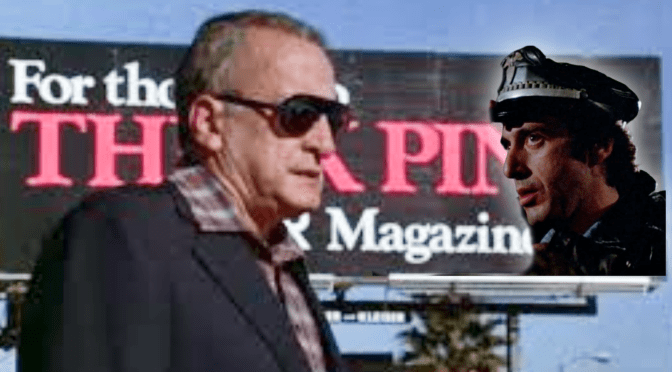
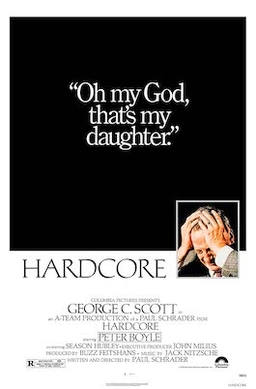
Hardcore (1979) is arguably one of Paul Schrader’s most abrasive and fascinating films—a work that feels both deeply personal and deliberately confrontational. The setup is pure father’s nightmare. Jake Van Dorn (George C. Scott), a devout Calvinist businessman and single father in Grand Rapids, Michigan, sees his world collapse when his teenage daughter Kristen disappears during a church-sponsored trip to California. Months later, a Los Angeles private investigator (Peter Boyle) produces devastating evidence—an 8mm stag film bought in a sex shop, showing Kristen performing a sexual act with two men. Convinced she has been abducted and forced into sex work, Van Dorn heads west, dragging his rigid moral certainty into a world he neither understands nor believes should exist.
Hardcore (1979) functions as a grim reworking of The Searchers (1956), filtered through the urban decay ofTaxi Driver (1976). Schrader replaces the western frontier with peep shows, porn theatres, and back-alley sex shops, turning Los Angeles into a hostile moral wilderness. The journey into hell is not only about rescuing a daughter but about testing the limits of Van Dorn’s faith. Further, the performances are uniformly excellent. George C. Scott is volcanic as Van Dorn, embodying righteous fury in a way that makes the character both frightening and tragic. Season Hubley brings unexpected vulnerability to sex worker, Niki, while Peter Boyle is unforgettable as the sleazy private dick—equal parts comic and repellent.
Ultimately Hardcore (1979) is uncomfortable, morally thorny, and visually steeped in neon-lit grime. It stands as one of Schrader’s most uncompromising statements: a film less interested in salvation than in forcing its audience to stare directly into the abyss between religion and reality.
Mark: 8.5 out of 11
CRUISING (1980)
Directed by William Friedkin
Screenplay by William Friedkin – Based on Cruising by Gerald Walker
Main cast: Al Pacino, Paul Sorvino and Karen Allen
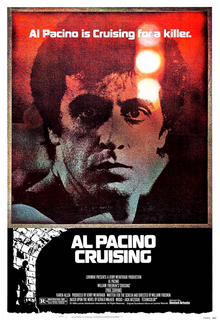
Cruising (1980) remains one of William Friedkin’s most troubling and unresolved works—a film whose reputation is inseparable from the controversy that engulfed it. Loosely based on the novel Cruising by Gerald Walker, a New York Times reporter, the film follows a serial killer preying on gay men connected to New York’s leather scene in the late 1970s. From its earliest production stages, the project was met with fierce objections from gay rights protestors, and even its star, Al Pacino, later described the film as “exploitative,” a criticism that has clung to it for decades.
Watching it now, divorced from some of its original cultural shockwaves, Cruising (1980) plays as a strangely compelling B-movie detective whodunnit. Friedkin leans hard into the sleaze and menace of the underground clubs, bars, and back rooms, presenting them as shadowy labyrinths of danger and desire. On the surface, the film often seems to revel in this grime, exploiting its setting as lurid texture rather than fully interrogating it. Yet beneath that pulpy exterior, there’s a more interesting, if underdeveloped, psychological study trying to claw its way out. Seen through the eyes of Pacino’s “virgin” cop, Detective Steve Burns, the film is not just about catching a killer and more about a man destabilized by prolonged exposure to a world that awakens desires he cannot comfortably name.
Friedkin arguably doesn’t quite get the script or character dynamics right, and those thematic ambitions often feel half-formed. Pacino, while committed, also feels miscast; his star persona never fully dissolves into the role. Still, what Cruising (1980) undeniably achieves is mood. Its oppressive sound design, pounding club music, and nocturnal visual texture generate a creeping dread that lingers. Lastly, there’s a strong sense that Friedkin was hamstrung—by studio interference, censorship demands, and mandated cuts—which may explain why the film feels fractured, particularly in its famously ambiguous ending. The result is a movie that feels incomplete, but also strangely haunting: a compromised work whose unease, confusion, and moral instability scratch under the skin in ways more polished films manage.
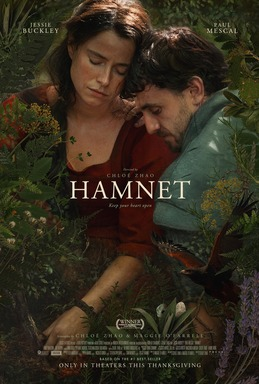
Screenplay by Chloé Zhao & Maggie O’Farrell – Based on Hamnet by Maggie O’Farrell Produced by Liza Marshall, Pippa Harris, Nicolas Gonda, Steven Spielberg & Sam Mendes Main cast: Jessie Buckley, Paul Mescal, Emily Watson, Joe Alwyn, David Wilmot, Jacobi Jupe, Olivia Lynes, etc.
Cinematography by Łukasz Żal
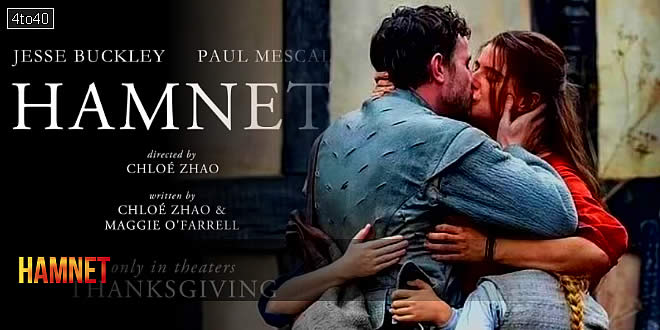
There are actors who impress, and then there is Jessie Buckley, who seems to detonate the screen every time she appears. From the feral menace and vulnerability of Beast (2017) to the raw, soul-baring musical grit of Wild Rose (2018), Buckley has proven herself fearless; from the existential unravelling of I’m Thinking of Ending Things (2020) to her razor-sharp, unclassifiable turn in Fargo (2020) – Season 4, and the aching restraint of Fingernails (2023), her work consistently redefines what emotional truth on screen can look like. Now, with an earth-shattering rendition of Agnes Shakespeare in Hamnet (2025), Buckley doesn’t just command attention—she claims her place as one of the most electrifying actors of her generation.
Hamnet (2025) is an adaptation of Maggie O’Farrell’s critically acclaimed novel is a quietly thunderous piece of cinema—one that chooses intimacy over spectacle and emotion over mythology. At its core is the relationship between Agnes and William Shakespeare, charted from their first, tentative connection through marriage, parenthood, and the fractures that emerge when love collides with loss and ambition.
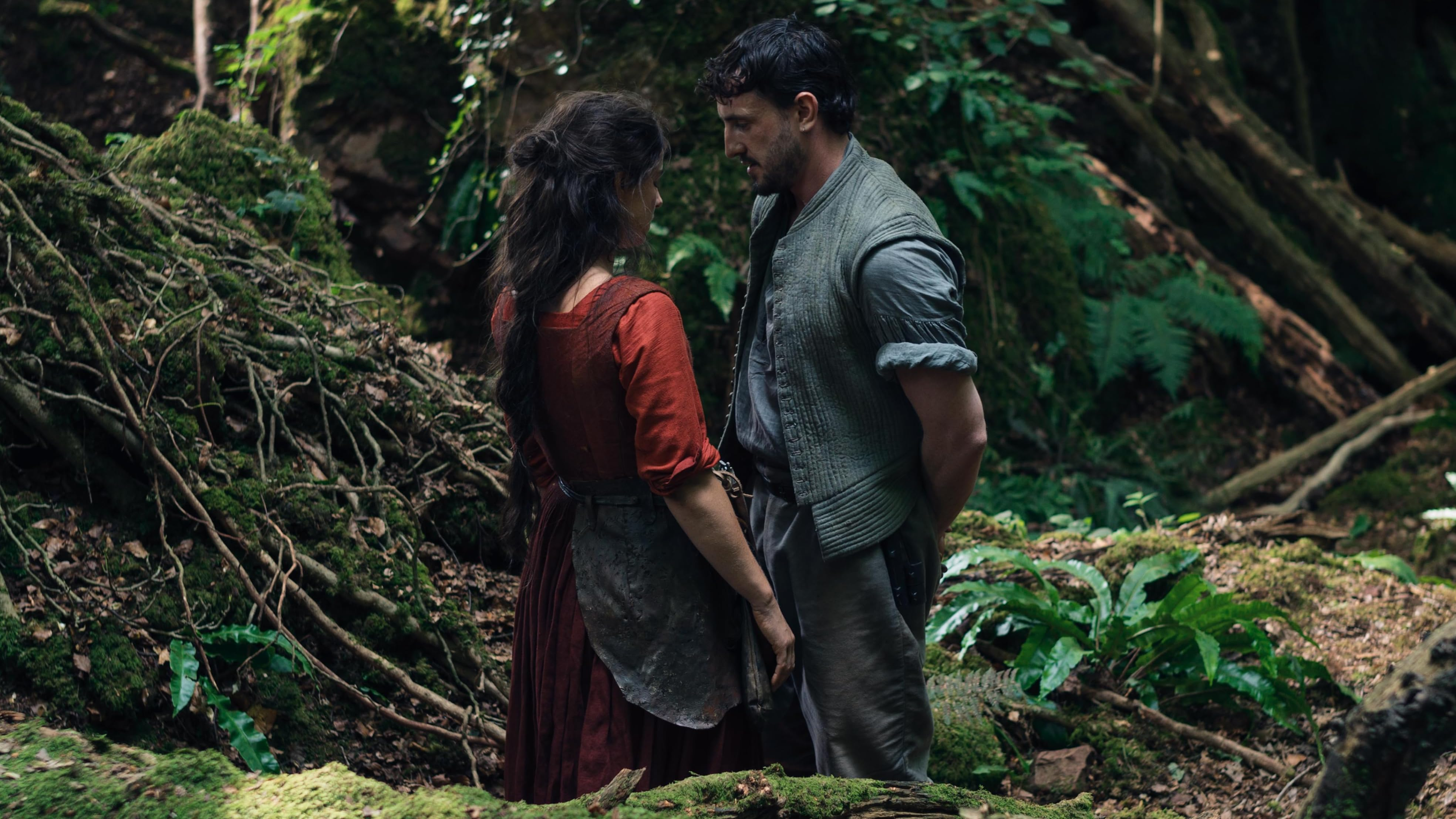
The film is less concerned with the legend of Shakespeare than with the human beings behind it: a scholar and poet struggling to find his literary voice, set against Agnes, a woman of the land and forest, spiritually attuned to nature, instinct, and ritual. Their romance blooms in the space between these worlds, with Agnes’s chanting communion with the natural world acting as an unspoken counterpoint to Will’s search for language and form.
Director Chloé Zhao brings her signature elegance and patience to the material, allowing moments to breathe and emotions to surface organically. Her collaboration with cinematographer Łukasz Żal results in imagery that feels almost painterly—soft, natural light spilling across interiors and fields, rendering the English countryside as something tactile and alive. Every frame seems steeped in earth, wind, and time, reinforcing the film’s grounding in the physical and the elemental.
At the centre of it all is Jessie Buckley, delivering a stunningly embodied performance as Agnes. Her work is raw, intuitive, and deeply moving—she plays grief not as a single rupture but as a living force that reshapes the body and spirit. Paul Mescal brings a quiet intelligence and aching restraint to William, capturing the tension between domestic devotion and creative restlessness, while the incredible, Jacobi Jupe, as the young son, Hamnet, adds genuine emotional resonance, grounding the family dynamic with heart-breaking sincerity.
Hamnet (2025) is ultimately a powerhouse drama about family, grief, and the curative—often painful—power of the creative process. It understands art not as triumph but as transformation, something born from love and loss in equal measure. My one reservation is a personal one: I found myself wanting more of Shakespeare’s journey in London and his struggle toward theatrical success and subsequent writing on the classic, Hamlet. But this absence is deliberate and understandable. The film is weighted toward the emotional interiority of Agnes’s experience, and in centring her perspective—so exquisitely rendered by Buckley—Hamnet (2025) finds its true, devastating strength.
Under-rated Classic Film Review #12: The Silent Partner (1978)
Directed by Daryl Duke
Written by Curtis Hanson – Based on Think of a Number 1969 novel by Anders Bodelsen
Produced by Joel B. Michaels & Stephen Young
Main cast: Elliott Gould, Christopher Plummer, Susannah York, Celine Lomez, John Candy, Stephen Young, Ken Pogue etc.
Cinematography by Billy Williams
Music by: Oscar Peterson
*** MAY CONTAIN SPOILERS ***
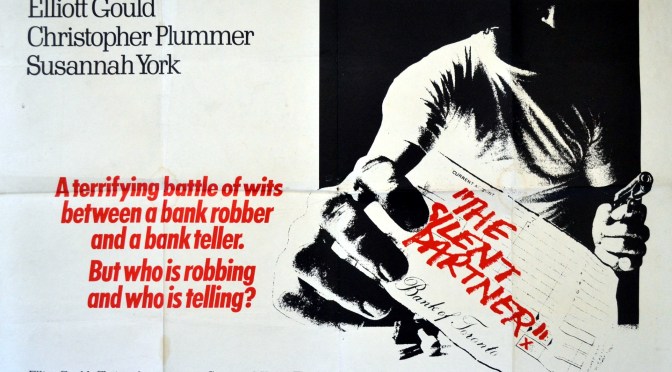
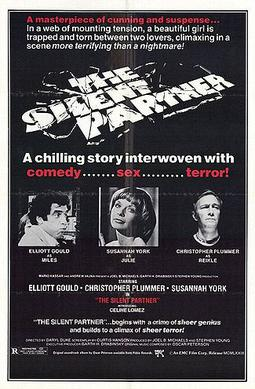
The Silent Partner (1978), directed by Daryl Duke and based on Anders Bodelsen’s novel Think of a Number (Tænk på et tal), stands out as not only one of the best Christmas thrillers of all time but also one of the most meticulously plotted crime thrillers outside of Alfred Hitchcock’s grand body of work. The film, which takes place against the snowy backdrop of Toronto, is a slick, taut, and endlessly clever exercise in suspense, filled with smart twists and an ever-present sense of menace.
At the heart of the film is a brilliantly constructed screenplay by Curtis Hanson, which provides the perfect vehicle for its two star actors: Elliott Gould and Christopher Plummer. The story’s premise is deceptively simple: Miles Cullen (Gould), a mild-mannered bank teller, discovers a discarded holdup note revealing an impending robbery. His quick thinking—suspecting the mall Santa, Harry Reikle (Plummer), to be the would-be robber—leads him to secretly hide $48,300 from the bank’s vault and give Reikle only a fraction of the money. When Reikle realizes he’s been swindled, the tension escalates, and Miles becomes the target of the dangerous and unhinged criminal, setting off a high-stakes game of cat and mouse.
The film’s brilliance lies in its ability to build both an intricate plot and a captivating atmosphere of suspense, while never losing its sense of humour. There’s a certain rhythm to The Silent Partner (1978), a precision that evokes the same sense of control as Hitchcock’s best thrillers. The story unfolds with a metronomic pace, carefully stacking one suspenseful moment after another, each new twist feeling earned and expertly timed.
One of the key pleasures of The Silent Partner(1978) is the pairing of Gould and Plummer, two actors who couldn’t be more different in their approaches to character. Gould plays Miles with a cool, calculating detachment—a man who might appear meek and even timid at first glance, but is secretly a clever and pragmatic planner. He’s the type of guy who thinks five steps ahead, carefully orchestrating every move as he tries to stay one step ahead of the increasingly unhinged Reikle. Gould’s portrayal is sharp, cerebral, and fascinating to watch as he navigates the complex moral terrain of his actions.
On the other hand, Plummer’s Harry Reikle is a chilling force of nature—volatile, unpredictable, and capable of explosive violence at the drop of a hat. He’s one of the best screen villains ever with Plummer delivering a performance that’s equal parts suave and menacing. His portrayal of Reikle is a study in contrasts—he’s charming one moment, a psychopath the next. Where Gould’s Miles is a thinker, Reikle is all instincts and rising rage. The tension between these two characters, each representing a different kind of threat, is what drives the film forward. It’s a masterclass in how to craft a compelling dynamic between protagonists and antagonists.
Beyond the characters and their performances, The Silent Partner (1978) stands out as a deeply satisfying crime thriller. The film is full of great set-pieces that slowly ratchet up the suspense—each one feeling like it could be the final nail in the coffin, but instead leading to a further complication. Whether it’s Miles using his wits to stay one step ahead of Reikle, or having to think on his feet having lost the key to the deposit box with the loot, every element of the plot is carefully calibrated. Even the Christmas setting, which could have been just a backdrop, is used effectively to heighten the film’s tension. The festive atmosphere of the holiday season contrasts sharply with the darkness of the film’s themes, creating a stark juxtaposition that enhances the thriller’s sense of dread.
The Silent Partner (1978) is a deeply underrated gem in the thriller genre. With a killer screenplay, two outstanding lead performances, and a plot that’s as intricately designed as a clockwork machine, it’s a film that rewards careful attention and repeat viewings. It’s a perfect blend of Christmas cheer turned upside down, and it holds its place as one of the finest thrillers ever made—one that, unfortunately, remains too often overlooked.
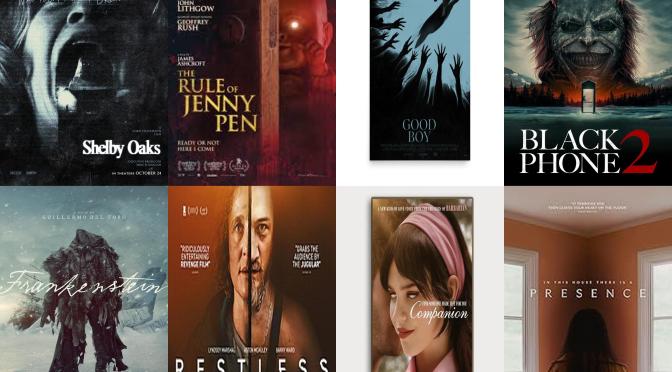
In the languid drift of autumn, when Halloween’s shadow lengthens and winter begins its slow, expectant inhale, the world seems to slip into a more suggestive register—one where every rustling leaf feels like a whispered omen. It is, of course, the most appropriate season to surrender to the year’s latest horror releases, as though communing with these cinematic phantoms might prepare us—spiritually, aesthetically—for the deeper darkness to come.
Which basically means I have been catching up with some 2025 horror film releases I missed at the cinema during autumn. A couple of these probably warrant more in depth solo reviews, but as I edge closer to old age and the reaper’s scythe, I am economizing somewhat.
*** MAY CONTAIN SPOILERS ***
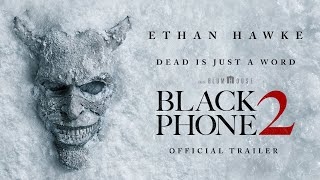
Black Phone 2 (2025)
Scott Derrickson and co-writer C. Robert Cargill deliver a sequel to The Black Phone (2021) with Mason Thames, Madeleine McGraw, Jeremy Davies, and Ethan Hawke reprising their roles from the first chiller. I actually enjoyed this one more than the original, which despite the clunky set-up, finds the siblings and others trapped in a teen camp hit by a blizzard. They find themselves hunted and haunted by both The Grabber (Hawke) and other ghostly spirits haunting the area. Derrikson throws a lot of horror tropes and the characters (literally in certain scenes) at the walls, and much of it sticks. Having said that, I still don’t think The Grabber is the scariest villain ever committed to screen, despite Hawke’s presence. (Mark: 7.5 out of 11)
Companion (2025)
Companion (2025) feels like Garland’s Ex Machina (2014) colliding elegantly with Fargeat’s feral Revenge (2017)—a sunny day-horror fable that hides its nastiest surprises in plain sight. Its twists are sharp, its aesthetic confident, and its ideas far more ambitious than its modest surface first suggests. I would have admired it even more were it not, on occasions, completely dumb. Plus, the occasional drift into a comedic register undercuts its more incisive moments. The beautiful Sophie Thatcher once again commands the screen with the same riveting presence she brought to Heretic (2024). Mark: 8 out of 11.
Graduation Day (1981)
Thanks to Bobby Carroll’s site for reminding me about slasher film, Graduation Day (1981), as I had completely forgotten about it. High quality kills and gore mask a screenplay which has more nudity than character development. Yet, I am a sucker for these 1980’s exploitation flicks and this is a watchable one. Mark: 6 out of 11
Good Boy (2025)
An low-budget horror film triumph with Ben Leonberg directing his own dog, Indy, a Nova Scotia Duck Tolling Retriever, as the only witness to nasty spirits threatening his owner. The film emerges as a formal tour-de-force, whose meticulous composition and deliberate pacing elevate its simple premise into something unexpectedly resonant. Its visual precision and rhythmic control shape an atmosphere of dread that feels more sculpted than sensational, grounding the film in an emotionally impactful narrative about loyalty, vulnerability, and the unsettling spaces between trust and fear. For all its craft, and impressive animal direction, the film doesn’t quite sustain a relentless menace throughout. But, it remains a memorable feature debut from Leonberg and Indy the dog. Mark: 8.5 out of 11.
Presence (2025)
In Presence (2024), David Koepp and Steven Soderbergh demonstrate just how potent a one-location horror film can be when discipline and imagination converge. The entire piece unfolds like a controlled exhale: a slow-build structure that trusts the audience to lean in, and a drifting, almost contemplative camera that adopts the ghost’s POV to quietly—sometimes imperceptibly—reveal fragments of the story. Instead of overplaying its hand, the film slow-drips its plot elements with an elegance that keeps tension suspended in the air, letting unease pool in the corners of an otherwise ordinary space. By the time it reaches its finale, Presence (2024) delivers not only a surge of emotional and thematic clarity but two genuinely surprising twists—earned, unsettling, and executed with the kind of precision that affirms both writer and directors’ mastery of the form. Mark: 8.5 out of 11.
Restless (2024)
Really good independent British thriller with Lyndsey Marshal as a nurse, Nicky, who finds herself terrorized by 24-hour partying thug neighbours. Writer-director Jed Hart creates great empathy and identification with the situation and it’s a shame decent British films like this get short shrift at the multiplexes. Nicky’s spiral into insomnia-driven madness is compelling as her desperate attempts to sleep give way to vengeance. But the film’s final act tonal turn denies us a full-on descent into suburban hell, for something amenable but unfortunately less twisted. Mark: 7.5 out of 11
The Rule of Jenny Pen (2025)
The Rule of Jenny Pen is an original, weird, and powerful shock of a film — a mash-up of psychological thriller and nursing-home horror that lands far more often than it stumbles. Its greatest strength is, without question, the towering performances at its centre. Geoffrey Rush and John Lithgow, two masters of calibrated gravitas, turn the film’s cat-and-mouse mind game into a gripping acting showcase. Together, they elevate the film’s themes of aging, vulnerability, and institutional neglect into something both unsettling and strangely beautiful. The plotting, however, does get a bit sticky toward the end. The final act jars slightly, causing me confusion in an otherwise tight psychological narrative. Still, even as the story wobbles a tad, the film’s originality, eerie tone, and powerhouse acting keep it compelling. Mark: 8 out of 11
The Woman in the Yard (2025)
The Woman in the Yard (2025) rises on the strength of Danielle Deadwyler’s commanding lead performance. As a mother trying to protect her two children from a funereal spirit lingering in their backyard, Deadwyler grounds the supernatural dread with raw emotional honesty. The child actors match her with a believable, lived-in family dynamic that makes the haunting feel all the more personal. Where the film falters is in its structure. The script leans heavily on crow-barred flashbacks that interrupt rather than enrich the unfolding tension. A more linear approach could have built a stronger emotional momentum, allowing the story’s grief, guilt, and mental illness to accumulate naturally instead of stuttering backward at key moments. (Mark: 6 out of 11)
Together (2025)
Together (2025) gets an immediate boost from the casting of real-life couple Alison Brie and Dave Franco, whose natural chemistry gives the film an authentic emotional core. As a pair trying to rebuild their relationship after moving from the city to a rural small town, they convincingly inhabit the tensions, resentments, and unspoken fears that surface long before the horror does. Their incompatible expectations feel lived-in — and once they tumble into a sinkhole and the strange bodily transformations begin, that emotional groundwork makes the nightmare hit harder.
I loved the trailer for this film, which promised a truly skin-crawling descent into body-horror chaos. The final product, while atmospheric and often engrossing, doesn’t fully deliver on that promise. It pulls back when it could push further, leaving some of the more disgusting, surreal possibilities off-screen. But the ending — bold, surprising and unexpectedly poignant — is a fantastic payoff. Even if the film doesn’t always reach the extremes it teases, Together still manages to leave a memorably twisted impression. Mark: 8.5 out of 11
Production companies: Paramount Network Television, Braga Productions & Rick Berman Productions
Selected writers: Brannon Braga, Rick Berman, Manny Coto, Mike Sussman, Phyllis Strong, Judith Reeves-Stevens, Garfield Reeves-Stevens, André Bormanis, Chris Black, David A. Goodman, Fred Dekker, and more.
Selected directors: Roxann Dawson, LeVar Burton, Robert Duncan McNeill, Allan Kroeker, David Livingston, Winrich Kolbe, James L. Conway, Mike Vejar, Michael Grossman, Marita Grabiak, Brennan Spencer, Michael S. Watkins, Vincenzo Natali, and more.
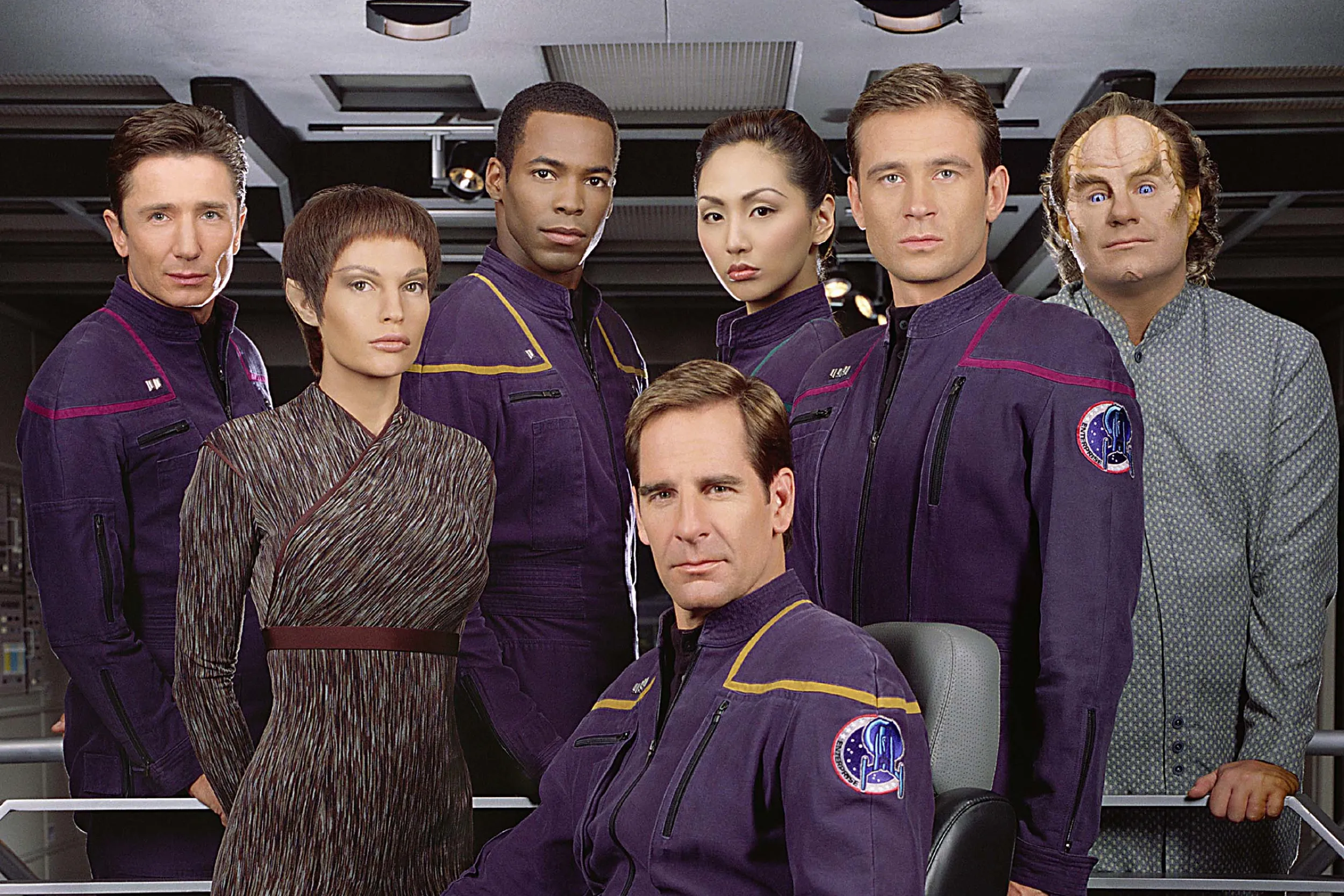
Main cast: Scott Bakula, John Billingsley, Jolene Blalock, Dominic Keating, Anthony Montgomery, Linda Park, Connor Trinneeretc.
Notable guest actors: Jeffrey Combs, Vaughn Armstrong , Gary Graham, Matt Winston, Randy Oglesby, James Cromwell, Brent Spiner, Daniel Dae Kim, Fionnula Flanagan, Robert Picardo, Tony Todd, Bruce Davison, Seth MacFarlane, Steven Culp, Noa Tishby, Rene Auberjonois, Peter Weller, Dean Stockwell etc.
Composer(s): Dennis McCarthy, Jay Chattaway, Brian Tyler, John Frizzell, Mark McKenzie, David Bell, Velton Ray Bunch, Kevin Kiner & Paul Baillargeon
*** MAY CONTAIN SPOILERS ***
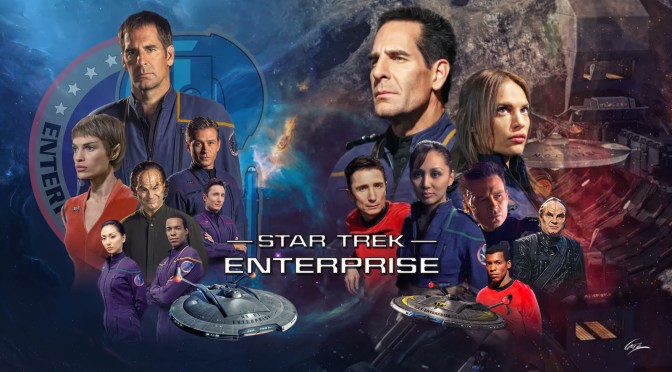
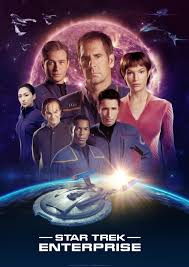
It’s been a while since I reviewed Star Trek on the site. But I have now finally completed the task I set myself to watch and review all the legacy Star Trek series. I am currently on the fence regarding the more recent Star Trek offerings. Anyway, having reviewed Voyager (see below) last year, I can now provide a detailed report back on Enterprise.
Star Trek: Enterpriseoccupies a fascinating corner of the franchise’s sprawling canon. Set a century before Kirk and more than a century after humanity’s first steps into spaceflight, the series charts the formative years of Starfleet—before there even was a “Starfleet” in the sense fans recognize. Its premise alone is rich: a pre-Federation frontier where humanity is inexperienced, unsteady, and often outmatched, yet eager to join a much larger galactic community. In this sense, Enterprise is both a prologue and a missing link, retrofitting the swaggering optimism of The Original Series with a more grounded, early-21st-century sensibility.
The show’s commitment to exploring those transitional years is what secures its place in canon. Enterprise seeds the diplomacy, technology, and interspecies tensions that future shows build upon—from the first warp-5 engine, to early encounters with Vulcans, Andorians, and the ever-shadowy Temporal Cold War. Watching Captain Jonathan Archer and his crew stumble toward the ideals later embodied by the Federation gives the series a distinctive historical weight. It doesn’t merely fit into Star Trek continuity; it actively sculpts the bedrock beneath it.
Central to the show’s appeal is Scott Bakula, whose performance as Captain Archer blends warmth, stubbornness, and a palpable sense of moral growing pains. Bakula gives Archer a grounded humanity that stands apart from the polished command styles of Picard or the passionate Sisko, yet his sincerity and resolve make him every bit their equal. When the writing rises to meet his talent—as in standout episodes like “Cogenitor,” “The Andorian Incident,” “Carbon Creek,” or the Xindi arc’s best moments—the show can reach the emotional and thematic heights of The Original Seriesand The Next Generation.
But Enterprise is also a series defined by uneven execution. For every episode that lands with classic-Trek resonance, there are others hampered by muddled plotting, bland direction, or creative decisions that feel more reactive than visionary. The show often struggled to decide whether it wanted to be a rough-edged prequel, a 2000s-era action drama, or a traditional episodic Trek—frequently trying to be all three at once. While it contains genuinely excellent science-fiction storytelling, its overall writing and directorial cohesion never consistently matched the clarity, ambition, or confidence of its most celebrated predecessors.
Yet despite its flaws, Star Trek: Enterprise remains an essential and often underrated part of the canon—a show whose best moments remind us exactly why Trek endures, and whose imperfections make its aspirations feel all the more human. Here are eight of the best episodes I watched – two per series.
Series 1 – The Andorian Incident (Episode 7)
This episode is the first truly great hour of Enterprise—the point where the show proves it can handle nuanced political storytelling within the Trek universe. The introduction of Jeffrey Combs as Shran is a masterstroke; he immediately brings depth, wit, and volatility to the Andorians. The plot, centered on Archer and his crew discovering that a supposedly pacifist Vulcan monastery is hiding darker secrets, reshapes our understanding of Vulcan–Andorian tensions. Strong direction, tight pacing, and a morally thorny reveal make this the first episode that feels essential to larger Star Trek canon.
Series 1 – Dear Doctor (Episode 13)
A thoughtful, character-driven story told through Dr. Phlox’s personal logs, “Dear Doctor” represents Enterprise at its most philosophically ambitious. It confronts the ethics of medical intervention, cultural evolution, and the limits of humanitarian aid—classic Trek territory handled with sensitivity and restraint. John Billingsley delivers one of the best performances of the season, infusing Phlox with curiosity, compassion, and unsettling pragmatism. The episode’s controversial ending also resonates, sparking debate among fans and critics alike. It’s a quietly powerful hour that demonstrates the series’ potential for moral complexity.
Series 2 – Carbon Creek (Episode 2)
Widely regarded as the highlight of Season 2—and for many, the best Enterprise episode of its first two years—“Carbon Creek” is a charming, unexpectedly heartfelt detour into Trek history. Told by T’Pol as a possibly-true, possibly-mythic story, it follows a stranded Vulcan survey team living incognito in 1950s Pennsylvania. The fish-out-of-water premise is handled with warmth, humour, and subtle social commentary, while Jolene Blalock shines in a dual role that lets her explore a softer, more playful Vulcan persona. It’s imaginative, character-rich, and quietly profound—the kind of tonal experiment that pays off beautifully.
Series 2 – Regeneration – (Episode 23)
A tense, surprisingly effective prequel to The Next Generation’s Borg storyline, “Regeneration” threads a tricky needle: introducing Borg elements without breaking canon. The episode smartly uses the wreckage from Star Trek: First Contact as its entry point, turning the narrative into a chilling, atmospheric thriller. The direction is sharp, the pacing taut, and the danger feels unusually real for this era of Trek. The crew’s desperation—fighting an enemy they can’t possibly understand—creates some of the season’s most gripping moments. It’s both fan-pleasing and genuinely suspenseful.
Series 3 – Twilight – (Episode 8)
Often cited as the masterpiece of Season 3, “Twilight” is a time-bending character drama that blends emotional storytelling with classic Trek sci-fi ingenuity. When Archer becomes afflicted with a neurological condition that erases his short-term memory, the episode jumps forward into an alternate future where humanity has been nearly wiped out by the Xindi. What follows is a surprisingly intimate exploration of Archer and T’Pol’s relationship, played with sincerity and restraint by Scott Bakula and Jolene Blalock. The script balances tragedy, hope, and big ideas without feeling gimmicky. It’s moving, tightly written, and stands alongside the franchise’s finest “what-if” stories.
Series 3 – Azati Prime – (Episode 18)
“Azati Prime” is the moment Season 3’s slow-burn storytelling snaps into urgent, high-stakes clarity. The episode follows Archer’s attempted suicide mission to destroy the Xindi superweapon, giving Scott Bakula one of his strongest performances in the entire series. The moral weight is heavy, the action tense, and the pacing relentless. Crucially, this is where the Xindi cease being abstract antagonists and become three-dimensional political factions torn between fear and diplomacy. The episode’s final act—Enterprise under brutal assault—is among the most cinematic sequences the series ever produced, setting up the endgame of the season with real emotional gravity.
Series 4 – United – (Episode 13)
“United” is Enterprise finally fulfilling its prequel potential—showing the messy, reluctant, and hard-fought beginnings of what will eventually become the United Federation of Planets. The political maneuvering is smart and grounded, the Andorian–Tellarite tension is played with grit and humor, and Jeffrey Combs delivers another magnetic performance as Shran. The episode’s centerpiece—the Andorian duel where Archer must fight to prevent a larger war—is tense, dramatic, and deeply character-driven. It’s classic Trek diplomacy mixed with riveting conflict, all while pushing the franchise’s history forward in meaningful ways.
Series 4 – In a Mirror, Darkly – (Episodes 18–19)
One of the most stylish and purely fun stories Enterprise ever told, this two-parter fully embraces the decadent brutality of the Mirror Universe. The production team goes all-in: redesigned sets, re-imagined uniforms, a pulpy remixed title sequence, and a stunning recreation of the USS Defiant from The Original Series. The cast seems to relish the opportunity to play villainous, unhinged versions of their characters—especially Jolene Blalock and Connor Trinneer. Visually bold, lore-rich, and brimming with dark humour, “In a Mirror, Darkly” is a love letter to both TOS and long-time Trek fans.
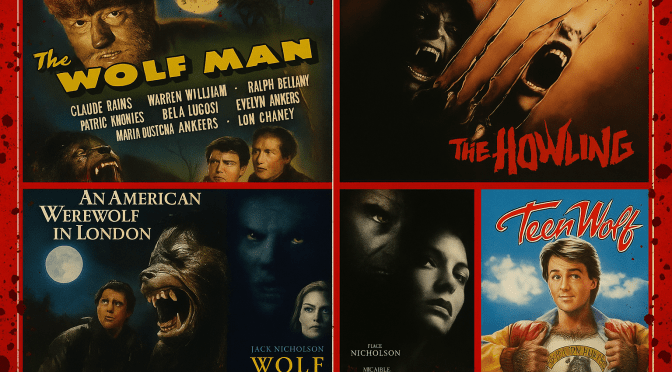
Halloween Review Special: Werewolf Films – Part #2
Happy Halloween again! Part 1 of my Werewolf film reviews can be found here on this link. So, on with Part #2 with all films marked out of 11!
*** CONTAINS SPOILERS ***
Ginger Snaps (2000)
Ginger Snaps (2000) is a rare and refreshing take on the werewolf myth, shifting the focus to the female experience with wit and bite. As the awkward Bridget, Emily Perkins gives a wonderfully grounded performance, desperately trying to save her sister Ginger after a fateful wolf attack. Cleverly linking the lunar and menstrual cycles, the film transforms body horror into a sharp coming-of-age allegory. Smart, sexy, and darkly funny, it’s packed with gallows humour, fantastic gore, and a subversive energy that makes it one of the standout horror films of its era. Mark: 9 out of 11
Howl (2015)
Howl (2015) is an underrated British werewolf gem that feels like Dog Soldiers (2002) set on a train — claustrophobic, gritty, and laced with dark humour. Ed Speleers plays a weary, beta-male guard whose routine night shift derails into a fight for survival when the train breaks down in the woods. As tensions rise among the stranded passengers, he’s forced to find his courage against something far more terrifying than “leaves on the line.” Mark: 8.5 out of 11
The Howling (1981)
Joe Dante’s The Howling (1981) may now feel almost plotless in retrospect, but it remains a deliriously inventive slice of horror cinema. The film thrives on unforgettable set-pieces and grotesque energy — from a chillingly unrecognisable Robert Picardo as the predatory Eddie Quist to Elisabeth Brooks’ hypnotic, sensual menace. Dee Wallace delivers a strong turn as the quintessential scream queen, leading to an unintentionally funny change at the end, while Rob Bottin’s groundbreaking transformation effects still stand among the genre’s finest. Mark: 8 out of 11
Red Riding Hood (2011)
A messy yet oddly entertaining blend of Twilight-style romance, fairy-tale gothic, and werewolf whodunnit. Amanda Seyfried glows at the center of the melodrama, giving the film more heart than it deserves, while Gary Oldman chews through his lines — and the scenery — with the gusto of a man earning a very comfortable Hollywood paycheck. Mark: 5.5 out of 11
Silver Bullet (1985)
Silver Bullet (1985) carries many of the familiar hallmarks of Stephen King’s storytelling — small-town paranoia, moral rot beneath the surface, and a sense of homespun Americana under siege — but lacks the sharpness of stronger King adaptations. While it holds a nostalgic charm for 1980’s horror fans, thanks to its mix of pulp, sentimentality, Gary Busey-on-butane, and Corey Haim’s spirited performance, it’s far from essential and not one of my go-to werewolf films. Mark 6.5 out of 11
Teen Wolf (1985)
I’m ashamed to admit I’d never seen Teen Wolf (1985) until now — but it’s a charming coming-of-age comedy that finds Michael J. Fox as Scott Howard, a teenager who discovers a very hairy family secret. Scott juggles puberty, romance, bullies, and basketball glory. The adults are enjoyably eccentric, but it’s James Hampton as Scott’s warm, understanding father who grounds the film with genuine heart. Mark 7 out of 11
Werewolves (2024)
Werewolves (2024) boasts an intriguing premise — scientists racing to cure humanity of a wolf-mutant virus unleashed under a supermoon — and delivers plenty of muscular action-horror energy. Frank Grillo anchors the nocturnal mayhem with his trademark grit, like a U.S. Statham. It’s entertaining, but the world-building feels rushed, as if we’ve dropped into the sequel to an origin story that doesn’t exist yet. Mark 6 out of 11
Werewolves: The Beast Amongst Us (2012)
Werewolves: The Beast Amongst Us (2012) is an entertaining but clearly made-for-TV creature feature that feels like a bargain-bin mashup of Stephen Sommers’ The Mummyand Van Helsing — all gothic flair and monster mayhem, but without the budget, stars, or polish. Still, its pulpy enthusiasm and old-school monster-hunting energy make it a mildly fun watch for fans of B-movie beast action. Mark 6 out of 11
Werewolves Within (2021)
Werewolves Within (2021) has a sharp, witty script packed with humour and clever twists, but its over-the-top direction and eccentric ensemble make it hard to fully connect with. Sam Richardson shines as the affable Forest Ranger caught amid a group of oddball townsfolk — and a monster on the loose. Fast-paced, funny, and gory, it plays like Tremors set in the snow — just without the magic that made that classic so effortlessly great. Mark 7 out of 11
Wolf (1994)
Wolf (1994) suffers from an under cooked corporate-werewolf concept that never quite decides if it wants to be a horror film, a romance, or a satire — and ends up failing at all three. Jack Nicholson and Michelle Pfeiffer, both usually magnetic, seem oddly disengaged under Mike Nichols’ overly restrained direction. The film has flashes of intrigue and style, but it lacks bite; James Spader, simmering with sleaze and menace, could have stolen the show if only he’d been let off the leash. Mark: 6 out of 11
Wolfcop (2014)
WolfCop (2014) is a gloriously bonkers B-movie romp about an alcoholic small-town cop, Lou Garou (Leo Fafard), who becomes a werewolf and stumbles into a plot of witchcraft and sacrifice. Director Lowell Dean brings wild energy and gleeful chaos to the mix, delivering gory action and sharp humor that far outshine the film’s modest budget. It’s ridiculous, rowdy, and an absolute blast from start to finish. Mark: 7.5 out of 11
The Wolf Man (2010)
The Wolfman (2010) is a stylish, brooding gothic remake elevated by Rick Baker’s stunning creature effects and an atmosphere dripping with fog, blood, and tragedy. On rewatch, it’s far more enjoyable than it first seemed, with Benicio Del Toro and Emily Blunt grounding the film’s emotional heart while Anthony Hopkins bellows through his expositional monologues with Shakespearean gravitas. The production design, lighting, and Danny Elfman’s sweeping score are all superb, but the film’s flaws are clear — studio meddling and re-shoots leave the opening character setup feeling rushed and the narrative uneven, hinting at a richer version lost to the editing room. Mark: 7 out of 11
For fans of Upgrade (2018) and The Invisible Man (2020), Wolf Man may feel like a missed opportunity. Those films balanced high-concept storytelling with sharp social commentary, whereas Leigh Whannell’s latest effort feels more like a half-formed howl in the night. See my full review here. Mark: 6.5 out of 11
The Wolf of Snow Hollow(2020)
The Wolf of Snow Hollow (2020) delivers an effective monster story filtered through Jim Cummings’ uniquely neurotic, darkly comedic lens. Cummings stars as a frazzled small-town cop juggling alcoholism, a dementia-stricken father, and a teenage daughter — all while a vicious creature tears through the community. It’s an offbeat, entertaining indie horror with sharp writing, emotional bite, and a fantastic twist buried in the chaotic narrative pile-up of its finale. Mark 8 out of 11
The Wolfman (1941) / Frankenstein meets The Wolfman (1943)
Lon Chaney Jr. has always been my favorite tragic werewolf — a figure of deep sadness and empathy rather than pure monstrosity. I grew up watching those classic Universal horror films, and his portrayal of Larry Talbot still resonates as one of cinema’s most heartbreaking depictions of the cursed outsider. There’s a weary humanity to Chaney’s performance, a sense of a man doomed to repeat his suffering under the full moon, forever torn between guilt and fate.
While the scripts in those early Wolf Man films are often simple and melodramatic, their emotional weight endures thanks to Chaney’s sincerity and Jack Pierce’s groundbreaking makeup effects. Pierce’s work transformed the genre, creating an iconic design that remains unmatched in its tactile, hand-crafted artistry. Together, Chaney and Pierce gave the werewolf myth its soul — one that was less about savagery, and more about the tragedy of being human within a cursed lunar cycle. Mark: 9 out of 11


 The Cinema Fix presents