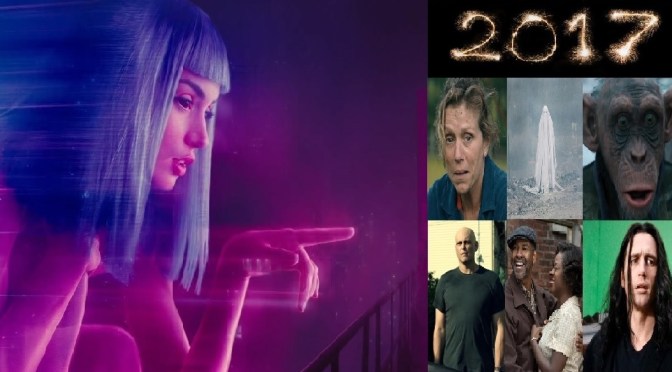
Category Archives: Cinema

BLADERUNNER 2049 (2017) – CINEMA REVIEW

BLADERUNNER 2049 (2017) – CINEMA REVIEW

**CONTAINS MILD SPOILERS**

Philip K. Dick’s dense, dystopic and futuristic novel, Do Androids Dream of Electric Sheep (1968), is an ugly, beautiful, depressing, obtuse, hypnotic wade-through-treacle read full of incredible concepts relating to: Artificial Intelligence; robot technology; android simulacra; animal husbandry; apocalyptic disease; virtual reality/empathy mood tech; extinguished humanity; and ultimately, of course, mortality and death. The fact that Hampton Fancher and David Webb Peoples were able to fashion a workable screenplay for Ridley Scott to direct is a creative miracle in itself. Moreover, it is testament to the writing and Scott’s incredible production team that Bladerunner (1982) is held in such high esteem among cinema fans now.

do-androids-2

The original Bladerunner, despite bombing at the box office and subsequently going through a number of cuts, re-cuts, final cuts and re-re-re-releases, has become a bona fide science fiction cinema classic. I watched the original theatrical version recently and despite the deadpan Harrison Ford voiceover and spurious, tacked on “happy” ending, it actually has a lot going for it. Obviously the ‘Unicorn Dream’ re-edits released under the guidance of Ridley Scott are the purer versions but the film holds up notably because of Ford’s gruff, depressive and world-weary performance as Rick Deckard; the imperious psychopathy of Rutger Hauer as android assassin Roy Batty; Scott’s glorious tech noir rendition of our desecrated future; as well as the evocation of Philip K Dick’s thematic existential power.

wallpaper-nissan-gtr-bladerunner

Thus, to offer up a near three-hour sequel to a box office bomb of an almost unfilmable novel was something I thought extremely brave from a creative and business perspective. However, as soon as I saw the director Denis Villeneuve was attached, I immediately knew that Bladerunner 2049 was a must-see! This filmmaker has elevated himself to the higher echelons of Hollywood directors with superlative work such as: Incendies (2010), Prisoners (2013), Enemy (2014), Sicario (2016) and Arrival (2016). In such films he was able to meld story, style, character and performance to create very accessible genre films which encapsulate the pain and drama of the human condition adroitly.

In Bladerunner 2049, the future’s orange but, like the original novel and film adaptation, it’s definitely not bright! We are in a sick, unforgiving and murderous world where a dying Earth, specifically California, is inhabited by killer replicants, pleasure models, and totalitarian law enforcement and overseen by the venal, profit driven capitalist oligarchic Wallace Corporation. In this vision of Earth, men, women, children, animals and robots are all slaves to be bought and sold to the highest bidder. I have seen some critique that the film is exploitative in its female representations but the films reflects much that is wrong with our world today and the original novel’s dystopic and misanthropic themes.

blade-runner

Both male and females are objectified and deemed commodities and alas that is true too of the sick world we live in today, yet perhaps just not as blatant? Bladerunner 2049, I does not offer solutions but depressingly mirrors society’s desire to sexualise and exploit others. Our “hero” the replicant cop ‘K’ (Ryan Gosling) is a victim of such exploitation in his touching relationship with A: I hologram Joi (Ana De Armas). Ultimately, he learns that they’re all being faked by the horrific technological nightmare they call existence. I think it extremely interesting that K’s wry smile when he realises he has been exploited by the Wallace Corp. product Joi; and paradoxically this demonstrates his humanity.

Blade+Runner+2049-1.jpg

Villeneuve, aided with startling artistry by cinematographer Roger Deakins directs from a screenplay written by original writer Hampton Fancher, plus Michael Green. One could argue that the original Bladerunner is style over content, as the story was distilled to that of Deckard basically hunting down a bunch of outlaw robots. However, the style WAS the content along with the dense richness of the themes. Similarly, Bladerunner 2049 does not have a particularly complex plot, save for one fantastic thematic reversal, yet at its heart it explores the powerful question of what it means to be human? I think all intriguing narratives should ask this and explore important notions of existence. I mean, it’s not surprise Gosling’s character is called ‘K’ – because the story echoes Kafka’s The Trial in many ways. Indeed, is his seemingly futile search for meaning or humanity just a pointless pursuit or is it reward enough to delude oneself with the possibility of hope or love? Life and the decision whether to carry on regardless is therefore very much on trial.

blade2.png

I think this is a film which will benefit from further viewings. I felt like I was watching a Tarkovsky or Bergman film on a massive budget.  It’s like Denis Villeneuve managed to combine, with the writers and designers, an indie-Hollywood-art film installation. I would say this is a character and theme led narrative rather than purely plot driven. Even Niander Wallace’s (Jared Leto) weirdness, while not essential for the plot, added to the depth of character and surface emotion. He felt like a Colonel Kurtz figure trapped in his own insane delusion and obsession. Could he have been a replicant too? Likewise, Harrison Ford’s reappearance as Deckard adds great flavour to a wonderful sci-fi broth. Yet, his aging persona is integral to the plot and not simply a meta-textual nod to the original film.

BRUNNER2049


Ultimately, we mere mortals are arguably not worthy to critique this fantastic work of genre art cinema. I understand it was slow but that almost increased the joy for me. It moved glacially but with high confidence and in Ryan Gosling it had a bona fide star to guide us through this sick yet beautiful world. Moreover, the sound design and music from Hans Zimmer and Benjamin Wallfisch was a powerful force which heightened the suspense and paranoia. While the visuals are absolutely breath-taking I was also drawn in by the existential intrigue of the themes.  Technically, within the story, the replicants are not living people but we empathise with their plight nonetheless because THEY are US. There lies the paradox and beauty of this film, in that I cared and was fascinated by what happened to actors playing robots on the cinema screen.

(Mark: 10 out of 11)

THE KILLING OF A SACRED DEER – LONDON FILM FESTIVAL 2017 – REVIEW

THE KILLING OF A SACRED DEER – LFF 2017 – REVIEW

I started writing film reviews a few years ago and the main reason was because I wanted to try and understand why I liked or disliked a film. I also wanted to improve my creative writing by understanding the thought process of others.  Living filmmakers whose work I have consistently enjoyed, save for the odd one here or there, are: Martin Scorsese, Quentin Tarantino, The Coen Brothers, Lynn Ramsay, Jonathan Glazer, Woody Allen (even some of the later ones), Park Chan Wook, David Fincher, Edgar Wright, Jacques Audiard, Darren Aronofsky, Kathryn Bigelow; and many others no doubt!

Such directors capture the quintessence of what cinema is for me. Not simply just in style and form but also powerful themes, imaginative concepts and sheer bloody entertainment. Filmmakers, of late, you can add to that list are: Denis Villeneuve, S. Craig ZAHLER and Greek filmmaker Yorgos Lanthimos. I have now seen three of his films, namely: Dogtooth (2009), The Lobster (2015) and his next release The Killing of a Sacred Deer (2017), and they all defy conventional film conventions to deliver absurd, surreal, funny, dark, thought-provoking and imaginative visions of human nature. Also, let’s not forget the writer too; so kudos to his writing partner Efthymis Filippou, who combines with Lanthimos to create such memorable cinematic offerings.

the-killing-of-a-sacred-deer-cannes-win

The story itself begins in a reasonably conventional fashion. Colin Farrell’s successful surgeon, Steven Murphy, is happily married to his wife, Anna, portrayed with glacial precision by Nicole Kidman. They have two healthy and intelligent children, a boy and a girl, and their lives are a picture of upper middle class contentment. Steven and Anna’s family equilibrium is skewed when a teenage boy, Martin, brilliantly portrayed by Barry Keoghan, inveigles his way into their lives through a combination of innocent charm and surreptitious pathos. Martin is a dark angel representative of the cloud of sickness and guilt and remorse and his actions force Steven and Anna to have to face up to a parents’ worst nightmares.

killing_deer

Lanthimos and Filippou, in Godardian fashion, constantly calls attention to cinema form; especially with a strangely effective form of anti-acting where, Farrell notably, dryly delivers dialogue as unconnected non-sequiturs. The words also constantly surprise us as the characters speak at each other with phrases that create humour and emotional disassociation. Nonetheless, such artifice only adds to the off-centre and sinister nature of the piece. The film is also beautifully shot with a wonderful symmetry to the composition of many shots. I also liked the choice of wide-angle lenses and the flowing Steadicam shots. Many were pitched at just over head-height, and provided an eerie floating sensation throughout the drama.

killing-of-a-sacred-deer

Colin Farrell (as he did in The Lobster (2015), Nicole Kidman and the rest of the cast buy completely into Lanthimos and Filippou’s striking vision which takes its’ influence from l Greek tragedy. But while Farrell excels in another praiseworthy under-stated deadpan performance, Barry Keoghan steals the show. The young actor follows up his impactful supporting appearance in Dunkirk (2017), with a compelling character study and eerily mature portrayal. Overall, this is a gripping, absurd thriller-turned-horror film which constantly wrong-footed me with its plot turns. It is a truly chilling, yet darkly comical and surreal genre film that manages to be somehow extremely accessible too.

(Mark: 9 out of 11)

THREE BILLBOARDS OUTSIDE EBBING, MISSOURI (2017) – LONDON FILM FESTIVAL REVIEW 2017

THREE BILLBOARDS OUTSIDE EBBING, MISSOURI (2017)

“There’s no question that a great script is absolutely essential, maybe the essential thing for a movie to succeed.”Sydney Pollack

Directors are often held up by critics and audience alike as the God’s of film; controlling and pointing and designing and envisioning and corralling their mass creative power to thrust upon the cinema screen. Of course, with many directors or auteurs, the lofty praise is deserved but hey, did they create that vision or story or character arc in a vacuum? No, they had blueprint on a page first. They had a screenplay written by themselves or a determined writer or writing team sitting in a windowless office smoking a thousand cigarettes while slaving to get words on a page in some semblance of a coherent filmic fashion. It seems obvious to say but a great screenplay is the (skeleton) key for any great film; it’s the bones with which to hang the meat and muscle and later the clothes of any movie.  Without powerful bones a film will not stand strong. It will fall.

mcdormand

Screenwriter (and director) Martin McDonagh has, in Three Billboards Outside Ebbing, Missouri constructed one of, if not the most, formidable screenplays of the year.  As a playwright he won many awards for his works and his film, In Bruges (2008), was a deceptively simple story of two hitmen on the run which, with rich thematic power, became a darkly hilarious existential comedy-drama. His follow-up Seven Psychopaths (2012) was a heady mix of criminals versus writers in a meta-fictional Hollywood-based narrative; which while brilliantly written and performed arguably lacked the punch of In Bruges. Now, with Three Billboards Outside Ebbing, Missouri, McDonagh has delivered his best film to date; a highly emotional human drama which contains some of incredible characterization, dialogue and zinging one-liners which bounce off the page and crackle on the screen.

woody-harrelson-sam-rockwell-three-billboards-outside-ebbing-missouri-600x324-585x324

Eschewing a more traditional structure the script’s inciting event – the murder of a young girl called Angela Hayes (Kathryn Newton) – has already occurred and therefore we are thrust immediately into the grief of main protagonist Mildred Hayes, portrayed with an iron veneer by the remarkable Frances McDormand. Her study of a grieving Mother, who is no longer prepared to sit by and wait for her daughter’s killers to be found, is awe-inspiring. Firing a rocket into the patriarchal-dominated police department ran by Chief Bill Willoughby (Woody Harrelson) she sets in motion a series of unforgettably tragic, violent and blackly comedic scenes.  In using the three billboards to question Willoughby’s investigation she utilises physical media as a larger form of the ‘Scarlet Letter’; an old fashioned “name and shame” device. Because Mildred, is refreshingly traditional and old-fashioned and in rural, small-town America the Internet just won’t hack it for her. She is about direct, in-your-face and ballsy action.

As a study of grief this is similar in feel to the majestic Manchester-by-the-Sea (2016) and no doubt, like Kenneth Lonergan, McDonagh will be picking up many awards for his nuanced screenplay. He imbues each of the characters with a flawed, yet rounded humanity. He takes risks by making his main protagonist, despite her loss, kind of unlikeable. Yet we are always with Mildred because she is righteous and swimming against the tide of authority and masculine dominance. Plus, she surprises us with her actions and language and violence. Below the tough exterior though there is also a vulnerability which makes us love her too and empathise fully with her loss.

Three_Billboards_Outside_Ebbing_Missouri-232587360-large

McDonagh and his filmmaking team have also put together a phenomenal ensemble cast including: Woody Harrelson, Peter Dinklage, John Hawkes, and Abbie Cornish etc. Sam Rockwell is especially memorable as the immature, inept and thuggish mother’s boy, Jason Dixon. His scenes with both Frances McDormand and his on-screen Mother, played with deadpan gusto by Sandy Martin, crack with complex emotion and humour. Collectively they portray imperfect characters whose lives have not just been dealt a bum hand but their situation is exacerbated by poor decisions based on emotion and frustration with life and the world. Ultimately, this is an excellent cinematic experience funny, shocking and moving; only possible because of the expert script from a great writer.

(Mark: 10 out of 11 – and the script goes up to 11!)

BRAWL IN CELL BLOCK 99 (2017) – LONDON FILM FESTIVAL 2017 REVIEW

BRAWL IN CELL BLOCK 99 (2017) – REVIEW

“Through me you go into a city of weeping; through me you go into eternal pain; through me you go amongst the lost people.”
Dante Alighieri, The Inferno

**CONTAINS MINIMAL SPOILERS**

The concept of Katabasis is a descent of some kind, such as moving downhill, or a military retreat, or in this context, a violent journey into the underworld. The term has multiple related meanings in poetry, psychology and Greek Mythology. Heroes such as: Orpheus, Odysseus and Lazarus went down into the depths of Hades to locate lost loved ones, collect information and battle their demons. Conversely, writer-director S. Craig Waller has produced something akin to Sam Peckinpah reinventing the story of Orpheus. But instead of employing beautiful music to crush the enemy, Waller’s anti-hero Bradley Thomas, uses his fists, head, body, bats, bars, guns, and hulking power to defeat his foes.

Brawl-In-Cell-Block-99-Trailer

The story opens with a stunning shot from behind of Vince Vaughn’s bald, bulking head emblazoned with a startling crucifix tattoo. As a means of establishing character and showing us the world we’re in it is emphatic, visceral and deviously economic. You know immediately not to mess with Bradley Thomas as he is a coiled spring of masculine power, yet he also has a strong moral compass. Finding himself out-of-work and in difficult financial times, Thomas takes up drug courier work to support his pregnant wife portrayed by Jennifer Carpenter. All is going smoothly until a deal with a Mexican drug cartel goes awry and, from when Thomas enters prison, all manner of sickening and brutal hell breaks loose.

The film is shot on a low budget but the style is impressive. The cinematographer, Benji Bakshi, along with the director Waller, are brave in their choices; utilising natural light, drained colours, shadows and darkness. Often Thomas’ is lit by a slit or shaft or box of light as his character finds himself trapped in corridors and cells as well as his own life choices. Much will also be made of the ultra-violence which includes some impressive bone-crunching Foley sound work. But, the hyper-real violence, while reminiscent of the cartoon horror gore of early Peter Jackson and Sam Raimi’s Evil Dead series, is paradoxically not exploitative. This is because it is contextualised within the brutal crime setting and driven by Thomas’ powerful desire to save the people he loves.

brawl_2

The screenplay, also written by Waller, is full of witty one-liners and deadpan repartee between hard-bitten, desperate criminals and jailers who look as though they have been transported right out of hard-pipe thrillers such as: John Carpenter’s Assault on Precinct 13 (1976), Sam Peckinpah’s Bring Me the Head of Alfredo Garcia (1974) and Don Siegel’s crime gem Charley Varrick (1973).  While over two hours long the plot moves pretty quickly, yet Waller takes his time deliberately building character, suspense and tension before busting out into spectacular violence. Having previously directed the stunning B-movie Western Bone Tomahawk (2015), S. Craig Waller is certainly making a name for himself as an independent film director of some note.

Waller finds a compelling cinematic partner-in-crime in Vince Vaughn too. Vaughn, who burst on the scene with a hilarious performance in brilliant indie-hit Swingers (1996), could be argued to have not lived up to his full acting potential. While he has performed in some excellent movies his CV is also peppered with unfunny comedies, soporific romances and bland family films. Don’t get me wrong, we have to pay the mortgage but there’s always been a nagging sense Vaughn was not utilising his meaty acting ability. Having said that in Hacksaw Ridge (2016) and now Brawl in Cell Block 99, he proves himself to be a character actor of some force. Indeed, his natural comedic timing, muscular frame and searing intensity are all utilised here to mesmeric impact in a career-best performance.

brawl.jpg

Katabasis, as aforementioned, is about descent; but the archetypal hero will usually return triumphant in victory. Brawl in Cell Block 99 offers an alternative vision of moral redemption though within Bradley Thomas’ avenging-angel-versus-the-devil narrative. As such, Brawl in Cell Block 99 joins a list of recent lower-budgeted-independent-minded movies such as: Cold in July (2014), Green Room (2015), Out of the Furnace (2013) and Hell or High Water (2016), which rip into the dark underbelly of United States’ industrial and criminal landscape leaving us in no doubt to the destructive nature of the American dream.

(Mark: 9 out of 11)

SCREENWASH CINEMA REVIEWS – SEPTEMBER 2017 – including: IT, WIND RIVER and KINGSMAN 2

SCREENWASH CINEMA REVIEWS – SEPTEMBER 2017 – including: IT, WIND RIVER and KINGSMAN 2

**MINIMAL SPOILERS**

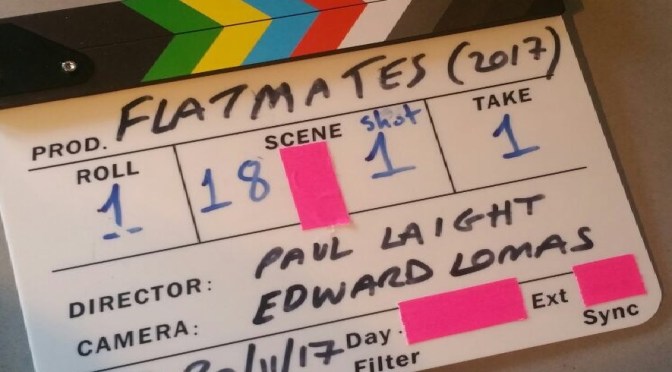
I’m a tad tardy on my cinema reviews for last month mainly because I have been writing a couple of short script projects to be filmed. One is a sharp little horror story called Flatmates and I’m looking to shoot in November. The casting has been going well, after which I will rehearse and film on HD video. The other is a follow-up to our Star Trek fan film Chance Encounter (2017) released earlier this year online, which has now has over 40,000 views on YouTube!!  Not quite Gangnam Style or dancing cats on a piano but pretty good nonetheless to have one’s work viewed that much.

Anyway, enough of the filmmaking hobby momentarily to switch back to the film reviewing pastime. Below are reviews of three excellent genre films, plus a little reprise of my opinions on Aronofsky’s two hours of hell that was Mother (2017). As usual they are marked out of eleven in tribute to This is Spinal Tap!

IT (2017)

Stephen King is clearly a genius. To be able to maintain creativity and longevity as a writer, plus give birth, as it were, to any number of iconic narratives, characters and events is a testament to his massive energy and talent. When I was young one of the scariest things I ever saw on TV was the horror serial Salem’s Lot (1979), which was about vampires taking over a small town. His book Carrie (1976) was also adapted into one of the best horror films of the seventies too. Moreover, the ‘80s TV and cinema screens were peppered with King’s work notably: The Shining (1980), Stand by Me (1986) and the under-rated Pet Semetary (1989).  In 1990, Tommy Lee Wallace directed a mini-series of IT, with the terrifying Tim Curry as Pennywise the Clown. IT proved to be an excellent horror story until the – faithfully sticking to the novel of course – ridiculously silly ending.

Stephen King's It Trailer screen grab

Flash forward twenty-seven years and Pennywise is back to haunt the dreams, drains and sewer pipes of Derry, Maine, using manipulation and fear to lure teenagers to their death. Developed by, among others Cary Fukunaga, the film was eventually directed by Andy Muschietti and has deservedly become a big box office hit. I say deservedly because, while it is not a particularly amazing cinema offering, it is a highly entertaining genre horror film. As an experienced Stephen King cinema and TV viewer all the staples are there such as: geeky-small-town-outsider-kids; abusive tough-guy-bully types; negligent parents or appropriate adult; monstrous beings hidden in the shadows; plus coming-of-age teenage friendship and love.

PW-1

The clown in this case is portrayed with fiendish joy by Bill Skarsgard and there are some fantastic stand-out scares. My only criticism is, and this is my fault being over-familiar with King’s work, is that with the recent Super 8 (2011) and over-hyped Stranger Things (2016), I felt as if I had seen it all this before. I also felt they crammed too much into the two hours and some of the character emotion was lost at times. However, the cast of kids are excellent in their respective roles, the horror set-pieces are brilliantly staged and King’s iconic bad guy Pennywise makes it well worth the cinema admission fee alone.

(Mark: 8 out of 11)

 KINGSMAN: THE GOLDEN CIRCLE (2017)

The first Kingsman: The Secret Service (2014) film was one of my favourite genre films of the past couple of years. It showed a clean pair of spy heels to the, occasionally brilliant but overlong Bond disappointment Spectre (2015); while at the same time confirming Taron Egerton as an actor with great star potential. Having done the business at the box office then Jane Goldman and Matthew Vaughan have once again written and directed an explosive, funny, pacey and adrenaline-filled spy spoof sequel.

kings2

In this story, Eggsy / Galahad is back with Merlin (Mark Strong), battling with the United States counterparts The Statesmen, against Julianne Moore’s perky, yet deranged, Americana obsessed drug baroness. The Statesmen are represented by such heavyweight acting talent in Jeff Bridges and a cracking turn from Pedro Pascal as the hilariously named Jack Daniels. Channing Tatum pops up too but he is lightweight compared to the effervescent Pascal. Poppy’s fiendish plot is actually quite a decent motivation for the story and the subplot involving a Lazarus-type-return from a major character from the first film is well developed.

Kingsman-The-Golden-Circle-1st-Day-Box-Office-Collection

To be honest the story is just the bare bones to hang a series of fantastic set-pieces, car chases, shoot-outs and fights, as Eggsy and his kick-ass team once again attempt to thwart the end-of-civilisation as we know it. My main criticism is the film is probably too long with an unnecessary gratuitous sex-driven sequence set in the Glastonbury Festival. It also lacks that sense of characterisation from the first film which had the working class underdog Eggsy battling the upper-class sneers of the over-privileged. Nonetheless, Matthew Vaughan is a great gag-heavy-action-director and the plot has some decent twists and turns throughout making it well worth a watch.

(Mark: 8 out of 11)

MOTHER (2017)

While Darren Aronofsky is a cinematic artist of the highest level, I connected badly with this two-hours-of-hell-excuse-for-entertainment. My full review can be found here but, in a nutshell, this is what I thought of it:

“It was an awful, pretentious heap of a film which exists as an entertainment void both nihilistic and dull. Because this film abuses the privilege and patience of the audience delivering a technically brilliant but overall clichéd, first-world-problems-poet-with-writer’s-block-world-murdering-art-fan-hating two hours I will never get back.”

Mark: 5 out of 11 (for the film)
Mark: 9.5 out of 11 (for Darren Aronofsky)

Mother-920x584

WIND RIVER (2017)

Taylor Sheridan has carved himself a fine reputation for writing very solid character driven genre films such as Sicario (2015) and Hell or High Water (2016). Wind River (2017) is his first writer-director effort and it is a fascinating study of: grief, murder, racial tension and dark humanity. Sheridan is adept at choosing specific areas of America with which to place his stories. Sicario reflected on the war on drugs, located betwixt the violent border of Mexico and the U.S.A. Hell and High Water illustrated the financial ruin of the sub-prime mortgage crash and its effect on West Texas. In his latest screenplay Sheridan focusses on the Indian Reservation territories of Wyoming and the people who inhabit the stark wintry landscapes.

wind_river2

The quietly impressive Jeremy Renner, as Cory Lambert, takes most of the acting plaudits as the respected, expert tracker and estranged family man. He is an individual who, while in perpetual control on the external Reservations and snowy terrain, finds himself crumbling internally due a horrific event from his past. Renner is ably supported by his Avengers co-star, Elizabeth Olsen, who imbues the rookie FBI agent with a steely determination, despite her lack of experience and confidence. The portrayal of the Native Americans I feel was sensitively presented as their lives are further marginalized by corporate America as its venal greed destroys the environment and humanity within the area. While this is a beautifully looking film there is a dark murderous heart within the stunning vistas and natural beauty.

windriv

Sheridan again confirms he is adept at combining social commentary with an impressive crime plot.  Moreover, throughout the film he also bleeds in a compelling study of grief as well as a subtle critique of patriarchal capitalism and its’ destruction of the Native American’s land and people. Yet, the message could arguably have gone further in its criticism; however, as he proved with his prior screenplays Sheridan prefers subtext and a rising tension rather than polemics. Quietly, Sheridan is building an impressive filmic body of work and Wind River manages to be a thrilling police procedural drama, empathetic character study and socio-political examination of American corruption; all amidst the cold, harsh and white-washed landscapes of Wyoming.

(Mark: 9 out of 11)

FILMWORKER (2017) – LONDON FILM FESTIVAL REVIEW

FILMWORKER (2017) – LONDON FILM FESTIVAL REVIEW

Stanley Kubrick is the greatest filmmaker who ever lived. That is a fact.  He made films in all genres but indelibly stamped his own genius on the war, comedy, thriller, horror, satire, crime, science-fiction, historical and drama films he adapted and created for the big screen. His work contains a litany of iconic images, searing soundtracks, stupendous performances, great intelligence and provocative thought which ensures his films linger in the memory of those who have witnessed them. All hail a true cinematic master.

filmworker_h_2017

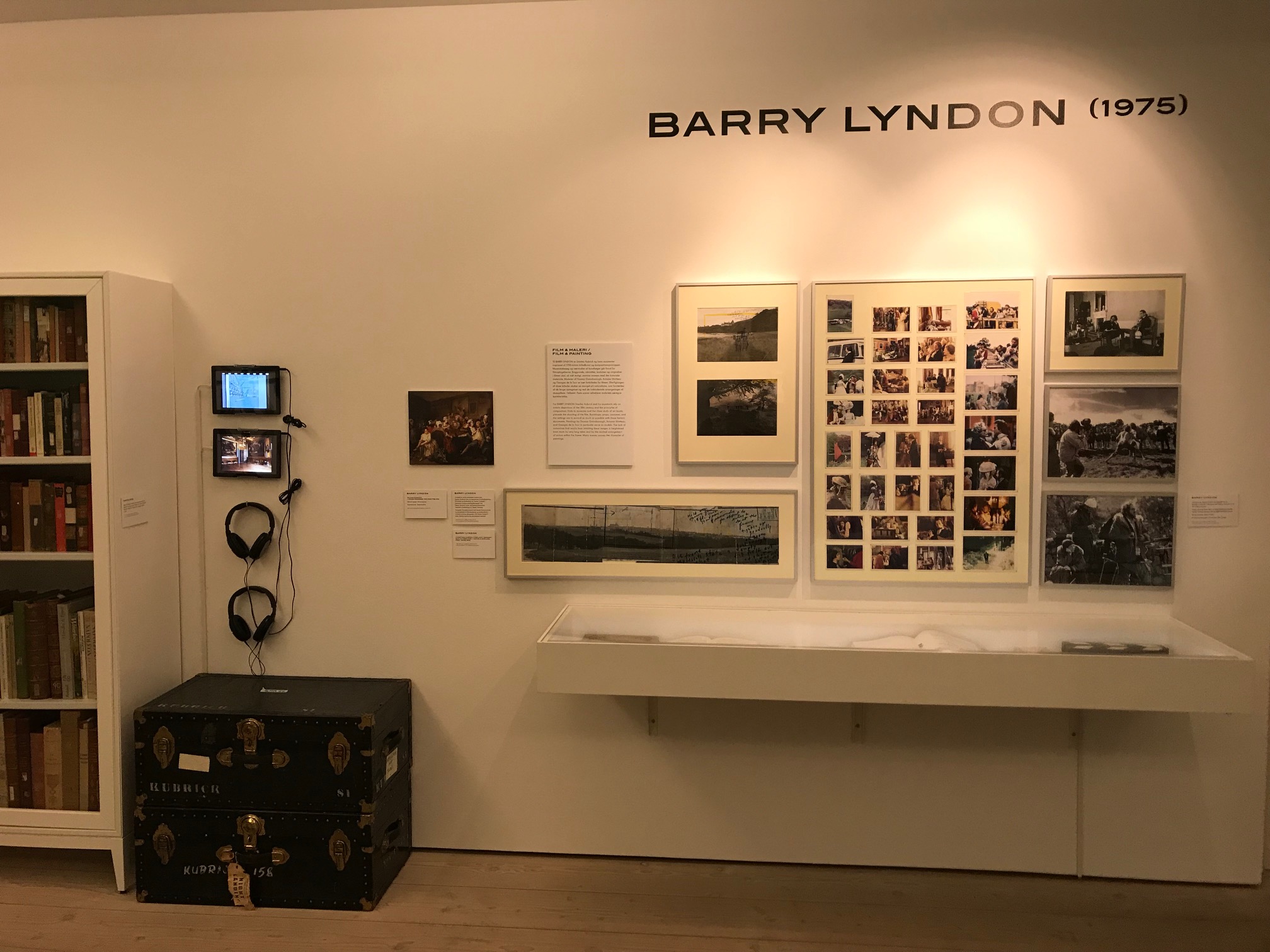
But, while Kubrick is famous – or infamous depending on your point-of-view – for his meticulous perfection and incredible cinematic vision he did not work alone. He had an array of film technicians, cinematographers, designers, researchers, editors and assistants who slaved for him on his various projects. One such individual was self-confessed ‘filmworker’ Leon Vitali. He was a rising star in the acting profession and subsequently cast in Kubrick’s classic period drama Barry Lyndon (1975). Yet, having seemingly fallen under the spell of Kubrick’s omnipotent charisma and incredible vision he offered his assistance on Kubrick’s next production. So taken was he with the great man he was prepared to take any role available. Turning his back on acting – save for the occasional supporting role in the director’s work – Leon would become a faithful servant to the all-powerful Master.

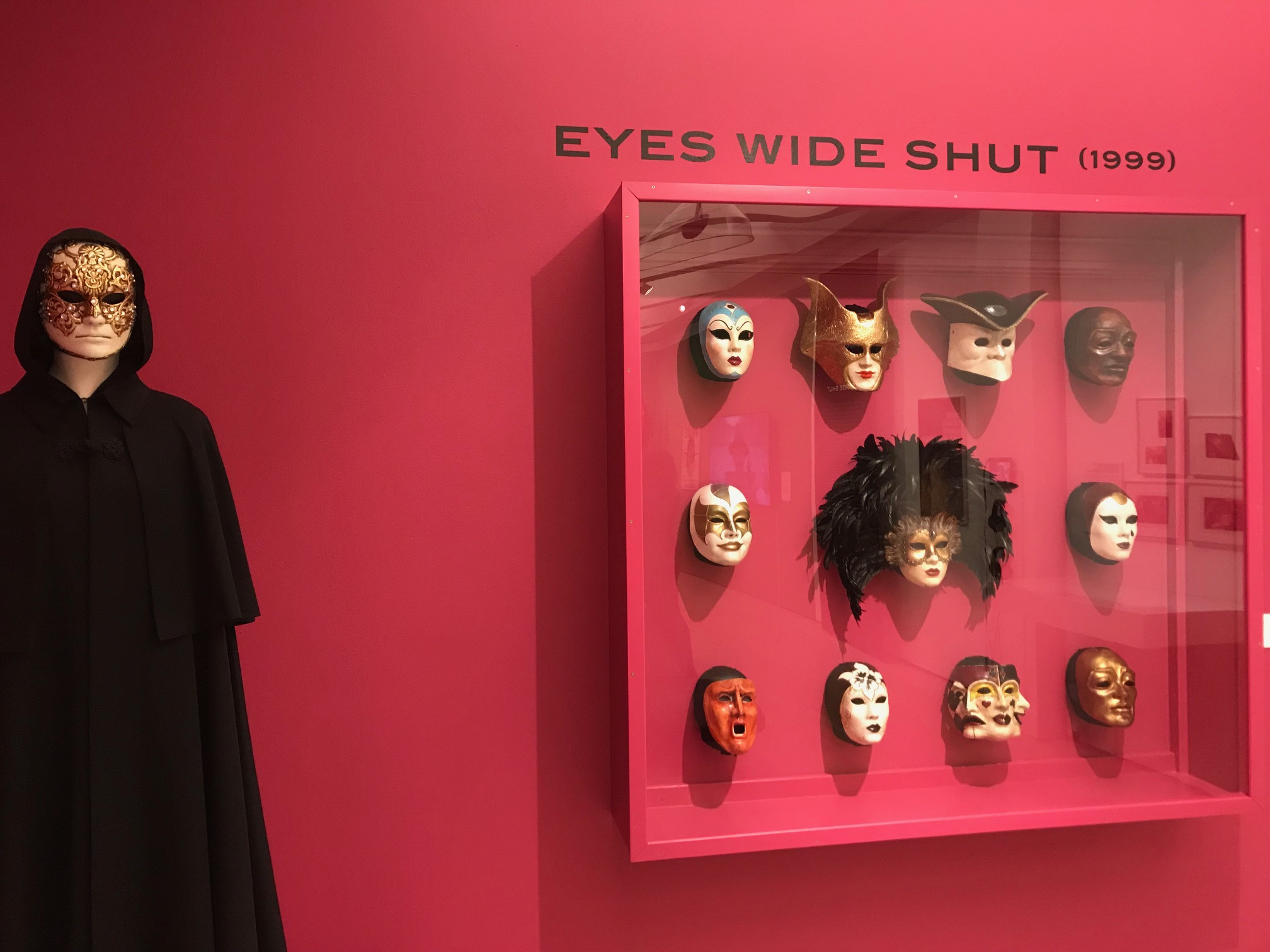
Director, Tony Zierra, has crafted a very insightful, informative and touching documentary about both Leon Vitali and the filmmaking process. It reaches beyond the lights, camera and action of movie-making to dig deep into the dark recesses of Kubrick’s creative work which involved, for many: long sleepless nights, obsessive attention to detail, Sisyphean research and the occasional nervous breakdown. Vitali, himself, lived on the edge of insomnia while contributing to such film classics as: The Shining (1980), Full Metal Jacket (1987), and Eyes Wide Shut (1999).

filmworker_3

Vitali proves a fascinating character who, during his interviews, reveals a dedication, poignancy, love and sense of grief in regard to his working relationship with Kubrick. Indeed, Vitali seems to not have recovered from Kubrick’s passing following the completion of Eyes Wide Shut (1999); due to a seeming lack of recognition for Vitali’s contribution from Warner Brothers and the Kubrick Estate. Overall, I was completely drawn into this sensitive soul’s story of a man who seemed lost without his Master.

But this is not a negative or tragic documentary. It is instead a celebration of creative arts and the Vitali’s contribution to Kubrick’s life-work. His tasks were legion and included assisting with: casting, print transference, overseeing artwork, Film Festival releases, pre-production, stills photography; and acting as Kubrick’s studio conduit when he wanted to lambast someone. The film features many interviews, notably from Vitali but also: Ryan O’Neal, Matthew Modine, R. Lee Ermey, Phil Rosenthal, Pernilla August, Stellan Skarsgard, Danny Lloyd (all grown-up) and many, many more interesting people. They provide rounded commentary to Vitali’s contribution and their experience within the film industry; and more importantly the working process of Stanley Kubrick. Indeed, many of these anecdotes were very humorous and provided a real insight into the director’s way of working.

filmworker_2

Filmworker’s director Tony Zierra spoke eruditely after the screening too revealing his desire to represent the unheralded under-dogs within the film industry. He is very successful in doing so as he presents a touching tribute to one such under-dog in Leon Vitali. Ultimately, Filmworker is a documentary about filmmaking, obsession and the lesser known people working behind the camera.  It is highly recommended for fans of Stanley Kubrick and people who are intrigued by the filmmaking process. Most of all it stands as a fine tribute to the dedication of Leon Vitali; bringing him out of the shadows and into the light, giving him the credit he deserves for his excellent film work.

(MARK: 8.5 out of 11)

MOTHER (2017) – CINEMA REVIEW

MOTHER (2017) – CINEMA REVIEW

DIRECTOR/WRITER: DARREN ARONOFSKY

CAST: JENNIFER LAWRENCE, JAVIER BARDEM, ED   HARRIS, MICHELLE PFEIFFER

**GENERALLY SPOILER FREE**

MOTHER_4.jpg

Darren Aronofsky’s psychological horror stars Jennifer Lawrence and Javier Bardem as a couple in not so much a narrative but a descent into what-the-fuck?  They portray conduits of hellish pursuit dictated by a filmmaker on the edge of a nervous breakdown, vengefully striking out at his ego, superego and the world around him.  I mean, you know when someone tells you their dreams in nightmarish details and it’s more interesting to them than you: well, this is two hours of that.

While this is technically a bravura tour-de-force in design, composition, cinematic experimentation and delivery I was utterly bored by, what is essentially, an indulgent, pretentious and nihilistic void of a film.  Darren Aronofsky’s prior work such as Requiem for a Dream (2000), Pi (1998), The Wrestler (2008) and Black Swan (2010) combined cinematic style and protagonist emotion superbly. Mother, in its critiques of Hollywood, fame and some kind of biblical allegory stuff wildly missed the mark for me. I wasn’t even shocked by the horrific denouement as it all happened in a surreal vacuum where I could not care less about any person or anything.

MOTHER_3

Christopher Nolan used cinematic form to powerful effect in Dunkirk (2017) and moved me immensely but Mother just bludgeoned me into dull submission. I wonder if Aronofsky’s experience on Noah (2014) had somehow warped his mind and the film is a creative and therapeutic cry for help, while at the same time damning the executives who possibly killed his film baby. He certainly throws a lot of toys from his pram in this violent, bloody, fiery, misogynistic and misanthropic misfire!

Lawrence was incredible as the battered lead while Bardem just felt confused and off-the-pace-at-times to me. While it is the work of a filmmaker I would certainly call an artist and generally I love the surrealist films of Luis Bunuel and David Lynch, the nightmarish logic narrative did not work for me as the cyclical parlour trick in closing the story is mere sleight-of-hand to fool the audience into thinking the film is deeper than it is.

MOTHER_2

Ultimately, Darren Aronofsky, based on his prior films, is a risk-taking, boundary-pushing genius and some will adore this brave and courageous misadventure. However, for me it was an awful, pretentious heap of a film which exists as an entertainment void both nihilistic and dull. I mean I’m just a lowly office drone but I paid my money and earned my opinion. Because this film abuses the privilege and patience of the audience delivering a technically brilliant but overall clichéd, first-world-problems-poet-with-writer’s-block-world-murdering-art-fan-hating two hours I will never get back.

Mark: 5 out of 11

MY BLOODY VALENTINE:  ALTERNATIVE VISIONS OF LOVE IN THE HORROR GENRE 

MY BLOODY VALENTINE:  ALTERNATIVE VISIONS OF LOVE IN THE HORROR GENRE 

“Love is giving something you don’t have to someone who doesn’t want it.”

― Jacques Lacan

I continue to write articles for the excellent So The Theory Goes website and here once again is a slightly more academic approach to film analysis. You can read it here or below.

horror.jpg

An eternal question in our society still remains: what is love? Is it the joining together of two people forever committed to a relationship built on respect and trust?  Or is it the emotion you feel for a family member or person you have bonded with over time?  Is it nature’s way of tricking us into the act of pro-creation?  Perhaps it’s an abstract and emotional concept created by a higher power to ensure we act positively? For some it could be a dark force which enlivens obsession and stalking and violence or maybe it’s a marketing delusion forced upon us by greedy advertisers, florists and chocolate vendors?  Maybe it’s simply all of the above!?

Studies by Helen Fisher of Rutgers University propose that we fall in love in three stages involving a different set of chemicals. They are: lust, attraction and attachment. Indeed, the events occurring in our mind when we fall in love are akin to mental illness. Chemicals such as: testosterone, oestrogen, dopamine, serotonin all conflict and combine to change our emotions when we’re attracted to someone. Further studies show that when choosing a partner we are at the mercy of our subconscious and inner sexual desires as proffered in psychoanalytical studies.

Love and sexual desire are a big part of everybody’s lives whether it’s the positive or negative and indeed the continuance of the species is very much reliant on it. Moreover, love or the lack of love has provided the springboard for millions of stories, films, plays, songs, poems, slogans, TV show and adverts! Conversely the horror film genre, while not synonymous with romantic love, often explores the darker side of relationships and sexuality. Indeed, as a cultural phenomenon the horror genre is wholly malleable in its narrative omni-presentation; criss-crossing literary, theatrical, dance and televisual culture offerings.

Horror intends to elicit a physiological reaction through stress and shock while presenting: monsters, ghosts, aliens, the fantastic, the supernatural, murderers, bloody gore, kidnappings, mutilation, witches, zombies, psychopaths, natural and unnatural phenomenon, demons and many more aspects which draw on our inner, societal and global fears. But what of love and how is it represented in the horror genre? For this article I would like explore notions of love and sexuality within horror cinema. I will draw on genre, gender, feminist and psychoanalytic theories and how they can be applied within the chosen films. So, if you want an alternative to the usual Valentines-clichéd-cosy-rose-petal-drenched-chocolate-card-Love-Actually-type-movies, then these films are ones you should consider.

**CONTAINS SPOILERS**

AUDITION (1999) – DIRECTOR: TAKASHI MIIKE

It would be unfair to label Miike’s gory shocker a simplistic example of ‘torture porn’. It is in fact an incredibly scary and inventive revenge satire. In her highly influential essay, Visual Pleasure and Narrative Cinema, Laura Mulvey commits the powerful theory that cinema is coded via the “Male Gaze”. According to Mulvey, “. . . pleasure in looking has been split between active/male and passive/female.”

audition

Yet, while beginning with this dynamic, Audition turns it around with the female anti-heroine Asami reversing the gaze on her male contemporaries. What starts as one man’s attempt to find a wife, via his own creepy version of the casting couch, is turned into a violent proto-feminist-carve-up-par-excellence as Asami cuts and slices her male victims with vicious aplomb.

DEAD RINGERS (1988) – DIRECTOR: DAVID CRONENBERG

Freud’s work on the unconscious, dreams, repression and psychosexual stages is, of course, incredibly influential on both psychology, psychoanalysis and film theory. His concept of the unconscious feeding our everyday and the idea that repressed emotions drive our motivations is none more prevalent than in Cronenberg’s exquisite Dead Ringers.

In this psycho-incestuous-ménage-a-trois-love story, twin gynaecologists portrayed by Jeremy Irons, literally split and repress their identities in order to “romance” the same women. The film is a masterwork and encapsulates many of Freud’s theories relating to the Id, ego and superego; while the doppelganger theme also looms heavily over a dark, psychosexual and twisted narrative.

deadringers

HAROLD & MAUDE (1971) – DIRCTOR:  HAL ASHBY

While not technically a horror film as such Harold and Maude is a wonderful off-centre, gothic love story. The eponymous anti-hero cannot connect with his family and the world at large and through constant fake suicides he tortures his mother to the point of breakdown. It is only when Harold (Bud Cort) meets an eccentric older lady Maude (Ruth Gordon) does he begin to find some maturation. The film could be argued to embody many of the Freudian aspects of the Oedipal Complex.

Trevor Pedersen opines, “The Oedipus complex, in narcissistic terms, represents that an individual can lose the ability to take a parental-substitute into his ego ideal without ambivalence.” Indeed, through his unconventional relationship with Maude, who represents both love and death, Harold locates a maternal replacement, friend and platonic lover who brings him out of his depressed state.

Harold-and-Maude-meet.jpg

IT FOLLOWS (2014) – DIRECTOR: DAVID ROBERT MITCHELL

Mitchell’s low budget psychological horror gem contains many of the hallmarks of the ‘slasher’ subgenre which can be enshrined with the general trope, according to scholar Robin Wood, that teenagers, invariably female, are hunted down for their promiscuity. What makes It Follows such an intriguing anti-date movie is that we never see the actual evil force propelling the murders.

Maika Monroe’s heroine, Jay, finds herself in a chain of deathly sexuality which she can only break through further intercourse.  Jay therefore becomes an epitome of what Carol Clover calls ‘The Final Girl’ in her marvellously titled book, Men, Women and Chainsaws. Ultimately, It Follows subverts the ‘slasher’ tropes with a symbolic metaphysical force rather than a physical monster, as the “killer” ultimately represents sexual hysteria, guilt and the malevolent force of youthful sexual abandon.

It-Follows

LET THE RIGHT ONE IN (2008) – TOMAS ALFREDSON

Ever since Bram Stoker’s classic novel Dracula was published we have welcomed, with fear and excitement, the vampire into our culture. Stoker’s Count Dracula was viewed as an inhuman force of destruction; as well as a metaphoric representation of sexual fervour. The vampire character is never more mesmeric and complex than in Let the Right One In. This is a sophisticated rites-of-passage-romance where a teenage boy, marginalised by his peers and family life, falls in love with a young female vampire.

However, the girl is clearly older than her looks, as the narrative bears the hallmarks of a Freudian sexual awakening for our protagonist Oskar (Kåre Hedebrant). In Eli (Lina Leandersson) Oskar finds a combination of: maternal protector, platonic companion and potential sexual partner within a complex psycho-sexual drama with hints of latent paedophilia. Of course, despite these sensitive themes under the surface, the film ultimately triumphs as a beautifully rendered story of innocence, love and friendship.

lettherightonein2.jpg

PSYCHO (1961) – DIRECTOR: ALFRED HITCHCOCK

Arguably one of the greatest horror films of all time is Psycho. From a Freudian and psychoanalytical perspective, it is an absolute goldmine. The story begins with an robbery by Marion Crane (Janet Leigh) but twists into something altogether nightmarish when she hides out at the Bates Motel. The manager Norman Bates (Anthony Perkins) takes a shine to Marion, only for his “mother” to murder her. Norman’s character is the archetypal representation of the Oedipal Complex. Having killed both his mother and her boyfriend some years before the guilt he feels causes him to “become” Norma Crane in order to disassociate him from his crimes and absorb her identity.

Marion causes Norman’s sexual feelings to arise thus Norma/Norman suddenly appears to repress these desires by murder. Charles E. Bakeland opines that if an individual is unable to reconcile a love-hostility-identification relationship with parents there will be strong desires which will weigh negatively on their relationships. This thematic dynamic makes Psycho’s narrative a psychoanalytical minefield as Norma/Norman battle over her/his mind, causing havoc for those characters they come into contact with.

psycho1

TEETH (2007) – DIRECTOR: MITCHELL LICHTENSTEIN

In his excellent book Genre, Stephen Neale argues horror monsters are predominantly defined as male with women as their primary victims. He continues with the idea that, “… it could be maintained that is it women’s sexuality which constitutes the real problem that horror cinema exists to explore.” One such film which reverses these notions in the excellent body horror film Teeth. Mixing body, horror, comedy with coming-of-age movies the main protagonist is a Christian virgin called Dawn (Jess Weixler). During a sexual assault by a college boy she fends him off via “Vagina dentata”; barbed teeth in her reproductive organ.

Played for shock and humour the story presents valid confirmation and subversion of Laura Mulvey’s proposal that women’s absence of a penis threatens male castration and therefore must be disavowed. Offering impressive gender satire within the sexual revenge narrative, Jess’ character refuses to be assimilated by the patriarchal order and comes of age within both her body, personality and sexuality.

tumblr_inline_n4jv5h82gJ1sebci4.png

CONCLUSION

In my view many of the films mentioned above demonstrate the horror genre is rich with possibilities in regard to representations of love, romance, relationships and sexuality. Through theories relating to psychoanalysis, feminism and genre theory we can begin to dip beneath the surface of the darkness of love and humanity. Both masculine and feminine sexuality and identity are constantly in crisis and under threat of death and disease, demonstrating that the path to true love is never straight but more often than not, wholly twisted.

SCREENWASH CINEMA REVIEWS – AUGUST 2017 – Including: DETROIT, THE BIG SICK and AMERICAN MADE!

SCREENWASH CINEMA ROUND-UP – AUGUST 2017 – REVIEWS

A Ghost Story (2017) – review here – was the most impactful and original film I saw in August from a cinematic perspective, however, the other films I saw were very well rendered too. All three were “based on a true story” and had many elements that made them highly watchable. So, here’s my cinema round-up of reviews for August.

**CONTAINS MILD SPOILERS**

AMERICAN MADE (2017) – DIRECTOR: DOUG LIMAN

Tom Cruise leaves the formulaic action blockbusters aside for a while to portray a well-defined anti-hero called Barry Seal.  Seal, according to this insane narrative, was a former TWA pilot who, bored with his steady job, grabs the opportunity to fly reconnaissance operations over South America for the C.I.A. That’s when the irreverent fun really gets into gear and before you can say “triple-agent-drug-running-for-the-Colombian-Cartel” you have a very watchable fast-paced, political and at times, farcical thriller.

Doug Liman is an excellent genre director and here pitches the film somewhere between a Martin Scorsese gangster biopic and screwball comedy. I would have preferred a bit more dramatic meat to be honest as seen in the Bryan Cranston Cartel-cop-thriller The Infiltrator (2016), or the subtle terror of Sicario (2015). However, Tom Cruise once again proves he can act and this entertaining movie does make some relevant political barbs against the allegedly corrupt Reagan and Bush administrations during their futile wars against drugs and communism.

(Mark: 8 out of 11)

THE BIG SICK (2017) – DIRECTOR: MICHAEL SHOWALTER

Uber-driving-stand-up-comedian Kumail Nanjiani portrays himself in movie form for the duration of this likable character and culture driven romantic comedy. Eager to forge his own path where love is concern Kumail battles the constant “threat” of his overbearing mother’s attempts to pair him up with an acceptable Pakistani bride. Having met Zoe Kazan’s sparkling Emily he falls for her despite their initial reticence in committing fully to each other.

Of course the path of love is never straight, in fact it’s downright wonky as Emily succumbs to a rare illness and is hospitalized. Kumail, estranged from his own and rejected by Emily’s family, finds his world falling apart as his work and comedy suffers. Overall, this is a very enjoyable and gentle comedy and Kumail and Emily are characters you really root for. The supporting cast including the brilliant Ray Romano, Adeel Akhtar, Bo Burnham and Holly Hunter are very funny indeed. I enjoyed the sub-plots involving the Chicago comedy scene and my only criticism would be that like other Judd Apatow-produced films it was probably ten minutes too long. Having said that it’s a finely observed, well-acted and richly funny character film.

(Mark: 8 out of 11)

DETROIT (2017) – DIRECTOR: KATHRYN BIGELOW

This is a very complex film and probably requires a second view to really get to the heart of the whole situation. Set in 1967, amidst the desperate and violent racial tensions of the age (has there actually been anything else in the United States?) Detroit focuses on a single night and horrific incident involving monstrous cops and their behaviour toward the guests in the Algiers Hotel. Kathryn Bigelow again proves herself an expert director of spine-tingling tension and heart-racing drama as a violent assault is carried out on mostly innocent characters.

Detroit is microcosmic of the issues of race throughout American history and is an impossible pill to swallow as represented by these events. It’s not meant to be easy but a layered, narrative which reflects the different perspectives of those involved without actually getting to the actual truth. John Boyega, Will Poulter and Algee Smith’s performances are the stand-out as a nightmarish event in American history unfolds in almost real time. The only light comes by way of the Motown and Gospel music featured which shines brief hope and light on otherwise grim proceedings. The final act and court case compound the injustice of the crimes committed and only in song and prayer can Smith’s character escape the horrific tragedy of these grim events.

(Mark: 9 out of 11)

A GHOST STORY (2017) – CINEMA REVIEW

A GHOST STORY (2017) – CINEMA REVIEW

DIRECTOR/WRITER:  DAVID LOWERY

CAST: Rooney Mara, Casey Affleck

(Contains mild spoilers – nothing you may not already know.)

ghost2

I write reviews for a number of reasons. Firstly, I love cinema and TV and music and culture in general and enjoy writing and thinking about the things I have seen and why I liked or disliked them. Secondly, as a writer myself I enjoy considering aspects from a screenwriting perspective and analyses what did or didn’t work for me. Thirdly, I guess from a narcissistic or egotistical perspective there’s a part of you that wants the attention or simply just confirmation that one’s opinions are being read or listened too. Ultimately, it’s a pastime and a bit of fun.

Every now and then a film comes along which is hard to place and it makes you think and you actually have to apply yourself. You can fall into certain traps of structure or at worst formula when writing reviews. But with David Lowery’s majestic A Ghost Story (2017) he has delivered such an original work of cinema art it is difficult to follow one’s established reviewing rules.

a-ghost-story.png

For starters it is difficult to even give you a brief synopsis of the film because it is so simple in its concept that the title itself sums up what the narrative is. It literally is a Ghost’s story!  However, after establishing the accessible drama of the loss of a loved one, the characters move into a whole new level of complexity in regard to the supernatural, temporal, philosophical and metaphysical.

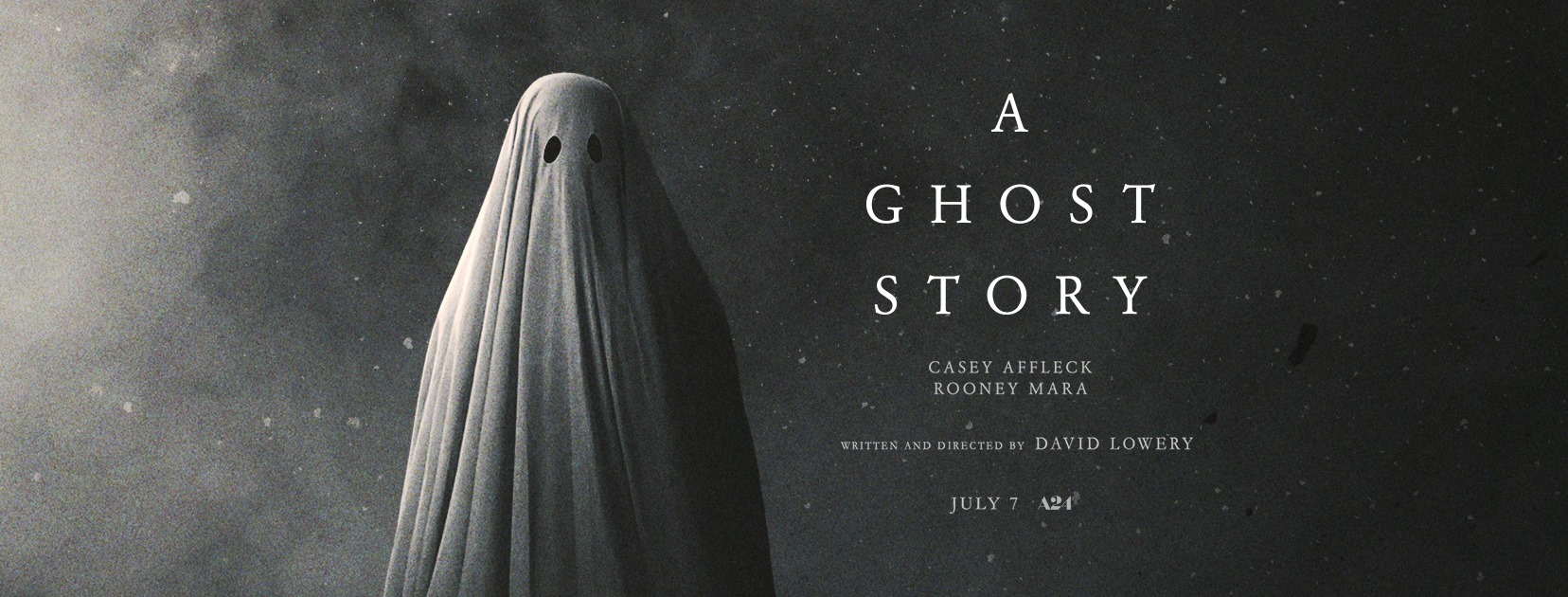
The main cast are Casey Affleck and Rooney Mara and they brilliantly under-play a loving couple who share a property in a nameless place. Their characters are also seemingly nameless (referred to as ‘C’ and ‘M’ in the credits) and their normal lives are then torn apart when he dies in a car accident. In a beautifully haunting scene at the morgue ‘C’ “awakes” as a GHOST IN A SHEET! Yes, his Ghost is shrouded in a sheet with two eye-holes cut out. My feeling about this initially was how would the director make it work without possible derision? But, due to his sheer confidence in the idea and choice of shots, music and pace we are quickly enveloped by ‘C’s pale figure and his drama.

casey-affleck-a-ghost-story

From then on we see everything from the Ghost’s perspective and it truly is heart-breaking. I mean it takes guts for the filmmaker to cover his leading actor for the rest of the film but it genuinely pays off. My feeling about the sheet idea was that in death we lose our identity via our body, yet our soul lives on in the space where we existed. Our Ghost here is a genuine lost soul unable to move on and he literally haunts his home in a desire to stay with the one he loves. I also enjoyed the spirituality of the piece without once there being a reference to religion. It’s not about dogmatic belief systems but the purity of life and love.

David Lowery has created one of the most original stories of the year and his handling of composition; editing and temporal structure is a masterclass in pure cinema. This film is hypnotic, tragic and one of the best of the year. It echoes the work of Bergman, Kubrik and Tarkovsky. I for one do like my conventional genre films with well-formed characters and clear plot-lines, but this film transcends cinema conventions and delivers one of the most poignant and melancholic experiences of the year. Plus, the score by Daniel Hart really augments the minimalist approach and often dialogue-free sequences. Overall, this is a meditative joy which is both unconventional yet in its unpolluted filmic poetry had me transfixed throughout.

(Mark: 9.5 out of 11)