Category Archives: Cinema

KILLING ME SOFTLY: THE EVOLUTION OF THE HOLLYWOOD THRILLER!

KILLING ME SOFTLY: THE EVOLUTION OF THE HOLLYWOOD THRILLER!

“It is indeed impossible to imagine our own death. Whenever we attempt to do so we can perceive that we are in fact still present as spectators.” Sigmund Freud

Here’s a re-blog of an article I wrote for www.sothetheorygoes.com – you can read here or below:

rear-window_gcYNGH-1

Most of us like to be scared and thrilled and made tense, especially if it is in the darkened recesses of the cinema. Because as the adrenaline and stress levels rise we know, at the back of our minds, we’re safe. Nothing can actually harm us because it’s happening on a screen. Yet witnessing characters in danger of harm or death can be an exhilarating and cathartic experience for many. Indeed, as the above quote from Freud suggests watching films of the horror or thriller genres is subconsciously akin to a near-death experience. Facing the reaper from a position of relative safety is part of the thrill of going to the movies.

The thriller genre is one of my favourite types of film and in this piece I would like to draw on elements of psychology, genre and culture theories to examine classic, postmodern and neo-thriller tropes. I also want to investigate some recent cinema offerings which defy certain genre conventions and have what could be described as a subtle less-is-more approach to building suspense and thrilling the audience. For this I will examine three scenes from the work of David Fincher, Denis Villeneuve and Joel and Ethan Coen where, while adhering to thriller genre conventions, they also softly kill us in an arguably more unconventional fashion.

But what draws us toward the darkness of the thriller and, psychologically speaking, why do we enjoy them so much? According to research conducted by Dr Deirdre Johnston in 1995, viewing motivations for watching the horror or thriller genres include: sensation seeking and overcoming fear, whether you’re identifying with the killer or the victim. Moreover, Peter G. Stromberg argues in his piece The Mysteries of Suspense that uncertainty and surprise are powerful tools in the thriller genre. As humans we are uncertain of our mortality and thrillers tap into that innate fear. Also that as social mammals we have the power to experience and feel the fear as characters on a cinema screen do. Lastly, Sheila Kohler opines that a fascination with violence draws us to the thriller genre. While most of us are scared of hurt and pain, by placing violence within the structure and order of a story we both enjoy the sensation of danger while controlling said violence.

body-double-3


These are just a few of the psychological reasons why we are drawn to the thriller genre. Formally and stylistically the thriller also offers a myriad of entertaining devices including: McGuffins (or red-herring), twists, cliff-hangers, flashbacks, flash-forwards, voice-overs etc. Moreover, it also features characteristics like: unreliable narrators, innocents-as-victims, mistaken identity, monstrous villains, revenge, kidnappings, and ticking-time bomb countdowns to name a few. According to James Patterson one of the thrillers enduring characteristic is openness to expansion into subgenres such as: spy, historical, police, medical, religious, tech, and military settings. Essentially, the structural flexibility of the threat of death is far-reaching and the ability to create suspense is very progressive within the thriller genre hence why it has proved popular to audiences and filmmakers alike.

One of the greatest proponents of the thriller was of course Alfred Hitchcock. Often cited as the “Master of Suspense”, Hitchcock is quoted as saying, “Always make the audience suffer as much as possible.” He certainly made us suffer beautifully in all manner of classic films such as: The 39 Steps (1935), Rope (1948), Strangers on a Train (1951), Rear Window (1954), Psycho (1960) and countless others. Aside from Hitchcock’s dazzling skill with form and style his narratives always contained powerful villains or external forces of authority which symbolised death. Thus, while coming close to death throughout Hitchcock’s protagonists more often than not survive while the villain or force perished. Thus, a Hitchcock thriller offers catharsis, which is a Greek term Aristotle used to describe the purging of negative emotions.

Without a shadow of a doubt Hitchcock had an incredible influence of filmmakers throughout film history. Indeed, the term Hitchockian thriller has entered the vocabulary of cinema. His films have influenced great filmmakers like: Steven Spielberg, Jonathan Demme, Martin Scorcese, and arguably most of all thriller expert Brian DePalma. He, in my opinion is a postmodern filmmaker as he uses devices like homage and pastiche within his filmic style, echoing many of Hitchcock’s films in: Obsession (1976), Dressed to Kill (1980) and Body Double (1984). Within DePalma’s ouevre there are also impressive set-pieces lifted from other films such as the Battleship Potemkin (1925)/Odessa Steps homage in The Untouchables (1987). Likewise in the spy thriller Mission Impossible (1996), DePalma’s iconic Langley heist set-piece was done with no dialogue in a major nod to classic French crime thriller Rififi (1955).

What DePalma has in common with Hitchcock too is the use of humour in his films to provide catharsis or pay off suspenseful moments. I liken this to releasing a valve and letting the audience off the hook somewhat. This is seen none more so than in the wildly over-the-top film Body Double (1984), which is a pastiche of both Rear Window and Vertigo (1958). In a particularly suspenseful scene our protagonist is about to be skewered by a pneumatic drill and just on moment of impact the plug from the wall is pulled, thus releasing the threat of death and finding some sick humour in an especially tense moment. Of late, however, I have noticed a movement away from such humour or release-the-valve safety. Where both Hitchcock and DePalma employed the convention of catharsis and overcoming death, recent cinema releases have taken a slightly different approach.

Film Title: No Country for Old Men

While Hitchcock and DePalma often favoured the highly stylized approach to building suspense it’s interesting to compare their work to some recent films which I feel take a more subtle, yet just as effective, approach. The Coen Brothers adaptation of Cormac McCarthy’s No Country for Old Men (2007) is such a film. The story is a dark crime narrative involving a tense pursuit across country involving heinous hitman, Anton Chigurh (Javier Bardem). The filmmakers establish Chigurh as a force of nature and create suspense through uncertainty, as he kills both law enforcement officers and the people who hired him.

The most tension-inducing scene is Chigurh favouring a coin toss to decide if someone lives or dies. He uses this method both in a scene with a store clerk and at the end with Kelly McDonald’s character Carla Jean.  While, the innocents-as-victim is an often used convention in thrillers, the nature of fate or luck within the scene creates unbearable suspense as Chigurh’s crimes become not motivated by a sense of professionalism, but rather scarily, the flick of a coin. There’s some relief when luck seems to shine on the store clerk but no such fortune for the unfortunate Carla Jean. Even then there is ambiguity as we, like her husband, do not see her die; however it is implicit within the editing and performance that sadly she does.

halb_zodiac.1.600


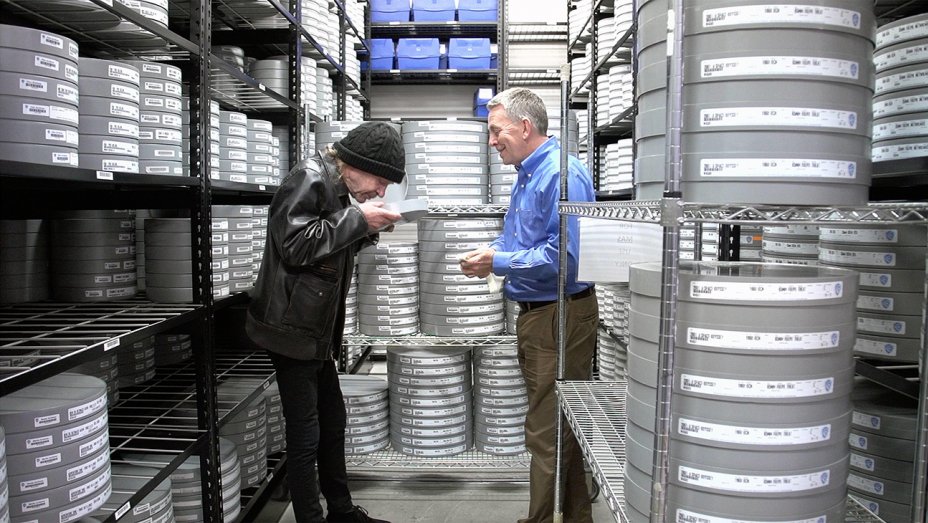
Arguably, the finest thriller director around at the moment is David Fincher and his film Zodiac (2007) was a detailed analysis of the characters involved in the hunt for the eponymous serial killer. It’s a film full of brutal murders and obsessive characters, notably Jake Gyllenhaal’s cartoonist turned investigator, Robert Graysmith. His character becomes obsessive about discovering who the Zodiac killer is and even loses his family and job in the process. Toward the end of the film, Graysmith interviews Bob Vaughn (Charles Fleischer), a film projectionist, and the suspense is created literally out of nothing. The total absence of a known nemesis creates an unlikely amount of tension, especially allied with the way Fincher shoots in shadows and frames his characters. Graysmith is not seemingly in any danger but his paranoia, claustrophobia and growing sense of unease petrifies him until he is forced to flee. In fact, the thriller genre convention of revealing the murderer is, like in the real-life case of the Zodiac, rejected; thus catharsis is denied to the audience throughout this nail-biting paranoiac thriller classic.

sicario-movie-poster-wide

Similarly, in the recent crime thriller Sicario (2015), aside from a the conventional exploding bomb opening, the director Denis Villeneuve uses more subtle techniques to get under the skin of the audience.  Often thrillers will have a brutal showdown between our hero and the villain resulting in the nemeses’ death, but at the end of Sicario it is a far more quiet and unnerving scene. Here Emily Blunt’s moralistic Kate Macer realises she has been used to collude the black-ops Cartel murders by CIA-sanctioned assassin Alejandro Gillick (Benecio Del Toro). While Gillick has a gun to Macer’s head the threat is palpable but what makes the filmmaking so striking is it has the confidence to eschew the standard car chase or big fight finale for something so tense and disquieting. The tragedy of humanity here is the realisation for Macer that she will not make a difference in the CIA and the law cannot protect her. Gillick represents as he puts it, “the land of wolves”; thus once again, similar to No Country For Old Men, we as the audience, are given no escape or purging from death as Gillick walks away to continue his morally ambiguous endeavours.

sicario

What all these scenes and films provide are a denial of releasing the valve and consequently allaying our fear of death.  Moreover, in contravention of the classical thriller model the villains and monsters in these scenes actually get away so while the likes of Alfred Hitchcock and Brian DePalma allow catharsis by generally defeating the bad guy, neo-Hollywood filmmakers like those mentioned above, kill us softly with a creeping nihilism and feeling of dread which remains even after you’ve exited the cinema.

DUNKIRK (2017) – CINEMA REVIEW

DUNKIRK (2017) – CINEMA REVIEW

**CONTAINS MILD SPOILERS**

Firstly, the evacuation of Dunkirk, France, during World War II was simply put one of the most incredible acts of survival and escape achieved. From the historical articles and documentaries I have read and seen the Allies were on the ropes and pinned back by the German army causing 400,000 beaten, starving and bedraggled human beings to be trapped on the beach waiting desperately for rescue.  It’s no spoiler to state that many brave people enabled that rescue creating that well-known phrase “Dunkirk spirit” to enter our vocabulary.

dunkirk_1

Put yourself in that position for even just a minute and the fear drains one cold and feeling so lucky that I will never have to feel that threatened. These are people, young soldiers fighting against a fascistic foe who are backed into a corner and whose lives are about to be extinguished. So, think about that when you wake up in the morning because Christopher Nolan’s epic film, as do many other films, books and television shows about the war, give your life meaning about how lucky we are to not have to live through that. Count your blessings you’re not in a war and the life we live has relative freedom.

These and many more emotions flashed through my being while experiencing the incredible epic that master director Nolan and team have delivered via Dunkirk. Throwing us immediately into the action we are shown the hell of war from three perspectives: land, sea and air. Nolan works from a simpler focus and premise compared to his other works and this makes it all the more powerful an experience. Where films such as Inception (2010), Interstellar (2014) and Memento (2000) had complex, shifting narratives relying on heavy exposition, grand concepts and plot twists, Dunkirk deals with one simple sterling idea: survival!

dunkirk7

I found the whole experience immersive and pulsating from a cinematic perspective. Christopher Nolan, and his production team, have in the: editing, cinematography, composition, colour, acting, framing, sound, score and movement created pure and poetic cinema. From the safety of my comfy seat I felt real danger, peril and claustrophobia. The narratives’ drive comes from fragmented moments of fear and blasts of explosive danger. The impressionistic style was full of scenes containing quiet doom as well as noisy, confusing and fiery terror. Even the smallest situation such as the locking of a cabin door takes on great significance, sending a chill down the spine. As the enemy closes in from above and below and water fills the screen and lungs of our heroes, then death moves in for the kill.

Nolan eschews the solid build-up of traditional characterisation to create emotion through the visual form with a chopping style which serves to heighten the panic. There are so many haunting images as men and boys are stuck behind doors and ships and in boats and underwater and in the air and on moles and piers, compressed, suffocating and unable to breath as bullets, torpedoes and bombs pepper their souls. The coruscating soundscape, montage and hypnotic score from Hans Zimmer only add to the dread within the non-stop action. The dialogue is spare and at times muffled as character development is also sacrificed due to the compressed timeline. Yet, for me, empathy was garnered through verisimilitude, form and style rather than a conventional storytelling and a simplistic three-act transformational arc.

hardy_dunkirk

The characters are archetypes but serve the story very well. Kenneth Branagh’s noble sea Commander brings gravitas while Mark Rylance brings a naturalistic humility to the stalwart and duty bound Mr Dawson. Aneurin Barnard’s silent soldier allows his haunting eyes to dominate, while the pathos emitting from Barry Keoghan’s young George is incredibly powerful. Fionn Whitehead and Harry Styles, while inexperienced actors, represent the palpable fear any young man would exhibit when faced with certain death. Tom Hardy adds star quality in his role of RAF pilot, Farrier, and the image at the end of his plane burning in the sunset is indelibly etched in my mind.

But, overall the film belongs to the masterful direction of Christopher Nolan who, in delivering 106 minutes of pure dramatic exhilaration demonstrates he is more than just a genre filmmaker but a cinematic artist echoing the works of Sergei Eisenstein, Martin Scorsese and Stanley Kubrick within this war and disaster film masterpiece. Dunkirk was a savage defeat for the Allies but it rallied the nation against the enemy and Nolan has produced a film that stands as a worthy tribute to those who lost their lives and those brave people who survived.

(Mark: 10 out of 11)

SCREENWASH CINEMA SPECIAL – JULY 2017 – Reviews include: WAR FOR THE PLANET OF THE APES, SPIDERMAN, THE BEGUILED etc.

SCREENWASH CINEMA SPECIAL – JULY 2017

It’s been a busy July for decent cinema releases and my Odeon Limitless card has been earning its dough somewhat!  So I decided to compress the reviews into one manageable article and here they are in order of film preference with the usual marks out of 11!

**CONTAINS MINIMAL SPOILERS**

WAR FOR THE PLANET OF THE APES (2017)

The final part in the prequel trilogy to the movie classic Planet of the Apes (1968) is an apocalyptic epic which had me gripped from start to finish. The story continues a few years after Koba’s rebellion caused further catastrophic events between humans and apes. We find Caesar and his guerrilla army attempting to protect their families from Woody Harrelson’s obsessive Kurtz-like figure The Colonel. When The Colonel causes irreparable damage to Caesar’s clan he sets out on an epic journey to free the apes from their fascistic human captors.

Aside from some convenient plotting for pace, director Matt Reeves and co-writer Mark Bomback have constructed a superb and compelling story which echoes the epic glory of cinema classics such as: The Searchers (1956), Dr Zhivago (1965), The Great Escape (1963), Spartacus (1960), Apocalypse Now (1979); and even the Biblical story of Moses. Andy Serkis is incredible once again as the noble Caesar and his determined, proud and intelligent character is someone we really root for. Special mention to Steve Zahn too who plays the likeable fool, Bad Ape, adding welcome comic relief to the heavy drama and pulsating action.

The cinematography from Michael Seresin’s lense is exquisite as snowy, beach and woodland landscapes provide a beautiful counterpoint to the chaos of war. Moreover, the action set-pieces are breath-taking with expertly staged composition and crisp editing while the motion-capture effects brilliantly support the story. In between the emotional moments hit home too as Matt Reeves and his team have fashioned a big film with an even bigger heart. Overall, this is one of the best cinematic experiences I have had all year as story, style, technology and emotion all work together to bring a fitting end to one of the best film trilogies committed to celluloid.

(Mark: 9.5 out of 11)
SPIDERMAN: HOMECOMING (2017)

Oh no!! Not another Spiderman film!!  But don’t panic as this one is presented from within the Marvel Universe!  Following quickly after the events of Captain America: Civil War (2016), Tom Holland’s eager arachnid-kid literally bounces off the walls waiting for an assignment from his mentor Tony Stark (Downey Jnr in a cameo-plus-style appearance). However, he’s palmed off with overgrown babysitter Happy (Jon Favreau) and here’s when Peter Parker gets in a pickle by ignoring the adults and going out to play on his own.

With some tremendous set-pieces on the Staten Island Ferry and at the Washington Monument the action really fizzes along and raises the pulse throughout. Having said that the final explosive action set at night was poorly lit in my view rendering the action almost incomprehensible. In between, the high school scenes are very funny, notably Jacob Balaton’s Spidey sidekick, and Peter’s impatient and chaotic teen characterisation was very well drawn. Yet, it is Michael Keaton as the scavenging Vulture who absolutely steals the show. His performance as gritty, working-class and angry antagonist, Adrian Toomes adds shades of dramatic grey to an otherwise shiny and colourful narrative.

While not quite shaking the feeling of creative ennui and Spidey overkill, Homecoming still manages to hit many of the heights reached by Marvel’s sparkling stable of comic-book stars. Newish filmmaker Jon Watt, who directed the brilliant, low-budget film Cop Car (2015), handles it all with some verve and humour while delivering a humdinger of an end of second act dramatic twist. Having seen him recently in Wolf Hall (2015) and The Lost City of Z (2016), Tom Holland confirms himself a bona fide star, and is fantastic as everyone’s favourite neighbourhood spider.

(Mark: 8 out of 11)
IT COMES AT NIGHT (2017)

This haunting post-viral apocalyptic nightmare of a film drips with dread, suspense and bloody heartache throughout. It concerns Joel Edgerton’s everyman who, along with his wife and son, are attempting to survive in their battered and isolated woodland home. Paranoia is a key fuel for the characters’ lives as they follow strict rules of wearing gloves, washing hands, burning bodies and not leaving the house at night. When their space is invaded by Will (Christopher Abbott), his wife and child, the families all form an uneasy pact; yet it is not too long before peace gives way to disharmony and recrimination.

Trey Edward Schults directs the hell out of this low-budget gem with the skill of a way more experienced filmmaker. He creates an eerie, dark and hallucinatory vision which, while lacking in expositional clarity, more than makes up for in atmospheric visuals and human drama. The film glides along at a creepy pace and builds to what feels should be a cathartic and dramatic peak. However, the ending left me slightly disappointed as it was too poetic. I was okay with the mysterious narrative elements such as not knowing the cause of the virus, but I felt that a more traditional horror conclusion would have made it a much better film. Still, Schults is a director to watch out for but being a horror whore myself I wanted a bit more blood and guts at journey’s end.  

(Mark: 7.5 out of 11)
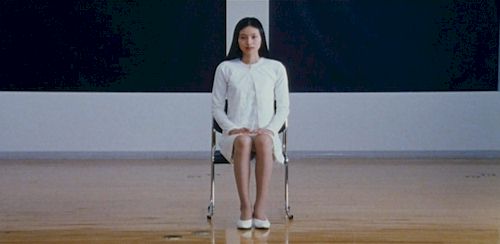
THE BEGUILED (2017)

Colin Farrell portrays a Union Army deserter who hides out in an all-women boarding school featuring an excellent cast including: Nicole Kidman, Elle Fanning, Kirsten Dunst, Oona Laurence, and Angourie Rice. It’s based on a novel by Thomas Cullinan and previously adapted into a 1971 film starring Clint Eastwood. Sofia Coppola’s subtle direction is impressive and this gothic drama has amazing cinematography, costume design and decent performances. However, I felt, by the end, the film was completely lacking in drama, eroticism and suspense.

The build-up over the first hour was fantastic but alas there were no major pay-offs to events relating to repressed sexuality and male-female divide. Moreover, thematically I found Coppola had nothing to say on the Civil War, sexual temptation or the damaging impact of patriarchy in a matriarchal world. She also fails to develop Farrell’s character as Faustian sexual threat and aside from some incredibly beautiful lighting and composition from Phillipe Le Sourd the story just peters out unsatisfactorily in my view.

(Mark: 6 out of 11)
EXPLORING UNOFFICIAL REMAKES IN HOLLYWOOD!

EXPLORING UNOFFICIAL REMAKES IN HOLLYWOOD! 

Here’s a re-blog of an article I wrote for the excellent http://www.sothetheorygoes.com website. It’s arguably a better researched article than I usually turn out and the original can be found here.

hollywood

OVERCOMING THE MONSTER

As an avid cinemagoer and fan I watch a hell of a lot of movies. I am aware that Hollywood film releases rarely contain original screenplays due to the massive flux of literary, journalistic, radio, televisual and comic-book adaptations. Moreover, there are reboots, remakes and re-imaginings of older and, in the case of the recent Spiderman releases, not-so-older films too.  I have even noticed another trend where on top of the usual remakes there are a number of films which are unofficial remakes of other films. Does this mean originality is finally dead in Hollywood and is now cannibalizing itself to produce product. Or, has it always been that way?

I want to explore the nature of storytelling, mythmaking and modes of classic Hollywood film production to consider whether there is a trend toward unofficial remakes in the current filmmaking era. I will examine cultural theory and film history to decide whether filmmakers are knowingly copying other works but hiding their intentions; or subconsciously replicating past cinema works while emulating both the historical traditions of storytelling and the classical Hollywood mode of film production. I will look at some recent film releases to further reflect on such theories.

script

THE QUEST

The blockbuster or big budget spectacular has been a major business tool of Hollywood production since movies. In his book Blockbuster, Tom Shone points to the 1970s as the beginning of the blockbuster summer movie era with films such as Jaws (1975) and Star Wars (1977), making huge money and beginning a business convention which continues today. However, there has always been huge behemoth product coming out of Hollywood with the likes of D.W Griffiths’ Birth of a Nation (1915), Gone With The Wind (1939), Cleopatra (1963) being examples of big-budget spectacular produced down the years. As such the blockbuster is as much a genre in its own right as opined by Shone and also Peter Biskind in his book: Easy Riders, Raging Bulls: How the Sex-Drugs-And Rock ‘N Roll Generation Saved Hollywood.   

The summer blockbuster film release is clearly a huge money-making enterprise on behalf of Hollywood studios. Indeed, according to a recent Indiewire article films such as The Force Awakens (2015), Avatar (2009), Avengers: Assemble (2012) have together made over $2.5 billion dollars in at the box office. With the Marvel and Star Wars universe or franchises ever increasing their reach across galaxies far, far away it is important to note that the new Hollywood is still following the classical Hollywood system in regard to mode of production.

In their book The Classical Hollywood Cinema: Film Style and Mode of Production to 1960, Staiger, Thompson and Bordwell, a Hollywood film derives its’ competitiveness from a standardized norm and differentiated delivery. Film genres take place between the dialectic of standardization and differentiation which allows films to be produced along a conveyor built quickly and more profitably while some innovation generates differentiated elements to enable successful marketing of the product. For example, Ford produced and continued to produce a lot of the same model motor vehicles but change the colours and extras to differentiate the product. Likewise, Hollywood produces a hell of a lot of action, superhero and blockbuster films but in using different actors, directors, composers and source materials they are able to blind the audience to the storytelling structures and plots being used.

why-quote-correctly-the-problems-of-plagiarism-and-piracy-6-638

But is this a mode of production considered lazy, unoriginal, uninspired or even plagiaristic? Possibly, yet it seems to make sense that Hollywood studios, while risking a hell of a lot of money on their blockbusters, standardize their product and use what has worked before to protect their investment. While some of us would like to see David Lynch given $200 million to direct a Marvel Universe movie, his idiosyncratic vision of the world would be such a leap of differentiation it would possibly – like his adaptation of Dune (1984) – create a potential box office bomb. Even a brilliant director like Edgar Wright was considered not “house style” enough for the Marvel film Ant Man (2015) and left the production due to the oft-quoted “creative differences”.

Is it fair to accuse Hollywood studios of unoriginality or even plagiarism? Are writer and filmmakers merely following the rules of the world?  I mean according to Christopher Booker’s text The Seven Basic Plots: Why We Tell Stories, there are in essence only a limited number of narratives including the: ‘Overcoming the Monster’, ‘Rags to Riches’, ‘The Quest’, ‘Comedy, ‘Rebirth’, ‘Tragedy’ and ‘Voyage and Return’. Booker echoes too the studies of mythologist Joseph Campbell who argues that the ‘Hero’s Journey’ or monomyth is the common template of most stories. Christopher Vogler followed on from Campbell’s extensive work in his book, The Writer’s Journey: Mythic Structure for Writer arguing that most popular stories can be narrowed down to a series of basic structures and archetypes.

Thus, we could argue that originality is in fact impossible and Hollywood blockbusters, as well as following the classical Hollywood model of standardization and differentiation; are simply passing on the traditional and mythical structures which hark back to the cave drawings of our ancestors, Greek myths and those wonderful stories in the Bible.  Let’s have a look at some examples of recent blockbuster films which echo the theories of mythic storytelling, concentrating specifically on those that could be considered unofficial remakes of previous films.

poseidon

VOYAGE AND RETURN

The biggest box office hit of recent years is the JJ Abrams directed The Force Awakens (2015). After Disney paid an absolute fortune to Lucasfilms for the rights to own the Star Wars franchise it’s safe to say that there was no way the studio would be taking any risks on their product. Thus, in my opinion, JJ Abrams and his writing team took a safety first approach to the storyline by unofficially remaking the original Star Wars: A New Hope (1977). They standardized their product by using most of the same characters, settings, design, costumes, music and themes. Moreover, on the whole it follows the same “Hero’s Journey” and “Overcoming the Monster” models within its structure as at its core a plucky young “orphan” must rise up and defeat the dark side of the Empire. Conversely, the original Star Wars could be argued to have heavily borrowed its structure and archetypes from Akiro Kurosawa’s Hidden Fortress (1958). However, George Lucas’ epic space opera was so original in presentation and design one cannot reconcile notions of plagiarism.

Star-Wars-The-Force-Awakens-Empire-cover

A Force Awakens was only marginally differentiated with more diverse casting as the female leading character Rey (Daisy Ridley) took the Luke Skywalker role. The only main difference is her character was arguably more passive in the narrative compared with the dynamic enthusiasm of Mark Hamill’s Luke Skywalker. In remaking A New Hope, complete with a total-replica-ending culminating in the rebels destroying the Death Star, the filmmakers tick all the fan boxes yet with just enough difference in the details so as not to be accused of self-plagiarism. For me, however, A Force Awakens  is not as credible a story as Rogue One (2016), which, while invoking World War II “suicide-mission” genre structures such as: The Dirty Dozen (1967) and Guns of Navarone (1966), had more original characters and differentiation and thus felt a fresher product.

Unofficial remakes or the echoing of known texts are rife in the blockbuster era. James Cameron’s environmentalist Sci-Fi fantasy Avatar (2009) has exactly the same “Voyage and Return” structure as Kevin Costner’s revisionist Western Dances with Wolves (1990). In both films our hero, a soldier, finds himself at first a prisoner and then falling in love with an indigenous tribe’s more natural lifestyle; ultimately defying the patriarchal and oppressive capitalist society from where he came. Both culminate in a thrilling battle at the end where our gone-native hero overcomes the monstrous enemy.  Avatar, of course, differentiates markedly in presentation to Costner’s epic due to the incredible special effects on show but the structure and storylines are exactly the same.

avtr-he-bg-03


Screenwriters have not just plundered cinema’s back catalogue for narratives. The original storyline of Marvel comic books The Hulk is an unofficial adaptation of Robert Louis Stevenson’s Dr Jekyll and Mr Hyde; with a scientist splitting his personality between man and monster following an experiment gone wrong. Marvel indeed are experts at absorbing literary texts into their works as Age of Ultron (2015) echoes the story of Frankenstein as Stark’s experiment wreaks monstrous havoc on the Avengers. Moreover one of the best Marvel films Captain America: Winter Soldier (2014) uses the plot of spy thriller Three Days of the Condor (1975) as a springboard.

Of course, these are very loose interpretations, however, with Avengers: Assemble (2012) the filmmakers have, in my mind, essentially remade Kurosawa’s Seven Samourai (1954). Of course Seven Samourai has been remade many times as The Magnificent Seven in both 1960 and 2016, respectively. Indeed, in Avengers Assemble the plot of the villagers-in-peril being protected against a vicious foe by a rag-tag bag of gunslingers is mirrored by the Earth being guarded by the Avengers against Loki and the Chitauri. Even the beats of the story are similar with Nick Fury (Samuel L. Jackson) building his team in the way Chris (Yul Brynner) did in the Western version and Kambei (Takashi Shimura) did in the original. Overall, The Avengers is a terrific film, with a very solid narrative founded on the powerful structure of works released before it.

avengers-assemble-620X400

REBIRTH

In summary, the unofficial remake is probably not a recent trend as I am sure further investigation will reveal more examples of this occurrence in Hollywood film production. The question remains though: is there evidence of plagiarism within the modern Hollywood blockbuster and cinema examples used? I would say there probably isn’t. Filmmakers today are generally following the age-old tradition of passing on stories and myths, combined with the conscious structural safety of following genre conventions and the standardization and differentiation models Classical Hollywood cinema established decades ago. Either that or they are following Quentin Tarantino’s lead when he says,

 “I steal from every single movie ever made. If people don’t like that, then tough tills, don’t go and see it, all right? I steal from everything. Great artists steal, they don’t do homages.”

Seven-Samurai-and-Magnificent-Seven-Comparision.jpg

R.I.P GEORGE A. ROMERO (1940 – 2017)

R.I.P GEORGE A. ROMERO (1940 – 2017)

One of the legends of cinema passed away a couple of days ago in George A. Romero. Here was a filmmaker who will always remain an inspiration to me as a movie fan and independent filmmaker.

He is most famous for single-handedly inventing the modern day zombie film, however, that, in my opinion is to simplify his legacy. What he achieved on low budgets with films such as: Night of Living Dead (1968), The Crazies (1973), Dawn of the Dead (1978), Martin (1978), Day of the Dead (1985) and more, was nothing short of incredible.

dawn

His films indelibly etched images, sounds, music, sequences and of course bloody gore into my mind; some of which I will never forget to this day. Most importantly, though his horror films were of the fantastic variety, they were filled with incredible insight into the socio-political machinations of the day.

Because, George A. Romero knew that the horror on the screen could never match the horrors of war, oppression and death that humanity bestowed upon itself down the years and in the now. For being an independent, intelligent and political filmmaker is how Romero should be remembered.

Edgar Wright’s irrepressible ‘BABY DRIVER’ (2017): MOVIE REVIEW

BABY DRIVER (2017) – MOVIE REVIEW

DIRECTOR: Edgar Wright 

WRITER: Edgar Wright

CAST: Ansel Elgort, Jamie Foxx, Eiza Gonzales, John Hamm, Lily James, Kevin Spacey, John Bernthal.

**CONTAINS MINIMAL SPOILERS**

If there is a better and more precisely directed genre film in the last few years than Baby Driver (2017) then I have not seen it. Edgar Wright should take several bows for turning a familiar B-movie-heist-plot with nods to The Getaway (1972), Drive (2011), The Driver (1978), True Romance (1994) and many, many more into an exhilarating, high-octane, funny and dizzying heist thriller.

Edgar-Wright

The story concerns Baby (Ansel Elgort) who is in deep trouble with crime boss Doc (Kevin Spacey) and being the superlative driver that he is works off his debt by assisting with meticulously planned bank jobs. Baby is out of place amidst the rogue gallery of career criminals which feature great character actors such as: John Hamm, Jamie Foxx, Eiza Gonzales and the bruising masculinity of John Bernthal. Baby is a laconic and sensitive soul who lives in his own world, cares for his elderly foster father, has a dry sense of humour; and just loves listening to music!

Not only is Baby Driver a passionate paean to the heist movie but it also serves as a personal playlist for all of Edgar Wright’s musical delights. We get some incredible rock tracks supporting the action notably those by: The Damned, John Spencer Blues Explosion, T-Rex, Queen and many more. In fact, way back in 2003, Wright produced a prototype of Baby Driver for a promo video for the band Mint Royale featuring the comedians and actors: Michael Smiley, Julian Barratt, Nick Frost and Noel Fielding. You can watch it here:

Ansel Elgort was brilliant in the lead and his performance was so fresh and naïve and likeable that you could not help but root for his character despite Baby’s criminal activity. His driving is awesome though and the stunts and manoeuvres that Wright has designed had my heart in my mouth throughout. At times the camera moves and quick cutting become so breath-taking the dips in action are a welcome relief. Conversely, the character work from Lily James as Baby’s romantic interest Debora is very cute; while Hamm, and Foxx especially, bring an impressive unhinged alpha-male brutality to proceedings.


baby-driver

In the non-robbery-less-musical-quieter family, heist-planning and romantic moments Edgar Wright’s script is so full of punchlines, witty retorts and character detail that you cannot fail to enjoy them too. As such I had a lot of fun with this film and Wright proves once again that while thinking and planning  every shot and cut and move and punchline he is able to energise the most simplest of B-movie crime narratives. One could argue that the characterisations of supporting characters, such as Gonzales and Spacey could have been filled in a tad but the fuel-injected pace covers such cracks brilliantly.


lilyjames

My only real criticism is minor. It is that there’s mild repetition in the car action and there’s an antagonist switch and slight plot-hole during the finale which jarred momentarily. However, Edgar Wright certainly deserves a very big gig soon because he directs the hell out of the movie.  His arsenal of: long takes, quick cuts, swooping camera moves, canted frames, Steadicam, camera holds, frame switches, pans, scans, tilts, low-angles, metronomic editing, point-of-view and god’s eye view shots are all a joy to behold.

Overall, it’s a story we’ve seen done many times before but as with Spaced (1999), Shaun of the Dead (2004), Hot Fuzz (2007) and World’s End (2013), Wright brings such a balletic rhythm, musical verve and kinetic drive to the movie it becomes simply irrepressible. I hope he gets a James Bond film or something similar to showcase his enormous filmmaking skills because while I really enjoyed Ant-Man (2015) you have to wonder how good his version of that material would have been.

(Mark: 9 out of 11)


(In mild defence of:) THE MUMMY (2017) – MOVIE REVIEW

THE MUMMY (2017) – MOVIE REVIEW

Is The Mummy (2017) an original movie?  No! Is Tom Cruise’s latest attempt at a movie franchise a good film? Not particularly!  But is it an entertaining-take-your-brain-out-popcorn movie?  Yes!  Now, of course, film reviews are all about opinions and The Mummy is an average film at best, but compared to some of the blockbusters of recent years such as Batman v. Superman (2016) and Suicide Squad (2016), it at least makes sense and has a decent through-line narrative.

The Mummy

I mean, I watch a lot of films, some great, some okay and some not-so-great and every now and then a film receives a critical pasting it deserves. But sometimes films get a kicking they don’t deserve. I think that bloggers and critics, professional or hobbyists, love the sound of their own voice, keyboard-tapping and ego passing judgement. Indeed, I am no different. To give the thumbs up or thumbs down can be empowering; it’s a lot of fun. Yet, at times one can get so caught up in their higher ideals of film critique and actually apply intelligent analysis to the wrong films. Either that or they just thought the film was crap! But in The Mummy’s case I don’t think it is.

mummy_crash

The film kicks off at a fantastic pace and aside from a mid-act breather for some exposition from Russell Crowe’s Dr Jekyll, keeps up the fast action relentlessly. Because, essentially this is all plot, action, jokes and monsters and is NOT MEANT TO BE TAKEN SERIOUSLY! The story is pretty simple and mirrors the Brendan Fraser movies from the late 90s/early 2000s; and any number of Mummy monster films where a hidden tomb is opened up and releases unimaginable horror upon the world. The old Universal Boris Karloff classic from 1932 was a moodier, low-budget and atmospheric affair while this is an altogether whizz-bang-rollercoaster-ride-affair.

mummyheader-1

The main protagonist is Tom Cruise’s Nick Morton. He is basically an Indiana Jones meets Ethan Hunt type soldier, who along with his partner Chris Vail (Jake Johnson) is looting Iraq for Saddam’s hidden treasures. Of course, things don’t go according to plan and he and his partner, along with Annabelle Wallis’ fill-in-the-history-dots-archaeologist, unearth a monstrous and murderous Egyptian princess called Ahmanet (striking Sofia Boutella). In recent films such as Kingsman: Secret Service (2014) and Star Trek: Beyond (2016), Boutella has proved herself a physically commanding performer and once again she stands out here.

the-mummy-russell-crowe-dr-jekyll

I don’t know but maybe I was in a good mood but I really enjoyed the bone-snapping ghouls; heart-stopping plane crash; Ahmanet’s sensual yet suspenseful pursuit; car chases through the murky woods; underwater zombies; duality of man versus monster theme; plus a great little homage to An American Werewolf in London (1981). I would say though that Tom Cruise probably unhinged the story slightly with his “superstar” persona and a less well-known actor may have added a bit more suspense. However, his characters’ arc was actually quite interesting as a cursed thief questioning his morals and actions. Plus, the final pay off, suggesting further adventures, was actually quite satisfying too.

mummy_underwater

In fact, while it’s very generic with haphazard plotting it is no worse than blockbusters like A Force Awakens (2015) or Fast and Furious 7 (2015) or Mission Impossible 6 (2016); which I enjoyed but are all very surface and style-driven, while remaining entertaining action films. Overall, The Mummy was totally unoriginal and I would’ve preferred even more horror and gore! But if, like me, you sometimes don’t want to think too much it works as a silly bit of monster entertainment with some brilliant action stunts thrown in. An alternative title perhaps could have been The Mummy: Romancing the Bones – and ultimately it is nowhere near as bad as many critics have stated; in my humble keyboard-tapping opinion that is.

(Mark: 7 out of 11)
FIX FILMS RETROSPECTIVE #5 – ELEPHANT TRUNK (2008)

FIX FILMS RETROSPECTIVE #5 – ELEPHANT TRUNK (2008)

“Matt’s about to have a night he wishes he could forget!”

TITLE:                         ELEPHANT TRUNK (2008) – short film (15 mins)

DIRECTOR:                 GARY O’BRIEN

PRODUCERS:             ROBERT WARD, PAUL LAIGHT, GARY O’BRIEN

WRITER:                     PAUL LAIGHT

CAST:                          TOM FREDERIC, LUCIA GIANNECHINI, CHRIS CROCKER, MIA AUSTEN, HARRIET JEFFREY

2008_Elephant Trunk_Poster

If you didn’t know, as well as writing reviews of films, TV, Tottenham Hotspur FC, South Park and Doctor Who, I also write and produce short films that will one day be watched by at least sixty-four people on YouTube! Hopefully anyway! Although having said that my last Star Trek fan film called Chance Encounter has over 30,000 views and counting! Not quite that cat playing Gangnam Style on a piano but not too bad. Anyhow, the 5th film I wrote and produced was a dark, romantic comedy called Elephant Trunk.

2008_Elephant Trunk_Still_Girls

Elephant Trunk – which if you didn’t know is cockney rhyming slang for drunk – came into production before The Hangover (2009) was released in the cinemas the following year. While not precisely the same story it still involves varieties of drunken mishaps as all manner of chaos ensues that destroys our hero Matt Sherry’s life as he attempts to get home while pissed. It’s a work of fiction but grounded in the many drunken nights I attempted to get home while hammered and follows the basic comedy rule that what can go wrong – WILL GO WRONG!!

I, and director Gary, could not have made this film without the help of my very good school friend Robert Ward, who for some kind reason, offered to put up the budget for the film; which as I recall was around £1000. As is usually the case myself and Gary smashed the script around building the protagonists’ journey as he lurches from one disaster to another; and looking back it remains a fun film to watch. We were also assisted by friends and family who got involved in the production and lent their time, bodies and properties throughout.

2008_Elephant Trunk_Still_Chris

Again, we cast the film very well with some excellent talent and much praise to everyone involved. I think Tom Frederic in the lead was absolutely brilliant! His young executive “everyman” has a simple arc in terms of the story. Tom brings a fantastic bemusement and physical commitment to the role, as his character falls, flails and fails over the course of the night. Amidst the slapstick there is some romance too as this story was an attempt to demonstrate our range in terms of writing and directing. Indeed, much of the production was shot guerrilla style (without permission) on the streets of London and on public transport. The urgency in the handheld camerawork and fast paced editing really enhances the “drunken” state of the hero during his plight.

2008_Elephant Trunk_Still_Lucia

My two major regrets for this very entertaining short film was we had to cut (due to budget constraints) one very strange and creepy scene where Matt found his way into a house where a “sex party” was taking place involving a Gimp-like character. Also, that my distribution skills were absolutely terrible and, asides from one riotous screening night back in 2008 at the Exhibit Bar in Balham, I did not get Elephant Trunk the festival screenings I think it deserved. Anyway, maybe you think differently – here’s the film:

MOVIE REVIEW: WONDER WOMAN (2017)

MOVIE REVIEW: WONDER WOMAN (2017)

DIRECTOR: Patty Jenkins 

WRITERS: Created by: William Moulton Marston,
Screenplay: Allan Heinberg
Story: Allan Heinberg, Jason Fuchs, Zach Snyder

CAST: Gal Gadot, Chris Pine, Robin Wright, Danny Huston, David Thewlis, Connie Nielsen

ww_poster

**CONTAINS MINIMAL SPOILERS**

The need for super women and men to rise and protect us against the foes of everyday existence has never been more requisite. Governments, politicians, military commanders, corporate greed, religious leaders and humanity’s capacity for evil and destructive behaviour means people are under threat from violence and death on a daily basis. It’s the world we live in and one we have always lived in. Life is a gift which we continue to throw away because of a difference in beliefs, thoughts, race, gender and language. It is insane but I doubt it will ever stop. So, one must except it and be grateful for all the good people and for every day one is alive. But how do you escape from this terror that lurks in the world and the fear that comes with it? Well, we have the fantasies on film and TV screens and in comic books that convince us we can be saved; that the bad people in league with the devil can be put to the sword of justice. This month we have the Amazonian powerhouse that is Wonder Woman!!

wonder-woman-battle-set-images

The DC comic-book-cinema-world has taken a critical pasting and much of this can be put at the door of the attention-deficit-director Zach Snyder and of course the studios themselves who have, in my humble opinion, ignored the basics of storytelling and genre in a bombastic attempt to out-do Marvel’s slick and productive Universe. Indeed, there were great films somewhere in the over-stuffed crusts of Man of Steel (2013), Suicide Squad (2016) and the incomprehensible Batman v. Superman (2016); brilliant characters, actors, special effects, action, set-pieces, music in all of them. However, they were ultimately let down by the structure and storytelling. Not so with Wonder Woman, which goes back to basics and takes its time to establish our heroine’s origins and, unlike the other DC films, builds character and empathy prior to launching into a feast of amped-up-to-eleven fight sequences and wondrous leaps of derring-do.

Wonder_WOman_London

At the centre of all the action is the athletic Gal Gadot as Diana, Princess of Themyscira, who as a girl, desires to join her Aunt Antiope (scene-stealing Robin Wright) as a great warrior, but is forbidden by her mother Queen Hippolyta (Connie Nielsen.) The first act is full of powerful mythology, imagery and characters and to be honest I could have watched a film about their lives on the beautiful secret island. Yet when their peace is unsettled by the appearance of Chris Pine’s American spy and the German Navy pursuing him we get an almighty beach battle between the modern-day Teutonic troops and the Amazonian warriors. This sets the tone of the mythological past juxtaposing with the modern era (albeit circa 1914-1918) and this theme remains one of the strengths of the film.

wonder-woman-227610


With the introduction of the charismatic and handsome Steve Trevor (Pine), Diana is galvanized to fight for the Allies in World War One, and thus truly begins the heroine’s journey. The pace and turns in the narrative are handled extremely well by director Patty Jenkins. She gives as much importance to the scenes between Diana and Steve, notably the witty exchanges on the boat and during Diana’s first encounter with the big city. This ensures we are committed to their relationship and the romance had echoes of Indiana Jones and Marian Ravenwood’s from Raiders of the Lost Ark (1981). Conversely, everyone’s favourite baddies, the Germans, provide a solid nemesis which to root against as Danny Huston’s General and his more interesting assistant, Doctor Maru (Elena Anaya), develop a heinous gas with which to defeat the Allies.

wonder_woman18

I think I liked the film so much mainly because it was simple in structure, well directed, and yet retained much of the magical fantasy and mythology of the comic books. Moreover, it contained some kick-ass slow-motion action sequences and the sight of a warrior Princess using a mighty sword and golden rope while taking out Germans and huge tanks was nothing less than breath-taking. The cast, especially Gadot and Pine commit wonderfully to their characters and the story. Minor criticisms are the slightly over-long running time and the cardboard cut-out nature of the secondary German characters. Nonetheless, as superhero films go Wonder Woman is right up there with some of Marvel’s best movies.

Essentially a traditional origins story, Wonder Woman may follow the well-worn formula of establishing our heroine, her strengths and her commitment to peace through powerful means, but it does it with verve, heart and compassion. I cared about these characters and while it may be a simple notion that love can conquer all, it is a universal emotion that I can definitely get behind. Because there is a lot of hatred on Earth and it needs all the heroes and heroines it can find; even if they are merely fantasy.

(Mark: 9 out of 11)
MOVIE REVIEW: COLOSSAL (2016)

MOVIE REVIEW: COLOSSAL (2016)

**CONTAINS MINIMAL SPOILERS**

Having watched Alien: Covenant (2017) and Guardians of the Galaxy: Vol. 2 (2017) in the last few weeks at the cinema, it’s been a bit of an alien-monster-sci-fi month so far. Both of those films were very entertaining genre/franchise movies with loads of action, suspense and decent enough performances and set-pieces to make them well worth the admission fee. Of course, they also used established formulas and known properties to propel their narratives and the movie Colossal (2016) too draws upon Japanese movies or ‘Kaiju’ subgenre; which in itself was influenced by the atomic age and Hollywood monster movies of yesteryear. Colossal, however, transcends the monster genre to become something surprisingly more human altogether.

colossal_1

The filmmaker Nacho Vigalondo wrote and directed one of my favourite time-travel films ever called TimeCrimes (2007). In that an ordinary guy gets caught in a paradoxical nightmarish loop of murder and temporal intrigue, delivering a film rich in devious plotting, mind-bending structure and also strong thematic subtext. Similarly, Colossal is equally ambitious employing intelligence and powerful concepts as Anne Hathaway’s lost-in-life-thirty-something finds her consciousness somehow connected to a Godzilla like beast wreaking havoc in South Korea. If you’re thinking that’s a bit weird isn’t it – then you are correct! However, Vigalondo has crafted one of the most original cinema experiences I have had all year.

colossal

Safe to say this has one of those fantastical-let’s-go-with-it plot turns in the first act which establishes the films’ quirkiness very quickly and runs with it superbly. Anne Hathaway provides the films’ emotional heart with a terrific performance as an alcoholic-unemployed-party-girl who seeks to escape the hedonistic night and day life which is slowly destroying her. On top of her addictions she is kicked out by her cloying and controlling boyfriend, portrayed with overloaded smug by Dan Stevens.
Heading back home to the place she grew up in is seen as a way of escaping and gaining control. Indeed the move from the city to a small town is a staple of many lo-fi indie comedies and dramas but when a monster attacks Seoul, the film suddenly mashes up the genres to fascinating dramatic and comedic impact.

annehathaway-colossal-monster-movie-232538.png

Admitting defeat in life, Gloria has nothing but an empty place to reside and very little to cling onto emotionally. That is until Jason Sudeikis’ Oscar, a childhood friend, gives her a job and furniture and most importantly, an ear to listen to. Sudeikis is amazing in his role as the complex Oscar as he sees, in Gloria, a chance to rekindle a past unrequited love. However, while the two connect the story goes in an unexpected direction and his motivation really pushes the narrative to surprising places. But what about the monsters I hear you ask?  Well, without giving too much away the human story of Gloria and Oscar is cleverly reflected by the destruction in Seoul as Vigalondo pushes both emotional and cerebral buttons very successfully.

Lastly, thematically speaking this film is a very rich. The subtext is all about human beings gaining control over the external forces, internal weaknesses and those people who bully you and try to mould your existence.   While it may be tonally uneven in the latter half of the film, as it veers from comedy to high drama, this merely adds to the overall charm and unconventionality. In a summer which will bring us blockbusters galore they will have to go some way to match Vigalondo’s lower-budgeted Colossal for originality, humour, heart and Seoul (sorry!) (Mark: 9 out of 11)