Category Archives: Cinema

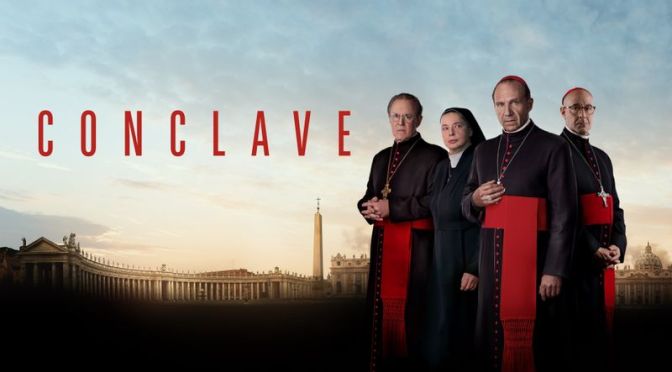
Cinema Review: Conclave (2024) – A Technically Brilliant, Yet Emotionally Faithless Experience (2024)

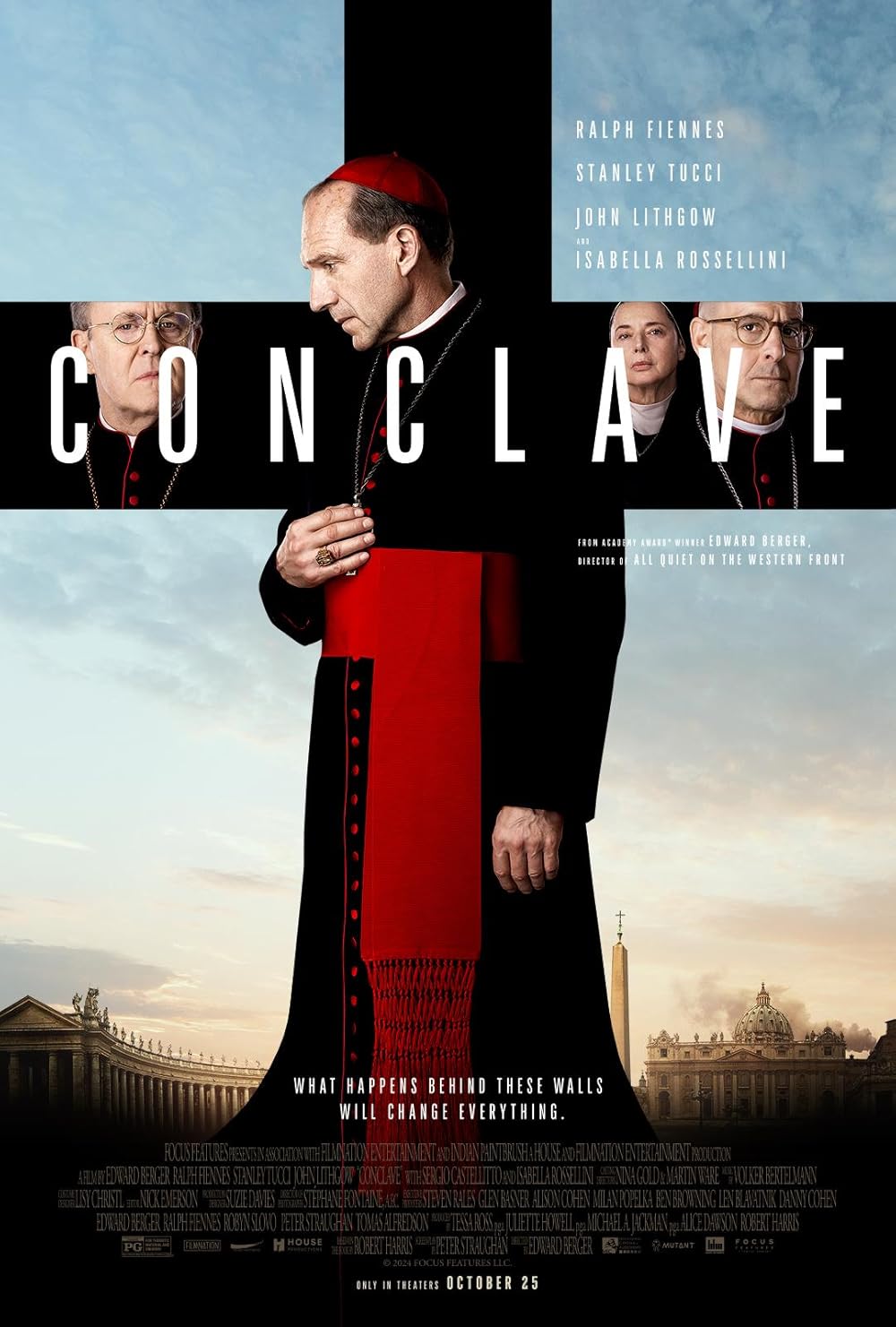
CINEMA REVIEW: CONCLAVE (2024)

Directed by Edward Berger

Screenplay by Peter Straughan

Based on the novel Conclave by Robert Harris

Produced by Tessa Ross, Juliette Howell, Michael Jackman, Alice Dawson and Robert Harris

Main cast: Ralph Fiennes, Stanley Tucci, John Lithgow, Sergio Castellitto, Isabella Rossellini, Lucian Msamati, Carlos Diehz, etc.

Cinematography by Stéphane Fontaine

Music by Hauschka

*** MAY CONTAIN SPOILERS ***


When you think about organized crime families, images of the Sopranos or Godfather-esque figures probably come to mind. But, if we’re playing with definitions one might allege the Catholic Church—an ancient institution with global influence—is one of the biggest crime organisations ever historically and in the present. I mean, organized crime families are notorious for their code of silence. The Church has had its fair share of. . . shall we say, discretion? From the Vatican’s secret archives to a several public scandals they’d rather we not dwell on, there’s certainly a flair for keeping things in the family.

The Pope, aka the Holy Father, wears white, sits on a throne, and apparently has a direct line to the big “man” upstairs. Replace “Vatican” with “Sicily,” and suddenly, the resemblance to the Mafia is uncanny. Moreover, crime families thrive on wealth accumulation. The Vatican’s art collection, gold reserves, and prime real estate make even the most successful mobster green with envy. Not to forget, from Rome to Rio, the Catholic Church has an unparalleled network. Mobsters may have their territories, but the Church claims everywhere. With over a billion followers worldwide, even Don Corleone would bow to that reach. Thus, power struggles ensue within many organisations with coups and betrayals and internal competitions occur, including who is going to be the new boss. Welcome to the cinematic adaptation of Robert Harris’ novel, Conclave (2024); a beautifully constructed, serious and ultimately quite silly story.


Ralph Fiennes is majestic as Cardinal-Dean Thomas Lawrence, the individual tasked with finding a successor after the Pope dies of a heart attack. Fiennes anchors this serious faith-based drama with an intellectual depth as a series of potential candidates throw their zuchettos into the ring including:

  • Aldo Bellini (Stanley Tucci) of the United States, a liberal spirit echoing the compassionate legacy of the late pontiff.
  • Joseph Tremblay (John Lithgow) of Canada, a voice of moderation, bridging the Church’s timeless values and modern sensibilities.
  • Joshua Adeyemi (Lucian Msamati) of Nigeria, a steadfast advocate of social conservatism, grounded in enduring traditions.
  • Goffredo Tedesco (Sergio Castellitto) of Italy, an unwavering traditionalist, fiercely loyal to the ancient rites of faith.

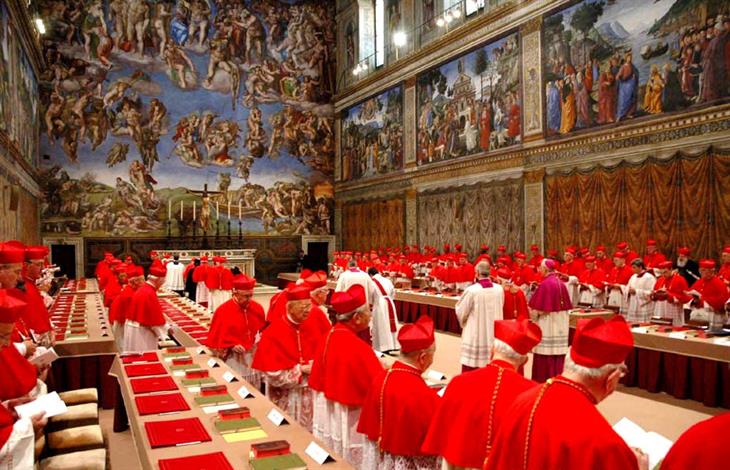
With a narrative based on a book by Robert Harris, it is certain that the powerful developments and twists will grip the audience. Furthermore, Edward Berger’s direction is undeniably captivating, as is Stéphane Fontaine’s cinematography, which paints each scene with a reverence befitting the Vatican’s grandeur. Their collaboration crafts a visually stunning vision, pulling viewers into the cloistered rituals of electing a new Pope. Yet, for all its technical brilliance, the process itself feels devoid of emotional resonance.

Why should we, the audience, care about who becomes the next Pope? Unless one is deeply invested in the Catholic Church or its doctrine, the stakes remain distant. The election of a spiritual leader for over a billion followers is, of course, significant—but the film offers little to make this significance tangible for those outside that fold. Harris’ story spices things up with a provocative, irreverent twist in its final act. Yet, this narrative grenade lands with a thud rather than an explosion. Yes, it’s shocking, even subversive, but it doesn’t pack enough weight to unsettle an institution as colossal and entrenched as the Catholic Church.

Ultimately, Conclave (2024) is a masterclass in craft but a missed opportunity in damning the status quo of this alleged criminal organisation. Berger, Fontaine, Fiennes, plus the production design, score and sound-mixing artistry elevate the film, making it an incredibly effective cinematic version of the proverbial page-turner. But the story’s failure to connect on a deeper, emotional level found me losing my religion; what little I have left.

Mark: 7 out of 11


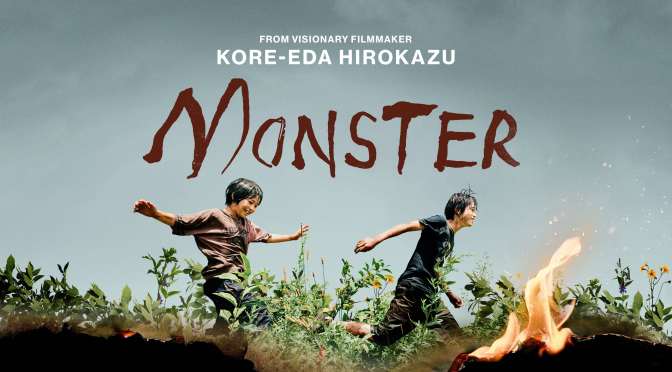
Mubi Film Review: Hirokazu Kore-eda’s exquisite tale of love, loss and rebirth – Monster (2023)

MUBI FILM REVIEW: MONSTER (2023)

Directed and edited by Hirokazu Kore-eda

Written by Yuji Sakamoto

Produced by: Hirokazu Kore-eda, Minami Ichikawa, Kenji Yamada, Megumi Banse, Taichi Itō and Hijiri Taguchi

Main cast: Sakura Andō, Eita Nagayama, Sōya Kurokawa, Hinata Hiiragi and Yūko Tanaka

Cinematography by Ryuto Kondo

Music by Ryuichi Sakamoto

*** MAY CONTAIN SPOILERS ***


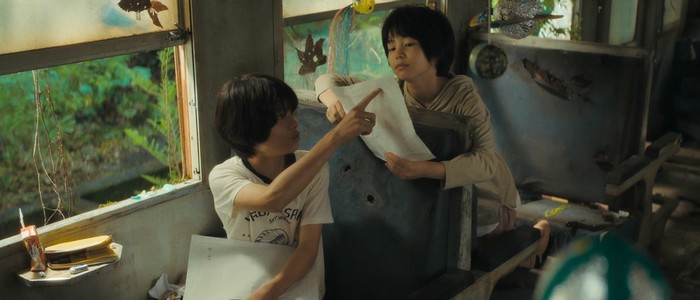
Hirokazu Kore-eda’s Monster (2023) exemplifies his continued mastery of humanist storytelling, a hallmark of his career. As with prior works such as the classic Afterlife (1998), critically acclaimed Shoplifters (2018), and the recent, arguably more commercial comedy-drama, Broker (2022), Kore-eda demonstrates a keen ability to explore the quiet complexities of human relationships, here through themes of bullying, young love, and the tender, taboo nature of queer affection. Monster (2023) delves deeply into the fragility of human connections, revealing the pain and misunderstandings that arise when societal expectations collide with individual identities.

The story focuses on shifting narrative perspectives of two young boys, Minato (Sōya Kurokawa) and Yori (Hinata Hiragi), Mugino’s mother, Saori (Sakura Andō) and the boy’s teacher, Michitoshi Hori (Eita Nagayama). Initially, Minato begins displaying slightly disturbing behavious such as cutting his own hair and throwing tantrums in class. His mother then believes the teacher is bullying him and begins to campaign for Mr Hori’s punishment. What then unfolds is something altogether more complex and powerfully ambiguous.

With Monster (2023), crafted via a Rashomon-style structure by screenwriter Yuji Sakamoto, the narrative approach provides a formidable layer to the film’s emotional resonance. It allow the audience to revisit pivotal events from multiple perspectives. By shifting viewpoints the script highlights how perception shapes reality, illustrating the subjectivity of truth in deeply personal and often painful ways. The multifaceted storytelling reveals how moments of cruelty, compassion, and misunderstanding ripple across different lives, underscoring Kore-eda’s central humanist message: no person is simply a villain or a hero, but a complex amalgam of motives and vulnerabilities.


The script’s structural ingenuity enhances the film’s exploration of societal issues, such as the alienation of queer youth and the lasting scars of bullying. Each retelling reframes the characters’ actions, fostering empathy for even the most seemingly antagonistic figures. This interplay of perspectives elevates Monster (2023) beyond a straightforward tale of adolescent struggle, transforming it into a profound meditation on the intersection of memory, identity, and the pursuit of love and acceptance.

By marrying Kore-eda’s subtle directorial touch with Sakamoto’s intricate script, Monster (2023) achieves a rare cinematic feat: a story that is as intellectually engaging as it is emotionally devastating. Moreover, it reaffirms Kore-eda’s place as a preeminent chronicler of the human condition. Safe to say that it is beautifully filmed, cast and acted. To elicit such incredible performances from these boys is wondrous direction. It also features a fragmented but beautifully poetic final film score of the recently departed Ryuichi Sakamoto. Overall, it’s cinema that breathes pathos and humanity into each and every character, and provides no easy solutions. Monster (2023) is a film that burns, like the fiery tower block featured throughout, long in the heart and memory.

Mark: 9.5 out of 11


Apple TV+ Film Review: Blitz (2024) – A fine testament to the Human Spirit during Wartime!

Apple TV+ Review: Blitz (2024)

Directed by Steve McQueen

Written by Steve McQueen

Produced by Tim Bevan, Eric Fellner, Steve McQueen, Anita Overland, Adam Somner, Arnon Milchan, Yariv Milchan, Michael Schaefer

Main Cast: Saoirse Ronan, Elliott Heffernan, Harris Dickinson, Benjamin Clementine, Kathy Burke, Paul Weller, Stephen Graham etc.

Cinematography by Yorick Le Saux

*** MAY CONTAIN SPOILERS ***


Officially classed as acclaimed filmmaker Steve McQueen’s first feature since the release of Widows (2018), Blitz (2024) is a WW2 drama of extremely high quality. But before I get into the review, lest we forget the series of films Steve McQueen delivered to the BBC a few years. The ‘Small Axe’ anthology should and shall be revisited as one of the most important documents of British history, such is its searing power, dramatic drive and the stunning rich tapestry of characterful moments. So, I urge you to watch, if you haven’t, what I consider to be Steve McQueen’s masterworks. I have reviewed the first one Mangrove (2020) here and the remaining of the collection here:


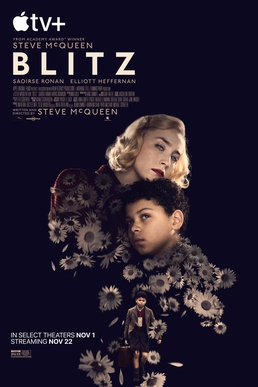
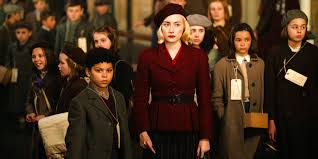
Blitz (2024) is a bigger budgeted production when compared to the ‘Small Axe’ anthology. But, similarly, it is a period piece, focusing on the working class and Black experience, this time set during the brutal bombing of London in 1940. McQueen shoots very much from the perspective of George (Elliot Heffernan), his mother, Rita (Saoirse Ronan) and grandfather, Gerald (Paul Weller). George, like many war children, is packed on a train to the relative safety of the countryside, while parents live in the hope of surviving the incessant German bombs.

After establishing the close family bond between the Hanways, and the wrenching emotion of sending her son away, Rita continues working in a munitions factory and sings beautifully on a national radio show. At the same time, George, finds trouble with a gang of child bullies on the train, before fighting back and jumping off. A tough and resourceful boy, George, makes the perilous choice to return to battered and burning London to reunite with his mother. The city, scarred by the relentless ‘Blitzkrieg’, is a treacherous labyrinth of collapsing buildings and choking smoke, but George’s determination burns brighter than the fires raging across the skyline.


Like a modern Oliver Twist, Blitz (2024) George’s journey through the devastated capital is both a physical and moral odyssey, with each encounter shaping his understanding of loyalty, survival, and the fragile threads that bind people together in times of crisis. George becomes trapped by his own choices, the bombs, bricks, buildings and characters he meets on the way. Some are friendly, but others exploit George preventing his return home. McQueen’s script also finds time to flashback to show Rita meeting George’s father, providing significant context to his mixed race background. Indeed, through George, McQueen explores themes relating to race and his emotional journey to find his place in the world as a person of colour.

Blitz (2024) is a superbly shot and designed film, with Yorick Le Saux’s cinematography rendering war torn London with an almost mythical beauty. However, Hans Zimmer’s overblown soundtrack is too much for me. Further, Steve McQueen’s hagiographic and episodic approach does somewhat diminish the raw drama and bloody horror of war. Notably, the under-use of Kathy Burke and Stephen Graham’s gutter snipe thieves. Plus a thrilling action set-piece during a flooded tube station that cuts away from George’s almost-demise, denying us suspense and dramatic catharsis. Thus, at times, the film sacrifices potential complexity during George’s journey, making his survival seem almost predestined rather than hard-fought. Still, Steve McQueen remains one of the country’s most important cinematic artists and Blitz (2024) is yet another fine testament to the strength and resilience of the human spirit.

Mark: 8 out of 11


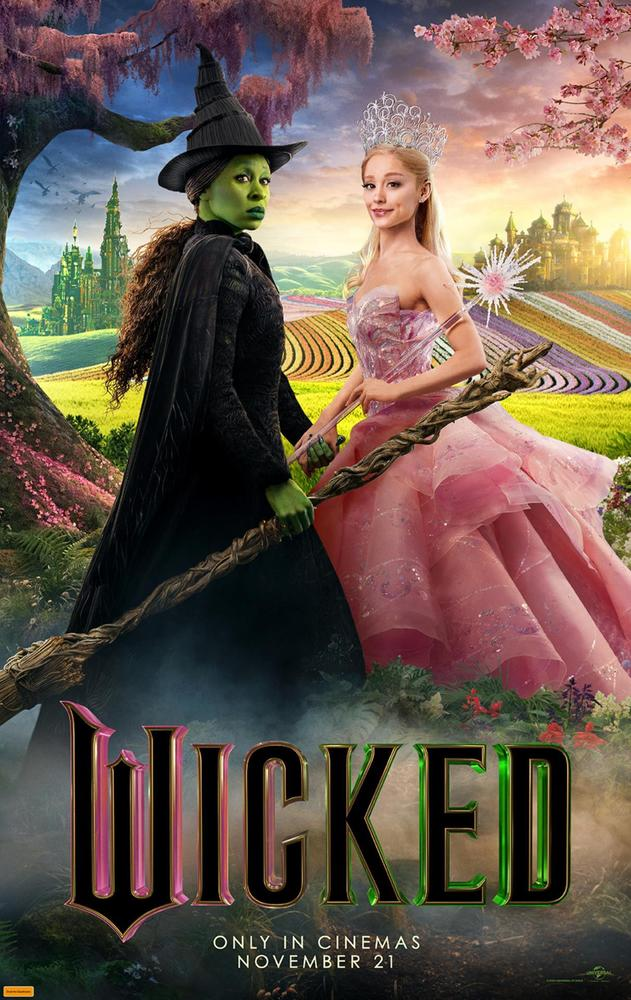
Cinema Review: Wicked (2024) – delivers a Magical Yet Overstuffed Musical Experience

Cinema Review: Wicked (2024)

Directed by Jon M. Chu

Screenplay by Winnie Holzman and Dana Fox

Based on the musical, Wicked by Stephen Schwartz & Winnie Holzman
and novel by Gregory Maguire
.

Produced by Marc Platt and David Stone

Main Cast: Cynthia Erivo, Ariana Grande-Buter, Jonathan Bailey, Ethan Slater, Bowen Yang, Marissa Bode, Peter Dinklage, Michelle Yeoh and Jeff Goldblum etc.

Cinematography by Alice Brooks

Edited by Myron Kerstein

Music by John Powell (score) and Stephen Schwartz (score and songs)

*** MAY CONTAIN SPOILERS ***


I truly believe my love of cinema began when I was aged five. Or was it six? Picture the scene. Christmas Day circa 1976 and the living room of a Battersea tower block. A television emits a classic musical fantasy called The Wizard of Oz (1939). Shades of grey with a flickering light and shadow, drew me into its spell. I sat wide-eyed, cradled by the screen’s soft glow, unaware that something wondrous lay just beyond the monochrome.

And then it happened—like a magician’s flourish, the black and white world I had known melted away. Dorothy opened that door, and the screen burst into life, a kaleidoscope of impossible hues. Emerald greens, ruby reds, a yellow road that glowed with the promise of adventure. My eyes widened. Hang on! It was black and white and NOW the images are in colour! This was magic. This was film. This was Oz!

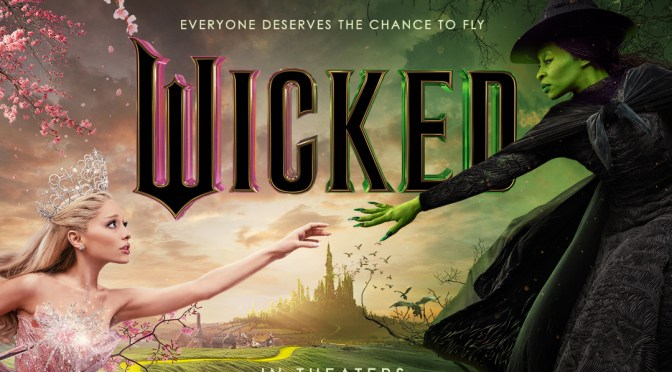
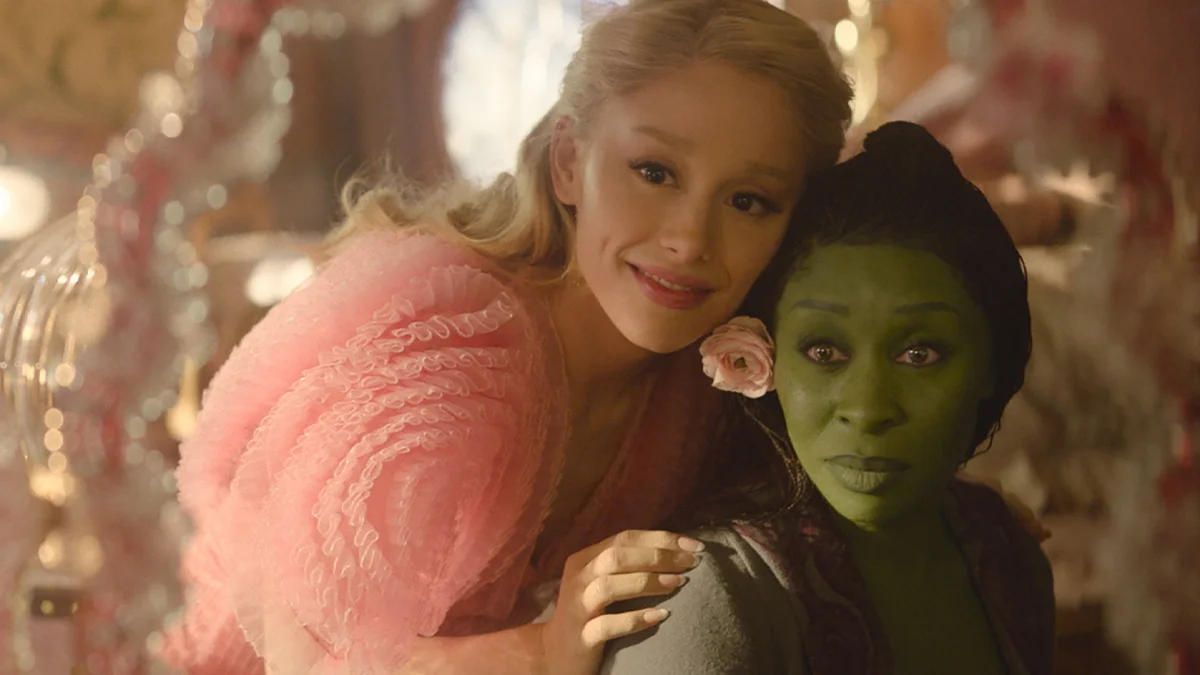
Forty-eight years later and back to the present. In 2024, I am sat in the cinema intrigued to watch the musical prequel, Wicked (2024). Based on a successful novel, then a spectacularly successful stage musical and now a big-budget Christmas cinema extravaganza indulgently split into a two-parter, does Wicked (2024) capture the cinematic sorcery I experienced in my youth? Of course it possibly cannot live up to my warm and fuzzy childhood memories, but it is a well-crafted, superbly choreographed and energetically performed Hollywood product with Cynthia Erivo and Ariana Grande on majestic form.


The film, based on Wicked: The Life and Times of the Wicked Witch of the West by Gregory Maguire, is a brilliant twist on the “what if” storytelling lens—a speculative reimagining that turns a villain into a deeply human, complex protagonist. The novel takes the flat archetype of the Wicked Witch and asks: What if we misunderstood her? What if the “wickedness” she’s condemned for is not inherent, but the result of a life shaped by prejudice, politics, and pain? Indeed, the journey of Elphaba Thropp (Cynthia Erivo) powerfully drives the story, and in some fashion Wicked (2024) works brilliantly as a Breaking Bad-meets-Mean Girls-type-rites-of-passage musical.

Unfortunately, such strong narrative bones with weighty themes of identity, morality, and the price of power are adorned in a dazzling, over-the-top spectacle. While its core narrative explores profound questions about destiny and the nature of “wickedness,” these ideas often get buried under an excessive parade of well-designed production numbers that stretch the running time and tested one’s patience. The powerful emotional arcs of Elphaba and Glinda, rich with potential, are interrupted by TOO MANY songs that (Dancing Through Life is one such culprit), while entertaining in isolation, often feel like detours from the story’s heart.

By the final curtain, the spectacular musical embellishments, though undeniably crowd-pleasing, can leave the story feeling bloated. I am probably the wrong demographic for the production, given the cinema was full of children and parents. So, while there is much to enjoy in comparison with the original film’s genius, notably the invention of the flying monkeys, Wicked (2024), for all its glitter and showmanship, finds the greedy desire for a two-parter ultimately draining Oz of pace and magic.

Mark: 7 out of 11


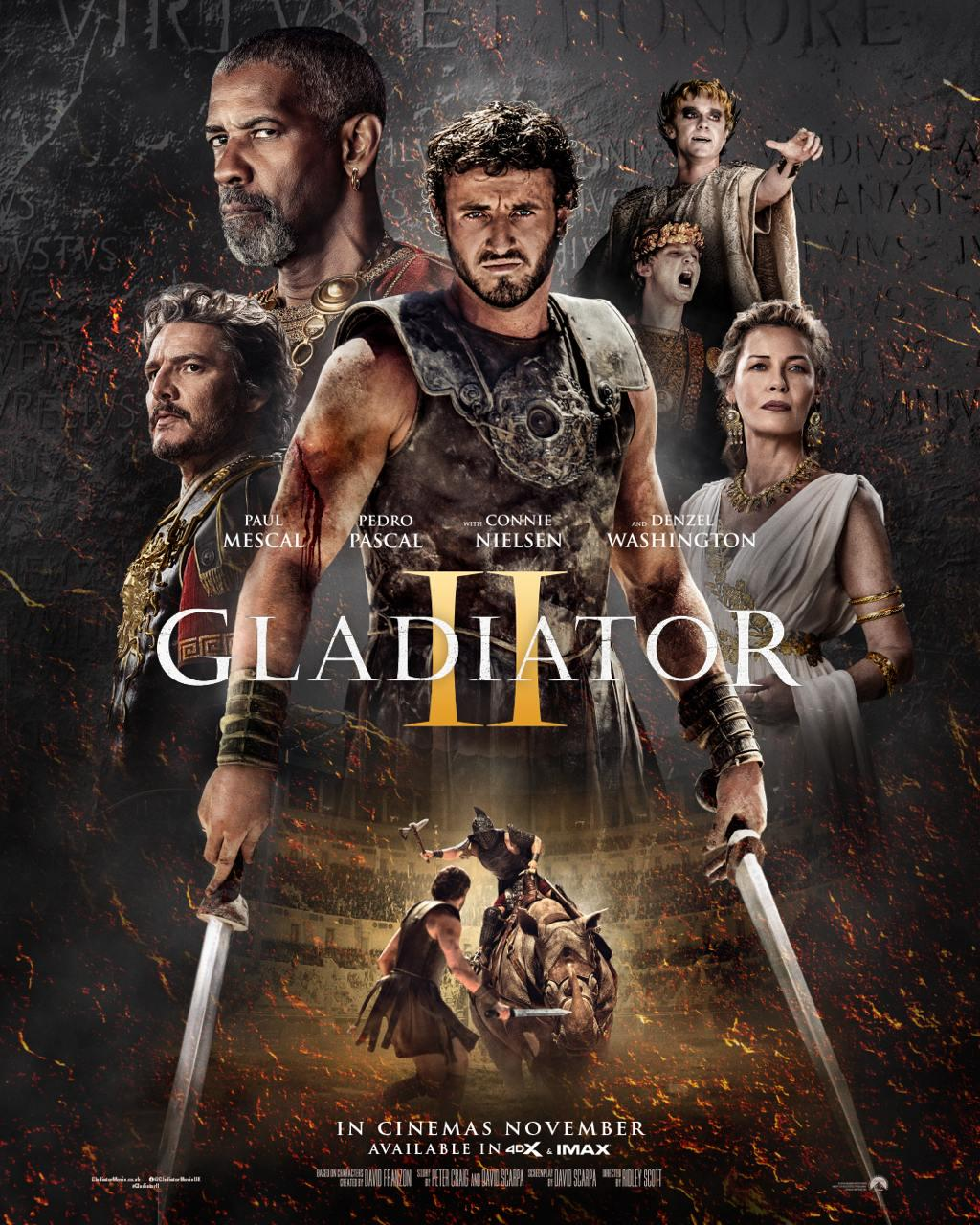
Cinema Review: Gladiator II – an Epic Sequel that Echoes the original in Eternity

CINEMA REVIEW: GLADIATOR II (2024)

Directed by Ridley Scott

Screenplay by David Scarpa

Story by Peter Craig, David Scarpa

Based on Characters by David Franzoni

Produced by Ridley Scott, Michael Pruss, Douglas Wick, Lucy Fisher, Walter F. Parkes, Laurie MacDonald and David Franzoni
.

Main cast: Paul Mescal, Pedro Pascal, Joseph Quinn, Fred Hechinger, Lior Raz, Derek Jacobi, Connie Nielsen and Denzel Washington.

Cinematography by John Mathieson

*** MAY CONTAIN SPOILERS ***


Ridley Scott’s Gladiator (2000) stands as a modern genre classic, redefining the historical epic with its visceral storytelling, evocative visual style, and emotional depth. The film not only revitalized interest in the sword-and-sandal genre but also solidified Russell Crowe as a major star, earning him an Academy Award for Best Actor. Crowe’s portrayal of Maximus Decimus Meridius—a betrayed Roman general seeking justice—exudes both raw power and profound vulnerability, making him an enduring figure in cinematic history.

Gladiator’s superb screenplay intricately followed the structure of Joseph Campbell’s Hero’s Journey, charting Maximus’ transformation from a celebrated general to a fallen slave, and ultimately to a venerated martyr. Also invoking the archetype of one of Christopher Booker’s seven basic plots, ‘Overcoming the Monster’. Indeed, Maximus’ journey aligns with the ‘Overcoming the Monster’ archetype, where the hero confronts a seemingly insurmountable evil. Commodus and the Roman Empire embodies the “monster,” wielding unchecked power, moral corruption, and cruelty. Maximus battles not only physical opponents in the gladiatorial arena but also the corrupt system that Commodus represents. His ultimate triumph over Commodus is both personal vengeance and symbolic justice, restoring balance to a fractured world.

Finding Ridley Scott at arguably the height of his directorial power, Gladiator’s success rested on its ability to blend archetypal storytelling with deeply human emotions. It revitalized the historical epic for modern audiences by prioritizing character-driven drama over spectacle, though its battle sequences remain iconic. With its sweeping Hans Zimmer score and Russell Crowe’s unforgettable performance, the film transcended its genre, made a lot of money and become a modern myth that continues to resonate with audiences worldwide. So, the burning question is why did it take so to make a sequel?


I’d say the answer to this question is that because the original was so iconic and powerful it didn’t need a sequel. Still, when has that ever stopped the money-making behemoth of the Hollywood machine from not following up. The surprise is that it took twenty-four years to bring to the screen. Which is a similar length of time after the first one that Gladiator II (2024) is set, namely 211AD. Similarities do not cease there.

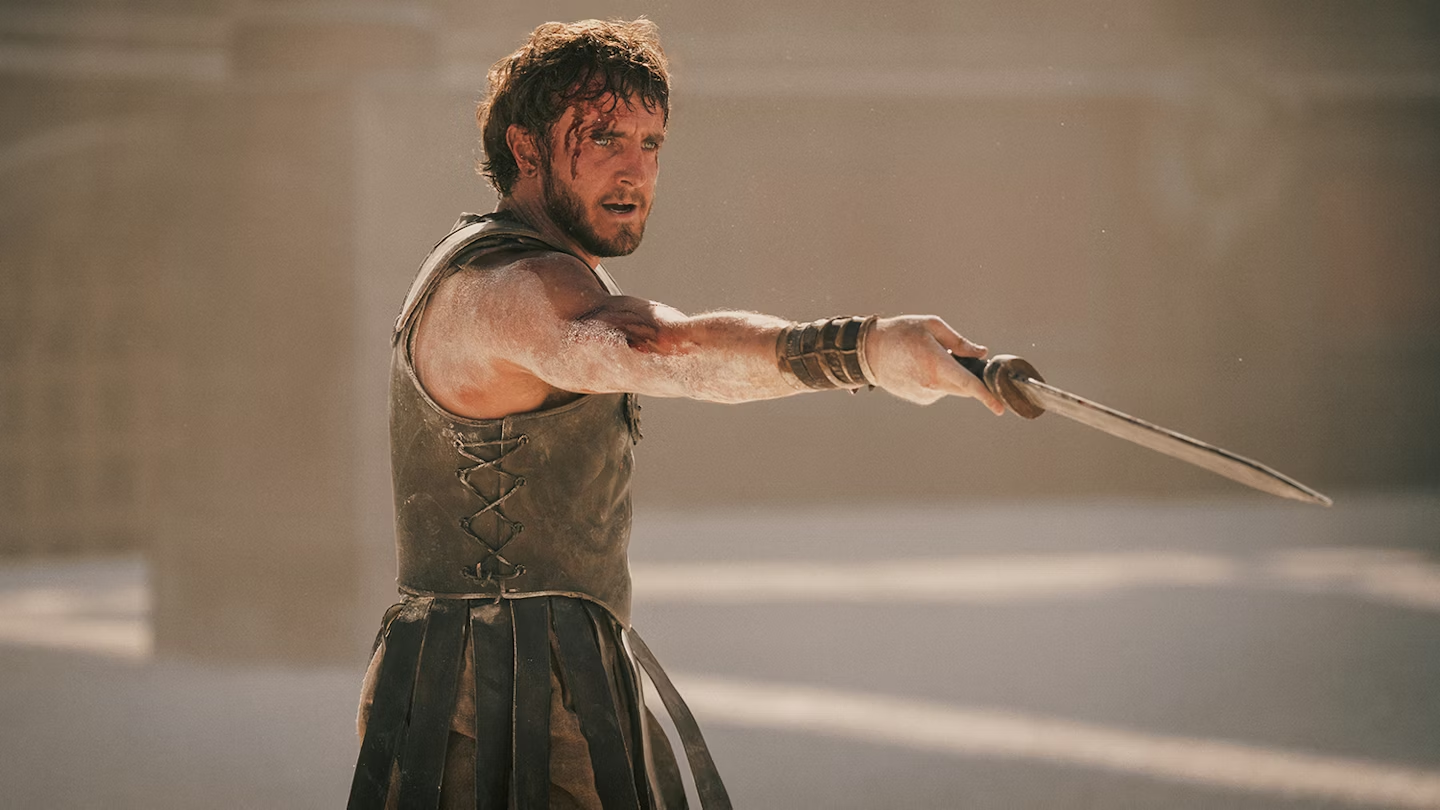
So, I will just say I had so much fun watching Gladiator II. It is an exhilarating return to the grandeur of the Roman Empire, delivering breathtaking visuals, high-stakes action, and a muscular lead performance from Paul Mescal as Hanno, a fighter with a mysterious history. However, despite its ambitious scale and technical brilliance, the sequel draws heavy parallels to the original, feeling more like a reimagining than a bold continuation. Hanno’s journey echoes Maximus’ so closely that it lacks the freshness that made the 2000 film a groundbreaking modern epic.

Indeed, Hanno’s arc is essentially a mirror image of Maximus’ but while Gladiator II adheres to the same Hero’s Journey structure that defined the first film, the beats feel overly familiar. Hanno’s transformation, while compelling, doesn’t quite reach the mythic resonance of Maximus’ odyssey. Where Maximus was a reluctant hero drawn into a larger-than-life struggle, Hanno’s motivations and journey feel more cloudy and contrived, lacking the gravitas of the original’s moral and emotional complexity. Script and character inconsistencies do not help, with Hanno too quickly switching emotions where Connie Nielsen’s Lucilla is concerned.


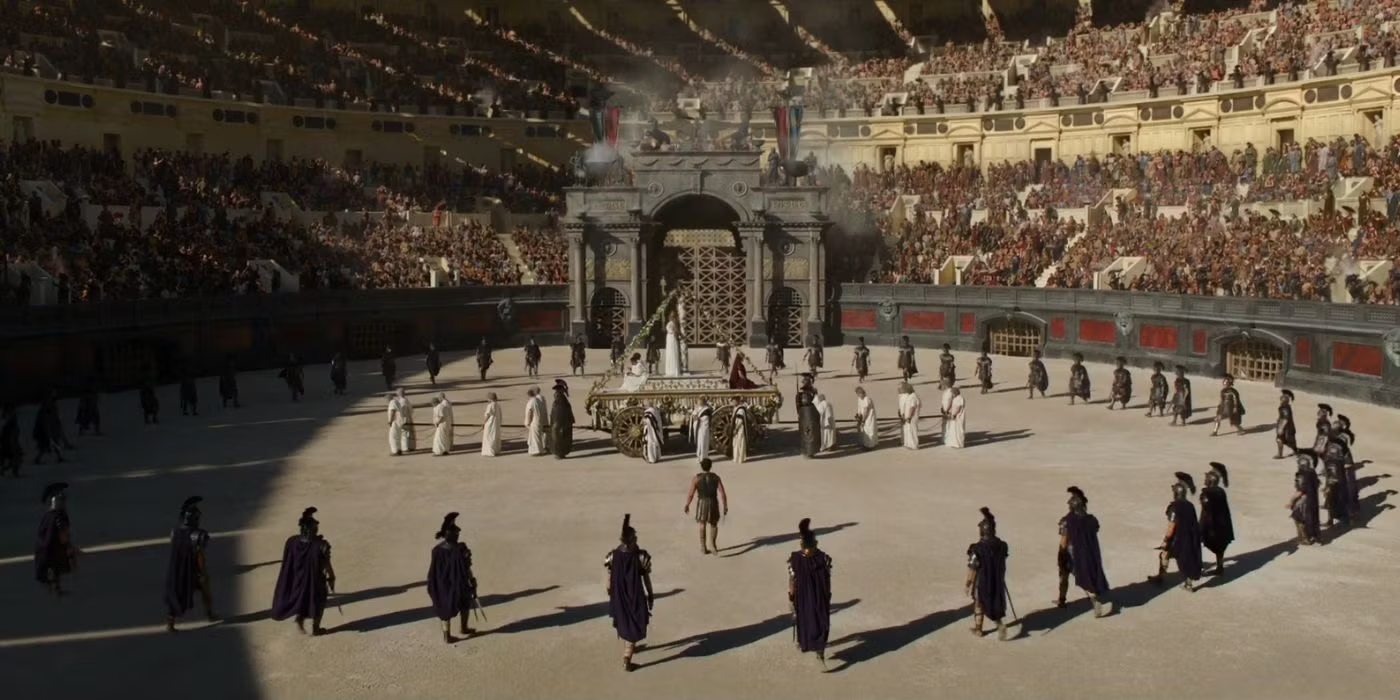
That said, the sequel contains many strengths. The world-building is as immersive as ever, with Ridley Scott’s regal direction ensuring that every frame pulsates with life and detail. The sheer energy and brutality of the Colosseum set-pieces are worth the admission alone. The flooding of the arena battle and introduction of a number of fantastic and vicious beasts are especially memorable. The action is bloody and gripping, the score soars, and the themes of resilience and justice remain timeless. Moreover, Mescal delivers a commanding performance, injecting moments of raw intensity and vulnerability into the role.

Having said that, it is Denzel Washington’s Macrinus who pulls narrative focus and power throughout. Washington brings his trademark gravitas and charisma to the role, crafting a character arc that is both morally complex and emotionally resonant. Macrinus’ journey of manipulation, becomes the film’s most compelling thread, overshadowing Hanno’s more conventional hero’s path. Washington imbues Macrinus with subtlety, allowing audiences to see flashes of vulnerability and moral conflict beneath his stoic exterior. He oscillates effortlessly between commanding authority and quiet introspection, making every line delivery impact. Washington’s natural charisma ensures that Macrinus commands attention in every scene. His dialogue crackles with intensity, and his moments of silence speak volumes, often eclipsing Hanno’s more straightforward emotional beats.

Gladiator II undeniably thrills as a cinematic experience, but its adherence to the original’s blueprint leaves it struggling to step out of Maximus’ shadow. While it showcases the enduring power of its core narrative themes, it ultimately feels more like a polished homage than a groundbreaking sequel, relying on echoes of past triumphs rather than forging an entirely new path. For fans of the original, this familiarity is a strength and weakness, yet nonetheless Scott’s epic facsimile remains a powerful and bone-crunching adrenaline rush.

Mark: 8 out of 11


BFI Film Review: Scala (2023) – At the Altar of Nostalgia for the Scala Cinema!

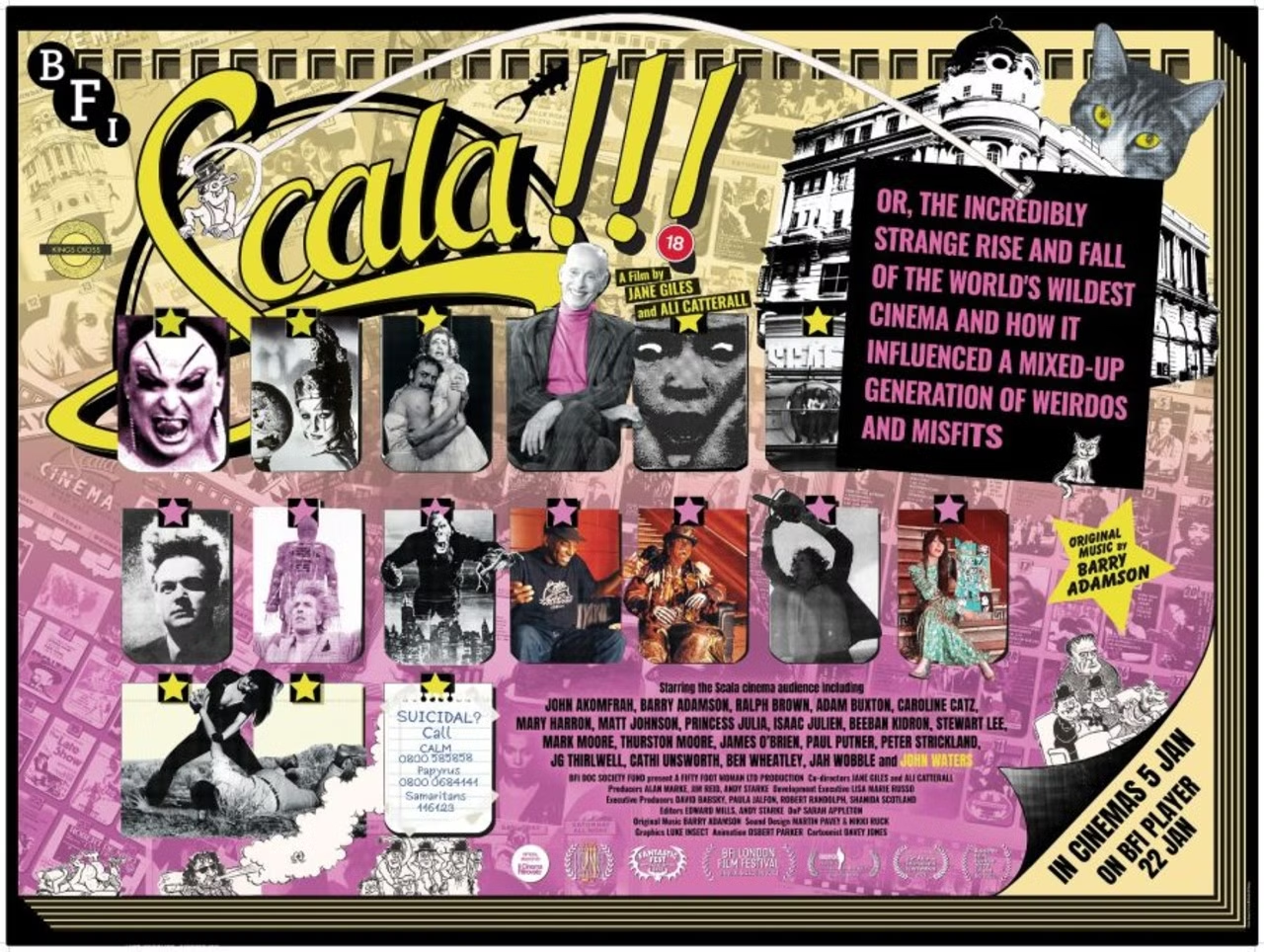
BFI Film Review: Scala!!! (2023)

Directed by Ali Catterall & Jane Giles

Produced by Andrew Starke, Alan Marke & Jim Reid

Cinematography by Sarah Appleton

Edited by Andrew Starke and Edward Mills

Music by Barry Adamson


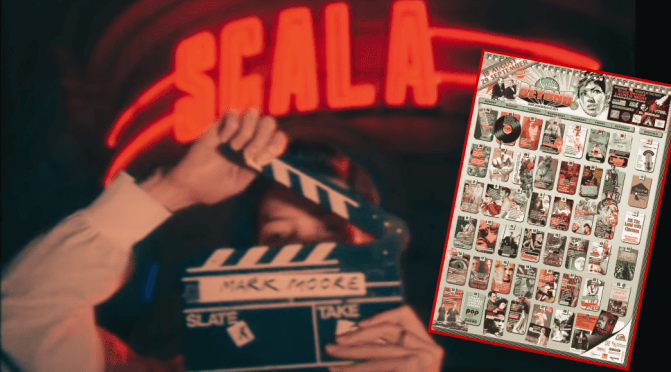
The Scala Cinema, nestled in the heart of London, was more than just a film theatre; it was a refuge, a haven for anyone with a passion for films that didn’t fit into the mainstream mold. I can still feel the sticky floors, the cats in the dark, hear the muffled sounds of the trains passing overhead, and see the hazy red glow that filled the theater. In the 1980s and 1990s, going to the Scala wasn’t just about watching a film; it was about being part of a community that celebrated the bizarre, the boundary-pushing, and the boldly artistic.

During those years, the Scala felt like my second home. It was where I could disappear into films that I couldn’t find anywhere else – obscure horror flicks, campy B-movies, gonzo-pornos, arthouse selections, and controversial classics from around the globe. It was my church. Films by David Lynch, John Waters, Yuen Woo-ping, Derek Jarman, Werner Herzog, Sam Raimi, Lucio Fulci, Russ Meyer, Kathryn Bigelow, Alex Cox, John Woo, Stanley Kubrick, Jane Campion, Orson Welles, Dario Argento, Alejandro Jodorowsky and many more – each screening felt like a small rebellion, a discovery that I’d carry with me. The Scala didn’t just show movies; it curated experiences. All-night marathons, double bills, and surprise screenings became a staple of my weekends, filling my mind with scenes that blurred the line between reality and the outrageous.


When I watched the Scala documentary on BFI Player, a flood of memories came rushing back. It was as though I’d been given a ticket back to those wild, late nights. I remembered how Scala regulars would shout lines at the screen or break into laughter at inopportune moments, making each viewing unique and unpredictable. The documentary captured not only the films but the spirit of the place – the staff who loved cinema as much as the patrons did, the strange but welcoming crowd, and the sense that Scala wasn’t just a venue but a movement. Watching it felt like reconnecting with a part of myself, an era when cinema was raw, thrilling, and unpolished.

The Scala in King’s Cross is a legend, and for those of us who were lucky enough to experience it, it’s a chapter we’ll always cherish. I was even there when they showed A Clockwork Orange (illegally), which led to the ill-fated court case which forced it to close. This documentary is both a valuable historical document and a joyous sharing of stories from those who worked there and attended the films shown, including: Mark Moore, Mary Harron, Isaac Julien, John Waters, Ben Wheatley; Barry Adamson, Matt Johnson, Adam Buxton, James O’Brien, Stewart Lee, Lisa Power and Graham Humphreys. Overall, the Scala Cinema wasn’t just about the films we watched; it was about finding a place where film became more than entertainment – they were a way of life.

Mark: 9 out of 11


Cinema Review – Exploring Music and Madness in Joker: Folie à Deux (2024)

Cinema Review: Joker: Folie à Deux (2024)

Directed by Todd Phillips

Written by Scott Silver and Todd Phillips (Based on Characters by DC Comics)

Produced byTodd Phillips, Emma Tillinger Koskoff & Joseph Garner


Main cast: Joaquin Phoenix, Lady Gaga, Brendan Gleeson, Catherine Keener and Zazie Beetz etc.

Cinematography by Lawrence Sher

Music by Hildur Guðnadóttir

*** MAY CONTAIN SPOILERS ***


In 2019, Todd Phillips and Joaquin Phoenix, as director and lead actor, unleashed Joker (2019) on the cinema public. It became an enormous critical and commercial hit, with Phoenix winning the ‘Best Actor’ award at the Academy Awards. Unsurprisingly, a sequel now reaches us. While the original 1980’s set period drama worked superbly, echoing the structure and themes of Scorsese’s King of Comedy (1982) and Taxi Driver (1976), the follow-up Joker: Folie à Deux (2024) is altogether different. In fact, given it experiments with musical, romance, crime, court-room and psychological horror genres, it is an altogether riskier film, which while compelling and fascinating, doesn’t always connect to a satisfactory whole. But perhaps that is the point. It is intended to reflect an inconsistent mind and unreliable narrator, a fractured soul in Arthur Fleck.

For me, in Joker: Folie à Deux (2024), Todd Phillips masterfully employs cinematic techniques of fragmentation and ambiguity to deepen the exploration of mental illness, echoing the disorienting and fractured experience of his protagonists. The film, much like its predecessor, blurs the lines between reality and delusion, but this time the ambiguity is intensified through musical elements, dreamlike sequences, and multiple perspectives. Phillips’ use of disjointed timelines and unreliable narratives immerses the audience in the chaos of Arthur Fleck’s (Phoenix) and Harley Quinn’s (Lady Gaga) unraveling psyches.


The musical numbers, set against stark, gritty environments, feel both fantastical and unnerving, reinforcing the characters’ distorted perceptions of the world. Moments of quiet introspection are suddenly broken by violent outbursts or surreal interludes, mimicking the unpredictability of their mental states. The film’s visual style shifts between stark realism and surreal imagery, reflecting the internal fragmentation of Arthur and Harley’s minds, keeping viewers on edge and questioning what is real.

Phillips’ direction ensures that the story remains rooted in ambiguity—much like the first film—inviting viewers to interpret the characters’ mental states without offering clear answers. This cracked narrative style doesn’t just illustrate their mental illness; it pulls the audience into it, making Joker: Folie à Deux a bold and unsettling exploration of madness through form as much as story. As such there isn’t much plot to speak of as Arthur’s journey essentially follows him from Arkham Asylum to court, with episodic splashes of song and dance in between, before we get to the climactic court room scenes.

As aforementioned, in Joker (2019), Todd Phillips drew heavily from Martin Scorsese’s The King of Comedy (1982), particularly in its portrayal of a lonely, unstable man seeking fame and validation in a world that cruelly rejects him. Arthur Fleck’s obsession with talk show host Murray Franklin mirrors Rupert Pupkin’s fixation on becoming a comedy star, and both films explore the dangerous consequences of societal alienation and delusional aspirations. The gritty, urban backdrop and character-driven narrative made Joker a powerful homage to Scorsese’s psychological explorations of fame and madness.


With Joker: Folie à Deux (2024), Phillips shifts toward a different Scorsese film for inspiration: New York, New York (1977). Much like Scorsese’s semi-musical about a turbulent romance between two performers, Folie à Deux integrates musical elements and centres on the chaotic relationship between Arthur and Harley Quinn (Lady Gaga). The film’s blending of harsh realism with the stylized, dreamlike sequences of musical numbers echoes New York, New York’s mix of glitzy performance and dark personal struggle. Thematically, both films explore how dreams of stardom can clash with mental instability, but Folie à Deux takes it a step further by embedding this conflict within its characters’ delusions, making the musical sequences feel like an escape from—or reflection of—their psychotic minds. This potential homage to New York, New York allows Phillips to expand Joker‘s cinematic language, fusing psychological drama with surreal musical spectacle.

Joker: Folie à Deux (2024), at time of writing, has polarized critics and cinema-goers. As someone who watches a lot of “art-house” and European cinema, I can see why this film is dividing opinion. This is what happens if Jacques Demy, by way of Bergman, were given $200 million to make a DC comic-book film. Todd Phillips takes many risks in form and structure, most notably denying the audience catharsis at the bleak finale. It is truly downbeat and it felt like Phillips and Phoenix were finally done with this clownish killer and anti-hero.

As a cinematic experience the musical score is striking. Moreover, the production is grey and oppressive and claustrophobic, set in enclosed cells and shadowed court rooms. There is little light in this film nor even a shadow at the end of the tunnel for Arthur and Harley. Phoenix is fantastic again, while Gaga’s romantic partner-in-crime is under-cooked as a character. Nonetheless, Gaga still sparkles amidst this gloomy, musical, existential journey into the mouth and down the throat of madness.

Mark: 8.5 out of 11


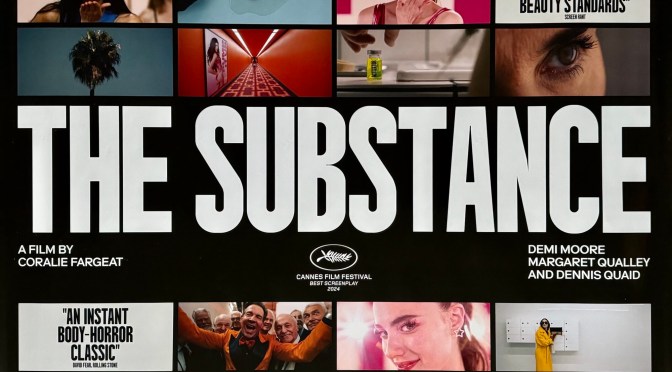
Cinema Review: The Substance (2024) – A Dark Exploration of Identity

THE SUBSTANCE (2024)

Directed by Coralie Fargeat

Written by Coralie Fargeat

Produced by: Coralie Fargeat, Tim Bevan and Eric Fellner

Main Cast: Demi Moore, Margaret Qualley and Dennis Quaid

Cinematography by Benjamin Kracun

*** MAY CONTAIN SPOILERS ***


The Substance (2024), directed by Coralie Fargeat, is a visually striking and visceral film that pushes the boundaries of body horror and psychological terror. Fargeat, known for her raw and relentless style in Revenge (2017), once again delivers an unforgettable experience by weaving references to classic literature and horror cinema into a narrative that is at once familiar and entirely original.

Demi Moore portrays a former Hollywood star, Elizabeth Sparkle, now relegated to doing a mildy successful cable TV aerobics show. However, Dennis Quaid’s oily production executive is on the lookout for younger talent. Elizabeth soon finds herself on the media scrapheap. Desperate to regain her youth and career, Elizabeth is drawn to the hypnotic promise of a new product called ‘The Substance.’

Before you can say, “Dorian Gray”, Elizabeth is lured to a strange white room full of lockers and has committed to the process. Similar to Gremlins (1984), there are rules to follow. As she follows the steps and injects the potions, Elizabeth goes through a painful and incredibly impactful transformation process. She literally gives birth to a young and beautiful alter ego called, Sue (Margaret Qualley). Elizabeth and Sue then get seven days each to live their life before they have to swap back. What could go wrong?


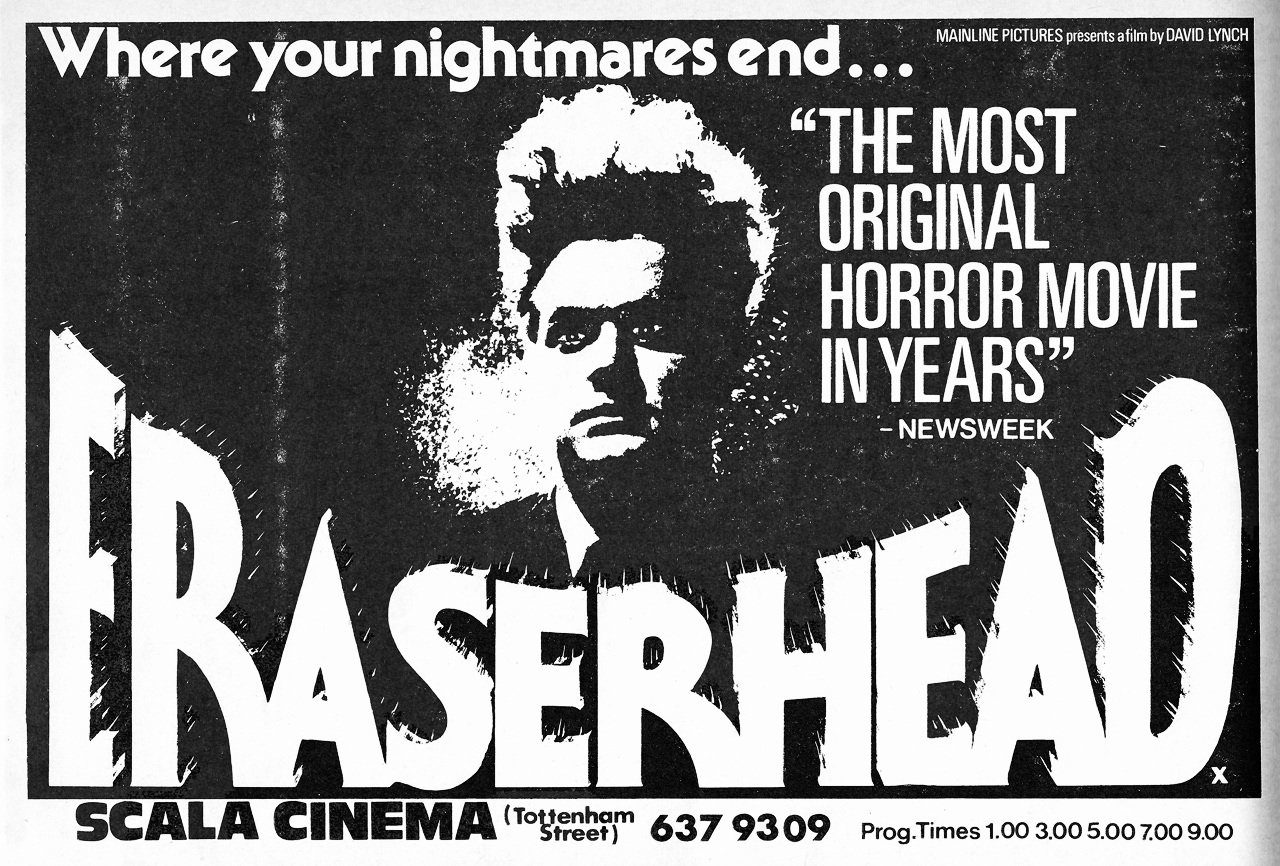
The film’s core themes draw heavily from Robert Louis Stevenson’s Dr. Jekyll and Mr. Hyde, exploring duality, identity, and the monstrous potential hidden within human nature. Like Stevenson’s tale of inner conflict, The Substance delves into the consequences of scientific ambition. It investigates moral transgression but with a modern, feminist twist. Fargeat’s use of body horror, particularly in the transformation sequences, echoes the grotesque, unsettling work of David Cronenberg. The nightmarish atmosphere and surreal visuals are reminiscent of David Lynch’s unsettling dream logic. This is notably seen in Eraserhead (1977) and Mulholland Drive (2001).

The film also pays homage to John Carpenter’s The Thing (1982), with its transmogrifying frights, sense of creeping paranoia and rising conflict. But rather than a group of men fighting each other Elizabeth and Sue turn on each other over ownership of their physical existence and Hollywood status. The final act descends into hellish and bloody satire echoing Peter Jackson’s Braindead (1992), with gore galore. Moreover, Stanley Kubrick’s influence is palpable in the film’s meticulous framing, production design and tension-building. The climactic body-morphing scenes, however, most clearly nod to Brian Yuzna’s Society (1989), with its grotesque depictions of class and conformity, fused with Fargeat’s unique vision of female empowerment, revenge and resistance.

The Substance (2024) feels like a bigger budget film in look and style, but you soon realise the minimal number of sets used and a lack of crowd scenes, finds the narrative effectively becoming a two-hander in the middle act by focusing on Sue and Elizabeth’s internal retaliatory vindictiveness. There are some amazing framing, colour design and cinematographic choices as showers become tombs to trap the protagonists. The book-ended Hollywood star montage and returning final shots are imaginative and unforgettable. Got to say that Demi Moore, as an actress taking on a role of an aging and neurotic former star is genius casting. While Qualley delivers a sexually charged and energetic performance, it is Moore who carries the weight of the complex themes as Elizabeth’s journey dives deeper into the stuff of nightmares.

Overall, The Substance (2024) is a postmodern classic and a film that honors its influences while forging its own path. Fargeat uses these references to enrich the narrative, creating a damned ugly and beautiful satire on those seeking narcissistic perfection through unnatural means, ultimately paying the price of those seeking eternal youth and fame.

Mark: 9 out of 11


HORROR REVIEWS: SPEAK NO EVIL (2022) / SPEAK NO EVIL (2024)

SPEAK NO EVIL (2022)

Directed by Christian Tafdrup

Written by Christian Tafdrup and Mads Tafdrup

Main Cast: Morten Burian, Sidsel Siem Koch, Fedja van Huêt, Karina Smulders, Liva Forsberg and Marius Damslev.

Speak No Evil (2022), directed by Christian Tafdrup, is a chilling psychological horror that explores the perils of politeness within middle-class sensibilities, turning everyday discomfort into a waking nightmare. The film follows a Danish family with a young daughter, visiting a Dutch family unit, only to find themselves trapped in a horrifying and twisted game of cat and mouse. All smiles and charisma at first, the ‘Alpha’ Patrick, dominates his wife and young son, who unfortunately has no tongue. Tafdrup deftly dissects how the fear of offending others—deeply ingrained in bourgeois values—leads the protagonists to ignore increasingly unsettling behaviour.

Losing or not using one’s voice is inherent within the text. Further, what begins as awkward social tension escalates into something far more sinister, as the family is manipulated through their desire to maintain decorum. This dynamic plays on the anxieties of modern, polite society, where confrontation is often avoided at all costs. The film’s climax delivers a shocking, almost biblical punishment for their inability to break free from these conventions, suggesting a moral reckoning for those who allow fear of impoliteness to override survival instincts.

Subtle, creeping dread makes Speak No Evil (2022) a disturbing meditation on the dangers of middle-class complacency, and the terrifying consequences of choosing politeness over personal safety. Lastly, the film also explores the theme of toxic masculinity as the muscular ‘Alpha’ threatens the ineffective ‘Beta’ male, proving one should always stand up to bullies or face the consequences.

(Note: for those seeking out the film in the UK, it is currently screening on Shudder.)

Mark: 8.5 out of 11


SPEAK NO EVIL (2024)

Directed by James Watkins

Screenplay adaptation by James Watkins


Main cast: James McAvoy , Mackenzie Davis, Scoot McNairy, Alix West Lefler, Dan Hough, and Aisling Franciosi

The English remake of Speak No Evil (2024) delivers a faithful and unnerving adaptation of Christian Tafdrup’s original, with James McAvoy’s chilling performance at its heart. McAvoy, playing the charming yet menacing antagonist, brings a sinister edge to the character that heightens the tension and discomfort throughout the film. His portrayal effortlessly captures the unsettling power dynamics, making each of his polite gestures and subtle manipulations all the more terrifying. McEvoy relishes every moment of this characterful performance.

What truly stands out in this remake is how it retains the meticulous craftsmanship of the original. The film carefully balances tension, awkwardness, and psychological dread, maintaining the slow-burn atmosphere that made the Danish version so unsettling. Director James Watkins ensures the pacing and visual style honour Tafdrup’s vision, with each shot and interaction loaded with unease. Watkin’s adaptation also provides further exposition and fleshes out the character dynamics and motivations, notably with the children, whose actions are integral to propelling the narrative thrills.

The Cape Fear (1991)-style climax veers away from the original’s more subtle, thought-provoking and bleak ending. However, it further amplifies the anxiety, offering a nerve-shredding confrontation that feels both inevitable and brutal. The remake pays homage to the original’s themes of social etiquette, hidden danger and finding one’s voices against bullies, while delivering a climactic showdown that mirrors the power struggles found in classic thrillers. Overall, like the original Speak No Evil (2024) successfully inverts the home invasion dynamic, making it a worthy, terrifying and almost necessary remake.

Mark: 8.5 out of 11


CINEMA REVIEW: BLINK TWICE (2024)

Directed by Zoë Kravitz

Written by Zoë Kravitz & E.T. Feigenbaum

Produced by Bruce Cohen, Tiffany Persons, Garret Levitz, Zoë Kravitz and Channing Tatum

Cast: Naomi Ackie, Channing Tatum, Christian Slater, Simon Rex, Adria Arjona, Kyle MacLachlan, Haley Joel Osment, Geena Davis and Alia Shawkat etc.

Cinematography by Adam Newport-Berra

*** MAY CONTAIN SPOILERS ***


The theme of toxic masculinity is almost becoming a sub-genre of itself in the wake of the #MeToo movement. Films such as The Royal Hotel (2023), How to Have Sex (2023) and Men (2022) are powerful genre films which take the manipulative, malevolent and violent aspect of men, utilizing it as both nemesis and a destructive force the main protagonists must contend with. While She Said (2022) dealt specifically with the Harvey Weinstein legal case, Zoe Kravitz’ energetic blend of genres in Blink Twice (2024), takes a more fictional and heightened route while exposing the horrors surrounding the potential happenings at the notorious Epstein Island.

Frida (Naomie Ackie) and her friend Jess (Alia Shawkat) work at an exclusive event where Frida meets Slater King (Channing Tatum), a billionaire tech mogul who recently resigned as CEO after a public scandal. Despite the scandal Frida and Jess gladly accept an invitation to his private island, where his assistant Stacy (Geena Davis) confiscates their phones. The island hosts Slater’s friends and business partners along with three glamorous guests including Sarah (Adria Arjona). The men and women are treated to lavish rooms, gift bags, gourmet meals, cocktails, and party like hedonistic rock stars drinking champagne and taking hallucinogens.


If you’ve seen the similar island-based, The Menu (2022), which I loved, plus the less than riveting 1950’s perfect suburb-set, Don’t Worry Darling (2022), one soon realises that not all is well in paradise. Amidst the sun, sea and partying the narrative slowly builds the tension until Frida and Jess begin to suspect all may not be as it seems. Kravitz carefully ratchets up the tension, with several strange discoveries heightening the paranoia and anxiety. Latterly the suspense gives way to all-out gory horror and black comedy in the thrilling final act. Naomi Ackie and Adria Arjona are impressive “final girls”, however, the script arguably throws in too many twisty reveals at the end, testing narrative credibility.

Zoe Kravitz is clearly a talented filmmaker and Blink Twice (2024), while unsubtle, is highly entertaining. But does the diversion to the horror genre dilute the power of the themes of toxic masculinity? Kravitz aims to critique the evils of men by showcasing male characters who embody arrogance, dominance, and emotional suppression. But while Kravitz may intend to address toxic masculinity, the reliance on traditional horror tropes potentially undermines this message by exaggerating characters, victimizing women, and prioritizing sensationalism over substance. Still, as a revenge fantasy, Blink Twice (2024), is both stylishly and dynamically rendered.

Mark: 7.5 out of 11