Category Archives: New Releases

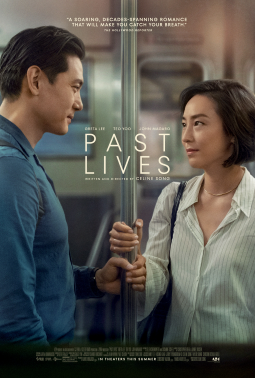
CINEMA REVIEW: PAST LIVES (2023)

CINEMA REVIEW: PAST LIVES (2023)

Directed by Celine Song

Written by Celine Song

Produced by: David Hinojosa, Christine Vachon and Pamela Koffler, etc.

Main cast: Greta Lee, Teo Yoo, John Magaro, Ji Hye Yoon, Choi Won-young, etc.

Cinematography: Shabier Kirchner

Edited by: Keith Fraas

*** MAY CONTAIN SPOILERS ***


“It’s an in-yeon if two strangers even walk past each other in the street and their clothes accidentally brush, because it means there must have been something between them in their past lives. If two people get married, they say it’s because there have been 8,000 layers of in-yeon over 8,000 lifetimes.”Nora from Past Lives (2023)


Are we fated to connect with the ones we love through each life we lead? Is love a connecting force for good which enriches and links us to our forever soulmate? Or is it a complex chemical reaction driven by three chemicals in the brain such as noradrenaline that stimulates adrenaline production, dopamine, and phenylethylamine. Be it spiritual or chemical, love drives many of the highs of our lives, but it is also responsible for disappointing lows. Safe to say that love and romance are also a staple for many emotionally charged and beautiful works of cinema, of which Celine Song’s Past Lives (2023) is certainly one of them.

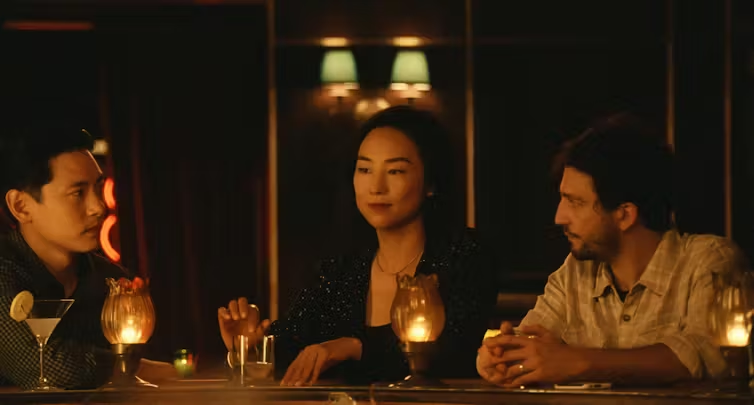
Past Lives (2023) is a love story which transports the audience across time and continents through the spiritual and spatial connection of characters, Na Young (Greta Lee) and Hae Sung (Teo Yoo). The opening act establishes the relationship of the two as schoolfriends in Seoul. Alas, any potential fledgling romance for the teenagers is blocked as Na Young’s family moves to Canada, leaving Hae Sung’s alone with his future unknown. The film then moves twelve years forward where Na Young, now known as Nora, lives in New York. Through a chance quirk of social media fate, she reconnects with Hae Sung. Is that adolescent spark still there?


In the second act, Song’s elegantly devised screenplay explores and Nora Hae Sung’s long distance relationship over several heartfelt online calls. But complex emotional circumstances dictate the two cannot reconcile the friendship further. The two drift apart and they take other partners as another twelve years pass. With Nora in a strong relationship with the sensitive and kindly, Arthur (John Magaro), it would appear Nora and Hae Sung’s friendship is at an end. Or is it? Because Song delivers one of the most powerfully moving third acts I have seen at the cinema in some years.

Without explosions, or car chases, or superheroes or fast-paced cutting or extraordinary heroes defeating powerful foes, Past Lives (2023), is one of the most impactful and stirring films of this year. Celine Song achieves this with a delicate hand in the writing and direction, plus a purposeful naturalistic cinematographic palette delivered by Shabier Kirchner. Above all else Song creates two honest characters who you root for from the start, as the one feels the romantic electricity build on the screen. Indeed, Greta Lee and Teo Yoo’s on-screen chemistry is an acting masterclass, with John Magaro further providing touching support within the triangle.

Now, I am not without sensitivity, but it’s virtually impossible to make me cry at the cinema. But Past Lives (2023) almost did. It made my heart swell and ache. It made me laugh as well, because Song’s script has lovely humour throughout. Above all else, whether it is karma or chemicals, it made me grateful to have known love.

Mark: 10 out of 11


CINEMA REVIEW: BARBIE (2023)

Directed by: Greta Gerwig

Written by: Greta Gerwig and Noah Baumbach

Based on Barbie by Mattel

Produced by: David Heyman, Margot Robbie, Tom Ackerley and Robbie Brenner

Cast: Margot Robbie, Ryan Gosling, America Ferrera, Kate McKinnon, Michael Cera, Simu Liu, Helen Mirren, Issa Rae, Rhea Perlman, Will Ferrell, etc.

Cinematography: Rodrigo Prieto

*** MAY CONTAIN SPOILERS ***


I saw Barbie (2023) a few weeks ago but work has been really busy so I am only just getting round to reviewing this cinematic adaptation of a lump of plastic that was moulded into a best selling toy. So, after the critical acclaim received for the excellent rites of passage film, Ladybird (2017), and recently starring in the existential comedic folly that is, White Noise (2022), Greta Gerwig takes the helm for this funny, intelligent, sarcastic and brightly coloured filmic vomit.

Gerwig shares writing duties with Noah Baumbach. These two major talents seem an unlikely duo to adapt a story of about an arguably sexist and outdated doll, that profiled unrealistic body images to the millions of people who owned it. I mean, I have never had a Barbie doll and didn’t really like dolls at all as a kid. I might have had an Action Man, but must admit I did enjoy owning my Star Wars figures. They somehow had more character and worth, despite also being made of synthetic polymer. My point is that Barbie (2023), aside from making money, I do not see any reason for a Barbie film to exist. However, it is to Gerwig and Baumbach’s credit they have crafted a wonderful and funny screenplay to ultimately sell more plastic dolls.


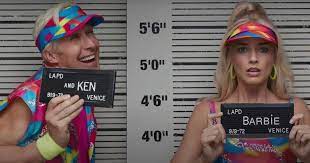
The story finds Margot Robbie’s ridiculously attractive blonde living in a utopian land entirely run by different versions of empowered Barbies. Many of which are played by an energetic who’s-who of an ensemble. Suddenly Barbie is struck by existential dread and a fear of death. Determined to discover why Barbie’s perfect life sucks, she goes on a journey to find the reasons why an anthropomorphic lump of processed oil isn’t going to live forever. Joining her on the trip to the real world is the dopey Ken (Ryan Gosling), who love-stalks Barbie like a pining puppy. Cue Barbie and Ken’s “fish-out-of-water” quest to find whatever in the real world. Yet, after a terrifically imaginative opening series of scenes and sequences, this is where the film starts to unravel.

The opening 2001: A Space Odyssey (1968) homage is easily the best thing about Barbie (2023) for me, along with some cracking one-liner gags throughout. Ryan Gosling also steals the show as the dim-witted Ken, whose character arc is ironically way stronger than Barbie’s. Robbie is sparkling as usual but I found the frenzied colours and manic ensemble a little overwhelming for my taste. The film is also way too long with too many unsatisfactory sub-plots, such as America Ferrara’s underwritten real-women-in-crisis narrative. Overall though, Gerwig and Baumbach have great fun satirising the patriarchy and corporate capitalism while at the same time upholding patriarchal values and making $hitload$ of cash in the process.

Mark: 7 out of 11


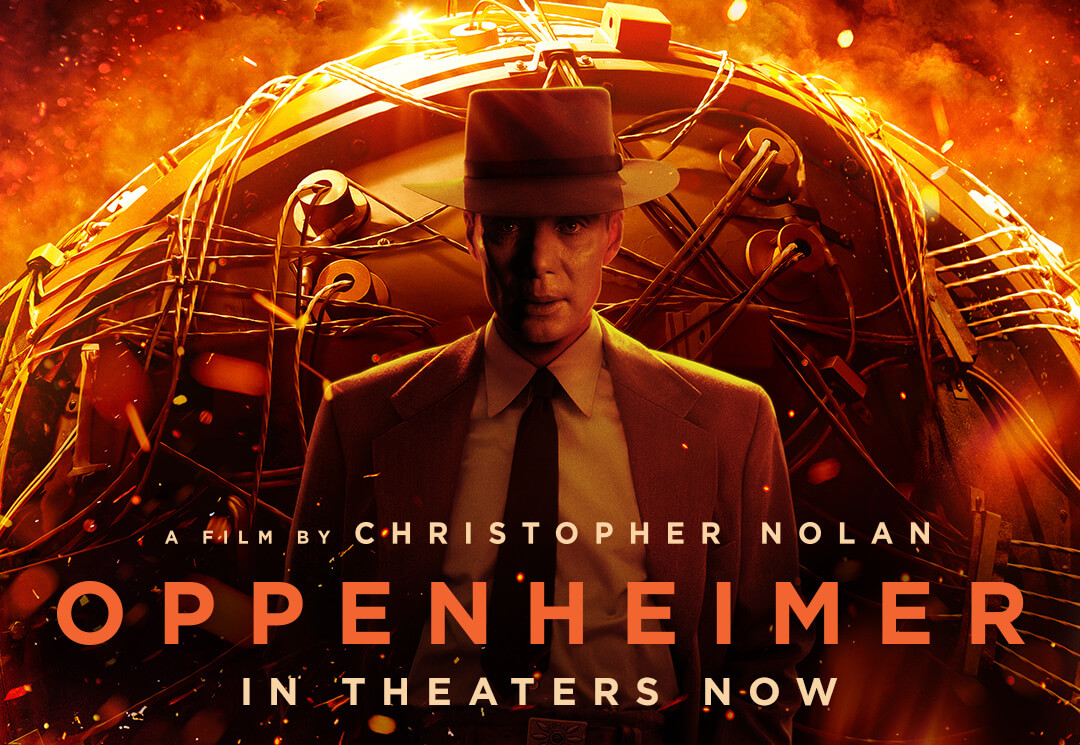
CINEMA REVIEW: OPPENHEIMER (2023)

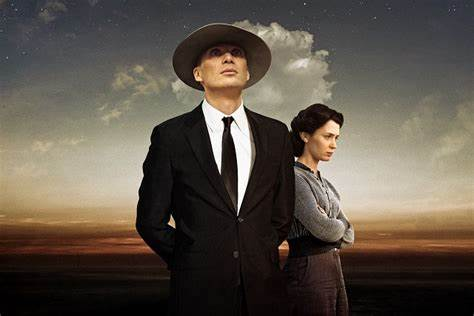
CINEMA REVIEW: OPPENHEIMER (2023)

Directed by: Christopher Nolan

Screenplay by: Christopher Nolan

Based on: American Prometheus by Kai Bird and Martin J. Sherwin

Produced by: Emma Thomas, Charles Roven, Christopher Nolan

Cast: Cillian Murphy, Emily Blunt, Matt Damon, Robert Downey Jr., Florence Pugh, Josh Hartnett, Casey Affleck, Rami Malek, Kenneth Branagh, Tom Conti and many more.

Cinematography: Hoyte van Hoytema

*** MAY CONTAIN SPOILERS ***


One wonders if Christopher Nolan sees himself reflected, on some subconscious level, in the character of J. Robert Oppenheimer. Both are geniuses within their chosen field, and both have had their critics who do not always agree with their choices. The intrinsic difference is that the work of Oppenheimer and his team of scientists created one of the most expensive and deadly weapons the world has even seen. His actions led to destruction and death on a mass scale. Christopher Nolan, on the other hand, merely creates expensive drama and destruction on a cinema screen for our entertainment.

J. Robert Oppenheimer is clearly a complex character to bring to life on the screen. Indeed, scientists are not always the most riveting of characters, nor particularly cinematic. Especially since they spend their days in laboratories, classrooms and have their heads buried in books. Thus, visually speaking it is a constant challenge for filmmakers to present such biopic narratives. Moreover, thematically, and philosophically there is much internal conflict to wrestle with. Especially someone as (in)famous as Oppenheimer. I mean, how does a man overcome the guilt of being responsible for the deaths of so many people?

Having said that, Oppenheimer, as the leader of the ‘Manhattan Project’ at Los Alamos, could also be interpreted as the saviour of lives. The invention of nuclear weapons is an act of aggression, but paradoxically also a shield of peace. Such is the fear generated by such a devastating tool we will never know how many lives the existence of nuclear bombs has saved. Unfortunately, human beings find other ways to kill each other. That sadly will never stop. Does Nolan explore these themes within the intense three hours of cinematic propulsion, Oppenheimer (2023)? It is certainly there in the subtext, but perhaps not as pronounced as I would have hoped.


Adapting American Prometheus by Kai Bird and Martin J. Sherwin, Christopher Nolan’s screenplay is highly intelligent and clearly professionally researched. It is also, when compared with the often-baffling Tenet (2020), simply structured. Events from Oppenheimer’s early life, post-war troubles with the United States government and the key stages of the ‘Manhattan Project’ are cut together in juxtaposing timelines throughout the lengthy running time. Nolan builds from the Senate and court hearings Oppenheimer faces after the war, where his security status is threatened with revocation due to his alleged association with the Communist party before the war.

That McCarthyistic-Red-Scare-paranoia was vilifying genuine heroes such as Oppenheimer is quite incredible, but unsurprising. I mean, here is a man, who served his country to personal cost and his own mental degradation. It is therefore a measure of his character, as presented via Cillian Murphy’s formidable portrayal, that he refuses to break in the face of constant questioning of his patriotism and commitment to America. I felt that the constant jolts from the Senate hearings, where Robert Downey Jnr’s, Lewis Strauss, is seeking election, to Oppenheimer’s security status “trial,” brought about an overly repetitive and talky series of scenes which bogged down the emotions for me.

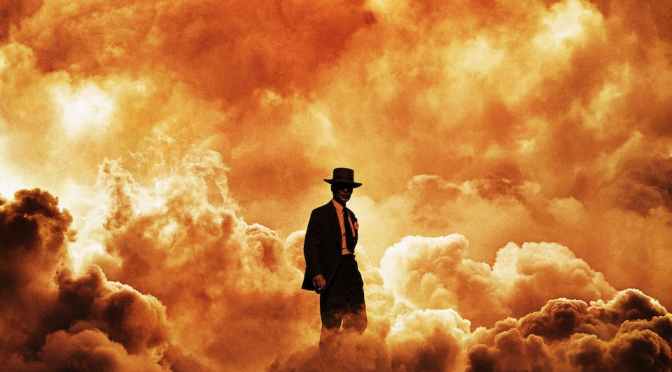
Where the film truly blooms is when Oppenheimer makes his scientific breakthrough, builds his team of geniuses and the construction and testing of the nuclear weapons at Los Alamos. There is palpable suspense (even though we know what happens) in the race with the Germans to make the bomb first. Imagine if the Germans had won the race? It does not bear thinking about. The history of the world would have been irrevocably altered beyond comprehension. Nolan also does an effective job of keeping the scientific language at an understandable level, as he promotes personalities over jargon. Indeed, Nolan’s ultra-talented ensemble cast including Matt Damon, Rami Malek, Josh Hartnett, Dane DeHaan, Jason Clarke, Florence Pugh and the best of the lot, Robert Downey Jnr, are all superbly marshalled by the director.


As well as being rich in history and thematic power, Oppenheimer’s (2023) visuals, allied with Hoyte Van Hoytema’s pristine cinematography, are unsurprisingly impressive. Nolan makes the choice to switch between black-and-white and colour photography. This is initially jarring but works with the shifting character perspectives it is intended to denote. On the other hand, I would say the pulsating sound design and score felt overbearing at times. Similarly, one could argue the overload of cutting, aural battering and switching of film colour stock combine to overload the viewer and remove emotional and dramatic resonance.

Oppenheimer (2023) is another Nolan masterwork as he and Cillian Murphy will surely get Oscar nominations. Lastly, the film works best as a bullet-pointed history lesson, a fine tribute to a complex and flawed genius, and a powerful damnation of United States paranoid politics. However, the solipsist nature of Oppenheimer’s character study and crowd of talking heads often becomes dizzying, watering down the drama and emotion of this immaculate and nuclear work of cinema.

Mark: 9 out of 11


CINEMA REVIEW: ASTEROID CITY (2023)

CINEMA REVIEW: ASTEROID CITY (2023)

Directed by Wes Anderson

Screenplay by Wes Anderson

Story by: Wes Anderson and Roman Coppola

Produced by: Wes Anderson, Steven Rales, Jeremy Dawson

Ensemble Cast: Jason Schwartzman, Scarlett Johansson, Tom Hanks, Jeffrey Wright, Tilda Swinton, Bryan Cranston, Edward Norton, Adrien Brody, Liev Schreiber, Hope Davis, Stephen Park, Rupert Friend, Maya Hawke, Steve Carell, Matt Dillon, Hong Chau, Willem Dafoe etc.

Cinematography Robert Yeoman

*** MAY CONTAIN SPOILERS ***


Wes Anderson is a phenomenal filmmaker with an imaginative set of style and narrative conceits. Everyone one of his releases is a rich tapestry containing memorable ensemble casts, adjacent framing, effervescent use of colour, geographical pertinence, intellectual humour and subjects situated in the far-left field of genre cinema. Yet, I do not enjoy ALL his films. Often, they veer too far into eccentric pretentiousness. Indeed, I found The French Dispatch (2021), frustrating and, other than the tremendous story set in the asylum with the mad artist (Benicio Del Toro), disconnected with it overall. While it was another admirable work of cinema, I did not enjoy it as a paying punter.

Asteroid City (2023), however, is a film I enjoyed greatly. The famous actors immersed within the ensemble, the cinematic artifice, the clever meta-narrative structure, symmetrical shot composition, beautiful use of colour, offbeat characters, specific era and geographical setting, imaginative props and costume design, and witty humour are all present as per Anderson’s impressive body of work. But Asteroid City (2023) had a larger emotional heart than his recent films, and is my favourite since the superb, The Grand Budapest Hotel (2014).


A heady combination of genres, one could describe, Asteroid City (2023), as a hyper-sci-fi-Western-retro-romantic-futuristic-comedy and study of grief set in 1950s, America. Despite filming taking place in Spain. Anyway, Anderson establishes the characters through the structure of a film within a play. Bryan Cranston’s narrator introduces us to the various middle-class, working class, military and scientific personalities who become trapped in the town of Asteroid City by a series of unlikely but hilarious misfortunes. Throughout the chapter inter-titles the scenes return us to our narrator as Anderson cleverly comments on the process of creating a story while delivering the narrative events.

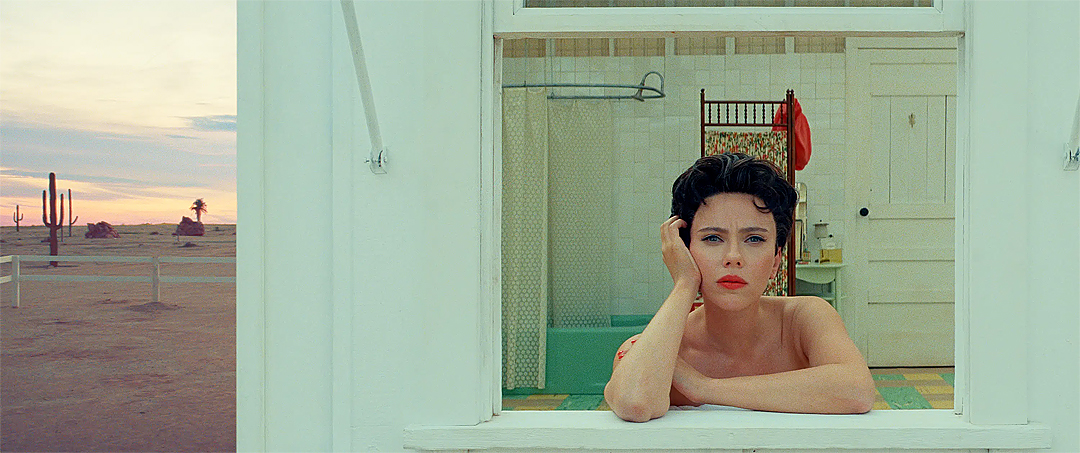
Anderson delves into familiar themes of grief via the story of war photographer, Augie Steenbeck (Jason Schwartzmann) and his four kids, one of whom is a genius, Woodrow (Jake Ryan). He is there for a Junior Stargazer competition amidst the setting of the gigantic meteorite bunker. Again, the theme of prodigious children is mined for great humour and intellectual wit by Anderson. The futuristic inventions created by the children are especially fantastic. The plot strand of the science geniuses being exploited by the military and corporate sharks is deftly done. Yet, the main emotional heft is delivered within Augie and Hollywood actress, Midge Palmer’s (Scarlett Johansson) budding relationship. Johansson is especially compelling in the role, anchoring the film in welcome pathos, amidst the flurry of idiosyncratic absurdities Anderson throws at us. His framing of Augie and Midge between the their chalets is aesthetically memorable, visually augmenting their growing human connection.

Asteroid City (2023) proves once again Wes Anderson is one of the most original filmmakers of this generation. Will he gain some more converts to his particular set of cinematic bag of tricks? Who knows. What I do know is that I was completely immersed in the colour, movement, pace, humour, aesthetics, performances and themes with the film. I must say though, while it was necessary, the “Area 51” style — and I don’t want to give it away — absurd plot-turn halfway through was not my favourite aspect of the piece. But I realise it was narratively integral to the story. The meta-framing also seemed to get in the way at times of the main action effecting the occupants of Asteroid City. But these are minor gripes at a thoroughly artistic, beautifully immersive, and technically impressive cinematic achievement.

Mark: 9 out of 11


CINEMA REVIEW: KNOCK AT THE CABIN (2023)

CINEMA REVIEW: KNOCK AT THE CABIN (2023)

Directed by: M. Night Shyamalan

Screenplay by: M. Night Shyamalan, Steve Desmond and Michael Sherman


Based on The Cabin at the End of the World by Paul G. Tremblay

Produced by: M. Night Shyamalan, Marc Bienstock, Ashwin Rajan

Main cast: Dave Bautista, Jonathan Groff, Ben Aldridge, Nikki Amuka-Bird, Kristen Cui, Abby Quinn, Rupert Grint etc.

Cinematography: Jarin Blaschke, Lowell A. Meyer

*** MAY CONTAIN SPOILERS ***


M. Night Shyamalan is arguably one of the most critically divisive directors working today. Not because his films are particularly controversial, but mainly because he is a risk-taker that tests the boundaries of genre expectations. He has so many different ideas and concepts that quite often his movies have back-fired spectacularly, however, when he gets it right his genre films are highly entertaining and compelling. Superior genre films such as: The Sixth Sense (1999), Unbreakable (2000), Signs (2002), and The Village (2004), were full of invention, suspense and wicked twists. Many people felt The Village stretched the limits of suspending disbelief, but it was a masterpiece compared to his filmic failures like: The Lady in the Water (2006), The Happening (2008) and The Last Airbender (2010).

I missed seeing the apparent disaster that was After Earth (2013), yet it was opined that Shyamalan returned to some essence of form with the horror film The Visit (2015). However, I still felt there were some dodgy creative decisions in that, such as the story-filler-white-middle-class-rapping kid in amidst a creepy thriller. Yet, with Split (2016), Shyamalan was back to his best, weaving an exploitational B-movie kidnap-plot with a searing psycho-performance from James McAvoy. The ending, which found Anya Taylor-Joy’s ultra resilient Casey fighting back against McAvoy’s twenty-plus split-personality maniac, then brilliantly linked the film to Shyamalan’s Unbreakable (2000). Glass (2019), was a solid finale to the unlikely trilogy and his adaptation of the novel, Sandcastle, titled Old (2021), received mixed reviews. However, despite the over-cooked ending, I thought it was a brilliant Twilight Zone infused ensemble suspense twister.


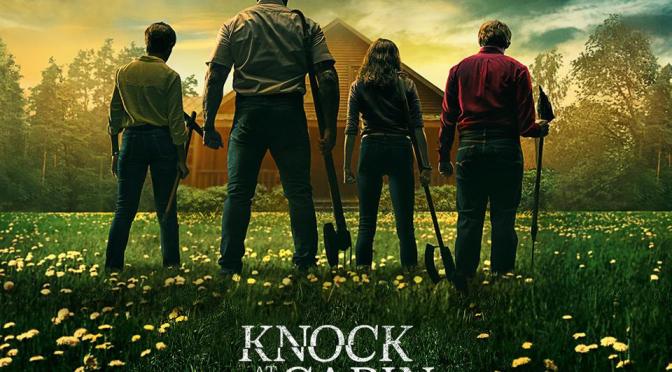
Shyamalan’s latest cinema offering, Knock at the Cabin (2023) is another literary adaptation and contains a simple yet compelling premise. As same-sex couple, Eric and Andrew, plus their adopted daughter, Wen, are enjoying a relaxing getaway in a peaceful and bucolic wood, four strangers carrying home made medieval-type weapons arrive and give them a horrific choice. If they do not sacrifice and kill one of their family, the end of the world will begin. This apocalyptic game of “would you rather” immediately raises the drama and stakes to a critical point, after which events become darker and tense. I was immediately drawn in as I really enjoy narratives where the characters have unenviable choices to make. What would I do in that situation?

As the family are tied up and threatened, the four strangers introduce themselves and how they came to the cabin. The tension increases as the world events seem to back up what the seemingly crazy people are saying. Interspersed with the scenes in the cabin are some moving flashbacks which establish the humanity and relationships of the victims. This creates empathy and texture to the middle-class every-couple family unit. They are not action stars or superheroes, but are us, the audience, facing a hard-to-stomach decision. Of course, a certain amount of suspension of disbelief is asked by Knock at the Cabin (2023). However, I was certainly gripped by the narrative throughout.

M. Night Shyamalan’s films often contain social commentary or reference to larger external forces impacting the characters. Here my interpretation was that, the book it is adapted from and the script, are dealing with themes relating to environmental allegory. If we, as a species, are all prepared to make a sacrifice we can ultimately save the world from disaster. Yet, Shyamalan succeeds here where The Happening (2008) failed because the message is more subtle, without bludgeoning us over the head with a massive weapon. Talking of which Dave Bautista gives a revelatory performance as the gentle giant, Leonard, a man cursed to carry out the portentous visions which haunt him and his group of deadly seers. His performance, some fascinating frame and shot choices, and Shyamalan’s ability to create psychological tension without resorting to shock tactics are all great reasons to answer the door to this apocalyptic thriller.

Mark: 8 out of 11


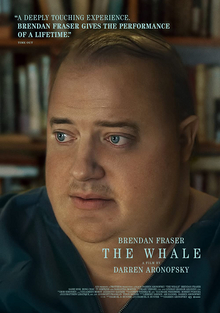
CINEMA REVIEW: THE WHALE (2022)

CINEMA REVIEW: THE WHALE (2022)

Directed by Darren Aronofsky

Screenplay by Samuel D. Hunter (based on his play of the same name.)

Produced by: Jeremy Dawson, Ari Handel, Darren Aronofsky

Main cast: Brendan Fraser, Sadie Sink, Hong Chau, Ty Simpkins and Samantha Morton

Cinematography Matthew Libatique

*** MAY CONTAIN SPOILERS ***


Darren Aronofsky is a risk-taking, boundary-pushing genius of a genre filmmaker. He is one of those film experimenters who threatens and breaks the chains of narrative convention, form and style. Films such as Pi (1998), Requiem for a Dream (2000), The Wrestler (2008) and Black Swan (2010) are intelligent, moving and often controversial cinematic visions. The least said about the indulgent, pretentious and nihilistic void of a film, Mother (2017), the better. Many went crazy for that allegorical nervous breakdown on the screen, but not me.

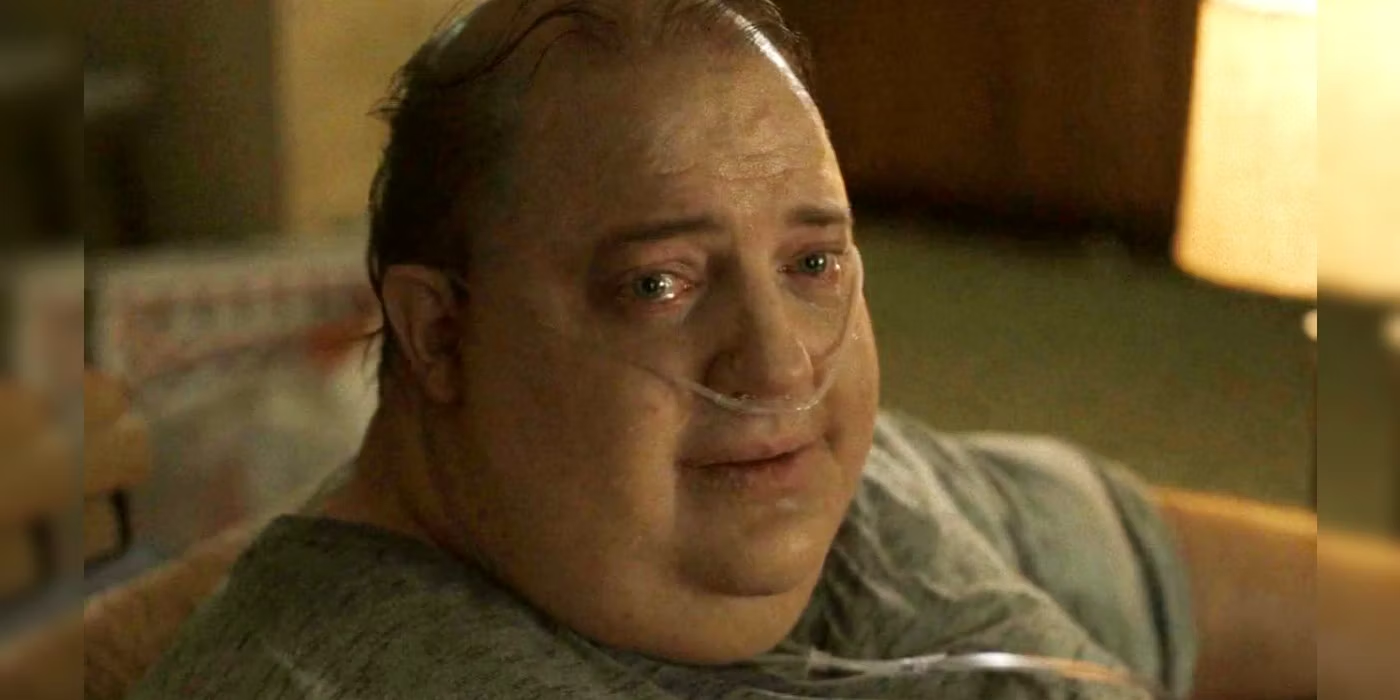
Aronofsky’s latest film, The Whale (2022) finds his excesses stripped back in terms of setting, colour, camera movement, lighting and editing design. The story of an obese man, Charlie (Brendan Fraser), finds him trapped by his own weight, addiction to food, grief and ill-health within an apartment. The colour scheme is stained and grey, while the dialogue-heavy script, naturally lit set, mostly static camera and claustrophobic drama betray The Whale’s origin as a play. Online English teacher Charlie’s journey is slow-burning and tragic, as he attempts to reconcile himself with his bitter, teenage daughter, Ellie, (Sadie Sink) and deal with his ever-worsening health. This familial thematic echoes The Wrestler (2008) as a lead protagonist strives to redeem his life decisions and find value to his existence. Ellie, however, is far less sympathetic and angry when compared to The Wrestler‘s, Evan Rachel Wood’s, Stephanie.


As with Requiem for a Dream (2000), The Whale (2022) contains the theme of addiction. Aronofsky’s earlier film found the characters hooked on heroin. Here, Charlie is wholly dependent on food. His dealer is also his carer, Liz (Hong Chau), and their relationship, as well as Ellie’s verbal outbursts, power much of the guilt and conflict within the play. Because Charlie is lost in hurt, he distracts himself with fizzy soda, pizza and massive torpedo rolls. He hides indoors in the shadows and behind an avatar on his computer screen. Charlie’s students never see him, only hearing his slowly breaking voice, stymied by an inability to breathe due to his expanding heart and squeezed lungs.

I feel it’s an almost integral part of the human condition to satisfy a compulsive need to feed on a substance that destroys one’s body and soul. I believe everyone is an addict, but some have more will power than others and can handle their compulsions. However, if you lose someone or suffer from depression, feeding one’s addiction is a way of blocking out the pain. Thus, I really connected with Charlie’s character in The Whale (2022), because he is in a painful tailspin with no apparent way out. Brendan Fraser delivers a stunningly moving character study. It truly is an admirable physical and mental achievement. Hong Chau is also impressive as the both caring and controlling carer who proves to be both Charlie’s best friend and worst enemy.

To conclude, The Whale (2022) is a compelling chamber piece with some finely written dialogue, empathetic heart, controlled direction, incredible make-up and prosthetics, and a singularly mighty performance from Fraser. Ultimately, the film holds a mirror up to the human condition, finding that the reflection, however upsetting and disturbing it may be, still deserves our compassion and understanding.

Mark: 8.5 out of 11


Cinema Review: TAR (2022)

Cinema Review: Tár (2022)

Written and directed by Todd Field

Produced by: Todd Field, Alexandra Milchan and Scott Lambert

Cast: Cate Blanchett, Noémie Merlant, Nina Hoss, Sophie Kauer, Julian Glover, Allan Corduner, Mark Strong etc.

Cinematography Florian Hoffmeister

*** MAY CONTAIN SPOILERS ***


Tar (definition): a dark, thick flammable liquid distilled from wood or coal, consisting of a mixture of hydrocarbons, resins, alcohols, and other compounds. It is used in road-making and for coating and preserving timber.

Todd Field’s classical film masterpiece, Tár (2022), was hailed by critics when released late last year in the U.S.A and made many top ten film of the year lists. I saw it in the first week of 2023 and while I don’t always concur with the gushing hyperbole of professional film critics, I have to say if I see a better cinema release all year I will be amazed. Let’s hope I do.

Tár (2022) is a film which works on many genre and narrative layers. It is a psychological drama, an absorbing character study, a backstage musical, a complex morality play, with suggestions of hallucinatory horror during the final act of the film. It is a triumph of filmic brilliance expertly delivered by Todd Field. It is incredible to think this is only the third film he has directed. Certainly a case of high quality over quantity. But Field confirms himself an auteur, exerting absolute control over the material. Such is his, and the production team’s, meticulous research, writing, planning, design and execution that if I hadn’t seen the credits, I would have said the maestro Stanley Kubrick had made this film.


Tár (2022) opens with haunting singing over the imaginatively presented credits that slowly fill a black screen. Field demonstrates control from the start before we are introduced to Lydia Tár (Cate Blanchett). Now, I thought the film may have been a story about a female conductor attempting to break into a traditionally male dominated world. However, Lydia Tár is at the top of her game as a conductor and composer, heralded for her genius interpretations of the music of Mahler and own oeuvre. Plus, having won numerous awards for her cinema, theatre and television compositions. Lydia Tár is soaring and about to release a book Tár on Tár and conduct a live recording of Mahler’s Fifth Symphony for the Berlin Philharmonic. So, where’s the drama? What could go wrong?

Field structures the linear narrative around Tár’s day-to-day working and family life and the process of rehearsing Mahler’s Fifth. Methodically we are then introduced to actions from Tár’s recent past which threaten to haunt her. As a character who is so revered and in control of her world, Tár’s talent and confidence is magnetic and admirable. However, having no doubt been a force of nature to make it this competitive world, her arrogance and lack of awareness of a changing culture threatens to cancel her prodigiously built dominion. I won’t say anymore but Todd Field brilliantly explores resonating themes of the zeitgeist with razor-sharp intelligence. There are no easy answers either.

I could not take my eyes or mind off the screen during Tár (2022). It is cerebrally, aesthetically and psychologically all-encompassing. The stark cinematography, exhilarating classically-driven soundtrack, imposing Berlin architecture and claustrophobic feel of the Philharmonic offices and rehearsal spaces collude to create further emotional tension. Further, the film not only works impressively as absorbing drama, but also as interpretive ambiguity with subtle and mysterious suspense. Lastly, if Cate Blanchett does not win a best acting Oscar for her performance in Tár (2022) I will be stunned. Never less than metronomically astounding, Blanchett has taken Field’s precise writing and breathed physical, mental and spiritual vivacity into a challenging personality. Thus, take many-a-bow maestros, Blanchett and Field. Encore! Encore! Encore!

Mark: 10 out of 11


CINEMA REVIEW: BONES AND ALL (2022)

CINEMA REVIEW: BONES AND ALL (2022)

Directed by Luca Guadagnino

Screenplay by David Kajganich

Based on Bones & All by Camille DeAngelis

Produced by: Luca Guadagnino, Theresa Park, Marco Morabito, David Kajganich, Francesco Melzi d’Eril, Lorenzo Mieli, Gabriele Moratti, Peter Spears, Timothée Chalamet

Cast: Taylor Russell, Timothée Chalamet, Michael Stuhlbarg, André Holland, Chloë Sevigny, David Gordon Green, Jessica Harper, Jake Horowitz, Mark Rylance, etc.

Cinematography: Arseni Khachaturan

*** CONTAINS STORY SPOILERS ***


After reviewing The Menu (2022) last time out, here’s another film where food and eating and death are at the very marrow of the narrative. I must confess though it’s very difficult to discuss the excellent hybrid genre film, Bones and All (2022) without giving away the main ingredient within this film. So, I give prior warning that I’m going to have to reveal it in the review. I will state therefore if this film had been called, Fine Young Cannibals, I would not have been surprised in the least. Because the theme of people eating human meat is at the heart of the story.

Bones and All (2022) is not a B-movie zombie film with bloody images of flesh-eating monsters devouring people. Yes, there are some gory scenes to satisfy horror fans, however, this arthouse adaptation of Camille DeAngelis’ 2016 novel, is more subtle and sympathetic to the young protagonists with a yearning for mortal flesh. Here murder and cannibalism occur, but it is represented as a curse for both Maren (Taylor Russell) and Lee (Timothee Chalamet), who struggle with their consumptive urges. Moreover, the feeding on flesh is highly symbolic, representing a sensual and almost religious experience for the couple. As they travel across various States, they grow as characters and people. They also explore their own love and share other people’s bodies, romance bleeding through in the process.


Bones and All (2022) is set in the 1980s. It begins with teenager Maren living with her father (Andre Holland) in Virginia. After hitting eighteen years of age, and causing a particularly nasty event at a friend’s sleepover, she is abandoned by him. Left with a cassette tape explaining her family history, Maren sets out to find her mother, meeting Lee along the way. The two are immediately drawn to each other and while driving set about sating their desire for fresh meat. This causes conflict between the couple as it is clear they are not comfortable with the nasty business of killing. Unlike the pursuing serial-killer-trophy-collecting antagonist, Sully (Mark Rylance). He is a venal force of nature, taking animalistic glee during the sacrifice of his victims.

Bones and All (2022) is directed with glacial majesty by Luca Guadagnino. He expertly blends and cooks the genres of horror, period drama, rites-of-passage, romance and road movie with a well balanced approach to tone. Extracting attractive performances from Chalamet and Russell, their onscreen chemistry is potent and touching. Acting legend Mark Rylance steals the show though as the slithery Sully. Overall, I felt the film could have been cut for pace slightly and the Romeo and Juliet-with-a-twist ending was too tragic for me. I think, despite their cannibalistic needs, Maren and Lee deserved a future together. But ultimately it’s all a matter of taste.

Mark: 8 out of 11


NETFLIX FILM REVIEW: BLONDE (2022)

NETFLIX FILM REVIEW: BLONDE (2022)

Directed and written by: Andrew Dominik

Based on: Blonde by Joyce Carol Oates

Produced by: Brad Pitt, Dede Gardner, Jeremy Kleiner, Tracey Landon, Scott Robertson

Main cast: Ana de Armas, Adrien Brody, Bobby Cannavale, Xavier Samuel, Julianne Nicholson, Evan Williams, Toby Huss, David Warshofsky, Caspar Phillipson, etc.

Cinematography: Chayse Irvin

*** CONTAINS HISTORICAL SPOILERS ***


Aside from expertly directing episodes of the Netflix drama, Mindhunter and the documentary One More Time with Feeling (2016), filmmaker Andrew Dominik’s directorial output has been sparse of late. Indeed, he hasn’t released a feature film since quirky gangster drama, Killing Them Softly (2012). I imagine this is due to many reasons including: slow-gestating methodology, several unrealized projects failing to see a greenlight, and the dreaded COVID-19. It’s a shame as I believe he is one of the most compelling filmmakers around at present. Chopper (2000) remains one of my favourite cult stories about a charismatic, larger-than-life criminal anti-hero. Similarly, The Assassination of Jesse James by the Coward Robert Ford (2007) is one of the best films I have seen from the last twenty years.  It was pretty much a box-office flop but everything about it screamed greatness to me: stunning cinematography; brilliant cast; and resonating themes regarding celebrity and legend in the Wild West.

After Chopper Read and Jesse James, once again Dominik explores the iconic life of a real person in Blonde (2022). You may have heard of her, Norma Jean Mortenson/Baker, or as she was more famously known: Marilyn Monroe. Using Joyce Carol Oates’ book as a springboard, plus no doubt many other written, visual and media sources available, Dominik has crafted a stylish and singular vision of the peroxide icon’s life and career. In no doubt should a viewer believe this to be a “true” story in the documentary-drama style, but rather an impressionistic, poetic and compelling imagining of Marilyn’s short, yet tumultuous, existence on this planet.

For me, Marilyn Monroe was one of the most stunning movie stars who ever existed. She lit up the screen and was a mightily under-rated actor also. In her heyday she was the biggest star in the world. Her role as Sugar in Some Like it Hot (1959), is one of the most gorgeously funny, beautiful and vulnerable performances ever committed to celluloid. Enter Ana De Armas as Marilyn in Blonde (2022). De Armas is a revelation on-screen in terms of her looks, movement, body language and the nuanced depth she brings to the screen siren. It’s a brave role too as the script demands much of her. Throughout many exquisitely filmed and edited scenes lies the ugly degradation of Marilyn’s body and soul. De Armas gives her all in these vignettes of domestic abuse, sexual assault, rape, abortions, overdoses, miscarriages, mental breakdowns and further sexual gaslighting at the hands of people she believed were friends.


So, why should you want to watch Blonde (2022), you may ask yourself. Well, De Armas’s performance alone is worth enduring much of the emotionally draining misery. Moreover, Dominik again proves himself to be a director of the highest quality. He’s a maverick and iconoclast who has an impressive and intelligent cinematic eye. The opening sequence where Norma, as a young child, is driven by her unwell mother through Los Angeles forest fires is a frightening and imperious interpretation of mental health, full of fear, heat, and portentous symbolism. Such fire and trauma foreshadows the distress and torment that is to come to young Norma throughout her life. A schizophrenic Mother also echoes the schism of persona that impacts Norma the individual, and Marilyn the movie star. The division of personalities is a theme which the screenplay sensitively explores, despite being buried in the more lurid and shocking events of Marilyn’s sad life.

Overall, Blonde (2022) is a startling and shocking rendition of Marilyn Monroe. Of course, hers was an existence full of drama, intensity, darkness and tragedy. But you have to think there was some light in there, some happiness, humour and joy. On some fleeting occasions during Blonde (2022), Dominik presents this, but ultimately this is a beautifully filmed yet ugly-hearted cinematic tragedy. On the surface the film genre is biopic, but it really is a horror film, as Marilyn’s exploitation by the men in her life is laid bare on the screen. I’ve read some critics describe the film as exploitational, however, this is a film ABOUT exploitation. Marilyn was exploited by agents, photographers, directors, producers, the press, the Hollywood system, the audience, her doctors, her lovers, her husbands and a President of the United States.

Dominik is perhaps suggesting Monroe did not kill herself, but was disintegrated by those who should have loved and cared for her. The ultimate tragedy is that Norma/Marilyn could not find the love and mental strength inside herself to survive those who perpetually sought to profit from this beautiful shining star. If the events realised in Blonde (2022) are to be believed, what person could?

Mark: 8 out of 11


CINEMA REVIEW: TRIANGLE OF SADNESS (2022)

CINEMA REVIEW: TRIANGLE OF SADNESS (2022)

Directed by Ruben Östlund

Written by: Ruben Östlund

Produced by: Erik Hemmendorff, Philippe Bober

Main cast: Harris Dickinson, Charlbi Dean, Dolly de Leon, Zlatko Burić, Henrik Dorsin, Vicki Berlin, Woody Harrelson etc.

Cinematography: Fredrik Wenzel

Edited by: Ruben Östlund, Mikel Cee Karlsson

Music by: Mikkel Maltha, Leslie Ming

*** MAY CONTAIN SPOILERS ***


Ruben Ostlund is fast becoming one of those go to directors who can be relied upon to deliver cinema of the highest quality. His latest film, Triangle of Sadness (2022) is his finest to date. Having said that, his Force Majeure (2014) was one of those excellent films I hated.  Technically, it was beautifully shot, performed, and directed, however, I just found the characters too irritating. Personally despising ski holidays probably didn’t help either. I actually wished the characters had been killed in the avalanche to save on all the middle-class matrimonial moaning.

Ostlund’s next film The Square (2017) was bravura arthouse storytelling containing wonderful digs at the nature of modern art and how rich people will buy any old crap if it is put in a gallery. While a tad overlong, it was wonderfully funny with hilarious mocking of the bourgeoisie, art and the rise of social media. With Triangle of Sadness (2022), Ostlund has moved up the social strata and focussed his satirical eye on the uber-wealthy, combining socialist dialectic with gross-out comedy, as Das Kapital meets Monty Python’s The Meaning of Life (1983).


The film opens with Carl (Harris Dickinson) and Yaya (Charlbi Dean), a model and Social Media influencer, as a couple whose relationship is fraught with problems. Through Yaya’s connections she secures them free passage on one of the most luxurious yachting holidays on the ocean. While they aren’t short of money, they have nothing compared to the wealthy millionaires and business types on the boat. As Carl and Yaya act as our conduits in the story, Ostlund uses them to explore the petty first world problems which impact many romances. The staff are also introduced as key players in the “Upstairs, Downstairs” character dynamic, notably Woody Harrelson’s drunken socialist Captain Thomas Smith, and Vicki Berlin’s staff supervisor, Paula. Lastly, the money is represented essentially by lonely tech millionaire, Jarmo (Henrik Dorsin), obnoxious Russian, Dimitry (Zlatko Burić) and stroke victim, Therese (Iris Berben) and her husband.

Throwing these disparate, and latterly desperate personalities, into the trapped spaces of a superyacht is great writing by Ostlund. What unfolds in the second act of the film is an extended set-piece of riotous fun. As the yacht becomes battered by the stormy sea and weather, the guests all become violently ill to devasting impact. While it may not be to everyone’s taste, I was laughing for twenty odd minutes straight at this sickening skewering of these privileged people. At the same time the drunken Dimitry and Captain Smith argue relentlessly about the differences and merits of capitalist and Marxist ideologies. It’s easily one of the funniest and impressively directed sequences of this cinematic year.

But Ostlund isn’t finished yet. These characters have not suffered enough for him, and the final section of Triangle of Sadness (2022) drenches the story in another hilarious and satirical direction. I won’t spoil the events which unfold, but Carl and Yaya’s relationship issues come to the fore as a darkly comedic peril strikes the yacht and passengers. Here Ostlund strikes a further blow against capitalism, exploring the nature of survival of the fittest and true values of human currency in a savage indictment against the obscenely rich. Overall, while the characters may not be the most likeable, that is never Ostlund’s aim. Ostlund’s desire is to critique capitalist hegemony through both high and low brow humour. He succeeds, making Triangle of Sadness (2022) one of the most thought-provoking and exhilarating cinema experiences of the year.

Mark: 9.5 out of 11