Category Archives: New Releases

CINEMA REVIEW: NIGHTMARE ALLEY (2021)

CINEMA REVIEW: NIGHTMARE ALLEY (2021)

Directed by: Guillermo del Toro

Screenplay by: Guillermo del Toro, Kim Morgan

Based on: Nightmare Alley by William Lindsay Gresham

Produced by: J. Miles Dale, Guillermo del Toro, Bradley Cooper

Cast: Bradley Cooper, Cate Blanchett, Toni Collette, Willem Dafoe, Richard Jenkins, Rooney Mara, Ron Perlman, Mary Steenburgen, David Strathairn, etc.

Cinematography: Dan Laustsen

*** MAY CONTAIN SPOILERS ***


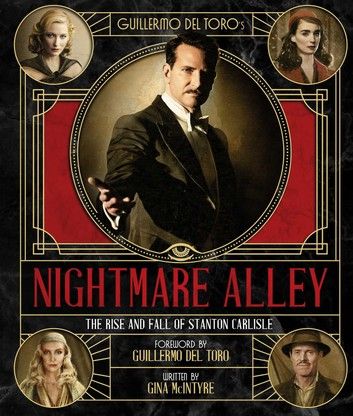
Guillermo Del Toro could probably have had his pick of film stories to choose from after the monumental box office and critical success of the majestic alternative love story, The Shape of Water (2017). But rather than build on the message of love and hope in that creature feature he has chosen to adapt the noir novel, Nightmare Alley by William Lindsay Gresham. In the process Del Toro has also remade the classic 1947 film of the same name, starring Tyrone Power.

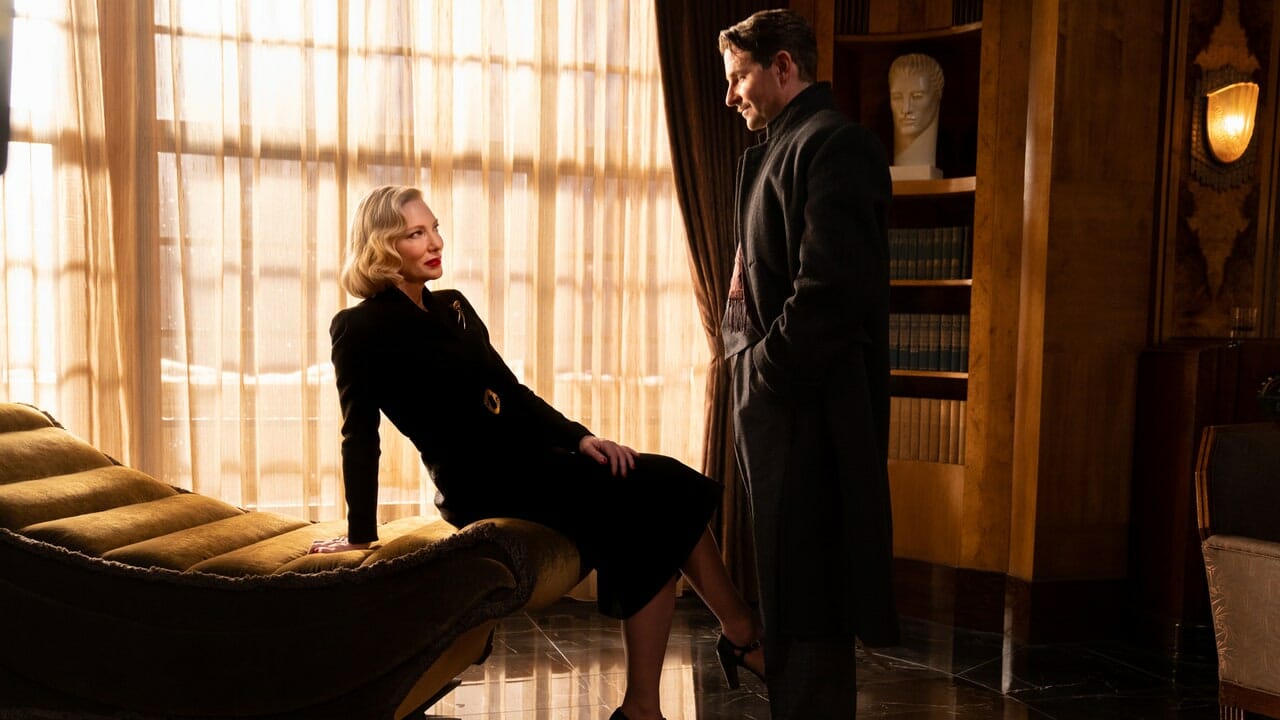
Essentially a $60 million dollar B-movie, the film is one of the most opulently dark and beautifully designed films I have witnessed in some time. Light, shadow, wood, gold, blood, fire, sweat, skin, snow, and night all collide and collude in a stunningly presented palette from Del Toro and lead production designer, Tamara Deverell. This film is a moving painting with inspiration from geniuses such as Picasso, Dali, Matisse and Edward Hopper. While the look of the Nightmare Alley (2021) and cast are a constant wonder, I had a nagging thought while watching the film which made me question who the audience was for this film. Also, there were many story elements which did not gel for me.


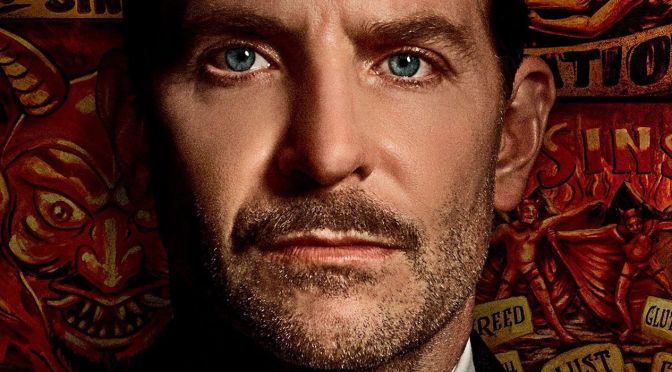
Nightmare Alley (2021) opens with fire and death. Drifter Stanton Carlisle (Bradley Cooper) then finds himself drawn to the carnival arena. It is full of shadowy characters, oddballs and tricksters, portrayed with dirty glamour by the likes of Toni Collette, Willem Dafoe, David Strathairn, plus the more innocent, Rooney Mara. Stanton fits right in and is soon making a name for himself as a mentalist, fooling audiences with carefully rehearsed cues and memory tricks. The first half of the film is its narrative strength. Only after Stanton’s story leaves the carnival his journey twists into something more sinister, but less satisfying.

I enjoyed Del Toro’s stunning visual magic employed in Nightmare Alley (2021). However, while Bradley Cooper has terrific star quality I did not care for his anti-heroic Stanton Carlisle. Cate Blanchett is also alluring as the latter second act enchanter, but ultimately the film lacks real depth. Themes relating to masculinity in crisis, war, psychoanalysis, crime, grief, the afterlife and what it means to be a freak or outsider are there, but only skimmed. I mean the plot has some decent twists, but I did not entirely commit to the downward trajectory of Carlisle’s tale. Overall, as a morality tale Nightmare Alley (2021) is not as frighteningly tragic as it could have been. Carlisle gets what he deserves, and I felt little pity or horror for his end. Unlike another classic noir from some years back, Angel Heart (1987).

Mark: 8 out of 11


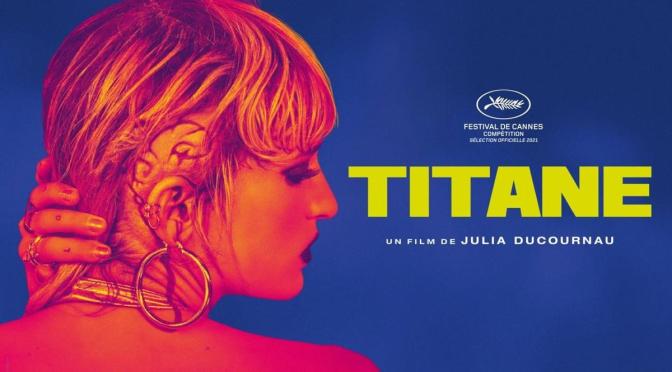
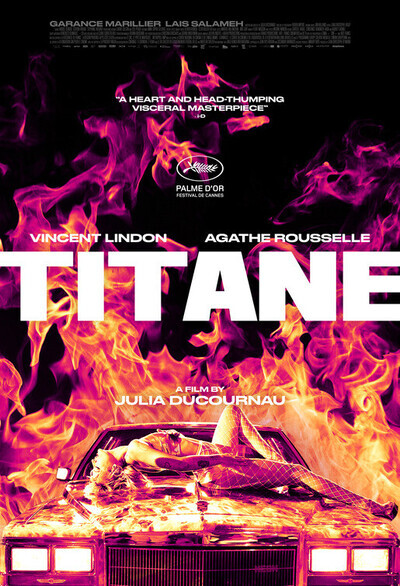
CINEMA REVIEW: TITANE (2021)

CINEMA REVIEW: TITANE (2021)

Directed by Julia Ducournau

Written by Julia Ducournau

Produced by Jean-Christophe Reymond

Cast: Agathe Rousselle, Vincent Lindon, Garance Marillier, Laïs Salameh, etc.

Cinematography: Ruben Impens

*** THE WHOLE FILM IS A SPOILER ***


The difficult second album syndrome applies with Julie Decournau’s incredibly horrific, illogical and over-rated, Titane (2021). How the film won the Palm D’or at the Cannes Festival is beyond me. Maybe the jury were on the same acid as the ultra-talented writer-director when she created the script. Or, maybe the jury were belatedly rewarding her for the amazing contemporary horror film, Raw (2016).

Raw (2016) works on so many distinct levels with themes covered including: veganism, peer pressure, initiation, fitting in, animal cruelty, sexuality. lesbianism, same-sex attraction, animalism, sisterhood, hedonism, nature versus nurture, cannibalism, family, etc.  It crosses genres effortlessly and has one of the greatest and disgusting scenes I have had the pleasure to see for some time. Raw (2016) is a shocking, intelligent and astounding modern-day masterpiece. Titane (2021) unfortunately is not.


Before I say why I did not enjoy Titane (2021), I must say that I constantly seek out challenging cinema that pushes boundaries. I love horror and want to be shocked, but also emotionally involved with the characters at the same time. Moreover, I am well prepared to commit to dream logic and surreal narratives, however, the filmmaker must also try not to over-indulge their artistic excesses, and respect the audience too. Of course, this is just my opinion, but I don’t feel Julie Decournau had a clear story path and rather went hell bent into delivering a variety of different ideas, none of which created a fulfilling emotional journey for the main protagonist, Alexia (Agatha Rouselle).

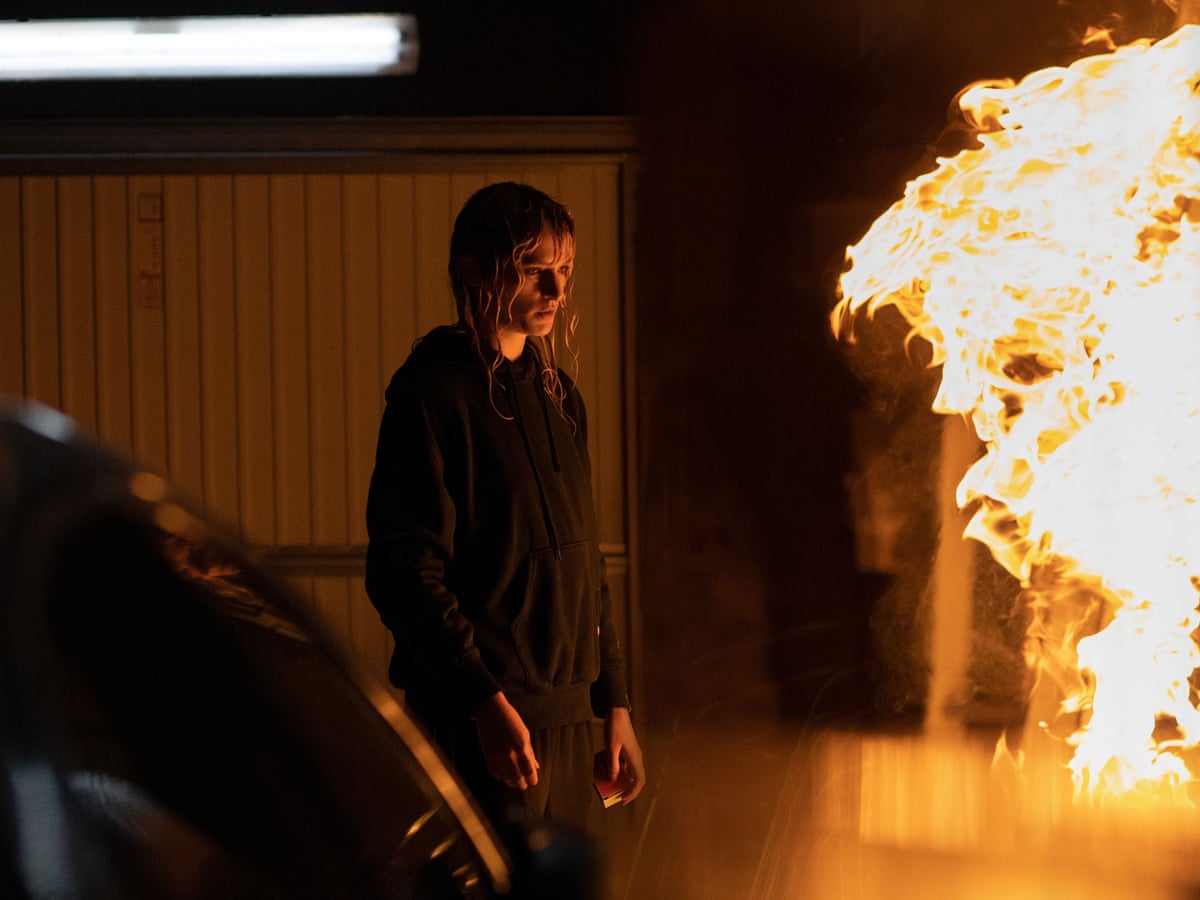
Rouselle, as the malevolent and tragic conduit of Ducournau’s twisted vision, does give a spectacularly brave performance. But her character is given so many complex set-ups at the beginning, I quickly gave up caring what happened to her. As a child she is badly injured in a car crash. This gives her a titanium plate in the skull. Alexia grows up and is an exotic dancer who either dreams of, or actually fucks cars. Oh, she is also a serial killer who violently kills for no apparent reason. Several gruesome set-pieces result in the goriest deaths ever seen in a Palm D’or winner. Indeed, by the time Alexia goes on the run and smashes her face into a sink to alter her features I was numbed by it all.

Titane (2021) at the midpoint then delivers one of the most dumb and insulting plot shifts I have seen in recent years. Yes-yes it’s an arthouse film and an expression of Julie Decournau’s vision of humanity, but I DID NOT CARE!! Not only did we get Alexia’s horrific behaviour, we are then introduced to another plot turn when she hides out with a bereaved and emotionally scarred firefighter, Vincent (Vincent Lindon). By this time I was actually laughing at certain scenes, finding it all tiresome and frankly embarrassing. I got the symbolism of human beings as machines and exploitation of females and that family represents death and blah-blah-blah! Yet, and I’m likely to be in the minority, Titane (2021) is one of the most narratively, emotionally and visually exhausting films I have seen in some time. Watch at your peril!

Mark: 5 out of 11

CINEMA REVIEW: LICORICE PIZZA (2021)

CINEMA REVIEW: LICORICE PIZZA (2021)

Written and Directed by: Paul Thomas Anderson

Produced by: Sara Murphy, Adam Somner, Paul Thomas Anderson

Cast: Alana Haim, Cooper Hoffman, Sean Penn, Tom Waits, Bradley Cooper, Benny Safdie etc.

Cinematography: Michael Bauman and Paul Thomas Anderson

Edited by Andy Jurgensen

*** MAY CONTAIN SPOILERS ***


Any film from Paul Thomas Anderson will certainly receive high critical praise and Licorice Pizza (2021) is certainly no different. Not only do I think this is his most over-rated film. I don’t even think it is a good one. Not for any technical reasons. Because as usual Anderson’s filmic skills as a director, the scintillating cinematographic style, the evocative rendition of early 1970’s Californian suburbs, plus two star-making turns within a formidable cast, ensure Licorice Pizza (2021) is deservedly going to win many plaudits. But I just did not get the story about pretty much nothing and did not connect with the lead romance.

Set in 1973, Licorice Pizza (2021), is part slice-of-life period drama and part character comedy, with a spine consisting of an odd romance between entrepreneurial fifteen-year-old, Gary Valentine (Cooper Hoffman) and twenty-five-year-old, Alana Kane (Alana Haim). While containing many brilliantly directed scenes, the film is a hot mess of indulgent rooting through Paul Thomas Anderson’s historical research and anecdotal events inspired by real-life film producer, Gary Goetzman.


Being asked to root for a relationship which is dubious on the surface and extremely complex to say the least is not beyond me. But Licorice Pizza (2021) doesn’t address the age difference, aside from a couple of moments in the script. I know Cooper Valentine is an old head on young shoulders, but why Alana doesn’t hang out with people her own age was weird for me. I’m not being politically correct or a prude, but is Anderson asking for us to root for what could end up being statutory rape. Am I over-thinking this? Well, all I can say is it impacted my emotions of a major aspect of the story.

Licorice Pizza‘s (2021) worst crime is it’s virtually plotless and I could not identify with the characters. I liked Gary to a certain extent as he ducks and dives to make a living, but what was at stake? Nothing really. Yeah, I get it is art but I found Anderson’s vision boring. Sure, the actors are great, especially the effervescent Alana Haim. Virtual cameos from Sean Penn, Bradley Cooper and Tom Waits failed for me though, with Cooper’s coke-addled and womanising impression of Jon Peters about as funny as an enema. Of course, the cinematography, period design, soundtrack and costumes are exquisitely presented, but they exist in an emotional vacuum. Finally, Licorice Pizza (2021) made me want to watch Paul Thomas Anderson’s previous 1970s masterpiece, Boogie Nights (1997). Now, that film deserved all the critical praise that came its way.

Mark: 6 out of 11


CINEMA REVIEW: WEST SIDE STORY (2021)

CINEMA REVIEW: WEST SIDE STORY (2021)

Directed by: Steven Spielberg

Screenplay by: Tony Kushner

Based on: West Side Story by Jerome Robbins, Leonard Bernstein, Stephen Sondheim and Arthur Laurents

Produced by: Steven Spielberg, Kristie Macosko Krieger, Kevin McCollum

Cast: Ansel Elgort, Ariana DeBose, David Alvarez, Mike Faist, Rita Moreno, Rachel Zegler etc.

Cinematography: Janusz Kamiński

Choreography: Justin Peck

Music by: Leonard Bernstein

*INEVITABLE SPOILERS WITH THIS STORY*


Well, if you removed all the songs and added more dialogue to West Side Story (2021), then I guarantee it would make an amazing stage play. Oh, it has already. I thought it felt extremely familiar. Silly jokes aside, one often hears the decrying of originality in Hollywood cinema. Sequels, prequels, remakes, adaptations and reboots are plentiful as big business. Known quantities are a better bet to executives than original never-heard-of speculative screenplays. And not everyone is averse to re-doing fully developed properties. Thus, one of the most talented filmmakers of a generation, Steven Spielberg, has delivered a stunning remake of a film adaptation of a stage musical that was developed from William Shakespeare’s Romeo and Juliet.

You know the story. If you don’t, stop reading. Young star-crossed lovers fall in love against their families wishes. Their romance explodes into unbridled passion as war escalates between the two rival factions. As the lovers attempt to find a way to be together the conflict brings about eventual tragedy. Shakespeare was a genius and knew how to structure and spin a yarn. No surprise his works have been adapted infinitely to much success. One of the greatest was the musical West Side Story (1961). Exchanging Verona for New York and pitting the Puerto Rican Sharks against the local firm, the Jets, the play and film contain some of the most incredible numbers ever sang and danced to. The original play won awards and broke box-office records. The film West Side Story (1961) deservedly won many Oscars. It is considered almost a perfect musical. How could it be improved?


West Side Story (2021) cannot possibly be classed as better than the original because Jerome Robbins, Arthur Laurent, Leonard Bernstein and Stephen Sondheim, plus their incredible team, had already done all of the challenging work crafting the production. But with this new version Steven Spielberg has once again proved he is one of the great genre directors. Assembling an ultra-talented team including Josh Peck as choreographer, Tony Kushner as screenwriter, Janusz Kaminski as cinematographer and an effervescently wonderful cast.

Everything about the film screams colour, energy and movement. The dancing and editing and swinging beats take you on a breathless journey through the romance and street war. Tony (Ansel Elgort) and Maria’s (Rachel Zegler) love story is bounced effortlessly between the expertly devised gang battles. Moreover, West Side Story (2021) keeps all the memorably catchy songs such as: Maria, Tonight, America, Cool, and Somewhere, capturing the heart and imagination in equal measure. If there is a better directed, choreographed and edited set-piece all year in the Gee, Officer Krupke number then I haven’t seen it.

The cast are uniformly excellent with Ansel Elgort, while lacking slightly in the vocal department, more than making up for it with his magnetic screen presence. Rachel Zegler is charming if bland as Maria, but Ariana DeBose absolutely steals the scenes with her all-round performance as fiery Anita. The cast all deliver Tony Kushner’s excellent dialogue and the iconic songs with aplomb. Lastly, West Side Story (2021) is an absolute tour-de-force as cinematic entertainment. However, there is a sense that it is a missed opportunity for Steven Spielberg and his team to perhaps update the themes for the modern day. Kushner’s script hints at some analysis of racism that ultimately only scratches the surface. Spielberg is satisfied emulating a classic adaptation of a classic play, remaining trapped in a shiny post-modern time-warp full to the brim with powerful nostalgia.

Mark: 9 out of 11


CINEMA REVIEW: LAST NIGHT IN SOHO (2021)

CINEMA REVIEW: LAST NIGHT IN SOHO (2021)

Directed by Edgar Wright

Screenplay by: Edgar Wright and Krysty Wilson-Cairns

Produced by: Nira Park, Tim Bevan, Eric Fellner and Edgar Wright

Cast: Thomasin McKenzie, Anya Taylor-Joy, Matt Smith, Michael Ajao, Terence Stamp, Diana Rigg, Rita Tushingham, etc.

Cinematography: Chung-hoon Chung

*** MAY CONTAIN SPOILERS ***


Edgar Wright is one of my favourite directors working today. His films possess an endless series of cinematic techniques such: long takes, quick cuts, swooping camera moves, canted frames, Steadicam, camera holds, frame switches, pans, scans, tilts, low-angles, metronomic editing, blurred dissolves, point-of-view and god’s-eye view shots. Moreover, Wright’s use of humour, music, colour, casting choices, and cross-genre collisions are spectacularly imaginative and entertaining. His latest film Last Night in Soho (2021) is no different. I was enthralled and excited throughout this ripping big-budget exploitation film, which juxtaposes influences such as Stephen King, Brian DePalma and Doctor Who, with a suggestion of Dario Argento and giallo cinema.

Last Night in Soho (2021) is both a love and hate letter to the Soho area of central London in the 1960’s and the now. If hate is too strong a word then at the very least the myriad of storylines collide to create a cautionary tale of one young person’s move from Cornwall to London to study fashion at the University of Arts. Major acting talent Thomasin Mackenzie is Ellie Turner, a passionate young woman who loves the sixties music and style, but also mourns the loss of her mother at an early age. Leaving her comfortable home she shares with her Grandmother (Rita Tushingham), Ellie experiences London and student life with initially mixed results. Finding it difficult to connect with her obnoxious room-mate, Jocasta, she moves into an antiquated bedsit, with imperious Diana Rigg as her landlady no less. All of a sudden her incredible journey into the glamorous and seedy past of Soho begins.


As with many of his films Wright establishes several storylines simultaneously. He brilliantly crosses rites-of-passage with period drama, romance, musical, detective and finally the horror genre. Ellie finds her feet at University, gets a job in a bar, receives praise for her initial designs and starts a budding romance with fellow student, John (Michael Ajao). At the same time her life becomes entwined in a surreal twist with that of Sandie (Anya Taylor-Joy), an engaging character desiring showbiz stardom who happens to live in Soho, but in the 1960’s. Ellie’s psychic link with Sandie brings her vivid dreams, but a striking empathic connection.

While Ellie is nervous and insecure within her London experiences, Sandie is the opposite. The theme of duality in their polar characters is both emotionally and visually breathtaking as their twin journey brings positive change and developing confidence in Ellie’s character. Yet, when Sandie’s career desires are exploited for nefarious gain by a local face called Jack (Matt Smith), both woman head for darker spaces in the shadows and smoke of the capital. Here the issue of mental health is intriguingly explored too. As Ellie is drawn further into Sandie’s nightmarish existence, she struggles to hold on to reality and the present.

Despite some minor wrinkles in the narrative and geographical London liberties taken, Edgar Wright has delivered one of the most thrilling and spectacularly energetic films of the year. The nostalgic and heavenly soundtrack is to die for, with so many songs I recall growing up listening to. Likewise, the cinematography and lighting design sparkle in hues of black, fluorescence, shadow and neon. Sure, Edgar Wright has his cake and eats it with mild virtue signalling relating to the “Me Too” movement. The male gaze eats up Anya Taylor Joy’s stunning charisma on screen, making us complicit in her downfall. Nonetheless, with issues relating to grief, mental health, sexual exploitation, identity, doppelgängers, urban breakdown and many more all enveloped into a craftily structured plot, you won’t find a more breathless cinematic experience all year.

Mark: 9 out of 11


CINEMA REVIEW: NO TIME TO DIE (2021)

CINEMA REVIEW: NO TIME TO DIE (2021)

Directed by: Cary Joji Fukunaga

Screenplay by: Neal Purvis, Robert Wade, Cary Joji Fukunaga, Phoebe Waller-Bridge

Story by: Neal Purvis, Robert Wade, Cary Joji Fukunaga

Based on: James Bond by Ian Fleming

Produced by Michael G. Wilson, Barbara Broccoli

Cast: Daniel Craig, Rami Malek, Léa Seydoux, Lashana Lynch, Ben Whishaw, Naomie Harris, Jeffrey Wright, Christoph Waltz, Ralph Fiennes, Billy Magnusson, Ana De Armas etc.

Cinematography: Linus Sandgren

Edited by: Elliot Graham, Tom Cross,

Music by: Hans Zimmer

Production companies: Metro-Goldwyn-Mayer, Eon Productions

*** NO MAJOR SPOILERS ***


As a Bond swansong, No Time To Die (2021) gives Daniel Craig’s earthy and human characterisation of the famous spy a tremendous finale. Indeed, it was a powerfully entertaining work of cinema, but was it a great Bond film? Not for me. Don’t get me wrong, all the creatives here from the director, art department, cinematographer, location scouts, costume design, scintillating cast, stunt team, production crew, the army of screenwriters and so on, have all worked prodigiously to create a wonderful example of blockbuster genre cinema. But it has many story and legacy issues that stop it from being a memorably pure Bond film in my opinion. However, I am not going to be critical in this review, but rather celebrate what is great about No Time To Die (2021). Thus, it’s time to revel in the fact Fleming’s fictional formula continues providing sensational diversion from everyday existence.

The choice to make No Time To Die (2021) a direct sequel to Spectre (2015), would not have been my preferred route for this narrative. Spectre (2015) is entertaining. It was fine. Was it a good Bond film though?  Not particularly.  I should qualify this by saying I thought Skyfall (2012) was a cracking film; a fantastic action thriller with fine characterisation and a formidably nasty, yet playful, villain in Javier Bardem. Thematically, it was strong with Bond’s orphan background and relationship with M (other) providing depth and subtext. Skyfall (2012) was also lusciously shot by Roger Deakins with fantastic direction from Sam Mendes. But neither Spectre (2015) or Skyfall (2012) are great Bond espionage adventures like From Russia With Love (1963) or The Living Daylights (1987), or a devastatingly plotted, romantic action adventure like Casino Royale (2006). Skyfall (2012) was an Oedipal soap opera with bells on, as ghosts of the past avenge the present. Spectre (2015) and No Time To Die (2021) continue the theme of vengeful and dysfunctional family ties bringing strife to Bond. But, nowhere near as successfully as Craig’s first outing, Casino Royale (2006). That remains one of the best Bond films ever.

Like Quantum of Solace (2008), No Time To Die (2021) is, as aforementioned a sequel, but the main difference is No Time To Die (2021) is way longer than Quantum of Solace (2008). The pace rarely dips in No Time To Die (2021), but it could certainly have been trimmed in places because at times I felt the screen was stuffed with too many characters and subplots. I must point out I’m aware that Quantum of Solace (2008) is not rated highly in the Bond canon, but I like it. I feel there are some incredibly filmed sequences in it. Notably, the opening car and foot chase, the opera shootout, a spectacular air conflict and the fiery desert lair denouement. While the villain was weak and it failed in terms of narrative, Quantum of Solace (2008) succeeded for me as a fast-paced and exquisite, if choppy, spectacle that tied up the loose ends from the far superior, Casino Royale (2006). Quantum of Solace (2008) infamously had no writers re-working it due to the ongoing strike, No Time To Die (2021), arguably has too many cooks and ingredients occurring simultaneously. Having said that Cary Joji Fukunaga brings a confident energy to the film throughout, connecting the emotions of the script and explosive box of tricks together in a neatly packaged presentation.


Daniel Craig is phenomenal in No Time To Die (2021). While he is always a strong actor, he has also grown into a bona fide movie star too. Even when going through the motions in Spectre (2015) he was good, but in No Time To Die (2021), he blows the doors off. While he does look too old for the role now, from getting blown up in Italy, to almost drowning in Cuba and facing off against Rami Malek’s malevolent poisoner on an island near Russia, nobody does almost-dying better than Craig. Moreover, as well as the constant threats on his life, crazy new technology that delivers instant death, and a litany of evil henchmen trying to take him down, Bond must contend retirement and having his place usurped at MI6 by the confident Nomi (Lashana Lynch). Having been set-up as a major story player, Nomi and this spy-versus-spy story pivot ultimately peters out for more melodramatic plotlines which I will not divulge. In fact, Nomi’s thunder is ultimately stolen by the CIA agent, Paloma, with Ana De Armas absolute dynamite in the smashing Cuban section of the film.

As with Spectre (2015), where there wasn’t nearly enough of Christoph Waltz, Rami Malek’s villain Safin is not utilised enough. Malek gives a haunting performance in a few creepy scenes, yet I felt cheated. I would have loved more exchanges between him and David Dencik’s eccentrically dangerous scientist. More scenes in the imaginatively designed island lair where all manner of deadly poisons were being concocted would have been brilliant, and further developed Safin’s intriguing backstory and fiendish plotting.

No Time To Die (2021) belongs to Bond and Daniel Craig of course, and they get into some barnstorming scrapes. The opening action involving motorcycle stunts and the iconic Aston Martin blasting the Spectre goons is an early highlight. The Cuban nightclub murders and subsequent gunplay really raise the pulse too. After the explosive boat sequence where Bond has a moving parting of the ways from an old friend, the action arguably becomes more generic and not as memorable. That is, THAT IS, until the unforgettable end set-piece where Craig’s 007 faces an insurmountable set of physical and emotional challenges. Lastly, some might say Daniel Craig goes out on an all time high, and no doubt No Time To Die (2021) is destined to knock the living daylights out of all prior Bond box office records.

Mark: 009 out of 11


CINEMA REVIEW: A QUIET PLACE PART II (2021)

CINEMA REVIEW: A QUIET PLACE PART II (2021)

Directed by: John Krasinski

Produced by: Michael Bay, Andrew Form, Brad Fuller, John Krasinski

Written by: John Krasinski

Based on characters created by Bryan Woods and Scott Beck

Cast: Emily Blunt, Cillian Murphy, Millicent Simmonds, Noah Jupe, Djimon Hounsou and John Krasinski

Music by: Marco Beltrami

Cinematography: Polly Morgan

*** MAY CONTAIN SPOILERS ***


Ah, the difficult second album. Well, how do you follow up a genuine classic horror thriller such as A Quiet Place (2018)? I mean, it had everything, including a simple but devastating premise and an imaginative set of rules for the monstrous dangers facing the Abbott family. With hardly any fanfare or major marketing campaign the original film really got audiences flexing their “word-of-mouth” muscles. Throughout  A Quiet Place (2018) my heart was literally living in my mouth, as my fingers and knuckles clenched and whitened during the whole tense escapade. Plus, Emily Blunt and John Krasinski’s “every-couple” and their three children brought a believable humanity to the characters, with Blunt especially on phenomenal form in her reaction and character work.

The sequel opens with a prequel sequence which illuminates how the world descended into chaos. Sadly, and not surprisingly, we only get a short time with John Krasinski’s action-dad, Lee Abbott, before he dives back behind the camera to direct this rattlingly good and highly tense horror/sci-fi mash-up. Thus, the weight of part two is left with Emily Blunt, Millicent Simmonds and the less effective, Noah Jupe character. Once again, the trio, plus baby, rely on dead silence in an attempt to remain uneaten by the blind-but-deadly alien creatures hellbent on making Earth’s inhabitants lunch. Along the way they bump into an apparent loner, Emmett, portrayed by Cillian Murphy. His jaded, shell of a man, hides a tragic secret and the last thing he wants is other people around to attract more devourers.


The story develops as the relationship between the Abbott’s and Emmett, while initially distrusting, becomes less hostile. However, he still wants them gone, much to Emily Blunt’s frustration. After all, any good mother wants to protect her children, as evacuating the factory setting could mean certain death. I have to admit I felt Emily Blunt’s major acting talents were not as well utilised as the first film. Indeed, it was Simmonds’ character, Regan, who had more development and heroic moments. It is Regan who is determined to discover a way out from the dark recesses of the filthy basement and clanking pipes. She may be foolhardy to some, but Regan has guts and makes important life-changing decisions for her family. Simmonds is compelling as she gives another mature performance in the role.

Overall, A Quiet Place – Part 2 (2021) is not as much as a surprise as the original film. How could it be?! I mean we now know what defeats the monsters, yet that doesn’t stop them being fierce predators and foes. Moreover, the use of sound design that was so brilliant in the first film is presented equally superbly in the sequel. While the film lacks for a decent plotline, as anyone who has their fill of zombie apocalypse films could testify, there remains some incredibly exciting chases and well directed set-pieces. Krasinski clearly had the Spielberg playbook to hand and that is certainly not a criticism, because I think he is definitely a talent to keeps tabs on. Thus, as my first film back at the cinema after yet another lockdown, I can definitely recommend A Quiet Place – Part 2 (2021), to take one’s mind off the horrors of real life for ninety-odd pulsating minutes.

Mark 8.5 out of 11


“CINEMA” REVIEWS: NOMADLAND (2020) & SOUND OF METAL (2019)

“CINEMA” REVIEWS: NOMADLAND (2020) & SOUND OF METAL (2019)

Due to the being very busy at my day job I have fallen slightly behind with my film reviews. Thus, I am consolidating two quality dramas I have watched in a double bill review presentation. In fact, it is quite apt that these two films are critiqued together as they are both Oscar winners, both focus on an individual’s struggle against difficult personal trauma, both films represent an alternative vision of America and are told in a meditative and absorbing style.


NOMADLAND (2020)

Directed and written by: Chloé Zhao

Produced by: Frances McDormand, Peter Spears, Mollye Asher, Dan Janvey, Chloé Zhao

Based on: Nomadland: Surviving America in the Twenty-First Century by Jessica Bruder

Cast: Frances McDormand, David Strathairn, Linda May, Swankie etc.


Winning the Oscar for Best Picture, Best Director and Best Actress in a leading role, perhaps upsold my expectations for Nomadland (2020). It is an example of amazing filmmaking without being a particular brilliant film. I get why it won Best Picture, but that was more to do with there not being one specifically superb standout film among the nominees. Frances McDormand isn’t even very memorable as the lead protagonist, Fern. Don’t get me wrong she is highly empathetic and admirable in her resilience to stick to the road, living in her van and scrapping by independently. However, the film is one-paced. It is all set-up and little pay-off, with the odd flat tyre, van breakdown and Fern having to shit in a bucket providing occasional spikes in the drama.

Much praise though goes to the incredible cinematography and Chloe Zhao’s intelligent and naturalistic direction. She really gets into the weeds of the flailing American dream, as well as providing insight into the lives of working-class people disenfranchised by American capitalism. Moreover, Zhao’s use of non-professional actors is quite astounding, as at times you feel like you are watching a pseudo-documentary. Ultimately, Nomadland (2020) though, is arguably too meditative and glacially paced. It remains a brave and quietly powerful film, but it’s just too quiet for my dramatic needs.

Mark: 8 out of 11


SOUND OF METAL (2019)

Directed by: Darius Marder

Produced by: Bill Benz, Kathy Benz, Bert Hamelinck, Sacha Ben Harroche

Screenplay by: Darius Marder, Abraham Marder

Cast: Riz Ahmed, Olivia Cooke, Paul Raci, Mathieu Amalric etc.


Sound of Metal (2019) is another quiet drama, however, it really begins with a load of noise. It derives from Riz Ahmed’s drummer, Ruben, thrashing on stage with his girlfriend, Lou, as she fronts their heavy metal band giving an energetic performance to a lustful crowd. Ruben and Lou live out of their R.V. travelling and gigging around America, but he soon discovers his hearing has been severely damaged. Doctors offer hope in the form of an operation, but it’s extremely expensive. As Ruben is an addict, he also seeks spiritual help at a shelter for deaf people in recovery. There he meets, Joe (Paul Raci), the facilitator at the shelter and Ruben’s slow road to recuperation begins.

Riz Ahmed is outstanding as Ruben, a talented, bright and strong-willed individual who finds himself tested by a loss of hearing. His journey is a slow-moving but compelling one. I especially enjoyed the process where Ruben learns to cope, sign and believe that deafness should not be considered a disability. Indeed, the scenes Ruben shares with the wiser Joe are incredibly moving and thought provoking. Further, Darius Marder directs with a sure hand and really uses the sound effects powerfully, getting us into Ruben’s head both literally and figuratively. Overall, Sound of Metal (2019) beats along steadily but with incredible purpose and rhythm. It teaches us that losing a major sense need not be the end of one’s life, but rather the beginning of an altogether different one.

Mark: 9 out of 11


YOU HAVE A NEW FOLLOWER (2020) – SHORT FILM YOUTUBE RELEASE

YOU HAVE A NEW FOLLOWER (2020) – SHORT FILM RELEASE

Hope you are well and safe!

Finally, I have decided to release my short film, You Have A New Follower (2020) on YouTube. It has been delayed due to the pandemic and other personal matters. It got several screenings at online and physical film festivals, however, not as many as hoped due to the outbreak of COVID-19.

I am very proud of the film as I have attempted to explore issues relating to mental health within the thriller genre. I hope it intrigues and interests you too. Below is link to the film and after that the credits and further film details.

You Have A New Follower (2020) – Fix Films Ltd


PITCH

“Watch your back…”

Astrid Nilsson’s life begins to unravel when she is stalked by a mysterious hooded figure.

You Have a New Follower (2020) is the latest short film from Paul Laight and Fix Films. It was shot in London and combines mystery, suspense and science fiction genres with dramatic effect. It’s a short, low-budget film which seeks to explore themes of paranoia, anxiety, and identity within the thriller genre.

CAST & CREDITS

Directed by: Paul Laight & Tilde Jensen
Cast: Tilde Jensen, Mitchell Fisher
Written and Produced by: Paul Laight
Camera: Petros Gioumpasis
Lighting: Sakis Gioumpasis
Sound: Marina Fusella
Editors: Oliver McGuirk, Petros Gioumpasis
Composer: James Wedlock
Sound Design: Simos Lazaridis
Location Manager: Melissa Zajk
Production Assistant: Lue Henner

SCREENINGS

The Fix Film Night, London – February 2020
Cineshots, London – March 2020
Lift Off Sessions, UK – March 2020 (Online)
Fabulosis Short Film Night, London – May 2020 (Online film night) Unrestricted View Horror Festival, London – October 2020 – (Online festival)
Horror of Damned, Italy – November 2020 (Online festival)
Lulea International Film Festival, Sweden – November 2020 – (Online in 2020 and hopefully in Sweden in September 2021)

Website: www.fixfilms.co.uk
YouTube: www.youtube.com/c/FixFilmsLtd

A FIX FILMS PRODUCTION © 2020


NETFLIX FILM REVIEW: HIS HOUSE (2020)

NETFLIX FILM REVIEW: HIS HOUSE (2020)

Directed by: Remi Weekes

Produced by: Aidan Elliott, Martin Gentles, Arnon Milchan, Ed King, Roy Lee

Screenplay by: Remi Weekes

Story by: Felicity Evans, Toby Venables

Cast: Wunmi Mosaku, Sope Dirisu, Matt Smith, etc.

Cinematography: Jo Willems

***MAY CONTAIN SPOILERS***


Similar in spirit to the Jacques Audiard directed film, Dheepan (2015), the latest Netflix film release, His House (2020), takes the migrant experience as a key narrative driver, then filters it through exciting genre style. While Dheepan (2015) started as a story of survival before crossing over into thriller territory, His House (2020) superbly combines social commentary with the horror genre. Moreover, a key plot reveal later in His House (2020) is extremely similar to that found in Dheepan (2015). Nonetheless, it is a powerful film, both unnerving and thought-provoking in equal measure.

His House (2020) introduces us to Bol (Sope Dirisu) and Rial (Wunmi Mosaku), a refugee husband and wife seeking asylum in Britain from South Sudan. Having survived a treacherous journey from this war-torn part of the world, their young daughter is not so lucky. Alas, Nyagak (Malaika Agibaka) dies during a stormy boat journey. This incident and their social status immediately garners sympathy and empathy for the protagonists. Allied to this, on achieving probational asylum status their jaded case worker, Mark (Matt Smith), brings them to a rundown council estate to live in. It is to Bol and Rial’s credit that they accept their new abode with gratitude. Bol especially is keen to mix with the locals and fit into the British way of living. However, the two soon encounter indifference, racism and prejudice.

This image has an empty alt attribute; its file name is 1024px-his_house_film_poster-1.png

As the narrative continues Bol and Rial have more to contend with than ignorant locals. Rial is resistant to integration as she desperately holds onto her Sudanese clothes and customs. While Bol is clearly trying to distract himself from the tragedy, Rial’s grieving takes the form of clinging onto the memory of her daughter and their Sudanese ways. This familial division is exacerbated by disturbing supernatural phenomena, as a strange dark spirit and the ghost of Nyagak both appear. Could it be grief and guilt manifesting such spectres? Or are they suffering from post-traumatic stress following their harrowing journey to Britain? Or has a genuinely evil spirit hijacked their attempts to build a home and find peace?

Declaring himself as a director to keep tabs on, Remi Weekes, has written and directed an excellent first feature film in, His House (2020). The pacing of the story is excellent as we get flashes of Bol and Rial’s past in Sudan, juxtaposed with their attempts to acclimatise in Britain. As someone whose life is extremely privileged when compared to that of such characters, I was both moved and fearful for the protagonists. This is not only down to an excellent script full of subtext, symbolism and dread, but also due to Sope Dirisu and Wunmi Mosaku’s compelling performances. Furthermore, you really feel the pain of the couple’s loss and suspense created by that which lurks within the stained walls of their apartment. While there are many tense moments, my one reservation with His House (2020) was there arguably wasn’t enough true horror moments. Having said that, the actual reality of Bol and Rial’s situation in losing a daughter, suffering British administrative red-tape and living amidst everyday prejudice, is far scarier than ghosts and monsters can ever be.

Mark: 8.5 out of 11