Category Archives: Oscar Bingo

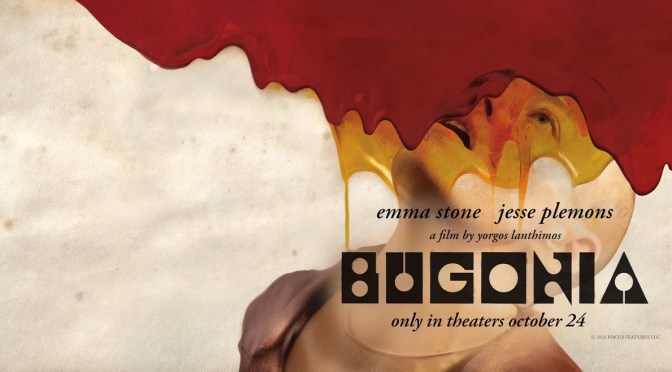
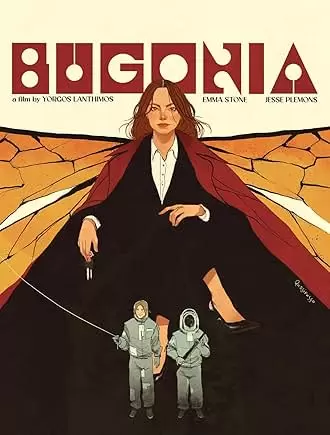
Cinema Review: Bugonia (2025) – Lanthimos has a blast with this dark conspiracy-class-war-kidnap-comedy!

Cinema Review: Bugonia (2025)

Directed by Yorgos Lanthimos

Screenplay by Will Tracy – Based on Save the Green Planet! (2003) by Jang Joon-hwan

Produced by Ed Guiney, Andrew Lowe, Yorgos Lanthimos, Emma Stone, Ari Aster, Lars Knudsen, Miky Lee, Jerry Kyoungboum Ko


Main Cast: Emma Stone, Jesse Plemons, Aidan Delbis, Stavros Halkias, Alicia Silverstone, etc.

Cinematography by Robbie Ryan

*** MAY CONTAIN SPOILERS ***


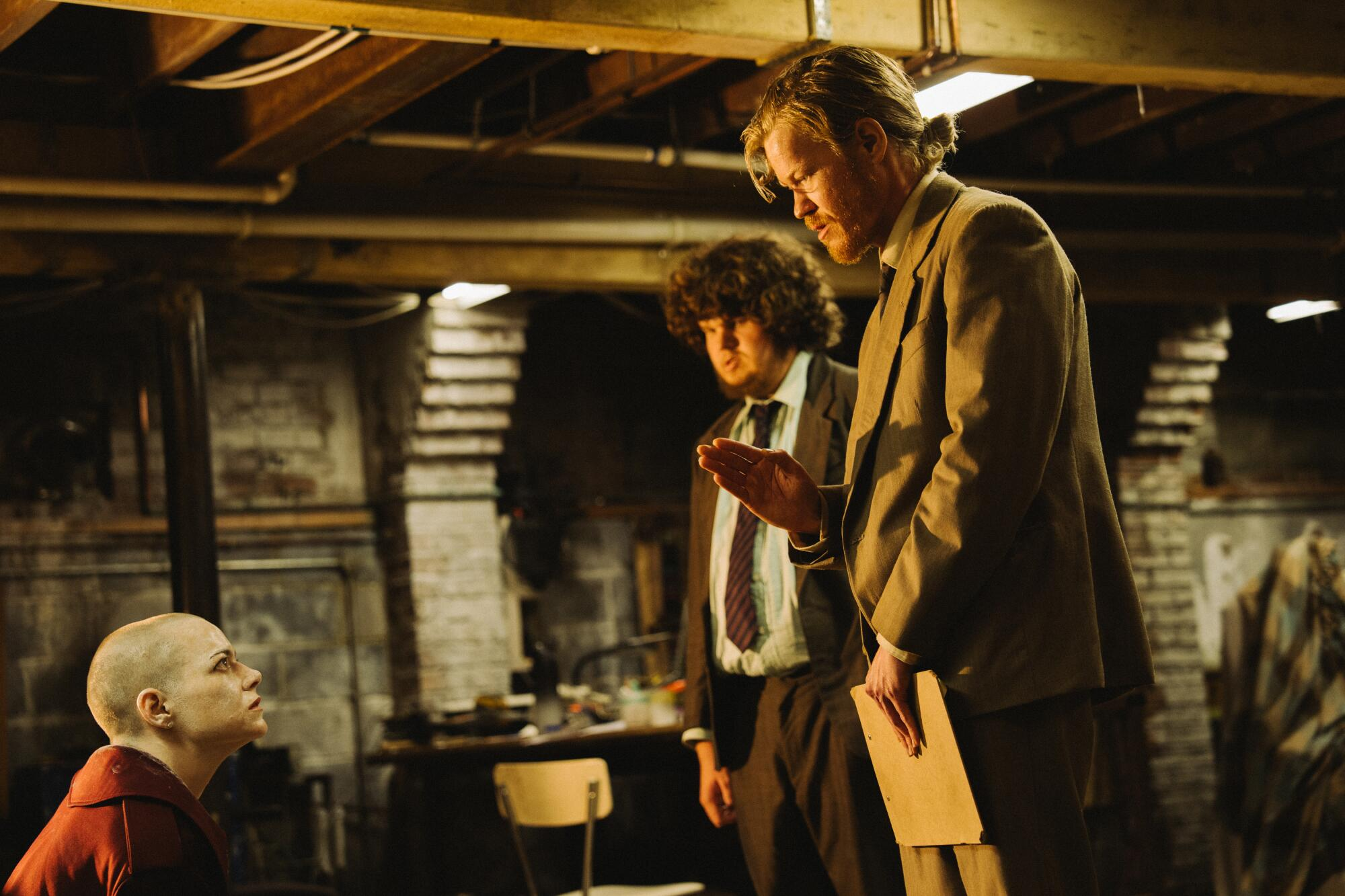
Yorgos Lanthimos has once again sneaked out of his uncanny terrarium and unleashed another piece of beautifully deranged cinema. Bugonia (2025)—a remake of Jang Joon-hwan’s cult classic Save the Green Planet!—is part sci-fi fever dream, part hostage farce, and part spiritual meltdown. It’s like Ruthless People (1986) got trapped in a socio-political, beekeeping suit and force-fed ayahuasca.

Will Tracy’s script hums with the manic energy of someone who’s read too many conspiracy subreddits and decided to turn it into Oscar bait. The film pairs Jesse Plemons (whose face seems genetically engineered for moral unease) with Alden Delbis (playing his twitchy, Kool-Aid-eyed partner in cosmic delusion) as two eco-anarchist truthers who kidnap a pharma/tech CEO, played with imperial chill by Emma Stone. Their reasoning? Well, just wait and see. It is incredibly crazy with some severe plot turns. Yet, somehow Lanthimos and his terrific cast maintain verisimilitude within the setting and just about hang onto emotional connection for the characters.


What follows is a deranged pas de trois of torture, empathy, and total philosophical collapse. Plemons and Delbis interrogate Stone with the intensity of people who’ve seen too many YouTube conspiracy documentaries, while Lanthimos and cinematographer, Robbie Ryan shoot it with the intensity of a nature documentary directed by Lucifer. There are bees. There is honey. There are monologues about pollution, pharmaceutical company threat and environmental collapse. Further, Stone, who has now fully ascended into Lanthimos’ personal pantheon of holy weirdness, plays her role like a woman being both worshipped and flayed at the same time. She’s terrifyingly serene—like she’s founded a doomsday cult and smiled through the apocalypse.

It’s all utterly ridiculous, but Bugonia (2025) thrives in that space between laughter and dread. Lanthimos once again proves that absurdism isn’t about nonsense—it’s that nonsense is the only sane response to the modern world. I enjoyed this film way more than the obtuse Kinds of Kindness (2024). It has more akin, although not as devastatingly memorable, as his earlier Greek-language classics or The Killing of a Sacred Deer (2017). Moreover, if The Favourite (2018) was about power, and Poor Things (2024) was about rebirth, Bugonia (2025) is bleak, fatalistic morality tale about environmental apocalypse.

By the time the film’s final shots roll I was equal parts horrified, moved, and deeply amused. It’s an eco-horror-comedy that gorily plays like Saw (2004) meets famous beekeeping philosopher, Aristotle. Overall, Bugonia (2025) proves once again that Yorgos Lanthimos is cinema’s reigning apiarist of absurdity—and his audience are all his buzzing little drones.

Mark 8.5 out of 11


Cinema Review: After the Hunt (2025) – a compelling exploration of #MeToo and #Cancel Culture polemics!

Cinema Review: After the Hunt (2025)

Directed by Luca Guadagnino

Written by: Nora Garrett


Produced by: Brian Grazer, Allan Mandelbaum, Luca Guadagnino

Main Cast: Julia Roberts, Ayo Edebiri, Andrew Garfield, Michael Stuhlbarg, Chloë Sevigny, Thaddea Graham, etc.

Cinematography Malik Hassan Sayeed

*** MAY CONTAIN SPOILERS ***


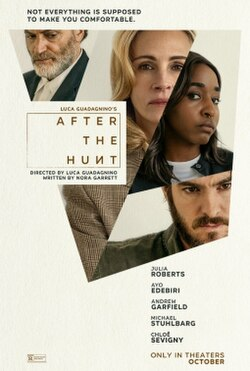
After the Hunt (2025), the latest work from Luca Guadagnino, further cements the director’s reputation as one of contemporary cinema’s most assured chroniclers of morally fraught, emotionally layered human drama. Having already proven his commanding directorial touch with Call Me by Your Name (2017) and Challengers (2024), plus a superior-than-the-original Suspiria (2018), Guadagnino again, from an insightful screenplay by Nora Garrett, demonstrates an uncanny ability to draw out great performances and create a sense of first world suspense that feels both sensual and cerebral.

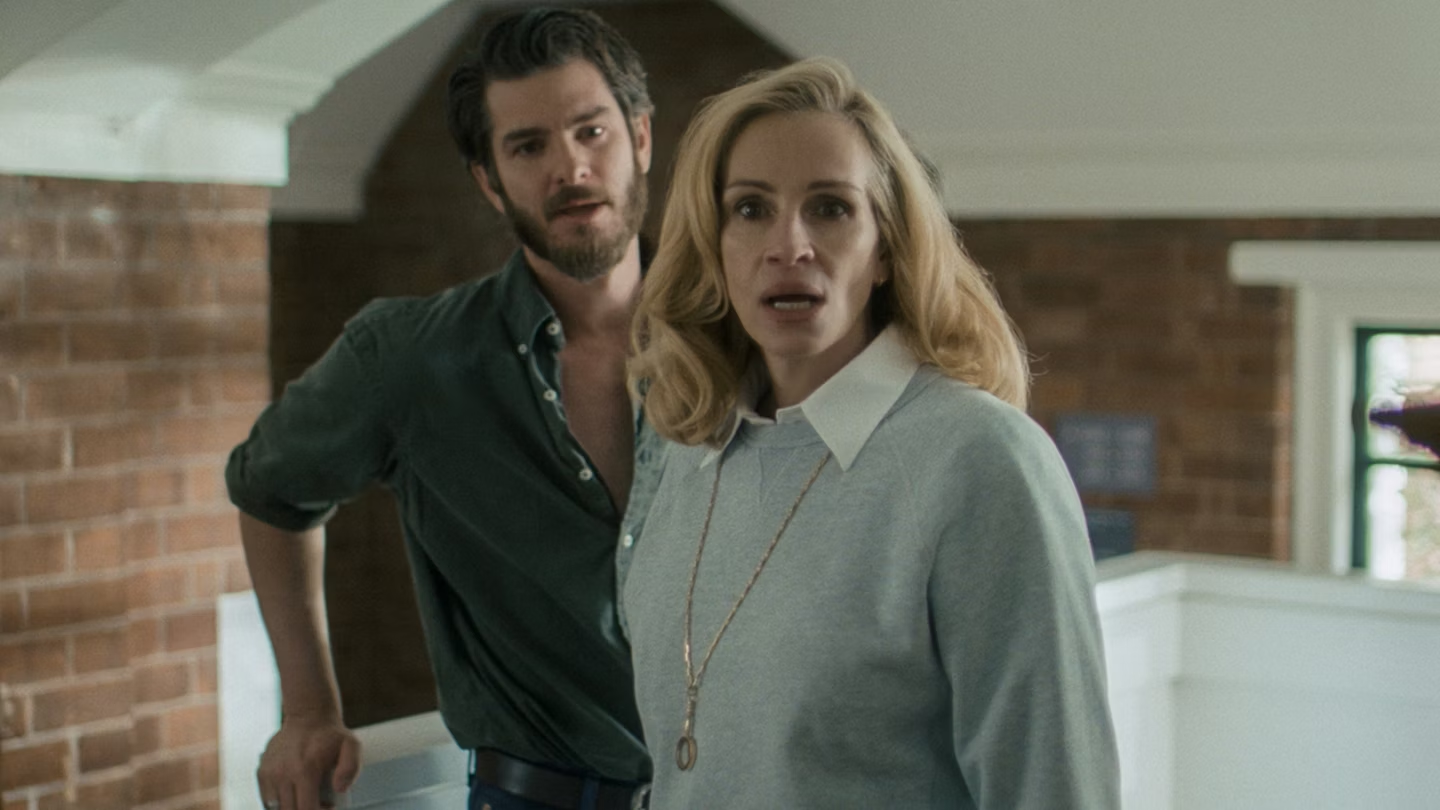
Set within the hallowed halls of Yale University, After the Hunt (2025) delves into the ramifications of power, privilege, and academic integrity when allegations of sexual assault surface against a lauded professor, played by Andrew Garfield. The film positions itself within a lineage of stories interrogating abuses of power within established and esteemed hierarchies — in much the same way that Doubt (2008) examined such tensions within the church, and Tár (2022) explored them in the rarefied world of classical music. Guadagnino’s film strives for a similar level of psychological and thematic complexity, exploring how institutional prestige and human frailties often shield misconduct and complicity.


The main drama arrives after a dinner party hosted by philosophy professor Alma Imhoff (Julia Roberts) and her psychiatrist husband, Frederik Imhoff (Michael Stuhlbarg). Also present at the party are Alma’s colleague and longtime friend Hank Gibson (Andrew Garfield), who is also up for tenure, and Alma’s star PhD student Maggie Resnick (Ayo Edebiri). After the party, Maggie accuses a drunken Hank of sexual assault after he walks her home. Alma finds herself caught between loyalty to her friend and colleague, her own desire for academic tenure and her obligation as mentor to Maggie. Meanwhile, Alma’s own secrets—her illness and a youthful relationship situation that occurred as a teenager—begin to surface.

What follows is an intriguing and quite gripping drama about a series of flawed characters who may or may not make, depending on your viewpoint, good, bad, or terrible decisions. The acting is absorbing from the ensemble led by Roberts, with Stuhlbarg and Chloe Sevigny being the resident scene stealers. I frequently found myself drawn into the story as it navigates socially and culturally challenging situations, notably the “she said-he said” assault accusation and aftermath. However, the screenplay occasionally falters, particularly in its middle act. Thus despite the thematic suspense the plot omission such as a lack of criminal enquiry, plus the moment in which Garfield’s character is abruptly dismissed without any formal inquiry undercuts the film’s credibility and emotional momentum. For a story concerned with systems of accountability and institutional procedure, this narrative oversight was difficult for me to overlook.

Even so, After the Hunt (2025) remains an engrossing and well-crafted drama that showcases Guadagnino’s continuing fascination with human pride, weakness and moral ambiguity. Adroitly, there are a number of cheeky nods to cancel culture with the Woody Allen font-style credits and Morrissey / The Smiths songs featuring on the soundtrack. Yet, overall, and perhaps due to a lack of a cathartic ending, the story may have worked better as a stage play. Ultimately, it may not wield the same searing power as Doubt (2008) or Tár (2022), but it stands as another testament to Guadagnino’s skill as a go-to director for mature, provocative, and emotionally intelligent cinema.

Mark: 7 out of 11


Cinema Review: The Smashing Machine (2025) – an authentic portrait of a MMA fighter that hits big!

Cinema Review: The Smashing Machine (2025)

Directed by Benny Safdie

Written by Benny Safdie

Based on documentary The Smashing Machine: The Life and Times of Extreme Fighter – Mark Kerr by John Hyams

Produced by Benny Safdie, Dwayne Johnson, Eli Bush, Hiram Garcia, Dany Garcia & David Koplan

Main cast: Dwayne Johnson, Emily Blunt, Ryan Bader, Bas Rutten, Oleksandr Usyk etc.

*** MAY CONTAIN SPOILERS ***


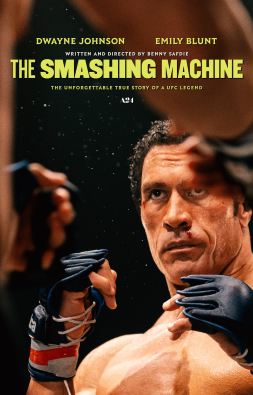
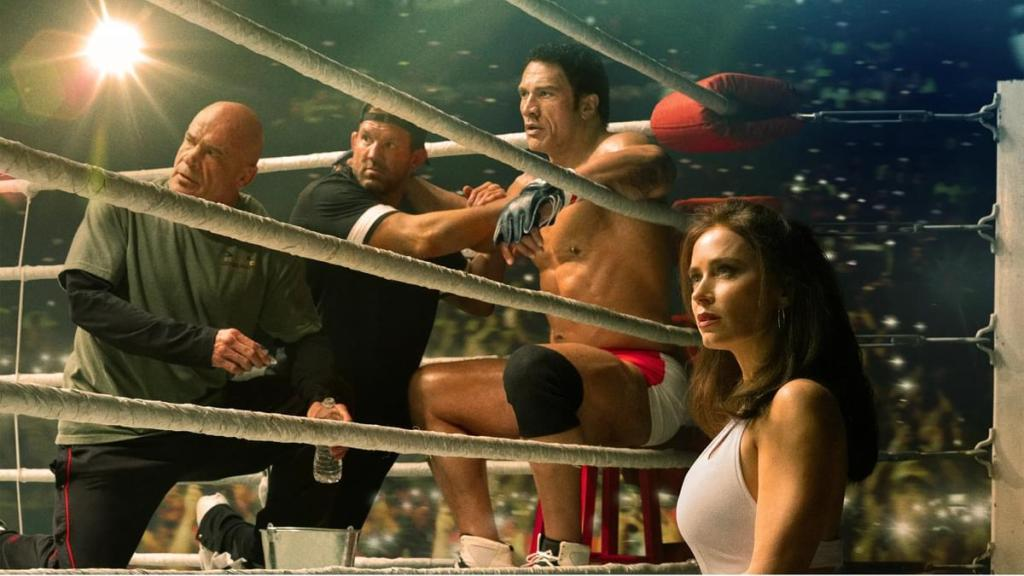
Benny Safdie’s The Smashing Machine (2025) is a bruising, compassionate, and unvarnished portrait of a man torn between physical dominance and emotional fragility. Centered on a three-year stretch (early 2000s) in the dramatic life of MMA pioneer Mark Kerr, the film captures both the bone-rattling intensity of the ring and the private turmoil of a fighter whose greatest battles unfold far from the crowd’s roar.

Dwayne Johnson delivers a revelatory performance as Kerr, casting aside his blockbuster charisma to reveal deep vulnerability and conflict. His portrayal is raw, unguarded, and humane—showing a man both addicted to the high of combat and trapped by the pain that follows. The film traces Kerr’s tumultuous relationship with Dawn Staples (played with nuance and sensitivity by Emily Blunt.) Together they find emotional truth in every scene, exploring the strain that MMA fighting, addiction, mental health, fear-of-losing, obsession and self-doubt place on intimacy.


The fight sequences are stunningly authentic, shot with kinetic immediacy and documentary realism. Safdie immerses the audience in the grit and chaos of early MMA, where glory was fleeting and paydays were meager compared to the sport’s modern era. Supporting performances from real fighters Ryan Bader and Oleksandr Usyk lend further credibility, grounding the film in the texture of lived experience.

Safdie’s direction is as intense and uncompromising as his subject. He resists the traditional rise-and-fall sports narrative, opting instead for a slice-of-life, near-documentary approach that prizes authenticity over heart-pounding drama. If the conflict surrounding Kerr’s addiction, rehab, and Dawn’s own mental health struggles feels under-explored, that restraint is also what makes the film feel so painfully real.

Inspired by the documentary, The Life and Times of Extreme Fighter – Mark Kerr by John Hyams, The Smashing Machine (2025) isn’t a conventional sports movie—it’s a portrait of survival, identity, addiction and the brutal intersection of ambition and vulnerability. Unflinching and deeply human, it cements Johnson’s performance as the best of his career, and confirms Safdie’s gift for finding poetry in the MMA fight scene. Ultimately, the film works best as a tribute to the trailblazing strength and passion of the fighter, Mark Kerr. The fight game is a crazy, tough business and it’s heartening to see, especially in the final scenes, that Kerr survived such battles and lived to breathe another day.

Mark: 8 out of 11


Cinema Review: One Battle After Another (2025) – an exhilarating revolutionary romp that lacks the depth of those films it attempts to emulate!

Cinema Review: One Battle After Another (2025)

Directed by Paul Thomas Anderson

Written by Paul Thomas Anderson

Inspired by Vineland by Thomas Pynchon

Produced by Adam Somner, Sara Murphy, Paul Thomas Anderson

Main Cast: Leonardo DiCaprio, Sean Penn, Benicio del Toro, Regina Hall, Teyana Taylor, Chase Infiniti, Wood Harris, Tony Goldwyn, Kevin Tighe, Shayna McHayle, etc.

Cinematography by Michael Bauman

Music by Jonny Greenwood

*** CONTAINS SPOILERS ***


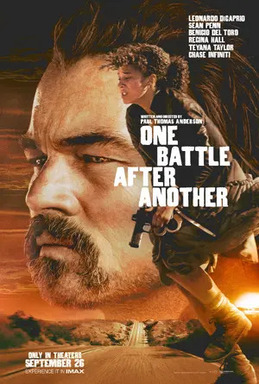
It’s a brave filmmaker that quotes one of the greatest revolutionary films of all time during it’s runtime, namely Battle of Algiers (1966). But Paul Thomas Anderson’s formidable cinematic career more than earns him the right to quote a film as towering as The Battle of Algiers (1966) in his latest release One Battle After Another (2025).

Across works like Boogie Nights (1997) and Magnolia (1999), he has demonstrated a mastery of ensemble storytelling and emotional crescendo; with Punch-Drunk Love (2002) he revealed a gift for intimate, offbeat romance; and in There Will Be Blood (2007) and Phantom Thread (2017) he proved himself one of the most rigorous visual stylists and psychological dramatists of his generation. Such a body of work grants him the authority to converse with cinema’s political masterpieces, even if his more recent Licorice Pizza (2021) felt comparatively diffuse and lacking in urgency. His filmography, at its strongest, stands as evidence of a filmmaker deeply attuned to the legacies and possibilities of the medium.

Having said that, Gillo Pontecorvo’s The Battle of Algiers (1966) wields revolutionary power through its raw immediacy, embedding viewers in the lived experience of anti-colonial struggle with a documentary-like realism that blurs the line between record and re-creation. By contrast, Anderson’s One Battle After Another (2025) approaches revolution less as lived history than as a cinematic genre to be emulated, drawing on the tropes and textures of upheaval without grounding itself in the direct urgency of political struggle. Where Pontecorvo conjures revolution as something happening before our eyes, Anderson refracts it through the prism of style, making revolution as much a matter of aesthetic construction as lived reality. It is during its lengthy running time extremely entertaining though.


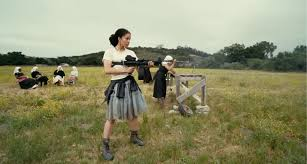
The opening hour is fast-paced and crams in a lot of action and personality. It establishes a fine ensemble cast, strong characters, striking palette and compelling themes which bring to life Anderson’s sharply written and fantastically filmed screenplay. The narrative focuses on “Ghetto” Pat Calhoun (Leonardo DiCaprio) and Perfidia Beverly Hills (Teyana Taylor), lovers and leaders of the far-left French 75, who storm detention centres, bomb banks, and sabotage power grids, while their soon-to-become nemesis—Officer Steven Lockjaw (Sean Penn)—becomes erotically obsessed with Perfidia, sparing her life when he catches her planting a bomb in exchange for a sexually masochistic tryst. Thus, begins a warped love/hate triangle and rivalry which provides the backbone for the action.

The second hour pivots sharply after establishing Perfidia as a commanding revolutionary presence. The focus pulls to her daughter, Willa (Chase Infiniti), some sixteen years later, now living off the grid and avoiding all but the most basic technology out of fear of surveillance. ‘Pothead’ Pat, has withered into a paranoid and barely functioning stoner-alcoholic, leaving Willa to emerge as the steadier, more mentally resilient figure in their fractured household. The film undeniably suffers from the absence of Perfidia’s charisma and drive, yet it regains momentum when the now Colonel Lockjaw revives his obsessive pursuit, setting the stage for a tense reconfiguration of the story’s revolutionary stakes.

The acting in One Battle After Another (2025) crackles with intensity, led by standout turns from Taylor, Penn, and crafty scene-stealer, Benicio Del Toro. Further, Anderson’s casting team find some amazing supporting military personnel who deliver with uncanny authenticity. Sean Penn’s performance as a swaggering officer radiates brute masculinity—his very walk and gait dripping with testosterone and worthy of awards consideration on their own. Leonardo DiCaprio, meanwhile, folds another eccentric, messy, and deeply contradictory figure into his already remarkable CV, a creation that resonates with the layered complexity of his recent work in Scorsese’s Killers of the Flower Moon (2023). He is actually far more hilarious here, as demonstrated in his desperate attempts to overcome the revolutionary helpline he calls for instructions.

Overall, One Battle After Another (2025) works best as a searing, darkly funny revolutionary black comedy, blending sexual, military, conspiracy, and social politics into a heady mix of action, crime, road movie, and romance tropes. The result is a wildly entertaining visual and musical feast, even if it stops short of delivering true socio-political depth. While the film’s closing stretch leans into deliberate plot ambiguities that complicate its resolution, Anderson ultimately serves up a combative cinematic blast—stylish, sharp, and exhilarating—if just shy of a bona fide classic.

Mark: 8.5 out of 11


Cinema Review: The Brutalist (2024) – There will be Concrete!

CINEMA REVIEW: THE BRUTALIST (2024)

Directed by Brady Corbet

Written by: Brady Corbet & Mona Fastvold

Produced by Trevor Matthews, Nick Gordon, Brian Young, Andrew Morrison, Andrew Lauren, D.J. Gugenheim and Brady Corbet
.

Cast: Adrien Brody, Felicity Jones, Guy Pearce, Joe Alwyn, Raffey Cassidy, Stacy Martin, Emma Laird, Isaach de Bankolé and Alessandro Nivola.

Cinematography Lol Crawley

Edited by Dávid Jancsó

*** MAY CONTAIN SPOILERS ***


A new wave of American filmmakers—directors like Todd Field, Robert Eggers, and Brady Corbet—have emerged as some of the most technically proficient and ambitious voices in contemporary cinema. Their work is marked by rigorous formal control, deep thematic ambition, and an almost obsessive dedication to craft. These filmmakers, arguably influenced by auteurs like Sofia Coppola and Paul Thomas Anderson, demonstrate an understanding of film language that is both deeply referential and boldly experimental. Whether it’s Eggers’ meticulous historical recreations, Field’s austere and cerebral storytelling, or Corbet’s overtly intellectualized narratives, they all exhibit an undeniable mastery of their medium. Their films, often dense with literary and philosophical allusions, cater to cinephiles who relish formal precision and narrative audacity.

Yet, for all their brilliance, there’s an argument to be made that their work veers into self-indulgence, if not outright pretension. Their films sometimes feel like exercises in artistic superiority, catering to an audience that appreciates the challenge but perhaps not the emotional accessibility that cinema can offer at its best. Whether it’s the cold remove of TÁR (2022), the self-serious mythologizing of The Lighthouse (2019), or the arch, affect-laden approach of Vox Lux (2018), these works often feel encased in a layer of knowing detachment. There’s a fine line between intellectual rigor and a kind of smug, insular artistry, and some critics argue that these filmmakers, however talented, sometimes tip too far in the latter direction—prioritizing aesthetic and conceptual ambition over genuine human connection. I mean, I love a lot of these filmmakers’ work, but I was raised on the American films of Coppola, Scorsese, DePalma, Spielberg, Lucas and Friedkin; auteurs who knew their art, but also how to entertain the audience too.


In Corbet’s, and film partner’s Mona Fastvold’s, phenomenally designed and constructed film, The Brutalist (2024), Adrien Brody portrays fictional László Tóth, a Hungarian-Jewish architect and Holocaust survivor. Brody’s is an incredibly memorable piece of work, acting as a spiritual performance sequel to his Oscar-winning role in The Pianist (2002). But rather than focus on an individual attempting to escape the Nazis during the war, the narrative concentrates on Tóth, who arrives in post-war America with nothing but his talent and ambition, only to find himself trapped in a system that celebrates his work while rejecting him as a person. In America, racism is delivered with a smile, and generosity is a means of control. High society rewards Tóth but also suffocates him with subtle condescension, as he is paraded around as an artistic trophy but never fully embraced as an equal.

As an epic character study of the life of an immigrant and exploitation of the financially stricken Jew in America, The Brutalist (2024), is a powerful work. Such themes compel us to think of today and the fact that America continues to struggle with the integration of people travelling there, even though it was built with the hands of migrant families. Here the screenplay exerts true power in critiquing the United States’ treatment of those travelling to America with hope. As the narrative unfolds across the decades, Corbet, Fastfold and Brody illustrate the slow erosion of Laslo’s dreams in an America that welcomes his work but not his humanity. As the key antagonist, Harrison Lee Van Buren, Guy Pearce delivers another chilling and precise character study. Van Buren is a spoilt, rich and brattish man whose charm and refinement mask a deeply exploitative nature.

Photographically, The Brutalist (2024) is indeed a work of art. Lol Crawley and the production team immerse viewers in a stark, architectural visual language—monolithic structures, rigid compositions, and a muted, desaturated color palette mirroring the emotional and physical isolation Tóth experiences. Yet, for for all its incredible craftsmanship and bold cinematic ambition, the film is a test of endurance—an unrelenting, patience-draining experience that stretches well beyond three hours. Even the inclusion of chapters, and a self-consciously “prestigious” intermission only serve to amplify the film’s pretensions, prolonging the agony of watching layer upon layer of misery unfold like a slow-moving roller-coaster that induces motion sickness with no escape. It’s a brilliant film that demands submission rather than engagement, wielding its bleakness like a weapon against the audience’s stamina. It will probably win the Academy Award for Best Film. That or Wicked (2024).

Mark: 8 out of 11


Cinema Review: A Complete Unknown (2024) – an electric but over-polished cover version!

CINEMA REVIEW: A COMPLETE UNKNOWN (2024)

Directed by James Mangold

Screenplay by James Mangold and Jay Cocks

Based on Dylan Goes Electric! by Elijah Wald

Produced by Peter Jaysen, James Mangold, Alex Heineman, Bob Bookman, Alan Gasmer, Jeff Rosen, Timothée Chalamet, Fred Berger etc.

Main cast: Timothée Chalamet, Edward Norton, Elle Fanning, Monica Barbaro, Boyd Holbrook, Scoot McNairy, Dan Fogler, etc.


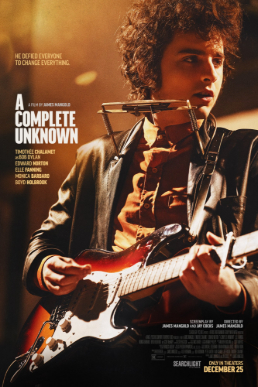
James Mangold is rarely mentioned as one of the best directors around. Probably because he is not a flashy cigar-munching quote machine or a even a household name. Yet, he has consistently delivered a series of extremely entertaining genre films over the past few decades. These include: Copland (1997), Identity (2003), Girl, Interrupted (1999), Walk the Line (2005)3:10 to Yuma (2007), Logan (2017) and Ford v Ferrari (2019). His films always feature solid characterisation, compelling conflict and well-structured plots. They also have a pristine and attractive look and style. Further, they always attracts impressive A-list actors and striking ensemble casts. His cover version of the music biography, Dylan Goes Electric! by Elijah Wald is no different.

A Complete Unknown (2024) showcases events from the era of 1961 to 1965 where Dylan rose to major stardom delivering stunning and poetic lyrics with hypnotic melodies. This period culminates in his movement from acoustic guitar to full electric band, causing controversial and violent reactions from the audience and organisers of the Newport Folk Festival. This furore may seem mildly inconsequential in today’s social-media digital coliseum where intellectual debates are fought with emojis by individuals with nano-seconded attention spans. But for many, Bob Dylan’s perceived treachery of moving from the purity of folk over to the dark side of rock was a significant event of the epoch. Having said that, Dylan was always an enigmatic maverick and genius who marched to the time of his own drum. Thus, such audial rebellion was no surprise, especially when looking back at it now.


As a tribute to the incredible musical and writing brilliance of Dylan, A Complete Unknown (2024) is definitely worth a watch. Timothée Chalamet does a sterling job with the musicianship, mannerisms and vocal duties. He even brings a suggestion of character to someone who isn’t just a musician. Dylan’s a shape-shifter, a poet, a myth, a paradox wrapped in a harmonica riff. To play Dylan is not to “become” him but to capture the way he constantly eludes being known. Personally, I enjoyed Chalamet’s charismatic performance in Wonka (2023 more, but he is commanding as Dylan nonetheless. The supporting cast are terrific too, notably Edward Norton as the affable folk singer Pete Seeger and Boyd Holbrook as a muscular Johnny Cash. Mangold deserves much praise for getting so many consistently fine performances, even if the script could have been punched up with more drama throughout. Dylan being a bit of a self-driven “arsehole” and slight philanderer hardly raises the pulse.

Overall, Mangold directs with a sure hand and there are many fantastic musical set-pieces, gigs and recording sessions. But the film’s glossy sheen feels at odds with the grit of the 1960’s Greenwich Village folk scene. The world Dylan emerged from was smoky, messy, and filled with hungry artists scraping by in dimly lit coffeehouses, where folk music wasn’t just a style but a battle cry. A Complete Unknown (2024) captures the aesthetic—the period costumes, the dimly lit clubs, the jangling guitars—but everything feels just a touch too manicured, too cinematic. Dylan’s rise was not glamorous and the film makes the counterculture movement feel almost nostalgic rather than revolutionary. It’s an engaging snapshot, and Chalamet’s performance is undoubtedly compelling, but much like a pristine re-recording of an old folk song, the imperfections—the very thing that gave the music its soul—are missing.

Mark: 7.5 out of 11


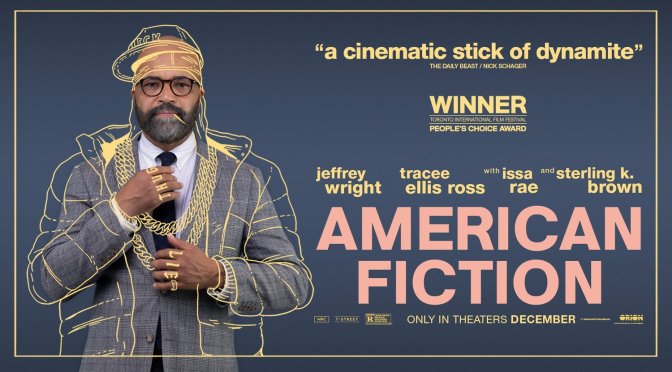
CINEMA REVIEW: AMERICAN FICTION (2023)

CINEMA REVIEW: AMERICAN FICTION (2023)

Directed by Cord Jefferson

Screenplay by Cord Jefferson

Based on Erasure by Percival Everett

Produced by Ben LeClair, Nikos Karamigios, Cord Jefferson, Jermaine Johnson, etc.

Main Cast: Jeffrey Wright, Tracee Ellis Ross, John Ortiz, Erika Alexander, Leslie Uggams, Adam Brody, Issa Rae, Sterling K. Brown, etc.

Cinematography by Cristina Dunlap

** MAY CONTAIN SPOILERS **


Cord Jefferson is a writer and director who, at first consideration, was unknown to me. However, a couple of clicks on the mouse and I soon realised he had worked on a couple of TV shows I’d really appreciated. One is the inventive and hilarious comedy The Good Place (2017-2019) and the other the riotous HBO graphic novel adaptation, Watchmen (2019). Jefferson was part of the writing team on both shows which delivered plots and events that consistently twisted and delivered fresh laughs and surreal situations which made you think.

Watchmen (2019) was especially an uber-stylish smorgasbord, splashed with crazy characters, witty hard-boiled dialogue, wild science fiction twists, lashings of violence, pockets of substance, cinematic visuals, high class production values and a cast to die for. For his debut feature, Jefferson has adapted the novel Erasure by Percival Everett into American Fiction (2023). It’s stylistically less chaotic feature film when compared to Watchmen (2019), however, it is intelligent and biting satire combining family drama, meta-literary analysis and social commentary.

The lead character, Thelonious “Monk” Ellison, is portrayed with imperious class by Jeffrey Wright. Now, I believe Cillian Murphy may get many awards (he already has the BAFTA for best actor in a leading role) for his work in Oppenheimer (2023), but Wright’s performance and character work here is beyond brilliant. It is such a nuanced and funny rendition that Wright deserves all the plaudits he could be denied. His Monk Ellison is an intellectual and academic writer whose books unfortunately do not sell very well. His agent, Arthur (John Ortiz) says publishers believe his work is “not black enough.” It’s a shocking statement delivered in understated fashion, to which Monk responds that he does not “recognise race.”


Monk is a writer who is trying to bring thoughtful, however niche, product into a culture which seems to prefer stereotyped visions of black characters, who are either addicts, or criminals or downtrodden, beaten by the police and prejudiced within society. No one is denying that people of colour are certainly prejudiced against and this needs to cease, but American Fiction (2023) seems to highlight that the books it is satirizing are cashing in and monetizing suffering and perpetuating discrimination, exacerbating the situation as opposed to resolving it.

Facing financial issues due to a lack of sales and his mother (Leslie Uggams) needing nursing care due to creeping dementia, Monk writes a parody of urban fiction called, ‘My Pafology’. Initially done as a joke he is horrified when his agent tells him it has become a literary sensation with publishers fighting for the write to release it. Here Wright’s reaction acting is a joy as Monk is caught between needing the money but at the same risking his artistic reputation from creating a “fake” book and authorial alter ego named, Stagg R. Leigh.

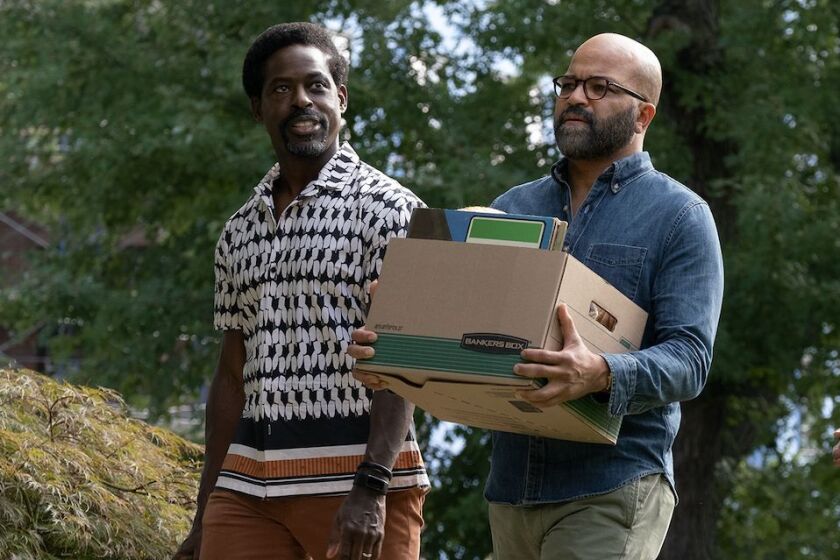
Jefferson and Wright combine to delicious effect in satirising intellectual and middle-class people’s reaction to what they consider to be authentic “street” culture. As Monk strives to escape the monster he has created he finds the hole getting bigger and bigger as his novel begins to get interest from Hollywood and esteemed literary awards. Yet, this is not a simple comedy as Jefferson also profiles Monk’s personal, family and romantic struggles making him a true three dimensional character to root and identify with. Wright, as I say is phenomenal but the supporting cast including Issa Rae and Sterling K. Brown stand out too. Brown almost steals a few scenes from Wright. American Fiction (2023) arguably ends with a series of meta-jokes too far, which draw away from Monk’s highly emotional journey, but overall, Jefferson demonstrates he is an original cinematic voice to watch out for in the future.

Mark: 8.5 out of 11


CINEMA REVIEW: POOR THINGS (2023)

CINEMA REVIEW: POOR THINGS (2023)

Directed by Yorgos Lanthimos

Screenplay by Tony McNamara


Based on Poor Things: Episodes from the Early Life of Archibald McCandless M.D., Scottish Public Health Officer by Alasdair Gray

Produced by Ed Guiney, Andrew Lowe, Yorgos Lanthimos and Emma Stone

Main cast: Emma Stone, Mark Ruffalo, Willem Dafoe, Ramy Youssef, Christopher Abbott, Kathryn Hunter and Jerrod Carmichael.

Cinematography by Robbie Ryan


*** MAY CONTAIN SPOILERS ***


I have now seen all of Greek filmmaker Yorgos Lanthimos’ most recent directorial works, namely: Dogtooth (2009), Alps (2011), The Lobster (2015), The Killing of a Sacred Deer (2017), and The Favourite (2018). Collectively they defy conventional film styles and tropes to deliver absurd, surreal, funny, disturbing, thought-provoking, erotic and imaginative visions of human behaviour. Also, let’s not forget the writers too; so kudos to his writing partner Efthymis Filippou, and latterly Tony McNamara, who have combined with Lanthimos to create such memorable cinematic offerings.

The director’s early lower-budget dysfunctional comedy-dramas such as Dogtooth (2009), and Alps (2011) are unforgettably strange films to experience. They feature uncomfortable depictions of family, sex, death and relationships. While offbeat, you sense they are from the mind of a filmmaker seeking to provoke thought rather than exploit. While equally dark and strange The Lobster (2015) is clearly more comedic, even though it probes strange love, fascism and violence within romantic relationships. Further, in The Killing of a Sacred Deer (2017), Lanthimos and Filippou, in Godardian fashion, constantly called attention to cinema form; especially with a strangely effective form of anti-acting within the arguably more conventional revenge narrative. Whereas in The Favourite (2018), Lanthimos’ delivered a unique period satire, with the language and behaviour of the characters often crude and shocking. His visual choices are always fascinating, with his use of the fish-eye lens creating a distorted effect that made the characters seem trapped by their surroundings and circumstances.


With the success of The Favourite (2018), both critically and commercially, Lanthimos has of late been given an increased budget, reported as $35 million. His bold choice, along with screenwriter Tony McNamara is to adapt award-winning novel, Poor Things: Episodes from the Early Life of Archibald McCandless M.D., Scottish Public Health Officer by Alasdair Gray has produced by far the most originally conceived and fantastic genre-bending comedy, drama, horror, rites of passage and salacious film of many a year. If there is a more bizarre, enthralling and enjoyable film of 2024, than Poor Things (2023) then this will be a most excellent year for cinema releases.

Set in Victorian London, we are introduced to the rather eccentric household of Dr Godwin “God” Baxter, an expert but secretive surgeon whose home hides bizarre animal experiments, and the beautiful but frankly odd human specimen, Bella Baxter (Emma Stone). Entering this weird abode of pig-hens and goose-dogs, comes innocent medical student, Max McCandless (Remy Youseef). “God” asks Max to assist with the childlike Bella’s development, charting her daily physical, speech and mental growth. Now, if you think the chimeric beast experiments are disturbing then brace yourself for the events of Bella’s ‘Frankensteinesque’ happenstance. I am not going to spoil it here, but it truly is a fantastic concept as invented by the author, Alasdair Gray, to contemplate. I was teetering on the fence with the film until this stunning reveal was given, but then I was committed to this medical oddity.


The first act finds Bella developing her speech, emotions and intelligence, as if a young child growing within this woman’s body. Bella also locates her libido and begins experimenting with her lust to great pleasure. Here Lanthimos continues exploring the themes of previous films with sex not only a natural expression of humans, but also an act used to control and drive people mad. Enter Mark Ruffalo’s caddish lawyer, Duncan Wedderburn who spirits a willing and rebellious Bella on a European trip. One where she truly discovers and satisfies her continual carnal desire or “furious jumping” as she hilariously calls it. Bella’s rites of passage, frankness and rapid growth threatens Duncan’s masculine insecurities and he finds it difficult to control her. Here the hilarious screenplay shows Bella and Duncan becoming more and more fraught until she craves further independence from his cloying envy. The central theme of Bella overcoming the chains of controlling masculinity dominates right up until the extremely dark final act.

While there is a lot of sex and nudity in this film, I felt that Lanthimos balances the exploitative nature of such material by contextualising it within Bella’s fascinating character arc. Emma Stone also provides a complex performance, funny and moving, as the woman-child discovering her mind, body, soul and the world. Ruffalo is particularly over-the-top as the sneaky but pathetic reprobate, Wedderburn. While Remy Youssef’s young medical student adds some compassionate balance within the ensemble, Willem Dafoe gives his customary brilliant turn as the tragic man of science. He himself had his childhood tainted by a father determined to use Godwin Baxter as a human guinea pig.

With a spectacular production design that employs a rich palette of colours, sets, lighting and immaculately furnished rooms, Lanthimos, stamps his authorial style along with genius cinematographer Robbie and his array of lens. Such creative choices evolve a spectacularly hyper-real vision of Victoriana. Indeed, the form and style coalesce with the content and themes in Poor Things (2023) to create what could already be the favourite film of my year. The screenplay dares to provoke the audience with gender political, sociological, historical and hysterical analysis as Yorgos Lanthimos again proves himself to be one of the most original filmmakers of his generation. Owing much to the imagination of Alasdair Gray’s source book, this is a shocking and explicit Frankenstein’s monster of a film. Lastly, it had me consistently thinking and laughing throughout, testifying to the power of family, however dysfunctional that Victorian household may be.

Mark: 10 out of 11


CINEMA REVIEWS: BABYLON (2022) and THE FABELMANS (2022)

CINEMA REVIEWS: BABYLON (2022) and THE FABELMANS (2022)

I have been extremely busy with the day-job, itself working with the filmmakers of the future at Raindance Film School, so I have a number of reviews backed-up in “pre-production.” Meaning I am thematically linking the latest films from Damian Chazelle and Steven Spielberg in one double-bill review show. Both Babylon (2022) and The Fabelmans (2022) celebrate the seismic and life-changing power cinema has had on the culture and society, from a historical, professional and very personal perspective.

While I love watching, writing and making films, cinema offerings about filmmaking and the love of cinema can be construed as somewhat of an indulgence on the part of the filmmaker. Quentin Tarantino recently achieved high level juxtaposition between homage and impressive narrative style with Once Upon a Time in Hollywood (2019). Moreover, there have been some brilliant films about filmmaking as this Six of the Best Films about Filmmaking article illustrates. But when two of the finest directors around produce extremely different visions of the filmmaking process, then one immediately takes notice.


BABYLON (2022)

Directed and written by Damien Chazelle

Main cast: Brad Pitt, Margot Robbie, Diego Calva, Jean Smart, Jovan Adepo, Li Jun Li
etc.

Damian Chazelle has proved himself one of the most exciting cinematic voices of recent years. Whiplash (2014), La La Land (2016) and First Man (2018) are all masterpieces of filmic storytelling. The absolute control displayed within First Man (2018) when contrasted with the aggression of his debut film and romantic vibrancy of his Oscar winning musical is a wonder to behold. Thus, I came to gonzo-period-drama-jazz-and-coke-fuelled-black-comedy-mash-up, Babylon (2022) with high expectations.

The opening scene of an elephant shitting on the camera / audience from a great height sets the tone of Chazelle’s unofficial adaptation of Kenneth Anger’s scurrilous book, Hollywood Babylon. And so at breakneck speed we hurtle, from 1926 onwards and a orgiastic party through the on and off-set lives, loves, highs and lows of Margot Robbie’s wild “child” actress, Brad Pitt’s silent movie heartthrob, Diego Calva’s ever-optimistic, Manny Torres, and the squeezed-out-of-the-story, jazz musician, portrayed by the under-used Jovan Adepo. It’s brash, bold and challenging cinema that left me with, I have to admit, motion picture sickness.

Babylon (2022) is not so much a love letter to Hollywood as a ratcheted-up-to-eleven tribute to the tragic heroes of the past who were chewed up and spat out by the relentless Hollywood machine. Despite Chazelle and his production team’s incredible dedication and attention to detail in creating a slew of astounding filmmaking set-pieces, I rarely cared about any of these mostly obnoxious characters and could not wait for this Hollywood rollercoaster to stop. Sadly, it goes on for far too long, with too many endings. Don’t get me wrong there are moments of genius, hilarity and grotesque pleasure to be had during Babylon (2022), however, this type of dysfunctional character-driven drama was done with way more heart by Paul Thomas Anderson’s far superior, Boogie Nights (1997).

Mark: 7 out of 11


THE FABELMANS (2022)

Directed by Steven Spielberg

Written by: Steven Spielberg and Tony Kushner

Main cast: Michelle Williams, Paul Dano, Seth Rogen, Gabriel LaBelle
Judd Hirsch, Jeannie Berlin etc.

“Movies are dreams!“, says a glowing, Mitzi (Michelle Williams), to her young son, Sammy, as she presents him with a camera. So it proved for Steven Spielberg with his career in filmmaking working like a dream, both behind the camera and up on the cinema screen. Indeed, there is no doubting Spielberg is one of the greatest directors of all time, having delivered a succession of incredibly popular film blockbusters and some seriously impressive genre films of spellbinding quality. Jaws (1975) is regularly screened on Sky Cinema and there isn’t a wasted scene or action or performance or line of dialogue in one of my favourite films of all time. The rest of Spielberg’s cinematic curriculum vitae isn’t too bad either.

So, what about The Fabelmans (2022)? Well, it’s a more loose and episodic when compared with Spielberg’s tightly plotted genre films. But if anyone has earned that right it’s one of the finest film storytellers. It’s such a personal project Spielberg even thanked the audience for coming to the cinema to watch it in a recorded clip. At the heart of the action is the aforementioned Sammy, who after his initial visit to the cinema is smitten at first sight. So much so he strives to create the spectacle on his Dad’s 8mm camera. As Sammy’s love affair with film grows into his teenage years he finds himself in the midst of a tug-of-war between his mother’s artistic and highly emotional personality and his father’s (Paul Dano) scientific, more logical mind.

Beautifully filmed, designed and edited, The Fabelmans (2022), is a majestic experience from an emotional and visual perspective. Spielberg’s love for cinema and his family is palpable, as he and Tony Kushner’s screenplay cleverly juxtaposes the filmmaking process with key emotional scenes from the director’s life. One specific moment where teenage Sammy (Gabriel LaBelle) edits a home movie only to reveal something very painful is certainly one of the most memorable scenes of the year. Performances are intriguingly varied with LaBelle and Dano both impressing. The usually superlative Michelle Williams was great, but her character felt like she was from an otherworldly realm. I imagine that was Spielberg’s intention. In conclusion, The Fabelmans (2022), is a stunning and big-budgeted home movie. If you are captured by Spielberg’s personal journey and enjoy watching characters on a cinema screen as they stare in wonder at the cinema screen, then you will love this.

Mark: 8 out of 11


CINEMA REVIEW – ELVIS (2022)

CINEMA REVIEW – ELVIS (2022)

Directed by Baz Luhrmann

Screenplay by: Baz Luhrmann, Sam Bromell, Craig Pearce, Jeremy Doner

Story by: Baz Luhrmann, Jeremy Doner


Produced by: Baz Luhrmann, Catherine Martin, Gail Berman, Patrick McCormick, Schuyler Weiss

Cast: Austin Butler, Tom Hanks, Helen Thomson, Richard Roxburgh, Olivia DeJonge, Kelvin Harrison Jr., Xavier Samuel, David Wenham , Kodi Smit-McPhee etc.

*** MAY CONTAIN HISTORICAL SPOILERS ***


Since 1992, Baz Luhrmann has directed only six feature films. Each of them, aside from the lower-budgeted, Strictly Ballroom (1992), is a gigantic and epic extravaganza, full of colour, imagination, verve, energy, music, poetry and larger-than-life characters. Even Strictly Ballroom contains many of the stylistic and formal elements which would become part of Luhrmann’s oeuvre. I pretty much feel this auteur’s excessive approach to filmmaking including the fast-cutting, opulent settings, big musical numbers, all-star casts, plus grandiose and melodramatic narrative delivery are always a wonderful spectacle to experience.

Arguably, adapting the American novel, The Great Gatsby (2013), in this periphrastic packaging, took away from the enigma and majesty of Fitzgerald’s classic. However, with Elvis (2022), Luhrmann and his incredible production team, marry such genius excessive style with the perfect subject matter: the King of Rock and Roll! Because in colliding the life, music and films of Elvis Aaron Presley with Luhrmann’s stunning methodology brings to the screen one of the best films of the year Indeed for Luhrmann, Elvis (2022), is evidently a stylistic, subjective and thematic labour of love, marking it as his best film to date.


I wasn’t even going to watch Elvis (2022) at the cinema. I’d recently seen Spencer (2021) on Amazon Prime and was happy to have streamed that. While that eerie adaptation was a valiant attempt to breathe life into the ghost of Diana. An elegiac attempt to explain the oppressive result of her naïve choice to land her Princess dream. With Kristen Stewart’s exceptional impression rescue breathing Diana’s tragic existence, I knew the story. I knew enough to care for someone whose mental health was discarded by the heartless Windsor’s. But the monarchy have been killing the working class for years, so why should I care deeply for one singular spoilt individual? Similarly, I pondered whether I wanted to watch another film about Elvis Presley. A God-given talented singer, heartthrob, actor, musician and legendary performer had a story I was already familiar with. But, I am so happy I overcame my ignorant prejudice because Elvis (2022) is a humdinger of a part-musical-part-biopic-part-drama-part-American tragedy.

Elvis (2022) is structured around the memories of shadowy manager, Colonel Tom Parker (Tom Hanks). He is suffering illness in his old age, close to hospital demise. Parker is a grotesque in a billowing gown, drifting around the nightmarish Vegas slot-machines as Elvis’ voice echoes within his mind. Is it the guilt or the morphine? The story flashes back to a younger Parker promoting country singers at a travelling Carny. Until that fateful day when he hears a miracle on the radio, a young singer who everyone thinks is Black. But he isn’t. In the markedly racist times of 1950s America (has it really changed in certain States or Police departments?), a Black singer won’t sell records like this white dude will. Seizing his chance Parker attends Elvis’ first gig and witnesses a phenomenon. An attractive, sexual, gyrating and angelic powerhouse with an incredible voice who sends sex-waved into the audience, especially the teenage girls.


A star is born, and it takes a star to play a star. Take as many bows as you want, Austin Butler. He is a genuine phenomenon in Elvis (2022). Of course, the wardrobe, postiche and make-up artists work wonders to help recreate Elvis’ iconic looks as the narrative flashes through various stages of Presley’s devastatingly successful career, Yet, Butler just lights up the screen, producing acting fireworks in a physically, spiritually, emotionally and musically astounding screen presentation. It is not an impression, but a tour-de-force for a relatively unknown actor who has jettisoned his career to glory.

Butler, lives and breathes the King. This rendition and great direction from Luhrmann make you feel tragic empathy for a career which was manipulated and controlled by grubby gambling addict, Parker. Hank’s portrayal of the Colonel feels unnatural and theatrical compared to Butler’s organic turn. Perhaps that was the intention? Deliver a pantomime villain to boo and hiss at. Although, Hanks’ cigar-chomping and jowly make-up made me think the evil touch of Orson Welles’, Captain Hank Quinlan, had somehow been resurrected.

I cannot praise Elvis (2022) enough as a cinematic biopic and musical spectacle. While the choppy editing style is jarring at the start, once the film settles down into a groove, Butler’s stunning incarnation shines through. Overall, I was enlivened by, not only the constant remixing of Elvis Presley hits, but Luhrmann’s choice to alloy gospel, rhythm and blues, rap, rock, pop, ballad and protest songs throughout the scintillating soundtrack. Much, quite rightly, is made of how much diverse music influenced Elvis’s formative life and how he connected with Black musicians of the era. Luhrmann also ensures we are aware of how much of a threat Presley was seen by the establishment due to the sexual nature of his sang satanic verses. Sent to Germany to prevent him demonising America, his comeback special after seven years in movies is one of the finest movie set-pieces I have seen in many a year. Funny, rocking, poignant, effervescent, beautiful and astounding, just like Elvis, the man and myth, and Elvis (2022) the film.

Mark: 10 out of 11