Category Archives: Oscar Bingo

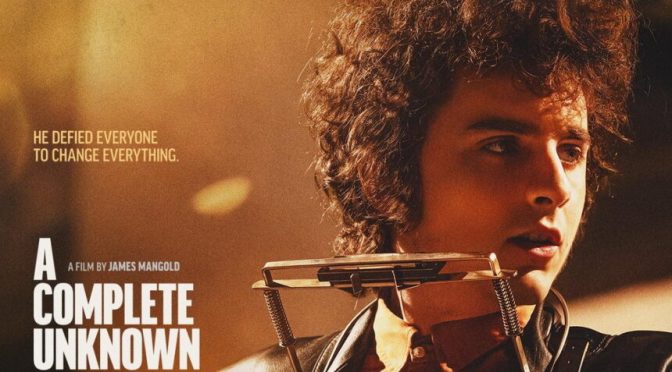
Cinema Review: A Complete Unknown (2024) – an electric but over-polished cover version!

CINEMA REVIEW: A COMPLETE UNKNOWN (2024)

Directed by James Mangold

Screenplay by James Mangold and Jay Cocks

Based on Dylan Goes Electric! by Elijah Wald

Produced by Peter Jaysen, James Mangold, Alex Heineman, Bob Bookman, Alan Gasmer, Jeff Rosen, Timothée Chalamet, Fred Berger etc.

Main cast: Timothée Chalamet, Edward Norton, Elle Fanning, Monica Barbaro, Boyd Holbrook, Scoot McNairy, Dan Fogler, etc.
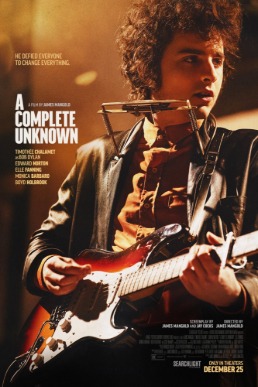


James Mangold is rarely mentioned as one of the best directors around. Probably because he is not a flashy cigar-munching quote machine or a even a household name. Yet, he has consistently delivered a series of extremely entertaining genre films over the past few decades. These include: Copland (1997), Identity (2003), Girl, Interrupted (1999), Walk the Line (2005), 3:10 to Yuma (2007), Logan (2017) and Ford v Ferrari (2019). His films always feature solid characterisation, compelling conflict and well-structured plots. They also have a pristine and attractive look and style. Further, they always attracts impressive A-list actors and striking ensemble casts. His cover version of the music biography, Dylan Goes Electric! by Elijah Wald is no different.

A Complete Unknown (2024) showcases events from the era of 1961 to 1965 where Dylan rose to major stardom delivering stunning and poetic lyrics with hypnotic melodies. This period culminates in his movement from acoustic guitar to full electric band, causing controversial and violent reactions from the audience and organisers of the Newport Folk Festival. This furore may seem mildly inconsequential in today’s social-media digital coliseum where intellectual debates are fought with emojis by individuals with nano-seconded attention spans. But for many, Bob Dylan’s perceived treachery of moving from the purity of folk over to the dark side of rock was a significant event of the epoch. Having said that, Dylan was always an enigmatic maverick and genius who marched to the time of his own drum. Thus, such audial rebellion was no surprise, especially when looking back at it now.
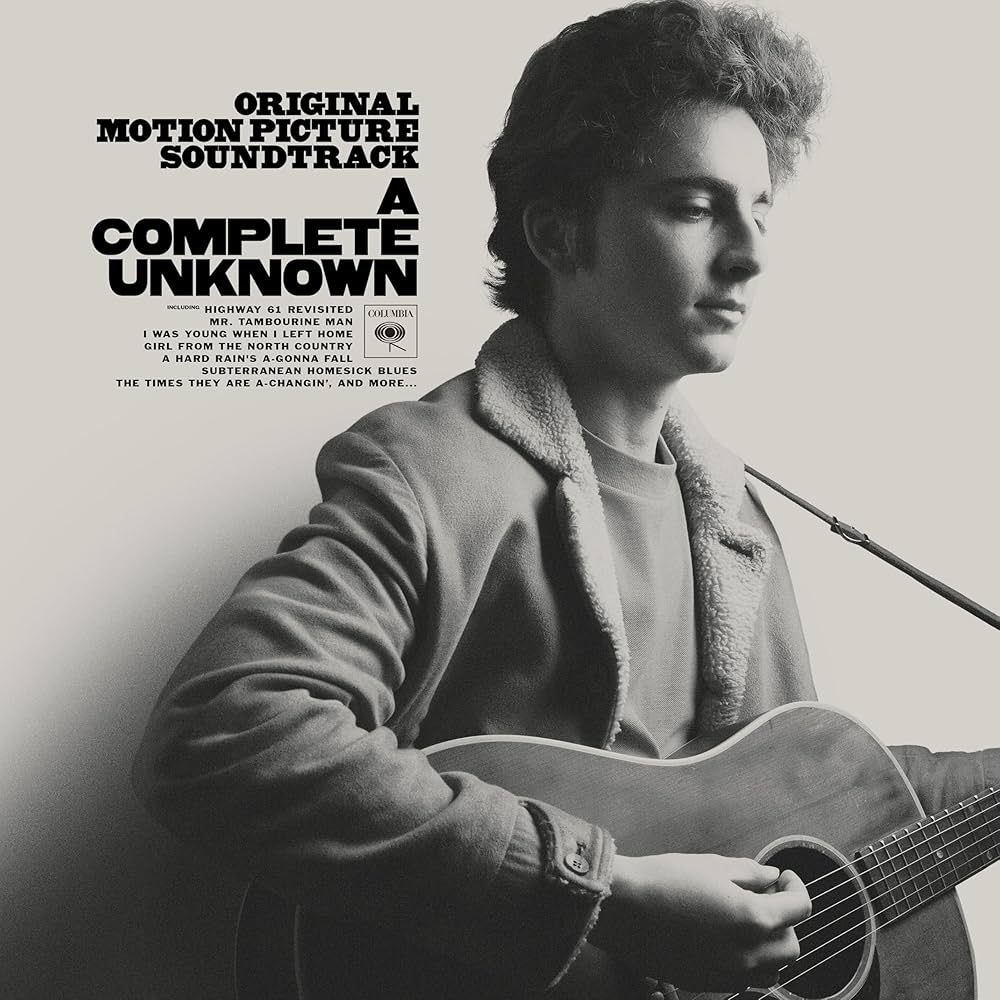


As a tribute to the incredible musical and writing brilliance of Dylan, A Complete Unknown (2024) is definitely worth a watch. Timothée Chalamet does a sterling job with the musicianship, mannerisms and vocal duties. He even brings a suggestion of character to someone who isn’t just a musician. Dylan’s a shape-shifter, a poet, a myth, a paradox wrapped in a harmonica riff. To play Dylan is not to “become” him but to capture the way he constantly eludes being known. Personally, I enjoyed Chalamet’s charismatic performance in Wonka (2023 more, but he is commanding as Dylan nonetheless. The supporting cast are terrific too, notably Edward Norton as the affable folk singer Pete Seeger and Boyd Holbrook as a muscular Johnny Cash. Mangold deserves much praise for getting so many consistently fine performances, even if the script could have been punched up with more drama throughout. Dylan being a bit of a self-driven “arsehole” and slight philanderer hardly raises the pulse.

Overall, Mangold directs with a sure hand and there are many fantastic musical set-pieces, gigs and recording sessions. But the film’s glossy sheen feels at odds with the grit of the 1960’s Greenwich Village folk scene. The world Dylan emerged from was smoky, messy, and filled with hungry artists scraping by in dimly lit coffeehouses, where folk music wasn’t just a style but a battle cry. A Complete Unknown (2024) captures the aesthetic—the period costumes, the dimly lit clubs, the jangling guitars—but everything feels just a touch too manicured, too cinematic. Dylan’s rise was not glamorous and the film makes the counterculture movement feel almost nostalgic rather than revolutionary. It’s an engaging snapshot, and Chalamet’s performance is undoubtedly compelling, but much like a pristine re-recording of an old folk song, the imperfections—the very thing that gave the music its soul—are missing.
Mark: 7.5 out of 11


CINEMA REVIEW: AMERICAN FICTION (2023)

CINEMA REVIEW: AMERICAN FICTION (2023)

Directed by Cord Jefferson

Screenplay by Cord Jefferson

Based on Erasure by Percival Everett

Produced by Ben LeClair, Nikos Karamigios, Cord Jefferson, Jermaine Johnson, etc.

Main Cast: Jeffrey Wright, Tracee Ellis Ross, John Ortiz, Erika Alexander, Leslie Uggams, Adam Brody, Issa Rae, Sterling K. Brown, etc.

Cinematography by Cristina Dunlap

** MAY CONTAIN SPOILERS **


Cord Jefferson is a writer and director who, at first consideration, was unknown to me. However, a couple of clicks on the mouse and I soon realised he had worked on a couple of TV shows I’d really appreciated. One is the inventive and hilarious comedy The Good Place (2017-2019) and the other the riotous HBO graphic novel adaptation, Watchmen (2019). Jefferson was part of the writing team on both shows which delivered plots and events that consistently twisted and delivered fresh laughs and surreal situations which made you think.

Watchmen (2019) was especially an uber-stylish smorgasbord, splashed with crazy characters, witty hard-boiled dialogue, wild science fiction twists, lashings of violence, pockets of substance, cinematic visuals, high class production values and a cast to die for. For his debut feature, Jefferson has adapted the novel Erasure by Percival Everett into American Fiction (2023). It’s stylistically less chaotic feature film when compared to Watchmen (2019), however, it is intelligent and biting satire combining family drama, meta-literary analysis and social commentary.

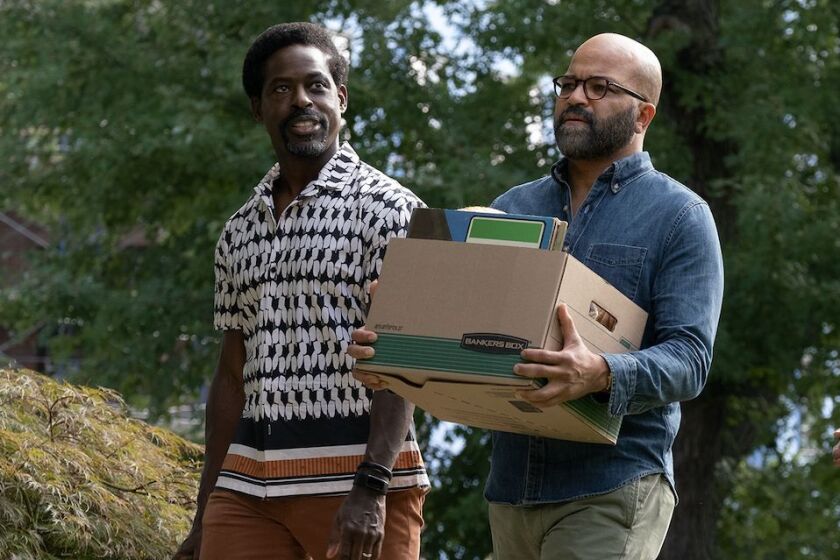
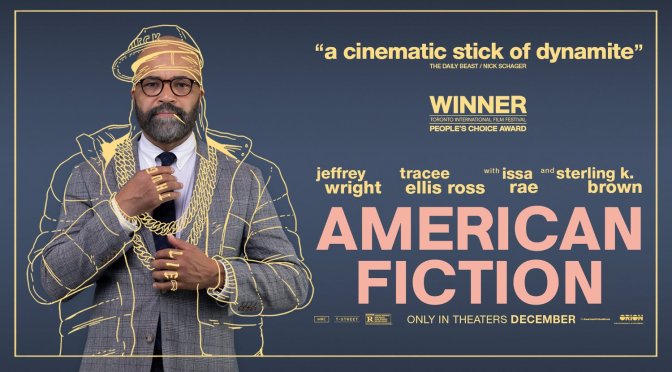
The lead character, Thelonious “Monk” Ellison, is portrayed with imperious class by Jeffrey Wright. Now, I believe Cillian Murphy may get many awards (he already has the BAFTA for best actor in a leading role) for his work in Oppenheimer (2023), but Wright’s performance and character work here is beyond brilliant. It is such a nuanced and funny rendition that Wright deserves all the plaudits he could be denied. His Monk Ellison is an intellectual and academic writer whose books unfortunately do not sell very well. His agent, Arthur (John Ortiz) says publishers believe his work is “not black enough.” It’s a shocking statement delivered in understated fashion, to which Monk responds that he does not “recognise race.”


Monk is a writer who is trying to bring thoughtful, however niche, product into a culture which seems to prefer stereotyped visions of black characters, who are either addicts, or criminals or downtrodden, beaten by the police and prejudiced within society. No one is denying that people of colour are certainly prejudiced against and this needs to cease, but American Fiction (2023) seems to highlight that the books it is satirizing are cashing in and monetizing suffering and perpetuating discrimination, exacerbating the situation as opposed to resolving it.

Facing financial issues due to a lack of sales and his mother (Leslie Uggams) needing nursing care due to creeping dementia, Monk writes a parody of urban fiction called, ‘My Pafology’. Initially done as a joke he is horrified when his agent tells him it has become a literary sensation with publishers fighting for the write to release it. Here Wright’s reaction acting is a joy as Monk is caught between needing the money but at the same risking his artistic reputation from creating a “fake” book and authorial alter ego named, Stagg R. Leigh.

Jefferson and Wright combine to delicious effect in satirising intellectual and middle-class people’s reaction to what they consider to be authentic “street” culture. As Monk strives to escape the monster he has created he finds the hole getting bigger and bigger as his novel begins to get interest from Hollywood and esteemed literary awards. Yet, this is not a simple comedy as Jefferson also profiles Monk’s personal, family and romantic struggles making him a true three dimensional character to root and identify with. Wright, as I say is phenomenal but the supporting cast including Issa Rae and Sterling K. Brown stand out too. Brown almost steals a few scenes from Wright. American Fiction (2023) arguably ends with a series of meta-jokes too far, which draw away from Monk’s highly emotional journey, but overall, Jefferson demonstrates he is an original cinematic voice to watch out for in the future.

Mark: 8.5 out of 11


CINEMA REVIEW: POOR THINGS (2023)

CINEMA REVIEW: POOR THINGS (2023)

Directed by Yorgos Lanthimos

Screenplay by Tony McNamara


Based on Poor Things: Episodes from the Early Life of Archibald McCandless M.D., Scottish Public Health Officer by Alasdair Gray

Produced by Ed Guiney, Andrew Lowe, Yorgos Lanthimos and Emma Stone

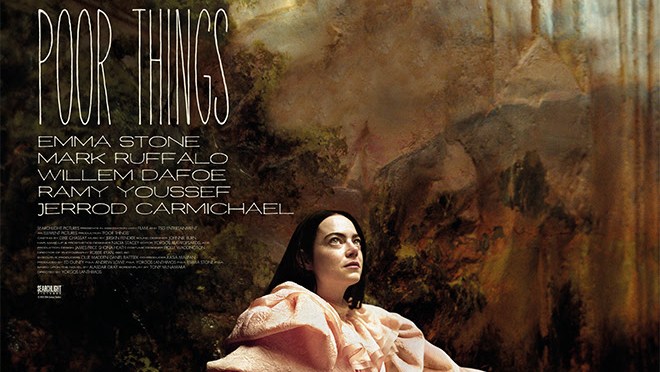
Main cast: Emma Stone, Mark Ruffalo, Willem Dafoe, Ramy Youssef, Christopher Abbott, Kathryn Hunter and Jerrod Carmichael.

Cinematography by Robbie Ryan


*** MAY CONTAIN SPOILERS ***


I have now seen all of Greek filmmaker Yorgos Lanthimos’ most recent directorial works, namely: Dogtooth (2009), Alps (2011), The Lobster (2015), The Killing of a Sacred Deer (2017), and The Favourite (2018). Collectively they defy conventional film styles and tropes to deliver absurd, surreal, funny, disturbing, thought-provoking, erotic and imaginative visions of human behaviour. Also, let’s not forget the writers too; so kudos to his writing partner Efthymis Filippou, and latterly Tony McNamara, who have combined with Lanthimos to create such memorable cinematic offerings.

The director’s early lower-budget dysfunctional comedy-dramas such as Dogtooth (2009), and Alps (2011) are unforgettably strange films to experience. They feature uncomfortable depictions of family, sex, death and relationships. While offbeat, you sense they are from the mind of a filmmaker seeking to provoke thought rather than exploit. While equally dark and strange The Lobster (2015) is clearly more comedic, even though it probes strange love, fascism and violence within romantic relationships. Further, in The Killing of a Sacred Deer (2017), Lanthimos and Filippou, in Godardian fashion, constantly called attention to cinema form; especially with a strangely effective form of anti-acting within the arguably more conventional revenge narrative. Whereas in The Favourite (2018), Lanthimos’ delivered a unique period satire, with the language and behaviour of the characters often crude and shocking. His visual choices are always fascinating, with his use of the fish-eye lens creating a distorted effect that made the characters seem trapped by their surroundings and circumstances.


With the success of The Favourite (2018), both critically and commercially, Lanthimos has of late been given an increased budget, reported as $35 million. His bold choice, along with screenwriter Tony McNamara is to adapt award-winning novel, Poor Things: Episodes from the Early Life of Archibald McCandless M.D., Scottish Public Health Officer by Alasdair Gray has produced by far the most originally conceived and fantastic genre-bending comedy, drama, horror, rites of passage and salacious film of many a year. If there is a more bizarre, enthralling and enjoyable film of 2024, than Poor Things (2023) then this will be a most excellent year for cinema releases.

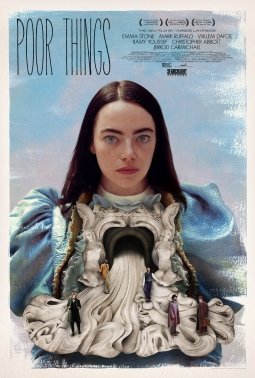
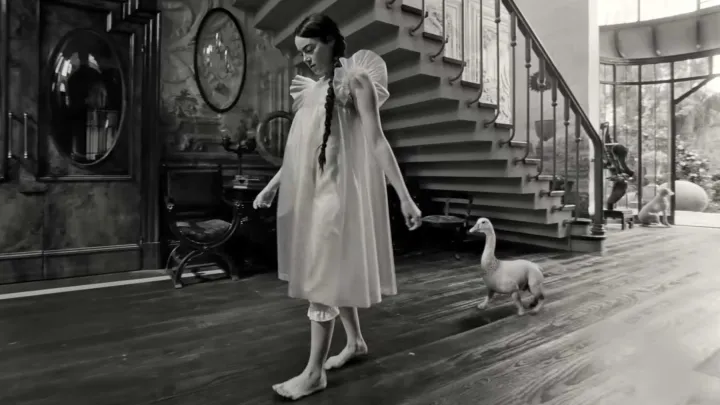
Set in Victorian London, we are introduced to the rather eccentric household of Dr Godwin “God” Baxter, an expert but secretive surgeon whose home hides bizarre animal experiments, and the beautiful but frankly odd human specimen, Bella Baxter (Emma Stone). Entering this weird abode of pig-hens and goose-dogs, comes innocent medical student, Max McCandless (Remy Youseef). “God” asks Max to assist with the childlike Bella’s development, charting her daily physical, speech and mental growth. Now, if you think the chimeric beast experiments are disturbing then brace yourself for the events of Bella’s ‘Frankensteinesque’ happenstance. I am not going to spoil it here, but it truly is a fantastic concept as invented by the author, Alasdair Gray, to contemplate. I was teetering on the fence with the film until this stunning reveal was given, but then I was committed to this medical oddity.


The first act finds Bella developing her speech, emotions and intelligence, as if a young child growing within this woman’s body. Bella also locates her libido and begins experimenting with her lust to great pleasure. Here Lanthimos continues exploring the themes of previous films with sex not only a natural expression of humans, but also an act used to control and drive people mad. Enter Mark Ruffalo’s caddish lawyer, Duncan Wedderburn who spirits a willing and rebellious Bella on a European trip. One where she truly discovers and satisfies her continual carnal desire or “furious jumping” as she hilariously calls it. Bella’s rites of passage, frankness and rapid growth threatens Duncan’s masculine insecurities and he finds it difficult to control her. Here the hilarious screenplay shows Bella and Duncan becoming more and more fraught until she craves further independence from his cloying envy. The central theme of Bella overcoming the chains of controlling masculinity dominates right up until the extremely dark final act.

While there is a lot of sex and nudity in this film, I felt that Lanthimos balances the exploitative nature of such material by contextualising it within Bella’s fascinating character arc. Emma Stone also provides a complex performance, funny and moving, as the woman-child discovering her mind, body, soul and the world. Ruffalo is particularly over-the-top as the sneaky but pathetic reprobate, Wedderburn. While Remy Youssef’s young medical student adds some compassionate balance within the ensemble, Willem Dafoe gives his customary brilliant turn as the tragic man of science. He himself had his childhood tainted by a father determined to use Godwin Baxter as a human guinea pig.

With a spectacular production design that employs a rich palette of colours, sets, lighting and immaculately furnished rooms, Lanthimos, stamps his authorial style along with genius cinematographer Robbie and his array of lens. Such creative choices evolve a spectacularly hyper-real vision of Victoriana. Indeed, the form and style coalesce with the content and themes in Poor Things (2023) to create what could already be the favourite film of my year. The screenplay dares to provoke the audience with gender political, sociological, historical and hysterical analysis as Yorgos Lanthimos again proves himself to be one of the most original filmmakers of his generation. Owing much to the imagination of Alasdair Gray’s source book, this is a shocking and explicit Frankenstein’s monster of a film. Lastly, it had me consistently thinking and laughing throughout, testifying to the power of family, however dysfunctional that Victorian household may be.

Mark: 10 out of 11


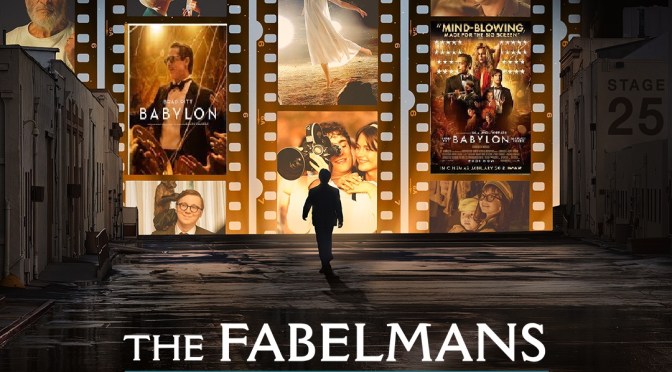
CINEMA REVIEWS: BABYLON (2022) and THE FABELMANS (2022)

CINEMA REVIEWS: BABYLON (2022) and THE FABELMANS (2022)

I have been extremely busy with the day-job, itself working with the filmmakers of the future at Raindance Film School, so I have a number of reviews backed-up in “pre-production.” Meaning I am thematically linking the latest films from Damian Chazelle and Steven Spielberg in one double-bill review show. Both Babylon (2022) and The Fabelmans (2022) celebrate the seismic and life-changing power cinema has had on the culture and society, from a historical, professional and very personal perspective.

While I love watching, writing and making films, cinema offerings about filmmaking and the love of cinema can be construed as somewhat of an indulgence on the part of the filmmaker. Quentin Tarantino recently achieved high level juxtaposition between homage and impressive narrative style with Once Upon a Time in Hollywood (2019). Moreover, there have been some brilliant films about filmmaking as this Six of the Best Films about Filmmaking article illustrates. But when two of the finest directors around produce extremely different visions of the filmmaking process, then one immediately takes notice.


BABYLON (2022)

Directed and written by Damien Chazelle

Main cast: Brad Pitt, Margot Robbie, Diego Calva, Jean Smart, Jovan Adepo, Li Jun Li
etc.

Damian Chazelle has proved himself one of the most exciting cinematic voices of recent years. Whiplash (2014), La La Land (2016) and First Man (2018) are all masterpieces of filmic storytelling. The absolute control displayed within First Man (2018) when contrasted with the aggression of his debut film and romantic vibrancy of his Oscar winning musical is a wonder to behold. Thus, I came to gonzo-period-drama-jazz-and-coke-fuelled-black-comedy-mash-up, Babylon (2022) with high expectations.

The opening scene of an elephant shitting on the camera / audience from a great height sets the tone of Chazelle’s unofficial adaptation of Kenneth Anger’s scurrilous book, Hollywood Babylon. And so at breakneck speed we hurtle, from 1926 onwards and a orgiastic party through the on and off-set lives, loves, highs and lows of Margot Robbie’s wild “child” actress, Brad Pitt’s silent movie heartthrob, Diego Calva’s ever-optimistic, Manny Torres, and the squeezed-out-of-the-story, jazz musician, portrayed by the under-used Jovan Adepo. It’s brash, bold and challenging cinema that left me with, I have to admit, motion picture sickness.

Babylon (2022) is not so much a love letter to Hollywood as a ratcheted-up-to-eleven tribute to the tragic heroes of the past who were chewed up and spat out by the relentless Hollywood machine. Despite Chazelle and his production team’s incredible dedication and attention to detail in creating a slew of astounding filmmaking set-pieces, I rarely cared about any of these mostly obnoxious characters and could not wait for this Hollywood rollercoaster to stop. Sadly, it goes on for far too long, with too many endings. Don’t get me wrong there are moments of genius, hilarity and grotesque pleasure to be had during Babylon (2022), however, this type of dysfunctional character-driven drama was done with way more heart by Paul Thomas Anderson’s far superior, Boogie Nights (1997).

Mark: 7 out of 11


THE FABELMANS (2022)

Directed by Steven Spielberg

Written by: Steven Spielberg and Tony Kushner

Main cast: Michelle Williams, Paul Dano, Seth Rogen, Gabriel LaBelle
Judd Hirsch, Jeannie Berlin etc.

“Movies are dreams!“, says a glowing, Mitzi (Michelle Williams), to her young son, Sammy, as she presents him with a camera. So it proved for Steven Spielberg with his career in filmmaking working like a dream, both behind the camera and up on the cinema screen. Indeed, there is no doubting Spielberg is one of the greatest directors of all time, having delivered a succession of incredibly popular film blockbusters and some seriously impressive genre films of spellbinding quality. Jaws (1975) is regularly screened on Sky Cinema and there isn’t a wasted scene or action or performance or line of dialogue in one of my favourite films of all time. The rest of Spielberg’s cinematic curriculum vitae isn’t too bad either.

So, what about The Fabelmans (2022)? Well, it’s a more loose and episodic when compared with Spielberg’s tightly plotted genre films. But if anyone has earned that right it’s one of the finest film storytellers. It’s such a personal project Spielberg even thanked the audience for coming to the cinema to watch it in a recorded clip. At the heart of the action is the aforementioned Sammy, who after his initial visit to the cinema is smitten at first sight. So much so he strives to create the spectacle on his Dad’s 8mm camera. As Sammy’s love affair with film grows into his teenage years he finds himself in the midst of a tug-of-war between his mother’s artistic and highly emotional personality and his father’s (Paul Dano) scientific, more logical mind.

Beautifully filmed, designed and edited, The Fabelmans (2022), is a majestic experience from an emotional and visual perspective. Spielberg’s love for cinema and his family is palpable, as he and Tony Kushner’s screenplay cleverly juxtaposes the filmmaking process with key emotional scenes from the director’s life. One specific moment where teenage Sammy (Gabriel LaBelle) edits a home movie only to reveal something very painful is certainly one of the most memorable scenes of the year. Performances are intriguingly varied with LaBelle and Dano both impressing. The usually superlative Michelle Williams was great, but her character felt like she was from an otherworldly realm. I imagine that was Spielberg’s intention. In conclusion, The Fabelmans (2022), is a stunning and big-budgeted home movie. If you are captured by Spielberg’s personal journey and enjoy watching characters on a cinema screen as they stare in wonder at the cinema screen, then you will love this.

Mark: 8 out of 11


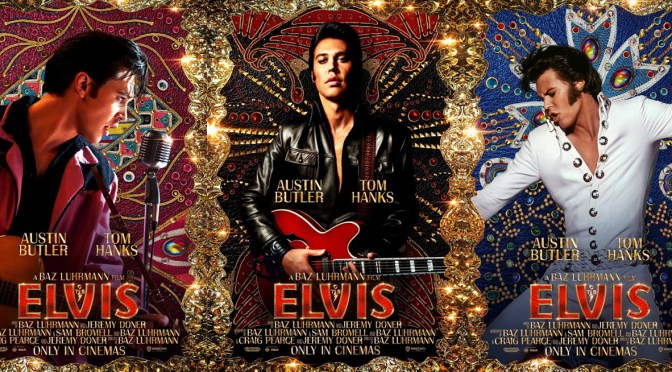
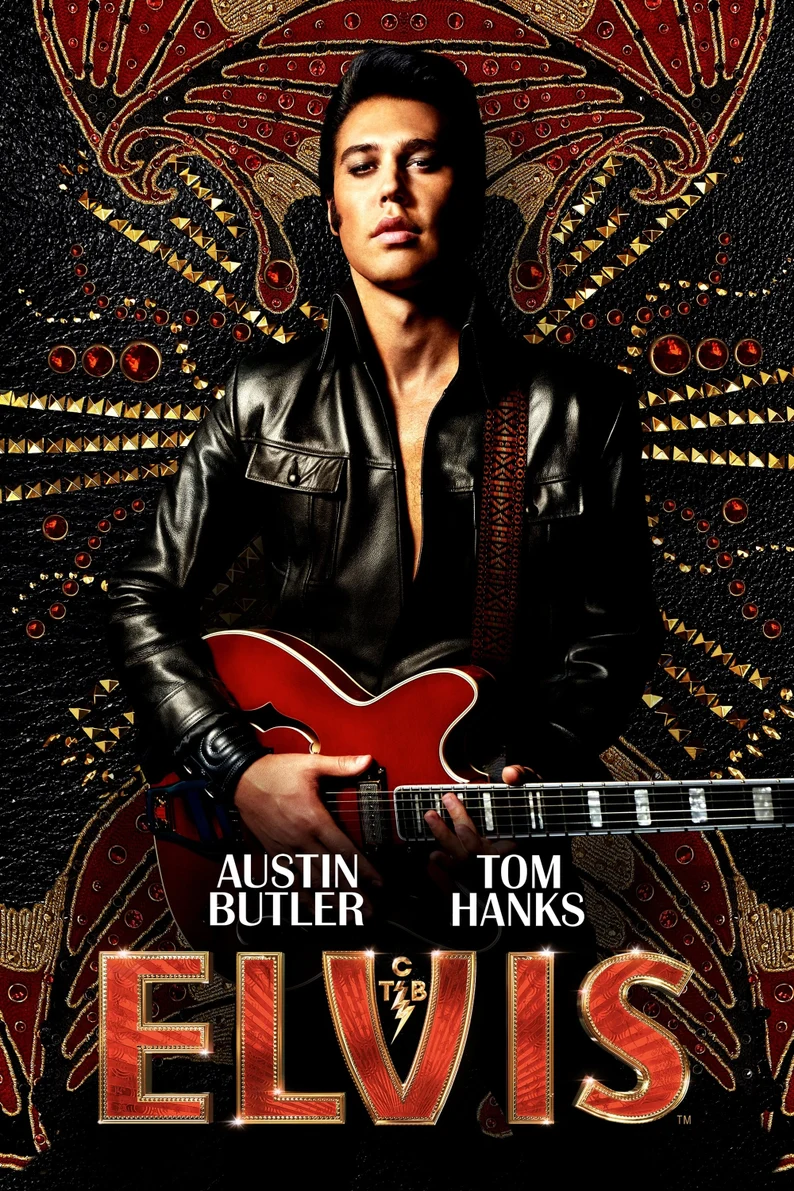
CINEMA REVIEW – ELVIS (2022)

CINEMA REVIEW – ELVIS (2022)

Directed by Baz Luhrmann

Screenplay by: Baz Luhrmann, Sam Bromell, Craig Pearce, Jeremy Doner

Story by: Baz Luhrmann, Jeremy Doner


Produced by: Baz Luhrmann, Catherine Martin, Gail Berman, Patrick McCormick, Schuyler Weiss

Cast: Austin Butler, Tom Hanks, Helen Thomson, Richard Roxburgh, Olivia DeJonge, Kelvin Harrison Jr., Xavier Samuel, David Wenham , Kodi Smit-McPhee etc.

*** MAY CONTAIN HISTORICAL SPOILERS ***


Since 1992, Baz Luhrmann has directed only six feature films. Each of them, aside from the lower-budgeted, Strictly Ballroom (1992), is a gigantic and epic extravaganza, full of colour, imagination, verve, energy, music, poetry and larger-than-life characters. Even Strictly Ballroom contains many of the stylistic and formal elements which would become part of Luhrmann’s oeuvre. I pretty much feel this auteur’s excessive approach to filmmaking including the fast-cutting, opulent settings, big musical numbers, all-star casts, plus grandiose and melodramatic narrative delivery are always a wonderful spectacle to experience.

Arguably, adapting the American novel, The Great Gatsby (2013), in this periphrastic packaging, took away from the enigma and majesty of Fitzgerald’s classic. However, with Elvis (2022), Luhrmann and his incredible production team, marry such genius excessive style with the perfect subject matter: the King of Rock and Roll! Because in colliding the life, music and films of Elvis Aaron Presley with Luhrmann’s stunning methodology brings to the screen one of the best films of the year Indeed for Luhrmann, Elvis (2022), is evidently a stylistic, subjective and thematic labour of love, marking it as his best film to date.


I wasn’t even going to watch Elvis (2022) at the cinema. I’d recently seen Spencer (2021) on Amazon Prime and was happy to have streamed that. While that eerie adaptation was a valiant attempt to breathe life into the ghost of Diana. An elegiac attempt to explain the oppressive result of her naïve choice to land her Princess dream. With Kristen Stewart’s exceptional impression rescue breathing Diana’s tragic existence, I knew the story. I knew enough to care for someone whose mental health was discarded by the heartless Windsor’s. But the monarchy have been killing the working class for years, so why should I care deeply for one singular spoilt individual? Similarly, I pondered whether I wanted to watch another film about Elvis Presley. A God-given talented singer, heartthrob, actor, musician and legendary performer had a story I was already familiar with. But, I am so happy I overcame my ignorant prejudice because Elvis (2022) is a humdinger of a part-musical-part-biopic-part-drama-part-American tragedy.

Elvis (2022) is structured around the memories of shadowy manager, Colonel Tom Parker (Tom Hanks). He is suffering illness in his old age, close to hospital demise. Parker is a grotesque in a billowing gown, drifting around the nightmarish Vegas slot-machines as Elvis’ voice echoes within his mind. Is it the guilt or the morphine? The story flashes back to a younger Parker promoting country singers at a travelling Carny. Until that fateful day when he hears a miracle on the radio, a young singer who everyone thinks is Black. But he isn’t. In the markedly racist times of 1950s America (has it really changed in certain States or Police departments?), a Black singer won’t sell records like this white dude will. Seizing his chance Parker attends Elvis’ first gig and witnesses a phenomenon. An attractive, sexual, gyrating and angelic powerhouse with an incredible voice who sends sex-waved into the audience, especially the teenage girls.


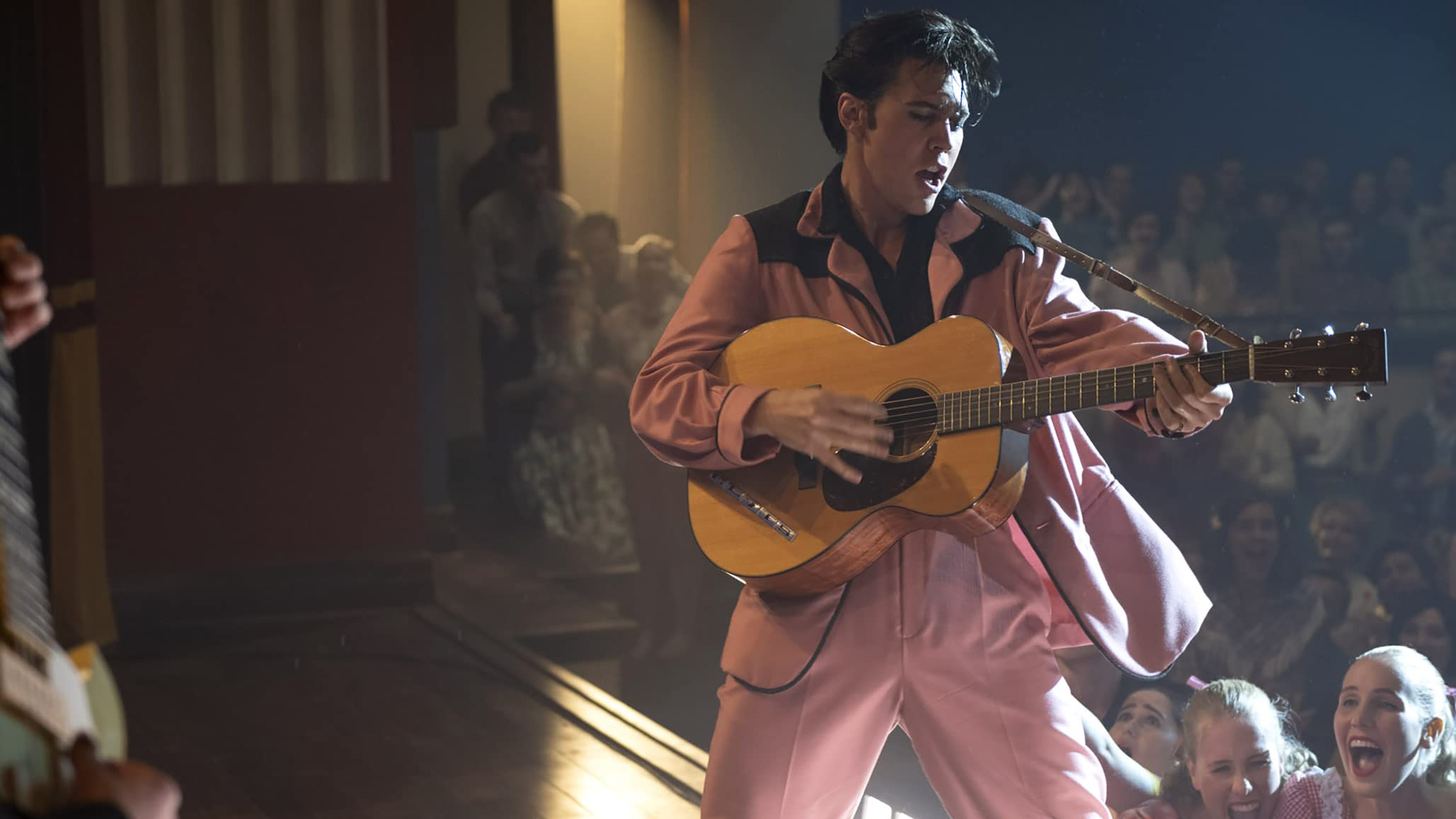
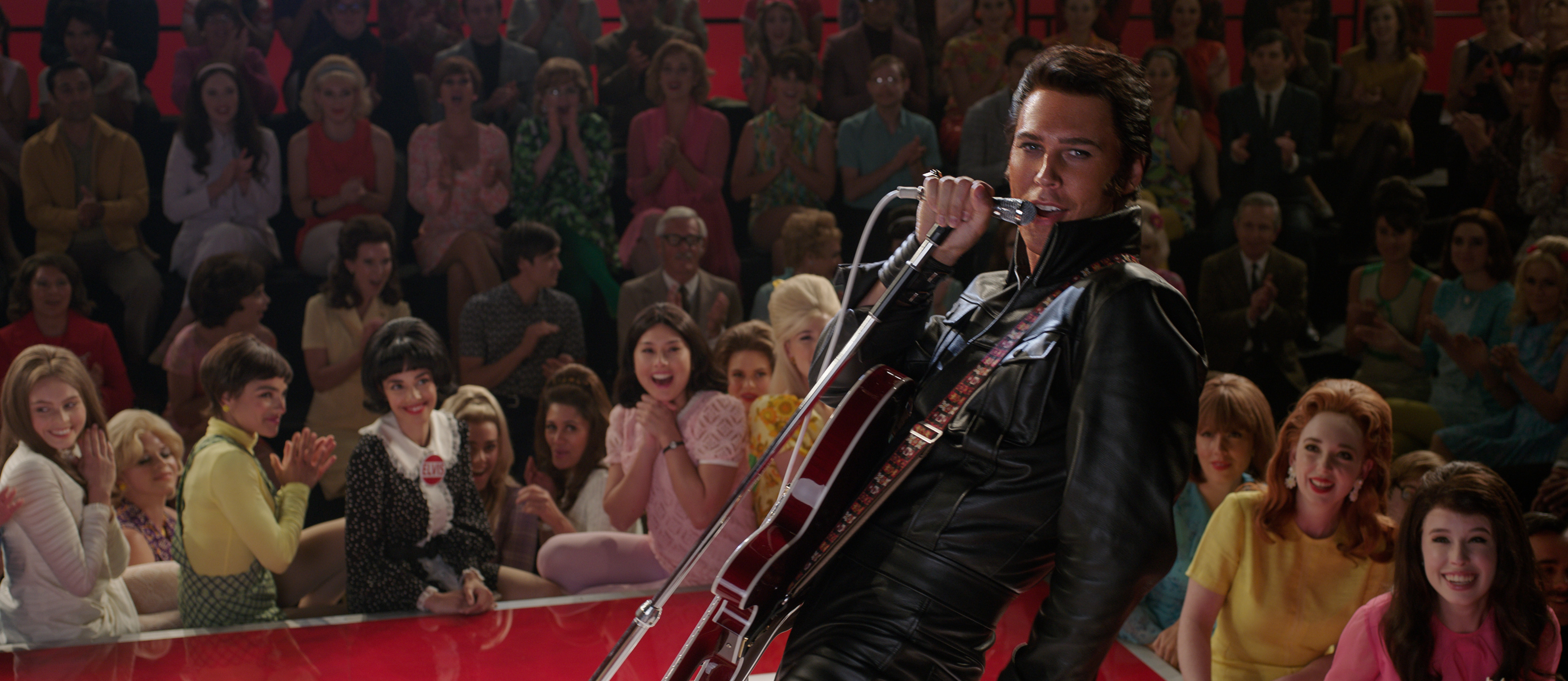
A star is born, and it takes a star to play a star. Take as many bows as you want, Austin Butler. He is a genuine phenomenon in Elvis (2022). Of course, the wardrobe, postiche and make-up artists work wonders to help recreate Elvis’ iconic looks as the narrative flashes through various stages of Presley’s devastatingly successful career, Yet, Butler just lights up the screen, producing acting fireworks in a physically, spiritually, emotionally and musically astounding screen presentation. It is not an impression, but a tour-de-force for a relatively unknown actor who has jettisoned his career to glory.

Butler, lives and breathes the King. This rendition and great direction from Luhrmann make you feel tragic empathy for a career which was manipulated and controlled by grubby gambling addict, Parker. Hank’s portrayal of the Colonel feels unnatural and theatrical compared to Butler’s organic turn. Perhaps that was the intention? Deliver a pantomime villain to boo and hiss at. Although, Hanks’ cigar-chomping and jowly make-up made me think the evil touch of Orson Welles’, Captain Hank Quinlan, had somehow been resurrected.

I cannot praise Elvis (2022) enough as a cinematic biopic and musical spectacle. While the choppy editing style is jarring at the start, once the film settles down into a groove, Butler’s stunning incarnation shines through. Overall, I was enlivened by, not only the constant remixing of Elvis Presley hits, but Luhrmann’s choice to alloy gospel, rhythm and blues, rap, rock, pop, ballad and protest songs throughout the scintillating soundtrack. Much, quite rightly, is made of how much diverse music influenced Elvis’s formative life and how he connected with Black musicians of the era. Luhrmann also ensures we are aware of how much of a threat Presley was seen by the establishment due to the sexual nature of his sang satanic verses. Sent to Germany to prevent him demonising America, his comeback special after seven years in movies is one of the finest movie set-pieces I have seen in many a year. Funny, rocking, poignant, effervescent, beautiful and astounding, just like Elvis, the man and myth, and Elvis (2022) the film.

Mark: 10 out of 11


APPLE TV FILM REVIEW: CODA (2021)

APPLE TV FILM REVIEW: CODA (2021)

Directed by: Sian Heder

Screenplay by: Sian Heder

Based on: La Famille Bélier by Victoria Bedos, Thomas Bidegain, Stanislas Carré de Malberg & Éric Lartigau

Produced by: Fabrice Gianfermi, Philippe Rousselet, Jerôme Seydoux & Patrick Wachsberger

Cast: Emilia Jones, Eugenio Derbez, Troy Kotsur, Ferdia Walsh-Peelo, Daniel Durant, Marlee Matlin, etc.

Cinematography: Paula Huidobro

*** MAY CONTAIN SPOILERS ***


Simultaneously a feelgood film and tear-jerking emotional rollercoaster, CODA (2021) combines many familiar aspects from cinema including: Children of a Lesser God (1986), Billy Elliot (2000), Dirty Dancing (1987), and the more recent and arguably superior drama, Sound of Metal (2019). In fact, while it may seem progressive representing a family of deaf adults, the Rossi’s, and their hearing daughter, Ruby (Emilia Jones), the film feels like a Save-the-Cat-screenplay-template-box-ticker hitting wholly familiar beats and a well-trodden genre path. Coda (2021) is also a remake of a successful French-Belgian film, La Famille Bélier (2014). Having said all that, I loved Coda (2021). It is a terrifically entertaining, moving, funny and heart-warming story which, unsurprisingly won the Academy Award for best film.

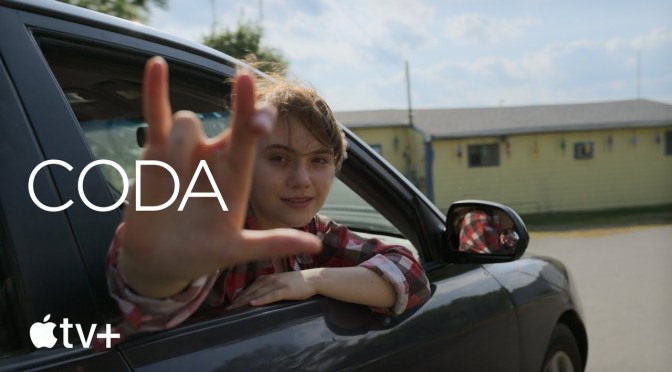
Set in Massachusetts amidst the milieu of a working class deaf family, the Rossi’s, who run a struggling fishing boat and have to overcome the ignorance and prejudices of the hearing folk. Hitting the high notes at the heart of the story is Ruby Rossi (Emilia Jones). She is a brilliant character to root for; so human, enthusiastic and authentic. Ruby wants to sing but her family, father Frank (Troy Kotsur), mother Jackie (Marlee Martin), rely heavily on her to assist with business and family matters. Her proud brother Leo (Daniel Durant) desires the chance to take more responsibility and this makes him envious of the attention Ruby gets. Throughout, Coda (2021) spans many genres bringing family conflict, Ruby’s singing dream, young romance, everyday tribulations of a deaf family, as well as the plight of a fishing community into the mix. The fantastic screenplay balances all these elements superbly well.


Ruby’s emotional rites-of-passage arc anchors us through so many memorable scenes, proving pivotal as she ultimately finds her voice and independence. Emilia Jones gives a mature performance full of range and heart. Ruby’s embarrassment, shame, fear, anger, passion, guilt, humour, happiness and guts are all exposed on her journey as she fights against the tide of her own self doubt and commitment to family. Her family are well characterised too with Frank and Jackie providing humour, sympathy and pride as the parents who just don’t want Ruby to leave them. Troy Kostur deservedly won a best actor in a supporting role Oscar. Lastly, famous Mexican actor, Eugenio Derbez as Bernardo Villalobos, gives us a fresh take on the staple role of musical mentor.

Unashamedly melodramatic and occasionally cloying, Coda (2021), is a big-hearted familial comedy-drama which while predictable, contains many powerful messages. Following your dream, respecting those around you and loving your family are important missives especially in a world where political and military leaders remain hell-bent on war. Further, while I am not well versed in the world of the deaf community I felt that the representations here were sensitively managed and well-rounded. Sian Heder, as both writer and director, has adapted this story with care, humour and song. Ruby’s voice soars from her lungs, mouth and hands via the expressive sign language, culminating in a joyous experience that must be seen, heard and most importantly felt.

Mark: 9 out of 11


CINEMA REVIEW: WEST SIDE STORY (2021)

CINEMA REVIEW: WEST SIDE STORY (2021)

Directed by: Steven Spielberg

Screenplay by: Tony Kushner

Based on: West Side Story by Jerome Robbins, Leonard Bernstein, Stephen Sondheim and Arthur Laurents

Produced by: Steven Spielberg, Kristie Macosko Krieger, Kevin McCollum

Cast: Ansel Elgort, Ariana DeBose, David Alvarez, Mike Faist, Rita Moreno, Rachel Zegler etc.

Cinematography: Janusz Kamiński

Choreography: Justin Peck

Music by: Leonard Bernstein

*INEVITABLE SPOILERS WITH THIS STORY*


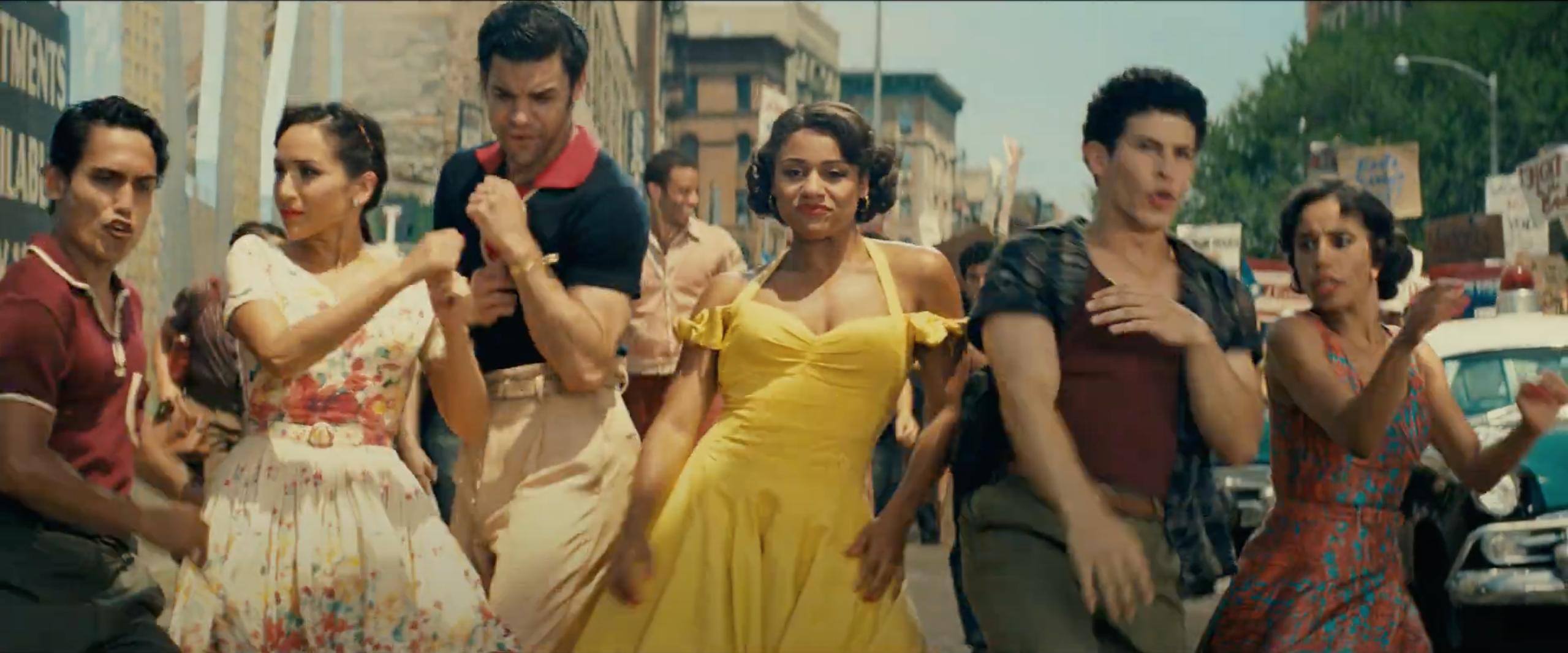
Well, if you removed all the songs and added more dialogue to West Side Story (2021), then I guarantee it would make an amazing stage play. Oh, it has already. I thought it felt extremely familiar. Silly jokes aside, one often hears the decrying of originality in Hollywood cinema. Sequels, prequels, remakes, adaptations and reboots are plentiful as big business. Known quantities are a better bet to executives than original never-heard-of speculative screenplays. And not everyone is averse to re-doing fully developed properties. Thus, one of the most talented filmmakers of a generation, Steven Spielberg, has delivered a stunning remake of a film adaptation of a stage musical that was developed from William Shakespeare’s Romeo and Juliet.

You know the story. If you don’t, stop reading. Young star-crossed lovers fall in love against their families wishes. Their romance explodes into unbridled passion as war escalates between the two rival factions. As the lovers attempt to find a way to be together the conflict brings about eventual tragedy. Shakespeare was a genius and knew how to structure and spin a yarn. No surprise his works have been adapted infinitely to much success. One of the greatest was the musical West Side Story (1961). Exchanging Verona for New York and pitting the Puerto Rican Sharks against the local firm, the Jets, the play and film contain some of the most incredible numbers ever sang and danced to. The original play won awards and broke box-office records. The film West Side Story (1961) deservedly won many Oscars. It is considered almost a perfect musical. How could it be improved?


West Side Story (2021) cannot possibly be classed as better than the original because Jerome Robbins, Arthur Laurent, Leonard Bernstein and Stephen Sondheim, plus their incredible team, had already done all of the challenging work crafting the production. But with this new version Steven Spielberg has once again proved he is one of the great genre directors. Assembling an ultra-talented team including Josh Peck as choreographer, Tony Kushner as screenwriter, Janusz Kaminski as cinematographer and an effervescently wonderful cast.

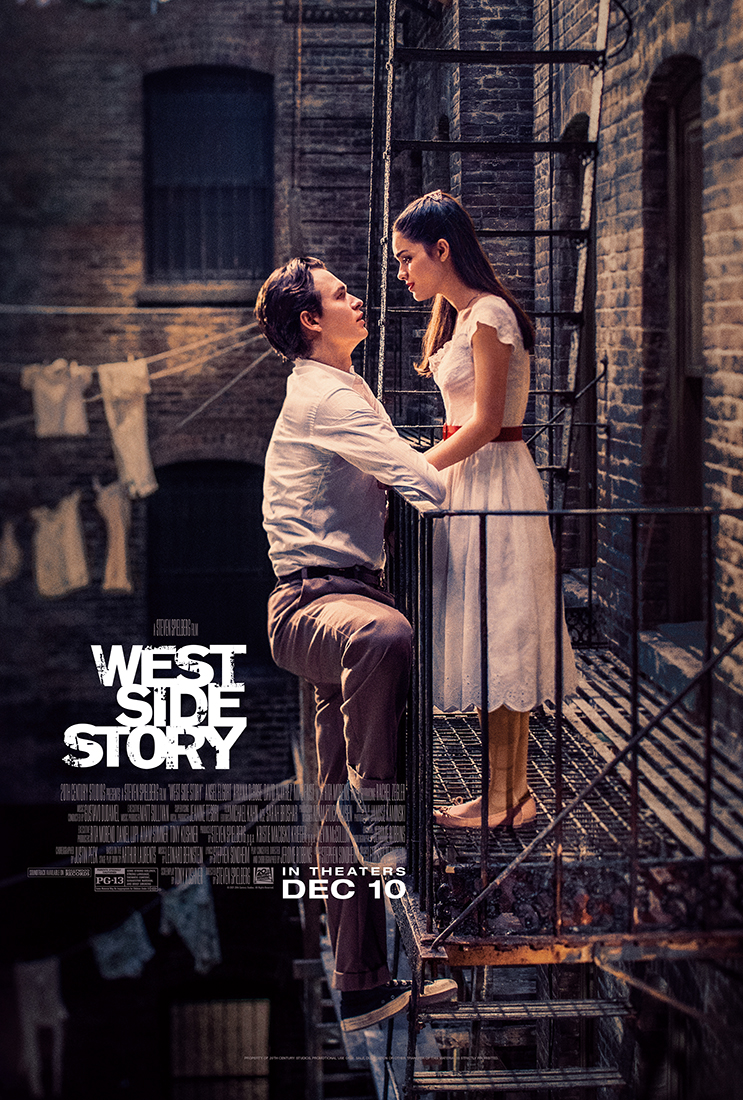
Everything about the film screams colour, energy and movement. The dancing and editing and swinging beats take you on a breathless journey through the romance and street war. Tony (Ansel Elgort) and Maria’s (Rachel Zegler) love story is bounced effortlessly between the expertly devised gang battles. Moreover, West Side Story (2021) keeps all the memorably catchy songs such as: Maria, Tonight, America, Cool, and Somewhere, capturing the heart and imagination in equal measure. If there is a better directed, choreographed and edited set-piece all year in the Gee, Officer Krupke number then I haven’t seen it.

The cast are uniformly excellent with Ansel Elgort, while lacking slightly in the vocal department, more than making up for it with his magnetic screen presence. Rachel Zegler is charming if bland as Maria, but Ariana DeBose absolutely steals the scenes with her all-round performance as fiery Anita. The cast all deliver Tony Kushner’s excellent dialogue and the iconic songs with aplomb. Lastly, West Side Story (2021) is an absolute tour-de-force as cinematic entertainment. However, there is a sense that it is a missed opportunity for Steven Spielberg and his team to perhaps update the themes for the modern day. Kushner’s script hints at some analysis of racism that ultimately only scratches the surface. Spielberg is satisfied emulating a classic adaptation of a classic play, remaining trapped in a shiny post-modern time-warp full to the brim with powerful nostalgia.

Mark: 9 out of 11


PARASITE (2019) – CINEMA REVIEW

PARASITE (2019) – CINEMA REVIEW

Directed by: Bong Joo-ho

Produced by: Kwak Sin-ae, moon Yang-kwon, Bong Yok-cho, Jang Young-hwan

Screenplay by: Bong Joon-ho & Han Jin-won

Cast: Song Kang-ho, Jang Hye-jin, Choi Woo-shik, Park So-dam, Lee Sun-kyun, Cho Yeo-jeong, Jung Ji-so, Jung Hyeon-jun, Lee Jung-eun

Cinematography by: Hong Kyung-pyo

******* MAY CONTAIN SPOILERS ********


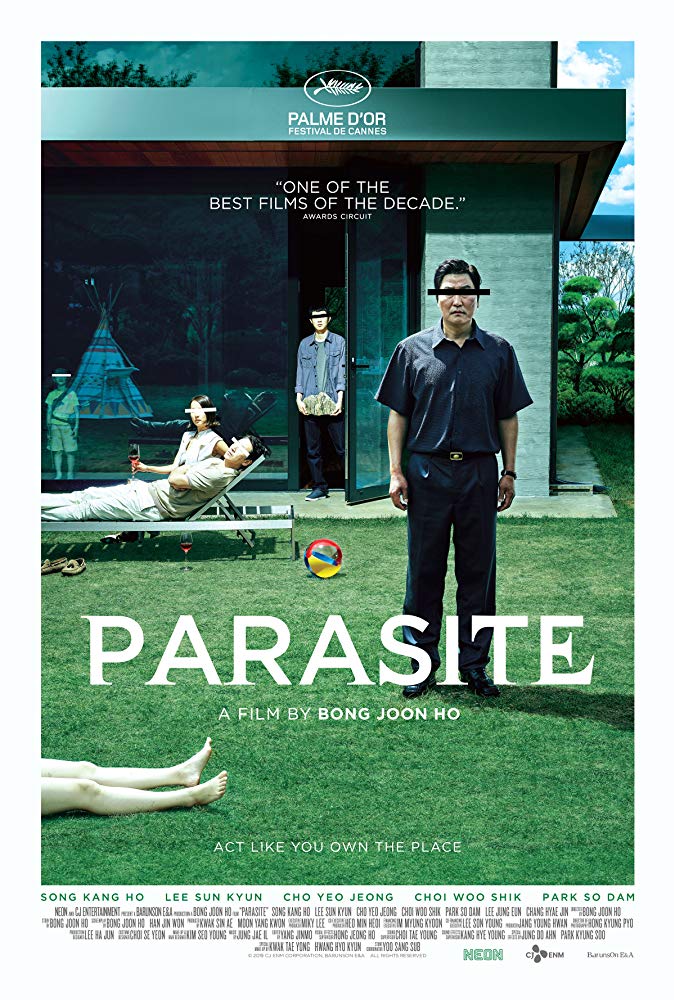
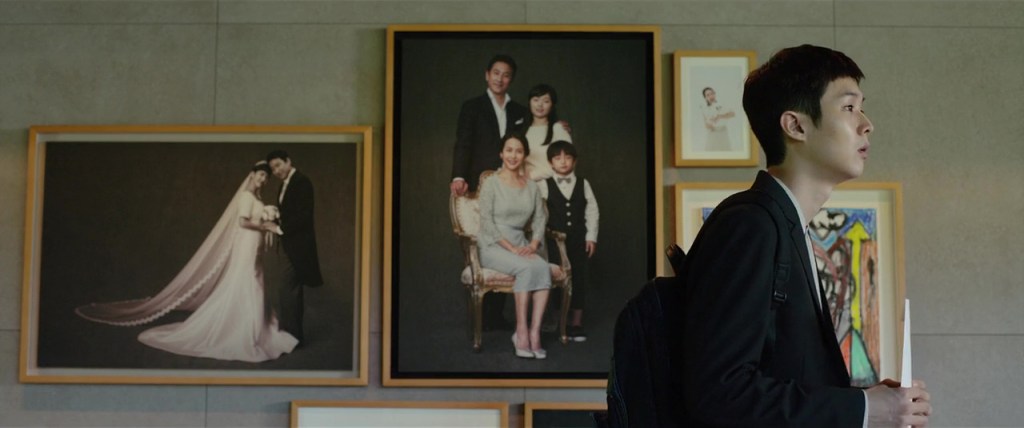
I actually saw this incredible work of cinema storytelling on Saturday just passed, so am writing this review AFTER the film rather incredibly won several Oscars at the 92nd Academy Awards ceremony on Sunday. I say “rather incredibly”, not because the film wasn’t a worthy winner of the Best Film award, but because high quality films not in the English language usually have to be satisfied with the Best International Film Award, as it is known now. Parasite (2019) in fact, deservedly won that award too. Anyway, irrespective of the awards it has earned, the film has also been universally praised. Not surprisingly, because it is not just a Korean arthouse film, but rather an ingenious genre classic. It blends dark comedy, horror, drama and thriller tropes to create a funny, suspenseful and consistently surprising experience.

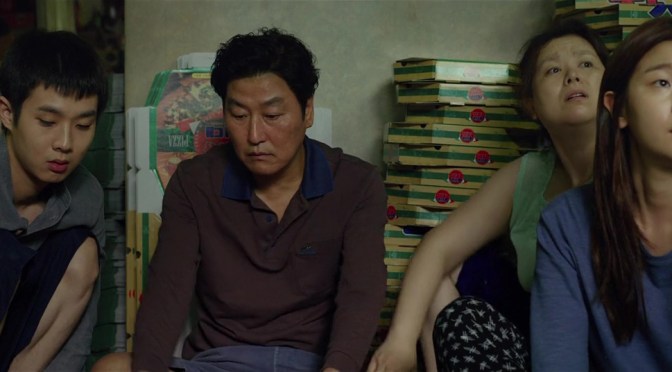
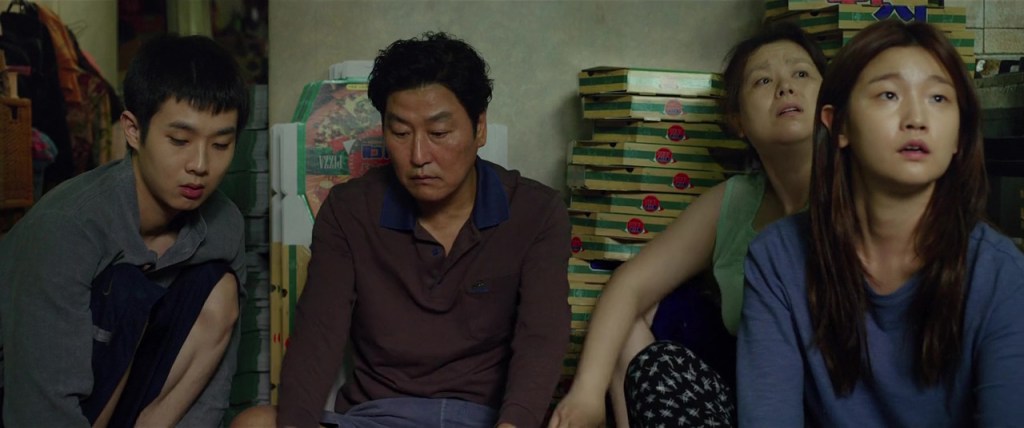
The story premise itself is relatively simple and it begins not too differently from a Japanese film I watched recently called, Shoplifters (2018). A lower class family, in this case Korean, live in cramped conditions and struggle to survive on a daily basis. Their apartment is below level and the Kim’s including father, Ki-taek, mother Chung-sook, daughter Ki-jeong and son Kim Ki-woo are all out of work. While they struggle on they stick together as a family, battling drunks who piss against their window, steal local wi-fi and also carry out menial part-time jobs like making up pizza boxes. Fortunately, a friend of Ki-woo recommends him for a teaching position within a very wealthy household belonging to the Park family. Then the narrative really gathers pace as the Kim family surreptitiously begin to infest and inveigle their way into the Park’s privileged lives.


You’d be forgiven for thinking that the Kim family are the antagonists in the narrative, however, they are very empathetic characters. Their dubious actions lead the story into very dark and funny territory, as they manipulate Mr and Mrs Park, plus their young son and teenage daughter. While not condoning their actions one can identify with their class struggle because they are desperate to improve their situation and prosperity. The issue is though they get a bit greedy and the superb screenplay throws a massive twisting curve-ball at them as the Kim’s plans unravel and events go completely off the rails.

Filmmaker, Bong Joon-ho, like he did with the brilliant films, Snowpiercer (2013) and The Host (2006) is clearly using the social status of his characters to satirise and critique capitalist society. It’s literally an ‘Upstairs versus Downstairs’ narrative in terms of both locations and themes. Beautifully filmed, in a property that was actually built for the film, the cinematography makes clever use of glass and windows to mirror characters and reflect identity. Moreover, it has more than a voyeuristic air to it with characters hiding around doorways and stairwells, as well as following, spying and watching each other secretly. It’s a film which Hitchcock would have been proud to have directed too, with many suspenseful and gripping set-pieces throughout.


Ultimately, the first three-quarters of the Parasite (2019) are a cinematic masterpiece, so brilliantly plotted and planned out. When the Kim’s plans are then upended, the film gives way to an unhinged ending as events descend into bloody chaos. However, Bong Joon-ho is so in control of the material he tells us, via Ki-taek, that this careful planning is about to give way to something more messy. Furthermore, the final act while moving and tenderly rendered, I felt, was replete with somewhat poetic narrative holes. But, this is not a criticism as even in the final scenes Joon-ho is inventive while surprising the audience. Although, overall, the biggest shock would come when Parasite (2019) won the best film at the Oscars. I’m still reeling the Academy made such a risky choice!

Mark: 10 out of 11


GREEN BOOK (2018) – CINEMA REVIEW & OSCAR BINGO #4

GREEN BOOK (2018) – CINEMA REVIEW

Directed by: Peter Farrelly

Produced by: Jim Burke, Brian Hayes Currie, Peter Farrelly, Nick Vallelonga, Charles B. Wessler

Written by: Nick Vallelonga, Brian Hayes Currie, Peter Farrelly

Starring: Viggo Mortensen, Mahershala Ali, Linda Cardellini

**MAY CONTAIN SPOILERS**

I have to be honest I am getting very tired of racism and racists, so lord knows how the people who it affects deal with it on a day to day basis. To judge and attack people because they have a different race, background or skin colour is, and has always been, the height of stupidity. We are all humans and should be judged on our actions and behaviour and NOT our physical appearance, social background, sexuality or gender. Furthermore, we must not treat someone a certain way based on general experience of how others behave too. I subscribe to individualistic judgement and the desire for peaceful attempts to resolve conflict and differences. Those that attack and bully and abuse any other human being are wrong and their minds must be changed.

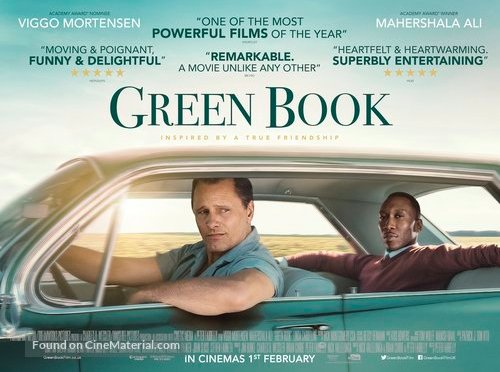
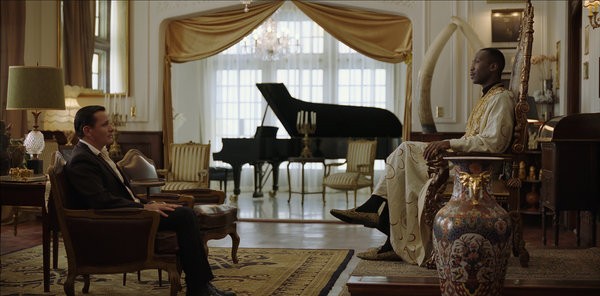
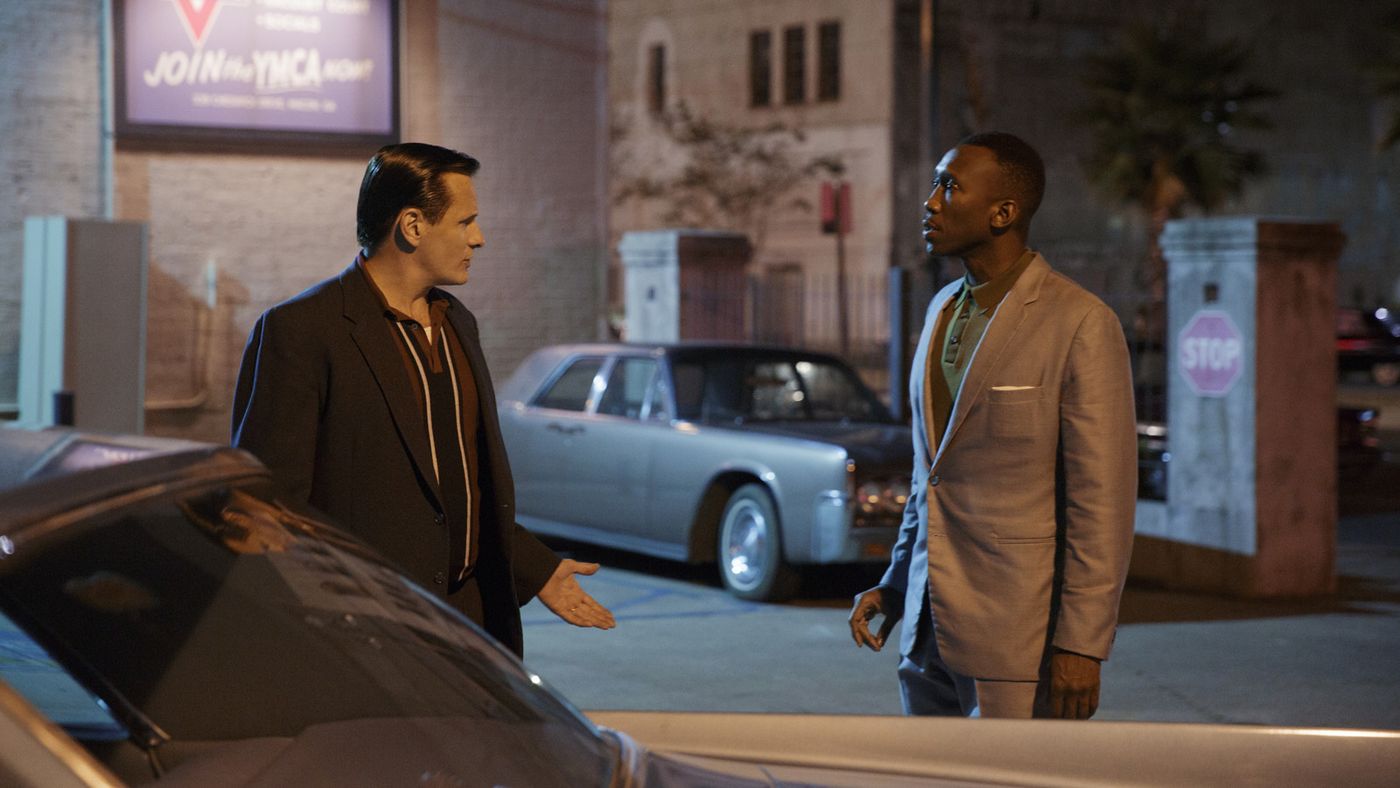
If a feel-good film such as Green Book (2018) can at the very least change one person’s negative attitude then it will be a success. It makes very broad points in regard to race relations and while arguably simplistic, in the very fabric of its story remains a heartwarming call for tolerance, understanding and friendship. Directed by Peter Farrelly, Green Book is based on the true story of Dr Don Shirley, a genius musician, and his brave trip across the deep South of America in 1962 with working class Italian driver, Tony “Lip” Vallelonga. Safe to say the road tour is not without its ups and downs and the men, after initial differences, find common ground, loyalty and friendship.

BEST PICTURE CHANCES – 8/10

As aforementioned in a previous review I would say Roma (2018) will probably win best film at the Academy Awards. Green Book has a decent chance based on the sheer energy and persuasion of the story. Moreover, it attempts to marry comedy with social drama and on the whole succeeds. Peter Farrelly directs with skilled aplomb and the guy is a past-master of the road movie genre with films such as: Dumb and Dumber (1994), Kingpin (1996), There’s Something About Mary (1998) and Me Myself and Irene (2000), all comedies which adhered to road movie genre tropes. I guess that’s one thing that holds Green Book back and that is it’s very “by-the-numbers”, however, that’s also one of the joys of the story in that it hits the heights of genre expectations so well. Finally, Farrelly marshals the road trip, musical gigs and period setting really impressively and film made me feel all glowy by the end.

ACTOR IN A LEADING ROLE CHANCES – 8/10

Viggo Mortensen is such an intelligent actor and has often been cast in intense roles which require much internal conflict. Here, his Tony Lip, is a larger-than-life Italian tough guy, handy with the bullshit and his fists. He eats like a horse and loves his family. Further, he’s stand-up guy who won’t be dragged into the Mafia underworld no matter how broke he is. The character verges on the Italian stereotype we have seen many times before but Mortensen imbues the lovable rogue with a humanity, humour and a do-the-right-thing spirit throughout. It’s his journey we follow as he moves from prejedicial jerk to something more socially acceptable. Lastly, Mortensen’s scenes with Ali are just brilliantly acted; the two bouncing off each other with wit and perfect timing.

ACTOR IN A SUPPORTING ROLE CHANCES – 10/10

Mahershala Ali should win this. He is absolutely outstanding. While Mortensen’s character is big and splashed across the screen in ebullient effervescence, Don Shirley quietly steals the show. His erudite, intellectual and refined exterior hides a pained and lonely soul who just does not fit in to society anywhere. While his music is loved and his genius revered he just cannot find inner peace. I mean I know nothing about playing the piano but Ali impresses here too with his conveyance of the musicianship of the character. Lastly, Ali’s performance is one of the best of the year, and while he won previously for Moonlight (2016), this performance is so good he should be on the list of leading actor role nominations.

BEST SCREENPLAY CHANCES – 8/10

The structure of the screenplay adheres to the classic Hollywood model to a tee. There are few surprises as the set-up of two opposite characters meet and go through a literal and figurative journey of discovery and change. Along with the lead performances, what raises the story though, is a fizzing script full of conflict and comedy. We get set-up-punchline, set-up-drama, set-up punchline, set-up feelgood moment throughout, making it a metronomically impressive piece of writing. The letter-writing running gag, for example, is pure comedic gold. Moreover, the script is littered with tremendous dialogue exchanges between the lead roles and ensemble characters which had me laughing and emoting throughout. Perhaps, historical and political accuracy could be queried by some and there is a reliance on familiar archetypes, but that doesn’t interfere with a zinging story.

CONCLUSION

Green Book is a film that has its chicken and eats it. It is full of life, food, music, family, friendship while making important points about racial issues. It also raises many laughs with heartwarming poignancy, highlighting the inequalities of 1960s with a broad hand. While these issues are not as intriguingly addressed as in BlacKKKlansman (2018), they elevate the generic road-movie-opposites-buddy-bromance tropes and structure. More than anything this is a story about friendship and while it treads a well worn road, mirroring films such as Planes, Trains and Automobiles (1987) and Midnight Run (1988), it does so with verve, humour and heart.

Mark: 9 out of 11

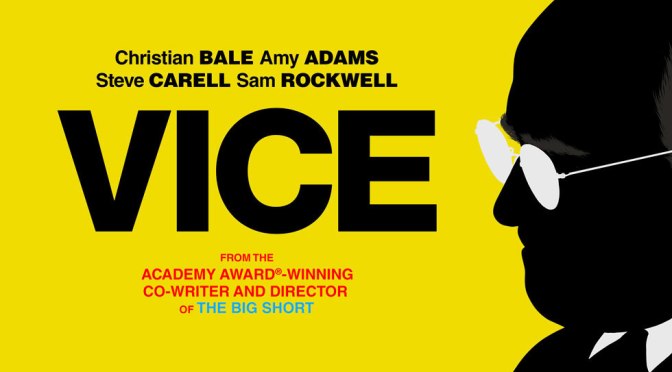
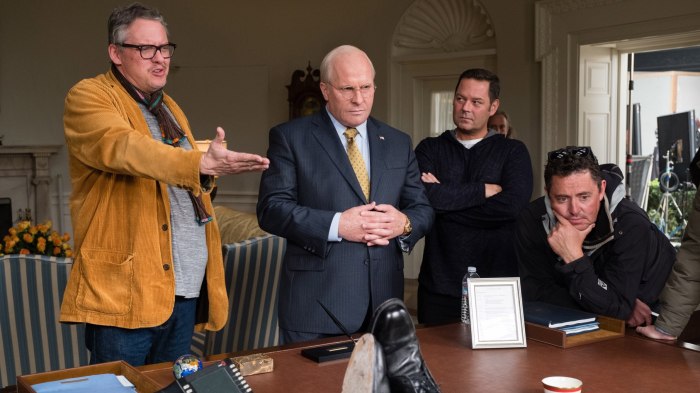
VICE (2018) – CINEMA REVIEW & OSCAR BINGO #3

VICE (2018) – CINEMA REVIEW

Directed by: Adam McKay

Produced by: Brad Pitt, Dede Gardner, Jeremy Kleiner, Kevin J. Messick, Will Ferrell, Adam Mckay

Written by: Adam McKay

Starring: Christian Bale, Amy Adams, Steve Carell, Sam Rockwell, Tyler Perry, Alison Pill, Lily Rabe, Jesse Plemons

**CONTAINS HISTORICAL SPOILERS**

Unlike the previous Oscar Bingo attempts for A Star Is Born (2018) and First Man (2018), this review has full knowledge of the nomonations. So, rather than be guess work this review of Vice (2018) is intended to be based on more constructive critiques of the Oscar nominated films I have seen.

BEST FILM CHANCES – 8/10

For starters, Vice is certainly worthy of its award nominations. I have seen some criticisms that it is cartoonish and simplistic and while I actually agree with this, it is also a brilliant and scabrous work of satire. Yes, it’s preaching to the liberal and left-winged Hollywood choir, but it definitely presents a fascinating snapshot of Dick Cheney’s rise from alcoholic wastrel to powerful political figure.

While I believe Roma (2018) will win the Best Film, I enjoyed Vice more from a stylistic, educational and emotional perspective. I was drawn into the murky world of American politics by McKay and his fantastic ensemble cast, and was compelled by the machinations of Cheney’s manipulative puppet-master to Bush’s marionette President. McKay’s film, while certainly one-tracked, powers along picking apart and satirising one of the most shadowy political figures of recent years.

BEST DIRECTOR CHANCES – 8/10

In terms of tone and narrative, McKay’s The Big Short (2015) was arguably a more cohesive film. Indeed, Vice is presented more as a non-linear monatge and sketch style recreation of key events in Cheney’s life. But I loved the style and McKay should be praised for his editing choices. He throws the veritable formalistic kitchen sink at the film using: direct address, Shakepearean monologue, cross-cutting montage, fake credits, voiceover, freeze frames, fake footage, stock footage, flashbacks, flash forwards, inter-titles, third-party narrator and many more stylised tropes. In my view his directorial bag of tricks are utilised without losing emotional impact too. While Alfonso Cuaron will probably win McKay certainly deserves kudos for enlivening his subject matter with such storytelling choices.

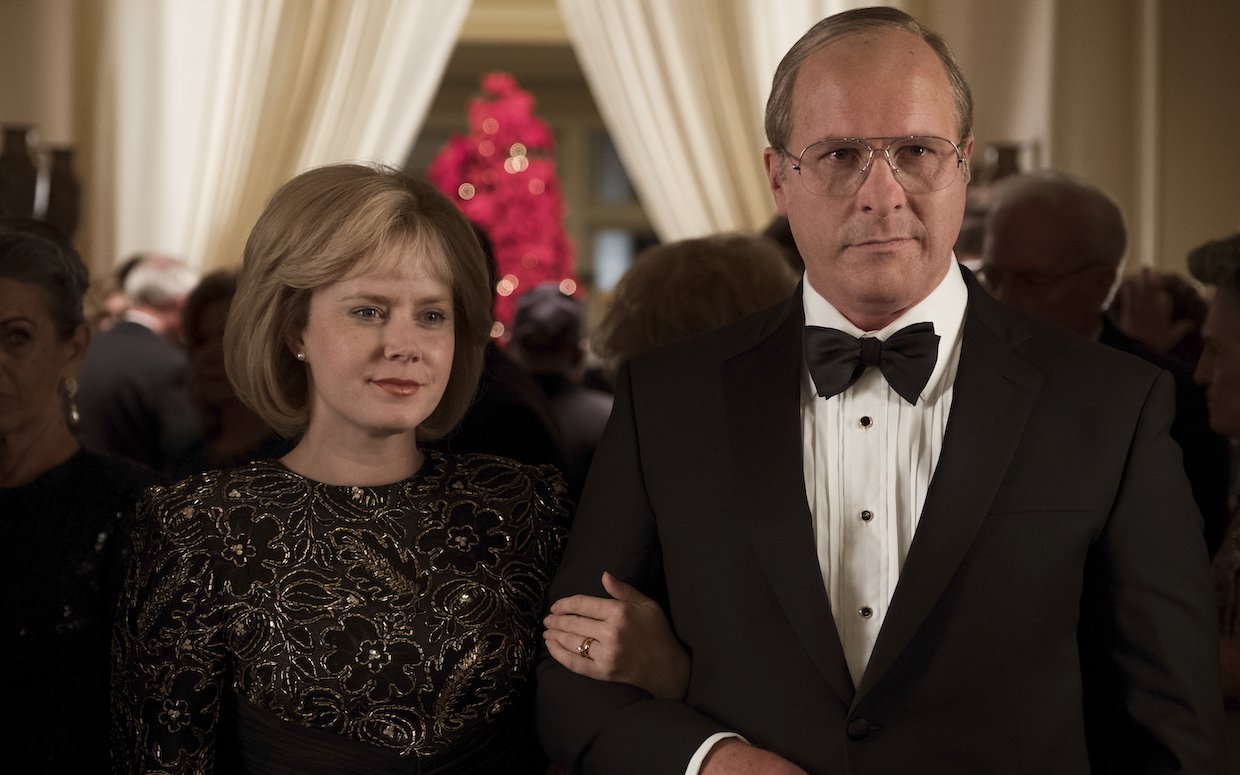
ACTOR IN A LEADING ROLE CHANCES – 10/10

Christian Bale should win. I have not seen Rami Malek, Viggo Mortensen or Willem Dafoe’s acting in their respective roles but Christian Bale is astonishing. Fair enough, he has taken a real person and delivered an emulation performance, but he also brings to Cheney to life with formidable cinematic style. Of course, the physical transformation could take the headlines but in terms of emotion and mentality he really raises the perfomance bar. Cheney may be an enigmatic character but Bale brings quiet menace, whispers and manipulation to the role. There is also a sly humour there too which makes Bale’s Cheney another memorable acting monster he’s created.

ACTRESS IN A SUPPORTING ROLE CHANCES – 8/10

Amy Adams is one of my favourite actors. Not quite a Lady Macbeth character, her Lynn Cheney pushes Dick forward mercilessly to make a better man of himself. She is the foundation and rock of their relationship and glues his life together when he faces health issues and political setbacks. Adams nails the role, and while Rachel Weisz will probably win for The Favourite (2018), Adams may finally get the Oscar she deserves.

ACTOR IN A SUPPORTING ROLE CHANCES – 5/10

Sam Rockwell is excellent in emulating George W. Bush but he only has a few scenes. While Rockwell dumbs down with the best of them I would have nominated Steve Carell instead. His Donald Rumsfeld, was a creeping, neurotic and conniving joy and definitely deserved the nomination in this category.

ORIGINAL SCREENPLAY CHANCES – 7/10

The film benefits from a sparky screenplay which keeps a potentially dull subject spinning along in an entertaining fashion. It takes a complex set of characters and scenarios, and despite simplifying to fit a leftist agenda, still constructs intelligent analyses of Cheney and Washington at large. Ultimately, Cheney is shown to be an opportunist and dangerous person who manipulated information and policy to finagle the USA and allies into a war for profit. Even worse he did so from the position of Vice President – boo Cheney! Boo! While McKay deserves praise for his brave creative choices, I would go for Paul Schrader’s exceptional First Reformed (2018) in the original screenplay category; Schrader deserves it more.

CONCLUSION

I am a big fan of satirical works such as: Private Eye, Yes Minister, Spitting Image, The Thick Of It, Veep and South Park. They seek to undermine and take critical shots at our leaders, illustrating the danger, absurdity and stupidity of those in power. They also, in an entertaining way, carry a message that those serving their country are often serving themselves more. Conversely, a film like Vice, however cartoonish or broad, still has the power to highlight the corruption and horror of a man like Cheney. While the script and direction are tonally scatter-gun, Bale’s incredible rendition, and the marvellous supporting cast, anchor the film and ensure this satirical ship rarely hits the rocks.

Mark: 9.5 out of 11