Category Archives: Reviews

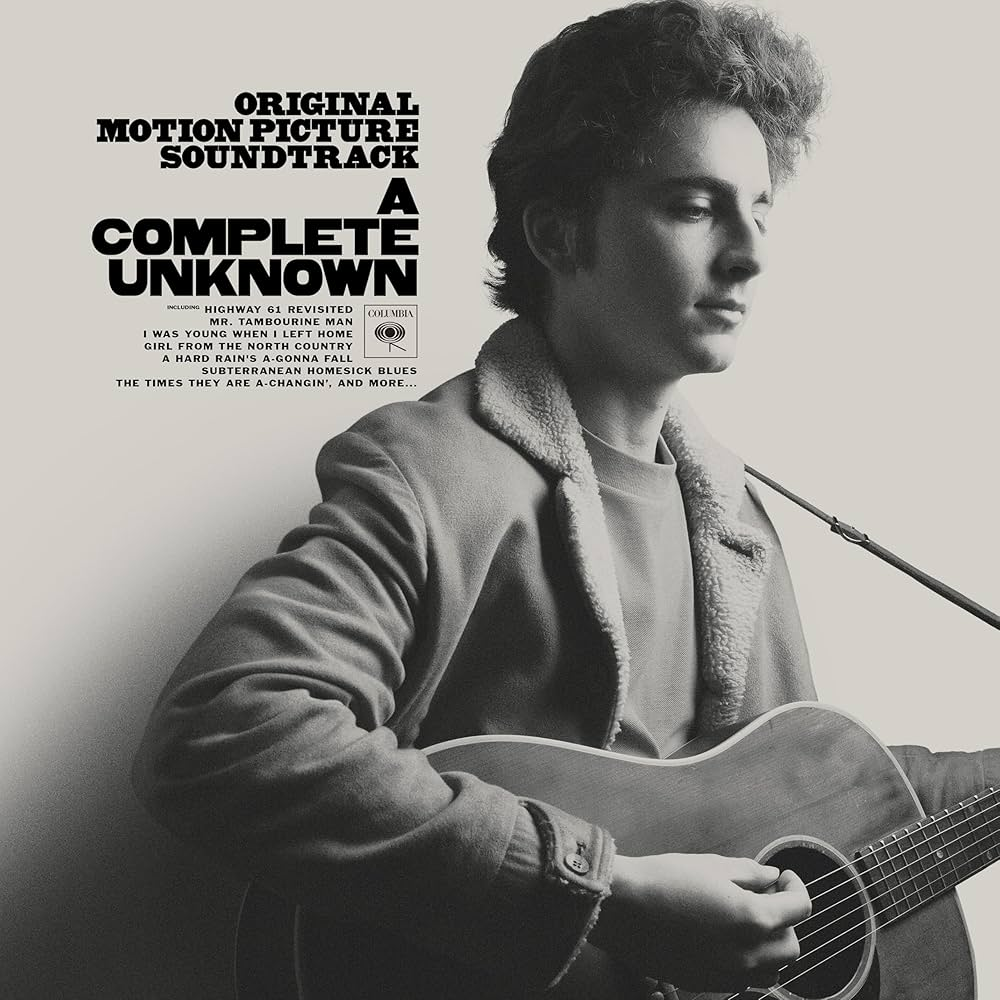
Cinema Review: A Complete Unknown (2024) – an electric but over-polished cover version!

CINEMA REVIEW: A COMPLETE UNKNOWN (2024)

Directed by James Mangold

Screenplay by James Mangold and Jay Cocks

Based on Dylan Goes Electric! by Elijah Wald

Produced by Peter Jaysen, James Mangold, Alex Heineman, Bob Bookman, Alan Gasmer, Jeff Rosen, Timothée Chalamet, Fred Berger etc.

Main cast: Timothée Chalamet, Edward Norton, Elle Fanning, Monica Barbaro, Boyd Holbrook, Scoot McNairy, Dan Fogler, etc.


James Mangold is rarely mentioned as one of the best directors around. Probably because he is not a flashy cigar-munching quote machine or a even a household name. Yet, he has consistently delivered a series of extremely entertaining genre films over the past few decades. These include: Copland (1997), Identity (2003), Girl, Interrupted (1999), Walk the Line (2005)3:10 to Yuma (2007), Logan (2017) and Ford v Ferrari (2019). His films always feature solid characterisation, compelling conflict and well-structured plots. They also have a pristine and attractive look and style. Further, they always attracts impressive A-list actors and striking ensemble casts. His cover version of the music biography, Dylan Goes Electric! by Elijah Wald is no different.

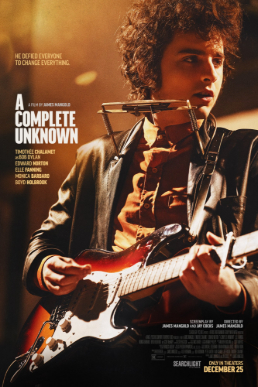
A Complete Unknown (2024) showcases events from the era of 1961 to 1965 where Dylan rose to major stardom delivering stunning and poetic lyrics with hypnotic melodies. This period culminates in his movement from acoustic guitar to full electric band, causing controversial and violent reactions from the audience and organisers of the Newport Folk Festival. This furore may seem mildly inconsequential in today’s social-media digital coliseum where intellectual debates are fought with emojis by individuals with nano-seconded attention spans. But for many, Bob Dylan’s perceived treachery of moving from the purity of folk over to the dark side of rock was a significant event of the epoch. Having said that, Dylan was always an enigmatic maverick and genius who marched to the time of his own drum. Thus, such audial rebellion was no surprise, especially when looking back at it now.


As a tribute to the incredible musical and writing brilliance of Dylan, A Complete Unknown (2024) is definitely worth a watch. Timothée Chalamet does a sterling job with the musicianship, mannerisms and vocal duties. He even brings a suggestion of character to someone who isn’t just a musician. Dylan’s a shape-shifter, a poet, a myth, a paradox wrapped in a harmonica riff. To play Dylan is not to “become” him but to capture the way he constantly eludes being known. Personally, I enjoyed Chalamet’s charismatic performance in Wonka (2023 more, but he is commanding as Dylan nonetheless. The supporting cast are terrific too, notably Edward Norton as the affable folk singer Pete Seeger and Boyd Holbrook as a muscular Johnny Cash. Mangold deserves much praise for getting so many consistently fine performances, even if the script could have been punched up with more drama throughout. Dylan being a bit of a self-driven “arsehole” and slight philanderer hardly raises the pulse.

Overall, Mangold directs with a sure hand and there are many fantastic musical set-pieces, gigs and recording sessions. But the film’s glossy sheen feels at odds with the grit of the 1960’s Greenwich Village folk scene. The world Dylan emerged from was smoky, messy, and filled with hungry artists scraping by in dimly lit coffeehouses, where folk music wasn’t just a style but a battle cry. A Complete Unknown (2024) captures the aesthetic—the period costumes, the dimly lit clubs, the jangling guitars—but everything feels just a touch too manicured, too cinematic. Dylan’s rise was not glamorous and the film makes the counterculture movement feel almost nostalgic rather than revolutionary. It’s an engaging snapshot, and Chalamet’s performance is undoubtedly compelling, but much like a pristine re-recording of an old folk song, the imperfections—the very thing that gave the music its soul—are missing.

Mark: 7.5 out of 11


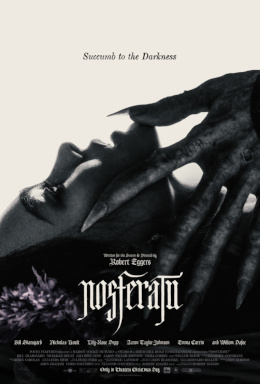
Cinema Review: Nosferatu (2024) – At the Intersection of Horror and Eroticism!

Cinema Review: Nosferatu (2024)

Directed by Robert Eggers

Screenplay by Robert Eggers

Based on Nosferatu by Henrik Galeen and Dracula by Bram Stoker

Produced by Jeff Robinov, John Graham, Chris Columbus, Eleanor Columbus, Robert Eggers, etc.

Main Cast: Bill Skarsgård, Nicholas Hoult, Lily-Rose Depp, Aaron Taylor-Johnson, Emma Corrin, Willem Dafoe, Simon McBurney, etc.

Cinematography by Jarin Blaschke

Music by Robin Carolan

*** MAY CONTAIN SPOILERS ***


Firstly, Nosferatu: A Symphony of Horror, the 1922 silent German Expressionist vampire film directed by F. W. Murnau remains one of the greatest and most iconic horror films of all time. It is arguably the greatest adaptation of Bram Stoker’s, seminal gothic classic, Dracula, too. Of which there have been many. So, who would be brave enough to attempt to master another version of this often-told monstrous tale. Step forward the acclaimed and relatively young American auteur, Robert Eggers.

Robert Eggers has built a reputation for crafting films that blend mythical and fantastical elements with folk horror and psychological thriller sensibilities. His works often transport audiences to meticulously recreated period settings, which serve as the foundation for his exploration of human fears, desires, and the supernatural. His debut feature film. The Witch (2015) exemplified folk horror rooted in Puritanical fears of the supernatural. Set in 1630s New England, it drew heavily from folklore, historical accounts, and period-authentic dialogue. The film explored themes of isolation, religious paranoia, and the breakdown of a family due to their belief in the presence of witches.

Similarly, The Lighthouse (2019), a psychological thriller merged maritime folklore with hallucinatory horror. Set in the late 19th century, the film delved into isolation-induced madness as two lighthouse keepers grappled with mythological themes such as mermaids, sea gods, and Promethean punishment. Moreover, as with his short films Hansel and Gretel (2007) and The Tell-Tale Heart (2008) he is drawn towards established texts, with the bruising, battering ram of The Northman (2022) covering the original myth on which Hamlet was based. Eggers vision immersed the viewer in violence, Viking culture, shamanic ritual and mysticism. Unsurprising therefore, he has now delivered the German Expressionist classic, Nosferatu (2024) with his signature period aesthetic and focus on the macabre.


With a stellar cast, production design and incredibly stylish vision, Eggers has produced a praiseworthy example of fantastical cinema. As usual there appears to be meticulous historical research, including accurate costumes, set design, and period-specific dialogue. This attention to detail in Nosferatu (2024) grounds the supernatural elements in a believable world, enhancing their impact. Furthermore, Eggers creates a sense of dread through his use of sound design, stark cinematography, and claustrophobic settings. His restrained pacing allows for the gradual unraveling of characters’ psyches, making the supernatural elements more impactful.

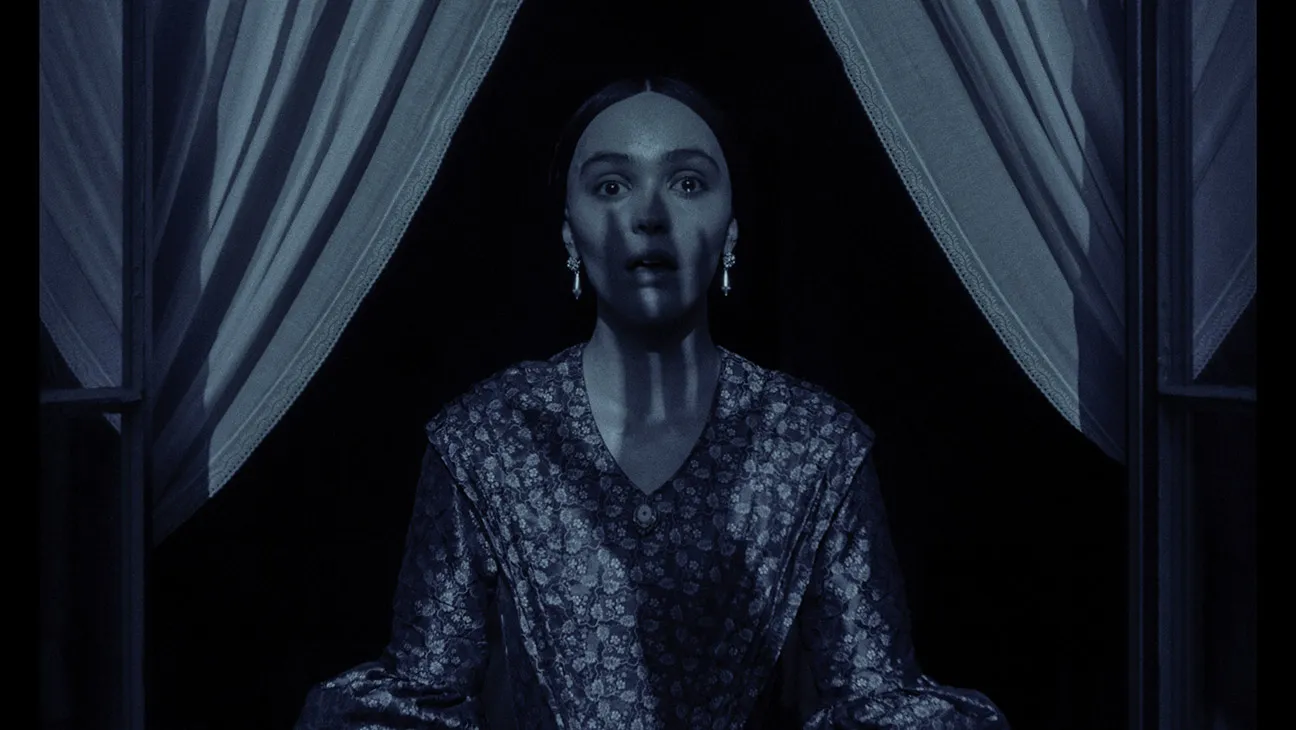
Yet, while steeped in folklore, Nosferatu (2024) centres on human struggles—family disintegration, fate, guilt, madness, lust and sex. Indeed, Nicholas Hoult’s Thomas Hutter (née Harker) does not stand a chance. From the opening scene his sensual wife, Ellen, is inextricably linked via a lustful fever dream to a mysterious figure, who, if you couldn’t guess, is Count Orlok (an unrecognizable Bill Skarsgård). It is Ellen’s orgasmic connection across oceans of time which drives Orlok to lure Thomas away and commit blood-draining murder as he creeps cross-country and sails the seas from Transylvania to Germany. Ellen’s surreal and orgiastic desire unfortunately brings the plague and causes the death of extraneous supporting characters portrayed by the likes Aaron Taylor-Johnson and Emma Corrin. A note to say Willem Dafoe is as usual a joy as the ‘Van Helsing’ substitute.

Nosferatu (2024) is undeniably a sumptuous adaptation, brimming with signature attention to period detail, atmospheric dread, and a striking visual palette. However, for those seeking a viscerally terrifying Dracula film, the movie might fall short, leaning heavily into the realm of erotic horror and psychological tension rather than outright scares. While the stunning cinematography, the film’s shadow-drenched landscapes, intricate set design, and haunting score evoke the satanic allure of the original silent film this focus, however, shifts the film away from raw horror and toward a more introspective exploration of vulnerability and eroticism. Ultimately, the film’s reinterpretation of Count Orlok and its restrained approach to gore might alienate viewers expecting a more terrifying vampire film. This left me impressed but more disturbed by the overlong runtime than by the nightmarish allure of the bloodthirsty undead.

Mark: 8 out of 11


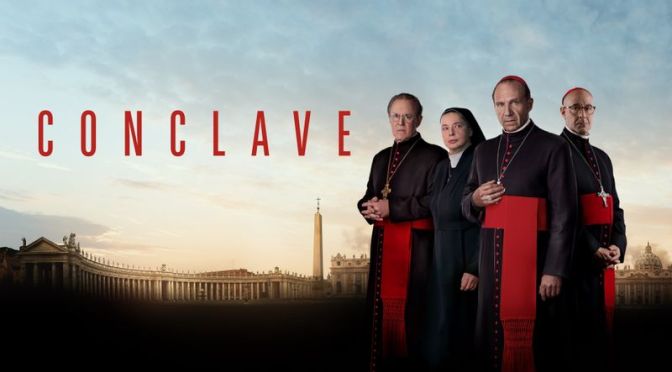
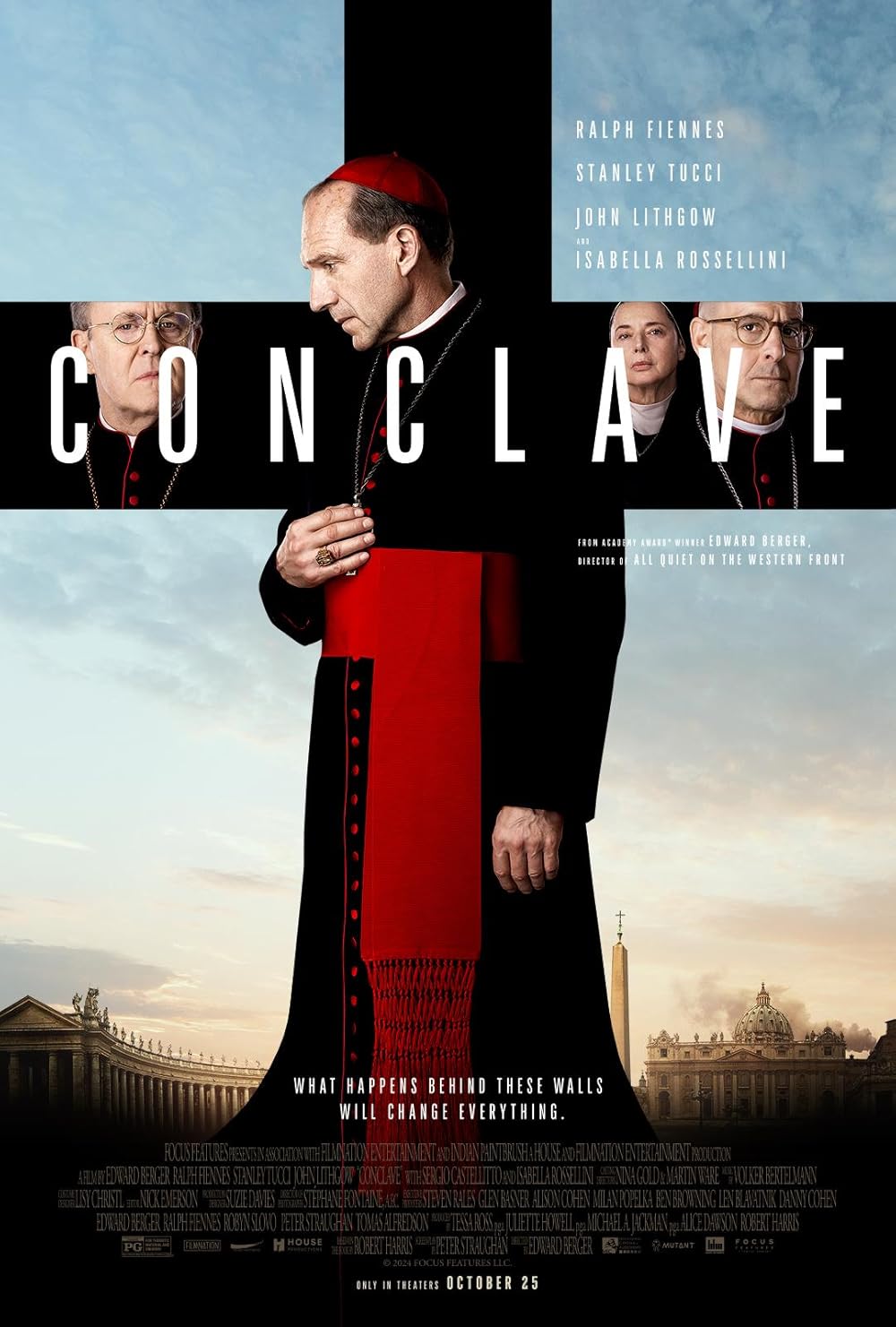
Cinema Review: Conclave (2024) – A Technically Brilliant, Yet Emotionally Faithless Experience (2024)

CINEMA REVIEW: CONCLAVE (2024)

Directed by Edward Berger

Screenplay by Peter Straughan

Based on the novel Conclave by Robert Harris

Produced by Tessa Ross, Juliette Howell, Michael Jackman, Alice Dawson and Robert Harris

Main cast: Ralph Fiennes, Stanley Tucci, John Lithgow, Sergio Castellitto, Isabella Rossellini, Lucian Msamati, Carlos Diehz, etc.

Cinematography by Stéphane Fontaine

Music by Hauschka

*** MAY CONTAIN SPOILERS ***


When you think about organized crime families, images of the Sopranos or Godfather-esque figures probably come to mind. But, if we’re playing with definitions one might allege the Catholic Church—an ancient institution with global influence—is one of the biggest crime organisations ever historically and in the present. I mean, organized crime families are notorious for their code of silence. The Church has had its fair share of. . . shall we say, discretion? From the Vatican’s secret archives to a several public scandals they’d rather we not dwell on, there’s certainly a flair for keeping things in the family.

The Pope, aka the Holy Father, wears white, sits on a throne, and apparently has a direct line to the big “man” upstairs. Replace “Vatican” with “Sicily,” and suddenly, the resemblance to the Mafia is uncanny. Moreover, crime families thrive on wealth accumulation. The Vatican’s art collection, gold reserves, and prime real estate make even the most successful mobster green with envy. Not to forget, from Rome to Rio, the Catholic Church has an unparalleled network. Mobsters may have their territories, but the Church claims everywhere. With over a billion followers worldwide, even Don Corleone would bow to that reach. Thus, power struggles ensue within many organisations with coups and betrayals and internal competitions occur, including who is going to be the new boss. Welcome to the cinematic adaptation of Robert Harris’ novel, Conclave (2024); a beautifully constructed, serious and ultimately quite silly story.


Ralph Fiennes is majestic as Cardinal-Dean Thomas Lawrence, the individual tasked with finding a successor after the Pope dies of a heart attack. Fiennes anchors this serious faith-based drama with an intellectual depth as a series of potential candidates throw their zuchettos into the ring including:

  • Aldo Bellini (Stanley Tucci) of the United States, a liberal spirit echoing the compassionate legacy of the late pontiff.
  • Joseph Tremblay (John Lithgow) of Canada, a voice of moderation, bridging the Church’s timeless values and modern sensibilities.
  • Joshua Adeyemi (Lucian Msamati) of Nigeria, a steadfast advocate of social conservatism, grounded in enduring traditions.
  • Goffredo Tedesco (Sergio Castellitto) of Italy, an unwavering traditionalist, fiercely loyal to the ancient rites of faith.

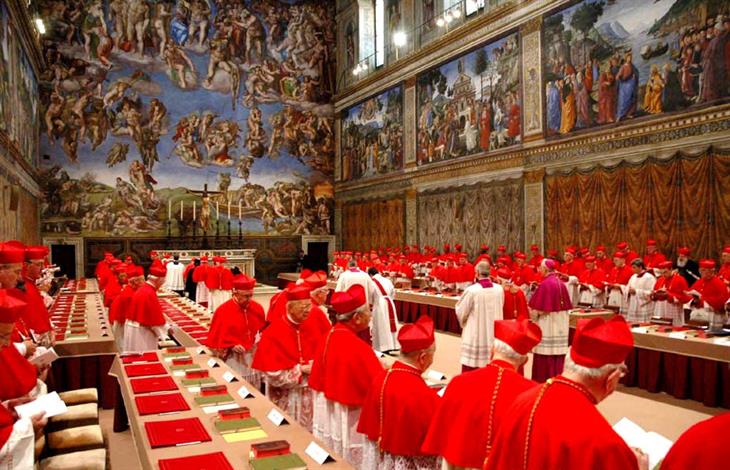
With a narrative based on a book by Robert Harris, it is certain that the powerful developments and twists will grip the audience. Furthermore, Edward Berger’s direction is undeniably captivating, as is Stéphane Fontaine’s cinematography, which paints each scene with a reverence befitting the Vatican’s grandeur. Their collaboration crafts a visually stunning vision, pulling viewers into the cloistered rituals of electing a new Pope. Yet, for all its technical brilliance, the process itself feels devoid of emotional resonance.

Why should we, the audience, care about who becomes the next Pope? Unless one is deeply invested in the Catholic Church or its doctrine, the stakes remain distant. The election of a spiritual leader for over a billion followers is, of course, significant—but the film offers little to make this significance tangible for those outside that fold. Harris’ story spices things up with a provocative, irreverent twist in its final act. Yet, this narrative grenade lands with a thud rather than an explosion. Yes, it’s shocking, even subversive, but it doesn’t pack enough weight to unsettle an institution as colossal and entrenched as the Catholic Church.

Ultimately, Conclave (2024) is a masterclass in craft but a missed opportunity in damning the status quo of this alleged criminal organisation. Berger, Fontaine, Fiennes, plus the production design, score and sound-mixing artistry elevate the film, making it an incredibly effective cinematic version of the proverbial page-turner. But the story’s failure to connect on a deeper, emotional level found me losing my religion; what little I have left.

Mark: 7 out of 11


Mubi Film Review: Hirokazu Kore-eda’s exquisite tale of love, loss and rebirth – Monster (2023)

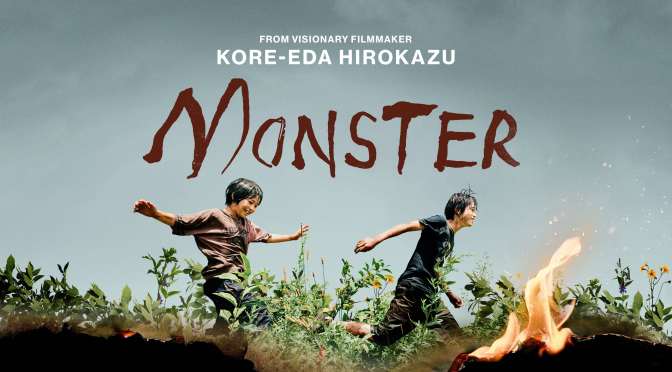
MUBI FILM REVIEW: MONSTER (2023)

Directed and edited by Hirokazu Kore-eda

Written by Yuji Sakamoto

Produced by: Hirokazu Kore-eda, Minami Ichikawa, Kenji Yamada, Megumi Banse, Taichi Itō and Hijiri Taguchi

Main cast: Sakura Andō, Eita Nagayama, Sōya Kurokawa, Hinata Hiiragi and Yūko Tanaka

Cinematography by Ryuto Kondo

Music by Ryuichi Sakamoto

*** MAY CONTAIN SPOILERS ***


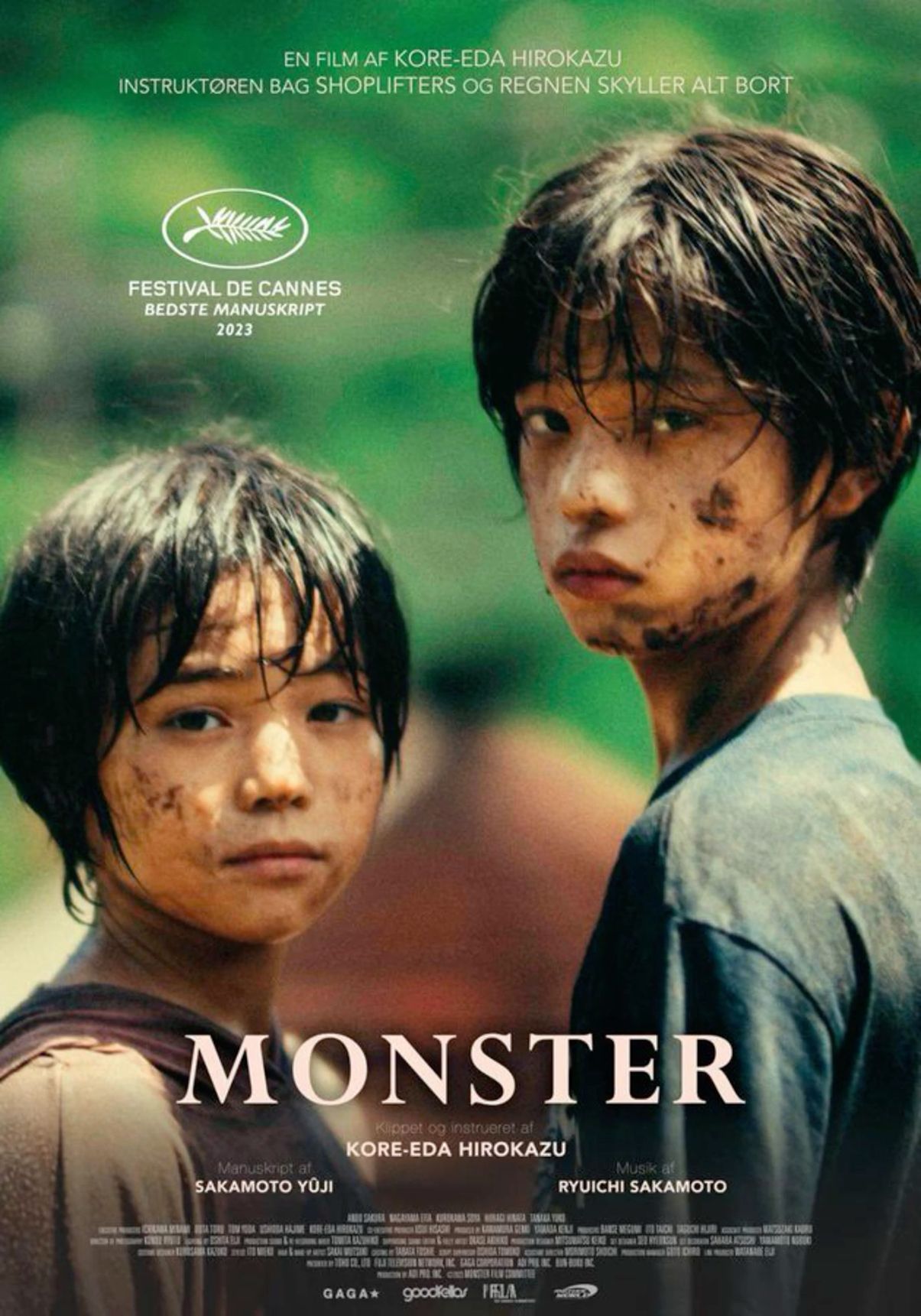
Hirokazu Kore-eda’s Monster (2023) exemplifies his continued mastery of humanist storytelling, a hallmark of his career. As with prior works such as the classic Afterlife (1998), critically acclaimed Shoplifters (2018), and the recent, arguably more commercial comedy-drama, Broker (2022), Kore-eda demonstrates a keen ability to explore the quiet complexities of human relationships, here through themes of bullying, young love, and the tender, taboo nature of queer affection. Monster (2023) delves deeply into the fragility of human connections, revealing the pain and misunderstandings that arise when societal expectations collide with individual identities.

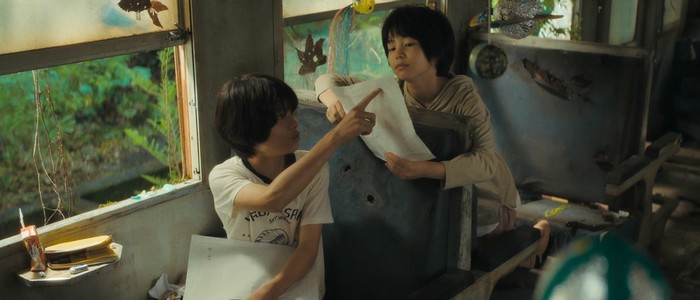
The story focuses on shifting narrative perspectives of two young boys, Minato (Sōya Kurokawa) and Yori (Hinata Hiragi), Mugino’s mother, Saori (Sakura Andō) and the boy’s teacher, Michitoshi Hori (Eita Nagayama). Initially, Minato begins displaying slightly disturbing behavious such as cutting his own hair and throwing tantrums in class. His mother then believes the teacher is bullying him and begins to campaign for Mr Hori’s punishment. What then unfolds is something altogether more complex and powerfully ambiguous.

With Monster (2023), crafted via a Rashomon-style structure by screenwriter Yuji Sakamoto, the narrative approach provides a formidable layer to the film’s emotional resonance. It allow the audience to revisit pivotal events from multiple perspectives. By shifting viewpoints the script highlights how perception shapes reality, illustrating the subjectivity of truth in deeply personal and often painful ways. The multifaceted storytelling reveals how moments of cruelty, compassion, and misunderstanding ripple across different lives, underscoring Kore-eda’s central humanist message: no person is simply a villain or a hero, but a complex amalgam of motives and vulnerabilities.


The script’s structural ingenuity enhances the film’s exploration of societal issues, such as the alienation of queer youth and the lasting scars of bullying. Each retelling reframes the characters’ actions, fostering empathy for even the most seemingly antagonistic figures. This interplay of perspectives elevates Monster (2023) beyond a straightforward tale of adolescent struggle, transforming it into a profound meditation on the intersection of memory, identity, and the pursuit of love and acceptance.

By marrying Kore-eda’s subtle directorial touch with Sakamoto’s intricate script, Monster (2023) achieves a rare cinematic feat: a story that is as intellectually engaging as it is emotionally devastating. Moreover, it reaffirms Kore-eda’s place as a preeminent chronicler of the human condition. Safe to say that it is beautifully filmed, cast and acted. To elicit such incredible performances from these boys is wondrous direction. It also features a fragmented but beautifully poetic final film score of the recently departed Ryuichi Sakamoto. Overall, it’s cinema that breathes pathos and humanity into each and every character, and provides no easy solutions. Monster (2023) is a film that burns, like the fiery tower block featured throughout, long in the heart and memory.

Mark: 9.5 out of 11


Netflix Film Reviews: Indonesian Action Maestro – Timo Tjahjanto Trilogy

Netflix Film Reviews: The Timo Tjahjanto Trilogy

When Welsh filmmaker Gareth Evans burst on the cinematic scene with martial arts film, Merantau (2009) and followed it with the seminal action classic, The Raid (2011), he precipitated a welcome interest in Indonesian cinema and visceral fight films too. On reflection, Evans’ rise has influenced Indonesian director, Timo Tjahjanto, and their collaboration played a significant role in shaping the latter’s career. The two directors worked together on the action-packed Safe Haven segment of the anthology film V/H/S/2 (2013), which gained critical acclaim for its intensity and creativity. This partnership showcased Tjahanto’s knack for blending horror, action, and suspense, a style Evans is also known for through his work on the aforementioned The Raid series.

Thus, as a massive fan of The Raid (2011), I decided to watch Tjahjanto’s most recent Netflix releases. Their shared focus on high-octane action and stylized, bloody violence has led to comparisons between each of the filmmakers’ work and a sense of mutual inspiration. Tjahjanto has often expressed admiration for Gareth Evans’ meticulous approach to action choreography and storytelling. Evans’ ability to balance fast-cutting action, physically powerful actors and pulsating sound effects likely resonated with Timo, who has implemented similar techniques in his own films.

Here are three short reviews of those Netflix actioners from Tjahjanto, who is soon to be directing Nobody 2 (2025). I realise scenes where characters are garroted, decapitated, strangled, snapped, shot, hung and impaled with their own splintered bones are not the most seasonal of films to recommend, but if you absolutely love fist-blade-gun-bomb-stick-knife-head-tools-led set-pieces then do check them out.

** MAY CONTAIN SPOILERS **


THE NIGHT COMES FOR US (2018)

Main cast: Joe Taslim, Iko Uwais, Julie Estelle, Sunny Pang and Zack Lee

Fans of the The Raid series will recognise Iko Uwais immediately, however, he is not the main hero in this frenetic and ultra-violent crime thriller. Not that there are not many heroes on show here. Tjahjanto is very much a genre writer and director, presenting big archetypal gangs involving the South East Asian Triads, groups called ‘The Big Six’ and characters called ‘The Operator.’ While there is an attempt to create emotion, Tjahjanto’s strength is in directing and choreographing blistering battle scenes between these various gangs.

The Night Comes For Us (2018) plot finds Joe Taslim’s, Ito, as enforcer saving a young girl’s life and trying to turn his back on crime and violence. It’s easier said than done as all hell breaks loose when various crime factions pursue him in a myriad of ferocious set-pieces. Here Tjahjanto vision of violence serves as more than just a tool for storytelling; it becomes an overwhelming, nihilistic force that shapes the film’s worldview and emotional tone. The relentless brutality and graphic depiction of human suffering go beyond entertainment, creating a numbing effect that forces viewers to confront the inescapable cycle of destruction and loss. The theme of redemption is at the heart of Ito’s journey, but ultimately it’s the high body count that stays with you.

Mark: 8.5 out of 11


THE BIG 4 (2022)

Main cast: Abimana Aryasatya, Putri Marino, Lutesha, Arie Kriting and Kristo Immanuel etc.

The Big 4 (2022) takes a sharp tonal shift from the grim and nihilistic world of The Night Comes for Us, embracing a blend of high-octane action and irreverent humour. While both films showcase the director’s trademark flair for elaborate action choreography and over-the-top violence, The Big 4 tempers its brutality with comedic undertones, a zany dysfunctional family dynamic, and a sense of fun reminiscent of The A-Team.

The film is peppered with witty banter, physical comedy, and absurd situations that lighten the mood, even during intense action sequences. The violence, while still extreme, is stylized in a way that leans more toward cartoonish spectacle than visceral horror, allowing the audience to laugh along with the chaos rather than feel emotionally drained by it. At the heart of The Big 4 is the relationship between its central group of misfit assassins, who operate more like a chaotic, bickering family than a traditional hit squad. The result is a film that retains Timo Tjahjanto’s penchant for adrenaline-fueled spectacle while delivering a more comedic and uplifting familial experience.

Mark: 7.5 out of 11


THE SHADOW STRAYS (2024)

Main cast: Aurora Ribero, Hana Malasan, Taskya Namya, Agra Piliang, Andri Mashadi, Chew Kin Wah etc.

Tjahjanto’s latest release, The Shadow Strays (2024) melds the sleek, character-driven intensity of Nikita (1990) with the mythic, stylized world-building of John Wick, resulting in a brutal and visceral cinematic experience that showcases his signature flair for action. The film blends high-octane combat with a dark, morally ambiguous narrative, creating a layered world filled with shadowy organizations, unrelenting assassins, and a protagonist caught between vengeance and redemption.

The well-worn plot shows a young trainee assassin called, Thirteen (Aurora Ribero), trying to find her own identity, at the same time of rescuing a young orphan from nefarious drug dealers and corrupt politicians. The narrative explores themes of identity, loyalty, and betrayal, grounding the hyper-stylized violence in a story of personal stakes and transformation. Her journey resonates with a sense of tragedy, as she grapples with the toll her violent profession takes on her psyche and relationships. While The Shadow Strays pays homage to its influences, it remains distinctly Tjahjanto, weaving his trademark brutality with Ribero confirming herself as bona fide film action star. The overall result is a gripping, unrelenting, if overlong journey, into a violent underworld where every choice comes with a cost.

Mark: 8 out of 11


Cinema Review: Wicked (2024) – delivers a Magical Yet Overstuffed Musical Experience

Cinema Review: Wicked (2024)

Directed by Jon M. Chu

Screenplay by Winnie Holzman and Dana Fox

Based on the musical, Wicked by Stephen Schwartz & Winnie Holzman
and novel by Gregory Maguire
.

Produced by Marc Platt and David Stone

Main Cast: Cynthia Erivo, Ariana Grande-Buter, Jonathan Bailey, Ethan Slater, Bowen Yang, Marissa Bode, Peter Dinklage, Michelle Yeoh and Jeff Goldblum etc.

Cinematography by Alice Brooks

Edited by Myron Kerstein

Music by John Powell (score) and Stephen Schwartz (score and songs)

*** MAY CONTAIN SPOILERS ***


I truly believe my love of cinema began when I was aged five. Or was it six? Picture the scene. Christmas Day circa 1976 and the living room of a Battersea tower block. A television emits a classic musical fantasy called The Wizard of Oz (1939). Shades of grey with a flickering light and shadow, drew me into its spell. I sat wide-eyed, cradled by the screen’s soft glow, unaware that something wondrous lay just beyond the monochrome.

And then it happened—like a magician’s flourish, the black and white world I had known melted away. Dorothy opened that door, and the screen burst into life, a kaleidoscope of impossible hues. Emerald greens, ruby reds, a yellow road that glowed with the promise of adventure. My eyes widened. Hang on! It was black and white and NOW the images are in colour! This was magic. This was film. This was Oz!

Forty-eight years later and back to the present. In 2024, I am sat in the cinema intrigued to watch the musical prequel, Wicked (2024). Based on a successful novel, then a spectacularly successful stage musical and now a big-budget Christmas cinema extravaganza indulgently split into a two-parter, does Wicked (2024) capture the cinematic sorcery I experienced in my youth? Of course it possibly cannot live up to my warm and fuzzy childhood memories, but it is a well-crafted, superbly choreographed and energetically performed Hollywood product with Cynthia Erivo and Ariana Grande on majestic form.


The film, based on Wicked: The Life and Times of the Wicked Witch of the West by Gregory Maguire, is a brilliant twist on the “what if” storytelling lens—a speculative reimagining that turns a villain into a deeply human, complex protagonist. The novel takes the flat archetype of the Wicked Witch and asks: What if we misunderstood her? What if the “wickedness” she’s condemned for is not inherent, but the result of a life shaped by prejudice, politics, and pain? Indeed, the journey of Elphaba Thropp (Cynthia Erivo) powerfully drives the story, and in some fashion Wicked (2024) works brilliantly as a Breaking Bad-meets-Mean Girls-type-rites-of-passage musical.

Unfortunately, such strong narrative bones with weighty themes of identity, morality, and the price of power are adorned in a dazzling, over-the-top spectacle. While its core narrative explores profound questions about destiny and the nature of “wickedness,” these ideas often get buried under an excessive parade of well-designed production numbers that stretch the running time and tested one’s patience. The powerful emotional arcs of Elphaba and Glinda, rich with potential, are interrupted by TOO MANY songs that (Dancing Through Life is one such culprit), while entertaining in isolation, often feel like detours from the story’s heart.

By the final curtain, the spectacular musical embellishments, though undeniably crowd-pleasing, can leave the story feeling bloated. I am probably the wrong demographic for the production, given the cinema was full of children and parents. So, while there is much to enjoy in comparison with the original film’s genius, notably the invention of the flying monkeys, Wicked (2024), for all its glitter and showmanship, finds the greedy desire for a two-parter ultimately draining Oz of pace and magic.

Mark: 7 out of 11


Netflix Film Review: Violence, paternity and love all cook in The Kitchen (2024)

NETFLIX FILM REVIEW: THE KITCHEN (2024)

Directed by Kibwe Tavares and Daniel Kaluuya

Written by Daniel Kaluuya and Joe Murtagh

Produced by Daniel Emmerson and Daniel Kaluuya

Main Cast: Kane Robinson, Jedaiah Bannerman, Hope Ikpoku Jr, Teija Kabs, Demmy Ladipo and Ian Wright

Music by Labrinth and Alex Baranowski

Cinematography by Wyatt Garfield

*** MAY CONTAIN SPOILERS ***


The Kitchen (2023) is a solid addition to the cinematic library of sci-fi dystopian narratives. It also combines thematic elements from rites of passage, action and family drama genres with much success. The story concentrates on Izi (Kane Robinson), who lives in London, 2044) where social housing is gone, except for “The Kitchen,” a community under threat from the wealthy. He works at ‘Life After Life’, a futuristic funeral service that turns unaffordable burials into trees families can visit before planting. After attending a funeral at his work he meets and forms an uneasy relationship with the son of the deceased, Benji (Jedaiah Bannerman). But is there more that connects the two?

Directed with imagination, energy and compelling flair by Kibwe Tavares and Daniel Kaluuya, The Kitchen (2023) focuses on Black culture as it faces relentless attacks from capitalist forces and oppressive law enforcement, painting a vivid portrait of a community fighting for survival. Moreover, the film explores the systematic erasure of cultural and physical spaces, where gentrification and state violence converge to push out the last bastion of working-class solidarity. This struggle becomes a powerful metaphor for resistance and resilience, underscored by music, tradition, community and collective memory.


At its heart, the film also delves deeply into paternal relationships, exploring the nature of both surrogate and absent fathers. Despite the futuristic setting, it is the relationships in the film which are most powerful. Benji is at a crossroads as to which direction his life may go, with the drama echoing the emotional intensity of Boys in the Hood (1991), This Is England (2006), Platoon (1986), and A Bronx Tale (1993). These connections explore themes of legacy, masculinity, crime and moral conflict within a fractured world. Through these intimate relationships the film compellingly reflects on generational trauma, grief and love.

Overall, The Kitchen (2023) is a stylish, superbly filmed and thought-provoking drama with a fantastic soundtrack and score. I would have preferred a lead protagonist who was more expressive and verbal. Kane Robinson is a fine actor, but I wanted Izi to explode on the screen rather than keep all that emotion and anger in. This and the over-familiar story beats ultimately do not take away from an excellent feature from the incredibly talented Tavares and Kaluuya.

Mark: 8 out of 11


Netflix Film Review: Emilia Perez (2024) – A Trans-formative song of Risk and Redemption!

NETFLIX FILM REVIEW: EMILIA PEREZ (2024)

Directed by Jacques Audiard

Screenplay by Jacques Audiard

Based on Écoute by Boris Razon

Produced by Jacques Audiard, Pascal Caucheteux, Valérie Schermann, Anthony Vaccarello

Main Cast: Zoe Saldaña, Karla Sofía Gascón, Selena Gomez, Adriana Paz, Mark Ivanir, Édgar Ramírez etc.

Cinematography by Paul Guilhaume

*** MAY CONTAIN SPOILERS ***


There’s such a thing as having too much going on.” Howard Moon from The Mighty Boosh.

I am a big champion of the films of Jacques Audiard. When his eccentric Western, The Sisters Brothers (2018), was released I wrote a positive review and tribute to several other fine films he has directed here. Audiard likes to take risks representing human beings on the edge of society and perhaps struggling with life; people who often make left-field decisions to improve or escape their existential plight. With his latest film Emilia Perez (2024) the filmmaking master challenges the audience again with a multi-blended genre film that also contains powerful themes of transformation, redemption, violence, crime and family values. Oh and there are songs too.

The narrative begins strongly as Rita Mora Castro (Zoe Saldana), a fiercely talented yet overlooked lawyer in Mexico City, finds herself thrust into the spotlight when she defends the wife of a prominent media mogul in a controversial murder trial. Despite her misgivings, Rita crafts a chillingly persuasive argument that frames the death as a suicide, securing an unexpected victory in the case—one that leaves her both celebrated and haunted.

As the dust settles, Rita’s restless dissatisfaction with her life grows louder. Then comes an anonymous phone call: an enigmatic voice offers her a chance at something extraordinary—and extraordinarily dangerous. Intrigued and desperate for change, she agrees to a clandestine meeting. The mysterious client turns out to be none other than Juan “Manitas” Del Monte (Karla Sofía Gascón), a ruthless and feared cartel kingpin. But the request they make isn’t what Rita expects from a crime-lord. Manitas dreams of living authentically by undergoing gender-affirming surgery and becoming a woman. Rita must decide: will she help Manitas rewrite their story, or will she risk becoming the next chapter in a tale of betrayal and bloodshed?


This fascinating set-up draws you in and I believe if Audiard’s narrative had concentrated mostly on the relationship between Rita, the transitioned, Emilia, then the film would have retained much emotional and thematic power. Yet, after Emilia’s operation the screenplay introduces several other story strands and characters to take in, including Selena Gomez’ feisty Jessi Del Monte, Manitas’ ex-wife who thinks “he’s” dead. This development works initially but then Audiard hurls so many more ideas and genres at the audience wall, not all of them sticking.

Admittedly, the film’s audacious blend of melodrama, crime, thriller, musical, and comedy creates an unpredictable and frenetic narrative that keeps viewers on their toes. However, this constant genre-shifting can undermine the weight of its core themes—gender and identity—by overshadowing them with spectacle and tonal inconsistency. The story’s rapid turns and refusal to settle into a single emotional or narrative groove risk, arguably trivializing the profound struggles and triumphs of its trans-protagonist. Moments that could serve as deeply reflective or cathartic explorations of gender identity are sometimes undercut by abrupt pivots into slapstick humor or hyper-stylized action. While these shifts might aim to reflect the disarray and fluidity of identity in a chaotic world, they can also dilute the thematic resonance.

At the same time, it’s clear Audiard is deliberately embracing this chaos and analysis of human flaws. The fractured tone might symbolize a world where stability and clarity are illusions, mirroring the internal and external conflicts of someone navigating personal transformation in an unyielding environment. This approach, while conceptually intriguing, can feel alienating. Nonetheless, the cast’s stellar performances anchor the film, ensuring that the characters remain compelling even when the story spirals into excess. Lastly, Emilia Perez‘ (2024) relentless energy often leaves little room for introspection, and whether this genre-chaos enriches or undermines the narrative depends largely on the viewer’s tolerance for Audiard’s embrace of choral disorder in a world seemingly allergic to calm and pattern.

Mark: 7.5 out of 11


Cinema Review: Gladiator II – an Epic Sequel that Echoes the original in Eternity

CINEMA REVIEW: GLADIATOR II (2024)

Directed by Ridley Scott

Screenplay by David Scarpa

Story by Peter Craig, David Scarpa

Based on Characters by David Franzoni

Produced by Ridley Scott, Michael Pruss, Douglas Wick, Lucy Fisher, Walter F. Parkes, Laurie MacDonald and David Franzoni
.

Main cast: Paul Mescal, Pedro Pascal, Joseph Quinn, Fred Hechinger, Lior Raz, Derek Jacobi, Connie Nielsen and Denzel Washington.

Cinematography by John Mathieson

*** MAY CONTAIN SPOILERS ***


Ridley Scott’s Gladiator (2000) stands as a modern genre classic, redefining the historical epic with its visceral storytelling, evocative visual style, and emotional depth. The film not only revitalized interest in the sword-and-sandal genre but also solidified Russell Crowe as a major star, earning him an Academy Award for Best Actor. Crowe’s portrayal of Maximus Decimus Meridius—a betrayed Roman general seeking justice—exudes both raw power and profound vulnerability, making him an enduring figure in cinematic history.

Gladiator’s superb screenplay intricately followed the structure of Joseph Campbell’s Hero’s Journey, charting Maximus’ transformation from a celebrated general to a fallen slave, and ultimately to a venerated martyr. Also invoking the archetype of one of Christopher Booker’s seven basic plots, ‘Overcoming the Monster’. Indeed, Maximus’ journey aligns with the ‘Overcoming the Monster’ archetype, where the hero confronts a seemingly insurmountable evil. Commodus and the Roman Empire embodies the “monster,” wielding unchecked power, moral corruption, and cruelty. Maximus battles not only physical opponents in the gladiatorial arena but also the corrupt system that Commodus represents. His ultimate triumph over Commodus is both personal vengeance and symbolic justice, restoring balance to a fractured world.

Finding Ridley Scott at arguably the height of his directorial power, Gladiator’s success rested on its ability to blend archetypal storytelling with deeply human emotions. It revitalized the historical epic for modern audiences by prioritizing character-driven drama over spectacle, though its battle sequences remain iconic. With its sweeping Hans Zimmer score and Russell Crowe’s unforgettable performance, the film transcended its genre, made a lot of money and become a modern myth that continues to resonate with audiences worldwide. So, the burning question is why did it take so to make a sequel?


I’d say the answer to this question is that because the original was so iconic and powerful it didn’t need a sequel. Still, when has that ever stopped the money-making behemoth of the Hollywood machine from not following up. The surprise is that it took twenty-four years to bring to the screen. Which is a similar length of time after the first one that Gladiator II (2024) is set, namely 211AD. Similarities do not cease there.

So, I will just say I had so much fun watching Gladiator II. It is an exhilarating return to the grandeur of the Roman Empire, delivering breathtaking visuals, high-stakes action, and a muscular lead performance from Paul Mescal as Hanno, a fighter with a mysterious history. However, despite its ambitious scale and technical brilliance, the sequel draws heavy parallels to the original, feeling more like a reimagining than a bold continuation. Hanno’s journey echoes Maximus’ so closely that it lacks the freshness that made the 2000 film a groundbreaking modern epic.

Indeed, Hanno’s arc is essentially a mirror image of Maximus’ but while Gladiator II adheres to the same Hero’s Journey structure that defined the first film, the beats feel overly familiar. Hanno’s transformation, while compelling, doesn’t quite reach the mythic resonance of Maximus’ odyssey. Where Maximus was a reluctant hero drawn into a larger-than-life struggle, Hanno’s motivations and journey feel more cloudy and contrived, lacking the gravitas of the original’s moral and emotional complexity. Script and character inconsistencies do not help, with Hanno too quickly switching emotions where Connie Nielsen’s Lucilla is concerned.


That said, the sequel contains many strengths. The world-building is as immersive as ever, with Ridley Scott’s regal direction ensuring that every frame pulsates with life and detail. The sheer energy and brutality of the Colosseum set-pieces are worth the admission alone. The flooding of the arena battle and introduction of a number of fantastic and vicious beasts are especially memorable. The action is bloody and gripping, the score soars, and the themes of resilience and justice remain timeless. Moreover, Mescal delivers a commanding performance, injecting moments of raw intensity and vulnerability into the role.

Having said that, it is Denzel Washington’s Macrinus who pulls narrative focus and power throughout. Washington brings his trademark gravitas and charisma to the role, crafting a character arc that is both morally complex and emotionally resonant. Macrinus’ journey of manipulation, becomes the film’s most compelling thread, overshadowing Hanno’s more conventional hero’s path. Washington imbues Macrinus with subtlety, allowing audiences to see flashes of vulnerability and moral conflict beneath his stoic exterior. He oscillates effortlessly between commanding authority and quiet introspection, making every line delivery impact. Washington’s natural charisma ensures that Macrinus commands attention in every scene. His dialogue crackles with intensity, and his moments of silence speak volumes, often eclipsing Hanno’s more straightforward emotional beats.

Gladiator II undeniably thrills as a cinematic experience, but its adherence to the original’s blueprint leaves it struggling to step out of Maximus’ shadow. While it showcases the enduring power of its core narrative themes, it ultimately feels more like a polished homage than a groundbreaking sequel, relying on echoes of past triumphs rather than forging an entirely new path. For fans of the original, this familiarity is a strength and weakness, yet nonetheless Scott’s epic facsimile remains a powerful and bone-crunching adrenaline rush.

Mark: 8 out of 11


Cinema Review: Heretic (2024) – A Devilish Twist on Religious Horror

Heretic (2024)

Directed by Scott Beck & Bryan Woods

Written by Scott Beck & Bryan Woods

Produced by Stacey Sher, Scott Beck, Bryan Woods, Julia Glausi and Jeanette Volturno

Main cast: Hugh Grant, Sophie Thatcher, Chloe East and Topher Grace.

Cinematography by Chung Chung-hoon


Hugh Grant has been leaning into edgier, more complex roles in recent years, breaking away from the charming, rom-com archetype that first made him famous in films like Notting Hill (1999) and Four Weddings and a Funeral (1994). His performance as the scheming Fletcher in The Gentlemen (2019) showcased his versatility and willingness to play morally ambiguous, darker characters, a notable shift from his earlier, more likeable characters. Additionally, his involvement in projects like Heretic (2024) demonstrates a continued exploration of grittier, layered personas, signaling a reinvention of his career as he embraces unconventional, often villainous roles that display a new level of depth and unpredictability.

In the theologically-driven horror thriller, Heretic (2024), he portrays a certain Mr Reed, who is door-stepped by two Mormon missionary’s, Sister Barnes (Sophie Thatcher) and Sister Paxton (Chloe East). After the opening scenes which establish empathy for the Mormons, despite some slightly risque dialogue, they knock on the door of Mr Reed and soon the tension begins to rise as he clearly has ulterior motives. But what could they be?


The excellent script by Scott Beck and Bryan Woods truly comes alive in the second act, diving into a sharp, intelligent critique on the nature of religion and faith. The narrative shifts into thought-provoking territory, dissecting the contradictions and complexities of belief systems with nuance and wit. Hugh Grant, delivers these lines with palpable relish, embodying a character that’s both captivating and unsettling. His performance amplifies the script’s incisive commentary, bringing a darkly charismatic edge to the film’s anti-treatise that leaves a lasting impression on the viewer. There’s some great humour in there too, even name-checking South Park and The Book of Mormon during a thrilling game of verbal cat-and-mouse as Mr Reed challenges the sweet missionaries’ whole doctrine. Which, let’s face it, as invented by Joseph Smith, is arguably founded on many ridiculous ideas.

Heretic loses some of its originality toward the end as it leans into familiar horror and “final girl” tropes, diluting the impact of its earlier, more mazy, twisted and thought-provoking narrative. After building a layered critique on religion and faith, the climax reverts to predictable genre conventions, somewhat undermining the complexity established in the second act. This shift might feel like a missed opportunity, as the nuanced themes give way to traditional horror cliches that prioritize shocks over substance. While still entertaining, the reliance on these tropes makes the conclusion feel less daring compared to the film’s more intellectually ambitious setup. Still, Hugh Grant’s devilish Mr Reed and a fantastic soundtrack, make it well worth the admission fee. Meanwhile Woods and Beck again prove themselves as genre filmmakers worth keeping faith with.

Mark: 8.5 out of 11