Category Archives: Reviews

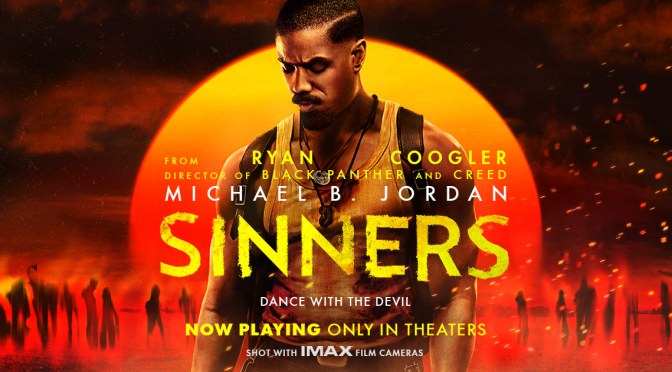
Cinema Review: Sinners (2025) – a blazing, bold and bloody blues opera!

Cinema Review: Sinners (2025)

Directed by Ryan Coogler

Written by Ryan Coogler

Produced by Zinzi Coogler, Sev Ohanian, Ryan Coogler

Main cast: Michael B. Jordan, Hailee Steinfeld, Miles Caton, Jack O’Connell, Wunmi Mosaku, Jayme Lawson, Omar Miller, Delroy Lindo, etc.

Cinematography by Autumn Durald Arkapaw


After the bleakly lustful vision of Robert Eggers’ Nosferatu (2024) — a film steeped in shadow, dread, and tragic sensuality — Ryan Coogler offers a wildly different, electrifying take on the vampire mythos: a bold, colourful, and deeply soulful experience that pulses with life even as it drinks from the dead. Where Eggers lingers in gothic majesty, with Sinners (2025), Coogler surges forward with kinetic energy, blending grind-house thrills and emotional depth with From Dusk Till Dawn-style narrative turns.

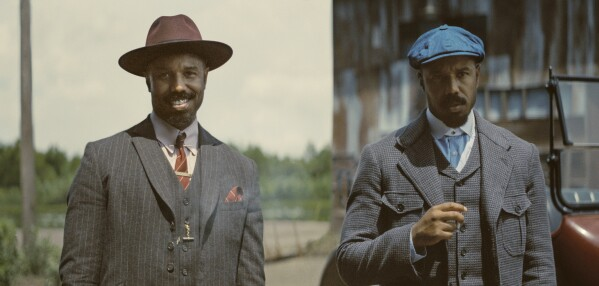
Coogler’s film is set in the richly textured American South of the 1930s, a world still nursing the scars of the Great War and on the cusp of social upheaval. Into this volatile landscape, he drops the muscular Michael B. Jordan as twin war veterans turned Chicago gangsters, Smoke and Stack — men who carry both physical and spiritual wounds from the trenches — now repurposed as businessman looking to set up a juke joint. These characters feel reminiscent of the working class anti-heroes of Peaky Blinders, their emotional trauma rendered in everything from flickering glances to bursts of brutal, operatic violence. The twins have ghosts of the past and present to battle including relationship issues with Stack’s ex-girlfriend, Mary (Hailee Steinfeld), as well as Smoke’s painful reunion with his wife, Annie (Wunmi Mosaku).

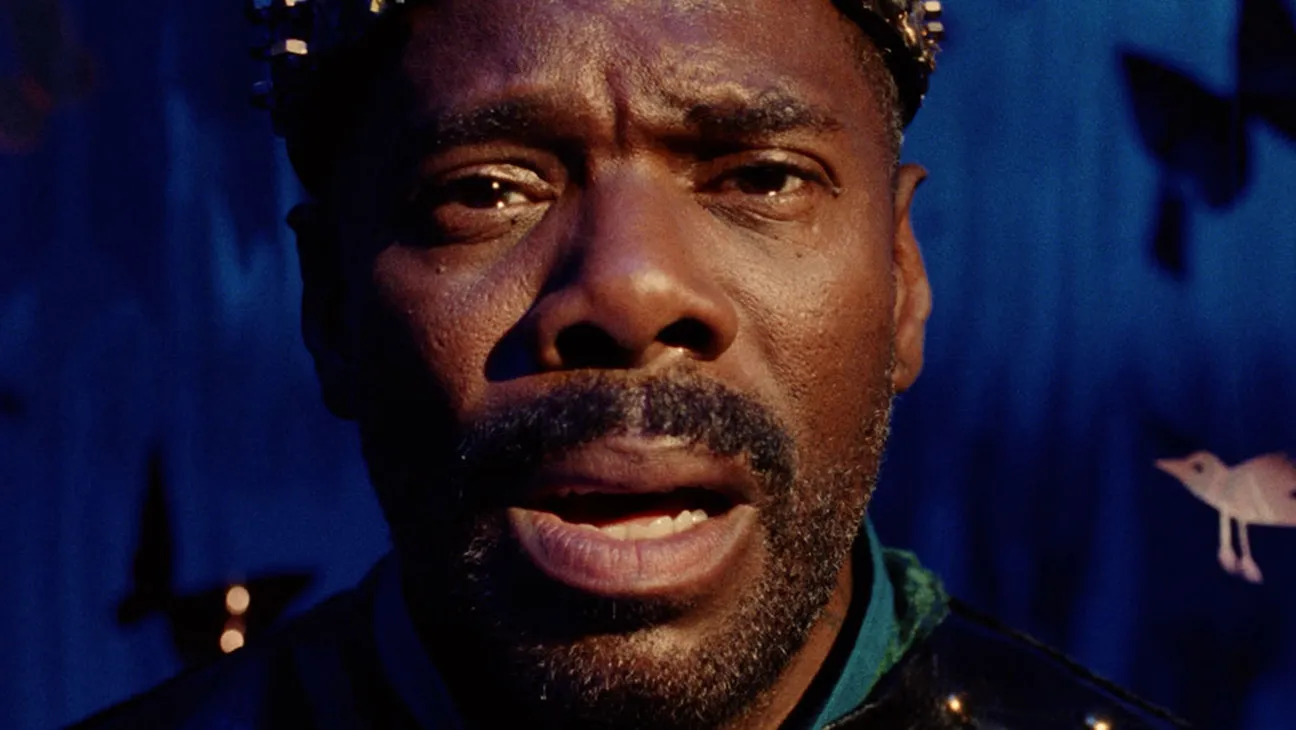
Sinners (2025) plot is muscular and sinewy, establishing the characters impressively before shifting the moody Southern gothic tale into an all-out genre-bender. The film contains a fine ensemble cast knitting a series of substantial supporting characters each with their own personalities, humour and wants. The most striking is Miles Caton as the twins’ cousin, Sammie “Preacher Boy” Moore, a young blues musician with an incredible ability, that proves to be a somewhat dangerous talent. Delroy Lindo also throws in another memorable performance as the ebullient pianist, Delta Slim. With the first night’s festivities in full swing three mysterious strangers appear from the near dark, desiring to be let in. Their leader is charismatic Remmick (Jack O’Connell) and he has more than partying in mind.


Visually, Coogler lets his imagination loose, notably in a memorable cross-generational musical montage that literally burns up the cinema screen. Gone is the shadow-heavy monochrome of Eggers; in its place is a palette of dusk reds, moonlit silvers, and deep bayou greens. The film pulses with colour, sex, motion, and sweat. Blood flows, but it never feels gratuitous — it feels earned, ritualistic, even sacramental. But what ultimately makes Coogler’s film so potent is its soul. Amid the genre thrills and gore, there’s a beating heart full of soul. These vampires are not romanticised, nor merely feared; they are hungry creatures. Coogler gives them back their humanity, and in doing so, reanimates the genre with urgency.

Music is where the film truly soars. Coogler and his production team, attuned to the cultural pulse, curate a soundtrack that fuses Delta blues, Appalachian folk, and early jazz into a feverish, ghostly soundscape. There are scenes where the music alone tells the story: a backwoods funeral scored by a bone-dry slide guitar; a juke joint confrontation where the rhythm of violence matches the stomp of the blues; a haunting lullaby sung by Remmick the migrant vampire that channels generations of sorrow. It is music as memory, as resistance, as raw emotional texture.

Sinners (2025) is not just a vampire film. It’s a blues opera. A folk horror elegy. A pulpy, poignant, and powerfully visceral story about the things that haunt us, and how we fight to keep our humanity intact. What begins as a slow-burning period drama smolders into a blood-soaked explosion of action and moral reckoning. Coogler even delivers a Klan-blasting and redemptive shoot-out final act set-piece. Lastly, in Coogler’s hands, the vampire becomes more than a monster; it’s a metaphor for trauma, addiction, religion, racism, and survival. Coogler reclaims the myth for a new generation, one shaped by history, crime, grief, music, and spiritual struggle, delivering a genre masterpiece that bites deep and lingers long after the lights come up.

Mark: 9.5 out of 11


Apple TV+ Film Reviews – Part Two

Apple TV+ Film Reviews – Part Two

As is standard procedure when one creates a part one of a series, the logical and linear progression is to have a part two. So, having watched the majority of the AppleTV+ films currently streaming I now move onto part two. The first set of reviews can be found here:


Coda (2021)

For some unknown alphabetical amnesia I forgot to include this Oscar -winning film in the first set of reviews, so I rectify that omission now. Arguably one of the best films on the platform, it is simultaneously a feelgood, tearjerker and a Save-the-Cat-screenplay-template-box-ticker hitting wholly familiar beats and a well-trodden genre path. Nonetheless, it is a terrifically entertaining, moving, funny and heart-warming story which, on reflection kind of surprisingly won the Academy Award for best film. I personally think another remake West Side Story (2021) was a far more scintillating work of cinema, but hey what do I know? My original review of Coda (2021) can be found below. Mark: 9 out of 11.


Ghosted (2023)

Of late Chris Evans has been choosing roles, as with Red One (2024), that go against the Alpha-heroic persona of Captain America. Unfortunately, Knives Out (2019) aside, the results are average at best. Aside from a series of amusing cameos in the middle act, not even the alluring Ana De Armas can save this clunky AI-written-spy-romance. With better scripting and direction this attractive action fluff could’ve been almost bearable. I remember when Dexter Fletcher made really good low-budget indie films like Wild Bill (2011). Mark: 5 out of 11.


The Gorge (2025)

I really enjoyed this big-budget-romantic-monster shoot-em up. I need to watch it again sober before deciding if it is going to make my top films of the year list or did I love it because I was drunk. Miles Teller and Anya Taylor-Joy revel in fine on-screen chemistry as the physical and symbolic divide provides no barrier to their lustful wants. My full review can be found below. Mark: 8.5 out of 11.


The Greatest Beer Run Ever (2022)

Likeable every-guy, Chickie Donohue (Zac Efron), has the crazy notion of hand delivering beer to his buddies fighting in Vietnam. But his naïve morale-boosting trip soon becomes an eye-opening and perspective changing nightmare. There’s a really good dramatic character arc in this historical 1968-set “road” movie but the comedic tone dilutes the overall catharsis of the journey. Efron is full of energy while the formidable presence of Russell Crowe is memorable if woefully under-used. Mark: 7 out of 11.


Greyhound (2020)

A fast-paced and technically impressive WW2 film with Tom Hanks portraying the Commander of a destroyer battling to survive an enemy onslaught amidst a part of the sea called ‘the Black Pit’. It’s been a while since I watched this but recall it being a solid suspense thriller with great production design and effects, although a little light on meaty character development. Mark: 7 out of 11.


The Instigators (2024)

Matt Damon and Casey Affleck team up once again for this underdog heist film which tries to be funny and dramatic, but misses the nuanced tone a director like Steven Soderbergh can deliver. I kind of enjoyed this because I like Damon, Affleck and Hong Chau, but many scenes suffer from the sense the actors are “improvising” and rewriting the script as they go along. Also, why can’t we have some proper 1970’s hard-boiled crime films like Sam Peckinpah and David Mamet used to deliver. Not all robbery films have to have one-liners throughout. Mark: 6 out of 11.


Killers of the Flower Moon (2023)

My critical feelings of Martin Scorsese’s most recent epic did not shift on the second watch. This profile of the horrors that befall the Osage people after they have struck oil remains compelling. Indeed the film contains powerful themes relating to the greed, power and psychopathy of the white man, but focusing the main thrust of the narrative from their perspective creates a skewed and oddly unimpactful viewing experience. Of course, Scorsese’s filmmaking expertise shines through and the performances are terrific. Mark: 8 out of 11. My full review is here:


Luck (2022)

I felt more than a tad unlucky after watching this animated misfire which didn’t work on any level. I know hundreds of crafts-people worked hard creating this, but why not spend a bit more time on the script. Or film another script altogether. The fact that the budget for this film is reported to be $140 million and there are people starving in the world is a travesty against humanity. Mark: 3 out off 11.


Napoleon (2023)

I haven’t had the spiritual gumption to re-watch this messy biopic from Joaquin Phoenix and Ridley Scott. There’s a four-hour directorial version to contemplate watching too. Oh, if only Stanley Kubrick had made his version. My original review is below. Mark: 7 out of 11


Palmer (2021)

Justin Timberlake again proves himself an adept leading man, having successfully graduated from the Disney-groomed production line he started out on. Palmer (2021) is overall a well-acted and directed redemptive crime drama, which also tackles themes relating to gender nonconformity to differentiate the well worn “parolee-trying-to-go-straight” narrative. Mark: 7 out of 11.


Sharper (2023)

Sharper (2023), directed by Benjamin Caron, skillfully uses classic con artist film tropes to craft a layered and compelling drama. By blending familiar elements of the genre with sleek cinematography and a nonlinear narrative, the film elevates itself above typical heist fare and leans into character-driven storytelling. The terrific cast, notably Julianne Moore, have fun with a genre script containing emotional depth, deliberate pacing, and decent characterisation. Mark: 7.5 out of 11.


Tetris (2023)

Tetris (2023), directed by Jon S. Baird, turns the unlikely origin story of a video game into a surprisingly engaging Cold War-era techno-thriller—at least for a while. Rooted in real historical tensions, the film smartly weaves espionage, corporate greed, and political paranoia into the story of how a simple puzzle game became a global phenomenon. However, its descent into exaggerated action sequences, particularly the climactic chase, turns it into something closer to parody than period drama. It’s a film that ultimately undercuts the suspense by choosing spectacle over substance. Mark: 7 out of 11


Apple TV+ Film Reviews – Part One

Apple TV+ Film Reviews – Part One

Apple TV+ has had an interesting trajectory since it launched in November 2019. While it entered an already crowded streaming landscape, it quickly distinguished itself—particularly with its high-quality original series, even as its film offerings have been a bit more inconsistent.

Apple TV+ has rightly earned a reputation for premium TV content, often described as “curated” and “prestige-focused.” Some standout series include: Ted Lasso, Slow Horses, Pachinko, Severance, The Morning Show, Bad Sisters, Dickinson, and many, many more. These shows share a few key traits: strong writing, high production values, and a willingness to take creative risks. Apple’s deep pockets have allowed them to secure A-list talent and give creators the freedom to execute ambitious visions.

When it comes to films, Apple TV+ has seen a less consistent track record. While the platform has had some critical hits, the overall output hasn’t matched the buzz or consistency of its series. Over the last year or so I have watched the majority of the films they have produced and have now consolidated them in a series of short reviews for your consideration. Marks out of 11 and links to the longer reviews where applicable.


A Charlie Brown Thanksgiving (1973)

A trip down memory lane watching this classic short focusing on the quirky adventures of hapless Charlie Brown, his friends and of course, Snoopy. Simple, but effective animation, and wonderfully mellow soundtrack make this a memorable comfort watch. Mark: 8 out 11


Argylle (2024)

Matthew Vaughn’s directorial career started really strongly and he soon carved out an excellent C.V. consisting of some fantastically entertaining genre films. But this tonally chaotic spy comedy-actioner is so laughably awful I actually thought I was watching an Airplane-style parody. The mildly-meta screenplay offers the occasional spark and Sam Rockwell is great as always. Mark: 4 out of 11


The Banker (2020)

Absorbing drama based-on-the-true-story of two entrepreneurs, portrayed brilliantly by Anthony Mackie and Samuel L. Jackson, who expertly circumnavigate the racism of 1950s while starting a successful real estate business. Nicholas Hoult also excels as the eager front man they employ to be the face of their business. Mark: 8 out of 11


Blitz (2024)

“. . . Blitz (2024) is McQueen’s beautifully filmed and noble testament to the strength and resilience of the human spirit during wartime.” Read the full review here. Mark: 8 out of 11.


Bread and Roses (2023)

A gut-wrenching documentary about the female activists protesting the oppressive decision to deny them the rights to education past sixth grade, work, and walking unaccompanied in public following the Taliban’s takeover of Afghanistan. One of those humanist documentaries that leaves you feeling depressed and powerless at the injustice of such grave socio-political events. The women at the heart of the film show incredible bravery in the face of threats, violence and ultimately murder. A compelling yet almost impossibly sad watch. Mark: 9.5 out of 11


Causeway (2022)

Character drama centring on themes relating to PTSD and grief, presents fine acting performances from Jennifer Lawrence and the fantastic Brian Tyree Henry. Compelling indie vibes bubble along without ever coming to a serious boil. Lawrence’s company co-produced this film and Bread and Roses (2023), before undoing a lot of the good work with the weirdly well-reviewed but pretty dire, fake-naked comedy, No Hard Feelings (2023). Mark: 7 out of 11.


Cherry (2021)

The Russo brothers certainly know how to deliver an entertaining and homogenous Marvel blockbuster, but this Tom Holland PTSD-burnout crime drama is over-directed, over-long and overall a painful misfire. Mark: 5 out of 11.


Emancipation (2022)

A very solid period drama with Will Smith as an escaped slave, Peter, who battles against the odds to find freedom. Covers much of the same ground as other better emancipation and war films, but Antoine Fuqua delivers stirring genre cinema with Ben Foster, once again, stealing scenes as a vicious slave hunter. Good story although the civil war fighting came too late in the final act structure for me. Mark: 7 out of 11.


The Family Plan (2023)

The normalization in Hollywood of the government assassin theme dominates this entertaining garbage with Mark Wahlberg as a suburban family guy with a hidden secret. Some okay gags and shoot-out action amongst the AI-created plot that’s based on about twenty different way better movies. Mark: 5.5 out of 11.


Finch (2021)

Tom Hanks stars as the eponymous Finch, in this stylish “last-man-on-Earth” apocalyptic drama. I loved the design and look of this film but dramatically it unfortunately it’s not as roasted as the radiated Earth it’s set on. Echoes of Castaway (2000) meets Silent Running (1972) but Hanks just doesn’t let rip as he did on the desert island or as much as the pulsating Bruce Dern did. So, Finch (2021) is mostly too sombre and understated for me to recommend wholeheartedly. Mark: 6.5 out of 11.


Fly me to the Moon (2024)

There’s a really good historical drama, a really good romantic comedy, a really good sci-fi-conspiracy thriller and really good satire in Fly me to the Moon (2024), however, such genres overlap and suffocate each other ultimately during the running time. Channing Tatum and Scarlett Johannson add shine and depth to their characters, yet the tonal shifts from serious space race drama to camp fake moon landing and filmmaking gags stop the film from really soaring into orbit. Still, there’s a lot to enjoy about this beautifully rendered and pacy late-60s era production. Mark: 7.5 out of 11.


Apple TV+ Film Review: The Gorge (2025) – an exciting sci-fi shoot-em-up with a nuclear-powered romance!

Apple TV+ Film Review: The Gorge (2025)

Directed by Scott Derrickson

Written by Zach Dean

Produced by David Ellison, Dana Goldberg, Don Granger, Scott Derrickson, C. Robert Cargill, Sherryl Clark, Adam Kolbrenner, Zach Dean and Gregory Goodman.

Main cast: Miles Teller, Anya Taylor-Joy, Sigourney Weaver and Sope Dirisu.

Cinematography by Dan Laustsen


Action romance genre films are notoriously tricky to get right because they require a delicate balancing act between two genres that often have conflicting priorities. So, for every great action romance film such as The African Queen (1951), Romancing the Stone (1984), Last of the Mohicans (1992), and Casino Royale (2006), you can end up with unbalanced and indifferent ones like: Mr. & Mrs. Smith (2005), The Tourist (2010), This Means War (2012), and the recent filmic travesty, Ghosted (2024).

Successful action romance films must find the sweet spot between playing with high-stakes action, pulsating adventure and effervescent charm. Above all else, as the vehicles race, hearts pound and bullets ping there must be electricity and chemistry between the two leading actors. The audience must care not only about the characters, but must believe the characters care passionately for each other as they fight to survive. A successful combination of action, pace, wit, charisma and emotional depth is the key. So, does the recent Apple TV+ blockbuster, The Gorge (2025) achieve this difficult feat? I think overall it does, even considering that it even throws in fantastical horror elements too.


Scott Derrickson, a really good genre filmmaker, directs Miles Teller as Levi Kane, and Anya Taylor-Joy as Drasa. They are two highly-trained East / West operatives appointed to guard towers on opposite sides of a vast and highly classified gorge, protecting the world from a mysterious evil that lurks within. They are each advised NOT to make contact with the other, but rules are made to be broken eh! A lot of fun is had as the two court each other. The two characters redefine the meaning of a long-distance relationship. After connecting romantically across the gorge Levi and Drasa’s passion is then threatened by the hideousness that lies beneath. When the action kicks in the established romance really made me care about these characters, even as further incredible plot details are revealed.

I had an absolute blast with The Gorge (2025). It’s just the kind of big-budget-B-movie I enjoy when done right. With its seriously attractive leads, a shadowed, stylish setting, and a story that gleefully veers into the fantastical and downright monstrous, it was a wild ride from start to finish. Anya Taylor-Joy and Miles Teller share an electric physical and emotional chemistry that truly lights up the screen as every moment they’re together feels charged. Moreover, the action sequences are sharp, inventive, and genuinely thrilling. The Gorge (2025) is the kind of guilty pleasure film that I don’t feel guilty about enjoying at all. Stylish chaos, star power, and some surprisingly sincere moments? I was all in!

Mark: 8.5 out of 11


Cinema Review: Mickey 17 (2025) – a multi-faceted sci-fi adaptation that leaves one drunk, but somehow still thirsty!

Directed by Bong Joon Ho

Screenplay by Bong Joon Ho – Based on Mickey 7 by Edward Ashton


Produced by Dede Gardner, Jeremy Kleiner, Bong Joon Ho and Dooho Choi

Main Cast: Robert Pattinson, Naomi Ackie, Steven Yeun, Toni Collette, Mark Ruffalo, Patsy Ferran, Cameron Britton, Daniel Henshall, Anamaria Vartolomei, etc.

Cinematography by Darius Khondji


Bong Joon Ho’s adaptation of Mickey 7, the 2022 sci-fi novel by Edward Ashton, showcases a compelling convergence of the director’s distinctive thematic interests with the novel’s narrative. Known for his ability to blend genre elements with incisive social commentary, Bong’s version of Mickey 7, now titled Mickey 17 (2025) is a comedic, at-times-crazy and imaginative sci-fi film exploring human resilience, class struggles, scientific malpractice, environmental abuse, genocidal terra-forming, plus the existential impact of technology within the workplace.

Robert Pattinson is the eponymous Mickey, a “disposable” worker sent on perilous missions to terra-form a distant planet, with his life repeatedly put in danger only for him to be replaced if he dies. This directly ties into Bong’s recurring exploration of human resilience in the face of dehumanizing systems, something seen in his earlier films, such as Snowpiercer (2013) and Okja (2017). Bong’s protagonists are often ordinary people facing systems designed to strip away their individuality, and Mickey’s repeated resurrections emphasize the fragility of life within these systems.

Another prominent theme in Bong’s films is the exploration of class and social inequality. In Parasite (2019), he delved into the gap between the wealthy Park family and the impoverished Kim family, using the home as a microcosm of societal hierarchies. In Mickey 17 (2025), the corporate-driven space mission echoes the exploitation seen in these films. Mickey’s status as an expendable worker mirrors the broader economic systems that exploit individuals for labour without regard for their well-being. The fact that Mickey is repeatedly discarded without consequence is an unsettling reflection of how capitalist structures often devalue human life for the sake of profit.

Bong has always critiqued the alienation of labour, especially how working-class individuals are treated as replaceable cogs in the machine. In Mickey 17 (2025), this theme is amplified as Mickey’s life is literally expendable, offering a stark commentary on the commodification of labour within the context of futuristic colonization. The struggle for survival and dignity, against an uncaring corporate entity, will likely resonate with themes Bong has previously explored. Likewise, in Memories of Murder (2003), the search for truth is tied to the characters’ understanding of themselves and their roles in society. Such societal and existential crises fit perfectly with Bong’s broader thematic preoccupation with the fragility of the human experience in the face of overwhelming, often oppressive, external forces. The question remains: is Mickey 17 (2025) any good?


Robert Pattinson, who plays various versions of the titular character Mickey, brings his signature range of brooding intensity and offbeat charisma to the role. His performance is a key part of what makes the film such an intriguing watch. Pattinson excels in portraying Mickey’s emotional journey—a man repeatedly resurrected after dying in increasingly perilous circumstances, struggling with his own identity, and questioning the morality of the system that disposes of him so easily. However, Pattinson’s performance also contributes to the film’s unevenness. While his portrayal is captivating, the character’s arc and motivations can occasionally feel too vague or inconsistent, leading to moments where it’s unclear whether Mickey is supposed to be a tragic figure, a comic relief, or something in between.

The visual effects in Mickey 17 (2025) are nothing short of stunning. Bong Joon Ho, along with his team, creates a visually immersive universe, blending futuristic technology, the planet landscapes of Niflheim, quirky alien creatures and mind-bending visuals to evoke a sense of awe. The digital photo-copying resurrection process that Mickey undergoes is a feat of visual storytelling, with the film using cutting-edge effects to show Mickey’s multiple deaths and resurrections in creative and striking ways. The film’s alien planet, with its strange, luminous terrain and exotic creatures, also adds a surreal and fantastical quality to the narrative. Indeed, the theme of environmental and indigenous protection is vital, but does eventually clash with that of the existential worker.

Where Mickey 17 (2025) truly shines—and stumbles—is in its wacky, unpredictable storytelling. Bong Joon Ho has always been a director unafraid to blend genres and tones, and here he creates a narrative that swings wildly between dark comedy, sci-fi absurdity, and existential dread. One moment, you’re laughing at Mickey’s off-kilter interactions with his fellow colonists, and the next, the film veers into dark, serious territory as Mickey grapples with his own mortality and the ethical dilemmas of his existence. Moreover, the film’s narrative structure itself is erratic. There are moments where the plot careers off course, lost in the chaos of its high-concept premise.

As Robert Pattinson’s charismatic, multi-faceted performance anchors the film, the performances of Mark Ruffalo and Toni Collette—as the grotesque antagonists—topple the tone too far into bad theatre. Finally, Bong Joon Ho’s trademark brilliance is evident throughout, but Mickey 17 (2025) ultimately suffers from the very risk-taking that makes it unique. It’s a thrilling, uneven ride that fascinates, frustrates, makes one laugh and leaves you with a lot to think about—once the space dust has settled. Perhaps I should have had what Bong Joon Ho and his production team were drinking before I watched it. If so, I should certainly of made it a double!

Mark 7.5 out of 11


Cinema Review: Black Bag (2025) – Christie meets le Carré in this stylish, sexy and witty spy whodunnit!

CINEMA REVIEW: BLACK BAG (2025)

Directed by Steven Soderbergh

Written by David Koepp

Produced by: Casey Silver, Gregory Jacobs

Main cast: Cate Blanchett, Michael Fassbender, Marisa Abela, Tom Burke, Naomie Harris, Regé-Jean Page, Pierce Brosnan, etc.


Cinematography by Peter Andrews

*** MAY CONTAIN SPOILERS ***


Steven Soderbergh’s career has been nothing short of a cinematic roller-coaster, blending big-budget spectacle, indie sensibilities, and a keen embrace of genre films in ways that defy easy categorisation. What makes his career so distinctive is his ability to seamlessly navigate between these different filmmaking realms, constantly evolving while retaining a unique voice and artistic freedom. His latest film Black Bag (2025) is a striking, starry, and decent-budgeted genre effort.

Soderbergh first rose to prominence with Sex, Lies, and Videotape (1989), a low-budget indie that catapulted him into the spotlight. The film’s success established him as one of the defining voices of American independent cinema during the 1990s. His subsequent works, such as Kafka (1991) and The Underneath (1995), reflected his interest in experimenting with narrative structures and visual styles, blending genre conventions with deep, sometimes surreal exploration of characters. These works were still firmly rooted in indie filmmaking, but they hinted at a growing ambition and versatility in his cinematic process.

Then, in the late ’90s and early 2000s, Soderbergh took a bold leap into big-budget territory. His Ocean’s Eleven (2001) series stands as a perfect example of his ability to handle mainstream, star-studded films with finesse. It combined slick, fast-paced storytelling with elements of the heist genre, demonstrating that Soderbergh could not only handle massive budgets but could also bring style, wit, and substance to a genre film. However, Soderbergh was never one to be pigeonholed, and in the same decade, he also directed both Erin Brockovich (2000) and Traffic (2000), both socially conscious, multi-layered dramas, with the latter about the war on drugs. Traffic earned him an Academy Award for Best Director, proving that Soderbergh but could also tackle politically charged narratives with profound depth.

Having moved back to indie filmmaking with The Bubble (2005) and The Girlfriend Experience (2009), Soderbergh made another unexpected turn with Magic Mike (2012), which, despite its premise (a male stripper drama), was a sharp social commentary on gender, exploitation, and masculinity. This film not only tapped into a niche market but was also a critical success, further cementing his ability to bring depth to various genres, whether mainstream or niche. Even when he announced his “retirement” from directing in 2013, he still found ways to work in other mediums, such as producing and experimenting with quality television (The Knick), and in 2017, he returned to directing with Logan Lucky (2017), a heist comedy that balanced mainstream appeal with Soderbergh’s signature offbeat style.


Soderbergh’s ability to jump between blockbuster entertainment and intimate, experimental narratives has been the hallmark of his career. Yet for me his serious genre dramas like the aforementioned Traffic (2000), plus Contagion (2011), Side Effects (2013), and his most recent project, Black Bag (2025) represent the pinnacle of his narrative precision and impact, solidifying his reputation as one of the best directors in genre cinema. One could argue that Black Bag (2025) leans heavily on spy film tropes, yet it has a certain emotional and conspiratorial depth beneath the familiar beats and sheen.

What sets these films apart from the rest of Soderbergh’s career is the seamless way in which he blends his usual intellectual ambition with a masterful, almost surgical delivery of genre tropes. Whether tackling the global panic of a viral outbreak in Contagion (2011), the psychological twists of a modern Hitchcockian thriller in Side Effects (2013), or the high-stakes political intrigue in Black Bag (2025), where a deadly uber-weapon McGuffin falls into the wrong hands. Here master-agent George Woodhouse (Michael Fassbender) must track down a mole, who may-or-may-not be one of his colleagues or indeed his wife, Kathryn (Cate Blanchett).

Black Bag (2025), expertly combines spy-game thrills within a series of “who’s-cheating-on-who” twists. It certainly helps that Soderbergh is working with an exceptionally crafted script from David Koepp and a cast to die for. Fassbender, Blanchett and Tom Burke especially stand-out, with Fassbender delivering yet another masterclass in filmic understatement. Overall, it’s a viciously funny and sexy genre piece that combines Agatha Christie, classic espionage thrillers and Soderbergh’s trademark framing, lens and lighting tricks. It’s the kind of genre filmmaking where every scene, every act, every word, every frame and every moment serves a narrative purpose. It’s a handsome bit of cinema and my word is my Bond!

Mark: 8.5 out of 11


Cinema Review: Hard Truths (2024) – an unflinching look at a family struggling with depression.

CINEMA REVIEW: HARD TRUTHS (2024)

Directed by Mike Leigh

Written by Mike Leigh

Produced by Georgina Lowe

Main Cast: Marianne Jean-Baptiste, Michele Austin, David Webber, Tuwaine Barrett, Ani Nelson, Sophia Brown, Jonathan Livingstone, etc.

Cinematography by Dick Pope

*** MAY CONTAIN SPOILERS ***


Mike Leigh’s career has been defined by an unflinching exploration of everyday existence, shaped by a commitment to realism and a deep understanding of human behaviour. His films, whether contemporary or period pieces, dissect the nuances of ordinary lives, often capturing the struggles, aspirations, and quiet triumphs of working- and middle-class individuals. His signature improvisational approach—where actors develop their characters through extensive rehearsal—allows for an organic authenticity that makes his work resonate with honesty and emotional depth.

Leigh’s early films, such as Bleak Moments (1971) and Nuts in May (1976), established his interest in the mundanities and disappointments of daily life. His later films, such as High Hopes (1988) and Life is Sweet (1990), continued this trend, portraying ordinary people navigating personal and societal challenges with humour and pathos. Secrets & Lies (1996), one of his most acclaimed works, epitomizes his fascination with human vulnerability, as it dissects family relationships, race, and identity in a way that feels raw yet tender.

Leigh’s career trajectory has also included excursions into period dramas, notably the heart-wrenching, Vera Drake (2004) and arguably his most political film, Peterloo (2018). But rather than abandoning his focus on the intricacies of human experience, he applies the same observational precision to historical subjects. Topsy-Turvy (1999), about the creation of Gilbert and Sullivan’s The Mikado, examines the creative process with the same detail he grants his modern-day working-class protagonists. Mr. Turner (2014), a biopic of the painter J.M.W. Turner, similarly explores the artist’s struggles, eccentricities, and societal context without falling into the clichés of the genre. These films reveal that, for Leigh, the past is not a grand spectacle but an extension of the same human complexities that define his contemporary work.


His latest film, Hard Truths (2024), follows in this tradition, delving into the stark realities of its characters with the same empathy and directness. Set in London in the present day, it focuses on the Deacon family unit and extended relations, notably two personality-divergent sisters, Pansy Deacon (Marianne Jean-Baptiste) and sibling, Chantelle (Michele Austin). Pansy is a middle-aged London housewife whose relentless irritability and sharp tongue mask a deep-seated inner turmoil. Her acerbic interactions—whether berating her husband Curtley, chastising her son Moses, or lashing out at unsuspecting strangers—serve as both a source of dark humour and a window into her dissatisfaction with life. Indeed, some of her rants are absolutely laugh-out-loud hilarious.

Leigh’s nuanced direction ensures that while Pansy’s outbursts may elicit laughter, they simultaneously reveal the tragic underpinnings of her character. Her vitriolic remarks, often delivered with biting wit, are symptomatic of her internal struggles, painting a portrait of a woman grappling with unarticulated pain. This duality is evident in scenes where Pansy’s caustic rants thinly veils her profound sense of isolation and despair. The film delves deeper into Pansy’s psyche during interactions with the more upbeat, Chantelle. A pivotal moment occurs during a Mother’s Day visit to their mother’s grave, where Chantelle confronts Pansy about her pervasive anger. Pansy’s anguished admission, “I don’t know!” encapsulates the bewildering nature of her depression, highlighting how her defensive humour serves as a barrier against this insidious mental illness.

Marianne Jean-Baptiste’s absorbing portrayal brings emotional depth to Pansy’s character, capturing the delicate interplay between her abrasive exterior and the fragility it conceals. Similarly, Michele Austin brings light and optimism to the screen, along with her effervescent daughters, somehow striving to combat the all-pervasive cloud of depression. Some of my favourite scenes of the film were with Chantelle in conversation with customers in her hair salon. Thus, in essence, Hard Truths (2024) presents a compelling character study that intertwines humour with the sombre realities of depression. Through Pansy Deacon, Leigh illustrates there are no easy answers to the pain of an affliction that remains silent and invisible but is ever-present within everyone’s lives.

Mark: 8 out of 11


Cinema Review: The Brutalist (2024) – There will be Concrete!

CINEMA REVIEW: THE BRUTALIST (2024)

Directed by Brady Corbet

Written by: Brady Corbet & Mona Fastvold

Produced by Trevor Matthews, Nick Gordon, Brian Young, Andrew Morrison, Andrew Lauren, D.J. Gugenheim and Brady Corbet
.

Cast: Adrien Brody, Felicity Jones, Guy Pearce, Joe Alwyn, Raffey Cassidy, Stacy Martin, Emma Laird, Isaach de Bankolé and Alessandro Nivola.

Cinematography Lol Crawley

Edited by Dávid Jancsó

*** MAY CONTAIN SPOILERS ***


A new wave of American filmmakers—directors like Todd Field, Robert Eggers, and Brady Corbet—have emerged as some of the most technically proficient and ambitious voices in contemporary cinema. Their work is marked by rigorous formal control, deep thematic ambition, and an almost obsessive dedication to craft. These filmmakers, arguably influenced by auteurs like Sofia Coppola and Paul Thomas Anderson, demonstrate an understanding of film language that is both deeply referential and boldly experimental. Whether it’s Eggers’ meticulous historical recreations, Field’s austere and cerebral storytelling, or Corbet’s overtly intellectualized narratives, they all exhibit an undeniable mastery of their medium. Their films, often dense with literary and philosophical allusions, cater to cinephiles who relish formal precision and narrative audacity.

Yet, for all their brilliance, there’s an argument to be made that their work veers into self-indulgence, if not outright pretension. Their films sometimes feel like exercises in artistic superiority, catering to an audience that appreciates the challenge but perhaps not the emotional accessibility that cinema can offer at its best. Whether it’s the cold remove of TÁR (2022), the self-serious mythologizing of The Lighthouse (2019), or the arch, affect-laden approach of Vox Lux (2018), these works often feel encased in a layer of knowing detachment. There’s a fine line between intellectual rigor and a kind of smug, insular artistry, and some critics argue that these filmmakers, however talented, sometimes tip too far in the latter direction—prioritizing aesthetic and conceptual ambition over genuine human connection. I mean, I love a lot of these filmmakers’ work, but I was raised on the American films of Coppola, Scorsese, DePalma, Spielberg, Lucas and Friedkin; auteurs who knew their art, but also how to entertain the audience too.


In Corbet’s, and film partner’s Mona Fastvold’s, phenomenally designed and constructed film, The Brutalist (2024), Adrien Brody portrays fictional László Tóth, a Hungarian-Jewish architect and Holocaust survivor. Brody’s is an incredibly memorable piece of work, acting as a spiritual performance sequel to his Oscar-winning role in The Pianist (2002). But rather than focus on an individual attempting to escape the Nazis during the war, the narrative concentrates on Tóth, who arrives in post-war America with nothing but his talent and ambition, only to find himself trapped in a system that celebrates his work while rejecting him as a person. In America, racism is delivered with a smile, and generosity is a means of control. High society rewards Tóth but also suffocates him with subtle condescension, as he is paraded around as an artistic trophy but never fully embraced as an equal.

As an epic character study of the life of an immigrant and exploitation of the financially stricken Jew in America, The Brutalist (2024), is a powerful work. Such themes compel us to think of today and the fact that America continues to struggle with the integration of people travelling there, even though it was built with the hands of migrant families. Here the screenplay exerts true power in critiquing the United States’ treatment of those travelling to America with hope. As the narrative unfolds across the decades, Corbet, Fastfold and Brody illustrate the slow erosion of Laslo’s dreams in an America that welcomes his work but not his humanity. As the key antagonist, Harrison Lee Van Buren, Guy Pearce delivers another chilling and precise character study. Van Buren is a spoilt, rich and brattish man whose charm and refinement mask a deeply exploitative nature.

Photographically, The Brutalist (2024) is indeed a work of art. Lol Crawley and the production team immerse viewers in a stark, architectural visual language—monolithic structures, rigid compositions, and a muted, desaturated color palette mirroring the emotional and physical isolation Tóth experiences. Yet, for for all its incredible craftsmanship and bold cinematic ambition, the film is a test of endurance—an unrelenting, patience-draining experience that stretches well beyond three hours. Even the inclusion of chapters, and a self-consciously “prestigious” intermission only serve to amplify the film’s pretensions, prolonging the agony of watching layer upon layer of misery unfold like a slow-moving roller-coaster that induces motion sickness with no escape. It’s a brilliant film that demands submission rather than engagement, wielding its bleakness like a weapon against the audience’s stamina. It will probably win the Academy Award for Best Film. That or Wicked (2024).

Mark: 8 out of 11


Cinema Review: A Complete Unknown (2024) – an electric but over-polished cover version!

CINEMA REVIEW: A COMPLETE UNKNOWN (2024)

Directed by James Mangold

Screenplay by James Mangold and Jay Cocks

Based on Dylan Goes Electric! by Elijah Wald

Produced by Peter Jaysen, James Mangold, Alex Heineman, Bob Bookman, Alan Gasmer, Jeff Rosen, Timothée Chalamet, Fred Berger etc.

Main cast: Timothée Chalamet, Edward Norton, Elle Fanning, Monica Barbaro, Boyd Holbrook, Scoot McNairy, Dan Fogler, etc.


James Mangold is rarely mentioned as one of the best directors around. Probably because he is not a flashy cigar-munching quote machine or a even a household name. Yet, he has consistently delivered a series of extremely entertaining genre films over the past few decades. These include: Copland (1997), Identity (2003), Girl, Interrupted (1999), Walk the Line (2005)3:10 to Yuma (2007), Logan (2017) and Ford v Ferrari (2019). His films always feature solid characterisation, compelling conflict and well-structured plots. They also have a pristine and attractive look and style. Further, they always attracts impressive A-list actors and striking ensemble casts. His cover version of the music biography, Dylan Goes Electric! by Elijah Wald is no different.

A Complete Unknown (2024) showcases events from the era of 1961 to 1965 where Dylan rose to major stardom delivering stunning and poetic lyrics with hypnotic melodies. This period culminates in his movement from acoustic guitar to full electric band, causing controversial and violent reactions from the audience and organisers of the Newport Folk Festival. This furore may seem mildly inconsequential in today’s social-media digital coliseum where intellectual debates are fought with emojis by individuals with nano-seconded attention spans. But for many, Bob Dylan’s perceived treachery of moving from the purity of folk over to the dark side of rock was a significant event of the epoch. Having said that, Dylan was always an enigmatic maverick and genius who marched to the time of his own drum. Thus, such audial rebellion was no surprise, especially when looking back at it now.


As a tribute to the incredible musical and writing brilliance of Dylan, A Complete Unknown (2024) is definitely worth a watch. Timothée Chalamet does a sterling job with the musicianship, mannerisms and vocal duties. He even brings a suggestion of character to someone who isn’t just a musician. Dylan’s a shape-shifter, a poet, a myth, a paradox wrapped in a harmonica riff. To play Dylan is not to “become” him but to capture the way he constantly eludes being known. Personally, I enjoyed Chalamet’s charismatic performance in Wonka (2023 more, but he is commanding as Dylan nonetheless. The supporting cast are terrific too, notably Edward Norton as the affable folk singer Pete Seeger and Boyd Holbrook as a muscular Johnny Cash. Mangold deserves much praise for getting so many consistently fine performances, even if the script could have been punched up with more drama throughout. Dylan being a bit of a self-driven “arsehole” and slight philanderer hardly raises the pulse.

Overall, Mangold directs with a sure hand and there are many fantastic musical set-pieces, gigs and recording sessions. But the film’s glossy sheen feels at odds with the grit of the 1960’s Greenwich Village folk scene. The world Dylan emerged from was smoky, messy, and filled with hungry artists scraping by in dimly lit coffeehouses, where folk music wasn’t just a style but a battle cry. A Complete Unknown (2024) captures the aesthetic—the period costumes, the dimly lit clubs, the jangling guitars—but everything feels just a touch too manicured, too cinematic. Dylan’s rise was not glamorous and the film makes the counterculture movement feel almost nostalgic rather than revolutionary. It’s an engaging snapshot, and Chalamet’s performance is undoubtedly compelling, but much like a pristine re-recording of an old folk song, the imperfections—the very thing that gave the music its soul—are missing.

Mark: 7.5 out of 11


Cinema Review: Nosferatu (2024) – At the Intersection of Horror and Eroticism!

Cinema Review: Nosferatu (2024)

Directed by Robert Eggers

Screenplay by Robert Eggers

Based on Nosferatu by Henrik Galeen and Dracula by Bram Stoker

Produced by Jeff Robinov, John Graham, Chris Columbus, Eleanor Columbus, Robert Eggers, etc.

Main Cast: Bill Skarsgård, Nicholas Hoult, Lily-Rose Depp, Aaron Taylor-Johnson, Emma Corrin, Willem Dafoe, Simon McBurney, etc.

Cinematography by Jarin Blaschke

Music by Robin Carolan

*** MAY CONTAIN SPOILERS ***


Firstly, Nosferatu: A Symphony of Horror, the 1922 silent German Expressionist vampire film directed by F. W. Murnau remains one of the greatest and most iconic horror films of all time. It is arguably the greatest adaptation of Bram Stoker’s, seminal gothic classic, Dracula, too. Of which there have been many. So, who would be brave enough to attempt to master another version of this often-told monstrous tale. Step forward the acclaimed and relatively young American auteur, Robert Eggers.

Robert Eggers has built a reputation for crafting films that blend mythical and fantastical elements with folk horror and psychological thriller sensibilities. His works often transport audiences to meticulously recreated period settings, which serve as the foundation for his exploration of human fears, desires, and the supernatural. His debut feature film. The Witch (2015) exemplified folk horror rooted in Puritanical fears of the supernatural. Set in 1630s New England, it drew heavily from folklore, historical accounts, and period-authentic dialogue. The film explored themes of isolation, religious paranoia, and the breakdown of a family due to their belief in the presence of witches.

Similarly, The Lighthouse (2019), a psychological thriller merged maritime folklore with hallucinatory horror. Set in the late 19th century, the film delved into isolation-induced madness as two lighthouse keepers grappled with mythological themes such as mermaids, sea gods, and Promethean punishment. Moreover, as with his short films Hansel and Gretel (2007) and The Tell-Tale Heart (2008) he is drawn towards established texts, with the bruising, battering ram of The Northman (2022) covering the original myth on which Hamlet was based. Eggers vision immersed the viewer in violence, Viking culture, shamanic ritual and mysticism. Unsurprising therefore, he has now delivered the German Expressionist classic, Nosferatu (2024) with his signature period aesthetic and focus on the macabre.


With a stellar cast, production design and incredibly stylish vision, Eggers has produced a praiseworthy example of fantastical cinema. As usual there appears to be meticulous historical research, including accurate costumes, set design, and period-specific dialogue. This attention to detail in Nosferatu (2024) grounds the supernatural elements in a believable world, enhancing their impact. Furthermore, Eggers creates a sense of dread through his use of sound design, stark cinematography, and claustrophobic settings. His restrained pacing allows for the gradual unraveling of characters’ psyches, making the supernatural elements more impactful.

Yet, while steeped in folklore, Nosferatu (2024) centres on human struggles—family disintegration, fate, guilt, madness, lust and sex. Indeed, Nicholas Hoult’s Thomas Hutter (née Harker) does not stand a chance. From the opening scene his sensual wife, Ellen, is inextricably linked via a lustful fever dream to a mysterious figure, who, if you couldn’t guess, is Count Orlok (an unrecognizable Bill Skarsgård). It is Ellen’s orgasmic connection across oceans of time which drives Orlok to lure Thomas away and commit blood-draining murder as he creeps cross-country and sails the seas from Transylvania to Germany. Ellen’s surreal and orgiastic desire unfortunately brings the plague and causes the death of extraneous supporting characters portrayed by the likes Aaron Taylor-Johnson and Emma Corrin. A note to say Willem Dafoe is as usual a joy as the ‘Van Helsing’ substitute.

Nosferatu (2024) is undeniably a sumptuous adaptation, brimming with signature attention to period detail, atmospheric dread, and a striking visual palette. However, for those seeking a viscerally terrifying Dracula film, the movie might fall short, leaning heavily into the realm of erotic horror and psychological tension rather than outright scares. While the stunning cinematography, the film’s shadow-drenched landscapes, intricate set design, and haunting score evoke the satanic allure of the original silent film this focus, however, shifts the film away from raw horror and toward a more introspective exploration of vulnerability and eroticism. Ultimately, the film’s reinterpretation of Count Orlok and its restrained approach to gore might alienate viewers expecting a more terrifying vampire film. This left me impressed but more disturbed by the overlong runtime than by the nightmarish allure of the bloodthirsty undead.

Mark: 8 out of 11