Category Archives: Reviews

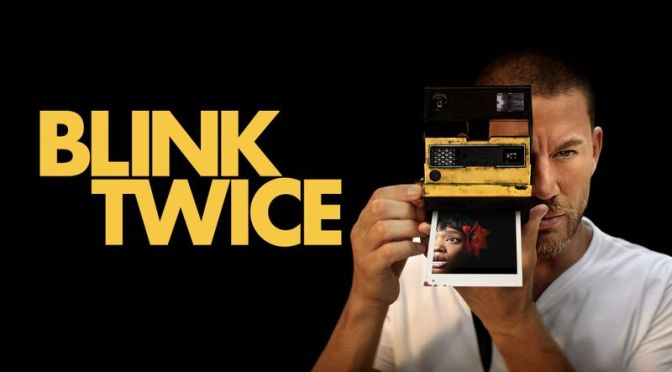
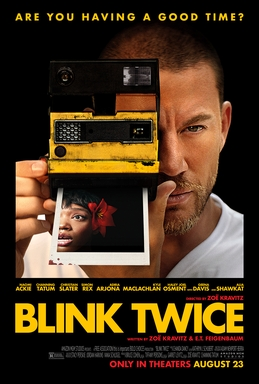
CINEMA REVIEW: BLINK TWICE (2024)

Directed by Zoë Kravitz

Written by Zoë Kravitz & E.T. Feigenbaum

Produced by Bruce Cohen, Tiffany Persons, Garret Levitz, Zoë Kravitz and Channing Tatum

Cast: Naomi Ackie, Channing Tatum, Christian Slater, Simon Rex, Adria Arjona, Kyle MacLachlan, Haley Joel Osment, Geena Davis and Alia Shawkat etc.

Cinematography by Adam Newport-Berra

*** MAY CONTAIN SPOILERS ***


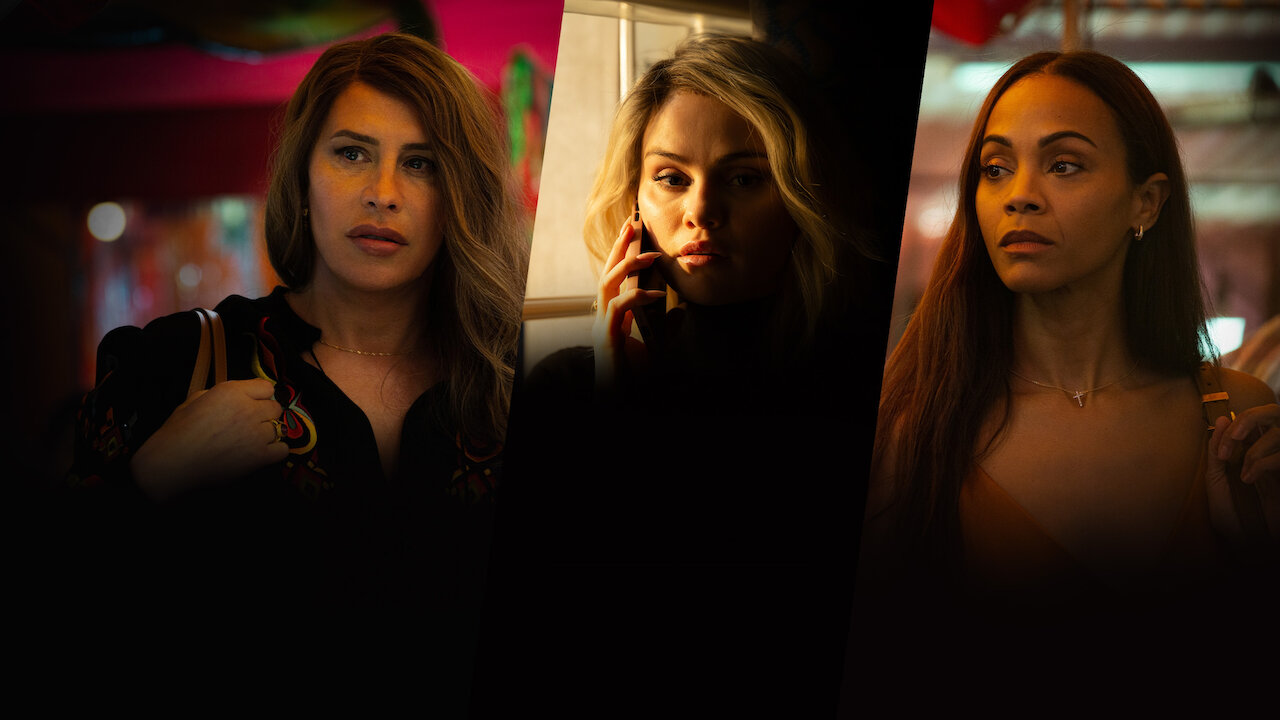
The theme of toxic masculinity is almost becoming a sub-genre of itself in the wake of the #MeToo movement. Films such as The Royal Hotel (2023), How to Have Sex (2023) and Men (2022) are powerful genre films which take the manipulative, malevolent and violent aspect of men, utilizing it as both nemesis and a destructive force the main protagonists must contend with. While She Said (2022) dealt specifically with the Harvey Weinstein legal case, Zoe Kravitz’ energetic blend of genres in Blink Twice (2024), takes a more fictional and heightened route while exposing the horrors surrounding the potential happenings at the notorious Epstein Island.

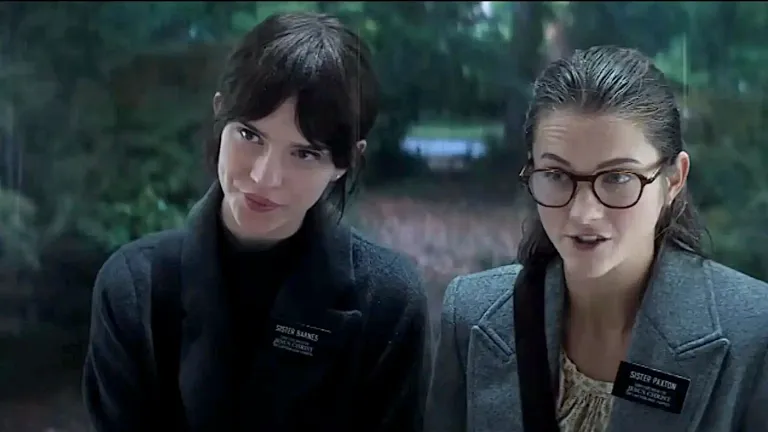
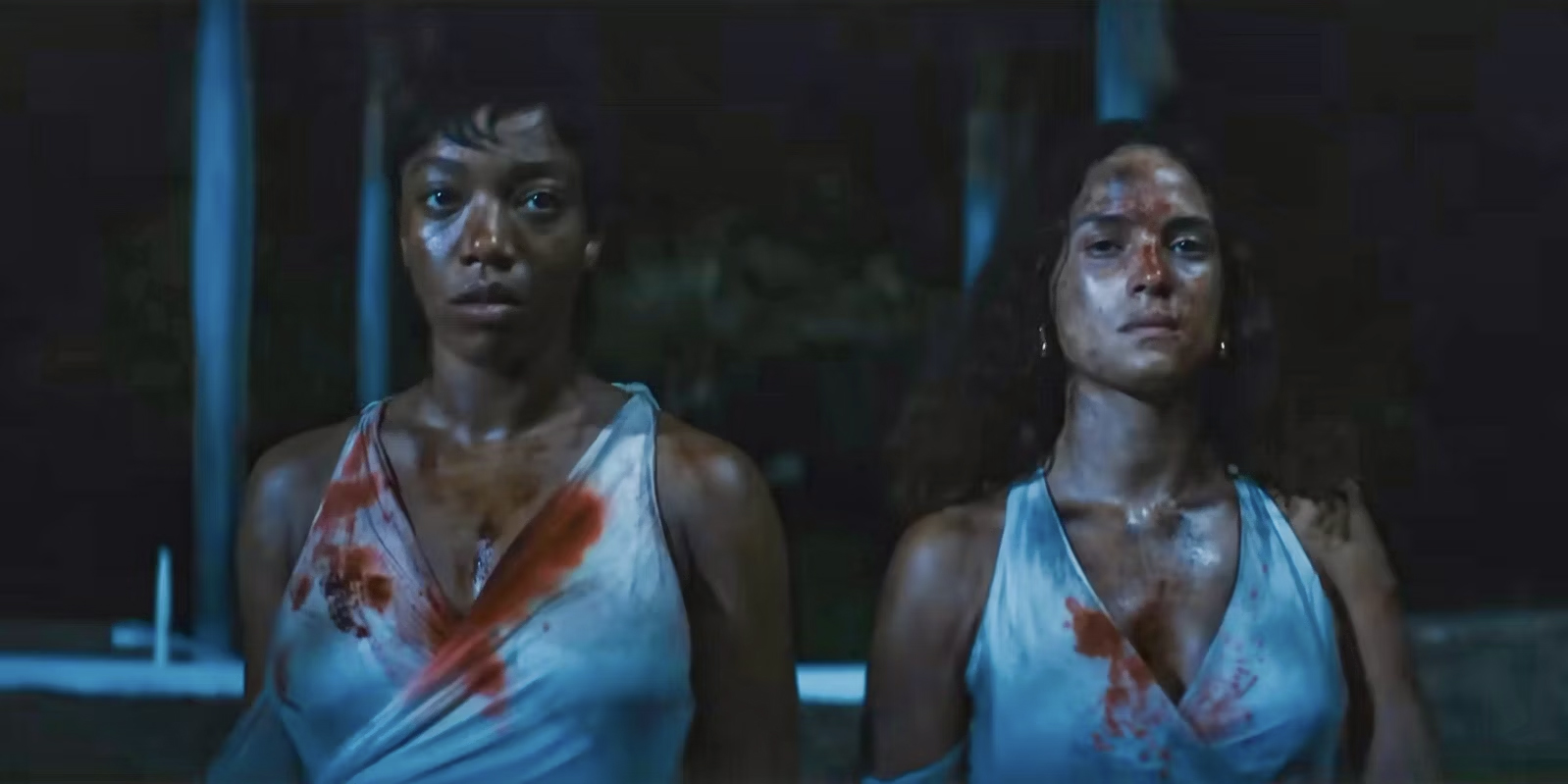
Frida (Naomie Ackie) and her friend Jess (Alia Shawkat) work at an exclusive event where Frida meets Slater King (Channing Tatum), a billionaire tech mogul who recently resigned as CEO after a public scandal. Despite the scandal Frida and Jess gladly accept an invitation to his private island, where his assistant Stacy (Geena Davis) confiscates their phones. The island hosts Slater’s friends and business partners along with three glamorous guests including Sarah (Adria Arjona). The men and women are treated to lavish rooms, gift bags, gourmet meals, cocktails, and party like hedonistic rock stars drinking champagne and taking hallucinogens.


If you’ve seen the similar island-based, The Menu (2022), which I loved, plus the less than riveting 1950’s perfect suburb-set, Don’t Worry Darling (2022), one soon realises that not all is well in paradise. Amidst the sun, sea and partying the narrative slowly builds the tension until Frida and Jess begin to suspect all may not be as it seems. Kravitz carefully ratchets up the tension, with several strange discoveries heightening the paranoia and anxiety. Latterly the suspense gives way to all-out gory horror and black comedy in the thrilling final act. Naomi Ackie and Adria Arjona are impressive “final girls”, however, the script arguably throws in too many twisty reveals at the end, testing narrative credibility.

Zoe Kravitz is clearly a talented filmmaker and Blink Twice (2024), while unsubtle, is highly entertaining. But does the diversion to the horror genre dilute the power of the themes of toxic masculinity? Kravitz aims to critique the evils of men by showcasing male characters who embody arrogance, dominance, and emotional suppression. But while Kravitz may intend to address toxic masculinity, the reliance on traditional horror tropes potentially undermines this message by exaggerating characters, victimizing women, and prioritizing sensationalism over substance. Still, as a revenge fantasy, Blink Twice (2024), is both stylishly and dynamically rendered.

Mark: 7.5 out of 11


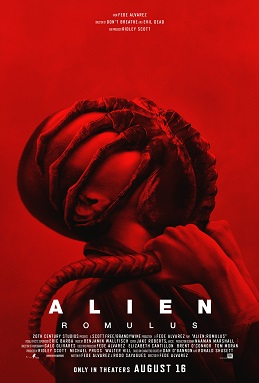
CINEMA REVIEW- ALIEN: ROMULUS (2024)

CINEMA REVIEW – ALIEN: ROMULUS (2024)

Directed by Fede Álvarez

Written by Fede Álvarez & Rodo Sayagues

Based on Characters by Dan O’Bannon & Ronald Shusett

Produced by Ridley Scott, Michael Pruss, Walter Hill etc.

Main Cast: Cailee Spaeny, David Jonsson, Archie Renaux, Isabela Merced, Spike Fearn and Aileen Wu etc.

Cinematography by Galo Olivares

*** CONTAINS SPOILERS ***


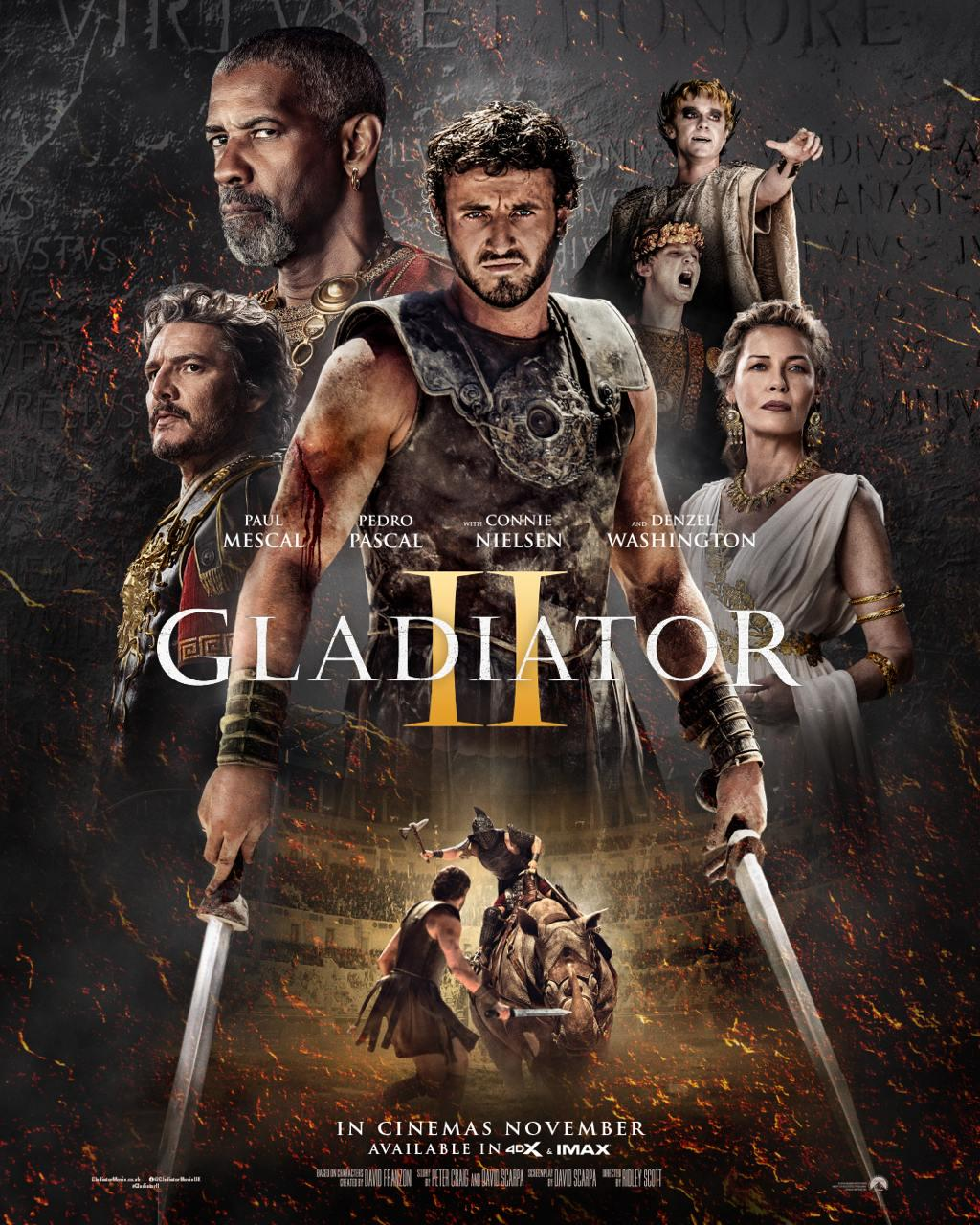
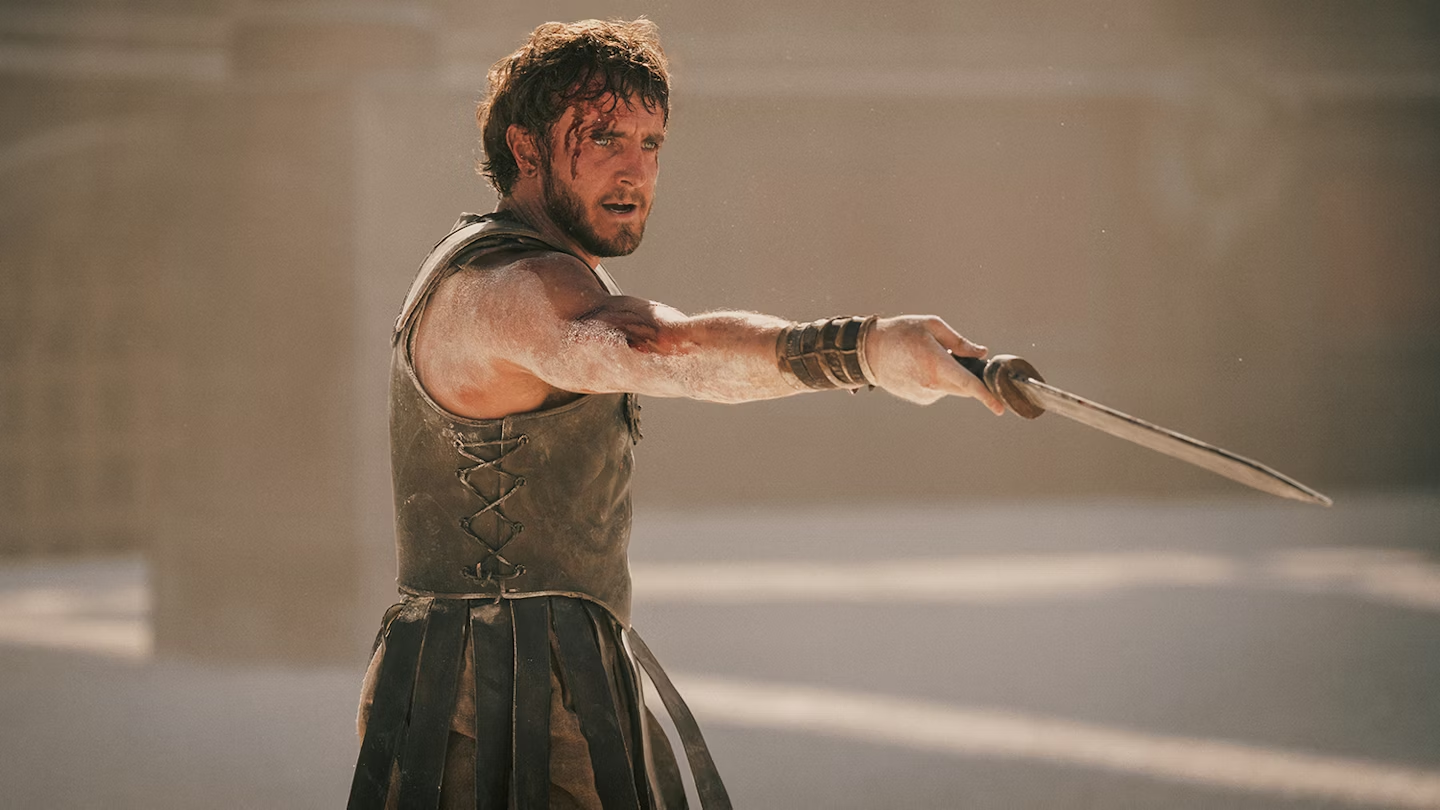
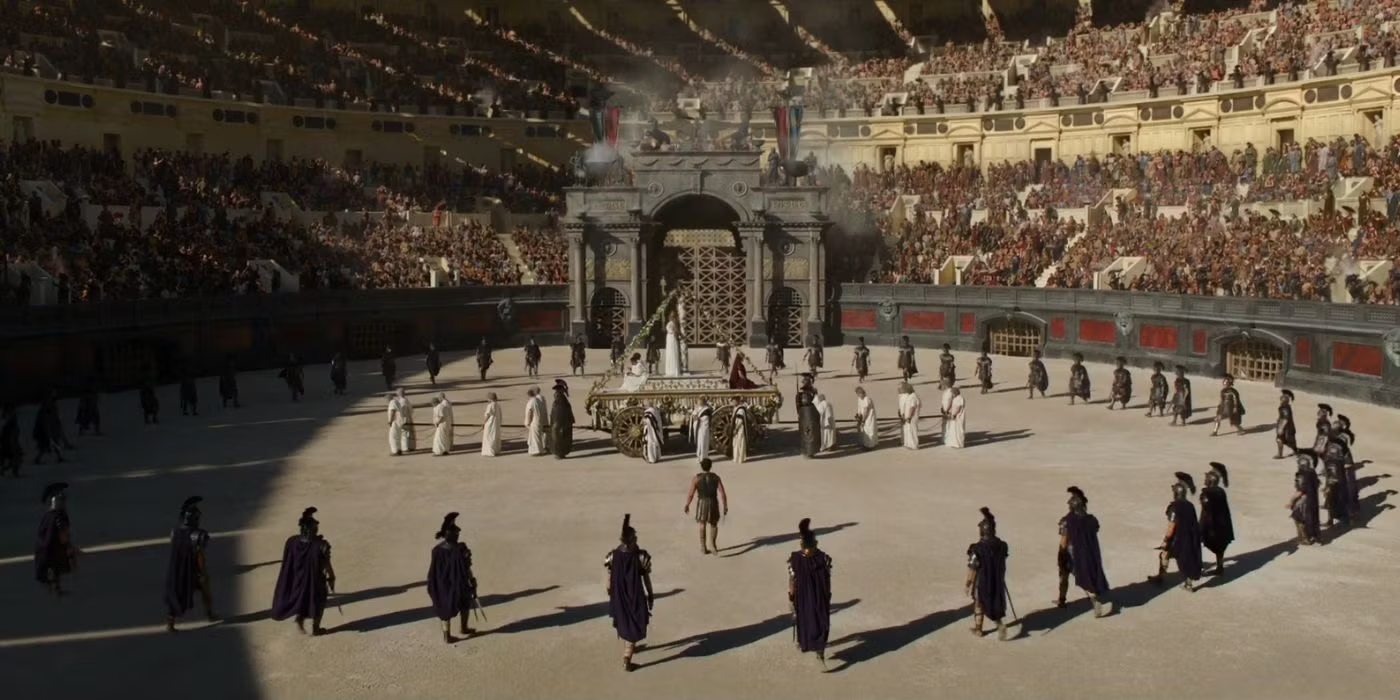
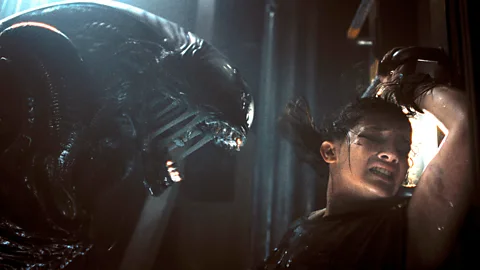
Did we need another Alien film? Prometheus (2012) was a box office success while the entertaining, if bland, Covenant seemed to have killed off any possibility of more bleeding chest-bursting. As original director, Ridley Scott, concentrates on the unnecessary sequel Gladiator 2 (2024), Fede Alvarez helms unnecessary prequel, Romulus (2024), set some time between the classic original and one-of-the-best-sequels-ever, Aliens (1986).

The franchise is renowned for its blend of horror, science fiction, and action, with iconic elements that have become staples of the series. To create a successful prequel within this franchise, it’s essential to incorporate certain tropes and thematic elements that resonate with fans while expanding the lore in a meaningful way. So, while it is very entertaining and directed with fine energy, Romulus (2024), is essentially one of the biggest budget fan films ever.


As the script for this film seemed to be written by ChatGPT, I ask you to enjoy a game of Alien: Bingo with me. So, when you watch Romulus (2024), take this list with you and check them off.

  1. Ancient Alien Ruins: Introduce ancient, mysterious structures or artifacts related to the Engineers or other ancient civilizations, which hint at the origins of the Xenomorphs.

  2. Uncovering the Unknown: The protagonists should gradually discover the horror of their situation, with an escalating sense of dread as they uncover the truth about the Xenomorphs.

  3. Weyland-Yutani Corporation: The presence of the Weyland-Yutani Corporation, or its precursor, should be central, with their unethical practices and obsession with the Xenomorphs for profit and weaponization playing a key role.

  4. Corporate Deception: Characters may be manipulated or deceived by corporate agendas, often leading to their doom.

  5. Body Horror: Incorporate the visceral, gruesome body horror elements that are a signature of the franchise, such as chest-bursters, acid-for-blood, or other horrific ways the Xenomorphs reproduce and evolve.

  6. Mutations and Experiments: Show early experiments with the Xenomorphs or other creatures, emphasizing the grotesque consequences of tampering with alien biology.

  7. The Alien Xenomorph: Introduce early forms or ancestors of the Xenomorph, exploring how they evolved into the perfect killing machines.

  8. Bioweapon Origins: Delve into the origins of the Xenomorphs as potential bio-weapons, being exploited by the Weyland-Yutani Corporation.

  9. The Engineers: Expand on the lore of the Engineers, their culture, technology, and their role in the creation of the Xenomorphs.

  10. Claustrophobic Settings: Use isolated, claustrophobic environments like derelict ships, alien worlds, or underground facilities to enhance the feeling of dread and helplessness.

  11. Slow-Burn Suspense: Build tension gradually, with a focus on atmosphere, sound design, and visual storytelling, allowing the horror to unfold slowly.

  12. Synthetics (Androids): Include synthetic characters (like Ash, Bishop, or David), exploring their complex relationships with humans and their potential hidden agendas.

  13. Small, Vulnerable Crew: Focus on a small group of characters who are outmatched by the alien threat, emphasizing their vulnerability and the high stakes of survival.

  14. Foreshadowing: Include subtle nods or direct connections to the events or characters of the original “Alien” films, creating a sense of continuity.

  15. Iconic Imagery: Use familiar visual motifs like the Xenomorph egg, facehugger, and the bio-mechanical aesthetic associated with H.R. Giger’s designs.

As well as a superb dirty industrial look and striking cinematography, all of the above tropes and more are present in Romulus (2024). The cast are mostly bland, notably the young Ripley clone portrayed by Cailee Spaeny. Having said that, David Jonsson as Andy, brings tremendous depth and humanity to the character of Andy. Once again, ironically the android character is the most interesting aspect of a recent Alien offering. Jonsson is destined for a great acting career and rises above this often thrilling, if highly generic, horror film.

Mark: 7 out of 11

CINEMA REVIEW: TRAP (2024)

CINEMA REVIEW: TRAP (2024)

Directed by M. Night Shyamalan

Written by M. Night Shyamalan

Produced by Ashwin Rajan, Marc Bienstock, M. Night Shyamalan

Main cast: Josh Hartnett, Ariel Donoghue, Saleka Night Shyamalan, Hayley Mills, Alison Pill, Jonathan Langdon, etc.

Cinematography by Sayombhu Mukdeeprom


*** CONTAINS SPOILERS ***


If you’re into mysterious and suspenseful genre films, M. Night Shyamalan’s most recent works Old (2021) and Knock at the Cabin (2023) left a lasting impression on me. Both movies dive deep into the human psyche, exploring themes of time, fear, and the unknown, and I really enjoyed them. Old (2021) combined Shyamalan’s signature twisty narrative with a meditation on the passage of time. Sure, the ending was over-cooked but I thought it was a brilliant Twilight Zone infused ensemble suspense twister. Meanwhile, Knock at the Cabin (2023) was a compelling claustrophobic apocalyptic thriller finding a family faced with making a horrendous sacrifice. While he is not everyone’s cinematic cup of tea, I for one have enjoyed Shyamalan’s recent output.

His latest high concept B-movie thriller is called Trap (2024). It stars Josh Hartnett as a loving and attentive father, Cooper Adams, who takes his teenage daughter, Riley, to see Lady Raven (Saleka Night Shyamalan) in a huge concert venue. Obviously, musical-based films such as A Star is Born (2018), Purple Rain (1984), and Bohemian Rhapsody (2018) feature gigs as part of their genre conventions. Here in Trap (2024) the concert becomes much more than that. Because Cooper is in fact a serial killer, and acting on a tip-off, the authorities and FBI profiler, Dr Josephine Grant (Hayley Mills), mobilize to turn the location into a means to ensare him. Thus, the whole concert becomes a living, breathing trap, a maze with which Cooper must avoid capture while ensuring his daughter, and the law, do NOT discover his evil dark side.


What follows is a dynamic series of situations where Shyamalan asks the audience to identify with Hartnett’s ‘Butcher’ and see if he can escape the law as they close in. As the music blares and the lights flash, you’re drawn into the tension of a manhunt. The ‘R and B’ pop music, while not my thing, is actually pretty decent as performed by Shyamalan’s daughter, Saleka Night Shyamalan. Can ‘the Butcher’ outsmart the law and vanish into the night, or will he be caught in this electrifying game of cat and mouse? The script certainly answers that in a thrilling set of scenes and confident twists. Of course, it’s all highly improbable and preposterous, but I found all the contrivances incredibly entertaining.

Trap (2024) has some dark and crafty humour in there too, notably in Hartnett’s committed performance. At times I almost thought he was going to speak to the audience directly. I love it when you can see an actor reveling in their performance and Hartnett has so much fun playing this OCD-controlling-complex-double-life-leading family man and serial killer. Thematically, the film is strong too as Cooper is locked in a psychological and emotional struggle against powerful matriarchal figures who inhabit his world. These are represented by his deceased mother who haunts his thoughts and the very-much-alive, Doctor Grant, the psychologist charged with stopping him.

While Trap (2024) requires the audience to swallow a huge piece of “suspend disbelief” pie, Shyamalan infuses Hitchcock levels of suspense – think Rope (1948) on steroids – that had me gripped all the way. It isn’t meant to be taken too seriously and does contain some massive plot-holes you can drive a tour bus through. But I didn’t care as Trap represents another chunk of thoroughly enjoyable genre cinema from M. Night Shyamalan.

Mark: 8 out of 11

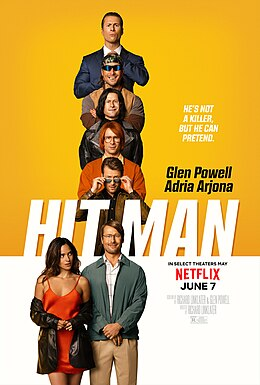
NETFLIX FILM REVIEW: HIT MAN (2023)

Directed by Richard Linklater

Screenplay by Richard Linklater & Glen Powell

Based on “Hit Man” by Skip Hollandsworth

Produced by Mike Blizzard, Richard Linklater, Glen Powell, Jason Bateman & Michael Costigan

Main Cast: Glen Powell, Adria Arjona, Austin Amelio, Retta, Sanjay Rao, etc.

Cinematography by Shane F. Kelly


*** MAY CONTAIN SPOILERS ***


Hollywood has a history of attempting to mold certain actors into the next big film stars, often casting them in high-profile projects with hopes of catapulting them to stardom. Colin Farrell was positioned as a leading man with roles in blockbuster films like Minority Report (2002), Alexander (2004) and S.W.A.T. (2003), but despite his undeniable talent, he didn’t quite become the A-list fixture studios envisioned. Having said that Farrell has proved himself an actor of high esteem, choosing to work with some of the best directors around in Yorgos Lanthimos and Martin McDonagh.

Similarly, Sam Worthington was thrust into the spotlight with Avatar (2009) and Terminator Salvation (2009), yet struggled to keep his star power afterward. Likewise, Taylor Kitsch, Hayden Christensen, Jai Courtney, Kate Mara and Daisy Ridley were also groomed for stardom. While Ridley achieved significant recognition, sustaining that momentum outside of the galaxy far, far away has proven difficult, Cara Delevingne has found the transition from supermodel to actress somewhat challenging. Enter stage centre, Glen Powell, who is arguably the latest actor the Hollywood machine is pushing for global stardom.


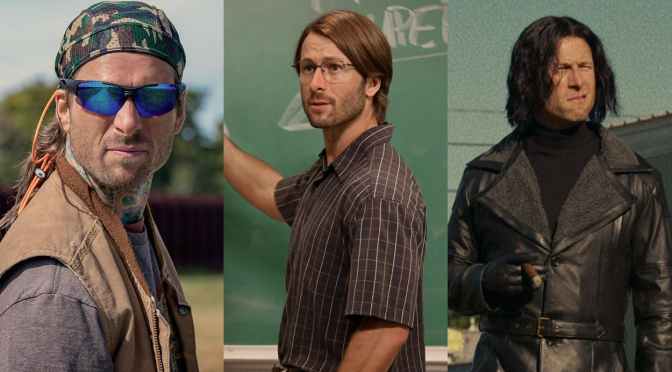
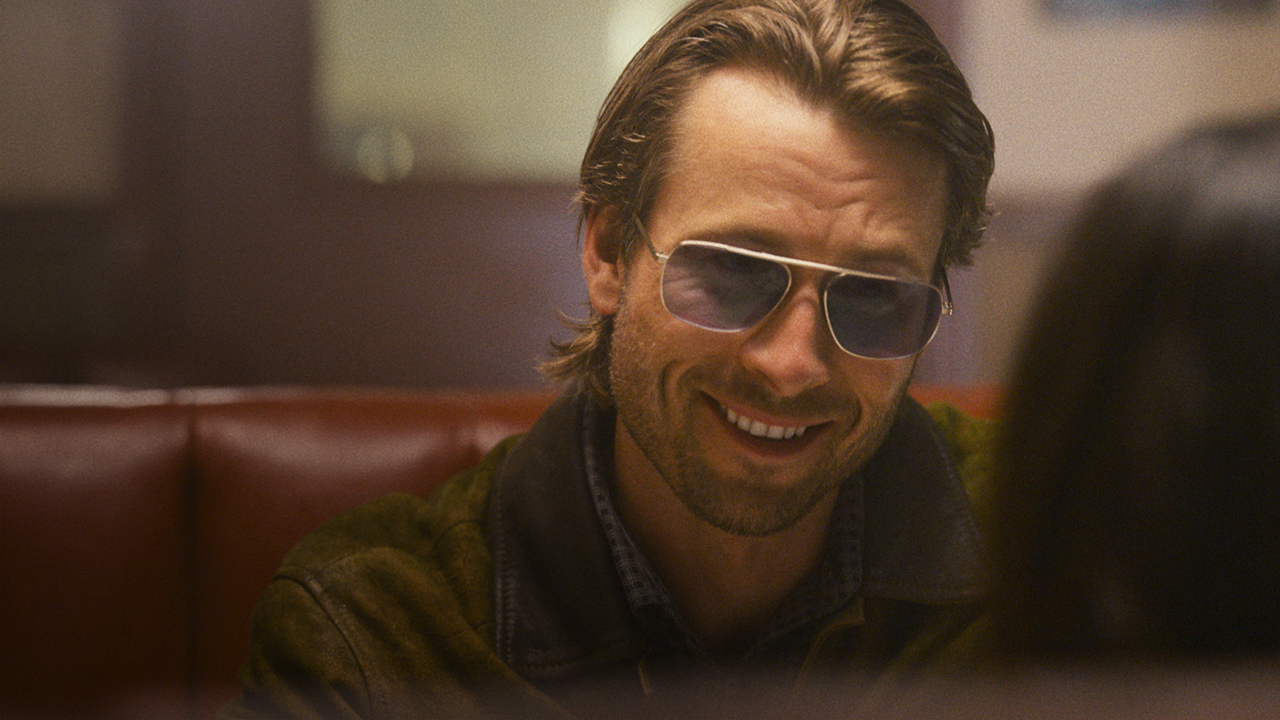
Powell is a handsome, charming and intelligent actor with a winning smile who certainly carries the romance and comedic elements of Hit Man (2023) extremely well. He portrays Gary Johnson, a mild-mannered professor of Psychology and Philosophy at the University of New Orleans who also assists the New Orleans Police Department in undercover sting operations. Usually working behind the operations providing advice, Gary is suddenly thrust into the action and has to play a fake hit-man to bring a suspect down. While this set-up stretched legal credulity, we eventually learn that the events are based on a “true” story. No doubt some liberties have been taken with the source material.

Gary’s character development finds him becoming very successful as an undercover operator, taking on a series of disguises and inventing precise alter egos to match the psychological make-up of those he is trying to trap. Hit Man (2023) is a kind of “ugly duckling” story where the ‘Alpha’ identity Gary invents ultimately takes over his own ‘Beta’ personality. The romantic element of the narrative comes via the beautiful and troubled, Madison (Adria Arjona), who desires to kill her abusive boyfriend, Ray. Tasked with bringing her to justice, Gary contrives to give her a second chance, but when Ray turns up dead, Gary’s whole existence and secret identity comes under threat. While this sounds like the plot to a really compelling thriller, overall there is a lighter touch to the direction and much humour. Further, Powell’s on-screen chemistry with Arjona is convincing and sizzles throughout.

I really enjoyed Hit Man (2023). It’s familiar and conventionally structured, but has a smart genre script and winning performances from the charismatic and sexy leads. Lastly, Richard Linklater is a rare filmmaker who seamlessly navigates between art-house cinema and more commercial projects, maintaining his distinctive voice across both realms. Hit Man (2023) finds him in more crowd-pleasing territory as he was with the fantastic School of Rock (2003). Yet, will Powell ultimately become a box office success and bona fide movie star? Well, I guess with this film, the recently released, Twisters (2024), the upcoming Huntington (2025) and Edgar Wright directed, The Running Man (2025), he is well on his way.

Mark: 8 out of 11


CINEMA REVIEW: LONGLEGS (2024)

CINEMA REVIEW: LONGLEGS (2024)

Directed by Osgood Perkins

Written by Osgood Perkins


Produced by Dan Kagan, Brian Kavanaugh-Jones, Nicolas Cage, Dave Caplan, Chris Ferguson etc.

Main Cast: Maika Monroe, Blair Underwood, Alicia Witt, Nicolas Cage, etc.

Cinematography by Andrés Arochi

*** THIS REVIEW CONTAINS SPOILERS ***


As a no-budget filmmaker I have often written and produced scripts which arguably had plots and concepts that were under-served by the lack of funds. The low budget meant one’s production values suffered on screen and did not allow the requisite number of shoot days to do the finished script justice. I felt similar vibes watching Longlegs (2024), as filmmaker Osgood Perkins attempts a FBI procedural thriller on less-than-$10 million dollars. The sparseness of the production and minimal cast kind of works in its’ favour, as Perkins goes for an ultra-violent-Twin-Peaks-meets-economy-Fincher vibe, ultimately ending up with a incredibly strange brew indeed.

Maika Monroe is FBI agent, Lee Harker, investigating a series of inexplicable murder-suicides during the 1990’s. In terms of structure the breadcrumb plotting is not the films’ strength but it does allow the director to hang a whole load of janky peculiarities on the screen. Harker’s keen empathy and apparent sixth-sense bring her ever closer to a suspect who goes by the name of ‘Longlegs’. Yet, the killer is not related to a spider, but rather reminded me of Noel Fielding meets the monster from parodic film-within-a-TV-show, Doctor and the Pencil. Surprisingly, and you will not believe this, the weirdo killer, Longlegs, is portrayed weirdly by Nicolas Cage, who revels in the wig and prosthetics and is, did I say already, the height of weirdness.

Osgood Perkins directed one of the dullest horror films I have ever seen in the experimental, I Am the Pretty Thing That Lives in the House (2016). But Longlegs (2024) is a massive improvement with some chilling and suspenseful scenes, and a decent lead performance from Agent Starling-alike, Maika Monroe. Similar to Carol Morley’s Out of Blue (2018), this is an arthouse director taking on genre filmmaking without enough cash and getting it deliberately wrong. Overall, with a very strong first half, Longlegs (2024), latterly takes some insane plot turns involving Faustian pacts, parental abuse, religious mania, hypnosis and voodoo sci-fi concepts which don’t really meld but remain thematically fascinating. Cage portraying Noel Fielding as an oddball killer, as well as many fantastic on-screen deaths, definitely give this cult cinematic stew strong and curious limbs.

Mark: 7.5 out of 11


CINEMA REVIEW: THE BIKERIDERS (2023)

CINEMA REVIEW: THE BIKERIDERS (2023)

Directed by Jeff Nichols

Screenplay by Jeff Nichols (Based on The Bikeriders by Danny Lyon)

Produced by Sarah Green, Brian Kavanaugh-Jones and Arnon Milchan

Main Cast: Jodie Comer, Austin Butler, Tom Hardy, Michael Shannon, Mike Faist, Norman Reedus, Boydf Holbrook etc.

Cinematography by Adam Stone

*** MAY CONTAIN SPOILERS ***


Set in the mid-sixties, the biopic The Bikeriders (2023), centres on a bike club (or what we could be considered a ‘Hell’s Angel’ gang of the era) called ‘The Vandals.’ Started by Tom Hardy’s, leader Johnny, as a motorbike racing club, it develops into a social place for men to meet and play and look cool and party and fight. More significantly, ‘The Vandals’ club allows the men to gain a sense of authority and identity within the shifting state of America during the 1960’s. The terrific ensemble cast includes Austin Butler as moody Benny, plus his sparky narrator wife, Jodie Comer, as Kathy. All are very good, yet there is something lacking thematically and in terms of plot.

Story-wise The Bikeriders (2023), is more like a verbal and pictorial diary with Comer’s affected Chicago accent gluing the various events together without reaching a height of dramatic satisfaction. Butler and Hardy are really cool and moody, echoing visitations of James Dean and Marlon Brando, respectively. But there needed to be more differentiation in their characters as TWO strong and silent types created a dramatic vacuum for me. Classic scene stealers such as Michael Shannon, Boyd Holbrook and Norman Reedus do add colour and charisma. I kind of wanted more of those guys because they had strong personalities, and actually spoke! Meanwhile, the props, costumes, production design and cinematography are all brilliantly rendered, clothing the film in an authentic and gritty sense of style.

Ultimately, the nostalgic, “anti-hero” driven period drama, so well delivered by Martin Scorsese over the years gets another solid run-out in The Bikeriders (2023) from the talented filmmaker, Jeff Nichols. Whereas Scorsese brings incendiary cinematic fireworks and complex tales of morality to your face, mind and heart, Nichols is a more under-stated director. He presents his stories and characters without too much push, with the audience having to lean in to catch the whispers of drama. That isn’t to say The Bikeriders (2023) doesn’t have action, racing, fighting, crashes, and blood, but the characters are lacking a powerful narrative engine to drive the strong performances forward. Plus, the themes of loss, war, and masculinity in crisis needed more gas. The film motors along just fine, but without ever getting into fifth, let alone sixth gear.

Mark: 7 out of 11

CINEMA REVIEW: FURIOSA – A MAD MAX SAGA (2024)

CINEMA REVIEW: FURIOSA – A MAD MAX SAGA (2024)

Directed by George Miller

Written by George Miller & Nico Lathouris

Based on characters by George Miller & Byron Kennedy

Produced by: Doug Mitchell & George Miller

Main Cast: Anya Taylor-Joy, Chris Hemsworth, Tom Burke, Alyla Browne, Lachy Hulme, Angus Sampson, etc.

Cinematography by Simon Duggan

*** CONTAINS SPOILERS ***


George Miller’s fifth entry of the Mad Max series is Furiosa: A Mad Max Saga (2024). Given the meaning of the word ‘saga’ is defined as, “a long story of heroic achievement, especially a medieval prose narrative in Old Norse,” it’s an attempt by Miller to connect the Mad Max films to mythical storytelling and folk lore, yet paradoxically set such ye olde yarns in the future. Conversely, while being part of the post-apocalyptic sci-fi sub-genre, there is certainly more than a suggestion of marauding and pillaging Vikings within the freakish characters of the radioactive Aussie wasteland.

Of course, the hi-tech and vehicular monsters smashing up and down the ‘Fury Road’ render the action far from the medieval, replacing long boats for super-charged two, three and four-and-more-wheel souped-up demons driven by mutated future humans. The gigantic rock, bullet, fuel, and scrap metal designed bases of ‘The Citadel,’ ‘Bullet Farm’ and ‘Gas Town’ inhabited by these tattooed ravagers, while rough in exterior represent humanity’s industrial survival and base-building instincts par excellence. So much for the imperious nature of Miller’s world-building, what of the narrative?

If one is honest, the screenplays for all four of the previous Mad Max films are the exercises in economy, with hard-cut structures, granite-boiled dialogue often spat out via twisted one-liners, and poetically yelled slang-speak. Introduced as a maverick cop, but loving family man in Mad Max (1979), Max Rockatansky (Mel Gibson) is essentially a cops-versus-gangs-meets-revenge exploitation thriller. By the time gangs have killed his family and nuclear war has destroyed the world, Max has become the Road Warrior (1981), in what is one of the greatest action films and sequels of all time. However well regarded the mayhem of Fury Road (2015), and it is incredible, The Road Warrior remains one of my favourite films ever.


Beyond Thunderdome (1985) was the slicker third film, and while the action was terrific, there was too much money and sheen in there, reminiscent of what they did with the glamoured cast in the last season of Game of Thrones. Plus, the script was broken in half, with an amazing first section set in Bartertown with Tina and crew, before giving way to a more philosophical, but less exciting kids-in-a-commune driven story. In comparison Furiosa: A Mad Max Saga (2024) is certainly the most ambitious of all the narratives. It is set over several years, from the moment Furiosa (Alya Browne) witnesses her mother killed by Dementus (Chris Hemsworth) and his nasty marauders, to her rites of passage ascent toward gaining a vicious revenge.

Keeping the literary theme, the film is set over five chapters replete with headings to let the audience know what is about to occur. Easily the most impressive is – Chapter III – The Stowaway – where Furiosa comes of age in action during a brutal and mind-blowing action set-piece as the Octoboss, goes rogue and launches an air assault on the “War Rig” as it races along the ‘Fury Road.’ Here Furiosa also bonds with Praetorian Jack (Tom Burke) and the two become partners, with George Miller throwing in an under-cooked romance amidst the petrol, dust, blood and fire.

It is great that Miller and his co-writer Nico Lathouris have strived for more emotional depth and epic storytelling within Furiosa: A Mad Max Saga (2024). However, I felt that at times the rapid pacing and ramped-up action crushed any feelings I may have had about the characters of Furiosa and Jack. Plus, the film suffers a serious case of “prequelitis” where one is joining the dots of Furiosa’s backstory to connect with Charlize Theron’s characterisation in Fury Road. Yes, of course, we find out how she had her arm torn from her body, her drives and motivations, plus how she became a kick-ass future road warrior.  

Taylor-Joy is striking in the all-action role of Furiosa, but a little anorexic on screen to really dominate. Gibson and Hardy are a hard act to follow! Tom Burke stands out amidst the support ensemble, while Chris Hemsworth treats us to another revved-up messianic lunatic. With the character of Mad Max on hiatus, the true stars of this show are Miller and his impressive production, camera, editing, driving, effects and stunt teams. They have once again produced cinematic carnage of the highest order.

Mark: 8.5 out of 11


CINEMA REVIEW: LOVE LIES BLEEDING (2024)

CINEMA REVIEW: LOVE LIES BLEEDING (2024)

Directed by Rose Glass

Written by Rose Glass & Weronika Tofilska

Produced by Andrea Cornwell & Oliver Kassman

Main Cast: Kristen Stewart, Katy O’Brian, Jena Malone, Anna Baryshnikov, Dave Franco, Ed Harris, etc.

Cinematography by Ben Fordesman

*** MAY CONTAIN SPOILERS ***


Rose Glass’ debut feature film Saint Maud (2019), was one of my films of the year when released a few years ago. It was such a haunting horror and character study of one woman’s ascent into heavenly insanity. If Saint Maud (2019) borrowed heavily from Paul Schrader’s scripts such as Taxi Driver (1976), and First Reformed (2017), Glass’ second “difficult” feature film, Love Lies Bleeding (2024) owes much to the Coen Brothers darker feature films, dashes of David Lynch and the gritty bite of Jim Thompson’s noir stories.

Set in 1989, Kristen Stewart, portrays mulleted-Lou, a gym manager who kind of drifts along without a plan. Estranged from her gangster father, also named, Lou (Ed Harris), their connected past haunts her as she strives to escape his criminal influence. Into Lou’s humdrum existence comes the muscular chaos of Jackie (Katy O’Brian). Seeking her fortune as a competitive bodybuilder, a broke and homeless Jackie, attaches herself to Lou and they begin a lusty relationship. This passion and the constant sex consequently twists into what one could even call love.


As their alliance pulses on screen, Lou has further family woes to deal with because her sister, Beth, (Jena Malone) lives in constant fear of domestic violence from her husband, J.J. (Dave Franco). Further, Lou strives to help Jackie’s muscle dream by feeding her steroids from the gym dealer. But this backfires when a drug-induced Jackie commits a violent crime which Lou feels bound to try and cover up. Here the various narrative elements and characters, Glass and co-writer, Weronika Tofilska, establish begin to flail for me. While Jackie has a clear narrative goal, Lou’s character is reactive in dealing with the bloody mess created by others. This creates a divergent split of psychologies in the plotting, that Glass’s energetic direction cannot coalesce.

In terms of genre elements involving same-sex romance, brutal violence and crime, Love Lies Bleeding (2024) also owes much to the far superior, Bound (1996) directed by The Wachowskis. That is not to say Glass’ film is without merit. It is just a bit of a hot mess of plot and themes and tonal lurches which do not work as a whole. Indeed, it feels at times there are two scripts pulped together which constantly push back against each other. I would have gone with the bodybuilding story as the main focus. Plus, so many characters makes dumb decisions in, Love Lies Bleeding (2024), I just gave up caring. Still, there is some decent violence, a smattering of gallows humour, and magnetic work from Stewart and Harris (of course). Finally, the ultra-talented Rose Glass gives us some fantastically directed visuals which deserved a less smudgy and more coherent screenplay.

Mark: 7 out of 11


UNDER-RATED CLASSIC #11 – THE SCORE (2021)

UNDER-RATED CLASSIC #11 – THE SCORE (2021)

Directed by Malachi Smyth

Written by Malachi Smyth

Produced by Matthew James Wilkinson & Ben Pullen

Cast: Johnny Flynn, Will Poulter, Naomi Ackie and Lydia Wilson

Cinematography by Darran Bragg

Music by Johnny Flynn

*** MAY CONTAIN SPOILERS ***


I’m not sure enough people have seen The Score (2021) to even rate it, let alone under-rate it. Because this crime-thriller-musical is a genuine curio and cult classic in my book. The reviews online are very mixed and many of them are correct in saying the film doesn’t work as either a crime film or musical or even a love story. But for some reason I have watched it twice now and really enjoyed it both times. So, for me, it is very much an under-rated classic.

For the record, for me, an under-rated classic can be a film I love, plus satisfy the following criteria:

  1. Must not have won an Oscar.
  2. Must not have won a BAFTA.
  3. Must not appear in the AFI Top 100 list.
  4. Must not appear in the IMDB Top 250 list.
  5. Must not appear in the BFI 100 Great British films.
  6. Must not appear in the all-time highest grossing movies of list.


So, being a massive fan of Johnny Flynn helps to enjoy this film. He wrote and sings, with Will Poulter and Naomi Ackie, the songs from the soundtrack. Plus, he is one of the main leads, portraying a low-level career criminal, not-as-clever-as-he-thinks, Mike. He is planning a “big job” in cahoots with, not-as-stupid-as-he-acts-sidekick, Troy (Poulter) that involves a big score. That is twenty-grand (£) from a previous job Troy’s imprisoned brother hid. Exponential growth is promised from a meet with some proper gangsters for what may or may not be a drug deal. Anyway, nothing is what it seems in this predominantly one-location thriller.

Two misfits waiting for someone who may never arrive, plus the swinging banter between Mike and Troy has vague elements of Waiting for Godot, however, there is an actual crime plot slowly burning here. As they wait impatiently at a remote cafe writer-director, Malachi Smyth, throws in some eccentric visitors plus a supporting romance plot, with Troy connecting awkwardly at first, then touchingly with cafe employee, Gloria (Naomi Ackie). Indeed, their attraction and subsequent connection virtually becomes the main narrative thrust of The Score (2021), before the final crime twist brings the action to a violent head.

Oh, do not forget the singing too. Dennis Potter had his characters lip-sync to old musical classics to reveal their emotions, and was proclaimed as genius for it. Here Malachi Smyth uses Flynn’s fantastic compositions to do a similar job. I admit it is a bit weird and jarring at first, but Flynn, Poulter and Ackie carry the tunes well for me and it adds another element to an unusual film experience. Ultimately if someone watched The Score (2021) and said it does not work at all, I couldn’t argue with them. However, I really loved it and constantly listen to the soundtrack I downloaded. I also have a soft spot for indie filmmakers, daring to fail while trying something different.


CINEMA REVIEW: CIVIL WAR (2024)

CINEMA REVIEW: CIVIL WAR (2024)

Directed by Alex Garland

Written by Alex Garland

Produced by Andrew Macdonald, Allon Reich, Gregory Goodman

Main Cast: Kirsten Dunst, Wagner Moura, Cailee Spaeny, Stephen McKinley Henderson, Sonoya Mizuno, Nick Offerman, etc.

Cinematography by Rob Hardy

*** MAY CONTAIN SPOILERS ***


Alex Garland has an impressive literary, cinema and televisual curriculum vitae. He gained acclaim as the writer of the novel, The Beach, before moving onto screenwriting duties with fine films such as: 28 Days Later (2002), Sunshine (2007), Never Let Me Go (2010), and under-rated Dredd (2012). He made his directorial debut with Ex Machina (2014), which earned him an Academy Award nomination for Best Original Screenplay. His second film, Annihilation (2018), garnered further acclaim, so much so, FX bypassed a pilot and went straight to series for his science fiction TV narrative, Devs (2020).

While I am a massive fan of Garland’s work, I wasn’t too enamoured of Annihilation (2018). I found it brilliantly made with some fantastic concepts and incredible moments, yet overall it was too slowly paced. With eight superlative episodes of Devs (2020), Garland delivered a story which really connected with me by merging a compelling technological espionage plot to an intelligent exploration of philosophical thought and human behaviour. Where Devs (2020) presciently examined the impact of artificial intelligence, Garland’s new political thriller, Civil War (2024), prophetically imagines an apocalyptic America in the throes of war between combined California and Texas state rebel forces and the current President’s (Nick Offerman) retreating army.

With the ‘January 6 United States Capitol attack’ in mind, Garland opens up a “what if” narrative where the whole of America is conflicted and consuming itself from within. At the heart of the violence is the war photographer, represented by Lee Smith (Kirsten Dunst) and Reuters journalist, Joel (Wagner Moura). Their journey to Washington to photograph the President reveals confusion, destruction and further bloodshed. Generically speaking, a road movie meets dystopian thriller, Civil War (2024) contains thought-provoking themes and incredible cinematography, but with shaky writing in places.


Films about war photographers and/or journalists can be problematic for me. Such characters lend themselves to heroic and the anti-heroic. The writing has to be right because I can lose empathy between such crusading journos and the narcissistic adrenaline junkies looking to deflect their own loathing and self-destructive tendencies. Civil War (2024) struggled to get me onside with the lead characters, although Dunst’s characterisation of Lee Smith is superb. However, her mentor-apprentice relationship with Cailee Spaeny, Jessie Cullen, was under-developed. Spaeny’s “innocent” being used more as a suspense device as opposed to learning the true horrors of humanity and war. Perhaps Garland intended for her to be a sociopath without depth just looking for blood? She finds it!

Moreover, Jessie’s journey from a political perspective was weak as there was no real sense of development in her character. That’s where the decision not to overtly take political sides causes a lack of sociological depth. War films such as Salvador (1986) and The Killing Fields (1984) are more successful as Civil War (2024) loses political impact by not choosing precise sides. But I guess whether they are Democratic or Republican is the whole point. Garland is saying that political parties are all as bad as each other, with human beings their own worst enemy. Politics, like football, gender, sexuality, and religion, are propellants for humans to fight each other.

For a film about photographers, the images on show are incredible and Rob Hardy’s work is genius. Fire, blood and war have never looked so brutal and aesthetically impressive. As well as Dunst, Wagner Moura and Stephen McKinlay Henderson are terrific in their respective roles. Further, there are some nail-biting and suspenseful scenes, notably one involving a film-stealing performance from Jesse Plemons. However, many of the characters’ decisions were weakly written for me. This is surprising given Garland’s prodigious literary and screenwriting talent. Civil War (2024), however, remains another stunning addition to his oeuvre and for all my perceived script weaknesses, the hell of war has never been so artistic and artful.

Mark: 8 out of 11