
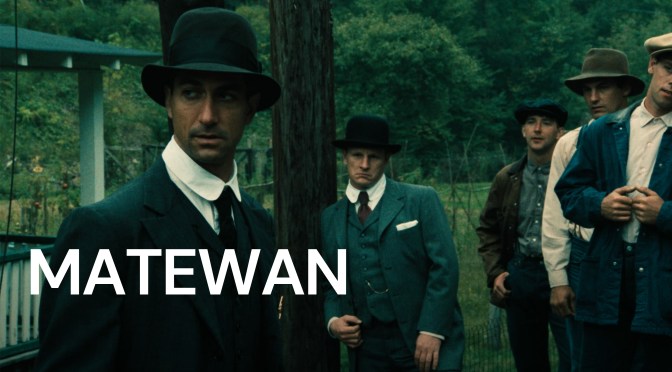
Classic Film Review: Matewan (1987)
Directed by John Sayles
Written by John Sayles
Produced by Peggy Rajski and Maggie Renzi
Main Cast: Chris Cooper, James Earl Jones, Mary McDonnell, Will Oldham, David Strathairn, Kevin Tighe, Gordon Clapp, Bob Gunton, etc.
Cinematography by Haskell Wexler
** MAY CONTAIN SPOILERS **
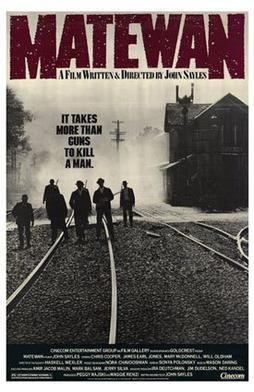
For me, John Sayles represents almost everything that is admirable about independent filmmaking and is quite simply a phenomenal screenwriter. His best scripts never feel mechanically constructed. They breathe. Characters wander into scenes carrying entire histories with them, and seemingly casual conversations reveal class, politics, relationships, disappointments and decades of buried resentment. Films such as the magnificent, Matewan (1987), Passion Fish (1992), Eight Men Out (1988) and impressive, Lone Star (1996) demonstrate just how sophisticated his writing can be, yet there is rarely anything flashy or self-conscious about it.
Moreover, I also love the sheer pragmatism of the career he built. Sayles understood that being an independent filmmaker didn’t mean pretending Hollywood didn’t exist. He started out writing wonderfully entertaining low-budget genre pictures for Roger Corman — Piranha (1978), The Lady in Red (1979), Alligator (1980) and Battle Beyond the Stars (1980) among them — and went on to become a successful screenwriter and highly regarded script doctor on much bigger Hollywood productions. He could take the money and experience from those assignments and then return to the films that really mattered to him. Rather than waiting for the industry to give him permission to make his movies, he found a way of financing and sustaining them himself.
And perhaps that is why I find Sayles so inspiring. The Hollywood work didn’t dilute his independence — in many ways, it enabled it. Across decades of filmmaking, he retained his curiosity, his integrity and his belief that audiences were intelligent enough to engage with complicated characters and complicated ideas. For any filmmaker trying to make personal work outside the mainstream, John Sayles isn’t simply a great writer-director. He’s a genuine indie filmmaking hero — and proof that it is possible to survive within the film business without allowing the business to define the films you make.
I recently re-watched, Matewan (1987), having not seen it for years. It is a beautifully crafted, deeply humane piece of American cinema in which the personal, political and historical become inseparable. Taking the real-life Matewan coal conflicts of 1920 as his foundation, Sayles creates something far richer than a conventional historical drama. This is a film about miners and their families, immigrants and outsiders, union organisers and company men; about people discovering that their only real strength lies in standing together against corporate bosses prepared to use intimidation, exploitation and outright violence to maintain their power.
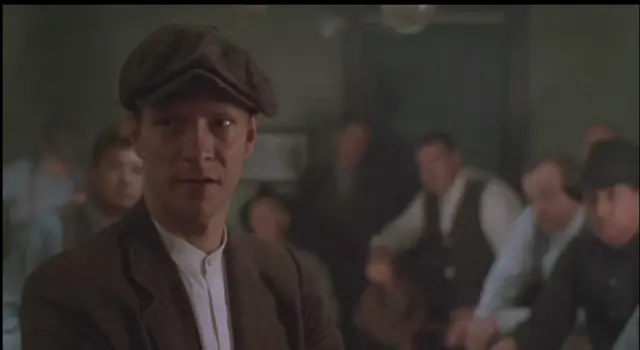
There is an incredible humanity running throughout the film. Sayles understands the divisions between these workers — racial, cultural, religious and economic — and therefore never makes their eventual solidarity feel easy or sentimental. The miners have to overcome suspicion and prejudice before recognising that the forces dividing them are also helping to keep them powerless. At the centre of it all is Chris Cooper, superb as union organiser Joe Kenehan: quiet, intelligent, principled and determined to prevent an already volatile situation from descending into violence. Around him Sayles constructs an entire community, allowing individual lives, marriages, friendships and rivalries to exist alongside the larger political struggle.
The film is also visually magnificent. Working with the great cinematographer Haskell Wexler, Sayles gives Matewan (1987) a rich, earthy, almost tactile quality. The mountains, forests, railway tracks, wooden houses and coal-blackened interiors don’t merely provide an interesting period backdrop; they seem to contain the history of the people living and working within them. There is mud, smoke, sweat, blood, tears and darkness everywhere, contrasted with the natural beauty of the West Virginia landscape. The mines themselves feel oppressive and dangerous, while the wider landscape can appear both beautiful and imprisoning. Further, while these people live among extraordinary natural beauty they are being economically trapped by the company that controls the coal mines.
Rather than building the film around conventional movie stars, Sayles assembled the kind of extraordinary American character actors who make every face and every voice feel as though it belongs in this world. Chris Cooper – in his debut feature – gives the film its moral centre, while James Earl Jones brings enormous dignity, warmth and authority to ‘Few Clothes’ Johnson. David Strathairn is wonderfully memorable as Sid Hatfield, and Mary McDonnell brings intelligence and emotional complexity to Elma Radnor. Then there is Kevin Tighe as Hickey, one of the Baldwin-Felts agents sent into Matewan to intimidate the miners and break their resistance. Tighe gives the film a genuinely menacing presence: smiling, controlled and utterly comfortable with the threat of violence.
The combination of historical detail, political conviction, memorable acting and direction, magnificent cinematography, beautifully observed characterisation and gripping storytelling is what makes Matewan (1987) such a remarkable achievement. Sayles takes a specific labour dispute in a West Virginia mining town and turns it into something both intimate and expansive: a story about solidarity, dignity, prejudice, exploitation and the terrible price ordinary people can pay when they challenge entrenched power. Yet for all its anger, Matewan (1987) never loses its compassion. Sayles remains interested in people first. It is muscular, intelligent, visually beautiful and deeply moving filmmaking, made with enormous integrity — and one of the finest examples of just how powerful American independent cinema can be.

