Tag Archives: independent cinema

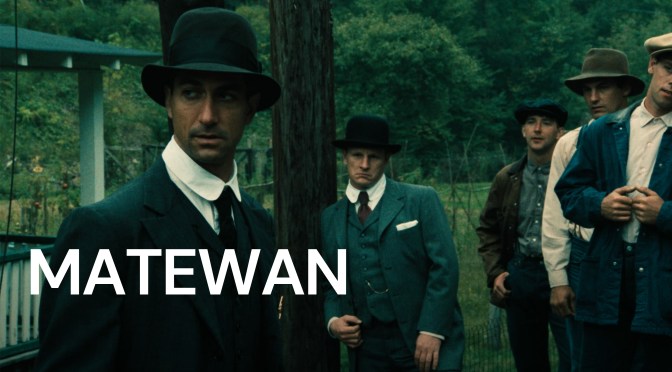
Classic Film Review: Matewan (1987)

Classic Film Review: Matewan (1987)

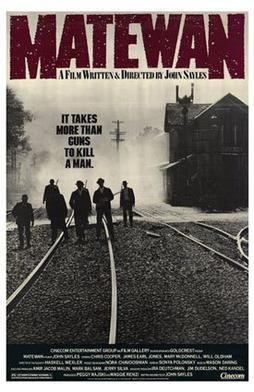
Directed by John Sayles

Written by John Sayles

Produced by Peggy Rajski and Maggie Renzi

Main Cast: Chris Cooper, James Earl Jones, Mary McDonnell, Will Oldham, David Strathairn, Kevin Tighe, Gordon Clapp, Bob Gunton, etc.

Cinematography by Haskell Wexler

** MAY CONTAIN SPOILERS **


For me, John Sayles represents almost everything that is admirable about independent filmmaking and is quite simply a phenomenal screenwriter. His best scripts never feel mechanically constructed. They breathe. Characters wander into scenes carrying entire histories with them, and seemingly casual conversations reveal class, politics, relationships, disappointments and decades of buried resentment. Films such as the magnificent, Matewan (1987), Passion Fish (1992), Eight Men Out (1988) and impressive, Lone Star (1996) demonstrate just how sophisticated his writing can be, yet there is rarely anything flashy or self-conscious about it.

Moreover, I also love the sheer pragmatism of the career he built. Sayles understood that being an independent filmmaker didn’t mean pretending Hollywood didn’t exist. He started out writing wonderfully entertaining low-budget genre pictures for Roger Corman — Piranha (1978), The Lady in Red (1979), Alligator (1980) and Battle Beyond the Stars (1980) among them — and went on to become a successful screenwriter and highly regarded script doctor on much bigger Hollywood productions. He could take the money and experience from those assignments and then return to the films that really mattered to him. Rather than waiting for the industry to give him permission to make his movies, he found a way of financing and sustaining them himself.

And perhaps that is why I find Sayles so inspiring. The Hollywood work didn’t dilute his independence — in many ways, it enabled it. Across decades of filmmaking, he retained his curiosity, his integrity and his belief that audiences were intelligent enough to engage with complicated characters and complicated ideas. For any filmmaker trying to make personal work outside the mainstream, John Sayles isn’t simply a great writer-director. He’s a genuine indie filmmaking hero — and proof that it is possible to survive within the film business without allowing the business to define the films you make.

I recently re-watched, Matewan (1987), having not seen it for years. It is a beautifully crafted, deeply humane piece of American cinema in which the personal, political and historical become inseparable. Taking the real-life Matewan coal conflicts of 1920 as his foundation, Sayles creates something far richer than a conventional historical drama. This is a film about miners and their families, immigrants and outsiders, union organisers and company men; about people discovering that their only real strength lies in standing together against corporate bosses prepared to use intimidation, exploitation and outright violence to maintain their power.
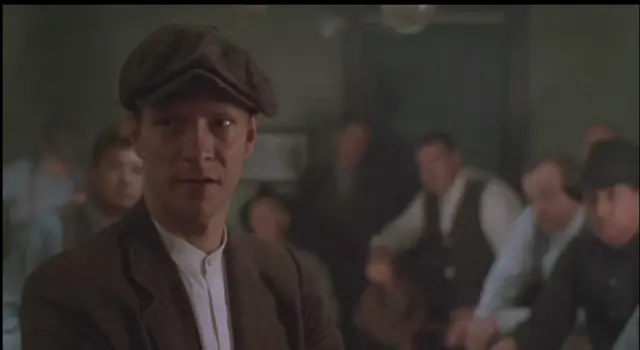


There is an incredible humanity running throughout the film. Sayles understands the divisions between these workers — racial, cultural, religious and economic — and therefore never makes their eventual solidarity feel easy or sentimental. The miners have to overcome suspicion and prejudice before recognising that the forces dividing them are also helping to keep them powerless. At the centre of it all is Chris Cooper, superb as union organiser Joe Kenehan: quiet, intelligent, principled and determined to prevent an already volatile situation from descending into violence. Around him Sayles constructs an entire community, allowing individual lives, marriages, friendships and rivalries to exist alongside the larger political struggle.

The film is also visually magnificent. Working with the great cinematographer Haskell Wexler, Sayles gives Matewan (1987) a rich, earthy, almost tactile quality. The mountains, forests, railway tracks, wooden houses and coal-blackened interiors don’t merely provide an interesting period backdrop; they seem to contain the history of the people living and working within them. There is mud, smoke, sweat, blood, tears and darkness everywhere, contrasted with the natural beauty of the West Virginia landscape. The mines themselves feel oppressive and dangerous, while the wider landscape can appear both beautiful and imprisoning. Further, while these people live among extraordinary natural beauty they are being economically trapped by the company that controls the coal mines.

Rather than building the film around conventional movie stars, Sayles assembled the kind of extraordinary American character actors who make every face and every voice feel as though it belongs in this world. Chris Cooper – in his debut feature – gives the film its moral centre, while James Earl Jones brings enormous dignity, warmth and authority to ‘Few Clothes’ Johnson. David Strathairn is wonderfully memorable as Sid Hatfield, and Mary McDonnell brings intelligence and emotional complexity to Elma Radnor. Then there is Kevin Tighe as Hickey, one of the Baldwin-Felts agents sent into Matewan to intimidate the miners and break their resistance. Tighe gives the film a genuinely menacing presence: smiling, controlled and utterly comfortable with the threat of violence.

The combination of historical detail, political conviction, memorable acting and direction, magnificent cinematography, beautifully observed characterisation and gripping storytelling is what makes Matewan (1987) such a remarkable achievement. Sayles takes a specific labour dispute in a West Virginia mining town and turns it into something both intimate and expansive: a story about solidarity, dignity, prejudice, exploitation and the terrible price ordinary people can pay when they challenge entrenched power. Yet for all its anger, Matewan (1987) never loses its compassion. Sayles remains interested in people first. It is muscular, intelligent, visually beautiful and deeply moving filmmaking, made with enormous integrity — and one of the finest examples of just how powerful American independent cinema can be.
Mark: 9.5 out of 11


Romford Horror Film Festival 2026 & The Cannibal Man (1972) reviews!

Romford Horror Film Festival & The Cannibal Man (1972) review

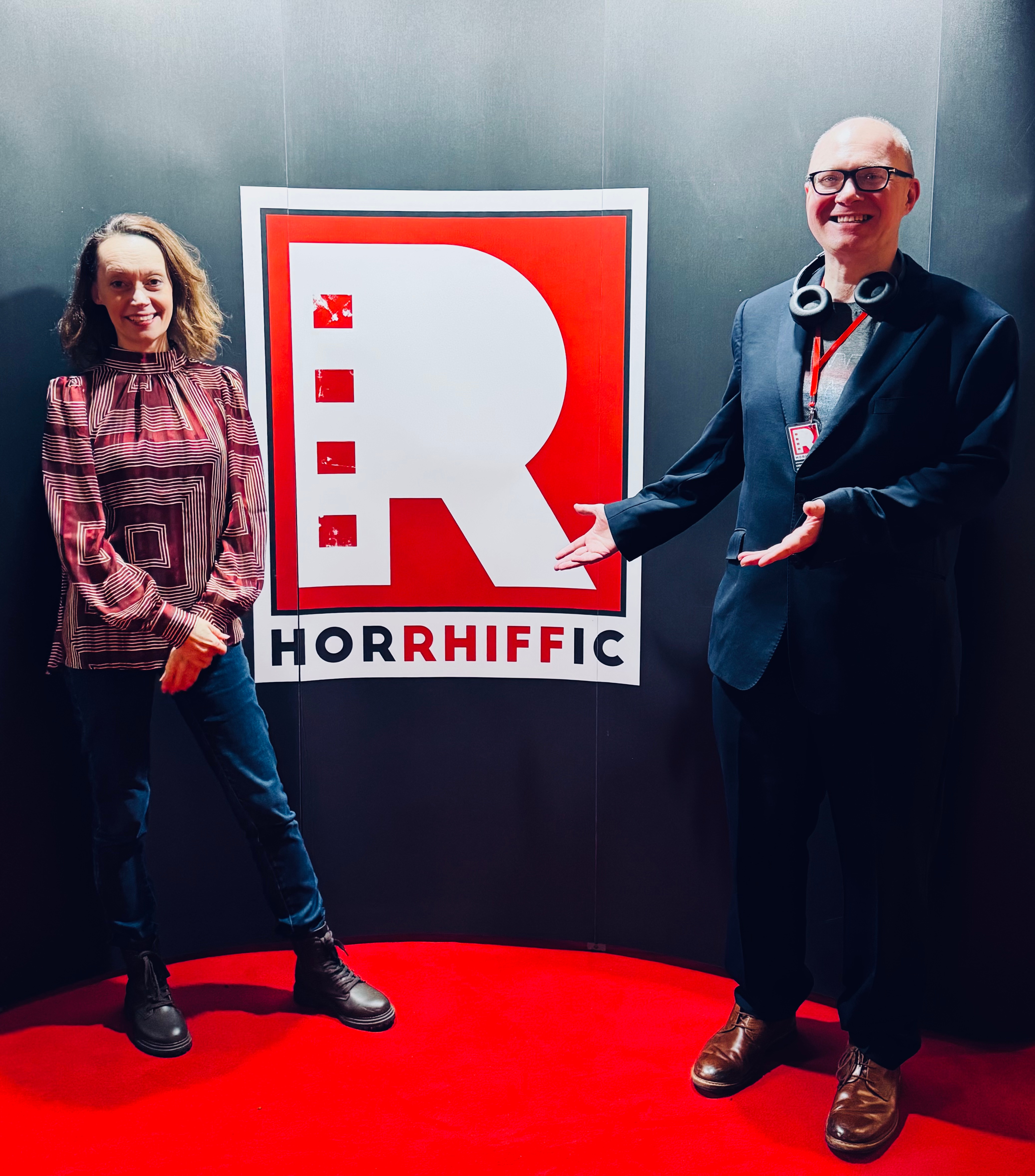
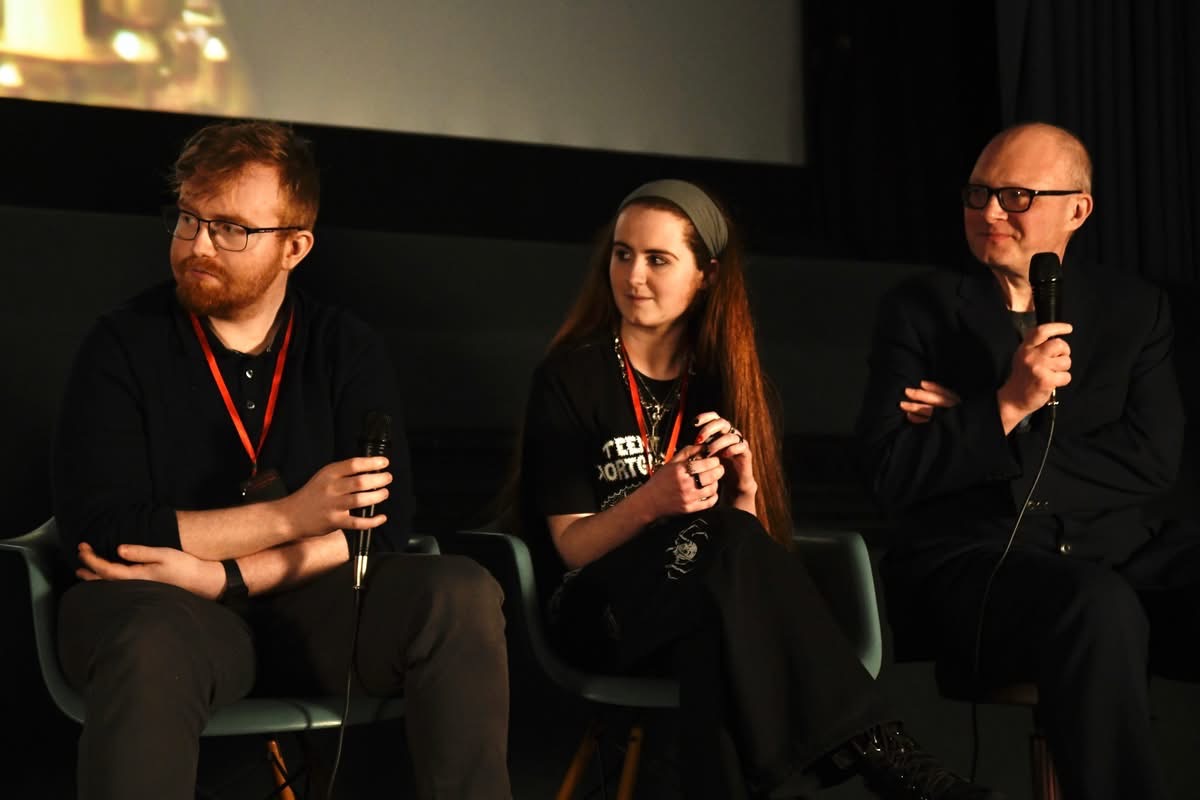
From 19th–22nd February 2026, Romford, Essex emerged not just as a venue, but as a creative crucible for genre storytelling as the Romford Horror International Film Festival — affectionately dubbed HorRHIFFic — returned to the Lumiere Cinema with its most ambitious programme yet – details can be found here: https://www.romfordhorrorfestival.com

This four-day celebration of horror cinema is rooted in the independent filmmaking spirit: championing works from emerging voices around the world, blending them alongside classic cult favourites, and generating an atmosphere of passion, community, and shared reverence for the genre. What makes this festival truly special isn’t just the size of its programme — though over 130 films certainly made for a thrilling schedule — but its wholehearted dedication to independent filmmakers who bring new ideas, daring vision, and personal passion to every frame.


Across its programme, the festival showcased a thrilling mix of guests and films that honour horror’s breadth including: Classic Retro Treats, Special Guests and Actors from Horror, New Independent Features & Shorts from countries such as South Korea, Canada, Spain, USA, and Italy, plus Creative Diversity — with screenings that embraced psychological depth, gory slashers, ghost stories, off-beat genre hybrids, and boundary-pushing work from both early-career filmmakers and seasoned indie pros.

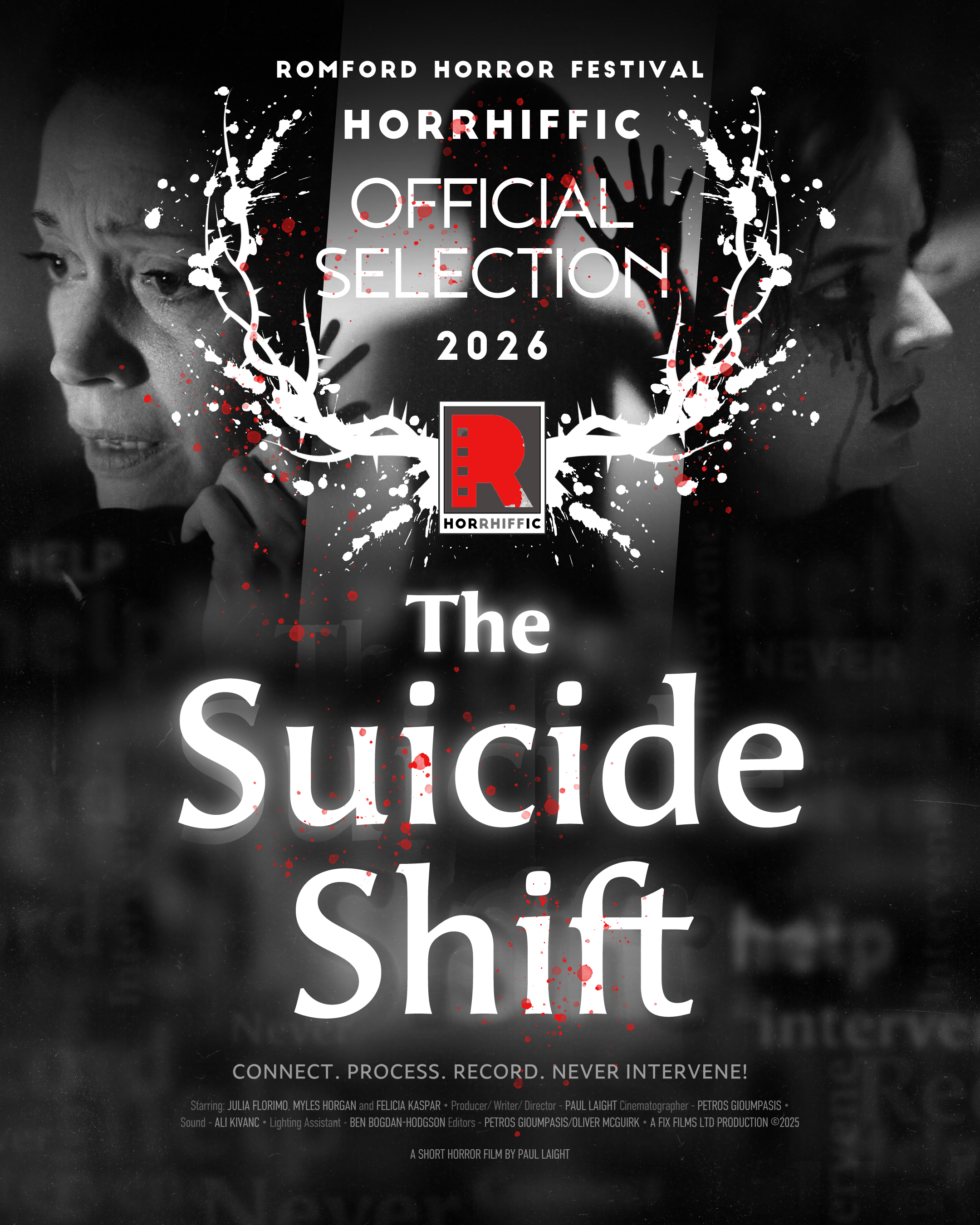
Romford Horror Festival is also renowned for the community it builds. Horror fans come together not just to watch films, but to share experiences, meet creators, and feel at home in an environment that values innovation over commercialism. The Lumiere Cinema, itself a community-saved venue, became a home for filmmakers and fans alike — proving that in Romford, horror isn’t just screened… it’s commemorated. I for one am so grateful they screened my short horror film The Suicide Shift (2026).


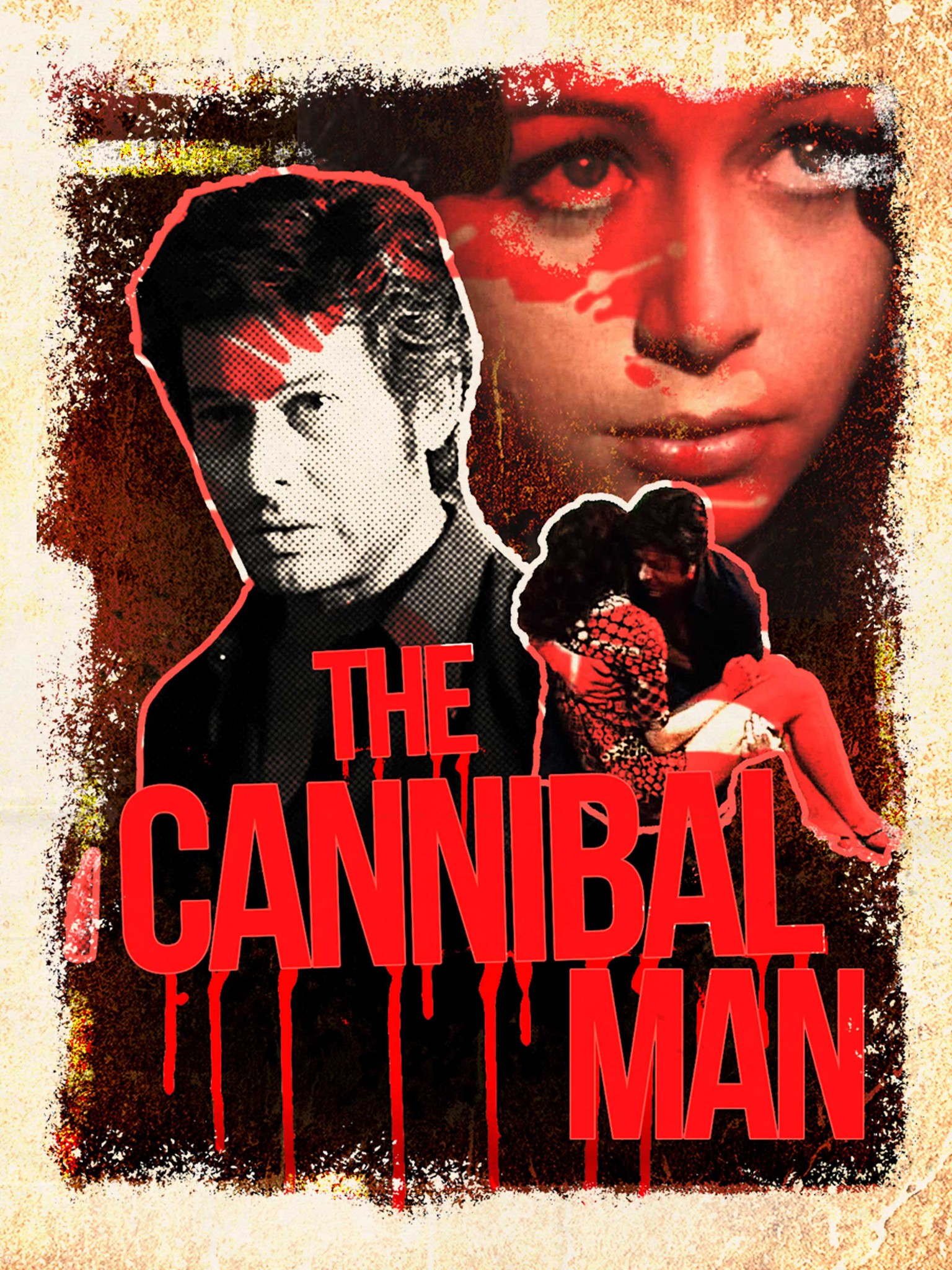
As well as the short film showcases I watched a few retro classics including The Cannibal Man (1972) – (original title: La semana del asesino), directed by Eloy de la Iglesia. It is less a horror film than a slow, suffocating moral collapse. What begins as an unfortunate act of violence spirals into a weeklong descent into hell for Marcos, played with haunted fragility by Vicente Parra. Each subsequent killing feels less like cruelty and more like inevitability — the grinding machinery of fate closing in on a man already spiritually trapped.

Set against the decaying outskirts of Madrid in the final years of the Franco regime, The Cannibal Man (1972) doubles as a bleak portrait of a society rotting from repression. The slaughterhouse where Marcos works becomes an unsubtle but potent metaphor: under Francoism, bodies are processed, identities erased, dissent quietly carved up and discarded.


What makes the film especially daring is its undercurrent of homoerotic tension. Marcos’ wealthy, enigmatic neighbour Néstor hovers at the edges of the carnage, offering protection and silent understanding. Their charged glances and coded conversations suggest a longing that cannot safely speak its name under Franco’s moral authoritarianism. In this reading, Marcos’ spiral is not only about guilt but about internalized repression — desire twisted inward until it manifests as self-destruction. The horror is as much psychological as physical.

And yes, the gore is blunt and ugly. Bodies are dismembered with the same cold pragmatism as livestock. But de la Iglesia never lets the blood eclipse the tragedy. Marcos is not a monster in the conventional sense; he is a man cornered by circumstance, class stagnation, and a society that offers no mercy to the weak. By the end, his descent feels preordained — less a fall from grace than a revelation that grace was never available to him.

So, if you love horror films do check out indie film festivals such as – HorRHIFFic – whether it’s the electrifying surprises in the indie showcases or the nostalgic thrill of classic screenings, the Romford Horror Film Festival 2026 made it clear: independent horror cinema is alive, vibrant, and boldly inventive. This festival is a testament to the creativity and ingenuity of filmmakers who refuse to be confined by convention — and to the audiences who cheer them on.


MUBI REVIEW: AFTERSUN (2022)

MUBI REVIEW: AFTERSUN (2022)

Directed by: Charlotte Wells

Written by: Charlotte Wells


Produced by: Adele Romanski, Amy Jackson, Barry Jenkins & Mark Ceryak.

Main cast: Paul Mescal, Frankie Corio, Celia Rowlson-Hall, etc.

Cinematography: Gregory Oke

Edited by: Blair McClendon

Music by: Oliver Coates

***CONTAINS SPOILERS ***


The invisible mist that envelops many human beings and imperceptibly cannot be treated in conventional ways like that of a broken bone, headache or a skin rash. It can be experiential, dependent on one’s life situation or genetically sewn into the mind, blood and persona with often no evident cure. Sure, medicine can be used to push back the fog. However, it’s hit and hope treatment to a chastening fugue that is all encompassing and never ending. According to research, depression effects around 1 in 6 people in the UK each year alone.

Aftersun (2022) is an intimate character study on film written and directed by Charlotte Wells. After creating several critically acclaimed shorts, Aftersun (2022) is Wells debut feature film. It welcomes an intelligent, perceptive and brave new visionary in world cinema. Aftersun (2022) is a hypnotic, mournful and heartbreaking exploration of depression, love, loss and family which quietly pushes the viewer into a beautiful pain that makes it difficult to breathe at times.


This artful drama features Paul Mescal as Calum and Frankie Corio as his 11-year-old daughter, Sophie. It follows their holiday at a Turkish resort on the eve of his 31st birthday. Together, the actors performances and Wells’ subtle direction effortlessly builds emotional power in the father and daughter relationship on screen. Mescal especially is as magnetic as a modern-day Brando, with many soulful scenes of him trying to handle his invisible pain. Sophie is unaware of Calum’s clouding moods as he battles to keep it from her. Holidays are meant to be fun and the father does his best to ensure his daughter is protected from the existential despair. Wells hints at what may happen to Calum in the future, juxtaposing an adult Sophie recalling key moments from the holiday that play out like a raw home movie of haunting reminiscence.

Attempting to portray depression visually is a challenge for any filmmaker. Yet, Wells and their cinematographer, Gregory Oke, use a number of styles to propel the internal conflict of the characters. Sophie often sees her father through the eyes of a camcorder lens and mini-screen. Calum is also framed from behind and through the mirrored distance of a television screen. On occasions, Wells overdoes the artiness of such photographic choices. Mainly because Mescal’s portrayal of Calum is so good, I wanted even more direct focus on his character acting. Yet, one cannot argue with the creative power of Wells’ dialectic choices, notably in the contrast between the sunny Turkish landscapes and pulsating strobe-lit nightclub scenes linking older Sophie and Calum’s internal mindscapes.

Aftersun (2022) has rightfully received critical acclaim and accolades from BAFTA, BIFA and the Oscars. It is a slow burning film which takes patience to connect to. But once you get into the film’s rhythm there are an abundance of cerebral and emotional rewards. As an arthouse genre film Wells combines rites of passage with a deep analysis of grief. Sophie’s family holiday in Turkey is not without humour and joy as she finds real affection and love with her brave father. The tragedy is the not-knowing that this is the last time she will ever spend time with him. Sophie has her home movies and memories of Calum. But it is no substitute for her father being alive. If only he hadn’t stayed forever in life’s departure lounge.

Mark: 9.5 out of 11